Author(s): Scott Douglas Jacobsen
Publication (Outlet/Website): Canadian Atheist
Publication Date (yyyy/mm/dd): 2019/08/10
The Brighter Brains Institute or Humanists Global based out of the San Francisco Bay Area, California in the United States of America wants to assist with the development of the atheist community within various African nation-states. This is through microfinancing.
Microfinancing or the gifting of microfunds does not remain a new phenomenon, but one used for the assistance of entrepreneurs at various levels. One ex-Muslim and atheist, Mubarak Muhammed Bala, is the President of the Humanist Association of Nigeria.
Humanists Global is a non-profit entity and, therefore, or by implication, does not profit on the outcomes of these microfinancing endeavours. The vision of the organization is the improved status of the non-religious or the secular or the non-religious around the world.
In Nigeria, for Bala, religious law, in particular Sharia law, as interpreted there, is a significantly bad item in country for the secular. For speaking openly or using his constitutional right to freedom of expression, Bala has received numerous death threats because of the opinions have been deemed too heretical.
Bala, as many of non-theists have experienced, were either bullied into leaving a job or outright fired from a position due to a politically and socially motivated religious fundamentalist with an intense xenophobia, bigotry, and prejudice against the secular individual.
This raises questions about the survivability and long-term economic viability of the life for Bala. There is a project by Humanists Global or Brighter Brains Institute (BBI) to help those like Bala in supporting themselves as entrepreneurs in various African countries.
Humanists Global’s Director, Hank Pellissier, is an activist who founded the “the world first atheist film festival” in 2009. Pellissier created the atheist calendar in 2010, then moved onto founding BBI in 2013. Then he founded the “world’s first atheist orphanage” in 2015.
According to Humanists Global or BBI, “$300 is enough to buy a sewing machine, fruit juicer, used motorcycle, ten milk goats, washing machine, kerosene tank, corn grinder, fifty chickens, popcorn machine, or dozens of other items for new business ventures in Africa. Humanist.Global / BBI has provided funds for 77 small projects. The majority go to women’s collectives. “
The Buhanga Thuligahuma Women’s Group in Uganda received$300 to found Bio-Briquette Business. Bala founded Kaduna Fries, a street stall. Humanists Global intends to help atheists marginalized and persecuted for beliefs and wants to assist in the expansion of the membership of the organizations, too.
For U.S. citizens, there is a tax deductible receipt for donations, and for Canadians, there are a letter of appreciation, a photo, and then periodic updates on the progress of the initiative.
For more information, email BrighterBrainsInstitute@gmail.com
References
Bala, M. (n.d.). Humanists Global Oath. Retrieved from https://humanists.global/humanists-global-oath.
Humanists Global/Brighter Brains Institute. (2019). Business Projects. Retrieved from https://humanists.global/business-projects.
Humanists Global/Brighter Brains Institute. (2019). Humanists Global/Brighter Brains Institute. Retrieved from https://humanists.global/micro-funding-for-subsaharan-atheist-entrepreneurs-launched-by-sf-bay-area-nonprofit.
Istvan, Z. (2015, February 24). The World’s First Atheist Orphanage Has Launched a Crowdfunding Campaign. Retrieved from https://www.vice.com/en_us/article/wnjbeb/the-worlds-first-atheist-orphanage-just-launched-a-crowdfunding-campaign.
Kiva. (2008, August 28). Kiva Lending Team: (A+) Atheists, Agnostics, Skeptics, Freethinkers, Secular Humanists and the Non-Religious. Retrieved from https://www.kiva.org/team/a_atheists_agnostics_skeptics_freethinkers_secular_humanists_and_the_nonreligious.
San Francisco Bay Area Independent Media Center. (2009, June 28). Atheist Film Festival. Retrieved from https://www.indybay.org/newsitems/2009/05/25/18597958.php.
The Nigerian Humanist Association. (2019). The Nigerian Humanist Association. Retrieved from https://www.facebook.com/NigerianHumanistAndFreeThinkers/.
License
In-Sight Publishing by Scott Douglas Jacobsen is licensed under a Creative Commons Attribution-NonCommercial-NoDerivatives 4.0 International License. Based on a work at www.in-sightpublishing.com.
Copyright
© Scott Douglas Jacobsen and In-Sight Publishing 2012-Present. Unauthorized use and/or duplication of this material without express and written permission from this site’s author and/or owner is strictly prohibited. Excerpts and links may be used, provided that full and clear credit is given to Scott Douglas Jacobsen and In-Sight Publishing with appropriate and specific direction to the original content. All interviewees and authors co-copyright their material and may disseminate for their independent purposes.
Share this:

Author(s): Scott Douglas Jacobsen
Publication (Outlet/Website): Canadian Atheist
Publication Date (yyyy/mm/dd): 2019/08/10
Interview with Shingai Rukwata Ndoro is the Interim Chairperson of the Humanist Society of Zimbabwe. We will explore the nature of theism and non-theism, and so on, in the context of Zimbabwe for this educational series. Here we talk about Zimbabwe and non-theism.
Scott Douglas Jacobsen: What are the brands of non-theism encountered by you?
Shingai Rukwata Ndoro:
1. Gnostic non-theism.
2. Agnostic non-theism.
Jacobsen: What are the demographics of religion and non-religion there?
Ndoro: There are no credible statistics available except those by the Christians to project a majoritarian representation of themselves.
From an ordinary assessment, Christians are their majority.
Jacobsen: How tied to progressive politics are atheistic views?
Ndoro: We have tended to avoid politics among the community of non-theists because it has been one of the major divisive matters.
This is because we are split right in the middle between right and left ideas and between pro-government and anti-government sentiments.
Take note:
1. *Right*: more individual freedoms (steeped in European liberalism), pro-business and limited government involvement.
2. *Left*: less individual freedoms for collective rights (steeped in European conservatism), anti-business and expansive government involvement.
Jacobsen: How tied to conservative views are traditional religions and traditional Zimbabwean belief structures?
Ndoro: Very strongly tied. Conservative views are actually the default positions of most of those who are religious.
Jacobsen: Thank you for the opportunity and your time, Mr. Ndoro.
Ndoro: As an addition, there are many non-theists whom we know within our community who are closet due to social exclusion and economic vulnerability.
License
In-Sight Publishing by Scott Douglas Jacobsen is licensed under a Creative Commons Attribution-NonCommercial-NoDerivatives 4.0 International License. Based on a work at www.in-sightpublishing.com.
Copyright
© Scott Douglas Jacobsen and In-Sight Publishing 2012-Present. Unauthorized use and/or duplication of this material without express and written permission from this site’s author and/or owner is strictly prohibited. Excerpts and links may be used, provided that full and clear credit is given to Scott Douglas Jacobsen and In-Sight Publishing with appropriate and specific direction to the original content. All interviewees and authors co-copyright their material and may disseminate for their independent purposes.
Share this:
Author(s): Scott Douglas Jacobsen
Publication (Outlet/Website): Canadian Atheist
Publication Date (yyyy/mm/dd): 2019/08/08
Takudzwa Mazwienduna is the informal leader of Zimbabwean Secular Alliance. This educational series will explore secularism in Zimbabwe from an organizational perspective. Here we talk about African state-wide secular alliances.
Scott Douglas Jacobsen: Often, humanist and feminist organizations remain allies. Are they allies in Zimbabwe? If so, how so?
Takudzwa Mazwienduna: The Feminist organizations in Zimbabwe are mostly under Christian influence, they are not willing to associate with Humanist organizations which are viewed the same as Satanic cults, even by the general public. Zimbabwe is a seriously Christian country whose society is not welcoming to anything that does not subscribe to Christianity. Even LGBTQ organizations are not eager to associate with Humanists. It will automatically cost them any support they had with the public.
Jacobsen: How old is religion in Zimbabwe? How long back does discrimination against women go back? How does religion discriminate against men who tend to be poor?
Mazwienduna: Religion has been around in Zimbabwe since the Bantu settled there around 8000 CE. The kingdom of Great Zimbabwe as it was known back then still has shrines and granite buildings left from the Era which have been declared a UNESCO heritage site. Anthropologists are still uncovering a lot about the Great Zimbabwe civilization, but from the little we know so far, it was a center for trade with Arabs and different travellers. Their religion had a lot to do with ancestral worship and some rural communities still follow similar traditions today. When the British South Africa Company colonized the country 1000 years later in 1890, the London Missionary Society carried out a mass genocide persecuting anyone who didn’t subscribe to Christianity. Most traditionalists went underground but Christianity overtook the mainstream and anything else was frowned upon. The Christian fundamentalism of the London Missionary Society days is still the same today and traditionalists are demonized and accused of witchcraft, especially women. Women had important roles in traditional society. They were religious leaders as spirit mediums through whom the ancestors spoke. The famous Mbuya Nehanda is a good example, she led the first resistance war against British settlers in 1893 until they caught her and hung her the same year. The rise of capitalism and Christianity has left women in a very disadvantaged position today. Religion in Zimbabwe actually profits off the poor because prosperity gospel pastors are rising, selling people false hope. The most famous of them all right now is Walter Magaya, a millionaire who has multitudes of rape allegations against him from young women in his congregation, but because he has the police and powerful politicians in his pocket, he walks free selling miracle cucumbers, fake HIV medicine etc… It’s plain ridiculous.
Jacobsen: If we are looking at poor men, if we’re looking at rural populations, if we’re looking at women in general, and those with disabilities, what are the positives of religion? What are the negatives religion?
Mazwienduna: The Anglican, Catholic, Methodist and Apostolic Faith Mission churches have done the most when it comes to poverty and helping the poor. My mother grew up in an abandoned child-headed family and it was Catholic nuns who took them to school. They have continued to run orphanages and pay fees for disadvantaged children up to this day. The majority of churches coming up nowadays however are there to profit off the poor. Some of them even promise miracle money if you give them “seed money.” even buying a front seat close to the “anointed man of God” on Sundays costs a fortune, yet people desperate for financial miracles are always eager to buy these seats for more than they can afford.
Jacobsen: I ask this within a Zimbabwean context. How can alliances within African states and between statewide organizations begin to manifest in a more robust way? I know of some initiatives in Africa and what is happening. I know of some statewide organizations in various African nations.
Mazwienduna: The African Civil Society needs to develop reliable networks that are based on the need for progress alone, and not politics. It is also important that we have a lot more discussion concerning progressive issues between activists from different fields.
Jacobsen: Thank you for the opportunity and your time, Takudzwa.
Mazwienduna: Thank you Scott, it’s always a pleasure.
License
In-Sight Publishing by Scott Douglas Jacobsen is licensed under a Creative Commons Attribution-NonCommercial-NoDerivatives 4.0 International License. Based on a work at www.in-sightpublishing.com.
Copyright
© Scott Douglas Jacobsen and In-Sight Publishing 2012-Present. Unauthorized use and/or duplication of this material without express and written permission from this site’s author and/or owner is strictly prohibited. Excerpts and links may be used, provided that full and clear credit is given to Scott Douglas Jacobsen and In-Sight Publishing with appropriate and specific direction to the original content. All interviewees and authors co-copyright their material and may disseminate for their independent purposes.
Share this:
Author(s): Scott Douglas Jacobsen
Publication (Outlet/Website): Canadian Atheist
Publication Date (yyyy/mm/dd): 2019/08/07
Mandisa Thomas is the Founder of Black Nonbelievers, Inc (Twitter & Facebook). One of the largest, if the not the largest, organization for African-American or black nonbelievers & atheists in the United States.
The organization is intended to give secular fellowship, provide nurturance and support for nonbelievers, encourage a sense of pride in irreligion, and promote charity in the non-religious community.
I reached out to begin an educational series with one of the, and again if not the, most prominent African-American woman nonbeliever grassroots activists in the United States.
Here, we talk about panels, speeches, tours, talks, and the like.
Scott Douglas Jacobsen: When it comes to panels and speeches and talks and tours, there are ones for the religious; there are ones for the secular. Often, especially given the dominance of the religious in the United States, there’s the invitation from the religious to the secular. What about a proposal for invitations from the secular to the religious?
Mandisa Thomas: Actually, at our fifth anniversary, I invited one of my now good friends, Reverend Lorenzo Neal, to speak as an ally. I met him in 2013, when he contacted us at our website to have me on as a guest for his show. It was a very good talk, he discussed his work with his church, and he admitted that he doesn’t have all the answers. He actually felt very comfortable in our space.
I think that due to the still very high religious scholarship and the religious presence, that we may be tempted to invite some religious leaders to have discussions with us as a way to challenge their perspectives. I’m hoping that in the future, we might be able to do this.
I know some organizations have hosted debates between the religious and nonreligious. How that plays out varies. We always try to be mindful of the goal if we’re going to invite the religious into our spaces.
Many of us, having left religion behind, wonder if they’re going to say anything different. We take that on a case-by-case basis as well as the subject matter, and what we hope to accomplish.
Jacobsen: What would make events or speaking engagements and invitations more appealing for the religious coming to a secular turf?
Thomas: That’s a very good question. I am not sure. I think that if the subject matter centers around something that we do have in common. It could be some areas of social justice, like racial justice, reproductive rights, etc. Sometimes it could be in the form of a debate. The more progressive religious organizations and leaders might be willing to have discussions with us about our common ground, and how we can fight or work together against oppression that affects all of us.
I’m thinking subjects that don’t necessarily pertain to atheism or secularism, even though I don’t think that we should hide them. There could be better opportunities for collaborative events with religious organizations and leaders in the future.
Jacobsen: Any recommended speakers from the religious, in terms of invitations, for those who may be reading this?
Thomas: I would say the Reverend William Barber, who is extremely phenomenal. He is very much an ally and speaks on issues that pertain to the broader community. I can’t say that he would automatically work with us but he has acknowledged our presence.
I think that he would make a good speaker in a more secular space because of the respect that he has for us and the work that we do, as well as the challenges. He understands what we face, so I think that he would be one that I would recommend strongly.
Jacobsen: Thank you for the opportunity and your time, Mandisa.
Thomas: Thank you.
License
In-Sight Publishing by Scott Douglas Jacobsen is licensed under a Creative Commons Attribution-NonCommercial-NoDerivatives 4.0 International License. Based on a work at www.in-sightpublishing.com.
Copyright
© Scott Douglas Jacobsen and In-Sight Publishing 2012-Present. Unauthorized use and/or duplication of this material without express and written permission from this site’s author and/or owner is strictly prohibited. Excerpts and links may be used, provided that full and clear credit is given to Scott Douglas Jacobsen and In-Sight Publishing with appropriate and specific direction to the original content. All interviewees and authors co-copyright their material and may disseminate for their independent purposes.
Share this:
Author(s): Scott Douglas Jacobsen
Publication (Outlet/Website): Canadian Atheist
Publication Date (yyyy/mm/dd): 2019/08/06
Kevin Feng Chin Wen is a Taiwanese Youth Humanist Activist and Writer. Here we talk about the secular movement in Southeast Asia/East Asia.
Scott Douglas Jacobsen: You have been actively involved in the secular movement in Southeast Asia/East Asia for several years. There have been social and political changes. What are ongoing issues in secular and scientific education in Taiwan?
Kevin Chin Wen Feng: Luckily, we have proper content in our textbook for education, no matter in the scientific or social field. The most serious issue is the unfair educational bureaucracy and the joint enrollment exam. Due to authoritarianism, our best college is always public, so that the rich people who can usually get better academic performance can enjoy better education at a cheaper price.
For entering the public schools, students struggle in the preparation for the joint enrollment exam, sacrificing their curiosity and personal development to practice the exam routinely. There are some jokes: “If the government wants to promulgate anything, just put it in the exam.” “I have returned my knowledge to my teachers after the exam.” This pathetic and inhumane education kills real science, seeking the truth about the world, and results in copying and pasting from the textbook onto the examination paper.
Jacobsen: Where are ongoing social issues for freethinkers in Taiwan?
Feng: We are the first country in Asia to legalize same-sex marriage. It shows our determination to have a deeper relationship with the West through humanistic values. However, the anti-gay religions mobilize in both political and educational fields. Rainbow mothers are the volunteers giving moral and ethical education from the Christian church. Their activities are against Education Basic Law and Gender Equity Education Act but not many politicians or officers dare to accuse them.
Another issue is the incense incinerator; the government wants to improve the air quality by limiting the locations to burn religious incense. However, the Daoist temples recognize burning the incense in that garbage incinerator as blasphemy and refuse to fund the specific incinerator on their own. The government compromises funding for religious incinerators to accomplish their environmental policy. We do accept this policy due to the political reality, but also ask for the specific noodle waste recycling for equality of religions. Putting the holy noodle into others’ kitchen waste recycling is insulation for FSM, hoping the government can accept our policy.
Jacobsen: What are ongoing political issues in Taiwan now?
Feng: Polarizing populism also happens here and even worse, which is manipulated by communist China. Our president Tsai Ing-wen tried to appease the political conflict between the mainlander and the locals by transitional justice. However, KMT refuses the deal and cooperate with CCP against the localization and demarcation of Taiwan. Conflict is inevitable. Her competitor in the 2020 election, Han Kuo-yu, manipulates populism and have the single highest support rate via the communist’s resources and media (Want Want China Times Media Group). Unlike the West’s populism, which won’t have a sovereign impact, once China controls Taiwan, it will be irreversible. The freedom of speech, human rights, and democracy will die at last, and the process must fill with violence like Hong Kong.
Jacobsen: For Canadians who may not know, what are recent flare-ups in Taiwan?
Feng: As similar to Canadians suffered from being arrested by China, there is a Taiwanese named Lee Ming-che. He texted some democratic Chinese for establishing a company in China to promote liberalism in Taiwan in 2014, but was kidnapped in Hong Kong in 2017. China imposes its inhumane law to force the world to accept their totalitarianism and the liberal world should unite and stop them.
Jacobsen: Why are these developments significant?
Feng: The current Taiwanese situation is the legacy of the Yalta System; KMT, the Leninist party from China, as the Mercenary of USA to manage Taiwan. Two contradictory ideologies cooperate with each other in this island for defending from communism, so that Taiwan can’t be a normal and independent country as other southeastern Asian countries after WWII. To normalize Taiwanese nationhood, our political strategy is embracing the West and leaving Asian influence. This strategy has a long history in Eastern Asia, starting from Japan, Fukuzawa Yukichi’s Datsu-A Ron, which promulgates Westernization of Asia in 1885. The ex-president of Taiwan Lee Teng-hui also claims “leaving tradition, reforming new,” supporting the democratization of Taiwan and normalizing the country from Chinese sectionalism. We hope to join the humanistic family, gaining support from it – against authoritarian and powerist legacy in Asia.
Jacobsen: How can the international humanist community help you?
Feng: Paying more attention to the most dangerous regime in Asia, China. Probably because the canon of the humanist community has a huge influence on multilateralism and socialism. Some of my liberal friends believe the world will be better when China competes for the world power with the USA, or just hate USA Imperialism too much. For example, the largest humanist international community, Humanists International, its FB only has 9 posts about China from 2009 to 2016. It is definitely less than their criticism to Pakistan or Russia. Most of the active humanist communities in Asia are in the Indo-Pacific region and the threat for us is definitely China. We already know how communists spread fake news, corrupts politicians, uses violence to export their totalitarianism into Indo-Pacific. Once we fail, Muslims will be arrested and placed into their concentration camps, Buddhists will march like the army and sing war songs as Shaolin monks, Daoists and Christians will force to worship Mao, and, of course, humanists will “accidentally” disappear, be kidnapped, or randomly jailed. These are threats to liberalism and human rights, which are definitely much more than Donald Trump’s presidency, at least for Indo-Pacific people.
Jacobsen: Thank you for the opportunity and your time, Chin Wen, be well, my friend.
License
In-Sight Publishing by Scott Douglas Jacobsen is licensed under a Creative Commons Attribution-NonCommercial-NoDerivatives 4.0 International License. Based on a work at www.in-sightpublishing.com.
Copyright
© Scott Douglas Jacobsen and In-Sight Publishing 2012-Present. Unauthorized use and/or duplication of this material without express and written permission from this site’s author and/or owner is strictly prohibited. Excerpts and links may be used, provided that full and clear credit is given to Scott Douglas Jacobsen and In-Sight Publishing with appropriate and specific direction to the original content. All interviewees and authors co-copyright their material and may disseminate for their independent purposes.
Share this:
Author(s): Scott Douglas Jacobsen
Publication (Outlet/Website): Canadian Atheist
Publication Date (yyyy/mm/dd): 2019/08/05
Mubarak Bala is the President of the Humanist Association of Nigeria. We will be conducting this educational series to learn more about humanism and secularism within Nigeria. Here we talk about Nigerian freethought and freedom of expression.
Scott Douglas Jacobsen: Humanism seems to wring the supernaturalism out of the ethical systems of the world’s religions and then systematize the important parts in a naturalistic framework linked to a scientific comprehension of the world. How is this view of ethics, of the foundation of ethics and morals, at odds with much of the wider Nigerian cultural framework and worldviews for understanding the nature and basis of ethics and morality?
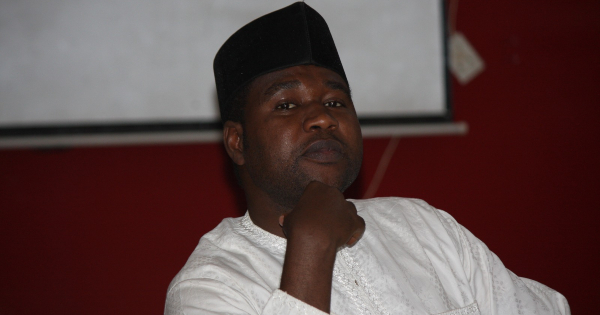
Mubarak Bala: Well, historically, Nigeria, and the region, used to be culturally indigenous, where each section of spread tribes had their deities, cultural identity and perception of morality.
So much of these norms, before tinkering with external religions, were derived from the natural world, fearing what harms, and imbibing what’s good, over the generations.
Save those cultures that feared the birth of twins, and murdered them, or thought thunder was the voice of the gods demanding for sacrifice, blood sacrifice, we sure could say that the norms were not alarming, albeit non-homogenous, not out to conquer and absorb others.
Then came the Arabs from the north, and Europeans from the south, mass conversions, conquest, cultural elimination, redefined what is supposed to be moral, and skewed the pristine beliefs that allowed for others to thrive, soon after, our comprehension of the world skewed. Where women used to be goddesses, became ribs.
Naturally, everyone starts out as a humanist, empathetic to others, and inquiring to nature, then society either guides that to good, or deludes into indoctrination.
Nigeria specifically today, is a contraption of Arab-wannabes from the north, mostly Hausa-Fulani Muslims, Jewish wannabes to the southeast, the Igbos, and White-Caucasian wannabes, the Yoruba. The other 360 minority tribes, just wanna be one of these big three.
Smaller northern tribes hope to be seen as Hausa, those in other regions would prefer being seen as part of the other bigger tribes of Igbo or Yoruba, which essentially all reduces our ancient diversity to alien cultures – which in all sincerity, should have been better. But skewed by the Abrahamic religions, it is just worse, thus, as the religions hate the other, so do the people that adopted it, which disallows an actual Nigerian cohesion, each side with where they hope to be, in life, and in death, in harmony, and in destruction.
The south is at a better place, discarding superstition, and re-aligning with pseudo-humanism, such as a fair rational thought, education, freedom and awareness about how the world works, via exposure to cultures, media, global languages, proximity to the shores/ports, and frequent air travel.
However, the north, landlocked as Afghanistan, encroached by the Sahara as Arabia, deserted by deforestation as Somalia, swamped by illiteracy as dark-ages Europe, becomes a gradual sinking ship that threatens to swallow the country and region.
If not tamed, it will give the world a never-before witnessed humanitarian disaster of 100 million refugees with no country, and nowhere to go, trapped by the Sahara and rivers, as the other regions reject illiterate economic dead-weight.
There is hope, I hope. Humanism may show the north the way, the region with the most number of out of school children, called almajiri. The highest poverty globally, and the deadliest terror group in modern times, Boko Haram. Sad thing is, the people mostly see education, rational thought, exposure, liberalism, secularism, and humanism, as the enemy. They are convinced, that remaining conservative absolutists to centuries-old dogma, would make a better country and people.
Jacobsen: Thank you for the opportunity and your time, Mubarak.
License
In-Sight Publishing by Scott Douglas Jacobsen is licensed under a Creative Commons Attribution-NonCommercial-NoDerivatives 4.0 International License. Based on a work at www.in-sightpublishing.com.
Copyright
© Scott Douglas Jacobsen and In-Sight Publishing 2012-Present. Unauthorized use and/or duplication of this material without express and written permission from this site’s author and/or owner is strictly prohibited. Excerpts and links may be used, provided that full and clear credit is given to Scott Douglas Jacobsen and In-Sight Publishing with appropriate and specific direction to the original content. All interviewees and authors co-copyright their material and may disseminate for their independent purposes.
Share this:

Author(s): Scott Douglas Jacobsen
Publication (Outlet/Website): Canadian Atheist
Publication Date (yyyy/mm/dd): 2019/08/04
Eric Thomas is the Former President of Humanist Canada.
Here we talk about his life, work, and views.
Scott Douglas Jacobsen: So, let’s start from the top, superhero origin story. What was your early life like? How did religion or non-religion play into this, if at all?
Eric Thomas: For me, Scott, it was the more non-religious mom who was English and getting off the boat in the ’30s. She was a strong woman. Religion was never a part of our life together in the family. In early life, my older brother passed away. We were both young. It soured her on religion as “he’s better off in heaven” was the explanation she got from the religious authorities. It soured her completely against religion. It was not meant in a strident way, like a strong person making their way in the world. She had no more use for it. We did discuss it. I know that part, of her part in my life at that time in our family legacy. So, she never talked about it so much. She did not want to be overpowered with religious dogma and doctrine, etc.
So, that was the early days. As an adult, I am proud to follow her strength and purpose. Her strength of logic, and her strength and reading and education. So, that was part of my early origin to read and as much about humanism or non-religion as a young person. However, once I got a bit older, flew more miles on me, through life’s travails, I realized that as a humanist and joined a small group here at Quinte.
It is still the present guy after more than a decade. Humanist Canada, five years ago, I was the president until last summer (2018). I served two terms. I found it an enjoyable, rewarding effort to try and help lead for it. That is my origin story, being able to chat with you about things, atheist, et cetera.
Here I am.
Jacobsen: On this note of atheism, religion in humanism, humanists assumed as atheists, or most are atheists.
Thomas: That is correct.
Jacobsen: And there is a sense in which religion is almost an adjacent, but not necessarily overlapping. Some of the concerns of those would identify as humanists, even though most identify as atheist.
Thomas: Yes, those are still very, valid points. One of the cornerstones of my tenure as president of Humanist Canada was to try and resolve that early on, like literally within months of becoming president. I realized that the outreach of Humanist Canada was more divisive. It had atheists. They were not actively avoiding atheists, but they certainly had no dialogue, no interaction with the atheist groups around the country. So, that dynamic was a similar thing with other human rights groups. It was something that I successfully resolved. So, we started to talk to people in Ontario and elsewhere, hoping to have an active ongoing dialogue. The challenge, I have had many conversations about this, Scott, over the years. Of course, I am hoping to be more person to person than philosophical.
What about the strident nature of rebellion, which is the atheist community, it sometimes leads and follows up with their perspective and their ideology. So, I have made an effort to include those folks who would describe themselves as atheists, period. Atheism, and atheists, have been branded by religion for 2,000 years. Atheists are philosophically in the crosshairs because of their strident appearance. Because they do not tend to use more humanist values or expand their atheism to include humanism. You are right, if you are a humanist, do not prescribe. You are an atheist; absolutely, you are. Even, I have spoken to the pulpits here in Ontario, Scarborough.
The first question was, “Are you an atheist?” My answer unequivocally was “Absolutely, I am.” Granted, I took a bit of an exception to it. Their different flavours, different ideologies, and different perspectives. However, I am afraid. I draw the line in the sand. The pure humanist, whether you are secular humanist, atheist skeptic, and nontheistic, and so on. You are an atheist. There is no need to duck the issue. You might want to duck it only because religion’s marketing program for the last 2,000 years that the brand is of the atheists as dirty, rotten dogs. The longer we respond in that way, like dirty, rotten, hard to get along with, strident. The longer it will stick around. There is no need to stick around the question as we all know. The religions are dying their own deaths. We should leave them alone and let them do it. They are quite capable of doing it all themselves. However, that is my perspective on atheists per se. I am only too happy to chat, get along with and learn from the atheist, the pure atheist strident perspective.
Jacobsen: Within the humanist frame of mind, what scientific questions and ethical questions hold the most import to humanists?
Thomas: I almost hesitate to react with the first word that comes to mind, but I won’t hesitate. That word is “kindness” when we have interactions. I have spoken at Ahmadiyya Muslim events and Jewish events, etc. The common ground is kindness and wanting to do better for your managing of religious dogma centred on that. Gosh, I do not have any problem with that. It is a good idea. But it did not come from upstairs. This came from you and I. So, the “god directed” is you and I directed. So, that is what my hopes for the future comes, where the commonality is kindness and a Golden Rule. It is wanting to be better in a positive way as opposed to a controlled way. That’s the first thing that comes to mind.
And I hesitate, Scott, because the kindness can be a little bit less than positive or less than ecstatic. It is where we get, some times, labelled by the religious because some of us can be discharged here. Some of us are almost evangelical in our fervour in our position. I am guilty of that sometimes. I go on, ad nauseam, to promote the beauty of the positive nature of humanism. It sounds like it is religion sometimes. Often, I thought that of every evangelical humanist as a good idea. Maybe, it will be one day.
Jacobsen: Speaking of, any thoughts on the notions or sincere firm beliefs of the creation of Christian humanism, where other religious ideologies become tied to a humanist one?
Thomas: Yes! I have read some on that, like secular Judaism. Sounds like a nice idea, there is a guy upstairs. Obviously, I am not buying it, Christian humanism. Sorry, if you believe in the big guy upstairs, we are done. There is no such thing. If you are going to have those two things, it is an oxymoron, whether it is secular evangelicalism over Israel or otherwise. These two words do not go together, so it starts with a belief in a direction from a power. Then I think that we are toast. I am sorry, but we can chat and have a wonderful conversation as to human beings. But we are not going to agree. I will not agree with the secular Christian or a secular Jew. There is that little problem of upstairs.
So, do you? Yes! You are not a humanist per se. You could be a litany of humanist ideologies. So, yes, we could find some common ground. It is an easy break here. So, that is where I draw the line as an atheist. There are a lot of shades of grey in the middle, but I am sorry. I draw the line.
Jacobsen: Humanists in history made mistakes in their approach to the general culture and in terms of building community with one another.
Thomas: They have an excuse. There is a reason for the mistakes. Look at somebody like Charles Darwin who was less than a pulpit pounding humanist in his lifetime, he waited on his books for 20 years until somebody else was going to publish it. So, he rushed around and it is done. I am respectful of his society. Also, for his family, because his family is like in particular was religious, he never gave up on it, but he understood the environment that he lived in and that was probably a better approach than jumping up and down. There is no origin of life story that we have developed that fits with evolution and natural selection. So, mistakes, yes, I am sure there is been a lot. But honestly, when I see them and Darwin, in particular, I gave them the benefit of the doubt.
It was only as successful as it could’ve been at the time. So, we live in a time, a place. I have been in dialogue with the interfaith councils. With all the ideas, they love me. I am a great guy. They keep inviting me to make speeches and participate without ambiguity.
So, we get to participate now, where we did with Doug Thomas – no relationship by the way – from western Ontario secular life. It is a good example. He goes to many interfaith events, as he should. He’s got an open-minded and critical thinking based approach. In this day and age, people are accepting it, not sure why. If they are trying to defend their way of life, of Islam in particular, but under the guise of transparency and openness, they are willing to talk about it. It wasn’t the case 5 or 10 years ago. I know of people who made mistakes; mistakes could have been under the guise of protecting their life or protecting them thinking from what was obviously a religious governing perspective.
Jacobsen: In an earlier response, you made a note of the Christian God being a male god. In standard interpretations, especially based on the imagery, the phrasings – “He,” “Him,” “Lord,” how does humanism provide more equitable foundation philosophically, ethically, and otherwise, for women within a worldview compared to standard religious ones?
Thomas: That is a wonderful question. It is one of the keys to our future. My strong mother and strong older sisters said, “No,” to sexism in my life. It was her big age because they were taller and stronger, but it never occurred to me that there should be such a thing as male-dominated hierarchy in my family. It was never there. So, the women’s movement, I was a little bit young for that. But one of the by-products of that is the Abrahamic religions are the first ones to die. The United Church of Canada, these are some of the first ones that will disappear.
They’ve allowed a fulfilment in a part of the society in that which we live, which is a good thing. One of the by-products was women became ministers, et cetera. We are drinking the Kool-Aid now. Many times, they tend to come to the realization with logic and the future of humanity in the mix. One is the need for women to become educated. Another is for them to become empowered.
So, having said that about the Abrahamic religions, when I have discussions about the demise of Islam, this was the one attribute that I bring to the fore because the religion is famous for a male-dominated ideology.
So, there are logical things that have developed in the last hundred years under the auspices of Roman Catholicism and The United Church of Canada, and so on. So, Islam when the other half of their society gets equality or something smelling like quality, it is going to be difficult. I have my doubts; I wrote in my notes this morning, Scott. When I see extremists, jihadists, et cetera, doing terrible things around the world, it is the most positive thing that they could do for the demise of their religion.
It is much like waking up and when I hear Christmas music or Christmas commercials in my rural Ontario town about Christmas. I turned them up because, how can anybody believe this stuff? The reality is approaching 75 to 85 percent of us do not believe this stuff. So, every time I hear a commercial about the birth of the baby Jesus. I think that somebody’s going to be thinking about this in a logical way. Or, Christmas was the 25th of December because Jesus was born. No, it is not. If you started to do a pragmatic empirical homework on the 25th of December, or the Christ child or the origin stories, oh geez! Not exactly new is it? No, it is not. So, when I hear those things, “Yes, sent his only son. Virgin birth! Walked on water.” [Laughing] okay. Tell me some more and the same with Islam. Some of the tenets that take a near and dear part in the origin story are totally unsupportable.
Jacobsen: Who are three Canadian humanists who stand out, living or dead to you?
Thomas: The first is one whom I considered to be a mentor. I have only known him for at least 7/8 years. He was at the last Imagine No Religion conference in Toronto. In my existence and Henry is an 80 odd-year-old poet, a professor, from Concordia, et cetera, he’s been doing this. He had been doing history long before. He grew up in Germany and escaped slavery. Young enough not to have to serve. His parents hid him from the young Nazi association. He is an absolutely brilliant public speaker and an absolutely wonderful man. He was the editor of Humanist Perspectives for many, many years. I still have an ongoing relationship with Henry.
So, he would be, for me, at number one. Number two would be Christopher DiCarlo. He is the father of critical thinking, as I like to describe him. Again, Christopher was a Humanist of the Year. This was for Humanist Canada several years ago. I have worked with Chris on a couple of things and continue to stay in touch. Even though, I am not the president of Humanist Canada anymore. I stay in touch and follow up. So, he would be up there. Lastly, I would have to say the founder of Humanist Canada.
Our first president Henry Morgentaler was remember-able because of his initiative to start the organization. It was from the humanists’ fellowship with the Fellowship of Montreal in 1968. He took it from there to a national platform, national presence. I hear that is his motivation, but he started Humanist Canada. Immediately before, he was president of the Fellowship of Montreal. By the way, the wonderful anecdotal stories before Henry started Humanist Canada. He took over from none other than Pierre Elliot Trudeau. So, one step removed from Henry Morgentaler started here in Canada, Pierre Elliott Trudeau.
Jacobsen: If you look at the literary canon of either humanistic material or outright texts, which ones stand out? We can go with the same number of three, as before.
Thomas: Dawkins first and foremost: again, through the conferences, we had a fortune. We had one with Mr. Dawkins a few times. It was having read his work. He’s an absolute hero, wonderful, wonderful, humanist. The second would be his loyal authority, of course. This would be Lawrence Krauss. Lawrence is often above my feeble brain, but I read gracefully whatever he writes. So, they would be two. The other, I am going to say, Bertrand Russell. Of course, he is from the 50s, 60s. The stuff that he put pen to paper and then it goes on and on from there. He created much of my library here. So, those would be my heroes: Dawkins, Krauss, and Russell.
Jacobsen: Any final feelings or thoughts in conclusion based on the conversation today?
Thomas: You’ve asked wonderful questions. I have gone on a little bit because I have thought about them in the last number of years with a couple of points that I did want to make sure I recounted. I think that education is the cornerstone of our teacher Mr. DiCarlo. I made the point about Islam, how that is good for us going forward. One of the things we get to chat about, Scott, was the sense of community that you did not see them humanist groups around the country and how they are morphing into a church, bake sales. Minister kids trying to evangelize in the teenage years and serving to a blood donor clinic regularly. The one other thing that I have done this morning was the officiant programs here in Ontario, which has expanded significantly, by the way, in the last few years. What I failed to tell you were the former president, Kevin, was not able to get to the same stage in other provinces, that is something strong and its humanist officiant program is going places. They can help us lead the charge. Those are a couple of things that come from my notes from this morning, Scott.
Jacobsen: Thank you much for the opportunity and your time, Eric.
Thomas: You are welcome. I appreciate it. Thank you for the time to rant. It has been wonderful, thank you, Scott.
Jacobsen: And you too, take care.
Thomas: Okay, bye now.
License
In-Sight Publishing by Scott Douglas Jacobsen is licensed under a Creative Commons Attribution-NonCommercial-NoDerivatives 4.0 International License. Based on a work at www.in-sightpublishing.com.
Copyright
© Scott Douglas Jacobsen and In-Sight Publishing 2012-Present. Unauthorized use and/or duplication of this material without express and written permission from this site’s author and/or owner is strictly prohibited. Excerpts and links may be used, provided that full and clear credit is given to Scott Douglas Jacobsen and In-Sight Publishing with appropriate and specific direction to the original content. All interviewees and authors co-copyright their material and may disseminate for their independent purposes.
Share this:
Author(s): Scott Douglas Jacobsen
Publication (Outlet/Website): Canadian Atheist
Publication Date (yyyy/mm/dd): 2019/08/03
Kim Newton, M.Litt. is the Executive Director of Camp Quest Inc. (National Support Center). We will learn some more about Camp Quest in an educational series.
Here we talk about successes of Camp Quest, and kids’ outings outside of a faith framework, and more.
Scott Douglas Jacobsen: As Camp Quest was founded in 1996, its profile has existed long enough and succeeded sufficiently enough to garner some international notoriety. I heard from a South African secular group the possibility of working to found a Camp Quest in South Africa. What have been the important points of success for Camp Quest?
Kim Newton: We are so fortunate that through our camps and wider network of supporters that Camp Quest has inspired new camps in other countries including the UK, Switzerland, and Norway. The South African Secular Society is doing amazing work of organizing secular people in various provinces there, raising awareness about non-religious identities. We’re very supportive of their effort to offer secular family programs. They’d like to be able to offer a camp, and we’re working to provide some guidance for them in that process. One of the greatest things we can do is to continue to support secular education opportunities across the globe, and to be a resource for groups that could learn from our experience of starting and running camps. Important points of success for us have been times when our leaders have come together to decide that we are going to be a community based in values of respect, camaraderie, and generosity, particularly when supporting new camps and programs. We’re at our best when we help others; this is what kids learn at camp, and what we practice as an organization, too.
Jacobsen: How has Camp Quest developed into an international alternative to some of the faith-based youth activities?
Newton: What’s great about Camp Quest is that we offer more than just an alternative to religious programs. Campers engage in a positive, nurturing camp that blends humanist values and ethics with traditional outdoor activities and fun — that’s something all kids can enjoy.
I think the tradition of summer camp that has developed in our US culture over the last century is particularly special. Though children in other countries will participate in extracurricular activities on school holidays, other countries don’t necessarily share the same camp tradition that has become so prevalent in the US. For example, my husband is from the United Kingdom, and he did not go to camp as a child; he shared it was somewhat unusual for children to attend sleep-away camp when he was growing up.
People across the globe have found us, thanks in part to the internet and to the outreach we’ve done with the wider secular community. Increase in international travel and the availability of summer jobs in the US for international students has helped those in other countries to experience American-style summer camp programs and to take those experiences home. I think we’re going to start seeing a rise in secular camps in other countries, and I’m proud that Camp Quest has helped to inspire that growth.
Jacobsen: How can organizations get in contact with and begin to found their own Camp Quest in their locale?
Newton: Organizations that would like to learn more about Camp Quest can contact us by email at camp@campquest.org or call our National Support Center at 540-324-9088. We’re always happy to talk to groups that would like to support both existing camps and new programs. Right now we’re working to complete a feasibility study for new program expansion. We’re excited about what the future holds as more groups, both domestic and international, begin to build secular youth programs.
Jacobsen: Thank you for the opportunity and your time, Kim.
License
In-Sight Publishing by Scott Douglas Jacobsen is licensed under a Creative Commons Attribution-NonCommercial-NoDerivatives 4.0 International License. Based on a work at www.in-sightpublishing.com.
Copyright
© Scott Douglas Jacobsen and In-Sight Publishing 2012-Present. Unauthorized use and/or duplication of this material without express and written permission from this site’s author and/or owner is strictly prohibited. Excerpts and links may be used, provided that full and clear credit is given to Scott Douglas Jacobsen and In-Sight Publishing with appropriate and specific direction to the original content. All interviewees and authors co-copyright their material and may disseminate for their independent purposes.
Share this:
Author(s): Scott Douglas Jacobsen
Publication (Outlet/Website): Canadian Atheist
Publication Date (yyyy/mm/dd): 2019/08/02
Takudzwa Mazwienduna is the informal leader of Zimbabwean Secular Alliance. This educational series will explore secularism in Zimbabwe from an organizational perspective. Here we talk about support in Zimbabwe, building secular community, and more.
Scott Douglas Jacobsen: How can allies provide appropriate levels of support given the context of Zimbabwe?
Takudzwa Mazwienduna: Attempts to register the Humanist Society of Zimbabwe have been sabotaged by the country’s economy. Members had contributed money to raise the required amount on a mobile money service called Ecocash only for it to lose value with the government’s announcement of an improvised pseudo currency, robbing many Zimbabweans of any real money they had in banks or Ecocash. $900 lost its value to $100 overnight following the cash crisis. The Humanist Society of Zimbabwe could use a great deal of help in registering the organization and establishing it as a legitimate member of the country’s civil society.
Jacobsen: What are the ways in which allies can help too much or simply help in ways that are detrimental to the health and wellness of the secular community in Zimbabwe?
Mazwienduna: I doubt that any assistance from allies would be detrimental to the Zimbabwean secular society. We are the least nationalist people in our country and relate more to the global community. If anything, associating with international allies will unfold numerous opportunities for cooperation and a wider base to advance humanist and secular causes. It will help us to get Zimbabwe on the same page with the progressive discourse.
Jacobsen: What is the most important tactic and strategy for building secular community?
Mazwienduna: Human interaction has proven to be the best strategy for establishing a secular community. Our social groups have been growing non stop since 2015 and the more we get to know people, the better we relate to them. We have grown into a huge family with a lot of potential and talent.
Jacobsen: Thank you for the opportunity and your time, Takudzwa.
Mazwienduna: It has been a pleasure Scott, thank you.
License
In-Sight Publishing by Scott Douglas Jacobsen is licensed under a Creative Commons Attribution-NonCommercial-NoDerivatives 4.0 International License. Based on a work at www.in-sightpublishing.com.
Copyright
© Scott Douglas Jacobsen and In-Sight Publishing 2012-Present. Unauthorized use and/or duplication of this material without express and written permission from this site’s author and/or owner is strictly prohibited. Excerpts and links may be used, provided that full and clear credit is given to Scott Douglas Jacobsen and In-Sight Publishing with appropriate and specific direction to the original content. All interviewees and authors co-copyright their material and may disseminate for their independent purposes.
Share this:
Author(s): Scott Douglas Jacobsen
Publication (Outlet/Website): Canadian Atheist
Publication Date (yyyy/mm/dd): 2019/08/02
Judy Saint is the President of the Greater Sacramento Chapter of Freedom From Religion Foundation.
Here we talk about her views on secular progress, and more.
Scott Douglas Jacobsen: What have been the major progressions and regressions for women in secular communities? As the Founder and President of the Sacramento Chapter of the Freedom From Religion Foundation, what were the difficulties and dynamics for the construction of a chapter and a community in the Sacramento area? Following the previous question, have those difficulties and dynamics changed over time? Or are they the same? Does treatment as a woman leader differ than if a man leader in secular communities? If so, and if from experience, how, and why? There is more discussion about the inclusion of more women within the secular communities. Whether leadership or membership, what seem like positive ways to include more women in secular communities? What seem like negative ways in which to have more women in secular communities.
Judy Saint: The notion that women are underrepresented in the secular community and leadership is not entirely correct. It’s a question of roles and visibility, not absence.
While too few women speak at secular events, or write hard hitting nonfiction about atheism, or appear in media, debates or other visible venues, if you examine all minorities or subjugated groups you will find it’s not just women, and not just the secular movement. The problem is that this culture honors and respects primarily “old, white men”, as has been noted for some time. Look at any counter-culture venue, whether a live stage, on TV or anywhere, and you will see the same problem with all of them. Women and minorities are simply not nearly as visible. So, looking for answers to why women are underrepresented could lead you down blind alleys until you ask why they and other groups are underrepresented in all visible, influential positions as defined by old, white men.
I have something to say about that.
Let’s examine first how women differ from men in regards to social participation and leadership. I learned long ago when earning my teaching credential that boys compete and girls cooperate. I was told this hoping I could adjust my teaching (mathematics, but don’t hold that against me), so that boys and girls could be given different learning, testing and classroom opportunities, best to suit their natural inclinations. That lesson has explained so much more in life than just the classroom. Boys compete, girls cooperate. Keep that in mind, or as Rachel says, put a pin in that. We’ll come back to it, but first two flashback scenes.
Here we are at the height of the AIDS epidemic. Our administration requires a massive education and outcry before it will begin addressing why so many gay men and others are dying. This is an emergency. We know in retrospect that this required bloody activism in the streets. It was dire. … What did women do? (Many of you are old enough and woke enough KNOW the answer.) Women were present in this cause in more than equal numbers, but they weren’t giving speeches, leading audiences to shout, or throwing cream pies in Anita Bryant’s deserving face. They, and I mean thousands of them, were in it up to their elbows doing work more befitting a person skilled at cooperative support rather than competitive bluster. Women were handling office phones, calling senators, asking for donations, getting permits, opening clinics, nursing until the last breaths, providing game-changing logistical and basic support for the dying men and the cause. Women know how to cooperate to get things done, taking support as well as leadership roles. I hesitate to call it “women’s work”, though that in itself is fine, but the associated stigma of those positions, mainly by males who deem their face-smashing as more important, have convinced our culture that such positions are “lesser”. They’re not. They’re just not as visible or competitive.
A second example, if you will. How did women ever break into the male dominated television news anchor positions? I remember it well. Every night we watched male news journalists. All male. Then one woman somehow earned her chops, rose to serious anchor and journalistic stardom with all the serious respect men held. How did she do it? By not smiling. Look back to the 60s, for example, at any panel on TV as the panelists are introduced. All the women smiled, the men did not. Same on any serious show. It turns out that Barbara Walters has an inability to form her mouth certain ways (like pronouncing R, for example) and could not smile. She didn’t know it would propel her, and it was not intentional, but she shot straight up to a man’s seat at the table, with all attendant respect. It gave her stature, and allowed her to enter the competitive dominant male position. The women were there, just not allowed at the table if they smiled like women.
Thankfully, women, and men, are waking up that the floor is for women, too. Awareness of female ability is on the rise. Laws, too, are trending toward mandated equality as the public demands it. Women are entering male dominated arenas and, more important, finding new arenas. Let me explain.
Opportunity for more ways to be involved is expanding. It’s no longer a dichotomy between a man promoting a book on TV or a woman having a bake sale. The whole world of possibilities between these two is opening up. For example, the importance of local reporting of separation of church and state violations, creating new popular social media sites, testing political waters by running for office, creating newsletters or publishing opinion pieces in local papers are examples along the spectrum between winning competitive TV foothold and bake sales. Women are broadening (no pun intended) their understanding of what they are “allowed” to consider. Allowed by social norm, I mean. Doors are opening, or being pushed open, and diversity is marching through them, testing a new culture developing before our eyes. When someone says women are not participating or leading, they might not be aware of where the women actually are.
As for my experience as a woman in leadership – we’re talking over six decades of leadership here – my record is unusual. I have been called kickass and other words implying not all women are like this. I have published engineering textbooks with McGraw Hill, ridden solo across the country on my motorcycle, flown across the country in a light airplane, taught black belt martial arts, produced a community-wide secular newsletter for our seventeen local freethought groups, founded our Chapter of FFRF, established a speaker series pulling together our California secular organizations, became Visibility Coordinator for AHA’s Day of Reason, wrote a private postsecondary course establishing 13 locations in California, helped establish the first freethought class in our local juvenile hall, and more. I’ll accept kickass, but why is it unusual?
Growing up with four brothers, I have enough aggressive edge in me to just go get things done. I do not wear makeup and I dress comfortably. I worry about how I will solve the roadblocks, not where I am expected to sit. Sure, men at times were cruel, but I’m not one to care. I will add, people receive less guff when they know where they’re going and have a striking professionalism. (Men can get away with one or the other, but women need both.) As my nephew said once when he heard someone challenge me, “Uh oh, you don’t mess with Aunt Judy”. I know where I’m going. As women see more role models like this more will know they can be both capable and a woman at the same time, too. More will find their take-no-guff vision for getting things done. More will learn to ignore the irrelevant comments.
Bill Gates, addressing a male audience in a foreign land, said keeping women down eliminates half the solutions and progress possible for their country. As for women participating in the secular movement, look for a wider change coming, as more role models accept the opportunities and challenges of finding a new way of getting the job done. Look, too, for new awareness of all roles, not just the roles old, white men count as visible. Women are here. Women have always been hard at work. Maybe it’s men who just don’t see them. That will change as more women step forward and our definition of participation and leadership change to include what women do.
I suggest we change the question from “Where are the women and minorities” to “How are we defining effective leadership”.
License
In-Sight Publishing by Scott Douglas Jacobsen is licensed under a Creative Commons Attribution-NonCommercial-NoDerivatives 4.0 International License. Based on a work at www.in-sightpublishing.com.
Copyright
© Scott Douglas Jacobsen and In-Sight Publishing 2012-Present. Unauthorized use and/or duplication of this material without express and written permission from this site’s author and/or owner is strictly prohibited. Excerpts and links may be used, provided that full and clear credit is given to Scott Douglas Jacobsen and In-Sight Publishing with appropriate and specific direction to the original content. All interviewees and authors co-copyright their material and may disseminate for their independent purposes.
Share this:
Author(s): Scott Douglas Jacobsen
Publication (Outlet/Website): Canadian Atheist
Publication Date (yyyy/mm/dd): 2019/08/01
Dr. Chris Norris is a Member of the Membership Committee in the Pittsburgh Freethought Community.
Here we talk about her life, work, and views.
Scott Douglas Jacobsen: What was early life like for you, e.g., geography, culture, language, religion or lack thereof, education, and family structure and dynamics?
Dr. Chris Norris: I grew up in a family of academics. My mother has a Ph.D. in Psychology and my father has two Master’s degrees. I remember my mom’s grad students being at our house a lot. I being in the sort of environment encouraged my curiosity and love of learning. My father is a Buddhist convert and I would call my mother agonistic, so religion was never something that was forced on me. When I started expressing explicitly atheist views as a teenager, however, I did get some resistance. My father gives me the typical atheist label of “closed-minded” but never anything more serious than that.
Jacobsen: What levels of formal education have been part of life for you? How have you informally self-educated?
Norris: I earned a BA in psychology, an M.Sc. in Behavioural Neuroscience and a Ph.D. in Neuroscience. I’ve always loved to learn. I used to read books of facts as a kid and repeat them to anyone who would listen. The reason why I am in research now is because learning new things is still my favourite activity.
Jacobsen: What is the new news on membership for Pittsburgh Freethought Community?
Norris: Pittsburgh used to have numerous and fractured secular groups, such as a local CFI chapter, the Humanist Community of Pittsburgh and Steel City Skeptics, so in 2017 the PFC was incorporated as a charity and combined all these groups to focus our efforts.
Jacobsen: Why earn the Ph.D. in Neuroscience at the University of Western Ontario?
Norris: I met the researcher who would be my Ph.D. advisor at a conference. I was looking for another lab that studied cannabinoid neuropharmacology and Dr. Steven Laviolette had a lot of interesting projects going. I moved to Western because I wanted to work with him.
Jacobsen: What is the majority view of the neuroscientific community on the mind and the brain? What theoretical framework or paradigm for them? Any minority views still not entirely disproven?
Norris: I would say the majority of neuroscientists accept that mind and brain are the same and many take the stance of hard determinism. As an emergent phenomenon, consciousness still has to be studied separately, however, because we don’t currently have anywhere close to adequate understanding of the basic mechanisms of the brain to understand what we mean by “mind”. Some– mostly religious– neuroscientists attempt to use this current inability to build basic neurological mechanisms into consciousness as proof of some supernatural quality to the mind, but I see that simply as an argument from ignorance.
Jacobsen: What are some important activities of the Pittsburgh Freethought Community now?
Norris: The PFC is a 501(c)3 registered charity, and the local affiliate of American Atheists, the Freedom from Religion Foundation and the American Humanist Association. We recently had a booth at Pride here in Pittsburgh and continue our lobbying of local and state government, advocating for women’s rights, addressing injustices against people of marginalized/underrepresented races and ethnicities, and the LGBTQIA+ community.
Jacobsen: How has the Pittsburgh Freethought Community maintained its numbers and remained active over the years?
Norris: We do multiple events a month, including social gatherings at pubs, participating in the Pittsburgh Sunday Assembly, discussion groups, and interesting monthly speakers, including Dan Barker from the FFRF and Alison Gill from American Atheists.
Jacobsen: Any recommended authors, organizations, or speakers?
Norris: I always highly recommend the work of Sean Carroll, especially The Big Picture. I don’t think there’s a book that explains complex subjects like cosmology and entropic time so well, while simultaneously expressing tremendous wonder and compassion. It’s a very humanist view of the universe.
Jacobsen: How can people become involved through the donation of time, the addition of membership, links to professional and personal networks, giving monetarily, exposure in interviews or writing articles, and so on?
Norris: We offer yearly memberships for $20, or $10 for students. We also except donations, and as an official charity they are tax-deductible. We are also always looking for volunteers, there are a number of committees run by volunteers and the board consists of people donating their time and expertise to help the PFC.
Jacobsen: Any final feelings or thoughts based on the conversation today?
Norris: If anyone finds themselves in Pittsburgh we would be glad to have them.
Jacobsen: Thank you for the opportunity and your time, Dr. Norris.
Norris: Thank you for the discussion.
License
In-Sight Publishing by Scott Douglas Jacobsen is licensed under a Creative Commons Attribution-NonCommercial-NoDerivatives 4.0 International License. Based on a work at www.in-sightpublishing.com.
Copyright
© Scott Douglas Jacobsen and In-Sight Publishing 2012-Present. Unauthorized use and/or duplication of this material without express and written permission from this site’s author and/or owner is strictly prohibited. Excerpts and links may be used, provided that full and clear credit is given to Scott Douglas Jacobsen and In-Sight Publishing with appropriate and specific direction to the original content. All interviewees and authors co-copyright their material and may disseminate for their independent purposes.
Share this:
Author(s): Scott Douglas Jacobsen
Publication (Outlet/Website): Canadian Atheist
Publication Date (yyyy/mm/dd): 2019/07/31
Hugh Taft-Morales is the Leader of the Philadelphia Ethical Society & the Baltimore Ethical Society.
Here we talk about some new stuff with the community, Hugh, and more.
On the 400 Years Project: “Beginning January 1, 2019, marking the 400th year since the first people were brought against their will to the North American mainland from Africa, I will: write and distribute 400 weekly words, offer 400 lessons, create an annotated bibliography of 400 writing, and get 400 commitments from 400 people who pledge to confront systemic racism more directly through concrete action.” – Hugh Taft-Morales
Scott Douglas Jacobsen: What is new with you? What is new with blog writing? How much is recommended for blog writing for you?
Hugh Taft-Morales: I told myself that at the beginning, that every week of this sad 400 year anniversary I intended to write a blog. I said a 400-word blog. I have been told that is too long, which stuns me.
I’ve been told by somebody. I’ve got a coach who does blog coaching. They said 250. Lots of photographs, lots of links. You can link to other work that you have that you provide more words, but to get people to read them, she said 250.
Obviously, if people are interested, they’re going to read the 2000-word blog that sometimes people write, but she is recommending me to do this differently. I’m writing a blog every week. I’m collecting suggestions for and then annotating very brief annotations for a bibliography of books, articles, and films. I am trying to gather commitments.
Let me back up. The entire project is based on history and the fact that 400 years of history is an incredibly weighty amount to take in, to understand how the history of racism in America has sunk into every crevice, into the air we breathe, and how we have to be much more intentional to deconstruct white supremacy.
Everybody can be a part of it, and everybody can read the blog, and make suggestions, and take the commitment, the pledge that I’m asking people to take, but it’s aimed mainly at people who identify as white and believe that systemic racism has privileged them, and want to do more anti-racism work.
I’m looking for people who want to make more of a difference in this and are looking for hints on how to do that. History can help motivate us, and give us an understanding about contemporary issues, and language, debates, like the governor of Virginia right now, people not understanding why everybody’s so upset. Most people can get the KKK costume as being offensive, but many people don’t understand the history of blackface.
I want to use history simply because it affected me and affected my students. I had over 25 years of conversations about race with high school students You must look hard at these issues and look inside yourself. How do I translate them in ways that people who don’t have experience of being racially marginalized understand, and don’t get defensive, and so forth?
The commitment I’m asking people to make is that they be more actively and concretely engaged in anti-racism work. Then I’m going to ask them to tell me what they’re doing, what are the specific things they’re doing.
I hope to collect a list of what specific things, in particular, whites who want to be allies or want to up the level of commitment, accomplices but what they would like to do, what are they actually doing to make a difference.
It’s more using the history to motivate online, getting a community, letting people ask questions, getting over white fragility, white guilt, and be a little more proactive about changing the system.
The link to humanism to that I think is important. That is only going to be a tiny part of this but I think it is important. That there’s a lot of humanists that assume that if you declare the inherent worth of every individual, if you embrace enlightenment, and liberty, that that is the basis for all social reform.
I think we may have even touched on this, but it overlooks the social constructions to a degree. It overlooks how identity is often culturally contextual, and that you’re born into a context where who you are is greatly determined by where you are in the society, what history you’re born into, what cultural stereotypes you will be subject to that others won’t.
I think there’s a lot of friction within the humanist community because that aspect of traditional humanism, of somehow that enlightenment individualism is all you need to push. This misses a lot of issues that have to do with identity as defined by culture – a different way of understanding what authenticity is, that quite often it’s culturally bound. I don’t know how deep down that rabbit hole you want to go, but that’s one connection to the issue of race that I could suggest.
Underlying all of it is the assumption that we, “we” primarily being whites who identify as having privilege and want to work against it, have to be more willing to listen, to hand over the agenda more to people who have been marginalized due to racism, to take our cues from that, to develop relationships, and then come up with what we’re going to do. We must learn, must listen, must open to people, rather than being white saviours who come in and say, “I know how I’m– going to fix racism in our society.”
It is also about reallocation of resources, which makes a lot of people uncomfortable. Obviously, there’s a political connection to that.
Jacobsen: Does the one aspect of that come into play with American sociocultural perspectives of economics, where someone’s coming in saying, “We’re going to require some form of redistribution,” even redistributive justices, as some have called it?
This might get seen as Marxist, Communist, outright socialism, in American society. Among some of the seculars who have typically more of a free market-oriented perspective on economic policy and economic life in America. Would there be a backlash from that, or is there one?
Taft-Morales: I think that’s an appropriate read of a lot of what our culture is in America now. I think you can deal with that backlash in different ways.
Take the expression, “It takes a village to raise a child.” This has been said by progressive voices, from Jane Addams onward. It implies that there is greater interdependence among the various units in the community than many believed. That requires a greater sharing of resources and a greater equity in distribution of resources.
So yes, the people are going to blame progressives for being “socialist,” but nobody can deny that some of Marx’s analysis was correct. When you say that people are being turned into machines, when you say that their labour is being alienated from them because they put in certain value added into materials and they get back a pittance of that value added, and so on, – you’re going to get pushback.
I do think, though, that you can also go to places like the Republican platforms of the 50s in the United States, which indicated the importance of government-subsidized housing, which indicated the importance of guaranteeing employment for people, so job training for folk, which emphasized the importance of public education, and loans that the government gave to people.
There was a much greater appreciation from mainstream Republican conservatives. Let me say conservatives rather than Republicans, but it is in the Republican platform. Conservative and mainstream people realized that if individuals are going to “carry their own weight,” if there are going to be examples of individuals, they need government support.
Lincoln had a very “white working man approach,” He believed that what was important is that white men, primarily, were able to make their own living. It’s the old homestead vision, that you give people land, free. The government was handing out land, constantly, to people to move, immigrate out West, to grow crops for the cities, etcetera. There was a lot of subsidisation. The government virtually handed over an area the size of Texas to the railroads, so that they would develop.
So, the idea that somehow government support and government “handouts” are going only to the poor at the expense of the economy is historically false.
Jacobsen: I’m going through several human rights documents oriented around women’s rights, some of them dealing with some of the more severe aspects of the violations of women’s rights, to do with violence against women. Continually, in the context of the recommendations, of the data, of the stipulations, of the conventions, the declarations, and the documents, I continually find statements about acknowledgment, about recognition of it.
In other words, there is the first step, which is what you were noting about the historical context, becoming informed, which is about actually learning something about the real history of what is going on, in the case documents I’m going through, violence against women, the reality of it.
Also, when it comes to some of this anti-racism work, you’re doing, with regards to the historical context of people not wanting to redistribute wealth in some way, but in fact, in the United States, it’s not giving. There was an obvious enfranchisement of specific populations. The very founding, as I understand it, was white land-owning aristocrats, males.
By putting one sector of people, a minute sector of people, on the platform, it, of course, puts the rest of the people not in those categories, on a decline, comparatively. If you play that over several generations, you’re going to have obvious effects. I think this is all very relevant commentary.
Taft-Morales: I agree with you. I saw that on your website, you’re doing a lot of work around feminist issues.
One of the things that recently got me thinking about this more is Ta-Nehisi Coates and Michael Eric Dyson’s work on reparations. They focused on the fact that African Americans never received the promised 40 acres and a mule after the Civil War, as promised by the government. If they had received that, and they invested their earnings, the descendants of slaves would have had tremendous economic power.
It doesn’t take much. If you have a little bit of money in 1870, and you invest it, even with the stock market crash, you’d be middle-class today. It’s not that they were robbed every year, but the compounding of interest that was racially funnelled into different races is astonishing.
Jacobsen: Ironically, the white supremacists may be the largest anti-humanist organization.
Taft-Morales: Yes. Absolutely.
Jacobsen: Thank you very much for your time today, Hugh.
Taft-Morales: That’s good. All right. Keep watching after yourself.
Jacobsen: Take care.
Taft-Morales: You too. Bye-bye.
–
More on the 400 Years Project from Taft-Morales:
Since 1619, when the first Africans were brought against their will to the North American mainland, systems of race-based oppression have evolved from indentured servitude through chattel slavery, post-Civil War wage-slave sharecropping, Jim Crow segregation, lynching, housing and loan discrimination, the prison-industrial system, and more. As a history teacher for a quarter century, I am continually challenged to acknowledge and seek ways to heal the devastating wounds caused by systemic racism and white supremacy in the United States.
Given the 400th anniversary of the arrival in Jamestown of approximately 20 African men and women, I am undertaking a personal project that I invite you to join. While there are many others working to commemorate this anniversary, like “The Angela Project,” I felt compelled to take action myself. Beginning on January 1st, 2019, I will make a part of my daily work as an Ethical Humanist Leader the following:
1) Collect and distribute an annotated list of 400 history books and articles, primarily by people of color, on various aspects of systemic racism and the efforts to repair the harm done;
2) Write and post 52 weekly blogs of approximately 400 words in length about the 400 years of oppression in the North American colonies and the United States (I have created a subscription link for all those who would like to subscribe to “400Years” and automatically receive my blog postings. Go to this link to subscribe: http://eepurl.com/gdeHJb)
3) Gather pledges from 400 people, especially those of us who consider ourselves “white,” to make the following pledge: “To mark 400 years of racial oppression in colonial America and the United States, I pledge to confront systemic racism more directly and take concrete steps to repair the harm done;”
4) Share 400 ways, big and small, to help repair the harm done by slavery and racism. They can include individual acts and public policies that address racism, and empower and provide resources to descendants of slaves and people of color.
Here are some important caveats about “400 Years.” I undertake this project:
1) With gratitude for numerous mentors, teachers, and friends of color who continue to advise me;
2) Aware that my privileged position in our society affects my perspective on this issue, both theoretically and practically, and aware that I must continually educate myself by reading works of people of color who address this issue;
3) Aware that I must avoid the bad habit of assuming that the people of color I know personally want to help me solve the oppression which victimizes them;
4) Acknowledging that “race” is a social construction that affects many people who are not descendants of slaves, and that racism is clearly not simply a question of black and white;
5) Acknowledging that there are many other forms of oppression and injustice – such as sexism, classism, and hetero-normativity – that effect many groups, which we must address as well. In this regard, we must educate ourselves about “intersectionality;”
6) Admitting that this project is modest – particularly in comparison to the depth and breadth of systemic racism in our nation today. This project is meant as part of the larger, more challenging paradigm shift towards a more radical reallocation of public and private resources to help repair the damage already done to countless people and communities of color; and,
7) Acknowledging that reparations to descendants of slaves is complicated – that it is difficult to identify precisely who has been most harmed by race-based oppression and to decide how to repair most effectively. I hope this project contributes to a national discussion with African American cultural leaders to determine the form that reparations will take.
Will you join me in this project? You can read and recommend books,
share my blog posts, take the pledge, and take deliberate concrete action.
After 400 years, let’s bend the arc of the moral universe towards justice.
License
In-Sight Publishing by Scott Douglas Jacobsen is licensed under a Creative Commons Attribution-NonCommercial-NoDerivatives 4.0 International License. Based on a work at www.in-sightpublishing.com.
Copyright
© Scott Douglas Jacobsen and In-Sight Publishing 2012-Present. Unauthorized use and/or duplication of this material without express and written permission from this site’s author and/or owner is strictly prohibited. Excerpts and links may be used, provided that full and clear credit is given to Scott Douglas Jacobsen and In-Sight Publishing with appropriate and specific direction to the original content. All interviewees and authors co-copyright their material and may disseminate for their independent purposes.
Share this:
Author(s): Scott Douglas Jacobsen
Publication (Outlet/Website): Canadian Atheist
Publication Date (yyyy/mm/dd): 2019/07/30
Michael Bauer is the CEO of the Humanistische Vereinigung (Humanist Association).
Here we talk about his life, work, and views.
Scott Douglas Jacobsen: What is early life like for you, e.g., geography, culture, language, religion or lack thereof, education, and family structure and dynamics?
Michael Bauer: I grew up in the area of Nuernberg, in the northern part of the federal state of Bavaria. Religion never played a prominent role in my family, if any at all. I became baptized, but more because it was a social thing in the village my parents and I lived than by spiritual reasons or something like that. I took part in the protestant religion subject which in Bavaria like in most parts of Germany is given at the schools until I was 14 or so, then I discovered that this religion thing was nothing I can share so I changed to visited the school subject ethics. Indeed I read most of the bible in that time, and I found it quite strange. So I refused to take part in the protestant ritual of confirmation and had to forego a lot of presents (laughs). At the age of 18, I left the church also formally.
Jacobsen: What levels of formal education have been part of life for you? How have you informally self-educated?
Bauer: I studied musicology, political science and sociology and hold a masters degree in musicology and a similar one in political science. Additionally, I am a certified counsel on medical ethics. Since working for HV, I visited a lot of conferences and seminars on humanist topics of all kind from brain science to political issues, many of them had been organized by our team. This year we have organized conferences on music, how music can make our lives better, on Karl R. Popper and his legacy, on transhumanism, and we for next year are preparing a three-day-conference on the political ruptures and social and ecological crises we face. This a very inspiring part of my work.
Jacobsen: As the CEO of the Humanistische Vereinigung (Humanist Association), what tasks and responsibilities come with the position?
Bauer: Quite different ones. The most important is the responsibility for the finances, the real estates and the staff, together with my colleagues in other leading and responsible positions, like the COO for educational affairs Ulrike von Chossy. In total, we employ 330 persons and have an annual budget of some 15 million euros. But the economic tasks are only one part of the job, there is also the service to our members, the development of new projects, the advancement of the humanist life stance in the public, political representation, publications and other things.
Jacobsen: For the young, what are the youth celebration and the Juhu Towers?
Bauer: The “jugendfeier“ is to celebrate the end of childhood and the beginning of getting a grown-up person. This kind of celebration exists since the late 19th century. Our youth organization, the Young Humanists, use some of the ancient towers in the medieval city walls of Nuremberg for their meetings, what are really exceptional locations, as you perhaps can imagine.
Jacobsen: What is the Namensfeier? What is the wedding party and the funeral speeches? If we look at these alternatives, secular alternatives, to the religious rites of passage from birth to death, what makes them more similar than different and more different than similar than the traditional religious rites of passage?
Bauer: Our celebrations mark the important turning points of a family or the personal life: the birth, leaving childhood, finding a partner, and the death. These are important events in the life of everybody, religious or not. As humanist we organize the celebrations in a very individual way, we don’t have a fixes ritual you have to obey or something like that. Every celebration is different und individual, just as the persons who celebrate are also individuals.
Jacobsen: As Humanistische Vereinigung was founded in 1848, at present, it runs 19 childcare centers, 1 private primary school, several social and educational humanist activities (apart from those mentioned), a hands-on museum for science education through the senses, advises on medical ethics, and more, including hiring 330 staff with 2,200 members in general. For other humanist organizations, by comparison, these may blush. Indeed, few matches this size and this length of existence. What has been the history of humanism in Europe since 1848? What have been the major stages of development – even setback and regrowth – of Humanistische Vereinigung?
Bauer: Oh, this is a very long story. Let me sketch it very shortly. In the beginning, in 1848, we were part of the democratic revolution in Germany of this time, which besides others wanted to end the unity of the feudal regimes and the churches. This led to a religious reform-communities which promoted a “free religion”, which was sometimes more atheist than religious. These communities were very progressive, they enclosed voting for women, scientific thinking and an educational reform. In this time, our predecessors, mainly the women, founded the first kindergartens in our region, which were based on these ideas educational reform and democracy. But the revolution failed, and in the 1850s, these new communities were forbidden, at least in the then kingdom of Bavaria. Most of the frontrunners emigrated, many of them to the USA and Canada. The “48ers”. It took some years, until the could be refounded, and the they mingled with the upcoming worker’s movement and the social democracy and became more and more a part of the socialist milieu. During the NS-dictatorship the organization was forbidden, and many of the leading persons were imprisoned, some were deported to concentration camps. After the war, the churches opposed the refounding and said, the humanist and freethinkers were responsible for the “godless” Hitler-Regime. But the American Military Government didn’t believe this outrageous bullshit, and allowed the restitution. In the following years, the critique on religion was a major focus of the organization, and the membership was declining. Only very few people joint, and many old members died. In these times, there was only a more political secretary and a part-time employee for the administration to assist the voluntary board. In the 1990s, a new generation of volunteers came into office, and they changed the organization’s strategy to what we call “practical humanism”. In 1994 the first newly built humanist kindergarten was opened, 2002 the second, 17 more in the following years, and today we expand to many more fields of humanist social and educational activities, like science education, youth care, student housing, and also hospices.
Jacobsen: As you’re focusing out of the state of Bavaria, what is the religious-secular divide like there, e.g., community differences, demographic differences, and so on? Also, what are the general demographics for humanists?
Bauer: Bavaria has 15 Mio. inhabitants, the narrow majority are Catholics. The catholic church has strong roots in the rural areas of southern Bavaria, but in all the larger cities, like Munich or Nuremberg and others, the majority is non-religious. So we have a difference between the situation in the cities and the countryside. Additionally, the younger people are very less religious than the elders. The dominating party, CSU, is conservative and says it represents “Christian” values. The conservative state government is a problem for the non-discrimination of the non-religious. That’s why we regularly sue the government, at the moment we are at court because of the discriminatory situation concerning value subjects at schools, there is only value-based religious teaching, but not a humanist equivalent. We want the government to establish a humanist subject, too. We will see how the outcome will be.
Jacobsen: If we look at prominent German humanists, who would those individuals be? Why them? Who are non-German humanists that German humanists love?
Bauer: There are some humanist writers, actors and comedians, but in politics only very few people commit themselves to be humanists. The religions still are very influential in Germany. In general, humanism is not in the amount part of the public discourse than it should be.
Jacobsen: What are some exciting developments and upcoming projects for the community of Humanistische Vereinigung in 2020/2021?
Bauer: Our major public event in 2020 will be the „HumanistenTag“ in June, the three-days-conference I mentioned already. We will open two new kindergartens and housing facilities for some 40 students, and we plan some other things, which yet are in a too early stage to report.
Jacobsen: How can people become involved through the donation of time, the addition of membership, links to professional and personal networks, giving monetarily, exposure in interviews or writing articles, and so on?
Bauer: There are many ways, as volunteers in projects, of course as donators to our international relief organization Humanistische Hilfe, or our organization for the promotion of talented humanist students Humanistisches Studienwerk. Networks, publications and every other help is also welcome.
Jacobsen: Thank you for the opportunity and your time, Michael.
Bauer: You’re welcome!
License
In-Sight Publishing by Scott Douglas Jacobsen is licensed under a Creative Commons Attribution-NonCommercial-NoDerivatives 4.0 International License. Based on a work at www.in-sightpublishing.com.
Copyright
© Scott Douglas Jacobsen and In-Sight Publishing 2012-Present. Unauthorized use and/or duplication of this material without express and written permission from this site’s author and/or owner is strictly prohibited. Excerpts and links may be used, provided that full and clear credit is given to Scott Douglas Jacobsen and In-Sight Publishing with appropriate and specific direction to the original content. All interviewees and authors co-copyright their material and may disseminate for their independent purposes.
Share this:
Author(s): Scott Douglas Jacobsen
Publication (Outlet/Website): Canadian Atheist
Publication Date (yyyy/mm/dd): 2019/07/29
Mandisa Thomas is the Founder of Black Nonbelievers, Inc (Twitter & Facebook). One of the largest, if the not the largest, organization for African-American or black nonbelievers & atheists in the United States.
The organization is intended to give secular fellowship, provide nurturance and support for nonbelievers, encourage a sense of pride in irreligion, and promote charity in the non-religious community.
I reached out to begin an educational series with one of the, and again if not the, most prominent African-American woman nonbeliever grassroots activists in the United States.
Here, we talk about interfaith and interbelief panels, and more.
Scott Douglas Jacobsen: You attended an event recently. It was entitled Disrupt the Narrative: Centering African American Perspectives on Religious Freedom. What was the event? Why were you invited?
Mandisa Thomas: Yes, I participated in this event on the Community Practitioners panel. The event was to center African American perspectives on religious freedom. It’s a three-year project that is presented by the Freedom Forum Institute in partnership with the Henry Luce Foundation, that focuses on religious freedom in the black community, and as it pertains to racial justice, and the perspective of underrepresented communities and underrepresented voices.
I was invited because I specifically represent a voice that has been marginalized and seldom heard from within this discussion, which was the atheist perspective. I also have the pleasure of serving on the advisory board for the Religious Freedom Center’s Georgia 3Rs Project, which focuses on comprehensive religious literacy among Georgia educators.
At a previous event, I met other directors at the Religious Freedom Center. They asked me be a part of the discussion, especially as it pertains to the black community and religious freedom – how it is understood, and how it should be understood within a context of not just the United States, but also the world.
Jacobsen: How many other secular individuals attended the event? How many other secular individuals spoke at the event, either as an individual or on a panel?
Thomas: There were about five of us, total, that were in attendance. There were more scheduled, but time and life got in the way. I was the lone participant that represented the secular perspective, or rather, the nonreligious perspective, altogether.
Jacobsen: What would be one of the main takeaways about the culture of interfaith panels? What would be the main takeaway about the expansion of the discussion to more secular people in the African American community, or the black community, in America?
Thomas: I think the takeaway was that the black community still has a very high representation of the religious perspective, which is due to historical and institutional reasons. That is to be expected, especially within our community.
But what is happening now is that there is a shift, and there are efforts being put forth into exploring the voices of the nonreligious perspective, and incorporating us into interfaith discussions. This is also leading to better dialogue about issues that affect our community, and that affect us almost equally but that we can perhaps work on together while putting our varied religious perspectives aside. There was one point that I was sure to make during the discussion – that if someone from the atheist or humanist perspective is sitting at the table, there is usually a tendency for the other side to either shut down or push their religious identity even more. It’s good for them to know and respect our existence, and to actually see us and hear us participate in the discussions. To know that we are doing this work is probably a reality check for them, which is okay.
If it’s going to do anything, it’s going to broaden the scope of the African American voice, show how diverse we are, and what we’re willing to bring to the table in order to help our community as a whole.
Jacobsen: Thank you for the opportunity and your time, Mandisa.
License
In-Sight Publishing by Scott Douglas Jacobsen is licensed under a Creative Commons Attribution-NonCommercial-NoDerivatives 4.0 International License. Based on a work at www.in-sightpublishing.com.
Copyright
© Scott Douglas Jacobsen and In-Sight Publishing 2012-Present. Unauthorized use and/or duplication of this material without express and written permission from this site’s author and/or owner is strictly prohibited. Excerpts and links may be used, provided that full and clear credit is given to Scott Douglas Jacobsen and In-Sight Publishing with appropriate and specific direction to the original content. All interviewees and authors co-copyright their material and may disseminate for their independent purposes.
Share this:
Author(s): Scott Douglas Jacobsen
Publication (Outlet/Website): Canadian Atheist
Publication Date (yyyy/mm/dd): 2019/07/29
Sikivu Hutchinson is an American Feminist, Atheist, Author/Novelist and Playwright. Twitter: @sikivuhutch; Website: www.sikivuhutchinson.com; Author: Moral Combat: Black Atheists, Gender Politics, and the Values Wars White Nights, Black Paradise.
Here we talk about her achievements and more.
Scott Douglas Jacobsen: What personal accomplishments make you most proud, as true achievements?
Sikivu Hutchinson: I’m proud of having created the Women’s Leadership Project Black feminist humanist civic engagement and mentoring program for South L.A. girls of color. The initiative started in South L.A. middle schools in 2002 and we branched out to high schools in 2006. Many of our “first in the family” alum have gone on to higher education, careers and activism. My first love has always been fiction writing, and, while I’m proud of all of my books, I’m the most passionate about having written the novel, play and short film White Nights, Black Paradise. WNBP is the first literary portrayal of the African American diasporic experience in Jonestown and Black women’s role in the Peoples Temple movement that preceded it. The WNBP film was my debut as a director and gave me the platform to direct two new plays, Grinning Skull and Narcolepsy, Inc (which I spun off into a web-series).
Jacobsen: Who have been the most outstanding and outspoken secular women in the last decade?
Hutchinson: Maryam Namazie, Mandisa Thomas, Bridgett Crutchfield, Annie Laurie Gaylor, Loretta Ross, Rebecca Watson to name a few.
Jacobsen: What initiatives have worked to include secular women more in the public and institutional spaces of the secular communities and organizations? What ones have been abject failures?
Hutchinson: Over the past decade initiatives spearheaded by Black Skeptics, Black Nonbelievers, the Council of Ex-Muslims, Secular Women, Skepchick’s publication and the Secular Social Justice conferences have all contributed to raising the profile of secular women. BSLA’s annual First in the Family Humanist scholarship and support of the Women’s Leadership Project have also amplified college and high-school aged secular women of color. With respect to “abject failures”: one-off events that aren’t connected to ongoing, sustainable organizations or initiatives are problematic. The secular “movement” is notorious for tokenizing and fetishizing women of color, and even some white women, as flavors of the month then not following through on long terms agendas for anti-racist gender justice.
Jacobsen: For secular women in the 2010s, what seems like the most significant achievement as a cohort or sub-demographic of the secular community?
Hutchinson: Becoming more politically active, visible and outspoken in local and national public policy issues around reproductive justice, educational justice, voting rights.
Jacobsen: Any recommended annual events, authors, speakers, or organizations?
Hutchinson: BSLA, Black Nonbelievers and WLP have partnered to launch the first Women of Color Beyond Belief conference in October of this year. Black Nonbelievers also has its annual cruise in November of this year. I will be appearing at the Freeflow Humanist conference in Florida in November. I will also be launching a public education tour of the White Nights, Black Paradise play in San Francisco in spring 2020 at SF’s Museum of the African Diaspora.
Jacobsen: Thank you for the opportunity and your time, Sikivu.
License
In-Sight Publishing by Scott Douglas Jacobsen is licensed under a Creative Commons Attribution-NonCommercial-NoDerivatives 4.0 International License. Based on a work at www.in-sightpublishing.com.
Copyright
© Scott Douglas Jacobsen and In-Sight Publishing 2012-Present. Unauthorized use and/or duplication of this material without express and written permission from this site’s author and/or owner is strictly prohibited. Excerpts and links may be used, provided that full and clear credit is given to Scott Douglas Jacobsen and In-Sight Publishing with appropriate and specific direction to the original content. All interviewees and authors co-copyright their material and may disseminate for their independent purposes.
Share this:
Author(s): Scott Douglas Jacobsen
Publication (Outlet/Website): Canadian Atheist
Publication Date (yyyy/mm/dd): 2019/07/28
Robert Magara is the Executive Director of Kanunga Humanist Association.
Here we talk about his current work.
Scott Douglas Jacobsen: Let’s talk about some of the new activities of Kanungu. What is new with the humanist schools?
Robert Magara: We are constructing the girls’ hostel at our secondary school.
Jacobsen: What have been important developments for the Kanungu Humanists Association?
Magara: We have two schools. One, a primary school, and two, a secondary school, that we recently started: Brighter Brains Humanist Secondary School.”
Jacobsen: How can people become involved in the association directly or indirectly?
Magara: Every adult male or adult female is allowed to become a member of our association directly free of charge
Jacobsen: If we look at some of the issues in Uganda for humanists, what are the issues now?
Magara: We are verbally attacked and vandalised but no one has been physically harmed yet. I started the Kanungu humanist schools to bring humanism and atheism to the attention of Kanungu people to generate a bread of like minded individuals who can think for themselves, make decisions, and embrace reason.
Most of the schools in Uganda have an attachment to a religious sect and I thought that our children should instead study religion on comparative terms and encourage science and critical thinking instead. Uganda needs more secularism nota religion.
Ugandans are facing various challenges. Major dilemmas are defining the relationship between religion and politics. Uganda inherited multiple faiths, political religions that seek to control state formation and structure. The religious folks think that a campaign for secularism is a campaign that is not in the interest of their faiths.
These prevailing notions have constrained the secular space and hampered our efforts to adopt and adapt models that protect human rights. The religious nuts in places like Kanungu want to talk about witchcraft and all its supposed evils, murdering people, corruption, those evil of African traditionalists, they must be destroyed.
The hypocrisy sickens me in Uganda.
Jacobsen: Looking at the developments for the next generations who have become adults in Uganda, who are up and coming humanist or freethought voices? Why them?
Robert Magara: Those who have reached the age when they are legally responsible for their actions.
Jacobsen: Who are the upcoming humanist or freethought voices?
Robert Magara: They are the voices of those Ugandans who take a critical view on religion and indeed are resisting its influence on the very ways that they conceptualize themselves and live their lives with the ten humanist principles:
DIGNITY…Proclaim the natural dignity and inherent worth of all human beings.
RESPECT…Respect the life and property of others .
TOLERANCE…Be tolerant of others belief and life styles .
SHARING…Share with those who are less fortunate and assist those in need of help.
NO DOMINATION…Do not dominate through lies or otherwise.
NO SUPERSTITION…Rely on reason, logic and science to understand the universe and to solve life’s problems.
CONSERVATION…Conserve and improve the earth’s natural environment.
NO WAR…Resolve differences and conflicts without resorting to war or violence.
DEMOCRACY…Rely on political and economic democracy to organize human affairs.
EDUCATION…Develop one’s intelligence and talents through education and efforts.
Jacobsen: Why them?
Robert Magara: The reality is that vast majority of atheists, secularists are moral kind people who love life, work hard, care for our friends and family, and seek to do good.
Jacobsen: What has become worse in the law for secularism in Uganda?
Robert Magara: We are verbally attacked and face harassment.
What has become better in the law for secularism in Uganda? Not yet well.
Jacobsen: What organisations have been important in supporting the activities of humanists in Kanungu?
Robert Magara: The Brighter Brains Institute, The Ontario Humanists, and the Atheist Alliance.
Jacobsen: Any recommended authors or speakers, or other organizations?
Robert Magara: David Thompson, Phil Zukerman, Richard Dawkins, Christopher Hitchens, Barbara Smoker, and Leo Igwe.
Jacobsen: Any final feelings or thoughts based on the conversation today?
Robert Magara: We are looking to work with the volunteers who want to teach in our humanist schools, care for the orphans, and administer health procedures in our clinic.it will be amazingly good for us.
Jacobsen: Thank you for the opportunity and your time, Robert.
Robert Magara: Thank you too, my friend, Jacobsen.
License
In-Sight Publishing by Scott Douglas Jacobsen is licensed under a Creative Commons Attribution-NonCommercial-NoDerivatives 4.0 International License. Based on a work at www.in-sightpublishing.com.
Copyright
© Scott Douglas Jacobsen and In-Sight Publishing 2012-Present. Unauthorized use and/or duplication of this material without express and written permission from this site’s author and/or owner is strictly prohibited. Excerpts and links may be used, provided that full and clear credit is given to Scott Douglas Jacobsen and In-Sight Publishing with appropriate and specific direction to the original content. All interviewees and authors co-copyright their material and may disseminate for their independent purposes.
Share this:
Author(s): Scott Douglas Jacobsen
Publication (Outlet/Website): Canadian Atheist
Publication Date (yyyy/mm/dd): 2019/07/27
Kamugasha Louis is the Executive Director of the Freedom Center-Uganda.
Here we talk about his life, work, and views.
Scott Douglas Jacobsen: What was early life like for you, e.g., geography, culture, language, religion or lack thereof, education, and family structure and dynamics?
Kamugasha Louis: I’m Kamugasha Louis, am born in Uganda (East Africa), am currently the Executive Director of Freedom Center-Uganda a Humanist/Atheist charity organization in Mbarara District. My culture is shaped by African beliefs and practices. I was born in a catholic family with my grandparents being among the early catechist and supporter of the Catholic religion. I have studied up to the university level. I am informally married to a Humanist woman with 2 kids.
Jacobsen: What levels of formal education have been part of life for you? How have you informally self-educated?
Louis: I have studied up to university with a degree in human resource. I have always loved research and my interest has been in psychology (human programming), the African mind, evolution, and universal consciousness.
Jacobsen: How did you become involved in the Freedom Centre-Uganda?
Louis: In 2004 while a student, I questioned the relevance of religion and power relations among people in a given society. These questions were amplified by watching a movie called The Matrix which enlightened me to deeply question and started coming up with some answers that led self-awareness. In 2013 I started an organization called Youth Fraternity for Change to empower the youth to critically question different issues in the community and find logical solutions. In 2017 the need for Humanist and Atheist organization was very wanting after many people become aware of the right to freedom of worship, conscious and Humanism and Atheism concepts, its from that background that Freedom Centre-Uganda was born in Mbarara District as a Humanist and Atheist charity organization to give a platform to free thinkers to advance their life stance and contribute to society’s development through charity works eg human rights promotion and promotion and support education of vulnerable children
Jacobsen: Why, and how, did the Freedom Centre-Uganda start? What have been important stages in its general development?
Louis: Freedom Centre-Uganda started formally in January 2018 with 20 members as founder members, we registered FC in March 2018 with Mbarara District, we have mobilized all free thinkers in the sub-region and trained them in Humanism and Atheism and human rights. In October 2018 we officially became a full member of Humanist International in the UK this was an important stage in the development of FC-Uganda, and also FC became a member of Uganda Humanist Association. In Feb 2019 FC held the first Humanist café in Mbarara supported by Humanist International and 45 non-religious people attended the café. The theme of the café was Advancing critical thinking to break blind beliefs. This was also an important stage in FC-Uganda’s development.
Jacobsen: When we look at the ways in which the world of secularism and freethought have developed in Ugandan society, in general, what have been important stages? What are the important next steps?
Louis: The constitution of Uganda adopted a non-state religion and this has been an important stage in developing a secular environment. The formation of Uganda Humanist Association has brought together all freethinkers together to advance their rights. the media has become instrumental in exposing fake and exploitative religious leader (pastors), this has made many people question religion thus opening up for secularism.
Jacobsen: Who are important and outspoken voices for secularism and freethought in Uganda? How can international community members learn more about them?
Louis: Uganda has leaders of different Humanist and Atheist organizations who have been instrumental in voicing secularism these include Kato Mukasa, professor Macho, professor Kaihurankuba and others. There is a need to organize experience and learning events were international community member can learn more about secularism in Uganda. We need to have a platform where our work can be shared for all people all over the world to see and learn. Also, international conferences can be organized to give Ugandan Humanist to share their experiences.
Jacobsen: When we look at the landscape of literature and online media, what have been, or could be, important outlets for Ugandan freethinkers?
Louis: We need a free thinker’s community library where literature can be found and accessed by the free thinkers and members of the community. We also need a general website where all information on freethinkers can be found with downloadable content.
Jacobsen: Any recommended speakers, authors, or organizations aside from those mentioned and, of course, Freedom Centre-Uganda
Louis: Yes, Mr. Bwegye Deusdedit is outspoken free thinkers, human rights defender and a lawyer by profession. He is underground and can be very instrumental in secularism movement
Jacobsen: How can people become involved through the donation of time, the addition of membership, links to professional and personal networks, giving monetarily, exposure in interviews or writing articles, and so on?
Louis: Freedom Centre-Uganda is welcoming any support be in the donation of time, we need additional membership, links to professional and personal networks. We have a website and fundraising presence with the global giving platform. We also implement a project of supporting vulnerable children in education through Reason Foundation School which still needs support both monetary and professional. We are open to any inquiry concerning partnership and this is important to the freedom centre’s growth.
Please, your assistance in this question is very important and FC-Uganda has been in need of support and networks to succeed in our work.
Jacobsen: Any final feelings or thoughts based on the conversation today?
Louis: I was really impressed with the interview, this is an indicator that someone out there is interested in our work of secularism.
How can we keep the conversation and have our work marketed out there?
Jacobsen: Thank you for the opportunity and your time.
Louis: You are welcome, please Freedom Centre-Uganda is open for more interviews and we wish to partners with you and other secular individuals and organizations especially outside Uganda.
Jacobsen: Thank you for the opportunity and your time, Kamugasha.
License
In-Sight Publishing by Scott Douglas Jacobsen is licensed under a Creative Commons Attribution-NonCommercial-NoDerivatives 4.0 International License. Based on a work at www.in-sightpublishing.com.
Copyright
© Scott Douglas Jacobsen and In-Sight Publishing 2012-Present. Unauthorized use and/or duplication of this material without express and written permission from this site’s author and/or owner is strictly prohibited. Excerpts and links may be used, provided that full and clear credit is given to Scott Douglas Jacobsen and In-Sight Publishing with appropriate and specific direction to the original content. All interviewees and authors co-copyright their material and may disseminate for their independent purposes.
Share this:
Author(s): Scott Douglas Jacobsen
Publication (Outlet/Website): Canadian Atheist
Publication Date (yyyy/mm/dd): 2019/07/26
Kiketha Tadeo is the Director of the Kyangende Secular Services.
Here we talk about his life, work, and views.
Scott Douglas Jacobsen: What was early life like for you e.g. geography, language, religion, or lack thereof, education and family structure and dynamics
Kiketha Tadeo: I was born and brought up in Kibalya village, Nyamisule parish, Mahango sub-county, Kasese, Uganda. I am Mukonzo by tribe. I speak Lukonzo, English, and some Kiswahili languages.
My father is Kimasu Andrea and my mother is Balhubasa yeresi all stay on the hills of kasese town where they perform their peasantry activities. My elders believed in differently for example my grandfather died before the coming of missionaries and used his own way either in African tradition gods, my father is one of those who welcomed and promoted roman catholic church in our village ad encouraged us a lot join Christianity which has not been true and fair to him that some of us don’t follow, however he also failed to fulfill the laws of the church since he found himself with three wives my mother being the third. Being in polygamous family with my children there has been a lot of struggle and many challenges as poverty was the order of the day leading us have low levels of education in the family as the determined child and hardworking would look for his or her part tuition and then the parent would add if possible, I moved long distance to school, stayed hungry at school and all in all I did not give up , I realized that my father had no job and join poor institutions which were the churches that failed to improve his life.
Jacobsen: What level of formal education have been part of life for you?
Tadeo: I finish primary at kibalya primary school, joined o’level at St. Kizito Secondary School and Kyrumba Islamic Center due to lack of tuition led change of schools, later went for certificate in purchasing and supply management at Liberty College Kasese, after a long time stay at home without job I joined diploma in accountancy which I finish recently.
Jacobsen: How you informally self-educated?
Tadeo: Through personal intelligence, reason that help me to find solutions to my problems. I was too much determined and used to seeing things in their real sense and suggest the right measures available with me.
Jacobsen: What organizations are important for the health and wellness and communal activities and activism, of the secular and humanistic communities in Uganda?
Tadeo: Abrimac Secular Services, Kasese Humanist Schools and Pearls Vocational Institute are the institutions that talk about secularism and working for humanistic life.
Jacobsen: What is the state of secularism in Uganda?
Tadeo: Secularism is still being defined and introduced as it facing a lot of religious barriers and much indoctrinations and high levels of superstition and they turn and miss inform the public by announcing us evil people in order to create fear however the due to the efforts evidenced by doing in communities in looked as good pavement and bring good change.
Jacobsen: What are some important parts of secular activism there? Some old news and some new activisms with import to an international audience.
Tadeo: Secular activism is done in areas of education ,promoting culture, supporting good politics, improving health of the people, supporting good economic systems that can transform people’s lives including capacity building like I form the Kyangende secular community and I started helping people with food, mosquito nets and drugs , give clothes to children, Activism was previously done by recognized professionals like lawyer who would take the cases in court against certain issues, human right activists organizations in Uganda and many of which operated in big towns, currently activism all about reaching the grass root and identify the real situation faced by the locals in their communities explaining the reason and giving strategies having turning local communities better homes for all people to live joyfully.
Jacobsen: Who are some interesting public intellectuals speaking for free thought and secular community in Uganda?
Tadeo: We have Kato Mukasa who is a lawyer, Bwambale Robert, and Masereka Solomon, Director Abrimac Secular Services.
Jacobsen: How can people become involved through the donation of time, the addition of membership, links to professional and personal networks giving monetarily, exposure in interview or writing articles and so on with the Uganda free thought communities and organizations?
Tadeo: People can participate in our activities by volunteering in our community activities, coordinating us to international partners and organizations that work toward promoting goo humanity through our Kyangende secular services Facebook pages, groups and Abrimac page or website.
Communicating to friends and organizing fundraiser for items that can help to keep our activities moving.
Writing good and publishing articles about our secular activities on Facebook and other sites that can help people identify our motives.
Mobilizing for international reorganization and respect and security of individual’s organizations that work toward promoting secularism.
Lobbying for stable.
Individual or organizations that are assured of for the provision facilities and support secular programs in order to capture trust in the public and build a strong bases.
Jacobsen: Any final feelings or thought based on the conversation today?
Tadeo: I am glad to share with you and have my aids about my activities as I am the Director Kyangende Secular Services. I wish that all organizations and individuals doing secularism work in Uganda be trustworthy and be good examples to the public so that we shouldn’t be regard as evil people and this will enable all communities understand our vision.
Jacobsen: Thank you for the opportunity and your time, Kiketha.
Tadeo: Thank you for your time and the interview, regards, Kiketha Baluku Tadeo.
License
In-Sight Publishing by Scott Douglas Jacobsen is licensed under a Creative Commons Attribution-NonCommercial-NoDerivatives 4.0 International License. Based on a work at www.in-sightpublishing.com.
Copyright
© Scott Douglas Jacobsen and In-Sight Publishing 2012-Present. Unauthorized use and/or duplication of this material without express and written permission from this site’s author and/or owner is strictly prohibited. Excerpts and links may be used, provided that full and clear credit is given to Scott Douglas Jacobsen and In-Sight Publishing with appropriate and specific direction to the original content. All interviewees and authors co-copyright their material and may disseminate for their independent purposes.
Share this:
Author(s): Scott Douglas Jacobsen
Publication (Outlet/Website): Canadian Atheist
Publication Date (yyyy/mm/dd): 2019/07/25
Don Wharton is the Head of the Washington, D.C. Atheist MeetUp & a Member of the Washington Area Secular Humanists.
Here we talk about his life, work, and views.
Scott Douglas Jacobsen: How did the organization [Washington DC Area Coalition of Reason] start?
Don Wharton: There was a need to create a community within the more secular organizations in the DC region. I cannot say that on the whole, it has been hugely successful, but we’re now organized as a subset of the Secular Coalition for America. They lobby Congress a lot. They want to have secular lobbying groups in every state. There is a nationwide coalition of secular organizations that fund it. It is extremely effective at mobilizing secular organizations and people. So, I am proud that they were advancing in that area.
Jacobsen: In terms of your own personal background, how did you become involved with this, the formal secular community and activism?
Wharton: To some extent, because I wanted to have a social community of people for myself. I first got associated with the Washington Ethical Society of all things, which is a religious liberal group. It was founded by Felix Adler, an ex-Jewish atheist in New York.
It got to the point where I decided I couldn’t stay with WES. There would be people that would say, “Atheism is just another form of fundamentalism.” I moved over to our side once I found the Washington Area Secular Humanists. It is a much more secular organization where most of the people were explicitly and not ambiguously atheistic. Although, they had a strong preference for secular humanism in their name. I made friends with people there. It turns out that one of my friends happened to be on the board of directors. I got sucked into the board of directors of the Washington Area Secular Humanists. I never explicitly sought to be a leader, but it was hanging around people and the fact of the matter is if you care about the people that you are friends with; this is a type of thing that can happen.
In terms of the DC Secular Coalition of Reason, I was a techie. Shelly Mountjoy got selected to lead it and she wanted to have a webmaster. So, I became the webmaster for her. She was an extremely effective leader. She put a huge amount of time in the networking with people and adding organizations to the structure. I was pleased to update our web pages as she did all of these tasks. Mary Bellamy took over as Organizer after Shelly left. It was an accident that I became the leader of the overall thing when Mary left. Mary did not have anyone else that had any vision or leadership qualities to do anything with it. Frankly, I was more of a techie and I did little more than add some organizations to the web page as I got them to agree to be added.
Samantha McGuire is the current president of the Washington Area Secular Humanists. She engaged with the DC CoR organizations to create a regional conference of our organizations. Now, I am pleased with this effort to have a deeper feeling of connectedness with the people who are member organizations in this region.
Jacobsen: If you are looking at important allies working on your relatively coordinated goals in 2019, two things follow from that for me. One, what goals do you deem most important in the current administration for 2019? What allies are most salient for that?
Wharton: Oh, that is a big, big, big question. Now with secular lobbying, one of the major things is separation of church and state. There were so many efforts in place to take away the rights of nonbelievers, and to try to impose a theocratic spin on the nature of what governance should be. The God segment of the population and their organizing groups are the nasty edge of religion seeking to control sexuality.
Of course, feminist activists fight for choice. It is a major area where the bureaucrats wanted to take away the rights of people. We have major allies among feminist leaders that are trying to maintain the rights and respect for women.
The attempt to take away those rights is something almost all of us passionately disagree with. You certainly do not allocate reproductive rights to men who then approve or disapproved of reproductive choices for women irrespective of their desires.
Jacobsen: If you are looking at the cabinet appointments, if you are looking at Roe V Wade from 1973 in the United States, what are threats to those, given what you said?
Wharton: The methodology of the right wing has been largely to regulate centres that provide choice, especially for the impoverished women. That is where the issue becomes paramount. The relatively rich are always going to have choice. Others will have the choice pushed off the shelf if they get rid of Roe V Wade in this country and outlaw abortion. The rich will fly overseas and find a place where they can exercise choices as they wish. It is always going to be those who do not have that travel option, who do not have the resources. Planned Parenthood, one of our past presidents for the Washington Area Secular Humanists was the leader of Maryland Planned Parenthood. They decided secular groups were their ally in maintaining the reproductive choices for women. They were correct.
Of course, that is an alliance we care about. A major part of the battle entails dealing with absurd regulations such mandating the width of the hallways. Planned Parenthood provides abortion services. In terms of the actual number of medical services delivered it is an extremely tiny part of it. Things like cancer screenings and contraception services are the routine but necessary services provided. Things other than abortion are the vast majority of what they do. If you want to prevent abortions, one of the major things that you do is give people contraceptives. So, they can keep from having to abort undesired foetuses under inappropriate circumstances. There have been incredibly nasty fights in so many areas where the right-wing achieves a majority of the power.
Fortunately for Canada, you do not have anywhere near this social contention, visceral fight about who supports choice then being deemed to be a murderer. They see it as the murder of little babies, which is what they call it. It was one of the most appalling misstatements of facts. If you do not have cognition, you are not a participant in the society. There is no person there to have a preference one way or another about outcomes. It is only after you are born that you interact. There is social engagement. Only then is citizenship relevant and its rights validly considered at all. Is my passion of opinion on that point clear?
Jacobsen: Are there any other topic areas that you would like to cover that we haven’t so far?
Wharton: I presume there are probably tons of them. Religion saturates so much of society. One of the things I do in my discussion group is make time to support group members with their personal conflicts over religion. Many family networks have extreme bigotry against anyone who does not believe in the ghostly spirits described in some ‘holy book.’ If you do not have this belief it is deemed to be moral negligence. I have a friend who had to say to his mother, “I divorce you. I want nothing to do with you. I can’t see you. You are abusive to me.” It was required because she did not approve of who he was; because in large part, he became an atheist, and she remained religious.
Jacobsen: Thank you for the opportunity and your time, Don.
Wharton: Yes! A real pleasure.
License
In-Sight Publishing by Scott Douglas Jacobsen is licensed under a Creative Commons Attribution-NonCommercial-NoDerivatives 4.0 International License. Based on a work at www.in-sightpublishing.com.
Copyright
© Scott Douglas Jacobsen and In-Sight Publishing 2012-Present. Unauthorized use and/or duplication of this material without express and written permission from this site’s author and/or owner is strictly prohibited. Excerpts and links may be used, provided that full and clear credit is given to Scott Douglas Jacobsen and In-Sight Publishing with appropriate and specific direction to the original content. All interviewees and authors co-copyright their material and may disseminate for their independent purposes.
Share this:
Author(s): Scott Douglas Jacobsen
Publication (Outlet/Website): Canadian Atheist
Publication Date (yyyy/mm/dd): 2019/07/24
Paul Kaufman is the Chair of East London Humanists.
Here we talk about his life, work, and views.
Scott Douglas Jacobsen: What was early life like for you, e.g., geography, culture, language, religion or lack thereof, education, and family structure and dynamics?
Paul Kaufman: My grandparents, who I barely knew, were strictly orthodox Jewish immigrants from Eastern Europe. My parents rejected religious belief at an early age, although my Dad was bar mitzvahed and was exceptionally well-versed in Hebrew and religious texts. My parents left school at 14. My two sisters and I were brought up in East London without any religious faith. We all absorbed our parents’ strong ethical values, including belief in the importance of social justice, and the importance of actively campaigning for it, and the importance of learning and critical questioning.
In short, my parents were Humanists, although it was not a term they would have used. I only came to adopt the term Humanist for myself in middle age when it first appeared on my radar. I often refer to my upbringing and my family when giving school talks to illustrate the simple truth that you do not have to be religious to be good, or to lead a good and meaningful life.
Jacobsen: What levels of formal education have been part of life for you? How have you informally self-educated?
Kaufman: My sisters and I were the first generation in the family to have the benefit of a university education. We have all enjoyed professional careers. I qualified as a lawyer, and still practice as a criminal trial advocate in the higher courts in and around London. We all strongly believe in the importance of self-education and life-long learning, and have wide-ranging and eclectic interests.
Following in my dad’s footsteps, I think it’s important to be familiar with religious texts from all the principal religions in order to have insight into the beliefs of others and to be able to engage in dialogue from a position of knowledge.
Self-education for me takes many forms – reading books and journals, watching TV, attending talks and lectures, visiting museums and galleries, etc. etc. I have become increasingly aware of the importance of stepping outside my ‘bubble.’ I, therefore, spend time exploring the internet and the views of conspiracy theorists, racists, anti-scientists etc. to gain insight into the extraordinary range of alternative, and often abhorrent, world views. Similarly, I try to read news and commentary from across the political spectrum. I also strongly believe in the value of face to face dialogue. Much can be learnt through talking to as wide a range of people as possible, and not just one’s own social cohort.
Jacobsen: As the Chair of East London Humanists, what tasks and responsibilities come with the position?
Kaufman: Our group was founded in 2012 and now has over 750 supporters. The intention from the outset was to keep arrangements as informal as possible. There is a small committee which meets quarterly, but admin is kept to a minimum and we simply aim to do what we can do without ‘beating ourselves up’ if we don\t manage to do everything we would like. My responsibilities include keeping our website up to date, assisting the organisation of our regular meetings, and posting them on the group’s Meetup website, and co-ordinating the work of the group generally.
Having a locally-based group creates a ‘go to’ focal point for a range of local interests. These include local media, local government, schools etc. My responsibilities include fielding a wide range of enquiries and requests. For example, I write a regular opinion column on behalf of the group for newspapers in three East London Boroughs (each Borough has a population of approx 1/4 million plus). I speak regularly to schools around East London, participate in various multi-‘faith’ forums, and have spoken at armistice day commemorations as the non-religious representative.
I do of course chair meetings if required from time to time, but it is important as an egalitarian organisation that other committee members take turns at this, so it is perhaps the least important of my roles.
Jacobsen: Who has been opposition to the secular and human rights interests of the East London Humanists?
Kaufman: I would say that the biggest challenges are around education. There has been a proliferation of what are usually referred to here as faith schools, or religious schools as some of us prefer to call them. These are divisive and discriminatory. The Government recently announced plans for two new such schools (one Hindu, one Muslim) in the London Borough or Redbridge, which is where our group meets. Our group is spearheading a campaign against these proposals. There are also issues around the teaching of sex education and equality in some schools where religious views hold sway.
There has been much controversy in other parts of the UK, particularly Birmingham, over the teaching of a new curriculum called ‘No outsiders in our school.’ Conservative religious groups object to the content on homosexuality and transgender issues, notwithstanding it is age-appropriate. East London has a high concentration of religious conservatives, and our group has taken steps to address the likelihood of similar problems arising here.
There is generally resistance in many schools to teaching about non-religious belief. There have been important breakthroughs in this area, particularly in the last year. I have led several school assemblies each with several hundred children in the last few months. However, this represents a small minority of schools and has depended upon invitations from enlightened staff. There is a very long way to go before the teaching of non-religious beliefs becomes part of every school’s normal curriculum.
Jacobsen: In the public, social and political, arena, what have been real successes and honest failures of the East London Humanists? How can other groups learn from the failures and build on the successes?
Kaufman: Our group ‘punches above its weight’ and has definitely raised the profile of Humanism and the importance of secularism and the values of the non-religious in this area of London. A lot of activity has been undertaken over a wide range of areas in the seven years since we were founded. But we are under no illusions about how much further there is to go. The catchment area consists of several million people, and we are but a drop in the ocean.
There have been no spectacular failures. Of course, there have been disappointments, for example lack of turn-out for certain events or requests for support. But this should not be viewed negatively. A meeting with a small turn-out can be seen as an opportunity for a more in-depth discussion with greater participation. The ‘virtual’ footprint is at least as important, so details of any event and the outcome should be published through social media.
Perhaps the two biggest failings so far, which are perhaps linked, has been attracting, and then retaining, younger supporters, and raising the group’s profile on certain social media, such as Twitter, Facebook and Instagram. This remains work in progress.
Jacobsen: Any recommended authors, speakers, or organizations?
Kaufman: The group holds meetings on a very wide range of subjects. Different topics attract different audiences. Some of the most interesting and popular we have held in the recent past include: Helen Pankhurst, a member of the famous Pankhurst dynasty (her grandmother Sylvia lived in East London), and a prominent activist in today’s struggle for female equality, talking about her book ‘Deeds not words;’ Dr Anthony Lempert, from the Medical Secular Forum, talking about ritual (ie religious non-therapeutic) genital cutting; Dr Giovanni Gaetani, Growth and Development Officer for Humanists International, reporting back from the Humanists International Congress in Reykavik in June.
Jacobsen: What are some important developments of the East London Humanists into the rest of 2019 and 2020?
Kaufman: The group has a fascinating and diverse programme of events for the rest of this year. Topics include: A meeting to celebrate London Pride, and to support a local Pride event; A talk and discussion on the definition of Anti-Semitism and the risk of conflation with Anti-Zionism; A lecture ‘How to be an atheist in Medieval Europe’ which looks at the long and often overlooked history of ‘non-believers.’
The group will continue with campaigning work in several areas, including faith schools and inclusive education and against anti-science and human-caused climate change denial. In the longer run, the group aspires to do more to contribute towards the development of pastoral care for the non-religious in local hospitals and other institutions.
Jacobsen: What have been the single most important pivotal moments in the history of the growth of the East London Humanists?
Kaufman: Perhaps to state the obvious, the most important moment was acting on the decision to start a group where none had existed before. A small handful of us decided to grasp the nettle. I regard the very fact of our existence a major win, and the fact we have continued to grow an added bonus. We are in competition with a huge number of different groups which are attractive to the socially aware, from choirs to book clubs, political parties to campaigning groups of all types. Landmarks have included developing our website, then a Facebook page and Twitter, building a presence on Meetup, being invited to write for the local press, and winning participation in all the SACRES (Standing Advisory Committees for Religious Education) in East London, the local authority groups responsible for the religious curriculum in state schools.
Jacobsen: How can people become involved through the donation of time, the addition of membership, links to professional and personal networks, giving monetarily, exposure in interviews or writing articles, and so on?
Kaufman: As I’ve said, the group strives to be as informal and as welcoming as possible. Anyone who wishes to join us is welcome to do so, provided they live locally and share our ethos. There are many ways any individual can contribute. This includes writing articles, supporting our campaigns, joining us on marches and social events, supporting our stalls at local fairs, and helping with our meetings. We are self-funding (we describe ourselves as a non-prophet organisation!) and any financial contribution is always welcome.
Jacobsen: Any final feelings or thoughts based on the conversation today?
Kaufman: I am a child of the fifties and sixties, and grew up in a time of optimism and belief the world was moving slowly but surely towards a more rational and a fairer society. I no longer regard that as a given. I decided a few years to ‘nail my colours to the mast’ and joined the growing movement of organised Humanists and freethinkers. I am reminded each day just how important it is to be proactive and just how easily our long fought-for values and freedoms can be reversed.
Jacobsen: Thank you for the opportunity and your time, Paul.
License
In-Sight Publishing by Scott Douglas Jacobsen is licensed under a Creative Commons Attribution-NonCommercial-NoDerivatives 4.0 International License. Based on a work at www.in-sightpublishing.com.
Copyright
© Scott Douglas Jacobsen and In-Sight Publishing 2012-Present. Unauthorized use and/or duplication of this material without express and written permission from this site’s author and/or owner is strictly prohibited. Excerpts and links may be used, provided that full and clear credit is given to Scott Douglas Jacobsen and In-Sight Publishing with appropriate and specific direction to the original content. All interviewees and authors co-copyright their material and may disseminate for their independent purposes.
Share this:
Author(s): Scott Douglas Jacobsen
Publication (Outlet/Website): Canadian Atheist
Publication Date (yyyy/mm/dd): 2019/07/23
Herb Silverman is the Founder of the Secular Coalition of America, the Founder of the Secular Humanists of the Lowcountry, and the Founder of the Atheist/Humanist Alliance student group at the College of Charleston. Here we talk about religious and secular debates, and more.
Scott Douglas Jacobsen: If we look into the contexts of the presentation of religious and secular debates, something akin to Godwin’s Law or reductio ad Hitlerum – perhaps, a reductio ad paganus (reduction to heathen) – tends to emerge, where the secular or non-religious debater’s arguments cannot be defeated, or will not be engaged, and then the religious debater shifts from the logical, philosophical, and scientific into the personal, the emotional, and the historical with an emphasis on assertions about secular, even atheist, totalitarian regimes or autocrats committing atrocities. Those take the place of the previous points of the argument. This happens in sophisticated, educated, and intelligent circles, and in spheres in which none of those three traits exist in unison or alone. Any shorthand retort for this rhetorical flourish or alteration of frame for winning over the crowd rather than the argument in a formal debate? Any recommendation for those who do not spend most of their time thinking about these topics? A shorthand retort and a recommendation, or set of them, designed to bring the debate or the casual conversation into the realm of reasonable discourse of logical argumentation, philosophical dialogue, and scientific analysis rather than personal attacks, emotional appeals, and historical misrepresentation.
Herb Silverman: I’ve debated many fundamentalist Christian ministers, and it’s often the first time that members of a mostly Christian audience get to hear an atheist point of view from an atheist, rather than from their Christian minister.
Many atheists, myself included, have been overly optimistic that rational arguments will change minds. I’ve since learned that you can’t reason someone out of a belief that he or she didn’t find unreasonable through reason. I now think the best we can do is make good points in a reasonable and pleasant manner. I emphasize “pleasant” because many in the audience are affected more by the debater’s personality than by arguments. This was difficult for me to understand at first, since it’s so different from my world of mathematics, where smiling and a sense of humor are useless. I look for opportunities to change atheist stereotypes and to raise questions some Christians may never have considered.
It helps in debates or discussions to treat your opponent and audience with kindness and respect. Assume they believe what they say, even if it sounds like nonsense. If my opponent makes personal attacks, I just ignore them. I acknowledge that there have been bad atheistic regimes, and also point out that most wars have been over religion. While atheists usually want me to bash religion, I try not to do too much of that because I want to reach open-minded Christians. Most conservative Christians are skeptical of whatever I say in a debate. The best I usually hear from them afterward is, “The atheist seemed like a nice person, even though he’s going to hell.”
I also like to praise the Bible, mentioning that every educated person should read the Bible (the only time I get cheers from conservative Christians) because it’s an important part of our culture. I also provide a list of other books for audience members to read, which includes A Demon Haunted World by Carl Sagan, Who Wrote the Bible by Richard Friedman, Why I Am Not a Christian by Bertrand Russel, and books by Richard Dawkins, Christopher Hitchens, among others.
Now here are some of my responses to questions I hear from my debate opponent or the audience.
Why do you hate God? I don’t hate God any more than I hate the Tooth Fairy, and most of us didn’t become atheists because something bad happened to us. We became atheists because we find no evidence for any gods.
Don’t you know that you’ll become a believer when you have a big problem? This is an offshoot of the “no atheists in foxholes” cliché. Check out the organization Military Association of Atheists and Freethinkers. Atheists tend to address problems by looking for practical solutions to resolve them, and through supportive friends, family, and medical doctors. Many believers “talk” to God only when they have a problem, so such a comment is more applicable to theists than to atheists.
Do you see that I feel sorry for you because you don’t believe there is a purpose to life? Atheists don’t feel sorry for themselves, nor do they feel deprived of something real. We don’t need to believe in God to find joy in our lives. There may not be a purpose of life, but we find many purposes in life. And by the way, how would you feel if an atheist said he feels sorry for you because he thinks you are basing your life on nonsense? And would a Christian tell a Jew that he feels sorry for him?
If there is no God, what responsibility do we have to be moral? Personal responsibility is a good conservative principle. We should not give credit to a deity for our accomplishments or blame satanic forces when we behave badly. We should take personal responsibility for our actions. I try to live my life to its fullest — it’s the only life I have, and I hope to make a positive difference because it’s the right thing to do, not because of future rewards or punishment.
How can you be moral without God? You must feel like you can rape and murder and do whatever you think you can get away with. With an attitude like that, I hope that you continue to believe in God. (Alternatively, I sometimes say that I do rape and murder as many people as I want to. Zero.) I often ask the questioner how he or she would behave differently if they stopped believing in God. One minister thought for a minute, and said: “I’m sometimes tempted by other women, but I don’t cheat on my wife because of my love of Jesus, knowing how much it would hurt Jesus.” I responded that I don’t cheat because of my love for my wife Sharon. (I think even the minister’s wife preferred my answer.)
Why are atheists so arrogant? Which of these worldviews sounds more arrogant? Worldview 1: I know God created the entire universe just for the benefit of humans. He watches me constantly and cares about everything I say and do. I know how He wants me and everyone else to behave and believe. He is perfect and just, which is why we face an eternity of either bliss or torture, depending on whether or not we believe in Him.
Worldview 2: We’re the product of millions of years of evolution. Most species are extinct, as humans will eventually be. I hope to make a positive difference because it’s the right thing to do, not because of future rewards or punishments in an afterlife. When I don’t know something, which is often, I say, “I don’t know.
Why do you think science is more reliable than religion? Because we know how to distinguish good scientific ideas from bad ones. Scientists start out not knowing the answer and go wherever the evidence leads them. Science relies on experimenting, testing, and questioning assumptions critically until a consensus is reached, and even that is always open to revision in light of later evidence. This is why scientific truths are the same in Pakistan, the United States, Israel, and India — countries with very different religious beliefs.
I became a Christian because I know it’s true. How do you think we should distinguish good religious beliefs from bad ones? As it turns out, there’s a remarkable coincidence to how people choose their religion. The overwhelming majority chooses the religion of their parents. Most Asians are Buddhists, people from India are generally Hindu, Saudi Arabians are Muslims, and Americans are mainly Christians. Religious belief is based more on geography than on theology. With all the conflicting religious beliefs in the world, they can’t all be right. But they can all be wrong.
Wouldn’t it be safer to become a believer in case there is a heaven and hell? This is a form of Pascal’s Wager. You assume that the only existing god would be your Christian version—one who rewards believers with eternal bliss and punishes nonbelievers with eternal damnation. Moreover, it would either be a god who could not distinguish between genuine and feigned belief, or one who rewards hypocrites for pretending a faith that they lack. Suppose I posit the existence of a creator who cares about human beings and elects to spend an eternity with a chosen few. What selection criteria would such a supreme being adopt? I expect this divine scientist would prefer a “personal relationship” with intelligent, honest, rational people who require evidence before holding a belief. Such a superior intellect would presumably be bored by and want little contact with humans who so confidently draw unwarranted conclusions about his unproved existence, and believe only on blind faith.
Don’t you at least worry that heaven and hell are real and that you will be going to hell? Here are some questions I have for you about heaven and hell. Why is faith not only important, but perhaps the deciding factor about who winds up in heaven or hell? What moral purpose does eternal torture serve? If we have free will on earth, will we have free will in heaven? If so, might we sin and go from heaven to hell? If not, will we be heavenly robots? If God can make us sinless in heaven, why didn’t he create us sinless on earth? Can you be blissfully happy in heaven knowing that some of your loved ones are being tortured in hell? And what do you do for an eternity in heaven without getting bored? Wouldn’t a loving God who wants us all to go to heaven make it unambiguously clear how to get there?
Christians, let alone those of other faiths and none, disagree about what to believe or do. My wish is for believers and nonbelievers to focus on helping their fellow human beings and treating them with respect and compassion. I believe that my afterlife will consist of the repercussions of any good works I have done that survive after my death. I expect my body parts will go neither to heaven nor hell, but to medical school, just where my Jewish mother wanted me to go. I will then feel much like I did before I was born, which was not the least unpleasant.
I understand that few will change their worldviews because of a debate. Those who “feel” the presence of Jesus in their lives and see his miracles on a regular basis will not be swayed by scientific evidence or biblical contradictions. However, some Christians might become less inclined to stereotype atheists, and some Christians and atheists might get to know one another and find ways to cooperate on issues of importance to both their communities. Whenever that happens, I consider it to have been a win-win debate.
Jacobsen: Thank you for the opportunity and your time, Herb.
License
In-Sight Publishing by Scott Douglas Jacobsen is licensed under a Creative Commons Attribution-NonCommercial-NoDerivatives 4.0 International License. Based on a work at www.in-sightpublishing.com.
Copyright
© Scott Douglas Jacobsen and In-Sight Publishing 2012-Present. Unauthorized use and/or duplication of this material without express and written permission from this site’s author and/or owner is strictly prohibited. Excerpts and links may be used, provided that full and clear credit is given to Scott Douglas Jacobsen and In-Sight Publishing with appropriate and specific direction to the original content. All interviewees and authors co-copyright their material and may disseminate for their independent purposes.
Share this:
Author(s): Scott Douglas Jacobsen
Publication (Outlet/Website): Canadian Atheist
Publication Date (yyyy/mm/dd): 2019/07/22
Esa Ylikoski is the Secretary of The Union of Freethinkers of Finland.
Here we talk about her life, work, and views.
Scott Douglas Jacobsen: What was early life like for you, e.g., geography, culture, language, religion or lack thereof, education, and family structure and dynamics?
Esa Ylikoski: I was born early 1950’s in Pori, west coast of Finland. My mother was a member of Evangelical Lutheran Church, but not religious, and my father, carpenter, was an atheist. We did not take part in church services. However, I participate in religious teaching in school.
Jacobsen: What levels of formal education have been part of life for you? How have you informally self-educated?
Ylikoski: After high school and army service I started to study in Turku university history, sociology, education and communication. After BA and pedagogical qualification, I worked as a teacher in secondary school. Later, after MA, I worked in high school and adult education college. In the 2000s, I worked in Humak University of Applied Sciences as a senior lecturer and manager of research, development and innovation. Updating training has been part of work life.
All the time, started high school time, I have taken part in voluntary activities of many social and political organizations. It means numerous seminars, courses and discussions. And self-studies. Between study years I worked also as a professional organizational secretary in two periods. During the pedagogical era, I have been voluntary work activist also, for example, in community broadcasting and citizens radio station.
Jacobsen: As the Secretary of The Union of Freethinkers of Finland, you have a unique view of the daily operation of the union. What are the internal operations of the union? How is the professional rapport amongst staff and the board? What tasks and responsibilities come with the position?
Ylikoski: Unfortunately, we have not professional, salaried secretary t this time. General Secretary and Chairman are volunteering tasks. In any way, we do much and have much to do.
First, we are human right, interest and advocacy organization.
Second, we promote secular culture and ceremonies for naming of babies, funerals and wedding.
Third, we promote in our communication for science based world view, critical and rational thinking and humanist ethic and life stance.
We have some working groups in our organization. The role of Secretary is coordinate and also prepare and carry out decisions of the board. We try to lobby and have impact and influence on the political level. And our local – or county wide – associations try to have influence in local levels.
Jacobsen: For who do not know, the educational system in Finland is admirable and high-performing. How does this benefit the secular and freethinker culture & community?
Ylikoski: Yes, it is important, that preschools, schools, high schools, vocational schools and also universities of applied sciences and universities of sciences are free of charge. Also, teachers are in high quality and motivation, and salaries are neither low and high. However, religion has too big of a role at schools as a subject and by traditional manners connected to the Church.
Jacobsen: What are the demographics of The Union of Freethinkers of Finland?
Ylikoski: We have 20 local/areal/county associations, and they have about 1400 personal members. Biggest of them is in the capital area.
Jacobsen: What are some social and communal activities of The Union of Freethinkers of Finland?
Ylikoski: First, we are human right, interest and advocacy organization. We work for equality and freedom of religion and thought in political level and basic level. We work against unfair privileges of the state church, the Evangelical Lutheran Church in Finland. The situation in school is not ok, because the preference of religion teaching and confessional church services and morning assembly during school days. We promote life stance ethics as a subject.
Second, we promote secular culture and ceremonies for the naming of babies, funerals and wedding. We have together with some other secular organizations a Service center “Pro-Seremoniat” serving speakers and music for different civil ceremonies. Additional, many local associations of The Union of Freethinkers all over Finland have speakers and other services. And 10 local associations have also a graveyard of their own.
Third, we promote in our communication for science-based world view, critical and rational thinking and humanist ethic and life stance. We have the magazine “Vapaa Ajattelija”, the main internet page and some others, Facebook site and groups and e-mail lists etc.
We are a member of Humanists International and the European Humanist Federation. We have also special co-operation with Nordic member organizations of them.
Jacobsen: Any recommended authors, speakers, or organizations doing similar work to The Union of Freethinkers of Finland?
Ylikoski: We work together with Humanist Union of Finland, Prometheus Camp Association (https://www.protu.fi/english) and Pro-Seremoniat.
Jacobsen: What have been important developments in 2019 for The Union of Freethinkers of Finland?
Ylikoski: We continue political lobbying work, although the government programme of new government 2019 don’t promise much as to our agenda. We continue promoting the Service to Leave Church membership (https://www.eroakirkosta.fi), which has been used by about 700 000 persons for leave State Church membership. Church membership rate is now 69,7 %.
Jacobsen: How can people become involved through the donation of time, the addition of membership, links to professional and personal networks, giving monetarily, exposure in interviews or writing articles, and so on?
Ylikoski: Membership fee is only 25 EUR/year. It’s possible to join us by internet site of the Union (http://vapaa-ajattelijat.fi/liity-jaseneksi/). Donations are welcome and can give by Bank account: FI14 5542 2320 3638 64, BIC OKOYFIHH. We have also special web-page Freedom of Religion (unfortunately only in Finnish https://uskonnonvapaus.fi/), but we are interested to make it also in English.
Jacobsen: Any final feelings or thoughts based on the conversation today?
Ylikoski: It’s nice, fruitful and important to work for secularism, human rights and democracy connected internationally. I am sorry that my English is too poor to express it all.
Jacobsen: Thank you for the opportunity and your time, Esa.
Ylikoski: Thank you, Scott, and I hope all the best for readers.
License
In-Sight Publishing by Scott Douglas Jacobsen is licensed under a Creative Commons Attribution-NonCommercial-NoDerivatives 4.0 International License. Based on a work at www.in-sightpublishing.com.
Copyright
© Scott Douglas Jacobsen and In-Sight Publishing 2012-Present. Unauthorized use and/or duplication of this material without express and written permission from this site’s author and/or owner is strictly prohibited. Excerpts and links may be used, provided that full and clear credit is given to Scott Douglas Jacobsen and In-Sight Publishing with appropriate and specific direction to the original content. All interviewees and authors co-copyright their material and may disseminate for their independent purposes.
Share this:
Author(s): Scott Douglas Jacobsen
Publication (Outlet/Website): Canadian Atheist
Publication Date (yyyy/mm/dd): 2019/07/21
Kirstine Kærn is the Host of Babelfish, and a Member of Humanistisk Samfund.
Here we talk about her life, work, and views.
Scott Douglas Jacobsen: Let’s start with some background, either family or personal, what are some important details and stories?
Kirstine Kærn: After following the beaten path pursuing a career in the IT-business the last 20+ years I decided to turn my life around. I sold everything I owed last year, decided to travel the world and experience our planet. So I travel the world interviewing non-believers and share their life stories in my podcast Babelfish.
Jacobsen: How did you become intrigued and involved in secular issues?
Kærn: 11 years ago I heard about the founding of Humanistisk Samfund and decided to join. I’ve never been religious nor a member of the Danish state church (75% of Danes are members of the protestant state church). Human rights and humanism have always been important to me, but besides sponsoring Amnesty I’d never considered being part of a humanist organization. I was a member for several years before I became active.
Jacobsen: How did the Humanistisk Samfund start?
Kærn: Some members from the Danish Atheist Association wanted to establish ceremonies for non-believers. Since the atheist organization didn’t want to support ceremonies they formed their own organization. We conduct humanist confirmations, weddings, name givings and funerals.
Jacobsen: What are the demographics of the community now?
Kærn: We have approximately 1,800 members in Denmark where we are just below 6 million citizens. Most members are located in the big cities. The average age of members is high. I’m 48 and might be one of the young ones.
Two years ago an independent youth organization was formed (Unge Humanister).
Jacobsen: What are your tasks and responsibilities in the Humanistisk Samfund?
Kærn: I’m member of the board and Vice President. My primary responsibilities is political activities, managing events and international relations.
Jacobsen: What have been important social and political activities of the Humanistisk Samfund?
Kærn: Our ceremonies are very important. They are getting more and more popular, especially our confirmations. This means we have a huge task to secure enough celebrants and instructors receive training to cover the demand.
Politically we are fighting to get acknowledged by the government and getting our weddings legalized. This entails new legislation or changing the existing laws. Only faith communities can be acknowledges in the current legislation. We hope to achieve this within the next 1 or 2 years.
Every year we participate in a political rally for politicians, NGOs and other on one of the Danish islands Bornholm. Almost 100.000 people visit and it is the best opportunity to meet many politicians and other organizations in very few days. We usually plan a lot of debates with politicians and experts.
Last year we established a secular ceremony for the opening of the Danish parliament in October. Normally the politicians are invited to join a sermon in the state church before the opening celebrations. The ceremony was a success and we have decided to do it every year.
Our local groups plan a lot of different debates and other activities such a celebrating summer solstice.
Jacobsen: What are some new projects for the Humanistisk Samfund?
Kærn: We have just hired a new halftime employee. She will be responsible for the volunteers, a new training program and looking into fundraising. We get more and more members and we must secure the organization can grow accordingly, while securing the best quality of our services and the support of the political activities.
We continue the work for acknowledgment. We already have a couple who wants to be the first legal humanist wedding.
Another project is our educational system. The state church has a lot of privileges in our schools which we want to remove. Our children are taught the subject Christianity, where the primary focus is Protestantism even though the curriculum also requires knowledge of other religions. We want to change the subject to be about Philosophy and Ethics instead.
And then we off course will start planning the Humanist World Congress in Copenhagen in 2023 together we the other Nordic humanist organization. We look forward to see everybody in wonderful Copenhagen.
Jacobsen: Who is an important person for secular work in your locale?
Kærn: Our President Lone Ree Milkaer.
Jacobsen: What are other important organizations in the area?
Kærn: The Danish Atheist Association. We also corporate with faith communities regarding the secular agenda. Due to our state church several faith communities are also pushing a secular agenda.
Jacobsen: How can people become involved with the Humanistisk Samfund?
Kærn: Besides being a member there are many options. You can become a celebrant, an instructor on our humanist confirmation weekend camps, local activist arranging debates and much more.
Jacobsen: Any final feelings or thoughts in conclusion?
Kærn: I’ve been so lucky to be part of an organization which is growing stronger every day. We have had many success stories the last 11 years. It shows that it is possible to change the world even though it requires a lot of work to change peoples minds.
I look forward to meet a lot of humanists in different countries over the next year. I look forward to welcome everybody in Copenhagen in 2023.
Jacobsen: Thank you for the opportunity and your time, Kirstine.
License
In-Sight Publishing by Scott Douglas Jacobsen is licensed under a Creative Commons Attribution-NonCommercial-NoDerivatives 4.0 International License. Based on a work at www.in-sightpublishing.com.
Copyright
© Scott Douglas Jacobsen and In-Sight Publishing 2012-Present. Unauthorized use and/or duplication of this material without express and written permission from this site’s author and/or owner is strictly prohibited. Excerpts and links may be used, provided that full and clear credit is given to Scott Douglas Jacobsen and In-Sight Publishing with appropriate and specific direction to the original content. All interviewees and authors co-copyright their material and may disseminate for their independent purposes.
Share this:
Author(s): Scott Douglas Jacobsen
Publication (Outlet/Website): Canadian Atheist
Publication Date (yyyy/mm/dd): 2019/07/20
This is an ongoing and new series devoted to the South African Secular Society (SASS) and South African secularism. The Past President, Jani Schoeman, and the Current President, Rick Raubenheimer, and the current Vice-President, Wynand Meijer, will be taking part in this series to illuminate these facets of South Africa culture to us. The whole SASS-y gang join us.
Here we talk about, well, variations on a theme.
Scott Douglas Jacobsen: Let’s talk a little bit about the Secularist of the Year project. What was the cue for making one through SASS?
Jani Schoeman: Do you guys remember whose idea it was? I can’t remember.
Rick Raubenheimer: I don’t. If memory serves, I think it was Jani’s, but I stand to be corrected.
Schoeman: I think it was but I don’t want to say it was me if it wasn’t me. I thought that would be nice. I remember the first one we awarded was to Hans Pietersen. Scott, I’m not sure if you’re familiar with Hans Pietersen and the OGOD organization?
Hans Pietersen is probably the head of the organization. It was a court case that was quite famous in South Africa that took place. I think it was two years ago. I don’t want to lie.
Wynand Meijer: It was June 2017.
Schoeman: Yes. His organization took I think it was five or six public schools to court.
Raubenheimer: It was six.
Schoeman: Was it six?
Raubenheimer: Yes.
Schoeman: I don’t want to phrase this incorrectly. I don’t know if one of you know exactly what the right term is of why they took those schools to court?
Raubenheimer: Essentially, they were contravening the Schools Act and regulations in terms of promoting a given religious view at their particular schools.
Schoeman: Yes, exactly.
Raubenheimer: For example, some of them would have religious symbols in their coat of arms or on their premises. They would say things like, “We promote the Christian ethos.” That sort of thing.
Schoeman: Maybe have a Christian slogan or something like that.
Raubenheimer: And things like sectarian religious services at assembly and so on.
Schoeman: Yes.
Jacobsen: How prevalent was this, the intrusion of that?
Schoeman: It’s still very prevalent, I think. The problem is that it was in what we call a “government school”, which is like what you guys call a “public school”. Because we have a secular constitution, that is technically not allowed. I don’t know if the schools over there, if you have “assembly”. That’s something that some schools have every morning, where everybody gathers in a big hall. They do an opening for the day.
Jacobsen: Yes.
Schoeman: Sometimes they have it once a week. Some schools do it every day. For example, a lot of the schools will have a Bible reading and a prayer during assembly. There was this thing called “opt out” but then what are those other kids supposed to do that are not part of their religion and also, how fair is that on them if they are being told, “You must just stand outside if you don’t want to take part.”? What’s that going to do in terms of the dynamic of bullying and all of that?
The court case was very interesting, and everything that it tied into. They ended up having mostly a win on that. That was the first person we gave the Secularist of the Year award to, when that court case was won.
I thought that it would be an excellent opportunity for someone to thank this person for what he did. I’m sure hundreds and thousands of kids were affected by it. I wanted to show appreciation for that and I thought an organization such as ours would be the kind of organization that should be awarding this person.
It was also, obviously, a good opportunity for us to get noticed and also cross-pollinate with other groups. This guy is based in the Western Cape Province. A lot of good things came from that.
Jacobsen: How are you going about deliberating who is worth an award for a year?
Schoeman: The first award we gave, I think I suggested this person and then we had a vote on it or something. This year we went about it differently. We had a whole nominations process. People submitted names and reasons why they nominated people for Secularist of the Year. Then we had a vote. The first time around, I don’t remember exactly. Do one of you remember? Rick, do you remember?
Raubenheimer: A bit vaguely. This time we called for nominations. We had two, which were Jani and Dr. Patrick Pillay. Then we debated it at the annual general meeting and put it to the vote. It was then proposed that we split this and do an appreciation award for Jani and give the Secularist to the Year to Dr. Pillay.
Schoeman: Yes. I also nominated Dr. Pillay, along with one other person.
Jacobsen: Why Doctor Pillay?
Schoeman: He stood out for me in terms of what he has done in the space of secularism in South Africa. We don’t have a lot of people in this country who are known for secularism or doing something for secularism. When somebody like that comes up and stands out, you immediately notice them, I think.
Jacobsen: What kind of press can you get for giving out awards for Secularist of the Year in South Africa?
Schoeman: Not huge. [Laughing] I think everybody from our organization and from their organization – I’m talking about the first time around – did know about the award. It went all over Facebook. We did a blog about it, if I’m not mistaken. I don’t think the press was interested; I don’t know if they would have been interested in it. Did we make an attempt to try and get it more out there? I’m not sure.
Raubenheimer: Oh, yes.
Meijer: Yes, we did.
Schoeman: I think I remember now. We did actually try. It’s not a huge amount of press that we got from that.
Jacobsen: Are there other countries in Africa that actually will have a Secularist of the Year or a Humanist of the Year award?
Schoeman: Not that I can think of, specifically. No, not that I’m aware of.
Jacobsen: In other words, this is one of the few, if not the only, Secularist of the Year Award in Africa?
Schoeman: Could be. [Laughing] Yes, could be.
Jacobsen: For those who are in a context who want to found an award for a Secularist or Humanist, et cetera, of the Year, in their particular nation in Africa, what would be a recommendation for them? How should they go about doing it?
Schoeman: Wow. That’s a good question. I don’t know if someone else wants to have a go at that?
Raubenheimer: Considering that our attempt at it has been rather amateurish, it probably is not a good thing for people to try to learn from us.
Schoeman: [Laughing].
Raubenheimer: I think maybe come back to us in a few years’ time, once we’ve got it going and the press is all raving about it; and we get front page news on the newspapers and first slot on the radio and TV news when we announce the Secularist of the Year. Then we’ll have done it right.
Jacobsen: I think that’ll be a good closing line for the session.
Raubenheimer: [Laughing].
Meijer: [Laughing].
Schoeman: [Laughing].
License
In-Sight Publishing by Scott Douglas Jacobsen is licensed under a Creative Commons Attribution-NonCommercial-NoDerivatives 4.0 International License. Based on a work at www.in-sightpublishing.com.
Copyright
© Scott Douglas Jacobsen and In-Sight Publishing 2012-Present. Unauthorized use and/or duplication of this material without express and written permission from this site’s author and/or owner is strictly prohibited. Excerpts and links may be used, provided that full and clear credit is given to Scott Douglas Jacobsen and In-Sight Publishing with appropriate and specific direction to the original content. All interviewees and authors co-copyright their material and may disseminate for their independent purposes.
Share this:
Author(s): Scott Douglas Jacobsen
Publication (Outlet/Website): Canadian Atheist
Publication Date (yyyy/mm/dd): 2019/07/19
Omer Tzuk is the Founder and Editor of Humanist Magazine and is a Ph.D. Student in the Physics Department at Ben Gurion University.
Here we talk about his life, work, and views.
Scott Douglas Jacobsen: What was early life like for you, e.g., geography, culture, language, religion or lack thereof, education, and family structure and dynamics?
Omer Tzuk: I grew up in a suburb of Haifa, the third biggest city in Israel. My family is secular Jewish, but in Israel being secular is a very broad definition. So one can define himself a secular, or “hiloni” in Hebrew, but still believe in God and follow some religious traditions. My parents were not great believers, but they have never talked with us about their beliefs. So since I had few friends from religious families I since childhood, I was also a believer, and I was quite fascinated from religious rituals. I remember myself praying to God from quite a young age. It was only in my twenties that I’ve started to ponder about my beliefs and developed a more skeptical worldview. By the time I’ve started my first degree, which was in Astronomy, I started to introduce myself as an atheist or agnostic.
Jacobsen: What levels of formal education have been part of life for you? How have you informally self-educated?
Tzuk: After I have finished the obligatory military service in Israel, I have started my studies in astronomy and astrophysics. As a child, I have watched the TV series Cosmos by Carl Sagan, and became fascinated by cosmology. I think that my first encounter with the ideas of the New Atheists was a video lecture of Richard Dawkins on TED. Since then I’ve read books by Dawkins, Sam Harris, Daniel Dennett, and Christopher Hitchens.
Jacobsen: What is the interest in physics for you? What is the doctoral research question? What are the preliminary findings or derivations?
Tzuk: For me studying cosmology was the first objective in enrolling to astrophysics studies for my first and second degree. I really wanted to understand better the theories over the structure and the dynamics of the Universe. But after the second degree, I have realized that there is this interdisciplinary field of study called complex systems, and I became very interested in following this direction. For my Ph.D. I have collaborated with ecologists on issues related to ecological systems in semiarid environments, asking questions related to their responses to climatic changes. So you can say that for my Ph.D. I haven’t pursued a classical topic in physics, but rather a mixture between applied mathematics and theoretical ecology.
Jacobsen: What is the origin story of Humanist Magazine?
Tzuk: Four years ago I started to discuss with several persons that I’ve met during the annual conference of the Israeli Atheists Association on creating a new website that will serve as an online magazine. At first, we thought that the name of the magazine would be Epicurus, since in Judaism Epicurus is taken as a synonym for atheist. But we have found out that there was already a journal with the same name, addressing the secular humanists and atheists in Israel. Another consideration was that secular humanism is less known in Israel, and we thought it may draw more attention than another page on atheism (there are several big facebook groups for atheists in Israel). So we organized a founding team in which we discussed the scopes and guidelines of the magazine, and started to contact with people that we thought may be interested in contributing articles for the magazine. Since its beginning, our magazine was based on voluntary work. Along with sustaining the online magazine, we have also organized several gatherings in pubs in Tel Aviv and Jerusalem, where we invited speakers to lecture on topics that are of interests for atheists, humanists, and freethinkers. The last addition to our activity was establishing an Instagram account where we publish quotes from various secular thinkers around the world.
Jacobsen: Who have been important contributors and editors? What have been the most controversial, most read, and most interesting articles or submissions to it?
Tzuk: Our main support came from our voluntary editors: Sarit Hatuka, and Ron Gueta, Daniel, Ronit Nikolsky, and Geula Sheena. And we also have a marvelous translator, Shlomo Adam, who brings many interesting articles from around the world and translate them into Hebrew for our magazine.
The most controversial article on our site was one that I’ve written, titled “Religion and Other Brain Pathologies”. I’ve compared between the case of Charles Whitman, a mass murderer that carried the University of Texas tower shooting, and the case of Baruch Goldstein, who carried the Cave of the Patriarchs massacre. Charles Whitman was diagnosed with a brain tumor postmortem. Baruch Goldstein wasn’t diagnosed with any abnormal behaviour prior to the massacre, and we can safely assume that his behaviour was entirely supported by his religious beliefs. He was venerated by Meir Kahane, the ultra-nationalist, religious politician, which founded a park for his memory where he is buried. Thinking on religion as a brain pathology is very controversial idea in Israel. The percentage of religious people in Israel is very high, and none likes to think of himself as a carrier of some brain disease.
Jacobsen: What is the editorial process for submissions to Humanist Magazine?
Tzuk: I receive the articles from our contributing writers, and check that they follow our guidelines. We try to be as apolitical as we can, something which is extremely challenging in Israel, and we strive that our articles would not include ad hominem arguments. Afterwards, I send the articles for professional editing and proofreading to our editorial team, and when they come back I publish them on our website. Other avenues would be that I, or someone else, would spot an interesting article in English, ask for permission to republish the article in Hebrew, and that translating the article to Hebrew by our translator.
Jacobsen: As the Founder and the Editor of Humanist Magazine, what tasks and responsibilities come with the position?
Tzuk: Well… almost all of them. Since we have not succeeded yet in establishing some financial resources for our activity, the maintenance of the website and the other activity is solely based on my limited free time and the free time of the other members. We have tried to think of ways to create some income that can be used to hire a professional chief editor. We also dream to establish a non-profit non-governmental organization for supporting educational activity in schools, where volunteers will come to schools to present the secular humanistic worldview, and the ideas of the enlightenment.
Jacobsen: If you could have one message for aspiring humanist writers, young and old, what would it be, for them?
Tzuk: My main message is to strive to create a local community, finding like-minded people is a very good start for establishing any kind of activity that aims for social change.
Jacobsen: How can people become involved through the donation of time, the addition of membership, links to professional and personal networks, giving monetarily, exposure in interviews or writing articles, and so on?
Tzuk: The best aid that we could receive now is finding a team that can assist us in creating some sort of financial resources. We would also love to receive articles for our website, and if they fit our guidelines we will send them to translation and publish them on our website and Facebook page.
Jacobsen: Any final feelings or thoughts based on the conversation today?
Tzuk: I think that creating such bridges between atheists and humanistic organizations and activists throughout the world is a very important pursuit.
Jacobsen: Thank you for the opportunity and your time, Omer.
Tzuk: Thank you Scott for the opportunity, and I wish you great success in your mission.
License
In-Sight Publishing by Scott Douglas Jacobsen is licensed under a Creative Commons Attribution-NonCommercial-NoDerivatives 4.0 International License. Based on a work at www.in-sightpublishing.com.
Copyright
© Scott Douglas Jacobsen and In-Sight Publishing 2012-Present. Unauthorized use and/or duplication of this material without express and written permission from this site’s author and/or owner is strictly prohibited. Excerpts and links may be used, provided that full and clear credit is given to Scott Douglas Jacobsen and In-Sight Publishing with appropriate and specific direction to the original content. All interviewees and authors co-copyright their material and may disseminate for their independent purposes.
Share this:
Author(s): Scott Douglas Jacobsen
Publication (Outlet/Website): Canadian Atheist
Publication Date (yyyy/mm/dd): 2019/07/18
Herb Silverman is the Founder of the Secular Coalition of America, the Founder of the Secular Humanists of the Lowcountry, and the Founder of the Atheist/Humanist Alliance student group at the College of Charleston. Here we talk about peace, war, and more.
Scott Douglas Jacobsen: History remains wrought with wars of human beings – mostly men – murdering and slaughtering one another through bludgeoning of skulls with blunt instruments of combat, crushing of limbs, slashing of flesh, maiming and mutilation of bodies, trampling of soldiers by horseback, and piercing, puncturing, and mangling of internal vital organs with projectiles, and so on.
Thucydides wrote a history of the war between Sparta and Athens in the 5th century BC. Also, some claim a maxim for him, where Thucydides said, “Right, as the world goes, is only in question between equals in power, while the strong do what they can and the weak suffer what they must.” Active involvement in the struggle for a more fair and just society involves similar sentiments, even acts with bloody labour wars and violence.
In American history, how true is this maxim from the struggles for labour rights with the factory girls of Lowell, universal suffrage rather than particular suffrage for land-owning white aristocratic men, rights to equal access to education and the world of work, and modern ongoing battles for reproductive rights and procurement of a decent life? What is the silver lining here, too, though?
Herb Silverman: True, the history of humankind must include the history of warfare. Even our prehistory, through archeological findings, shows that there have always been wars. From our hunter-gatherer past, through the Middle Ages and approaching fairly modern times, the norm across many societies included mutilation of the enemy, murder of enemy infants, routine rape, routine torture of prisoners, and other hideous, cruel and unusual punishments. Public executions for the amusement and instruction of the populace were also common. There is a long list in both time and practice of man’s inhumanity to man.
Today, more than ever, humans have the capacity to use weapons of mass destruction to do away with just about all other humans, as well as the ability to affect climate change that could devastate human life on our planet.
So why am I cautiously optimistic about our future? Because the world has actually become more peaceful than ever before, despite the violence we see repeatedly on the evening news.
About ten thousand years ago, approximately one person in four died of violence. Today, worldwide, it is more like one person in 10,000.
I suggest reading Steven Pinker’s book, The Better Angels of Our Nature: Why Violence Has Declined. Pinker presents a large amount of data (and statistical analysis) to demonstrate that violence has been in decline over millennia and that the present is probably the most peaceful time in the history of the human species. By the way, the book’s title was taken from the ending of Abraham Lincoln’s first inaugural address. Pinker uses “better angels” as a metaphor for four human motivations — empathy, self-control, the moral sense, and reason that can orient us away from violence and toward cooperation and altruism.
In my own lifetime, there have been tremendous advances in human rights. As we become more civilized, our world is getting more peaceful in nearly every way that can be measured, including instances of war, murder, child abuse, spousal abuse, racism, hatred of gays, animal cruelty, and other inflictions. A lot of these changes occurred in the 1960s when authoritarian and conservative religions lost some of their influence on society, and more individual rights emerged. Perhaps we have also become more peaceful because of the increased participation of women in the public domain. After all, violence is primarily (though certainly not exclusively) a male phenomenon.
And then there’s the influence of religion. Whatever you believe about the accuracy of the Bible, its authors, who were a product of their times, condoned the kind of violence that would sicken most of us today. The Bible promotes stoning people to death for heresy, blasphemy, adultery, homosexuality, working on the Sabbath, worshipping graven images, practicing sorcery, and other imaginary crimes. Genocides are required by God. Child sacrifice and slavery are permitted. The punishment for rape is for the rapist to marry his victim and pay her father 50 sheckles because his daughter has become spoiled goods (Deut. 22:28). The 10th Commandment orders us not covet a neighbour’s wife, slaves, oxen, or other property of the neighbour.
The Christian Bible does have some nice words, like loving your neighbour and doing unto others as you would have them do unto you. However, Christianity was a bizarre cult of sacrifice and crucifixion that led to the killing of millions in the name of Christianity, most notably by the Crusades, the Inquisition and the European Religious Wars of the 17th century. Adolph Hitler picked up on the anti-Semitism of Martin Luther as inspiration to promote a Holocaust, committed mostly by Christians.
The invention of the printing press enabled the spread of ideas about the Age of Reason and the Enlightenment in the 17th and 18th centuries, with their sense of the basic equality for all human beings. This led to more widespread education and an ability for people to free themselves from parochial, prejudicial values. Different groups have successfully fought for their rights, nonviolently. Knowledge and education are primary to becoming a world where we can all be safe from violence. That’s just one of the reasons I promote secular humanism.
There are obvious advantages of modern existence, with its lower rates of death in childbirth, modern medicine, longer human lifespan, and modern agriculture. Violence is much less socially acceptable than it used to be, and that unacceptability has come about as humans have developed civilization and sought ways to live together more peacefully. I’m hopeful that we can continue to rise above violence and find nonviolent solutions.
We live in a world more peaceful than at any previous time in human history, and the trend continues to point in an optimistic direction. That doesn’t mean there won’t be downward blips. There is no inevitability about peace. The Middle East is problematic and our current administration is not promoting world peace. But if we understand the mechanisms that tend to promote peaceful coexistence, then we can consciously choose courses of action that are more peace-promoting than peace-harming.
Jacobsen: Thank you for the opportunity and your time, Herb.
License
In-Sight Publishing by Scott Douglas Jacobsen is licensed under a Creative Commons Attribution-NonCommercial-NoDerivatives 4.0 International License. Based on a work at www.in-sightpublishing.com.
Copyright
© Scott Douglas Jacobsen and In-Sight Publishing 2012-Present. Unauthorized use and/or duplication of this material without express and written permission from this site’s author and/or owner is strictly prohibited. Excerpts and links may be used, provided that full and clear credit is given to Scott Douglas Jacobsen and In-Sight Publishing with appropriate and specific direction to the original content. All interviewees and authors co-copyright their material and may disseminate for their independent purposes.
Share this:
Author(s): Scott Douglas Jacobsen
Publication (Outlet/Website): Canadian Atheist
Publication Date (yyyy/mm/dd): 2019/07/17
Marquita Tucker, M.B.A. is the Co-Organizer of the Black Nonbelievers of Detroit.
Here we talk about her life, work, and views.
Scott Douglas Jacobsen: What personal accomplishments make you most proud, as true achievements?
Marquita Tucker: The personal accomplishment that I am most proud of so far is being true to myself. It has taken a long time to respect and love myself. I am a single mother of four amazing children, I survived and left an abusive marriage. I am an awesome friend to those around me. I am working on my PhD, something that I never dreamed that I would be able to do. I am helping in my community through volunteering and fundraising. I am just so happy to be where I am now in life.
Jacobsen: Who have been the most outstanding and outspoken secular women in the last decade?
Tucker: For sure the person who comes to the top of my mind is one of my mentors Mandisa Thomas founder of Black Nonbelievers. I am so proud of her and in such admiration of her strength and perseverance. Also, Bridgett Crutchfield. She has helped me through so much and taught me how to not be afraid of anything especially not speaking my mind.
Jacobsen: What initiatives have worked to include secular women more in the public and institutional spaces of the secular communities and organizations? What ones have been abject failures?
Tucker: Women have had to take the charge of putting themselves out there in the forefront of secular organizations. There are no freebies and there are no handouts. I’m not that familiar with any initiatives that have failed but women, especially women of color, are nowhere near in the background of humanist or secular communities anymore.
Jacobsen: For secular women in the 2010s, what seems like the most significant achievement as a cohort or sub-demographic of the secular community?
Tucker: Just never backing down. Not allowing ourselves to be pushed back into the margins of the secular community. We have started our own organizations or taken leadership roles in existing organizations.
Jacobsen: Any recommended annual events, authors, speakers, or organizations?
Tucker: Well, this October, Women of Color Beyond Belief will be holding an event in Chicago, IL. This will be October 4, 5, 6. We will have talks on a variety of topics. Please come out and support. This is the website: https://wocbeyondbelief.com/.
Jacobsen: Thank you for the opportunity and your time, Marquita.
License
In-Sight Publishing by Scott Douglas Jacobsen is licensed under a Creative Commons Attribution-NonCommercial-NoDerivatives 4.0 International License. Based on a work at www.in-sightpublishing.com.
Copyright
© Scott Douglas Jacobsen and In-Sight Publishing 2012-Present. Unauthorized use and/or duplication of this material without express and written permission from this site’s author and/or owner is strictly prohibited. Excerpts and links may be used, provided that full and clear credit is given to Scott Douglas Jacobsen and In-Sight Publishing with appropriate and specific direction to the original content. All interviewees and authors co-copyright their material and may disseminate for their independent purposes.
Share this:
Author(s): Scott Douglas Jacobsen
Publication (Outlet/Website): Canadian Atheist
Publication Date (yyyy/mm/dd): 2019/07/16
I wanted to explore some of the world of different Christian leaders, small and big. However, I wanted to report less on those and more in their own words. These will be published, slowly, over time.
This, I trust, may open dialogue and understanding between various communities. Of course, an interview does not amount to an endorsement, but to the creation of conversation, comprehension, and compassion.
Minister Bruce McAndless-Davis is a Minister at Peninsula United Church & Curator of ThirdSpace Community Café (CafeChurch). He is responsible for Outreach, Pastoral Care & Communication.
Here we talk about his life and views, and life work.
Scott Douglas Jacobsen: Let’s start from the top. What was some family background? What was some personal background?
Minister Bruce McAndless-Davis: Okay, I am not sure what to tell you. I was born in Japan. I spent the first 11 years of my life there. My parents worked for the church in the Korean church in Japan. My dad was a pastor.
So, I have that in my history. I went to high school in Scarborough, Toronto. I spent most of my teen years and beyond there. I went to the University of Toronto. I went out here to do my masters here in Vancouver. I went to the Vancouver School of Theology.
My family and I ended up raising our family here. We love being on the West Coast.
Jacobsen: If you reflect on the church in earlier life in Japan, and if you reflect on the churches that you had in Scarborough and in Vancouver here, before and after the Vancouver School of Theology, what were some common facets or aspects of them? What were some differences?
McAndless-Davis: I think the common denominator in all of the churches that I have been a part of is a sense of a deep connection between people. Sometimes, that was more easily felt than others. But I feel a real sense of community between people. I, certainly, felt a part of that as a child and then a young person.
I felt like I belonged. I think that sense of belonging is really a key component of any church that I have been a part of and connected to, regardless of theological differences and different expressions of faith and traditions. It is a sense of community is, certainly, a really important thing.
The differences, I think, were more cultural than theological. In a way, it is that different churches have different personalities. Certainly, there are common denominators within the same tradition. In fact, within the same denomination, you get different church cultures depending on different factors.
The leadership of the ministry and where it came from are important parts of that. It depends on what they’re passionate about. If they are passionate about children and youth, then they will be about that. Right now, I am passionate about social justice and community engagement, particularly those who are marginalized in one way or another.
We have an emergency shelter. We connect with a community in rural El Salvador.
Jacobsen: Why El Salvador?
McAndless-Davis: That’s interesting. I think it was a personal connection with someone in the congregation to start with. People were invited to visit. So, a small group initially went from the church to visit this community.
They saw an opportunity for us to be helpful and to build a relationship. So, there was a need for that community, which was made up of displaced people from different parts of El Salvador who were displaced by the war – so they can have homes and farms to cultivate.
So, these folks came back from that trip and asked people in our church if we could help. They collected money and were able to help people in that community to buy land. That began a relationship that has lasted for more than 20 years now with different folks in the church going down.
Our whole youth group went a couple of times. There are quite a few people in the church who have been down many times. There have been others down a couple of times. That’s where that came from.
Jacobsen: If you could reflect on some of the Vancouver School of Theology experience, and training and education, what was, or what is, the dominant theological stream there? And why?
McAndless-Davis: Historically, the Vancouver School of Theology was formed when both the Anglican and the United Church colleges came together and the Presbyterian, which had a very small school in Vancouver, also joined in later on.
So, it has been primarily a place of training leaders in the United, Anglican, and Presbyterian Church. Primarily around pastoral clergy leadership, but actually, over the last 20 years, it is being more and more around social leadership.
So, people who didn’t want to become ministers necessarily, but who wanted to offer and felt called to offer leadership and other parts of the faith. Whether it is organizing the community or various things, the theological strains, of course, come, primarily, from those traditions, I’d say that there has always been a spectrum theologically at Vancouver School of Theology.
It has always tended towards the more liberal, progressive side of theology compared to other Christian traditions, certainly. But they have had different principles from different faculties and traditions. This has been a time when there was a strong feminist emphasis in that school.
It was fairly strong when I was there in the 90s. But that is still, certainly, present, but not nearly as strong now as it once was. I think the faculty represent a fairly broad ecumenical spectrum, including, now.
A member of their faculty is Jewish Rabbi. The Interfaith connections have been built that wasn’t really happening in the way when I was a student there.
Jacobsen: How does this inform church teachings in the pulpit? How does this trickle down into those who have graduated and who are leading communities at a church?
McAndless-Davis: Right, speaking for myself, being at an ecumenical school like that, it helped me appreciate my own tradition more and to learn about, and appreciate more, other Christian and some other religious traditions as well.
It helped cultivate a sense of openness and an appreciation of other traditions. I think, certainly, in my ministry – and those of the colleagues who I know; we have, often, been active in local ministerials or other organizations that bring other religious leaders together for civic society to serve their communities.
I know, for example, where we are now in South Surrey. We have built a really meaningful relationship with the Muslim community in South Surrey called the White Rock Muslim Association. It started with simply sharing some events together. Where we were trying to help members of our community learn about Islam because we saw a lot of misperception in the community, it was during a time.
Really, it was in response to the bombing in Paris. The blowback that a lot of the members of the Muslim community were experiencing as a result of it. That blossomed into us working with refugees in Syria. We have done a number of gatherings since that time.
That openness to other faith traditions and working collaboratively in community is something that I would say is part of the ethos of my training.
Jacobsen: Who is an outstanding expositor, or just teacher, to the general public of Canada about the Christian faith across denominations?
McAndless-Davis: [Laughing].
Jacobsen: Who is someone not doing that, the opposite of that?
McAndless-Davis: I think there are some wonderful and articulate spokespeople in church. I think most of them are not well-known, certainly by the general public. I think there is a healthy and, sometimes, unhealthy skepticism about high-profile religious leaders.
I am not sure who I would point to, at least in Canada, as an exemplary expositor. There are some great preachers out there. Some of them are in obscurity. Others in more high-profile and relatively larger churches.
I think one of the heroes that I have within my own tradition is not from Canada. But John Bell is one of the leaders in the Iona community out of Scotland who I really appreciate. His books, his speaking, his workshops that I have taken.
The church has probably heard of him. But the general public may not have. In terms of being critical of someone in particular, I mean, locally, there is an ultra-conservative group called Culture Guard. That is really fighting a war against inclusivity around folks, specifically SOGI 123. The provincial resource within the school system to help teachers and students create safe environments for everyone in school.
There is a lot of those folks who are fighting against that in the name of their Christian faith. I find that particularly disturbing. That they’re spreading hatred and misinformation and taking a very extreme position, calling those of us parents with trans kids who we support – one of my children is trans – them and their choices, and their journey in making a transition in terms of a gender identity, child abusers.
They refer to it as a child abuse. For anyone to do that is appalling, but to do that in the name of Jesus Christ, who I believe represented remarkable love and inclusivity in his time, is truly appalling to me.
Jacobsen: If we look at misrepresentations, whether knowingly or not, by the secular community, what are some of those misrepresentations or misunderstandings on the part of the secular community at large, or in individuals? In other words, what are some common ones?
McAndless-Davis: I think there is a fairly broad perception among folks that Christians are generally anti-gay, which, I would say, is certainly a misunderstanding. Like any religious community, like any community, period, most broad communities anyway, there is a diversity of perspectives, and so on.
Christians have a wide spectrum of social beliefs as well as theological beliefs. I think a lot of people don’t appreciate that. I think there is a lot of misperception of how literally many of us Christians take the Bible.
The Bible is not a scientific text of any kind [Laughing].
Jacobsen: [Laughing].
McAndless-Davis: So, it’s narrative descriptions of Creation and other events are important theologically and spiritually. I actually think it is interesting to see connections between those very ancient narratives and what scientists have come to understand about how the universe was formed.
I would suggest that the vast majority of Christians in Canada do not understand Genesis as descriptions of how the Earth was actually formed or how the universe and the Solar System were formed. That we have a much more nuanced understanding of the place of that literature in our faith and in our lives.
I think a lot of people don’t realize that [Laughing].
Jacobsen: [Laughing].
McAndless-Davis: I think they assume we have some weird and primitive ideas from the Bible. That we are not critical or thoughtful about how we apply those. That may be true from some Christians. It is, certainly, not true for me.
Even for those who are more conservative than I am would have a much more nuanced understanding, those would be two examples anyway.
Jacobsen: If you look at the secular conversations, the individuals who tend to be pointed out are Ken Ham, the Ark Encounter, the Discovery Institute, and individuals working to put creationism alongside evolution by natural selection in the biology science classroom.
McAndless-Davis: [Laughing] yes.
Jacobsen: Like circumnavigating the research area of it, where it trickles down through the professors, the graduate students, the undergraduate textbooks, and then into the high school textbooks, and just going straight to the school boards to put it directly into the high school textbooks, so having no reliable vetting of experts in the field, that’s typically what comes up, to what you’re saying.
In the Christian community, what are some misunderstandings or misinformation they might have about the secular community?
McAndless-Davis: That’s a good question. I think that’s a bit of a harder question in a sense because I think people inside the church and outside the church have misperceptions about their own communities and society in general.
Secular society isn’t an identifiable group of people. That we might have certain ideas about necessarily. I think there can be some real misunderstandings throughout society about the position that people who identify atheists have, for example, because in the little bit of dialogue that I have had with folks who identify as atheists.
It might go from a very passive position of just not believing in any religious doctrine to fairly militant anti-religious stand. Those have tended to get more airplay in recent years. I think the word atheist, itself, can get some misunderstanding.
It’s interesting. In The United Church, we have one minister who has identified herself as an atheist. She takes that word quite literally in saying, “A-theist.” I think she uses it in a way that is not popularly understood as atheist.
That, certainly, created all kind of misunderstanding, conflict, and consternation in our denomination. That someone is still a minister and still describes themselves as an atheist. I am speaking of Gretta Vosper, of course.
When you dig a little deeper, and examine what she means by the word “atheist,” the god that she doesn’t believe in is a god that most of us wouldn’t believe in other. I think [Laughing] there is abundant room there for misunderstanding and misinformation.
That we need to dig a little deeper and understand a little more. It is around those issues with some Christians. It is hard for them to listen to the nuances because they have a reaction. People are quick to take positions for or against rather than engage in dialogue.
Jacobsen: How long do you take to organize a service and a sermon on average?
McAndless-Davis: In a good week, I would say that I spend about 3 hours pulling together the basic service itself: the plan, the order of service, the hymns, the other elements of worship. The sermon, I can spend anywhere from 4 or 5 hours, if I am pretty tight for time, to more like 10 or 12, if I have a bit more time.
Some things require a bit more research. Sometimes, I throw out blocks of material [Laughing].
Jacobsen: [Laughing].
McAndless-Davis: I just start again. It depends on a lot of factors. I remember back when we went to school. You were supposed to spend an hour per minute sermon. I don’t know a minister who has the luxury to spend that time.
That’s unrealistic. Certainly, it is between 5 and 10 hours. It would be common.
Jacobsen: What has been the most emotionally difficult text in the Bible to teach and preach?
McAndless-Davis: “The most,” I don’t know. There’s a few. Texts that are difficult. There are several passages in the Psalms. For example, that express violence. There is a famous passage that speaks about wishing destruction on my enemies and on imagining bashing their children’s heads against rocks.
That sort of thing, I have barely, actually, preached on those passages. But I have, occasionally, dealt with them. I think people understand the difference between instructive scripture and poetic expressions that are tied to a particular time and place.
So, in terms of what is emotionally more difficult, I think I labour more over the implications of Jesus’s radical teachings. If we look honestly and seriously at many of the things that Jesus taught, the demands of what he is pointing to – the kind of radical love and self-giving that is part of his teaching – is, actually, a pretty hard sell in comfortable, middle class congregations.
In my own life, never mind [Laughing], I think that’s where I do some heavy wrestling. The trick as a preacher is to balance an honest expression of what I believe the teaching is and not coming off as judgmental and self-righteous, either.
There, certainly, are some times when I feel like the inactivity of the Christian community around important issues like poverty and environment stewardship. Those kinds of things. Those run up against the call of our faith.
We have to wrestle hard with that. I find that hard work to try and create dialogue and, hopefully, inspire people to examine themselves and seek some transformation. Both within ourselves and within our worlds.
I am flawed person, myself. I struggle with that stuff, just like anybody would. I have to keep working at what this means in my life and what is might mean in others’ lives, and what can I say that would be helpful for people to hear.
Jacobsen: What is the fundamental nature of God to you?
McAndless-Davis: For me, the fundamental nature of God is loving community. Part of my understanding within my Christian tradition of the Trinity, expressing God as both one and three. That the source of life is not homogenous and singular entirely.
There is a oneness. There is a unity in how I understand God. But also, a sense of community and diversity within that. There is a sense of relationship too. I can probably be pretty comfortable with a statement like “God is loving relationship, writ on a cosmic scale.”
So, that, for me, is a deeply relational faith. It is founded on a sense of a Creator. I think there are a lot of different words that we can and should use in reference to the ineffable, indescribable source of all being [Laughing].
The character of that being is loving and relational. It is loving in a deep sense, not superficially.
Jacobsen: Have you ever had a religious experience?
McAndless-Davis: Yes! I have [Laughing] had lots of religious experiences.
Jacobsen: What would you consider the sense in that experience? What would be the words that come to mind?
McAndless-Davis: Yes. There are different kinds. I have had religious experiences, where I am just overwhelmed with a deep sense of warmth, acceptance, of love for myself and for the human race and, indeed, the whole world.
There are times when I think I have had religious experiences when I feel like I have been called out. I feel really convicted of something that I realize I need to change in my life, and how I am. So, I have had that kind too.
Most of the religious experiences that I have found really powerful have been about presence. This sense of the presence of One who is beyond my material existence.
Jacobsen: How would you characterize a soul? How would you characterize an afterlife?
McAndless-Davis: I guess, for me, our soul is whatever part or center of us, the core of our being. I don’t really believe in a Greek dualistic sense of body and soul, as being separate. That our soul is simply the core of who we are and, therefore, transcends simply the physical.
But it is deeply embedded and connected to it. So, it is not something that can simply be separate from our physical selves. The second question was around the afterlife.
Jacobsen: That’s correct.
McAndless-Davis: It is a mystery [Laughing]. We don’t know. I think there is a lot of tradition around what we might expect. We don’t know. So, what I assert, if I am at a memorial service or in conversation with somebody, I speak of trust in the One to whom we have always been connected and with whom we will always be connected.
God, and one another, our relationship with one another is not done. What form that will take? I think there are lots of narrative and poetic expressions of that. That are or might be interesting and helpful at times, and comforting.
But, essentially, it is trusting ourselves to an unknown mystery. But my own experience of connection with the source of life has helped me to trust that that connection is not severed or come to an end when I die, when my body dies.
So, there is some way in which we continue to exist. What that looks and feels like, I really don’t know. I like to imagine a lot of things. But it is all rooted in a trust in that first source.
Jacobsen: What is your most common prayer?
McAndless-Davis: Help! [Laughing]
Jacobsen: [Laughing].
McAndless-Davis: That’s true, whether it is help for people who are suffering, for me to be more faithful, in something I find difficult, or people I am worried about like my kids or others I love, or the Earth and the amount of loss and help for us to wake up and make more fundamental changes in how we live. So, we can treasure this Earth and take better care of it.
Those are the most common ones. I’d say.
Jacobsen: Most Islamic and Christian theology, not only comes with a divine creator of some form but, comes with what is commonly termed an enemy or a source or locus of evil. How would you be defining within your own theology? What would be manifestations of this?
McAndless-Davis: I think the Old Testament term “Satan” translated well to “Adversary.” I think the tendency of some parts of my tradition to personify that in a person is less prevalent in our scriptures than even more Christians [Laughing] realize.
I think there is something helpful in ours and other traditions. If we are able to identify sources and powers of evil, and destruction, in our lives and in the world, I think it is dangerous if we project that onto someone who is completely other like a figure, a person, or a being named Satan, as a way to avoid responsibility for things wrong within ourselves.
Sometimes, that can happen. But appealing to some Eastern faith traditions, the presence even within Jungian and Christian thinking. The sense of a shadow within ourselves is important to acknowledge and be aware of. That there are impulses, as if we can understand them psychologically as well, as we evolved – as human beings afraid of something hunting us. That could hurt us.
It led to certain fearful impulses and reactions that are still deeply embedded in our DNA. But sometimes, when we act in fear or a part of our brain is activated fearfully or with anxiety, we are capable of doing terrible and destructive things.
It is a helpful notion to acknowledge that there is evil within ourselves. That there is social evil. It gets created with neglect, willful ignorance, or other motivations. Where we hurt one another, where we destroy the Earth, I think it is a tendency among some in the Christian tradition, which we sort of [Laughing] ignore or try to minimize the existence of evil.
It is not very comforting or true to my way of life. There are all kinds of forces in our societies and in our lives that are evil. It doesn’t mean that the people that are part of those are entirely evil. We need to be careful about demonizing other people.
That, in itself [Laughing], is an evil. We come to a point of giving ourselves permission for what happened in Nazi Germany and many other cases of killing others, persecuting others, and committing injustice. A lot of that still ongoing in the world now.
It is a dangerous thing to think that we are in a position to decide who is good and evil. I think it is also helpful to build a name within ourselves, within our own communities, and within our own societies. It has to be done with humility and an awareness that “I do not understand it all. I am not the arbiter of all truth. I am not in a position to unequivocally judge anyone.”
Jacobsen: You pastor or shepherd a community and a group of modern Christians in an advanced industrial economy in a very cozy part of even that country.
McAndless-Davis: [Laughing] yes.
Jacobsen: However, individuals around the world will experience what have been termed crises of faith or a crisis of faith. When you’re pastoring the community, what common crises of faith come forward? What runs through your mind in discussion with them? What have been some of the outcomes of those crises of faith?
McAndless-Davis: Yes. The two types of crises that I have encountered the most. I would say this is within myself as much as people I serve. There is an intellectual crisis of faith when there is a dissonance between things that I understand about historical or scientific things, and some teaching.
That creates an intellectual dissonance, which makes me question the faith tradition. I have certainly seen that. That is a bit different. Probably, in my own practice and work, the crisis of faith that I have seen as much or more is one that is a deeply personal and emotional crisis of faith that comes from having a major tragedy strike our lives, e.g., a loss of a child, a loved one.
That really upsets our world in all kinds of ways. I think people who up to that point have a sense that somehow God controlled or directed all the events of their lives, mostly for good [Laughing] or mostly in ways that were positive. It can create a real crisis for them.
I think for the vast majority of people. There is a sense of the benevolence and the omnipotence of God and a belief in a God who is active, an interventionist God. That is going to mess with their experience when they hit a major crisis, a death, an injustice – lots of things.
I think in both of those types of crises. My first response is to simply be present with people and not try to talk people out of how they’re feeling or what they’re experiencing, or the loss, but to try and reassure people that if you feel angry with God then it is okay.
If you’re upset and if you feel betrayed, that is okay. It is okay to express that. It can be instructive. So really, it is to listen, first of all. That is my goal and to do that in a way that gives people permission to express an experience that they’re going through, and to create space for dialogue and reflection and, hopefully, some understanding of themselves and their faith.
One that is deeper than the one that they might have had before. I need to respect where people are. Sometimes, they have come to a different perspective than they have had before. If that means that they feel the need to detach from the faith community, I would be sad about that.
I would tell them so and respect that. I would try to keep the door open for a continuing relationship and, at least, an openness to dialogue in the future.
Jacobsen: Many denominations of Christian faith harbour a literal or a metaphorical, or both, conceptualization of a broken world. A world where children die early horrible deaths, poverty is rampant in many parts of the world, male and female partners abuse one another physically, verbally, sexually, drug abuse can be rampant, unjust wars can happen, unfairness can even happen at school and job level.
People can be left indebted. Their homes can be foreclosed. They can feel a sense of despair that to those in more comfortable countries or situations simply may not be able to fathom immediately, given the immediacy of that despair and dislocation. It can destroy lives, if not senses of self, and entire communities.
How does this conceptualization of a broken world in a Christian context help you live out your faith in some of the contexts where you want to live in community while also providing for the surrounding community in terms of helping those, whether by choice or by their chances in life, are less fortunate in life?
McAndless-Davis: It is interesting the way you talked about having a better metaphorical or literal idea. I think the world is both literally and metaphorically [Laughing] broken. I think that’s just true of our experience. People know that.
We experience this in a whole variety of ways. Even in relatively comfortable communities like the one I serve, there are many people living with very real illness or mental illness, chronic pain, and, in some cases, struggles with their housing and that sort of thing.
Relatively speaking, it is the experience of people. I think the understanding of the world as broken I as a two-edged thing. First of all, I think it is true to our experience. I think it is a way of naming people’s experience.
We are told that we have a generation of children and young people fearing environmental destruction in the same way that I did or my generation did with nuclear destruction in the 80s. It is easy for that to create despair and depression.
Sometimes, it is hard to find hope when faced with that. You want to help each other out. The metaphor of a broken world invites the question, “How can the world be mended?” How can it be restored? How can our lives be restored?
The teaching of my faith, at least, needs to happen at a personal, social, and collective level. We need to respond in ways that we are able, out of who we are and what our gifts & abilities are. One of my favourite quotes is by an old preacher named Howard Thurman.
He said, “Don’t ask yourself what the world needs. Ask yourself what makes you come alive, and go do that, because what the world needs is people who have come alive.”
I believe the things that give us joy, the things that we’re most passionate about, are the things that we are called to do in the world. So, part of my rule as a pastor is to encourage people not just to do something that they think is important out of a sense of duty of obligation, but something that gives them joy and reflects on their own gifts, talents, and passions.
Because I think that is the healthiest way for us to live in hope in a broken world. That we, or I, have a contribution to make or some contributions to make to my community and to the wider world. Those are ways to respond to the brokenness of the world, but also not to create more brokenness in myself.
That I can respond to the need for wholeness in the world by creating wholeness in myself as well. There needs to be a harmony and a connection there. Certainly, I have affinities with Buddhist teaching around that. I think that is really consistent with the teachings of Jesus as well.
Jacobsen: When you’re done preparing a sermon or a service for the week, what is a regular playing out of that sermon or that service for that Sunday?
McAndless-Davis: For us, we have two places that we do services on a Sunday morning. One is the church building. The other is a café. It is a community café out of a storefront space. We do a service there. In some ways, it has some basic elements that are the same as what happens in the church building.
It has a pretty different feel to it. It is more casual and interactive, and more intimate. In terms of the more traditional service, it is about an hour and ten minutes or so with a fair bit of music. That would probably include or might include a hymn that was written before the 20th century anyway – 17th, 18th, 19th centuries.
It might also include one or two more contemporary hymns written in the last 20 years. We have a piano and an organ. We have a pianist and an organist. We follow a liturgy that is fairly classical of prayers, songs, and readings, a sermon.
We celebrate the sacraments, communion, once a month. It has a basic structure that they know what to expect and are used to it. Folks in the church, those who haven’t grown up with it or experienced that would think it is pretty unusual.
Particularly, the format of one minister doing all the talking in terms of the prayers in the sermon. I think the appeal is weakening in a postmodern society, to say the least [Laughing]. People are more interested and interactive and engaged in other things. That is something that we are trying to do, where there is no sermon.
There is a story that is shared for children and the adults there. We find different ways to reflect on that story in groups. It could be discussing questions around the café tables in a small group or a separate group working on a craft and talking about the story, and what it means to us.
It is trying to share some of those key things with us. So, I’d say we are experimenting with some different ways of doing that with traditional forms of worship.
Jacobsen: What would you consider the best means or a set of really good means by which to bridge the gap between the secular and the religious communities in Canada?
McAndless-Davis: I think one of the best ways that I’ve experienced that is to work and to play together. I consider it really important. I have lots of friends that are not connected to the church at all. I play hockey recreationally.
I am involved in singing in a community choir. I do other things recreationally that connect me outside of my own faith tradition. I think those are really, by living in community, meaningful and worthwhile.
It means stepping outside of our comfort zones for some people. Their normal circles of connection and influence. I think one of the really important aspects of that is creating or finding and forming alliances with people that care about the same things.
I think there’s lots of people in our community who don’t subscribe to any faith that care about many of the same things that I do, whether environmental destruction or making safer communities, being inclusive of LGBT folks, and any number of issues, for making connections and working together, whether political, social, or organizational.
I think those are all good ways for us to get to know one another and build real, meaningful relationships that transcend stereotypes and misconceptions to share and learn with each other rather than have a set of beliefs and assumptions [Laughing]…
Jacobsen: …[Laughing]…
McAndless-Davis: …about each other. That may not be accurate.
Jacobsen: Any final feelings or thoughts in conclusion based on the conversation today?
McAndless-Davis: I think there are a lot of motivations that play in our world. I think lots of folks from different religious or no religious traditions are motivated by a desire for good, healthy meaningful communities.
I think it’s on the basis on all of us desiring that and, hopefully, opening ourselves to work together, learn from one another, and to appreciate differences, not just trying to minimize them – and appreciate the unique gifts that others bring. That’s a good thing for all of us.
Jacobsen: Thank you for the opportunity and your time, Minister Bruce.
McAndless-Davis: Sure, glad to talk with you.
License
In-Sight Publishing by Scott Douglas Jacobsen is licensed under a Creative Commons Attribution-NonCommercial-NoDerivatives 4.0 International License. Based on a work at www.in-sightpublishing.com.
Copyright
© Scott Douglas Jacobsen and In-Sight Publishing 2012-Present. Unauthorized use and/or duplication of this material without express and written permission from this site’s author and/or owner is strictly prohibited. Excerpts and links may be used, provided that full and clear credit is given to Scott Douglas Jacobsen and In-Sight Publishing with appropriate and specific direction to the original content. All interviewees and authors co-copyright their material and may disseminate for their independent purposes.
Share this:
Author(s): Scott Douglas Jacobsen
Publication (Outlet/Website): Canadian Atheist
Publication Date (yyyy/mm/dd): 2019/07/15
Carol Hope is an Organizer & Member of the Secular Humanists of Rochester.
Here we talk about her life, work, and views.
Scott Douglas Jacobsen: Let’s start with some background, either family or personal, what are some salient details and stories? How did you become intrigued and involved in secular issues?
Carol Hope: I was raised in a family of non-believers, who attended a Universalist Church. My husband was also raised in a family of non-believers, who attended a Unitarian Church. The two churches, both in Rochester, had a joint youth group called Liberal Religious Youth. The two religions officially merged many years ago.
As a teenager, I attended a UU summer camp, and I lived for those two weeks every year. When our sons were young, my husband and I went with them to a Unitarian Church so that they could meet other children whose families shared our values.
That worked well, but, in the long run, we found that even the Unitarian Church was “too churchy” for our tastes. We’ve always been atheists, but I didn’t fully “come out” until about five years ago.
Jacobsen: How did the Secular Humanists of Rochester start?
Hope: For the past few years, I’ve been a member of the Atheist Community of Rochester. However, I knew that some non-believers didn’t feel comfortable calling themselves atheists.
For that reason, in December of 2017, I established the Secular Humanists of Rochester as an alternative. I’m pleased to report that it’s proved to be quite popular. It’s actually a “sister” group to the atheist organization, and many of us belong to both groups.
Jacobsen: What have been important social and political activities of the Secular Humanists of Rochester?
Hope: We aren’t politically active at all (although we all loathe Trump, of course). Our purely social activities consist of monthly dinners in restaurants.
In addition, we have a joint book group – shared with an atheist group – that meets once-a-month, and we meet monthly for discussions on various topics. We meet in libraries or in the community room of a local bank.
Jacobsen: What are some new projects for the Secular Humanists of Rochester?
Hope: We have two community service projects. Once each month, several of us volunteer at a warehouse that gathers and distributes food to hungry people in our community. We also have a highway-clean-up project in which we pick up litter along our assigned stretch of road.
This activity is sponsored by the State of New York, which rewards our efforts with signs that give our group credit for our labour. Our most recent project arose because, unfortunately, one of our suburban towns regularly opens its town board meetings with a prayer or invocation (usually Christian).
I recently gave a secular invocation to open one of their meetings. In addition, I recently gave a presentation on secular humanism to a group of high school students who were attending a day-long event at a local college about different religions.
Jacobsen: Who is an important person for secular work in Rochester?
Hope: Me! There are also the two UU churches, the atheist group, and a group
Jacobsen: Thank you for the opportunity and your time, Carol.
License
In-Sight Publishing by Scott Douglas Jacobsen is licensed under a Creative Commons Attribution-NonCommercial-NoDerivatives 4.0 International License. Based on a work at www.in-sightpublishing.com.
Copyright
© Scott Douglas Jacobsen and In-Sight Publishing 2012-Present. Unauthorized use and/or duplication of this material without express and written permission from this site’s author and/or owner is strictly prohibited. Excerpts and links may be used, provided that full and clear credit is given to Scott Douglas Jacobsen and In-Sight Publishing with appropriate and specific direction to the original content. All interviewees and authors co-copyright their material and may disseminate for their independent purposes.
Share this:
Author(s): Scott Douglas Jacobsen
Publication (Outlet/Website): Canadian Atheist
Publication Date (yyyy/mm/dd): 2019/07/14
Carlos Celdran is a Visual Artist, Performance Artist, Writer, and Activist from Manila, Philippines, and, at present, a political exile from the Duterte Regime.
Here we talk about his life, work, and views.
Scott Jacobsen: When you were growing up, what was the perspective of a secular worldview? What was the surrounding religious culture? How is it different from now?
Carlos P. Celdran: I had no idea of a secular worldview. I grew up upper-middle class in the Philippines in a family that was Roman Catholic. However, I would not say that we were devout. My parents believed in Roman Catholicism, but my grandfather was your typical cafeteria Roman Catholic. He was in charge of bringing us to church. He had a peculiar belief that if you go to mass after the sermon, then it classifies as a “full” mass. So, when I was growing up, he would take us to a coffee shop to eat chicken sandwiches throughout most of the mass and enter the church, and only go after the sermon. So until I was around 12-years-old, I thought that Catholic masses were about twenty minutes long.
Catholicism is everywhere. It surrounds you. The phrase “God bless you” is emblazoned on the walls of schools and buildings. There are crucifixes in government offices and other supposedly secular places. Roman Catholicism is literally part of the Philippine identity and landscape.
However, if we are talking about the problems of Roman Catholicism, I can personally remember the guilt. The guilt over masturbation, over sex, over questioning scriptures, over disobeying parents and all that. It makes you feel terrible, but I never saw the wholesale damage that it did on a social level. Until, I became a tour guide and saw it through the poverty on Manila’s streets.
Because I grew up upper-middle class, I understand that there are two types of Roman Catholicism in the Philippines. The Roman Catholicism of the upper class, which holds power, and the Roman Catholicism of the masses, which feels the brunt of that power. The poor are the ones that hold Roman Catholicism as a saviour for their condition. So, the masses are more prone to the damage given by religion. The upper classes can always find a way. They can just donate to the church or confess.
Jacobsen: If someone speaks out, in a secular way, or in a critical thinking way, or they are openly secular, what are the impacts on the social life? What are the impacts on family life?
Celdran: Believe it or not, somewhere inside the Philippine heart is something secular. We aren’t extremist and that comes from somewhere. But more than subscribing to an organised religion, the real danger is the Filipino penchant for fanaticism – and fanaticism for many things. The need for a supreme leader, an unquestionable religion, or even the devotion of a movie star. It is a country with no in-betweens. It is so extreme.
Jacobsen: What about professionally? If someone were to state that they have written for secular publications, or be a member of HAPI, and so on, would this impact them?
Celdran: It would be fine. HAPI is fine. No one’s going to bomb a HAPI meeting nor a Filipino Freethinkers meeting any time soon. As a matter of fact, Atheist and Humanist principles are rather inaccessible to the average Filipino. It is such a complex issue that it is hard to explain to the greater majority.
Perhaps, Filipinos aren’t brave enough to be humanist as well. In the mind of a Filipino, if a plane is crashing, what would a humanist do? The greater majority would rather pray the Hail Mary while a plane is crashing than invoke the power of science or simply be resigned to death.
Historically, the social structures that most Filipinos know are Roman Catholic social structures. That is the only thing they perceive as solid and consistent. We never had an established king. We never had a truly stable government nor a president that was infallible. So, for centuries, the Roman Catholic Church has controlled the mental, political, and social structures and provided this “infallibility.” It simply is all they know.
Jacobsen: What is the main stamp on this, on the psyche of the country?
Celdran: The result is that Filipinos end up looking for gods, not leaders. Even the way Filipinos voted for Duterte follows this, we are not looking for self-actualization and control over our destiny. That takes too much effort and is too risky. We follow a saviour mentality established long ago by Roman Catholicism and religion. Most Filipinos are not capable yet of becoming humanists because they never experienced the benefits of science and modern economics. What has science done for the average poor Filipino? Filipinos will wilfully believe that the world is flat if it promises them a way to get out of their present condition.
Jacobsen: What is the level of poverty there?
Celdran: 60% or more. It’s ridiculous. It is just ridiculous. There’s no middle class. It seems the middle class has gone abroad. Because Philippines is a globalized country where English is our national language, it is easy for the Filipino to get out of the Philippines. So, if there is the Filipino that has felt the positive effects of a proper economy, the effects of proper education, and even proper diet; that person now has the capacity to migrate and sing on the West End, work as a nurse in the US, or become a maid in Dubai. They literally can leave. So, what you have left in the Philippines, the elites and the all-believing toiling masses.
Jacobsen: How is this ‘strongman’ reflected in other countries? What is the common theme that we are seeing rise around the world?
Celdran: In the Philippines, I’ve noticed this desire for a “father figure.” It seems Filipinos are always looking for a master to provide for them. We are not entrepreneurial nor proactive. Filipinos believe that hopefully someday – through luck or fate – they could win the lottery, or maybe that they’ll have a leader who could provide them all with an Xbox, a college education, or a karaoke machine in every house. They do not know that the actual development of a society takes work, and more importantly it takes thought. Thinking is tiring in the Philippines.
Jacobsen: What are some of the prevailing superstitions?
Celdran: There are pervading traditions based on superstitions, which are based on Catholicism and some that pre-date it. Some are rather macabre. Some believe that lashing your back and hammering nails to your hands on Good Friday will provide redemption. Some are all out damaging on a social level – like the ban on divorce being enshrined in the CONSTITUTION. So, there are definite effects that religion imposes upon society.
So, it’s a really schizo country where there are great scientists, lawyers, journalists, and academics, but share the land with those who believe that monsters fly around town looking for foetuses to eat.
Apparently, there were two lost kingdoms in this world: Atlantis and Lemuria. Atlantis was a kingdom where everyone was an intellectual. Supposedly, the Philippines was the opposite of that. It was Lemuria, a place where the people where everyone was overly spiritual and where everyone depended upon a higher force. You can see this dependence on higher powers until today. One can call it fanaticism and superstition or one can call it devotion and “faith”.
Jacobsen: Who are some famous freethinkers there?
Celdran: The group Filipino Freethinkers first comes to mind rather than a particular individual. The problem is that humanism or freethinking is difficult to explain to the average Filipino so the movement really needs more promotion and publicity. There’s the economic differences as well as language differences that make humanist education out of reach for most of the country.
Jacobsen: What about writers and organizations?
Celdran: Aside from HAPI, Filipino Freethinkers, and Philippine Abortion Coalition, there are not many organizations I know that openly support humanism.
Jacobsen: What had been important activities of theirs, in terms of political and social activities, movement in other words?
Celdran: The demographic is young and upwardly mobile, mostly, so they are savvy in social media. They also have lots of meet-ups and are creative in expressing representation like showing up in costumes for gay pride or a protest rally for free speech. They also are active in pushing for abortion rights online with great memes and posts. Podcasts are also a part of their agenda but it’s mostly in English. I would say that humanism has not reached the masses yet because of this. Humanist philosophies are mostly within the realm of the Filipino upper classes. The people who can afford things, who can afford to think. When you’re poor, you do not have time to think, but you do have time to believe.
Jacobsen: What about the levels of malnutrition, so, in other words, the kids who may have the ability to think well, but do not have the nutrition to think properly?
Celdran: The Philippines has been notoriously undernourished for generations. My father is a paediatrician. Malnutrition was a problem already back in the 1960s he said. Back then, he actually started a feeding program in Manila’s depressed areas where set meals (full meals) would be provided for a particular child. He would monitor the child’s physical and mental development. This project failed. Why? The mother would bring the set meals home for the child. Instead of giving it directly, she would divide it among everybody else in the family and household. So, the child ended up not having the proper amount of nutrition. Overpopulation and Malthusian theory were already at play back then. Yes, we can make a connection between cerebral development and malnutrition; and it’s resulting belief in gods and all that I guess.
Jacobsen: What is status of women there?
Celdran: They are empowered, yet subtly and systematically oppressed.
Jacobsen: How so?
Celdran: Filipinas are capable of becoming the president and holding positions of power in career and politics. There’s no glass ceiling in the corporate nor political realm. But since they are denied divorce, abortion nor proper reproductive health programs, they get all the frills of feminism on the surface, but, in reality, have no control over their body nor their heart.
Jacobsen: How does this play in the internal dynamics of a marriage?
Celdran: It is not possible to get divorce. We are the last country in the world where divorce is illegal. To counter this, some people create interesting situations where they are single and have other partners, but yet stay married legally. But for most, they are trapped within the marriage, which could be a nightmare – especially for the wife. An annulment is possible, but at a high cost of money and with a lot of effort. Only the wealthy can really afford to get “divorced”.
Jacobsen: Outside of the heterosexual community, what about the LGBTI+ community?
Celdran: Once again, like with women, we are seeing representation, but without the rights. There is representation on TV, media, corporate life, and even within the family. For example, a trans daughter that now works in Japan as a dancer is readily acceptable to a Filipino family if they are the breadwinner or a trans candidate can win a seat in congress. But since there’s no law passed yet for equal marriage, equal rights, and protection against violence. They get frills on the surface,, but are still endangered in reality.
Jacobsen: Who do you think speaks articulately to the concerns of the secular, in the Philippines?
Celdran: HAPI, Filipino Freethinkers, or the Philippine Abortion Coalition are perhaps the only leading lights, but sadly they are still among the elites. I do not think there’s a MAJOR celebrity out there, nor a government agency, who would openly support it.
Jacobsen: Is there almost a sense of people who do not believe spirits are in the trees, or God is watching over them, do not exist?
Celdran: It is difficult for many to be truly secular in a place as exotic as the Philippines. It seems like a nation where logic has never taken root. Its history is so insane, so surreal. It practically writes itself. So sometimes, one does need a little bit of a “mystical” handle so that things can make “sense”. Sometimes, Filipinos need a placebo to mitigate the nightmare.
Truth to be told, I myself believe in “dwende” or mystical dwarves [Laughing]. When I lose my keys, I, sometimes, think that one of these “elves” has stolen it. I believe in many things that are considered, probably, a no-no in Humanism. I loosely believe – or dabble – in horoscope, in ghosts, the tarot. I even go to the black Nazarene in Quiapo on a yearly pilgrimage. I do this however, as a personal thing, like a yoga practice, And I’ll never impose my practice upon anyone else.
Jacobsen: What were you formally charged with?
Celdran: I was charged with the crime of “Offending Religious Feelings” – Article 166, of the Revised Penal Code of the Philippines – and found guilty. However, there is nothing in the Penal Code, that specifies any particular religion. This creates a very vague situation and is a slippery slope. It is now possible to offend ANY religion and anywhere. If you believe in the Flying Spaghetti Monster and someone offends you at the local Spaghetti House, they can file a case against you because that is the home of their beliefs. It’s crazy.
Jacobsen: When was this law last ratified?
Celdran: In the 1970s, I am not sure which date. It was revised under Ferdinand Marcos, but it was revised as a method of protecting minority religions. Unfortunately, they did not specify which minority religions they wanted to protect. So, the majority religion – Catholicism – was able to use it to their advantage.
Actually, it was not the Roman Catholic Church that filed those charges against me. It was a fanatic lawyer named Atty. Ronaldo Reyes. But his name never gets any mention in any of the articles, people and the press directly blame the church itself, which is strange.
Jacobsen: What are the consequences in personal and professional life, and emotional life?
Celdran: My current condition of being in self-imposed exile in Spain was the result of a series of unfortunate events resulting from my “Damaso” protest action in the Manila Cathedral. Ironically, it wasn’t in protest of government policies. I did the act actually in favour of policies pushed by the former administration.
Back then, former President Noy Aquino pushed for the passage of a bill in congress called “The Reproductive Health Bill”. This bill aimed to provide birth control consumables (condoms and pills) and teach sex education in public schools. It was a G-Rated Reproductive Health Bill, no abortion anywhere in there.
This performative protest used two elements: the image of our National Hero hero Jose Rizal (my costume) and the name of a character in his novel, an abusive priest named “Damaso” (the placard).
And luckily, this combination of image and word mobilized the RH movement on a social media level. It created a rallying call. The image Jose Rizal’s costume with a sign calling all the bishops of the Philippines Damasos, became the “face” of the RH Bill movement. It was all that was needed to tell 90 million Filipinos that we need separation of church and state. That we need proper reproductive health programs.
It covered the issues of human rights, the issues of women’s rights, the issues of birth control, economics, and population management in one picture. I did not need to write a manifesto nor translate my views into multiple Filipino dialects. This performative art image pushed the RH Bill to its final conclusion as a law.
This is what created my career. Unfortunately, though, I used that extraneous fame and mileage earned from the Damaso act to campaign for a former candidate for the Philippine elections in 2016, who was running against Duterte. Frankly, this campaign drove me nuts and squandered the mileage I earned. I had a Britney Spears-level meltdown on Twitter – basically telling everybody, “Fuck you! Why are you all crazy and voting for this madman?”
So by the time elections hit and Duterte was at his peak, I had become the most hated person on social media by openly campaigning against him. And in a way, I do admit I was unhinged. I seriously couldn’t believe these same Filipinos who chose to defy the Catholic Church and push for reproductive rights would backslide and vote for fascism and choose killer for a president.
Fast forward to 2018. After five years of my court case languishing in the Supreme Court, the Damaso case comes back to life. In August of 2018, I received a letter from the Supreme Court upholding my sentence. Naturally, I filed an appeal. That appeal was rejected about a month later. This is quick for the Philippine Justice System, lightning speed practically.
After one more appeal, the courts finally sent me their reply on Christmas day in a very alarming way. In the Philippines, after being notified by courts, you only have one week or so to file an appeal. Everybody knows that in the Philippines, nobody worked between Christmas Day and January 1. That letter was sent over this break. Luckily, before vacation ended, my lawyer passed by his office, found the letter and called me, “I found a letter, we have seven hours to file an appeal.”
I freaked out. I left for Hong Kong on the next flight and stayed there for a few days to see if they were able to file an appeal in time. Because if they did not, I would retroactively lose. That is when I realized that the Supreme Court was knocking on my door. Do I want to fight it? Do I want to risk going to jail under THIS particular political climate? Do I want to risk my jail term being extended from 1 year, and 1 month, and 11 days in jail to 2 years to 3 years, to 4 years?
Who knows what’s going to happen to a critic of the president in jail these days? I believe that I am in exile because of political persecution as much as religious persecution.
Jacobsen: How do you define ‘fanaticism’ within a Filipino and a Filipina context?
Celdran: It is blind faith. Whether it be for a president or for a religion, that belief of power being beyond “us” is all-pervasive.
Considering Maslow’s hierarchy of needs: food, shelter, social acceptance, then, finally, self-actualization, we’ve perverted the pursuit. We think we are democratic; even though, we aren’t anywhere near the social development required for using it properly.
Jacobsen: What does this do to the psyche of the public? The psyche in terms of the blind faith of not questioning parental authority, governmental authority, even in spite of vile acts done against his own citizenry.
Celdran: Parental authority is in our national oath.
To believe in the power, and the state, and to follow parents, it is called Panatang Makabayan, the oath to the nation. You’ll see in there [Laughing] to believe in the school, the church, the state, and my parents.
Jacobsen: What do you think would extricate this mindset, this blind faith and fanatical mindset?
Celdran: Proper economic development.
However, that is going to be hard in our democracy, though. Because in a state where they can barely even know where the next meal is coming from, it is hard to convince the majority to believe in the long game.
Especially in the day of social media where our attention span has been sliced down to size, how do we fit all the teachings of Keynes, Heidegger, Neitzche and so on, into a twee? How the hell does one teach self-actualization and liberalism on Facebook?
I am not saying that Humanism is elitist. However, I said it.
In the Philippine context, I say this with all the love in the world, because I am one of them. I have the hardest time trying to get these thoughts to the greater majority.
Jacobsen: How long will development take if there was a further strong move towards the development, towards economic development?
Celdran: We are trying strongman move once again. Because the Philippines looks around itself. Many of our neighbours have gone up, from third world to first world without the Maslow’s hierarchy of needs. China, Indonesia, Singapore, they all achieved economic success without the frivolities of popular mandate, freedom of speech, and human rights. So, the Philippines, believes, if we just compromise things like these, maybe, we can become Singapore or China. Because, frankly, what has democracy, self-actualization, and humanism done for the majority anyhow? This echoes from the upper classes all the way down but the upper classes are better in forming tweets.
Jacobsen: What’s the next step for you? How do you stay safe?
Celdran: I am not going to lie. It’s all about self-care for now. [Laughing] I have no grand plans in the store anymore, nor do I want any. I am almost 50 man. I did my best for the Philippines. I’m ready to fade out.
Jacobsen: Thank you for the opportunity and your time, Carlos.
License
In-Sight Publishing by Scott Douglas Jacobsen is licensed under a Creative Commons Attribution-NonCommercial-NoDerivatives 4.0 International License. Based on a work at www.in-sightpublishing.com.
Copyright
© Scott Douglas Jacobsen and In-Sight Publishing 2012-Present. Unauthorized use and/or duplication of this material without express and written permission from this site’s author and/or owner is strictly prohibited. Excerpts and links may be used, provided that full and clear credit is given to Scott Douglas Jacobsen and In-Sight Publishing with appropriate and specific direction to the original content. All interviewees and authors co-copyright their material and may disseminate for their independent purposes.
Share this:
Author(s): Scott Douglas Jacobsen
Publication (Outlet/Website): Canadian Atheist
Publication Date (yyyy/mm/dd): 2019/07/13
Masereka Solomon is the Director, Abrimac Secular Services Ltd., formerly Kasese Freethinkers Club.
Here we talk about his life, work, and views.
Scott Douglas Jacobsen: What was early life like for you, e.g., geography, culture, language, religion or lack thereof, education, and family structure and dynamics?
Masereka Solomon: I have grown up from Kasese, Uganda; thus, the Rwenzori mountainous region in a family of about 32 siblings and different loving mothers with different religious beliefs. I speak over 4 languages; Lhukonzo/Kinandi is my first language. I was never exposed to a single religion. My father passed on when I was still very young, but I was observing whatever he used to do for the short time I saw him live. He was a businessman, a loving man, who wished to have a better informed community, not only for his children, but he cared for anyone that was in need including the churches. He used to fund church construction in our villages. Those churches still exist. He funded school constructions like Karambi Secondary School and that school still exists. He encouraged his children to be in school. He supported many to complete school. He died when he had switched from the Christian religion because he also had unanswered questions. He was an informed individual who considered uplifting the wellbeing of people not just their happiness and this impacted my mind from childhood. I grew asking myself why one would switch religion and believe in other things. I had questions that had no correct answer from the right people. However, I have always seen education, love and care in my family.
Jacobsen: What levels of formal education have been part of life for you? How have you informally self-educated?
Solomon: In 2013, I got a university degree in Information Technology from Makerere University Kampala. In High school, I attended a very religious school called Seroma Christian High School, where I studied Geography, Economics, Languages, and Fine Arts. I got more exposed to religion, but I was never a victim of indoctrination because I had a critical background of looking at things.
After university, I felt I preferred being my own boss. I valued my ability to use technology to live my life. While in Kasese, early 2014, I gave most of my time to charity works; thus, I started volunteering to help students in schools to get the best while at school since most schools in Kasese currently lack what students need and defining a school environment is still a problem to many school administrators.
I started helping students of Kasese Humanist School with computer lessons. I have taught in this school several lessons not limited to politics, social and economic conditions. I have got more exposed to the education system of Uganda. I have offered to help in explaining humanism to my students and other teachers. I find humanism a better definition for life and always have continued to encourage my community to consider humanism as a lifestyle. It’s the best way we can have peace in our communities.
I have been to school to learn, but I have also continued to learn through working with the young generation, rich is not how much you have, but the conditions of those around you define how rich you are.
Jacobsen: Why, and how, was the Kasese Freethinkers Club founded?
Solomon: I and some informed friends realized students were getting less than they deserve. They were missing things we thought able to solicit for them through our skills. We organized and the club was formed to find better solutions and pass on skills of critical thinking – We looked at encouraging sports, gardening and dance for the students, we helped the students get sports equipment’s, organized friendly matches – we formed a sports academy to help improve some talents and provided a parenting atmosphere thus making sure the students love school and avoid school dropout – I personally believe the young generations picks from what the elders do, as a humanist I believe we make communities and our existence will cause the existence of others only if we accept to use wisdom than getting trapped into the ignorance of failed legacy and identity.
The club did well in mobilizing for the local school I help, we organized sports activities and debate topics to help the children understand what humanism is than running away from it and also help in passing on critical thinking skills – this club was generally to enlighten the children that we associated with through giving them what they lacked and talking to them about training their minds to find solutions to problems as human beings. Humanists are meant to be good people, people who believe that they’re the source of the solutions to problems, they’re people who wish for a better world than they found – imagine a Christian and a Muslim with their argument, humanists got a bad name in communities and our arguments seem to be landing on old hard rocks. Kasese Freethinkers Club was a club founded by people who want to honestly define humanism for people to buy such a good argument that respects human intelligence, we consider giving realistic efforts as opposed to just talking – for humanism to progress, there’s need to uplift the well being of these people and as a club now a Company we want to see well off people not just happy people who can’t even afford common life basics.
Jacobsen: Why was the club changed into operation as a company called Abrimac Secular Services Ltd.?
Solomon: Changing the Club to a company status came as a result of more need and the weight of services we plan to give to a much wider area. There are many students and people in the community who are not well in life. There’s limited access to information. The education system is not the best. We have a suffering community. We found it wise to operate as a company to help communities change their mindsets through our different projects, which are not influenced by religious beliefs but aimed at created well off communities. Religion thrives most in religious communities and these are the same communities we operate in so we can’t preach, we teach better. We give secular services, services that are very basic to everyone whether rich or poor, we don’t promise prayers, we give what is missing in peoples lives, we give charity and teach – we improve the well being of humanity and only limited by resources to serve the community members.
Jacobsen: What are some important parts of secular activism there?
Solomon: Many people in my community think we’re originally founded on a religious foundation, it’s very wrong because they are not sufficiently mature. The level of ignorance in my community is very high even when we have schools and teachers, with secular activism it’s possible to impact lives because the mind is activated when things are questioned and when one starts doing activities without the influence of religion. I have always shown my students the real meaning of a school, a school is not a religious center even though it’s founded by religious people, when religious people are accepted to establish schools, and they diluted what could have been something good into a poison to the human brain. Secularism is not promotion of immoral acts, secularism is using the human brain to find solutions and making this world a better place – humanism is what secular activism requires.
It’s very important to care for the young generations thus seeing them through school, secular activism is not fighting with the religious follows – secularism and humanism is about doing what is right because it’s right from a mature mind.
Jacobsen: What are some important political and social activities of the organization?
Solomon: Our political and social activities are not limited to;
· Promoting respect for human rights through helping victims of human abuse.
· Promoting respect for human intelligence thus encouraging the public to act with wisdom and avoid making rulings out of ignorance.
· Promoting education not indoctrination, involves getting scholarships and scholastic materials for vulnerable students in our communities. The Company plans to connect students in the Kasese region with city students thus increasing their chances of success and access to information, it’s possible.
· Promoting sporting activities in our communities through organizing youth to form teams and get chances of interaction with other communities. Sports involves many activities, sports equipment’s are necessary to have a successful activity.
· Promoting health through helping the vulnerable girls get menstrual pads and accurate reproductive knowledge. Health activities involves prevention measures like getting mosquito nets to vulnerable communities, health is important because people need to be health in order to be productive.
· Providing better accommodation to students from distant places, Company is in the process of establishing hostel and transport services that are clean and secure for Human life – the Company needs resources to have this project moving.
· Promoting environmental conservation through encouraging the planting of trees, we need trees on our mountain slopes of Rwenzori.
· Establishing entrepreneur projects to help in creating employment opportunities for people, as a Company have several ideas to have many people get employed and earn health incomes while serving their communities positively.
Jacobsen: Who are some interesting public intellectuals speaking for the freethought and secular community?
Solomon: I have listened to and read notes of different intelligent minds like David Mills writer of Atheist Universe, Christopher Hitchens, and James Randi. Freethought and secular community is not for stupid people. It’s for people who have not grown imperfectly into adulthood.
Jacobsen: What will be the developments for Abrimac Secular Services Ltd. for the rest of 2019 and into 2020?
Solomon: The Company has several developments it’s working on, we’re establishing physical structures in areas of operation in order to best help our communities. We continue to do more activism in our communities aimed at improving people’s minds positively. We are activists of humanism which defines life better – we have what we call Luck Hacking; it’s a viewpoint being written by one of our friends in East Asia. This is the same view that defines humanism too. We save glasses from falling. We remove glasses from dangerous positions, take people for a glass placed at the edge of a table, if you can’t switch its position well, it’s likely to fall and break. It will break and anyone may step on those broken parts and get hurt, Abrimac Secular Services Limited aims at saving many people through switching positions of several vulnerable people to better positions through sharing and giving what these communities lack.
Jacobsen: How can people become involved through the donation of time, the addition of membership, links to professional and personal networks, giving monetarily, exposure in interviews or writing articles, and so on?
Solomon: People can get involved through joining us in kind, our company is limited by guarantee so we continue to welcome guarantors who understand the need for waking up humanity – associate yourself with us and you’re part of our company activities. Our company operates on monetary resource’s and human labor, the company accepts all resources to reach out to many people, the company works with teachers in different schools, medical practitioners, political leaders, security operatives provided they understand their duties in their respective professionals. We need these people to help us in passing correct information to the public, we avoid pseudo beliefs – leave a message here https://www.facebook.com/BetterHumanServices/ for all acts of kindness towards our works or we can receive items through our postal address Abrimac Secular Services Limited, P.O. Box 196, Kasese, Uganda. We have many students in need. We have communities with limited access to information and medicals resources, we have many vulnerable children, women and men that have been ignored and neglecte. We exist in order to reach all these people.
Jacobsen: Any final feelings or thoughts based on the conversation today?
Solomon: “Your mind is the basis of everything you experience and every contribution you make to the lives others. Train your mind.” These are lines from Sam Harris in Awake. We have people with an ignorant mind and those with an informed mind; however, we need people to perfectly grow into adulthood.
Jacobsen: Thank you for the opportunity and your time, Masereka.
Solomon: Thanks also for your efforts of reaching out to people through your skills of writing.
License
In-Sight Publishing by Scott Douglas Jacobsen is licensed under a Creative Commons Attribution-NonCommercial-NoDerivatives 4.0 International License. Based on a work at www.in-sightpublishing.com.
Copyright
© Scott Douglas Jacobsen and In-Sight Publishing 2012-Present. Unauthorized use and/or duplication of this material without express and written permission from this site’s author and/or owner is strictly prohibited. Excerpts and links may be used, provided that full and clear credit is given to Scott Douglas Jacobsen and In-Sight Publishing with appropriate and specific direction to the original content. All interviewees and authors co-copyright their material and may disseminate for their independent purposes.
Share this:
Author(s): Scott Douglas Jacobsen
Publication (Outlet/Website): Canadian Atheist
Publication Date (yyyy/mm/dd): 2019/07/12
Charlee Vance is the President of the Maverick Secular Society at The University of Texas at Arlington.
Here we talk about Charlee’s life, work, and views.
Scott Douglas Jacobsen: What is early life like for you, e.g., geography, culture, language, religion or lack thereof, education, and family structure and dynamics?
Charlee Vance: I was born and raised here in North Texas, just two hours North of Arlington. I’d say I had a pretty traditional American family. I tell people that I was raised secular, because I can’t recall a single instance where my parents put me in the car and took me to church. It just never happened. I would sometimes go to church with friends or extended family, and when I came home worried for my parents’ salvation they just brushed it off. They would tell me they believed in God, probably just to shut me up, but they didn’t want to go to church. Later when I realized I was an atheist, we had a more open conversation about their perspective and while I don’t think either one of them would want to identify as an atheist, I consider them that way. I went to a very small conservative school on the outskirts of my hometown. The assistant principal would often invoke God when talking to students, and teachers at all grade levels would be very open about their belief. Our AP Biology teacher refused to teach evolution to us. “Evolution is crap,” she told us, “It’s chapter *some number* in the book if you want to read it.” At the time I really didn’t think too much of it, though I was a little surprised. In that same class, when students didn’t know the answer to a question on a test they would write “Jesus is always the answer” and receive one point on the test. Looking back, I wish I would have been more aware of what was happening; that teacher was breaking the law and pushing her dogma onto her students. If an atheist teacher promoted their non-theism to students in that way they would be fired immediately, and vilified in the community.
Jacobsen: What levels of formal education have been part of life for you? How have you informally self-educated?
Vance: I am a senior at UTA this year, so I will be getting my bachelor’s degree in May of 2020, but the public library has always been my favourite place to learn new things.
Jacobsen: Freethinkers of UTA at University of Texas Arlington was the original group. It collapsed. Why? It became or a new group was formed called the Maverick Secular Society at The University of Texas at Arlington. How old is the new group?
Vance: The Freethinkers group dissolved a few years ago when the leadership of the group graduated and they didn’t have anyone to pass the torch onto. When I came to UTA there was still talk about the conflicts between the Freethinkers group and the rest of the campus community, so we started a new group with a new name to distance ourselves from the negative impressions some people had of The Freethinkers. The Maverick Secular Society became an official student organization in March of 2018.
Jacobsen: As the President of the Maverick Secular Society at The University of Texas at Arlington, what tasks and responsibilities come with the position?
Vance: Typically I plan and coordinate our weekly meetings as well as events in the Dallas-Fort Worth area at large. For meetings this involves lining up a speaker or discussion topic, getting the paperwork approved to reserve space on campus, and then advertising for the meeting. Of course, I sometimes need to enlist the help of other officers or members to get all of that done every week. I also coordinate our tabling and involvement fair activities where we let other students know about our group and invite them to join us (I’ve been told I’m our best recruiter). I’m basically the go-to contact if someone wants to plan an event with our group, on or off-campus. When the other secular groups in the area are hosting events or activities, they usually reach out to me directly and I report back to the Maverick Secular Society and encourage them to participate.
Jacobsen: How do the surrounding religious communities treat secular communities in Arlington?
Vance: I think it depends. Especially if we’re talking about the secular groups in Arlington or the Dallas-Fort Worth community. People are generally very polite and respectful when we have social events or other get-togethers in public spaces. However, when we participate in activism events like protests or other awareness-raising campaigns people become less polite. For example, we marched in the Arlington 4th of July parade with another atheist group in the community and, for the most part, people were polite to us. Of course, we got a few comments from people that felt the need to speak out, but overall it was a great time. When we keep to ourselves the surrounding communities don’t pay much attention to us, but when we make ourselves more visible we get a little more feedback.
Jacobsen: What is the general religious and secular community like on The University of Texas at Arlington grounds?
Vance: The religious community at our campus is large and diverse. There are 17 different religious-based student organizations at UTA (11 of them are christian affiliated) and there is one group on campus for non-religious students. There are also several buildings on campus that are owned by one or another of the religious groups and are used solely for their regular services and activities. Our group isn’t as big as most of the theistic groups on campus, and we certainly don’t own a building, but we are a close community of students and friends. As far as the campus itself, everyone is welcoming and friendly when they see us around. If they are uninterested, students will politely keep walking or respectfully ask a few questions and then carry on. Even the religious organizations at UTA are welcoming to us, but that is in part because we go out of our way to market ourselves as non-threatening and non-exclusive. Every now and then we meet someone that is excited to learn about our presence on campus and eager to join us, this actually happens more than you might think.
Jacobsen: What are some of the fun social activities of the Maverick Secular Society at The University of Texas at Arlington?
Vance: We just kind of hang out. We tend to tell students that we are a social group, and that every meeting is a place to be social and chat. We’ve had a few cookouts, we go out to eat after every meeting, we’ve had a movie night, several members came to my apartment for Thanksgiving, and so on. We don’t have any regular social activities, just plan things as they come up. This month some members are going to the San Marcos River to swim and escape the Texas heat.
Jacobsen: Who are important mentors and supporters of the Maverick Secular Society at The University of Texas at Arlington?
Vance: Well, we wouldn’t even be an official organization without the support of our two faculty advisors, Dr. Daniel Levine and Dr. Sally Parker-Ryan. They have to approve all of our on-campus activities before we can submit any paperwork, and they provide valuable guidance to our group. We are also supported by the countless other non-theist groups in the DFW area. Mostly all of our off-campus events are in partnership with a secular organization outside of the campus. We are very closely tied to the Metroplex Atheists, but we also attend events with the Fellowship of Freethought, FFRF Dallas Chapter, The Crossroads Assembly, the Atheist-Christian Bookclub, and more.
Jacobsen: How can people become involved through the donation of time, the addition of membership, links to professional and personal networks, giving monetarily, exposure in interviews or writing articles, and so on?
Vance: You can find us on Facebook, Instagram, and Twitter as Maverick Secular Society! You can email me directly at utarl@secularstudents.org or reach out to us via our social media channels. Membership, unfortunately, is only available to students of UTA, but all are welcome to come to our meetings and be apart of the conversation! We keep our profiles, mainly Facebook, updated with all of our upcoming events, both on and off-campus.
Jacobsen: Any final feelings or thoughts based on the conversation today?
Vance: It’s my understanding that Canada is considerably more secular than the United States, while Texas is one of the least secular states in our country. Groups like the Maverick Secular Society, Metroplex Atheists, and many others are formed in direct response to the overwhelming religious presence in our communities. At times it can be frustrating to see just how pervasive the theistic dogma is in the public sphere, particularly in public schools in the South. We, along with others, exist to show our community that their worldview is not universally adopted, and that we as atheists, agnostics, or what have you, are very normal everyday citizens. So many students are shocked when I tell them I’m the president of the atheist group on campus. “You mean you’re an atheist?” they ask with wide eyes. It’s as if those that have been deeply embedded into religion truly view us as an immoral “other” and are very surprised that an atheist could be a friendly classmate. Of course, not all students have this reaction. But for many on campus, interacting with us is the first interaction they have ever had with a professed atheist.
Jacobsen: Thank you for the opportunity and your time, Charlee.
Vance: Thank you!
License
In-Sight Publishing by Scott Douglas Jacobsen is licensed under a Creative Commons Attribution-NonCommercial-NoDerivatives 4.0 International License. Based on a work at www.in-sightpublishing.com.
Copyright
© Scott Douglas Jacobsen and In-Sight Publishing 2012-Present. Unauthorized use and/or duplication of this material without express and written permission from this site’s author and/or owner is strictly prohibited. Excerpts and links may be used, provided that full and clear credit is given to Scott Douglas Jacobsen and In-Sight Publishing with appropriate and specific direction to the original content. All interviewees and authors co-copyright their material and may disseminate for their independent purposes.
Share this:
Author(s): Scott Douglas Jacobsen
Publication (Outlet/Website): Canadian Atheist
Publication Date (yyyy/mm/dd): 2019/07/11
Kim Newton, M.Litt. is the Executive Director of Camp Quest Inc. (National Support Center). We will learn some more about Camp Quest in an educational series.
Here we talk about the popular activities for the kids and more.
Scott Douglas Jacobsen: With respect to the national organizational structure and operations of Camp Quest, for this educational series, some were covered in a previous interview. What are the most popular and the main activities of Camp Quest for the kids?
Kim Newton: Camp Quest offers a wide variety of programs, from traditional outdoor adventures like hiking and canoeing to specific activities based in science, ethics, philosophy, and more. This summer, we’ve had camp programs based around themes of “Pirates of the Questibbean” (Camp Quest Michigan) to “Making Waves” (Camp Quest Texas) and “The Sorcery of Science” (Camp Quest Kansas City). At Camp Quest Texas, for example, campers explored how they could be positive change-makers on social issues that they care about, “making waves” in their communities. They also did crafts and other fun activities such as exploring local plant and animal species, contributing to current scientific research via National Geographic’s iNaturalist app. Our knowledgeable and experienced volunteers are always quite innovative in creating meaningful opportunities for campers to both learn and have fun!
One of our Signature Programs is Famous Freethinkers™. This activity raises awareness of positive contributions made by atheists, agnostics, humanists, freethinkers, and other non-theistic people to our society. A camper or counselor will often present about a Famous Freethinker before a meal or at a campfire session, drawing information about that person’s life from a card featuring their photo, accomplishments, and quotes. We teach children about these freethinkers, some of whom they may have heard about in school, or others they may not know about, like Frida Kahlo or Alan Turing. Thanks to a grant we received from the Stiefel Freethought Foundation, we’ll be updating this program in the coming year, focusing on increasing the diversity of people included in the program. We’re always open to opportunities to collaborate with other secular organizations on program development and expansion.
One of the kids’ favorite activities is Socrates Café, a moderated discussion about a philosophical question or other topic of interest. This activity promotes open dialogue that is marked by challenging each other’s ideas while treating one another with respect. This is perhaps one of the most important aspects of how Camp Quest puts humanist values into action. Our future depends on young people having the social and communication skills necessary to navigate an increasingly complex and globalized society. Cultivating opportunities for young people to have constructive dialogue about important topics and questions is vital if we want our fragile democracy, and our planet to thrive. This is part of what I think makes Camp Quest so special, and why supporting our programs is the best way to ensure that humanism remains a relevant and vibrant aspect of our campers’ lives once they are adults.
Jacobsen: How does the provision of a secular mentor leave the young to develop their innate capacities and pursue their more natural interests compared to other organizations such as the Boy Scouts and the Girl Guides?
Newton: I believe that Camp Quest is unique in its approach to mentorship, primarily because our volunteers understand that their first responsibility is to foster healthy and respectful relations between campers and to model this behavior as well.
Traditional youth-serving organizations may run successful programs, but too often the focus is on children’s obedience to a higher order or law rather than on self-discovery and empathy with others. It’s important not to overshadow the essential reasons that children participate in such programs, to be socially connected to their peers and gain life skills. The obsession with authority and traditional hierarchy at other organizations is evidenced by the emphasis, in the United States at least, on children’s’ adherence to oaths and pledges, and their conformity to social norms (reinforced by traditional trappings of uniforms, badges, etc.)
You won’t find this type of conformity at Camp Quest. Rather, our campers are encouraged to pursue their own interests and to explore their developing identities. We support this by providing a variety of programs and allowing campers structured time to self-select what activities they participate in. Counselors mentor campers by encouraging positive interactions and servings as coaches and guides to the campers’ self-directed learning process, rather than acting as authoritarian instructors.
At Camp Quest, all campers are welcome and accepted for who they authentically are. Other youth organizations are only just beginning to understand that their traditions of exclusion (of other genders, of LGBTQ people, of religious and non-religious minorities) is detrimental to their continued existence. Since our beginnings in the mid-’90s, Camp Quest has been a leader on issues of inclusion and diversity. When we let youth know through our actions that they are respected and valued for just being who they are, then they can start to build the sort of self-confidence that leads them to pursue their natural interests and develop their capacity for healthy relationships and community-building. I think all of the adults that work thousands of hours year-round to make Camp Quest possible understand that this is what it’s really all about.
Jacobsen: Thank you for the opportunity and your time, Kim.
License
In-Sight Publishing by Scott Douglas Jacobsen is licensed under a Creative Commons Attribution-NonCommercial-NoDerivatives 4.0 International License. Based on a work at www.in-sightpublishing.com.
Copyright
© Scott Douglas Jacobsen and In-Sight Publishing 2012-Present. Unauthorized use and/or duplication of this material without express and written permission from this site’s author and/or owner is strictly prohibited. Excerpts and links may be used, provided that full and clear credit is given to Scott Douglas Jacobsen and In-Sight Publishing with appropriate and specific direction to the original content. All interviewees and authors co-copyright their material and may disseminate for their independent purposes.
Share this:
Author(s): Scott Douglas Jacobsen
Publication (Outlet/Website): Canadian Atheist
Publication Date (yyyy/mm/dd): 2019/07/10
Chrissy Helton is the President of the Tri-State Freethinkers.
Here we talk about her background, presidency, views, and more.
Scott Douglas Jacobsen: Let’s start from the top then. How did you become involved in free thought and the free thought community?
Chrissy Helton: I’ve grown up always wondering why people are nice to each other. A lot of family drama and things of that nature. I had taken a little bit of a break from my job and just really wanted to get out into our community and try to make that difference and other issues that needed to be addressed.
My husband Jim said, “We don’t want to do things with organizations that proselytize.” So, that’s where we came up with, “Why don’t we create a group ourselves?” So, that’s what we decided and we formed Tri-State Freethinkers back in 2012 to be able to help our community and try to do it in more of a secular way.
Jacobsen: As the president, what tasks and responsibilities come with the position?
Helton: A lot of hands on, of course, kind of delegating and overseeing these projects, to make sure that I have enough folks who are able to run it and to organize it.
Jacobsen: If we’re looking at some of the community activities now, what are some community activities that are being done in the Tri-State area through Tri-State Freethinkers?
Helton: We do about 55 community service projects a year. They consist of actually going and feeding people at the shelters, cleaning up our highways, we do a lot of work with the local food banks as far as helping them do their power packs for their needy kids. As far as other things that we get involved in, we’re actively involved with anything that has to do with women’s rights, women’s reproductive rights. We work really close with Planned Parenthood. We’re a big supporter of the human rights campaign to advocate for the LGBTQ community.
Jacobsen: If we’re looking at some of the modern context of the threats to women’s rights in the United States, what are some of the ones that are more local to your own situation as an organization?
Helton: Like I said, we work very closely with Planned Parenthood. Obviously, there’s been so much in the news as far as the abortion bans and other restrictive things; that they’re trying to do with birth control and things of that nature. Ohio is one of the last few states that did ban the 6-week ban. We’re trying to work with Planned Parenthood in fighting for these rights to appeal them.
So, that women can continue to have their choices for what they need for their healthcare and personal family life. We attend many things for them and send people to do the day passes to represent Planned Parenthood.
Jacobsen: Have there been any notable victories, even in light of some of the aggression in the last year or half year?
Helton: Last year, the ban didn’t pass by like one vote. Here, recently, I think three months ago when DeWine came into office. Unfortunately, that ban ended up passing. We were able to hold it off for a little while, but when Mike DeWine came in and took over as governor, the bill came back up and it ended up passing.
Jacobsen: What about in the educational realm, in the critical thinking and education realm? What is being done, whether it’s university activism or advancing pro critical thinking and science education in elementary, middle and high schools?
Helton: One thing that we are very passionate about and have made some really good strides with is sex education in some of the public schools. We just got it passed for Cincinnati Public that they will offer comprehensive sex education that is gender neutral for grades K through 12 and that’s going to start in the fall.
That’s one of the things that we’re very passionate about, which is to make sure that kids have proper scientifically and medically accurate sex education and trying to remove the abstinence only out of the school. We’ve had really high success on that. We’ve had a few schools. Again, we work with Planned Parenthood in trying to educate these schools and reforming their curriculum.
Jacobsen: What have been some of the main organizations that have been opposed to your work around women’s rights, around LGBTQ issues, as well as proper evidence-based sex education?
Helton: Your main resistance has been some of the religious organizations of course. They’re the pro-life folks in the legislative. People who have beliefs rather than seeing what the facts are. The main abject through a lot of these obstacles we face are people who are influenced by their faith or their beliefs versus what’s medically or scientifically proven. Groups like us are out there advocating for those folks.
Jacobsen: What can people do to become involved with the Tri-State Freethinkers or at least support them in some way, whether social media outreach, finance, or volunteering their skills?
Helton: You can support us through PayPal. We have a link on our Facebook page, which is Tri-StateFreeThinkers.com. You can find us on Meetup, searching Tri-State Freethinkers where you can become a member. We have different levels of membership if someone wanted to actually join and pay for a membership, but we don’t require it. Our membership helps us to continue to do what we do, but it’s not required.
Jacobsen: Any recommended authors or speakers?
Helton: We do an educational piece each month on the first Wednesday of each month where we try to have speakers obviously talk on the topics that are important to people. Andrew Seidel with Freedom From Religion is someone I would highly recommend. Right now, he’s on tour. He has a book out. I highly recommend Andrew Seidel. Aron Ra is another one who does really good podcasts, to name a couple.
Jacobsen: Any final feelings or thoughts in conclusion based on the conversation today?
Helton: In starting this organization in 2012, we started with less than 10 people. Now we have just under 3,000 members in the 7 years that we’ve been doing this. I think what we try to do is we don’t make the religion issue the biggest thing. Obviously we know that that has a lot to do with some of the conflict in our world but we have a common goal with some organizations. We work with the nuns on the Death Penalty Project. If we have a common goal, you can set aside what your beliefs are to do the right thing.
We’ve been making that a big mission. Just because you are of a faith and we’re not, that doesn’t mean we can’t come together on the issues that are important. And to show that atheists are good people. We have that outreach that it doesn’t matter, as long as you care about this, we don’t care about whatever. But, in the same breath, we do fight the separation of Church and State when it is necessary.
Jacobsen: Thank you very much for the opportunity and your time, Chrissy.
License
In-Sight Publishing by Scott Douglas Jacobsen is licensed under a Creative Commons Attribution-NonCommercial-NoDerivatives 4.0 International License. Based on a work at www.in-sightpublishing.com.
Copyright
© Scott Douglas Jacobsen and In-Sight Publishing 2012-Present. Unauthorized use and/or duplication of this material without express and written permission from this site’s author and/or owner is strictly prohibited. Excerpts and links may be used, provided that full and clear credit is given to Scott Douglas Jacobsen and In-Sight Publishing with appropriate and specific direction to the original content. All interviewees and authors co-copyright their material and may disseminate for their independent purposes.
Share this:
Author(s): Scott Douglas Jacobsen
Publication (Outlet/Website): Canadian Atheist
Publication Date (yyyy/mm/dd): 2019/07/09
Alyssa Jorgensen is the (incoming) President of the Secular Students at Virginia Tech, formerly the Freethinkers at Virginia Polytechnic Institute & State University.
Here we talk about personal background, the new role, and the rebranding of the organization.
Scott Douglas Jacobsen: What was early life like for you, e.g., geography, culture, language, religion or lack thereof, education, and family structure and dynamics?
Alyssa Jorgensen: I grew up in Virginia, in what some Christians would refer to as a “lukewarm” Christian household. My family believed in the Christian God, but we stopped going to church when I was young and the Bible was rarely brought up. I’d occasionally watch VeggieTales and that was the extent of my Christian education. I basically had the simplistic belief that if you were a bad person you went to hell and if you were a good person you went to heaven, so I didn’t worry about whether I would go to hell or not since I was a good child. However, when I was in seventh grade, I realized that there were more steps to getting into heaven while on the internet where I learned that according to Bible you were supposed to repent of your sins and dedicate your life to Jesus. That day I truly believed I was going to hell and that fear caused me to become a born-again Christian at thirteen years old despite not being raised as a strict Christian. I de-converted by senior year of high school, and in fact, most of my family are secular now.
Jacobsen: What levels of formal education have been part of life for you? How have you informally self-educated?
Jorgensen: I have only just recently begun formal education since I am entering my second year as an Undergrad at Tech. I personally love school and going to classes, so I’m excited to continue my higher education. As far as informal self-education goes, I do enjoy watching YouTube videos on a variety of topics primarily environmentalism, politics, religion, and intersectional feminism. I have learned a lot from YouTube and some of the videos I have watched inspired me to think more critically and do my own research and formulate and defend my own positions on a variety of subjects. I have recently started watching The Atheist Experience and Talk Heathen on YouTube which have helped me with my epistemology.
Jacobsen: As the Freethinkers at Virginia Polytechnic Institute & State University closed down and became the Secular Students at Virginia Tech, and as you’re the incoming President of Secular Students at Virginia Tech, what are some the preparatory parts of the position?
Jorgensen: Right now, I am primarily brainstorming ways that I could make our organization even better than last year. I have already created a document with my goals for this organization and how we can accomplish those goals, along with thirty discussion topics and twenty-three activities, so I’m confident we won’t have to worry about not having anything to do at our meetings. I will have to start planning for Gobbler Fest as well, which is an event that Virginia Tech holds every year where organizations get together on the drill field and advertise themselves in order to hopefully get new recruits. I actually decided to join the Secular Students after talking to the previous president at Gobbler Fest.
Jacobsen: What are your plans for the Secular Students at Virginia Tech?
Jorgensen: My main goal is to improve our engagement with our members and people outside the organization so hopefully we can gain and retain more members. Since last year was our first year on campus, we were a very small group with about only seven to ten recurring members. We were also working on establishing ourselves and figuring out how to actually run this organization, and although there were a few rough patches I would say that the first year was a success; although, I definitely recognize where we could have done better and I have developed ideas to hopefully fix those issues. For example, I realized that we always had better turn out at our discussion-based meetings than our activity-based meetings, so I decided to have all our meetings be discussion based with social activities on the weekends when more people have time to hang out and when we can have better, more fun social activities than what we could do during the week like picnics, hikes, movies nights, and maybe even laser tag. One of the goals of this organization was to have this be as much a social group as it is an educational and discussion-based group, so I definitely plan to carry that same goal into this year because I do want secular people to be able to have a place where they can easily make friends and bond with people since not everyone bonds through intellectual discussions. I also plan on getting our group more involved in community service this year. I’m hoping to organize a service project that can engage the Virginia Tech community.
Jacobsen: What will be the rough demographics and size of the Secular Students at Virginia Tech community?
Jorgensen: If it’s anything like last year it would be a small group and primarily White and Male. Only about two of our recurring members were women including me. I do expect our group to grow this year, however, now that we have an idea of what we are doing and where we can improve, I can expect our organization to have more active members because we have a lot of interested people on campus who sign on to our e-mail list and express excitement upon hearing about our group, but then we never see them again, so hopefully I can help our group become more appealing, so more people want to take time out of their day to engage with the group.
Jacobsen: Who have been important mentors or faculty members in the development of the Secular Students at Virginia Tech?
Jorgensen: Dr. Shaily Patel is our faculty advisor, so she helped make this organization possible and I’m thankful for that. Christjahn has been especially helpful in guiding this organization in the right direction as an older graduate student who has been part of secular organizations before and as a mature atheist. One concern of having a secular organization of young college students is that we may end up attracting stereotypical pompous atheists who just want to mock religious people and exert their logic and rationale onto everyone. Fortunately, we didn’t have too many problems with that since as it turns out most atheists are just normal people, but what Christjahn has taught me has equipped me with the resources to handle that situation if it were to arise. I have had one guy come up to our table and excitedly ask if this organization was about making fun Christians, and I had to tell him that we want to avoid doing that and instead we want to foster respectful discussion.
Jacobsen: If we look into the ways in which secularism is seen in the Virginia Tech community, what is the view of it? How are the religious viewed by comparison?
Jorgensen: Virginia Tech is one of the best places to be a Christian. The three largest organizations at Tech are Christian with several other smaller Christian organizations. Through our Ask an Atheist booths we have spoken to a variety of Christians each with complex religious beliefs who all are clearly dedicated to living their life for God. There’s even a chapel on campus which holds mass on Sundays. My first day on Campus I walked outside my dorm for about five minutes before running into two Christian girls asking me to join their organization. Christianity is extremely prevalent here, so I would say Christianity is viewed very positively here. I’m not too sure about how other religions are perceived here. That may be something I can explore this upcoming year. As far as secularism goes, I would say people are either neutral about it or they get excited when they see us whether it’s because they are secular themselves or they are a religious person who is excited to talk to us. I have had a secular woman hug me because she was so excited to see that our organization exists and we have a positive relationships with many religious people outside our organization, but I have also experienced dirty looks from people at our Ask an Atheist booth and have heard stories of angry preachers on campus but haven’t experience it myself, so it is pretty much a mixed bag, but primarily positive here when it comes to people’s feelings about the secular community. We have never encountered any angry religious people while doing our Ask an Atheist booths and our organization has never been treated differently from any other organization as far as I can tell, so I would not describe the campus as overtly hostile to secularism.
Jacobsen: Who seem like stellar leaders in the work for secularism in the older cohorts and in the younger cohorts? Why them?
Jorgensen: Jack, our former president and upcoming vice president, has done amazing things for this group and I expect him to keep doing amazing things. He was the one who organized Dan Barker to come speak at our campus, and he also organized a trip for a few of us to attend the American Atheist Convention in Cincinatti, Ohio this year which is pretty amazing. Christjahn, for previously stated reasons, primarily for his guidance in keeping this organization on track. Claire has been a big help in giving insight into the group from a perspective outside of an officer position which has helped me in deciding what we could do better this year. She is taking an officer position this year as our social media coordinator and will have tremendous influence in improving our social media presence and engagement with the community.
Jacobsen: How can people become involved through the donation of time, the addition of membership, links to professional and personal networks, giving monetarily, exposure in interviews or writing articles, and so on?
Jorgensen: Since this is primarily a local organization, if anyone is a student or a faculty member at Virginia Tech, they are welcome to join our group, and anyone in the Blacksburg area can attend our public events. Since we are a chapter of the Secular Student Alliance, people can help by donating and supporting them. People can also follow us on social media our Instagram is @secularstudentsvt, our twitter is @secularvt, and our Facebook page is Secular Students at Virginia Tech. People can e-mail secularvt@gmail.com for more info or questions.
Jacobsen: Any final feelings or thoughts based on the conversation today?
Jorgensen: I just think it’s important for campuses to have a community where secular people can feel welcome with zero judgment and where they can plug into a support group when they get to campus. Especially if someone comes from an environment hostile to secularism, it is so important to let them be in a place where they can be free to express themselves and be honest about who they are and not worry about rejection from their peers.
Jacobsen: Thank you for the opportunity and your time, Alyssa.
Jorgensen: Thank you, Scott.
License
In-Sight Publishing by Scott Douglas Jacobsen is licensed under a Creative Commons Attribution-NonCommercial-NoDerivatives 4.0 International License. Based on a work at www.in-sightpublishing.com.
Copyright
© Scott Douglas Jacobsen and In-Sight Publishing 2012-Present. Unauthorized use and/or duplication of this material without express and written permission from this site’s author and/or owner is strictly prohibited. Excerpts and links may be used, provided that full and clear credit is given to Scott Douglas Jacobsen and In-Sight Publishing with appropriate and specific direction to the original content. All interviewees and authors co-copyright their material and may disseminate for their independent purposes.
Share this:
Author(s): Scott Douglas Jacobsen
Publication (Outlet/Website): Canadian Atheist
Publication Date (yyyy/mm/dd): 2019/07/08
Panayote Dimitras is the Co-Founder and Spokesperson of the Humanist Union of Greece, and a Board Member of the European Humanist Federation.
Here we talk about his life, work, and views.
Scott Douglas Jacobsen: What was early life like for you, e.g., geography, culture, language, religion or lack thereof, education, and family structure and dynamics?
Panayote Dimitras: I grew up in Athens in a devout Orthodox Christian family, which, though, was open to other religions: hence, when we went to Paris for three years, I attended as an intern the Catholic Ecole Pasteur in Neuilly, which included Catholic catechism and church-going.
Not so practicing in my late high school and undergraduate university years, I became very practicing in an Orthodox Christian church in Lexington, Massachusetts during my Harvard graduate years, including assistant chanter and assistant educator in catechism!
Subsequently, a Christian wedding and two Christian christenings of my children attended by bishops. Sometime around when REM wrote the “losing my religion,” I “lost” mine and became a “devout atheist” as this best helped explain the world and the emerging in me human rights culture.
The second marriage was civil. My name appears in a series of ECtHR judgments against Greece for the then-mandatory religious oath, since then abolished as a result.
Jacobsen: What levels of formal education have been part of life for you? How have you informally self-educated?
Dimitras: Undergraduate in Athens School of Economics and Business with major in economics, master’s in Public Administration, and Ph.D. in Political Economy and Government at Harvard University – the latter included a seminar on Christian Marxism at the adjacent Weston School of Theology, while in my last year while in France for my theses research, I was immersed in Esprit the personalist review created by Mounier some decades ago, where I met several left Catholics.
Jacobsen: What is your role at Humanist Union of Greece? What tasks and responsibilities come with the position?
Dimitras: I am a co-founder and Spokesperson, and also a member of the board of the European Humanist Federation. HUG relies on volunteers; hence, we all do as much as we can in advocacy, publications, campaigning (e.g. against blasphemy laws to be abolished on 1 July 2019), meetings, etc.
Jacobsen: Who are prominent members of the Humanist Union of Greece community?
Dimitras: “We are all prominent.”
Jacobsen: What are some of the social and communal activities of the Humanist Union of Greece?
Dimitras: See above about our work – there is little room for social and communal activities.
Jacobsen: Any political activism in Greece through the Humanist Union of Greece? If so, what? Who are the traditional opposition to freethinkers, humanist, atheists, and the like, in Greece?
Dimitras: See above. We have often been treated as non-Greeks because we are atheists by media, bishops, politicians and found judges asking us why we do not want to take a religious oath
Jacobsen: Who are important authors, speakers and organizations fighting for humanistic and secular values in Greece?
Dimitras: Besides HUG, the Atheist Union of Greece.
Jacobsen: What are some important developments in the rest of 2019 ad into 2020 for HUG?
Dimitras: Having a bad experience with the abolition of religious oath which has been ignored and hence most courts and investigating officers still use it, we will intensify the monitoring and reporting of its implementation as well as the implementation of the abolition of blasphemy laws. We will continue to strive for the removal of religious symbols from all public institutions and schools.
Jacobsen: How can people become involved through the donation of time, the addition of membership, links to professional and personal networks, giving monetarily, exposure in interviews or writing articles, and so on?
Dimitras: They have to contact us and explore how best they can contribute depending on availability of time and other resources.
Jacobsen: Any final feelings or thoughts based on the conversation today?
Dimitras: I am grateful as you are the first one to ask such questions and thus offering me the opportunity to present all these things, most of which are unknown to most people.
Jacobsen: Thank you for the opportunity and your time, Panayote.
License
In-Sight Publishing by Scott Douglas Jacobsen is licensed under a Creative Commons Attribution-NonCommercial-NoDerivatives 4.0 International License. Based on a work at www.in-sightpublishing.com.
Copyright
© Scott Douglas Jacobsen and In-Sight Publishing 2012-Present. Unauthorized use and/or duplication of this material without express and written permission from this site’s author and/or owner is strictly prohibited. Excerpts and links may be used, provided that full and clear credit is given to Scott Douglas Jacobsen and In-Sight Publishing with appropriate and specific direction to the original content. All interviewees and authors co-copyright their material and may disseminate for their independent purposes.
Share this:
Author(s): Scott Douglas Jacobsen
Publication (Outlet/Website): Canadian Atheist
Publication Date (yyyy/mm/dd): 2019/07/07
Dan Fisher is the Editor-in-Chief of Uncommon Ground Media Ltd., formerly Conatus News.
Here we talk about the work of Uncommon Ground Media Ltd.
Scott Douglas Jacobsen: Let’s talk about a shift, so, with regards to Uncommon Ground Media, which is now incorporated as a business, it is a new publication. It is taking material from an old publication. What is it intending to do 2019/2020? What is new?
Dan Fisher: So, with Uncommon Ground, in many ways, we are a direct successor to Conatus News. We are carrying on with the same themes, the same topics, as before. But we are doubling down on our values.
Those things that we believe to be the core of Conatus News or what Conatus News was doing differently. It still seems like we are the only site out there, the only organization, which is taking the stance that we are taking.
Everything should be criticized. Everything should be analyzed. If you want to improve the world, you have to be willing to answer the questions. No person is above question. We want to pursue this from a genuine perspective of wanting to improve things.
We feel there are many people insincerely asking questions as there are those who ignore them. We want to be the bridge between them if you like. We want to really emphasize the importance of critical thinking, having an open mind, which is a double-sided approach that we feel is lacking elsewhere.
I had a slogan: equality, education, environment. It’s mentioned on the site in some places. It is not the main focus, but it gives us some indication as to our direction.
So with equality, we are not talking about the Soviet Union. We are not talking about everyone being exactly the same. We are talking about equality in law, equal opportunities, equal education, not just in one country but the whole world. We believe everyone deserves the same rights and opportunities. We are still quite a bit a way off that.
With education, not just education of children but also, including continuing education. It is about continual learning.
Children, in general, are so important to us. After all, they are the future. It boggles my mind that governments could neglect education, neglect children’s welfare. They are the ones you should be investing in as a country. We do not have a future without children being educated.
It’s the same for the environment. Again, there are multiple meanings. I mean both ecological and other issues.
We have to deal with both climate change and also the social environment of people. That’s also important. The way that we relate to each other.
Jacobsen: If you’re taking an orientation of not only a how but a why, what is an example of provocative articles, not necessarily popular but one, that provides a new analysis in a new way on a dull topic?
Fisher: We have published conservative authors, including people who’ve written for The Federalist for example. But we never publish something, as you say, that is not taking a unique angle on a topic. Perspectives from all sides are important to build an informed position.
For example of an article which would be considered controversial in left-wing progressive circles, we published one entitled “Dylan Omar and the Vicarious Redemption of White Allies.”
It is talking about how instead of atoning for your own issues and problems, if you can make somebody else suffer then you can feel cleansed of responsibility.
I really like it. It takes on the idea of scapegoating, witch hunting, the idea that somebody else can suffer for your redemption, which goes to the core of Christianity.
Jacobsen: It does sound like retributive justice.
Fisher: This is a criticism of this concept in Christianity, which you don’t see very often. I find that very fascinating. He talks about how in the American Civil War. These circumstances where Union soldiers would effectively get their black compatriots to gang rape white Confederate women.
This can be seen as reparations for slavery. Of course, it is nothing of the sort. It is total brutality. But it is revelling in power with a veneer of retribution if you like. This is something that we have to be really aware of, really critical about, because this approach of making people suffer to improve things; in fact, it just makes things worse.
We don’t improve the world by causing more suffering. That’s just not how it goes. People claim to be doing the right thing and then use this as an excuse to hurt other people.
They are some of the most dangerous people around. People say, “It is for a good cause.” But the fact that something is for a good cause should make us even more skeptical [Laughing] and even more critical of what is being done.
You look away when somebody is on your side. Of course, there is a danger of being overly critical of the world. Again, it is sort of that balance. I thought this was a really interesting article.
So, we publish a lot of stuff that we don’t necessarily agree with. We will take things from rightwingers. The question is if it makes us think about the topic in a different way. That, I think, is key. We don’t want to be in an echo chamber.
Hearing things over and over again is a risk in providing a platform for people who do not have any other platform. You can get things excluded from elsewhere over and over again.
We don’t want to reject people who can’t go elsewhere. But we are wary of doing too much on any one topic and locking ourselves down. It is important to take a wider view rather than focus on only one or two issues.
Jacobsen: What is the filtration process for a centre-left publication? For example, someone comes with an article rejected by the far-right, by the right, by the centre-right, by the centre, by the centre-left, by the left, and by the far left.
Then they send it to you. If you are sent these to you and if you are aware of these rejections, what is the filtration process? Is it further consideration or automatic rejection?
Fisher: We wouldn’t reject anyone simply for being rejected elsewhere. In fact, it would make us more likely to value them. We value each article on its merits. I think that’s really important to give everybody a fair shot.
Certainly, we have had people send us articles claiming to be unable to publish elsewhere. But they are simply a rehash of things you can find all over the place. Because, ultimately, everybody believes they are being persecuted and discriminated against.
It is our job to read between the lines and figure out what is really going on. It is something that we are really aware of. Simply providing a platform for voices that you cannot hear elsewhere, of not having any views ourselves and elevating others, that is impossible.
That is why the mantra of listening to the voices of marginalized peoples always falls down because the person who hosts the platform allows who can and cannot speak. We cannot be entirely neutral.
We will always have to pick and choose. That is the nature of running a website. We try to be careful with our approach to that, as to who we accept and who we reject.
Jacobsen: If you’re looking at the media landscape now, what are some rapidly rising topics of import? Those topics or subject matter tapping into a vein of concern across the board.
Fisher: All of the issues around transgenderism is one of our absolutely hottest topics. Of course, you’ve still got plenty of interest in religion, in Islam, issues around it. I would say that these are our two hottest topics.
You might think that the debate around Islam would have cooled down by now. But it is as raging as ever. We are trying to navigate that, trying to bring a thoughtful and nuanced view to it.
Jacobsen: Two questions following from there: 1) Why transgenderism? 2) Why religion in general and Islam in particular?
Fisher: With transgenderism, you’ve got this topic, which is very, very controversial, essentially. You have these polar opposites in terms of perspective.
I am not going to pretend that I don’t favour one side. But trying to be as objective as possible, it is very emotive. You have people who are very, very passionate. It is a lot of people’s personal experiences coming into play, fears, traumas.
This is a conversation that really needs to be had. It is being shied away from. You hear the phrase, “this is not a debate.” As far as I am concerned, anyone saying, “this is not a debate,” is already engaged in a debate.
We need to get those discussions going on this issue. There will be plenty of people who call us hateful and prejudiced for letting these views be aired, in terms of allowing people’s views to be aired on our site.
We are satisfied with what we allow people to say on our site. We are quite satisfied that we would not allow anything to be said that is hateful or prejudiced to certain groups. But again, you have this situation where everybody is ready to accuse everyone else of hatred and prejudice. But we have to make that judgment call for ourselves.
The last few decades have been really interesting ones in terms of the conflicts between different religions, atheist movements, the conflicts within atheist movements as well, and so on.
These debates are still going on: Islamic terrorism, Islamophobia, skepticism. I think these are questions, which have very much not been resolved.
They have been raised over the past few decades. But we are still in the process of answering them. Until Islamic terrorism dies down, as it were, we will keep going back to these topics of questioning the core concepts within Islam. How much is cultural? How much is political? How much is religious?
With the Syrian war potentially drawing to a close, maybe we will see less of it. It remains to be seen. I have said before, I think even if ISIS is defeated militarily; the ideology will continue. We still have countries like Saudi Arabia pumping out propaganda.
The left, by and large, has doubled-down on its defence of Muslims, which is understandable. Questions remain as to how they are going about it. Again, it is what we are allowed to criticize coming up.
My criticism around cultural relativism, how radicals in third world Muslim countries are not being given their fair dues by the West. They are seen as counterproductive to anti-imperialism. These are questions that still need to be addressed and discussed, even if some people are tired of seeing the same stuff.
You’ve got to keep asking the questions until they address the point. Certainly, we are still willing to publish articles on that topic.
Jacobsen: What is the process for the editorial team when they are sifting through the submissions that are given on some of the main topics published now? What should submitters keep in mind when they are giving material?
Fisher: One of the things, we work with people having strong views, as partisan as you like. Obviously, you have to have some sliver of respect for the people you’re criticizing. You have to recognize them as human beings.
There are perspectives. We are not about dismissing them with ideological labels either. If you want to say that these are a conservative viewpoint, you have to explain why and why it’s wrong. Because conservatives aren’t necessarily wrong all the time.
Don’t be afraid to tear into things that you disagree with, but do this from a perspective of understanding; they’re not just evil. They’re not simply out to cause as much pain and misery as possible.
That is one of the keys for us. Other than that, it is about being original. We don’t want to bring out the same stuff over and over again. As long as it makes some interesting points, we are not expecting Ph.D. theses.
Just try to make people think more than trying to just export your perspectives on everyone else, try to shake other people’s views up a bit. Aim to reach out to your opponents as much your own allies.
Jacobsen: Thank you for the opportunity and your time, Dan.
Fisher: Great to talk to you.
License
In-Sight Publishing by Scott Douglas Jacobsen is licensed under a Creative Commons Attribution-NonCommercial-NoDerivatives 4.0 International License. Based on a work at www.in-sightpublishing.com.
Copyright
© Scott Douglas Jacobsen and In-Sight Publishing 2012-Present. Unauthorized use and/or duplication of this material without express and written permission from this site’s author and/or owner is strictly prohibited. Excerpts and links may be used, provided that full and clear credit is given to Scott Douglas Jacobsen and In-Sight Publishing with appropriate and specific direction to the original content. All interviewees and authors co-copyright their material and may disseminate for their independent purposes.
Share this:
Author(s): Scott Douglas Jacobsen
Publication (Outlet/Website): Canadian Atheist
Publication Date (yyyy/mm/dd): 2019/07/06
This is an ongoing and new series devoted to the South African Secular Society (SASS) and South African secularism. The Past President, Jani Schoeman, and the Current President, Rick Raubenheimer, and the current Vice-President, Wynand Meijer, will be taking part in this series to illuminate these facets of South Africa culture to us. The whole SASS-y gang join us.
Here we talk about online communication some more.
Scott Douglas Jacobsen: When it comes to press releases and outreach and building a greater public image in South Africa, how do you go about it? What have been some notable publications or press releases or events that have garnered some further attention for SASS?
Jani Schoeman: Anybody’s welcome to answer. I’m quickly searching for the article on the website.
Wynand Meijer: I would just like to make a brief observation. What I have noticed in interactions on our social media platform is that articles pertaining to children and education and religion are generally very interactive, where people would have a type of interaction. My on-the-fly translator is broken again. There’s much more interaction with people.
Schoeman: What’s the word? Tell me.
Meijer: “Deelname.”
Rick Raubenheimer: Participation.
Schoeman: It’s participation.
Meijer: That’s the word. Thank you. Yes. I think, specifically, the article that Jani was referring to earlier, when it comes to politics. We would touch on some government policies now and again and things like that but not really get into the politics side per se. I think that’s possibly what made that article stand out that much.
Schoeman: Exactly. Now that you say that, the court case was something that involved all those aspects. It involved the government. It involved children, and education, and religion. That’s why, also, that court case was something that was very well-known in the country when it happened.
Jacobsen: What is it in South African culture, where the focus is on education, the focus is on the young, in these particular cases, of church and state separation that makes them flammable and noteworthy?
Schoeman: I think that would be something that is, around the world, probably going to be flammable, when something happens in that space. South Africa is a third-world country, so education is still getting there. I think that people here, now, are really starting to wake up to education.
I think most people care about their kids, and most people care about religion, and when you put the two together – or even government and politics. In the beginning, when we were talking about the aim of SASS and what we are going to do about politics, we decided that we’re going to try and stay out of it a little bit, which is maybe one of the reasons that we haven’t been noticed, really, or gotten that much media.
I think if we were to go more into that space, we would probably. But this marriage officer project is also something that touches on government and religion. It’s been one of our most successful and popular projects. It just took off. It’s almost like it needed to happen. That’s what I think.
Jacobsen: What about you, Wynand or Rick?
Raubenheimer: Wynand has children at school, so he’s a good one to talk at this point. Wynand?
Meijer: I’ve got a lot to say. I actually have an appointment with some of the school’s legal representatives tomorrow regarding things like that.
Schoeman: Go! Yay! Go, Wynand.
Meijer: That’s why I would like to reserve comment for now. Let me go through all of the hoops and then I would like to revisit this topic a bit later. So, yes, I do have a vested interest in this. I would like to elaborate on it, but now it would be a bit premature.
Schoeman: Yes, and you probably have to leave now.
Meijer: Yes. This is for a debate that I’m organizing in July. I’ll let you guys talk about that one.
Schoeman: I think we’ve just touched the tip of the iceberg, here.[Laughing].
Meijer: I will need to excuse myself, currently. Guys, it’s been fun. Thank you very much. Scott, I will see you in two weeks. Jani and Rick, I will see you this weekend.
Jacobsen: Rick, how have you seen the changes in the educational system over time?
Raubenheimer: The major change, of course, was at the advent of democracy in 1994 when we changed from Christian National Education, which we’ve talked about previously, to the democratic era, at which point the change was from everything supposedly being under a Christian ethos to, “Differences are not tolerated, they are celebrated.”
An ethos that has not filtered down to all the schools yet, by any means. The schools that are giving us the most trouble are what we call former “Model C” schools, which relates to the old education system.
Model C schools were schools that were given a lot of autonomy and run largely by parent governing bodies. They tended to adopt an Afrikaans ethnic character. They haven’t quite caught up with the idea that other cultures are both welcome and celebrated. They tend to have the Christian ethos and the Afrikaans Calvinist ethos, as well.
Where we haven’t really done much penetration is into the black schools where, of course, Christianity is rife as well. However, we have a much smaller percentage of secular parents in the black community. We haven’t, as far as I know, made any contact with them to find out whether they’re having the same problem, which they probably are.
Schoeman: Yes.
Jacobsen: Jani, I’m not sure how appropriate it is or not. If you’re planning a family, how are you looking towards these things in a different light now?
Schoeman: I must say I know that it’s going to be an uphill battle. It’s something I know I’m going to have to face when I get there. All I can say right now is it seems like a mountain in front of me because I know I’m going to run into some problems. I’m not going to be okay with letting it go. I think I’m going to be a bit like Wynand. I’m going to end up seeing the school and seeing the legal people and all of that.
It’s something that I’ve been thinking about. It’s going to be an uphill battle, for sure.
Jacobsen: I suspect that this may tie into press release items.
Schoeman: Yes. I think the moment it involves education, children, and religion. There’s probably going to be a lot more attention than any other topic.
Just a side story for you guys, I’m on this fertility app called Glow. It’s for people who are trying to conceive. A lot of times, I see comments on there. It’s a little community. They have several forums on there. A lot of the time, you’ll see comments like, “I’m praying for you,” and people saying like, “I’m praying for my miracle baby,” and all of this. It was a little bit irritating, obviously, to see that.
They have this little poll feature on there, as well. People can post questions and have the community answer them.
Somebody on there posted today, “Is your partner the same faith as you?” They had these answers, options. I think the first one was, “Yes, and it really matters to us.” The second one was, “Yes, we are the same faith but it doesn’t really matter to us.” Then there was, “No, we are not the same faith but it doesn’t matter,” and “No, we aren’t the same faith and now there are problems.”
There was a fifth option which said, “Other / Comment.” I went on “Other”, obviously, because they didn’t have there, “Lack of faith”. I pressed the last one, for “Other”. They sort these comments according to the most popular. The top comment on there was, “We share a lack of belief.” I was so surprised to see that it got something like 800 or 900 likes and a whole bunch of people commented on there saying, “We share a lack of religion,” or “We also don’t believe in anything.”
Some people were saying, “It’s very important that both of us believe in objective morals or the scientific method. It’s very important to us.” Some people are saying, “I don’t think that I could be with someone religious,” and stuff like that. It was very interesting to me to see that that community seems to really be growing.
When you think of families and people, a lot of the time, people used to think of atheists as loners, or maybe people that aren’t really into family. Actually, for a lot of people and a lot of families, now, it’s becoming more normal. People were like, “Why wasn’t this an option? Why wasn’t lack of belief an option up here? Why didn’t you put it up there?” I was very surprised to see that. I just thought I’d tell you guys.
Raubenheimer: Jani, it sounds like you should do some recruiting in that group.
Schoeman: [Laughing] it’s a global thing. I think most people on there are from the USA, from all over the world, actually. If it had been a South African group, I would have been super surprised, obviously. I think it would have been different.
Jacobsen: That’s good. If there are 900 people, you might find another South African.
Schoeman: Maybe. I commented on there. I said something like, “Yay. Happy godlessness from South Africa.” I think someone else from here might see that.
Jacobsen: So, you had the 900 likes. What was the comparison?
Schoeman: Yes. That was what was quite cool. The second top comment was a Christian that posted, “We both accept Jesus Christ as our Lord and savior.” That comment got half the likes that the lack of belief comment got.
Jacobsen: Something about technology is skewing the results.
Schoeman: Yes. I think it’s the Internet. I think so. I don’t know. It just seems like when I’m looking physically around me, and meeting people around me, the majority are Christian, but when you go online, as soon as you go online, then it’s more even.
Jacobsen: Rick, you want to say something. What’s up?
Raubenheimer: It just occurs to me that possibly; it’s people who are focused on science and technology that are happier on the Internet, and particularly happier about communicating their points of view on the Internet. Hence, yes, as Jani says, of course, this particular group, Jani, it sounds science-based. Although, you get the people praying, as well, so not entirely. There might be a bit of a bias towards science and rationality in the group.
Schoeman: Perhaps, yes. If you’re using an app to track your fertility, and as a tool in your efforts to try to conceive, I think you’re already taking a scientific approach to conception. Although, you do see a lot of religious people on there.
For example, my family and other people I’ve mentioned our journey to, a lot of people will be like, “You just need to relax. It will happen when it happens,” and all of that bullshit. “God will send you a baby when it’s the right time.” Like, please. Come on. [Laughing] If you want to get pregnant, I think you need to do something about it if you’re serious about it.
Jacobsen: The way they phrase that, too, “God will send you a–” It sounds like there’s a stork that’s going to fly in with a…
Schoeman: [Laughing] Sometimes, I just want to say to people, “You actually need to have sex to have a baby. Do you know that?”
Jacobsen: [Laughing].
Raubenheimer: I think you should, Jani.
Jacobsen: That’s funny.
License
In-Sight Publishing by Scott Douglas Jacobsen is licensed under a Creative Commons Attribution-NonCommercial-NoDerivatives 4.0 International License. Based on a work at www.in-sightpublishing.com.
Copyright
© Scott Douglas Jacobsen and In-Sight Publishing 2012-Present. Unauthorized use and/or duplication of this material without express and written permission from this site’s author and/or owner is strictly prohibited. Excerpts and links may be used, provided that full and clear credit is given to Scott Douglas Jacobsen and In-Sight Publishing with appropriate and specific direction to the original content. All interviewees and authors co-copyright their material and may disseminate for their independent purposes.
Share this:
Author(s): Scott Douglas Jacobsen
Publication (Outlet/Website): Canadian Atheist
Publication Date (yyyy/mm/dd): 2019/07/05
Bob Reuter is the President of the Allianz vun Humanisten Atheisten & Agnostiker.
Here we talk about his life, work, and views.
Scott Douglas Jacobsen: What was early life like for you, e.g., geography, culture, language, religion or lack thereof, education, and family structure and dynamics?
Bob Reuter: I was raised in Luxembourg, a small but rich country in the middle of West Europe that has been traditionally roman catholic, multilingual (Luxembourgish, German, French) and multicultural (nowadays around 50% of inhabitants have an immigration background). My dad worked as an engineer for an US American international company and my mom worked at home as a mother and housewife. I did spend my early life in a rural area with my parents and my younger brother. I was raised in the catholic faith, because that was the default position back in the days, and I did develop some interest in the “big questions” about the meaning of life, the universe and everything.
Jacobsen: What levels of formal education have been part of life for you? How have you informally self-educated?
Reuter: My school career was rather “linear”, after primary school I went to secondary school where I took “natural sciences”. During the first year of secondary school I decided to become a (moral & ethical) vegetarian, which brought me to self-educate myself (with the help of books) about nutrition and cooking. At the age of 16 I started to read a rather large anthology about the history of philosophy, which introduced me to a wide range of philosophical and religious positions and perspectives. Later in secondary school I developed quite an appetite for biology and also for theology (and even considered for a short period to study it after secondary school). At the age of 19, after finishing secondary education, I went to study abroad, to Brussels, Belgium. I studied experimental cognitive psychology and later did a PhD in psychology (in the field of consciousness studies). While I was an undergraduate I read a lot of books from a range of subfields of psychology, but also from connected disciplines, like anthropology, evolutionary biology and computer sciences. These readings allowed me to discover atheist authors like Richard Dawkins, Steven Pinker, Daniel Dennett and the likes, allowed me to get rid of my default metaphysical position (the need for a creator god to kickstart the universe, life and consciousness) and allowed to come out (later) as an atheist.
Jacobsen: What is your current position in the Allianz vun Humanisten Atheisten & Agnostiker? What tasks and responsibilities come with the presidency?
Reuter: Since 10th May 2019 I serve as the president of the Luxembourgish Alliance of Humanists, Atheists and Agnostics. Before that I had been a member of the executive board for a few years, serving as the treasurer. My tasks and responsibilities are those of a president of any non-profit association: organize meeting of the executive board; set up a strategy for short- and mid-term actions; design, plan and execute actions (together with the other members of the executive board); motivate members to participate in our actions; write messages to our members; prepare printed annual reports about our activities; represent our association in the (national) media, etc.
Jacobsen: How does the organization provide a space for community of likeminded individuals?
Reuter: In the past, we have organized some events where likeminded individuals could meet and discuss, like parties, movie screenings, general assemblies followed by a shared drink, talks by invited speakers followed by informal discussions and we have a page on Facebook where people discuss their viewpoints. I recently started to organize “Cafés humanistes”, but not so many people showed up… In the future, we would like to develop more such spaces to grow the Humanists in Luxembourg community, ideally by having a physical place where interested people can come in, explore books and meet people.
Jacobsen: Who have been prominent individuals visiting the Allianz vun Humanisten Atheisten & Agnostiker or coming out of it?
Reuter: So far, we have mostly hosted speakers from Germany like Michael Schmidt-Salomon and his daughter Lea Salomon, Carsten Frerk, Hamed Abdel-Samad, Philipp Möller, Ulrike von Chossy & Michael Bauer. We had Edwige Chirouter from France present her ideas about how to do philosophy with (young) kids. But we also have had the honor to have Michael Shermer for a world-premiere talk about his book “Heavens on Earth: The Quest for Immortality and Perfectibility.” Recently, we invited Natalie Grams, a medical doctor and public speaker to talk about Homeopathy as a quasi-religious cult-like practice and community. We also had a movie night with Chris Johnson where we showed and discussed “a better life”.
Jacobsen: Any recommended authors or speakers from Allianz vun Humanisten Atheisten & Agnostiker?
Reuter: Since all of our members of the executive board act as volunteers and work in areas not directly related to humanism, atheism or criticism of religion, and since our association is still relatively young, we have not yet really have had authors or speakers emerging from our community. But I am pretty sure that anyone from our former and current executive board would be able to speak about our past and current experiences in setting up and running a non-profit association of humanists, atheists & agnostics in a country that has long been traditionally catholic but recently shifted towards a more secular society. I would however recommend as speakers the following people: (1) our former president, Laurent Schley because of his professional expertise in zoology; our former vice-president, (2) Taina Bofferding because she is currently serving as Minister for Home Affairs and as Minister of Equality between Women and Men and (3) our former secretary general, Manuel Huss because of his passion for astronomy and the beautiful pictures he has been shooting of a variety of outer-space objects.
Jacobsen: What are the main difficulties for the community there now?
Reuter: Our main challenge now that a large part of our political agenda has been achieved will be to move on to a more positive promotion of humanism as a life stance. We have indeed spent the past 10 years pushing the separation between the State and the Church (please read here: the various recognized religious communities but with a dominant Roman Catholic Church at the forefront), criticizing the Catholic Church as an organization and criticizing religious faith. We will keep being critical of religious believes and institutions and would have loved to push the (financial and cultural) separation between the State and the Church further, but we also will have to move on. We will try to grow a humanist community in Luxembourg where ideas can be shared, discussed and shaped about how to “live a good life” based on humanist values.
Jacobsen: How can other organizations learn from the real successes and honest failures of the Allianz vun Humanisten Atheisten & Agnostiker?
Reuter: That’s a good question. We were actually very lucky in the last years to catalyze a political change that nobody thought would be possible and would happen so quickly in our country. Not even we had dreamt it to be possible that the separation of the State and the Church would happen so quickly and swiftly. This change has been made possible by the convergence of many factors of course, but we can be rather confident to say that our first public campaign helped many secular-minded politicians to dare to take the steps necessary for this big reform. With our first campaign we had invited non-religious people in Luxembourg to dare to stand up for their rights, to be proud of their life stance and to dare to show their lack of faith. This campaign has been very well received by many “closet atheists” (and very badly but the “dominant” catholic community) and made it visible to the general public and politicians that there had been a major shift in religious believes in our country. With the weight of the illusion of a monolithically catholic population lifted, a coalition of mostly secular-minded politicians who came into power in 2013 dare to fight the financially over-privileged position of the Catholic Church. However, I would not dare to give other organizations any recommendations on how to use this stories to bring about similar changes in their own communities and contexts, because there were many factors involved in the development of this major political and cultural change.
Jacobsen: How can people become involved through the donation of time, the addition of membership, links to professional and personal networks, giving monetarily, exposure in interviews or writing articles, and so on?
Reuter: The easiest way to become involved is to visit our website www.aha.lu and to contact us via email. We are also very active on Facebook (https://www.facebook.com/ahaletzebuerg/). We have around 800 members who entirely finance our association via their membership fees and donations.
Jacobsen: Any final feelings or thoughts based on the conversation today?
Reuter: Thank you very much for the opportunity to think about our association and for the exposure to your readership. It’s always interesting to shape, rethink and reshape the stories we tell ourselves about who and what we are.
Jacobsen: Thank you for the opportunity and your time, Bob.
License
In-Sight Publishing by Scott Douglas Jacobsen is licensed under a Creative Commons Attribution-NonCommercial-NoDerivatives 4.0 International License. Based on a work at www.in-sightpublishing.com.
Copyright
© Scott Douglas Jacobsen and In-Sight Publishing 2012-Present. Unauthorized use and/or duplication of this material without express and written permission from this site’s author and/or owner is strictly prohibited. Excerpts and links may be used, provided that full and clear credit is given to Scott Douglas Jacobsen and In-Sight Publishing with appropriate and specific direction to the original content. All interviewees and authors co-copyright their material and may disseminate for their independent purposes.
Share this:
Author(s): Scott Douglas Jacobsen
Publication (Outlet/Website): Canadian Atheist
Publication Date (yyyy/mm/dd): 2019/07/04
John Rafferty is the Former President of the Secular Society of New York.
Here we talk about his life journey and views.
Scott Douglas Jacobsen: Let’s start from the beginning, with regards to family and personal background in brief, what is it? Maybe what are some pivotal moments in the development of personal worldview in those?
John Rafferty: To begin, I am 85 years old. So, I grew up in a Catholic Church of the 40s and early 50s, which was far more rigid, backward, and reactionary than it is today. Not that it is all that great today!
I was growing up as a nominal Catholic, not a strict one or in a strict family. I didn’t like it, but my parents sent me to the usual catholic religious instruction etcetera, and I was expected to go to mass. But they didn’t push it. I did not have a real problem with it all until I had, as did so many kids, a confrontation at one point where I realized that it was all crap.
I was accused of doing something I hadn’t done. Even though I protested my innocence, I was made to go back to confession and confess it. I thought, “Here, now, everything’s going to get straightened out, because nobody lies in confession.”
The priest shouted, almost screamed at me, “Say that you did it. Confess. Say your penance!” That’s when I realized that people could lie in confession, could lie to God, and that this guy is just not listening to me. Turned me right around at age 11.
Subsequently, through a pretty good education, I lost all interest in religion.
I just didn’t pay much attention to it, it wasn’t important to me.
I married a Jewish girl. We both agreed that the kids would be brought up with no religion, which we did. My four sons have no religion, and their children have no religion. I did not pay much attention to it,
Then came another turning point was in the early 1990’s. I had not been politically active. I voted, I was aware of what was going on, but I was not doing anything since the assassination of Bobby Kennedy. I had been very active when I was young. I had written soapbox speeches for speakers during Bobby’s senate race. Not for Bobby himself, but for local speakers. But after the trauma of the assassination, I had given up on politics.
Then, one day in the early 1990’s, I am scanning through the New York Times in the morning. I see a picture on an inside page of 40 or so congressmen and congresswomen, senators, standing on the steps of the Capitol in Washington to honor the Rev. Sun Myung Moon. Who was a lunatic and a convicted felon. I thought, “What the hell is going on with my government? What the hell was going with my nation?”
So, I started picking up on politics again. At about the same time, 1992, 93, 94, the Republican right was ascendant, and Newt Gingrich was saying that Secular Humanism was the worst possible thing that could happen to America. In fact, he simplified his whole message later, when he said that Secular Humanism was a threat to America worse than Nazi Germany or Soviet Russia ever was. I thought, “If someone as rotten as Gingrich feels that way about secular humanism, maybe I should find out about it.” So I did. I became active. Soon I joined the Secular Humanist Society of New York and began writing for its newsletter, which I still do. And I became more active politically.
That brings me up to date.
Jacobsen: Who have been some prominent and important humanists?
Rafferty: It is not like we are in church. Some of the biggest names in atheist and freethought circles include Richard Dawkins or Daniel Dennett. Somecall themselves secular humanists. Humanism is a broad term that encompasses people who look for human-based solutions to our problems, our desires, our dreams. Humanism in general incorporates also religious humanists. But secular humanists kick out the idea of a supernatural answer, anything of greater power, or “the force”, or whatever.
Religious humanism, or people who tolerate religion and humanism, include Unitarian Universalism and Ethical Culture, and others like that. But secular humanists put aside the religious, or the supernatural.
Jacobsen: If we are looking at Secular Humanism in NY, what are some things of the community?
Rafferty: The Secular Society of New York is more a social organization than a politically active one. You come in to a meeting of ours, you’ll see either grey hair or no hair. We are superannuated, which is a problem throughout the freethought community. I have had conversations about this and about developing membership, and developing younger membership, with people like Roy Speckhardt, Executive Director of the American Humanist Association, and Tom Flynn, who is the Executive Director of the Council for Secular Humanism.
It is always the same general feeling. Our problem is the typicality of my own story: a young person who in high school, college, early twenties, is active, involved, doing things. I marched in Washington against Vietnam three times, and even caught tear gas.
Or take my number two son, Colin, who has been in more damn marches than anybody else I know, has been arrested and been knocked down by cops. But now he has children, is on the board of his co-op, runs a group of people at work. He’s busy with life.
Politics, religion, social problems and ideas are important, and young people have the time for them. Then comes marriage, family, career. They’ve got more complicated lives.
Then their kids grow up. They are living it. Career is solid. They’re starting to look forward to “How long until I retire?” And then they start waking up again, just as I did.
Something triggers you in middle age. After the marriage-and-career years of the late 20s, early 30s, into the 50s, people start waking up again.
Our humanist organizational problem is that we try different ways to do outreach, to get people involved, and to get them to us. You’ve got to talk to Jon Engel who has taken my place now as the president of the Secular Humanist Society of New York. Jon will tell you: he goes out, he talks, he badgers faculty at the colleges all around New York to come to them and talk about secular humanism. If he got an acceptance from a college in Arkansas, I am sure that he’d be on the next plane.
He goes and talks about humanism, and secular humanism specifically, to students, to college-age people. He works at it. They are interested. They are excited. They march. They petition. They work at it and all. But they do not come to our meetings because they have their own, with their peers. In ten years, they’ll be on their career fast tracks and getting married for the first and second time [Laughing].
After having kids, they’ll be back. If we, the Secular Humanist Society of New York, are still around, and it’s a pretty good bet that we will be, then they will be with us. But we’ll be missing them for twenty to thirty years. That is the biggest problem, the biggest demographic problem that the movement faces — atheist, agnostics, humanists, secular humanists, skeptics, rationalists, naturalists, whatever the hell they call themselves.
Jacobsen: What are the ways to deal with this demographic problem in the community around North America?
Rafferty: That is the 64,000-dollar question. I do not know. We reach out. We try. But the point is you can’t get people, when they are 20 years old or even 25 years old. There are lots of things that they can get involved in and get excited about. But when they are 35 and 45 years old, everything else comes after marriage/family and career/security. That is the natural order of things. We can’t do anything, really, about that. We can’t expect people, except for unusual people. We can’t expect 9 out of 10 people to say, “Yes, I’ll start devoting more of my time to the political or the social scene.”
All you have to do is to look at the pictures of any mass demonstration. Yes, there are middle-aged people in the crowd. But for the most part they are young.
[Pauses dramatically]
So, I do not have an answer for you. I do not know how to get around this problem.
Jacobsen: When it comes to individuals who devote their time to the social and political activities over and above family and career, how does the larger culture treat them?
Rafferty: We live within our little bubbles that are part of bigger bubbles, which are part of bigger bubbles. I live on the east side of Manhattan, in New York City. It does not get more liberal than that in America. So as far as the culture — immediate culture — that I live in, that the Secular Society of New York operates in and lives in, we do not have a problem. As a matter of fact, I have always said that one of the reasons why we do not get even bigger is that people in New York do not need us. If you are L-G-B-T-Q whatever, or politically extremely leftwing, or have some other thing that puts you aside from run-of-the-mill of humanity, you come to places like New York, or Chicago, or LA, because that is where you can live without pressure to conform.
New York is different from some small town where the main street, the two main streets in the town, have a cross and a church on each corner. You can live here.
When you go outside our little liberal bubble here in New York, into the larger bubble of mainstream America, you have to face the extreme right wing, who are a pain in the ass and who are a threat to our democracy … to our being and our life, for Christ sake.
But you have to keep it all in perspective. One of the first things I wrote for the Secular Humanist newsletter — I have been the editor of our newsletter since ’04, and I intend to continue until I die, frankly. But one of the first things I wrote. I wrote some woman who had been a member of the society far longer than me at that point. She wrote that ‘It’s hard to be a humanist, especially in America.”
Jacobsen: [Laughing].
Rafferty: I wrote, “especially in America … it’s hard to be a humanist, huh?” Especially harder than, let’s say Pakistan, or Uganda, Saudi Arabia, or anything like it. In spite of all our problems, America is still tolerant. Yes, we’ve got that one-third of our nation that is on Trump side. But even there, I do not think we have people who want to lock up humanists or atheists.
We can still write what we want to, say what we want and when we want. Assemble where we want to, for whatever we want to protest, or support, or whatever. Is there a threat from Donald Trump? You bet there is. There is a terrible threat from Donald Trump and the people who support him.
[Sighs]
You got me talking.
Jacobsen: [Laughing] Any final feelings or thoughts in conclusion?
Rafferty: I recommend highly, that you speak to Jon Engel. I served as the president of Secular Humanist Society from 2008 to just a few months ago. It was a great joy. Humanism is definitely the future of the country and of the world. That doesn’t mean it is immediately around the corner. Jon comes from a family that has been part of that. His father was the Engel of “Engel v. Vitale”, that ended school prayer. He is a dynamo. I am glad to be associated with him.
I was glad to be the President of the Secular Humanist Society of New York, to be part of the humanist movement. And still now, part of the humanist movement in America. I stepped down from the leadership because it was time, I wanted other people to continue what I have done, which they are doing – which is great.
Consider that in the 1970s any poll of Americans would say that up to 80 percent or more of Americans identified themselves as Christians. And, of course, many of them lied that they were regular churchgoers.
Jacobsen: [Laughing].
Rafferty: Now we are seeing the rise of the “Nones”, N-O-N-E-S. We have seen a rise in the Nones from a few percent, now to over 20 percent of the general population, who, when asked what their religious affiliation is, say “None.”
Over 20 percent, in several polls, and when you’re talking about the younger generation, the 18 to 35s, you’re talking over 30 percent!
That isn’t going to change. Those young people are not going to send their children to religious schools. They are not going to bring their children up to believe that there is pie in the sky when you die. No, it isn’t going to happen. Their children are going to live secular lives, as I do.
Is that a yellow brick road to some secular utopia? Absolutely not!
We will have religious revivals again. Probably for as long as there are people. But generally speaking we will have a humanist and a secular society, and politically that is what the founders of this nation wanted. They specifically made it a secular society, and we are going to continue that way.
Ups and downs, ins and outs, back one step and two steps forward, and one step back. We are moving in the right direction. I am pleased, essentially, as well as disheartened and unhappy as I am about the current political scene in America.
I grew up in the far, far distant past of the 1940’s. Believe me, it’s getting better.
Jacobsen: Thank you much, sir, take care.
License
In-Sight Publishing by Scott Douglas Jacobsen is licensed under a Creative Commons Attribution-NonCommercial-NoDerivatives 4.0 International License. Based on a work at www.in-sightpublishing.com.
Copyright
© Scott Douglas Jacobsen and In-Sight Publishing 2012-Present. Unauthorized use and/or duplication of this material without express and written permission from this site’s author and/or owner is strictly prohibited. Excerpts and links may be used, provided that full and clear credit is given to Scott Douglas Jacobsen and In-Sight Publishing with appropriate and specific direction to the original content. All interviewees and authors co-copyright their material and may disseminate for their independent purposes.
Share this:
Author(s): Scott Douglas Jacobsen
Publication (Outlet/Website): Canadian Atheist
Publication Date (yyyy/mm/dd): 2019/07/03
Bridgett “Bree” Crutchfield is the Founder of Minority Atheists of Michigan, the Detroit Affiliate of Black Nonbelievers (2013), and Operation Water For Flint (2016).
Here we talk about women in secular communities.
Scott Douglas Jacobsen: What have been the major progressions and regressions for women in secular communities?
Bridgett “Bree” Crutchfield: Major progressions, women are no longer awaiting opportunities to arrive on a silver platter from men. Women are taking it upon themselves to survive this slowly evolving community. And in order to accomplish that- it takes a tenacious attitude, helluva thick skin and an equally strong support network. There are women secular groups, women podcasters, women scientists (Hi Sci Babe)-women who refuse to take shit any longer. It’s a beautiful thing to see. I’m a proponent of the quote by Laurel Thatcher Ulrich, “Well behaved women rarely make history.” What appears to be ‘misbehavior’ by society was/is necessary for women to take our rightful place in society.
Major regressions: women in the secular are still not readily believed when claims of sexual improprieties against us/them are made. Patriarchy is still a stronghold.
Jacobsen: When you left the Jehovah’s Witnesses, what were the difficulties and dynamics for women and men leaving the faith?
Crutchfield: I had no difficulties as I was already angry at having been forced to sacrifice my childhood/teenage years by being a JW. Leaving at 18 was a rite of passage, if you will. Most children JWs leave at 18 because it signifies you’re an adult in addition to on some subconscious level-wanting to be respectful of your parents. In retrospect, I’d say the biggest dynamic I (and others experienced) was total rebellion against the Organization (nickname for JW religion). I had cussed, became a stripper, lived my life totally polar to that of JWs, still do. I do know of many women (men too) who experienced/are experiencing chronic resentment and depression after leaving the faith. This is particularly common among those who left later in life, i.e., 30s and older.
Jacobsen: Following the previous question, have those difficulties and dynamics changed over time? Or are they the same?
Crutchfield: In light of the power of the internet-the difficulties have changed-as it’s more public. People have taken to social media to share their experiences and in the same vein-the Organization also utilizes social media. That is hilarious as it hammered into us to not be ‘of the world.’
Jacobsen: You founded Minority Atheists of Michigan (2011) and Black Nonbelievers (Detroit) in 2013. What have been the major developments since 2011 and 2013? Does treatment as a woman leader differ than if a man leader in secular communities? If so, and if from experience, how, and why?
Crutchfield: Major developments: in 2011 you could name organizations on one hand. Not today. There are innumerable groups, organizations, podcasts, FB groups etc. Additionally, there were a handful of conferences held yearly. Today, there is a conference being held several times a month somewhere in the world and it makes my heart glad. The visibility we now experience is profound.
Yes treatment differs between women leaders/men leaders. Men are seen as consistent, stable and powerful. There is plenty of talk pertaining to being supportive of women (in the secular community), but little implementation. All the more reason, I perpetuate the idea of women taking their places in the community versus waiting to be ‘rewarded’ with the opportunities.
Jacobsen: There is more discussion about the inclusion of more women within the secular communities. Whether leadership or membership, what seem like positive ways to include more women in secular communities? What seem like negative ways in which to have more women in secular communities.
Crutchfield: Positive ways: listen to and implement ideas by women. Women create spaces for women due to not being taken seriously in the secular community. Also, those spaces are safer for women. Literally-SAFER.
Negative ways: having more women in the community in order to have them/us do the grunt work. Delegating work to women only. Taking over groups formerly lead by women.
Jacobsen: Thank you for the opportunity and your time, Bree.
License
In-Sight Publishing by Scott Douglas Jacobsen is licensed under a Creative Commons Attribution-NonCommercial-NoDerivatives 4.0 International License. Based on a work at www.in-sightpublishing.com.
Copyright
© Scott Douglas Jacobsen and In-Sight Publishing 2012-Present. Unauthorized use and/or duplication of this material without express and written permission from this site’s author and/or owner is strictly prohibited. Excerpts and links may be used, provided that full and clear credit is given to Scott Douglas Jacobsen and In-Sight Publishing with appropriate and specific direction to the original content. All interviewees and authors co-copyright their material and may disseminate for their independent purposes.
Share this:
Author(s): Scott Douglas Jacobsen
Publication (Outlet/Website): Canadian Atheist
Publication Date (yyyy/mm/dd): 2019/07/02
Marissa Torres Langseth is the Founder and Chairwoman Emeritus of HAPI – Humanist Alliance Philippines, International.
Here we talk about HAPI, secular women, and more.
Scott Douglas Jacobsen: What triggered the original formation of PATAS and then HAPI?
Marissa Torres Langseth: I do not need fame nor fortune. I created PATAS and HAPI with the Philippines in my mind. But I had bittersweet memories with PATAS and HAPI, the societies I founded with my own money, blood, and sweat.
Let me start with PATAS, I coined that word which means equality in Tagalog in 2011, but the video of Bill Gates giving away a computer for every child in the Amazon, was the first trigger. I wish to give out a computer every year which I started in 2011, in the name of atheism. I thought it was and still is a lovely way to share my abundance.
Then again, I realized that people in the Philippines, notably my family always go to church to ask for help instead of working, and I wonder, maybe I can do something better in that scenario.
I thought they relied heavily on a god to help them, instead of helping themselves. Growing up poor, I have experienced how it was to be awakened and kicked early morning to go to church on occasions, especially, Sunday mass and “simbang gabi” for Christmas. I saw the “waste of time” in those instances, even worse, I saw how the priests tried to abuse women, including myself.
With PATAS’ creation, I thought we can improve the livelihood and welfare of Filipinos, via education about “believing in oneself, rather than believing in a deity.” My journey in PATAS was not a bed of roses. When I started my activism, I was tormented online by unknown people calling me devil, whore, bride of Satan, and bimbo. These Filipinos believe that atheists are killers, prostitutes, and people of loose morals. There are even Facebook pages made just to bash me online.
However, just like in any fledgling organization, there were power struggles, and arrogance amongst officers and members. “Herding cats is a daunting task,” I said that in 2011 when I founded PATAS. There were a lot of infighting and issues amongst atheists. It was an organization, full of petty quarrels, jealousy and envy amongst these new atheists. I had heartaches and headaches galore at that time.
True enough, I experienced being disrespected, being mocked and jeered, and even disregarded as the founder, despite me bringing most of the funds to keep our society afloat. I even paid for most of the expenses in the very first South East Asian convention held in Manila in 2012. The last straw that broke the camel’s back was when they removed me from the main PATAS group that I initiated way back 2010.
That was in November of 2013. It was the lowest moment in my life, I even contemplated suicide. My husband saved me. He said it was just a waste of my money and time “making a difference in the Phils” and that I am already a US citizen. These PATAS officers are ingrates and disrespectful despite what I have done for them.
My anger and passion kept me awake most nights, until I thought of a better avenue and strategy to make more impact and share my happiness. So HAPI was born, with a little help from outsourcing. HAPI was not without issues either, we also had peaks and valleys, scamming and dishonesty by those who looked at me like a gold mine, until after Sept 30, 2017, most issues were ironed out and I would say, I can travel the world, without fear of my society being stolen. At least 3 people tried to highjack HAPI, but the good always wins. The working class of HAPI won, so, here I am, still alive and kicking, never to let it go, because I learned my lessons well.
Jacobsen: What were the main difficulties in a heavily Roman Catholic Christian country in the foundation of a freethought movement? Were these exacerbated or not as a woman in the Philippines?
Langseth: The Phils is a heavily indoctrinated Christian nation, about 80-95% remain religious, being RCC at more than 86%, patriarchal in nature, so women leaders are not only bullied, but they are mocked as “not equal to a man’s strength.” Misogyny is still evident and prevalent in the Philippines, especially, with President Duterte at the helm. He even publicly laughs at rapes, and is very condescending to women at large.
Frankly, it was like a suicide for me, making non religious movements like PATAS and HAPI. I was tormented online. I made enemies in both camps. The atheists were sometimes worse than the theists. I stayed calm at first, and finally I fired back. I challenged them to see me when I went home in 2017. I even hired 2 bodyguards because I also had some legitimate threats. Of course, no one came to refute their accusations against me. I wonder why? Maybe because I am a woman and misogyny is still common in the Phils and with patriarchal orientation, these men thought that I cannot do anything, but “clean butts in the USA.” (Yes, most of them thought that I am a nursing assistant in the USA, with due respect to the nursing assistants.)
Some of them even made a lot of FB pages about me being a prostitute, photo shopping my face on top of scantily clad women, on bikinis, on top of donkeys, apes and monkeys and including Mao Tse Tung. I became so used to this kind of abuse online. I even said to them. “I will be more enthralled if you guys make a website about me.”
I got used to being bullied everyday, haters send me PM’s almost everyday… that, I missed them now. Funny, I had one stalker who donates just to get my attention. Few of my stalkers want my attention so bad, that they post my personal rant online.
Jacobsen: What do you see as overturned hardships for the secular in the Philippines as a result of the secular movement there?
Langseth: I can say that with the advent of social media and these two movements, I have seen a lot of new, younger nonreligious societies that sprouted online, some are becoming active offline already. I tried to reach out to them and send my congratulations, and without bragging, HAPI has become quite a model for them. (I was told.) Some even copied our activities, however, HAPI is the only society with REGULAR community outreach to far flung areas like Mt. Haduan in Central Luzon, Bicol, barangays in Bacolod and Iligan. We have prospered so much, that we have a volunteer with regular stipend, who moves about in and out of the islands to meet and greet them, to provide more credibility to HAPI. Many thanks to our regular monthly donors who helped materialize this endeavor.
Jacobsen: What are the more modern challenges for the next generations now, as, commonly, each generation comes with the accomplishments and failings of the prior generation and, thus, come with often novel problems – some unforeseen?
Langseth: It will take a generation for us to finally see the “effect of our advocacy” thereby, HAPI is banking on the young people. We do have a lot of youngsters, the youngest active member is 15, mostly in the bracket of 17-25 years old. We have HAPI kids in Manila with very, very young members and HAPI Juniors in Bacolod.
It is still a challenge for us to educate the young HAPI members, because some members come and go due to fear of being disowned by their families. I have seen some members who became theists again due to their parents’ threats and constant nagging. Some LGBT atheists are sent to a rehab program because the parents thought that atheism was the result of taking illegal drugs.
HAPI is a well diverse community with 40% male, 30% LGBT and 30% female. We try to be more inclusive, admitting religious humanists so they can be educated further, and see our “good without god” events. Some have become agnostic already. I am proud to say that we have educated and converted some of them. We even allow those who are “against our society”, so they can see what we do. We cannot preach to the choir all the time.
We have a lot of fresh ideas. We now have a humanist celebrant in HAPI to provide ceremonial services like weddings and funerals. Some people were against this idea as it has some religious connotation. But, we explained that most Filipinos’ psyche is in tuned with “believing in something,” and they should be handled with a velvet glove. More people will come when we employ our strategy of sharing happiness with honey.
With HAPI, we have eliminated the word “atheist” which is stigmatized in the Philippines. And we cannot use sarcasm and metaphors like Satan because most Filipinos take those words literally. With HAPI, we can be secular, religious or spiritual and we can always be ourselves as human beings with inborn human rights.
We still need a lot of work to do, especially, women and LGBTQ empowerment as well as pushing for more equality. The Philippines need to learn a lot from Scandinavia, but the culture of slave mentality and Stockholm syndrome need to be eradicated, so they can have self confidence and better self-esteem, therefore, we include this information in educating the young.
With HAPI in the forefront in the Philippine secularism, we can attract even those theists who bash us when we were still PATAS. Being a humanist has opened the hearts of those theists who once called us demons and devils in disguise. Humanism is such a positive word that those who left HAPI are trying to get in serendipitously.
I can say that being in HAPI made my life more colorful and less boring. If I want to get aggravated that day, I go to FB, although, I do not get as much bashing from theists anymore. The irony is that, those atheists who backstabbed me in PATAS and HAPI are the ones spewing hatred towards HAPI and badmouthing me whenever they can. But mind you, some are coming back to HAPI. We must be doing something great!
Maybe I can do more had my husband supported me from the get go.
But, we just want to have a HAPI ending.

Jacobsen: Thank you for the opportunity and your time, Marissa.
Sources :
Duterte’s rape jokes meant ‘to make people laugh’ – Panelo
Duterte’s rape jokes meant ‘to make people laugh’ – PaneloNeil Arwin MercadoPresident Rodrigo Duterte’s rape jokes during his speech at the PMA Class of 2019 graduation was only intended t…
(https://www.rappler.com/thought-leaders/198445-why-misogyny-bad-for-filipinos)
(https://asiasociety.org/education/religion-Philippines)
(https://dirp3.pids.gov.ph/webportal/CDN/PUBLICATIONS/pidsdps1544_rev.pdf)
License
In-Sight Publishing by Scott Douglas Jacobsen is licensed under a Creative Commons Attribution-NonCommercial-NoDerivatives 4.0 International License. Based on a work at www.in-sightpublishing.com.
Copyright
© Scott Douglas Jacobsen and In-Sight Publishing 2012-Present. Unauthorized use and/or duplication of this material without express and written permission from this site’s author and/or owner is strictly prohibited. Excerpts and links may be used, provided that full and clear credit is given to Scott Douglas Jacobsen and In-Sight Publishing with appropriate and specific direction to the original content. All interviewees and authors co-copyright their material and may disseminate for their independent purposes.
Share this:

Author(s): Scott Douglas Jacobsen
Publication (Outlet/Website): Canadian Atheist
Publication Date (yyyy/mm/dd): 2019/07/02
Dr.Sc. Nikolai S. Rozov is a Professor of Philosophy at the Novosibirsk State University. He is the Head of Department for Social Philosophy and Political Sciences. As well, Rozov is the Principal Research Scientist in the Institute for Philosophy and Law (Siberian Branch of Russian Academy of Sciences).
Here we talk about his life, work, and views.
Scott Douglas Jacobsen: What was early life like for you, e.g., geography, culture, language, religion or lack thereof, education, and family structure and dynamics?
Dr.Sc. Nikolai Rozov: I was born in Novosibirsk (Western Siberia) and I live in Novosibirsk Academy-town (Akademgorodok – circa 30 km from the center of Novosibirsk). My father (surgeon) and my mother (geologist) studied at Tomsk University. My grandfather (anthropologist) ran away from Leningrad to Tomsk in the early 1930s because his teachers and older colleagues (among them was an outstanding researcher David Zolotarev) had been repressed. He was an atheist. My father only in late age became religious under the influence of my mother. She is from the family of Siberian Old Believers (‘schismatics’ – raskol’niki). She was traditionally religious in childhood, then in student years and later until the age of 40, she was indifferent to religion (or almost atheist) but then became religious again. Now she is 90, she prays each day for some hours.
Jacobsen: What levels of formal education have been part of life for you? How have you informally self-educated?
Rozov: I graduated in 1983 from Moscow State University (Psychology), then I wrote a Candidate thesis in a traineeship in the Institute of Philosophy in Novosibirsk, also after gaining the degree of Doctor of Sciences I visited for 3 months the Fernand Braudel Center in Binghamton (NY) under supervision of Immanuel Wallerstein. During student years and later, I read a lot in philosophy, history, semiotics, sociology, political sciences, cultural studies, etc.
Jacobsen: As a Professor of Philosophy, what arguments for theism do not seem sounds to you? What arguments do not seem valid to you?
Rozov: Main arguments for theism are usually the following: 1) the ancient authoritative tradition cannot be wrong, 2) the necessity of religion for moral norms and behaviour, 3) impossibility to tolerate full end (extermination) for the human soul after death, i.e. necessity for the hope of post-mortal life. All these ideas are not valid for me.
Jacobsen: As you work on the intellectual side or the philosophy-argumentation side of the secular work, you will have some unique insights. What is the general view of the philosophical community – even consensus – of the traditional arguments given for theism?
Rozov: Philosophical community everywhere and in Russia especially is very heterogeneous. There is no consensus at all in any questions and spheres, particularly in religion, politics, and morals. It seems that in the West there is a trend to realism and atheism. But in modern Russia, it is the reverse trend to religiosity (from my viewpoint it is very conformist and hypocritical).
Jacobsen: How many philosophers are more secular oriented? How many are more religious oriented?
Rozov: I have no idea about Western and world philosophy. Among my close colleagues something like 70-80% are atheists, 1-3% is really religious (who regularly goes to a church, prays, takes part in all regular rituals), and 20-30% do not confess in atheism, they can name themselves ‘agnostics’, or say that ‘Maybe there is something’ etc. But I live in a specific intellectual area. Among Russian philosophers, the ratio is 3-7% open atheists (including me), 90% conformists (who are not religious in fact but who never confess in atheism) and 3-7% who are more or less religious. Sure, there is no real statistics, these numbers just reflect my intuitive feeling.
Jacobsen: How important is secular activism in Russia in a context of the political influence of the Russian Orthodox Church?
Rozov: Is has almost no importance. Now the Orthodox religion became almost official state ideology. That’s why such activism is socially dangerous. There are some atheistic sites and groups, there is a lot of irony and even hate speech against the Russian Orthodox Church (ROCh) in the Internet (in the Facebook et al). But all official media (TV, newspapers) are fully conformist.
Jacobsen: What is the view of the religious general culture of the secular sub-culture in Russia?
Rozov: There is a general respect to the European and world Christian tradition. But the most actual feeling concern the ROCh as a tool of the repressive political regime.
Jacobsen: Who are prominent, outspoken, and articulate secular authors, speakers, and organizations in Russia?
Rozov: In fact, I do not know much about them. Our Russia Humanist society is rather small and not popular in fact. Google gives a dozen Russian atheistic sites in the Internet: http://ateist.ru/5links.htm
Jacobsen: How can people become involved through the donation of time, the addition of membership, links to professional and personal networks, giving monetarily, exposure in interviews or writing articles, and so on?
Rozov: No idea, sorry. Probably mostly people do it by personal ties and networks (as everything works in Russia).
Jacobsen: Any final feelings or thoughts based on the conversation today?
Rozov: As an atheist I have my small personal theory which explains why religions and religiosity are eternal (as far as the human race is alive). There is one universal feature of all people in the world, in all previous and future generations: first each human being is a child. For each child his/her parents (or/and older relatives) form something like a mental protective dome that saves a child from fears, anxiety and loneliness. Later this dome disappears: we realize that our parents are just ordinary people without any metaphysical protective strength. Religion is the best and a very efficient substitute of the destroyed ‘mental dome’. Religion and faith become even more significant and valuable when a human being realizes his/her mortality and must live with this knowledge that is not easy in fact. That is why we – atheists – should realize the social, emotional, psychotherapeutic functionality and historical eternity of religion. That is why we should not struggle against religion but we must protect those who turn to atheism from repressions, we must stand against any violation of rights and freedoms, especially from states, including repressions against religious people (particularly sectarians and infidels). The anthroprostasia (protecting of human beings from violence and repressions) is a real humanism in my viewpoint.
Jacobsen: Thank you for the opportunity and your time, Dr. Rozov.
Rozov: Thank you also. It was a pleasure to talk about these significant and actual issues. I invite you and readers to my publications (mostly in Russian but there are some papers in English) here: https://nsu-ru.academia.edu/NikolaiRozov
License
In-Sight Publishing by Scott Douglas Jacobsen is licensed under a Creative Commons Attribution-NonCommercial-NoDerivatives 4.0 International License. Based on a work at www.in-sightpublishing.com.
Copyright
© Scott Douglas Jacobsen and In-Sight Publishing 2012-Present. Unauthorized use and/or duplication of this material without express and written permission from this site’s author and/or owner is strictly prohibited. Excerpts and links may be used, provided that full and clear credit is given to Scott Douglas Jacobsen and In-Sight Publishing with appropriate and specific direction to the original content. All interviewees and authors co-copyright their material and may disseminate for their independent purposes.
Share this:
Author(s): Scott Douglas Jacobsen
Publication (Outlet/Website): Canadian Atheist
Publication Date (yyyy/mm/dd): 2019/07/01
This is an ongoing and new series devoted to the South African Secular Society (SASS) and South African secularism. The Past President, Jani Schoeman, and the Current President, Rick Raubenheimer, and the current Vice-President, Wynand Meijer, will be taking part in this series to illuminate these facets of South Africa culture to us. Jani and Wynand join us.
Here we talk about communication, accents, and ethnic diversity, and more.
Scott Douglas Jacobsen: Let’s talk about communications with different groups. How do you approach different groups in communication?
Wynand Meijer: We would generally identify a group via their online presence, and from there, arrange an in-person meeting. Whether we will be able to get to know of this group via a debate or a Meetup, or an event that’s posted, we would engage, sit in, and once we’ve established either a repertoire with the group, or we’ve seen what they are about, we would approach them and ask if they do know of the Secular Society.
From this point on, we would start with a networking opportunity to see if there are any overlapping interests. We are not looking at making a group part of South African Secular Society or get the members into the society, but we do like to expose each other to, or bring an exposure level to these groups, so that Group A gets to know of Group B, and vice versa. That allows for groups to stay totally autonomous from each other, however, share interests.
It also allows for a better disbursement of resources, where various groups can start various types of interests or topics and inform each other of what is happening. This allows, then, for an easier interaction and a bigger variety of content. Specifically, with groups that we work with in Durban, as well as groups in Cape Town, where we would notify each other, “Listen, we’ve got this event coming.” We would notify our people and vice versa. They would inform their following of similar interests.
We have found that this model is very beneficial, but it is a bit of a long-term project. You start seeing the value of this four, five months down the line, where groups are now more familiar with each other, as well as the content that they bring to the table, and at the same time, you would get the other group’s people showing an interest in what you do, and also start following what you have.
The success, can I say, has been very good. Also, good networking relationships have been built with this. This also allows for greater expanding to various regions.
Jani Schoeman: If I may add a few things. What we have previously also done is do collaborating events with these organizations or other groups that we’ve engaged with. Sometimes that’s very fun. If you have a small group, and they’re also a small group, then if you do a collab together, then you get to meet a lot more people that you never see. It’s not just the regular faces. That’s always nice.
There was one other thing I wanted to mention, but now I forgot. Meijer, when you speak, then I always pay attention because you speak so well, and then I forget what I want to say [Laughing].
Meijer: [Laughing] Thank you, Jani. Just to give you an idea, Scott. How this has bloomed, if I can call it that. For instance, this evening, we’re going to a talk, close by here, from the Sceptics in the Pub group, that is also a like-minded group, and we’re going to talk about happiness, the various topics in and around that. Everybody’s going to bring that to the table.
Sceptics in the Pub is also doing an outing on the 25th of May, to the South African Breweries, which is a whole beer thing where everybody just goes to, and have this outing, and enjoy it. A while back, we had an outing with the NHN. It’s a very weird Afrikaans one. It’s “Die Nuwe Hervormings Netwerk”, which is a bit of an older demographic society. We went and explored some caves with that group.
There are various interest groups of different types of activities that you can partake in, and it’s not always done under your banner, but as Jani mentioned, it’s a collaboration, at the end of the day. That allows for a lot of activities of various kinds, and various people, demographics, everything, that you start to see.
Schoeman: I just remembered what I wanted to say. I was also thinking of NHN specifically, on my second point. When we got to know them, when we had our first meeting with them, it was very interesting for me to see an older generation, how they approach the secular world or the secular idea.
Also, it’s a very Afrikaans group. Our group is half English, half Afrikaans, but we all speak English because Joburg is mostly English and it’s accepted that everyone just speaks English as the default language. It was very beneficial to me, and insightful to me, to get to know how this other demographic of people approach secularism, as well, in South Africa.
[Pause]
Schoeman: Scott, are you frozen?
Jacobsen: No. I’m just Canadian.
Schoeman: [Laughing] Alright.
Jacobsen: Be careful. Arya might kill me.
Let’s then focus a little bit more, or deeper, into the subject matter of communication, of community building, as well as to a point Rick Raubenheimer, the current president, made in a prior session. It dealt with not simply a diversification in terms of gender dynamics within some of the secular groups within South Africa, which is a larger concern to some within the international secular community.
Also, he noted within South Africa, diversity in terms of ethnic background. How can secular groups in South Africa continue what many in the international scene see as a prominent historical development in South Africa in terms of going from one rather negative stage, in terms of ethnic relations, into one that’s much more positive, moving into the present and hopefully, into the future?
Schoeman: That was a very long phrasing of the question. If you can maybe boil it down in a sentence for me?
Jacobsen: Sure. How can secular groups in South Africa better represent the broader base of the population in terms of ethnic background?
Schoeman: That is a difficult one. I don’t know if you have some ideas, there, Wynand. It’s been something that’s always been on my mind. When we’re doing things, I’ve tried to cater for people of all ethnicities, and try to find something that’s interesting to everyone, but I don’t know how we can more actively try and bring diversity into the group. It’s something that I’ve always wanted to develop more. Wynand, your thoughts?
It is difficult to think of active ways in which to attract more diversity to our group. I don’t know if there’s been any development on that. It’s something that I’ve found difficult. Although, we do have people of many different ethnicities coming to the meetings, but I think we can do better.
Meijer: Some of the things that I’ve observed is that our ethnic diversity tends to be more of the Indian.
Schoeman: Yes.
Meijer: We get a lot of in-person activity from people of an Indian background, Eastern background. For the native population, I have noticed online, that there is a presence but even online, the presence is not that big.
One of the reasons, I suspect, is also the background itself. They also have a very strong religious background, and not only in a Christian or Judaic type of background, but also the “bygeloof”.
Schoeman: Yes. Ancestry, and all of that.
Meijer: The ancestry. It’s crap. Now me on-the-fly translator just broke.
Jani: [Laughing].
Meijer: What do you call “bygeloof”?
Schoeman: I don’t know what’s the direct translation of that.
Meijer: What do you call it when you walk under a ladder?
Schoeman: A superstition. Is it a superstition?
Meijer: Yes. There’s quite a big superstition element in their upbringing as well, which goes together with the religious part, and the fact that it’s, for lack of a better word, also very a conservative type of– What’s the English word for “eng”? I’m not saying narrow-minded.
Schoeman: It’s close to the heart. I’m trying to think, also. “Eng”. [Laughing] You’re bringing up some Afrikaans words that I haven’t heard in a while and haven’t needed to translate.
Meijer: A very narrow type of view of the world. In other words, “There’s only this path,” and the whole community works in this. It’s very much a group thing. So, when you try to leave that, your social standing within your community is highly, highly affected.
As family is a very large part of it, it’s not something you just want to get out of. I think a lot of the times, it’s easier to break ties with your family coming from a white background, for lack of a better word, than it is from a black background, or a South-African native background.
I think that social part makes it very difficult for people coming out of their shell and coming to join. That’s why the online presence would be more prevalent than an in-person Meetup.
Schoeman: You’ve just awakened something in my mind. I’ve never thought of the actual black-specific type of barriers that they may have in their culture when transitioning, or when stepping out of religion because as you said, they have many, many superstitious elements in the traditional African culture and/or religion.
I don’t know how much about religion in Africa, Scott. If you’re following the traditional African religion, it’s very ancestral based. There’s a lot of which doctors and things involved. It’s like this very primitive – no, not primitive. It’s a lot based in-
Meijer: Money rats.
Schoeman: Huh?
Meijer: Money rats is one of the main things. You can send somebody money, and they will send you a rat that will bring you money.
Jacobsen: [Laughing]
Schoeman: It’s a lot not like Christianity at all. It’s very much based on the land, and objects and things like that.
Meijer: On ever traffic light, you can possibly get a pamphlet for penis enlargement.
Jacobsen: [Laughing]
Schoeman: Yes. I don’t think there’s a strong culture of critical thinking, in general, at all.
Meijer: Those social challenges, I think, makes it much more difficult for individuals to come out and be part- as they will be shunned and ostracized from their communities and their families. For them, it is a very big risk at the end.
Schoeman: I don’t think there’s as much of an independence vibe in their culture, generally, as there is with Caucasians. I don’t know, maybe Indians. They are very much into family, and looking after each other in family, sticking together type of thing. If you happen to be different, I think, and black, you’re more likely to hide that, or you just don’t have the option to come out.
Meijer: That is not only just for secular views but also for sexual orientation as well, that we have noticed. Yes, on all ethnicities, you would get that resistance or kickback from your immediate society, but I do think certain structures have a bit of a stronger bond to break at the end of the day.
Jacobsen: Also, even with the context of Indian culture and black culture in South Africa, what about Afrikaners, or white culture in South Africa, in terms of their own barriers? I know, Jani, you have provided some commentary in some of the earliest conversations we’ve had, on some of the evangelical upbringing. Are there any other contexts that you’re aware of – Wynand or Jani?
Schoeman: Within whites or Caucasians-
Jacobsen: Yes.
Schoeman: No, I just know that there’s a big difference between if you’re a white Afrikaans person versus if you’re a white English person. If you are white, and English, then I think it’s less taboo for you not to be religious. On the other hand, if you’re white and Afrikaans, it’s taboos in most cases.
I don’t know about English people, what denominations they are more likely to be in, here in South Africa. Maybe they are more into the evangelical side of things, or maybe Pentecostal a bit more.
Afrikaners are more into very traditional, conservative values. It’s almost always the NG Kerk. Not always, but most of the time. So, they hold their family values very dear, and their religion very dear to them. It is tabooer, I think, overall, as an Afrikaans person, to step out of the faith.
Meijer: However, I do need to interject, there. Just an observation, is that a lot of Afrikaans-speaking people are becoming more verbal around this, not necessarily taking banners and doing protests or anything like that, but you do get the feeling that you are no longer alone. That’s a big thing that I have noticed.
A few years back, it would be, “There’s nobody else like me. I’m weird. There’s something wrong. Maybe I’m just wrong.” As you can start getting into these communities, you can see, “Listen, there’s a lot of people that are much more verbal than you would anticipate.” I do think that is good in its own view, as well.
This is not only atheist-related, but I think it falls into this whole sphere of “nones”, where “not affiliated”, “not interested”, the whole “none” category. That is starting to show in a lot of the conversations, and it’s becoming more. I don’t want to say easier.
Sorry, just to go off on a tangent on this. A decade or two ago, bringing up the topic of sex would be not a taboo topic, but, “It isn’t something we discuss.” Now, it’s easier that you can almost start talking about sex, and things that you can buy in a sex shop. It becomes part of conversation, where a few years ago, you would not even talk about it- a few decades ago.
I’m starting to see the same thing with religion, where you can easier just start asking questions and get a response. There’s reciprocation. It isn’t that somebody would not be interested and not talk to you. Living in the metro and metropolitan areas. That view might be totally different when you go to the rural areas.
Schoeman: Yes.
Meijer: The platteland, where you’ve got a population of 500, with 5 churches and 3 liquor stores.
Schoeman: Now that you’ve said that, Meijer, the topic of sex and all that stuff. I know this now because I’m in this whole world now of infertility. Even that. I found out as soon as I had my miscarriage last year. I found out that, “You’re not supposed to tell everyone.” That was weird to me, but from my family’s side, my sister said something weird. She was like, “That’s why you never tell anyone you’re pregnant until 12 weeks.” I was like, “Why the fuck wouldn’t you?”
It is changing, and slowly but surely. Slowly but surely.
Meijer: I think that that split that we are seeing, we are going to see that, soon, hopefully in the ethnic cultures, as well, which will make them join.
Jacobsen: Thank you for the opportunity, and your time, Wynand and Jani.
Schoeman: All right.
Meijer: Thanks, Scott.
License
In-Sight Publishing by Scott Douglas Jacobsen is licensed under a Creative Commons Attribution-NonCommercial-NoDerivatives 4.0 International License. Based on a work at www.in-sightpublishing.com.
Copyright
© Scott Douglas Jacobsen and In-Sight Publishing 2012-Present. Unauthorized use and/or duplication of this material without express and written permission from this site’s author and/or owner is strictly prohibited. Excerpts and links may be used, provided that full and clear credit is given to Scott Douglas Jacobsen and In-Sight Publishing with appropriate and specific direction to the original content. All interviewees and authors co-copyright their material and may disseminate for their independent purposes.
Share this:
Author(s): Scott Douglas Jacobsen
Publication (Outlet/Website): Canadian Atheist
Publication Date (yyyy/mm/dd): 2019/06/30
Tsung-jen Wu is the Vice-Chair of East Asia of the Asian Working Group (Taiwan) of Young Humanists International. He is important in the provision of a perspective from East Asia and humanism.
In particular, the youth culture of humanism there, in which Taiwan may become an important vanguard – in some ways maintains this status now, e.g., the first Asian region nation-state to legalize same-sex unions.
Here we talk about his life and views.
Scott Douglas Jacobsen: How was personal background? What’s your story in early life? How would you tell your early life story in terms of your interaction with education, with family, with faith, in Taiwan?
Tsung-jen Wu: I’m from Taiwan. I’m going to be a graduate student from my university. My major is economics. The university I study at is a good university, which tops the list of the social sciences and business schools in Taiwan.
Before I studied at my university, I had a low grade in academic work. I didn’t perform well in the past. At that time, I was not treated equally because of the environment in Taiwan. They view those who have higher grades as a better person, a better guy. They are believed to be the best people who can earn much money and they will earn the prestige from the society. However, this is not the case for a lower school, which has students with bad grades.
But this, I cannot imagine why people will say so. It is unreasonable. This is what happened when I studied at junior and senior high school. Towards the end of senior high school, I gradually got good grades on tests. Finally, I passed the tests and the examinations, so that I could get into the university I’m studying at.
I experienced two different faces, the good grades and the bad grades. I experienced totally different life experiences. I can clearly feel that this is totally not fair. Education should not act like this. Education should be the light or the fire to inspire, to light up anyone’s idea and make them much more courageous to explore much more deeply about something unknown – the unknown and the knowledge.
To reach this goal, they have to respect individuals. They have to respect what they feel and what they are thinking about, what the student is thinking about. The concept of humanism comes into my mind. This is what happened in Taiwan. Educators and researchers in education fields promote humanistic education in our classes, and in our school, and in so many fields. This is the point why I focus on humanism. It was beginning at the field of education.
Jacobsen: How prominent, for those who don’t know, is humanism in Taiwan? How does humanism, in and of itself, reflect what some would see many Asian region values? Of course, it will differ and vary in many ways. Although, there will be trends.
Wu: How much is there? It is far from enough, but, fortunately, we’re starting to focus on humanism. You can see so many campaigns. They have their political ideas. They want to make the biggest community much more equal, no matter whether it is an LGBT group, or a low school that has bad grades, to encourage them to do something different. If they have different skills, like they are good at assembling something and can make all the gadgets into one machine, they should be encouraged to do so.
If you are one of the members of the LGBT groups, you can own some respect. It is gradual progress, but, in general, it is not common to see humanism. It is still not a time for humanism, the concept of humanism. The seed of humanism blossoms. It is not the time, but it is gradually happening.
Jacobsen: How about yourself? How did you become involved in humanism? How has the trajectory of humanism taken place in Taiwan? How has it developed? I would say in culture and in young culture, youth culture.
Wu: Youth culture. The first time I was involved in humanism. At that time, I didn’t know if there is a humanist organization or not. I knew nothing about that. I participated in so many activities, like student consulting. The work I do is to share my experience in the university to the senior high school students to let them know what happens in university, and why you should prepare for your future, and what subjects you are going to learn.
I share the experience and ideas with senior high school students, for them. I try hard to break down the barriers in their minds. They are told to be a good person. However, I encourage them to be the person who is courageous, to be themselves. Something like this: share experience, share ideas. I try hard to inspire them.
Not only inspiring them, but I try to start up related courses, like user experience courses with my friends who are partners in business. We open start-up classes. We invite all the people around our society who are interested to take part in our classes and share ideas about what is the business of the humanist orientation and the concept. We share some skills with them. We share some tools to make them do much better.
In the past, in the economy, Taiwan was a manufacturer, a producer of so many things, but Taiwan is not the creator. They are not innovators. Taiwan has to change. They have to turn themselves from a producer into a creator. A creator cares for science, cares for the truth, for the people, what people think about, and care for so many human-based things.
In education and in the field of business, I do these things to improve them, to help them to change the ideas, to improve the design in the business field. We encourage the producers, the firms to make a good design, and based on human habits, which may make the customer more satisfied with your design and your product. It can leave a good impression in their mind, so that everything gets improved. We are not a manufacturer. We care for how to create something that is high quality. This is what I do.
After that, I got acquainted with Kevin, who started up the young humanism group in Taiwan. I was curious about why he did this and what he did. It is interesting. After along chat, I decided to spend part of my time with him and to develop a deeper relationship, foster a good relationship with each other.
I share some human-based experiences in marketing and branding with the Taiwan Humanism Association. We cooperate with each other and help them to create some projects. I share ideas about how to make good marketing based on humans’ requirements. This is the trajectory of my experience in humanism from education, economics, and humanist organizations.
Jacobsen: That’s exciting. What would you hope for young humanists in the Asian region, in general, for the rest of 2019 and into 2020?
Wu: In Taiwan, in our organization, we hope to prosper. We want grow up and make other people know about humanism, what humanism is and what is the related concepts about humanism. For example, science, we are living in a world based on science and human orientation. It is important to make them know what is the core idea of the system. This is the first thing we are going to do.
We start to host some activities, fun activities, to attract people everywhere, from north to south, to participate in our activities. We want to try to let them know the trajectory, the development of Amsterdam Declaration’s ideas from Europe to Asia and to know the history of this past.
In general, in Asian associations, we hope to connect with each other more deeply because I hear from Feng. Asia is a big family. However, we cannot foster a meaningful relationship as European countries did.
Why? Because we have a totally different culture. We have a different history and past. We have totally different religious beliefs. We have totally different languages. Even though a Singaporean looks similar to us, we can’t understand what each other thinks about because we are living in a totally different environment.
To make a good integration is the first and also the most important thing to do. How do we do it? In my opinion, I hope we can start up our staff exchange project. For example, we can assign a country, which is going to hold an activity, to make feedback to the local development. For example, the Philippines can do this. They can do something meaningful for their local development, like health, education or public hygiene, and so on.
Other delegates and different associations in Asia can take part in their projects to make a deep understanding about what happened in their country. Other representatives can get acquainted and know more about each other during the process of making a service to the Philippines. This is the first idea. First the Philippines and Singapore, and maybe India, then Taiwan, can do this, can play this role. We can take turns every year.
Jacobsen: Thank you for the opportunity and your time, Tsung-jen.
License
In-Sight Publishing by Scott Douglas Jacobsen is licensed under a Creative Commons Attribution-NonCommercial-NoDerivatives 4.0 International License. Based on a work at www.in-sightpublishing.com.
Copyright
© Scott Douglas Jacobsen and In-Sight Publishing 2012-Present. Unauthorized use and/or duplication of this material without express and written permission from this site’s author and/or owner is strictly prohibited. Excerpts and links may be used, provided that full and clear credit is given to Scott Douglas Jacobsen and In-Sight Publishing with appropriate and specific direction to the original content. All interviewees and authors co-copyright their material and may disseminate for their independent purposes.
Share this:
Author(s): Scott Douglas Jacobsen
Publication (Outlet/Website): Canadian Atheist
Publication Date (yyyy/mm/dd): 2019/06/29
This is an ongoing and new series devoted to the South African Secular Society (SASS) and South African secularism. The Past President, Jani Schoeman, and the Current President, Rick Raubenheimer, and the current Vice-President, Wynand Meijer, will be taking part in this series to illuminate these facets of South Africa culture to us. Wynand joins us.
Here we talk about internal communications.
Scott Douglas Jacobsen: Let’s talk about an area of expertise, within SASS, for you, which is the WhatsApp grouping, as well as the transition into Telegram. Why the transition from Whatsapp into Telegram? How does this work in terms of some of the internal communications, and the group chats?
Wynand Meijer: We initially started our chats in Whatsapp. Whatsapp is a very familiar platform that multiple people use. However, we did find limitations within Whatsapp self as we progressed and as we grew our different groups. One of the limitations within Whatsapp was the fact that we cannot really administer or moderate some of the content that gets posted to the group.
Should an unsavoury image, or totally irrelevant advertising person come in, and post details in there, we’ve got no control over removing it. This became a bit of a problem later, with very unsavoury content being posted into the groups by fly-by-night people just come in, drop something off, and then exit the channel.
Telegram offered us a much better control over our groups themselves, not only in terms of the size of the groups that we can use, which is extremely longer.
Also, the fact that once you join a group, you can also go back into the history of the group and see what all the discussions are about, giving you a much better idea, where with Whatsapp, you get into the group, and that’s where you start. You’ve got no background, or going back into the history of the group, or get a feel for what is being said.
Telegram also has a very nice feature called a broadcast, which allows you to only connect, and get messages that are being pushed, or broadcast, to you. There is no unnecessary chatter in those groups.
We are running quite several groups. We have various regional groups for the different provinces, or regions, where promotion is done for non-belief events happening there, like Sceptics events, or various other groups that we have come to know of.
The regional groups are not generally that busy. We also have our topic-specific groups. This would range from secular parenting, secular chatter, which is just a bunch of people chatting, a response channel, that informs other individuals, “Listen, there’s something happening on the radio that might be interesting for you to listen to, or to give your input into.”
We also have our Asking for a Friend channel, which is more open for somebody that’s got some questions, and maybe not sure of things, just asking for a friend.
That’s why, since we’ve got such a large array of groups that we do manage, as well as some of the limitations. At the same time, what Telegram also does, it has a very nice security feature, where your privacy is yours. You can hide your username or telephone number. It isn’t like Whatsapp that your details are now exposed to everybody who is in the channel.
Also, the group management in there allows us to have moderators. Not everybody’s an admin, but we can have more fine-grained control of what type of content can also be posted, and who may remove other people, or add other people. Then, the basics like the web client of Telegram is also extremely easy for us to work with.
There was a lot of consideration that went into this move-over. It did go smooth. One or two hiccups, or people that were not very happy with the transition, but the transition as a whole and what we’ve gained from what we had really was worth it to move over to Telegram.
Jacobsen: Let’s focus more on the convenience factor of Telegram. It provided more control, and therefore in a way, more convenience, through Telegram, rather than Whatsapp, are there other alternative programs that you looked at that might be more suitable to much larger organizations, or organizations that are much smaller, and simply starting out, if they’re secular, for instance.
Meijer: I reckon that’s going to be a look at what you need and decide from there. We did look at one of the other options being Viber. One of the other reasons that we’ve looked from a back-end side at Telegram is also that you can have bots. You can programmatically approach this, as well. If you do have the resources, the finances, or perhaps the extensive knowledge in making use of that, you can have this little thing doing all your maintenance for you or help assist in certain things.
The programming aspect of it was also a very big factor for us. As I did allude to, Viber was one of the other options that we also did have a look into, but one of the selling points for Telegram was also the privacy factor. Many times there are people that do come and have a look or are interested in coming out, but they really want to keep their privacy for themselves.
Some of these people, their communities where they are in could be financial suicide for them if they just come out, so we try to respect all types of privacy. Even if it’s just keeping your cell phone number for yourself, as privacy. We respect the privacy of our members and anybody who is interested.
Jacobsen: Thank you for the opportunity and your time, Wynand.
Meijer: Thank you.
License
In-Sight Publishing by Scott Douglas Jacobsen is licensed under a Creative Commons Attribution-NonCommercial-NoDerivatives 4.0 International License. Based on a work at www.in-sightpublishing.com.
Copyright
© Scott Douglas Jacobsen and In-Sight Publishing 2012-Present. Unauthorized use and/or duplication of this material without express and written permission from this site’s author and/or owner is strictly prohibited. Excerpts and links may be used, provided that full and clear credit is given to Scott Douglas Jacobsen and In-Sight Publishing with appropriate and specific direction to the original content. All interviewees and authors co-copyright their material and may disseminate for their independent purposes.
Share this:
Author(s): Scott Douglas Jacobsen
Publication (Outlet/Website): Canadian Atheist
Publication Date (yyyy/mm/dd): 2019/06/28
Gary J. Kirkpatrick is the Administrator, “Atheism: The Step That Changes Everything.” Here we talk about his life and views.
Scott Douglas Jacobsen: What was early life like for you?
Gary J. Kirkpatrick: I was frightened by the possibility of eternal torture for being naughty.
Jacobsen: How were religion and faith influential on you if at all?
Kirkpatrick: I learned the Catechism very well. I remember studying it in bed, so I could answer the nun’s questions the next Sunday. As an adult, I worry how young people are being filled with delusional stories that in some cases are constructed to encourage violence and other immoralities.
Jacobsen: How does religion around the world, and in your locale, appear to receive special privileges in the upbringing and the filling of the minds of the young?
Kirkpatrick: It appears to have been marginalized where I live. Around the world is another matter.
Jacobsen: What effect did thinking about and reading about non-religious belief impact personal perspectives on the world around you?
Kirkpatrick: I came to realize that the human species was infected with delusional stories.
Jacobsen: Did these impact friendships and relations with family
Kirkpatrick: I think it complicated some of my relationships, either by my zeal in trying to persuade them of the correctness of my religious beliefs or of the invalidity of religions.
Jacobsen: What books have been influential in personal philosophical life for you? What about films or documentaries?
Kirkpatrick: End of Faith, The God Delusion, Religion, God is Not Great, and Bart Ehrman’s How Jesus Became God, Misquoting Jesus, God’s Problem, Jesus Interrupted and Forged.
Jacobsen: If you reflect on some of the concerning developments in fundamentalist religions around the world, what trouble you?
Kirkpatrick: The return of the forces of ignorance — the Empire striking back.
Jacobsen: If we split the basics of the literals and liberals of the religious ideological groupings, are both bad or only some parts of each bad, or all they all bad, to you? What are the positives of liberalized, ordinary religion and the negatives of it, too?
Kirkpatrick: More liberal religious groups share my political views and views on how to treat others. They are more accepting of skepticism and reason.
Scott Douglas Jacobsen: So, since you are living in two different places throughout different times of the year, what are your experiences of the different cultures of Spain and the The United States? How do people express their faith in different ways?
Kirkpatrick: In Europe generally religiosity is much less intense than in the US. There are comparatively a few fundamentalists here and the rate at which people attend church and express belief in a deity is much lower than in the US. Part of that is it is due to historical forces. For example, in France, the church sided with the king in the time of the Revolution back in 1789. In Spain, the church strongly backed Franco, who remains intensely unpopular. These positions eroded support for religion.
Nowadays church attendance is somewhere in the 10 to 20 percent range. The general belief in a deity is 35 to 50 percent, higher in Poland. Church attendance is down to less than 10 percent, higher on holidays. I am using EU statistics. You can find by using the term “religiosity in Europe.”
Jacobsen: In Europe and the US, they have more advanced technology than most places in the world. How does this lack of religiosity reflect itself in the online spaces?
Kirkpatrick: There are many online debate groups. Our group is not one. It is intended to a support group for people who have recently shed their religious beliefs.
Jacobsen: Is it in any way influential in politics?
Kirkpatrick: Not in Europe with some exceptions, such as Poland and Lithuania in. My partner and I spent a couple of months in Poland last summer. It was probably the most religious country we have been in. However, it is about half of what it was during the Soviet era. During the Soviet era, the Church sided with the people’s efforts to improve their living conditions.
Jacobsen: If you look at that lack of caring, essentially, in the European context, how does this, in one way, reflect a certain getting over religion and, in another respect, potentially if a fundamentalist wave were to hit Europe a lack of potential preparedness?
Kirkpatrick: I do not see a wave of religiosity on the horizon. There is some Islamic fundamentalist.
Jacobsen: Thanks much for your time here.
Kirkpatrick: Okay! Take care.
License
In-Sight Publishing by Scott Douglas Jacobsen is licensed under a Creative Commons Attribution-NonCommercial-NoDerivatives 4.0 International License. Based on a work at www.in-sightpublishing.com.
Copyright
© Scott Douglas Jacobsen and In-Sight Publishing 2012-Present. Unauthorized use and/or duplication of this material without express and written permission from this site’s author and/or owner is strictly prohibited. Excerpts and links may be used, provided that full and clear credit is given to Scott Douglas Jacobsen and In-Sight Publishing with appropriate and specific direction to the original content. All interviewees and authors co-copyright their material and may disseminate for their independent purposes.
Share this:
Author(s): Scott Douglas Jacobsen
Publication (Outlet/Website): Canadian Atheist
Publication Date (yyyy/mm/dd): 2019/06/27
Rob Boston is the Editor of Church & State (Americans United for Separation of Church and State). Here we talk about legal training, human rights, and more.
Scott Douglas Jacobsen: If ordinary citizens want to learn about the history of grassroots work for the improvement of conditions in their locale, where should they start?
Rob Boston: Communities and neighborhoods often have a person who’s known for local activism. Sometimes it may be more than one person. I’d recommend seeking this person (or people) out and asking what you can do to help. Don’t hesitate to learn from those who have experience.
Jacobsen: For young people entering legal training, who have less experience but more time, or adult learners looking to retrain in law, who have more experience but less time, any advice for those interested in entering into areas of law oriented on secular and freethought issues?
Boston: I’m not a lawyer, but I work with the legal team at Americans United. The main thing I would say here is to have an understanding of what the law can and cannot do when it comes to promoting secularism. I say this because some people see courts as a kind of trump card to defend separation of church and state, and in the United States, the federal courts have become more conservative so that’s not always the case these days.
It’s important that we choose our cases carefully. We don’t want to create bad law.
Jacobsen: Human rights provide a modern ethical framework for the secular and the religious. A bit like evolution, it’s the only game in town for everyone to have a fair shake. What challenges face secular women and men into 2020 regarding their human rights?
Boston: In my view, the biggest threat to human rights at this time is the worldwide rise of neo-fascism. For years, we have just assumed that human rights would expand – and indeed they did. In the United States, we experienced the civil rights movement, the women’s rights movement, the LGBTQ rights movement, the immigrants’ rights movement and others in short order. Now we’re seeing a backlash. As I said, this is not limited to the United States. Xenophobic political movements that are often racist, anti-LGBTQ, anti-immigrant and anti-women are growing in power in many nations. Often, the people who align with these movements will cite some version of religious orthodoxy as at least a partially motivating factor for their program if not a major part of it. What they are trying to do is use “traditional” religious values as a vehicle to roll back the social progress we’ve seen in the past 60 years.
Jacobsen: Does a moral imperative exist for secular writers on issues within the ethics framework provided by this “only game in town”?
Boston: I would expand this question beyond writers and assert that humanists have an ethical duty to support human rights for all. It has to be part of our program. Indeed, the very foundation of humanism is the belief that we all sprang from a common origin and thus we’re equal.
Obviously, writers have a special role to play because they can help shape public opinion, but all of us who consider ourselves humanists must speak out to oppose the fascistic movements I’ve mentioned and advocate for the people these movements seek to oppress. But anyone who aspires to activism must find his/her own comfort level. For some people, marching in the streets is empowering, but others may prefer to work behind the scenes. For some people, donating money and supporting causes is the way to go, while others may want to actually lead movements. Whatever activists choose to do is fine, but I would caution people not to try to take on everything. You’ll get burned out that way.
Jacobsen: Thank you for the opportunity and your, Rob.
—
Scott Douglas Jacobsen is the Founder of In-Sight: Independent Interview-Based Journal and In-Sight Publishing. He authored/co-authored some e-books, free or low-cost. If you want to contact Scott: Scott.D.Jacobsen@Gmail.com.
—
Do not forget to look into our associates: Godless Mom, Nice Mangoes, Sandwalk, Brainstorm Podcast, Left at the Valley, Life, the Universe & Everything Else, The Reality Check, Bad Science Watch, British Columbia Humanist Association, Dying With Dignity Canada, Canadian Secular Alliance, and Centre for Inquiry Canada.
—
Other Resources: Recovering From Religion.
—
Photo by Kyndall Ramirez on Unsplash
License
In-Sight Publishing by Scott Douglas Jacobsen is licensed under a Creative Commons Attribution-NonCommercial-NoDerivatives 4.0 International License. Based on a work at www.in-sightpublishing.com.
Copyright
© Scott Douglas Jacobsen and In-Sight Publishing 2012-Present. Unauthorized use and/or duplication of this material without express and written permission from this site’s author and/or owner is strictly prohibited. Excerpts and links may be used, provided that full and clear credit is given to Scott Douglas Jacobsen and In-Sight Publishing with appropriate and specific direction to the original content. All interviewees and authors co-copyright their material and may disseminate for their independent purposes.
Share this:
Author(s): Scott Douglas Jacobsen
Publication (Outlet/Website): Canadian Atheist
Publication Date (yyyy/mm/dd): 2019/06/26
I wanted to explore some of the world of different Christian leaders, small and big. However, I wanted to report less on those and more in their own words. These will be published, slowly, over time.
This, I trust, may open dialogue and understanding between various communities. Of course, an interview does not amount to an endorsement, but to the creation of conversation, comprehension, and compassion.
Reverend Helen Tervo is the Vicar of the St. Andrew’s Anglican Church at the time of the interview, conducted in 2018. As she noted to me, she is not speaking on behalf of the Anglican Church at any level in this interview.
Here we talk about her life and views.
*Audio was not perfect. Some information or sections may be inaccurate.*
Scott Douglas Jacobsen: What is family background? What is personal background?
Rev. Helen Tervo: I am 67-years-old. I have been married for 45 years. I have three grown daughters and five grandchildren. I came to ministry later in life. I was in my 40s when I finished my Bachelor of Arts degree with a major in philosophy.
Then I moved onto seminary and graduated when I was 47-years-old. I enjoy music of all kinds, except rap. I could even, maybe, move there in a bit. I am reading less the older I get. But I have always been a voracious reader. I like Netflix and Facebook.
I have a strong heart for social justice and for healing. I always enjoyed working in tougher ministries, prison ministry and palliative care hospitals and nursing homes – working with people who are dementing. It is an opportunity to be present and friendly with them when they may be the most vulnerable.
Jacobsen: When it comes to prison ministry and palliative care ministry, what are the pluses and minuses of prison ministry? What are the pluses and minuses of palliative care ministry?
Tervo: That is a very good question. I never planned to work in prison. I was between jobs, as they say. That is something you say when you do not want to say that your soul has been scraped over.
Jacobsen: [Laughing].
Tervo: The position opened to work in a forensic prison. I was under, at least, a moral obligation. If I knew about it, I had to employ it, as I was not a politician. I applied. It was a short time. I realized this was something that was a calling.
I could put this in secular terms. I was very comfortable in the environment. One of the things I liked about prison ministry. I could be direct and honest. I could be compassionate but not gullible. Although, I am sure that I was gullible from time to time.
This was a place where people had real issues. For example, in ordinary white bread churches, you hear the words “love your enemy.” That has all sorts of intellectual turning around. Whereas, in prison, there is a guy three doors down who is his enemy.
How does he come to terms with that? That ideal. How does he come to understand that having to live side by side with someone who wishes to do him harm? It was that kind of depth that really drew me. That I wasn’t simply working on the more superficial levels.
I really got to work in the deeper zones with people. In palliative care, gosh, it is – to be with someone who is dying – where the masks are peeled off. In the face of dying, it is strange things that people have to resolve.
They are not things they have had to resolve, but they are the things that come forward. The times when they weren’t kind, when they failed their child. So, to bring about some level of understanding and compassion and peace, to create a space where that is possible, where people can find some sense of acceptance of their own lives, the downside of palliative care: people die.
It is over, right? You can have a relationship that is very deep but that ends. It might also be what is attractive about it. You do not have control over it. The downside of working in the prison. If you talk to people who work in prison, they will say that they have a tough day.
That is the least of it. The inmates are usually the least of the problem. The problem is working in system that ups the ante for working against itself. It makes it very difficult to work in that environment.
Jacobsen: For an analogy, for people who want a more closed society or sub-culture, they can look to prisons. People change with more restrictive behaviour.
Tervo: I do not believe that they do. I believe people will change if given a real choice and make the choice to change it. The change comes when someone gets angry and then they don’t smash the person across from them to bits.
They can maintain it. They can express themselves in a positive way.
Jacobsen: You mentioned anger. Anger amounts to the sole emotion men feel permitted to express in Canadian culture. All emotions become filtered through anger. When I hear “anger,” I assume men. With that anger expressed, I would assume guys’ mask for the rest of the emotions.
Tervo: It can be. What I learned from the Cognitive-Behavioural staff, it is a secondary emotion. It is a mask. You will not allow yourself to feel afraid, sad, or broken. It is anger. It is not only acceptable but also where you feel the strongest.
If you feel weak, anger is a good way to answer that. But it is a mask. It is the genuine feeling.
Jacobsen: As a man, it is okay. I have felt broken, and sorry, even apologize based on that.
Tervo: [Laughing].
Jacobsen: I have felt heartbroken and sad. All these things. They are part and parcel of life.
Tervo: What really surprised me, it is with people on the street as well. The emotional vocabulary of the 21st century person is incredibly limited. To not be able to speak of an emotion except happy and so on, there is nuance to every emotion.
There is a whole range of emotions. I had a list of emotional words. Rather than asking someone if they were angry, I asked if they were disappointed. “Did you resent?” I tried to nuance out the emotional life.
Jacobsen: I can give a good example. I apologized to people who I inadvertently offended years ago, who then came out to bully me. I apologized them years later for the inadvertent offense. It became a relief for them and myself.
This seems like a core aspect of the Christian aspect. In a way, one can not be a Christian while acting within the code of ethics of accepted by Christianity.
Tervo: That’s true. Christianity for me gives the framework to understand the human impulse for forgiveness. The human impulse for forgiveness. The impulse for all that. It gives a framework for that. I can understand my life through that.
I do not think you have to be a Christian to understand that. You can be a different religion. You can be no religion. It can be different lenses. We choose our limitations.
Jacobsen: Now, what sect or tradition was seminary for you? What sect or tradition preaching in now?
Tervo: Historically and personally, I was baptized as a Christian. Basically, I developed this until I was 18-years-old. I got really angry at God, angry at the church. I stepped away for another 18 years.
Jacobsen: Why?
Tervo: Those were personal reasons. I had a nice family growing up, when I was younger. Alcohol took one of my family members. The promise hadn’t been fulfilled. It wasn’t until I started dealing with alcoholism. I went to Al-Anon meetings.
I approached alcoholism as a family event. Everyone in the family is affected by it. I realized that my response was to try and have as much control and to exercise that control over everyone that I knew. Most notably, my husband and three kids; I started to challenge and let go of that.
Spiritually, that led me back to a sense that I could relax, because there was something else in charge.
Jacobsen: What do you mean a spiritual change to a healthier state?
Tervo: Is that an anathema to you?
Jacobsen: No! No, I want to pin down or narrow the definition. In British Columbia, we have the SBNRs, the spiritual but not religious. These folks dominate. But much of the non-religious religiously affiliated here.
They claim spiritual status but with widely divergent definitions. People bring up the definition. I do not know necessarily know what they mean. I can assume some things. But I do not know for certain.
Tervo: It is such a slippery answer. Because, for me, I would say, “My spirituality takes place within the context of my religion.” I make a commitment to my religion because it gives me a framework to practice my spirituality. I need that framework.
I cannot walk by a river and feel as though I have really connected with my higher power – whatever that is. That amorphous blob of being. That does not do it for me. It is also self-serving. One of the things that my religion and many religions does is call us out of our self-serving impulse, into being drawn into making the world a right place, making the world a better place, addressing problems of racism and sexism.
My religion gives me the way to do that.
Jacobsen: If I hear you right, your religion gives a framework to interpret spirituality, which amounts to metaphors, the allegories, the language in other words, of spiritual experience, in order to practice out some of the “social justice” work, that is built into some modern faith practice, whether sexism, racism, and so on.
What does a typical Sunday service look like for you?
Tervo: I am an Anglican Christian and a priest. I am out the door at quarter after 7 in the morning to drive to my church. We have an 8 o’clock service. It is a common Anglican book of prayer, last edited in 1962. It is very old-style King James language. It is a small congregation of 12 and 20 people.
That is the first service. We follow the book. I preach a short sermon. It is a 10 to 14-minute sermon. We share communion together. Then the service is over. We get coffee. We get ready for the second service, larger and more contemporary. It has hymns and music.
It is more of a family welcomed service. We share communion at that service as well. I preside at community.
Jacobsen: In terms of theology, the formalities of the faith or the articles of faith. What differs in the Anglican tradition compared to some of the other ones, e.g., Baptist, Evangelical, etc.?
Tervo: Anglicans are born out of the Catholic church as a Protestant response. It is much like a Roman Catholic service. You could go to an Anglican service and not be able to tell the difference. We are a liturgical tradition along with Lutherans.
The thing I love about the Anglican church. There is high and low church. There are Anglo-Catholics. It is bells, whistles, and smoke. There are very Protestant Anglicans. There are simple services with more Evangelical components.
The thing I love about the Anglican Church. We are a church of discourse. We are a church where we have a climate. The Archbishop of Canterbury is the first among equals. We do not have a structure that is authoritarian such as the Roman Catholic Church.
It is much more communal and born out of an understanding of local differences between us. We tend not to be literalist when we read scripture. We tend to be more open to the ways God speaks with history and scripture, in poetry, in metaphor rather than seeing it as a history book of facts, which I think is a modern deviation from what has been the understanding.
Most Anglicans would – I may be shocked – see that evolution is probably true. Anglicans tend to be more tentative in their descriptors and more tentative in their theology. So, we would say, “It is probably true. This is the way I see it.” It is more relativistic.
I have problems with relativism. It is not the core. But in the best terms, we would listen to each other. We would exchange views knowing that the other would disagree with us.
Jacobsen: In that way, it amounts to a buffer against fundamentalism. It is not a relativism or other forms of relativism, but more acceptance perspectivism centered on fundamental truths. So, the Golden Rule, the birth-death-resurrection of Christ, all these amount to fundamental truths to the faith.
However, we as a community speak about different issues of the community centered on those fundamental truths of the community. It is an ecclesia.
Tervo: Right, we are always negotiating where we stand on things. It can seem wishy-washy. I went to college with a guy. We were in Saskatoon. We were in three different seminaries: Lutheran, United Church, and Anglican. I always wish I had the certainty of the Lutherans.
Because they really knew where to hang their hats. But I appreciate that when you get used to living with ambiguity, it is a very creative place to be.
Jacobsen: What do you see as the problems of the contemporary church in general in a Canadian context?
Tervo: I think the church is in the process of making significant changes. The biggest problem is no one is at church, very few people and very few young people. I am not sure that will always be. I think there are certain things the church needs to express itself on more boldly.
One of the things that made the church a difficult place to be: women went back to work. There was no one to do all this heavy lifting around the church.
Jacobsen: For free.
Tervo: Absolutely, for free, it made the church a harder place to be. The relationships started to crumble. But! I remember speaking to a young woman with a young family who came back to church. I said, “I apologize for more young people not being here.”
She said, “I was at the church where everybody was the same as me. I was surrounded by the same. I am so happy to be in a place where people are older. I can get to know them and understand their perspective.”
It is interesting having this conversation today. Did you see the wedding?
Jacobsen: I saw the facial reactions to the preacher [Laughing].
Tervo: [Laughing] You only saw some of the facial reactions because the media edited it. 2 billion people watched it. Many are watching the sermon. Michael Curry is the Presiding Bishop and Primate of the Episcopal Church in the United States.
He has been ordained for 40 years. He socked it to them. It was a very interesting event. I was watching the event live. Because I do that kind of thing. It is one of my quirks. Within minutes, the internet was like, “Who is this guy?! This is amazing.”
He has a way of preaching the Gospel. Christians have not been honest enough in what we believe. We have been presented as one little tiny fundamentalist faction of the Christian Church, which has only existed in the last 150 years and comes out of the Southern United States.
It has a very whacky view on the world. I think that is seen as the norm.
Jacobsen: The wackiness tends to come from the cultural overlays. Some of the Southern United States has wackiness.
Tervo: The right-wing dogma too.
Jacobsen: Some of it.
Tervo: I can take shots at it. It is not how I see the world. I really resent the people who I respect; the thoughtful and interesting thinkers of the church are being sidelined for the Franklin Graham’s and others, or Liberty University. The Jerry Falwells and the Pat Robertsons, they are not speaking of my Jesus.
Jacobsen: To make it ancient, they seem to speak from a Constantinian Christianity rather than a non-Constantinian Christianity.
Tervo: What do you mean by that?
Jacobsen: Emperor Constantine in the Roman Emperor made Christianity the state religion.
Tervo: Exactly.
Jacobsen: In other words, if the religion becomes a religion of the poor, it does not become a state or empire religion. If it becomes a religion of the rich and the state, then it becomes a Constantinian Christianity.
Tervo: The whole idea of the United States as a Christian nation is not true. Most of them were Unitarians. They wanted to flee from religious persecution and authoritarianism. That’s what it is about.
Jacobsen: In their defense, they can say it is a majority Christian nation.
Tervo: If you ignore the people you took the land from. They totally ignore them. Even these days, when the whole question of racism, you cannot ignore the question in the United States. They ignore the population of the United States.
Jacobsen: We should bear in mind. If you look at Canada, the general population identifies as Christian: split between Protestant and Catholic. If you look at the Indigenous population, not necessarily identical sub-Christian numbers, but similar general numbers.
Terry LeBlanc and Richard Twiss are, maybe, mixed race or not. They took the Indigenous spirituality of their heritage and adapted this within a Christian framework and formed an Indigenous Christianity.
I do not want to take a view, which is, in fact, a minority, that Christianity is at odds with, standard Christian theology.
Tervo: I have worked with elders and others. It is compatibilism. But the church has done damage in the community. We have much to atone for in that. We must listen. We must hear where we have gone wrong.
I think the onus is on us to do that for a few more generations before the balance comes up, before we can honestly together in some sense of being together in one place.
Jacobsen: Also, we have trends in those coming decades. In developed countries, most often, those amount to or equate to North American and Western Europe. They will become liberalized even further in their religion, or further non-religious.
In the rest of the world, the number of the religious will increase. By which I mean, those who identify with a religion and those who practice a religion, globally. Into 2060, Pew Research says the numbers of the non-religious affiliated will go from 16% of the global population to 13%.
That is already with a massive increase of the global population. If you look at the raw numbers, it is about the same proportion of people. It is the numbers of the religious who will increase, which changes the proportions.
Tervo: We, basically, met with stability and the numbers will grow proportionately?
Jacobsen: The number of the population will increase. The rate of the global population growth will begin to taper around 9 or 10 billion, maybe.
Tervo: It is 4 billion more than the Earth can sustain.
Jacobsen: With current technology, yes, Canada and the United States (before they existed) had 18 million (Ed. high estimate) Native American people. Now, the populations of these countries have 360 to 400 million people. In general, you have the general trend of the global population increase, the global population growth rate decreasing, and the non-religious globally decreasing as a proportion of the global population, but you also see the non-religious increasing in the developing nations into 2060, probably.
So, there will be those developments worldwide because 5-6% of the global population will be identified as Indigenous. The conversations are more upfront in New Zealand, Canada, and America, and so on.
In Canada, the number of religious may be along those lines of the increase while the number of non-religious may be on the decrease.
Tervo: What I see, the churches become unnecessary to a lot of people. It becomes something demanding something of them without giving something back. They believe their lives can go on without the church. I think there is a possibility this could change.
There is a place where, for me, church community can give things, which you cannot get anywhere else. You get intergenerational friendships. You get acceptance. You get people sharing their lives together. It does not happen in a Rotary Club or a Kinsmen Club or a fishing group.
It happens when you are sharing something within a spiritual zone accepting some greater power outside of you and focused on the greater power than you. You get things that you do not get anywhere else. I think that may become something people look for.
But given the genuine experience, 15 years from now, I will be in my 80s. You are going to have a completely different world than I had. I do not see us preparing for that. I do not see us trying to understand what that is going to mean, to even get plastic.
Plastic straws, we are having to have this legislated. We are going to have to make some decisions that are going to be very hard. I think there can be some value to deep community. People will need this. This individualist culture will not help us survive. We need to have a sense of connection to each other.
For me, it is a connection to God too.
Jacobsen: I see a future for both. In this sense, a rational form of enlightenment or a rational form of individualism would include respect for the person while also where they are embedded. It would amount more to a systems analysis of the individual embedded in a society and how they relate to that society.
Some people can do plumbing better than others. They are part of a union. They are still a person. They could leave as an individual; the union can still exist. They can leave their family; the family can more or less exist.
Tervo: Absolutely, we are afraid of the communal sense because we think we will lose our identity. However, I do not see this as a necessary expense. People will still be people. But we need to learn to rely on each other and to find places where we can support and love each other through difficult stuff.
Jacobsen: There are secular churches, atheist churches, oases, and Sunday Assemblies.
Tervo: God bless them. There is the Church of Consciousness. This is a church. I walked past it. My grandkids live close by in Victoria. It looks like it is about consciousness and mind rather than religion. It is probably not a God place.
Jacobsen: It seems like one of the places saying, “That’s religion.” One thing I notice in terms of the demographics. Women, globally and in Canada, tend to be more religious. They attend more. They adhere more. The churches, currently, seem to appeal to them more.
In this sense, they will provide free child care. It seems to me, globally, the churches have a problem attracting men into the community. What is being done? It must be a part of the discussion. What is being done to solve, what is probably seen as, a problem?
Tervo: It is difficult for men to be vulnerable. Those are not acceptable for men to speak up with other people. It is a struggle for men to find that in there. Men also are more comfortable with financial support of the church and those things.
Do not ask them to pray aloud, there is a lot of pride there too. I am not quite sure what is the issue. In my church, that is an issue. Most of the time, I am there. We have a female deacon. Our assistants are all female. There is a real women overload of the Sunday services.
That is an issue.
Jacobsen: There is something. I want to share. It has a touch of humor to it. If you look at the Evangelical community, the academic style theologians, and if you look at the Intelligent Design community, if you look at the New Atheist community – in other words, the Firebrand and Militant Atheism community, what are the chances? You find one common trend.
You find a lot of men. You find a lot of men of European descent. Something is going on there common among very different groups of people with very different ideologies. Somehow, it is filling a need for a very narrow demographic of people.
Tervo: Do you think men feel disempowered and this is a place for them? The fundamentalist persuasion, the black-and-white thinking, this is a refuge for men. It is right, or it is wrong.
Jacobsen: If you look at the timbre of William Dembski, he seems gentle. He is one of the founders of Intelligent Design. If you look at Richard Dawkins, he is a mix. If you look at Christopher Hitchens, he seemed like an alcoholic to me, seemed aggressive to me.
Sam Harris seems hit-or-miss in terms of aggression. If you watch some videos of Sam Harris, he talks in a calm tone. If you look at some of the things written, it can seem different.
Tervo: Did you see the Realtime with Bill Maher with Sam Harris and Ben Affleck? I note Maher backed off from it. He was anti-Islamic until Donald Trump came, who then out-Trumped him on that one. So, to align himself with Donald Trump on a topic like anti-Islam, he could not do it. He has backed right away from that.
Jacobsen: Bill Maher would identify as anti-religion in general.
Tervo: Yes, absolutely. But he is very critical of Islam, more critical of Islam than Christianity or Judaism.
Jacobsen: If I remember the video correctly, Sam Harris was trying to make a distinction between Islamists…
Tervo: …Affleck, God bless him, took them both on. It was very sweet of him to do that.
Jacobsen: I do not know. There is a problem in discourse. People use epithets to defame someone to dismiss them. I did not like the entire conversation as far as I saw it. Although, I did not see all of it.
If someone says, “I disagree with the ideas and beliefs of Islam,” then the person responds, “You’re racist.” The person was critiquing the ideas. But then the person is claiming it is racist. The person claiming this is racist is actually racist because they are assuming when someone is talking about the ideas of Islam are Arab.
Tervo: I do not think that is what was happening in the discussion. I think Affleck was saying you cannot paint all Muslims with the same brush as Islamists, terrorists. That kind of thing. You cannot. There are over a billion Muslims. There is a whole bunch.
There is a tiny pocket of whackos. You cannot condemn the whole religion for the sake of that group. I think that is very true.
Jacobsen: It is coming back to me. Harris, his example was concentric circles…
Tervo: …you have got a way better memory than I do.
Jacobsen: The inner circle was Islamists. People like those preaching in the Red Mosques in Pakistan. People who want to impose Islam as politics merge. In other words, the merger of government and religion. Something like a Christian Dominionist.
He was trying to make the distinction. I think Ben Affleck cut him off and said, “That’s gross. That’s racist.” If someone is casting aspersions, epithets, or invectives, the conversation did not even happen, really. That seems like a point of contention for me.
Honestly, I do not even know the full positions of those three people because it broke into an argument before the conversation happened.
Tervo: Yes, that is probably true.
Jacobsen: Affleck also shied away. He was on television screaming epithets. Sam Harris never got to make the full points. If I recall the early parts, one group was Islamists. He was making the distinction made by you. You may be agreeing with Sam Harris.
Tervo: I might be if he was saying that.
Jacobsen: But then, that’s different than ordinary Muslims. I talked to Imam Soharwardy, the Founder and President to the Islamic Supreme Council of Canada. We were talking about having Roman Catholic and Protestant homes.
You can have Sunni and Shia homes. Where the parents want the child to identify as Roman Catholic or Protestant, or Sunni or Shia, simply because the parents are that, rather than providing a basis for the child or the adolescent to develop critical thinking tools to question the faith; so, whether they believe it or not, they end up with a robust faith – I respect that – or they have reasons for not believing in the faith – I respect that.
Why? According to the Universal Declaration of Human Rights, we all have freedom of belief and freedom of religion. So, if a parent, essentially, crippling a child from thinking critically, whether an atheist home or a religious home, I do not agree with that idea.
I agree with the premise that the parents’ duty is to provide the tools for a child to think critically in, at least, these circumstances.
Tervo: I would agree with that. I would hope to practice that, at least a little bit. I know few people who would practice it. That is idealistic when it comes to be a parent. It might be that I know more people the average who would do it.
Because I hang out with critically thinking people. I believe in critical thinking in lots of ways. I think that might be one of the challenges in any religious format. People get lazy in how they think; they get lazy in what they believe.
You can end up with people who are unable to pass that onto their children, because they are lazy and have not answered the questions themselves. They have not taken the intellectual or the emotional challenges and grappled with them.
There was an interview with Michael Curry, Presiding Bishop, and Justin Welby, Archbishop of Canterbury. I think the question was, at one point in the interview, “Is this unconventional?” Justin Welby bounced around a little bit and said, “Christianity is not conventional. The problem is we get sleepy.”
We go to sleep with atheism as much as anything else. People will claim to be atheists because they cannot be bothered doing the other stuff. It will shut down a conversation why they uphold that structure. Christians do the same thing. We become unable to actually say what we believe, say what we think. It becomes posturing.
That is the challenge these days. It is being able to engage people in some way, where we can honestly espouse our beliefs – in a way that makes sense to us. We can also accept no matter what you believe; there are places where it falls and does not make sense. We can be generous with each other around that.
Jacobsen: Thank you for the opportunity and your, Rev. Tervo.
License
In-Sight Publishing by Scott Douglas Jacobsen is licensed under a Creative Commons Attribution-NonCommercial-NoDerivatives 4.0 International License. Based on a work at www.in-sightpublishing.com.
Copyright
© Scott Douglas Jacobsen and In-Sight Publishing 2012-Present. Unauthorized use and/or duplication of this material without express and written permission from this site’s author and/or owner is strictly prohibited. Excerpts and links may be used, provided that full and clear credit is given to Scott Douglas Jacobsen and In-Sight Publishing with appropriate and specific direction to the original content. All interviewees and authors co-copyright their material and may disseminate for their independent purposes.
Share this:
Author(s): Scott Douglas Jacobsen
Publication (Outlet/Website): Canadian Atheist
Publication Date (yyyy/mm/dd): 2019/06/25
Herb Silverman is the Founder of the Secular Coalition of America, the Founder of the Secular Humanists of the Lowcountry, and the Founder of the Atheist/Humanist Alliance student group at the College of Charleston. Here we talk about who has done the most for the secular community as a writer, in the opinion of Professor Silverman: Dr. Richard Dawkins.
Scott Douglas Jacobsen: In your work in writing, research, and reading, who, as a writer, seems to have done the most for the secular community in the written word? Why are writers important for the galvanizing of the community? Someone who speaks to the heart of the secular message, consistently over the long term.
Herb Silverman: If I have to pick just one writer who has done the most for the secular community, that writer would be esteemed scientist and outspoken atheist Richard Dawkins. Dawkins’ many books include at least a dozen best sellers about science, culture, and religion. He is the most cited scientist alive.
Dawkins uses fact-based science to counter belief in the supernatural. In The Blind Watchmaker, Dawkins argues against the watchmaker analogy, an argument for the existence of a supernatural creator based on the complexity of living organisms. Instead, Dawkins describes evolutionary processes as analogous to a blind watchmaker, in that reproduction, mutation, and selection are unguided by any designer. Probably the Dawkins book most meaningful to the majority of atheists is The God Delusion, which became an international best seller, with more than three million copies sold. It has been translated into over 30 languages.
Several Dawkins books are offered free to download in Muslim countries, which sometimes forbid the distribution of such books. They have been translated into Farsi, Urdu, and Indonesian. An Arabic translation of The God Delusion has been downloaded approximately 13 million times. In the introduction to The God Delusion, Dawkins over-optimistically says, “If this book works as I intend, religious readers who open it will be atheists when they put it down.”
Richard Dawkins has been called arrogant because he doesn’t suffer fools gladly and because he criticizes religion, just as people criticize politics or choice of cuisine. In The God Delusion, Dawkins says that a supernatural creator almost certainly does not exist. He does not make the categorical statement that no gods exist, just that he finds no evidence for existence. You are not likely to hear clergy say that God probably exists. So who is more arrogant?
I’ve always found Richard Dawkins to be a delightful and generous person. We shared a stage for a conversation in front of overflow crowds in my hometown of Charleston, South Carolina and in Clearwater, Florida. I was honored that he wrote the Foreword to my book Candidate Without a Prayer: An Autobiography of a Jewish Atheist in the Bible Belt.
I must add that the books by Dawkins did not change my point of view. I was a committed atheist before I knew who Dawkins was. However, his books did help me sharpen some of my arguments, especially about evolution.
Years before Richard Dawkins began writing, a famous author and mathematician changed my life at age 16. Bertrand Russell’s book Why I am Not a Christian formed the complete atheist section of my local public library in 1958, and that was the first time I learned there were other people who thought like me about God. Russell transformed the lives of many in my generation. It was gratifying to read articulate arguments that confirmed and gave voice to our own lonely skepticism and doubts. Bertrand Russell has countless “nonspiritual” heirs, and I’m pleased there are so many different voices for atheism today.
The importance of writers to educate and galvanize how people think about religion cannot be overstated. Education and consciousness-raising are important tools to combat all kinds of indoctrination, including religious. The books by the so-called new atheists, including Dawkins, have helped change our culture for the better, especially among younger people. Through the Internet, many have learned about atheism and religions other than those in which they were raised, and a good number of these “nones” have chosen to exchange religion for rational thinking.
I’m curious to know what writers will be saying about atheism and religion fifty years from now. If only there were life after death.
Jacobsen: Thank you for the opportunity and your time, Herb.
License
In-Sight Publishing by Scott Douglas Jacobsen is licensed under a Creative Commons Attribution-NonCommercial-NoDerivatives 4.0 International License. Based on a work at www.in-sightpublishing.com.
Copyright
© Scott Douglas Jacobsen and In-Sight Publishing 2012-Present. Unauthorized use and/or duplication of this material without express and written permission from this site’s author and/or owner is strictly prohibited. Excerpts and links may be used, provided that full and clear credit is given to Scott Douglas Jacobsen and In-Sight Publishing with appropriate and specific direction to the original content. All interviewees and authors co-copyright their material and may disseminate for their independent purposes.
Share this:
Author(s): Scott Douglas Jacobsen
Publication (Outlet/Website): Canadian Atheist
Publication Date (yyyy/mm/dd): 2019/06/24
Boris Van Der Ham is a Board Member of Humanists International. Here we talk about his story, work, and views.
Scott Douglas Jacobsen: What was early life like for you, e.g., geography, culture, language, religion or lack thereof, education, and family structure and dynamics?
Boris Van Der Ham: I was born in Amsterdam and raised in the countryside. My mother was a nurse. My father was a teacher at the Free University of Amsterdam. My parents were raised very religiously, but they left religion. My sister and I were raised in a humanistic way. It was strict. In that, you should keep your promises and act responsible, but without dogmas that excludes people.
Jacobsen: What levels of formal education have been part of life for you? How have you informally self-educated?
Van Der Ham: I studied history at Amsterdam University of Applied Sciences before being admitted to Maastricht Academy of Dramatic Arts. After graduation, I worked as an actor for various theatre groups. At the same time, I was a member of the Young Democrats from age 15; and from 1998 to 2000, I was its national chairman. In 2002, I was elected to the National Parliament of the Netherlands. All of those experiences had an impact on me. By reading old and new thinkers, watching theatre, and meeting a lot of people, I have learned a lot about ‘being human’. I am still learning. To me: art is the mirror of humanity. By watching it, you know: we are not alone in our struggles.
Jacobsen: When look at the ways in which European humanism differs from North American, African, and other forms of humanism, what seems the same, and what seems different?
Van Der Ham: Humanism in Northwestern Europe is different from other parts of the world. A majority of the people are non-religious, so there is less to fight for here. Laws are, in general, not excluding the non-religious. In some countries, like the Netherlands, Belgium, and Norway, humanists are even part of the official acknowledged ‘beliefs. In the Netherlands, there are humanist counsellors in hospitals, jails, and the army. In the annual Freedom of Thought report, Belgium, and the Netherlands are the top 2 of most ‘free’ countries for the non-religious. That’s the biggest difference between other parts of Europe and the rest of the world. Maybe, there is also a bit of a culture of evenhandedness in Western European and Scandinavian countries. Instead of polarizing, there is a culture of negotiation and institutional inclusiveness.
But there are problems too. Yes, the government and the law system are good, but the informal freedom is sometimes quite different. If you are raised in an Orthodox Christian or Muslim family, you want to make another choice than your family. To be a humanist, for example, some of them face huge social pressure. Last year, I co-wrote a book on ex-Muslims in the Netherlands. We got a lot of response to it. Another thing that worries me. Because there are no official threats to humanism in West-European countries; this comfortable position is taken for granted by many. But freedom never comes and stays by itself. I think we have the obligation to use our good position to spread our views and give humanism more depth.
Jacobsen: You are on the Board of Humanists International. What is the organization? What tasks and responsibilities come with the role?
Van Der Ham: Humanists International is the worldwide umbrella organization of all Humanists, and other freethinking people around the globe. It’s important to meet each other. Learn from other regions in the world and help each other. The annual Freedom of Thought report is made by Humanists International and is acknowledged by the United Nations as one of the core sources on the position of the non-religious in the world. In 12 countries, it’s still a capital crime to leave your religion, and in many more its criminal to criticize religion. Humanists International is the only global organization to address this. We do this at the Human Rights Council in Geneva, Switzerland, but also at the United Nationals in New York in the United States. It’s tough work, because the very conservative Christian and Islamic governments, international organizations of evangelicals, are very vocal. Our voice is essential to counter that.
Jacobsen: You have an extensive history with humanist organizations. Why this professional trajectory for you? Does a public profile come with this? If so, what is the sensibility of dealing with the media and the internal community in a respectful and diplomatic manner?
Van Der Ham: Freedom requires association. Without small and large clubs, individuals are lost against the counterparts that will organize against those freedoms. That is why I have been a ‘member’ of many organizations from an early age. Only with united forces can you fight for ideals that ultimately strengthen individual freedom. I am a public figure in The Netherlands. It’s important to be visible in the public debate. Show not only the things that you are against, but also what you favour, I also think that it’s important for humanists to be ‘happy’ Humanists. What does inspire us? What can inspire other people? On www.freethoughvlog.com, I have tried to do my part in this. It’s also important to pick your battles to be effective., and show that humanism is not the underdog, but can actually lead us into a nicer world.
Jacobsen: How can people become involved through the donation of time, the addition of membership, links to professional and personal networks, giving monetarily, exposure in interviews or writing articles, and so on?
Van Der Ham: All Humanists organizations around the globe need people to do things. So, search for your local humanist organization or create one yourself. And yes, Humanists International is an organization that needs donors. You can be an individual member or donor and contribute to our international work. Just go to our website: https://humanists.international/get-involved/?lang=nl.
Jacobsen: Thank you for the opportunity and your time, Boris.
License
In-Sight Publishing by Scott Douglas Jacobsen is licensed under a Creative Commons Attribution-NonCommercial-NoDerivatives 4.0 International License. Based on a work at www.in-sightpublishing.com.
Copyright
© Scott Douglas Jacobsen and In-Sight Publishing 2012-Present. Unauthorized use and/or duplication of this material without express and written permission from this site’s author and/or owner is strictly prohibited. Excerpts and links may be used, provided that full and clear credit is given to Scott Douglas Jacobsen and In-Sight Publishing with appropriate and specific direction to the original content. All interviewees and authors co-copyright their material and may disseminate for their independent purposes.
Share this:
Author(s): Scott Douglas Jacobsen
Publication (Outlet/Website): Canadian Atheist
Publication Date (yyyy/mm/dd): 2019/06/23
This is an ongoing and new series devoted to the South African Secular Society (SASS) and South African secularism. The Past President, Jani Schoeman, and the Current President, Rick Raubenheimer, and the current Vice-President, Wynand Meijer, will be taking part in this series to illuminate these facets of South Africa culture to us. Rick and Wynand join us.
Here we talk about secular media.
Scott Douglas Jacobsen: Wynand, you are the webmaster. What do you do there? What are some developments in progress for SASS, online?
Wynand Meijer: We recently revamped the website from scratch. The site was already a few years old and was due for a revamp, which we then took on. After the revamp, we saw a lot of benefits in all the efforts that we’ve put into it.
We have looked at a lot of the industry standards, and are more in line with industry standards now, which also assists us with our workflow, in how we can onboard new users, as well as making use of payment platforms.
Jacobsen: What is the activity of the users? What are some social media platforms that you’re currently using?
Meijer: The social media platforms are mainly the major players, like Facebook, as well as Twitter, where a lot of our content goes out to.
Jacobsen: What is the activity of the members, by what you mean, “online”?
Meijer: We generally post content related to actual events. The content that we posted, we tried to source local content, and have people question or participate in activities that might be more locally based, hence South African Secular Society.
Major issues, or major events, such as the latest burning of the Our Lady in Notre Dame, that also does get attention. We are actually very surprised at how mature most of our members look at issues such as these. Most of the members, we can say, do try to bring through a real secular view on things, and not just angry atheists trying to vent out on religion.
Jacobsen: What other flashpoint news items have been in the cycle recently aside from Notre Dame?
Meijer: Local news, a few weeks back, we had somebody that was resurrected from the dead…
Jacobsen: …Purportedly [Laughing].
Meijer: [Laughing] Yes, which piqued a lot of interest. Something that also piques a lot of interest – that we’ve found – is book recommendations. What is a good book to read? People are quite interactive on those topics, as well.
Another topic that’s also very prevalent is education or children. If any of these two topics are touched upon, you can see a spike in the responses that people do give and how they would interact relating to those issues.
Jacobsen: What do you think is the reason for the increased activity or interest in books and in the education of the young?
Meijer: I think people still love reading a lot, but really a lot. Having the opportunity to give them more info, more insightful books, is something that really piques their interest. They would like to gain more information. It’s a nice topic to discuss around the table or just discussing with yourself at the end of the day.
When it comes to children, specifically, I think, the education of our youth is extremely important for that reason. People take an interest in that, in trying to see and understand how we can better educate our youth.
Rick Raubenheimer: The social media outreach is largely done broadcasting on Facebook. We get quite a bit of engagement on our Facebook page from articles. Christopher, whose job that is, generally posts an article every two days, or sometimes every day. We get quite a bit of engagement in that area.
What else can I say? We had a blog at one stage, which we were posting to regularly, but that fell into abeyance during the latter half of last year. Possibly that is something to revise when we find enough time to do it.
Jacobsen: If you were to plug any aspect of updates to the website, or expansion of social media, what would they be in 2019/2020?
Meijer: I think an awareness campaign of any running projects that we have, would be beneficial for us to market on the site, and get more engagement from our members, as well as potential members, and the public in general.
Raubenheimer: My thought has been to start an email newsletter, preferably monthly, in which we tell people what Meetups we have coming up, and any new articles on the website. However, it seems to be difficult for many of the centres to schedule Meetups as much as a month in advance. That one’s not happening yet, and we would need somebody to put the newsletter together.
Meijer: Currently, how we do a lot of these Meetups, is mainly about two weeks in advance. Raubenheimer wishes it to be a month. To assist in that, we generally post these details on the electronic channels that we do have, such as our Facebook, our Meetup, as well as our Telegram channels.
Jacobsen: Thank you for the opportunity and your time, Wynand and Rick.
License
In-Sight Publishing by Scott Douglas Jacobsen is licensed under a Creative Commons Attribution-NonCommercial-NoDerivatives 4.0 International License. Based on a work at www.in-sightpublishing.com.
Copyright
© Scott Douglas Jacobsen and In-Sight Publishing 2012-Present. Unauthorized use and/or duplication of this material without express and written permission from this site’s author and/or owner is strictly prohibited. Excerpts and links may be used, provided that full and clear credit is given to Scott Douglas Jacobsen and In-Sight Publishing with appropriate and specific direction to the original content. All interviewees and authors co-copyright their material and may disseminate for their independent purposes.
Share this:
Author(s): Scott Douglas Jacobsen
Publication (Outlet/Website): Canadian Atheist
Publication Date (yyyy/mm/dd): 2019/06/22
Here we talk with the Eastern Shore Humanists of Salisbury, Maryland.
Scott Douglas Jacobsen: If we’re looking at the founding of the Eastern Shore Humanists, how did this happen?
Eastern Shore Humanists: About five years ago several Humanists in our congregation (the Unitarian Universalist Fellowship at Salisbury MD (UUFS) felt there should be more Humanists speakers in the Sunday services, and that there was a need for a forum so non-theists, atheists, Humanists and free thinkers could meet on a regular basis.
Jacobsen: In terms of core values and principles of the group, what are they?
Eastern Shore Humanists: Our core values parallel those of the Unitarian Universalist principles:
The inherent worth of every person,
Justice and equity in human relations,
Acceptance of all and encouragement of growth in our individual members,
An uninhibited search for truth and meaning,
The use of the democratic process within our membership and at large,
The goal of peace, liberty and justice for all and,
Respect for the interdependent web and recognition of the role of humans in it.
Further, we value science and reason and have no belief in the supernatural.
Jacobsen: Following the previous question, how are these related to core declarations of humanists (humanists seem rather fond of making declarations over the years)?
Eastern Shore Humanists: Our values are consistent with those expressed in Humanist Manifesto III.
Jacobsen: What activities are provided by the Eastern Shore Humanists for its constituency, its membership and community?
Eastern Shore Humanists: The Eastern Shore Humanists hold monthly meetings. Their focus is to further our understanding of Humanism by reading and discussing relevant current articles and books. We have two Humanist Sundays with outside speakers during the church year to which the community is invited.
Jacobsen: Sometimes, the secular can be on the defensive. How does this impact potential social and political work of the Eastern Shore Humanists?
Eastern Shore Humanists: We don’t feel a need to be defensive because we believe in our core values.
Jacobsen: What have been positive developments of the humanist community in the Eastern Shore locale since the founding of the Eastern Shore Humanists?
Eastern Shore Humanists: We are building greater awareness about Humanism within UUFS and the community through membership in like-minded groups. We anticipate that our recent affiliation with the American Humanist Association (AHA)will expand our visiblilty here on the Delmarva Penninsula.
Jacobsen: Any recommended authors, organizations, or speakers?
Eastern Shore Humanists: A book that we are currently reading and would recommend is Creating Change through Humanism by Roy Speckhardt. Fred Edmonds, a former Executive Director, of AHA was a well-received speaker (He has a timely article in the September/October 2018 issue of The Humanist magazine.)
Jacobsen: Any final feelings or thoughts in conclusion?
Eastern Shore Humanists: We’re a small grass roots group and are being careful not to overextend our resources. However, we are considering a web site at some point in the future.
Jacobsen: Thank you for the opportunity and your time, everyone.
License
In-Sight Publishing by Scott Douglas Jacobsen is licensed under a Creative Commons Attribution-NonCommercial-NoDerivatives 4.0 International License. Based on a work at www.in-sightpublishing.com.
Copyright
© Scott Douglas Jacobsen and In-Sight Publishing 2012-Present. Unauthorized use and/or duplication of this material without express and written permission from this site’s author and/or owner is strictly prohibited. Excerpts and links may be used, provided that full and clear credit is given to Scott Douglas Jacobsen and In-Sight Publishing with appropriate and specific direction to the original content. All interviewees and authors co-copyright their material and may disseminate for their independent purposes.
Share this:
Author(s): Scott Douglas Jacobsen
Publication (Outlet/Website): Canadian Atheist
Publication Date (yyyy/mm/dd): 2019/06/21
Mamone is a bisexual genderqueer freelance writer focusing on social justice and secular humanism. Here we discuss their current work and views.
Scott Douglas Jacobsen: To start, and to set a different tone in the discussions for the secular, the most authoritative sources of morality for most humanists, probably, comes from conscience, individually, and the United Nations and its norms, internationally. For the duration of this interview, I will use the initialism LGBTI (United Nations LGBTI Core Group). What are some positive developments for the LGBTI community in North America?
Tris Mamone: Well as you know, the 50th anniversary of the Stonewall uprising is coming up on June 28th, and I’ve been thinking a lot about how we’ve progressed since then. Hell, we’ve progressed a lot even since I was a child! Like I remember how controversial it was when Ellen DeGeneres came out as gay back in 1997. Now there are gay characters on TV shows, commercials, and movies; same-sex marriage is legal in all 50 states, and the US House of Representatives just passed the Equality Act, which will protect LGBTQ people from discrimination on a federal level. Things have certainly changed a lot since Stonewall.
Jacobsen: What have been some negative developments for the LGBTI community in North America?
Mamone: Despite all the progress we’ve made, we’ve still got a lot of work left to do. Poverty, lack of health care access, homelessness, addiction, and abuse are huge problems that affect the most vulnerable among us, particularly queer and trans people of color (QTPOC for short). Plus President Trump isn’t helping one bit. He says he’s for us, but if you remember when he said he would “protect our LGBTQ citizens from the violence and oppression of a hateful foreign ideology,” he meant specifically Islam. We’re on our own when it comes to everyone else that’s trying to kill us. Trump is hardly pious, but white evangelical Christians are his biggest supporters, so he’s more than happy to do away with our rights in order to keep the money coming in. The most recent examples are the HUD’s proposal to allow federally-funded homeless shelters to turn away trans people, and the HHS’s proposal to allow medical professionals to deny treatment for trans people due to religious beliefs. And this guy has the nerve to sell “LGBTQ For Trump” t-shirts for Pride Month, too!
Jacobsen: How can dominant secular culture help provide more of a space for LGBTI members of the community?
Mamone: Well more LGBTQ inclusion in conferences is a good start. And not just simply have, like, one trans speaker on just to talk about trans issues. Also, it would be great if secular activists stop treating trans rights as some abstract idea to be debated. I understand some folks don’t understand what it means to be trans, but after a while we get tired of explaining over and over again that being transgender is not the same as some loony who thinks he’s Jesus reincarnate.
Jacobsen: How have the secular communities been more accepting and nurturing of the professional development and organizational inclusion of the LGBTI members of the secular communities?
Mamone: It’s getting better. There’s a lot more recognition and acceptance of trans people in big name atheist organizations, like American Atheists and American Humanist Association (I serve on the AHA’s LGBTQ Humanist Alliance). Of course there’s still work to be done in this area as a well. For example, some conferences will invite only one trans speaker to just talk about trans issues. It feels a lot like tokenism, y’know? Plus, when conferences do invite secular LGBTQ speakers, they’re usually white.
That’s why we at the LGBTQ Humanist Alliance put on a one-day conference back in March called Centering the Margins, which focused exclusively on secular QTPOC. Even thought we only had a small audience, so many people came up to us afterwards like, “Thank you so much for creating this space!” We hope to do it again next year.
Jacobsen: What have been some new and popular topic discussions on The Biskeptical Podcast?
Mamone: I haven’t done any podcasting since October of last year because I got burned out. Trying to find a new topic week after week is hard. I will say with the Trump administration, there were plenty of things to talk about on the Biskeptical Podcast, which was a commentary show. My co-host Morgan Stringer was a law student (she graduated and passed the bar last summer), so whenever a legal issue was in the news, she would always explain what was going on. Plus, it was a great way for us to let off steam about the news and yell, “Are you fucking kidding me?”
Jacobsen: What have been some new and popular topic discussions on Bi Any Means?
Mamone: That show, too, is on indefinite hiatus, but I had some wonderful conversations. Bi Any Means was an interview-based show where I would interview a different guest week after week about various topics. So of my favorite episodes are the ones that covered really controversial issues, like racism and sexual misconduct within the secular community.
Jacobsen: When will the Bi Any Means and the Biskeptical Podcast come back online? What would be some topics to discuss on the reboots?
Mamone: I’m not sure, to be honest. I’m thinking about starting a brand new interview-based podcast that won’t specifically be about either atheist or LGBTQ rights (although those subjects will come up from time to time). It will be just me having conversations with people I think are interesting. But it’s still just an idea right now.
Jacobsen: Who have been some up-and-coming LGBTI members of the secular community?
Mamone: When I was podcasting I made it a point to get a wide variety of guests on my show rather than just the same familiar faces. Two of them in particular are Diane Burkholder and Ashton P. Woods, with whom I’ve done workshops at the Creating Change conference both this past January and last. Even now whenever someone asks me about who to invite to speak at conferences, I always mention them. Like I said earlier, most secular conferences still tend to be white-centered, so I try to get people to pass the microphone, y’know?
Jacobsen: What are some new projects for you?
Mamone: I’m a freelance writer who specializes in LGBTQ news. I mainly write for Splice Today, but I’ve also contributed to Rewire News, The Daily Beast, HuffPost, INTO, and others.
Jacobsen: Who is an important author or speaker, or organizer, for secular work in your locale?
Mamone: Mark and Shannon Nebo of Be Secular live near Annapolis, which is an hour’s drive from my home in Easton, MD. Remember the #NormalizeAtheism t-shirt campaign from a few years ago? That was them. I also have a friend named Samantha McGuire who leads the Southern Maryland Area Secular Humanists group. They do great stuff down there.
Jacobsen: Any new good books that you have read?
Mamone: I don’t give myself time to read much these days. I should because I have a whole bunch of books on my Kindle that I’ve started but haven’t finished yet. Like I need to finish “So You Want to Talk about Race” by Ijeoma Oulo some day. I started it but then got distracted with starting another book.
Jacobsen: What are the important organizations in your area? How can people become involved in them?
Mamone: I know an AHA chapter recently started in Maryland’s Eastern Shore region, which is where I live, called Eastern Shore Humanists. I should give them a call to see if I can help.
Jacobsen: Any final feelings or thoughts in conclusion?
Mamone: Nope, that’s all I can think of for now. Let me know if you have any further questions.
Jacobsen: Thank you for the opportunity and your time, Tris.
License
In-Sight Publishing by Scott Douglas Jacobsen is licensed under a Creative Commons Attribution-NonCommercial-NoDerivatives 4.0 International License. Based on a work at www.in-sightpublishing.com.
Copyright
© Scott Douglas Jacobsen and In-Sight Publishing 2012-Present. Unauthorized use and/or duplication of this material without express and written permission from this site’s author and/or owner is strictly prohibited. Excerpts and links may be used, provided that full and clear credit is given to Scott Douglas Jacobsen and In-Sight Publishing with appropriate and specific direction to the original content. All interviewees and authors co-copyright their material and may disseminate for their independent purposes.
Share this:
Author(s): Scott Douglas Jacobsen
Publication (Outlet/Website): Canadian Atheist
Publication Date (yyyy/mm/dd): 2019/06/20
Dr. Mark McKergow is the Chair at the Sunday Assembly Edinburgh. Here we discuss his background, work, and community.
Scott Douglas Jacobsen: Let us start from the top. What was early life like with regards to geography, culture, religion, or lack thereof?
Mark McKergow: I was brought up in the east of England, in a rural village. My father worked for agriculture. Both my parents were very religious Christians. My dad was a churchwarden for nearly 50 years. My mother played the church organ and was a brilliant musician.
I started off by attending, of course, as you would as a child. Then, I suppose, at about the age of about 13 or 14, gave up going, and found excuses not to go because, for the most part, it seemed to be of nonsense, the religious aspect.
You could see how also this thing worked as a community thing, even at that point. I abandoned Christianity at about 13, 14, probably. I did not abandon working alongside Christians, at that point. I volunteered with the Salvation Army for a while, in my gap year. I was very impressed with the commitment they showed to the homeless and the poor, and so forth, and was quite inspired by that at the time.
That’s where I came from as a background, for myself. I was living in the country, but I had always been a town person. I don’t quite know how that happened. [Laughing] As soon as I got the chance to go to college, I quit the village.
I went to a very rural boarding school, as well, which was perfectly good in its own way. It was rather non-denominational, notionally Christian, but not at all powerfully. Mostly it was about singing hymns together in the morning. There are worse things to do than that.
I abandoned church at that point. Later on in life, my wife became a humanist funeral server. We had talked about how good these humanist funerals were, and whether there should be a more regular gathering for humanists and those of that persuasion. We talked about it without ever getting off our arses and doing anything. Then the Sunday Assembly came along.
Jacobsen: How long have they been around in the locale you’re at? I know they’re new.
McKergow: The very first Sunday Assembly was on January 6th, 2013. It was in London. We were living in London, and close to that, at the time.
We went to the very first one, my wife, Jenny, and I, and immediately saw that it was fantastic. The spirit of it was wonderful, good. Having moaned about there not being anything and failed to produce anything ourselves, we decided to throw our shoulders to the wheel and help as much as possible.
That was when the Sunday Assembly started, the very first start. The Edinburgh one, where I now live, started in about August 2013. It was one of the first to start outside London. That was because we have a very big festival with a huge comedy component to it, every August.
The founders, Pippa Evans and Sanderson Jones, were both up here doing their comedy thing for the festival and decided to have a Sunday Assembly as well, as part of that. The people who did it liked it and carried on. There’s been a Sunday Assembly here in Edinburgh since August 2013.
Jacobsen: When people come to the Sunday Assembly Edinburgh, what can they expect in a normal service? As well, outside and surrounding the community, what else can they expect in terms of provision, via membership, or just general attendance and community?
McKergow: We don’t have a membership scheme as such. It’s very much, “Rock up and come in.” What can they expect? We run our events, our “services”, as we call them, reclaiming the word, with a normal format. Across Sunday Assembly, there are some norms that have developed. I think you’ll find out it’s not unbiblical.
We start off with people get welcomed in, a cup of coffee, chat to people. There’s music playing in the background. There are people outside handing out orders of service with information about the songs and the speakers and so on, welcoming people in. We kick off with two songs, always. We discovered that having one, the people are just getting going after one song, so we always start with two songs.
Then we have the host, who says hello and describes what Sunday Assembly is about, briefly. We do that every time. Talk about how our mission, our motto, which is, “Live better, Help often, Wonder more,” is to celebrate life, and that we are a secular congregation. We don’t spend time talking about our secular nature. We just do it.
Then there is a poet. There are some poems. Sometimes it’s a poet reading their own work. Each service has a theme. We try and loosely link some of the contributions around that theme. The poet will try and do some poems that connect with the theme. For example, next Sunday, we are doing, “The power of the next small step,” as our theme.
Jacobsen: I like that.
McKergow: We’ll find some poem about that. Then we have a guest speaker, who does a 15 to 20-minute talk, a bit like a TED Talk, but don’t tell TED that. [Laughing] They are jealous about what they call TED Talks. Think TED Talk type of thing. Our speaker, next time, is Rayya Ghul, who is an author, trainer, and therapist who works with the power of the next small step. She’s written books about it. She’s going to come to speak.
Then there’s another song, a middle song, which is sometimes a more reflective song. Most of our songs are fairly up and at ‘em, enjoyable sing-alongs. The middle song may be more reflective.
Then we have a slot called “Somebody’s doing their best.” This time, it will be Simon doing his best. That’s a congregation member talking about something they’ve been grappling with, something they’ve been striving at, something they’ve succeeded with, something they’ve failed but learned from, something they’re involved with that’s worth sharing. It’s an open slot, 5 to 7 minutes, for a congregation member to get up and talk about their own experiences.
Then the host leads a two-minute silent reflection, quiet time. It’s usually followed by a little music. We have a live band, of course, for the singing. The personnel fluctuate a bit here, but we usually have a guitar, a percussionist, and a saxophone, and a singer who leads the music. The guitarist usually plays a little bit of guitar to take us out of the reflection.
Then there’s a period where people have a chat with their neighbours, say hello, meet new people. We do a collection. It’s just like church, in that regard. It’s free to get in. That’s part of our rules. Sunday Assembly must be free to get into. You can’t sell tickets to an ordinary Sunday Assembly. But of course, you must raise money. We must raise money to hire the hall that we use and pay for the cakes and coffee, and things like that. A collection comes around.
After about five minutes, we call people to order again. We give out the notices, usually about the next assembly, about other events that are happening. We’ve just started a community notice board section where anyone in the room can get up and announce events that they are involved with or that would be of interest to the community that we have. That’s been good. We also, then, publicize those events on our Facebook page and Twitter feed.
Then sometimes the host says a few words to sum it all up, bring it together, “What have we learned this morning?” Then we finish with a good, rousing song, altogether. Then people are invited to hang around for more coffee and chat. We say hello and gradually pack it up.
Jacobsen: In terms of the music that plays throughout a service, what is some of the music that you would be playing?
McKergow: Pop songs. [Laughing] You think Queen and The Beatles, that’s a starting point. We have a great variety of pop songs. We try and make them relevant to the theme. They must be easy to sing, so it helps if they’re known. We usually preview them on our Facebook page, so people have a chance to think about it a bit. It’s all about community singing. It’s not about excellence. It’s just about having a good old sing together.
Lots of our people like that element. One of the challenges for people like me. I’m 58, so I know of songs from the 60s and 70s and maybe 80s. One of the challenges we have is bringing in post-2000 songs, finding modern songs that are still good to sing and that people know. There are a few of them, but I wish we could find more.
Jacobsen: In terms of the demographics of the congregants, who is typically coming into Sunday Assembly Edinburgh?
McKergow: We get about 60 people on average, sometimes more. We do it once a month, first Sunday of the month. We get 60, maybe 70 people, which is good. It fits our room well. We’ve expanded quite over the last 12 months. We were getting 20, 30. We built that up. It’s a good mixed demographic. I think we have a good age range. We have a few kids who come with their parents. There’s a colouring and a lego table for them if they want to do that. We have people right through from their twenties into their sixties and seventies.
Compared to some Sunday Assemblies, the London one is tending to get younger people. That’s not a bad thing. It’s just where they are. It reflects the people who are in London. Here we have a broader demographic. If I had to put a finger on it, I would say there are probably slightly more women than men, but reasonable balance.
And a few dogs. We advertise ourselves as dog-friendly as well as family-friendly. Several people choose to bring their dogs along. That’s fine with us, and fortunately, fine with our venue, too.
Jacobsen: Looking into 2019 and some of the themes, the thematic elements of some of the services upcoming. For those that may not be coming to Sunday Assembly Edinburgh yet, but would like to come, what would be some of the ones that they could expect, whether in the themes of the poetry, or in the music, or in the service in general?
McKergow: As I say, each service we have a different theme. That gives us an excuse to look at new things every time. Our themes are usually based on some part of our motto, “Live better, Help often, Wonder more.” That gives us a wide range to choose from. The first three months of 2019, we are doing “The power of the next small step,” in January, which is about living better, how we can improve ourselves. In February, we are doing one of our Eco-Congregations. A climate change officer is coming to talk about how we can individually, and as a congregation, think about climate change and do something about it.
The Royal Edinburgh Observatory is coming in March to talk about stargazing and talk about something in the night sky. I’m not quite sure what yet. That fits under our heading of “Wonder more.” Somebody comes and tells us something amazing that we did not know.
Those are some of our themes. We try to keep current. People want to talk about current things. We steer off politics, though. Part of our rules is that we are not a political organization, in terms of party politics. We are generally on the side of social justice, and the environment, and those kinds of things. We don’t class that as political, although I think some people might. We are not a political party. We steer away from Brexit and all that sort of nonsense now.
You asked about the wider community. We have several other things that go on. There’s the book club that discusses novels. These are not particularly godless books, although they probably are; they don’t have to be. It’s just a novel discussion group.
I run a live better group a couple of times a year, which meets for five evenings. It’s a peer support group to help each other to live better. In my day job, I’m a professional coach and facilitator, so I’m well qualified to lead groups such as that. I’ve done it for many years for corporations. I do it for Sunday Assembly as well.
We are just about to start a writers’ group as well. There’s the talk of an artists’ group getting together when the weather gets a bit better, to go outside and draw and paint together.
Jacobsen: If you were to summarize your hopes for the next five years since it’s about five years old, for the Sunday Assembly, what would be your hopes for it?
McKergow: Next five years. We had very explosive growth in the movement in the first two years. Since then, we’ve lost track of helping people to start. There have been very few start-ups. That’s because of difficulties finding a way of organizing it. I’d like to see us getting back to supporting new start-ups.
Running a Sunday Assembly is a tough gig. I was the first network manager for Sunday Assembly, right at the beginning, so I helped over 70 Sunday Assemblies to start up, in some way, by providing resources, and running training sessions. I’m supposed to know how to do it. Fortunately, I do. I would like to see us starting more Assemblies again.
We peaked at 70-odd. We are now down to something like 50-odd because, in the end, it’s hard to run them, and people get discouraged. If you get discouraged, then numbers begin to tank.
I understand completely how it gets too tough for people to run. You need energy and you need skill, too. There’s of skills required about how to set up a room, how to advertise it, how to get a sound system, how to find speakers, how to get the band together, how to organize everybody, how to get the coffee and cakes, how to engage people in helping to run it. We have a committee of six people now and a wider supporters’ group of about a dozen more who help to run the assembly. But it’s not easy to do.
I would like to see us starting more assemblies. I would like to see us helping to consolidate the ones that are there. So far, we’ve had a gathering of Sunday Assemblies in a conference of organizers. I’d like to see that continue, as well. I think the more we can mutually support each other, the better it’s going to be.
Jacobsen: Excellent. Thank you for the opportunity and your time, Mark.
License
In-Sight Publishing by Scott Douglas Jacobsen is licensed under a Creative Commons Attribution-NonCommercial-NoDerivatives 4.0 International License. Based on a work at www.in-sightpublishing.com.
Copyright
© Scott Douglas Jacobsen and In-Sight Publishing 2012-Present. Unauthorized use and/or duplication of this material without express and written permission from this site’s author and/or owner is strictly prohibited. Excerpts and links may be used, provided that full and clear credit is given to Scott Douglas Jacobsen and In-Sight Publishing with appropriate and specific direction to the original content. All interviewees and authors co-copyright their material and may disseminate for their independent purposes.
Share this:
Author(s): Scott Douglas Jacobsen
Publication (Outlet/Website): Canadian Atheist
Publication Date (yyyy/mm/dd): 2019/06/19
This is an ongoing and new series devoted to the South African Secular Society (SASS) and South African secularism. The Past President, Jani Schoeman, and the Current President, Rick Raubenheimer, and the current Vice-President, Wynand Meijer, will be taking part in this series to illuminate these facets of South Africa culture to us. Rick and Wynand join us.
Here we talk about secular marriages in South Africa.
Scott Douglas Jacobsen: In terms of banners and flags as part of the outreach efforts of SASS, how did you develop them, how did you design them, and how did they turn out?
Rick Raubenheimer: I can help with the development. Essentially, Jani, with the assistance of her husband, Bertus, who has some graphical design experience, designed the logo several years back. I was instrumental in getting it changed from a bitmap to a vector, so that we can scale it to any size.
Wilhelm then took that and gave it to a company here, called Jetline, that can produce the things. We’ve distributed them to various parts of the country. Mine and Wynand’s ended up in Pretoria, so he picked them up. Over to you, Wynand, seeing you’ve seen them.
Wynand Meijer: The banners came out well. They’re quite tall, as well. I picked up the banners. That’s the short and sweet of it.
Raubenheimer: We’ve had a flag, which is about three meters tall. You do understand meters in Canada, don’t you?
Jacobsen: Yes [Laughing].
Raubenheimer: Good. Your southern neighbours insist on being a British colony and using British imperial units. Either way. There’s a flag three meters tall, which is teardrop shape. There is, as I mentioned, a rectangular X-banner, as they call it because it’s supported on a frame that is X-shaped and clips in at each corner.
The intention is to put a flag outside the venue and a banner inside, typically. That’s all we could afford now because we got six printed for different parts around different Meetups around the country. Probably, when we’re flusher with funds, we’ll duplicate that and do another teardrop banner and X-banner for the Meetups.
They’ve now been distributed to several places, as far afield as Cape Town and the Eastern Cape, to Port Elizabeth, and then up here. I don’t think we got a set to KZN because they don’t have regular Meetups yet. Do you remember?
Meijer: No flags for KwaZulu-Natal, currently.
Raubenheimer: That’s our south-eastern province. Contains the port of Durban, which maybe you’ve seen on a map somewhere. That’s where we are now. We haven’t tried them in action yet. We will see how they work. I’m planning a Meetups for the first Saturday of May.
I’ve scheduled our Meetups in Joburg for first Saturday of the month all the way through the year. We’ll stick one on the road outside and see if people notice it.

Jacobsen: How did this decision for banners and flags come in the first place? How were they seen as a part and parcel of outreach and public presentation?
Raubenheimer: I’ve wanted it for some time as something that would be useful to display our identity and also, when we have Meetups in public places, make it easy for people to find us because they would be able to look for a large banner, and see that it says South African Secular Society, and then that way find us more easily.
The finances were available now, just about. We’ve used quite a bit of them, but it will be useful for the future. So, we went for it on the new executive.
Jacobsen: For organizations who want to replicate them for similar purposes, what would be some of the discussion points that they want to take into account, when they’re having, for instance, an executive meeting and they want to bring this as a motion forward to approve funds for them, in terms of feasibility, and so on?
Raubenheimer: I have no idea how to answer that question. I think it’s really a case of if people think it’s going to be useful to display their identity, then it’s useful. It’s something to get. Obviously, they must be able to afford it. I think it’s about R12,000 in total, which is about R1,000 per banner. So, it’s not trivial, but I think a useful investment in terms of displaying our identity.
Jacobsen: Thank you for the opportunity and your time, Rick and Wynand, you lions.
License
In-Sight Publishing by Scott Douglas Jacobsen is licensed under a Creative Commons Attribution-NonCommercial-NoDerivatives 4.0 International License. Based on a work at www.in-sightpublishing.com.
Copyright
© Scott Douglas Jacobsen and In-Sight Publishing 2012-Present. Unauthorized use and/or duplication of this material without express and written permission from this site’s author and/or owner is strictly prohibited. Excerpts and links may be used, provided that full and clear credit is given to Scott Douglas Jacobsen and In-Sight Publishing with appropriate and specific direction to the original content. All interviewees and authors co-copyright their material and may disseminate for their independent purposes.
Share this:

Author(s): Scott Douglas Jacobsen
Publication (Outlet/Website): Canadian Atheist
Publication Date (yyyy/mm/dd): 2019/06/18
Steve James is the Executive Director of the Humanist Society of Metropolitan New York. Here we discuss his background, work, and community.
Scott Douglas Jacobsen: Let’s start with some background, either family or personal, what are some salient details and stories?
Steve James: I was raised Catholic. My mother was a devout Catholic who made a bargain with my father that all of their kids would go to Catholic school and be raised in the church. He was a non-practicing Christian of an indeterminate denomination. My grandmother who also helped raise us kids was a devout Lutheran. I had 16 years of Catholic education, first with the nuns, and then the Jesuit priests. I was an altar boy (when the masses were said in Latin), and embraced the many aspects of Catholic life in a small urban parish.
But my upbringing in a home that contained different religions taught me that my religion was not immutable. My education with the Jesuits taught me to think for myself, and to rely on science and logic for answers. Somewhere in my college years I realized that I didn’t believe in God, the angels, saints, and heaven anymore. I had “lost my faith.” Still, I consider myself a cultural Catholic, continuing to appreciate the beauty of the Christian values articulated in the Sermon on the Mount. I miss many aspects of that way of life, especially belonging to a community that nurtures you in a worldview shared by everyone around you. It is a very comforting feeling, even though it is an illusion.
Jacobsen: How did you become intrigued and involved in secular issues?
James: The most important time in my intellectual development was 1977 when I read Ernest Becker’s Pulitzer prize-winning book The Denial of Death, and his final work Escape from Evil. Becker had been an atheist as a young adult, and although he embraced a vague religious orientation in his later writing, he clearly discards traditional organized religion when he writes: “Religion is no longer valid as a hero system.” Becker understood that death is the ultimate fate of all living things, and that humans are unique in our ability to know and dread our inevitable demise. Death, he says, is “the rumble of panic underneath everything.” His writings led me to understand the purpose of religion, that religion offers an antidote to death anxiety by promising eternal life Religion also offers one “cosmic meaning.” It provides a purpose beyond the three-dimensional world we inhabit. Purpose and meaning are powerful defenses against death anxiety. I learned that you have to confront your mortality, the delusion of literal immortality, and the dependence on cosmic purpose and meaning to be intellectually free.
Similarly, every culture offers, in addition to religious eternal life, symbolic immortality. From ancient Egyptian pyramids, to medieval kingdoms, to empires, to multinational corporate empires today, humans have been devoted to creations that will live beyond their own graves. To be free, you have to confront these delusions as well. Culture also provides self-esteem, codified into heroism systems, another defense against the dread of death. Our present-day hero systems revolve around consumer utopia. As Becker puts it, “Modern man is drinking and drugging himself out of awareness, or spends his time shopping, which is the same thing.” In this country many of us driven by a need for achievement, a dominant heroic role, and are devoted to America the superpower, another form of empire in the service of purpose and meaning.
As I came to understand what religion does, in conjunction with the other functions of culture, I began to realize that a secular, independent life was both challenging and liberating. I understood that we make our own purpose and meaning in our lives, and live with the uncertainty and struggles that that entails.
I have spent a great deal of my thinking and writing focused on these themes. My book, American Stew: Hope in a Toxic Culture applies the ideas of Ernest Becker to contemporary issues. My work with the Humanists explores alternatives to the predictable cultural values of wealth, fame, power, and beauty that are presented to us as reasons for living. As humanists we attempt to live by a few simple principles:
Humanism is a philosophy of joyous service for the greater good of all humanity in this natural world, advocating the methods of reason, science and democracy.
We maintain that human beings, using their own intelligence and cooperation with one another, can build enduring peace and contentment upon this earth. Please join us in this effort.
Jacobsen: How did the Humanist Society of Metropolitan New York start? What are the demographics of the community now? What is involved in the Executive Director role, tasks and responsibilities?
James: The Humanist Society of Metropolitan New York (HSMNY) is a local chapter of the American Humanist Association. The chapter, as it presently exists, was founded in 1974 by Jesse Gordon and Corliss Lamont.
Corliss Lamont (1902-1995) is one of the most renowned Humanists in history. He is the author of 16 books, including The Philosophy of Humanism (originally published in 1949 as Humanism as a Philosophy), and The Illusion of Immortality (originally published in 1932 as Issues of Immortality: A Study in Implications), two of the most important works of Humanist literature. He is survived by his wife Beth Lamont who is a member of the HSMNY executive board.
HSMNY serves the New York metropolitan area with demographics as diverse as the city itself.
The tasks and responsibilities of the Executive Director are to organize and run the monthly meetings. This includes working with other members to pick a topic, find a video or speaker, write a meeting invitation, send out a Meetup announcement, coordinate email and other social media announcements, coordinate with the venue where the meetings are held, and provide audio-visual service to support the meeting. Other responsibilities include communicating with the membership regarding special events that may be of interest.
Jacobsen: What have been important social and political activities of the Humanist Society of Metropolitan New York?
James: HSMNY meetings are partially social in nature in that they take place in a restaurant meeting room and attendees order food and drinks for an hour prior to the formal meeting. The group is not overtly political, but the politics tends to lean toward progressive positions on most issues. We are, after all, concerned with “the common good.” Occasionally we become involved in demonstrations and marches in the city on an ad hoc basis.
These are the meeting topics for the last 12 months:
- Education’s Death Valley
- Altruism in an Age of Narcissism
- Being Wrong in a Time of Certainty
- A World Beyond Poverty
- Being Vulnerable
- New Atheism
- The Good Country
- Abortion in America
- Capitalism and Democracy Parts 1 & 2
- War or Peace? Is a war between the U S and China inevitable?
- Embracing Diversity
Jacobsen: What are some new projects for the Humanist Society of Metropolitan New York?
James: No new projects lately.
Jacobsen: Who is an important person for secular work in New York? What are other important organizations in the area?
James: New York has many secular organizations. New York Society for Ethical Culture is one of the oldest and best established groups. The Secular Humanist Society of New York describes itself as a leading freethought organization. NYC Atheists is an active organization of New Yorkers who care deeply about the Separation of Church and State as well as a wide range of secular issues and interests. Gotham Atheists reports a membership of 2,000 atheists. Other groups include the New York City branch of the Center for Inquiry, American Atheists a group in nearby New Jersey and Ethical Culture groups in Long Island and Westchester which are suburbs of New York.
Dr. Anne Klaeysen has been a Leader at New York Society for Ethical Culture for many years and is one of the more prominent secular voices in the city.
Jacobsen: How can people become involved with the Humanist Society of Metropolitan New York?
James: Find HSMNY at https://www.meetup.com/Humanist-Society-of-Metropolitan-New-York/ and https://www.corliss-lamont.org/hsmny/. We meet every second Thursday of the month. You can reach me at steve@americanstew.us.
Jacobsen: Thank you for the opportunity and your time, Steve.
License
In-Sight Publishing by Scott Douglas Jacobsen is licensed under a Creative Commons Attribution-NonCommercial-NoDerivatives 4.0 International License. Based on a work at www.in-sightpublishing.com.
Copyright
© Scott Douglas Jacobsen and In-Sight Publishing 2012-Present. Unauthorized use and/or duplication of this material without express and written permission from this site’s author and/or owner is strictly prohibited. Excerpts and links may be used, provided that full and clear credit is given to Scott Douglas Jacobsen and In-Sight Publishing with appropriate and specific direction to the original content. All interviewees and authors co-copyright their material and may disseminate for their independent purposes.
Share this:
Author(s): Scott Douglas Jacobsen
Publication (Outlet/Website): Canadian Atheist
Publication Date (yyyy/mm/dd): 2019/06/17
Nicholas Kosovic is the Founder of the UBC Students for Freedom of Expression. Here we discuss his work and background, and views.
Scott Douglas Jacobsen: Let’s start from a historical perspective. This is the UBC Students for Freedom of Expression. You are the founder and the past president.
Nicholas Kosovic: I was the founder. I recently resigned as president. I am in the process of transitioning an entirely different team as most of them are graduating.
Jacobsen: What was the niche needing filling in UBC campus life for undergraduates in order to create Students for Freedom of Expression?
Kosovic: There’s always a consideration. We are the second freedom of expression group on UBC campus. There is the much larger free speech club going around. Personally, from my dealings with them and examining what they were doing, I just wasn’t seeing what I wanted to happen, which was campus culture is incredibly polarized.
Most people feel constrained by their ability to interact with ideas. It is very limited. There is a high concentration of what I would call the mainstream campus view on certain issues or the inability to address views outside of that consolidated view circle [Laughing].
I decided. If we are going to do it, we need to do it right. That whatever we do tends not to galvinize anxiety or fear, but, rather, an academic view of most of the controversial ideas floating around today.
Jacobsen: Who were some controversial speakers brought to events hosted by Students for Free Expression? What were some controversies?
Kosovic: Our first goal for addressing these big topics is focusing first on the topics and then we sought out academics or authors who spoke on these issues; that seemed like they were going to be suppressed, e.g., Armin Navabi discussing issues in Islam and how we’re able to talk about Islam in a very serious manner concerning radicalism (and how this is discussion about radical Islam is thrown to the side in the greater context).
He didn’t face suppressed speech. Until, he was stopped from speaking at Mount Royal University. We saw the writing on the wall. That he was being disinvited from places. We decided to bring him. He was local.
That was the first event. Our second event, we wanted to talk about a lesser known controversial issue. It is not really in the mainstream in the moment about Canadian history. We wanted to talk about native issues and how the native scholarship has been addressed in the university by indigenization.
We got professor Frances Widdowson to come to UBC. She is a professor at the University of Mount Royal is Calgary. That went off without a hitch. One of the most controversial views and the one getting a lot of press coverage at the moment is either Canadian identity or white identity.
We found professor Ricardo Duchesne from the University of New Brunswick. He came and is considered one of the most controversial professors in Canada. He came without protest or problem. We were able to see into his view or arguments, and to criticize him.
Then we brought, as a last testament to my tenure, Megan Murphy to talk about tranns issues. That is one of the events that got the most controversy. Those were the four big issues that we thought that might need to be covered: Islam, white identitarianism, native issues, and transgenderism.
Those seemed to be the most prevalent and most talked about in our society right now. We decided to bring the four speakers. They have academic backing. That’s what we ended up doing.
Jacobsen: If we are looking at Article 2(b) of the Charter of Rights and Freedoms in Canada, it provides freedom of expression. What have been traditional arguments across the political and social spectrum to restrict freedom of expression? What have been traditional arguments to expand freedom of expression in Canada?
Kosovic: On that issue, I like to focus on the university. I think the university has a very special place in society. Outside of the Charter, under which the university falls, the university also has the obligation to hold the value of freedom of expression.
It is built into the school’s academic culture or, at least, should be. Having the most educated students and academics in one place, that’s the best environment for controversial speech to be had.
If we are talking about people in the public square or giving speeches in a park, that might be a little bit different. We are talking about the most educated members of society denounce or applaud ideas that are, perhaps, unorthodox or extremely controversially.
Maybe, it is to expose them to an academic sunlight that you wouldn’t get in a normal academic atmosphere. Some of the reservations that I have had from some groups is having the views available to the public, essentially, grows their following.
I don’t know if that necessarily follows. If you have a society that is harmonious, very satisfied with its current standing, these controversial views do not gain traction because people don’t listen. That is probably a good thing.
The fear that these views are in some way destructive of society is more indicative of the problems of society more than the views themselves. That is the take that I look at it from.
If you are looking at expanding or restricting our ability to talk about viewpoints, I think the major argument is that some viewpoints are, in fact, a danger in themselves. So, when we had our speaker on transgenderism, Megan Murphy, the loudest criticism I received: you have vulnerable groups are going to be aversely affected by the existence of these views or the proximity of these views.
I do not believe in the proximity of these views in the age of the internet. Views of all sorts are close to us, wherever we go. We all have phones in our pockets. You can look up whatever you want from the safety of your own pocket. I do not really believe in the danger of proximity.
When it comes to popularity, it is the same thing. Having things said in the university or in the public square is not different, in my mind at least, than having it on your phone, I hear people suggesting that we need to remove views from social media and the internet at large.
I have to say: those things do not work. For example, white identitarianism has existed more than I’ve been alive. The fact that they’re coming to fruition now. It does not demand restricting the internet. It means addressing these issues in an academic manner to discredit them if they are worthy of being discredited or, at least, understand what they are.
Most people I have spoken to, do not know what the other side is trying to say.
Jacobsen: If we are talking about an individual or a group who wants to marginalize individuals who identify as white nationalist or others who identify as pro-Antifa or part of Antifa, then the sentiment in most of the population would probably be that they are correct to feel antipathy towards them.
However, they would be working in an incorrect methodology or strategy in terms of trying to shut these voices down rather than confront them in a rational way, in order to discredit them and marginalize them with society in a more long-term and effective way.
In that, if one shuts down a group, it only shuts them down temporarily or in the short-term. In fact, they may go underground and become more extreme because they then enter an echo chamber and become more dangerous.
Is that the basic sentiment and argument there?
Kosovic: I would agree. Let’s be clear about what it means to go underground, it is not as simple as having as having a small room in the back of a restaurant where people meet on every Friday and start talking.
Jacobsen: [Laughing].
Kosovic: When you’re excluded from public space, private space may be as simple as your job or your party at your house, or just any sort of things, where people have localized homogeneities.
What I’ve seen in society at this moment, we’re living in an atomized and localized series of homogeneities that on occasion interact with each other in terribly unproductive ways.
When your think about the bubbles that exist, that is what is means to be isolated and alienated from the rest of viewpoints. I have always thought of radicalization as a product of polarization.
It is undoubtable to me. That by sequestering views one might find reprehensible rather than addressing them. If they are so reprehensible, then they should be addressed. I have come to terms with the fact that a lot of the speakers we’re bringing.
It becomes productive once the conversation ends. We have to understand moderation comes as a result of conversation. It is way better for society for everyone to be moderate.
Jacobsen: If you’re looking at passing the torch for Students for Free Expression at UBC, what is the plan, say 2019/2020? How do you go about mentoring and passing the responsibility onto another generation, with regards to student academic life, of students?
Kosovic: It becomes really easy. Once I leave, my presence or what I’ve learned won’t go away. When it comes to how the group after me will run it, there are no sorts of qualifications for this.
All you have to be is a good, honest, person who is curious about other ideas and will not antagonize people once they come at you. The four golden rules or commandments for this group are 1) never antagonize anybody because that is not your role as the leader of the group, as a host. You should never be in a position of antagonizing anyone at the event or part of the group.
Two things, you should know to be polite and know the role of the university when it comes to the foundation of free speech. The second rule is that you never put your hat into the ring. You never put your own views into the fight.
Realistically, we are all students running this. We do not have anything to say or to say in contrast to the millions of voices that are commenting on these issues. If it looks like we are in some way involved in a political party or involved, or invested, financially in these sorts of ideas, then that is going to break down any sense of good will.
The idea is to maintain good will by completely being isolated from these ideas. If you are, you have to keep this very private to yourself. The third rule is to always provide a Devil’s Advocate.
One of the difficulties when we bring speakers to campus. We were never able to bring faculty to come who had opposing viewpoints. We really did not have any luck getting other students who represented the so-called marginalized groups to come either. Bringing opposition actually took double the amount of effort compared to bringing the actual speakers themselves, we begged them. We offered to pay for their ticket, and so on.
We tried our hardest to get the opposition of any of the views espoused to come. I think that is something, however fruitless, that needs to continue to happen. That is what establishes discussion. We are not here to establish an echo chamber. We’re not here to grow any localized homogeneity than any other. We are not cultural warriors.
The fourth rule, if I remember this correctly – I should remember this, you have to be aware of the fact that you should never take personal attacks personally. We are living in an age when the internet is prevalent. I have certainly gotten a lot of hate mail.
Jacobsen: [Laughing].
Kosovic: [Laughing] we get all sorts of hate mail. Not just from left-wing people but from right-wing people, from faculty, from newspapers, the reality is that they do not know me. I really do not put myself out there personally. They do not have a stable definition of who makes me, me. If I take this personally, I am being an idiot.
If someone calls me a neo-Nazi online, they don’t really know me or anything I think about it. I laugh and shrug it off. You’re never supposed to respond to it in a way that makes it serious. If someone comes at you and says, “We think you’re a sexist and a racist and want you off campus,” why not offer to take them for a coffee?
Take them for a coffee, and talk about it, obviously, they are passionate. If you take the context from what they have initially contact you for, at least, they are passionate. You can respect that they have a sort of shamelessness to come and talk to you.
Maybe, they want to talk to you in person or want you to buy them a coffee. I don’t want to say, “Oh yeah, Students for Freedom of Expression has very Christian virtues at its underpinning.” But that is where it has come from for me. You never antagonize anyone. You always be nice to people. They don’t know what they’re doing when they say that kind of stuff to you.
That is what I am trying to give to the new people who are running this group. I want to write them a rule book and to follow it. If it is a group about a principle, we better have principled responses to all of these very predictable sorts of reactions to us.
Jacobsen: Thank you for the opportunity and your time, Nicholas.
Kosovic: Awesome! Thank you.
License
In-Sight Publishing by Scott Douglas Jacobsen is licensed under a Creative Commons Attribution-NonCommercial-NoDerivatives 4.0 International License. Based on a work at www.in-sightpublishing.com.
Copyright
© Scott Douglas Jacobsen and In-Sight Publishing 2012-Present. Unauthorized use and/or duplication of this material without express and written permission from this site’s author and/or owner is strictly prohibited. Excerpts and links may be used, provided that full and clear credit is given to Scott Douglas Jacobsen and In-Sight Publishing with appropriate and specific direction to the original content. All interviewees and authors co-copyright their material and may disseminate for their independent purposes.
Share this:
Author(s): Scott Douglas Jacobsen
Publication (Outlet/Website): Canadian Atheist
Publication Date (yyyy/mm/dd): 2019/06/16
Scott is the Founder of Skeptic Meditations. Here we discuss parents and cult-like organizations.
Scott Douglas Jacobsen: Have you ever been given any indication as to what parents feel or sense as they begin to lose their children to a cult or cult-like organization?
Scott of Skeptic Meditations: From my own experience of leaving home, family, and college in my early twenties to join a cult-like group, the Self-Realization Monastic Order, my parents wondered what was wrong with them, with me, and with the group. Why would I “run away” to live in an ashram? Why was I so fervent about meditating hours each day and about following the path of a deceased Hindu yogi-guru with a strange, exotic name: Paramahansa Yogananda. I hadn’t told my parents I was leaving home. I left a note after I left to join the ashram.
My dad, later after I’d been in the Order for a few years, told me he blamed himself for my leaving home and joining the Order. I told dad, at that time, he was not to blame. He knew I was unhappy at home. I had been attending college while living at home. My parents fought alott. Marital issues that the four of us: dad, mom, sister, and myself who all lived under one roof that caused us to feel like we were all walking on eggshells while in the house or together as a family.
I had found what I thought was a grand solution, a peace and stability in meditation practice and in frequently visiting the local SRF Temple to meditate more and to listen to the lectures about yoga and “how to live”. It was all, at this vulnerable time in a young person’s life, quite seductive and transforming: the promises, the answers, the certainty offered by the church in the midst of my chaos of home life and of facing an uncertain future of leaving home on my own. Let me be clear, I’m not claiming that my just-so story above applies to other families, parents, or children who “lose” their children to cults. Yet, the metaphor, the underlying psychological situation may illustrate some of the reasons why parents may “lose” their children to cult-like groups.
Young people are especially vulnerable during major life transitions, like leaving home, completing college, starting first career, and may dread facing having to make “a living” in an existentially scary world. But how that existential dread gets handled or channelled depends on many factors. We human animals seek meaning and purpose in a fundamentally meaningless and existentially scary world. Young people are bombarded by an endless stream of religious pablum and political dogma that claims to have answers but creates more conflicts. Our vacuous consumerist techno-scientistic society promises efficiency and productivity and to outsource the future to robots in the name of profits for the 1%. Democracy is a name only and young people see (or sense) the hypocrisies of our post-modern culture. Is it any wonder that introverted, sensitive, artistic, intellectual young people who seek deeper meaning in life than getting a degree, getting married, having kids, and consuming things are probably the most vulnerable and susceptible to joining abusive relationships, coercive organizations, and authoritarian religions?
Jacobsen: How can parents and friends build bridges with those who have succumbed to a cult or cult-like organization?
Scott of Skeptic Meditations: Cult is often a pejorative term used for ideas or groups we don’t like, that contradict our deeply held beliefs.
My first recommendation would be not to call your child’s ideas (or the group’s) a cult, or see them as stupid or wrong. But to truly try to understand the group’s appeal from the child’s or follower’s perspective. Educating oneself about the underlying psychology and sociology. The best way to help is to get educated about cult-like behaviors. Not just react to fear or sensational, extreme, or suicidal accounts of cults or leaders, like Jim Jones, Charles Manson, or Marshall Applewhite. But to understand from the followers perspective, their childs’ or friends’ perspective, why they joined and why they stay inside the cult-like group.
There are many books available on cult psychology. Dr. Yuval Laor’s free chapter on parent-child model of love and fervor provides a useful framework for understanding cult-like behaviors, relationships, and organizations. Laor’s theory posits that as a society we accept that parents may unconditionally protect their child even if the child was a Hitler or Manson. A parent or child in a state of infatuated fervor often has many blind spots and is willing to overlook grievous flaws of the beloved person or organization. Love and fervor is neutral, not judged. What’s interesting to understand are how infatuated love, fervour, and awe are typically feelings and experiences of those in cultic relationships or organizations.
Jacobsen: Any knowledge as to what is the outcome to the emotional and mental health of parents who have lost children completely to a cult or cult-like organization?
Scott of Skeptic Meditations: As I mentioned earlier, Dr. Laor’s theory of love and fervour between human animals, especially parent-child relationships, explains some of the actual or possible outcomes within the parent-child in the context of infatuated love, fervor, or awe. The feelings of love, fervour, or awe can blind us. They also can open us to new experiences and feelings. I don’t want to speculate on the wide-variety of outcomes that are possible. Rather than judging, fretting, or trying to dissuade our loved ones from a particular ideology or group, I believe our energies would be better spent learning the dynamics and flaws between human animals: why we have blind spots (sometimes called biases), the many ways fervour and awe get triggered, and how our experiences and relationships can be both healthful and harmful. With cult-like groups we tend to focus on the behaviors that are disagreeable and that we think are harmful.
I recommend learning from experts in the field, mental health professionals in the field, and organizations that provide resources for parents or children in or coming out of abusive relationships or cultic groups or extremist ideologies.
Jacobsen: Are there hotlines or places to make calls for help, including law enforcement?
Scott of Skeptic Meditations: Unless there’s physical abuse or breaking of the law, I’m not aware of what you’d be able to do to get help from law enforcement. However, there’s a toll free hotline with Recovering From Religion, The hotline is for people who have questions or problems coming out of religion or religious groups.
The Cult Education Institute has a Directory of Cult Recovery Resources that includes mental health professionals.
The Open Minds Foundation also lists resources for parents and children in abusive or coercive organizations. Yuval Taor, whom I recommended above, is associated with and has pages listed with Open Minds Foundation.
The International Cultic Studies Association website has support groups and resources.
I hope this information helps you or your readers learn more and to look for the resource to help them on the journey.
Jacobsen: Thank you for the opportunity and your time, Scott.
License
In-Sight Publishing by Scott Douglas Jacobsen is licensed under a Creative Commons Attribution-NonCommercial-NoDerivatives 4.0 International License. Based on a work at www.in-sightpublishing.com.
Copyright
© Scott Douglas Jacobsen and In-Sight Publishing 2012-Present. Unauthorized use and/or duplication of this material without express and written permission from this site’s author and/or owner is strictly prohibited. Excerpts and links may be used, provided that full and clear credit is given to Scott Douglas Jacobsen and In-Sight Publishing with appropriate and specific direction to the original content. All interviewees and authors co-copyright their material and may disseminate for their independent purposes.
Share this:
Author(s): Scott Douglas Jacobsen
Publication (Outlet/Website): Canadian Atheist
Publication Date (yyyy/mm/dd): 2019/
License
In-Sight Publishing by Scott Douglas Jacobsen is licensed under a Creative Commons Attribution-NonCommercial-NoDerivatives 4.0 International License. Based on a work at www.in-sightpublishing.com.
Copyright
© Scott Douglas Jacobsen and In-Sight Publishing 2012-Present. Unauthorized use and/or duplication of this material without express and written permission from this site’s author and/or owner is strictly prohibited. Excerpts and links may be used, provided that full and clear credit is given to Scott Douglas Jacobsen and In-Sight Publishing with appropriate and specific direction to the original content. All interviewees and authors co-copyright their material and may disseminate for their independent purposes.
Share this:
Author(s): Scott Douglas Jacobsen
Publication (Outlet/Website): Canadian Atheist
Publication Date (yyyy/mm/dd): 2019/06/15
Auður Sturludóttir is the Vice-Chairperson of Siðmennt – Félag siðrænna húmanista á Íslandi. Here we discuss her background and some of the community.
Scott Jacobsen: Let’s start with some background, either family or personal, what are some important details and stories?
Auður Sturludóttir: I grew up in a small village in the North of Iceland. I was not christened as a baby, as was the tradition with almost everyone, and I was probably the only child in the village who was not. My father was against this because he was not religious. But it was the village priest’s job to register my name in the official records. He and my father had an argument about this, because the priest denied registering my name unless he would get to christen me. My father did not give in and after he complained to the authorities, the priest had to fill out the papers without having the pleasure of welcoming me to his congregation. That was my first encounter with the public system which was so traditionally contaminated with Christianism, that you couldn’t even have a name without having a religious ceremony, or at least that was the misunderstanding of many. Things have evolved a lot since then, thanks to people like my father.
Jacobsen: How did you become intrigued and involved in secular issues?
Auður: First I must say that I ended up doing the Christian confirmation because of peer pressure and the Siðmennt alternative was not an option yet. My parents had divorced, I had moved to a different town with my mother and I was too shy to be different. My brother did not do the confirmation and I looked up to him, but I did not dare to go in his footsteps. But my disbelief in God and other myths was still there and as a teenager I was appalled by my schoolmates who were often telling ghost stories and talking about life after death. I never believed in this, because that’s the way I was brought up. The other kids were offended when I told them I simply did not believe in those stories about messages from dreams or mediums, signs from the supposed other side of life and other supernatural stuff. In my twenties I read a lot of debunking articles from an association called Vantrú, where religion and other non-scientific affirmations were debunked, and people were encouraged to seek and understand the truth in a scientific manner instead of jumping to the most wishful explanation of the world. It wasn’t until later that I joined Siðmennt, which for me was a nice discovery, because atheism is one thing, but Humanism is another thing. Atheism just tells you what I don’t believe in, but Humanism tells you what I do believe in.
Jacobsen: How did the Siðmennt – Félag siðrænna húmanista á Íslandi start?
Auður: I’ve seen Hope Knútsson explaining it here on this site, it was her and a few other parents who started this around the civil confirmation ceremonies they wanted to offer as an alternative to the Christian confirmation.
Jacobsen: What are the demographics of the community now?
Auður: I don’t know. We don’t have access to the list of people who are signed up in Siðmennt through the state. My guess would be that our members are of all ages.
Jacobsen: What are your tasks and responsibilities in the Siðmennt – Félag siðrænna húmanista á Íslandi?
Auður: I’m the vice-chairperson. I have been on the board in different positions since 2015, first as an alternate member and then as a main member. We have always worked as a team and spread the responsibilities as we don’t like hierarchy. To make this voluntary work as efficient and pleasant as possible, we split the tasks evenly between us and we have now set up more organized focus groups, councils or committees with both board members and common members to carry out our plans. The idea now is that I lead the council of internal functioning of the organization, which will find methods to strengthen the work of Siðmennt around the country and map ways of interacting with our members, including them and activating in our work. We want to channel the energy of all the people out there, who are so grateful for our work and want to give back, to some projects that will be fruitful for others. Having the choice between belonging to a Christian society or a secular society is extremely important. More active members can contribute to strengthening the secular society.
Jacobsen: What have been important social and political activities of the Siðmennt – Félag siðrænna húmanista á Íslandi?
Auður: The important social activities that are constant and do matter a lot in the context of having a secular alternative is the ceremonies. Weddings, funerals, name-giving ceremonies and finally, the confirmation ceremonies. This is probably where we play the biggest role for the society. In Iceland, most 14-year-olds do a confirmation, and at this very sensitive point in their life they must answer whether they want to take part in the Christian tradition or not. I think it gives them freedom to have an alternative like we offer. This is also a time in people’s life where they start to be genuinely interested in big ethical questions and can easily be influenced by others. It’s not good to be forced to adhere to a life stance at this point, but rather to have more education and then decide your life stance later in life. This is what Siðmennt offers, you don’t have to commit yourself to Humanism or any other life stance when going through the philosophical course which ends in a graduation ceremony – which we call the the “civil confirmation”.
Our political agenda is constantly the same: we want to see the full separation of church and state. I don’t know exactly what the form of it will be or how long it will take, but I can see that the society is evolving this way. We want the tax money to be used wisely and fairly. We demand equal service for people of all life stances at the important moments in their lives. When you are in the hospital and need a mental support, you should be offered a talk with psychologist or a social worker – not a priest as the system is now. When a family member dies, you should not have to see angel statues and crosses displayed around the body in the hospital as I experienced with my father. I know they want to be nice, but this kind of details can be disturbing. The best way is the neutral way. And when you have to organize a funeral for your loved one or a wedding, you shouldn’t have to rent an expensive housing for the ceremony when all the churches stand there empty and ready to be used – if it wasn’t for the ban to use those tax-paid buildings for everything but Christian ceremonies. This ban was implemented by the church council only a few years ago but it sounds like something from the Middle-Ages. One way to face the evolution in the society, i.e. the decreasing number of members in the National Church, would be to open the buildings for others to use. I think this would be economical and environmentally friendly. We must share more in today’s world. The church’s ownership of those buildings is a bit outdated in my opinion. And knowing that a big sum of money is spent on priests’ salaries instead of subsidizing professional psychological assistances in our society seems to be a waste of money. But the church is so entangled in our tax system that it will take some courageous but wise politicians to land this separation in an acceptable way.
Jacobsen: What are some new projects for the Siðmennt – Félag siðrænna húmanista á Íslandi?
Auður: We have to work on our internal matters, build ourselves up and prepare for the continuing growth of our organization. Soon we will be able to expand our office and hire a new person. We will have even more teenagers attending our courses next winter and probably more of the other ceremonies as well, and we have to strengthen our infrastructure. As mentioned before, we will have to harness the power of our members and prepare events, like symposiums, pub talks and other exciting things.
Jacobsen: Who is an important person for secular work in your locale?
Auður: I do not want to drop names. Everyone is important and I think it’s dangerous to pinpoint the ideology to a person. It’s the idea of equal human rights that is important. And the people to tackle the challenges of equal rights are the people whom we have assigned the power to, that is our MP’s. The lawmakers are the ones who will make the country secular and we have to support them and encourage them to take the right decisions. And children’s teachers of course. They are the people who lay the foundations of knowledge in our society and we have to start taking their jobs more seriously and pay them better.
Jacobsen: What are other important organizations in the area?
Auður: The Icelandic Human rights Centre is a very important organization. They fight for the right of all humans regardless of their background or religion and are doing a very good job, considering that it’s not a government foundation and has to ask for grants every year.
Jacobsen: How can people become involved with the Siðmennt – Félag siðrænna húmanista á Íslandi?
Auður: Easy, look us up on the internet and sign up! We also have a closed Facebook chat for members where all kinds of things are discussed. Then we advertise meetings and events regularly.
Jacobsen: Any final feelings or thoughts in conclusion?
Auður: The world surely is a complicated and a magnificent place. We should all focus on saving it, so consume less, fight less and travel wisely.
Jacobsen: Thank you for the opportunity and your time, Auður.
Auður: Likewise, Scott.
License
In-Sight Publishing by Scott Douglas Jacobsen is licensed under a Creative Commons Attribution-NonCommercial-NoDerivatives 4.0 International License. Based on a work at www.in-sightpublishing.com.
Copyright
© Scott Douglas Jacobsen and In-Sight Publishing 2012-Present. Unauthorized use and/or duplication of this material without express and written permission from this site’s author and/or owner is strictly prohibited. Excerpts and links may be used, provided that full and clear credit is given to Scott Douglas Jacobsen and In-Sight Publishing with appropriate and specific direction to the original content. All interviewees and authors co-copyright their material and may disseminate for their independent purposes.
Share this:
Author(s): Scott Douglas Jacobsen
Publication (Outlet/Website): Canadian Atheist
Publication Date (yyyy/mm/dd): 2019/06/14
Mandisa Thomas is the Founder of Black Nonbelievers, Inc (Twitter & Facebook). One of the largest, if the not the largest, organization for African-American or black nonbelievers & atheists in the United States.
The organization is intended to give secular fellowship, provide nurturance and support for nonbelievers, encourage a sense of pride in irreligion, and promote charity in the non-religious community.
I reached out to begin an educational series with one of the, and again if not the, most prominent African-American woman nonbeliever grassroots activists in the United States.
Here, we talk about tact.
Scott Douglas Jacobsen: Let’s talk about some issues about sensitivity to community members, to sectors or demographics of the community and the ways in which secular communities can be mindful of things when having guests on shows, when writing articles and if one wants to speak about particularly sensitive issues, picking your spots and picking your publications and outlets appropriately.
Mandisa Thomas: As we know, the atheist/secular community is still represented predominantly by CIS white folks. That’s men and women alike. There are now a number of people of colour, women, young people, and also more transgender folks that are involved in the community. As our numbers grow, the issues that we face will be brought more to the forefront. There is genuine curiosity about our perspectives. As the focus on human rights become more prevalent, then our voices are being heard.
This does come as not just a shock, but there is some resistance by some folks, primarily white men, who think that the issues are over exaggerated. They are very ignorant towards issues pertaining to marginalized groups, without even bothering to do the research.
They think they’re speaking on behalf of these communities, and they often speak out of turn and get it wrong. They often speak from a perspective that is very ignorant, and it is very inconsiderate and outright harmful to us. This behaviour needs to be addressed.
Jacobsen: When speaking of harm, when speaking of marginalized groups, what does one mean by marginalized groups? What does one mean in terms of the harms from these particular topics and the way in which they’re spoken of, or about?
Thomas: When we’re talking about marginalized groups, we’re speaking of communities who have, historically, been discriminated against. It could be institutional and systemic, like with the black community. Also, the LGBTQ community, which has often had violence inflicted upon individuals, and negative stigma placed on the entire community.
There are actually actions that impeded people’s right to actually live. This was very prevalent when we have seen, historically, with the civil rights movement, with women, in particular, when we were fighting for our right to vote.
This is what I mean when speaking of “marginalized communities”, those who according to society’s standards are put in a very, very degrading position. The atheist/secular community is a marginalized community as well. People still have to deal with the negative stigma surrounding atheism.
Therefore, it’s important that we recognize those individuals are us who have been further marginalized, and who have been affected by said marginalization. The understanding and the compassion and the support should be there, especially since we already experience it on one end.
Jacobsen: What does this then say about community tact?
Thomas: Tact is the ability to address an issue and do so in a way where people can walk away with better understanding, even if there isn’t agreement. This usually means that people should address important subjects with objectivity and accuracy to help others understand why their previous positions may be incorrect. This also entails what they should be doing in order to learn, and walk away not necessarily being best friends forever, but working more in partnership with each other and that we are truly really trying to understand and work on the problems that we go through.
Tact doesn’t mean that things will be pretty. There may be some things pointed that are hard to handle. It also doesn’t mean that you’re being apologetic, but it also doesn’t mean you have to be mean either. I often try to so this when I speak, especially if I am front of a predominantly white audience. I can talk about collective issues without personally insulting anyone.
Unfortunately, in our community, we pride ourselves on our intellectual capabilities, yet there’s often a lack of empathy. There’s also a lack of understanding, which is disguised as tact when presenting information. Tact doesn’t mean you should lack empathy. In fact, if you are a tactful person, you apply empathy. You can understand people. Certainly, that is something that we still need to work on, especially in engaging other further marginalized groups.
Jacobsen: With this information, what can media do now?
Thomas: If there is an organization or other outlet that features a speaker who has a history of perhaps provoking people who are marginalized, the first thing that should be done is take the information seriously, and get to the bottom of it. Verify that the information that they are dispensing is indeed harmful, and then call the individual on it, and/or remove their opportunities from said platforms.
Getting back to tact for a moment. Just because you like someone, it doesn’t mean that they can’t be wrong. It also doesn’t mean that you can’t address the issue at hand. If we’re going to be a community that is improving on our efforts and our actions, then that means addressing and correcting people on their stuff.
It doesn’t mean that there has to be outright separation but if someone has been harmful, it helps to show that those members of marginalized communities are being heard, that you care about what they think and also, you care about their support. Feature folks who live those experiences and who can provide more direct information.
It’s definitely best to keep the “majority boys”, i.e. white men, when it comes to these subject matters, on the back burner. There’s nothing wrong with them taking a back seat to subjects that do not apply to them. Also, they can’t be one-time conversations or one-time efforts. It’s important to have us represented frequently.
Hopefully, it can turn into teachable moments. However, if the people in question are obstinate, then you may want to reconsider association with them. Again, this doesn’t mean outright dismissal, but if you have someone in your network that is causing tension or can cause potential damage to your organization and to the people who support you, then it’s worth considering.
Jacobsen: Thank you for the opportunity and your time, Mandisa.
Thomas: Thank you very much.
License
In-Sight Publishing by Scott Douglas Jacobsen is licensed under a Creative Commons Attribution-NonCommercial-NoDerivatives 4.0 International License. Based on a work at www.in-sightpublishing.com.
Copyright
© Scott Douglas Jacobsen and In-Sight Publishing 2012-Present. Unauthorized use and/or duplication of this material without express and written permission from this site’s author and/or owner is strictly prohibited. Excerpts and links may be used, provided that full and clear credit is given to Scott Douglas Jacobsen and In-Sight Publishing with appropriate and specific direction to the original content. All interviewees and authors co-copyright their material and may disseminate for their independent purposes.
Share this:
Author(s): Scott Douglas Jacobsen
Publication (Outlet/Website): Canadian Atheist
Publication Date (yyyy/mm/dd): 2019/06/13
Coreen Plawa is part of the Santa Fe Atheist Community. Here we discuss her background and some of the community.
Scott Douglas Jacobsen: How did you become intrigued and involved in secular issues?
Coreen Plewa: I read Bertrand Russell as an adolescent and subsequently read a lot of theology, philosophy, anthropology and mythology to try to understand why religion had played such as major part in history but I never found a reason to believe in the sky-god myth.
Jacobsen: How did the Santa Fe Atheist Community start?
Plewa: I was not part of its origination. My husband and I joined after it had existed for a year or more.
Jacobsen: What are the demographics of the community now?
Plewa: We have 260 listed members on the meetup website but there are no more than 50 who regularly attend one or more of our activities in a given year. We have never queried the membership on their demographics. From my observation, I can say that we are mostly over 60, many retired, straight and gay, mostly white, economically comfortable and very politically liberal.
Jacobsen: What are your tasks and responsibilities in Santa Fe Atheist Community?
Plewa: My main assigned task is to insure that our every other Sunday brunch has a location in a home or at a restaurant. I and several other members also post activities to invite others to participate in such as: restocking food pantries, cooking and serving meals to the homeless, attending a protest march, concert, play, movies, book discussion, art exhibits, road trip, camping and hike. Anyone can ask me to post an activity.
Jacobsen: What have been important social and political activities of the Santa Fe Atheist Community?
Plewa: Many of our members are very politically active and we are all very politically aware. We live in the State Capital so we join in lobbying efforts when the legislature is in session. We have marched in the Pride Parade. As for social activities, all of our activities are very social with food and drink usually involved.
Jacobsen: What are some new projects for the Santa Fe Atheist Community?
Plewa: We don’t do anything that we label a project.
Jacobsen: Who is an important person for secular work in your locale?
Plewa: Not sure I understand the question. None of us do sacred work so it is all secular.
Jacobsen: What are other important organizations in the area?
Plewa: There is Humanist organization that is more discussion topic oriented.
Jacobsen: How can people become involved with the Santa Fe Atheist Community?
Plewa: People just sign up on the meetup site and then show up at one of our activities.
Jacobsen: Any final feelings or thoughts in conclusion?
Plewa: We attempt to fill the social and community needs that churches often provide. We are making friendships.
Jacobsen: Thank you for the opportunity and your time, Coreen.
License
In-Sight Publishing by Scott Douglas Jacobsen is licensed under a Creative Commons Attribution-NonCommercial-NoDerivatives 4.0 International License. Based on a work at www.in-sightpublishing.com.
Copyright
© Scott Douglas Jacobsen and In-Sight Publishing 2012-Present. Unauthorized use and/or duplication of this material without express and written permission from this site’s author and/or owner is strictly prohibited. Excerpts and links may be used, provided that full and clear credit is given to Scott Douglas Jacobsen and In-Sight Publishing with appropriate and specific direction to the original content. All interviewees and authors co-copyright their material and may disseminate for their independent purposes.
Share this:
Author(s): Scott Douglas Jacobsen
Publication (Outlet/Website): Canadian Atheist
Publication Date (yyyy/mm/dd): 2019/06/12
Ian Bushfield, M.Sc., is the Executive Director of the British Columbia Humanist Association (BCHA). Here we discuss updates since the AGM and during the first half of 2019.
Scott Douglas Jacobsen: Let’s start today with the note of the AGM. What were the highlights of it?
Ian Bushfield: Like almost every charity and non-profit, our annual general meeting is the time when the board reports to the membership on our achievements over the past year and when the members get to elect new board members to continue our work.
This year’s AGM was possibly our most well-attended in history, with 58 people in attendance, likely driven by our hotly contested board election where eight candidates were in the running for five vacancies.
Members also voted on a special resolution proposed by a number of members condemning the recent string of white nationalist attacks in Canada and around the world. After some debate, the resolution passed.
Jacobsen: Who is on the new board?
Bushfield: First, we said goodbye to Donna Barker after one two-year term. She opted to take a break from the board to focus on some of her academic pursuits in the short term. Board members Dan Hanna, Colin Crabbe, and Kiana Dashtbazi entered their second year of their two-year terms, leaving five vacancies.
Nigel Fish was the only incumbent running and he was reelected. Joining him are Demi Blakemore, a psychology major; Dr Katie Marshall, a professor of zoology at UBC and Gary Ockenden, a non-profit consultant who lives in Nelson.
Jacobsen: With 2019, what has happened for the BCHA?
Bushfield: We’ve been spending a lot of time in the first bit of this year getting ready for what’s coming up this summer and getting things in place to ensure our long-term success. Internally this has meant some new policies to professionalize our membership process, starting some reviews at the board level and the new board starting to look at where we should go next.
At the same time, it hasn’t been all quiet. We’ve seen a lot of movement in Saanich (a suburb of Victoria), where the council looks set to adopt a public benefits test before religious properties can qualify for tax exemptions. There have also been new polls confirming that British Columbians do not support our province’s continued funding of private schools – whether religious or secular.
And of course, we’ve been watching with horror the deteriorating situation for reproductive rights in a number of states south of the border. We know there are a number of groups agitating to roll back the rights Humanists like Dr. Henry Morgentaler won for all Canadians, and we’re adding our voice to the chorus calling for those protections to be reaffirmed by politicians at all levels.
As you know, we always have a lot of irons in the fire. The one I’m most excited about making a big push on is Humanist Marriage. The minority government here is proving to be more stable than most people initially predicted, and with a number of their major campaign promises out of the way, I’m hopeful we can get an amendment to the Marriage Act on the agenda for this fall’s legislative session.
We’re also going to continue to push back against the province’s endorsement of religious services, whether its through funding independent schools or the opt-outs given to publicly-funded but faith-based healthcare institutions.
Jacobsen: You have three summer interns incoming. Why? What will they do during the summer?
Bushfield: We’re super excited to have received funding from the Government of Canada’s Canada Summer Jobs program to hire three people to join our team this summer. As one of the only people in the country paid to advance Humanist values and issues, I’m often swamped with just how much there is to do, so I hope we can really leverage this opportunity to start building a group of trained and professional secular activists.
Our two campaigns assistants are going to help move some of the research forward that will inform our future advocacy. Key among their tasks will be analyzing data our volunteers pulled together on the prayers said by MLAs in the BC legislature. We’re also hoping to develop a better catalogue of the property tax exemption policies across the province and to dig more into what independent schools are doing in BC.
Our programs assistant will help us build the community here in Vancouver. We’re keen to use this opportunity to develop some new pilot programs that we can hope to replicate in Humanist communities across the province.
Jacobsen: Any areas of special concern for humanist activities?
Bushfield: I think as we come up on the federal election this October, a lot of Humanists and the broader nonreligious community, are thinking about climate change. The latest IPCC reports have painted a bleak picture that this may be our last chance to act and, particularly for people I’ve talked to here in BC, there’s a feeling that Canada just isn’t pulling our weight. Humanists International just passed the Reykjavik Declaration on the Climate Change Crisis and I know several of our new board members are eager to see Humanists here in Canada take a similarly bold stance.
Related to the challenge of climate justice is the challenge presented to us by the findings of the National Inquiry on Missing and Murdered Indigenous Women and Girls. This report confirms what was found by the Truth and Reconciliation Commission four years ago. I think how Humanists respond to these findings and Calls to Justice will be the other major test for our movement over the coming years.
Jacobsen: Any final feelings or thoughts in conclusion?
Bushfield: Thanks again for reaching out to me. I think there’s a lot of opportunity for Humanist groups in the current era. Every poll confirms that Canadians are getting less religious and maintain those broad Humanist values of tolerance, support for evidence-based policies and openness to the world. Particularly among younger Canadians, there’s no reason we as a movement shouldn’t be able to capture the passions that are leading so many young people to speak up about climate change, reproductive freedoms, trans rights or any other issue.
My hope is that our organizations are forward-thinking enough to avoid falling into the pseudo-rational populism that ultimately only serves to confirm our own biases. We need to listen to those voices that challenge us and broader society and continually look at how we can make our movement more welcoming and more diverse.
Jacobsen: Thank you for the opportunity and your time, Ian.
License
In-Sight Publishing by Scott Douglas Jacobsen is licensed under a Creative Commons Attribution-NonCommercial-NoDerivatives 4.0 International License. Based on a work at www.in-sightpublishing.com.
Copyright
© Scott Douglas Jacobsen and In-Sight Publishing 2012-Present. Unauthorized use and/or duplication of this material without express and written permission from this site’s author and/or owner is strictly prohibited. Excerpts and links may be used, provided that full and clear credit is given to Scott Douglas Jacobsen and In-Sight Publishing with appropriate and specific direction to the original content. All interviewees and authors co-copyright their material and may disseminate for their independent purposes.
Share this:
Author(s): Scott Douglas Jacobsen
Publication (Outlet/Website): Canadian Atheist
Publication Date (yyyy/mm/dd): 2019/06/10
Mandisa Thomas is the Founder of Black Nonbelievers, Inc (Twitter & Facebook). One of the largest, if the not the largest, organization for African-American or black nonbelievers & atheists in the United States.
The organization is intended to give secular fellowship, provide nurturance and support for nonbelievers, encourage a sense of pride in irreligion, and promote charity in the non-religious community.
I reached out to begin an educational series with one of the, and again if not the, most prominent African-American woman nonbeliever grassroots activists in the United States.
Here, we talk about healthy and toxic patterns.
Scott Douglas Jacobsen: We’re talking about monogamy, polyamory, and so on. There’s been a lot of different terms floating around. In general, there are two different meanings. One is two people together for life, sexually and otherwise.
Another one is multiple people together in varying arrangements. I think this has a lot of relationship to secular communities, especially as the excess focus, say, that is given to monogamous relationships in traditional, Abrahamic religions fades away. Let’s talk a little bit about that today, please.
Mandisa Thomas: Monogamy doesn’t necessarily mean that two people are mated together for life. It just means that during the life of said relationship, marriage etc, that the two partners will be exclusive physically, and are also expected to be emotionally and mentally exclusive towards each other.
Polyamory in contrast, means that there’s more than one partner involved, and that there’s an ability to love more than one partner simultaneously. Usually, these relationships and the individuals who are described as polyamorous, and much like monogamous relationships, require an extensive amount of communication between all parties.
Interestingly enough, within the Abrahamic religions, the ones who are expected to be monogamous are the women. We are supposed to be exclusive only to the men that we’re with. The men are allowed to have more than one partner, and it’s supposed to be a community-accepted standard that women are just supposed to deal with. It’s definitely not the other way around.
Women, if caught having another partner according to the Bible, could be stoned to death. While that doesn’t happen in today’s society, if a woman has more than one partner, then she could be deemed “a slut” or not respectable. Of course, that is a double standard that I find it very unfair and that I rally against.
Jacobsen: How does this play out for African-American communities or black folk across the spectrum of religious belief you might find in America?
Thomas: Like many other communities, many in the black folks preach one thing, but then do something totally different behind closed doors. just like most communities, and especially with the still very high number of- even though teen pregnancy is down. There are medical statistics that show that our communities still have some of the highest rates of HIV/AIDS cases and also STI’s (sexually transmitted infections). People obviously aren’t being as monogamous, but there is this a pretense that is hard to deny.
But we must also consider institutional factors like slavery. Black women and girls in particular were coerced, raped, and sexually exploited. Also, the black community tends to turn a blind eye to girls who are being molested, and who are being coerced by older men in the community. This also occurred during the period of slavery in this country.
Unfortunately, we don’t talk about sex and sexuality objectively in our community. There’s also little to no discussion about the LGBQT community, nor about what to expect from your partner or partners. That it is okay to date, and moreover, how do we date? How do we develop relationships? How do we communicate in a marriage? How does that expectation translate over time?
Sometimes circumstances may arise where partners may need to consider that perhaps being in a polyamorous relationship would be better. And we must be open to discussions and consideration of these factors.
Overall, I think that this is something that isn’t discussed frequently but within the black community, it is discussed even less. There’s a lot of ignorance about this topic, and a lot of shaming too.
Jacobsen: What have been proposed solutions to widen the conversation or put a wedge in that crevasse? How do you make it more acceptable to talk about, even if individuals aren’t looking to practice it?
Thomas: Right. That’s the thing. There is a misconception that just because you identify as polyamorous or you advocate for it, that you’re going to automatically go out and act on it. That you’re looking to have sex with anyone and the first people that you see, which for most is completely false.
Or this idea that you can’t be even physically attracted to someone else while you’re in a relationship. That is an unrealistic expectation. Getting people to understand that these things are okay, that it is a part of human nature, hopefully, is the first step.
Unfortunately, there’s still a lot of the Biblical stigma, and we’re dealing with a lot of toxic masculinity, which is what this is based around men’s egos being so fragile that they can’t handle if their partner is attracted to someone else.
There must be discussions about the fact that having physical relations with someone does not necessarily mean that you’ll fall in love with them. It also doesn’t mean that having sex with someone else other than your partner means that they are capable of building the same type of relationship, that they can provide those other needs.
Getting rid of the expectation that one partner should be able to fulfill every need that the significant other has. It is absolutely impossible, especially when individuals come from traumatic backgrounds. Really, there should be some professional counseling involved. I know we’ve talked about this with other subjects. Professional counseling, preferably nonreligious and based on evidence, will help tremendously.
Comprehensive sex education is going to be really, really important when it comes to these initiatives. Unfortunately, we still don’t have these conversations enough within our schools and within our communities to make it comfortable discussing them.
Jacobsen: Out of the population, if everyone is given the opportunity for social sanction, how many people do you think are polyamorous and how many people do you think are monogamous?
Thomas: I don’t have any statistics to back that up right now, so I couldn’t really say for sure but I will say that with the number of people who run around on their partners- I also forget the statistics of the number of marriages that end in divorce. I think part of that is because of the unrealistic expectation that the partner is supposed to fulfill every need. Perhaps if the partners communicated and were able to discuss being polyamorous effectively, then perhaps the rate wouldn’t be so high.
I’m thinking that there’s probably at least 60% of the population that is polyamorous. Whether they’ll admit to it is something totally different. There’s a need for people to be honest with themselves about what they want, what they like, and whether they’re able to communicate that with their partners.
But there are probably quite a few folks who ARE monogamous. I certainly want to be fair about that. I think that if two people are able to make everything about their relationship work, whether they satisfy each other physically, emotionally, mentally, as well as building a solid foundation for their relationship (meaning that their business affairs are also in order, they’re able to sustain each other financially), then that’s great.
But usually, that tends not to be the case. I’m not saying that it couldn’t be, but if there is the opportunity to explore building better relationships with other partners and make it more communal, then I think people should be open to it.
Jacobsen: You mentioned toxic masculinity. I know at least three general reactions to that phrase or that term. One is outward rejection, word and meaning, whether it’s understood or not.
Another one is not liking the new terms for just general critiques of certain aspects of how men behave, think, act, in general. Another one is they accept it wholeheartedly in terms of its concept and in terms of its intended meaning and terminology.
For those who may not know, what are you intending when you say “toxic masculinity”?
Thomas: My intentions for the term “toxic masculinity” is referring to the notions as well as the actions of people. It doesn’t just include men because unfortunately, women and children and others are affected by toxic masculinity.
They are the actions and the notions that impede an ability to look at things objectively, especially as they pertain to the notions that have been placed on us and this idea that if they’re challenged in some way, then people will be adversely affected. They come down on folks. They may make nasty comments or they may take drastic actions, especially against women.
Said toxic masculinity may result from challenging these norms and these ideals that have favored men for so long, and their perspective. Really, it’s not just a coined term for me. It really does address problems and how men react to them. That is how I’m intending to use the word and the terms. Hopefully, people understand how these are ideals that are rooted, and that they really do need to be addressed.
Jacobsen: If we’re looking at the acts and the norms that harm women, and girls, and men, as well as things that men benefit off of as well, through toxic masculinity, would this imply a similar concept in toxic femininity? If so, what would be its form and some examples?
Thomas: I think that if we’re talking about toxic femininity, then we may be referring to women who say they hate all men. Also, if they haven’t sufficiently received the help or support that they need for the hurt or the trauma that they experienced, and they’re taking it out on people who don’t deserve it. Or even this idea that if you don’t go along with their brand of feminism, then you’re flat out wrong.
I have seen some women do this. And I contend that it is a byproduct of toxic masculinity. I can only cite my observations, but I find that this tends to be where the toxic femininity comes in, when you have women who just outright take on those same characteristics. You know how the people who were bullied become the bullies later? I don’t agree with that any more than if a man was doing it.
Jacobsen: Thank you for the opportunity and your time, Mandisa.
Thomas: Thank you very much.
License
In-Sight Publishing by Scott Douglas Jacobsen is licensed under a Creative Commons Attribution-NonCommercial-NoDerivatives 4.0 International License. Based on a work at www.in-sightpublishing.com.
Copyright
© Scott Douglas Jacobsen and In-Sight Publishing 2012-Present. Unauthorized use and/or duplication of this material without express and written permission from this site’s author and/or owner is strictly prohibited. Excerpts and links may be used, provided that full and clear credit is given to Scott Douglas Jacobsen and In-Sight Publishing with appropriate and specific direction to the original content. All interviewees and authors co-copyright their material and may disseminate for their independent purposes.
Share this:
Author(s): Scott Douglas Jacobsen
Publication (Outlet/Website): Canadian Atheist
Publication Date (yyyy/mm/dd): 2019/06/10
Luke Douglas is the Executive Director of the Humanist Society of Greater Phoenix. Here we talk about his relevant background, and his community, and more.
Scott Douglas Jacobsen: Let’s start with some background, either family or personal, what are some salient details and stories?
Luke Douglas: I’m a recovering former fundamentalist with a hard 180 story, so we’ll get that out of the way right off the bat.
You can check out my story in more detail, but I was homeschooled in young earth creationism and went into conservative political causes for the first six years of my career. I learned in law school how to argue for both sides of a case, and my desire to be the best Christian apologist I could be drove me to research freethought and atheism. It wasn’t an easy transition, personally or professionally, but I’ve gained so much more than I’ve lost.
Jacobsen: How did you become intrigued and involved in secular issues?
Douglas: As I said, it’s very personal to me, and there’s never been a question for me that whatever I believed, I would be active for it. I volunteered for some secular causes after leaving fundamentalism while I built my career in progressive politics. I knew that it was going to take time to find my dream job as a professional secular organizer, but I’ve found it here, and I couldn’t be more excited for the coming year.
We are one of the first local secular organizations in the United States to have a full time executive director. That places very high stakes on whether we can prove that this idea is viable, much less that it’s viable in the more religious American interior rather than just on the coasts.
Jacobsen: How did the Humanist Society of Greater Phoenix start? What are the demographics of the community now?
Douglas: HSGP’s history goes back to the 70’s as a chapter of the American Humanist Association. Then in the last several years, HSGP came of age by incorporating as a nonprofit organization in its own right and in acquiring its own building that is now the Humanist Community Center.
The biggest challenge HSGP faces in its demographics is that our members and core of volunteers are fairly old. There’s a lot of energy being invested right now into attracting a younger audience through campus outreach and activities that students and young adults will find appealing. And being 26 myself, I’m working hard to help make that happen.
Jacobsen: What have been important social and political activities of the Humanist Society of Greater Phoenix?
Douglas: That’s an interesting question since the nonprofit laws in the United States are a bit complicated in terms of how political we can get. Coming from a background of campaign management, I tend to get as political as I legally can and see that as a way of making a real difference in society. That is, after all, the point of Humanism, to make the world better for Humanity.
Our role in that process, though, is nonpartisan. We invite public officials from both parties to do townhalls at the Humanist Community Center, answer audience questions, and help our members make informed civic choices based on all sides of the debate, while also exposing political leaders to Humanist concerns.
Another way we seek to represent secular values in politics is by volunteering to do invocations in legislative sessions. Arizona’s legislative session just ended, and non-theists gave more than a dozen invocations all told, sometimes with loud opposition from religious legislators. With the state session wrapped, I’m focusing on city and county councils and doing invocations in their sessions.
One recommendation I have, regardless of whether you love Trudeau, Scheer, or neither, is the same thing I recommend people do in the United States. When you hear that a political figure, whether an incumbent politician or a new candidate come out publicly as secular, contact their office and thank them. I take it as a given that religious fundamentalists will deride them, and the fear of backlash is much of what deters secretly secular politicians from speaking openly about their nonbelief. Whenever one goes public, I like to counter that with sincere thanks. Even if you live in a different riding, politicians talk to each other, and there are more nonbelievers in public office than you realize. The more you encourage those who do speak openly, the more will follow.
Jacobsen: What are some new projects for the Humanist Society of Greater Phoenix?
Douglas: To be honest, I don’t know where to start. Having a full time executive director has drastically increased our bandwidth to raise money for projects that focus on growth, which include everything from collaborating on interfaith panels around shared goals to prostheletizing militant nonbelief.
One good example is our new project with National Public Radio. I don’t know how much you follow American media, but most talk radio is very conservative in its leaning, and it has a strong religious presence. The major exception to this is NPR, which takes a balanced ideological perspective, targets a very educated audience, and is already listened to by many of the Humanists who are active in HSGP. We’ve raised the money to sponsor our local NPR affiliate and reach a far wider audience of potential members and people with shared ideas than we’ve been able to previously. This has a lot of potential for growth since we are headquartered just five miles from Arizona State University’s campus in the heart of Arizona’s intellectual nerve center, and we thought that would be more interesting than investing in something more traditional, like tabling at events and so forth.
Jacobsen: Who is an important person for secular work in your locale? What are other important organizations in the area?
Douglas: Arizona is unique not just in having a professional Humanist organizer, but also a professional political arm as well. The Secular Coalition for Arizona is an advocacy organization that counts HSGP and similar organizations across the state among its membership. They have a full time lobbyist, who is, to their knowledge, the only such professional in the United States who focuses on secular issues at the state level. We have two openly atheist legislators, one in the State House and one in the State Senate, with whom the Secular Coalition works extensively. And though they are in opposition, Arizona’s political landscape is changing rapidly, and the messaging they raise on sepration of church and state will continue echoing in future years.
Along these lines, Arizona recently elected an open nonbeliever to the United States Senate. Whatever you think about her policy positions overall, the fact that she got elected at all is very much part of a larger trend toward normalizing nonbelief in American politics, at least among those who aren’t actively pandering to religiously motivated voting blocs already.
Jacobsen: How can people become involved with the Humanist Society of Greater Phoenix?
Douglas: The best thing for someone outside Arizona to do is subscribe to our YouTube channel for exciting new content. All Patreon support goes to making our Audiovisual live streaming better, so please help out if you can because the work we do impacts the secular movement outside of Phoenix.
I’ve read some of your past coverage of volunteer versus professional secular organizers, and I would say HSGP is probably the single biggest test of that trend in the US right now.
Humanist and atheist organizations all over America are already watching, and I fully intend not only to make it work for HSGP but go on to help our allies across the US and Canada cover the map with professional, funded, and highly effective advocates for nonbelief at the grassroots level.
Jacobsen: Thank you for the opportunity and your time, Luke.
License
In-Sight Publishing by Scott Douglas Jacobsen is licensed under a Creative Commons Attribution-NonCommercial-NoDerivatives 4.0 International License. Based on a work at www.in-sightpublishing.com.
Copyright
© Scott Douglas Jacobsen and In-Sight Publishing 2012-Present. Unauthorized use and/or duplication of this material without express and written permission from this site’s author and/or owner is strictly prohibited. Excerpts and links may be used, provided that full and clear credit is given to Scott Douglas Jacobsen and In-Sight Publishing with appropriate and specific direction to the original content. All interviewees and authors co-copyright their material and may disseminate for their independent purposes.
Share this:
Author(s): Scott Douglas Jacobsen
Publication (Outlet/Website): Canadian Atheist
Publication Date (yyyy/mm/dd): 2019/06/09
Tad Beaty is a Member of the Chatanooga Humanist Assembly. Here we talk about his relevant background, and his community, and more.
Scott Douglas Jacobsen: Let’s start with some background, either family or personal, what are some salient details and stories?
Tad Beaty: So I grew up in a nominally Christian household and never really believed. I realized from an early age (6 or so) that this wasn’t just another game of pretend that the adults were playing. I learned from an early age to hide amongst them and just played along. For the first 40 years of my life I hid so well, almost nobody else knew I was an atheist. Shortly after I turned 40 a friend introduced me to a group called the Chattanooga Freethought Association (CFA) and I ended up going to one of their social gatherings. Of 10 people at themeeting, 5 were people I had known from other parts of my life.
Jacobsen: How did you become intrigued and involved in secular issues?
Beaty: After the CFA event I started hanging out with them a bit. One of the things I noticed in the CFA was there was a lot of online activity but there wasn’t a lot of face to face interaction. One of the things I noticed the churches do well is build that sense of community and that was missing from the atheist groups I was becoming involved in. I thought it would be important to find a way to build that community so that atheists in the South didn’t have to feel alone anymore.
Jacobsen: How did the Chatanooga Humanist Assembly start? What are the demographics of the community now?
Beaty: So, after a couple of years in the CFA, Tom Kunesh posted in Facebook an article about the Sunday Assembly and wanted to know if anyone would be interested in building a group like that in Chattanooga. I immediately responded that I was interested. We scheduled a meeting and 3 other people showed up to help us form the group. We discussed what to do and talked to the local Unitarian church about using their facilities after hours to have our meetings. A couple months after the first meeting we got interviewed in the paper and had our first meeting.
Jacobsen: What have been important social and political activities of the Chatanooga Humanist Assembly?
Beaty: We have tried to stay politically neutral for the most part. We have had a couple of people running for office come and speak but we’ve mostly focused on social and humanitarian issues like homelessness and equality issues.
Jacobsen: What are some new projects for the Chatanooga Humanist Assembly?
Beaty: Last year we started a secular meditation group that meets weekly and one of the projects I’d like to see is a Heathen’s Hike once a month where we get people out and just enjoying nature as a group. We just started a highway trash pickup on the first Saturday of the month. We’re hoping to get a stretch of highway dedicated to the CHA. One of our current social challenges is that Tennessee is going to have a law that prevents people from performing weddings if they have an online ordination. Fortunately, our board of directors has already ordained two of our members (I’m one of them) and we can ordain more should the need arise.
Jacobsen: Who is an important person for secular work in your locale? What are other important organizations in the area?
Beaty: Chattanooga is fortunate to have several groups in the area. Of course we have the CFA also, they’re more open and easy to find on Facebook. Our group is also easily found and joined there. Chattanooga Atheists is another group but you have to be vouched for to become a member. We used to have a chapter of Atheist Alliance Helping the Homeless but unfortunately that petered out. I’m hoping we can get another group together to help the homeless situation in the area.
Jacobsen: How can people become involved with the Chatanooga Humanist Assembly?
Beaty: The main CHA group meets at the Unitarian church in Chattanooga on the second and fourth Sundays of the month at 5pm. The second Sunday has a presentation followed by a potluck dinner and the fourth Sunday is just the potluck and a social gathering. The secular meditation group meets every Sunday at 12:30pm at the Center for Mindful Living and is open to everyone who is interested in meditation, no previous skill needed to join the group. To join the track pickup group, you’ll need to get in touch with us so you can get on the email list. We’d love to find someone to come out and help us form a Heathen’s Hiking group once a month so we can enjoy the great outdoors as a community.
Jacobsen: Thank you for the opportunity and your time, Tad.
Beaty: Thank you so much for taking the time to interview me. We appreciate the work you’re doing and look forward to seeing this.
License
In-Sight Publishing by Scott Douglas Jacobsen is licensed under a Creative Commons Attribution-NonCommercial-NoDerivatives 4.0 International License. Based on a work at www.in-sightpublishing.com.
Copyright
© Scott Douglas Jacobsen and In-Sight Publishing 2012-Present. Unauthorized use and/or duplication of this material without express and written permission from this site’s author and/or owner is strictly prohibited. Excerpts and links may be used, provided that full and clear credit is given to Scott Douglas Jacobsen and In-Sight Publishing with appropriate and specific direction to the original content. All interviewees and authors co-copyright their material and may disseminate for their independent purposes.
Share this:
Author(s): Scott Douglas Jacobsen
Publication (Outlet/Website): Canadian Atheist
Publication Date (yyyy/mm/dd): 2019/06/08
Ross Paton is a Writer with an interest in International Politics, Religion and Foreign Policy. Here we talk about awards, journalism, the arts, and more.
Scott Douglas Jacobsen: Awards signal excellence in some performance accepted by a distinguished set of members of a community with a specific domain of said performance. However, this can become a channel for inauthentic self-esteem boosting, i.e., awards without merit. What are some symbols of this in the West, in general, and in the UK, in particular?
Ross Paton: Sadly, it is tempting to say that the West is beginning to symbolise this more generally. Far from being a simple acknowledgment of someone’s talents, awards are an unconscious recognition that people lack motivation to do the job for its own sake. Getting rid of the Oscars would leave society with the actors who act for the joy of acting, and gently filter out those who want fame. Less journalism awards would help to defog the perception that you should be rewarded for what was once considered a public service. The more depressing thought is how few people might survive these narcissism culls, given our ever-rising cultural emphasis on fame. Awards don’t just corrupt the artist too. The artistic process becomes a slave to the opinions of others; both in its catered construction to win them, and in its value if you should fail.
Jacobsen: How can award culture and narcissism consume an individual unduly and, in the end, destroy them, even their lives and livelihoods?
Paton: This question is ultimately about what it means to be good. That might seem like exactly the kind of abstract start to an answer that repels you from reading on with an immediacy more pronounced than even the word ‘poststructuralism’ could induce. But doing good things day to day, is concrete. In fact, it doesn’t get more real than that.
The why of doing good matters. If from my current view of my window I notice an elderly lady struggling with a bag of shopping, which prompts me to abandon my keyboard to help her; I am undoubtably doing a good thing. But why I chose to help her, can deeply taint both myself and the otherwise helpful act. If for example, I take a picture with her outside her home, shopping safely delivered, and swiftly take to social media to sanctimoniously crow about it, something quite perverse has gone afoot.
I have revealed that my intention behind helping was not for the sake of helping, but was for being seen to help. That my action to help, comes from a desire to be praised for helping. The redeemable aspect of charity is about doing something for nothing; doing something for something is no longer charity – it is a transaction. This desire to be seen to help, underlines that award culture more generally can twist what should be acts of charity into transactions, long before either have taken place. The old lady through my window becomes an opportunity for social media popularity, rather than someone in need of help.
This is linked to why there is that almost imperceptible discomfort we all have when left alone with someone for the first time. That slight, but definite premonition where your body knows that this is the moment in the absence of group safety, that the social pretences could drop and the murderer behind it would cease to lurk.
More specifically our body knows that this situation is frightening, because it knows something that we are in serious danger of forgetting. That we are most truly who we are when no one is watching. We should never stray towards forgetting, that when you’re locked in a room with someone and no-one else watching, that all bets are off. I don’t know who said it, but I’ve never quite forgotten hearing that morality is what you do when no-one is looking.
Understanding this, makes what social media has done to us yet more terrifying. In an analogous way to social pretences, it has made us forget that we are who we are when no one is watching. In the social media age, being virtuous, decent and good has become inexorably tangled in telling and showing others about how virtuous, decent and good you are. Meaning those of us in the snare of social media, are no not building our moral foundations on what is good, but on how our actions are viewed by others.
Take away the people watching and the willingness to be a good person you built on their approval comes crashing down; because most fundamentally, when you’re alone in that room, awards culture will leave you bereft of a reason to do good.
I know at least three people who fit this frame; they either do good to be viewed as good, or outright pretend – often with hilarious results. Despite having had a few laughs at their expense, I also really pity them. We live in a cut-throat job market where the allure of pretence is compounded by too few meaningful, or even adequately paid jobs. The hierarchical job ladder which people are frantically trying to climb, manages to reward pretence, while social media provides the perfect tool to fool others into believing it. The systemic nature of this allure should not be dismissed; frankly you’d have to be a fool to not even feel its pull.
But personal responsibility is similarly not to be dismissed. This desire to be liked consumes some individuals to the extent where they even lie about their very identity. This problem is most pronounced in activist circles. Young middle-class men with the shamelessness to lie about being working class, ex-religious converts, homelessness, or even belonging to another nationality should take particular credit here. It is a strange sign of the times when those who (rightly) bemoan identity politics, lie about their own identity, then use the fabrication to build their profile as an ‘activist’. As Derren Brown (yes – the mentalist one) identifies, ‘…a reaction against a movement tends to inherit its structure.’ Indeed, in some cases their lying is so hilariously axiomatic, and the absence of push back so correspondingly conspicuous, that you begin to wonder if you are alone in your suspicions of the fraudsters
Fortunately, they are relatively easy to spot. Coats which drop further down the waist than a pair of shorts are a warning sign – as is good, perfectly-groomed hair appearing consistently across social media photos. After all, we all share the same amount of time in a day; the amount of it one spends in front of a mirror should not be allowed to increase without the raising of eyebrows. Consistently well-groomed hair and obnoxiously long coats should remind us of Wilde’s line; ‘[to] treat all the trivial things of life seriously, and all the serious things of life with sincere and studied triviality.’ As someone managing a (thankfully decreasing) problem with vanity, I can smell this stuff out like a bloodhound; after all, it’s always the bad traits that we are vulnerable to which disgust us the most.
Jacobsen: What are negative outcomes of excessive award culture, including, but also apart from, narcissism, where everyone becomes a star or a legend in their own minds?
Paton: I’ve used social media as an example because the sanctimony we see on it is something we’re all familiar with by now; but awards culture spreads much wider.
Awards in your workplace for example, detract from the internal drive to work hard; that we should work hard because I want to be the kind of person who doesn’t leave work unfinished. On a wider basis, if your job is worth doing, awards detract and confuse from what should be driving you; if it isn’t worth doing, awards are the rotten carrot enticing you to stay on the production line.
Careerism too, can be viewed as an extension of how awards culture corrupts. In politics – the most consequential of professions, which motivation builds the better parliamentarian; the blacksmith policy maker, who knows that knowledge and arguments are the hammer and anvil to the robust policy sword he wants to forge, or someone vying for the award of the next step on the workplace ladder? The problem with the latter motivation is that is gives you more room to bullshit. To claim the work of others, or to build a pretence of hard work. You can be wily enough fool a person in an interview room, but you can’t pretend that your sword is sharp forever.
Jacobsen: Thank you for the opportunity and your time, Ross.
License
In-Sight Publishing by Scott Douglas Jacobsen is licensed under a Creative Commons Attribution-NonCommercial-NoDerivatives 4.0 International License. Based on a work at www.in-sightpublishing.com.
Copyright
© Scott Douglas Jacobsen and In-Sight Publishing 2012-Present. Unauthorized use and/or duplication of this material without express and written permission from this site’s author and/or owner is strictly prohibited. Excerpts and links may be used, provided that full and clear credit is given to Scott Douglas Jacobsen and In-Sight Publishing with appropriate and specific direction to the original content. All interviewees and authors co-copyright their material and may disseminate for their independent purposes.
Share this:
Author(s): Scott Douglas Jacobsen
Publication (Outlet/Website): Canadian Atheist
Publication Date (yyyy/mm/dd): 2019/06/07
Sophie Shulman, M.D., Ph.D., D.Sci. is the Director of CFI-Victoria. I reached out to Dr. Shulman for another interview. She agreed. By the way, she is retired, and still giving interviews.
Scott Douglas Jacobsen: What are some new humanist community updates?
Dr. Sophie Shulman, M.D., Ph.D., D.Sci.: In our current Canadian secular humanist community, I’d say, three groups are of major progressive activity hence of practical importance and promise:
a) continuing publication of the Humanist Perspectives, our only but excellent an umbrella-type Canadian humanist periodical; that has become an international voice for secular humanism (they have now subscribers in UK, Germany, Greece, etc);
b) continuing uniting activity of the CFIC with its branches as outlined in their periodic publications (“Critical Links”);
c) local secular humanist groups’ activity.
Jacobsen: What have been some important political and social developments in your locale?
Shulman: Two years ago (May 2017) the first-ever CFI Victoria branch was created and has been active since; it has by now become 156-member-strong and has had regular meetings, panel discussions, Solstice parties as well as has participated in the fight against the anti-blasphemy law in the petitions-on-line, etc. The CFIV is a big step forward in the B.C secular humanist social movement.
Jacobsen: If we’re looking at becoming part of the national conversation, what are the main impetuses for you?
Shulman: Fighting re-surging populism, nationalism, antisemitism, racism, misogyny, supporting the liberal democratic values.
Jacobsen: How can individual humanists and atheists, and other freethinkers, in Canada become part of the Humanist Canada Discussion List?
Shulman: One should apply to the HCA board, I suppose, and, technically speaking, click on and follow the instructions the List offers at the end of some of its email.
Jacobsen: What have been some of the long-term themes for the discussion groups? In other words, what interests humanists?
Shulman: In broad terms, I’d say, preservation and further development of the core ideas of globalization, unification, and of the European Renaissance against attacks from the far-right and from the far-left as well (fanaticism, intolerance, fascism, nationalism, isolationism, misogyny).
Jacobsen: Any things to look forward to, for the rest of 2019 and into 2020 for the humanist community and its dialogues?
Shulman: Wider reach and embrace of the younger part of the population; our average member-age is currently too high. 🙂
Jacobsen: Thank you for the opportunity and your time, Dr. Shulman.
Shulman: Thank you, Scott. Please, keep me updated.
License
In-Sight Publishing by Scott Douglas Jacobsen is licensed under a Creative Commons Attribution-NonCommercial-NoDerivatives 4.0 International License. Based on a work at www.in-sightpublishing.com.
Copyright
© Scott Douglas Jacobsen and In-Sight Publishing 2012-Present. Unauthorized use and/or duplication of this material without express and written permission from this site’s author and/or owner is strictly prohibited. Excerpts and links may be used, provided that full and clear credit is given to Scott Douglas Jacobsen and In-Sight Publishing with appropriate and specific direction to the original content. All interviewees and authors co-copyright their material and may disseminate for their independent purposes.
Share this:
Author(s): Scott Douglas Jacobsen
Publication (Outlet/Website): Canadian Atheist
Publication Date (yyyy/mm/dd): 2019/06/06
Tee Rogers is a Humanist Chaplain and a Member of the BE. Orlando Humanist Fellowship. Here we talk about BE., secularism and humanism in Orlando, the mission and mandate of the organization, its impacts on the community, and more.
Scott Douglas Jacobsen: Why was BE. founded?
Tee Rogers: BE. was founded on September 2, 2011. Although founded by Atheists, our original focus was simply community service; however, very soon we realized that addressing prejudice against non-religious people at charitable organizations needed to be part of our mission and goals. Charities are statistically faith-biased organizations, yet the secular demographic is quickly growing. Atheists, Humanists, Freethinkers, and other non-religious or minority religion identities sometimes avoid volunteering, donating, pursuing careers in social service, or even seeking assistance when they are in need because of the potential bias against them. If they do engage with charities, it is often “in the closet”, hiding their non-faith to avoid confrontation and discrimination.
Many members and friends shared stories about their experiences at charities:
- Not sure how to find a non-religious charity to support;
- Not wanting to bring children to a charity to volunteer and have them proselytized to;
- Fearing a confrontation or not feeling comfortable speaking up;
- When I see a charity with a big cross out front, I feel like the message is: “NOT YOU”;
- Not wanting to be forced to pray or listen to indoctrinating music;
- Worries that people in charity work see themselves as “saviors” and will try to “save”;
- Some worry that having Atheist sticker on their car might mean damage to their car if they park it at the charity;
- Even if I’m just helping to do something like paint a playground, I feel like I’m part of their efforts to force religion on their clients. I don’t want to be part of that.
- I am religious, but I have friends and family who are not. How can we find a place to volunteer where we are all welcome?
- …And many more.
People shouldn’t have to hide a core part of their identity in order to make a positive difference – and certainly no one should have to pray to someone else’s G/god(s) in order to feed their hungry children.
Secular people are increasing in number and visibility; charitable organizations and businesses for which faith is part of their mission or services need to understand the impact of their faith bias. It can cause stakeholders – potential employees, donors, volunteers, clients, investors – to hesitate, or avoid connection altogether. Further, those who have experienced faith-related discrimination or bullying may fear being – or actual be – further victimized by the organization. Any charity, physical or mental health professional, or other human service should be including secular identity in the diversity training they provide to their employees and volunteers.
And we help with that.
Through service and education, we foster an inclusive culture in our non-profit sector and beyond so that people of all identities are welcomed and respected. We battle stereotypes while making a difference in our community by serving together visibly as a non-religious, Humanist organization. We also offer consultations and trainings for charities and businesses about inclusion for all religious, secular, and spiritual identities.
Jacobsen: What is the importance of the secular and humanist worldview in Orlando?
Rogers: Central Florida has an amazing and rich secular community – and just like everywhere else, that community is growing. We have a strong network of organizations here building support, opportunity, and visibility for non-religious people.
The largest is Central Florida Freethought Community. As a chapter of the Freedom from Religion Foundation, they focus on separation of church and state issues, spearhead invocations at government agencies across Central Florida, and provide educational and social opportunities for their members. Florida Atheists, Critical Thinkers, and Skeptics (F.A.C.T.S.) is primarily a member-led social group.
We also have smaller organizations that are focused on specific issues and provide specialized support. For example, there are chapters here of Black Nonbelievers and Hispanic American Freethinkers to serve those who face the intersections of being atheists and from cultures and communities where religious integration is so much a part of the cultural identity that being non-religious can be seen as traitorous to the family, the race, or society as a whole. Black and Hispanic non-believers are much more likely face loss of loved ones and support systems when they come out as non-religious. There are also organizations like the Science League for Kids and secular parent groups. And of course, BE. Orlando – bringing compassionate non-religious people together for volunteering and philanthropy.
This ever-growing network of communities and support systems reflects the importance of secular and Humanist worldviews in the greater Orlando area.
Jacobsen: What are its mission and mandate?
Rogers: Mission Statement: “BE. brings compassionate atheists, humanists, freethinkers, and other non-religious identities, as well as allies of faith, together to make a difference in the community and overcome stereotypes about non-religious people through service and education.”
You’ll notice that we include “allies of faith” in our mission. We have Christian, Muslim, and other religious or spiritual members who share our vision of a world free from prejudice against the non-religious. Serving together builds bridges across our differences – we have to be able to stand shoulder-to-shoulder with others and work together to make this world a better place. Although we are a secular organization, we advocate for equitable inclusion for religious, secular, and spiritual identities.
We connect with local charitable agencies to find out how we can help them, and we set up opportunities for our members to volunteer at those organizations. We also work to find opportunities that are inspiring to our scientifically-minded members – for example, over the holidays we spearhead a STEM-themed gift drive; on Pi Day we host a Math, Science, & Pi(e) event for at-risk youth; to combat summer reading loss we host a spring book drive for stem-themed books and books authored by or highlighting women and minorities in science and other successful roles.
Jacobsen: What are the important effects for the community of BE.?
Rogers: Increased inclusion, collaboration, and impact.
Diverse identities are all around us – including secular identities in increasing numbers. We must ensure that those individuals are recognized and welcomed as part of the fabric of our communities. This increases the well-being of secular individuals and our community as a whole. As we continue to raise awareness of the negative impacts of faith-biased non- and for-profit business, and to build opportunities for connection and visibility for secular people, our community becomes stronger and better able to serve diverse stakeholders.
Jacobsen: How can people become involved with the BE. community?
Rogers: Just visit http://JustGottaBE.org. You can click on “join” and become a member – it’s free. You can elect to join our private meetup to volunteer with us in Central Florida, or just receive our monthly newsletter. Please consider sharing our site with friends or family who live or vacation in Central Florida! The more compassionate people we have involved, the greater the change we can make in the world around us.
You could share your experiences at local or national charities and businesses. There’s a place on our website to share a review: https://justgottabe.org/review-a-charity/
Jacobsen: How can other states in the United States replicate the positive community benefits of BE.?
Rogers: There is a national organization called the Foundation Beyond Belief that promotes secular volunteerism and philanthropy. They have “teams” – and any secular organization can become a team. When you sign up you become part of the national effort and you can win awards and apply for grants. It is an amazing organization. Learn more about them at https://foundationbeyondbelief.org/.
One of the most common biases against non-religious people is the misperception that one cannot be a good human being without God: that without religion, one can’t be kind, civically engaged, or compassionate. Join and support local, regional, and national secular organizations that volunteer. If you’re a member of a secular organization that isn’t volunteering, suggest it as an activity. If you don’t have a local secular organization, start one.
I would encourage everyone to seek out the Atheist, Humanist, or Freethought organizations in your areas. But if you’re not a joiner, you can work to expand your own kindness footprint through your individual volunteerism and philanthropy. And if you feel safe doing so, wear a shirt or pin that identifies you as a non-religious. BE. the example: people can be good without God/s.
Jacobsen: Any final feelings or thoughts based on the conversation today?
Rogers: Just gratitude that there are other people out there who care about these issues. Thank you for sharing this story, and I hope it encourages others to address these issues in their own communities. I’m always grateful to speak with like-minded activists; if I can help in any way just connect with me through our website.
Jacobsen: Thank you for the opportunity and your time, Tee.
Rogers: Thank YOU, Scott. We’re honoured to share BE. Orlando’s story with your Canadian Atheist audience.
License
In-Sight Publishing by Scott Douglas Jacobsen is licensed under a Creative Commons Attribution-NonCommercial-NoDerivatives 4.0 International License. Based on a work at www.in-sightpublishing.com.
Copyright
© Scott Douglas Jacobsen and In-Sight Publishing 2012-Present. Unauthorized use and/or duplication of this material without express and written permission from this site’s author and/or owner is strictly prohibited. Excerpts and links may be used, provided that full and clear credit is given to Scott Douglas Jacobsen and In-Sight Publishing with appropriate and specific direction to the original content. All interviewees and authors co-copyright their material and may disseminate for their independent purposes.
Share this:
Author(s): Scott Douglas Jacobsen
Publication (Outlet/Website): Canadian Atheist
Publication Date (yyyy/mm/dd): 2019/06/05
Mandisa Thomas is the Founder of Black Nonbelievers, Inc (Twitter & Facebook). One of the largest, if the not the largest, organization for African-American or black nonbelievers & atheists in the United States.
The organization is intended to give secular fellowship, provide nurturance and support for nonbelievers, encourage a sense of pride in irreligion, and promote charity in the non-religious community.
I reached out to begin an educational series with one of the, and again if not the, most prominent African-American woman nonbeliever grassroots activists in the United States.
Here, we talk about the ways in which the young are watching us.
Scott Douglas Jacobsen: It has been about a year since leaving the former job to enter into activism. Your daughter asked, “Why?” I think that is an apt question. Not an apt question in and of itself, but, in that, the young are watching what you do. What are your thoughts one year on?
Mandisa Thomas: Yes, my daughter Djenne obtained her Bachelor’s Degree in the summer of 2018. Which was after I had already left my job as Event Services Manager at the Centers for Disease Control and Prevention. So, one day we were talking, and she asked, “Why did you stay for so long?” I’ve often thought about this myself, because I was at that job for just under 10 years. I will put a decade on it. The environment at that place was very stressful at times, and I had considered leaving a few times before. But I had to consider the family, and income. We had bills to pay. This was the first job that I had that was steady, and that worked with my home schedule. They also worked with my burgeoning activism. I appreciate all of the consideration given for those factors.
Also, I am not one for giving up easily. I know how to work through challenging situations, and making them work for me. I actually like testing my ability to navigate through tough situations, and seeing the outcome.
It was the perfect opportunity for me. At that job, I was a department manager. I was hell-bent on them not sending me out the way others had been. I did have something to prove. In doing that, and in being able to work through the difficulties, I accomplished what my predecessors could not, which was establishing longevity.
Djenne was at that time, about 10 or 11, and my oldest son Isaiah was 3. Before I started there, I learned that I was pregnant with her brother Myles. So, I had to consider that too.
Even though my husband has a very good job, I had to consider that we have to make money. That we have to sustain our household. That was the reason why even after founding BN, I couldn’t just leave the job without considering all of those factors. It took time to develop the organization, and that is still the case. But eventually, the time came where I could leave and be comfortable taking the leap.
Jacobsen: Was it a better decision or the best decision in terms of jobs [Laughing] in terms of full-time running an organization and activism?
Thomas: It was one of the best decisions I ever made, though there were a few times where I did consider giving up activism and staying at that job.
It certainly would have been the most convenient thing to do. Definitely would have been very secure, because working for government entities are. However, I have never resolved myself in comfort, nor staying in a place where I am not growing professionally.I would have been completely miserable if I had stayed on. I do not like to feel stifled, which as what I was feeling. It wasn’t necessarily a bad place to work, and once again I appreciate the flexibility that I was given while working there. However I am already dealing with things in my personal life that are challenging. I couldn’t deal with the stress that was mounting at the job.
I am very liberated person, though I can make smart decisions – I think, lol. I needed to be on my own; to be in a place where I could work more on my professional development, and also help others.
While I am in my 40’s now, I am still young, and will not settle, especially when I know there is more work for me to do. It isn’t easy, but it can be done. And that is what I hope my daughter took away from our conversation.
Jacobsen: Thank you for the opportunity and your time, Mandisa.
License
In-Sight Publishing by Scott Douglas Jacobsen is licensed under a Creative Commons Attribution-NonCommercial-NoDerivatives 4.0 International License. Based on a work at www.in-sightpublishing.com.
Copyright
© Scott Douglas Jacobsen and In-Sight Publishing 2012-Present. Unauthorized use and/or duplication of this material without express and written permission from this site’s author and/or owner is strictly prohibited. Excerpts and links may be used, provided that full and clear credit is given to Scott Douglas Jacobsen and In-Sight Publishing with appropriate and specific direction to the original content. All interviewees and authors co-copyright their material and may disseminate for their independent purposes.
Share this:
Author(s): Scott Douglas Jacobsen
Publication (Outlet/Website): Canadian Atheist
Publication Date (yyyy/mm/dd): 2019/06/04
Herb Silverman is the Founder of the Secular Coalition of America, the Founder of the Secular Humanists of the Lowcountry, and the Founder of the Atheist/Humanist Alliance student group at the College of Charleston. Here we talk about math and activism.
Scott Douglas Jacobsen: With respect to the dead, and to the legacy of apprehension of the natural world, what makes mathematics an important foundation to the intellectual traditions of the modern world? How does the secular community benefit from them? What ways does mathematics, even simple arithmetic, assist in reasoning about the modern world? As discussed in prior sessions, what have been cases of civil disobedience on the part of mathematicians, scientists, and similars with a secular and freethought orientation about the world? How do new mental tools – mathematics and science – give a new intellectual garb, and civil disobedience provide, sometimes, novel moral clothes for working in, thinking clearly about, and acting in the modern world to make secular change?
Herb Silverman: The 18th century mathematician Gauss said, “Mathematics is the queen of sciences and arithmetic is the queen of mathematics.” Mathematics is considered the queen of sciences because it is essential in the study of all scientific fields. Galileo referred to mathematics as the language in which the natural physical world is written. When scientific statements are translated into mathematical statements, including about the structure of the universe, we apply mathematics to solve scientific problems. Similarly, arithmetic (the branch of mathematics that studies numbers and their operations) is the foundation that leads to the study of other branches of mathematics.
Mathematics has its own intrinsic beauty and aesthetic appeal, but its value is measured mainly by what we learn from it. The achievements and structures of mathematics are among the greatest intellectual attainments and worthy of study in their own right. The reliance of mathematics on logical reasoning has educational merit in a world where rational thought and behavior are highly valued. Furthermore, the potential for sharpening the wit and problem-solving abilities fostered by the study of mathematics also contributes to acquiring wisdom and intellectual capabilities. Descartes said, “Mathematics is a more powerful instrument of knowledge than any other that has been bequeathed to us by human agency.”
Mathematics has played a major role in bringing about innovations. Many mathematical theories and models of real-world problems have helped scientists and engineers grapple with seemingly impossible tasks. In addition to making technology more efficient and effective, mathematical techniques help organizations deal with financial, manufacturing, and even marketing issues. These advances have influenced where and how we live, what we eat, what we do for work or leisure, and how we think about our world and the universe.
Martin Gardner said, “Mathematics is not only real, but it is the only reality.” And Bertrand Russell said, “Mathematics is, I believe, the chief source of the belief in eternal and exact truth, as well as a sensible intelligible world.”
Regarding secular activism, I was not led directly to it through studying mathematics, though perhaps indirectly. Mathematics requires us to think analytically and critically, with heavy reliance on logical reasoning. Such reasoning helped me give up my childhood belief in God. But being an atheist doesn’t necessarily turn you into a secular activist. I was an atheist for over 30 years before I became a secular activist. When I learned that our South Carolina Constitution prohibited atheists from holding public office, I ran for governor as the candidate without a prayer, which eventually helped me to successfully overturn this unconstitutional provision through a victory in the South Carolina Supreme Court.
Most mathematicians and scientists are probably atheists, though they don’t lead with that term or even think about it. And they probably became atheists for the same reason I did—the importance of thinking logically. Whether or not they consider themselves secular activists, they unintentionally are activists when they announce scientific findings that conflict with god beliefs found in holy book about the nature and understanding of our universe. A large body of mathematics has been used by science to show that many theological beliefs are false. With every natural scientific discovery, there is less reason to believe in the supernatural. For instance, we can accurately predict future eclipses, events once attributed to God’s wrath. Such findings make obsolete many “God of the Gaps” arguments.
I think most mathematicians and scientists try to ignore religion because it has nothing to do with their area of expertise. Some, like Steven J. Gould, reluctantly felt the need to engage with religion when religionists denigrated a body of scientific research (like evolution).
I understand why most mathematicians and scientists don’t become secular activists. It does not help, and in some cases might hurt, their careers. Nonetheless, I wish more of them would become secular activists, explaining to the public the importance of science and how many scientific findings have disproved religious claims. We need a more educated society, not a more ignorant and religious society.
License
In-Sight Publishing by Scott Douglas Jacobsen is licensed under a Creative Commons Attribution-NonCommercial-NoDerivatives 4.0 International License. Based on a work at www.in-sightpublishing.com.
Copyright
© Scott Douglas Jacobsen and In-Sight Publishing 2012-Present. Unauthorized use and/or duplication of this material without express and written permission from this site’s author and/or owner is strictly prohibited. Excerpts and links may be used, provided that full and clear credit is given to Scott Douglas Jacobsen and In-Sight Publishing with appropriate and specific direction to the original content. All interviewees and authors co-copyright their material and may disseminate for their independent purposes.
Share this:
Author(s): Scott Douglas Jacobsen
Publication (Outlet/Website): Canadian Atheist
Publication Date (yyyy/mm/dd): 2019/06/03
Wendy Thomas Russell is an award-winning journalist, author, and editor. Here we talk about her story and views, and work.
Scott Douglas Jacobsen: Let’s provide some minor background on you. What is your story?
Wendy Thomas Russell: I was raised in the Midwest — Nebraska and Missouri — and graduated from the University of Nebraska-Lincoln with a journalism degree. I’ve spent more than half my life in Southern California, though. First I worked as a newspaper reporter, where I discovered a passion for investigative journalism and creative nonfiction. Then, in 2008, I branched out into book-writing. Eight years later, I founded my own small press, which specializes in contemporary nonfiction. I live in Long Beach with my husband, Charlie, and 13-year-old daughter, Maxine.
Jacobsen: How did you discover talent in writing, editing and publishing?
Russell: When I was in fourth grade, my teacher pulled me aside and told me I was a good writer. I was blown away. My parents had always enjoyed my childhood poetry and what-not, but I sort of thought that was their bias talking. Then, when I went to work for my first daily newspaper, I took an editing test as a prerequisite. The editor told me afterward that no one had ever sacred as high on the test as I had. As for publishing, I’m still waiting for someone to tell me I’ve got talent in that department.
Jacobsen: When did you come into the secular community or find, at least, a secular community?
Russell: My blog — which was initially called Relax, It’s Just God but then later morphed into Natural Wonderers on the Patheos network — was my first foray into the secular community. From the get-go, I had a lot of support from Dale McGowan (Parenting Beyond Belief, Raising Freethinkers), who provided another natural inroad.
Jacobsen: Why did you decide to write the book Relax It’s Just God: How and Why to Talk to Your Kids About Religion When You’re Not Religious (2015)?
Russell: When my daughter was five, she informed me that God had made her. It was a factoid she’d managed to pick up at preschool from a Jewish friend, and it took me completely by surprise and, if I’m being honest, scared me quite a lot. Until then, I sort of thought not talking about God or religion was an acceptable child-rearing choice. But I was wrong. It quickly became apparent to me that if I wanted to raise a critical thinker who was open-minded and tolerant and literate enough in religion to not feel like an idiot outcast in school, I needed to start having some conversations. As I started to explore, I started to realize that my perspective and experience could be helpful to others in my situation.
Jacobsen: What are the ways in which secularism can be seen as a positive for both religious and secular families in the context of education about religion?
Russell: Secularism, like most isms, is only as positive or negative as the people who wield it. People can do shitty things in the name of secularism, and they can do wonderful things, too. In the context of religious literacy, I’m an advocate for teaching children a little bit about all religions in a neutral way.
- “Easter is a holiday that celebrates the day that Christians believe Jesus rose from the dead and ascended to heaven.”
- “That lady is wearing is a hijab. It shows she is a Muslim.”
- “Your teacher is going to Israel on what’s called a ‘pilgrimage.’ That’s a sacred custom in the Jewish tradition because Israel is the birthplace of Judaism.”
Jacobsen: In terms of the main steps of secular parenting about religion, what is a proper way to do it, e.g., no endorsement while no denigration too?
Russell: I think it’s helpful to remember that speaking about religion in relatively neutral language won’t entice kids to that religion; but it may very well keep them from saying offensive things to nice people — whether on the playground or at family reunions — or from formulating unfair prejudices. I define indoctrination as teaching children that your way is the only acceptable way to believe and that people who disagree with those beliefs are less moral, intelligent or worthy of respect. Religious people can introduce their children to their beliefs and celebrate them without indoctrinating them; secular people can, too. You can tell a child you firmly believe your way is “true” without telling her that other ways are bad or stupid. I think that’s an important distinction.
Jacobsen: If you could add anything to the original version of the text, what would it be for you?
Russell: An index.
Jacobsen: When can secular parents be rude? When can religious parents be rude?
Russell: Do you mean when are they rude, or when is it acceptable to be rude? People are rude all the time, for any number of reasons. (Particularly on Twitter!) But that’s rarely our base goal. Rudeness (which, in my mind, connotes a snarky-ness or carelessness of words) generally stems from fear, or is a byproduct of a person’s attempts to get his or her needs met in any particular moment. We can all do better at interacting with people who disagree with us, but it takes deep breaths and conscious effort. A secular parent, like anyone else, can be assertive and honest and straightforward without being mean.
Jacobsen: Any other upcoming books? Any recommended authors?
Russell: I just co-wrote a second book, called ParentShift: Ten Universal Truths That Will Change the Way You Raise Your Kids. The book is entirely evidenced-based and structured around ten principles that apply to all children everywhere — regardless or religion or geography or ethnicity or anything else. They are things like: All children have emotional needs (and, incidentally, respond in surprisingly predictable ways when those needs aren’t met!); All children need age-appropriate limits; All children have neurological responses to stress; All children need opportunities to solve their own problems; All children model their primary caregivers; All children go through developmental stages and have unique temperaments; All children need caregivers who honor their personal boundaries… etc.
Unfortunately, a lot of the everyday disciplinary tools we use with our kids — timeouts, threats, raising our voices, revoking privileges, grounding, 1-2-3 Magic, star charts, bribery, rewards, manipulative praise — undermine one or more of these universal truths and, as a result, sabotage so many of the short- and long-term goals we have for our kids. And, the truth is, we don’t need any of that stuff. It’s completely unnecessary and just makes our lives harder. ParentShift provides dozens of alternative tools, all of which do two incredibly important things: Preserve each child’s sense of self-worth, and build an impenetrably close bond between parent and child.
As a side note: Although the book is for all parents everywhere, secular parents who may harbor worries that their kids will fall victim to the indoctrination of others will find the book invaluable. After all, our influence on our kids is only as strong as our relationship with them, and their ability to withstand pressure from the outside world is only as strong as their self-esteem.
Jacobsen: Any final feelings or thoughts in conclusion?
Russell: Nope, you’ve covered it. Thanks for the opportunity!
Jacobsen: Thank you for the opportunity and your time, Wendy.
License
In-Sight Publishing by Scott Douglas Jacobsen is licensed under a Creative Commons Attribution-NonCommercial-NoDerivatives 4.0 International License. Based on a work at www.in-sightpublishing.com.
Copyright
© Scott Douglas Jacobsen and In-Sight Publishing 2012-Present. Unauthorized use and/or duplication of this material without express and written permission from this site’s author and/or owner is strictly prohibited. Excerpts and links may be used, provided that full and clear credit is given to Scott Douglas Jacobsen and In-Sight Publishing with appropriate and specific direction to the original content. All interviewees and authors co-copyright their material and may disseminate for their independent purposes.
Share this:
Author(s): Scott Douglas Jacobsen
Publication (Outlet/Website): Canadian Atheist
Publication Date (yyyy/mm/dd): 2019/06/02
Mandisa Thomas is the Founder of Black Nonbelievers, Inc (Twitter & Facebook). One of the largest, if the not the largest, organization for African-American or black nonbelievers & atheists in the United States.
The organization is intended to give secular fellowship, provide nurturance and support for nonbelievers, encourage a sense of pride in irreligion, and promote charity in the non-religious community.
I reached out to begin an educational series with one of the, and again if not the, most prominent African-American woman nonbeliever grassroots activists in the United States.
Here, we talk about the RSVP for the next generation.
Scott Douglas Jacobsen: There are a number of things that are on your mind today. Some of them are relevant news. Some may be relevant news, but are probably a little bit more perennial. What are the ones, let’s say, that are of interest, but are more perennial? Then, we can get to more current affairs.
Mandisa Thomas: I just wanted to give some general advice to people who are currently organizers, whether there is a secular movement, or in any other capacity. There will be times when you’ll plan an event, or you’ll plan a meetup, social gathering, or what have you. People may RSVP, but they may not show up.
You may also have a number of people who may join your groups, whether they’re on social media, whether they’re on Facebook, whether you have a certain number of Twitter followers, or you also have a number of people in your Meetup groups. There will always be a number of people who will join the online forum, and there will be a disproportionate number of people who actually (won’t) show up.
You do the analytics and comparisons across groups. These are just some of the things that happen. There are times where it can be frustrating to see people either say they’ll come, but then they don’t, or you see a number of people who will join the group but then never show up to anything.
For some people, especially if these are atheist, black, secular groups, it may take some time for the individual to actually show, due to being nervous about meeting people. Also, it’s important to remember that others have lives, they have families, jobs, and other commitments.
It isn’t in that you, as the organizer, is doing anything wrong, but to remain consistent – even if it’s just once a month – is going to be important. Because even if someone doesn’t show up the first time, or one time, they may show up the next time, and even times after that. It’s important to remain encouraged.
If you’re involved with a particular an organization that has particular branding, to please make sure that not only are you asking for advice, and you’re asking questions, but that you are also following the guidelines that the organization sets. Because that will be important to growth.
Jacobsen: What about some of the current affairs around admissions at post-secondary institutions?
Thomas: There is a current news story about a number of people, some involving some actresses, and other prominent people, who were bribing admission officials to either accept, or alter, their kids’ grades for college. The majority of people who are involved in this scandal are white people from Maine.
What’s interesting about this is that it almost seems like it’s an episode of Law and Order, where you have rich people buying grades for their kids, or just something to alter the college admission process – or it would have been a grading process.
Jacobsen: This speaks to the unfair advantage that people with money have had for years. It isn’t that their kids are smarter than the others who struggle in school.
They have more of an opportunity because their parents have money. It doesn’t necessarily guarantee that your child will turn out better at any career, but there’s an unfair advantage to having parents who have means and money, and also being from a certain status, i.e. basically, in a lot of these cases, being white.
What this does is that this basically shows that this is another form of a system that has worked against people of colour, people who have fewer means, working-class people, people who struggle in college, but yet, they have a harder time because they may not have the money or their parents may not have the money.
It’s interesting to see how this scandal has played out. I know that there are over fifty people involved. Some have been arrested. I think what’s interesting about that now, is that you can’t get away with that anymore.
Even if there is no jail time involved, this was serious business, now. I think it is very important to show that just because you have money and means, shouldn’t mean you can get away with murder.
Thomas: Correct. We always hear this argument that affirmative action, there’s no need for it anymore, that people of colour, black kids, have a fair advantage now when it comes to being admitted into schools.
That makes me wonder if some of these parents were scared of some of these affirmative action quotas that we know some colleges and universities have. However, that should not have been an opportunity for them to try and “rig the system” because they feel like now their child has less of an advantage. That is playing into unfounded fear that many of them have.
This is what educationshould look like, that everyone, regardless of their economic background, should have the opportunity to pursue a better education, and know that especially those who come from a working-class background, and who are economically able to afford the tuition, they should still have that opportunity. It really is just downright unfair, and what they were doing was illegal.
Keep in mind that there were a number of wealthy people who voted for Donald Trump to be president. I think these are the very same people who often times you don’t see as a typical supporter. There are many people of wealth and means who have the same fears as some of the working class people who supported him, and these are the people that we should be watching out for.
Jacobsen: Also, this leads to another commentary, which I would like your input on this, especially on issues of the way in which the educational system leading into, and in, post-secondary institutions.
For instance, the phenomena of the SAT being taken so seriously, as to dwarf so many other possible qualifications, traits, and strengths of perspective students to post-secondary institutions, in which the teachers, the educators, and elementary schools, middle schools, and high schools in the United States, will then aim for what I have been told has been phrased “teach to the test”.
This seems to have a hugely deleterious effect on the psyches of students, in other words, their mental health, and on the ways in which education is focused more towards the test, rather than education.
Thomas: Absolutely. There is the report, for a number of years, that the SAT test is culturally biased, meaning that students of colour are less likely to pass that particular test because it does not prepare students who come from economically disadvantaged schools and areas for this test.
If it is being judged as the primary the standard for whether someone gets into a college or university, then that is indicative of a still very racist and an institutionally unfair education a system that we have here. There’s really a need for teachers, as well as people in general, to start realizing this.
When you teach in a certain standard, and the student doesn’t learn well that way, they may be left behind. There are a disproportionate number of young people who may end up in special education classes, or they get left behind in certain grades. It may not be, necessarily, the fault of the student. This is a systematic failure, here, that needs to be addressed. This is something that has been at the core of the public education school system for a number of years.
Really, the SATs are just one symptom of the problem with the way kids are being taught. The “just teach to the test”, and also numerisation as opposed to memorizing what should be on the test, as opposed to retaining the information, which is why you have so many people who are still very, very ignorant on your basic levels of American government, physics, stuff like that.
I know that one of the talk show hosts, Jimmy Kimmel, I think – he does these street interviews, and he asks your average person, about the federal government, or other American histories, or other basic questions, and many of them don’t know.
What this definitely speaks to – not just an economic disadvantage, but also, like you said, it’s a fast-tracking of getting these – and also trying to adhere and fulfill academic standards that aren’t necessarily — There’s some pressure that we put on teachers, as well. It’s just a systematic failure, all around, that is inappropriate.
Jacobsen: How does this impact civil society down the road? By which I mean, the arts, the humanities, and other areas that contribute to the cultural health of a society?
Thomas: Unfortunately, there are many arts endowments that are in danger of being cut from the budget because they aren’t seen as important. They often rely on other philanthropic efforts, private donations. There is less of an effort to teach this in public schools, and to get students interested in them.
I graduated from a performing arts high school, a specialized high school. In your standard high school, those music collectives aren’t necessarily considered a primary concern. When this happens, it really can thwart the education process because the creative process is also very important to a child’s learning ability.
Unfortunately, it may be priced out so much that your average working-class family would not be able to afford to develop their child’s talent. Therefore, that’s also another area that they may be left behind. It really becomes something that is only available to those who can afford it, which is a shame.
Jacobsen: If these trends continue, as they have for many years, what are your projections as to what kind of society America will be producing?
Thomas: Oh, gosh. It would be similar to what I would see as people just droning if you will. Either you have people who will not be. Or it would almost seem to be a dictatorship, people who will just go along with things, simply because. It also seeks to diminish the artistic qualities of people who would be considered “the others”.
I think it would really, really have a negative impact on those who are coming after us, the children that we’re trying to develop. I think we’ll be headed back towards this – it would be for a while, it will be until things change – we’ll be headed toward a dark age that people will just go along with things simply because. There would be no independent thought, which would be very, very bad for those coming after us.
Jacobsen: If you look at culture, broadly speaking, not simply arts, humanities, and other associated fields of endeavour, but also the sciences, we can see a longer-term trend in the United States, with efforts to really thwart proper science education. It comes out in obvious statistics that we’re both aware of, unbelief in evolution, unbelief in climate change, skepticism of climate change, and so on.
We can see deleterious effects on one metric of cultural health. Certainly, we could see even further deleterious effects on another metric of cultural health, with the arts, humanities, and other associated fields.
What happens, then, for the African-American community, and for, in particular, the African-American nonbelieving and atheist community in these contexts, where you see both of those mentioned trends of negative cultural health indicators, of declines in certain aspects of cultural health?
Thomas: What I’m hoping will happen is that we will continue to resist. The one thing that I’ve always held to be true is that there is always been resistance to oppression and that when people recognize that something is wrong, that they continue to fight back, and that we’re not just going to stand for these things to just happen.
The progress has never come easy. It is important that we remain persistent and diligent in our efforts because we know that there are people who might try, which is why it is important to continue to stay involved, actively, in our school boards, in our children’s lives, and stay up -to -date with what is going on in our current legislation.
It will be important for us to speak to our legislators, and continue to remain vocal, and vigilant, and continue to mobilize, as much as possible because it will be much harder for people. There are people who don’t realize the rights that they have, and that they can exercise them. Remaining informed, remaining active and continuing to stand with others who will fight for our rights. That will really, really help in the future.
Jacobsen: Thank you for the opportunity, and your time, Mandisa.
Thomas: Thank you.
License
In-Sight Publishing by Scott Douglas Jacobsen is licensed under a Creative Commons Attribution-NonCommercial-NoDerivatives 4.0 International License. Based on a work at www.in-sightpublishing.com.
Copyright
© Scott Douglas Jacobsen and In-Sight Publishing 2012-Present. Unauthorized use and/or duplication of this material without express and written permission from this site’s author and/or owner is strictly prohibited. Excerpts and links may be used, provided that full and clear credit is given to Scott Douglas Jacobsen and In-Sight Publishing with appropriate and specific direction to the original content. All interviewees and authors co-copyright their material and may disseminate for their independent purposes.
Share this:
Ask Mandisa 28 – Rhyme in the History, and Punishment of the Liturgy: Presumed Betrayal of Community
Author(s): Scott Douglas Jacobsen
Publication (Outlet/Website): Canadian Atheist
Publication Date (yyyy/mm/dd): 2019/06/01
Mandisa Thomas is the Founder of Black Nonbelievers, Inc (Twitter & Facebook). One of the largest, if the not the largest, organization for African-American or black nonbelievers & atheists in the United States.
The organization is intended to give secular fellowship, provide nurturance and support for nonbelievers, encourage a sense of pride in irreligion, and promote charity in the non-religious community.
I reached out to begin an educational series with one of the, and again if not the, most prominent African-American woman nonbeliever grassroots activists in the United States.
Here, we talk about community and perception of individuals deviating from community.
Scott Douglas Jacobsen: You sent me a Twitter thread of a – I’m not sure if it’s a Mrs. or a Miss – Lisa Sharon Harper, who is the founder and president of freedomroad.us.
She made some comments about colonizing nations, about the Christian faith, about leaving the Christian faith, and white supremacy. Can you provide your perspective on that particular commentary, as well as some of your agreements and disagreements with it?
Mandisa Thomas: Yes. Miss Harper, I learned of her from a Tweet thread that was sent to me. She seems to be not only a strong Christian, but a very pro-black Christian.
The premise of the Tweet was to address white people who leave religion, or who are challenging religion. She’s saying that for those walk away from Jesus, that they are still are operating under white supremacy. .
I do agree that Christianity IS white supremacy. It has been for centuries. However, she goes on to say that the origins of Christianity are from the continent of Africa. So therefore people who walk away from that faith or religion, including black folks, are basically down-playing the legacy of so many icons from our community.It is true that there are many historic black figures who were religious. That is certainly quantified by the fact that the black community is still very highly religious. However, according to Ms. Harper’s stance, it is ironic that when blacks walk away from religion, we are accused of being like “those white people”.
All Christianity, especially as blacks adhere to it, is still operating under white supremacy. That’s the point that she misses. I think putting a black image on Christianity and trying to invoke the “first rights” is really, really is missing the point of the subjugation that we still face as a community.
Jacobsen: Within the commentary, what do you see as a service to moving the conversation forward? What do you see as a disservice to moving that conversation forward?
Thomas: I think the service comes when challenging the image and the perception that this religion was started specifically by white people and that the white collective has the monopoly on building the world and building up civilizations.
As the saying goes, history is written by those who won. Certainly, many European nations have conquered other countries. They have been able to put their spin on how things are viewed.
I think it is important for us to re-examine all of it. Especially Christianity, to see how it is a combination of older, ancient religions.
Some that comes from Africa, but also from Greece, and also other land and cultures. This may have been unintended by Miss Harper.
The disservice comes where somehow you’re trying to bring Christianity back to it being this idea that it has black roots and that somehow white people who disregard it are turning their backs on black folks.
That’s what I’m reading in her correspondence. That when white folks step up and they reject Christianity, that they’re dogging out the black legacy, and the black origins, and the black culture. But Christianity itself has done that on its own.
Ultimately, what Ms. Harper is saying is inaccurate, and in trying to reaffirm her faith by trying to go back to the “origins”, she has overlooked the brutality that the black community has faced as a result of having to accept this religion.
License
In-Sight Publishing by Scott Douglas Jacobsen is licensed under a Creative Commons Attribution-NonCommercial-NoDerivatives 4.0 International License. Based on a work at www.in-sightpublishing.com.
Copyright
© Scott Douglas Jacobsen and In-Sight Publishing 2012-Present. Unauthorized use and/or duplication of this material without express and written permission from this site’s author and/or owner is strictly prohibited. Excerpts and links may be used, provided that full and clear credit is given to Scott Douglas Jacobsen and In-Sight Publishing with appropriate and specific direction to the original content. All interviewees and authors co-copyright their material and may disseminate for their independent purposes.
Share this:
Author(s): Scott Douglas Jacobsen
Publication (Outlet/Website): Canadian Atheist
Publication Date (yyyy/mm/dd): 2019/06/01
Red Dela Dingco Tani is the Founder and President of the Filipino Freethinkers. Here we talk about his life, work, and views.
Scott Douglas Jacobsen: How did early life impact views on religion?
Red Dela Dingco Tani: I was quite religious when I was young. I prayed regularly, attended mass, did the sacraments, etc. But I did question the bad parts of religion, too. The thing is, authority figures — parents and teachers — would tell you to answer that doubt with more faith. That it was up to you — your moral obligation — to fix the problems you had with religion. To make the questions go away. Back then you didn’t have the internet. No access to alternative beliefs from elsewhere, to news about the bad things the Catholic Church was doing around the world, and more crucially, no access to nonbelievers. I never met an atheist growing up. Even in college the most I heard of were legends about philosophy professors making students want to become atheists and commit suicide. Humanism was even a more alien idea. Secularism and freedom of religion were stuff only activists would appreciate (I had a very low opinion of activists back then.) So as far as early life goes, it never really became too hard to make me cling to religion or leave it out of a disappointed faith (Many think hardships is the main reason people become atheists). Early life just never gave me options. Religion was the default. The choice was whether to be a good believer (and squash the doubts) or a bad believer (and keep doubting, hard questions and all).
Jacobsen: What were some intriguing, in hindsight or in the moment, experiences in early life around religion and interpersonal experience?
Tani: I became a member of Youth for Christ in college. There was an initiation ceremony for new members which involved some very weird stuff. The facilitators of that initiation retreat actually believed that demons were specially interested in disrupting the affair. This made them do all sorts of things. They cast spells to protect the venue from evil spirits, to prevent them from entering our bodies, and so on. At one point they taught us about magical powers the Holy Spirit could give you, such as speaking in tongues, a power the head facilitator enthusiastically demonstrated. But none of it was real. I’m certain of it now, but even back then, when I was more inclined to believe, there was really nothing there. These were just some young adults trying to get younger adults to believe magical stuff they took on faith from older (but not necessarily wiser) adults.
Jacobsen: Were there any pivotal people in this development towards a secular outlook?
Tani: In my case, it was mostly a solo journey of reading and reflection. But one pivotal person is Dan Barker. I’ve written about that story here: https://ffrf.org/about/getting-acquainted/item/13729-red-tani-freethinking-filipino .
Jacobsen: In examination of the reasons for a secular worldview, what ones made more sense than traditional answers, relative to the Philippines, socially and philosophically? What about scientifically?
In my case, it came down to what reflected reality more closely. What was more right and less wrong. At first, when I was still letting go of religion, I went through the now popular “spiritual but not religious” phase. I was truly in to New Age. There were sophisticated outlooks that, although secular, weren’t scientific. And it led me to believe all sorts of nonsense. Eventually (or inevitably) I realized that although the beliefs that resulted were kinder than the traditional religious counterparts, they were ultimately not true. I cared about believing true things. What could be tested and disproved, improved and shared freely with others. New Age stuff tends to be good and useful to the extent that you’re already privileged. Ultimately, I settled on naturalism, requiring proportionate evidence to the things that I believed. I don’t think there’s anything particularly Filipino about my journey. But on hindsight, there are contexts where I wouldn’t have had to make it (secular countries) and contexts where make it would be very hard, if not impossible (theocratic ones). I guess you could say that in terms of having to have a journey from faith to faithlessness, the Philippines is in the Goldilocks zone.
Jacobsen: Who have been integral members of Filipino/Filipino community devoted to the increased secularism and critical thinking, and human rights awareness, advancement of the young?
Tani: There are too many individuals and groups (for this space) who have done good work for secular ideals, both online and offline. But right now, HAPI and PATAS are the two groups I’m aware of (other than Filipino Freethinker).
Jacobsen: As the President and Founder of Filipino Freethinkers, what tasks and responsibilities come with the position?
Tani: As a volunteer organization, we share most tasks and responsibilities, and I’m thankful to all the volunteers who have come and gone throughout the years. Most of the hard organizational work is done by my wife, Kristine Chan, who you recently interviewed ( https://www.canadianatheist.com/2019/05/chan-jacobsen/). My main responsibility is leading discussions on the overall goals and style of our approach, and making executive decisions (that we mostly reach through consensus building with the core team). I serve as our spokesperson and representative at most events. I also host the meetups and the podcast (http://facebook.com/freethinkers/videos).
Jacobsen: What have been important developments in the history of Filipino Freethinkers?
Tani: When we started in February 2009, we thought we’d simply be an online and offline discussion group for freethinkers. Only a month after, we added advocacy and activism to our goals, particularly on issues that have to do with reason, science, and secularism. At the time, the reproductive health (RH) bill was the issue that embodied these values (or the lack thereof) so we decided to take it on. Our work on the RH issue allowed us to have a louder voice in both mainstream and new media, bringing the secular perspective to an issue previously dominated by religious ones (conservative or progressive, but ultimately religious). It allowed us to talk about atheism, too. I was interviewed in several TV shows about my nonbelief, most prominently for The Bottomline with Boy Abunda. We also won several awards for our advocacy work, most notably the most prestigious prize at the first Globe Telecoms Tatt Awards for social media and the Rappler Rexona Digital Trailblazer Award.
The publicity helped our advocacy for other issues: feminism and gender equality, freedom of speech and digital rights, critical thinking and skepticism, religious freedom and secularism, and so on.
Jacobsen: What other organizations contribute in a positive and different way to Filipino/Filipina secular and human rights concerns and community building?
Tani: I’ve already mentioned HAPI and PATAS above, and again, this space is too limited to list down secularism-focused organizations, let alone pro-human rights and community building-focused ones.
Jacobsen: Who are lesser known and important pioneers in Asian secularism and freethought? Why them? What were their developments?
Tani: As I’ve said above, each country has many such individuals and organizations. I plan to highlight some of them in the upcoming Hello Humanists! video series we’re doing in collaboration with Humanists International.
Jacobsen: What are the important human rights issues in the Philippines now?
Tani: On top of the continuous oppression of the poor and marginalized sectors, there is the violent campaign purportedly against drugs, which has made the oppression even worse. Climate justice is another, as the Philippines is one place that will disproportionately bear the brunt of global warming (an impact that will be most felt, unfortunately, by the already oppressed sectors).
Jacobsen: Any recommendations for authors or speakers?
Tani: Too many to mention.
Jacobsen: Any final feelings or thoughts in conclusion?
Tani: In these seemingly hopeless times, let’s do our best to help each other out.
Jacobsen: Thank you for the opportunity and your time, Red.
Tani: You’re welcome, and thanks, too, Scott!
License
In-Sight Publishing by Scott Douglas Jacobsen is licensed under a Creative Commons Attribution-NonCommercial-NoDerivatives 4.0 International License. Based on a work at www.in-sightpublishing.com.
Copyright
© Scott Douglas Jacobsen and In-Sight Publishing 2012-Present. Unauthorized use and/or duplication of this material without express and written permission from this site’s author and/or owner is strictly prohibited. Excerpts and links may be used, provided that full and clear credit is given to Scott Douglas Jacobsen and In-Sight Publishing with appropriate and specific direction to the original content. All interviewees and authors co-copyright their material and may disseminate for their independent purposes.
Share this:
Author(s): Scott Douglas Jacobsen
Publication (Outlet/Website): Canadian Atheist
Publication Date (yyyy/mm/dd): 2019/05/31
Kwabena “Michael” Osei-Assibey is the President of the Humanist Association of Ghana. We will be conducting this educational series to learn more about humanism and secularism within Ghana. Here we talk about events.
Scott Douglas Jacobsen: What are the upcoming events for the rest of 2019 and into 2020? How do you go about organizing an event? What other organizations have been pivotal in the organization of the larger secular Ghanaian events?
Kwabena “Michael” Osei-Assibey: 2019 is exciting for a couple of reasons. Plans for the first Freethought Festival is currently underway. From ministers of state to professors, artists and activists, it is slated to be very interesting.
A video series on the LGBTQIA community in Ghana is to follow afterwards and that would be the major events for 2019. 2020 will present its own challenges but our need to interact more with policymakers will sure feature in what plans we come up with in 2020 and beyond.
As I have said earlier, the organization is 100% volunteer, so we have to discuss as a collective and ask for volunteers for specific tasks.
In the case of the free-thought festival, we break down aspects of the program into specific work packages and then ask for a volunteer to project manage that particular work package.
Thanks to the diversity in the group, from medical doctors to researchers and artists, we always seem to have someone with the right qualifications, or adjacent, to project manage any aspect of our programs. Personally, my project management skills from my engineering background come to play and pick up any slack.
On occasion, we get outside help from partner organizations which brings me to what other organizations have been of great assistance. I will talk about these organizations and what role they play in moving secular conversations as well as the relationship we have with them. Let’s start with the environment.
When it comes to our environmental initiatives, we have always partnered with or followed the lead of Environment 360. Their environment initiatives and advocacy tie directly into what members are comfortable with.
I don’t know if I have said this before, but, HAG adopts a similar strategy to what our next partner organization does, zero footprint activism.
The Humanism Services Corps, now run by the Freedom Beyond Belief Foundation, runs volunteer programs targeting organizations already on the forefront of fighting marginalization in society.
The understanding is that these organizations already have the expertise and on the ground knowledge about the various challenges in their area of work.
The corpse’s partnership is to offer assistance in whatever way is analyzed to be necessary to increase the efficiency of service delivery. In a similar way, when HAG partners with any organization, we have to make sure our partnership in no way overshadows the already established trust of our partner organizations but boosts it.
A great partner to have in matters of science is the Ghana Science Association. On several occasions and at several events, they have provided us with experts in various fields to facilitate talks and provide us with a broader understanding of where the science is on various issues.
Currently, the University of Ghana is our home and in that respect we are grateful. Our previous home, The Afia Beach Hotel, run by Helen List, had served the secular community greatly since it was opened for business, providing free hosting for humanist events as well as environmental, science and arts events such as Earth day, Science day, Garden Clubs for kids, Arts exhibitions, etc.
This was a truly progressive and secular space and we are sad to see it go. There are also individuals and smaller groups who in one way or the other help organize events. The few that comes to mind are the Realist Foundation and the Common Sense Foundation.
Jacobsen: Thank you for the opportunity and your time, Kwabena.
License
In-Sight Publishing by Scott Douglas Jacobsen is licensed under a Creative Commons Attribution-NonCommercial-NoDerivatives 4.0 International License. Based on a work at www.in-sightpublishing.com.
Copyright
© Scott Douglas Jacobsen and In-Sight Publishing 2012-Present. Unauthorized use and/or duplication of this material without express and written permission from this site’s author and/or owner is strictly prohibited. Excerpts and links may be used, provided that full and clear credit is given to Scott Douglas Jacobsen and In-Sight Publishing with appropriate and specific direction to the original content. All interviewees and authors co-copyright their material and may disseminate for their independent purposes.
Share this:
Author(s): Scott Douglas Jacobsen
Publication (Outlet/Website): Canadian Atheist
Publication Date (yyyy/mm/dd): 2019/05/30
Shirley Rivera is the State Director for American Atheists (Puerto Rico) & the Founder-President of Ateístas de Puerto Rico. Here we talk about her life, work, and views.
Scott Douglas Jacobsen: Starting from some backdrop, what was family background?
Shirley Rivera: I was born in Puerto Rico. My family is from Puerto Rico. We grew up Christian, Protestant. That is most of the religion. My family, specifically, is Christian, but they do not practice. They follow it, but do not practice. I grew up in a normal family: mom, dad, sisters.
We grew up on the north of the island. I didn’t attend church when I was little. I simply decided for myself. I was attending by myself for 2 years. But nobody forced me or invited me to attend the church. I grew without somebody forcing me to attend the church or practice any religion.
Jacobsen: How was early life with respect this not being forced into a religion? For instance, some pivotal moments in education or in personal life as you were growing up. That may or may not have been influential on personal secular views.
Rivera: In my early years, to me, they did this baptism, like the Protestant way. I go into it. I think that is the only that my family made me do. I wasn’t old enough for some other stuff. Most of the values or ethics comes from Protestantism. In attending church, I never before attended it much.
The type of morality and ethics that they rose me in was Protestant Christianity. I think that have a lot to do with how I was raised and how I grew. At the same time, what helped me becoming secular, it was probably the opportunity to meet people as I was growing from other religions.
I mother was raised fro Norwegian people. She had more roots there. My dad’s side of the family is pretty liberal people. They also didn’t attend church. I think that combination probably make me more open-minded to other types of beliefs, religions, and all that type of stuff.
Jacobsen: You have also been featured on television, on YouTube, in articles, based on both activism and atheism. When you’re thinking atheism, as there are different flavors of it, what is it to you? In addition, how does this then get translated into some of the activist work?
Rivera: So, I guess this impacted me. Not only the religious are practicing the empathy around me, but probably how my parents raised me, I have those senses of what is morality. I do not like to say the word morals, but I like the word ethics as this seems more appropriate to say.
So, I guess, this type of concept of hell for people, and so on. I wanted to teach people the sense of helping each other. It is being strong in your point of view. That is the most important thing, whether religious, secular, humanist, or atheist. Most of us have a strong point of view.
But not everybody push that view above and beyond. I think how they raised me make try to push far on that point of view. It is one of the things for activism. You want people to have the same point of view. So, you become more militant and consistent around the spread of your point of view.
My point of view now is their religions are a social problem. We cannot continue to give privilege to them as they are not contributing anything positive in our society. That’s why I consider it important to be militant and to have empathy, and show to the rest that we can be secular and a good person.
We can help the people no matter the religion or non-religion. I guess the empathy and the sense of community in how I was raised is one of the most important things to give me power to empower other people to express themselves, and to push their point of view above and beyond.
Jacobsen: How did you come to found Ateístas de Puerto Rico as its President? What tasks and responsibilities come with that position?
Rivera: Yes, I was in Puerto Rico. Then I moved to Oklahoma. I remember. Before I got back, I was in touch with a humanist group. I was helping them doing videos, articles. I was working in Oklahoma in the media. I was writing and all that stuff.
I met people during that time from South America who wrote secular articles and made secular videos. I was involved with this humanist group. I worked in Puerto Rico. They were humanists. It was the only secular group there. When I moved to Puerto Rico, I started working in the media doing articles and activities with people to make a group.
They made a group. I started helping them. Later, I saw an atheist community without someone representing. I am an atheist. I am not a humanist. I think humanist is a way to leave. But it’s not a point of view. You can be a humanist. But I am an atheist because I do not believe in any God. I do not think that group have any representation on the island.
Other friends and I think that we need a group, an atheist group, where we can represent our interests. After all, we started our atheists groups and pushed other types of activism. At the time, I remember. The Christian people tried to push their gender perspective on the schools.
They were pushing anti-abortion laws. At the time, it was a gay marriage controversy. There were a lot of things going on. Nobody was lobbying. Nobody was protesting. That was when the group and I said, “We have to do something.” My friends, other folks, and I made a meeting and decided to do it.
After that, everything else came up. We have an organization, a webpage, and so on. We have become an important organization on the island. The only thing that I have done in Puerto Rico is working with older groups like women’s groups and other secular groups.
Those who have had trouble lobbying. Now, we have a legal team. We have someone running for the department of education. We lost a municipality on the island as the mayor was doing praying days with money from the government. We did that one.
We have doing all of that stuff, i.e., separation of church and state, while trying to do media. There were a lot of atheists who know about the group now. It is important to create the group. We have been going since 20013. That was when the group was born. We have been growing.
Jacobsen: How did you become involved with American Atheists as well as being the state director now?
Rivera: It is pretty funny how I meet American Atheists. We knew about the organization from a long time ago. One day, we got the groups. We started. One day David Silverman showed up in Puerto Rico and said, “I want to meet with you guys.” We meet with him (including other secular groups).
He said, “We have to meet you,” and so on. He showed up. He didn’t know about us. But he heard about us. He was interested about bringing American Atheists to Puerto Rico to make a convention to meet the other atheists in Puerto Rico.
That was the time that I met the other atheists in Puerto Rico. It was the first ever convention in Puerto Rico. A year later, they make a new program for stronger local groups. They have been supporting the local groups. That is when they offered to me if I wanted to be the state director and help with American Atheist community.
The work to push those so they have more support for the groups here. Yes, I have been doing this, already, for three years the AA work as state director. I help the group. They also support us with materials and all the stuff that we need.
I think that it is a good program; that they do to help others. The investment in local groups is the best way in starting to spread and grow the atheist community.
Jacobsen: Over your three years at AA, and as with your work the president of Ateístas de Puerto Rico, what are some lessons to impart to secular women who want to be leaders or who want to be leaders in their earlier years?
Rivera: I think the atheist movement needs more women. This idea about men handling things is everywhere. I think Madalyn Murray O’Hair founded American Atheists. I think women are speaking out now more than ever with women’s rights. All of that stuff and realizing how they have been oppressed during all this time. Even with the work, it is still very different in the genders. In the atheist community, most of the leaders are men.
Most of the time, even in our culture, we say, “No, we are not like that.” But we are still promoting it, quietly. I think the last couple of years. Women have been speaking out. They have been more militant. It is in the Women’s March. Women are speaking out militantly for women’s rights and reproductive rights.
In the atheist community, we need more presence. In my group, we are only two ladies. I say, “Hey, do you want to get involved?” Some of them have kids. Some of them have families. It is something that we still have to work on it, as they can do it.
Jacobsen: How can the secular communities in general, especially in North America, be responsive to an increasing want of prominence and of a voice for women, whether in representation or in the dynamics of the communities?
Rivera: I think all communities, secular and non-secular, need more women’s presence. If we say, we are better than 20 years ago. There is still a lot to do. We need more presence. The leadership are almost all men! You can see that. There is no balance. You do not see that balance.
A woman is still with the quiet oppression. They don’t think that they can do anything. They still are thinking that they can’t because this, or that, or this. There are excuses. They are scared. You can see it when a man is still talking. The woman is still quiet.
It doesn’t matter is atheists, humanists, agnostics, whatever. You can see this in government. When a woman tries to speak out, they do not deal with her arguments. Because they still think the woman is inferior to them. They grow in the same environment. Atheists and Christians, and Muslims, grow in the same environment.
Even if we think that we do not agree with that concept of the role of women, inside of them, they still have oppression. This is why I see the in the scientific community, in the atheist community, in the secular community, how the majority of the leadership is gentlemen. There are no ladies.
Jacobsen: If we are talking about concrete, practical and timely actionables or action items, things that can be done. What can be done? How can the secular communities – let’s say in North American in general or Puerto Rico in particular – include more women in leadership, simply not in a symbolic way?
Rivera: I think this is societal work. With the secular community, we try to push that in our environment. For example, if you turn to an atheist woman, and say, “Hey, run for the leadership of this secular group,” she will probably say, “No,” because she has kids, “No,” because she has husband, “No,” because she has work, “No,” because, because, because… It is not that the community didn’t give her opportunities.
It is because in her environment. In her mind, she has a concept of what role she has. In her mind, she becomes a wife, becomes a mom. It is not a leader. In her mind, she cannot understand that she can do anything and can do everything at the same time.
Even if we offer to do this or that, in the secular environment, it is hard work to empower the woman first. They need to believe that they can do it. The people have to support them when they make this decision. But often, the people without supports to give, want the work from her.
You want the work, but you do not support her decision and what she wants to do. That’s what I think with the supports and the environment; it is a big problem.
Jacobsen: If you were to anticipate some responses from secular men, whether the membership or the leadership, what would be the responses? How would you respond to their responses?
Rivera: When you try to put the picture forward of how the women are oppressed, they don’t see it. Because the role is in their mind. Most of the leaders, like I said, are men. But they are thinking that if they do not do it. Things are not running as they are supposed to do it.
In their mind, they think the women are not capable of doing it. That she is not capable of doing it. That she is not capable of taking on the position. That is part of the problem. We have nothing to lose.
Jacobsen: Any recommended organizations, books, or speaker?
Rivera: In Puerto Rico, we have great secular professors. We have a physics professor at the University of Puerto Rico called Ramon Lopez-Aleman. The intellectual minds are there. He is one. We have a guy from Panama. He wrote a book called “The Imaginary Friend.” It is a great book. I guess it is the first atheist book written originally in Spanish.
I think what we have right now is most of the best resources like this. It is people who speak Spanish. We have a bunch of books in Spanish. But there are not many writing originally in Spanish. He is originally from Argentina. I think in Latin America; they have a lot of power in their activists.
You can see Colombia. There are so many. They are so excited. They believe in what they are doing. They understand and believe in what they think is important in what is secular in the community. Even if they have their own idea of how they can be secular, there are scholars of this in the society.
We have those great speakers in the island: Ramon Lopez-Aleman, Richard Thoma, and Salvador Lugo, and others.
Jacobsen: Any final feelings or thoughts in conclusion based on the conversation today?
Rivera: I would like to ask about being an atheist in a different country, whether a colony or whatever people want to call Puerto Rico. I can see from outside from meeting a lot of people from around the world. I can see how their cultures are still influenced in making laws and divisions between people.
For me, sharing time with all of these Latino community, black community, white community, and so on, I can see those divisions in secularism. We have to try to break those and teach to the rest of the world that we have to be together. We have to stop pre-judgment. We have to stop stereotypes. We are supposed to do more. I expect more from the secular community. Sometimes, it is how we have the same pre-judgment and stereotypes to the people. We are supposed to set an example.
I think atheists have to understand that we are all humans; and we have to teach this to the rest of the world. That no matter where you are born, no matter what language you speak. You have to have empathy with the rest, be kind.
Jacobsen: Thank you fork the opportunity and your time, Shirley.
Rivera: Thank you, thank you for this time, I appreciate the interview.
License
In-Sight Publishing by Scott Douglas Jacobsen is licensed under a Creative Commons Attribution-NonCommercial-NoDerivatives 4.0 International License. Based on a work at www.in-sightpublishing.com.
Copyright
© Scott Douglas Jacobsen and In-Sight Publishing 2012-Present. Unauthorized use and/or duplication of this material without express and written permission from this site’s author and/or owner is strictly prohibited. Excerpts and links may be used, provided that full and clear credit is given to Scott Douglas Jacobsen and In-Sight Publishing with appropriate and specific direction to the original content. All interviewees and authors co-copyright their material and may disseminate for their independent purposes.
Share this:
Author(s): Scott Douglas Jacobsen
Publication (Outlet/Website): Canadian Atheist
Publication Date (yyyy/mm/dd): 2019/05/29
Dr. Jeffrey S. Rosenthal is a Professor of Statistics at the University of Toronto. Here we talk about critical thinking and Knock on Wood. Here we talk about statistics and education.
Scott Douglas Jacobsen: How can we make the case for mandatory statistics education?
Professor Jeffrey Rosenthal: Well, I’m a bit cautious about making things “mandatory” since I don’t like to tell other people what to do. But I certainly think that the more statistics people learn, the better. Most of us won’t become statisticians, but just having a little bit of understand of how randomness works, which probabilities are small and which are large, what statistical conclusions are valid or not valid, and so on, can go a long way towards better understanding the world, making wiser decisions, and having a deeper appreciation for the randomness all around us.
Jacobsen: Have increasing lifespans increased our aversion to risk?
Rosenthal: I’m not sure if they have, but statistically speaking it would make sense. Often risk takes the form of achieving some short-term pleasure or satisfaction, in exchange for having a certain probability of death or serious injury or other life-changing tragedy. And the longer your lifespan, the more you stand to lose if something bad happens, so the more seriously you should take those probabilities of very negative outcomes. On the other hand, many risks — like airplane crashes and so on — have such small probabilities that they really should be ignored, no matter how long your lifespan is.
Jacobsen: As a statistician, how do you prefer to vote? What is your strategy? What type of voting leads to the fairest outcomes statistically?
Rosenthal: Well, every voting system (first past the post, mixed-member proportional representation, preferential ranked lists, single transferable vote, etc.) has advantages and disadvantages. But whatever system you’ve got, it makes sense to take the system into account when choosing how to vote. So, in our first past the post-national elections, the reality is that just one person will be elected in each riding, and there are no points for second
place. So, I often vote “strategically”, meaning that I take into account predictions based on polls and past votes to see who the leading candidates are likely to be, and then choose among them, instead of “wasting” a vote on a candidate with no chance of winning. Some people think such voting is a shame, but actually, I think it is just making the most reasonable decision under the circumstances. And it’s one reason (of several) that I actually like public opinion polls — despite their many flaws, they give us the best snapshot of people’s opinions and intentions, for voting and beyond.
Jacobsen: Thank you for the opportunity and your time, Professor Rosenthal.
License
In-Sight Publishing by Scott Douglas Jacobsen is licensed under a Creative Commons Attribution-NonCommercial-NoDerivatives 4.0 International License. Based on a work at www.in-sightpublishing.com.
Copyright
© Scott Douglas Jacobsen and In-Sight Publishing 2012-Present. Unauthorized use and/or duplication of this material without express and written permission from this site’s author and/or owner is strictly prohibited. Excerpts and links may be used, provided that full and clear credit is given to Scott Douglas Jacobsen and In-Sight Publishing with appropriate and specific direction to the original content. All interviewees and authors co-copyright their material and may disseminate for their independent purposes.
Share this:
Author(s): Scott Douglas Jacobsen
Publication (Outlet/Website): Canadian Atheist
Publication Date (yyyy/mm/dd): 2019/05/28
Meghan Doherty is the Policy and Advocacy Officer for the Sexual Rights Initiative (Action Canada for Sexual Health and Rights). Here we talk about her life, work, and views.
Scott Douglas Jacobsen: What were background in early life and professional training prior to joining the Sexual Rights Initiative?
Meghan Doherty: I am originally from Canada. I grew up in Nova Scotia, in Halifax. In my early life, I did not do much work on sexual and reproductive rights. In 2003, I moved to Ireland to do a Master’s in Women’s Studies.
It was upon arrival that I realized abortion was criminalized in all circumstances. I was never confronted with that situation before. I was fortunate to relate to local women’s organizations, grassroots activists, who were advocating for changes to the law on abortion in Ireland.
I started working at a sexual violence center there. For the next 4 years, I was involved in grassroots advocating. In 2007, I moved to the Irish Family Planning Association, which is a member association of the International Planned Parenthood Federation in Ireland.
I worked on policy reform relating to abortion and women’s reproductive rights more broadly and looking at the human rights dimensions there. Following that, I moved back to Canada in 2011. I started working with Action Canada for Population and Development, as it was called at that time.
It was a coordinating partner of the Sexual Rights Initiative. Some context, the SRI does not exist on its own. It is a coalition of 6 national and regional organizations from all parts of the world.
We have Action Canada for Sexual Health and Rights, Creating Resources for Empowerment in Action (CREA), The Egyptian Initiative for Personal Rights (EIPR), The Federation for Women and Family Planning, Akahatá Equipo de Trabajo en Sexualidades y Generos (Working Team on Sexualities and Genders), and Coalition of African Lesbians.
This was my first introduction to SRI. I began working for it in early 2016. I am the Director of Global Policy and Advocacy. We still hold the coordinating position for SRI. More background on the SRI, we got together in earnest with the Human Rights Council based in Geneva.
It was previously the UN Commission on Human Rights because it was not functioning. I wanted to move away from identity-based advocacy. So, a lot of the organizations within the coalition were working on issues like sexual orientation and gender identity, sexual and reproductive health rights, and so on.
But I wanted to use a broader framework to understand human rights violations in those contexts as well as to make better linkages between issues. So, it is making connections between restrictions on abortion and restrictions on same-sex relationships, and using the framing of bodily autonomy to articulate these demands.
The SRI came together in 2006. We have been going strong now. We are in our 16th year. We all come together – all the different partners – to Geneva at the HRC for each of the HRC sessions.
So, they happen from March to December every year. Last year, we were fortunate enough to expand our presence in Geneva to have four staff that work out of a Geneva office full time to support the work of the SRI partner, and to engage in the international human rights system.
It means that throughout the year; we were on the political dimensions, which happens at the HRC as they are negotiating resolutions and making public statements to advance the normative framework of sexual rights.
We work through “country review mechanism” including the Universal Periodic Review, where each country is reviewed on its entire human rights record, the treaty monitoring bodies. Also, what is known as a system of special procedures, these are independent human rights experts appointed by the member states of the UN to investigate human rights concerns.
When working through the country review mechanisms, we work with the national and local organizations to analyze and prepare reports to leverage expertise with their acknowledgement of the context, the laws, the policies, the politics, and so on.
It is to make sure sexual and reproductive rights are represented in all these aspects of the human rights system, but the national and regional, and local, organizations can use these processes to really advance their own agendas at the national level.
It is holding their own governments accountable for their human rights obligations.
Jacobsen: You answered several questions in the back of my mind. You read my mind.
Doherty: [Laughing].
Jacobsen: Typically, it can be framed as secular and religious-oriented strongmen arising. Now, it is not saying, “Men equal bad.” What is it saying, “There is a phenomenon of strong men in leadership arising and, typically, coming alongside repeals or attempts to retract either the respect for or the implementation of women’s rights, how ever much they are in that particular country.”
How does this impact your work through global policy and advocacy through SRI, and other organizations, too? Given, this appears to be an international phenomenon.
Doherty: Yes, I think the rise of authoritarian regimes and the archetypes of the strongman. We are seeing a resurgence of these kinds of leadership styles if you can call it that.
One thing that we have done through our work is working with alarm bell systems of the UN to make sure that the impact of these authoritarian regimes on women’s rights 1) are getting the attention that they deserve and 2) to also encourage and to investigate ourselves.
What are other root causes that create the environment for these leaders to not only come to power but also to stay in power and maintain popular support? What are they tapping into? What are the conditions under which the different state actors and civil society actors are supporting these ideological and ideology-based leaders and regimes?
So, we do it in a few ways. There are experts doing analysis and documentation of how these groups are using the international human right system to subvert what are normally considered to be universal human rights.
They are using the language of human rights and coming across as ‘very reasonable.’ But we see the real impact is to restrict rights even further and then to use this as justification for further repression in countries.
The most direct impact of this is around national organizations and local organizations trying to do grassroots mobilization. We saw, most recently, in Geneva at the HRC; there was an event on authoritarian regimes with civil society speakers from Brazil, where the Brazilian ambassador has been moderate in the past.
She was in the audience. She stood up. She attacked the speaker saying, ‘You are spreading fake news… the things that you are saying about the repression of LGBT persons and women’s rights is not true. It is not happening in Brazil.’
I know this sounds very tame. But within a UN context, it is very unusual. You have the language of the diplomats within the UN spaces and how this is translated within the national level is cracking down organizing and delegitimizing civil society activities focusing on women’s rights and rights more broadly.
In Egypt, we are seeing activists and advocates being put in jail; the organizations are being deregistered. For example, one of our partners in SRI, Coalition of African Lesbians, is had their observer status revoked. The African Commission on Human Rights said that it was promoting un-African values.
Jacobsen: [Laughing].
Doherty: The very basics of the organizing and advocacy are under threat from these regimes. It is one thing to have the public debates. It is another to be prevented from participating in the discourse on public values. We are seeing states are abusing these very same rights that we trying to uphold and use to advance people’s rights, as a way of oppressing civil society activists.
We also know women are at the frontline of repression all the time. You would be hard pressed to find any authoritarian regime in which women are not sacrificed in the name of the pursuit of whatever they are trying to pursue.
One of the stories that I feel is not really being told very much. We highlighted this during a statement to the Council in March. The strategies, the persistence of human rights defenders over millennia, really, has worked to counter these authoritarian regimes.
Even those who put forward a friendly face, we see a repression of women’s rights anyway. There is a lot to be learned as states wring their hands and fret about the rise of authoritarianism. We could do well to listen to those who have been fighting these leaders for a long time.
Jacobsen: If you are looking at North America, as this is a Canadian publication, what traditional stream people will assume, probably, in the readership here is religion – fundamentalist religion – being a source of oppression of women, you are noting something important. It is the notion of a form of secular fundamentalism through a formalized institution or a body called the state.
How is this playing out in a context more close to home to some of the readership here, potentially?
Doherty: In North America, we must make some distinctions between the U.S. and Canada. Because I think the political climate in the U.S. is a bit different from where we are in America and the protections that we have in place in Canada. We are different in the United States.
I would first draw the distinction there. I do think that we see, for example, within Canada the anti-abortion movement and the anti-choice folks arguing and using different tactics in the way of trying to repress women’s rights and access to abortion throughout Canada, whether this is through intense public pressure on elected officials, through these false helps or crisis pregnancy centres that present themselves as places for helping women with their abortions when they’re really trying to deter women from getting abortions, and so on.
One aspect that does share a lot with the U.S. is the spread of misinformation. The ways in which they may not need to convince everybody. But if they can confuse enough people, then they will have done their job. We see this around false information being spread around medical risks to abortion and things around abortion that are patently false.
We see scare tactics around saying that Canada has no abortion laws. The regulations that are in place. These disregard all the information. So, advocates like us, we have to spend a lot of our time – not really engaging with these folks as this is not the avenue that we want to pursue, which is best used with correct and rights-based information is available and is disseminated while working to educate the public and politicians, and looking at best practices and applying the human rights approach to policy recommendations.
We are engaging on all the fronts that create something and create something positive. It is to ensure that there is a counter to the misinformation where the correct, rights-based, medically accurate information is out there. It is making sure that all that information is available.
I think in the U.S.; their relationship is not only with religion but also with secularism and issues of women’s rights and sexual and reproductive rights more generally. It is on a different and has always been on a different trajectory. But I think that there are lessons to be learned. In this sense, you have to be constantly safeguarding gates that have been made to be honest and truthful, and are persuasive.
It is showing how it is important that we, collectively, agree on women’s sexual and reproductive rights, sexual rights more broadly; that we spend the time and energy working with communities to ensure that everybody is included. That nobody is left out. That we are making the links between, for example, racism and access to sexual and reproductive health services.
Or the criminalization of sex work in Canada, and the violence against women. It is doing the hard, slow, slog of informing people and persuading them really getting people to agree on the collective value of everybody’s human rights, which includes sexual and reproductive rights
Jacobsen: Thank you for the opportunity and your time, Meghan.
Doherty: Bye!
License
In-Sight Publishing by Scott Douglas Jacobsen is licensed under a Creative Commons Attribution-NonCommercial-NoDerivatives 4.0 International License. Based on a work at www.in-sightpublishing.com.
Copyright
© Scott Douglas Jacobsen and In-Sight Publishing 2012-Present. Unauthorized use and/or duplication of this material without express and written permission from this site’s author and/or owner is strictly prohibited. Excerpts and links may be used, provided that full and clear credit is given to Scott Douglas Jacobsen and In-Sight Publishing with appropriate and specific direction to the original content. All interviewees and authors co-copyright their material and may disseminate for their independent purposes.
Share this:
Author(s): Scott Douglas Jacobsen
Publication (Outlet/Website): Canadian Atheist
Publication Date (yyyy/mm/dd): 2019/05/27
Sandeep Prasad is the Executive Director of Action Canada for Sexual Health and Rights. Here we talk about his life, work, and views.
Scott Douglas Jacobsen: How did you get interested in sexual and reproductive health and rights?
Sandeep Prasad: That is a good question. I grew up in an Indian household. I went to an Anglican school, where the sex-ed that I received was very basic. It was really focused on anatomy and risk. Later in my adolescence, while still in high school, I discovered that I had same-sex attractions.
I came out, myself, as queer. In university, I heavily involved in LGBT organizing on campus during my undergrad. I realized that in that time that I wanted to do professional work related to human rights and sexuality. Of course, law school seemed like a good place to go next after my undergrad. I went to law school in Ottawa. I got involved in this work. The thing is, once you start experiencing and exploring and issue and feel impacted by them, you see the interactions with other issues.
Whether it is same-sex sexuality, abortion rights, and so on, all link to basically the right to bodily autonomy. I was able to work after law school on these issues, luckily. I started my career and have been working globally and domestically, in Canada.
Jacobsen: With regards to Action Canada for Sexual Health and Rights for sexual and reproductive health rights, I ask this for a framework going forward. What is its mandate?
Prasad: Action Canada for Sexual Health and Rights’s mandate is to uphold sexual and reproductive rights in Canada and globally. We are motivated by creating societies and enabling societies, where everyone can realize their right to bodily autonomy. Where people are empowered to make the decisions related to their body as rights for them, they have the means and support to make sexual reproductive decision-making.
This organization formed out of the merger of three organizations. First, Action Canada for Sexual Health and Rights Population and Development, I was the ED before the merger in 2013. That organization primarily did global, sexual reproductive rights policy work.
The other two organizations were Canadians for Choice and the Canada Federation for Sexual Health. Both of whom had worked in Canada. Canadians for Choice was created after and out of the Canadian Abortion Rights Action League.
Because it was thought that Canadian’s for Choice could be an organization where decriminalization could happen, and people could be empowered to access abortion services in Canada. The Canadian Federation for Sexual Health builds on the legacy of what used to be called the Planned Parenthood Federation of Canada.
There are some prominent organizations in the history of Action Canada for Sexual Health and Rights. It continues to this day in our work.
Jacobsen: If we are looking at two facets of two pragmatic operations of Action Canada for Sexual Health and Rights, for short, what is being done domestically, in Canada in other words, in general for initiatives and for programs?
Prasad: Whew, wow, there is a lot that we do. In Canada, there are a couple of things. There are direct supports to individuals in Canada through our access line. Abortion services are and have been hard to access in Canada and hard to locate in Canada. It is a 24/7 line staffed by volunteers but also Action Canada for Sexual Health and Rights staff members.
It provides information about sexual and reproductive health, particularly around pregnancy options; it provides referrals to abortions services. That is one. The direct services function is one that Canadian’s for Choice was previously stewarding.
The work that we do is also policy related. We do policy relate campaigns in Canada. We have taken the time for drugs being available. Part of that, what has been a barrier to that is the actual price tag, we did a campaign or have been doing a campaign on universal cost coverage of Mifegymiso.
That is one policy campaign. We have gotten the most prominent in the territories to commit and implement universal cost coverage. That is wonderful. They can terminate a pregnancy, whether it is surgical abortion or a medical abortion with Mifegymiso.
We are increasingly doing more work on sexuality education in Canada. We are currently building a national campaign on that issue. That is another aspect of our work. The direct support gets supplemented with direct policy change.
Jacobsen: With respect to education and in terms of better knowledge of the public reducing discrimination, for instance, if someone is coming out as queer, as gay, as bi, as trans, and so on, how effective is evidence-based modernized education helpful in this sense, in a domestic scene?
Prasad: I think it is beyond helpful. I think it is essential. Part of the problem, certainly, with the sexuality education I received, it did not affirm sexual and gender diversity. It did not actually address anything that I was experiencing.
It did not really help me come to terms with my sexuality and begin to think about my sexuality in more positive and affirmative ways. That is problematic. Also, we have had, for several years now, a very clear attention to the issues of school bullying.
That has been great; that the focus has been there. But education done comprehensively and progressively, and done in a way that is universally implemented, across the country is key to making sure classrooms are more welcoming, young people are learning about human rights, and how they tie to sexuality and gender.
We are fostering cultures where individuals are more respectful of the sexual decision-making of others. I think that is really a key point to make. Sexuality education for us remains a key intervention to ensuring that people in all their diversity can live empowered and respectful sexual lives.
Jacobsen: If we are looking at two general categories, we have conservative oriented viewpoints. We have progressive-oriented viewpoints. These conservative and progressive viewpoints look at sexual and reproductive health rights in different ways.
I want to ask a question about both at the same time. What do progressives get wrong and right about sexual and health rights? What do conservatives in general get wrong and right about sexual and health rights in Canada?
Prasad: [Laughing] interesting question. I can speak to those working on different aspects of sexual and reproductive health rights. I think what we have often gotten wrong is we tend to silo-ize these issues. We tend to invisibilize certain issues as well. I think that is problematic.
I think, first, what we are getting wrong is the silo-ization of these issues. I really do not see, in terms of my personal perspective, differences in issues of sexuality, sexual diversity, sexual orientation, and issues of sexual and reproductive health around abortion and contraception.
I find these often unhelpfully separated. We do need to bring these together in a comprehensive framework centered around bodily autonomy. That is, it centered around this right that people can make decisions around their own bodies and sexual reproductive lives in a way that is supported with information, education, and so on.
It is supported in an enabling environment, where we proactively address attitudes and stigmas. I feel like that silo-ization happens on different issues within sexuality and reproduction. It is not helpful. In terms of what I think we are getting right, slowly, we are advancing sexuality education in schools.
That being something that has really come to the media. Both in BC and Ontario. The actions of forces opposed to issues of sexual reproductive rights. I think that the attention being given to as an issue is the fundamental issue to ensuring that we can create a society, where people are able to realize their sexual and reproductive rights.
Now, onto the second part of the questions, in terms of what people who are opposed to these rights are – framed within the silo-ization point – from groups who are local minorities, those who are opposed to sexual and reproductive rights, whether LGBT rights, abortion rights, and so on.
Absolutely, we can often see these issues better than those who are progressive. Because, often when they are opposing, they are opposing a wide swathe of these issues, including LGBT rights, abortion, contraception, and so on.
They have a very set view of how people should be living their lives, which means sometimes aligning with these traditional Judeo-Christian values. Those that are misogynistic and homophobic. They are seeing connections between issues. I find this interesting.
Of course, I think we do not actually talk about or figure out how to dialogue is points where we can have a discussion between a wider range of actors. So, the issue of sexuality education, for example. The lack thereof issue, people are making decisions that are not right for them.
When they have not had the information, they have not actually been a help to reflecting on what is the most appropriate for them, feels good to them, and so on.
That leads to sexual regrets. I would think that regret is one of these things. Sexual education, like you mentioned, can help end sexual regret. I would think that a wider segment of social can get behind insuring that we are not regretting our sexual lives.
That are given the information to making the decisions right for us. We should use these lenses more than we should in dialogue. I hope I was reasonably coherent [Laughing].
Jacobsen: [Laughing] no worries at all. Let us go to the international questions as a closing set. What are the main initiatives and programs through Action Canada for Sexual Health and Rights abroad?
Prasad: What we fundamentally do in our global work is work as a coalition of national and regional organizations from the global south and the global north coming together to do two things, one is advance global policy on sexual reproductive rights issues; another is support sexual reproductive rights defenders and women’s human rights defenders, and LGBT human rights defenders from around the world to use the mechanisms of the international human rights systems to hold their governments accountable.
We work in solidarity with them to help them navigate those systems. A lot happens at the UN. We often think of the UN as this distant place disconnected from the daily realities.
But in fact, so much discussed at the UN is directly relevant on people’s lives, very often, we make sure that we are working with national and regional organizations around the world to bring the voices to the UN to make sure the voices are part of the discussions at the UN.
The Sexual Rights Initiative is one way in which we do it. Action Canada for Sexual Health and Rights is part of the coalition.
Jacobsen: Not a laundry list, but, who are the main important actors relevant to Action Canada for Sexual Health and Rights?
Prasad: The SRI has 6 members. In addition to Action Canada for Sexual Health and Rights, there is the Coalition of African Lesbians in Johannesburg. There is CREA based in New Delhi. There’s ACAHATA, which is the Latin-American organization working on sexuality and gender. The Federation for Women and Family Planning in Poland, there is also the Egyptian Initiative for Personal Rights. The last one is a human rights organization that works on a wide range of issues including women’s rights and sexuality.
Those are our key partnerships within this work: the members of the SRI, the SRI itself collaborating with a plethora of other national and regional organizations around the world.
Jacobsen: In terms of domestic and international, what are the benefits to the individuals, the citizens, as well as the public? Not only in terms of being more educated but also in health outcomes, by being properly equipped about knowledge of their rights and things that are conducive to better sexual and reproductive health.
Prasad: Part of our goal is to ensure that our national reality in Canada and global mechanisms, international human rights standards, and so on, are aligned together, Action Canada for Sexual Health and Rights seeks to hold our government accountable through these international human rights mechanisms.
We want to see these standards better implemented in Canada. To us, that is clear in terms of something that we worked on. For example, we just highlighted a number of these UN mechanisms about what is happening in Ontario and the rollback of sexual and reproductive education there.
The UN has responded. The mechanisms have responded. There can be mandate to educate the federal government on what it is doing to ensure that this rollback is reversed and sexuality education in Canada is implemented in a way that is consistent with human rights.
That ensures that education around the key issues such as sexual and gender diversity, education for people with disabilities relating to sexuality, and so on, are part of this. The UN is questioning Canada on this now. I think that is where that goes. I think the UN is a good way to question governments, because governments don’t like being embarrassed at the international level.
Jacobsen: For those who want to become involved, whether as members or staff, throughout the donation of time, networks, money, professional skills, how can Canadian do so? Or if they wish to become informed, how can they do that?
Prasad: I would encourage people to check out our website and our Twitter, Facebook, and Instagram feeds. We are quite active on social media. We seek to engage people across the country in our campaigning works, whether around medical cost coverage, whether it is
around sexual education in the near future, and so on.
That is a primary place to look. Our website also has a lot of information on it. People can use it to become better informed on some of these realities in Canada, and to be better involved themselves and hold their governments to account and to ask their collective decision-makers what they are doing on these issues.
That is a starting point.
Jacobsen: Thank you for the opportunity and your time, Sandeep.
Prasad: Thank you, Scott, it has been a great conversation. Thank you for the all of those questions.
License
In-Sight Publishing by Scott Douglas Jacobsen is licensed under a Creative Commons Attribution-NonCommercial-NoDerivatives 4.0 International License. Based on a work at www.in-sightpublishing.com.
Copyright
© Scott Douglas Jacobsen and In-Sight Publishing 2012-Present. Unauthorized use and/or duplication of this material without express and written permission from this site’s author and/or owner is strictly prohibited. Excerpts and links may be used, provided that full and clear credit is given to Scott Douglas Jacobsen and In-Sight Publishing with appropriate and specific direction to the original content. All interviewees and authors co-copyright their material and may disseminate for their independent purposes.
Share this:
Author(s): Scott Douglas Jacobsen
Publication (Outlet/Website): Canadian Atheist
Publication Date (yyyy/mm/dd): 2019/05/26
Rob Boston is the Editor of Church & State (Americans United for Separation of Church and State). Here we talk about back to basics and some sectors of some of the secular communities.
Scott Douglas Jacobsen: If we look at some discussion in the secular communities, one amounts to a back to basics approach or a call to return to atheism without secondary concerns. There are different emphases of a push for human rights and equality, of social justice, e.g., more equality of women in secular communities, or, additionally, more equal provision of the right to freedom of speech or freedom of expression depending on the country and context. One stream expands into emphasizing “free speech” and its importance to civilizational health, and concerns about the changing demographics in Western societies, e.g., immigration from religious – especially Muslim – majority countries and correlates with extremist ideologies (and of extremist ideologies with terrorism), and so on.
Another emphasizing social and representational concerns raised by more marginal voices in the past right into the present about treatment in communities, about equality, about dignity and human rights, equal access, and so on, including women, people of colour, and so forth. Nothing by necessity contradictory between the streams. Other emphases exist, though. Nonetheless, these two streams (and others, e.g., maintenance of what some deem “Western civilization” and the importance of the preservation & dominance of the “white race,” or change in diet and lifestyle patterns to reduce personal impact on the environment or their “carbon footprint,” and so on), and even vitriolic disagreements, live in the secular communities.
The former, not the latter (of the two provided non-parenthetically), makes the call repeatedly for atheist activists moving back to basics, to atheism-only. Duly noting, of course, both provide non-atheism-only positions. Indeed, activism adds to atheism, and becomes a non-atheism-only position across the board. Thus, any argument for atheism-only nullifies all possible activism. Activism includes what seems like – for placeholder terms – conservative atheist activism, in free speech and immigration concerns, and liberal atheist activism, in the inclusion of more marginal voices and improved civility-dignity standards to a wider sector of the secular communities.
What can bring the different sectors of the atheist community together with activism? What can address the concerns of some for a return to atheism-only activism as well as those wanting more activism on some of the aforementioned points? What have been red lines in secular communities? Who has drawn them? What subject matter remains perennially banal and perpetually inflammatory within the secular communities? How can editors and writers use the written word to address the wide smattering of concerns of the secular communities without self-immolating it?
Rob Boston: In the United States, we have several national organizations that promote atheism, humanism and freethought. These groups take different approaches, which means most non-believers who want to join an organization can find a good fit.
This may be controversial to some, but to my mind, atheism means simply denying the existence of god. It does not in and of itself posit a system of ethics or morals. One of the reasons I’ve always been more drawn to humanism is that I am interested in those ethical issues – in the absence of god, how do we determine our ethics, how do we treat one another, how do we invest our lives with meaning? Humanism addresses these questions, which I see as a necessary step after atheism. Atheism says, “There is no god.” Humanism says, “There is no god – and what does that mean for us?”
Another thing to consider is that it is possible to be a racist, a homophobe and a misogynist while being an atheist. Indeed, we have seen the rise of such communities primarily in online forums. Some of the men involved in the so-called “men’s rights movement” identify as atheists. But these views (racism, hatred of women, anti-LGBTQ views) are incompatible with the core tenets of humanism, meaning that those who trade in hate, division and fear cannot claim to be humanists because their views are incompatible with that philosophy.
As far as activism goes, I support people finding the level that works for them. Some non-theistic groups in America want to keep the focus on atheism. Others have expanded the circle and are addressing social-justice issues such as racism, LGBTQ rights, women’s rights, etc. The group I am most closely aligned with is the American Humanist Association, which has a long track record of standing up for social justice. I want that to be part of my humanism, so I feel that I am in the right place. People who are less interested in social justice issues and who want to work primarily on promoting atheism will have no trouble finding a group that fits them better. Having said that, I think the various non-theistic groups should join forces and work together as much as possible, which is easy to do on issues where there is wide agreement, such as several prominent church-state issues. On other issues, groups may not be able to find agreement and decide to go their own way. That’s fine.
One of the reasons the Religious Right is so powerful in America is that the various organizations meet, plot strategy and share information under umbrella coalitions, such as the Council for National Policy. Rather than view one another as rivals, the various non-theistic groups in America need to do the same. The good news is, it is happening. We’ve seen more cooperation and information-sharing in recent years, led chiefly by the Secular Coalition for America, and I applaud that movement.
Having said that, I want to be clear that I am not interested in working with racist, homophobic or misogynistic atheists, and I believe the major non-theist organizations have rightly spurned such people. The future of America is diversity. This means non-theism needs to not just welcome people of color, LGBTQ folks and young activists, we must listen to their concerns, lift up their voices, make sure they have a place at the table and look to them as leaders.
As for how writers and editors can help, I think the answer there is pretty obvious: by fostering discussion and debate over certain issues and encouraging a robust exchange of ideas. We certainly have plenty of forums for that these days. However, there are limits. I am not interested in falling into what I call the “free speech trap.” Yes, we have free speech, but that does not mean all ideas are of equal merit or worthy of debate. If someone in a non-belief community wants to “debate” whether LGBTQ people should have rights, whether women should enjoy self-autonomy or whether people with brown skin are inferior, I am not interested. Some subjects, such as whether certain classes of people should enjoy basic human rights, are not open to debate. Racists, bigots and women haters use “debates” as a forum for spewing venom and fostering extremist ideologies. Such views must be debunked, not treated with the deference that formal debate gives them.
Jacobsen: Thank you for the opportunity and your time, Rob.
License
In-Sight Publishing by Scott Douglas Jacobsen is licensed under a Creative Commons Attribution-NonCommercial-NoDerivatives 4.0 International License. Based on a work at www.in-sightpublishing.com.
Copyright
© Scott Douglas Jacobsen and In-Sight Publishing 2012-Present. Unauthorized use and/or duplication of this material without express and written permission from this site’s author and/or owner is strictly prohibited. Excerpts and links may be used, provided that full and clear credit is given to Scott Douglas Jacobsen and In-Sight Publishing with appropriate and specific direction to the original content. All interviewees and authors co-copyright their material and may disseminate for their independent purposes.
Share this:
Author(s): Scott Douglas Jacobsen
Publication (Outlet/Website): Canadian Atheist
Publication Date (yyyy/mm/dd): 2019/05/25
Stacy Sellsted is a Member of the Central Ontario Humanists Association (located in Barrie), formerly known as the Barrie Humanists. Here we talk about Sellsted’s background, life, and views.
Scott Douglas Jacobsen: What is family and personal background? What are some stories and narratives from life for you? How did this impact views?
Stacy Sellsted: For me, personally, I grew up in the United Church. Even then, it was pretty mild in terms of religion. When I got to a certain age, like when I wasn’t going to Sunday School anymore, my parents were not going to fight me on not wanting to go to church.
I drifted away. I considered myself Christian for many years. I got in a little bit of trouble in high school, nothing too significant, mostly with alcohol. I went intok the military and got into trouble, mostly with alcohol.
I got into 12-step. It was somewhat helpful as I have not had any trouble since. They are spiritual-based in it. They kept me in spirituality. There was a lot of God talk.
It was a left-leaning set of religious ideas. I still considered myself Christian. Over the years, I slowly fizzled out. I wasn’t praying as much. I wasn’t thinking about God as much.
It went into the background. Also during this time, in the military, I was an aircraft technician. I started to work on social work as a degree. I wanted to get into addictions counselling.
Partly going through university and learning from the anthropology courses, it was over the years. I was RINO or religious in name only.
Jacobsen: [Laughing].
Sellsted: If you asked me what I was, I would tell you that I was Christian, “Sure, I believe in God and Christ,” but if you followed me for a week. You would never see an indication of it.
I never considered myself a bad person. I was good to my fellow man. I donated to charity. If you asked anybody, they would generally have something positive to say about me. I was religious for many years.
I think it was never having a reason to talk about it, challenge it, and so on. It was just sort of there. I got to a point along the way. I started to search a little bit more.
I wanted an ethical philosophy. I talked to someone from the Atheist Experience. She started towards Paganism. She said it was a short time. I don’t know if she was kidding. She said, “Like two weeks.”
Jacobsen: [Laughing].
Sellsted: It totally related to that. I looked into a Norse Pagan religion for a little while. Because, again, I wanted an ethical philosophy; I would not have used those words at that time.
Christianity wasn’t with me anymore. What finally probably tipped me, I heard about this fringe Christian group who was this fringe group who thought the world was 6,000 years old.
I looked more into it. They wre politically powerful. It got me to read the Bible more. It goes to Dan Dennett saying that he told his daughter to read the Bible and decide for herself.
It was a clincher for me. It didn’t make sense. When I look at the naturalistic world, I thought, “This makes sense.” It is instilled in me now. It is humanism. I was watching foxes jump on a trampoline on the television.
Something about it. When I saw these wild animals having fun and enjoying life, just being silly, to me, there was a connection in my head. When you come from the religious tradition, we have dominion over animals.
They are a lesser creature than humans. I thought, “I can relate to that.” I made this connection with the natural world. I felt more connected to the natural world.
The first thing that I noticed more and more. If I went grocery shopping, I did a story on this for the little humanist group here. I see this person. I say, “You’re the person I saw at the grocery store. You’re the grocery store person.”
I see them. I somehow know them. I see them at work. It is nice. I see a person I saw in Winnipeg. I like these connections I have through the humanist group.
I have found a way to connect with other humans and found how we all belong together and how we’re all part of the same big structure. Again, I was coming through some of it.
When I looked into humanism more, it seemed like the right philosophy to me. It is partly this interconnectedness. But one of the things that I liked about it is the conversation that we can have.
I know I am broad-brushing Christians here. Take the stereotypical Christian here, “Is stealing wrong?” “Yes.” “Why?” “Well, it is in the Bible that it is wrong. It is a sin to steal.”
In humanism, we can explore why. We can both agree; both sides. Not simply because it it is a decree, but we can see how it harms other people. We can understand some of the degrees.
Even if you’re starving, it may be wrong to steal but okay to eat, because it is the only option for you. It is forgivable. It is similar with murder. I am stereotyping Christians. They may say that it is wrong because the Bible says so.
At the end of the day, we come up with it being wrong. But we can actually have the conversation and look into the nuances of it all. That is what I like about it. We can have the discussions.
I don’t know if you have any other questions.
Jacobsen: You just answered all of my questions in one response.
Sellsted: [Laughing] I guess I thought about before.
Jacobsen: Thank you for the opportunity and your time, Stacy, and I hope you have a wonderful evening.
Sellsted: Thank you.
License
In-Sight Publishing by Scott Douglas Jacobsen is licensed under a Creative Commons Attribution-NonCommercial-NoDerivatives 4.0 International License. Based on a work at www.in-sightpublishing.com.
Copyright
© Scott Douglas Jacobsen and In-Sight Publishing 2012-Present. Unauthorized use and/or duplication of this material without express and written permission from this site’s author and/or owner is strictly prohibited. Excerpts and links may be used, provided that full and clear credit is given to Scott Douglas Jacobsen and In-Sight Publishing with appropriate and specific direction to the original content. All interviewees and authors co-copyright their material and may disseminate for their independent purposes.
Share this:
Author(s): Scott Douglas Jacobsen
Publication (Outlet/Website): Canadian Atheist
Publication Date (yyyy/mm/dd): 2019/05/24
Nisi Jacobs is the founder and CEO of WoMen Fight AntiSemitism, which describes itself as welcoming “all genders and races into our united front to fight for equality and against Antisemitism.”. WoMen Fight AntiSemitism (WMFA) is pursuing New York State adopting an official definition and framework of Antisemitism, South Carolina adopting an official definition and framework of Antisemitism and raising awareness for the United States to ratify the ERA and CEDAW.
Nisi attended Stuyvesant High School in 1987 thanks to Alice De Rivera who successfully sued against the school’s all-boy policy in 1969. At Stuyvesant, Nisi studied with Frank McCourt, author of the Pulitzer Prize winning memoir ‘Angela’s Ashes’ and was awarded the Stuyvesant Award for Creative Writing by McCourt. Nisi is a 3D editor on productions that have screened at the MoMA, Lincoln Center, The Whitney, Tribeca Film Festival, Museum of Moving Image, Pompadou, Berlin Festival, among other venues.
Scott Douglas Jacobsen: How do you define secular art? How would this then turn out in some of the history of secular art productions?
Nisi Jacobs: Secular art would entail the creation and manifestation of a creative vision or idea emanating from an artist that is not restricted or bounded by any type of religious commitments or dogma or indoctrination that dictates where that artist can pursue and feel into the unknown.
Jacobsen: What about some of the pragmatics in everyday life for secular art? For example, some of the processes in brainstorming, designing, and implementing a secular piece of art.
Jacobs: I think that organizations that are granting, funding, and supporting the kind of art that would be defined as secular would have a humanist or a political underpinning, which is interested in changing societies’ restrictions on certain minorities including sexual, gender, racial, class, etc.
So, otherwise, you have money concentrated in religious and academic institutions. Every funding source will have its self-interest or interest in promoting what it deems valuable. Likely, there is not one generalization, where you can say, “The funding is available to secular artists.”
Secular artists are going to have to look at their art and see what category it best falls under. Are they working with LGBT concerns? Are they working with feminist concerns? Are they working with race concerns?
It is likely, I imagine, that there is a pressure to politicize the work. It is not allowed to be free necessarily because of the way that the funding is categorized.
Jacobsen: If we are talking about red lines in terms of funding and the productions themselves, what would be something crossing over into standard religious art? What would be something walking along that red line, along that border?
Jacobs: The boundary, you can almost look at what Madonna did at Eurovision. She ran through her performance. There was a contract that she signed which said that the performance would have no political content.
She ran it for the judges. It was checked with no problem. When she performed for the live audience, she revealed political content that she had promised not to include. I think that likely the line that has been pushed over and over and would be something like my father and his friend screening a film deemed illegal because it had homosexuality in it, before homosexuality was legal in New York City.
They pushed the line. They did something illegal. They broke a rule. That will relax the rules. Then there is another opportunity for the line to be pushed again. There is probably, if you look at it, the line pushed repeatedly with the artists daring to pull off the forbidden.
I do not know if it is a set line in other words. It is like a shifting tide, as the pressures change and recede. What was illegal or unacceptable becomes normal and then the cycle continues.
Jacobsen: What have been some areas in which the line has been the most dynamically changing, altering, and shifting with the pressures for an expansive form of art and a more regressive or restrictive form of art in those domains?
Jacobs: I think of the Bauhaus Movement in relation to the Nazis, as Bauhaus artists were considered were degenerate because they were not conveying nationalist imagery. But in our time, right now, I think that there are always these pressures, diverse cultures that are conflicting, and they are happening at the same time.
I think it is hard to say. Unless, one is researching all these pressures that are occurring – these artistic hubs – then it is hard to say. But from my experience in New York and the art world here, and being aware of gender issues my whole life as a specific gender and in the arts, which has been restricted for females, I think the biggest impact is the explosion of women, of having careers, of having big, bold, and vibrant art careers in the last decade or so.
When I was in school, I went to Cooper Union. I ended in the 90s. I think it was Jenny Holtzer, doing these big digital and technical displays. There were few women who had broken through.
Most of them were from a previous era, like Judy Chicago. To be honest with you, it felt like there was a sense of having to sleep your way anywhere. That is what professors would say, “If you want to meet so-and-so, you will have to go to this party with me. Let us talk, let us get coffee.”
That sort of thing. If you chose not to follow that and did not have a lot of money, I can go into a lot of experiences in art school with male professors. I do not want to do that right now. Anyway, I have admiration for women who have developed careers in the arts.
Jacobsen: What has been the biggest barrier in your time?
Jacobs: I think the biggest barrier was a sense that my own vision did not count. It was being selfish. Women are judged on how kind, giving, and supportive they are rather than how focused and ambitious they are.
Even the typical conditions in an atheist and progressive climate is still wrought with conditioning undermining the pursuit women are after. You must decide that you are going to be judged negatively if you want to succeed.
Jacobsen: Thank you for the opportunity and your time, Nisi.
Jacobs: You’re so welcome.
License
In-Sight Publishing by Scott Douglas Jacobsen is licensed under a Creative Commons Attribution-NonCommercial-NoDerivatives 4.0 International License. Based on a work at www.in-sightpublishing.com.
Copyright
© Scott Douglas Jacobsen and In-Sight Publishing 2012-Present. Unauthorized use and/or duplication of this material without express and written permission from this site’s author and/or owner is strictly prohibited. Excerpts and links may be used, provided that full and clear credit is given to Scott Douglas Jacobsen and In-Sight Publishing with appropriate and specific direction to the original content. All interviewees and authors co-copyright their material and may disseminate for their independent purposes.
Share this:
Author(s): Scott Douglas Jacobsen
Publication (Outlet/Website): Canadian Atheist
Publication Date (yyyy/mm/dd): 2019/05/23
Omar Shakir is the Israel and Palestine Director for Human Rights Watch (Middle East and North Africa Division). Here we talk about Israel, Palestine, human rights, international law, and more.
Scott Douglas Jacobsen: In mid-May, what are some of the updates in some of the issues regarding Israel and Palestine, especially in light of some of the recent firings in the issue between Israel and Palestine?
Omar Shakir: Early May, we saw an escalation between Israel and armed Palestinian groups in the Gaza Strip. These resulted in 25 Palestinians being killed in the Gaza Strip and 4 Israelis were killed in Southern Israel.
The Israelis were killed, 3 of whom were killed via rockets fired indiscriminately from the Gaza Strip. Those are war crimes under international law. There was a fourth Israeli targeted by an anti-tank weapon fired apparently from the Gaza Strip.
The Palestinians were killed – 23 out of the 25 – by Israeli air strikes on the Gaza Strip. A number of those were militants belonging to different armed Palestinian groups. Two Palestinians were apparently killed when a militant rocket misfired and hit their home.
Jacobsen: For those who may not know the prior conflicts, what tends to be the proportion of those who are military targets, who are killed or injured, or those who are civilians, who are killed or injured, on the Israeli side and the Palestinian side?
Shakir: It is hard to generalize. If we look back at the 2014 war, for example, you had a situation in which you had over 2,000 Palestinians killed. You had more 1,400 who were civilians. We have seen smaller scale flare-ups, where the number of civilians killed has been far fewer than that.
I think the issue is that when raining fire down on a very densely populated area – 2,000,000 people amid a 25×7 mile territory. It is quite likely that civilian casualties are likely to result.
Jacobsen: Thank you for the opportunity and your time, Omar.
License
In-Sight Publishing by Scott Douglas Jacobsen is licensed under a Creative Commons Attribution-NonCommercial-NoDerivatives 4.0 International License. Based on a work at www.in-sightpublishing.com.
Copyright
© Scott Douglas Jacobsen and In-Sight Publishing 2012-Present. Unauthorized use and/or duplication of this material without express and written permission from this site’s author and/or owner is strictly prohibited. Excerpts and links may be used, provided that full and clear credit is given to Scott Douglas Jacobsen and In-Sight Publishing with appropriate and specific direction to the original content. All interviewees and authors co-copyright their material and may disseminate for their independent purposes.
Share this:
Author(s): Scott Douglas Jacobsen
Publication (Outlet/Website): Canadian Atheist
Publication Date (yyyy/mm/dd): 2019/05/23
Moses Klein is a Spokesperson for the Humanist Association of Toronto Here we talk about the community of humanists in the largest city in Canadian society.
Scott Douglas Jacobsen: What was personal and family background regarding culture, geography, language, and religion or lack thereof?
Moses Klein: My family are Ashkenazic Jews. I was born in the United States, where my grandparents or great-grandparents had settled in the early 20th century, but we moved to Canada when I was very young, and I grew up in Toronto.
I was raised mildly Jewish, in a liberal branch of Judaism. My mother was the daughter of an Orthodox rabbi, but left Orthodoxy because she couldn’t accept the status of women in that sect.
My father is a secular Jew, but agreed when he married my mother to keep the house kosher to her standards. We lit Shabbat candles every week, but only occasionally went to prayer services.
Jacobsen: What were some of the pivotal moments or educational lessons in being guided to a more humanistic worldview, where not only having the rejection of traditional belief systems, typically, forced on the young in this country but also a set of affirmations about life, e.g., reason, science, and compassion?
Klein: In some sense, I was always a humanist. My parents were both university professors, and many of our family friends were people they knew as colleagues, so the values of academia – a commitment to intellectual inquiry and its potential to help us understand the world – were
inculcated in me from the beginning. It was a sort of humanism that was in no way in conflict with ritual practice. Reconstructionist Judaism, the sect in which I grew up, is in many ways quite humanistic. Besides its strong egalitarianism, it regards Jewish beliefs as the product of a living culture rather than divine revelation.
It acknowledges the human origins of religion. When I abandoned the religious practice, it wasn’t a change in my underlying beliefs so much as a recognition that the rituals and arbitrary laws had ceased to carry any meaning for me.
The final straw for me was a result of experience while I was at university when I had a summer job soliciting donations for an environmental organization. I was surprised at how many people I met took the view that, if there is pollution, it is God’s doing and it is not for us to do anything about it.
It was a conception about the relationship of deity and humanity completely at odds with what I had previously understood religious belief to be about, but I came to recognize it as an approach that was much too pervasive. Since then, I came to see the concept of a god or gods as a crutch that people can use to avoid responsibility for the world we share.
Jacobsen: How did you come to find the humanist community? What were some interesting stories within early moments with the community for you?
Klein: The first organized humanist community I joined was in university – a friend of mine started a Secular Humanist Discussion Group. It didn’t last long as a formal group, but three of us who came together through that group became, and remained, closest friends.
What was interesting, when I think back, was how our friendship was shaped by us coming together around discussing philosophy, even when our interactions were no longer defined in those terms.
Intellectual bonds shaped and strengthened personal bonds. Even when we started to move in different directions – one of them, for example, started exploring Zen Buddhism – I can’t think of anyone I’ve known, over my whole life, from whom I’ve discovered more authors in whom to get interested in.
Later, when I was moving around a lot, I started looking up humanist organizations in the towns where I had short-time jobs, as a way to find community quickly. (By that time Google was around, so it was easier than it would have been in my university days.)
I see one of the functions of organized religion as providing a community grounding for people with a shared sense of faith or spirituality, and looked to organized humanist or freethought groups to serve the same function for us. When I moved back to Toronto, I found HAT.
Jacobsen: What makes humanism appealing to you? How are these anecdotally related to experiences with others in the humanist community in Toronto?
Klein: It’s significant to me that the organization is not the Atheist Association of Toronto, because we don’t come together over a negative – something that is not a part of our worldview. What brings us together is something we all affirm: that humanity is central to our worldview.
It isn’t only that human well-being is the benchmark of our ethics, but that human potential is our way to get there. There’s something empowering about the focus on our own agency, and something hopeful about a recognition that what we do matters.
Jacobsen: What can regular attendees of the Humanist Association of
Toronto expect in their participation in the community?
Klein: Our most regular event is our weekly Forum, where we have a loosely structured discussion of a topic of the week, based on questions prepared by one of our members.
I like that because it combines intellectual stimulation and social bonding. Our mission statement refers to “growing humanism, a secular, rational and compassionate worldview, through education, connection, and community involvement.”
The HAT Forum exemplifies both the education and connection aspects of that. The Forum isn’t designed to learn from experts, so every 2-3 months we have a guest speaker, as part of the education component, and 2-3 times a year we have a party, as part of the connections component.
For community involvement, we have had an HAT contingent as part of the Toronto March for Science, for example. We also have people who have remained dues-paying members for years who do not come to activities but like to get our newsletter, or maybe come only for the social events.
Jacobsen: What are the approximate demographics of the Humanist Association of Toronto?
Klein: We skew toward the older. When I first got involved I was sometimes the only person in the room under 60! That’s changed – we’ve been able to reach out to more younger people, but the majority of regular attendees are still over 50.
On occasion we’ve gotten inquiries from parents interested in family-oriented activities, but it’s been a Catch-22 – it’s been hard to keep their interest without first getting more parents of young children. So we have a lot more of the empty-nest age, and an unusually large number of our regulars who have never had children.
Gender balance is about 50-50 (that also wasn’t always the case). We mirror the community in regard to immigrants and Canadian-born; probably disproportionately people of European origins, but also quite a few South American and Asian Canadians.
Aboriginal Canadians, and Canadians of African descent, not so much; I’m not sure why. And, since we’ve been meeting in a community centre with an LGBT constituency, we’ve been getting more exposure in that community.
Jacobsen: Who are some allies in the fight for secular spaces in this broadly religious nations, especially in ways religious Canadian citizens may not recognize or acknowledge – often amounting to tacit or explicit privileges for them?
Klein: I tend to see the LGBT community as natural allies, because they struggle against religiously motivated discrimination. Minority religious groups can be allies on some issues, e.g. a campaign for a unified secular school system, because they often have a sense of not being represented in the mainstream culture, in ways that members of the dominant faith don’t always recognize.
However, on some other issues members of minority religions may seek acceptance and alliance with conservative Christians. For example, in Ontario updating a sex education curriculum to make it more inclusive, comprehensive and affirming has been controversial in recent years.
The most vocal opponents have been a mix of fundamentalists and other religious conservatives of different faith traditions – fundamentalist Christians and fundamentalist Muslims have no difficulty making common cause to support an education policy that enshrines a heterosexist bias.
On the issues that really matter to me, where I see basic human rights involved, the liberal and progressive strands of all religious traditions are more likely to be allies of ours against the more intolerant versions of their faith.
Jacobsen: How can people become involved in the Humanist Association of Toronto, whether via membership, donations, or volunteering skills for the community?
Klein: Membership information and notices of upcoming events are available on our website at http://humanisttoronto.ca. Any secular humanists in the Toronto area who are interested, I encourage to join us for our discussion every week at the Humanist Forum, at 519 Church St. Saturdays at 11:00.
Most of our activities are run on the busker model – we hope that people will decide to support us, but they’re free for anyone regardless. So anyone can check us out without commitment.
Jacobsen: What are some of the more recent updates happening for 2019 for the Humanist Association of Toronto?
Klein: We recently had Jeffrey Rosenthal, a U of T statistician who is an excellent popularizer of his subject as well as a superb mathematician, give a talk about his new book about luck.
We have a talk coming up about protest songs, which promises to be interesting. We’ve also been doing a wider variety of social events, ranging from a summer garden party to a party with organized entertainment.
Jacobsen: How do members of the humanist community in Ontario tend to experience prejudice against them for not believing in the superstitions and mythologies dominant throughout the nation, e.g., Christian mythology and superstitions?
Klein: It varies. Not all of us have felt the victims of prejudice. Growing up in downtown Toronto, I never felt my friends from atheist families – or, for that matter, my openly agnostic father — had any sort of stigma.
I was Jewish, some of my friends were Christian, and others were atheist. We were different, but no better or worse. It was only when I was in the United States that I personally had a sense of religious prejudice being mainstream.
However, some of the people drawn to HAT have spoken about finding a space safe from the hostility of religious norms. Some who came from religiously conservative families are in the closet to their own parents. It depends a lot on what subcultures a person comes out of.
The late Robert Buckman wrote a book called Can We Be Good Without God. HAT used to give it away to our guest speakers. The fact that such a title has appeal, is evidence that there is still a widespread belief that only religion can ground morality. It may not be as widespread in Canada as it used to be, or as it still is in other countries, but unfortunately it does exist.
Jacobsen: Any thoughts or feelings based on the interview today?
Klein: So many of my answers have stressed the diversity of our movement – diversity of life experiences, diversity of beliefs beyond core humanist tenets, diversity of attitudes. It shows the challenge of being a spokesperson for an organization that has freedom of inquiry as one of its principles. We can rarely speak with united voice, so on most questions I have to convey a whole spectrum of positions.
Jacobsen: Thank you for the opportunity and your time, Moses.
License
In-Sight Publishing by Scott Douglas Jacobsen is licensed under a Creative Commons Attribution-NonCommercial-NoDerivatives 4.0 International License. Based on a work at www.in-sightpublishing.com.
Copyright
© Scott Douglas Jacobsen and In-Sight Publishing 2012-Present. Unauthorized use and/or duplication of this material without express and written permission from this site’s author and/or owner is strictly prohibited. Excerpts and links may be used, provided that full and clear credit is given to Scott Douglas Jacobsen and In-Sight Publishing with appropriate and specific direction to the original content. All interviewees and authors co-copyright their material and may disseminate for their independent purposes.
Share this:
Author(s): Scott Douglas Jacobsen
Publication (Outlet/Website): Canadian Atheist
Publication Date (yyyy/mm/dd): 2019/05/22
Dr. Usama Antar is an Independent Political Analyst living in the Gaza Strip, Palestine. Here we talk about the Gaza Strip, the West Bank, Israel, and more.
Scott Douglas Jacobsen: What is the current sociopolitical situation from the view of Gaza Strip?
Dr. Usama Antar: You cannot describe the Gaza Strip in a straightforward way. It is complex. We are talking about a multi-dimensional conflict. There is an internal conflict within the Palestinians themselves, and there is an external conflict with Israel.
Let us consider the last few years, there is a political split between the Gaza Strip and the West Bank. As you know, the Gaza Strip is small. It is about 360 square kilometres.
However, in approximately the last century, the Gaza Strip was the main actor in Palestinian politics and the Palestinian-Israeli conflict. The Gaza Strip remains the focal point with the different political personalities, the novel ideologies, the new thoughts, and the changes in the political approaches.
There were real dynamics moving forward. What does this mean? In Gaza, there is the roots of the Fatah movement and the roots of the Hamas movement too.
For example, due to the political split between Gaza and West Bank, President Abbas was unable to enact the Israeli-Palestinian peace process without the approval of the Gaza Strip. The small Gaza prevented in some way the whole peace process.
I don’t think that the Gaza Strip will be alone as the Palestinian state in the future. Even if the Palestinians in Gaza will have good life conditions in 10 years to 20 years, they will want not to be separated from the West Bank, and will want to have a Palestinian state with the West Bank.
After a 12-year siege, the situation is tricky with a radicalized mentality of the Palestinians in the Gaza Strip; the people became more radical compared to 10 to 20 years ago as well.
Jacobsen: In terms of social outlook, economic views, and travel restrictions, what increases Palestinian radicalization?
Antar: There are several factors. As noted, one is the siege or the blockade imposed by Israel since 12 years ago, and the collective punishment imposed by the Palestinian Authority since a couple of years ago. Same with the Egyptian side with the closing of the Rafah crossing border. It is less than 1% of the whole society that can travel to the world outside of Palestine.
Most Palestinians live in perpetually harsh conditions. No freedom of movement or free import-export of goods. Few know the real world outside of the Gaza Strip. Anybody after three wars and 12 years of an air, land, and sea blockade will become radicalized. This happened to the Palestinians in Gaza.
The Palestinians in the Gaza Strip are asking for simple demands, namely a real social and economic perspective. What does an economic and social perspective mean here?
It means halting of the high 46% unemployment in the Gaza Strip. This is the highest unemployment in the world. Declining the poverty rate, which reached about 70%.
What does a social perspective mean here? The social perspective means to have the access of movement and to be allowed to travel and relate with the world outside of Palestine.
For example, if I want to travel to Europe, I need about 3 days to travel from the Gaza Strip to Cairo, and I need another 4 to 5 days to return from Cairo to the Gaza Strip.
There are many restrictions and many checkpoints on the Sinai, the way between Gaza and Cairo, and just 200 people can travel daily and cross the borders.
In order to have a real social and economic perspective, the Palestinians are looking for sovereignty and identity as the Palestinian people with an independent Palestinian state.
Jacobsen: If the blockade was lifted, how would this impact Palestinians?
Antar: If Hamas remains in power, the siege will stay. Even if we have a progressive government in the future, it is uncertain if the Israelis would lift the siege.
The Palestinians in Gaza sent messages through the Great March of Return. They want to live and let others live. The majority of the Palestinians don’t want to harm the Israelis. They want to live in peace and prosperity.
During the three wars on Gaza in the last decade, the Israeli military targeted civilians, business owners, farmers. Many companies and factories were destroyed during the wars. The businesspeople are angry due to destroying the factories, and the normal workers are angry, because they lost their jobs.
Man can say, Israel is targeting the whole society with the imposed siege since 13 years, not the Hamas people alone. The goal of the Israeli aggression against the Palestinian society in the Gaza Strip is to maintain the control on it.
Jacobsen: How does a blockade, a lack of resources, a sense of despair and want of revenge among some of the population, affect people’s abilities to form families and people’s abilities to raise their children in what their children sense is a safe and nurturing environment?
Antar: [Laughing] it is like a joke. Even the children understand war, we are not safe. No place in the Gaza Strip is safe. In the recent attacks, it was hurtful. Why? We cannot do anything. If we get a rocket targeting our building, we are helpless. We demand to stop all kind of violence from the both sides, the Palestinian side and the Israeli side.
Jacobsen: What has been the experience in life for you?
Antar: I lived in Europe for about 12 years. I know, what it means a real good life in Europe. With my family, we travelled and enjoyed our life before. My family is now unable to travel abroad since more than 14 years ago. There is huge restriction on access and movement, and the travel way from Gaza to Cairo is horrible.
If you know the normal life, the good life, in Europe, and if you compare with the current life in Gaza Strip, you get crazy. I cannot travel elsewhere. If we have an escalation or a war in the Gaza Strip, the border will close immediately. Even if you have money, you cannot escape. In any case, most Palestinians do not have money.
You are trapped. It is your fate, survive or not. We have this dead feeling. In the war in 2014, for 51 days, we were scared. We tried with our little children to make some jokes, to show TV, and to make some plays.
However, we know the statistics well from the war in 2014. We are talking about 500 women, and more than 200 children, killed because rockets targeted buildings, that contains women, children, or elders.
Jacobsen: What is the sense of the conflict? What is a fair solution to the conflict?
Antar: The Palestinians in the Gaza Strip want to live a normal life with dignity and respect. They want some money to live with their families. They want normal access of movement.
A fair solution would be according the international resolutions and the two-state solution. How to achieve it? The Palestinian in Gaza and West bank tried the non-violent protests several times.
The Palestinians have to choose between non-violent resistant, negotiations, or a diplomatic approach. Negotiations led after 25 years of Oslo Accord to big Zero.
And the military resistance is idiocy, because the Palestinians have primitive weapons, and they are unable to fight Israel. Israel is strong. Israel can demolish the Gaza Strip within two days. The international community sides since decades with the Israeli side.
Jacobsen: What are historical reasons for internal political split and in easing of the tensions?
Antar: Hamas governs the Gaza Strip and Fatah governs the West Bank. There is one-party system in the West Bank and one-party system in the Gaza Strip. The one-party system will not change soon, and will be dominant in the next few years. For that reason, there is no democracy or pluralism. Both sides want control of the government.
Both Fatah and Hamas are dominating the polarization in the society; then about 90% of the society identifies them with either Fatah or Hamas. The real problem is the acceptance of the others.
Therefore, there are different political approaches. One is for resistance, and the other one for negotiation. Both approaches failed against Israel. This created the split between Fatah and Hamas. This split eliminated the culture of democracy and pluralism.
Jacobsen: Thank you for the opportunity and your time, Dr. Antar.
License
In-Sight Publishing by Scott Douglas Jacobsen is licensed under a Creative Commons Attribution-NonCommercial-NoDerivatives 4.0 International License. Based on a work at www.in-sightpublishing.com.
Copyright
© Scott Douglas Jacobsen and In-Sight Publishing 2012-Present. Unauthorized use and/or duplication of this material without express and written permission from this site’s author and/or owner is strictly prohibited. Excerpts and links may be used, provided that full and clear credit is given to Scott Douglas Jacobsen and In-Sight Publishing with appropriate and specific direction to the original content. All interviewees and authors co-copyright their material and may disseminate for their independent purposes.
Share this:
Author(s): Scott Douglas Jacobsen
Publication (Outlet/Website): Canadian Atheist
Publication Date (yyyy/mm/dd): 2019/05/22
Mandisa Thomas is the Founder of Black Nonbelievers, Inc (Twitter & Facebook). One of the largest, if the not the largest, organization for African-American or black nonbelievers & atheists in the United States.
The organization is intended to give secular fellowship, provide nurturance and support for nonbelievers, encourage a sense of pride in irreligion, and promote charity in the non-religious community.
I reached out to begin an educational series with one of the, and again if not the, most prominent African-American woman nonbeliever grassroots activists in the United States.
Here, we talk about social movements and secular communities.
Scott Douglas Jacobsen: Let’s take into account of an article published based on #MeToo and other associated movements or actions to deal with sexual misconduct, sexual assault, even rape, in general society. How does this come to home turf? What has been done?
Mandisa Thomas: In the past year or two, there have been assault allegations that arose against a few prominent male members of the secular community. One has been suspended from their place of employment and is no longer actively serving on boards or being invited to speak.
Another was terminated from his job due to sexual assault allegations, as well workplace harassment and mismanagement. These are things that have apparently been abuzz in our community for a while.
With initiatives like Me Too and Times Up arising, there have been a number of people who have spoken up about the mistreatment they’ve received at the hands of certain individuals.
Now, there are organizations taking steps to investigate and remove people who are associated with such allegations. Also, they are adopting new policies when it comes to their events as well as their organizations regarding sexual harassment and assault, etc.
Jacobsen: In terms of this simply not being a sub-cultural phenomenon and a general one, in that, it points to a general social pathology.
How can we partner with the religious community who are open and willing to work with the secular community, by which I mean the non-religious community, to develop and work on some concrete actionables?
To deal with this not simply in leadership, but between members of communities, in other words, a way in which to work at as a society, from where we’re at, to further equality of treatment in social life.
Thomas: I don’t think the religious community should be held to a higher standard, especially based on their track record of covering up abuse and assault in their community.
So, if there are initiatives to work with religious communities, churches, etc. then there should be other organizations that are involved like Planned Parenthood and the National Organization for Women.
These organizations focus on the rights of women and abuse survivors. I think that both the religious community and the specific secular communities could work with them in order to get some training as well as other resources for members and leaders alike to recognize the behavior and try to prevent and resolve it.
Jacobsen: Do you think this problem was worse in the past or was simply the same in the past into the present and only recently got called out now?
Thomas: I think it was worse in the past. The same things are still happening now, but with a lot of the signaling and communication as well as new information available.
There are now more resources and recourse for victims to come forward and not just tell their stories, but also making sure that the perpetrators are being held accountable, and even punished in some cases.
So before, it was worse because there were few to no options for victims to really come forward. That is changing.
Jacobsen: Are the means by which those coming forward with claims can forward sufficient or insufficient at this time?
Thomas: I think they aresufficient. There were numerous valid claims against a few of the individuals in question, which tends to be the case. Though we must remember that it should only take one claim for things to be taken seriously, but usually where there’s smoke, there’s fire.
And now with more people coming and having the ability to come forward, there is much more support for the accusers and the victims.
Jacobsen: What about treatment? Those who come forward, claims shown to be corroborated, and then they require, in some manner, counselling or psychological assistance. Do you think the provisions are sufficient for them as well?
Thomas: There are a number of organizations that offer counselling for victims. It is absolutely necessary. It is also the victims. The process of healing from these circumstances and conditions can be lengthy depending on the individual. As long as there is long-term support for them, it is possible for them to overcome and heal.
Jacobsen: Thank you for the opportunity and your time, Mandisa.
License
In-Sight Publishing by Scott Douglas Jacobsen is licensed under a Creative Commons Attribution-NonCommercial-NoDerivatives 4.0 International License. Based on a work at www.in-sightpublishing.com.
Copyright
© Scott Douglas Jacobsen and In-Sight Publishing 2012-Present. Unauthorized use and/or duplication of this material without express and written permission from this site’s author and/or owner is strictly prohibited. Excerpts and links may be used, provided that full and clear credit is given to Scott Douglas Jacobsen and In-Sight Publishing with appropriate and specific direction to the original content. All interviewees and authors co-copyright their material and may disseminate for their independent purposes.
Share this:
Author(s): Scott Douglas Jacobsen
Publication (Outlet/Website): Canadian Atheist
Publication Date (yyyy/mm/dd): 2019/05/22
Md. Sazzadul Hoque is an exiled Bangladeshi secularist blogger, human rights activist, and atheist activist. His writing covers a wide range of issues, including religious superstition, critical thinking, feminism, gender equality, homosexuality, and female empowerment.
He’s protested against blogger killings and past/present atrocities against Bangladeshi minorities by the dominant Muslim political establishment. He’s also written about government-sponsored abductions and the squashing of free speech; the systematic corruption in everyday life of Bangladeshis; and the denial of the pursuit of happiness.
In 2017, after receiving numerous threats, he was forced to leave Bangladesh out of safety concerns. Here we talk to about the new Council.
Scott Douglas Jacobsen: Why found the Council of Ex-Muslims of Bangladesh?
Md. Sazzadul Hoque: Every country needs a regional representation of such group, particularly due to the language barrier, contemporary ideas are written and expressed in a different language, thus requires a platform to share ideas, these platforms are vital for cross-cultural communication.
Where people from Bangladesh can have a platform, from which they can share ideas and contribute their own. From where people from Bangladesh can collectively empathize with the collective conscience of the Ex-Muslim world.
Jacobsen: Obviously, this is one of the more dangerous areas of the world. What additional risks come with ex-Muslims in Bangladesh compared to other places in the world?
Hoque: Being an Ex-Muslim poses an inherent danger regardless of location, however, Bangladesh being 93%+ Muslim that is nearly 167 million Muslims, particularly uneducated backward Muslims pose a special danger if found out as an apostate. The Bangladesh political system is engrained with Islamic politics.
Although the constitution states, secular, it also states “Bismillahi rahmani rahim” (in the name of Allah we begin); Bangladesh has Pro-Islamic laws that only patronizes the Muslims and selectively suppresses the minorities using such laws including the new minority that includes ex-Muslim, and non-believers from other faiths.
Jacobsen: What is the mission and mandate of the Council of Ex-Muslims of Bangladesh?
Hoque: Our mission to have a platform where we are able to collectively express our views or feelings, most importantly a place where ex-Muslims can safely empathize with one another.
A place where we are able to tell the world how we are brutalized by this hate mongering repressive regressive faith that subjugates. Our platform is to convey support to those who are in dire need of psychological support and much other support that we may be able to offer as we grow stronger in the future.
Jacobsen: What are its targeted objectives or goals for the next couple years?
Hoque: Our intent is to create an information hub from where people can get information and contribute and create social awareness. Particularly about feminism, humanism, civil liberty, civil rights, freedom of expression, free will, and how these are violated by this regressive system.
We would like to have a platform from where we can render support to people in need, such as technical support, mental support, and letting them know that they are not the only one. There are others like them and we are here to listen to your story.
Jacobsen: How can individuals support the Council of Ex-Muslims of Bangladesh?
Hoque: Individuals from Bangladesh and abroad can contribute with their ideas in their own respective language (i.e., Bangla or in English) to elevate people’s awareness, new ideas to support council of ex-Muslim of Bangladesh is always welcome.
Jacobsen: Thank you for the opportunity and your time, Sazza.
License
In-Sight Publishing by Scott Douglas Jacobsen is licensed under a Creative Commons Attribution-NonCommercial-NoDerivatives 4.0 International License. Based on a work at www.in-sightpublishing.com.
Copyright
© Scott Douglas Jacobsen and In-Sight Publishing 2012-Present. Unauthorized use and/or duplication of this material without express and written permission from this site’s author and/or owner is strictly prohibited. Excerpts and links may be used, provided that full and clear credit is given to Scott Douglas Jacobsen and In-Sight Publishing with appropriate and specific direction to the original content. All interviewees and authors co-copyright their material and may disseminate for their independent purposes.
Share this:
Author(s): Scott Douglas Jacobsen
Publication (Outlet/Website): Canadian Atheist
Publication Date (yyyy/mm/dd): 2019/05/21
Dr. Jeffrey S. Rosenthal is a Professor of Statistics at the University of Toronto. Here we talk about critical thinking and Knock on Wood.
Scott Douglas Jacobsen: When an ordinary citizen like myself or someone else comes across a piece of information, what are some important critical questions to ask about it?
Professor Jeffrey S. Rosenthal: First of all, what is the source of the information, and is it accurate? But accuracy is only a first step.
Often facts are quoted correctly, but out of context, so that they give misleading impressions. It’s always important to think of the bigger picture, and whether the information really means what they claim it means.
Jacobsen: What are some tips and tricks of statistical interpretation to keep in mind to avoid being lied to and mislead?
Rosenthal: In my book Knock On Wood, I talk about various “luck traps”, which lead us to draw false conclusions. Many of them are related to what I call the “out of how many” principle.
Perhaps you hear some striking fact, like two people meeting up in the most unexpected place or having incredible similarities. You should always ask, this one fact occurred out of how many people?
Out of how many pairs of people? Out of how many different places where it could have happened? Out of how many times that it didn’t happen? Out of how many other equally surprising things which could have happened but didn’t?
Such questions give a broader perspective, and often show that it wasn’t so unexpected that the occurrence, or some similar such occurrence, would have occurred at some point to some people in some place at some time.
Jacobsen: What are common manipulations built on misrepresenting statistics to us, in politics and in pseudoscience?
Rosenthal: Even if no misrepresentation is intended, selectively quoting facts can be quite misleading. But if the intention is to misrepresent, then the problem only gets worse.
Often it takes the form of “cherry picking”, where someone quotes one particular fact while hiding the bigger picture. For example, perhaps a politician points out how one new factory was built, without mentioning several others which closed.
Or an “alternative” medical practitioner describes in detail how one patient was saved by their methods, covering up several other patients who tried their methods but died.
So, in addition to worrying that you’re not getting the whole story or that the facts aren’t accurate, you should also worry that the person providing the facts might not have truth and balance as their objective and might intentionally mislead you.
Jacobsen: Thank you for the opportunity and your time, Professor Rosenthal.
License
In-Sight Publishing by Scott Douglas Jacobsen is licensed under a Creative Commons Attribution-NonCommercial-NoDerivatives 4.0 International License. Based on a work at www.in-sightpublishing.com.
Copyright
© Scott Douglas Jacobsen and In-Sight Publishing 2012-Present. Unauthorized use and/or duplication of this material without express and written permission from this site’s author and/or owner is strictly prohibited. Excerpts and links may be used, provided that full and clear credit is given to Scott Douglas Jacobsen and In-Sight Publishing with appropriate and specific direction to the original content. All interviewees and authors co-copyright their material and may disseminate for their independent purposes.
Share this:
Author(s): Scott Douglas Jacobsen
Publication (Outlet/Website): Canadian Atheist
Publication Date (yyyy/mm/dd): 2019/05/21
There has been an update on the trial of the mosque mass murderer and terrorist, Brenton Tarrant, charged with the murder of 51 people in Christchurch, in New Zealand.
BBC stated that Tarrant was charged in the trial, according to the police, with “engaging in a terrorist act,” and killed a mass of people. Therefore, Tarrant is a mass murderer and a terrorist.
“He is already facing charges of murder and 40 of attempted murder following the attack on two mosques in the South Island city on 15 March. The Australian is next due in court in June,” the short article said, “However, according to the BBC’s Hywel Griffith in Sydney, there is a debate in New Zealand over the merits of treating the case under terrorism laws, as it may draw out the length of any trial, and potentially provide a platform for extremist views to be aired.”
Tarrant, as should be noted, engaged in the largest mass shooting in the history of New Zealand. This mass murder of innocents resulted in “MPs vote within weeks to ban military-style semi-automatic weapons in the country to prevent any such thing happening again.”
50 people, 2 mosques, 1 city, and 1 further death in a hospital later and uncounted numbers of traumatized and families ripped apart, including the effects of militant hatred on relations within and between communities.
Tarrant identified as a white supremacist. He shot children, women, and men at the Al Noor mosque and the Linwood Islamic Centre. Tarrant is 28-years-old. During the murders of Muslims in the mosque, he “live-streamed the attack from a head-mounted camera.”
The Prime Minister of New Zealand, Jacinda Adern, has been working with both governments and technology companies to work on countering extremism and, thus, terrorism.
License
In-Sight Publishing by Scott Douglas Jacobsen is licensed under a Creative Commons Attribution-NonCommercial-NoDerivatives 4.0 International License. Based on a work at www.in-sightpublishing.com.
Copyright
© Scott Douglas Jacobsen and In-Sight Publishing 2012-Present. Unauthorized use and/or duplication of this material without express and written permission from this site’s author and/or owner is strictly prohibited. Excerpts and links may be used, provided that full and clear credit is given to Scott Douglas Jacobsen and In-Sight Publishing with appropriate and specific direction to the original content. All interviewees and authors co-copyright their material and may disseminate for their independent purposes.
Share this:
Author(s): Scott Douglas Jacobsen
Publication (Outlet/Website): Canadian Atheist
Publication Date (yyyy/mm/dd): 2019/05/21
With the moves to reduce the harms of drugs and mind-altering substances on the general public in several nations around the world, there have been active decriminalization efforts, as in Portugal, or calls for decriminalization by the (late) former Secretary-General of the United Nations Kofi Annan, former Secretary-General of the UN Ban Ki-Moon, and current Secretary-General of the UN Antonio Guterres, even a joint call by the UN and the World Health Organization.
In line with this, Canadian health authorities in several major cities have made similar calls. Some of the downstream effects come to the notions of what some deem god or the experiences labelled encounters with such an entity.
According to Vice, some may feel closer to this entity in an existential-phenomenological (maybe, epi-phenomenological) way. There is a move towards more humane drug policies within Canadian society.
With the nudge from Health Canada, several religious groups have been granted permission to import ayahuasca. There, apparently, is a tourist industry devoted to trips to South America to intake ayahuasca and enter into an altered state of consciousness.
However, there is a ban on the hallucinogenic or psychedelic compound in the United States and Canada with only the recent exemptions permitted for (some) religious groups.
Ayahuasca has been banned by Canadian authorities due to the containment of dimethyltryptamine (DMT) and harmaline.
In following the recommendations of the international community (leadership and organizations) and the trend with the decriminalization of cannabis, these exemptions for some religious groups in some of Canada relate to harm reduction methodologies leaning the country further away from punitive approaches seen in the Philippines under the leadership of Duterte and in the United States with the ramp-up since the “War on Drugs.”
Based on some reportage in April of 2018, there were two Montreal religious organizations that were permitted exemptions from the aforementioned illegality stipulations about the two particular active ingredients – DMT and harmaline – in ayahuasca.
This restrictions related to the ban on the importation of psychedelic tea. The vice president of one of the organizations, Céu do Montreal, at the time stated, “Our legal counsel warned us of the unintended negative consequences of participating in interviews that could jeopardize our continued exemption by Health Canada.”
Psychedelics, harm reduction, and the like, continue to remain sensitive areas of the general public and, in particular, the authorities of Canada.
As reported, “Psychedelic drugs’ criminalization in Canada remains an issue that has sparked a movement for more humane drug policies, specifically targeting the legalization of psychedelics—following the legalization of weed this past October. It’s been widely reported that psychedelic drugs can help with mental health issues, like post-traumatic stress disorder and helping relieve people from the stress of being on the verge of death. It remains difficult to research the drug’s benefits while it is still being criminalized.”
According to Céu do Montreal, in the April 2018 reportage, the ability to practice “our religion” became an integral part of the want of an exemption to the blanket ban on the single psychedelic at the time.
For many individuals, it can become a means by which to commune with what they deem the transcendent, where many secular individuals in Canadian society may not have this privilege of a religious exemption while still seeing value in the use of psychedelic substances.
Perhaps, a future right will become a right to the alteration of one’s consciousness as one deems fit with further scientific comprehension of the mechanisms undergirding specific interactions of some substances and the activity of the mind.
The difficulty for all intrigued may remain in the harshness of the restrictions. The trenchant privilege for the religious seen in the exemptions becomes an additional barrier for the secular who sit within some of the interested (non-)religious parties in these endeavours.
“The latest exemptions were granted to religious groups Ceu da Divina Luz do Montreal, the Église Santo Daime Céu do Vale de Vida in Val-David, Que. and the Ceu de Toronto. The exemptions last for two years and are renewable,” Vice said, “A Health Canada spokesperson told Global News that the exemptions will provide members of the exempted groups with permission to possess, provide, transport, import, administer and destroy the tea, as long as it is being used within a religious setting.”
Indigenous groups use the substances for spiritual and other purposes within their framework of seeing the substances and the traditions in communities. For those with formal religious status, these Canadian religious peoples worked for 15 years for the exemptions. Thus, the barriers were substantial and there nonetheless, and remain extant for many other religions and, especially, the secular in Canada.
License
In-Sight Publishing by Scott Douglas Jacobsen is licensed under a Creative Commons Attribution-NonCommercial-NoDerivatives 4.0 International License. Based on a work at www.in-sightpublishing.com.
Copyright
© Scott Douglas Jacobsen and In-Sight Publishing 2012-Present. Unauthorized use and/or duplication of this material without express and written permission from this site’s author and/or owner is strictly prohibited. Excerpts and links may be used, provided that full and clear credit is given to Scott Douglas Jacobsen and In-Sight Publishing with appropriate and specific direction to the original content. All interviewees and authors co-copyright their material and may disseminate for their independent purposes.
Share this:
Author(s): Scott Douglas Jacobsen
Publication (Outlet/Website): Canadian Atheist
Publication Date (yyyy/mm/dd): 2019/05/20
*Attendance information at the bottom.*
The Women of Color Beyond Belief Conference will be taking place from October 4 to 6, 2019, in Chicago at the Marriott Midway Hotel. The conference is presented by Black Nonbelievers, Black Skeptics Group, and the Women’s Leadership Project. Its tagline, and represented by central figures per trait in the tagline, is “Envision. Execution. Exuberance.”
“Envision” is Sikivu Hutchison. Mandisa Thomas is the “Execution” of it. Bridgett “Bria” Crutchfield is “Exuberance.” All three important to the increased recognition and visibility of women of colour within the secular communities among others.
As there has been an increasing platform for women in secular communities and for people of colour too, there has a been a concomitant rise in the individuals who represent facets of communities less represented – simply less present to the public – in prior generations.
Also, there has been the furtherance of events and organizations devoted to more representation and more dignity to communities with less prominence than before, i.e., women and people of colour.
There is the Women in Secularism conference (a recurrent conference), Secular Women Work, Secularism is a Women’s Issue, Black Nonbelievers, Black Skeptics Group, the Women’s Leadership Project, Kansas City Freethinkers of Color, Secular Sistahs, Ebony Exodus Project, Institute of Science and Human Values, BSLA First in the Family Humanist Scholarship Fund, Black Skeptics Los Angeles, and, now, the Women of Color Beyond Belief Conference, and, presumably, others.
In The Humanist or the flagship publication of the American Humanist Association, five women of color – Mandisa Thomas, Bria Crutchfield, Liz Ross, Candace Gorham and Sikivu Hutchinson – were featured, which was in the July/August 2018 issue of the publication entitled “Five Fierce Humanists” for a feature story.
Hutchinson describes this as the “first of its kind in the secular world, underscoring the need to create collective spaces for Black secular women’s resistance.”
Black women simply have not been recognized or represented within the secular communities as much as others. Hence, the salience of a conference with a specific emphasis on it.
The Women of Color Beyond Belief Conference is a place of “secular feminist activism and organizing,” according to Hutchinson. In this conference, there is a filling of a need for Black and Latinx women who reject or question the fundamental tenets and tenability of organized religion.
This is echoed by others around the world. Granted, often, the commentary exists only within the context of the more secular countries of the world. For example, even with the Council of Ex-Muslims of Britain or the CEMB, we can see the difficulties for women without extensive commentary on women in the less secularized nations.
Sadia Hameed, Spokesperson for the Council of Ex-Muslims of Britain (CEMB), stated, “Having supported both open and closeted apostates at the Council of Ex Muslims of Britain for the last few years, I am acutely aware of the additional restrictions women face when accessing support, let alone when they attempt to speak out. This conference is vital, as it empowers those that are still imprisoned in the closets their families have created for them. For many unable to speak, it will be a ray of hope for them.”
Often, as comes out in the reportage of women within the secular news and opinion pieces, there was a need for a space for secular women of colour from a variety of backgrounds. The questions of inclusion and dignity for those who may not have had as much in the past becomes a critical and, indeed, crucial or indispensable question for the secular women in the non-religious communities around the world.
Liz Ross, a member of Black Skeptics Los Angeles, said, “Where I live in the South, it is still taboo in Black and Latinx/Hispanic spaces to be an ‘out’ secular humanist. It’s also rare to meet secular humanist women of color, even in progressive spaces, and this experience is very alienating. The Women of Color Beyond Belief Conference would provide a much-needed space for us to celebrate, network, and share a common purpose that intersects social justice with secular humanism.”
Mandisa Thomas, i.e., “Execution,” the Founder of Black Nonbelievers, Inc., stated, “This collaboration between us and our organizations is overdue, yet right on time. When Sikivu said that she wanted to put together a conference featuring all women of color, I said ‘Let’s DO IT!’ Over the past seven years , we have developed not only great respect for each other, but also for each other’s work. There are also other women of color in this community who are invaluable, and they need to be more widely heard.”
Crutchfield – or “Exuberance” – found this as an important part of the conversations and dialogues within the secular world. Her main point in commenting on the conference coming in October to create opportunities rather than wait for them to be handed from the external communities. She wants the disregard for secular women of color to come to an end.
Deanna Adams, author of the blog entitled Musings on a Limb, said, “We live in a world where Black women are one of the most fervently religious groups, yet consistently come up short in measures of health, wealth and well-being. It is extremely important to our futures to show solidarity with others who have left religion, as well as an alternative to religious practices for those still questioning.”
Over the weekend of October 4th to 6th, there will be several events for the conference including the tour of Black historic sites in the Chicago, a reception and viewing of “White Nights, Black Paradise”, as well as a Red-Carpet Diva’s Ball. Don’t miss it!
Other speakers, not mentioned already, will include Cecilia Pagan, Ingrid Mitchell, Lilandra Ra, Marquita Tucker, Mashariki Lawson-Cook, Rajani Gudlavaletti, and Sonjiah Davis.
Sponsors of the conference include the Freedom From Religion Foundation, the American Humanist Association, Foundation Beyond Belief, Secular Women, Recovering From Religion, and Atheists United.
*For those with an interest in attending the conference, please make sure to reserve a room at the Marriott Midway Hotel here. For registration, please see here. If unable to pay everything in the registration at once, please see here. If you have childcare needs, please see here.*
—
Further information:
Black Nonbelievers is a 501c3 nonprofit fellowship headquartered in the Atlanta area that is dedicated to providing an informative, caring, festive and friendly community. The organization connects with other Blacks (and allies) who are living free of religion and might otherwise be shunned by family and friends. Instead of accepting dogma, Black Nonbelievers seeks to determine truth and morality through reason and evidence.
Black Skeptics Group is a 501c3 community-based organization that provides social justice resources, educational initiatives and scholarships for non-believers, humanists and secularists of color.
The Women’s Leadership Project is a Black feminist mentoring, civic engagement and advocacy program for girls of color based in South Los Angeles, focusing on sexual harassment and sexual violence prevention education, women of color social history, reproductive justice, LGBTQI youth rights and college readiness.
Contact: Sikivu Hutchinson, shutch2396@aol.com, 213-703-6982
License
In-Sight Publishing by Scott Douglas Jacobsen is licensed under a Creative Commons Attribution-NonCommercial-NoDerivatives 4.0 International License. Based on a work at www.in-sightpublishing.com.
Copyright
© Scott Douglas Jacobsen and In-Sight Publishing 2012-Present. Unauthorized use and/or duplication of this material without express and written permission from this site’s author and/or owner is strictly prohibited. Excerpts and links may be used, provided that full and clear credit is given to Scott Douglas Jacobsen and In-Sight Publishing with appropriate and specific direction to the original content. All interviewees and authors co-copyright their material and may disseminate for their independent purposes.
Share this:
Author(s): Scott Douglas Jacobsen
Publication (Outlet/Website): Canadian Atheist
Publication Date (yyyy/mm/dd): 2019/05/20
In a small community church in The United Church of Canada tradition, according to the Manitoulin Expositor, there has been a call for a resolution to make a change in the national policy of The United Church of Canada.
“At the second-ever cluster meeting of United Churches in the Manitoulin, Espanola and North Shore regions, the host Little Current Pastoral Charge (LCPC) presented a resolution regarding the ministerial appointment of an atheistic minister in a Toronto united church,” the report said.
The Chair, Scott Mosher, of the Church Council of LCPC requested the endorsement and general support of the community to move this to the regional council and the national church. He wanted letters, in agreement, from the members of the community.
On the history of the request, as reported, “The group’s action on this front dates back to January, when the church council sent a letter to the United Church of Canada in protest of its decision to allow Rev. Gretta Vosper remain as the minister of West Hill United Church in Toronto, despite her public stance as an atheist.”
With early February, 2019, Rev. Alan W. Hall sent a note to Mr. Mosher. Hall is the Executive Officer of Ministry and Employment and Human Resources in The UCC. Hall stated that the settlement process changed the role within the national level of The UCC.
Hall described how with the change in the process for a settlement, the general council did not have authority for a formal hearing. The LCPC was concerned about precedents being set into the future because of this decision. He – Hall – affirmed that the letter did not involved precedent.
Hall wrote, “Its conclusion in no way changes or influences denominational policy or doctrine. Nor does it establish a precedent that binds any future complaint.”
Any changes to the faith requirements would need several years and a transparent set of decisions with a full majority of affirmations. It would be a hard slog into the future. Hall retained confidence in The UCC into the future in terms of the “integrity of the faith and the doctrine.”
Mosher and others felt as though their concerns did not fully get addressed. The Pastor of LCPC, Paul Allard, stated that settlement left a bit of sourness in the mouth of the individuals involved in the community at LCPC.
The article stated, “Mr. Mosher told the gathered meeting that a September 2016 report into Rev. Vosper’s ministry had deemed her not suitable to continue as an ordained minister. However, a statement released in November 2018 from Toronto Conference stating that the issues had been settled and Rev. Vosper would remain in the ordained ministry at West Hill. He wondered aloud what had changed between the two dates.”
Studies indicate about 1/3rd of the churches in Canada – presumably for The UCC – will close within the next decade.
Allard stated, “We’re not trying to go after anybody, we would just like to see that, going forward, the United Church tighten its procedural matters in these regards a little more closely.”
More here.
License
In-Sight Publishing by Scott Douglas Jacobsen is licensed under a Creative Commons Attribution-NonCommercial-NoDerivatives 4.0 International License. Based on a work at www.in-sightpublishing.com.
Copyright
© Scott Douglas Jacobsen and In-Sight Publishing 2012-Present. Unauthorized use and/or duplication of this material without express and written permission from this site’s author and/or owner is strictly prohibited. Excerpts and links may be used, provided that full and clear credit is given to Scott Douglas Jacobsen and In-Sight Publishing with appropriate and specific direction to the original content. All interviewees and authors co-copyright their material and may disseminate for their independent purposes.
Share this:
Author(s): Scott Douglas Jacobsen
Publication (Outlet/Website): Canadian Atheist
Publication Date (yyyy/mm/dd): 2019/05/20
According to the BBC, Al Jazeera, a Qatari-based news organization, suspended two journalists who denied the full reality of the Holocaust and its impacts on Jewish communities.
The two journalists produced a video in which they denied the reality of the Holocaust, which went online at the AJ+ video library in Arabic. As most or all readers here know, 6 million Jewish peoples were murdered by the National Socialists or Nazis during World War II.
The video published by the journalists on AJ+ in Arabic or through the online channels of audiovisual media of Al Jazeera stated that the numbers of the murdered were both exaggerated and then “adopted by the Zionist movement,” where the state of Israel became the “biggest winner” from the genocide of the Jewish peoples during WWII.
“Its narrator also asked, ‘why is there a focus only on them?’ – referring to the Jewish victims – before claiming that the community uses ‘financial resources [and] media institutions’ to ‘put a special spotlight’ on Jewish suffering,” the reportage stated.
The caption for the video was the following: “What is the truth of the Holocaust and how did the Zionist movement benefit from it?”
The Middle East Media Research Institute or Memri tweeted an English translation of the Arabic text or the caption of the video. Memri is a non-profit based in the United States.
The BBC stated, “Questioning the number of Jewish victims killed, suggesting that Jewish people manipulate the media, and claiming that Jewish people or the State of Israel benefit from the Holocaust have been condemned as forms of anti-Semitism.”
After the tweet in English from Memri following the Arabic tweet from Al Jazeera, the content was widely condemned. A spokesperson, Emmanuel Nahshon, for the Israeli Ministry of Foreign Affairs called the content the worst evil, and pernicious at that.
He sees lies and evil propagated through Al Jazeera akin to Der Stürmer, according to Nahshon, which was an anti-Semitic Nazi propaganda publication. Al Jazeera broadcast journalist, Mehdi Hasan, was happy for the disciplinary action against Al Jazeera journalists, as he considered the AJ+ video “ridiculously offensive and dumb.”
In recent statement by Al Jazeera, the video was quickly deleted and “violated the editorial standards of the network.” Both journalists were suspended over the production of the video.
The Executive Director of the digital division of Al Jazeera, Dr. Yaser Bishr, stated that there was an immediate call for “mandatory bias training and awareness progamme” by him, where the AJ+ Managing Director, Dima Khatib, spoke to how the video was “produced without the due oversight” necessary to prevent falsehoods and offensive content produced about historical events.
License
In-Sight Publishing by Scott Douglas Jacobsen is licensed under a Creative Commons Attribution-NonCommercial-NoDerivatives 4.0 International License. Based on a work at www.in-sightpublishing.com.
Copyright
© Scott Douglas Jacobsen and In-Sight Publishing 2012-Present. Unauthorized use and/or duplication of this material without express and written permission from this site’s author and/or owner is strictly prohibited. Excerpts and links may be used, provided that full and clear credit is given to Scott Douglas Jacobsen and In-Sight Publishing with appropriate and specific direction to the original content. All interviewees and authors co-copyright their material and may disseminate for their independent purposes.
Share this:
Author(s): Scott Douglas Jacobsen
Publication (Outlet/Website): Canadian Atheist
Publication Date (yyyy/mm/dd): 2019/05/20
Religion News Service reported on some surveys in the recent past about demographic and statistical facts about the Canadian Jewish population.
The author of the article joked about “Canadaphilia” or a “longing to be a Canadian… or, to be even more precise, a longing for the way that Canadians practice Judaism.”
This became a pivot point for some commentary on study of Canadian Jewish peoples following a 2013 Pew Research Center study of American Jewish identity. The findings, according to the reporter, were “remarkable.”
The comparisons for the article related to the American Jewish community and the Canadian Jewish community. If we look at, for instance, the rates of intermarriage, 50% of the American Jewish population intermarry.
Whereas, in Canadian society, only 23% of the Jewish community will intermarry. Canadian Jewish peoples will be twice as probably to take part in yeshiva, community day school, overnight summer camp, and a Sunday/Hebrew school.
As reported, “In the United States, participation has dwindled among non-Orthodox American Jews. The same has not been true for Reform and Conservative Jews in Canada. Canadians are significantly more active in their religious communities.”
Canadian Jewish peoples are twice as likely to take part in Synagogue and 80% of Canadian Jewish peoples have donated to a Jewish organization. Indeed, even on the political and sentiment level, Canadian Jewish peoples identify more with Israel than American Jewry.
“Comparatively few American Jews have a preponderance of Jewish friends… In a few years, Canada’s Jewish population may exceed 400,000, making it the largest Jewish community outside of Israel and the United States,” Religion News Service stated.
The author of the article, Jeffrey Salkin, mused about not coveting Canadian Jewish identity because of the implications with the Ten Commandments and coveting, but still coveting the identity nonetheless. Salkin spoke at synagogues in Calgary, Toronto, Vancouver, and Winnipeg.
As a qualitative analysis, he observed a vitality of Jewish life and “sense of togetherness” within a common purpose for the communities. He found the young people’s sense of this “refreshing and inspirational.”
Salkin stated, “To be blunt, the rate of assimilation has been slower among Canadian Jews. There has been a greater appreciation for Jewish ethnicity, which perhaps emerges from a greater sense of diversity in Canadian life itself.”
He went to an exhibit in New York, which was a Jewish Museum. It contained a Lenny Cohen exhibit. In it, he saw the life and times of Leonard Cohen. Salkin could not extricate the understanding of Cohen from Jewish facets of Montreal and Jewish aspects of Montreal from Cohen.
“I would need for my Canadian Jewish friends, communal leaders, and sociologists to analyze why there is such a difference between United States Jewry and Canadian Jewry,” Salked opined, “One answer: the different course of United States history, compared to Canadian history. The United States fought a war against British colonialism, which produced strong American patriotism.”
One of the authors, Professor Rhonda Lenton, of the study argued that this produced a stronger national identity amongst Americans than Canadians. The cohesiveness of the Canadian Jewish communities is something that Salkin wishes American Jewish peoples had as much.
He covets it. And the differences show in the data.
License
In-Sight Publishing by Scott Douglas Jacobsen is licensed under a Creative Commons Attribution-NonCommercial-NoDerivatives 4.0 International License. Based on a work at www.in-sightpublishing.com.
Copyright
© Scott Douglas Jacobsen and In-Sight Publishing 2012-Present. Unauthorized use and/or duplication of this material without express and written permission from this site’s author and/or owner is strictly prohibited. Excerpts and links may be used, provided that full and clear credit is given to Scott Douglas Jacobsen and In-Sight Publishing with appropriate and specific direction to the original content. All interviewees and authors co-copyright their material and may disseminate for their independent purposes.
Share this:
Author(s): Scott Douglas Jacobsen
Publication (Outlet/Website): Canadian Atheist
Publication Date (yyyy/mm/dd): 2019/05/20
Donna Harris is the Former President of Humanists, Atheists, & Agnostics of Manitoba. Here we talk about her life, work, and views.
Scott Douglas Jacobsen: What was family background, e.g., language, culture, ethnicity, heritage of belief, and so on?
Donna Harris: My father was English/Scottish. My mother was a mix of First Nations and Metis, but I’m still not quite sure of the exact mixture! My mom had her First Nations status, but yet at home, her family spoke Michif, a Metis language, not Cree or Saulteux.
But I grew up rather “white bread”, lower middle-class in Winnipeg. St. James to be exact. Both my parents always worked, and we had a comfortable house in the suburbs. My mother didn’t pass down any First Nations heritage, and my dad didn’t really contribute anything significant heritage-wise either.
We were Roman Catholic, but basically in name only. We went to church very rarely; mostly at Easter and Christmas, and only because my grandmother on my mom’s side wanted to attend. Once she passed away, our church visits stopped.
What I learned the most from my parents was the importance of honesty, reliability, and the value of hard work.
Jacobsen: How did this impact upbringing for you?
Harris: While I wish my upbringing was more positive, the result wasn’t good. I didn’t know it until much later, but my mother had been sent to a residential school. She never talked about her history at all, and back then, I was too dumb to ask.
But these days, we all know what kind of a house of horrors those schools were. I’m sure her experience was no exception.
So, her child rearing lacked kindness, and any kind of confidence-building. No real praise, little encouragement, only criticism when things weren’t done to her standards. My father, sadly, wasn’t much of a real presence. He was quiet and rather withdrawn, even when I was an adult. We didn’t really have much of a relationship, to be honest.
The result was that I grew up with serious self-esteem issues.
It wasn’t until I was in my 30’s that I found out about the schools. When I started reading and learning about what went on, my mother’s behaviors and ?? started to make sense.
Jacobsen: Did this alter the ways in which the community and family life played out for you?
Harris: Well, I didn’t have a real long-term relationship til I was in my 40’s. Nuf said.
Jacobsen: When did you first begin to take on an explicit worldview of non-belief, of secularism regarding the nature of existence?
Harris: I believe my earliest influences were books and TV. When I was 8 or 9, I remember reading Hurlbut’s Story Of The Bible at almost the same time as a book on Greek gods and goddesses. To me, they were both collections of fictional stories. I also watched a lot of nature TV. Those were the days of Mutual of Omaha’s Wild Kingdom, and those shows helped me view all living things as just a part of an evolved universe.
As an adult looking back, I also realized that I am a “Star Trek” humanist. I watched the original series in re-runs in the 70’s, and then The Next Generation, and after that all the other series and movies in turn. Gene Roddenberry’s original humanist doctrine shone through the early series. It was a world where races were equal, our tribal prejudices were exposed as ridiculous, gender roles were not rigid, all life forms were accepted and respected, and peaceful methods of problem solving were generally the first option.
Jacobsen: How did you find the HAAM community?
Harris: Back in 2005, my spouse and I went to The Amazing Meeting 3, held by the James Randi Educational Foundation. TAM, as it was known, was primarily a skeptics conference. The entire conference had a large influence on me. I gave up the remnants of my superstitious beliefs, such as astrology and belief in ghosts.
Prior to TAM, religion or non-belief were not really on my radar. They were basically non-issues. When I got home I looked up information on local atheist groups. What I found was the Humanist Association of Manitoba. I didn’t even know what a humanist was. But I read the bullet points about humanist beliefs, and agreed with every one. I found out that I was humanist! We started attending meetings shortly after.
Jacobsen: What has been the roles there? What were the tasks and responsibilities as the president?
Harris: After about a year or two in the group, I joined the executive team. I was librarian, then newsletter editor, then vice-president, and then president.
As president, I chaired the executive meetings, and, when required, led votes on various issues. Most votes were rather mundane, such as approval to pay expenses submitted by someone in the Executive. I also led the regular meetings. Calling the evening to order, going over some introductory topics such as upcoming events, and then introducing the evening’s guest speaker.
Other responsibilities included monitoring our social media, and replying to inquiries when needed, as well as speaking to the news media from time to time.
Jacobsen: What were some memorable and heartwarming experience while in HAAM leadership?
Harris: Posing for a picture with a few of our past presidents is a favorite memory. We were all at our summer solstice party at the time.
Being interviewed by the tv news media to respond to our now-premier Brian Pallister, who was quoted as wishing happy holidays to all of us “infidel atheists”. That was probably the best Christmas gift Mr. Pallister could have given us. (The full quote is: “All you infidel atheists out there, I want to wish you the very best also. I don’t know what you celebrate during the holiday season. I myself celebrate the birth of Christ, but it’s your choice and I respect your choice. If you wish to celebrate nothing and just get together with friends, that’s good too.”)
Jacobsen: With Metis heritage, how is the representation of the Metis community in the secular community?
Harris: As far as I know, very little. I only know that our membership is not very culturally diverse.
Jacobsen: Following the previous question, is there a different representation of Metis men to women in the community? As we both know, the secular community has more men than women, at least in public and, especially, in leadership.
Harris: I’m not really aware of any.
Jacobsen: How can the Canadian secular community become more inclusive of the diverse voices of the Indigenous non-believing population?
Harris: As a whole, I think we need to actively seek out Indigenous Canadians and listen to their stories. There are a lot of documentaries, TV shows, books, events, etc., available to learn from. In talking to Indigenous people, most have some sort of negative memories or have experienced trauma in their lives. A greater understanding of our Canadian history will help a great deal in bridging the gap.
Jacobsen: Looking ahead, what are your hopes for the secular community in Manitoba?
Harris: I’m hopeful that more young people will become active regarding their non-belief. There is less stigma now about being an atheist/humanist, and as our numbers grow, it will be more important to be part of a community with a united voice, so our opinions and beliefs will be heard, and not dismissed.
Jacobsen: Thank you for the opportunity and your time, Donna.
License
In-Sight Publishing by Scott Douglas Jacobsen is licensed under a Creative Commons Attribution-NonCommercial-NoDerivatives 4.0 International License. Based on a work at www.in-sightpublishing.com.
Copyright
© Scott Douglas Jacobsen and In-Sight Publishing 2012-Present. Unauthorized use and/or duplication of this material without express and written permission from this site’s author and/or owner is strictly prohibited. Excerpts and links may be used, provided that full and clear credit is given to Scott Douglas Jacobsen and In-Sight Publishing with appropriate and specific direction to the original content. All interviewees and authors co-copyright their material and may disseminate for their independent purposes.
Share this:
Author(s): Scott Douglas Jacobsen
Publication (Outlet/Website): Canadian Atheist
Publication Date (yyyy/mm/dd): 2019/05/19
Mandisa Thomas is the Founder of Black Nonbelievers, Inc (Twitter & Facebook). One of the largest, if the not the largest, organization for African-American or black nonbelievers & atheists in the United States.
The organization is intended to give secular fellowship, provide nurturance and support for nonbelievers, encourage a sense of pride in irreligion, and promote charity in the non-religious community.
I reached out to begin an educational series with one of the, and again if not the, most prominent African-American woman nonbeliever grassroots activists in the United States.
Here, we talk about streams in the secular communities.
Scott Douglas Jacobsen: There are two streams of thought in the secular community. One wants to speak their mind, say what they want, often without consequence in a social or professional capacity.
If they are infringed in some way, insofar as they see it, they will claim their free speech or freedom of expression rights are being infringed upon.
Another view is looking at more social justice concerns from a different angle, as in human rights and equality, with respect to more inclusion of women in leadership, more inclusion of people of colour in leadership, and a broader base of human rights in consideration more equally distributed within the secular communities than simply freedom of expression.
There is a tension, I notice, not necessarily in theory, but certainly in some communities in practice. Can we explore some of that today, please?
Mandisa Thomas: Yes, we see that the movement, the secular movement or the atheist movement if you will, is shifting as there have been more calls for diversity and inclusion. Now, you see more people of color getting involved, as well as women and young people.
In many instances, it is in leadership roles too. And as this happens, there is a shift in focus as to concerns that affect marginalized communities and rightfully so. As people come out of religion, especially from these communities, there are often other issues that come along with it.
The community should understand what those are and be prepared to help. Yes, there has been some talk about how the movement is being infiltrated by folks who care more than about simply atheism and education on scientific theory.
What they need to understand, some of these theories and methods have been used in not so good ways. So, to paint a broad brush as if nothing ever happened, nothing bad ever happens, is a mistake. We’re a movement of human beings, we aren’t perfect.
Human beings are capable of some very good and bad things as with what we see with religion. There are many people in this community who encourage people to value and demand evidence regarding religion, but not much else.
Now, there are more women getting involved and assuming leadership roles (myself included). I also tend to highlight more women in the movement now, especially as they are coming out and participating. It is very important.
The representation matter as much as the diversity of the causes and initiatives that matter to us. Even if we do not care about things equally, they should at least be acknowledged.
Because, ultimately, they affect us and the people around us.
Jacobsen: What have been some notable efforts for more equal representation of people in the movement? I do mean events like Women in Secularism, for instance.
Thomas: Yes, there was the Women in Secularism conference. There have also been others, including the Secular Women Work conference. In addition to plenary talks, there have been workshops, presented by women.
There is also Skepticon, which is predominantly women led. Many of the issues there surround subjects that pertain to marginalized communities.
Of course, BN along with Black Skeptics and the Women’s Leadership Project, is putting on the first Women of Color Beyond Belief in October of this year, which will directly highlight and feature all women of color who are activist organizers and leaders in this movement.
What is significant about this, over the years, there have been a number of us who have participated in these conferences, but we’re still sporadic and still a very small few; that have been represented on a larger scale.
We know there are more. We decided to bring as many of us as possible into one event to show the work that we’re doing. But also, that it is important to be supported as much as the other conferences featuring predominantly white speakers.
There is also a lot of lip service around this. But regarding action, it is still lacking. We are working to include more women and women of color in positions to help influence the organizations and what they can better focus on
Jacobsen: Thank you for the opportunity and your time, Mandisa.
License
In-Sight Publishing by Scott Douglas Jacobsen is licensed under a Creative Commons Attribution-NonCommercial-NoDerivatives 4.0 International License. Based on a work at www.in-sightpublishing.com.
Copyright
© Scott Douglas Jacobsen and In-Sight Publishing 2012-Present. Unauthorized use and/or duplication of this material without express and written permission from this site’s author and/or owner is strictly prohibited. Excerpts and links may be used, provided that full and clear credit is given to Scott Douglas Jacobsen and In-Sight Publishing with appropriate and specific direction to the original content. All interviewees and authors co-copyright their material and may disseminate for their independent purposes.
Share this:
Author(s): Scott Douglas Jacobsen
Publication (Outlet/Website): Canadian Atheist
Publication Date (yyyy/mm/dd): 2019/05/19
According to Religion News, the case – known to several readers here – of Asia Bibi hit some of the news once more.
Some secular Canadians took intrigue at this case because of the reason for the charges against Bibi, who, according to those making the charge, had blasphemed or committed the (religious) crime of blasphemy.
Bibi is a Pakistani Christian who piqued the interest of some Canadian citizens, especially, in the current period, as she was en route to their (our) country on May 7, 2019.
The daughters of Bibi travelled to Canada in December of 2018, and Bibi and her husband, Ashiq Masih, stayed in Pakistan.
Last year, the blasphemy charges were overturned for Bibi, to the relief of the family and the secular Canadians who took note of the case.
A friend of the family of Bibi, Nadeem Bhatti, stated that the entire ordeal has taken a toll on Bibi.
Bhatti stated, “We had been told three or four times she was going to be leaving, but it never turned out.”
He – Bhatti – had difficulty believing the reportage about Bibi now. According to Bhatti, Bibi missed her daughters a lot and asked about “how they are doing, and feeling bad she wasn’t there to help them.”
The family of Bibi arrived in Canada, remains happy to be away from the concerns raised about wellbeing from the entrapment in Pakistan and the charges of blasphemy. The family’s locale is, at present, kept secret, but is reported to be inside of Canadian borders.
The reason for the secrecy is a modern one with digital media and other forms of advanced communications enabled by the wonders of the 21st century: death threats.
“This includes a threat from an Islamist extremist in Pakistan who called on Muslims in other countries to kill her when she was allowed to leave that country,” Religion News stated, “Bhatti, who has been advocating for Bibi’s release since 2011, expressed his ‘heartfelt thanks to the Canadian government officials who worked to bring her to Canada.’”
From the perspective of some, the arrival to Canada is answering a prayer and may help raise awareness about the issues faced by Christians in Pakistan and other countries.
With the case for Bibi starting in 2009 over a purported insult to “the Prophet Muhammad,” Bibi consistently stated innocence; however, she was sentenced to death way back in 2010 and remained in prison for 8 years until 2018, where “Pakistan’s Supreme Court overturned the conviction.”
With the acquittal to the charge of blasphemy or, more specifically, insulting the central religious figure in Islam, Bibi was free while, at the same time, fundamentalist religious groups and individuals issued death threats for her.
In Canada, Bibi will probably be safer and be able to continue life anew with her daughters and Masih.
License
In-Sight Publishing by Scott Douglas Jacobsen is licensed under a Creative Commons Attribution-NonCommercial-NoDerivatives 4.0 International License. Based on a work at www.in-sightpublishing.com.
Copyright
© Scott Douglas Jacobsen and In-Sight Publishing 2012-Present. Unauthorized use and/or duplication of this material without express and written permission from this site’s author and/or owner is strictly prohibited. Excerpts and links may be used, provided that full and clear credit is given to Scott Douglas Jacobsen and In-Sight Publishing with appropriate and specific direction to the original content. All interviewees and authors co-copyright their material and may disseminate for their independent purposes.
Share this:
Interview with Joyce Schorr and Sylvia Ghazarian of WRAPP on Abortion Rights and Reproductive Rights
Author(s): Scott Douglas Jacobsen
Publication (Outlet/Website): Canadian Atheist
Publication Date (yyyy/mm/dd): 2019/05/19
Joyce Schorr and Sylvia Ghazarian from WRAPP discuss abortion rights and reproductive rights.
Scott Douglas Jacobsen: Let’s give some sense of where you’re coming from, when you’re speaking. What is family/personal background, for instance, geography, culture, religion or lack thereof, and so on?
Joyce Schorr: I was with a woman who had an illegal abortion firsthand. She was very fortunate as she survived the illegal procedure. Illegal abortions cause harm and death.
Jacobsen: What has been the main battleground of reproductive rights for women in The United States in the past 28 years that you have been doing this?
Schorr: It is about keeping abortion safe and legal. In addition to safe abortion, autonomy of your own body, making your own decisions about birth control, equal pay, and gender neutrality is part of this fight. You should be able to control how many children you want and when you want to have them.
Jacobsen: If we are looking at people entering the political arena or making commentary and activism in the social arena, who are working to progress women’s rights in these arenas? Who is working to regress them in general?
Schorr: WRRAP and other abortion funds are working tirelessly on this issue. WRRAP helped launch the National Network of Abortion Funds in the early 1990s.
Their goal is reproductive justice for all women regardless of their ability to pay for the procedure. This includes all low-income women whether they are African-American, Latina, Asian, Native American, or LGBTQ.
Poor women of all races, including poor white families, know this is an economic issue. Even protestors, against abortion, come into the clinics when they are faced with a crisis pregnancy.
Across the board agencies such as NARAL, NOW and Planned Parenthood are focusing on this. I am encouraged that the young people are getting more involved as they are the group these laws will affect the most.
Jacobsen: What is some specific legislation?
Schorr: There is an attempt to pass all sorts of bills regarding reproductive rights. The Each Women Act is being pursued at the federal level to protect women, but there are also other groups that are working on different initiatives and narrative.
Jacobsen: Not always but, how is fundamentalist religious faith being used to deny women fundamental rights of autonomy over their body?
Schorr: They believe life begins at conception, which is their view. They are willing to deny you that right to abortion once you are pregnant and many of the laws do not include exceptions such as rape, incest, and health of the fetus or the woman.
The big issue is “fetal rights” over that of the woman. The “heartbeat legislation” is popping up all over the nation in the states. Especially those that are hostile to reproductive justice, they are setting up trigger laws with the hope the Supreme Court will use them to overturn Roe v Wade.
They have been very successful with this strategy as there are over a dozen trigger laws and they are waiting for the court to decide which, if any, they will fully hear. The court now has a solid 5 votes to overturn Roe.
On the state and national level, they are trying to legislate the “Born Alive Bill.” There are already laws, in effect, which protect any infant that is born. Most disturbing are the laws that will prevent a family from aborting a fetus with any fetal abnormalities.
However, once they are in the world, they cut off all care and programs to help these families. It is going to be a political issue for the upcoming 2020 election, a very big issue.
Jacobsen: If people are looking for the dog whistles in the political arena now, what are they?
Schorr: Again “Fetal rights,” and “Infanticide” is also being used.
Jacobsen: What organizations are spreading misinformation, disinformation, and lies?
Schorr: I would say all our opponents who claim to be protecting women. Their whole premise of abortion is based on things that are really based on their ideologies or their religion. Abortion is never mentioned in the bible!
Another great concern are the crisis pregnancy centers. They are set up by religious entities to discourage women from having abortions. There are thousands of them and they now receive federal, local and state funding.
These centers pass themselves off as wanting to help women, but do not have any intention of telling women their full range of options.
Jacobsen: Does this impact the young or the old more? Moreover, is it impacting young people more in the short term but also impacting older people in the long term in terms of seeing the direction of the lives of young people?
Many of whom will be their children. It is almost their legacy being impacted through the denial of these bodily autonomy rights. In terms of the attitudinal stances, are younger people more in line with standard human rights frameworks or not?
Schorr: Young people are more in line with this issue. The other side would have you believe it is the “pro-life generation.” We believe we have the momentum on our side.
Young people are fully aware and want their full range of reproductive rights. They need to be able to make that decision on their own. We have a culture, by our opponents, of not being truthful about abortion and contraception.
Young people, especially those who live in very religious homes, are not able to get the education they need and have their heads filled with inaccurate information.
Many of them are thrown out of their homes, once they become pregnant, and many are physically abused due to their situation.
Jacobsen: Of course, as you mentioned about economic insecurity as an issue with regards to reproductive rights and health and wellness access, this will impact people of color – e.g., Indigenous people – and women of color more in particular, and rural people, will have lesser access and will be lower SES in the United States, thus making them even more negatively impacted by legislation that would deny fundamental reproductive rights access.
Schorr: There are abortion deserts; they don’t have family planning clinics. They don’t have doctors to access the procedure. These areas of the country are very conservative and they are controlled by anti-choice legislators. It does carry over to all women who live there.
Jacobsen: If we’re looking at the long-term life impacts, or short-term in fact, whether it is death due to unsafe clandestine abortions given a lack of safe and equitable access or damage internally based on botched abortions that are done in potentially unsanitary and unsafe conditions and assistance, what are the conditions women are facing when they’re in those illegal abortion settings?
Schorr: Again, they are faced with little hope or help. Women are focusing on DIY abortions by buying substances on line to get it done. Women in rural areas are the ones most likely to be doing this.
Some are buying the abortion pill online, while considered safe there are protocols that need to be followed and having the assistance of a legitimate health clinic is important.
Jacobsen: What are some positive developments seen in 2018 and early 2019?
Schorr: The awakening of the nation; the groups that were once not quite as vocal are all rising. Ireland and South Korea have made abortion legal. In many other nations, they are women rising up to have safe access.
Unfortunately, as authoritative people come into power, one thing they do is limit reproductive rights. They need growing populations, for tax money and the military. I am seeing people rise. I am loving it.
Jacobsen: What would you consider the most concerning or depressing developments?
Schorr: I go back to “fetal rights” and what they’re doing in the states, how they’re trying to limit women in so many areas. To me, it is an assault on women.
Jacobsen: If you are looking at the landscape of the people who are out, speaking, active, and writing, who are the people to pay attention to in the current period? Those are who really nailing it, in terms of hitting the right topics, speaking at the right tone, and so on.
Schorr: I read Rewire. I follow Jodi Lynn Jacobson, Marcy Bloom, Renee Bracy Sherman and many others who are on the front lines of this movement. I love Gloria Steinem. She loves WRRAP.
Jacobsen: What are ways in which people can become involved?
Sylvia Ghazarian: We are non-profit. What we do is support women across the United States, so, the best way people can volunteer or become a part of our organization is to fundraise for us. Because we are, basically, using those funds directly to help the clinics that help these patients.
Jacobsen: What states in the United States are having the hardest time in terms of the provision of service?
Schorr: [Laughing] The entire South.
Jacobsen: [Laughing].
Schorr: Mostly the deep South and the far North, as they call it; those states are having a lot of restrictions hurled at the local level. The South is an abortion dead zone for women and is a dangerous place for women. There are also Midwest states that are passing restrictive laws.
Jacobsen: Some of the serious statistics, including Human Rights Watch provides some at the international level. How many women in the United States die every year via abortion?
Schorr: I don’t have that. I don’t know anybody keeping track of that.
Jacobsen: In terms of qualitative analysis, what is the feedback you’re getting in terms of WRAPP’s initiative, work, what it stands for, whether it’s a famous person or simply an ordinary American citizen?
Schorr: We have wonderful feedback from the clinics as one of the best abortion funds. We are the only proclaimed national fund. The other funds are local or will help nationally for certain cases. The clinics are forever grateful that we’re there to assist these women.
Once these women get to the clinic, they have to be able to find the additional funds. We are thankful the clinics reach out to us for assistance. WRRAP’s goal, above all, is to keep the women safe.
Jacobsen: Does part of the problem stem from a lack of proper evidence-based sexual education in many parts of the U.S.?
Schorr: Yes, it’s a problem. Abstinence does not work. It is a Band-Aid that does not stick. This is especially happening in the same demographics, the deep South and the far North.
Jacobsen: What are ways for men to become involved? How have men been poorly involved? How have men been well-involved in terms of positive change?
Schorr: I am going to give you the pleasure, Sylvia.
Ghazarian: Okay, I think the big thing is that I look at is not from a gender point of view. I look at it from the point of view as this is a human rights issue. That affects all of us.
As a human rights issue, every gender needs to come aboard and make sure this is known as something that affects women in a negative way when they don’t have the opportunity or choice to make decisions about their own bodies.
The support system needs to be such that we have a following of anybody who believes this philosophy, and who moves forward in that regard.
Schorr: Over 70% of the men are gone from the women that we help. Men are not standing up for this right. They are late to the party. Yet, they benefit from the active right of women to control their bodies. To me, that is a very troubling stat.
Jacobsen: If you’re looking at other countries around the world, what ones most concern you, in terms of some of the ones before, e.g., reproductive rights access acknowledged and implemented?
Schorr: There are many nations where people are demanding safe abortions. Italy, Argentina, and Poland are just a few.
Jacobsen: Is a blunt or direct way to state the case that it is in men’s self-interest?
Schorr: I think it is very much in their interest. Many of them would have many children to support if not for legal abortions. Men face the same issues, economic, fetal problems etc. It is not just women who benefit.
Jacobsen: What seem like the sources of this regressive masculinity or hypermasculinity reflected in reactionary nationalism or even ultra-nationalism?
Schorr: We see a lot of people in power who are considered strong men. I think that it is appealing, certainly, to some. Women attend college in greater numbers than men. More women are breadwinners. Culturally, things have changed.
I think a lot of men are feeling that they are losing their power. I see white nationalism rising because we’re becoming a browner nation. When people feel as if they’re losing something, this is what they do.
Jacobsen: What are their tactics? How can we counter them in advance?
Schorr: You can see them outside of the clinics. Recently, a militia group appeared on the Capitol steps in Atlanta, Georgia, claiming they will “kick some ass” to protect the fetus.
We see, right now, the rise of white nationalists getting involved in the anti-choice movement. This is very frightening. Tempers get flared. Nobody is safe. I think we’re facing a lot of situations, where you really must be careful.
Jacobsen: In the Handmaid’s Tale by Margaret Atwood, New York was a holdout. What states appear more as a holdout for full or almost full protection of women’s rights in the United States?
Schorr: Washington state, Oregon, California, New York and IL. Those are really the safest. These states are making sure the pre-Roe laws are removed from their state’s constitution.
New Mexico tried to take pre-Roe laws off the books and were not able to do that. If Roe falls, these states will be unable to protect and maintain women’s abortion rights. We feel WRAPP is more important than ever to able to assist women when they travel to one of these states.
Jacobsen: For someone who is working in this for 28 years, and someone who has seen, in terms of the 70% number given before, men not be involved, even when it is in their self-interest, when they don’t come, what are the reason that they give in terms of simply not coming those times?
Schorr: I can’t answer that. I have my own opinion. But I am surrounded by men in my life who are part of the movement. They do show up. As for the rest, I just think they feel as if it doesn’t affect them. It absolutely affects them. Abortion is a human issue.
Jacobsen: In terms of building that decent society for everyone, in terms of having men and women involved in the human issue rather than the women’s rights issue alone, what are some next steps that could be done, not only leading up to the next election but after the next election however it turns out?
Schorr: The first thing that we must do is fight back against the misleading information coming from religious right organizations. We should not allow the church to dictate to us what is moral.
Abortion is a safe medical procedure and it has been legal for a long time. We need to fight back against people who push their religion on others, whether by ideology or preferences.
We also need to provide much-needed sex education early on in the schools. However, that is not going to happen because the same people who are so against abortion are also against any kind of sex education and birth control. They are all interconnected.
This is something that we need to protect; something that we all need to uphold. If it is not talked about in their home, we must rely on available information in the schools. Unfortunately, many states will not allow this, so more unplanned pregnancies and abortions will continue to happen.
Jacobsen: Thank you for the opportunity and your time, Joyce and Sylvia.
Schorr: Thank you.
Ghazarian: Thank you.
License
In-Sight Publishing by Scott Douglas Jacobsen is licensed under a Creative Commons Attribution-NonCommercial-NoDerivatives 4.0 International License. Based on a work at www.in-sightpublishing.com.
Copyright
© Scott Douglas Jacobsen and In-Sight Publishing 2012-Present. Unauthorized use and/or duplication of this material without express and written permission from this site’s author and/or owner is strictly prohibited. Excerpts and links may be used, provided that full and clear credit is given to Scott Douglas Jacobsen and In-Sight Publishing with appropriate and specific direction to the original content. All interviewees and authors co-copyright their material and may disseminate for their independent purposes.
Share this:
Author(s): Scott Douglas Jacobsen
Publication (Outlet/Website): Canadian Atheist
Publication Date (yyyy/mm/dd): 2019/05/18
Mandisa Thomas is the Founder of Black Nonbelievers, Inc (Twitter & Facebook). One of the largest, if the not the largest, organization for African-American or black nonbelievers & atheists in the United States.
The organization is intended to give secular fellowship, provide nurturance and support for nonbelievers, encourage a sense of pride in irreligion, and promote charity in the non-religious community.
I reached out to begin an educational series with one of the, and again if not the, most prominent African-American woman nonbeliever grassroots activists in the United States.
Here, we talk about conventions,outreach, and social reproval, and more.
Scott Douglas Jacobsen:You were tabling at the American Atheists convention. I am not aware. But where was it? How long was the event? What were you tabling?
Mandisa Thomas: Yes, I was there for longer than the weekend, as I also serve on the Board of Directors. I arrived Thursday, April 19th and left April 23rd. It was held in Cincinnati Ohio this year.
I also hosted on behalf of Black Nonbelievers. Every year we table, as we sell mechandise to raise funds (in part). We have hoodies, t-shirts, shot glasses, coffee mugs, and so on. A lot of items with our branding on it.
Also, I think we have some pretty cool stuff available for everyone.I also partook in the annual American Atheists board meeting, so I was representing AA and BN at the same time.
Jacobsen: What were some highlights? That you heard about in terms of speakers, other tables, and so on.
Thomas: I heard that the keynote speaker Jim Obergefell was great. He won a major landmark Supreme Court case regarding LGBT rights. He came out as an atheist at the convention.
Also, I know there were also some issues within the local secular groups. There was an equality rally. But there have two groups in Cincinnati area. One is the Tri-State Freethinkers. The other is the newly formed Community of Reason.
Unfortunately, it involved the departure of one of the leaders who was also representing AA, not in a good way. I will go on the record saying that anyone who treats volunteers, fellow co-workers and colleagues, badly simply for the sake of their ambition should not be in this movement.
Jacobsen: How common is mistreatment of those of lesser stature and lesser ambition in the movement?
Thomas: It isn’t as prevalent as people may think. Much of the issues surrounding people, predominantly white people, who are very intellectual but don’t have much common sense. Therefore, when talking to people from the LGBTQ community or poor people of color, they have good intentions, but their execution is very poor.
There are well-meaning people in the community, but who need to develop better social protocol. This is, unfortunately, too prevalent among the men.
As I’ve said before, most of the women get stuck doing the grunt work and the men get the credit. This is changing, but it is still prevalent. That is leftover from religion and religious indoctrination, but also a lot of societal indoctrination.
In that, where the male voice tends to be more credited and recognized than the woman, that is what is more prevalent than people who are deliberately trying to bully. That is what is more prevalent than anything else.
Jacobsen: What might be some preventatives of the community with regards to this poor behaviour? Something like an escalation protocol or social reproval if someone acts poorly.
Thomas: Yes, when there is a problem brought to the attention of an individual or an organization, it is important to investigate quickly. There must also be follow-up with the individual on any updates and results.
It does not mean things will end up in their favor. But if the proper protocol and steps to prevent these actions in the future are taken, then people will be more assured that they will be listened to, especially women as this has been a problem in the past.
Yes, there should be protocol, especially around conventions. I know in 2017; there was one man who reached out to me out of the blue on Meetup and asked if he could share my room.
Because he figured AA comped my room since I was a speaker that year. That was so highly inappropriate. When I alerted then-president David Silverman about it, and asked if this guy had done this to anyone else, they said, “No.” They did a profile.
They found other people who had similar problems with this guy and then prevented him from coming to the convention. They did not want him accosting anyone else. Yes, there should be more of these types of actions taking place when these types of things come up.
The more routine they become and the more people understand that there will be consequences to when they act inappropriately; then it will set a good precedent into the future.
Because we do not want anyone coming into the movement thinking that they can do anything that they want to do. This is not [Laughing] how this works!
Jacobsen: [Laughing].
Thomas: Even in our community, there is responsibility and accountability that we have as human beings, whether we’re believers or not.
Jacobsen: Thank you for the opportunity and your time, Mandisa.
License
In-Sight Publishing by Scott Douglas Jacobsen is licensed under a Creative Commons Attribution-NonCommercial-NoDerivatives 4.0 International License. Based on a work at www.in-sightpublishing.com.
Copyright
© Scott Douglas Jacobsen and In-Sight Publishing 2012-Present. Unauthorized use and/or duplication of this material without express and written permission from this site’s author and/or owner is strictly prohibited. Excerpts and links may be used, provided that full and clear credit is given to Scott Douglas Jacobsen and In-Sight Publishing with appropriate and specific direction to the original content. All interviewees and authors co-copyright their material and may disseminate for their independent purposes.
Share this:
Author(s): Scott Douglas Jacobsen
Publication (Outlet/Website): Canadian Atheist
Publication Date (yyyy/mm/dd): 2019/05/18
Nisi Jacobs is an Artist and Musician, and a Native New Yorker. Here, we talk about her life, work, and views.
Scott Douglas Jacobsen: Was religion part of early family life?
Nisi Jacobs: No, religion was not part of my family upbringing because my family left i behind. They are both atheists. They raised my brother and I to be atheists. They were fine with me exploring. Eventually, I simply agreed that I am also an atheist.
Jacobsen: What was educational and professional background? Some of the highlight reels, in terms of university education and the professional life that took up most of the time to this point.
Jacobs: I went to school for painting. I went to Cooper Union for painting. I went to a science and math high school. It was all math and science. Although, it was focused on religion in either of those two institutions. Pretty soon after school, I did not go to graduate school.
I went into computers and became an Apple certified trainer for a bunch of years. Also, I worked briefly for an Apple programmer when he was defining Final Cut Pro while it was in its infancy. From that, I got into video editing.
I have been a 3D video editor for about nearly 2 decades now. So, there is no religious connection there. Most of the work edited is purely about aesthetic experience and not about dogma or institutionalized groups.
I would have a tough time doing anything that was part of organized religion if that makes any sense.
Jacobsen: Why does religion not appeal to you? What makes this regular secular life in America more appealing to you?
Jacobs: Because I had a huge heavy-handed dose of religion in my first four years. My father was briefly positioned in Upstate New York in an Evangelical-like town called Binghamton.
It is so backward that one of my aunts, when she was out as a Jew at her job, her friends and coworkers asked if they could feel her tail and horns.
I brought there for the first four years. I was not allowed in the kids’ homes that I played within the neighbourhood, except for one family that was Italian Catholic.
For the other kids around the neighbourhood that was not Catholic but were Protestant and Evangelical-born-again kids, I would sit outside and wait for them to finish lunch.
I knew something was odd. But I did not analyze it. I was four-years-old. My father was a well-known filmmaker in the avant-garde film world with a film that he put out. It is considered a classic. It is played at Pompidou and many great museums.
It is my mother breastfeeding me. The Church came and protested and ran articles that my father was Jewish pornographer because his wife showed her breast with his child. My best friend’s parents became born again, then I was not allowed to do play dates with her.
This informed me very strongly, very early on. These religions meant fear, threat. I knew something was going on. That my parents were not mentioning because they were scared. You pick all that up. We had this brutal experience, early on, with religion.
When we moved to the city, it is like you are in this fabulous soup of every culture, every ethnicity, and every religion. You can safely hideout and be whatever you want to be. You can be an atheist. You can be gay. You can be trans. Most of the time, you feel safe.
Jacobsen: Why do some Abrahamic religions, in particular – because the examples were Protestant and Catholic, relate to antisemitism in the 20th and 21st centuries, at least?
Jacobs: I think that what complicates that is that we all know the scapegoat. But there is a lot of subconscious reasons why the Jew repeatedly in history becomes the focal point when there are economic insecurity and economic and cultural instability.
When one form of civilization is starting to fade and another is about to take its place, that is when a lot of society becomes anxious and insecure. They want to then say, “Us, we are home. Home and nationalism and identity are important.”
Anything that is ambiguous and complicated becomes threatening. So, Jews have always lived through this range of being secular, orthodox, fundamentalist, completely integrated into secular society, up and down the ladder.
For whatever reason, during those insecure waves, I do not really know why. But it has been the case that the Jews have been a target to focus one’s anxiety on. I think that the way that we get out ahead of this, this time around now, is because of social media; and, we are connected globally now.
It is for the first time when we have this global insecurity, mostly caused by climate change. But nobody is talking about that. We are just ending up with these far-right nationalist leaders taking over country-by-country and then being supported.
Women are becoming much more central. It is very complicated. But Jews have been white when it suits people and not white when it does not suit people. Rich Jews, poor Jews, smart Jews, not so smart Jews, successful, unsuccessful, has a home, doesn’t have a home, Israel, whatever, I have hope, bizarrely, that the moment that we are in with social media may help.
Jacobsen: Thank you for the opportunity and your time, Nisi.
License
In-Sight Publishing by Scott Douglas Jacobsen is licensed under a Creative Commons Attribution-NonCommercial-NoDerivatives 4.0 International License. Based on a work at www.in-sightpublishing.com.
Copyright
© Scott Douglas Jacobsen and In-Sight Publishing 2012-Present. Unauthorized use and/or duplication of this material without express and written permission from this site’s author and/or owner is strictly prohibited. Excerpts and links may be used, provided that full and clear credit is given to Scott Douglas Jacobsen and In-Sight Publishing with appropriate and specific direction to the original content. All interviewees and authors co-copyright their material and may disseminate for their independent purposes.
Share this:
Author(s): Scott Douglas Jacobsen
Publication (Outlet/Website): Canadian Atheist
Publication Date (yyyy/mm/dd): 2019/05/17
The Breeze reported on some of the experiences of a Secular Student Alliance student group on the campus of a North American school or JMU (James Madison University) started by Kate Hurley.
Hurley was raised by Catholic parents. However, in early life, she came out as a homosexual and an atheist. This did not go over well with the parents.
In fact, the parents firmly stated, “No, you’re not.” Furthermore, if Hurley were to mention the beliefs going against the religious upbringing of youth, then there would be inevitable negative consequences for the explicit statements of being an atheist and gay.
Hurley started the Secular Student Alliance at JMU. It is, in essence, an educational organization intended to teach students about scientific reason and secularism.
In some contexts, this may become an issue of the finding of community for some of the students, because, sometimes, the education in these areas – scientific rationality and secular life – can lead to questioning the religious tenets of one’s upbringing.
According to the article, the parents would cut Hurley off financially if they found out about the founding of the SSA-JMU.
Hurley said, “I figured I only have one more year here… If they really do that, I think I can carry myself through the rest.” Hurley found solace in the work of the “Atheist Experience” on YouTube.
To her, this became a basis to solidify personal views on what some deem fundamental questions of life, god, meaning, and everything.
To her, this became a basis to solidify personal views on what some deem fundamental questions of life, god, meaning, and everything.
Now, Hurley identifies as an agnostic atheist. In turn, as a homosexual, she felt pushed away from the religious community. No religion and comfortable with it, Hurley looked to other places or ideas.
In a conversation over the phone with a friend, ironically in a parking lot of a church, Hurley decided to go ahead and create the SSA-JMU.
As reported, “Hurley, a junior double major in philosophy and psychology and a minor in Religious Studies, wanted a place on campus for freethinkers to share their beliefs in a school that has religious organizations since other schools have similar clubs. Virginia Tech has a Freethinkers club, while UVA has Virginia Atheists and Agnostic.”
Hurley felt as thought she was living a double-life, where the need to find support as an atheist and a homosexual becomes important to her. Hurley takes the religious studies as a means by which to comprehend the religious point of view, where the religious courses in youth were insufficient.
Hurley met a junior psychology major named Alyssa Kniffin at the student-led LGBT organization of JMU called Madison Equality. (Now, Kniffin is the treasurer of the SSA-JMU while Hurley is the president.)
Kniffin stated, “A couple of people in club have already spoken to the fact that they don’t feel really feel comfortable talking about their beliefs with just the general public or their friends, because who knows who agrees or will get angry about it… So just being that safe space, being that place for people who aren’t sure or want to consider some other options.”
Hurley felt uncomfortable as a younger person with the educational system – for her – teaching that a special purpose existed for human beings without the need to care for the biosphere in any way. SSA-JMU intends to support an environmental charity as a result of this.
“The first thing that comes up to your mind with charity work is going through a religious community… If we could find ways to find people who had that same mindset and show them they can help do charity work without going through a religious group and do it through us, that is what we would like to do,” Hurley opined.
Ryan Ferrell, a junior physics major, is an atheist. He went to a discussion entitled “Pro-Life vs. Pro-Choice” hosted by the SSA-JMU. He found everyone respectful of one another’s positions. The debate came to about 50-50 for and against, according to Ferrell.
These seem like reasonable provisions amongst a reasonably diverse community of opinions held by a secular group of students. The purpose of the SSA is to simply remove the stereotypes, often bad, of atheists in the public, or the secular in general.
Hurley is looking to the future to keep the campus group alive and well past graduation for her. Most of the executives will be leaving JMU soon, too.
The reportage concluded with Hurley saying, “I think a lot of people are confused on what an atheist is and whether they are bad people or hate religious people… We’re offering this platform because it doesn’t exist anywhere else on campus.”
License
In-Sight Publishing by Scott Douglas Jacobsen is licensed under a Creative Commons Attribution-NonCommercial-NoDerivatives 4.0 International License. Based on a work at www.in-sightpublishing.com.
Copyright
© Scott Douglas Jacobsen and In-Sight Publishing 2012-Present. Unauthorized use and/or duplication of this material without express and written permission from this site’s author and/or owner is strictly prohibited. Excerpts and links may be used, provided that full and clear credit is given to Scott Douglas Jacobsen and In-Sight Publishing with appropriate and specific direction to the original content. All interviewees and authors co-copyright their material and may disseminate for their independent purposes.
Share this:
Author(s): Scott Douglas Jacobsen
Publication (Outlet/Website): Canadian Atheist
Publication Date (yyyy/mm/dd): 2019/05/17
Mandisa Thomas is the Founder of Black Nonbelievers, Inc (Twitter & Facebook). One of the largest, if the not the largest, organization for African-American or black nonbelievers & atheists in the United States.
The organization is intended to give secular fellowship, provide nurturance and support for nonbelievers, encourage a sense of pride in irreligion, and promote charity in the non-religious community.
I reached out to begin an educational series with one of the, and again if not the, most prominent African-American woman nonbeliever grassroots activists in the United States.
Here, we talk about Mother’s Day, again (conducted after it).
Scott Douglas Jacobsen: What is Mother’s Day to you?
Mandisa Thomas: Mother’s day for me is mostly about my children, and the mother that I have become. I do not have a good relationship with my own mother; in fact, I do not talk to her at all. This holiday can bring a lot, I mean a lot, of pressure for people.
There is such a push for people to forget about any childhood or emotional trauma associated with their parents, especially their mom on this day. There seems to be this pressure and this contrived idea: no matter if a parent is harmful or hurtful to you, that you’re supposed to forget it. Whatever they did, it was in the best interest of the child. When it comes to parent and child dynamics, throughout the years, there have always been points of contention.
Sometimes, it can be very stressful for a lot of people. At times, I feel a sense of disenchantment and disillusion when it comes to holiday. But I do appreciate that my children think I’m a good mom.
It can be sad not being able to celebrate fully. But I always do wish those who do have good relationships with their parents a happy Mother’s Day or a happy day in general. Hopefully, people can make the best of the day, whether they celebrate or not.
Jacobsen: What if someone wants to sincerely get over those barriers and forgive? What would be the steps for them to do that?
If someone takes this a cue in a national moment to move towards forgiveness, even if the person has not earned it in any way, what are some steps to do it – just for the individual?
Thomas: Everyone deserves that closure if they want to forgive. There is a book that I read years ago, I highly recommend it. It is called Toxic Parents: Overcoming Their Hurtful Legacy and Reclaiming Your Life by Dr. Susan Forward.
It is a good read for people who were abused as children. I also suggest therapy from a licensed professional counselor, not a religious therapist or someone who is going to tell you to pray on it.
It is important for people who have experienced emotional trauma. Because subconsciously, those things we bury from childhood can affect how we live our lives as adults and can possibly be passed down onto children and projected onto other people around us.
I would first recommend therapy. Also, the overcoming the idea that you have to have a relationship with your parent. That can be done at one’s own pace. You do not have to be forced into it. It is important that you as an individual are comfortable with that position, whether you decide to move forward with a relationship or let it go altogether.
Jacobsen: For those who may not rely on, as many in the secular community don’t – though, some Pew data show they do, supernatural practices or assertions around, for example, practices of prayer, and so on, what is a means by which they can do that in the community?
Thomas: Recovering from Religion has the Secular Therapy Project. It is primarily an online forum for people who are non-religious and are looking for therapists, licensed professional counselors, in their area as well.
A second resource would be to find community outlets. These can be based around a hobby. They may want to indulge that before turning to a religious organization. It is best to find what brings you some sort of peace or joy in your life and take advantage of it.
It is a huge misconception that one must absolutely depend on some god or divine entity in order to fulfill your life. Really, it is important that people understand that the inspiration and healing can come from anywhere.
The first and foremost step would be to seek out a licensed professional counselor who is secular. This can be done through the Secular Therapy Project.
Jacobsen: Thank you for the opportunity and your time, Mandisa.
License
In-Sight Publishing by Scott Douglas Jacobsen is licensed under a Creative Commons Attribution-NonCommercial-NoDerivatives 4.0 International License. Based on a work at www.in-sightpublishing.com.
Copyright
© Scott Douglas Jacobsen and In-Sight Publishing 2012-Present. Unauthorized use and/or duplication of this material without express and written permission from this site’s author and/or owner is strictly prohibited. Excerpts and links may be used, provided that full and clear credit is given to Scott Douglas Jacobsen and In-Sight Publishing with appropriate and specific direction to the original content. All interviewees and authors co-copyright their material and may disseminate for their independent purposes.
Share this:
Author(s): Scott Douglas Jacobsen
Publication (Outlet/Website): Canadian Atheist
Publication Date (yyyy/mm/dd): 2019/05/17
Jacob Fortin is the Creator of Bible Stories. Here we talk about it.
*Some parts of the transcript may be inaccurate.*
Scott Douglas Jacobsen: So, what is Bible Stories? Why did you write it?
Jacob Fortin: So, for those of are those who have not heard of me, I used to run a podcast back in 2007 called The Good Atheist. I had a few thousand listeners, nothing huge.
But over the years, I found that whenever I did a show specifically about the Bible; the listeners would double. So over time, I wanted to write a book.
If you need any marketing research, you do it among your audience. So, I thought, obviously, the problem with the Bible is psychological pain. Nobody wants to read it.
Even then, your die-hard Christian has to tell you they know the Bible. They do not even know the Bible, like they are still BS about it.
99 percent of them are still Cole’s-noting. They do not know the stories. Because, in a sense, when I am talking about the stories for me, they are more like the Greek parables.
What are the stories like? All these guys that sound like they had a seizure. But they are, nevertheless, people from the Bible that people are mostly unfamiliar with.
So, I did a Kickstarter campaign, when Kickstarter was still something that people barely knew what it was, in 2011. I thought, “I am going to try to translate the Bible.” So, that is what took me in to want to write about the rest of the crazy stories.
Jacobsen: If you take some of the more popular stories that people believe or like, what are they? Why do you think of those stories, in particular, resonate for believers and nonbelievers alike?
Fortin: Most of the stories that people are familiar with come from Genesis. The reason is that Genesis is this richer storytelling parts of the Bible, because the rest of it is interspersed with a bunch of roles.
Sometimes, there is the story. But even later on in the Bible, it becomes a giant complaining fest. The stories are great. It is all the parts of the Bible that came later. The ones obviously influenced by some Arkadian. There is some meaty stuff.
But it is also the parts of that that are at the beginning. If you look at any book, only 30 percent of people finish reading something. So, for the most part, there is no way the first story is remembrance; because people are lazy, and said that they are lazy.
Jacobsen: When you are taking to account this tendency towards being lazy, what appeals to people with certain stories?
Fortin: When you look at how the Bible is presented, the good and knowledgeable parts of the Bible have to do with the people interpreting it. Your places in the U.S., or maybe even in Canada, where people go to church.
There is actually a reading of the stories. They still bring it to life. Yet, for the most part, the problem is when you are reading any specific translation of the Bible. You have to maintain the story element.
But you also have to try to make it sound like it is super holy. All the actions of these guys are the wisest, but you lack humanity in a story when you do that. So, even in my attempt to translate the Bible, I was trying to translate the stories so that they stick with you.
Like when I talk about the story of Abraham and when he was traveling around trying to find a place to live, he was telling every one of his neighbors or the people he was visiting his wife was his sister. Because he was afraid that people were going to kill him.
Then all of a sudden, she gets married. He gets cursed. So to remove the curse that gave him all of this stuff, they tell to get the hell out of town. The funny thing, he does this twice.
Now, from experience as a human being, if someone does this twice, the second time is because it is a dumb scam. Now, when you are trying to portray these people in a good light because of religion, all of the fun humanity of the story is stripped away. It is not memorable anymore because these are the wiser inhuman characters.
I guarantee that anybody who reads my version of the Bible will not only know the stories by heart. They’ll probably know it even better than people who claim to have read it. Because again, they never understood and connected with the stories the way that I have been able to translate it.
Jacobsen: What could have been other relatively noble or good attempts in the past by freethinkers to either rewrite the Bible, reinterpret the Bible, or provide an alternative interpretation more suitable to free thought meanings?
Fortin: There are a bunch of great ones. The Brick Bible was a big influence when I first started because when they were trying to make it. They were filming through the visual medium of the Legos. Because of how silly looking they are, it cuts the tension.
They can show all these decapitated heads. It maintains its humor because we realized the ridiculousness of it. There is, at least to the world there is, all that. There is because it is like a lot of scholars.
There is always primarily scholarly intent. Let me take this book and let me break it down to you, because when I came to this from a logical orientation, and the funny thing, big people read my book, even people who are religiously cunning, got a kick out of it because they do not even realize what they are supposed to know.
I try to present it, at least in my book, in a way that doesn’t overtly threaten anybody who reads it because, even though I am making fun of it and I am cruel, the truth is the material is one hundred times crueler than I am.
So even though I look like a jerk, I am not the one who sent fireballs from the sky because the Jews were complaining about not eating meat. If I am being snarky, it is completely different, but it is the same thing as the Brick Bible.
If I had made a serious translation that did not try to bring out the humor, it would be depressing, especially the fact that the book is so large. It is a huge undertaking. I took on a way bigger task than expected. That was my bad.
Jacobsen: If you are looking at weaning people off supernatural wisdom, does this function in a way akin to some aspects of Monty Python?
Fortin: So, you could get Life of Brian. I remember there was a great interview, probably most people can find on YouTube, where the guys from Monty Python are debating the Archbishop of Canterbury.
Then there is another guy. I do not know this old guy. But whenever a respected man of his time did the funny thing, these religious intellectuals are trying to make cheap jokes at the jokers that are trying to make a serious point of saying, “Look, even in the material… We treated the whole Jesus thing well. You have Jesus. He looks good.”
They have a serious factor. But with the whole point being multiple messiahs, that is true. It is that that makes people uncomfortable, then you are uncomfortable with their own beliefs.
Then the thing that we have to remember. This is particularly important in the atheist community. We can often lack humour.
The foundations were like intellectual and academic. These are not people used to crafting a good joke or who are a little stuffy. But we’ve got to entice other people to come on board.
Even in my book, I am like, “Look, by the time you finished reading it, I hope you have not changed your mind. But you should be already on your way to having changed your mind.”
If this is the first attempt, then people are going to want to burn it. I have no problem making additional flammable paper. I am cool with that shit. Do whatever you want with something you buy, if you want to burn it or read it, it is cool. It doesn’t matter to me.
I want people to know the details. I did almost a paragraph by paragraph translation. I skipped certain parts. But for the most part, this is why it is divided into three parts with each at like 350 pages.
I did not want to lose anything. I wanted people to not accuse me of saying that you glossed over this part. Now, I will include it all. It was a huge challenge. Because, as you can imagine, to me, the Bible is boring.
However, here is a thing that will surprise the hell out of everybody, my book is not boring. I do not know how I did it. I was desperate. It took a while to do it. But I was so desperate to impress. I was thinking, “You are going to read this book. You are going to laugh your ass off.”
That is if you are interested in religion. Then that is a guarantee. Because if you like this stuff, you are going to love my fancy mouth.
Jacobsen: Last question, if you look at Canadian literature, Margaret Atwood sits among most prominent authors. She made a commentary one time. It was brief, but important in my mind.
It was about the foundation of European writing. She mentioned folktales and legends including Merlin and the sword in the stone. Another was Shakespeare, alone. A third was the Bible.
Do you think that perhaps some of the secular community enacts a disservice to their own literary knowledge and literacy by not taking the literary import of the Bible more seriously akin to the way people take the folk tales and Shakespeare seriously?
Fortin: Yes! It will be interesting. Hopefully, in a future where the Bible isn’t so tied up into people’s daily lives, and where we could speak about the pathology and play around with the ideas, everyone can enjoy it.
It can be a part of their heritage. But they do not remember any of the nasty statutes. They can toss them to the side because it is old memories. But when you look at me, even in my introduction to the book, I make it clear.
I still want to respect the material because the one person who wrote the majority of the King James Bible was William Tisdale. They strangled the shit out of him and then they burned him alive for trying to give poetry to the book.
Because they are like, “You cannot let anybody read this. The fear was on the part of the clergy, which turned out to be unfounded.” If you expose the Bible, people read it. They are going to be like one of those fucking things I cannot believe that, but it turns out to be true.
Now, it is more important. You can hide the facts in plain sight. In a way, it has even more power when people can go around leaving the thing alone. Then others claim all kinds of power. There is a lot of beautiful language in there.
There is so much of our culture intertwined. If I tell you, Adam and Eve, and if I mention further the burning bush, there is so much tied into this, culturally, for anybody who is around here. In fact, if they denied that, then they are being ignorant.
It seems silly to never know your adversary. I have always thought that when you make a debate with someone. We should have an exercise in our culture, where, at least for 5 minutes, you should debate the opponent’s side and vice versa.
Because, at least, you could show that you understand the other side. These days; nobody makes that effort to trying to say, “Yes, I understand your point of view. But I do not think you understand mine to defend me.”
This is where us atheists. We have that trump card. We never use it. I am like, “Show them their arguments and then shame them when they cannot remember.”
Jacobsen: Thank you much for the opportunity and your time, Jacob.
Fortin: Alright, Scott, you have a good day.
License
In-Sight Publishing by Scott Douglas Jacobsen is licensed under a Creative Commons Attribution-NonCommercial-NoDerivatives 4.0 International License. Based on a work at www.in-sightpublishing.com.
Copyright
© Scott Douglas Jacobsen and In-Sight Publishing 2012-Present. Unauthorized use and/or duplication of this material without express and written permission from this site’s author and/or owner is strictly prohibited. Excerpts and links may be used, provided that full and clear credit is given to Scott Douglas Jacobsen and In-Sight Publishing with appropriate and specific direction to the original content. All interviewees and authors co-copyright their material and may disseminate for their independent purposes.
Share this:
Author(s): Scott Douglas Jacobsen
Publication (Outlet/Website): Canadian Atheist
Publication Date (yyyy/mm/dd): 2019/05/16
Herb Silverman is the Founder of the Secular Coalition of America, the Founder of the Secular Humanists of the Lowcountry, and the Founder of the Atheist/Humanist Alliance student group at the College of Charleston. Here we talk about math and activism, and barriers.
Scott Douglas Jacobsen: One of the implicitly inevitable and quietly difficult experiences in the world of activism and, probably, in professional mathematics comes from the quiet suffering of pursuing what seems right in spite of the pushback from special interests, in activism, or from cognitive limitations against the hardness of the problem, in professional mathematics.
Any conjecture as to general emotional advice to overcome the unavoidable barriers in either case? Any relatable experiences as to how both contact points relate to one another in some internal way?
Herb Silverman: First about mathematics, which differs significantly from the world of activism. I’m living proof that you don’t have to be a genius to be a mathematician. Most mathematicians, myself included, specialize in a small branch of mathematics because the field of mathematics is too big to be able to do research in more than one field. By “research” I mean discovering something new in a field that is deemed worthy of publication in a refereed journal. My specialty is known as complex geometric function theory.
Many mathematicians think their area of research is of utmost importance. The same is true in most academic disciplines. This is rarely the case. I was under no illusion that the world would benefit from my research. I enjoyed it, though, and was paid as a professor to do research, in addition to teaching.
While mathematicians often gain insights by discussing problems and concepts with one another, they usually solve problems alone. Now this is important both in mathematics and in life: “belief” is not the same as “proof.” Some beliefs are eventually shown to be false. Weeks of labor might show a particular approach can’t possibly solve the problem you are working on, which might even be false, and a reformulation is needed. Proofs of difficult theorems are usually a combination of insight and luck, along with hours of hard work.
Perhaps my (questionable) claim to mathematical fame is that I published joint papers with someone whose former thesis student was once the most famous mathematician in this country—Ted Kaczynski, discovered in 1996 to be the Unabomber. (Kaczynski was a much better mathematician than I am, but a much worse human being). When Kaczynski was caught, a slightly paranoid math colleague became unnecessarily concerned that there might be an anti-mathematician backlash. It helped that nobody could think of other mathematicians who were guilty of anything more than eccentric behavior.
As I approached retirement, my passion for mathematics began to wane as my passion for secular causes continued to grow. Unlike with mathematics, working on secular causes is by no means a solitary endeavor. It requires lots of cooperation. That’s why I helped form the Secular Coalition for America, which now has 19 national member organizations covering the full spectrum of atheists and humanists. While its main focus is on lobbying in our nation’s capital, it also works to increase the visibility of and respect for nontheistic viewpoints. Unlike with my mathematical research, I think my work on secular causes is helping to improve our culture.
In terms of a relationship between mathematics and secular causes, I acknowledge that a small minority of mathematicians and scientists may believe in miracles, but they recognize them as (by definition) devoid of scientific evidence. They cringe whenever anyone denigrates evolution as “just a theory.” From Darwin on, countless peer-reviewed scientific papers have supported evolution. And mathematicians and scientists don’t use the word theory the way laymen do in casual conversation, as in “I have a theory that the moon is made of green cheese.” This ludicrous statement is a hypothesis, not a scientific theory, and easily dismissed. Scientists elevate a hypothesis to a theory only after using rules of procedure to analyze, predict, or otherwise explain specific phenomena.
As mentioned above, my area of mathematical research was complex geometric function theory. Among the theories of evolution, gravity, and geometric functions, only evolution is sometimes maligned. All three theories are well established, yet incomplete. The religious right doesn’t denigrate geometric function theory because it has no known implications to a biblical worldview. Not so with the theory of evolution.
The religious right has waged a long and somewhat successful media
campaign to persuade the public that the theory of evolution is both
scientifically and morally flawed, and should be taught alongside so-called
scientific creationism. Their manta is that we should “teach the controversy.” But the “controversy” is religious and political, not scientific. Creationism should no more be taught as
an alternative to the theory of evolution by natural selection than “stork
theory” should be taught as an alternative to sexual reproduction. Creationism
is an alternative to Zeus or Krishna, not Darwin.
Some atheists and scientifically minded theists have joined forces to promote
science and educate communities about evolution. Though both sides accept the
theory of evolution, they dispute its implications. Christian evolutionists try
to show the compatibility of evolution and Christianity, fearing that those who
are forced to choose will dismiss evolution. Atheists, on the other hand, see
evolution as incompatible with the idea that humans
are a special creation by a supernatural being. The more we know about evolution, the
more it becomes clear that living things, including humans, come about through
a natural process, with no indication of, or need for, a benevolent creator.
Over the years, I’ve participated in many debates with theists about the
existence of God, when I’m more likely to bring in science than mathematics. So,
I’ll close with an exception.
One of the many arguments for God’s existence is that objective morality can come only from God. Countless articles have been written about the meaning of morality, whether it’s objective or subjective, and whether it’s made by God or humans. In response, I won’t give a philosophical discourse, but I will pose a mathematical hypothesis.
There are essentially two kinds of mathematical proofs: constructive and existential. Here’s a constructive proof that between any two numbers there’s another number. We construct the number by taking the average of the two. So a number between 7 and 8 is 7.5. Around 300 BCE, Euclid proved that there are infinitely many prime numbers (a number whose only divisors are 1 and itself). His proof was existential in that it didn’t furnish us with a method to actually construct such an infinite list. We only know in theory that such a list must exist.
It’s not important to understand Euclid’s proof, which relies on the unique factorization of prime numbers, just that it provides a useful analogy for morality. Suppose we could carefully define “morality,” along with a set of axioms on which we all agree. Then we might, and I stress might, be able to show that there must be some sort of objective morality. But it would most certainly be an existential proof, not a constructive proof. In other words, it would be a theoretical objective morality and not one that we could apply to our daily lives.
People have always promoted different constructive moralities that contradict one another, handed down by various gods or religious authorities, all purportedly having the objective Truth with a capital “T.” And deviations from the Truth have often had dire consequences for heretics. Such inflexibility and certainty represent for me the worst form of morality.
Bottom line for me: Mathematics is objective because its conclusions may be logically deduced from its premises. Religion is subjective, and can’t be proved (though science has often disproved religious claims).
Jacobsen: Thank you for the opportunity and your time, Herb.
License
In-Sight Publishing by Scott Douglas Jacobsen is licensed under a Creative Commons Attribution-NonCommercial-NoDerivatives 4.0 International License. Based on a work at www.in-sightpublishing.com.
Copyright
© Scott Douglas Jacobsen and In-Sight Publishing 2012-Present. Unauthorized use and/or duplication of this material without express and written permission from this site’s author and/or owner is strictly prohibited. Excerpts and links may be used, provided that full and clear credit is given to Scott Douglas Jacobsen and In-Sight Publishing with appropriate and specific direction to the original content. All interviewees and authors co-copyright their material and may disseminate for their independent purposes.
Share this:
Author(s): Scott Douglas Jacobsen
Publication (Outlet/Website): Canadian Atheist
Publication Date (yyyy/mm/dd): 2019/05/15
Rob Boston is the Editor of Church & State (Americans United for Separation of Church and State). Here we talk about secular interpretations of religious literature for educational purposes, where there should be souciance over texts from the religious traditions regarding literary import.
Scott Douglas Jacobsen: Margaret Atwood sees three sources in Western literature. One in the Bible. Another in folktales and legends. A further one in Shakespeare, because he’s good. How can religious texts provide a basis for a greater appreciation for honoured literature in the Western, and other, traditions?
Rob Boston: I think an educated person needs to be familiar with the Bible on at least a basic level. You don’t need to accept its claims literally, of course, but you need to know the most prominent stories because they have, for better or worse, had a huge impact on Western culture and society.
Biblical themes are common in literature and even in everyday conversation. If I told you that someone I know has the troubles of Job, you have to know who Job is or it makes no sense. Book titles like John Steinbeck’s East of Eden and Edith Wharton’s The House of Mirth contain biblical references, and biblical allusions are common in many works of literature. Biblical themes have also inspired art and music. As I said, one does not need to accept the Bible’s claims as true to appreciate these works.
Jacobsen: How are the books comprising the Bible important for the knowledge of the intellectual traditions rejecting them?
Boston: Obviously, those who aspire to subject the Bible to critical analysis need to know what it says and, perhaps more importantly, how it came to be. Fundamentalist interpretations are easy to knock down because there’s simply no evidence for certain claims found in the Bible – such as the creation story and Noah’s Ark. But the book also has a metaphorical meaning, and here is where I think things get interesting. What, if anything, can it teach us? The Bible is sprawling work pulled together over thousands of years, and some of its ethics reflect the pre-scientific societies that spawned it. The Old Testament contains horrific stories of war, violence and abuse, but some of the teachings of Jesus in the New Testament speak of the need to help the poor, which many people find appealing. I think we need to look at the Bible as we would any ancient text. The writings of Greek and Roman philosophers contain many disturbing things, such as sanctioning slavery and subjugation of women. They are products of their time. But that does not mean there may not be elements that still speak to us today.
Jacobsen: How can a younger person infused in a culture of popular media including social media and cheap entertainment rediscover and appreciate the literary and cultural import of religious writings?
Boston: I would push this question out a bit. I worry about the future of great literature, whether it is religious or secular. I think attention spans are dwindling, and social media is not helping. Our schools at all levels need to stress the importance of the written word. It’s not an either/or situation. There’s no reason why a young person can’t enjoy time on social media and action movies yet still read serious novels or works of non-fiction. The good news is that, in America, at least, most people are still reading. A 2018 poll showed that 75 percent said they read books. Parents have an important role to play. Studies have shown that children who are read to from an early age and who see their parents reading will become readers themselves. The challenge is getting people to engage with serious literature, whether classic or modern, and the humanities. Sometimes I look at the bestsellers list in the newspaper, and the fiction section is all genre works, and the non-fiction section is all self-help books or political tirades. Some of that is all right, I suppose, but a steady diet of it indicates a society that is turning away from serious thought.
Jacobsen: Thank you for the opportunity and your time, Rob.
License
In-Sight Publishing by Scott Douglas Jacobsen is licensed under a Creative Commons Attribution-NonCommercial-NoDerivatives 4.0 International License. Based on a work at www.in-sightpublishing.com.
Copyright
© Scott Douglas Jacobsen and In-Sight Publishing 2012-Present. Unauthorized use and/or duplication of this material without express and written permission from this site’s author and/or owner is strictly prohibited. Excerpts and links may be used, provided that full and clear credit is given to Scott Douglas Jacobsen and In-Sight Publishing with appropriate and specific direction to the original content. All interviewees and authors co-copyright their material and may disseminate for their independent purposes.
Share this:
Author(s): Scott Douglas Jacobsen
Publication (Outlet/Website): Canadian Atheist
Publication Date (yyyy/mm/dd): 2019/05/15
Mandisa Thomas is the Founder of Black Nonbelievers, Inc (Twitter & Facebook). One of the largest, if the not the largest, organization for African-American or black nonbelievers & atheists in the United States.
The organization is intended to give secular fellowship, provide nurturance and support for nonbelievers, encourage a sense of pride in irreligion, and promote charity in the non-religious community.
I reached out to begin an educational series with one of the, and again if not the, most prominent African-American woman nonbeliever grassroots activists in the United States.
Here, we talk about Mother’s Day (conducted prior to it).
Scott Douglas Jacobsen: We’re in the orbit of Mother’s Day. For those who are secular parents and have developed a secular family life that has worked for them, individually as a family unit, how do you work with and around difficulties with extensions of the family when one marries, for instance, parent-in-laws? Things of this nature.
Mandisa Thomas: Yes, being in a secular household, it usually means that you’re eschewing traditional upbringing. Meaning that, you’re reconsidering the whole “honour thy mother and father thing” and that “family is everything” and “blood over everything.”
I know that in my family – my husband and I – have discussed most everything objectively. We include our children in that as well. In most families, they adopt this idea that children should be seen and not heard/.
Those children should do anything and everything that the parents want. Sometimes, that extends to the grandparents as well. You are supposed to obey them no matter what. In our household and many other secular households, we teach them to speak up when something is wrong.
As parents, we aren’t infallible. There are times when we are wrong. That we must reconsider our position. When it comes to in-laws and grandparents of an older generation, it can be a little bit difficult to deal with.
As the children are growing up, the environments are becoming more conducive for them to ask questions; whereas, the older generation couldn’t do that when they were kids.
Sometimes, it is difficult for them to deal with when it comes to their children and their grandchildren. Oftentimes, there is religious and societal indoctrination. With our household, where we’re raising our children non-religious, that includes reconsidering and also doing away with those archaic ideals.
Jacobsen: If you look at the American context, by and large, for most of its history as well as into the present, though the dynamics of the demographics of religion and non-religion are shifting, the general culture will remain more or less conservative in many respects.
If you look at some of the principles many parents will take on implicitly, such as the Ten Commandments command mentioned before about honouring parents, what traditional American values to their merit make sense? What ones to their demerit don’t make sense in a modern context?
Thomas: The values that I think have some merit are trying to do things together as a family: having family time. Whether it’s eating together, or doing activities that increase our family communication, in our house, we tend to encourage some individuality.
We don’t always eat at the dinner table. We don’t always eat the same things either. But I think incorporating some family time is always good. What I think are very, very harmful [Laughing] factors are the ones inherent in the idea of the nuclear family – not “nucular” like George W. Bush…
Jacobsen: [Laughing].
Thomas: The mother, the father, the son and daughter, etc., this idea that families are heteronormative. That there must always be a mom and a dad. Coming from a single parent household myself, I see the merit and the importance of having two parents in our household.
But it is not a guarantee that a child will grow up to be a productive citizen, simply because there are two parents. I find many faults with these notions of the traditional family and American values, especially when there is a lot of hypocrisy.
There is also this false idea of the American family. Everyone should live this “middle-class dream” and have nice house and other material items; that everyone should work a regular 9-5 job.
So, that is an ideal. It has really put a lot of people in debt and made a lot of people miserable. There is a lot that I find wrong that the traditional American values and sense of family have really created this false image or idea of happiness.
Jacobsen: With Mother’s Day around the corner or the bend, how do you plan to celebrate it, secularly?
Thomas: I will actually be in Albany, New York, speaking with the Capital District Humanist Society [Laughing].
Jacobsen: [Laughing].
Thomas: So, I won’t be in town for Mother’s Day this year. In Atlanta, we usually host an annual Mother’s Day brunch with some of the moms of BN, and sometimes the kids will come along. Then I will go to dinner with my children later.
It has been nice to celebrate Mother’s Day in ways that I couldn’t with my own mother. Though it will be different this year, my kids and I know that it doesn’t take one day for us to realize the value of the mother still being there. I love them no matter what, whether it’s Mother’s Day or not.
That whatever they plan, we will eventually be able to do. I also do not want to put on that pressure on them. It is Mother’s Day is very commercialized, and many are compelled to give gifts, or to show a overwhelming affection for their mothers.
I know that my kids will do that, even if I won’t be home on that day.
Jacobsen: What have been some of the nicer surprises from the husband and the kids in secular Mother’s Days past?
Thomas: Usually, they let me stay home and sleep [Laughing].
Jacobsen: [Laughing].
Thomas: That’s what I like to do. Because I do not want to be bothered. I can shut myself in the room. I can watch TV. I can watch movies or just sleep. To me, that is a great Mother’s Day. They go out and enjoy each other and give me a day off.
That is a great Mother’s Day for me. I do a lot of gift cards, gifts, presents. I like going out to eat. When they do those things, it’s nice as well. But a nice space and tie to relax and just do absolutely nothing. It is always one of the best Mother’s Day presents that I can get.
Jacobsen: Thank you for the opportunity and your time, Mandisa.
License
In-Sight Publishing by Scott Douglas Jacobsen is licensed under a Creative Commons Attribution-NonCommercial-NoDerivatives 4.0 International License. Based on a work at www.in-sightpublishing.com.
Copyright
© Scott Douglas Jacobsen and In-Sight Publishing 2012-Present. Unauthorized use and/or duplication of this material without express and written permission from this site’s author and/or owner is strictly prohibited. Excerpts and links may be used, provided that full and clear credit is given to Scott Douglas Jacobsen and In-Sight Publishing with appropriate and specific direction to the original content. All interviewees and authors co-copyright their material and may disseminate for their independent purposes.
Share this:
Author(s): Scott Douglas Jacobsen
Publication (Outlet/Website): Canadian Atheist
Publication Date (yyyy/mm/dd): 2019/05/14
World Religion News reported on some recent Gallup poll information. In that, the electability of an atheist for the presidency of the United States of America or the most powerful position in the world for decades has been a concern for many secular Americans and secular people around the world in general.
This seems like front-of-mind fact for many secular people, as many of you know or may have discussed throughout personal and professional lives – and in reading about some of the dynamics of the perceptions of atheists, freethinkers, and the like.
In the recent Gallup poll, apparently, this longstanding disappointment in the social and political conceptualizations of the secular has shifted to a modestly more favorable position, where this becomes a record high in the United States, within the general public of the warmer place to the adjacent-south.
As reported, “…in 2012… over half of those polled said they were okay with an atheist being in influential American politician. In 2015, atheism became downgraded as being the of the worst traits in any presidential candidate. Atheists became second worst from the absolute worst.”
A tick upward, that’s not bad and not great. A socialist president became the worst possible candidate amongst those polled in terms of perceptions. This was a static last-place placement for socialist circa 2019.
The interesting data came in the work around the possibility of a secular president in the United States. An atheist president was seen as a more legitimate possibility and candidate within the nation. Again, not as a dramatic increase, however, a rise to a record number at 60%.
“The “atheist ” U.S. President received a slight push up to 60 percent of Americans say they have no problem if the presidential candidate is an atheist,” the World Religion News stated, “It continues to be the second last on the electability list but with one big difference: there is no stigma now. The Gallup poll shows that Americans are now much more comfortable with an increasingly diverse candidate group.”
Many atheists do not care much for religion or non-religion in politics, as in an apathetic position about it. However, for those with an explicit and attentive intrigue about the entire affair, they may find this a heartwarming trend and positive sign of greater equality for individuals identifying with a major secular label in North America.
Following from the minor caveat from before, the central point is the rise in political acceptability of the atheist position. There is the justification of the smallest rise happening within the atheist categorization compared to other identifications. The larger narrative is a widening of the diverse landscape in which Americans accept the political representation in the country encapsulating all of this.
Even with the rise of the atheists within the acceptability of public office, one issue is the ways in which the even within the rise the increase remains the lowest amongst those groups. Probably not a surprise, but, still, this seems oike a pleasant surprise with the record high number of 60%.
The article parsed the data and said, “When it comes to analyzing the atheist support base, then 71 percent of Democrats were comfortable with an atheist candidate, compared to only 42 percent of Republicans espousing similar views. Age matters too, with 72 percent of all voters below 34 years may support any openly atheist candidate while 54 percent of the 55 years or older voting population will do the same.”
Age and political orientation become two of the most important factors for if one supports the possibility of an atheist president or, at least, one might assume, an atheist presidential candidate.
As many of you already know, some research indicates individuals with higher levels of formal education tend to lean into or identify as atheists more often than not.
“It is apparent that religious identification is losing its weight in American politics as an increasing number of Americans are willing to vote for different groups. If these trends continue,” the article presaged, “then atheists will at one point of time shortly have electability equal to Jews and Catholics. The last two were once pariahs of the American public. The first poll held by Gallup in 1937 saw only 47 percent of Americans okay with a Jewish president. The figure is now 93 percent in 2019. The number of openly non-religious politicians have risen at the state level.”
License
In-Sight Publishing by Scott Douglas Jacobsen is licensed under a Creative Commons Attribution-NonCommercial-NoDerivatives 4.0 International License. Based on a work at www.in-sightpublishing.com.
Copyright
© Scott Douglas Jacobsen and In-Sight Publishing 2012-Present. Unauthorized use and/or duplication of this material without express and written permission from this site’s author and/or owner is strictly prohibited. Excerpts and links may be used, provided that full and clear credit is given to Scott Douglas Jacobsen and In-Sight Publishing with appropriate and specific direction to the original content. All interviewees and authors co-copyright their material and may disseminate for their independent purposes.
Share this:
Author(s): Scott Douglas Jacobsen
Publication (Outlet/Website): Canadian Atheist
Publication Date (yyyy/mm/dd): 2019/05/14
Mandisa Thomas is the Founder of Black Nonbelievers, Inc (Twitter & Facebook). One of the largest, if the not the largest, organization for African-American or black nonbelievers & atheists in the United States.
The organization is intended to give secular fellowship, provide nurturance and support for nonbelievers, encourage a sense of pride in irreligion, and promote charity in the non-religious community.
I reached out to begin an educational series with one of the, and again if not the, most prominent African-American woman nonbeliever grassroots activists in the United States.
Here, we talk about making a change.
Scott Douglas Jacobsen: When we first met, you were excited about thinking of a transition from full-time regular work to full-time activist and administrative organizational work. Now, you’re over a year out of the position. What is the feeling there? What’s the general context of the transition in terms of impacting a life?
Mandisa Thomas: I remember when we first met, when we did the first set of interviews. I was still working at my previous job. I was the Event Services Manager at the conference centre in the Center for Disease Control in Atlanta.
It was March 5th of last year. It was a Monday. I turned in the resignation. There were a number of factors that came into my decision to leave the job. I actually had been putting off the decision for a couple of years.
The organization was still being developed. I still needed a paycheque [Laughing]. I am the type of person who likes to fairly contribute to my household and make sure that we have everything that we need.
When I decided to leave the job, the family situation was changing. The circumstances were more favorable for me to leave. The stress that I was enduring at the job just wasn’t worth staying there anymore.
I was, again, given a certain time limit to leave. Things happen to come into place, where I left earlier than expected. Fast forwarding a year later, I already felt like a huge weight was lifted off my shoulders.
Now, more so, when I look at this past year and how once I left the job, there were still things going on, but I had more time and flexibility to do them. I am also able to spend more time at home and make sure the family has what they need from me.
Also, I am able to concentrate on activism, speaking engagements, and growing Black Nonbelievers. It is being to do that without the stress. It is a really, really great feeling. I was nervous at the time of doing it.
There were some uncertainties about where things would go. But as things have progressed over the year, I have been very, very happy with the decision and haven’t looked back since.
Jacobsen: When you’re transitioning, it is not a decision for anyone because more unknowns are ahead of you than knowns. However, some are at an abusive job taking advantage of them. Then they become compelled to do it.
For you, it was something at which you felt an internal drive to make the transition to running the largest atheist and nonbeliever African-American organization in America. Did you feel an ethical push internally to get on that train to get to the next stage of career and life?
Thomas: I did. Yes, it was definitely a decision. I knew that I needed to expand my growth, as well as the organization’s growth. I was would say; what was so difficult about the decision, the unknown and how things would go.
However, I left the job 4 months shy of my 10-year anniversary. I had been working there for quite a bit of time. It wasn’t the worst place to work. There were benefits. it was Monday to Friday. It was decent pay.
Unfortunately, with some of the circumstances of the job, mostly with work environment stuff, the change is the traffic or the traffic congestion in Atlanta became increasingly worse. So, the commute, daily, back and forth/to and from home. It was increasingly worse.
It was because I knew. I had developed good relationships with some of the people who worked there. I knew I needed to step out of there if I really wanted my brand and the organization to grow.
Because I couldn’t continue to work at that place. It was at a government facility. There were things that were pretty regulated, like most jobs. The way I work, and the way I like to work, through is the organization in order for it to grow, as it is now.
Also, it is to allow me to travel and speak with people and organizations that wanted to hear me. That part made the decision that much easier. It was not without hesitation or without feeling as if I was leaving something behind; that I had been a part of, for quite a bit of time.
Jacobsen: Do women have different considerations in career or job transitions?
Thomas: Yes, we have to consider, mainly, if we have children or our kids. What would life be like for them? In my case, I also have a husband who suffers from a terminal illness. I have to consider his care as well.
So, oftentimes, with women, our children’s wellbeing comes into it, especially with career advancement. We often feel that we can’t do certain things within a certain timeframe because we have to be concerned about our children’s wellbeing.
We have to be concerned about whether we’re fit for a certain choice or career path. Interestingly enough, considering that there are more men employed or gainfully employed within the movement compared to women who are primarily volunteered (as I am at this point), we need to consider our income. Our ability to maintain and generate income more than men.
That’s just the reality. There are still disparities when it comes to opportunities. We are always and expected, as we should be, to consider the family portion of that.
Jacobsen: In a healthy marriage, it has a sense of interdependency between the guardians, the parents, especially when it comes to raising the children. In the context or environment of raising children described in the previous response, how do you appropriately negotiate that with a partner, especially when that partner has a terminal illness?
Thomas: We were fortunate. Even though, my husband has a terminal illness. He is well-employed, in a very good position. He is a federal employee. So yes, he was affected. Our household was affected by the government shutdown.
Outside of that, he makes enough to support the entire family. In most families, we do have to consider the idea; we have to consider the possibility that, of course, income will be diminished. We have to figure out – most families have to figure out – how bills will get paid, how much more or less disposable income we’ll have, and also the emotional support.
When I told my husband that I was going to quit the job, I saw the look on his face. He was worried. He thought that I may have been overreacting, a bit. There were times when I thought about quitting before.
But it was dire enough. It was to the point where I knew I had to leave. He may or may not have considered the fact that this decision was ultimately to his best interest as well. I think in some marriages, relationships, and partnerships; there may be some hesitation and fears.
It is still unknown. You still don’t know what the outcome will be. When you know your partner is determined and that there are good opportunities on the horizon, especially with the, again, increasing demand for appearances, the increasing demand for work within the community, and working opportunities, it was pretty inevitable that things would turn out okay.
I think it is important for partners to discuss this first – don’t just go to your partner and say, “Hey! I quit” [Laughing]
Jacobsen: [Laughing].
Thomas: It doesn’t work that way. There are all these factors involved, especially with children involved. With our children getting older, our family changing, and with our health, even my own health, I had to take this into account, including the other factors taking place in the movement.
It was time to move forward from the job. It has not always been easy. But it has very much been worthwhile.
Jacobsen: Thank you for the opportunity and your time, Mandisa.
Thomas: Thank you very much, Scott.
License
In-Sight Publishing by Scott Douglas Jacobsen is licensed under a Creative Commons Attribution-NonCommercial-NoDerivatives 4.0 International License. Based on a work at www.in-sightpublishing.com.
Copyright
© Scott Douglas Jacobsen and In-Sight Publishing 2012-Present. Unauthorized use and/or duplication of this material without express and written permission from this site’s author and/or owner is strictly prohibited. Excerpts and links may be used, provided that full and clear credit is given to Scott Douglas Jacobsen and In-Sight Publishing with appropriate and specific direction to the original content. All interviewees and authors co-copyright their material and may disseminate for their independent purposes.
Share this:
Author(s): Scott Douglas Jacobsen
Publication (Outlet/Website): Canadian Atheist
Publication Date (yyyy/mm/dd): 2019/05/14
TJ Dudeman is a Member of Secular AA in Nashville, Tennessee. Here we talk about secular AA, his background, and more.
Scott Douglas Jacobsen: What was family and personal background regarding geography, culture, language, religion or lack thereof, and so on?
TJ Dudeman: I was born in a small town to a mother who had moved from small town to small town. My grandmother was a devout Christian woman who practiced Pentecostalism. Growing up I was exposed to a lot of different cultures and religions. My mother having had a rough upbringing wanted to provide different ideas and opportunities for her children, so she exposed us to a lot of different ideas. She was married when I was around 8 or 9, and we converted to Catholicism. We eventually left the church when the big molestation scandals came out in the late 90s. In my teenage years I began practicing Pentecostalism like my grandmother, but there was always this lack of commitment to the religion for me. Later I came to realize that it was because I didn’t have that belief that those around me did, but at the time I self-flagellated, thinking it was because I was a dirty sinner. As far as my familial environment, I have a lot of what we refer to as “rednecks” in my family, and although that was our family’s basic identity my mother always tried to provide us with a way out of that set of ideas. It was only within recent years, when I came out to my family that I was an atheist, that my mother told the family that she was too, and that she never wanted to force that on any of us, and she wanted us to make our own decisions.
Jacobsen: How did this impact outlook on life?
Dudeman: My outlook on life was skewed to say the least. Religion taught me to hate my basic human nature. And I believe that those religious views fed into my self-hatred and drug and alcohol use. I remember times being so afraid of what god was going to do to me, that using drugs and alcohol were the only means I had at the time to anesthetize that fear. I couldn’t have sex without some sort of guilt and working through the AA program was extremely difficult. I would say I have recovered from many of those false ideas today, but the process to get there was one of the most difficult experiences I have undertaken. I was actually very lucky, because I got sober in a small town, and my sponsor was the one of only 2 atheists in what felt like the entire state. He has been a major role model for me in letting go a lot of my self-hatred and guiding me in this recovery process in a way where I could be true to myself.
Jacobsen: How did you become a part of the Secular AA community?
Dudeman: My sobriety story doesn’t have as much zing as many others. My mother and father had exposed me to AA as a child, due to both of their own addiction issues. My father has 28 years sober, and my mother bounced in and out of the rooms of AA for most of my life. My mother got sober this time about 2 months before me, and she remains sober to this day. For me, the long line of destructive behavior led me to a strange epiphany. I always had a tendency for destructive drinking. Ever since my first drink I remember being completely taken by the drink and being a chaotic and troubled drunk. One morning around 6 am, I woke up in the parking lot of me and my now ex-wife’s apartment complex, my truck was still running, I was covered in my own piss and had about 20 missed calls from my ex-wife. Compared to many of the scenarios that had come before, this was probably the most innocuous. But it hit me harder than anything else. I just realized I could not live like that anymore. This was 2 days before my birthday and my mother and sister ended up coming into town that night and both had gotten sober about a month or so before. They begged me to try staying sober for a while. I obliged and remain sober to this day. I fought going to AA for a while though. I think I was sober for almost 2 months before I went to my first meeting. I just didn’t want to deal with all the dogma, and from my experiences with my parents, and having been forced to go there by courts, I had a sour taste in my mouth. But I gave it a shot eventually, and if it weren’t for my sponsor, and another intelligent man who was an atheist I don’t think I would’ve made it. See, for me I went into the program still afraid of my religious identity. I didn’t want to admit I may not believe. I was truly terrified, and the constant god talk on exacerbated my self-hatred and irrational fear of god. It was only through working through AA the way that my sponsor taught me, that I came to terms with my lack of faith and found the freedom to embrace my identity. I am so thankful for that experience, and hence why I am so passionate about approaching AA as its supposed to truly be worked. Eventually I found myself growing tired of the dogma in the AA rooms and was referred to some websites. One called AA Agnostica and the other called AA Beyond Belief. I ended up going to some secular meetings in Dayton, Ohio and Dublin, Ohio. From then I knew I wanted to get my own meeting started but it was never the right time. I then moved to Toledo, Ohio and after being run out of a bunch of meetings, I decided the time was right. I started a meeting and to this day it still is growing strong.
Jacobsen: What takes place at the Nashville, Tennessee, Secular AA group?
Dudeman: Well, the Secular AA meeting in Nashville is just now starting again. When I first moved here it was closed, and I called and spoke with the gentleman who started it to try and see what we could do about getting it started again. We are still working together to get it the way he sees it. This is not my first meeting startup though. Before I moved away from Toledo Ohio, I started a meeting for the secular crowd called AA Beyond Belief. When it first started, it was about 6 people. We would read a few groups approved readings and have an open discussion meeting. We try hard not to center the meetings around god and our lack thereof. Sometimes it feels like secular meetings can talk more about god than anyone else. But we worked hard to develop an environment of inclusion and acceptance. When I left we were running 30 people a week, and from what I hear from my mother the group runs much higher than that. The whole purpose was to provide a safe space for addicts and alcoholics to come and talk about their recovery without having to be fake, or without being accosted by other members for not working the program in a way that is not true to who they are.
Jacobsen: How does this community of likeminded people provide a healthy basis for recovery?
Dudeman: One of the first messages that rang true to me was “To thine own self be true”. And that is the premise by which all the meetings I’ve ever had a hand in cultivating stand on. We want to create and environment where the addicted person can be open and honest about who they are, what its like, and what’s happening in there lives. We strive to do this in an environment where they don’t have to wrestle with unnecessary arguments. I’ve never found it conducive to tell an addict that before he can find a way to stay sober he has to answer one of the greatest debates in the universe. I don’t believe in a god. And there are many others among us who do not. But that’s not the whole point here. By providing a secular means of recovery, that person can focus on their recovery, and answer their spiritual questions on their own time by their own means. Its none of my business what you believe, and I’m only here to assist you in the recovery process. That’s it.
Jacobsen: What is included in Secular AA and not provided at more spiritual, higher power, and religious AAs? Also, what is included in the more spiritual, higher power, and religious AAs than the Secular AAs?
Dudeman: In Secular AA we strive to provide safe environments for those who do not believe in a god. All are welcome, but by removing the god aspect, it allows for more people to feel comfortable in speaking openly about their recovery. I cannot tell you how many times I have laid my heart on the line in the mainstream god believing meetings, only to be met with harsh criticism for my lack of faith, instead of providing support in my recovery. I’ve never once watched someone be torn down like that in a secular meeting. Even the believers I’ve seen at this meeting have been welcomed with open arms. That just doesn’t happen in higher power AA. I have been run out of higher power believing AA meetings than I can count. Its truly disturbing.
Jacobsen: How can people become involved in Secular AA in Tennessee?
Dudeman: Just show up to a meeting. That’s it. You’re part of the team.
Jacobsen: How can donations and professional networks, and organizational support, help with the flourishing of the Secular AA communities and groups?
Dudeman: I really don’t know. I have always been one who believed in attraction rather than promotion. And to be honest, outside of some of the internet pages I’ve seen, I don’t think I’ve ever seen anything about secular aa anywhere I’ve been. Most of the time the central AA offices refuse to even list us. So, I think trying to provide material to people in recovery houses and treatment centers would be beneficial. Inmates would benefit. But outside of that I’m not sure. Id be willing to assist in any way I could though.
Jacobsen: Any recommended books or speakers?
Dudeman: Book: Beyond Belief, Agnostic musings for 12 step life.
Jacobsen: Any final thoughts or feelings conclusion?
Dudeman: Being involved in starting 2 meetings in different parts of the country has been a serious challenge in my life. But I’ve also found that long term no matter how poorly I thought these meetings were going to do, there ended up being a significant population that needed what was being provided. So, for me, I believe my conclusion, is that as a group, we agnostics and atheists must keep working together to impact the recovery community. I don’t know if I would’ve stayed sober without the guidance of secular men and women. And I want to provide that same hand to the next sick and suffering alcoholic. We all have an obligation to carry that message. And I look forward to watching more atheists and agnostics come out of the shadows of AA and change the face of this program.
Jacobsen: Thank you for the opportunity and your time, TJ.
License
In-Sight Publishing by Scott Douglas Jacobsen is licensed under a Creative Commons Attribution-NonCommercial-NoDerivatives 4.0 International License. Based on a work at www.in-sightpublishing.com.
Copyright
© Scott Douglas Jacobsen and In-Sight Publishing 2012-Present. Unauthorized use and/or duplication of this material without express and written permission from this site’s author and/or owner is strictly prohibited. Excerpts and links may be used, provided that full and clear credit is given to Scott Douglas Jacobsen and In-Sight Publishing with appropriate and specific direction to the original content. All interviewees and authors co-copyright their material and may disseminate for their independent purposes.
Share this:
Author(s): Scott Douglas Jacobsen
Publication (Outlet/Website): Canadian Atheist
Publication Date (yyyy/mm/dd): 2019/05/13
Winnipeg Free Press commented on Zoot Pictures and its work on non-believers.
Leslea Mair, who is a filmmaker based in Winnipeg, Manitoba, worked on a project through Zoot Pictures, where she is the CEO and President. She wants to know about the ways in which, the processes, in other words, clergy lose faith.
This becomes an important question in the growing arena of research into the secular communities around the world, especially in some of the nations where the research can be conducted more comprehensively and in interesting ways, i.e., a documentary.
Mair was raised in The United Church of Canada. As a prominently recognized progressive church, this seems like a pattern, of individual members of The UCC able to leave without qualms – even become an atheist.
Mair stated, “But I had never thought about it from a minister’s perspective. What do you do if you find you don’t believe, but being a minister is your job?”
Some of the answers about the reasons for clergy leaving the faith, often Christian in popular reportage, can be found in some of the narratives within the documentary Losing Our Religion co-directed by Mair and Leif Kaldor. What are the challenges faced by clergy who leave the institutional churches?
On May 18, 1 p.m. at the Carol Shields Auditorium at the Millennium Library, there will be a screening. As with most ex-religious commentary on Christianity, the main countries will be Canada, England, and the U.S.
Some of the clergy are reported as undercover. Others are open. Mair interviewed a woman named Catherine Dunphy from Toronto, Ontario. Dunphy was studying to be a Roman Catholic chaplain at the time. The time of leaving the faith
Dunphy said, “It was an accumulation of things… There was a disconnect between what I had heard from the pulpit and what I learned at seminary… When you put things like that under a microscope, it’s enough to turn anyone into an atheist.”
Dunphy became a humanist chaplain at the University of Toronto. She published From Apostle to Apostate and co-founded The Clergy Project. Daniel Dennett and Linda LaScola may be familiar names to some of the audience here in relation to the project. It amounts to support for those who left their previous life’s work.
Dunphy continues to grieve the loss of a lifetime of belief in the institutional church. She found relief in it, though.
On the difficulty of leaving the church, Mair said, “When they tell people they’ve lost their faith, the rejection can be swift and mean… It’s like being gay in the 1950s — you don’t dare tell anyone.”
Centre for Inquiry-Manitoba will be sponsoring the showing of Losing Our Religion. Kaldor and Mair will take part in a Q & A. Duly note, the admission is free. But there has to be reservation of tickets through Eventbrite.
License
In-Sight Publishing by Scott Douglas Jacobsen is licensed under a Creative Commons Attribution-NonCommercial-NoDerivatives 4.0 International License. Based on a work at www.in-sightpublishing.com.
Copyright
© Scott Douglas Jacobsen and In-Sight Publishing 2012-Present. Unauthorized use and/or duplication of this material without express and written permission from this site’s author and/or owner is strictly prohibited. Excerpts and links may be used, provided that full and clear credit is given to Scott Douglas Jacobsen and In-Sight Publishing with appropriate and specific direction to the original content. All interviewees and authors co-copyright their material and may disseminate for their independent purposes.
Share this:
Author(s): Scott Douglas Jacobsen
Publication (Outlet/Website): Canadian Atheist
Publication Date (yyyy/mm/dd): 2019/05/12
Jack Norris, R.D., is the Executive Director of Vegan Outreach. Here we talk about his life, work, and views.
Scott Douglas Jacobsen: How does one get into a vegan world?
Jack Norris: There are many reasons why someone becomes interested in being vegan. Research indicates that most often people try a vegan diet for health reasons. Research also shows that people who are vegan in order to avoid killing animals are more likely to stick with being vegan. And many people list the negative impact that animal agriculture has on the environment as a reason for becoming vegan.
Research shows that the best way to enter the “vegan world” is to do it gradually, and I encourage anyone who’s interested to sign up for our free 10 Weeks to Vegan program to learn more about vegan food and receive tips to make exploring a vegan lifestyle convenient and delicious!
Jacobsen: How did you become involved in Vegan Outreach? What is the story there?
Norris: After trying many forms of animal advocacy in the late ‘80s and early ‘90s, I settled on the idea that I could make the most difference by widely promoting a vegan lifestyle to the general public. I co-founded Vegan Outreach in 1993 with that purpose. We focused on doing outreach to college students who seemed to be the most interested in our message of compassion to animals and our college outreach program continues to be our largest campaign, reaching millions of students with our booklets at over 1,000 colleges a year.
Jacobsen: With reference to reliable sources, robust, and large, hopefully international, studies, what are the health outcomes of a plant-based diet compared to the more modern emphasis by some online YouTube commentators or unqualified people arguing for an all-meat/all-beef/ketogenic diet?
Norris: A lot of scientific research supports the benefits of vegan diets, including two large observational studies that have followed populations that contained a large number of vegetarians and vegans:
The Adventist Health Study-2 of Seventh-day Adventist Church members. This United States-based study has followed over 75,000 people, including about 5,500 vegans. The Oxford branch of the European Prospective Investigation into Cancer and Nutrition (EPIC-Oxford) has followed 65,000 people, including about 2,600 vegans. Among the findings:
- Diabetes—Adventist-Health Study-2 found vegans to have the lowest risk of having or developing type-2 diabetes than other diet groups with only 1/3 the risk of meat-eaters (a).
- High blood pressure—Adventist-Health Study-2 also found that vegans had only about 1/3 the rate of high blood pressure (b). In the EPIC-Oxford study, 6% of male vegans reported having high blood pressure compared to 15% of male meat-eaters. For women, the numbers were 8% for vegans and 12% for meat-eaters (c).
- Cancer—Both studies found a consistent 15–20% reduced risk of cancer in vegans compared to meat-eaters (d, e).
- Cholesterol—EPIC-Oxford found that vegan men to have an average cholesterol level of 170 mg/dl compared to 204 mg/dl for meat-eaters, while vegan women had an average cholesterol level of 172 mg/dl compared to 195 mg/dl for meat-eaters (f).
Here are references if you would like them:
a. Tonstad S, Stewart K, Oda K, Batech M, Herring RP, Fraser GE. Vegetarian diets and incidence of diabetes in the Adventist Health Study-2. Nutr Metab Cardiovasc Dis. 2013 Apr;23(4):292-9.
b. Fraser GE. Vegetarian diets: what do we know of their effects on common chronic diseases? Am J Clin Nutr. 2009 May;89(5):1607S-1612S. Epub 2009 Mar 25. Review. Erratum in: Am J Clin Nutr. 2009 Jul;90(1):248.
c.Appleby PN, Davey GK, Key TJ. Hypertension and blood pressure among meat eaters, fish eaters, vegetarians and vegans in EPIC-Oxford. Public Health Nutr. 2002 Oct;5(5):645-54.
d. Key TJ, Appleby PN, Crowe FL, Bradbury KE, Schmidt JA, Travis RC. Cancer in British vegetarians: updated analyses of 4998 incident cancers in a cohort of 32,491 meat eaters, 8612 fish eaters, 18,298 vegetarians, and 2246 vegans. Am J Clin Nutr. 2014 Jun 4.
e. Tantamango-Bartley Y, Jaceldo-Siegl K, Fan J, Fraser G. Vegetarian diets and the incidence of cancer in a low-risk population. Cancer Epidemiol Biomarkers Prev. 2012 Nov 20.
f. Bradbury KE, Crowe FL, Appleby PN, Schmidt JA, Travis RC, Key TJ. Serum concentrations of cholesterol, apolipoprotein A-I and apolipoprotein B in a total of 1694 meat-eaters, fish-eaters, vegetarians and vegans. Eur J Clin Nutr. 2014 Feb;68(2):178-83.
Regarding the ketogenic diet, it can aid in weight loss, at least for a short period—and note that there are vegan versions of a ketogenic diet. Most research has shown that long-term, high-meat diets lead to more chronic disease.
Jacobsen: As the Executive Director what tasks and responsibilities come with the position?
Norris: My job is to make sure Vegan Outreach follows our mission, of working to end violence towards animals, as effectively as possible. I work with our board of directors and executive committee to implement and assess our programs and to raise the funds necessary to keep them going.
Our two current goals are to maximize the number of signups for our 10 Weeks to Vegan program and to educate a generation of college students about the concept of speciesism. Speciesism is the idea that individual animals should be treated with regard to their characteristics, such as the capacity to suffer or feel fear, rather than according to what species they belong to. We accomplish this through our team of about 35 outreach staff in the U.S., Mexico, Canada, India, and Australia who are out every day doing in-person outreach to college students and other audiences.
Jacobsen: What is the impact of non-human animal agriculture on anthropogenic climate change or human-induced global warming?
Norris: Animal agriculture is one of the largest contributors of human-made greenhouse gas emissions, deforestation, water pollution, and air pollution.
A 2018 report from Science found that worldwide, meat and dairy production uses 83% of farmland and produces 60% of agriculture’s greenhouse gas emissions while providing just 18% of calories and 37% of protein.
The study’s author, Joseph Poore, said, “A vegan diet is probably the single biggest way to reduce your impact on planet Earth, not just greenhouse gases, but global acidification, eutrophication, land use and water use.”
Reducing food’s environmental impacts through producers and consumers. Poore J, Nemecek T. Science. 2018 Jun 1;360(6392):987-92.
Jacobsen: How could a vegan diet or a more but not entirely plant-based diet lead to better health outcomes and outcomes for the reduction of carbon emissions?
Norris: A 2019 report from The Lancet compared models of changes in food production and estimated reduction in greenhouse gases and found that a shift to plant-based diets could reduce food-related emissions by up to 80% by 2050.
Willett W, Rockström J, Loken B, Springmann M, Lang T, Vermeulen S, Garnett T, Tilman D, DeClerck F, Wood A, Jonell M. Food in the Anthropocene: the EAT–Lancet Commission on healthy diets from sustainable food systems. The Lancet. 2019 Jan 16.
Jacobsen: Who tends to be opposed to a more plant-based diet? Why?
Norris: Eating animals is the norm, and it can be difficult to stray from what your peers are doing. Certain people are better suited than others to recognize and stand up against harmful cultural norms like speciesism. At Vegan Outreach, we focus on reaching the people who are motivated enough to make changes—of which there are always many in our target audience who just need some additional encouragement. The changes they make by becoming vegan often ripple out to their peer groups, families, and communities.
There are now plant-based meats widely available—such as the Beyond Burger, Beyond Sausage, Tofurky, and the Impossible Burger—that are as delicious as their animal-based counterparts without the cruelty to animals. We think it’s only a matter of time before we reach a tipping point and society moves away from killing animals for food.
Jacobsen: How can ordinary people become involved in Vegan Outreach or other organizations?
Norris: If you’re interested in exploring vegan eating, please sign up for our free 10 Weeks to Vegan program or go to VeganOutreach.org and click on the Try Vegan tile. There’s also a tile there for donating and volunteering, depending on how you’d like to become involved—you’ll find everything you need!
Jacobsen: Any recommended authors or speakers?
Norris: Liberation by Peter Singer does a great job of explaining why we should care about animals.
Vegan for Life, co-authored by myself and Ginny Messina, RD, MPH, will tell you all you need to know about getting the proper nutrition on a vegan diet.
Jacobsen: Thank you for the opportunity and your time, Jack.
License
In-Sight Publishing by Scott Douglas Jacobsen is licensed under a Creative Commons Attribution-NonCommercial-NoDerivatives 4.0 International License. Based on a work at www.in-sightpublishing.com.
Copyright
© Scott Douglas Jacobsen and In-Sight Publishing 2012-Present. Unauthorized use and/or duplication of this material without express and written permission from this site’s author and/or owner is strictly prohibited. Excerpts and links may be used, provided that full and clear credit is given to Scott Douglas Jacobsen and In-Sight Publishing with appropriate and specific direction to the original content. All interviewees and authors co-copyright their material and may disseminate for their independent purposes.
Share this:
Author(s): Scott Douglas Jacobsen
Publication (Outlet/Website): Canadian Atheist
Publication Date (yyyy/mm/dd): 2019/05/11
Robert Peoples is the Founder and President of the Affinis Humanity Coalition. Here we talk about his life, work, and views.
Scott Douglas Jacobsen: When did humanism become the proper life stance for you?
Robert Peoples: Well, before I embraced humanism, I was raised in a Baptist Church in central New Jersey. I even sang in the choir. I attended church ever since I had a rattle in my hand and a pacifier in my mouth. I was naturally curious; as most children are. Although I participated in church, my thirst for knowledge was not satisfied by the clergy. At the age of 13, my cousin Harold introduced me to, “The Age of Reason” by Thomas Paine. By the time I was 18 years of age, I fully embraced my humanist and atheist position. The writings of Thomas Paine changed my life.
Jacobsen: How is humanism incorporated into the work of the Affinis Humanity Coalition? Also, what is the source of the title of the organization?
Peoples: I’ve always believed advocacy is visibility. One of the various ways I incorporate humanism is visually displaying people through the Secular Faces project: an online photography campaign that seeks to normalize humanism one face at a time. Going into high schools is another venue to incorporate humanism through our nonprofit. Let’s face it; the youth today aren’t exposed to various philosophies until college. That’s too late. They’re still using the amygdala (emotional part of the brain) to attempt to rationalize their experiences. Adults utilize the prefrontal cortex (the rational part of the brain) to think with and understand the consequences of their actions. Humanism fosters critical thinking. It’s about teaching our youth how to think and not what to think.
The name Affinis [uh-fin-is] is the Latin derivative of the word, affinity: a natural attraction/liking to a person or thing. I choose the name because of the attraction to humanism. The proclivity of humanity is to depend on itself.
Jacobsen: Who have been important partners of the Affinis Humanity Coalition?
Peoples: The Secular Coalition for Arizona has been a pertinent partner of our organization. They are a 501(c)(4) nonprofit advocacy organization that works to ensure a secular state government. Mandisa Thomas, CEO of Black nonbelievers and Monica Miller, senior counsel for the American Humanist Association have partnered up with us to promote non-theistic dialogue through the Secular Faces project.
Jacobsen: What have been milestones in its efforts to advance humanism?
Peoples: On April 1st and April 9th of this year, I delivered two humanist invocations to the Arizona Senate and House of Representatives. Secular Coalition for Arizona invited me to speak. Neither Senate nor House of Representatives opposed the invocation. Based on the recent negative pushback for secular invocations statewide and the deliverance of “fire and brimstone” prayer, it was surprising and refreshing that my state accepted it well. Recently, being elected to the board of directors for the Secular Coalition for Arizona Communities was a great honor. I’m excited to serve my secular community.
Jacobsen: How can people become involved in Affinis Humanity Coalition?
Peoples: People can get involved by participating in our Secular Faces photography project and Secular Voices video campaign. Both platforms can be accessed online via our website. Our supporters can also purchase our humanist apparel where proceeds go towards facilitating school/business presentations, materials, and equipment management. Donations are always welcomed and needed.
Jacobsen: What should be some new endeavors of the work of humanists around the world now?
Peoples: I believe integrating philosophical curriculum in high schools is imperative to establishing critical thinking in America. There’s an agenda in our nation to promote theocratic principles in public schools. The most vulnerable demographic in our country is youth. It should be about teaching our children how to think and not what to think.
Another critical endeavor is marketing. Generation Z is the least religious demographic than any generation before its time. For a time, the millennial generation was the least religious generation ever. Now, atheism has doubled amid Generation Z. The question is, how do we invigorate engagement with the younger generation? Like the comic con and anime events that draw hundreds of thousands of participants, how can the humanist community create an attractive model that fosters high levels of interest?
The youth is our future foundation.
Jacobsen: What are the threats to the global humanist community?
Peoples: Theocracy leads the way in global humanist threats. Wherever there is fundamentalism, there exists an oppressive aspect towards marginalized groups. Women’s rights come to mind. Fundamentalism breeds contempt towards the LGBTQ community. A peer-reviewed meta-analytic study stemming back from the civil rights era entitled, Why Don’t We Practice What We Preach, discloses the more overtly religious people are, the more racist they are. We can no longer afford to turn the other cheek and allow tenets of bigotry to rule under the guise of fundamentalist religion.
Jacobsen: How can humanists stand more strongly for human rights with various forms of activism?
Peoples: Activism in the cyber realm has, spread awareness regarding human rights issues. However, local community events pose the greatest immediate effect. I believe, collaborating with human rights organizations in one’s city and connecting joint efforts with humanism provide visibility. It’s one thing to post on social media with likes and comments. However, it’s another thing to be visible in your everyday community. I’m thinking of humanist community centers.
Jacobsen: Any recommended authors or speakers?
Peoples: Godless Citizens in a Godly Republic: Atheists in American Public Life is a book written by historians R. Laurence Moore and Isaac Kramnick. It explores the plight of atheists in America stemming back from the early 17th century pilgrims up until today. It’s a provocative written work.
Jacobsen: Any final feelings or thoughts in conclusion?
Peoples: My final thoughts are with women. Religion is a tool to covet a more sinister identity—patriarchy. Controlling fertility under the fictitious auspice of God is truly about controlling the physicality of women. The Handmaid’s Tale comes to mind. A vast majority of women feel compelled to submit to their husbands. This notion is echoed in Ephesians 5: 22-24:
“Wives, submit yourselves to your own husbands as you do to the Lord. For the husband is the head of the wife as Christ is the head of the church, his body, of which he is the Savior. Now as the church submits to Christ, so also wives should submit to their husbands in everything.”
The religious, psychological exploitation of wive’s devotion to their husbands keeps the Stockholm Syndrome continuing. Women are the key to a free society and religion is the last domino standing.
Jacobsen: Thank you for the opportunity and your time, Mr. Peoples.
License
In-Sight Publishing by Scott Douglas Jacobsen is licensed under a Creative Commons Attribution-NonCommercial-NoDerivatives 4.0 International License. Based on a work at www.in-sightpublishing.com.
Copyright
© Scott Douglas Jacobsen and In-Sight Publishing 2012-Present. Unauthorized use and/or duplication of this material without express and written permission from this site’s author and/or owner is strictly prohibited. Excerpts and links may be used, provided that full and clear credit is given to Scott Douglas Jacobsen and In-Sight Publishing with appropriate and specific direction to the original content. All interviewees and authors co-copyright their material and may disseminate for their independent purposes.
Share this:
Author(s): Scott Douglas Jacobsen
Publication (Outlet/Website): Canadian Atheist
Publication Date (yyyy/mm/dd): 2019/05/10
Monika Mould is the Former Financial Secretary of the Humanist Association of Ghana. Here we talk about her life, work, and views.
Scott Douglas Jacobsen: How was early life for you, e.g., geography, culture, language, religion or lack thereof, political views, educational attainment, and so on?
Monika Mould: My early years were rocked by chaos. I lost my mother at the age of 1 but my sister and I were fortunate enough to be raised by our loving grandmother and aunties. However, this meant that we typically moved from home to home and became very exposed to different families and ideas at a very early age. I think this influenced our shared lack of attachment to any specific ideology and instilled a natural skepticism in us. I remember questioning the existence of God at age 10, debating with an older friend who later became a pastor. Clearly, my arguments weren’t strong enough but it foreshadowed the uphill battle to come of trying to combat deeply held religious beliefs with reason even with the most otherwise rational people. I grew up having very liberal views because I my upbringing wasn’t very conservative by Ghanaian standards. I spoke three Ghanaian languages Fante & Ga because I lived with both sides of the family and twi is largely spoken in Accra. I attended all catholic schools up until high school but attended a secular liberal arts university also in Ghana.
Jacobsen: When it comes to secularism and humanism, when did these become important philosophical views for you?
Mould: I first became exposed to the idea of humanism through our freethought Ghana group. An old schoolmate of mine called me one day and said “I heard you’re an atheist”. I immediately became defensive because this statement is usually an accusation but he surprised me by inviting me to join the then newly formed Facebook group of Ghanaian Freethinkers. The group agreed to start meeting in person and before long, we started discussing humanism because the underlying concept of atheism or freethought did not in themselves hold any ethical value or guidelines for interacting with others and for contributing to society in a meaningful way. We later became the founding members of the Humanist Association of Ghana. In hindsight, I always identified with secular and humanist principles to some extent which contributed to why I abandoned religion.
Jacobsen: Many humanists would identify as one form of feminist or other. What seems to ally various streams of feminist thought with humanism?
Mould: The concept of equality and fairness is key here; humanism is concerned with reducing suffering and one of the greatest injustices in our world today is the oppression of a majority based on their gender.
Jacobsen: What have been your executive roles, and associated tasks and responsibilities, with the Humanist Association of Ghana?
Mould: I first served as a council member, tasked with ensuring that the team stayed true to our values and the original goals of the organization, and subsequently became the Treasurer for a brief stint before leaving Ghana.
Jacobsen: How does empowerment and advancement of women in Ghana help with the advancement of humanistic values?
Mould: Well, that’s more than half of the population contributing more to our economy, and including more voices in our political, professional, educational, entertainment and social spaces! Humanist ideas across the globe can only evolve by empowering women and listening to more diverse voices. Most humanist forums tend to be male dominated so we do need more representation to ensure that women’s interests are being prioritized as well.
Jacobsen: What are your hopes for the youth humanist community moving into 2019/2020 more?
Mould: That we are able to collaborate with more societies that share some of our common goals, and reach out to young people who have open minds but do not have an avenue to openly express their ideas or a community to support them. Our executive teams have been very proactive in reaching outside our community to collaborate with feminist and LGBT activists, governmental and international orgs as well as other humanist groups both in and outside Ghana. Our members have also been very vocal on social media and participated in events to condemn oppressive voices in Ghana who are touting homophobia and misogyny in the mainstream media.
Jacobsen: Thank you for the opportunity and your time, Monika.
License
In-Sight Publishing by Scott Douglas Jacobsen is licensed under a Creative Commons Attribution-NonCommercial-NoDerivatives 4.0 International License. Based on a work at www.in-sightpublishing.com.
Copyright
© Scott Douglas Jacobsen and In-Sight Publishing 2012-Present. Unauthorized use and/or duplication of this material without express and written permission from this site’s author and/or owner is strictly prohibited. Excerpts and links may be used, provided that full and clear credit is given to Scott Douglas Jacobsen and In-Sight Publishing with appropriate and specific direction to the original content. All interviewees and authors co-copyright their material and may disseminate for their independent purposes.
Share this:
Author(s): Scott Douglas Jacobsen
Publication (Outlet/Website): Canadian Atheist
Publication Date (yyyy/mm/dd): 2019/05/09
Herb Silverman is the Founder of the Secular Coalition of America, the Founder of the Secular Humanists of the Lowcountry, and the Founder of the Atheist/Humanist Alliance student group at the College of Charleston. Here we talk about ethics.
Scott Douglas Jacobsen: Given the response about Giordano Bruno and others in the previous session, and given the universe does – so to speak – roll the die with its lonesome self, this does not remove the classical middle world in which we inhabit, where things in the social world of evolved creatures come with impacts – both positive and negative to the evolved creatures.
In this sense, ethics becomes inevitable, in a sense, or unavoidable. The question becomes what ethic or morality best fits this apparent neutral operator for the world of social creatures including human animals or, rather, human primates. What ethic sits behind the activism for you? Obviously, you have been highly motivated in personal and professional history.
H
Herb Silverman: We live in an uncaring universe, so I think is up to humans to do what we can to make the world a better place for us, for other species, and for future generations. To do that, we must try to prevent an apocalypse.
I used to enjoy making fun of televangelists who talked about an imminent apocalypse in which God destroys the ruling powers of evil and raises the righteous to life in a messianic kingdom. The signs, they said, were everywhere— hurricanes, tornados, floods, droughts, wildfires, famines, and a general collapse of civilization. I no longer make fun of these apocalyptic signs, which of course have nothing to do with a deity.
Some people are predicting a climate apocalypse in our lifetime. And what we do about it might be the moral problem of our time. By “we,” I don’t necessarily mean you and I as individuals. I do what I can, like recycling, using paper instead of plastic, eating a vegetarian diet, driving a small Prius, and generally trying to leave a low carbon footprint. But this is more an issue for what countries are willing to do and how much influence people like us can have over public policy. We know that our use of fossil fuels emits too much carbon into the atmosphere, heating the world and apparently pushing us closer to mass calamity.
The science is clear. Climate change is real. There is a 97% consensus among climate scientists that humans are contributing to climate change, along with a dangerous rise in sea levels putting our communities and the world at risk. Some prominent climate deniers make money from the fossil-fuel industry. To take environmental issues seriously, we are led to the need for government regulation of some kind, so rigid free-market ideologues don’t want to believe that environmental concerns are real. Many who acknowledge climate change and that humans are at fault say economic costs in change would be too great.
Before turning our way of life and economy upside down, we need a well thought out roadmap for success. There is room for disagreement about the best way to address climate change. The United Nations International Panel on Climate Change, and even President Trump’s own administration, have confirmed that we are facing human-caused extinction if we don’t reduce our carbon emissions by 50 percent in the next twelve years and bring them to near-zero by 2050. We need some combination of wind, solar, and nuclear energy, which I think requires an enforceable global treaty to get us off of fossil fuels, onto renewables. We need some version of a Green New Deal, with the United States leading the way.
Despite public statements of support, the political establishment has not agreed that the long-term stability gained by curbing emissions would be worth a painful cost of short-term changes to a society built on fossil fuels. We all have a personal duty to leave Earth in good condition for future generations. To deny the science is to deny responsibility for future generations and the future of our planet.
Sadly, some Evangelicals recognize the dangers of climate change and welcome it as the biblically predicted apocalypse. They believe that God is using climate change to enact his wrath on the world. To quote 2 Peter 3:10: “The day of the Lord will come like a thief, in which the heavens will pass away with a roar and the elements will be destroyed with intense heat, and the earth and its works will be burned up.”
Secular Americans believe that policy should be driven by reason, evidence, and science. Unfortunately, this common-sense approach to policy is at odds with many American politicians who have rejected the scientific consensus on climate change. As atheists and humanists, it is crucial that we recognize that the responsibility to create and maintain sustainable methods of living is a collective one. We acknowledge the damage done to our environment has been caused by human action and constitutes an existential threat to humanity and many other species that have not already been wiped out. We understand that only humans can save ourselves from the climate crises we have created.
You might wish to check the websites of the American Humanist Association, the Secular Coalition for America, and other atheist and humanist organizations to see how you can work collectively to help prevent an environmental apocalypse.
Jacobsen: Thank you for the opportunity and your time, Herb.
License
In-Sight Publishing by Scott Douglas Jacobsen is licensed under a Creative Commons Attribution-NonCommercial-NoDerivatives 4.0 International License. Based on a work at www.in-sightpublishing.com.
Copyright
© Scott Douglas Jacobsen and In-Sight Publishing 2012-Present. Unauthorized use and/or duplication of this material without express and written permission from this site’s author and/or owner is strictly prohibited. Excerpts and links may be used, provided that full and clear credit is given to Scott Douglas Jacobsen and In-Sight Publishing with appropriate and specific direction to the original content. All interviewees and authors co-copyright their material and may disseminate for their independent purposes.
Share this:
Author(s): Scott Douglas Jacobsen
Publication (Outlet/Website): Canadian Atheist
Publication Date (yyyy/mm/dd): 2019/05/08
Rob Boston is the Editor of Church & State (Americans United for Separation of Church and State). Here we talk about contributing to freethought publications.
Scott Douglas Jacobsen: Mentoring remains important. It becomes important for developing as a person as a mentor and as a writer as a mentee. How do you mentor folks?
Rob Boston: I have not formally mentored anyone, but over the years I’ve done that on an informal level. I’ve been asked for advice by junior colleagues and others who are interested in working in the field of publications as a profession. I’ve always tried to play it straight with people: writing can be a tough way to make a living these days, but if you manage to pull it off, it’s very rewarding. These days, being able to write often isn’t enough, which I think is unfortunate. In the age of social media, a writer must work on developing a “brand” and learn how to market oneself on social media. I’m not fond of this, but it’s a reality and anyone who aspires to write for a living must deal with it.
Jacobsen: With mentoring writers, one part comes from providing encouragement to their strengths. Another big part: simply convincing them to do what they do all the time but on paper or a computer screen, which is use words. Do you find the same? People have more innate writing ability than they think, but just don’t trust themselves.
Boston: Some people are great writers and just need a little help polishing the edges and making their prose more user-friendly. I was trained as a journalist, so I learned to write in a concise manner and in a way that is accessible to the average reader. A basic course in journalistic writing is useful for anyone who wants to work in any facet of communications. But having said that, I do think writing is in some respects like art or music: some people have the skill to do it, and some do not. I don’t believe everyone can be trained to write well. Some people will master technical proficiency but never really have a flair. There’s no shame in that. We all have different skills and talents.
Jacobsen: Has the digital era changed the means of mentorship, e.g., Skype, Google Hangout, Zoom, email, and so on?
Boston: It’s a lot easier now to mentor people, formally or informally, than it was before the rise of the web and email. For one, you don’t need to meet face to face, which means you can offer support to people pretty much anywhere and at any time.
Jacobsen: How do you incorporate your mentoring methodology to the newer, younger generations of writers – 18-to-35-year-olds?
Boston: I try to be as honest as possible: My approach to writing is decidedly old school. While I write lots of short pieces for Americans United’s blog and can crank out a brief press release in no time, I also produce a lot of articles for Church & State magazine that might run 2,000-3,000 words or more. I’ll admit upfront that I’m not terribly clever on Twitter, and I’ll never be a master of memes — although I admire people who are. If your goal is to be a social media wizard, I’m not your man. But for young people who see the value of in-depth writing and long-form journalism, I’m always happy to share my ideas.
License
In-Sight Publishing by Scott Douglas Jacobsen is licensed under a Creative Commons Attribution-NonCommercial-NoDerivatives 4.0 International License. Based on a work at www.in-sightpublishing.com.
Copyright
© Scott Douglas Jacobsen and In-Sight Publishing 2012-Present. Unauthorized use and/or duplication of this material without express and written permission from this site’s author and/or owner is strictly prohibited. Excerpts and links may be used, provided that full and clear credit is given to Scott Douglas Jacobsen and In-Sight Publishing with appropriate and specific direction to the original content. All interviewees and authors co-copyright their material and may disseminate for their independent purposes.
Share this:
Author(s): Scott Douglas Jacobsen
Publication (Outlet/Website): Canadian Atheist
Publication Date (yyyy/mm/dd): 2019/05/07
Dr. Gad Saad is a Professor of Marketing, and was the Concordia University Research Chair in Evolutionary Behavioral Sciences and Darwinian Consumption (2008-2018) in the John Molson School of Business.
Here we talk about evolution via natural selection, behavioural science, freedom of expression, and more.
Scott Douglas Jacobsen: Let’s start with some brief background for those who may not know who you are, of course, many well, just given the Canadian context. So, what is your general story – family, personal background, and some the general context being geography, culture, language, and so on?
Professor Gad Saad: Sure, I was born in Lebanon, in 1964. A family of Lebanese Jews. We were part of the last waves of remaining Jews in Lebanon. At one point, there were several thousand Jews that lived in Lebanon.
But with each conflict that typically arose between Israel and the Arab countries, it became less and less desirable to be Jewish in Arab countries. Not only because of Israel, but because of the usual antisemitism stuff. By the time the civil war started in the mid-70s, then it was really impossible to be Jewish in Lebanon.
We had to flee while running for our lives. We moved to Canada. I was 11-years-old. I saw the first year of the civil war. Then, for the next few years, my parents kept going back and forth from Montreal to Lebanon, because they still had some business interests in Lebanon.
In 1980, several years after officially emigrating to Canada, they were kidnapped in Lebanon by one group called Fatah. One of the Palestinian terrorist groups. Luckily, we were able to get them out, to free them. They were able to get about 8 days in captivity.
After that, once they were able to leave Lebanon, no one from my immediate family has returned back to Lebanon. It has been since 1980 that no one has gone back.
Jacobsen: How did you develop an interest in things like behavioural science, things like evolution and evolutionary psychology?
Saad: Right, it had been a long time since I had been interested in behavioural sciences in general. I did an undergraduate in mathematics and computer science, so very technical and very quantitative background. I had always had a side interest in the behavioural sciences.
At one point, I thought about going into clinical psychology, even psychiatry. I was also very interest in criminal psychology. But then, I decided that, instead, I would go and study human behaviour, but specifically within a less dark context, not criminal behaviour and so on.
I didn’t think I had the right personality to do clinical work, because I felt that I wouldn’t be able to disassociate myself from all the misery that I might hear. And so, I decided to do an MBA after my undergraduate, and then I did an M.Sc. and then a Ph.D. I planned on being a mathematical modeller of human behaviour.
In other words, I would be applying my quantitative background on decision-making. I connected with a supervisor, doctoral supervisor, at Cornell, who himself was a well-known psychologist. He suggested or recommended that I take some psychology courses in my Ph.D.
During that first semester as a doctoral student at Cornell University, I took a course titled “Advanced Social Psychology” with a professor by the name of Dennis Regan. About halfway through the semester, he assigned a book called homicide written by two Canadians.
Now, we’re going back to my criminal interest. It was by two Canadian evolutionary psychologists from McMaster. In the book, they demonstrated that there are certain patterns of criminality that happen in a similar way across cultures and time periods. The reason there is this universal reality is because of some of these evolutionary mechanisms.
So, that was my first exposure to the burgeoning field of evolutionary psychology. That’s when I had my eureka moment. I decided that what I would do with my scientific work is to take this evolutionary lens and then apply it to consumer behaviour. That is how I became an evolutionary behavioural scientist.
Jacobsen: I have been told by a chair of a psychology department that, in essence, one good thing about psychology courses for those who may have an interest in taking those courses in their early years or more advanced years in undergraduate.
Basically, students are given epistemology courses, but they don’t call them epistemology courses. They’re called “Statistics” and “Methodology.”
Saad: [Laughing].
Jacobsen: [Laughing] so, this quantitative background I could see being very applicable to some of the work that you were doing during your training.
Saad: Exactly.
Jacobsen: When we’re looking at criminality and the evolutionary origins of this criminality, how do we build this universal sense of criminality into the varieties of social conventions to be able to then label something criminal behaviour?
Saad: So, I will give two very explicit examples form the readers, to how you would apply the evolutionary lens to criminal behaviour. Take, for example, the dreadful reality of child abuse, which is, of course, a criminal reality. There are endless possible variables that one can study related that might predict child abuse.
Are you born on the wrong side of the tracks? Is there a characteristic of your parents? If they were abused, does that mean that you’re more likely to e abused? Is there alcoholism in the home?
There are all sorts of economic reasons, sociological reasons, possibly psychological reasons, issues dealing with reasons, historical reasons.
Some of these might have some predictive power. As it turns out, there is one characteristic that is 100-fold a greater predictor of a child being abused in the home. Do you know what it is? No idea. Watch now how incredible the power of evolutionary theory is going to, if there is a step-parent in the house, there is a 100-fold increase.
The reason I say this with such emphasis: because, usually, in statistics, if you say something has an odds ratio of 1.2, it means that it has a 20% greater chance.
That 1 to 1.2, not 1 to 100! To say something is 100 times greater predictor is unheard of in science, having a step-parent in the house is by far the greatest danger that a child faces, the reality is that the reason that happens is the exact reason for that happening in other species.
Take, for example, lion species, there will be 2 or 3 dominant males who will be protecting a pride. All of the sexually mature males that arise from that pride will be kicked out, eventually.
You will have a whole bunch of sexually frustrated young males running around the savannah looking to encroach on new prides in order to take over the females.
For many years, they won’t be able to do it, because the resident males will be bigger, stronger, younger, more experienced. Eventually, reality catches up to you. Those younger males are no longer young. They’re weak. They face two choices. Either they will be killed by the encroaching males or they will be kicked out.
What is the first thing the new prides do when they take over? They systematically go around and kill every single cub of that pride. Why do they do that? Because lions are the only social feline species. It means males will be investing in cubs. They don’t want to be wasting their investment in cubs not sired by them.
In other words, many species where you have a heavy investment by the parents, usually females invest a lot. But sometimes, males invest a lot. You do not want to invest in those who are not your biological offspring. Therefore, we have evolved this psychology that is discriminating in its solicitude.
We are not invested as much in our step-children as we are in our biological children. This doesn’t mean that most people who are raised by step-parents haven’t been raised by lovely people.
It doesn’t mean that every step-parent is an abuser. It does mean that if you have a step-parent, then you’re much more likely to be abused.
Hence, the Cinderella fable, it is a universal story precisely because it speaks to a universal truth. A second quick example, the most dangerous person in a woman’s life throughout the world and all time is not the serial rapist behind the tree about to pounce on you.
It is your long-term partner. It is your husband, your long-term mate. That is by far the most dangerous person in a woman’s life. He is often driven to homicidal rage, either kill or beat you, if he suspects or knows for sure that you have been sexually unfaithful to him.
The reason is very simple. To the extent that human males are biparentally invested in their children, they do not want to raise somebody else’s child.
Therefore, they have evolved, behavioural, cognitive system to not tolerate cuckoldry, “I do not want to raise the sexy gardener’s baby who comes to rake our leaves. Therefore, I am going to be territorial over my woman.”
You and I are both the descendants of males who really did care that their women did not go around. It did not mean women went around cheating. It doesn’t mean, by the way, that if you explain something scientifically that you’re condoning it.
A lot of people think that if I explain child abuse, or if I explain infidelity, or if I explain rape, that I am condoning rape or child abuse, which is, of course, ridiculous.
These are two examples whereby I have shown you how with a beautiful stroke of evolutionary theorizing; you can get rid of all the bullshit explanations that social scientists come up with.
Jacobsen: I like the heuristic there of description does not mean prescription.
Saad: [Laughing] of course.
Jacobsen: At the same time, if you’re looking at some of the evolutionary explanations that were being provided in terms of behavioural analysis as well, whether in criminality or in the ways in which child abuse can occur across species, e.g., lions, humans, how else does this play into some of the dynamics, the sexual dynamics, that people notice rather obviously upon reflection between the sexes and between the genders?
For instance, I am told, by watching some of David Buss and reading some of his stuff, university students love his material based on some of those dynamics.
Saad: How do we apply the evolutionary lens to explain the sex differences? Basically, am I rewording your question properly?
Jacobsen: That as well as the dynamics between the sexes as well.
Saad: Nothing exists outside of biology. Nothing exists outside of evolution. For all sorts of reasons, usually, always ideological and never to do with science, people have an aversion to the application of the evolutionary lens in explaining the human conditions.
Let me give you just a couple reason for these aversions, then I will answer the question fully, people hate the idea that the principles that explain the dog, the mosquito, and the zebra, also explain the behaviour of humans. Sure, the zebra is behaving because of these evolutionary reasons.
But surely, we transcend our biology. Surely, what makes us human is that we are cultural animals who not defined by our basal biology. That’s the argument that is typically given.
So, when it comes to sex differences or when it comes to the dynamics between the sexes, people think that these are driven by socialization, by learning, by culture.
Learning, socialization, and culture do not exist as a contra to biology; they exist in their form because of biology. Nothing is outside of biology. It isn’t either walk in biology world or walk in socialization world. It is not a coincidence that across all religions that I am aware of.
It is the women who are taught through whatever god you prefer that they should be chaste in their behaviour, they should be sexually restrained. Very, very different religions always seem to always come up with the same gods that are uniquely concerned with female sexuality.
So, everything, whether it comes to why men are the way they are, why we interact the way we do, it is all related to evolutionary dynamics. Feminists will hate that. Because they think that if you explain the biological bases of sex differences, then this allows the sexist status quo to persist.
Post-modernists hate evolutionary psychology. Because, to the extent that you argue that there are human universals, they’ll say, “No that can’t be because there is no such thing as a universal truth.” Religious people will hate evolutionary theory. Because if evolution is correct, “Where does my god fit into all of this?”
So, for all sorts of idiotic ideological reasons, people simply have a visceral hatred of evolutionary theory. The reality is that there is no other game in town. You can’t understand sexual differences. You can’t understand sexual dynamics. You can’t understand anything without the evolutionary lens.
Jacobsen: How does this inform or should this inform the evidence-based structuring of policy, of politics, and the like, or at least an understanding?
Saad: You got about four hours for that answer?
Jacobsen: [Laughing].
Saad: Look, think about a marketer, if he or she is a good marketer, then he or she is a good student of human nature. You can’t come up with products that are going to be successful if they are antithetical to some fundamental principle of human nature.
A company decides, “We no longer wish to create romance novels where it is the toxic masculinity stereotype that’s describing or depicting the male hero. He is tall. He is a count. He is a surgeon. He is physically aggressive. He wrestles alligators with a six pack. But he can only be tamed by the love of this one woman.”
I basically described almost every single story of every single romance novel that has ever been written. Let’s say a company comes out and says, “We no longer want this antiquated sexist stereotype of masculinity. We’re going to come up with a new type of male hero.
One who sucks his thumb while crying in a fetal position in a corner while listening to Taylor Swift music. Because we want a new sensitive definition of masculinity. What do you think the women readers around the world who consume this product are going to say?”
They will say, “I don’t think so. I want to be reading about the tall, reckless, aggressive, socially dominant male. That is what I fantasize about. Whether developing products, to answer your question in a roundabout way, or developing economic systems or sociopolitical systems, these have to be congruent with basic elements of human nature.
Socialism and communism, I love this quip by E.O. Wilson, the famous Harvard biologist.
Jacobsen: Oh right, I remember this.
Saad: You know who that is, yes. Do you know the quote?
Jacobsen: It was ‘nice theory, wrong species.’
Saad: [Laughing and clapping] excellent! Well done! Did you get that from me, or did you read it from the original source?
Jacobsen: Oh gosh, it was years ago. I am having source amnesia. But it is one of those things from a long time ago, but yeah.
Saad: Okay, that’s it. You got it. You preempted what I was going to say. Wonderful idea, great system, wrong species, for social ants, it is a beautiful system. He studies social ants. He is an entomologist.
You’ve got one queen. It is no so for humans. So, anything that you do. Whether you are designing health intervention strategies, let’s take an example, if I am trying to convince young men to stop heavy smoking because heavy smoking has all sorts of health consequences, 40 years from now you’re going to get heart disease and lung cancer, and so on.
The 21-year-old young guy who thinks he is invincible and immortal is not going to pay attention to that, “Who cares? It doesn’t apply to me. I am a 21-year-old buck.”
But tell him, and it takes much of an evolutionary psychologist to understand this point, the only group of people who are of his age who are likely to suffer from erectile dysfunction are heavy smokers.
Suddenly, you’re got his attention. In other words, target an evolutionary relevant message. If you are trying to target women to stop suntanning so much because women suntan more than men, even though they know the ill consequences of suntanning more than men, you cannot tell them about melanoma in 40 years.
Show them the aesthetic ravages to their skin. So, using evolutionarily relevant messages increases the efficacy of the health intervention, everything in politics, economics, in fiscal policy, in anything you want.
You’re only going to have a better outcome if your policies are evolutionarily informed.
Jacobsen: Let’s transition more now into some of the current affairs.
Saad: Sure.
Jacobsen: So, there are issues in America – some conversation at least – around freedom of speech as per their First Amendment. In Canada, it is around Article 2(b), as we both know, in the Charter of Rights and Freedoms for freedom of expression.
Internationally, it is Article 19 in the Universal Declaration of Human Rights for freedom of expression. So, there is a framework of understanding here. There are conversations around it.
The first question would be, “Does this seem like a serious problem or a moderate problem at this time in terms of the ability for those that are in professional positions, such as yourself, or those who are in a laypersons position, like a regular Canadian citizen, to utilize their freedom of expression rights?”
Saad: Yes, it is a civilizationally important problem. Contrary to what many people think when they have a very myopic view of the greater issue, freedom of speech is not simply restricted to whether the government allows me to say what I want to say or not.
Although, that is a conversation to have. The United States has the First Amendment protection. Canada and Europe doesn’t. That’s a separate issue. Let’s talk at a much broader level, the fact that most students in a classroom are hesitant to speak their minds about issues that are truly important, and are certainly part of a conversation that should be had at a university.
Is Donald Trump a good president or not? That shouldn’t be such a controversial conversation to have. Certainly, by functioning normal adults in a university setting, but try to be a university student and simply say, “I really liked Donald Trump. Here’s the reason why I like him.”
Look what happens to your grade when your professor, who is likely to be completely leftist, grades your paper, many professors, many students, many staff members, many parents of students will refrain from speaking their minds.
Not because the government stops them from speaking, but because they are afraid of a wide range of repercussions. It might be that my good friends on Facebook will unfriend me, because I like Donald Trump.
It might be because they think I am a Nazi because I support evolutionary psychology. So, the freedom of speech issue in, at the least the way that I frame it, is much broader than does the government allow you to do x or not.
So, for example, when social media companies are deplatforming people and demonetizing YouTube channels and so on, that is not the government. When some idiot writes to me and says, “Come on, Dr. Saad, you know that YouTube is not the government.”
I know that. But the fact that you’re creating a chilling environment everywhere you turn where people are afraid to speak freely is a real problem.
To answer your question in the broadest possible sense, I think the attacks on freedom of speech are coming from many, many different sources; and we shouldn’t only be thinking of the government as attacking our freedoms.
Just the zeitgeist of society is currently very anti-free speech.
Jacobsen: In a professional context, in Canadian society, what have been negative consequences to those who are probably the most, or in theory, the most protected in society, tenured professors?
Saad: It’s great that you ask this question. I have a section in my book about the erroneous idea, “Oh, because I am protected by tenure, it is really not so courageous that I speak out.” Nothing could be further from the truth.
Sure, tenure in a very, very limited sense protects me tomorrow from the dean coming and firing me because I said, “Radical feminism is bullshit.” But I suffer professionally in endless other ways. I applied in the past two years for chaired professorships, which I should have easily gotten.
I didn’t. I could have predicted that I would not have gotten them. There were endless professorships that I wasn’t going to get, but I didn’t. Because someone complained that the Jewish Nazi Gad Saad is going to be applying to come to our university.”
There are many costs to bear, where tenure will not protect you. Let me give you another example, in the fall of 2017, I had to go into the university and always check in with security. They would lock the door from the outside; so, that if the student left, they could leave freely.
But then if they wanted to come back in, you had to unlock the door because of the number of death threats that I had received. The university asked me very forcefully to file a report with the Montreal police based on those death threats.
So, to those who think, “Oh, you are tenured. You have this cloak on invincibility around you.” To those people, I say, “Why don’t you give me your home address and speak against Islam the way that I do and then you can get back to me and tell me whether tenure protected you or not?”
So, again, the dangers are much more than simply if you have tenure or not. It goes from as banal as “I don’t want to say anything on Facebook because my friends will unfriend me” to “someone is threatening to boil you alive you dirty Jew.”
So, there is the whole gamut of possible repercussions. Frankly, I have had to bear all of those consequences.
Jacobsen: What is an evolutionary-behavioural solution to this?
Saad: To what? To getting people to speak out?
Jacobsen: To feeling and actually enacting more free behaviour in terms of expression.
Saad: It is a tough question. I think for many phenomena. We are pulled by different Darwinian pulls. You see what I mean? I have an evolved gustatory preference to eat fatty foods. But I also know that if I eat too much of that in the environment of plenty, then it can have downstream health consequences.
So, I also have the evolved capacity to think about the consequences. I have an evolved desire as do all people to stray from my monogamous union. But I also have an evolved moral calculus that stops me from doing so, because I have committed to this individual.
There isn’t this panacea evolutionary answer. Humans are cowardly, regrettably. Most humans are. Therefore, one could argue that it is evolutionary appropriate to not want to martyr themselves, to be part of the herd.
But there is also the evolutionary imperative to be the one who has the highest status. The one who takes the greatest risks becomes the one. All the ladies will line up to the one who takes the big reward. I do not think there is a singular answer.
That’s why I think it is so challenging. I think there are multiple evolutionary pulls pulling most people. So, regrettably, most end up being apathetic in their cowardous. One of the things that I try to do in my public engagement is to try to convince people that if they ignore the problem, then it is not going to go away.
That’s what I call Ostrich Parasitic Syndrome. It is going to catch up to you. Maybe, not in 5 years, maybe not in 50 years, maybe in the time of your children; but if you do not doggedly fight for freedom of speech, freedom of conscience, every single moment of every single day, you will lose it.
I come from a culture where we lost it. I do not want it to be repeated here in Canada.
Jacobsen: Thank you for the opportunity and your time, Professor Saad.
Saad: Oh! Thank you so much! Cheers.
License
In-Sight Publishing by Scott Douglas Jacobsen is licensed under a Creative Commons Attribution-NonCommercial-NoDerivatives 4.0 International License. Based on a work at www.in-sightpublishing.com.
Copyright
© Scott Douglas Jacobsen and In-Sight Publishing 2012-Present. Unauthorized use and/or duplication of this material without express and written permission from this site’s author and/or owner is strictly prohibited. Excerpts and links may be used, provided that full and clear credit is given to Scott Douglas Jacobsen and In-Sight Publishing with appropriate and specific direction to the original content. All interviewees and authors co-copyright their material and may disseminate for their independent purposes.
Share this:
Author(s): Scott Douglas Jacobsen
Publication (Outlet/Website): Canadian Atheist
Publication Date (yyyy/mm/dd): 2019/05/07
Giovanni Gaetani is the Growth and Development Officer of Humanists International, and the Creator of the Graphic Manifest of Intersectional Humanism. Here we talk about the recent work of the Graphic Manifest of Intersectional Humanism.
Scott Douglas Jacobsen: Out of Italy or in Italian online, you have the new Graphic Manifest of Intersectional Humanism. Obviously, this builds on the intersectionality analysis framework of Kimberlé Crenshaw in 1989. Why use this framework of analysis for humanism?
Giovanni Gaetani: You say “obviously”, but I don’t agree that this reference is that obvious for everyone. Indeed many feminist and progressive activists use the adjective “intersectional” without knowing its academic origin, and this is not a bad thing. On the contrary, this was actually Crenshaw’s goal, who coined the term “intersectionality” as “an everyday metaphor that anyone could use”, outside the inner circle of academic research. 30 years later, we can say that her goal is achieved.
Going back to your question, I decided to talk about “intersectional humanism” to overcome the common criticism for which humanism is just a mere lack of belief in God or, at best, the mere defence of few “atheist values” (if I may use this weird expression) like secularism and the fight against religious superstition.
Humanism is more than that: it’s a 360-degree philosophical worldview which implies a 360-degree political activism. I wanted to highlight this feature because I often hear some self-proclaimed humanists saying that, for example, feminism is not a humanist issue, or that LGBT+ rights are not a humanist issue, and so on. This is a really claustrophobic and short-sighted way to conceive humanism.

Graphic Manifest of Intersectional Humanism
Jacobsen: We can see some of the general values including science, democracy, empathy, feminism, and so on. How does the Graphic Manifest work?
Gaetani: The Graphic Manifest is divided in two intertwined sections: values and fights. On the top there are the eight values:
- Immanence (that is, the idea that life is a earthly matter to be regulated by human beings without the intervention of any transcendent entity)
- Self-determination
- Reason
- Science
- Freedom
- Democracy
- Meaningfulness
- Empathy
Below the eight values, and strictly interconnected to them, there are the eight fights of intersectional humanism:
- Secularism
- Feminism
- LGBT+ rights
- Anti-racism
- Non-violence
- Ecologism
- Liberalism
- Justice
At first glance this seems just a long list of names, but actually each value and fight is precisely defined in the Manifest. The problem is that I wrote everything in Italian, because the whole project is indeed addressed exclusively to an Italian audience. Perhaps one day I will find the time to translate it into English.
Jacobsen: How can one use the graphic manifest method to represent the fundamental premises and supports of the belief structure of humanism?
Gaetani: The Manifest is a sort of graphic memorandum. It visually reminds us that all humanist values and fights are interconnected, thus we must defend all values and carry on all fights at the same time. Limiting oneself to one single value or fight is both naive and counterproductive: this was exactly the disruptive and revolutionary idea of intersectional feminism. The Graphic Manifest of Intersectional Humanism lies on this premise and tries to visually represent it.
Jacobsen: Why create this in the first place? What spawned the idea?
Gaetani: On top of what I said above, I wanted to create a graphic manifest because I’m convinced by Marshall McLuhan’s idea that “the medium is the message”. This was true already in 1964 and it is valid even more today. We live indeed in the era of social networks. Communication is absurdly fast nowadays. Images and videos took over words and long texts. And you have up to 3 seconds to get people attention while their scrolling their timeline. We can either decide to ignore this fact, keeping on communicating in the old-fashioned way, or we can try to adapt to it, creating new original ways to share the same humanist message through the media we have at our disposal today.
I chose the second option. Not because I don’t like long texts (it’s quite the opposite) nor because I want to over-simplify things. On the contrary, I value the importance of the humanist message and the urgency to reach and attract as many people as possible. The Graphic Manifest was one of the most immediate ways to do it in my opinion.
Jacobsen: Do other graphic manifests exist? Or is this a wholly novel idea?
Gaetani: Not that I am aware of, but I doubt that this is a wholly novel idea. Anyway, it was for sure something new for Italy, where few people know the actual meaning of the word “humanism” and even fewer people define themselves “humanist”.
Jacobsen: How can people become involved in relevant humanist organizations?
Gaetani: On the website of Humanists International there is a long list of humanist organizations around the world. I believe that the best way for people to get involved is to volunteer for their closest humanist organization. It’s important that we all do our own small bit of activism, because in the end is the sum of all those bits that will eventually make the word a better place to live in.
Humanist activism is indeed effective only in the long run and provided that everyone will do their own part. For regressive and conservative movements around the world the task is easier: they fight to slow the advancement of human rights and to deny the recognition of those rights to new groups of people (women, LGBT+, atheists, etc.). We are here to do the opposite: we want to foster the advancement of human rights and to recognise those rights to each and every human being as such, to protect all aspects of their holistic identities from any discrimination. The task of intersectional humanists is way harder, yes, because we promote inclusiveness where other promote discrimination. I don’t know if humanism will succeed in the end, but this doesn’t matter, because, as William of Orange said, “it is not necessary to hope in order to act, nor to succeed in order to persevere.” I think and act as an intersectional humanist because it’s simply the right thing to do right now.
Jacobsen: Thank you for the opportunity and your time, Gio.
Gaetani: It was my pleasure!

—
License
In-Sight Publishing by Scott Douglas Jacobsen is licensed under a Creative Commons Attribution-NonCommercial-NoDerivatives 4.0 International License. Based on a work at www.in-sightpublishing.com.
Copyright
© Scott Douglas Jacobsen and In-Sight Publishing 2012-Present. Unauthorized use and/or duplication of this material without express and written permission from this site’s author and/or owner is strictly prohibited. Excerpts and links may be used, provided that full and clear credit is given to Scott Douglas Jacobsen and In-Sight Publishing with appropriate and specific direction to the original content. All interviewees and authors co-copyright their material and may disseminate for their independent purposes.
Share this:

Author(s): Scott Douglas Jacobsen
Publication (Outlet/Website): Canadian Atheist
Publication Date (yyyy/mm/dd): 2019/05/06
Omar Shakir is the Israel and Palestine Director for Human Rights Watch (Middle East and North Africa Division). Here we talk about Israel, Palestine, human rights, international law, and more.
Scott Douglas Jacobsen: Let’s start from a general overview. What are the basic facts in the modern context with regards to the Israeli-Palestinian conflict?
Omar Shakir: The major human rights issues stem from Israel’s near half-century-long occupation of the West Bank and the Gaza Strip. That occupation has been characterized by systematic rights abuses and institutional discrimination, particularly targeting Palestinians.
It includes abuses like settlements. Israel has established over 200 Israeli-only settlements in the occupied West Bank. It has over 600,000 Israeli-Jewish settlers living in these settlements who are subject to a separate and unequal system of laws, rules, and regulations.
So, they are treated under a legal system that is different than the legal system of the Palestinians living in the same territory are ruled under. Israeli settlers are citizens of Israel, vote in Israeli elections, move freely; whereas, Palestinians are not citizens, do not vote, and do not have free movement.
Even to get to East Jerusalem or Gaza, which is part of Occupied Palestinian Territories, they are not able to do so presumptively. In addition, Palestinians are treated under military law. Whereas, Israeli settlers are treated under Israeli civil law.
Palestinians receive inferior access to electricity, health, and water. That military court system is replete. It has a 98% conviction rate. It is replete with due process violations. Of course, in addition to that, Palestinians live under a very brutal occupation, which means regular excessive force by Israeli soldiers.
It also means that Palestinians: thousands are held for politically motivated charges. Some are held in administrative detention without trial or charge.
Of course, the situation, in many ways, in the Gaza Strip is harsher in many of these respects because Israel for the last 12 years has imposed a full closure or blockade around Gaza, which means there is a generalized travel ban.
Nobody is allowed to travel into and out of Gaza, except unless if you exist within a list of narrow exemptions.
Even food as well as Palestinian exports, being able to go to the West Bank, which is part of the Occupied Palestinian Territories, are limited in their exports, the economic situation in Gaza is quite desperate in addition to the services, electricity, and water being more dismal.
In addition, in many parts of the West Bank, Palestinians are effectively not allowed to build. It is impossible to build in most of the West Bank and all of East Jerusalem. It means Palestinian homes that are built are at risk of demolition.
In fact, many Palestinian homes have been demolished. The legal status of Palestinians, especially those in East Jerusalem, have the status of the stateless, which can be revoked on a wide variety of parameters including moving out of the Occupied Palestinian Territories. It puts them in jeopardy.
Whatever geographical area that you look at, especially around the Occupied Palestinian Territories that we’re talking about here, whether status, land and building policy, access to resources, even social aspects like marriage, you find really serious discrimination with Palestinians facing serious rights abuse.
Of course, it also applies in Israel itself, where Palestinian citizens of Israel who are 25% of the population face very serious and entrenched discrimination.
Jacobsen: There is another urgent fact. UN reports stating that with Gaza. It is going to be unlivable by 2020. That has been stated for at least a couple of years as far as I understand.
What are the current conditions in terms of demographics as well as some of the strong facts spoken before? Gaza in terms of the unliveability.
Shakir: In Gaza, look, you have about 2,000,000 Palestinians who are living in a 25×7 mile narrow strip of land. It is one of the most densely populated areas on Earth.
A huge percentage of the population is actually youth, are young people, who are educated and struggling to find jobs and basically live.
There are no Israelis in Gaza. Israel withdrew its settler population in 2005. However, there are Israeli towns and villages a kilometre, 2 kilometres, sometimes several kilometres away.
The discrimination is quite clear. They have access to healthcare, freedom of movement, basic civil and political rights, not given to Palestinians.
Jacobsen: What has been the longstanding international consensus on the Israeli-Palestinian conflict?
Shakir: Look, internationally, every country, there is a consensus that the West Bank and Gaza are part of an entity of Palestine. The UN has recognized Palestine as a non-member, observer state.
More fundamentally, every state in the world recognizes Israel’s occupation of these lands under international law, the West Bank and Gaza.
There is virtual universal agreement outside the Israeli government basically recognize Israel’s occupation of these lands.
Under international law, the West Bank and Gaza, there is universal consensus outside the Israeli government that the settlements the Israeli government has are war crimes and violations of international law. The international peace process has been on finding a two-state solution.
In terms of legal and human rights issues, the key concern has been about Israel’s violations of international humanitarian law. Both the law of occupation and human rights law.
Jacobsen: With the violation of rights law, of occupation, with regards to domestic things you’re talking about such as marriage, in addition to the lack of resources, the vast differential there. What is the basic misrepresentation of these straightforward facts about this conflict?
Shakir: I think what Israel would say in response, “Well, settlers are part of Israel. They are Israelis. Palestinians are part of something else. They have some limited level of Palestinian self-rule.”
In fact, the 1993 Oslo Accords did establish a Palestinian Authority. The issue here is the Palestinian Authority have limited actual rule.
Most everyday decisions on fundamental things Israel controls; the air space, the water space, the borders, the entry and exit of people and goods. They even register every Palestinian baby born in Gaza. They control tax collection.
In practice, the Israeli government is the one that controls the lives of all 13 million people that live between the Jordan River and the Mediterranean Sea. In other words, the modern West Bank, Israel, and Gaza.
In that land, you have about 6.5 million Jews and 6.5 million Palestinians, because some Palestinians are Israeli citizens. Palestinians receive unequal treatment, as compared to Jews, throughout this area.
Israel would say, “In the West Bank and Gaza, we don’t control them. They are left to rule on their own, which doesn’t match the facts on the ground. Within Israel, they vote in elections. They receive the same treatment at hospitals. While there may be issues, they, certainly, don’t amount to systemic discrimination.”
Even though, that as been documented by the UN and others.
Jacobsen: If you look at the Western media in terms of Western Europe and North America, there are systems of public relations that just misreport the facts, selectively report facts, or, sometimes, outright lie about the conflict.
How can people who are more critically minded about their news sources pierce through that, basically, occlusion of the facts of the matter?
Shakir: Yes, I think in this day and age. There are alternative sources of information. I think social media. I think the diversity of news sites available makes this easier to find alternative perspectives for the situation on the ground.
Unfortunately, in the West and in Europe, there is a pretty strong effort to silence those who are critical of Israel’s policies.
The efforts to label critics of Israel and of the occupation, and Israeli policy, as being anti-Israel or even antisemitic – or attacking methods used by activists of civil disobedience like boycotts, labelling them as anti-Israel, anti-Zionist, or antisemitic.
When, in fact, those are the same tactics used throughout the world. I think that those who are concerned seek alternative sources of information.
If you are a citizen who relies on Human Rights Watch or Amnesty International for U.S. human rights abuses, or about the situation in Saudi Arabia or in China, then you should also rely on their reporting on the situation in Israel, Palestine, or Egypt.
I think it is important to be consistent and, likewise, to seek out Israeli NGOs including human rights work like B’Tselem, Gisha, or Breaking the Silence, or Palestinian groups like al-Haq, or Palestinian Center for Human Rights, or international groups, or even UN bodies.
If you look at direct sources of information rather than relying on media sources that have other influences, then I think that you’re more likely to get at the reality on the ground.
Jacobsen: For those who want to find some other direct human rights organizations as resources, what other reliable sources of information would you recommend for them?
Shakir: B’Tselem is a great human rights organization that does work around the occupation. I think al-Haq, which is a Palestinian human rights organization based in Ramallah. It does really fantastic work.
Gisha is an Israeli human rights group based in Tel Aviv. It does really great work around Gaza and the closure of Gaza. I think if people are concerned specifically about Gaza, I think that is a great source of information.
On the Palestinian side, I think the Palestinian Center for Human Rights or the Al Mezan Center For Human Rights. Both provide great information about the situation in Gaza. I think people should avail themselves of multiple sources of information.
I think those are among the many, many groups – Israeli and Palestinian – that provide a fair review of the abuses of all parties.
All these organizations, for the most part, are not shy to talk about the Palestinian Authority and the Hamas authority and the rights abuses that they carry out as well.
Jacobsen: From the perspective of the Palestinians in the next year or two, what are their concerns?
Shakir: The closure of Gaza, I cannot emphasize that enough. It’s 12 years of closure. You have unemployment rates over 50%.
For youth, it is close to 70%. In addition to unemployment, you have 80% of the population reliant on humanitarian aid at a time when humanitarian aid is being cut by humanitarian bodies, including the countries United States.
Electricity continues to be a pressing issue in Gaza. There’s been a recent increase. But for the most part, people have more many, many months having 4-6 hours of electricity per day. It has slightly gone up.
But it is still not enough to meet the needs of the everyday population. In the West Bank, you have Israel continuing to expand and annex settlements in parts of the West Bank including worsening the everyday conditions for Palestinians that live in the communities, which is almost every community in settlements in the West Bank.
You have, in addition, developments with Hamas and the Palestinian Authority being divided. There has been an effective split between the West Bank and Gaza over the last few years.
We have seen both authorities arbitrarily arrest supports of each side and put punitive pressure, especially the Palestinian Authority, on Gaza.
So, I think that combination of Palestinians stuck between multiple authorities that are intolerant of dissent. I think the everyday citizen is facing a precarious situation.
Jacobsen: What would be the perspective of the Israelis on this, as you were noting? Some would be taking any criticism of Israel as either anti-Zionist or antisemitic. Why resort to these assertions? What is their general perspective here?
Shakir: Look, like anyone else, I don’t think the Israelis speak with one voice. I think, in fact, the human rights community; there have been some very courageous Knesset members and journalists, and other activists who have spoken very honestly about the human rights abuses that this government is perpetrating, particularly in the occupied territories.
I think a position that is more defensive of the current Israeli government. Often, you will hear that the attacks are anti-Israel or antisemitic. Unfortunately, I think this is an attempt to change the conversation, to attack the messenger as opposed to the substance of the critique.
It is a way to shutdown the conversation, muzzle criticism of Israel’s human rights records. Many different arguments like this have been used: sometimes, terrorism, or sometimes, antisemitism, or bias altogether.
I think the reality is that these are all ways to divert from dealing with the matter in hand. The occupation and the serious rights abuses that are characteristic of it.
Jacobsen: There can be idealistic solutions in the world, “I want peace. I want to end hunger.” Things like this. In terms of practical, immediate steps, such as removal of the blockade, what are ways forward for Palestinians?
Shakir: Sure, ending the closure of Gaza is step one. Without free movement, all other rights – the right to health, right to water, right to electricity, so many fundamental freedoms – are impeded.
I think dismantling settlements and the two-tiered discriminatory structure that goes along with it is critically important.
Palestinians for over five decades, or 52 years, have been deprived of their most basic civil and political rights. Their socioeconomic rights are restricted too. Ultimately, Israel needs to lift its closure. There needs to be a formal removal of settlements and an end to institutional discrimination.
There are many ways this can be done: one-state, two-state, and so on. There can be many solutions to protecting rights. The bottom line: there is no solution that does not at its core action to end the rights abuses that have continued for too long.
Jacobsen: If we’re looking at the largely young population, especially in Gaza and the highly densely populated area there, I recall some commentary stating that it is more densely populated than Tokyo, Japan.
Let’s say the blockade is lifted, what then can international support do to basically provide the things that kids need, e.g., education?
Shakir: I want to be clear. When we say to remove the closure, we don’t mean open the doors. Israel has the right to allow an individualized security assessment. The problem now is the policy now is that it is not based on that; it is a travel ban.
No one, even my colleague, who covers Gaza for Human Rights Watch, was for the first time in her life in 2018 given a permit to leave Gaza, she left and came back. She doesn’t pose a security threat.
She has been denied a permit more recently since then because it is a generalized travel ban. It is not an individualized security assessment.
If you lift it, and people and students can go abroad for study and professional opportunities, and goods are allowed to be exported, people can move between the West Bank, Gaza, and Ramallah.
International investment can come in. Who is going to invest in a territory where there is no private sector because it has been crushed by the closure?
Taking the West Bank where the situation is relatively more open than Gaza, the World Bank in 2013 estimated that the restriction in Area C of the West Bank, a part of the West Bank alone, cost over $3 billion to the Palestinian economy.
You can imagine, if the blockade is lifted, the opportunity this would allow for everyday people.
Jacobsen: Any final feelings or thoughts in conclusion based on the conversation today?
Shakir: No, I think you covered it all!
Jacobsen: Thank you for the opportunity and your time, Omar.
License
In-Sight Publishing by Scott Douglas Jacobsen is licensed under a Creative Commons Attribution-NonCommercial-NoDerivatives 4.0 International License. Based on a work at www.in-sightpublishing.com.
Copyright
© Scott Douglas Jacobsen and In-Sight Publishing 2012-Present. Unauthorized use and/or duplication of this material without express and written permission from this site’s author and/or owner is strictly prohibited. Excerpts and links may be used, provided that full and clear credit is given to Scott Douglas Jacobsen and In-Sight Publishing with appropriate and specific direction to the original content. All interviewees and authors co-copyright their material and may disseminate for their independent purposes.
Share this:
*Update, 2022/07/26: Izzy Pozen’s term of office as president came to an end in 2020.*
Author(s): Scott Douglas Jacobsen
Publication (Outlet/Website): Canadian Atheist
Publication Date (yyyy/mm/dd): 2019/05/06
Izzy Posen grew up in an Ultra Orthodox community in Stamford Hill. He attended numerous Charedi yeshivas. He left the communities. Now, he is a Jewish educator in the wider Jewish community while continuing university studies. He is the President of the Bristol Free Speech Society at the University of Bristol. Here we talk about freedom of speech, freedom of expression, and more.
Scott Douglas Jacobsen: Let’s talk about freedom of speech in a colloquial sense and freedom of expression in a civil and legal sense. How do you understand the distinction – not in their gross or coarse manifestation but in their nuanced way – between freedom of speech and freedom of expression?
Because there can be a blanketing of the two as the colloquialism “free speech,” as one branch of modern social justice movements (human rights and equality, where this means the equal provision of the right to freedom of expression).
Izzy Posen: That is a very important distinction. I have never used that exact terminology, but to go along with your definitions, I think that Freedom of Expression is a purely negative principle, whereas Freedom of Speech has negative and positive components to it. Let me explain what I mean by this.
Freedom of expression is the basic negative idea that governments should – generally speaking – not interfere with the expression of their citizens. I call it a negative principle because it is about what should not be done.
Free speech in the colloquial sense means much more for me though. Besides for including the negative aspect of free expression, it also includes positive principles about constructive and civil dialogue. I call this positive because it is about what we should do.
Free speech for me consists of the following two positive principles:
- Open mindedness: we do not censor others’ speech because we want to hear what they have to say. We see value in dissenting views because they help us find the mistakes in ours. Listening to an opposing position will make our own position more nuanced and balanced
- Respectful dialogue: we want to construct the kind of society where disputes and disagreement s are settled through respectful dialogue, rather than through violence. If we do not like what others say, we want to speak with them to flesh out our disagreements, rather than silencing them
But there is a point of nuance here that people often overlook. Free speech does not mean that all opinions have equal weight or validity. It also does not mean that everything that could be said should be said. In fact, a great deal of what is said should not be said and we should actively discourage people from engaging in hateful and divisive rhetoric. This is why free speech has to be kept distinct from free expression because we need to be able to criticise bad ideas without allowing for the government to censor them. The principle of respectful dialogue in the category of free speech means that we should discourage certain kinds of speech. But, as far as the government is concerned, free expression ensures that these opinions should not be banned top down.
Another point of confusion is when people make the argument that when universities no-platform speakers they are not going against free speech since they are not a governmental organisation and are thus just not providing a platform, rather than silencing speech. This argument also results from a confusion of free speech with free expression. It is true that when universities and other non-governmental organisations no-platform speakers they are not violating free expression. By definition (according to the present terminology), free expression pertains to the law and to government only. However, they are going against free speech, as the principle of open mindedness means that we should be open to dissenting views. Banning views from campus just because we find them offensive goes against this principle.
These examples show that we need both paradigms. The free expression paradigm ensures that speech will not be censored by law. Then the free speech paradigm states that we should 1) be open minded in being willing to listen to others’ views, and 2) be respectful in dialogue and encourage the kind of speech that is constructive and civil.
Jacobsen: What are some modern freedom of expression issues in Bristol?
Posen: We have had several instances this year where there was an attempt to stifle speech and shut down events, sometimes successfully. Last year students passed a motion that would effectively mean that speakers critical of some ideas within the transgender movement would not be able to talk on campus, under the claim that they are transphobic. The motion was later found by Student Union trustees to violate the SU’s constitutional and legal obligations and the motion was as a result softened. However, there is still the worry that speakers can be banned on the basis of their views on transgender issues. Moreover, the fact that students voted to ban speakers is in itself worrying, as it shows that intolerant attitudes abound on campus.
Just a couple of weeks ago we had an event of ours cancelled. A speaker was scheduled to present her research into extremism on UK campuses. She found that many campuses host speakers who are considered extreme by the UK government. As most of the speakers in question were Islamic, the Bristol Islamic Society saw her talk as islamophobic. They organised a big protest outside the event – something that we welcomed – but also called for the event to be cancelled. Just hours before the event was scheduled to happen the university caved into pressure and cancelled the event. They also said that the speaker cannot talk on campus in the future unless there is a speaker opposing her at the event and there is an independent chair hosting the event, chosen by the SU. What is shocking is that the speaker, Emma Fox, who has not uttered an islamophobic comment in her life, has been labelled as this extremist who cannot speak unless opposition is present.
These and several other recent cases on our campus show that we still have a lot of work to do, both on an institutional level, to make sure that the university does not censor students’ speech, and on a student level, to change intolerant attitudes.
Jacobsen: Does this seem widespread or more marginal but growing? In terms of either of those ways, what are the statistics to support this claim?
Posen: Last year the Parliamentary Joint Committee on Human Rights published a report on free speech in UK universities, which can be found here. In it they write that they did not find a ‘free speech crisis’ in universities, but are worried that there might be a chilling effect on free speech from intimidatory behaviour and excessive bureaucracy. That is largely consistent with my experience. Universities do usually want to protect students’ free speech, but they often face strong pressure from the student body to censor speech. The bureaucracy is also really off-putting, as most of the work with organising events nowadays goes into the paperwork of the SU and in satisfying very stringent security demands. It is pretty clear to me that the problem of free speech on campus stems, not from the institutions themselves, but from intolerant attitudes within the student body.
Jacobsen: What seem to be the more common forms of violations of freedom of expression?
Posen: I would separate them into two categories: the institutional and the attitudinal.
As I said, universities as institutions usually do want to protect free speech, although we have at least on one occasion been told by the university that we cannot hold a certain event (the one mentioned above with Emma Fox). This is on the institutional level.
A far more pervasive and worrying trend is growing intolerant attitudes amongst the student body towards anyone who doesn’t fit the orthodox narrative. This intolerance may be targeted towards people who have the “wrong” views on immigration, transgender issues, Islam and even mainstream politics. Fairly mainstream conservative politicians have been physically attacked on campus, or have faced calls and petitions to be no-platformed. Students are very quick to slander those whom they disagree with. I have been called a fascist, an islamophobe and a transphobe just for my free speech activism. Of course I’m none of these.
Jacobsen: How was is being dealt in university campuses and in Bristol? How is the local community working to protect freedom of expression and freedom of speech?
Posen: Last year the Parliamentary Joint Committee on Human Rights published their guidance on free speech to universities and students, which can be found here. More recently the Equality and Human Rights Commission issued its guidance here. The general public outside of universities and the media are sympathetic to our cause, as are many students on campus. Free speech societies are springing up all over the country with students are sending out the message of tolerance to their colleagues. This is bound to make a change for the better.
Jacobsen: Who seem like a prominent people who are serious, and not simply jokesters and fame seekers and fire-starters, in the modern work to protect violations of freedom of expression? Often, the more informed and intelligent, they exist on the margins of this debate, especially in the era of YouTube personalities and some Reddit commentary.
Posen: Many public personas in the UK have spoken out about these issues. Stephen Fry, a much beloved comedian and author, regularly speaks out against orthodoxy and political correctness. Ricky Gervais, a comedian, writer and actor has based his Netflix show Humanity around Freedom of expression. Rowan Atkinson has also spoken out about this issue in a well-circulated video.
Jacobsen: How have these topics influence daily and professional life for you?
Posen: For me it’s quite the other way around: my life has influenced my activism. I grew up in an extremely conservative religious cult. We believed in the most wackiest of ideas and questioning got you kicked out – which is what eventually happened to me. I have experienced first hand the dangers of dogmatism. When society silences its critics and dissenters it can get lost in its thought and ends up believing in dangerous falsehoods.
But my work on campus has also impacted my student experience. It really is all consuming work and I have had to sacrifice precious study time to be on top of things with the running of the society. Thankfully, I have an amazing and dedicated committee and together we get things done and manage to leave some time for study as well. But I also view my work as an extension of my education as a philosophy student. It’s a bit like philosophical field work. Being at the forefront of these debates really makes you think a lot about questions of ethics, rights and where to draw lines in grey areas. I would say that my work is as much philosophically challenging as it is challenging work-load-wise.
Jacobsen: Any recommended authors or speakers?
Posen: I am greatly influenced by Sam Harris, through his books, but mainly through his podcast Making Sense. I find him to be an example of clear thinking and someone who values respectful dialogue for its own sake. He is also a thinker that embodies the values of enlightenment liberalism – such as scepticism, humanism, individual liberty, etc. – something that is quite rare these days following the postmodernists’ critiques of liberalism.
Jacobsen: Any final thoughts or feelings in conclusion based on the conversation today?
Posen: I think that we should all familiarise ourselves with the pitfalls of our own intellect. Modern psychology has converged with what philosophers have been claiming for millennia, that our mind is constantly at work to deceive us. A recent book exploring these issues from the psychological angle is Kahneman’s Thinking Fast and Slow. But philosophers from the ancients through Descartes and Hume have been cautioning us for scepticism and humility in our capacities. The only conclusion that we can draw from what we now know about our minds is that it makes no sense to be dogmatic. We should always be aware of the fallibility of our own thought process and that amongst our strongly held beliefs some are likely to be false. Recognising this, one should be very weary of silencing others, as we really cannot know when we are silencing someone who might be helping us get closer to what’s true.
Jacobsen: Thank you for the opportunity and your time, Izzy.
Posen: Was my pleasure!
License
In-Sight Publishing by Scott Douglas Jacobsen is licensed under a Creative Commons Attribution-NonCommercial-NoDerivatives 4.0 International License. Based on a work at www.in-sightpublishing.com.
Copyright
© Scott Douglas Jacobsen and In-Sight Publishing 2012-Present. Unauthorized use and/or duplication of this material without express and written permission from this site’s author and/or owner is strictly prohibited. Excerpts and links may be used, provided that full and clear credit is given to Scott Douglas Jacobsen and In-Sight Publishing with appropriate and specific direction to the original content. All interviewees and authors co-copyright their material and may disseminate for their independent purposes.
Share this:
Author(s): Scott Douglas Jacobsen
Publication (Outlet/Website): Canadian Atheist
Publication Date (yyyy/mm/dd): 2019/05/05
Mandisa Thomas is the Founder of Black Nonbelievers, Inc (Twitter & Facebook). One of the largest, if the not the largest, organization for African-American or black nonbelievers & atheists in the United States.
The organization is intended to give secular fellowship, provide nurturance and support for nonbelievers, encourage a sense of pride in irreligion, and promote charity in the non-religious community.
I reached out to begin an educational series with one of the, and again if not the, most prominent African-American woman nonbeliever grassroots activists in the United States.
Here, we talk about helping versus saving.
Scott Douglas Jacobsen: What is the difference between helping and saving? Why is one approach more respectful and efficacious within the nonbelieving community?
Mandisa Thomas: To me, the difference between helping and saving: when you help people, help is an action verb. It is something that you do, for one. You are, hopefully, helping people to help themselves, where they can are physically, mentally, and emotionally able to have a sense of at-ease.
They can have a sense of stability and happiness in their lives. It is to carry on in a way that is helpful to themselves and others around them. We have members, and those who have encountered us, saying that we have saved their lives.
But it has always been within them. To save someone, it means they are looking for drastic help. It implies a sense of urgency, and that you have to completely go in and pull them out of a dire situation. Which isn’t a bad thing if it’s absolutely necessary.
However, there is an overall implication of chronic co-dependency. I try to stay away from that, simply because of one aspect of helping is encouraging people to do more for themselves. Saving implies someone doing this for you, whether it’s on behalf of the individual or the institution/entity.
Jacobsen: What are some ways in which this plays out in the non-religious community?
Thomas: When people leave, many, they may let go of the god concept and the religious institutions. But there are so many other characteristics and aspects that people bring with them. For example, this sense of male dominance.
There are many religions and religious leaderships based on male dominance. It is based on controlling and subjugating women. So, many cultural and societal norms are similar. When people come out of religion per se, as well as the secular community being male-dominated, there are many still holding the men as the go-to’s and leaders within the community.
Much of this tends to obscure the role of women. The fact that we have created organizations. We have been the backbone as far as community work. When people bring this mentality of these harmful notions, which can be very harmful, there is still an aspect of seeing women as inferior or the ones who can be controlled in some way.
It’s as if women are the ones needing saving. It is very harmful, especially where we see how women have been treated, how our voices have been silenced and ignored, especially with regard to how some men have treated us.
Jacobsen: Some will respond with the naturalistic fallacy. They will point to hierarchies of men in dominating positions in religions across societies. Then they imply a similar argument for the secular community.
That is, it is men at the top. Therefore, it must be men at the top, where you’re noticing this carryover. What would be the response for you?
Thomas: First of all, the response would be that it’s not true. We can also point to times during the Middle Ages in Europe, where the Church sanctioned the torture and murder of midwives. They branded them as witches because they were so powerful during that time.
We can also point to a time in Egyptian history, where the bloodline went through the women. It was matrilineal rather than patrilineal. Some cultures and societies are still that way today. Women are very powerful and very able to carry the bloodline.
There’s historic documentation of queens ruling as leaders throughout the world. So that assertion is simply not true. The idea of men as only the ones who can rule is based on this very religious, very misogynistic, way of thinking – and unfortunately, actions.
I think that it shows that there are many people who are ignorant of not just historical facts, but also misconceptions of gender roles. They have fallen into binary ways of thinking.
It can be very, very harmful. And to be clear, women can be just as evil as men. It is the general idea that men are the ones who rule everything that is very archaic and problematic. It is extremely toxic to our movement, especially when we pride ourselves on education and progression.
When we try to help people and try to explain or show the previous way of thinking was wrong, we can only do so much. If they are unrelenting, then this means that they do not belong in the community. It is that plain and simple.
Jacobsen: What would be an example of a way of talking and speaking by a man in which a man believes he has power over the woman to “save them”?
Thomas: The worst way to continue to do this in my opinion, is to continue to talk about equality and women’s rights, but keep men at the forefront, and women at their side doing the grunt work.
The men are the ones doing most of the talking. The women are the ones doing. That says a lot about the leadership and the hypocrisy of this dynamic.
We see this happen quite a lot in many movements, and it has previously been ignored. But now, it must be called out as much as possible. We have an opportunity to set a better example as a community.
License
In-Sight Publishing by Scott Douglas Jacobsen is licensed under a Creative Commons Attribution-NonCommercial-NoDerivatives 4.0 International License. Based on a work at www.in-sightpublishing.com.
Copyright
© Scott Douglas Jacobsen and In-Sight Publishing 2012-Present. Unauthorized use and/or duplication of this material without express and written permission from this site’s author and/or owner is strictly prohibited. Excerpts and links may be used, provided that full and clear credit is given to Scott Douglas Jacobsen and In-Sight Publishing with appropriate and specific direction to the original content. All interviewees and authors co-copyright their material and may disseminate for their independent purposes.
Share this:
Author(s): Scott Douglas Jacobsen
Publication (Outlet/Website): Canadian Atheist
Publication Date (yyyy/mm/dd): 2019/05/05
Kristine “Tin” Chan is the Reproductive Health Advocacy Director for Filipino Freethinkers. Here we talk with about her life, work, and views.
Scott Douglas Jacobsen: Let’s start from the beginning. What are some familial and personal background?
Kristine “Tin” Chan: I am the youngest of three siblings. We grew up in Metro Manila, Philippines. Not sure what else you’re interested in.
Jacobsen: How did you come to the Filipino freethinking community?
Chan: My husband, Red, started the Filipino Freethinkers group and started having meetups. It all started when we would host overnight hang outs with two other friends and we’d watch movies and often talk about ethical questions, philosophy stuff.
We’d often stay up till morning just talking! And we thought if we enjoy talking about these things, perhaps there are other people out there who are similar Red found some atheist mailing lists and found out that they’re not really active in terms of meeting in person.
So, he decided to organize the first FF meetup. At first, I wasn’t so well-versed in philosophy terms and names and those were the common discussions there, so I didn’t join the discussions as much. But I’ve always helped in terms of organizing. As I learned more over time, I’m now very much involved.
Jacobsen: What are important lessons for the Filipinos and Filipinas in terms of the advancement of equality within the general culture, and, perhaps, starting with the secular community?
Chan: The Philippines is a mostly Catholic, very religious and superstitious country. Much of the oppression, especially those experienced by women and the LGBT community, is justified using religious dogma. I believe that promoting critical thinking, logic, empathy, and secularism will help a lot of people question these sources of inequality.
Jacobsen: As the Reproductive Health Advocacy Director of Filipino Freethinkers, what tasks and responsibilities come with the position?
Chan: We were recently elected to the National Implementation Team of the Reproductive Health Law, so our responsibilities include high-level planning and advocacy. Other responsibilities include attending gatherings of the Reproductive Health Advocacy Network and collaborating with other groups for SRHR related events and activities.
Jacobsen: For the RH Bill (The Responsible Parenthood and Reproductive Health Act of 2012 (Republic Act No. 10354)) in the Philippines, which is important for the guarantees universal access to women’s healthcare in a variety of ways, how was this important to the role of the Reproductive Health Advocacy Director?
Chan: During the time of the fight for the RH Bill, I wasn’t an advocacy director yet, but I was in charge of coordination. I was in charge of mobilizing volunteers and creating various props and materials they would use for our activities and demonstrations. They usually need to be eye-catching to get the media’s attention. We even used fake blood! During the rallies, I take photos and hand press releases and coordinate with media.
Jacobsen: How has this RH Bill assisted in the acknowledgement of, respect for, and implementation of reproductive rights for women in the Philippines?
Chan: It’s a big win for SRHR and secularism because the Catholic Church here has been trying to stop it for more than a decade. The fact that it’s now a law validates that every citizen should have access to the proper education and services. However, the fight is not over yet. The Catholic church tried to get it declared unconstitutional. And when that didn’t work out for them, they were able to influence conservative legislators to limit the budget supposedly allocated for its implementation. Keeping an eye out on how it’s implemented will be crucial, and being part of the NIT helps.
Jacobsen: What are some important initiatives of the freethought community in the Philippines?
Chan: Our main initiative for members is hosting meetups twice a month and an online discussion forum for over 20,000 people. For the wider society, we are involved in various human rights advocacy issues, reminding everyone involved that the secularism enshrined in our constitution should be respected. We believe in being visible. We’ve been told numerous times before that some nonbelievers felt so alone that if they didn’t find out that there are other atheists or freethinkers out there, they would’ve killed themselves already. In certain cases, we try to be of help as a sort of support group.
During controversial topics like the RH Law, Sogie or anti discrimination bill, divorce bill, marriage equality, etc., we always make sure to bring up secularism or to show people where the prejudice comes from or what is used to justify it (religion usually). We also try to monitor these topics and try to inform people about it through our social media channels and our video podcasts.
Jacobsen: How can people become involved or donate money/time to Filipino Freethinkers?
Chan: They can check us out by going to our meetups. Our next one is a Cafe Humaniste this April 27. They can also email us at secretary@filipinofreethinkers.org if they wish to volunteer. We also have a PayPal link on our website for donations. http://filipinofreethinkers.org/support
Jacobsen: Any recommended public intellectuals on Filipino or Filipino secular issues?
Chan: Check out my husband, Red Tani. He has a lot of articles on our website https://filipinofreethinkers.org/author/red/ and several articles on one of our national newspapers, the Philippine Daily Inquirer https://opinion.inquirer.net/byline/red-tani.
Let me know which other personalities you’re looking for.
Jacobsen: Any final thoughts?
Chan: The Philippines has been dominated too long by conservative, Catholic narratives, and it’s about time people considered alternatives. With our focus on reason, science, and secularism, we hope freethought will be one alternative Filipinos seriously consider.
Jacobsen: Thank you for the opportunity and your time, Tin.
License
In-Sight Publishing by Scott Douglas Jacobsen is licensed under a Creative Commons Attribution-NonCommercial-NoDerivatives 4.0 International License. Based on a work at www.in-sightpublishing.com.
Copyright
© Scott Douglas Jacobsen and In-Sight Publishing 2012-Present. Unauthorized use and/or duplication of this material without express and written permission from this site’s author and/or owner is strictly prohibited. Excerpts and links may be used, provided that full and clear credit is given to Scott Douglas Jacobsen and In-Sight Publishing with appropriate and specific direction to the original content. All interviewees and authors co-copyright their material and may disseminate for their independent purposes.
Share this:
Author(s): Scott Douglas Jacobsen
Publication (Outlet/Website): Canadian Atheist
Publication Date (yyyy/mm/dd): 2019/05/04
Here we talk with Min-hee Janet Yoo from Coexistence of Animal Rights on Earth (CARE).
Scott Douglas Jacobsen: What is personal background, e.g., geography, culture, language, and religion or lack thereof?
Min-hee Janet Yoo: I’m Min-hee Janet Yoo. I’m originally from Gangwon Province–where the recent wildfires were–in north-west South Korea, however, I lived abroad for about 10 years, first in the US and later in Australia while I attended the University of Queensland majoring in Wildlife Biology. I’m not religious in any way, nor would I consider myself a ‘spiritual’ person.
Jacobsen: How did you come to work in non-human animal rights? (How did you become involved in Coexistence of Animal Rights on Earth or CARE?)
Yoo: I’ve always loved animals, but it wasn’t until 2015 when I went to a Greenpeace Open Boat day that I seriously thought about working in the non-profit sector. I volunteered for Greenpeace Korea a little later that year and then applied for a job as a street fundraiser. While working for Greenpeace korea, I heard about a job at CARE, talked to the President, was offered a job, and started on the Monday after the Friday my year contract with Greenpeace was up.
Jacobsen: How important are non-human animal rights in a period of massive extinction precipitated by modern human global civilization?
Yoo: In the current period of extreme stress that the human population is putting on this planet, animal rights, and specifically those pertaining to the vast number of food animals kept and killed in factory farms and slaughterhouses, a simple way to combat climate change, environmental degradation, biodiversity loss and public health problems caused by factory farming and its subsidiary and supporting industries is to drastically cut down, or cut out completely, the consumption of animal-based food. Even something as simple as a household halving the amount of animal-based food they eat and replacing it with plant-based foods can have a significant effect.
Jacobsen: As the Operations Director, what tasks and responsibilities come with the position?
Yoo: I am responsible for overseeing all activities within CARE. This includes campaigns and fundraising, the adoption centers and shelters, and our social media outreach. I’m also responsible for the direct management of the staff at the head office.
Jacobsen: How can individuals learn more about the organizations and its activities?
Yoo: We have an English website, a Facebook page, and we’re Twitter and Instagram. You can also sign up for our newsletter on the website.
Jacobsen: What will be its work moving further into the 2019/2020 period?
Yoo: Our main campaign focus for the foreseeable future is the ending of the dog meat industry in South Korea. This will be obtained through public awareness campaigns and putting pressure on lawmakers to amend and strengthen the Animal Protection Act. Other than that, normal rescue, shelter and adoption operations will continue. We’ll also be looking to develop relationships with overseas organizations to help get the larger dogs liberated from dog farms adopted abroad.
Jacobsen: How can people donate time or money to the organization if interested in non-human animal rights?
Yoo: If you’d like to donate time and you live in South Korea, you can volunteer at our adoption center or at an event. If you’re not in South Korea, you can support us with a direct donation, or fundraise for us using our integrated fundraising platform. And here, I have to give a shout out to Charitable who developed the Donation Management System plugin that we use on our English site. If you’re a smaller non-profit without a huge fundraising budget, this plugin will help enormously.
Jacobsen: Any recommended organizations, authors, or speakers?
Yoo: CARE works with World Dog Alliance in China, and DoVE in the US. I would recommend these two organizations for their dedication to animal rights, and they’re really nice people, too.
Jacobsen: Any final feelings or thoughts in conclusion based on the conversation today?
Yoo: Thank you for the opportunity to tell your readers about CARE and get our mission out to a wider audience.
Jacobsen: Thank you for the opportunity and your time, Min-hee.
License
In-Sight Publishing by Scott Douglas Jacobsen is licensed under a Creative Commons Attribution-NonCommercial-NoDerivatives 4.0 International License. Based on a work at www.in-sightpublishing.com.
Copyright
© Scott Douglas Jacobsen and In-Sight Publishing 2012-Present. Unauthorized use and/or duplication of this material without express and written permission from this site’s author and/or owner is strictly prohibited. Excerpts and links may be used, provided that full and clear credit is given to Scott Douglas Jacobsen and In-Sight Publishing with appropriate and specific direction to the original content. All interviewees and authors co-copyright their material and may disseminate for their independent purposes.
Share this:
Author(s): Scott Douglas Jacobsen
Publication (Outlet/Website): Canadian Atheist
Publication Date (yyyy/mm/dd): 2019/05/03
Scott Douglas Jacobsen: What was early life like for you, e.g., geography, culture, language, religion or lack thereof, education, and family structure and dynamics?
South African Ex-Muslim: I grew up in Durban, the third largest city in South Africa on the east coast and home to a large community of origin (the first wave of Indians come with the British as indentured labourers to work on sugar cane fields in the mid-1800s they came from South India and are mostly Hindu. The later waves were North Indian and mainly Muslim traders, business people or people hustling for any kind of work opportunity). Apartheid created strong boundaries between each of the countries cultural groups and even within the Indian community there was further spatial segregation along religious and class lines. I grew up in an Indian Muslim community to working-class grandparents and lower-middle class parents (they were able to get university degrees and thus better work opportunity than my grandparents but still limited by apartheid). The area I grew up in and especially the area where my grandparents lived and where we spent a lot of our time was home to a large Indian community. I grew up speaking English as my mother tongue but my grandparents spoke Urdu and Gujarati – they conversed with my parents largely in their mother tongues but they spoke to us primarily in English and my parents spoke to us solely in English.
I was fortunate to not have attended Islamic schools. My grandparents would have favoured it and all of my second cousins were in Islamic schools. My parents decided to send us to regular government schools but with madrassa (Islamic educational institutions) every day after school. Further, even though I attended a secular primary school and an Anglican private high school – my mother wanted me to get the best education possible and so with a scholarship I headed off to this school, she wasn’t keen on the Anglican part but she believed that the educational experiences would overall be better than the Islamic schools. It was also acceptable to her because there were a group of other Muslim girls attending this school too. But outside of school at madrassa and with family – religion played a huge role in my life.
My grandparents played a major role in raising us and they were conservative Muslims. They would help fetch us from school when they were able to and give us lunch after school and before madrassa. My siblings, cousins and I spent every afternoon after school and before madrassa and after madrassa before I parents came to fetch us at my grandparents flat. When I think about my primary school years and time my grandparents and at madrassa, I feel a sombre, solemn haze thicken the air and suffocate me, imprison and though I wasn’t fully alive to it then, I feel it so strongly now when I reflect on those times. Every weekday Monday to Friday after school from about 2-5pm we went to madrassa for 7 years of my life (age 6 – 12). My parents and grandparents wanted us all to carry on with the same routine while at high school and my siblings did for a while but by the time I reached high school I managed to escape the iron grip somehow. It wasn’t conveniently located near my new school and car rides would be difficult to arrange plus I’d have a heavier workload. But if I still believed in hell, those 7 years of madrassa would be it! The rules of God were relentless and infinite and they were oppressive. I didn’t question it then though. I simply sat there, wide-eyed, stewing in fear and shame and guilt. And no one to ever express it to. It didn’t even really ever occur to me to talk to my siblings or cousins about it or my friends at madrassa. Precisely because you were encouraged to never question or doubt and were threatened with hellfire if you did so. I will give you a taste of the litany of ludicrous stories we would be bombarded with:
- Every time a natural disaster broke out anywhere in the world would be told it was because it was all the people in the world (and not just the Muslims) were sinning – particularly dancing and clubbing and drinking and this was Allah’s way of punishing them. The more we do these things, the Allah will unleash his wrath
- As women, if we left any part of our skin uncovered, wrists or ankles, those parts of our bodies would burn would extra special punishment in hell
- Once we girls reach puberty we aren’t allowed to interact with boys if they are not male members of our family. The only male non-family member we’re allowed to be in the company of is our husband (before you get married, you have to be escorted by male members of your family if you wish to be in each other’s company)
- Dancing and listening to music is completely haraam and we would pay for it in hell along with everything else we’ve sinned for
My parents didn’t buy all of this but they didn’t remove of us from the madrassa either and they didn’t resist everything we were taught. My grandparents wholeheartedly believed it all and would reinforce and reaffirm the stories, beliefs, and practices.
Though they were more progressive than their parents, they were still conservative and still maintained a monopoly over knowledge. My dad more than my mum would encourage us to think and question. He wasn’t always like this but he started to read and question more at some point in his life and loosened up on many of the very oppressive beliefs and practices that he held. But I never ever felt that I was allowed to develop my own opinions especially when they were dissenting ones. And there was always a limit – if my learning, my views were too radical and contradictory of their world view, there was no space for them. And you certainly weren’t allowed to keep questioning all the way to the point that you dismantled it all! And in fact as a child and teenager it didn’t even occur to me that I could question all the way.
Jacobsen: What levels of formal education have been part of life for you? How have you informally self-educated?
South African Ex-Muslim: I attended a government primary school and thereafter high school up until my Masters have been by academic scholarships.
Jacobsen: What has your role been with the Ex-Muslims of South Africa and what tasks and responsibilities come with it?
South African Ex-Muslim: Ex-Muslims South Africa is still nascent, unstructured, informal and kind of in limbo to be honest. When I got in touch with the group there were about close to 20 people and some of them had met face to face, like one on one meetings but there was no one organizing anything at a central level. When I joined the group I actually found them because I was starting to establish regular face to face meet-ups but I didn’t know how any exMuslims at this point! So I set out trying to find them and it turned out this group already existed. But it’s an informal group, not a formally constituted organization. I started to arrange regular meet-ups in one city and then for work and personal reasons I travelled to other cities and then moved to a different city so in the end, I coordinated meet-ups in the 3 cities. Before leaving the country I created a way for the groups in each city to easily communicate so that they can arrange their own regular meet-ups. I also manage to intake of new requests coming in through one of our virtual platforms – it requires careful vetting.
The current reality is that majority of the group just want a space to connect (and at the moment most of the connection takes place on a daily basis and is virtual) – there is so much comfort, joy, celebration, relief that comes from this community connection – outliers, outcasts re-creating a community where we can be 100% our authentic selves. Further, only a few of us in this country-wide virtual group are actually out to our families. Most still live complete double lives and are still quite deeply embedded in their family lives and Muslim communities. And even if you are out to your family it doesn’t mean you want to get politically involved at all. So there are basically only two of us willing and able to commit to getting actively involved, politically and publicly which means we burnt ourselves out very quickly, trying to do too much too fast. The two of us led the process of writing manifestos, building a website (with huge help from two normally non-politically active members of the group who are in IT) and starting to generate content for the website (some people started writing articles that would be published anonymously, we created a resource list of books, articles, podcasts, websites that people could turn to). But after a couple of months of this we kind of just crashed because we were very overwhelmed by the time and energy investment and the emotional toll it takes because this is all very raw for us. I also had a lot of personal stuff going simultaneously including just coming out to my parents and some other family members about being atheist and announcing a marriage to someone who wasn’t Muslim or religious at all.
At the moment I’m not even in the country anymore and I’m trying to figure out how exactly I want to continue being involved.
When we dreamt big at the beginning (and I do hope we get to see this through in time) – we would like to write regular articles, hold public talks and exhibitions and have someone in each major city coordinating regular social meet-ups. We would also like to work with women specifically – arranging workshops and support groups as they tend to struggle far more having to face a deluge of challenges that men don’t have to contend with or not to the same extent. We also desperately want to start engaging with the formal Muslim establishments – the madrassas (educational institutions), the Tabligh Jamaat (Sunni missionary movement of Indian origin – I can give more info here if you want more) and the Darul Ulooms (Islamic seminaries) and other Islamic councils. These establishments have immense power and in our opinion, espouse damaging and detrimental values that pertain to all aspects of living daily life.
Jacobsen: Of those writers and speakers, who have been the most articulate as to the concerns of ex-Muslims?
South African Ex-Muslim: People like Ayaan Hirsi Ali, Maryam Namazie, Sarah Haider, Ali Rizvi and even people who don’t come from an Islamic background such as Sam Harris.
Jacobsen: With the general stigma and fear of ex-Muslims, in a way, this reflects the untapped potential and power of quiet defiance of ex-Muslims around the world. How could this be harnessed for powerful activism around the world?
South African Ex-Muslim: I think its already being harnessed. I think the stigma we experience and the fear that we seem to generate is emboldening the ex-Muslim community to speak louder, to stand united, to keep building membership bases. Rather than being pushed deeper underground, I think we are seeing more and more people come out, more and more ex-Muslim organizations being formed and I find that so heartening.
Jacobsen: What are some tragic stories of ex-Muslims who didn’t escape?
South African Ex-Muslim: For the most part I don’t think we hear about the ex-Muslims who don’t escape because they live in silence, they are not able to speak out about what is going on. And if they do speak out, I’m not sure they always have an outlet for their voice to be heard. Also, I think that it’s not necessarily that about ex-Muslims not escaping (at least in South Africa) but rather them trying to still live and work within their communities if they come out. For most people, they just don’t come out because doing so means being completely cut off from everything and everyone they know and most likely facing violent physical attacks. And so they continue to live in that world but struggle to reconcile their double life, to continuously censor their true selves and to have to by and large, participate in practices they don’t believe in and that they find oppressive and ridiculous. They lie, they pretend every day and they live in shame and fear. They feel isolated. Islam is a prominent feature in everyday life for most Muslims in South Africa so it becomes a heavy burden to bear when one leaves the religion but can’t express it.
If they were to come out publicly in South Africa, unlike countries governed by Sharia law they would have the full protection of the law and one of the most exemplary constitutions and Bill or Rights in the world but in practice, many of the norms and rules of the Muslim community don’t actually imbue that sprit and would not be protected from the wrath of their communities if they were get a whiff of atheism beings announced openly.
Jacobsen: What are some heartwarming narratives of ex-Muslims who found asylum?
South African Ex-Muslim: The most recent is Rabat Alqunun’s story which was covered by the media. That was quite a significant case as it drew global attention and ended with support and acceptance by Canada in a time when ex-Muslims tend to demonized.
Jacobsen: What would be a unifying way, in 2019, for the international community of ex-Muslims to use their voices of dissent to bring about large-scale change in the world? Something like an international civil rights movement to instantiate respect for and implement fundamental human rights in addition to activism to remove blasphemy laws once and for all.
South African Ex-Muslim: This is very tricky and something I spend a lot of time thinking about. There is certainly a need for more awareness and more nuanced understanding of the position that ex-Muslims find themselves in. There is most definitely a need for greater pressure for oppressive and archaic laws to be repealed. And there is a need for skeptics on the left – who are sensitive to the right-wing bigotry that Islam is currently victim to and therefore are afraid of further demonization of the religion by ex-Muslims – there is a need for them to understand that yes, Islam is under attack sometimes unfairly but that doesn’t mean that the countless ex-Muslims around the globe who are suffering and who raise legitimate concerns about Islam should be silenced so as not to fuel the right-wing bigotry. Ideally, they ought to be able to hold that complexity and condemn the right-wing bigots while supporting the ex-Muslims (who are actually a minority within a minority!)
However, I also think this is just one part of it. This battle is not going to be won only through large-scale protest and policy and legal changes (though this is of course invaluable). Those aspects of Islam that I find damaging – the values and mores that drive these damaging world views – are so deeply ingrained in the fabric of these societies and a full-frontal attack on this is an assault on identity, on heritage on everything familiar and comfortable so a change in laws doesn’t necessitate a change in practice within Muslim communities and in fact might further enrage these communities. South Africa is a great example of that. Our Bill of Rights is outstanding. And I believe that attitudes, beliefs, practices with many segments of the Muslim communities in our country are deeply problematic and in no uncertain terms, incompatible with our bill of rights but the conservative characters and establishments in the Muslim community will most likely claim that the Bill of Rights is incompatible with their religious laws! So I think that extensive slow, long-term community work is needed to try to help people understand why what is going on within our communities is deeply problematic when it comes to things like freedom of belief and another issue that is very close to my heart – gender equality and women’s rights in Islam.
Jacobsen: How can people become involved through the donation of time, the addition of membership, links to professional and personal networks, giving monetarily, exposure in interviews or writing articles, and so on?
South African Ex-Muslim: I think exposure through interviews is definitely needed, this issue needs to move out of the fringe and into the mainstream media which is slowly happening and it also a great way for ex-Muslims to find out more about what kind of support exists. All the information I found out in my initial search about ex-Muslims in the UK was through online newspaper articles most notably in the Guardian. Money for support of hosting and maintaining websites and for organizing conferences and public talks would definitely be beneficial and when public events are arranged, security is of utmost important so funds towards that would be welcome, I’m sure. But ultimately what is needed is careful and compassionate listening from everyone – from the Muslim community as well as from everyone outside of that community.
Jacobsen: Any feelings or thoughts based on the conversation today?
South African Ex-Muslim: I think for ex-Muslims in South Africa – I’m looking forward to extending this conversation out both within the Muslim community and outside of it. It is going to risky and challenging but it’s imperative. My most serious concern is about the religious establishments I mentioned earlier on. They are never challenged by any government authorities or civic society groups because post-Apartheid South Africa is a very respectful and tolerant one. But they are insidious and gravely detrimental. We celebrate and tolerate our religious and cultural diversity in the country but while this is beautiful and welcome it also seems to have come with a side-effect of not every prying or engaging as someone outside of that group. I have almost no Muslim friends left in South Africa and when I engage with my friends and acquainted and colleagues in my new world and we discuss these issues I realise that they have absolutely no idea what goes on within the confines of the Muslim community even though they work and sometimes live near Muslim people and we even though we celebrate this rainbow nation of ours.
Thank you for the opportunity to share!
Jacobsen: Thank you for the opportunity and your time.
License
In-Sight Publishing by Scott Douglas Jacobsen is licensed under a Creative Commons Attribution-NonCommercial-NoDerivatives 4.0 International License. Based on a work at www.in-sightpublishing.com.
Copyright
© Scott Douglas Jacobsen and In-Sight Publishing 2012-Present. Unauthorized use and/or duplication of this material without express and written permission from this site’s author and/or owner is strictly prohibited. Excerpts and links may be used, provided that full and clear credit is given to Scott Douglas Jacobsen and In-Sight Publishing with appropriate and specific direction to the original content. All interviewees and authors co-copyright their material and may disseminate for their independent purposes.
Share this:
Author(s): Scott Douglas Jacobsen
Publication (Outlet/Website): Canadian Atheist
Publication Date (yyyy/mm/dd): 2019/05/03
Gideon Levy is an Israeli Author and Journalist, and a Columnist for Haaretz. He has earned several awards for human rights journalism focusing on the Israeli occupation of the Occupied Palestinian Territories or the OPT.
Language recognized in the work of the OHCHR, Amnesty International, Oxfam International, United Nations, World Health Organization, International Labor Organization, UNRWA, UNCTAD, and so on.
Here we talk about his health, Israeli elections, Palestine and Israel, OPT, journalism, and more.
Scott Douglas Jacobsen: Let us start on a personal note. You have been subject to, unfortunately, cancer and, as a requirement of that, cancer treatment, as well as all the complications that come with that. So, just checking in, how are you doing?
Gideon Levy: I am very, very well. It is not my first cancer. Maybe, it is not my last one. But I am doing very well.
Jacobsen: When was the diagnosis of the most recent one?
Levy: Exactly 1 year ago, or 11 months ago.
Jacobsen: How have treatments been going well and smooth?
Levy: Yes, it is behind me. I just came back from jogging.
Jacobsen: So, with regards to some of the more recent political news in Israel, what are some of the overviews for those who may not be aware of the implications of the recent election outcomes? And how this will be reflected in attitudinal stances of the general population?
Levy: On the one hand, those were not very crucial elections because there was hardly an alternative, a real alternative. On the other hand, they were quite significant, not simply on a personal basis. A prime minister who gets into his fifth term is not something usual, in Western democracies.
That is the case here. But I think we are facing a new development in this government with Donald Trump who will bring us to a new era in the history of the occupation. Namely, the annexation is behind the door. This has many, many implications.
Some of them positive.
Jacobsen: With regards to the five terms, what other precedence is there?
Levy: First of all, it will only be in July when Prime Minister Netanyahu will be in power longer than the founder, Ben-Gurion. He was in longer than Netanyahu, but he was the founding father. In any case, after July, Netanyahu will be the longest acting prime minister in Israel.
There are many examples. Erdogan has been one. I just saw President el-Sisi guaranteed himself until 2030. Five terms are quite rare, I guess.
Jacobsen: In your view, you have mentioned seeing the two-state solution as being non-viable at this point and argue in favor of a one-state solution.
How is this election, this fifth term, going to be impacting this sort of discussion within Israel as well as within the wider Western cultures’ discussions on the Israel-Palestine conflict?
Levy: It is a direct contact between the elections and the one-state solution. Because if it is going to become an annexation government, annexation is for the creation of Israel, then the occupation IS something that will last forever. The occupation is not a temporary phenomenon.
If it is not a temporary phenomenon, then we are facing a one-state now. If this is a permanent phenomenon, then there is no intention to remove it. Then we are facing already one state. There is no room for a two-state solution, obviously. Then the only question will be what kind of regime will be in this one state.
This should be the main discourse from now on, in my view. Will it be a democracy? Or will it be an apartheid state? That is the only open question.
Jacobsen: What about in the parliament? There has been a commentary about the Israeli Knesset. The vast majority being supporters of apartheid, in your own terminology and many others as well.
What will be the general impact on the attitudinal stances of the general public with this vast majority and firm support of the stance towards this annexation?
Levy: I am not sure there is a majority for annexation. There is a majority for the status quo, maintaining the status quo. That is for sure. 80-90% of the Israelis, whether they know it or not, are for maintaining the status quo, which means continuing the occupation for an unlimited time.
Each of them has its own justification and rationalization. There is violence. There is terror. We need security. The excuses are many.
But the outcome is one. 80-90%, maybe 95%, of Israelis – Jewish Israelis for sure – are in favour of maintaining the status quo. In other words, they are in favour of maintaining the occupation for an unlimited period.
Change, therefore, cannot come and will not come from within Israeli society. Because there is no incentive for any change. Israeli schools’ brainwashing system is very efficient. Do not expect any change from within, it puts the whole weight on the world’s shoulders.
Which means, it is really about the world. Does the world accept a second apartheid state in the 21st century? Or is the world ready to do as it did in the first apartheid state, namely South Africa?
Jacobsen: With regards to external pressure, what would be a good argument for an economic boycott? What would be a good argument for an academic and cultural boycott?
Levy: Exactly like with South Africa, it should be everything. The outcome must be only one. The Israelis will start to pay and be punished for the occupation. Any Israeli in any field. As long as this doesn’t happen, there is no incentive to put an end to the occupation.
Therefore, it should be everything. In South Africa, even sports were very, very crucial, you cannot say this or that is more important.
Are the Israelis willing to pay the price for the settlements? Right now, there is no price.
Jacobsen: For those potentially unaware of media bias, when you are interacting with others from other Western states and with those in the media from non-Western states, what is their general image of this conflict, of this annexation, and of this apartheid situation, in either case?
Levy: You cannot generalize. Israel has still a lot of supporters. Zionism has a lot of supporters, mainly in Europe but not only. The occupation has many supporters, as you know. Islamophobia, xenophobia, nationalism, racism, are gaining power in many countries, including in the United States.
All this plays to one direction. The opposite direction, there are more and more civil societies that are not accepting or are not ready to accept the continuance of the status quo for forever. They are contradictory movements in the world.
I do not know which one will take over.
Jacobsen: For those who tend to be on the more dissident margins within the society, they are, in a real way, taking on the more patriotic status.
They are critiquing the power and the privilege of those who are implementing certain policies that the general population might not necessarily know about.
In terms of your own service to Israeli society in regards to providing some awareness about what is being done in their name, what would be a proper response to those who would see you as not a patriotic Israeli?
Levy: It is not about patriotism. It is about looking for justice and obeying international law, and looking for accepting the resolutions of international institutions. Those are totally forgotten in Israel.
If Israel would obey international law, like any other country, and obey endless international resolutions, then there is no question.
Why would we get this point of being a patriot or not being a patriot? First of all, basic things must be implemented, which Israel totally ignores. There is no excuse for this. It does not matter if you judge it from a patriotic motivation or not.
Finally, and first of all, obey the law. Then we can talk about other things. But Israel ignores international law.
Jacobsen: If you’re looking, as a journalist for Haaretz, at the information that is coming, basically, to a general audience in Israel, not necessarily as an indictment of the general population, what are some of the main points of misinformation that is fed into the public media stream?
Levy: The Israeli media is a very free one. It is almost private owned. Ideology plays very little role there. What really plays the role are commercial arguments and interests, this is so destructive, because what is so strong in Israeli media is there is no censorship.
No governmental censorship, nobody tells the media what to write or not to write. The media is a total slave of its own commercial interests, of its readership, of the viewers. They do not want to know the truth. Nobody wants to bother them.
Journalism has a role. It is not another economical business. It should be something else. There is a role in a democracy. This role is being betrayed by Israeli media, almost all of it. Not telling the truth, ignoring the occupation almost totally, totally, the occupation is not covered in Israel.
Except for my newspaper, the occupation does not exist, as if there is no occupation. If you follow the Israeli media, there is no suffering; there are no crimes. This is criminal from the point of the media. It does it voluntarily.
Nobody tells the media to be like this, except the readership and the economic interests.
Jacobsen: Who are reporters who you admire reporting the same issues that you are reporting on now?
Levy: For me, it is hard for me to admire, but I highly appreciate Amira Hass who dedicates her life to the struggle against the occupation much more than me – because she lives under the occupation. Before, she lived in Gaza. Now, she lives in Ramallah.
I think that is the highest level of sacrifice, of struggle, of real journalism, which really has a moral core. So, I can only point out her. I cannot forget the publisher of Haaretz, Amos Schocken, who enables all this. He gives Amira the freedom, me the freedom, total freedom and support.
There are no publishers like him. I do not think there are any other publishers like him in the world.
Jacobsen: How does he, as a publisher, stand out in that way?
Levy: He is a modest man. He always says that he does it for business considerations. But I know he lost much, much money because of me, because of Amira, based on certain articles that we wrote. He really believes in what he does. He really believes that Haaretz has a role. It is not only a business.
He is ready to pay any price. As long as Haaretz continues to exist, he is not suicidal. He does not want Haaretz to die. None of us want Haaretz to die. He will not let Haaretz to die. None of us want Haaretz to die.
He does anything possible to let Haaretz to live. He gives us this unbelievable freedom and courage.
Jacobsen: Along with some of the work that you have done, you have received death threats. Are you still receiving them? What is the general content of them aside from the obvious threats?
Levy: I think Israel public opinion got used to me. But I really do not know. I cannot judge. Look, many times, you get many threats. The situation seems very frightening, but it is not really frightening at all. When it dies, it seems really peaceful, then it can’t be the worst danger waiting for you.
It is very hard for me to judge. Right now, it is always hard in times of war or bloodshed, of soldiers being killed. Then it is much harder. More people are being killed, so it is much easier. But you never know.
But I do not live in fear if that is the question.
Jacobsen: For those who are outside of Israel, who are living in Western and non-Western countries, and if they are looking to become more aware of the situation as well as to anticipate some of the developments after the election, what should they be expecting or, potentially, predicting with some of the derivative outcomes from the election?
Levy: I think the combination of Donald Trump in Washington and Benjamin Netanyahu in Jerusalem can become a really very explosive combination. They go hand to hand. It is unbelievable support, and fuels the Israeli nationalism and Israeli racism.
He might get to very unpleasant places. It is not only about annexation. It is also about all kinds of legislations in Israel. Israel will change. The United States seems to support those changes. For those of us who live in Israel, it is not very promising.
It will be much harder for me to function as a journalist if their plans will be implemented. They have plans, indeed.
Jacobsen: On a similar note to a more recent interview published in Canadian Atheist, the situation in Gaza has been reported as being unlivable by 2020.
As we are moving more into 2019, and then into 2020, what will be the political and the social fallout and the international relations fallout of the situation if it continues to develop along that trajectory of unliveability into 2020?
Levy: Everyone covers his eyes in the belief that if they do not look to the corner of the room, where the elephant sits; there will be no elephant, but the elephant is there. It is a non-issue here. It is a non-issue in the West and the world.
Gaza, unfortunately, only has one way to remind of its existence and remind of its problems. This is by launching rockets. If they do not launch rockets, who cares about Gaza? Nobody cares about Gaza. This really will end up in a terrible catastrophe.
It’s really a question of whether people will die, but nobody seems to care: not in Israel, not in the West, not in the Arab world. People believe that doing nothing will bring some help.
Jacobsen: Why the shrug from the international community?
Levy: Because Gaza doesn’t interest anybody. Because the world takes no interest in the Israeli-Palestinian dispute. Because Gaza is Hamas; and Hamas are fundamentalist. And the world doesn’t like Islam right now.
Then many make the comparison or an identification between Hamas and Daesh. So, they are almost the same in the eyes of most of the world. So, people don’t care. The coverage is very limited. Everyone lost interest about Gaza. Two and a half million people starving.
When there is a catastrophe, then, maybe, the world will wake up, but it might be too late. People will really die by the hundreds and thousands of people. This will not stay in Gaza. This will pass to Israel if this is about the water, the sewage, the air. All sorts of questions like this.
Kids cannot stay in Gaza. I must remind you. Gaza is one hour away from Tel Aviv, by car.
Jacobsen: For those who may not know, you live in Tel Aviv, in Israel.
Levy: Right.
Jacobsen: It becomes not only geographically close, but also a very personal question.
Levy: Yes.
Jacobsen: What is Amira Hass’s opinion of the international shrug?
Levy: This you will have to ask Amira Hass, and not me.
Jacobsen: [Laughing] Okay. A common example or comparison is made between South Africa and apartheid and Israel and apartheid.
What are other comparisons on different issues in terms of the conditions in which the Israeli-Palestine conflict is had, and in terms of the internal culture of Israel in history?
Levy: People tend to think that if you compare something, then it should be identical. [Laughing] That is by all means not true. The apartheid system in South Africa was different than the apartheid system in Israel. But the basic principles were basically the same.
Namely, two peoples living on one piece of land. One people gain all the rights in the world. The other people don’t get any rights whatsoever. This is apartheid by definition. The fact that in South Africa there were things that were not here.
Here, there were things not in South Africa. You can ask, “Where was it worse, and why?” I know many South Africans who thought what was going on here is worse than what they had. That is really open. But by the end of the day, it is not about comparing.
It is really about looking at the picture without prejudice and seeing the truth. The truth is that the very brutal tyranny is ruling a people of four and a half million people in Gaza and the West Bank in a very brutal way.
One of the worst tyrannies today. The worst because Israel is one of the only democracies in the Middle East. This masquerade is unbelievable.
Jacobsen: As a historical question, personally, when did this become a moral mission for you in terms of the journalism and the reportage? When did this awareness come to you?
When did this become ethically charged in order to pursue this for much of your life?
Levy: It is a very gradual process, which is still ongoing. It is not as if one day; I saw the light or the darkness. In the late ‘80s, I started to travel to the occupied territories as a journalist. Then I decided to dedicate my professional life to covering the occupation.
The more I saw, the more radical I became, the more disturbed I became. This is really a process that never ended. You cannot find a certain point. Except, one day, I decided to go for a day trip to the West Bank, as a journalist and to seek some old trees that were uprooted by settlers.
It was my first story about the occupation. But it was really a gradual process.
Jacobsen: Is that a common story or pathway in terms of those who come to this consciousness and awareness of it?
Levy: I know very few who came to this consciousness. If I talk, for example, about Amira, it is a different story. It is a different story. Because she grew up in a communist house, a very ideological house. I was brought up in a different home. So, I didn’t get it from home.
Maybe, she got more from home than what I got in terms of more judgment and looking for justice. So, this was my process. It is very individual. You cannot generalize.
Jacobsen: We have been witnessing more prominent awareness of the murder of journalists and harm to journalists, as this represents a threat to journalists.
Not in any particular nation, but around the world, the severity of the threats will differ depending on the region and the country, and the culture.
However, this is an issue. For those who are wanting to enter into journalism, what are the pluses and minuses in terms of the life that one will lead as well as the threats that one will come across in their life, or in their professional life?
Levy: First of all, I can just highly recommend it. I think it is one of the most fascinating jobs that anybody can dream about. It is going through many changes now, because of social media. It is really going to change really rapidly.
The old school of journalism is really dying. But in any case, it is not really about the threats and the dangers. Most of the journalists in the world do not face life threats. Even me, I do not feel as though I am in life danger, not daily anyway. It is about courage.
The courage to tell the truth. But what is more noble than having this courage?
Jacobsen: Thank you for the opportunity and your time, Mr. Levy.
Levy: Thank you very much, thank you.
License
In-Sight Publishing by Scott Douglas Jacobsen is licensed under a Creative Commons Attribution-NonCommercial-NoDerivatives 4.0 International License. Based on a work at www.in-sightpublishing.com.
Copyright
© Scott Douglas Jacobsen and In-Sight Publishing 2012-Present. Unauthorized use and/or duplication of this material without express and written permission from this site’s author and/or owner is strictly prohibited. Excerpts and links may be used, provided that full and clear credit is given to Scott Douglas Jacobsen and In-Sight Publishing with appropriate and specific direction to the original content. All interviewees and authors co-copyright their material and may disseminate for their independent purposes.
Share this:
Author(s): Scott Douglas Jacobsen
Publication (Outlet/Website): Canadian Atheist
Publication Date (yyyy/mm/dd): 2019/05/02
Dale Hemming is the Founder of the Sioux Falls Free Thinkers. Here we talk about his work and views, and billboards.
Scott Douglas Jacobsen: How did you come to a freethought position? What is the background in freethinking?
Dale Hemming: I have been fighting for the rights of others since 1960, as a junior in high school. I was against the sexual double standard. You know what that was. I argued against it as a junior in high school. I lost. Nobody was interested. The girls did not like it; the guys did not like it.
The sexual double standard is that the guys try to make it with the girls, the girls would refuse to do it. And if they did do it, they were sluts and then you did not want to marry them. I told them, “Listen, if you like sex, then you do it. If you do not like it, then do not do it. It should be the same for everybody.”
Boy, that was not a popular position [Laughing].
Jacobsen: [Laughing] How did you come into a freethought community or a freethinking community? Because there is a wide range of secular communities. Maybe, I should take one step back. What differentiates a freethinking community from other secular communities?
Also, how did you find a freethinking community?
Hemming: I came to Sioux Falls in 2008. I found an outfit called Siouxland Freethinkers. I was, certainly, a freethinker. I was open to new ideas. I wanted to look for the evidence however. So, I joined them.
But it did not take me long to find out; they were really anti-religion. I mean, extreme. The guy who oversaw the atheist group within the Siouxland Freethinkers was an ex-evangelist. He would preach against religious people, just like he used to preach against the atheists [Laughing].
No difference! [Laughing] I had my arguments with these people over their positions. The straw that broke the camels back was when they had a meeting out in Brooking, South Dakota. A guy by the name of P.Z. Myers, I think the name was, talked about converting from religion to atheism.
It was a long lecture. It was an auditorium full of people. As soon as he started speaking, all he did was rant and rave against religion. He did not offer any reason to change. He spoke to how horrible it was, how bad it was, and how bad you were for being a theist!
Half of the audience walked out before the lecture was over. they walked out in the first half hour. We were not learning anything. We had a man ranting and raving against religion. I told the leaders of the group; that I did not think this was very effective in converting people this way.
They said, “They just have to go to class.” I almost walked out because it was so bad. So when I decided to form my own groups, I could not call it Siouxland Freethinkers. I cannot travel very well. I am crippled. So, I decided to call it the Sioux Falls Free Thinkers.
I also established Sioux Falls Atheists, Sioux Falls Feminists, and Sioux Falls Zoologists, and Sioux Falls Scientists. I made websites for all five of those groups. I released those December 26, 2013. I did not drop out of the group Siouxland Freethinkers.
But said, “I am glad you’re here. But I want to do my own thing.” They had a secret board meeting. Next thing, I was excommunicated [Laughing]. There is no other word for it. It is a secret board meeting. They threw me out.
All I was doing was expressing my free thought. So, that pretty much cured me of the Siouxland Freethinkers. The Sioux Falls Free Thinkers is alive and well. We do not get a lot of people at meetings. But there is 150 on the mailing list besides 300 in the meetup group.
I get feedback occasionally. But, you know, they pretty much know my message by now. I have five websites with 1,830 pages or something like that. They have had 1,150,000 page views since the inception of those groups. That is a lot of page views.
I really dispense knowledge about these various subjects. That is what I really want to do. I am not really into arguments. I am saying, “This is what science tells me. This is the way in it is.”
Jacobsen: What are the differences within a secular community? Which, by their very nature, it might simply be a necessity, as we remain a non-dogmatic or aim for this.
Hemming: I will be honest with you. As far as I am concerned, freethought should become the definition. Freethought is a philosophical viewpoint that will be formed on logic, empiricism and reason rather than authority, tradition, and dogma.
It is freethinking comprised of freethinkers. This does not include religion. There is no logic and reason in religion; it is about a supernatural creature. They say, “You don’t let us come in.” I do let them come in. Freethought does not include religion. It cannot.
Because that is simply supernatural. There is nothing in the freethought definition that says, “Accept the supernatural.” Wikipedia has a very good definition of this. It is in-depth. Next question.
Jacobsen: What do you see as positive contributions in writing and in speaking to the freethought community, either individuals or simple subject matter in the modern period?
Hemming: Well, I want to convince people that logic, reason, and empiricism are the right basis for freethinking. This is pretty much the accepted basis. I want to convince people that supernatural things, when it comes to religion, are just bogus.
There is no supernatural: never has been and never will be. It is just human weakness. I do not know exactly why. Therefore, they accepted a supernatural being and started burning people at the stakes, and then the Crusades, and the just awful things done by religion are unbelievable.
The number of people that have died supporting god. they fought for hundreds of years in Europe. It was just a horrible thing. When it comes to women, like I said, back in the 1960s, I realized that women were second-class citizens.
They are treated as second-class citizens so men beat them, and rape them, and rape their children. They can get away with it. The worst penalties are just a couple of years. Even then, they get off, sometimes. I hate that.
I hate injustice. That is really a lot of my feminist activities. When it comes to science, Science, to me, is the only answer. Science is always right. It may get some things wrong for a brief period of time. But it is self-correcting.
It is not like all-of-the-sudden we discovered the laws of gravity because of Newton. We simply understand it. We got a better understanding of gravity. We did not throw out the laws of gravity or of evolution.
Evolution was proven when Darwin proved his theories. It has been proved so many times since then that it is ridiculous. I follow this stuff, daily. I have been following this stuff daily since 2013. I had records going for these various subjects going back to 2,000.
The evidence is so overwhelming for evolution and global warming. It is unbelievable. Out of 13,950 peer-reviewed climate articles. Only 24 have rejected climate change or global warming. That is 0.17%. That is the number of accredited scientists.
I am not stalking these guys on the internet. But there are only 24 out of 13,950. That is 0.17%. Where would you place your money if you got odds like that? Then also, animal intelligence, animals are so intelligent that you cannot believe it.
They even have moral code and moral values. They behave like we do to a great extent, because we evolved from them. We are nothing more than the continuation of what animals were or are. We have a better brain for making decisions outside the boundaries of our genetic code.
But they do a real excellent job. These are not dumb machines; these are intelligence animals, e.g., crows are the second most intelligent animal on the planet. We are number 1. They can solve problems that cannot be solved by a 4-to-5-year-old child.
They do not need to be trained. They can simply solve it by looking at it. Somebody should really think about that. There is a young girl in Seattle. She has a trading relationship with crows. She brings out dog food. They bring her human trinkets.
They do not bring sticks, stones, and dead birds. They bring out of the kinds things that you would expect. This creature understands things that are human and might be useful to the girl, in return for dog food. It turns out that that is an old thing.
They have been trading things with us for centuries. People do not want to believe it, especially religious people. I go to church by the way. I go to church because they are good people; they are trying to help others. I am trying to help others.
That is one of my objectives. I contribute to the homeless, to feminist causes, to immigration issues. I am not a member of their community. Even though, I know they are religious; they know I am not. They understand this.
We are here to help people.
Jacobsen: There is some discussion about passing on values to the next generation. What is a proper way in which to pass on the intellectual aspect, as in critical thinking, science, empiricism, and reason, as well as the ethic in terms of some of things you mentioned? Something developed akin to some of the sentiments some in the freethought community unbound by supernaturalism can adhere to often.
Hemming: My parents passed it on! [Laughing] I did not know they were passing it on. You teach them. You explain to them. Bullying is bad. This is not a good thing. Attacking women is bad, because it is usually that way. Sometimes, a girl is attacking a guy. But that is rare.
You pass it on by educating them. You educate them as to the value of science, to the value of respecting other animal life. I know we must eat them to survive. Other than that, we can certainly respect them as much as we can.
Respect other people’s beliefs, even though, we disagree with them. Unless, they are trying to hurt us or other people; that is when respecting them goes out of the window. So far, in the last year, the Catholic Church has admitted to horrible crimes against women and children.
The Baptist Church [Laughing] and did the same thing! In one state, it was a vast number. The number of children that were raped. The Baptist leader encouraged the little girls to get an abortion. Can you imagine that? A Baptist encouraging abortions [Laughing]; it is so evil. It is unbelievable.
The Boy Scouts have also been caught in the act, thousands of them. Thousands of boy scouts’ leaders were helping themselves to little boys. It just makes me sick. I am sorry. I am an old moralist. I think they should be taken out and throw into a valley. Lock them up, wait 20 years, then let them out if they come out okay.
There is no reason to treat these people as humans. Anyone who deliberately hurts another human being has lost the right to be called human.
Jacobsen: Any final feelings or thoughts in conclusion based on the conversation today?
Hemming: I do not know if I have any concluding thoughts. I am running a big atheist campaign starting in May, which prompted me to call you. May 13th, I am going to be putting up 4 billboards. They attack religion for the various fallacies
Number one, I will attack the idea of the supernatural.
Number two, I will attack the idea of the end times coming. It has been coming for 500 years.
Jacobsen: [Laughing].
Hemming: The bullshit drives me crazy; how can people believe this? I am going to attack the idea of praying on your knees and going to hell. I have been told that, because I used the word “God damn.” That is a sin according to the Bible, or to the Baptists’ anyway. I will have to burn in hell forever.
Unless, I seek forgiveness and redemption. It is crazy. I am not going to seek redemption from something that does not exist. I do not believe in being subservient to anybody for any reason. I said this in my billboards. Stand tall.
We should all be our own people. We agree to work with others to gain benefit for us both. But, as far as being obedient to them, forget it, it is not in my nature.
Jacobsen: Thank you for the opportunity and your time, Dale.
Scott Douglas Jacobsen: How did you come to a freethought position? What is the background in freethinking?
Dale Hemming: I have been fighting for the rights of other since 1960, as a junior in high school. I was against the sexual double standard. You know what that was. I argued against it as a junior in high school. I lost. Nobody was interested. The girls did not like it; the guys did not like it.
The sexual double standard is the guys try to make it with the guys, the girls would refuse to do it. And if they did do it, they were sluts and then you did not want to marry them. I told them, “Listen, if you like sex, then you do it. If you do not like it, then do not do it. It should be the same for everybody.”
Boy, that was not a popular position [Laughing].
Jacobsen: [Laughing] How did you come into a freethought community or a freethinking community? Because there is a wide range of secular communities. Maybe, I should take one step back. What differentiates a freethinking community from other secular communities?
Also, how did you find a freethinking community?
Hemming: I came to Sioux Falls in 2008. I found an outfit called Siouxland Freethinkers. I was, certainly, a freethinker. I was open to new ideas. I wanted to look for the evidence forever. So, I joined them.
But it did not take me long to find out; they were really anti-religion. I mean, extreme. The guy who oversaw the atheist group within the Siouxland Freethinkers was an ex-evangelist. He would preach against religious people, just like he used to preach against the atheists [Laughing].
No difference! [Laughing] I had my arguments with these people over their positions. The straw that broke the camels back was when they had a meeting out in Brooking, South Dakota. A guy by the name of P.Z. Myers, I think the name was, talked about converting from religion to atheism.
It was a long lecture. It was an auditorium full of people. As soon as he started speaking, all he did was rant and rave against religion. He did not offer any reason to change. He spoke to how horrible it was, how bad it was, and how bad you were for being a theist!
Half of the audience walked out before the lecture was over. We walked out in the first half hour. We were not learning anything. We had a man ranting and raving against religion. I told the leaders of the group; that I did not think this was very effective in converting people this way.
They said, “They just have to go to class.” I almost walked out because it was so bad. When I decided to form my own groups, I could not call it Siouxland Freethinkers. I cannot travel very well. I am crippled. So, I decided to call it the Sioux Falls Free Thinkers.
I also established Sioux Falls Atheists, Sioux Falls Feminists, and Sioux Falls Zoologists, and Sioux Falls Scientists. I made websites for all five of those groups. I released those December 26, 2013. I did not draw out of the group Siouxland Freethinkers.
I said, “I am glad you’re here. But I want to do my own thing.” They had a secret board meeting. Next thing, I was excommunicated [Laughing]. There is no other word for it. It is a secret board meeting. They threw me out.
All I was doing was expressing my free thought. So, that pretty much cured me of the Siouxland Freethinkers. The Sioux Falls Free Thinkers is alive and well. We do not get a lot of people to meetings. But there is 150 on the mailing list besides those.
I get feedback occasionally. But, you know, they pretty much know my message by now. I have five websites with 1,830 pages or something like that. They have had 1,150,000 page views since the inception of those groups. That is a lot of page views.
I really dispense knowledge about these various subjects. That is what I really want to do. I am not really into arguments. I am saying, “This is what science tells me. This is the way in it is.”
Jacobsen: What are the differences within a secular community? Which, by their very nature, it might simply be a necessity, as we remain a non-dogmatic or aim for this.
Hemming: I will be honest with you. As far as I am concerned, freethinkers should become the definition. Freethought is a philosophical viewpoint that will be formed on logic, empiricism and reason rather than authority, tradition, and dogma.
It is freethinking comprised of freethinkers. This does not include religion. There is no logic and reason in religion; it is about a supernatural creature. They say, “You don’t let us come in.” I do let them come in. Freethought does nit include religion. It cannot.
Because that is simply supernatural. There is nothing in the freethought definition that says, “Accept the supernatural.” Wikipedia has a very good definition of this. It is in-depth. Next question.
Jacobsen: What do you see as positive contributions in writing and in speaking to the freethought community, either individuals or simple subject matter in the modern period?
Hemming: Well, I want to convince people that logic, reason, and empiricism are the right basis for freethinking. This is pretty much the accepted basis. I want to convince people that supernatural things, when it comes to religion, are just bogus.
There is no supernatural: never has been and never will be. It is just human weakness. I do not know exactly why. Therefore, they accepted a supernatural being and started burning people at the stakes, and then the Crusades, and just awful things done by religion are unbelievable.
The number of people that have died supporting god. They fought for hundreds of years in Europe. It was just a horrible thing. When it comes to women, like I said, back in the 1960s, I realized that women were second-class citizens.
They are treated as second-class citizens to beat them, and rape them, and rape their children. They could get away with it. The worst penalties are just a couple of years. Even then, they get off, sometimes. I hate that.
I hate injustice. That is really a lot of my feminist activities. When it comes to science, Science, to me, is the only answer. Science is always right. It may get some things wrong for a brief period of time. But it is corrected.
It is not like all-of-the-sudden we discovered the laws of gravity because of Newton. We simply understand it. We got a better understanding of gravity. We did not throw out the laws of gravity or of evolution.
Evolution was proven when Darwin proved his theories. It has been proved so many times since then that it is ridiculous. I follow this stuff, daily. I have been following this stuff daily since 2013. I had records going for these various subjects going back too 2,000.
The evidence is so overwhelming for evolution and global warming. It is unbelievable. Out of 13,950 peer-reviewed climate articles. Only 24 have rejected climate change or global warming. That is 0.17%. That is the number of accredited scientists.
I am not stalking these guys on the internet. But there are only 24 out of 13,950. That is 0.17%. Where would you place your money if you got odds like that? Then also, animal intelligence, animals are so intelligent that you cannot believe.
They even have moral code and moral values. They behave like we do to a great extent, because we evolved from them. We are nothing more than the continuation of what animals were or are. We have a better brain for making decisions outside the boundaries of our genetic code.
But they do a real excellent job. These are not dumb machines; these intelligence animals, e.g., crows are the second most intelligent animal on the planet. We are number 1. They can solve problems that cannot be solved by a 4-to-5-year-old child.
They do not need to be trained. They can simply solve it by looking at it. Somebody should really think about that. There is a young girl in Seattle. She has a trading relationship with crows. She brings out dog food. They bring her human trinkets.
They do not bring sticks, stones, and dead birds. They bring out of the things that you would expect. This creature understands things that are human and might be useful to the girl, in return for dog food. It turns out that that is an old thing.
They have been trading things with us for centuries. People do not want to believe it, especially religious people. I go to church by the way. I go to church because they are good people; they are trying to help others. I am trying to help others.
That is one of my objectives. I contribute to the homeless, to feminist causes, to immigration issues. I am not a member of their community. Even though, I know they are religious; they know I am not. They understand this.
We are here to help people.
Jacobsen: There is some discussion about passing on values to the next generation. What is a proper way in which to pass on the intellectual aspect, as in critical thinking, science, empiricism, and reason, as well as the ethic in terms of some of things you mentioned? Something developed akin to some of the sentiments some in the freethought community unbound by supernaturalism can adhere to often.
Hemming: My parents passed it on! [Laughing] I did not know they were passing it on. You teach them. You explain to them. Bullying is bad. This is not a good thing. Attacking women is bad, because it is usually that way. Sometimes, a girl is attacking a guy. That is rare.
You pass it on by educating them. You educate them as to the value of science, to the value of respecting other animal life. I know we must eat them to survive. Other than that, we can certainly respect them as much as we can.
Respect other people’s beliefs, even though, we disagree with them. Unless, they are trying to hurt us or other people; that is when respecting them goes out of the window. So far, in the last year, the Catholic Church can admit to horrible crimes against women and children.
The Baptist Church [Laughing] and did the same thing! In one state, it was a vast number. The number of children that were raped. The Baptist leader encouraged the little girls to get an abortion. Can you imagine that? A Baptist encouraging abortions [Laughing]; it is so evil. It is unbelievable.
The Boy Scouts have also been caught in the act, thousands of them. Thousands of boy scouts’ leaders were helping themselves to little boys. It just makes me sick. I am sorry. I am an old moralist. I think they should be taken out and throw into a valley. Lock them up, wait 20 years, then let them out if they come out okay.
There is no reason to treat these people as humans. Anyone who deliberately hurts another human being has lost the right to be called human.
Jacobsen: Any final feelings or thoughts in conclusion based on the conversation today?
Hemming: I do not know if I have any concluding thoughts. I am running a big atheist campaign starting in May, which prompted me to call you. May 13th, I am going to be putting up 4 billboards. They attack religion for the various fallacies
Number one, I will attack the idea of the supernatural.
Number two, I will attack the idea of the end times coming. It has been coming for 500 years.
Jacobsen: [Laughing].
Hemming: The bullshit drives me crazy; how can people believe this? I am going to attack the idea of praying on your knees and going to hell. I have been told that, because I used the word “God damn.” That is a sin according to the Bible, or to the Baptists’ anyway. I will have to burn in hell forever.
Unless, I see forgiveness and redemption. It is crazy. I am not going to seek redemption from something that does not exist. I do not believe in being subservient to anybody for any reason. I see this in my billboards. Stand tall.
We should all be our own people. We agree to work with others to gain benefit for us both. But, as far as being obedient to them, forget it, it is not in my nature.
Jacobsen: Thank you for the opportunity and your time, Dale.
—
Dale’s Billboard


License
In-Sight Publishing by Scott Douglas Jacobsen is licensed under a Creative Commons Attribution-NonCommercial-NoDerivatives 4.0 International License. Based on a work at www.in-sightpublishing.com.
Copyright
© Scott Douglas Jacobsen and In-Sight Publishing 2012-Present. Unauthorized use and/or duplication of this material without express and written permission from this site’s author and/or owner is strictly prohibited. Excerpts and links may be used, provided that full and clear credit is given to Scott Douglas Jacobsen and In-Sight Publishing with appropriate and specific direction to the original content. All interviewees and authors co-copyright their material and may disseminate for their independent purposes.
Share this:

Author(s): Scott Douglas Jacobsen
Publication (Outlet/Website): Canadian Atheist
Publication Date (yyyy/mm/dd): 2019/05/02
Mandisa Thomas is the Founder of Black Nonbelievers, Inc (Twitter & Facebook). One of the largest, if the not the largest, organization for African-American or black nonbelievers & atheists in the United States.
The organization is intended to give secular fellowship, provide nurturance and support for nonbelievers, encourage a sense of pride in irreligion, and promote charity in the non-religious community.
I reached out to begin an educational series with one of the, and again if not the, most prominent African-American woman nonbeliever grassroots activists in the United States.
Here, we talk about Black History Month and African-American Freethinkers.
*This interview session conducted in February.*
Scott Douglas Jacobsen: With Black History Month ending, who are some important African-American freethinkers in history?
Mandisa Thomas: Let’s start with Dr. Carter G. Woodson, who was a historian. It was because his founding of Negro History Week, which later became Black History Month; that we even have this celebration.
While we can’t make claims entirely, it is important to note that the month has its roots in secularism, and critical thinking. And our presence in should definitely be raised every time.
Jacobsen: Who were, also, important secular freethinkers in American history who had an impact on individuals, such as yourself, to come forward, found organizations, and continue to build and maintain a community?
Thomas: In addition to Dr. Woodson who was a freethinker, we can look to Thelma “Butterfly” McQueen, who was an African-American famous actress. She starred in Gone With the Wind. She was honored by the Freedom From Religion Foundation in 1992.
Also, Lorraine Vivian Hansberry, who is a famous playwright who wrote, A Raisin in the Sun, which was featured on Broadway, and adapted into three different film productions. The character Beneatha Younger, is a staunch atheist, much to the dismay of her mother Lena.
Jacobsen: Who are others making their mark now, in terms of secular and freethought communities in America? What makes them stand out to you?
Thomas: Not so shameless plug, my colleague, Sikivu Hutchinson, who has written a few books including White Knights, Black Paradise, which is a novel about the Jonestown tragedy.
There’s also Bridgett Crutchfield, who is the head of the Detroit affiliate for Black Nonbelievers, and Candace Gorham, author of The Ebony Exodus Project, which details the reason black women are leaving the church and religion.
What makes them stand out, is that like myself, they focus on the black atheist demographic. Especially women, and how we are affected in today’s society. We have taken the bull by the horns to make sure that our demographic is being represented.
So, these are my modern day pioneers and heroes. I am glad to be working alongside them this movement.
Jacobsen: If you were to be approached or asked by a young African-American girl who is questioning the religion of her parents, likely, or simply does not take seriously the faith claims of her community, what would your advice to her in terms of starting a student group, finding community, and books to read?
Thomas: First, I would say that it’s okay. She is not alone. I think that’s something many people within the community need to hear, especially of other black folks. It is still an isolating experiencing to find that you’re a non-religionist.
Finding like minded folks can, at times, be very difficult. So I would assure her that she is not alone; that she is not crazy. That there are more like us out there. I would also recommend reading up on the women mentioned.
I would also offer my own support, as I have done for many in the community. Finally, if there is a young person who has activism capabilities, I would encourage them to do research and look into work with the Secular Student Alliance.
They are doing very good work with students. They are working with historically black colleges and universities. I would encourage them to start participating with them, and start a group if necessary.
It can be a bit intimidating. However, it is also very rewarding. It would be a great experience to connect with other students and people willing to support, and getting to the place where they can also be support will be crucial for the future.
Jacobsen: Thank you for the opportunity and your time, Mandisa.
Thomas: No problem, thank you, thank you.
License
In-Sight Publishing by Scott Douglas Jacobsen is licensed under a Creative Commons Attribution-NonCommercial-NoDerivatives 4.0 International License. Based on a work at www.in-sightpublishing.com.
Copyright
© Scott Douglas Jacobsen and In-Sight Publishing 2012-Present. Unauthorized use and/or duplication of this material without express and written permission from this site’s author and/or owner is strictly prohibited. Excerpts and links may be used, provided that full and clear credit is given to Scott Douglas Jacobsen and In-Sight Publishing with appropriate and specific direction to the original content. All interviewees and authors co-copyright their material and may disseminate for their independent purposes.
Share this:
Author(s): Scott Douglas Jacobsen
Publication (Outlet/Website): Canadian Atheist
Publication Date (yyyy/mm/dd): 2019/05/02
Carl Baker is an External Volunteer and Washington State Organizer for the Pro-Truth Pledge. Here we talk about some of his work and views.
Scott Douglas Jacobsen: We have a mutual contact through the Pro-Truth Pledge. It is a good initiative to raise awareness on the importance of facts and substantiated theories as the background to proper and reasoned conversations in the modern world. How can we advance this form of conversation?
Carl Baker: I think that listening and asking questions are the two key skills here. Modeling the behavior by changing our minds when presented with compelling evidence is also key.
Jacobsen: Liberals and conservatives are divided a lot now. What are some areas of common ground for them?
Baker: This is a tough question for me. We have our shared humanity and the wants and needs that go along with it. But our fears and concerns seem very different to me.
Jacobsen: What are some commonsense ways to learn to listen more rather than assert or yell over someone, outside of basic patience?
Baker: Practice. Role playing can be helpful. And build a relationship before tackling divisive issues.
Jacobsen: What are the pressing truth-based issues of the time now?
Baker: Our climate is threatened by a lack of acceptance of climate science by our elected officials. And the United States government has been subverted in ways that prevent it from responding to the people or to facts.
Jacobsen: For issues of climate change and denial of basic theories in biology and medicine – evolution by natural selection, how do we increase knowledge there?
Baker: These are identity issues for a lot of people. Many folks believe that if they change their position on these issues their identity and community will be at risk. We need to show people that they needn’t lose their relationships just because they change their minds about a topic.
Jacobsen: How can we make PTP and other endeavours fun, in the sense of positive reinforcement to the activities the PTP and similar initiatives encourage?
Baker: Good conversations where both parties learn something are inherently fun. It may be fun to share stories about such productive conversations as well.
Jacobsen: What are some good blogs on science education?
Baker: Skeptics guide to the universe, science based medicine, NCSE.
Jacobsen: What are some good books on effective communication and outreach with the public?
Baker: A manual for creating atheists.
Jacobsen: Who articulates the spirit of humility and empirically-based open-mindedness well?
Baker: Julia Galef, Tracy Harris, Dan Dennett.
Jacobsen: Thank you for the opportunity and your time, Carl.
License
In-Sight Publishing by Scott Douglas Jacobsen is licensed under a Creative Commons Attribution-NonCommercial-NoDerivatives 4.0 International License. Based on a work at www.in-sightpublishing.com.
Copyright
© Scott Douglas Jacobsen and In-Sight Publishing 2012-Present. Unauthorized use and/or duplication of this material without express and written permission from this site’s author and/or owner is strictly prohibited. Excerpts and links may be used, provided that full and clear credit is given to Scott Douglas Jacobsen and In-Sight Publishing with appropriate and specific direction to the original content. All interviewees and authors co-copyright their material and may disseminate for their independent purposes.
Share this:
Author(s): Scott Douglas Jacobsen
Publication (Outlet/Website): Canadian Atheist
Publication Date (yyyy/mm/dd): 2019/05/01
Jenny McQueen is the Administrator of Animal Rights Toronto. Here we talk with about non-human animal rights within the context of her personal narrative.
Scott Douglas Jacobsen: How did you become involved in non-human animal rights?
Jenny McQueen: I was gifted a subscription to a Vegetarian UK magazine back in the early 90s, and started reading about animal agriculture and the dairy and egg industries. I had no idea before that – nothing was taught in school, and there was no social media at that time.
Jacobsen: What is the basic ethic behind non-human animal rights?
McQueen: The basic ethic is that animals are sentient, and that it’s absolutely unjust to kill them and torture them for their flesh, secretions, for entertainment, research and to use as clothing. The injustices meted out to animals is often hidden from view. Wildlife is being decimated for animal agriculture and the pollution of the earth’s water and air by animal agriculture is out of control. Horrendous mutilations and confinement have become industry standard, as has the commodification and ownership of animals.
Jacobsen: How did you find Animal Rights Toronto?
McQueen: I helped found Animal Rights Toronto with a small group of activists in 2015/16. We wanted to provide a guide to all the events happening in Toronto and beyond, and a link to useful resources. We created a resource for people who weren’t already connected to activists on social media, hence the website and Facebook page with a calendar of events.
Jacobsen: What is your current role within it?
McQueen: I’m one of the admins of ART. We have a small team of people who look after the Facebook page, the email and the website. We have provided speakers for schools, have attended vegan events with information booths, and write letters in support of animal rights campaigns.
Jacobsen: What have been important successes and failures to learn from, in the history of Animal Rights Toronto?
McQueen: We’re very proud that we’re able to maintain a calendar of events from many different organizations in the Toronto area, and that we provide a link to resources. We also share important campaigns on our Facebook page which now has thousands of followers. A failure? Being disappointed in the numbers of people still unaware of the issues faced by animals. We’re against an industry that receives subsidies, that has millions in advertising dollars and that has managed to keep its practices hidden. We hope to change that.
Jacobsen: Who have been the opposition to advocacy for non-human animal rights?
McQueen: The usual negative remarks are people who don’t consider animals worthy of campaigning for. We remind them that you can care for human rights and animal rights, and that one is not mutually exclusive of the other.
Jacobsen: For those with an interest in becoming involved in activism for non-human animal rights, how can they do it? How they donate money, time, or effort, specifically to Animal Rights Toronto?
McQueen: We don’t ask for donations, but we do encourage people to attend the events listed on our pages. If we were to accept volunteer time, it would be for matters of research or of data entry to our website.
Jacobsen: Any recommended books or speakers?
McQueen: This year, Liberation TO is planning a conference in August, and will have a roster of speakers. If you were looking for a local speaker for a specific event, please contact us. Notable internet vegans? James Aspey comes to mind. TheVeganJunction.com has a list of 15 top animal rights books to read. My current book is “The Pig in Thin Air” by Alex Lockwood.
Jacobsen Any final feelings or thoughts in conclusion based on the conversation today?
McQueen: Animal Rights is something that everyone can become involved with. Every meal is a choice whether to eat animal flesh or not. Vegan options are now everywhere and are healthier for the human body, for the planet and obviously help to spare an animal from a life of misery, from confinement, transport to slaughter and an early, nasty death.
Animal Rights is a social justice movement, one that focuses on animals.
Activists are currently challenging laws that protect the industries of animal agriculture. In Canada, I (Jenny McQueen) am facing criminal charges for documenting the conditions inside a pig breeding factory near London, Ontario. #PigTrial2 has been featured in the media and highlights the difficulties experienced by those working to expose the horrors inside the many white sheds now blighting our countryside.
Thank you for the opportunity and your time, Jenny.
License
In-Sight Publishing by Scott Douglas Jacobsen is licensed under a Creative Commons Attribution-NonCommercial-NoDerivatives 4.0 International License. Based on a work at www.in-sightpublishing.com.
Copyright
© Scott Douglas Jacobsen and In-Sight Publishing 2012-Present. Unauthorized use and/or duplication of this material without express and written permission from this site’s author and/or owner is strictly prohibited. Excerpts and links may be used, provided that full and clear credit is given to Scott Douglas Jacobsen and In-Sight Publishing with appropriate and specific direction to the original content. All interviewees and authors co-copyright their material and may disseminate for their independent purposes.
Share this:
Author(s): Scott Douglas Jacobsen
Publication (Outlet/Website): Canadian Atheist
Publication Date (yyyy/mm/dd): 2019/04/30
Peggy Loonan is the Founder and Director of Life and Liberty for Women. Here we talk about her life, work, and views.
Scott Douglas Jacobsen: How did you develop into an activist for the liberty of women, the autonomy of women?
Peggy Loonan: I think my desire to make legal abortion my focus grew out of an abusive relationship I experienced in my early 20’s. I managed to escape the relationship but took with me a determination that I would never again allow myself to be, in any way, shape, or form manipulated and controlled by a man. The me before this man had been somewhat of a rebel. That rebel arose to eradicate myself from the relationship and became the guiding factor in how I moved forward.
The renewed rebel in me became overwhelmingly incensed at the nomination of Robert Bork, a strict constructionist and opposed to Roe vs. Wade. I had never before been political but I was angry that an old white man would sit on the Supreme Court and decide whether women had a right to decide if and when they would become a mother exerting that male control over women and women’s bodies.
I began to write letters on an old typewriter – this was before personal computers – to Senators and my supportive husband and 3-year-old daughter attended a Pro-Choice rally in D.C. I felt empowered and accomplished that my part – though a small part – helped to stop Bork’s nomination to the Supreme Court.
Abortion became a symbol to me for the ultimate autonomy of women to direct their own lives.
Jacobsen: What tasks and responsibilities come with founding a 501(c)(3) organization? What tasks and responsibilities come with being its Executive Director?
Loonan: I began Life and Liberty for Women in 1999. I had been on the Board of Directors of CO NARAL for four years. I had become disheartened and frustrated with the safe message box they and other mainstream abortion rights groups were stuck in…. and in my opinion…are still stuck in.
It was a daunting process to collect the necessary paperwork to submit for founding a 501(c) (3). It took a few months.
The most important responsibility for founding a c-3 and being its Executive Director is what are our goals, methods and most importantly our message. I didn’t start LLW to be just another pro-choice organization. I had a more direct, in-your-face, fight fire with fire message. I dared to talk about God, Bible, and abortion. I dared to debate anti-abortion people because I was sure and clear of my message. I felt the message had to show many new generations aware of what illegal abortion looked like in this nation. I dared to put side-by-side with anti-abortion 18ft high pictures of alleged aborted fetuses’ graphic pictures of what illegal abortion looks like. I dared to challenge anti-abortion GROUPS to state the legal conclusion that is obvious to their decade’s old mantra that “abortion IS murder,” which now they finally are doing. That consequence: criminalizing abortion again means making criminals out of women and teens; subjects them to life in prison or the death penalty. There is no way out of that mantra.
Jacobsen: As an abortion rights educational group, what myths exist around abortion? What truths dispel them?
Loonan: The biggest myth spun is that women wait until they are about to deliver to decide that they just don’t want to become a mother and seeks an abortion in the 9th month of pregnancy. Out of that myth has come dangerous legislation to curtail and stop necessary and life saving third trimester abortions. Statistics bear out in neon that the myth is an outright lie. The anecdotal information out there belies that myth. And from the outset, the mainstream abortion rights groups response to this myth, was never adequate and as a result, in my opinion, the myth became so out of control so uncontainable as to unleash legislation across the country.
Jacobsen: What aspects of public information about abortion are misunderstandings? What parts are misrepresentations? What components are deliberate and cynical lies for political, financial, or religious gain?
Loonan: First, there are, of course, right leaning media outlets, TV and print, that as a matter of practice distorts, lie, and omit to push their anti-abortion anti-contraceptive agendas.
I am constantly frustrated by mainstream media. I’m sure that most mainstream media, TV and print, do not intend to mislead or lie but the fact is that the media’s 30-second sound-bite world, TV and print, lends itself to propagating misinformation. The media doesn’t get it right because they aren’t educated enough on the specific topic, they only reach out to mainstream abortion rights groups who are stuck in old message boxes, and they have no clue on how they report something will be seen through the eyes of anti-abortion groups or persons not well educated on the subject.
Jacobsen: When abortion is not safe, free, and equitably accessible, as a fundamental human right, what happens to the health and wellbeing of women?
Loonan: We can look to other countries where today abortion is illegal or highly restricted to see how illegal abortion and lack of contraceptives affects women’s overall health and reproductive health. Being unable to plan and space children harm’s women’s overall health and ability to have healthy children. Women who are forced into the underground to terminate a pregnancy places her life in jeopardy. And when abortion isn’t legal, women risk punishment even death at the hands of a government.
What would be different today if abortion was illegal? Misoprostol aka: Cytotec and mifepristone aka: RU-486. https://www.theatlantic.com/health/archive/2018/07/after-abortion-is-illegal/565430/
If we criminalize abortion again, investigations will take on a new face. Abortion drugs by mail, in the underground, like buying heroin on the street corner. We could see women seeking underground surgical abortions later in pregnancy because the drug in the mail was not what it was sold to be. We could see women hurt and die from contaminated abortion drugs. We could also see women troll the Internet for old fashioned ways of aborting.
Then you have the coming out of radical anti-abortion legislation like in Texas, that would punish women for an illegal abortion including putting them to death. https://ijr.com/texas-pro-life-bill-punish-women-abortions-death-penalty/
What we should be doing is leaving abortion safe and legal and then come together to reduce the need for abortions with abstinence-based comprehensive sex education, more birth control research, better access to contraceptives like with Obamacare, free birth control, and men and condoms.
Jacobsen: Who tend to be the main opposition to women taking control of their lives, in general, and their reproductive lives, in particular? What seems to be the fundamental, bedrock reason for wanting to restrict women’s right to choose?
Loonan: The religious right rose to political power as a response to gay rights, women’s rights and Roe vs. Wade. The Bible talks about women being in subjection to a male god and to husbands. Organized Christian religion is the world of men in which men are made out to be kings.
Christianity has never, at heart, been a friend to women. If you control women’s reproduction options you can control women’s ability to participate in American society outside of being someone’s wife and someone’s mother. When men, white men particularly, are elevated above all other human beings, women specifically, by their God and religious writings which found a woman to be the one who let evil into the Garden of Eden, it should not surprise us that men attempt to control women’s fertility even in civil law.
Jacobsen: Any recommended authors or organizations?
Loonan: I would urge people to read about our own history of illegal abortion.
· Doctor’s of Conscience; The Struggle to Provide Abortion Before and After Roe vs Wade, Carole Joffe
· The Abortionist; A Woman Against the Law, Rickie Solinger
· When Abortion Was A Crime; Women, Medicine and Law in the United States, 1867-1973, Leslie J. Reagan
· The Story of Jane; The Legendary Underground Feminist Abortion Service, Laura Kaplan
Jacobsen: Any final feelings or thoughts in conclusion?
Loonan: Several generations have grown up with a guaranteed right to safe legal abortion and access to contraceptives. But those generations have no historical context of how they got those rights because they aren’t taught in school. The Supreme Court and the Federal courts are, at this very moment, being stacked by the right wing that could bring about the demise of Roe vs. Wade. Without a federal recognition of the right to abortion and access to contraceptives, we will once again have a hodge-podge of abortion/contraceptive laws across the US. And we will once again have to begin a grassroots hand to hand combat to win back a nationwide recognition of a woman’s right to make her own reproductive rights decision based on her own set of religious and moral values.
Access to modern female hormonal birth control has been under attack by the right through so-called Personhood Amendments that mean to overturn Roe and restrict birth control methods to religiously acceptable contraceptive methods.
We must begin to debate (not a strategy of mainstream abortion rights organizations) those determined to take away a woman’s right to an abortion and contraceptives and not cower from such debates. How else will generations who were never here to fight the first fight understand how to fight for it a second time around?
We must keep in the public conscience the horrific pictures of how illegal abortion hurt and killed women then and would now.
Current generations of women who have been told by parents that they can be whatever they want to be, do whatever they want to do from serving in the military, to serving in government, to being a CEO, a scientist, a biologist……but that cannot happen if women can’t be in complete charge of their reproductive lives including access to legal abortion and all contraceptives on the market.
Jacobsen: Thank you for the opportunity and your time, Peggy.
License
In-Sight Publishing by Scott Douglas Jacobsen is licensed under a Creative Commons Attribution-NonCommercial-NoDerivatives 4.0 International License. Based on a work at www.in-sightpublishing.com.
Copyright
© Scott Douglas Jacobsen and In-Sight Publishing 2012-Present. Unauthorized use and/or duplication of this material without express and written permission from this site’s author and/or owner is strictly prohibited. Excerpts and links may be used, provided that full and clear credit is given to Scott Douglas Jacobsen and In-Sight Publishing with appropriate and specific direction to the original content. All interviewees and authors co-copyright their material and may disseminate for their independent purposes.
Share this:
Author(s): Scott Douglas Jacobsen
Publication (Outlet/Website): Canadian Atheist
Publication Date (yyyy/mm/dd): 2019/04/29
Rob Boston is the Editor of Church & State (Americans United for Separation of Church and State). Here we talk about the costs of freethought.
Scott Douglas Jacobsen: What costs in history have come with freethought in print?
Rob Boston: In the 19th century and into the 20th, publishers of freethought periodicals and books ran considerable risks. Some states were still prosecuting people for blasphemy then. In addition, the U.S. postal service often refused to handle freethought material. There was also a social cost. Freethought was uncommon at this time and was often equated with immorality. I’m sure a lot of people whom we would consider freethinkers today had to stay in the closet.
Jacobsen: How have the costs diminished in some contexts and increased in others?
Boston: Freethought publications are widely available now, and the internet has made it possible for people all over the world to access them, so that’s a very positive change. But there can still be social costs for coming out as a non-theist. A lot depends on where you live. In some parts of the United States, mainly large urban areas in more progressive regions, you can be an out freethinker without much difficulty and freely read freethought publications. But I know people who live in small towns and rural areas in the Bible Belt who continue to experience problems. Some are afraid to have these magazines even come in the mail. There is a lot of social pressure in these areas to go to church, and there’s bias against atheists, agnostics or humanists. It can be difficult for these people to find work or make friends and social connections; being perceived as the “village atheist” does not help.
Jacobsen: What publications have been leading the charge in the work to advance freethought?
Boston: There are many good publications in the world of freethought, but The Humanist and Free Inquiry are, in my opinion, two of the most important magazines published in this area. Each publication has its own style and way of presenting information, but I believe anyone who considers himself/herself a freethinker will find these publications to be interesting and thought-provoking. I’ve written for both magazines so maybe I’m biased, but I think both are doing a great job explaining the tenets of humanism. I just wish they were more widely read.
Jacobsen: Who has been less acknowledged, but deserves more credit, for their contribution to the early 21st-century work and world of intellectual freethought?
Boston: I think Susan Jacoby deserves more credit than she gets. Susan has written some really great books. In Freethinkers, she examines the history of freethought in America and explains its intellectual lineage. Freethinkers who read this book will better understand the proud intellectual tradition of American freethought. She also shines a light on some figures that have been forgotten. Susan’s biography of Robert Ingersoll is top notch, and Strange Gods is also well worth a look. What I like about Susan’s work is that it’s firmly grounded intellectually but also very approachable. That’s a rare combination these days.
Jacobsen: Thank you for the opportunity and your time, Rob.
License
In-Sight Publishing by Scott Douglas Jacobsen is licensed under a Creative Commons Attribution-NonCommercial-NoDerivatives 4.0 International License. Based on a work at www.in-sightpublishing.com.
Copyright
© Scott Douglas Jacobsen and In-Sight Publishing 2012-Present. Unauthorized use and/or duplication of this material without express and written permission from this site’s author and/or owner is strictly prohibited. Excerpts and links may be used, provided that full and clear credit is given to Scott Douglas Jacobsen and In-Sight Publishing with appropriate and specific direction to the original content. All interviewees and authors co-copyright their material and may disseminate for their independent purposes.
Share this:
Author(s): Scott Douglas Jacobsen (based on Arabic to English translation by
Melissa Krawczyk)
Publication (Outlet/Website): Canadian Atheist
Publication Date (yyyy/mm/dd): 2019/04/28
*The Arabic script is at the bottom.*
A prominent case of a writer shunted into jail within the freethought community, especially writers, is Raif Badawi.
Badawi is a writer and dissident in Saudi Arabia, who is 35-years-old. He founded the website entitled Free Saudi Liberals. As a blogger, Badawi was charged with insulting Islam through electronic channels.
In January of this year, he was flogged 50 times. This took 5 minutes. The lashes were described as “constant and quick.” This was done in public.
Badawi, as per the charge interpreted in a secular human rights context, is a prisoner of conscience for the use of the Article 19 right, via the UN, in the Universal Declaration of Human Rights to freedom of expression.
As with many of these cases of prisoners of conscience, or even those tortured, they do not exist in a vacuum. Badawi has a wife and children. His wife, Ensaf Haidar, lives in Canada and is a prominent, in a Canadian context, human rights voice based on the case of her imprisoned husband.
She took some time to talk to me. I am grateful for the opportunity. It should be noted: Haidar is a Canadian citizen who came from a conservative family in Saudi Arabia.
As a younger person, she had to memorize the Quran in studies. Then, as a college student, Haidar specialized in Islamic Studies, which makes her voice uniquely situated to speak on some of the issues of some Saudi interpretations of Islam with authority.
She described the situation, as follows, “My name is Ensaf Haidar, wife of prisoner of conscience Raif Badawi, imprisoned in Saudi Arabia, mother of three children, and a Canadian citizen living in the Canadian province of Quebec.”
Haidar, noting Badawi is 35 now, has been waiting and hoping for the release of her husband for 7 years now. Badawi’s case is important for a number of reasons. One is the fact of the impact on other writers or bloggers.
That is, it creates a climate of fear, where the Saudi prisons are, in fact, “full of writers.”
On Canadian leadership’s assistance to persecuted writers, Haidar stated, “I think that the politicians in Canada are doing a wonderful job. Canada has always been strong and open about defending human rights, not only in Saudi Arabia, but all over the world.”
I asked about the theocratic fear of writers with the implicit assumption of the full use of the right to freedom of expression mentioned before.
Haidar was reminded, by the questions, about the famous Saudi writer Abdullah al-Qasemi. Abdullah said the worst trait of the religious is the toleration of the corrupt but not the intellectuals.
On the distance in space and time from the man she loves, Haidar said, “ There are no words in the world that can possibly describe my feelings about Raif and what is happening to him.”
On the actionables for the rights of dissidents and writers around the world, Haidar said speaking loudly and having the conversation wherever possible is important, in addition to placing pressure on politicians to embrace human rights issues.
—

License
In-Sight Publishing by Scott Douglas Jacobsen is licensed under a Creative Commons Attribution-NonCommercial-NoDerivatives 4.0 International License. Based on a work at www.in-sightpublishing.com.
Copyright
© Scott Douglas Jacobsen and In-Sight Publishing 2012-Present. Unauthorized use and/or duplication of this material without express and written permission from this site’s author and/or owner is strictly prohibited. Excerpts and links may be used, provided that full and clear credit is given to Scott Douglas Jacobsen and In-Sight Publishing with appropriate and specific direction to the original content. All interviewees and authors co-copyright their material and may disseminate for their independent purposes.
Share this:

Author(s): Scott Douglas Jacobsen
Publication (Outlet/Website): Canadian Atheist
Publication Date (yyyy/mm/dd): 2019/04/28
Here we talk with James of Toronto Pig Save and The Save Movement about farmed animals, ethics, diets, cruelty, and more.
Scott Douglas Jacobsen: How did you get into activism?
James: I got into activism about five years ago. I had been vegan for a few years and as time passed I felt more and more that being vegan wasn’t enough and I had a moral duty to get active to try and stop animal exploitation. I had seen Toronto Pig Save activists bearing witness to pigs en route to Quality Meat Packers, a now-defunct slaughterhouse in downtown Toronto, and decided to join them.
Jacobsen: What is your main form of activism?
James: My main form of activism is bearing witness. I think its the most effective and transformational form of activism for non-vegans and vegan alike. Meeting the victims, coming face to face with animals about to be murdered is incredibly impactful. It brings an urgency and realism to the reality of animal agriculture in such a powerful and visceral way.
Jacobsen: For The Save Movement, it focuses on farmed animals. What is the fundamental ethic here?
James: We focus on farmed animals as they are the most exploited, but we are against all forms of animal exploitation. We also have whale Saves, lab animal Saves, fur animal Saves. Recently we have expanded our Climate Save groups and now have over 100 locations around the world, demonstrating the link between animal agriculture and the climate crisis and deforestation. This year we will also be starting Health Save groups to focus on the health consequences of eating animals and the health benefits of a vegan diet. Fundamentally, animals don’t belong to us and aren’t ours to exploit or use in any way.
Jacobsen: What is the general treatment of farmed animals?
James: Farmed animals are treated abysmally all around the world. They are abused, tortured, raped and murdered. Animals are seen as products and objects to profit from, not sentient beings. So their interests and well being are not prioritized nor even considered.
Jacobsen: Some modern non-health experts and YouTube personalities have been promoting all-meat diets and ketogenic diets. Why does veganism follow from the work of The Save Movement? Why are all-meat and ketogenic diets all-of-the-sudden moderately ascendant among North Americans?
James: Fad diets are part of our culture, especially in North America and the West in general. Veganism at its core is about not exploiting animals and living a cruelty-free life as much as possible, not a diet choice.
Jacobsen: With reference to valid and legitimate sources, what are the health outcomes, in general, for all-meat and ketogenic diets compared to veganism?
James: Vegan diets are far healthier than non-vegan diets which cause a whole host of health issues. The Physicians Committee for Responsible Medicine and Nutrition Facts have in-depth articles about the health consequences of non-vegan diets and the benefits of vegan diets. pcrm.orgnutritionfacts.org
Jacobsen: When do vegan dietitian, or simply vegan, claims become invalid and jump past the evidence?
James: Not sure what claims you mean and don’t want to hypothesize.
Jacobsen: For those interested in becoming involved in the reduction of unnecessary harm to farmed animals, what are some ways in which they can become involved with the donation of time, money, professional networks, and so on?
James: The most impactful thing an individual can do reduce unnecessary harm to animals is to go vegan and get active.
Jacobsen: Secular individuals tend to focus on the naturalistic. The ability to think and feel become important for them. For pigs, how much can pigs feel and cogitate? How does this compare to other non-human animals?
James: Pigs are intelligent animals that form bonds with other pigs and have higher cognitive ability than dogs and three-year-old humans. Their intelligence, however, isn’t relevant. They are sentient, experience emotions, feel pain, and like all animals want to live and we have no right to exploit and kill them.
Jacobsen: Skeptics may not accept the ideas of organic food or local food versus their contrasts. However, more plants and whole grains in the diet will probably be important to them. According to the most reliable sources (e.g., the Mayo Clinic, Health Canada, the World Health Organization, and so on), what are the benefits of a diet higher in plants and whole grains? What are the potential drawbacks?
James: Organic, free-range or local animals still end up getting murdered, no matter how well they are treated whilst alive. Vegan diets are far healthier than non-vegan diets which cause a whole host of health issues. The Physicians Committee for Responsible Medicine and Nutrition Facts have in-depth articles about the health consequences of non-vegan diets and the benefits of vegan diets. pcrm.orgnutritionfacts.org
Jacobsen: What is the purpose of the erection of glass walls in slaughterhouses as advocated by Toronto Pig Save?
James: The ‘glass walls’ theory was popularized by Paul McCartney who claimed ‘If slaughterhouses had glass walls, everyone would be vegetarian.’ The reality of animal agriculture is kept hidden from the public and thinking being this quote is that if people could actually see the suffering and murder they are supporting, they would choose to stop supporting it. By bearing witness, people are removing the ‘walls’ and seeing the truth.
Jacobsen: What have been the impacts in other locations if this has been a tactic advocated and practiced by other organizations?
James: We have over 600 Animal Save groups around the world now and work closely with other organizations. Bearing witness has been embraced by other groups and we have had joint vigils with groups such as DXE and PETA. Ingrid Newkirk, president and founder of PETA has attended vigils in Toronto.
Jacobsen: What are the potential downsides of this tactic, as some may see this as dramatic?
James: The reality is that animals in their billions are being completely unnecessarily exploited and murdered every single day. We are conditioned from infancy to think this is normal, natural, and necessary so some people may think it is dramatic to stand up for them. However, in truth, it is none of those things and being active is a moral duty for those who have broken the disconnect. Even if people are initially disparaging when they see us, the seeds are planted, and it may encourage them to question their beliefs and make changes.
Jacobsen: Thank you for the opportunity and your time, James.
License
In-Sight Publishing by Scott Douglas Jacobsen is licensed under a Creative Commons Attribution-NonCommercial-NoDerivatives 4.0 International License. Based on a work at www.in-sightpublishing.com.
Copyright
© Scott Douglas Jacobsen and In-Sight Publishing 2012-Present. Unauthorized use and/or duplication of this material without express and written permission from this site’s author and/or owner is strictly prohibited. Excerpts and links may be used, provided that full and clear credit is given to Scott Douglas Jacobsen and In-Sight Publishing with appropriate and specific direction to the original content. All interviewees and authors co-copyright their material and may disseminate for their independent purposes.
Share this:
Author(s): Scott Douglas Jacobsen
Publication (Outlet/Website): Canadian Atheist
Publication Date (yyyy/mm/dd): 2019/04/27
Dr. Jeffrey S. Rosenthal is a Professor of Statistics at the University of Toronto. Here we talk about the statistics, life, and quality of life.
Scott Douglas Jacobsen: What are some everyday examples of statistics, chance, and luck in action?
Professor Jeffrey Rosenthal: There are so many! Randomness arises whenever we’re not sure what will happen next. Will it rain? Will we get a job? Will the stock price increase? Who will win the election? Will we fall in love?
All of these questions can be modelled, in various ways, as a random phenomenon where we don’t know the actual outcome, we just know various probabilities and can try to base our actions and understandings on that.
Jacobsen: How could knowledge of the nature of chance improve our livelihoods and quality of life – not simply thinking critically about bunk claims?
Rosenthal: An understanding of randomness — what I call the “probability perspective” — allows us to make better decisions in many ways. We can avoid worrying about very low-probability bad events, like airplane crashes or kidnappings by strangers.
We can stop counting on low-probability successes like winning the lottery jackpot. We can also decide whether to walk or wait for the bus, whether to accept medical treatment, and so on.
Best of all, we can better understand the world around us, such as news items claiming dramatic “similarities” of two long-lost relatives, or great “surprise” at certain coincidences which were bound to happen eventually by chance alone.
In short, the better we understand randomness, and the more probability perspective we have, the better we can understand and react to our uncertain world.
Jacobsen: Thank you for the opportunity and your time, Professor Rosenthal.
License
In-Sight Publishing by Scott Douglas Jacobsen is licensed under a Creative Commons Attribution-NonCommercial-NoDerivatives 4.0 International License. Based on a work at www.in-sightpublishing.com.
Copyright
© Scott Douglas Jacobsen and In-Sight Publishing 2012-Present. Unauthorized use and/or duplication of this material without express and written permission from this site’s author and/or owner is strictly prohibited. Excerpts and links may be used, provided that full and clear credit is given to Scott Douglas Jacobsen and In-Sight Publishing with appropriate and specific direction to the original content. All interviewees and authors co-copyright their material and may disseminate for their independent purposes.
Share this:
Author(s): Scott Douglas Jacobsen
Publication (Outlet/Website): Canadian Atheist
Publication Date (yyyy/mm/dd): 2019/04/26
Dr. Norman Finkelstein, who should be Professor Finkelstein (if interest, please look into the record of the grotesque denial of tenure to Dr. Finkelstein at DePaul University), remains one of the foremost experts and independent scholars on the Israeli occupation and the crimes against the Palestinians.
Not only known for exemplary independent Scholarship, Finkelstein retains the moral fortitude, mental clarity, and persistence necessary to conduct the research on this topic in spite of the mass of public relations, or massive propaganda, intended to distort the image of the conflict and intentional destruction of his professional academic career. By the loss of one audience, though, he did garner another one.
By these intellectual and ethical standards, especially because of the autonomous existence in both regards, Finkelstein exists as a rare and formidable human being worth careful reading and deep consideration in the written word. His most recent book is considered the magnum opus and is entitled Gaza: An Inquest Into Its Martyrdom.
Here we talk about the right of the Palestinians to extricate themselves from the currently or soon-to-be unlivable conditions with some modicum of contextualization.
Scott Douglas Jacobsen: 70% of the current population of Gaza, more than 70 years later, are officially recognized as refugees. Approximately half of the population is comprised of children.
Also, it is one of the most densely populated places on Earth. Most of the water accessible to Palestinians is contaminated. In other words, 97% of the drinking water is unfit for human consumption.
Dr. Sara Roy, Senior Research Scholar at the Center for Middle Eastern Studies, describes this as slowly being poisoned by the contaminated water, where this implies about 1 million Palestinian children being poisoned by Israel.
Electricity is available only for some few hours per day. As Palestinians live in what has been called the world’s largest open-air prison – most can’t leave the Gaza Strip, their conditions have been reported as being unlivable by 2020.
To set the groundwork for some of the other questions, what are some of the other layers to this issue needing explicit statement and repetition in the media?
Dr. Norman Finkelstein: I think that your statement covers a lot of the salient facts. The one fact that it omits – well, I guess, there are two salient facts that it omits – is the problem with exports.
The Gaza economy was largely dependent upon trade of its agricultural goods. Israel has, effectively, banned any exports from Gaza. There are occasional relatively minor and intermittent exceptions.
Once in a while, they will allow Gaza to export some strawberries, but then they will deny Gazans the right.
So, it makes for an unpredictable pattern, which means nobody is going to make contracts even on those limited numbers of exports because it is impossible to know if and when the contracts can be honoured.
So, there is a basic problem of exports. Then there is the other basic problem of what Israel designates dual-use items. Dual-use items are a list of items that Israel claims can be used for both civilian and military purposes.
This list of dual-use items includes, most critically includes, cement. It means Gaza is not able to rebuild from the devastation that Israel inflicted in 2014 during Operation Protective Edge.
It destroyed or made unlivable about 18,000 homes in Gaza. I am not sure what the current status is on the number. I don’t have them off the top of my head. The number that they have been able to rebuild of the homes that were totally flattened during Operation Protective Edge.
But the problem of cement. Also, there are various medical devices which are also classified as dual-use, which can’t make their way into Gaza.
The long of the short of it is: all of the representative or, I should say, all of the expert organizations monitoring the situation in Gaza, whether it be the International Monetary Fund, or the World Bank, or UNCTAD.
They all concur. There is a consensus. That the principle factor inflicting misery on Gaza is the Israeli blockade, the Israeli siege. Unless that siege is lifted, there is no possibility for any progress Gaza.
Jacobsen: Let’s take an example to indicate media reportage bias as well, as you noted elsewhere, in the past, the Hamas ‘rockets’ being asserted as rockets, but, in fact, being enhanced fireworks.
For those less aware, perhaps, on the style of framing the issue or distorting the truth, or simply lying, how have the cases of the enhanced fireworks or Hamas ‘rockets’ been reported, in general, in the Western media broadly speaking, in Israeli outlets, and in the other Middle Eastern news and opinion publications?
Finkelstein: Well, the Hamas rockets have effectively been a godsend to Israeli propaganda. Like fireworks on the fourth of July, they are a spectacle, but a spectacle with almost no military consequence.
If you take the case of Operation Protective Edge, Hamas allegedly fired 5,000 rockets at Israel, according to the official Israeli figures. Only 1 house was destroyed and a handful of others incurred some, apparently, minor damage.
This cannot be explained by the allegedly Israeli anti-missile defense system called Iron Dome because Iron Dome only deflected – I guess the official Israeli figure – is about 800 Hamas rockets.
In fact, it is probably much smaller, probably on the order of 50 or so were deflected or disabled. The fact of the matter is: these so-called rockets caused so little damage because they are not rockets.
At least, not rockets in the normal way conceived in the imagination. They are closer to fireworks, enhanced fireworks. Or, I guess, it was Foreign Affairs magazine, which called them bottle rockets.
The sort of thing when you were a kid that you would put in a Coke bottle and then set off, and light the fuse and it went into the air.
It is basically what they are. News media like to repeat the figure: several hundred rockets, several hundred this.
Like to repeat the “fear and terror” it induces in Israel, but almost never reports the actual damage, except for the fact that Israel will with a few photos, which are then supposedly representative of the damage done.
They are not really representative. They are exhaustive of the damage done. One photo is supposedly representative of thousands of cases of damage inflicted.
In fact, the one photo is also the only photo. The problem, of course, is the alleged or so-called Hamas rockets have been ballyhooed or deplored by both sides.
So, Israel deplores them as an existential threat. Hamas used to ballyhoo them as a major threat to Israel, echoing the Israeli claim that they were creating an existential threat. Both sides had a mutual stake in inflating the actual damage inflicted by these rockets.
Jacobsen: The attacks on Palestinians appear to become more visible and obvious to more of the wider populace of the world.
There continues to be completely or mostly nonviolent Palestinian protestors, who then are killed, at least, in the double digits in repeated incidents if not more.
In terms of attitudinal stances amongst, for instance, the general American populace and, in particular, American Jewry, how is this wider visibility of the killing of nonviolent protestors changing social attitudes about the Israel-Palestine conflict, as you have written, for example, on a growing disaffection of some American Jews with Israel?
Finkelstein: The major turning points in the Israel-Palestine conflict, as perceived by the broad public. The turning points have correlated or corresponded with the major Israeli bloodlettings among Palestinians, but also neighbouring Arab states.
If you go back, if you were to chronicle or chart the shifts in public opinion, the first major shift comes in 1982, at the time of Israel’s major invasion of Lebanon in June 1982. Israel killed between 15,000 and 20,000 civilians and Lebanese, overwhelmingly civilians.
The Israeli massacre in Lebanon climaxed in September with the Sabra and Chatila massacres in the refugee camps. The refugee camps of Sabra and Chatila.
At that point, it was the first major shift in public opinion. It wasn’t that a big slice of public opinion, but it was the first significant change in public opinion.
That’s when you might say the old left, the communist-oriented left, and the radical wing – maybe radical is too strong, the most militant wing of the anti-war movement. “Anti-war” meaning Vietnam and then its aftermath, what was the aftermath of the anti-war movement.
That sector of public opinion. People like Pete Seeger, Daniel Ellsberg, and assorted others. They came out against Israel publicly for the first time, making a strong statement of condemnation.
And then as time elapsed, the next major change comes in 1987 with the inception of the First Intifada and Israel’s massive use of force in order to quell an overwhelmingly non-violent resistance to the Israeli occupation.
Then there was another – so to speak – defection from the Israel camp, another slice of public opinion you would say. Now, inroads are starting to be made in liberal mainstream opinion, not the left fringe but the substantial liberal opinion.
At the time, it would be magazines like The Nation magazine, The New York Review of Books. You begin to see wavering support for Israel.
The next big shift comes in the Second Intifada, beginning in 2000, when Israel used a massive criminal force in order to suppress the Palestinian resistance, often violent in this case, to the Second Intifada.
The next major turning points come with Operation Cast Lead in 2008/09, which had a very substantial effect on public opinion. And then, most recently, Operation Protective Edge in 2014. Unfortunately, the Great March of Return, a non-violent protest, that begin March 30th of last year, 2018.
They did not have the resonance they should have had in changing public opinion. Ironically, the picture I just chronicled or mapped out has changed somewhat because the major factor now driving alienation from Israel is not the various Israeli bloodlettings.
As I said, the Great March of Return has had a relatively marginal impact on public opinion.
The fact has changed things quite significantly is Benjamin Netanyahu, not just political alliance but his, ideological alliance with the alt-right internationally and, in particular, his ideological, not just political, alliance with Donald Trump.
When I say, “Ideological alliance,” it used to be said that if Israel used to make unsavory alliances, say the alliance between Yitzhak Rabin and Shimon Peres, the leading Labor Party leaders in Israel, who made alliances with South Africa.
These were said to be alliances of convenience because Israel was so isolated politically. It had to look for allies wherever it could find them. The current alliance between – open embrace more than alliance – Trump and Netanyahu is not an alliance of convenience.
It is an alliance based on shared values, perceptions, shared ideological worldview. It is the worldview of the alt-right. Israel is not even a typical alt-right state, because in most alt-right states there is some alt-left to balance out the alt-right.
We have a Donald Trump and a Bernie Sanders. In Brazil, there is a Bolsonaro, but there is also a Workers’ Party on the other side. In the case of Israel, you have an alt-right, and you have an alt-more-right.
There is no center. There is no left. It is an extremely right-wing state, currently – extreme right. Not just at the governmental level, but at the level of society.
Jacobsen: Following from the prior question, and looking into the extensive research into nonviolent protests, writings, and tactics of Mahatma Gandhi by you, why were the Gandhian tactics so effective?
How does this translate into the efficacy of the nonviolent protests and tactics of the Palestinians?
Finkelstein: Well, first of all, it is to the eternal credit of the Palestinians. That they have been able to hold out for so long and persist so long in their non-violent resistance.
It has been going on now for more than a year, the protests, which means they’ve lasted longer than, in an American context, the Montgomery bus boycott.
Which began with Rosa Parks who refused to sit in the back of the bus, that boycott, which is a crossroads, a milestone, in American history, lasted almost exactly one year.
The Gaza protests have now lasted for a year and one month as of now. No one can deny or gainsay the heroism or the courage of the people of Gaza.
The demonstrations have been overwhelmingly non-violent. Non-violent except for trivial things like throwing rocks or various sorts of implements which barely or do not even reach the Israeli snipers on the other side.
This has been documented, now, in a very authoritative, extensive, impressive UN Human Rights Council report on Gaza, probably the most impressive report that has been written on it, on the conflict thus far.
I would say in terms of its conscientiousness, its precision of language, precision of law. I would say it surpasses significantly the Goldstone Report on Operation Protective Edge. The report by Richard Goldstone, the South African jurist, which created a hysteria in Israel.
The current report is even better and also crosses certain red lines, which human rights organizations have been reluctant to cross up until now. It states explicitly and emphatically that Israel not just used disproportionate force.
Israel did not just use indiscriminate force, but Israel is intentionally targeting Palestinian children, Palestinian medical personnel, Palestinian journalists, Palestinian disabled people. It is intentionally targeting them for murder.
That’s an unusual acknowledgement. Although, anybody who has followed the conflict knew this all along. Human rights organizations have been very averse to acknowledging it. Now, this new report does.
The one really regrettable fact of these demonstrations is that they cannot succeed without international support. At some point, Israel is just going to mow down everybody, or wear them away, erode their will.
Unless, these demonstrations have an international resonance, which puts a pressure on Israel to stop the killing. The demonstrations cannot succeed. Unfortunately, the solidarity, the international solidarity, movement with Gaza did not rise to the occasion.
Consequently, it has, basically, been ignored, not just by the mainstream media, which is what one might expect. But they have been ignored by the solidarity movement. That, I think, is politically a disaster.
Jacobsen: In contrast to the nonviolent protest tactics of the Palestinians, what has been the main tactic of the Israelis?
Why does this require a pretext, even strained ones, to prevent poor international public perception, in line with the question on media reportage bias?
Finkelstein: Well, Israel always claims it has a pretext. The pretext this time to the non-violent protest has been two-fold.
First of all, Israel periodically targets Hamas militants or Islamic jihadi militants in the hope of provoking a counterattack with these so-called rockets.
So, Israel can claim it is defending itself. In fact, what it is really hoping to do is end non-violent protests and get the Hamas to use its rockets, so Israel will then have another pretext to go in and slap Gaza.
So long as Hamas does not play along wit this dirty Israeli provocation, Israel has trouble finding a pretext to go into Gaza.
The problem, right now, is that in the absence of media coverage Israel barely even needs a pretext to continue to fire, or to kill and injure, with abandon in Gaza because nobody is paying much attention.
I should add that Israel is highly sensitive to public attention. It has been careful to limit the actual killings and instead have its snipers aim, for example, at the knee caps of Gaza protestors, so as to permanently maim them.
What’s called life changing injuries, which is basically a death certificate to those who get these injuries, it means that you’re disabled for life. You become a parasite in Gazan society. You have no future.
But these sorts of life changing injuries don’t get any media attention because, typically, it just says, “X number of people killed.” It may then say, “Wounded,” but “wounded” is somewhat or very misleading because these are not just wounds in general.
These are calculated, life changing injuries, permanent maimings for the demonstrators.
Jacobsen: During Operation Cast Lead from 2008-09, on the first day, in the first five minutes, Israel killed 300 Palestinian civilians. How does this compare or contrast with the current killings?
Why is this difference significant, in terms of the fewer numbers of Palestinians killed followed by the greater negative reaction by more of the world?
Finkelstein: Well, a war gives people or gives states carte blanche kinds of mass killings, which aren’t permissible in non-war situations.
And so, what Israel did in the first day of Operation Cast Lead is just quickly forgotten, whereas when you’re engaging in non-violent resistance, it’s much more difficult to conceal the magnitude of the horror that is being inflicted.
That is incidentally why the Human Rights Council report was able to state categorically that Israel was intentionally targeting civilians.
Had it been a war situation, and Israel intentionally targets civilians including children during wars, during Operation Protective Edge on July 12th, I think it was, when they killed the four children playing hide-and-seek in broad daylight on the wharf in Gaza.
That was killing children. However, the thing about non-violent protest. You can’t claim things like the fog of war and s-h-i-t happens in war. So, that kind of excuse, extenuation, doesn’t fly in those sorts of situations.
There was just so much video evidence, and eyewitness evidence, of kids being shot in the head as they were fleeing the perimeter fence of Gaza or disabled people being shot, or a person carrying the flag being shot.
There was no way to make the claim of, “Well, there was somebody shooting me or by that person.” All sorts of the usual excuses for Israeli killing.
They just weren’t available. So, the human rights organization, in this case the Human Rights Council, commission, was forced or felt free to report the truth.
Namely, that this was, these are, the targeted killings of children, medical personnel, journalists, disabled people, and so forth.
Jacobsen: UNCTAD and the IMF published several reports. The consensus is the proximate cause of the terrible conditions in Gaza emerging from the Israeli blockade with, perhaps, marginal responsibility of Hamas.
How does this violate international law as a form of collective punishment?
Finkelstein: Right, the Israeli claim that it is imposing the blockade as a matter of self-defense. I won’t go into the technicalities here. I don’t think Israel has any right to self-defense. I’m not going to go into that argument right now.
The simple matter is: how, for example, does preventing the export of strawberries serve a military purpose? How does preventing people who need cancer care from travelling abroad serve a military purpose?
It is quite clear that a purpose or the purpose of the blockade is to punish the people of Gaza by having elected Hamas into office and also to create the incentive, or to incentivize, the people of Gaza to remove the Hamas government and replace it with one that is more pliable to the U.S. and to Israel.
There are aspects of the Israeli blockade of Gaza that couldn’t possibly be explained, defended, on so-called military grounds. Even if it had the right of military grounds, which I don’t believe it does, but that is a separate question.
Even if it had the right of military self-defense, there are critical aspects of this blockade in particular with the exports, the denial of exports, or the denial of the right to travel for people in need of medical care, which clearly has no relationship to any notion of self-defense.
But are designed to collectively punish the people of Gaza, first, for having elected Hamas into office and, secondly, to incentivize the people of Gaza to rid itself of Hamas, and collective punishment is illegal under international law, I would say in the current case, since Gaza has already crossed the threshold or is approaching the threshold of unliveability.
The blockade has to be classified as a crime against humanity, as a population of 2 million, 1 million of whom are children, are effectively being confined into an area, which is not metaphorically and not poetically but literally, as described by relatively tame economic and human rights organizations, as being unlivable, as a physical fact.
So, if you are confining 2 million people in a literally unlivable situation, you’re not allowing them to leave. That’s consigning them to a slow or fast, depending on the circumstances, death. That has to be described as a crime against humanity.
Collective punishment can be defined as a crime against humanity in certain situations. The International Criminal Court has described it as a crime against humanity. I would say in the case of Gaza, right now, that it has crossed that threshold.
Jacobsen: Given the mostly child population, the entrapped locale and densely populated area, the urgency of unliveable conditions by 2020, and the right to extricate themselves, instead of idealized or fantasy ‘solutions,’ what are pragmatic steps for the Palestinians to remove themselves from this context, including removal of the blockade?
What would be the first and foremost step for the international support networks to assist the Palestinians in these practical steps? The Palestinians who are giving their lives.
Finkelstein: The last question, to me, is pretty straightforward. The answer has to be the international community has to force Israel to lift the blockade and put it in accordance with international law and enable the people of Gaza, who are currently being strangled, being throttled, to breathe.
Jacobsen: Thank you for the opportunity and your time, Dr. Finkelstein.
Finkelstein: Okay,
best of luck.
License
In-Sight Publishing by Scott Douglas Jacobsen is licensed under a Creative Commons Attribution-NonCommercial-NoDerivatives 4.0 International License. Based on a work at www.in-sightpublishing.com.
Copyright
© Scott Douglas Jacobsen and In-Sight Publishing 2012-Present. Unauthorized use and/or duplication of this material without express and written permission from this site’s author and/or owner is strictly prohibited. Excerpts and links may be used, provided that full and clear credit is given to Scott Douglas Jacobsen and In-Sight Publishing with appropriate and specific direction to the original content. All interviewees and authors co-copyright their material and may disseminate for their independent purposes.
Share this:
Author(s): Scott Douglas Jacobsen
Publication (Outlet/Website): Canadian Atheist
Publication Date (yyyy/mm/dd): 2019/04/26
Doris Lin, an attorney specializing in animal law and the VP of legal affairs for the Animal Protection League of NJ. I hold a degree in Applied Biological Sciences from M.I.T. and have worked for the Massachusetts Department of Environmental Protection and the US Environmental Protection Agency. I’m a former chair of the NJ State Bar Association’s Animal Law Committee, and I am the author of the Wildlife Protection chapter in the NJ Environmental Law Handbook. Here we talk about her life, work, and views.
Scott Douglas Jacobsen: Just give us a bit of background, what is your story?
Dorin Lin: I’m an animal rights attorney. I work for Animal Protection League of NJ, mainly filing lawsuits against hunting and defending the free speech rights of protesters.
Jacobsen: How did you become involved in non-human rights activism?
Lin: I had always loved animals, and when I was a teenager in NJ when NJ was considering a bill to ban the steel-jawed leghold trap. The article in the local paper mentioned Friends of Animals, so I got in touch with them and ordered pre-printed postcards that I gave out to teachers and friends. I started ordering lots of animal rights pamphlets and leaflets to read and to hand out.
Jacobsen: How did you become an Administrator of “About Animal Rights”?
Lin: Back in 2008, About.com had hundreds of topics and each topic had a Guide and a newsletter. I was subscribed to the vegetarian food newsletter, and one day, I noticed a link at the bottom that said, “Be a Guide.” I clicked on it and there was a list of topics they needed Guides for, and one of them was animal rights.
Jacobsen: What are the basics of non-human animal rights?
Lin: Animals have a right to be free from human use and exploitation. They have rights because they are sentient – they are capable of suffering and feeling pain.
Jacobsen: What are the central powerful objections to non-human animal rights? How much are these invalid? How much are these valid?
Lin: I think most people don’t realize how their morals are influenced by the culture they were raised in. That’s why most Americans think it’s OK to eat cows, pigs, and chickens, but are horrified by the idea of eating dogs, horses, and whales. They are full of moral outrage at the thought of eating these other animals.
They don’t think of cows, pigs, or chickens as thinking, feeling beings. Obviously, they are thinking, feeling beings. We know that nonhuman animals are capable to emotions and thought because we see it in our pets every day. There’s also objective scientific evidence; a conference of neuroscientists signed a declaration that nonhuman animals have consciousness.
Some animal uses are patently frivolous: circuses, fur, cosmetics testing, etc. The excuses for fur and circuses are flimsy, since the purposes are vanity and entertainment.
Companies test products on animals for pure greed and profit: to prove a new ingredient safe for consumers so that it can be patented and sold exclusively by that company. Some people believe that meat is necessary for human health, but this has been debunked over and over, and many studies show the benefits of a vegan/vegetarian diet.
People also sometimes say, “People are more important!” It’s a speciesist view, but even if you believe that, the mayor of your town is probably more important than you, but that doesn’t mean she has the right to kill you and eat you.
Jacobsen: How much is the respect for the health and wellness of other animals important for the health of ecosystems?
Lin: It’s extremely important. All species – plant, animals, microbes, fungi – are part of the ecosystem. It’s a complex web that connects all of us, and if you mess up one part of the web, it affects on other parts. Wild animals are important for spreading seeds and fertilizing the ground.
Jacobsen: How much is animal agriculture contributing to anthropogenic climate change or human induced global warming?
How can changes in our eating and the reduction in the suffering of non-human animals through the decrease in animal agriculture help with the health of future generations of people through reductions in the predicted severities of anthropogenic climate change?
Lin: Animal agriculture is one of the biggest, if not the biggest, causes of climate change.
It takes a tremendous amount of land, water, fertilizer, pesticides, antibiotics, energy, and other resources to raise crops to feed to animals for people to eat. The main driver of rainforest deforestation in the Amazon is animal agriculture, because land is being cleared to graze cattle and to grow crops to feed cattle.
Cow flatulence is also a big source of methane, a greenhouse gas. Eating plants directly, instead of feeding plants to animals, is one of the best ways to fight climate change.
Jacobsen: What have been lies made about human rights? What truths dispel them?(I’m assuming that there is a typo in the question, and it should be, “What have been lies made about animal rights?”)
Lin: In the 17th century, Rene Descartes, a mathematician and philosopher, said that animals do not feel pain and cry out just like a machine that makes a sound.
Obviously, with science supporting evolution and the knowledge that people are animals, our brains and nervous systems are not so different from other animals. Few people today would doubt that animals are sentient.
The companies that benefit from animal exploitation – fur stores, factory farms, and animal testing facilities – try to paint animal activists as terrorists.
With their high-paid lobbyists and donations to legislators, they’ve passed the Animal Enterprise Terrorism Act in the United States, as well as state laws against animal activism, despite the fact that animal activists have never killed or seriously injured anyone.
White nationalists are stockpiling weapons and going on killing sprees, but these corporations have convinced legislators that the real terrorists are the animal rights activists filming undercover videos of animal abuse.
Jacobsen: If people want to become active, how can they do it? Who can be expected as opposition to this animal rights activism? How can they prepare for such opposition?
Lin: I’m a big fan of local, grassroots groups. Google “animal rights” and the name of your state or province to try to find a local group. You can participate in protests, letter writing campaigns, tabling, boycotts, and other activism. If there is no local animal rights group, you might be able to find a vegan Facebook group for your area.
However, many of these groups are centered around vegan food – finding it, buying it, and making it. It’s fun to go to a vegan potluck, and there is definitely value in having vegan friends, but that’s not activism. If you’re not finding organized activities, I encourage people to start your own group!
The opposition is going to come from the industries that profit from animal exploitation and from
people who are set in their ways. Don’t get discouraged. We have an uphill battle against centuries of customs and culture. It’s a marathon; not a sprint. I think it’s important to find other local animal activists so that you can support each other (see previous mention of vegan potlucks). If you don’t know anyone locally, you can find people and groups on social media. I’ve always loved the Margaret Mead quote, “Never doubt that a small group of thoughtful, committed citizens can change the world, Indeed, it is the only thing that ever has.”
Jacobsen: Any recommended books or speakers?
Lin: Lauren Ornelas from Food Empowerment Project, Christopher Sebastian, Breeze Harper, Aph Ko, Dawn Moncrief from A Well Fed World, Carol Adams.
Jacobsen: Any final feelings or thoughts in conclusion?
Lin: I think it’s important to understand that animal rights is a social justice movement and we do ourselves and the animals a disservice when we distance ourselves from other social justice movements. The environmental movement is a natural ally, but we also need to align ourselves with anti-racism, anti-classism, pro-LGBTQ, feminism, and other movements. It’s so counterproductive when I see homophobic and racist messages being used in the animal rights movement. Similarly, we have to address fat shaming and disease shaming within our movement. Vegans come in all shapes and sizes, and, vegans can get sick.
Jacobsen: Thank you for the opportunity and your time, Doris.
License
In-Sight Publishing by Scott Douglas Jacobsen is licensed under a Creative Commons Attribution-NonCommercial-NoDerivatives 4.0 International License. Based on a work at www.in-sightpublishing.com.
Copyright
© Scott Douglas Jacobsen and In-Sight Publishing 2012-Present. Unauthorized use and/or duplication of this material without express and written permission from this site’s author and/or owner is strictly prohibited. Excerpts and links may be used, provided that full and clear credit is given to Scott Douglas Jacobsen and In-Sight Publishing with appropriate and specific direction to the original content. All interviewees and authors co-copyright their material and may disseminate for their independent purposes.
Share this:
Author(s): Scott Douglas Jacobsen
Publication (Outlet/Website): Canadian Atheist
Publication Date (yyyy/mm/dd): 2019/04/25
Takudzwa Mazwienduna is the informal leader of Zimbabwean Secular Alliance. This educational series will explore secularism in Zimbabwe from an organizational perspective. Here we talk about Zimbabwe and secularism.
Scott Douglas Jacobsen: How do you maintain and grow an organization, informally, in the midst of opposition from a dominant religious culture?
Takudzwa Mazwienduna: As Zimbabwean citizens, it is our civic duty to uphold and inquire publicly about the constitution. The Zimbabwean constitution upholds secularism and as long as Christians do not respect this, we will continue inquiring about how they infringe on these positions in our capacity as individual citizens. We are looking to register formally however in order to work with various stakeholders and become effective.
Jacobsen: How have you maintained some internal fortitude in the midst of the work to build a secular community in Zimbabwe through the Zimbabwean Secular Alliance?
Mazwienduna: The secular community has become one big family ever since we established the social media platforms on which we interact. Life long friendships have been forged and we meet up regularly.
Jacobsen: How important are allies in the work to build secularism within Zimbabwe?
Mazwienduna: Allies would make a huge difference considering that the religious establishments we protest against have powerful allies. Our voice as a minority would be magnified and we can make a lot more difference.
Jacobsen: Thank you for the opportunity and your time, Takudzwa.
Mazwienduna: It is always a pleasure Scott.
License
In-Sight Publishing by Scott Douglas Jacobsen is licensed under a Creative Commons Attribution-NonCommercial-NoDerivatives 4.0 International License. Based on a work at www.in-sightpublishing.com.
Copyright
© Scott Douglas Jacobsen and In-Sight Publishing 2012-Present. Unauthorized use and/or duplication of this material without express and written permission from this site’s author and/or owner is strictly prohibited. Excerpts and links may be used, provided that full and clear credit is given to Scott Douglas Jacobsen and In-Sight Publishing with appropriate and specific direction to the original content. All interviewees and authors co-copyright their material and may disseminate for their independent purposes.
Share this:
Author(s): Scott Douglas Jacobsen
Publication (Outlet/Website): Canadian Atheist
Publication Date (yyyy/mm/dd): 2019/04/23
Lois Backus is the Executive Director of Medical Students for Choice. Here we talk about her background, work, and views.
Scott Douglas Jacobsen: Just to provide a moderate background, what are some aspects of family and personal story?
Lois Backus: I have been the Executive Director in the field of reproductive health since early 1989, 12 years as the ED of two Planned Parenthood affiliates and 18 years here at Medical Students for Choice. During my time with Planned Parenthood, I added abortion services to the medical services provided at my affiliates clinics and among the challenges inherent in that work (funding the renovations, designing the changes in medical systems, training staff, etc), the greatest challenge was finding a qualified physician to provide the abortions. At my first affiliate, finding a physician took 3 years. I moved to Medical Students for Choice in order to have a positive impact on physicians trained and willing to provide this service for those who need it.
Personally, I have been married for 40 years, have one adult son who is married and has a daughter who is a major source of delight in my life. My entire professional career has been in nonprofit management and advocacy. I came to this career path after serving as a Peace Corps Volunteer in Afghanistan and witnessing the direct effects of unclean water and food supplies. When I returned to the US, I obtained a Masters in Public Health at Yale University and embarked on my health-related, nonprofit career.
Jacobsen: For those interested in contributing or becoming involved with the organization, even simply donating finances or professional networks, how can they do it? MSFC is a small organization in terms of staff (11) with a powerful reach across the globe (221 student chapters in 24 countries).
Backus: Those interested in learning more about our work can find ample stories and resources at https://msfc.org. Donations can be accepted here https://msfc.org/about-us/giving-to-msfc/. In addition, anyone is welcome to reach out to us at students@msfc.org.
Jacobsen: What the specific advocacy and representation work of Medical Students for Choice? MSFC’s mission is Creating Tomorrow’s Abortion Providers and Pro-Choice Physicians.
Backus: We work to cultivate and support group advocacy focused on changing institutional and public policy via tactics involving empowering coordinated action by groups of medical students. Student groups (chapters) work to influence their institution’s policies and curriculum around reproductive healthcare and join larger community-based and state- or province- or country-wide campaigns to influence health policies in reproductive healthcare. In addition, MSFC provides a range of educational programs for highly motivated individual medical students who wish to learn more about abortion provision and have no access to that education in their home institutions.
Jacobsen: There are over 10,000 medical students and residents represented by the organization. What does this imply for the potential force exerted or influence on public policy and politics around the world? MSFC is 26 years old.
Backus: In that time, graduated members of MSFC have taken on leadership roles in reproductive health and other health specialties that have helped to dramatically increase abortion access (we have former members providing abortions in 42 US states, five Canadian Provinces, and three other countries).
Jacobsen: What nations matter most in terms of influence on global policy and orientation in politics around the practice of pro-choice medicine?
Backus: I believe the US has a huge influence through its global funding (or non-funding) of public health, including reproductive health programs, particularly in less developed countries needing US funding. MSFC’s chapters in Africa, while not being directly funded in any way by government funding, have suffered the loss of key educational partners due to the US Global Gag Rule.
Jacobsen: Who has been the main opposition since the beginning of pro-choice medicine to pro-choice practices?
Backus: For MSFC, the largest barrier has been the extremely heirarchical nature of the medical system. Medical students advocating for controversial or unpopular issues within the medical education system have often paid a career price for their activism (uncomplimentary “Dean’s Letters,” poor grades, failing to “match” for a residency). Much of this institutional push back is based in an institution’s concern about the raising of controversy as opposed to direct anti-choice efforts, but occasionally, coordinated anti-choice efforts contribute to this barrier. For instance, pro-life medical students objecting to an MSFC group’s activities as religiously discriminatory, or negative grading of a student’s work by a professor who is pro-life.
Jacobsen: What have been their efforts, tactics and strategies, and failures and successes?
Backus: This is too big a question to answer here. I could write a book.
Jacobsen: How can individuals, organizations, policymakers, and others, anticipate the efforts, and tactics and strategies, of pro-life and anti-choice organizations into the future – to reduce their successes and increase our own?
Backus: As we try to do with our student members, pro-choice organizations need to concentrate on building the level of mission commitment within each activist that they will need to carry this effort through the next few decades. This cultivation of mission focus and long-term view among those in the pro-life organizations is largely responsible for their overwhelming success. That is why MSFC focus 20 years out rather than on year by year outcomes.
Jacobsen: How can an organization campaign effectively?
Backus: See my comments above. Long-term strategic focus.
Jacobsen: Thank you for the opportunity and your time, Lois.
License
In-Sight Publishing by Scott Douglas Jacobsen is licensed under a Creative Commons Attribution-NonCommercial-NoDerivatives 4.0 International License. Based on a work at www.in-sightpublishing.com.
Copyright
© Scott Douglas Jacobsen and In-Sight Publishing 2012-Present. Unauthorized use and/or duplication of this material without express and written permission from this site’s author and/or owner is strictly prohibited. Excerpts and links may be used, provided that full and clear credit is given to Scott Douglas Jacobsen and In-Sight Publishing with appropriate and specific direction to the original content. All interviewees and authors co-copyright their material and may disseminate for their independent purposes.
Share this:
Author(s): Scott Douglas Jacobsen
Publication (Outlet/Website): Canadian Atheist
Publication Date (yyyy/mm/dd): 2019/04/22
Kwabena “Michael” Osei-Assibey is the President of the Humanist Association of Ghana. We will be conducting this educational series to learn more about humanism and secularism within Ghana. Here we talk about divvying-up tasks, flak from some of the public, and then outreach, too.
Scott Douglas Jacobsen: In terms of the work of the Humanist Association of Ghana, as with other organizations, there is an issue with capacity and capacity-building. How do you divvy-up tasks for everyone? How do you deal, as an organization, with public flak? How do you go about reaching out to a less-than-friendly public at times?
Kwabena “Michael” Osei-Assibey: Like all sentient entities, HAG has faced a few crisis on the way to finding itself. The first was at its inception when we faced an identity crisis. The question of who we are came up a lot. At that time we were just a freethought social group, a space for outliers to meet and be comfortable in their own skin for a few hours. Made up of atheists, deists, agnostics, universalists and freethinkers of various dispositions, settling on humanism as a tag that binds us all was not an easy decision. We lost some members in resolving that crisis. Then came our crisis of purpose – What does HAG want to be. Even if we agree in principle that humanism should be the glue that binds us together, does it call us to a higher purpose? Do we just remain a social group that meets and provides space for freethinkers or are we capable of more. Our first two conferences showed us that we are capable of more. However, they also showed us that with purpose comes responsibility, something that not every member was willing to accept.
The organization remains purely a volunteer organization. Projects are proposed by members who then look for support from within the membership or from our pool of sister activist organizations. For example, a member, Selasie, passionate about the environment, proposed a partnership with another organization, Environment 360, to help clean up the beach as well as participate in a DIY boat race with boats made from recycled plastic bottles. Members got on board and we planned, executed and won the race. Another typical example is our monthly meetings and planned discussions that we have. When I wanted to have a series of conversations on humanism and economics, I sought out experts in the field with the help of members and we had a series of lectures and dialogues on the subject; from capitalism to socialism, and inequality to social justice. Similarly, our series on The history of the universe till now and what predictions we can make about tommorrow, was facilitated by a member, Eugene, who was passionate about the topic. Same can be said about participation in our podcast series as well as video series. In the case of tasks requiring technical audio visual skills, our current communications officer, Thaddeus, has been invaluable in that regard. The central theme here is that, we currently rely on passion for a project and the executives do our best to support whatever project members propose.
Our executive body, is also mandated under our constitution to perform certain keys tasks. Again, all this is volunteer based and so the executive body will sometimes ask for help from the membership body. There are always members keen to step in and help and HAG has been very fortunate in that regard. I will however state that it has not been easy balancing work and volunteering for activist work. The work-life-activist balance is something that I and many of our frequent-flyer volunteers struggle with and sometimes activism fatigue sets in. HAG is currently on the trajectory to be a political force in national conversations and we should be looking towards building the framework for such a time. We will be falling on Roslyn’s experience working with international humanist bodies as well as patrons like Leo Igwe to help with capacity building and planning for such a time. That said, I foresee a future in which HAG has a physical office with a few paid officers to help coordinate all projects and the volunteers that come with them.
Public flak is to be expected in our part of the world given the high levels of religiosity. There are two kinds we face, as a collective and as individuals. As a collective, we sometimes have to issue statements to condemn certain actions or write op-eds about sensitive issues. Depending on the issue, we either face a disproportionate amount of negative comments or quiet support by most sides. For instance, any post or statement showing support for the LGBTQIA+ community will draw in the vilest of comments while our op-eds about noisy churches will even get support from some section of believers. In any of these cases, we moderate the comment section with the goal of educating through calm logic and reasoning, encouraging empathy and solidarity with marginalized groups. On a few occasions, comments have to be deleted because they may cause more harm than serve any educational value. As individuals, our social media walls are prime with public flak on our personal posts about humanism and we mostly treat them the same way we do on our HAG pages. A few of us, in solidarity with minority communities, go on TV or radio to talk about sensitive topics. This is where it gets a bit tricky. Our faces and voices become known and may put us in danger, however, we always argue that our privilege will protect us and so far, we have been right.
In meeting the public, everyone has a different style but it mostly boils down to finding a common ground and being affable. You will almost always find someone discontent with the government, or state of practice of religions and that is a great starting point. Asking questions and just listening while always finding something to agree with before introducing your disagreement or perspective allows for whoever you are speaking to, to feel appreciated and connected to. Also, laying the foundation that you can agree to disagree or that you are not tied to your identity or beliefs and is willing to change your views with new evidence, provides some hope and assurance to whom ever you are speaking to. Mostly, curiosity wins. Most people have never met an atheist or know what humanism is and so are driven by their curiosity to understand how and why any sane person will not believe as they do.
Jacobsen: Thank you for the opportunity and your time, Kwabena.
License
In-Sight Publishing by Scott Douglas Jacobsen is licensed under a Creative Commons Attribution-NonCommercial-NoDerivatives 4.0 International License. Based on a work at www.in-sightpublishing.com.
Copyright
© Scott Douglas Jacobsen and In-Sight Publishing 2012-Present. Unauthorized use and/or duplication of this material without express and written permission from this site’s author and/or owner is strictly prohibited. Excerpts and links may be used, provided that full and clear credit is given to Scott Douglas Jacobsen and In-Sight Publishing with appropriate and specific direction to the original content. All interviewees and authors co-copyright their material and may disseminate for their independent purposes.
Share this:
Author(s): Scott Douglas Jacobsen
Publication (Outlet/Website): Canadian Atheist
Publication Date (yyyy/mm/dd): 2019/04/21
Richael is with the Media/Social Media Working Group of the Abortion Rights Campaign. Here we speak frankly on women’s reproductive rights.
Scott Douglas Jacobsen: As a grassroots movement oriented around the advancement and empowerment of women through activism for safe, free, and equitable abortions, do other similar campaigns exist in the world, in case others want to become active and involved in their own locale?
Richael: Absolutely, there are countless dedicated activists trying to advance abortion rights across the globe. Many of these groups, like ourselves, have spent years fighting for access to safe and legal abortion. In the current climate where we are seeing the rollback of reproductive rights internationally, we are proud that countries like Ireland have bucked that trend by introducing pro-choice laws and hope that this can be a source of hope for others. The fight for abortion rights is a global one and we stand in solidarity with activists across the world as they continue to fight for their basic reproductive rights. Getting involved with these groups is generally pretty easy to do – many of them, like ourselves, are volunteer-based and welcome any support. For anyone thinking about whether or not to get involved, my advice would be to go for it! It’s the best thing many of us in the Abortion Rights Campaign have ever done.
To name but a few of our neighbouring campaign groups:
Alliance for Choice, Northern Ireland (our sister organisation)
CALM, Isle of Man
Pro Choice Gibraltar, Gibraltar
Voice for Choice, Malta
Sister Supporter, UK
Jacobsen: Why are the criteria of safe, free, and equitable important for the provision of abortion, of this fundamental human right?
Richael: At ARC, we fight for free, safe, legal and local abortion for all who need or want it. Cost should never prove a barrier to people accessing basic healthcare. Aside from the costs of the actual procedure, it is crucial that abortion be accessible to all who need it. While we welcome the Irish Government’s commitment to providing abortion within the public healthcare system, we know that people needing to make multiple trips to a GP (necessitated by the non-evidence-based mandatory waiting period) or travel long distances incur additional, unequitable, costs. Furthermore, people living in Northern Ireland are being forced to pay at least €450 for an abortion in the South. Safe abortion means basing practice on best medical evidence and adopting a person-centred, non-discriminatory approach. There are many ways in which this is lacking from the current system. Mandatory waiting periods, refusal of care, vague criteria and anti-choice harassment outside clinics are just a few of the problems we’re experiencing with the new law. Legal abortion means legal for all. The continued criminalisation of medical practitioners is something we remain extremely concerned about – as it creates a chilling effect whereby some medics interpret the law overly cautiously for fear of prosecution. We’ve already seen this play out in Ireland, with certain hospitals attempting to lower the (already incredibly tight) cut-off point of 12 weeks. We have called on the Government to rectify these problems and will continue to do so for as long as is necessary. We are fully prepared to keep fighting until truly free, safe, legal and local abortion is achievable for all. And after that, we’ll fight to maintain it.
Jacobsen: What is Together for Yes? How is the level of grassroots organizing effective for political and policy-level change in society?
Richael: Together for Yes was the National civil society group that successfully campaigned for a Yes vote in the referendum to repeal the 8th amendment. It was founded by ARC, the Coalition to Repeal the 8th and the National Women’s Council of Ireland. ARC was built from the grassroots – we are a non-hierarchical, intersectional, all-volunteer group who have not compromised our position, in spite of many telling us we were “too extreme”. We were unequivocal in our asks from day 1 – free, safe, legal abortion – and nothing less. We spoke the word “abortion” when many were afraid to do so, and we made it our mission to break down stigma. The importance of this committed, on-the-ground activism cannot be underestimated. Without it, our restrictive laws might never have received the condemnation they did from international monitoring bodies. We’d probably still be waiting for a referendum announcement – let alone a yes vote and a law which permits abortion on request in early pregnancy.
Jacobsen: What was the 8th Amendment to the Irish constitution? How was the Abortion Rights Campaign crucial in its repeal?
Richael: The 8th amendment was the article in the Irish Constitution which equated the life of the pregnant person with that of an embryo, prohibiting abortion in effectively all circumstances. Its’ existence was a form state-sanctioned obstetric violence. The 8th forced hundreds of thousands of pregnant people overseas in order to obtain basic healthcare – and forced many more (often those without the means to travel) to import safe but illegal abortion pills, risking up to 14 years in prison. Tragically, women have died at the hands of the 8th amendment.
There are a myriad of ways in which the Abortion Rights Campaign proved crucial to the repeal of the 8th amendment, but perhaps one of the most important things we did was to re-shape the conversation around abortion – breaking down stigma and providing space for people who’d had abortions in Ireland to share their stories.
Jacobsen: Why is the respect for women’s rights indicative of the health of a society and of the level of equality in society? How can abortion be a rough estimate as to the level of respect for the rights and autonomy of women?
Richael: Having control over one’s own body is one of the most fundamental human rights their is. If we restrict that right from half our population, how can we claim to have equality when it comes to any other aspect of our lives?
Jacobsen: How is the Health (Regulation of Termination of Pregnancy) Bill key for the provision of free, safe, and equitable abortion for women in Ireland?
Richael: The Health (Termination of Pregnancy) Act will, for the first time in Ireland’s history, enable some people to have an abortion on request. It is a monumental step forward and a powerful recognition of just how fundamentally grassroots campaigning has changed Ireland. However, the Act is not without its’ flaws – as we have outlined above – and we have a long way to go until we achieve the free, safe, legal standard of care that is needed.
Jacobsen: Looking at the real successes and honest failures of the Abortion Rights Campaign at all levels, what can other individuals, organizations, and movements learn from them?
Richael: That is to say, the increasing of the probability of more successes and the fight for the reduction in failures or simply learning from failures in the historical records. One big lesson would be: don’t compromise in your asks. One lesson Ireland learnt as a result of this, and previous referenda (e.g. equal marriage in 2015) is that people are more open than they are sometimes given credit for. On the flip side, what happened in Ireland is not a perfect model for how to achieve policy change. We should never have had to have a Citizens Assembly or a referendum in order to access our basic human rights. Nor should people have had to bare their souls and their stories to strangers, or be subject to the abuse that they faced on the streets and the doorsteps. The referendum campaign was traumatic for many and its’ wounds will take time to heal. It also failed to adequately represent the diversity of voices in the pro-choice movement and Ireland as a whole. We are looking to address these issues as we move forward with our activism – and to do that in collaboration with groups who were underrepresented in the referendum campaign. Another, crucially important, lesson is that the activism does not stop when the laws are passed – far from it. We know that laws are better where activists stay involved – we also know that rights hard won are easily lost. We’ve fought too hard to give up fighting now.
Jacobsen: Why are abortion rights fought against by their main oppositions? Who are the main oppositions to abortion rights in Ireland? What are the main lies told by the opposition in the past, right into the present, and more recently (as in novel lies or smears, or mischaracterizations)? Following the last question, what truths dispel these myths?
Richael: At their root, all anti-choice arguments really come down to is patriarchy. And believing that women and people with wombs are not deserving of bodily autonomy. There are countless myths about abortion perpetuated by the anti-choice side, none of which it would be helpful to name. If you’re looking for the truth, the pro-choice community has evidence on its’ side. Like the fact that making abortion illegal doesn’t lower abortion rates – it just increases the risk of unsafe abortion. Or the evidence which shows that exceptions-based models of provision harm pregnant people.
Jacobsen: In Canada, we have Dr. Henry Morgentaler as a leading light in the historical record. Who are other bright lights in the historical record for the reproductive rights of women – but in Ireland?
Richael: In my view, the true ‘bright lights’ for reproductive rights are the people you’ll probably never hear about – the people who shared their abortion stories on the doorsteps and in their own homes. The rural activists who face additional challenges in their work and are often brushed over in Dublin-centric narratives of the referendum campaign. The people who sell merchandise, write papers, fundraise, update websites, organise events – and do all the other (often unglamourous) tasks to ensure that the work gets done.
Jacobsen: Any recommended books or speakers?
Richael: Pro by Katha Pollitt, Autonomy by Kathy D’arcy. Anything by academics Fiona DeLondres and/or Mairead Enright.
Jacobsen: Thank you for the opportunity and your time, Richael.
License
In-Sight Publishing by Scott Douglas Jacobsen is licensed under a Creative Commons Attribution-NonCommercial-NoDerivatives 4.0 International License. Based on a work at www.in-sightpublishing.com.
Copyright
© Scott Douglas Jacobsen and In-Sight Publishing 2012-Present. Unauthorized use and/or duplication of this material without express and written permission from this site’s author and/or owner is strictly prohibited. Excerpts and links may be used, provided that full and clear credit is given to Scott Douglas Jacobsen and In-Sight Publishing with appropriate and specific direction to the original content. All interviewees and authors co-copyright their material and may disseminate for their independent purposes.
Share this:
Author(s): Scott Douglas Jacobsen
Publication (Outlet/Website): Canadian Atheist
Publication Date (yyyy/mm/dd): 2019/04/20
Annie Laurie Gaylor is the Co-President of the Freedom From Religion Foundation (FFRF) with Dan Barker. She has been part of the fight against the encroachment of religion on secular culture, and human and women’s rights for decades. Here we talk about secular women in leadership and 21st-century men.
Scott Douglas Jacobsen: Building on the former responses of the first session, who have been important voices of men for equality of the sexes and genders?
Annie Laurie Gaylor: John Stuart Mill, a freethinker who wrote The Subjection of Women in 1869 (with aid of his wife Harriet Taylor Mill), Robert Dale Owens, the great Frederick Douglass, who was a participant at the Seneca Falls Convention in 1848, Robert G. Ingersoll, the agnostic orator and writer was a firm advocate for women’s rights.
Jacobsen: As the 21st century has progressed, what seems like modern, unique issues for men – emergent ones – in the secular communities?
Gaylor: I guess you’d have to ask men.:) Perhaps: learning to share the power, the podium, to adapt to a changing world where women and people of color are as invested as they are in espousing secularism.
Jacobsen: With women’s voices heard more into the late 20th and early 21st centuries, what have been the distinct forms of women’s leadership emerging in the secular communities? Why have they formed in this way if distinct?
Gaylor: Certainly the 19th and early 20th century women freethinkers almost all shared, as a rule, a commitment to the importance of this world, the only world we know, and improving life here on earth, instead of wasting time, money and energy on an imaginary or speculative afterlife. Women freethinkers tend to be very practical. We have faith in ourselves, our rights, the potential of humankind and in the natural world.
Today most women freethinkers are deeply committed to equality and reproductive rights for women; it’s often a shared passion with freethought. I don’t know if I can comment on distinct forms of female leadership, but the commitment to freeing women is solid, and this is true on an international level. The women unbelievers in Morocco or Bangladesh or from Poland cannot escape the heavy hand of religion on women.
Jacobsen: Thank you for the opportunity and your time, Annie Laurie.
License
In-Sight Publishing by Scott Douglas Jacobsen is licensed under a Creative Commons Attribution-NonCommercial-NoDerivatives 4.0 International License. Based on a work at www.in-sightpublishing.com.
Copyright
© Scott Douglas Jacobsen and In-Sight Publishing 2012-Present. Unauthorized use and/or duplication of this material without express and written permission from this site’s author and/or owner is strictly prohibited. Excerpts and links may be used, provided that full and clear credit is given to Scott Douglas Jacobsen and In-Sight Publishing with appropriate and specific direction to the original content. All interviewees and authors co-copyright their material and may disseminate for their independent purposes.
Share this:
Author(s): Scott Douglas Jacobsen
Publication (Outlet/Website): Canadian Atheist
Publication Date (yyyy/mm/dd): 2019/04/19
Emma Duke is the Board Director of Communications on the Board of Directors of the Abortion Support Services Atlantic (Halifax, Nova Scotia). Here we talk about her life, work, and views.
Scott Douglas Jacobsen: For the abortion services in the Atlantic, what are the important points to bear in mind?
Emma Duke: Abortion Support Services Atlantic (ASSA) is a 100% volunteer-run organization. We are a grass-roots, pro-choice feminist group working to increase access to abortion, while also providing education and outreach.
ASSA delivers abortion doula training throughout the Atlantic provinces, where volunteers are trained to provide non-medical support to people who are ending their pregnancy.
This can include emotional support before, during or after an abortion, information, assistance with transportation and navigating the healthcare system.
Jacobsen: How was the Abortion Support Services Atlantic founded?
Duke: Shannon Hardy founded ASSA in 2012 as a response to the major gaps in services for people accessing abortion services in the maritime provinces.
Knowing that transportation is a major barrier, at the time residents of PEI had to leave the island to terminate a pregnancy, coupled with stigma and difficulty navigating the healthcare system, Shannon decided to do something about it.
She started a Facebook group connecting people seeking abortion services to volunteers. It has since grown into a well-known group, having served over 300 people. Shannon regularly facilitates abortion doula training throughout the Atlantic region.
Jacobsen: What have been the major stages of growth and development for Abortion Support Services Atlantic?
Duke: In 2017 we changed our name from Maritime Abortion Support Services To Abortion Support Services Atlantic to recognize Newfoundland and Labrador.
We had already been doing education and outreach in the province, so we wanted our name to reflect that. Most recently, we announced our inaugural board of directors in January 2019 and we are currently in the process of becoming a registered non-profit organization.
Jacobsen: Who has been the main opposition to the provision of abortion services in this geographic locale? Why?
Duke: ASSA was founded and is based in Halifax, Nova Scotia, yet any opposition from the community is generally the same in each of the Atlantic provinces. The most vocal opposition include faith-based groups that campaign from an anti-choice perspective.
Jacobsen: What have been their central tactics in the past?
Duke: These groups tend to use scare tactics that are not based on fact or evidence-based research. For example, one group was espousing that surgical abortion causes breast cancer.
Instilling fear in people who may be feeling vulnerable is a common theme we see. Harassment is another tactic used, where protestors will rally and even take photos of people entering and leaving the clinic.
In Newfoundland and Labrador, “bubble zone” legislation was introduced in 2016 to create safe access zones around abortion clinics. Anti-choice groups were harassing physicians and other service providers at the clinic and outside their own homes.
Another tactic that has been used by anti-choice groups are crisis pregnancy centers. These are clinics that on the surface appear to offer abortion as an option for unplanned pregnancies, however actually operate with an anti-abortion agenda.
These are extremely dangerous because folks who are unaware and enter the crisis pregnancy centers are often counselled against having abortions. The tactics used are espousing false medical information, deceptive advertising and use of ultrasound.
Ultrasound imaging is used as a last-ditch effort into pressuring service users into keeping the pregnancy. Again, these centers are often run by faith-based groups or organizations. The Abortion Rights Coalition of Canada maintains an up to date list of crisis pregnancy centers in Canada.
Jacobsen: What have been their central tactics in the present?
Duke: We’re definitely noticing that anti-choice rhetoric and campaigns are moving beyond the traditional protests outside of clinics. In 2018 Dartmouth, Nova Scotia witnessed the emergence of a billboard with anti-choice content on one of the area’s busiest roads.
The organization mentioned on the billboard is actually based in British Columbia, which shows us just how far-reaching and damaging the anti-choice messages are. These campaigns to make abortion illegal fuel the stigma around accessing abortion services.
New Brunswick has one abortion clinic, Clinic 554, which opened after the Morgentaler Clinic closed its doors. Located right next door is the Women’s Care Center, a crisis pregnancy center. Again, we understand their approach to be deceptive, false information and scare-tactics.
Jacobsen: How can other organizations and activists anticipate, prepare for, and overcome such efforts in the future?
Duke: It’s important to be able to recognize what a crisis pregnancy center looks like and not refer people there. It’s also important to do your homework: learn who the anti-choice groups are and how they operate.
Be prepared to debunk their false information and come equipped with actual facts. Working together is very important, especially at the grassroots level.
ASSA strives to build healthy relationships with clinics, abortion providers and our volunteers. Trust is a major component in this work.
Jacobsen: What are the main concerns for Abortion Support Services Atlantic and its constituency now?
Duke: As a growing organization, we’re hoping to expand our reach beyond Nova Scotia. Two of our board members are located in Newfoundland and Labrador and we’re hoping that will help our outreach.
Our volunteer list is growing and we hope to improve access to abortions for folks living in rural and remote areas.
Jacobsen: How can the public become more involved, help protect the services, and expand the provision of safe and equitable abortion services – as a fundamental human right – in the Atlantic?
Duke: This comes down to reproductive healthcare. Making decisions about one’s own body and reproductive choices is a basic human and healthcare right.
I think it’s important to keep that message on the forefront in order for the public to become more involved and protect access to abortion services. Having a public platform to educate and inform the public can be powerful in fuelling advocacy as well.
Jacobsen: Any final feelings or thoughts in conclusion?
Duke: While we have made strides in reproductive healthcare, there is still a lot of work to be done. Mifegymiso is still not covered by all provincial health plans throughout the country.
Folks living in rural communities face tremendous barriers in accessing abortion services, whether it be surgical or medical. Either case requires an ultrasound, which can be challenging to obtain in remote communities. Transportation is another obstacle.
Anyone living in Labrador has to travel to St. John’s for a surgical abortion. Factored into the cost is flight, accommodations, gas, and potentially missing days of work. After 35 years, Prince Edward Island recently opened their first abortion clinic in Summerside.
However, travel is still a major barrier for accessing the service. Throughout the Atlantic provinces, coverage for abortions is also dependant on location in some areas. If a surgical abortion is performed in a clinic, it is not always covered by the provincial health plan.
We would like to see full coverage regardless of where the procedure occurs, the removal of mandatory ultrasound and counselling and other barriers removed for folks living in rural and remote communities.
Jacobsen: Thank you for the opportunity and your time, Emma.
License
In-Sight Publishing by Scott Douglas Jacobsen is licensed under a Creative Commons Attribution-NonCommercial-NoDerivatives 4.0 International License. Based on a work at www.in-sightpublishing.com.
Copyright
© Scott Douglas Jacobsen and In-Sight Publishing 2012-Present. Unauthorized use and/or duplication of this material without express and written permission from this site’s author and/or owner is strictly prohibited. Excerpts and links may be used, provided that full and clear credit is given to Scott Douglas Jacobsen and In-Sight Publishing with appropriate and specific direction to the original content. All interviewees and authors co-copyright their material and may disseminate for their independent purposes.
Share this:
Author(s): Scott Douglas Jacobsen
Publication (Outlet/Website): Canadian Atheist
Publication Date (yyyy/mm/dd): 2019/04/18
Rob Boston is the Editor of Church & State (Americans United for Separation of Church and State). Here we talk about freethinking literature.
Scott Douglas Jacobsen: Let’s start with some general historical context for this series, what were some of the earliest sources of freethinking writing in the world?
Rob Boston: I’m not an expert in this area, but I guess it depends on how far back you want to go and how you define “freethinking.” There were ancient Greeks who cast doubt upon the existence of the gods, so they were probably among the first freethinkers.
In the late Roman era, many cite the views of Hypatia, who has become a symbol of resistance to dogmatic Christianity even though she was herself a Pagan.
During the Middle Ages, church and state were combined in the Western world, and public expressions of doubt of the claims of Christianity could cost you your life. I’m sure there were freethinkers around then, but my guess is that they kept a low profile.
Jacobsen: Who were some of the first authors, and what were some of the first publications and books, for the secular and freethinking in the United States?
Boston: Many people would look to Thomas Paine’s “The Age of Reason” as the first American work of freethought. Paine was not an atheist, but he certainly cast doubt on the claims of revealed religion and championed Deism.
I would also argue for Thomas Jefferson. Jefferson was also not an atheist but his editing of the Gospels in what is now called “The Jefferson Bible” and his attempts to merge rational thought with Christianity by stripping away its miraculous claims were, I think, important steps along the way.
From there we go to the men and women who wrote during what has been called the Golden Age of freethought in the late 19th century – Robert Ingersoll, Matilda Gage, Elizabeth Cady Stanton and others.
For anyone who wants to learn more about this period, I highly recommend Susan Jacoby’s book “Freethinkers.”
License
In-Sight Publishing by Scott Douglas Jacobsen is licensed under a Creative Commons Attribution-NonCommercial-NoDerivatives 4.0 International License. Based on a work at www.in-sightpublishing.com.
Copyright
© Scott Douglas Jacobsen and In-Sight Publishing 2012-Present. Unauthorized use and/or duplication of this material without express and written permission from this site’s author and/or owner is strictly prohibited. Excerpts and links may be used, provided that full and clear credit is given to Scott Douglas Jacobsen and In-Sight Publishing with appropriate and specific direction to the original content. All interviewees and authors co-copyright their material and may disseminate for their independent purposes.
Share this:
Author(s): Scott Douglas Jacobsen
Publication (Outlet/Website): Canadian Atheist
Publication Date (yyyy/mm/dd): 2019/04/17
Here we talk with the Administrator of “Ex-Muslims of India.”
Scott Douglas Jacobsen: For those leaving Islam in India, what are the main difficulties for them?
Administrator, “Ex-Muslims of India”: Well, to be honest, the main difficulties be it Muslims in India or Muslims elsewhere is the belief system that has been shoved down their brains, Islam or religion, in general, isn’t just a thought process, what can be eliminated with a different thought.
They are indoctrinated by this set of beliefs and ideologies, that are hard or nearly impossible to shackle themselves out of it. So, all their life, right from the beginning; they grew up with this doctrine of Islam, by parents, society or whatever.
They lived their whole life in this rainbow bubble of Islam being the most peaceful and feminist religion and happy secular religion.
Problem isn’t the doctrine, they themselves are the problem to them, what I’ve experienced from Indian Muslims in general is: they aren’t eager to know more about their religion; they never step out of that bubble to explore their or any other religion; they are happy being brainwashed by the set of beliefs their parents shoved down on them.
Most of them have no idea about the reality of Islam. They have no idea of how many books of hadith they have. Whenever they try to step out of this bubble, their whole life shatters right beside them, and they couldn’t survive it; and the only option they have is to return back to that very bubble their parents created around them, and their parents along with them too, live life in such a bubble.
Yes, so whenever someone tries to break through it, he’s ridiculed, backlashed, abandoned, or disowned by their parents. Children in India aren’t given that freedom after their 18th birthday where they can go and thrillingly live their life accordingly as it happens in Canada, the US, or Europe.
They are meant to grow out with their parents until their parents die, so in a culture like this where they literally can’t survive alone out, getting disowned by their parents is like a death to them, so in fear of this most of them being rational and logical don’t take the step and leave religion, they just go on with it their whole life.
Jacobsen: What are the forms of support that ex-Muslims in India need most now?
Administrator, “Ex-Muslims of India”: The form of support ex-Muslims in India need is freedom of speech, to talk about their former religion without the fear of death or lynching.
A platform where they can come up with their thoughts and ideas to eliminate the dangers of religion. My idea of getting this page was for this sole reason, so more of Muslims come out for help to us and so we can be a help to them.
Jacobsen: Who are important Indian secular voices and ex-Muslim voices?
Administrator, “Ex-Muslims of India”: I don’t think so. There aren’t many secular voices that openly criticize the idea of religion; India calling themselves the most secular and democratic country still is bonded by the dogma of religion, be it Islam or Hinduism, voicing themselves out here is still a danger to their lives, fewer people open up about their voices and they are backlashed by the media and the society as a whole.
Ex-Muslim voices? I don’t think so, there isn’t any, whoever tried to were either killed or flew to another country for a safer place to live.
Jacobsen: What support and community does the online world provide for ex-Muslim Indians?
Administrator, “Ex-Muslims of India”: Well, to be honest as of now, I don’t think so; it did not do any good for them or maybe they never tried to get the support from them since they still fear of exposing themselves out. But I do hope, if someone comes out in need of help, the online world doesn’t fail him/her.
Jacobsen: How can ex-Muslim Indians self-empower?
By learning more of the ridiculousness of their religion and counter them as a whole to whoever he can and try to break the cycle of being the parent-child, get out of it and live a life as their own. Yes, it will be hard, but it will only be better for them on a bigger level.
Jacobsen: How can others help to undermine religious fundamentalism at its roots in India alongside Indian ex-Muslims?
Administrator, “Ex-Muslims of India”: A moral support I believe would be enough, because that’s the only thing India ex-Muslims lack as of now. There are none to stand beside them to undermine religions. We personally need that moral hand support.
Jacobsen: Any recommended organizations or authors?
Administrator, “Ex-Muslims of India”: Nope, I couldn’t come across any that would be a bit of help to us or ex-muslims I know of.
Jacobsen: Any final feelings or thoughts in conclusion?
Administrator, “Ex-Muslims of India”: I agree, it’s hard to us to leave a religion, we are taught from the start, we grew up in religion more than we grew up in enjoyment.
We were forced down religion from the very start of our life, getting out of it is hard, but worth every sweat, pain, and blood. Once you’re out, you’ll know the feeling of being a free bird, life in a blue sky and not a cage.
Jacobsen: Thank you for the opportunity and your time.
Administrator, “Ex-Muslims of India”: Thank you!
License
In-Sight Publishing by Scott Douglas Jacobsen is licensed under a Creative Commons Attribution-NonCommercial-NoDerivatives 4.0 International License. Based on a work at www.in-sightpublishing.com.
Copyright
© Scott Douglas Jacobsen and In-Sight Publishing 2012-Present. Unauthorized use and/or duplication of this material without express and written permission from this site’s author and/or owner is strictly prohibited. Excerpts and links may be used, provided that full and clear credit is given to Scott Douglas Jacobsen and In-Sight Publishing with appropriate and specific direction to the original content. All interviewees and authors co-copyright their material and may disseminate for their independent purposes.
Share this:
Author(s): Scott Douglas Jacobsen
Publication (Outlet/Website): Canadian Atheist
Publication Date (yyyy/mm/dd): 2019/04/16
Shannon Hardy is the Founder of the Abortion Support Services Atlantic (Halifax, Nova Scotia). Here we talk about her life, work, and views.
Scott Douglas Jacobsen: Were early experiences from family or personal life influential on the decision to become professionally involved in the provision of abortion services?
Shannon Hardy: I was raised in a community that helped each other, my mom and my aunties were strong, fierce feminists.
Jacobsen: Why was the Abortion Support Services Atlantic (Halifax NS) founded in the first place? Who founded it?
Hardy: I (Shannon) am the founder of ASSA (then Maritime Abortion Support Services). It can about because there were no abortion services available on PEI in 2012 and people needed a way to get to Halifax for their procedure.
Jacobsen: What have been some major developments and setbacks for the Abortion Support Services Atlantic (Halifax NS), as an organization?
Hardy: As of 2016, ASSA started offering trauma informed support training. And in 2019 we created our first board of Directors.
Jacobsen: Since Abortion Support Services Atlantic (Halifax NS) is entirely volunteer-run, how does this influence the possible extent of the services provided by it?
Hardy: In some ways being volunteer run limits us, because we can’t offer gas money or other financial help for our volunteers but it also means we’re not beholden to anyone.
Jacobsen: What is a central barrier to pregnant individuals from getting safe and equitable access to abortions in Nova Scotia? What is a barrier to pregnant individuals from getting safe and equitable access to abortions in Canada?
Hardy: The biggest barrier to access is political will. By allowing medical facilities and medical professionals to deny people access to a medical procedure simply because those facilities and professionals don’t want to provide abortion is unconscionable.
Other barriers are resistance to utilizing telehealth for follow up, not prioritizing ultrasounds for abortions and not educating the public the same way they do for other medical procedures.
Jacobsen: What have been tragic stories and heartwarming stories around women’s reproductive rights in Nova Scotia?
Hardy: I think the tragedy is that we don’t truly have universal health care.
One of my favourite stories is when we set up a drive for someone who was adamant that they couldn’t tell their family and they didn’t want anyone in their town finding out.
I offered support via text, found a volunteer and the evening before the appointment, the person texted and said they told their sister and didn’t need a ride because she was going to drive her.
She followed up that text by saying that the only reason she was able to tell her sister was because of the unconditional support ASSA extended to her, and she thought, if we could offer that maybe it was ok and she could talk to her sister.
And that is the reason we do what we do. We are here to give unconditional support, we are only here to serve, with no strings and no agenda.
Jacobsen: Any recommended authors, organizations, or speakers? Any final feelings or thoughts in conclusion based on the conversation today?
Hardy: I know I left some of the answers blank but I think Emma answers those. Thank you for reaching out!
Jacobsen: Thank you for the opportunity and your time, Shannon.
License
In-Sight Publishing by Scott Douglas Jacobsen is licensed under a Creative Commons Attribution-NonCommercial-NoDerivatives 4.0 International License. Based on a work at www.in-sightpublishing.com.
Copyright
© Scott Douglas Jacobsen and In-Sight Publishing 2012-Present. Unauthorized use and/or duplication of this material without express and written permission from this site’s author and/or owner is strictly prohibited. Excerpts and links may be used, provided that full and clear credit is given to Scott Douglas Jacobsen and In-Sight Publishing with appropriate and specific direction to the original content. All interviewees and authors co-copyright their material and may disseminate for their independent purposes.
Share this:
Author(s): Scott Douglas Jacobsen
Publication (Outlet/Website): Canadian Atheist
Publication Date (yyyy/mm/dd): 2019/04/15
George Martin is a Spokesperson for Anonymous for the Voiceless. Here we talk about Anonymous for the Voiceless.
Scott Douglas Jacobsen: Although, the organization is an anonymous-oriented one. I will still ask if you’re willing. What was family and personal background? What is the story there?
George Martin: For me, and for most others in the group, it was the same. We were all raised non-vegan, but came to veganism later in life. I grew up supporting all forms of animal exploitation. I am the only vegan in my entire family (including extended) and it’s the same for most of us!
Jacobsen: How is Anonymous for the Voiceless providing activism on-the-ground for total animal liberation? Also, what is implied by the phrase “total animal liberation”.
Martin: The focus of our activism is the ‘Cube of Truth’ demo, whereby we take to the streets and present ourselves as a static art piece which shows graphic footage of the animal exploitation industries (meat, dairy, eggs, leather, vivisection, etc.). We talk to bystanders about veganism and give them information (in the form of a card) which allows them to go away after the conversation and look into some of the stuff we’ve talked to them about themselves (documentaries, YouTube videos, books, studies, etc.).
By “total animal liberation”, we mean that we are in no way a welfarist group, i.e. we do not promote so-called “humane” methods of animal exploitation like “grass-fed” or “free range”. We are an abolitionist group, so we are trying to promote the message that there is no right way to do the wrong thing, i.e. that there is no nice way of enslaving and murdering a sentient being who does not wish to die.
Jacobsen: How can individuals work to assist Anonymous for the Voiceless, either directly or indirectly?
Martin: The amazing thing about AV is that any vegan can set up their own chapter (we use the term “chapter” to refer to a certain city/town’s demo group), wherever they are in the world. All they have to do is email join@anonymousforthevoiceless.org stating the chapter they wish to set up and we do all we can to assist them setting one up, including sourcing volunteers and promoting their first event. People can also donate to the organisation via cubeoftruth.com
Jacobsen: What are other individuals or organizations doing similar animal rights work?
Martin: There are many other brilliant outreach groups out there, such as Earthlings Experience, which is the same principle (showing footage to bystanders and conversing with them about the footage). With regards to specific individuals, it is hard to pick one out, as the Cube of Truth is very much a team-based demonstration, so it’s not something solo activists generally do.
Jacobsen: What is the fundamental ethic underlying the work of Anonymous for the Voiceless?
Martin: That animals are not ours to eat, wear, use, experiment on, and do as we please with. We also promote the environmental and health benefits of a plant-based diet, but our focus is on the ethics of using animals.
Jacobsen: What have been effective tactics and strategies of Anonymous for the Voiceless?
Martin: Many activists within the organisation run “outreach workshops”, which aim to improve the skills of volunteers and get them more confident speaking to bystanders. We also have a highly organised structure, with lots of documents that our volunteers can read to help them prepare for their demonstration and ensure everything is conducted in a professional manner. We pride ourselves on our effectiveness and professionalism, and as such, our demos yield results (we know this because it is a common occurrence that people join our group having previously passed by our demonstrations as a non-vegan themselves).
Jacobsen: What have been honest failures and real successes of Anonymous for the Voiceless? How can others learn from the failures and build on/replicate the successes?
Martin: The organisation was founded by Paul Bashir and Asal Alamdari a few years ago, and through trial and error we have found what works and what doesn’t. One thing we found that didn’t make our outreach as effective at first was the type of footage we showed on some occasions. For example, we’d show footage to bystanders of cows and pigs at sanctuaries, showing them that this is how animals SHOULD be living, but this didn’t work because many bystanders mistook this footage for “high welfare” farm footage and assumed we were a welfarist group. As such, we removed it and focused only on the graphic stuff so the message was clear. We also focused too heavily on the food industry previously, which is a mistake, because we are not there to just promote a diet–we want to make it clear to people that animals are also enslaved and abused for clothing, for cosmetic products, and for entertainment. So our message from this to other animal rights groups is to make sure there is a very clear vegan message if you want to see real results (otherwise people will just change what they eat and not what they wear, or what they brush their teeth with, and so on!).
Jacobsen: Any recommended authors or speakers?
Martin: I cannot speak for everyone in the organisation as we have thousands of volunteers all over the world and there is no one thing we all agree other than that we are vegan… but for me, personally, I highly recommend watching Gary Yourofksy’s ‘Best Speech You Will Ever Hear’ on YouTube. That’s what changed me in the first place (back in 2012 when I came across it by chance while online one day, as a meat eater!) and it’s featured on our outreach cards that we give to bystanders also.
Jacobsen: Any final feelings or thoughts in conclusion?
Martin: Yes! I would like to address my fellow atheists reading this: many atheist non-vegans say veganism is like a “religion” in order to discredit it, but nothing could be further than the truth. Vegans are not trying to show you anything that is NOT directly observable–it’s not faith-based in the slightest. In fact, there is a quote that is extremely relevant to the graphic footage we show people to document the reality of what happens to animals every day because of most people’s consumer choices: “Religion is getting people to believe in things they can’t see. Veganism is getting people to see things they don’t want to believe.”In fact, we are very much conditioned into eating animal products from birth–no one naturally sees a dog as friend and a cow as a food source… it’s all a learned prejudice, known as “speciesism”. So the reasons we have for viewing various species of animals as we do are completely arbitrary–these are merely learned prejudices.
Jacobsen: Thank you for the opportunity and your time, George.
License
In-Sight Publishing by Scott Douglas Jacobsen is licensed under a Creative Commons Attribution-NonCommercial-NoDerivatives 4.0 International License. Based on a work at www.in-sightpublishing.com.
Copyright
© Scott Douglas Jacobsen and In-Sight Publishing 2012-Present. Unauthorized use and/or duplication of this material without express and written permission from this site’s author and/or owner is strictly prohibited. Excerpts and links may be used, provided that full and clear credit is given to Scott Douglas Jacobsen and In-Sight Publishing with appropriate and specific direction to the original content. All interviewees and authors co-copyright their material and may disseminate for their independent purposes.
Share this:
Author(s): Scott Douglas Jacobsen
Publication (Outlet/Website): Canadian Atheist
Publication Date (yyyy/mm/dd): 2019/04/14
Azis is the Administrator of “Ex-Muslims Atheist.” Here we talk some ex-Muslim communities.
Scott Douglas Jacobsen: How did you become involved in the ex-Muslim community?
Azis: I became involved in the ex-Muslim community around 3 years ago. I was not a part of the community until a year later after I found out about the “Ex-Muslim Atheist” page and soon became involved with other ex-Muslims and befriending some of them.
I remain friends with them to this day. The journey was actually what most closeted ex-Muslims go through. Curiosity leads to great things here as I was a silent lurker for most and became active after I found more people like me and now, here I am.
Jacobsen: What were some pivotal moments in questioning the tenets of Islam?
Azis: The pivotal moments came when my best friend died by suicide in 2015. I was a devout Muslim for most of my life, but I became a skeptic after I reached the age of 13-14.
There were some historical inaccuracies that led me to question the severity of the claim such as the female infanticide and the kingdom of Solomon but I never truly did question the verses in the Quran out of fear.
Then Charlie Hebdo took place right in 2015, I began to question myself and my faith. Seeing Muslims commenting about that wasn’t “true” Islam despite the fact that it was very much condoned by it yet at the same time, these same people were celebrating their deaths made me upset.
That was the day my morality took over my blind faith. It helped me see clearly. But after my father died in the same year, I became more devout but my skepticism already grew and the fear faded away slowly.
I began reading more and more so as to fulfill the role of a good Muslim man in my family after he died but only found myself with more contradictions in the Quran.
I found myself losing faith in the community I used to love. My best friend, whom I met in 2014, taught me more about love than Islam ever did. She taught me that I can be a better person, even without religion, and to see her die broke me in a way no one could ever describe.
Not even myself. That was the day I question why God would take away someone I love. I was not disappointed in God, however. Because the next year, I discovered that none of it is real. I just couldn’t muster the courage to fully admit it out of fear.
Jacobsen: What parts of Islam simply make no sense whatsoever?
Azis: Me personally, the part where Muhammad supposedly split the moon in two, the way he described how sperm came from the ribs and how he flew on a winged-horse akin to other ancient myths that predate the tale.
These were the ones that baffled me only for me to learn that there were more like these. That was the day I actually began to read the Quran instead of reading the Arabic verses.
Jacobsen: How can questioning Muslims begin to take the next step into becoming ex-Muslims – simply questioning some basic ethical precepts or truth/factual assertions of the faith?
Azis: In my experience, the way to get Muslims into questioning themselves is by getting them to question their own morals. People only want to talk about science if they think they know about the subject, despite the fact what they know of the subject is ill-informed.
Much like how anti-vaxxers want to talk about vaccines but only if it’s against vaccine itself. If you present them with facts right away, their cognitive dissonance will kick in and protect them from questioning the truth. Some are able to get them thinking logically but that takes quite the process.
But nothing really gets them from questions quite like a kick in their morals. Isn’t it funny how most Muslims are morally better than the faith itself?
Questions like “Is it okay to beat your wife if they refuse sex?” “Do you think it’s okay to take in slaves and sell them?” “Do you think killing people in the name of God is justifiable?” “Do you think people being tortured in hell is logical and merciful?”
Most ex-Muslims that came to me were already skeptical about the illogical verses and knew that they are scientifically inaccurate but the fear of hell and god itself is what keeps them from leaving. Tackle these issues first and see the result.
Jacobsen: Why was “Ex Muslims Atheist” started in the first place?
Azis: I came to “Ex Muslim Atheist” only months after the page started. I became aware of its existence in early 2017. I was in a Facebook group and someone had shared one of the page’s post where the founder, Harris Sultan, was threatened by extremists with death.
I came and helped with some of the posts by debating with the remaining visitors and offered them psychological questions, much like what I hinted above. He was impressed with the way I answered them and offered me to become an admin. I officially became an admin weeks later, however.
Jacobsen: What is its function as a page?
Azis: The page’s function serves as a tool to help Muslims questions the things they were afraid to know or didn’t know about whatsoever. However, the page has become a safe place of sort for closeted ex-Muslims to share their harrowing stories of leaving Islam and offer them support.
Kind of like a therapy, in a way. We have also helped ex-Muslims escape their countries and find asylum somewhere and we’re hoping to rescue more as soon as I find a way out of my own country as well.
We’re hoping to create an organization solely on the rescue of atheists in Islamic countries. But until then, the page will remain the same way it originally serves to offer.
Jacobsen: What are other social media groups like it? Ones to be recommended for continual visiting for good content.
Azis: To my knowledge, there aren’t as many support groups for ex-Muslims on social media. There are plenty of pages that offer the same as us, but in terms of support, they are scarce in number.
A good site where I can recommend them to find support and make them feel less alone is a subreddit “Ex Muslims”. You will find many that are just like us there. Though the page does get Muslim trolls every now and then so be careful.
Jacobsen: Of those ex-Muslims giving a voice for other ex-Muslims and doing good work, who are they?
Azis: Not a person but a page that is doing good work is a page called “Ex-Muslims of North America”, “Council of Ex-Muslims of Britain”, and “ExMuslim TV”.
I recommend if you have a story to tell yourself without having to worry about being taken out of context or used against you, go there. Or come to us and we’ll help you the same.
Jacobsen: How can others help ex-Muslims help themselves in extricating themselves from the oppression of fundamentalist religion?
Azis: The answer to this question is; listen. Just listen. Let ex-Muslims speak for themselves because that’s what they have been clamouring for so long. To have someone to listen to them and not be judged for it. This is how you help them be free from the intricacies of the fundamentalists. A safe space for the secularists and free-thinkers can do great things. Not only that, they have impressive knowledge about Islam – something that many don’t know of, quite surprisingly. The thing that often steers ex-Muslims to the far-right is not the far-right themselves but kind-hearted liberals who seeks to silence other ex-Muslims from speaking because they believe what we know of Islam isn’t as lovely as they hear from other Muslims. They marginalize us despite the fact that we are the most oppressed group of people in the world. I, myself, am a leftist liberal and I fear that my fellow ex-Muslims turn into the far-right and the most common complain that I hear is that liberals are (one of) the main factor to this. Believe me, most of us are liberals ourselves. We believe in the value of freedom and acceptance. Something Islam is clearly against. We do not wish to see the world become more conservative as it is. We have experienced that here in our own Islamic countries.
Jacobsen: How can others support organizations like the ex-Muslim councils or the public figures, or the social media groups or pages, in their efforts in bringing forward a confident ex-Muslim community and collective voice?
Make
sure they are not alone. Keep on supporting and cheering them if you wish to
fight against the oppression from the fundamentalists but make sure they are
all safe first. If they’re still in an Islamic country, give them options to
help them leave.
Give them a platform to speak, a platform to write, a platform to share. This
is how you can build a generation of confident ex-Muslims all around the world.
Jacobsen: Any final feelings or thoughts in conclusion?
Azis: My final thoughts about this is simple: Thank you. Thank you for giving me a chance to speak. Thank you for giving me a chance to share my stories. I sincerely hope that this will be helpful, not just for the ex-Muslims, but to everyone else reading this. Isn’t it great to have someone to listen to you?
Jacobsen: Thank you for the opportunity and your time, Azis.
License
In-Sight Publishing by Scott Douglas Jacobsen is licensed under a Creative Commons Attribution-NonCommercial-NoDerivatives 4.0 International License. Based on a work at www.in-sightpublishing.com.
Copyright
© Scott Douglas Jacobsen and In-Sight Publishing 2012-Present. Unauthorized use and/or duplication of this material without express and written permission from this site’s author and/or owner is strictly prohibited. Excerpts and links may be used, provided that full and clear credit is given to Scott Douglas Jacobsen and In-Sight Publishing with appropriate and specific direction to the original content. All interviewees and authors co-copyright their material and may disseminate for their independent purposes.
Share this:
Author(s): Scott Douglas Jacobsen
Publication (Outlet/Website): Canadian Atheist
Publication Date (yyyy/mm/dd): 2019/04/13
Here we talk with the Administrator of “Ex-Muslim Memes” about ex-Muslims, memes in a colloquial sense, and online community building.
*Preamble: “I’ll try to keep this as short as possible… and I speak for myself, I don’t know how things are for other ex-Muslims and their community…”*
Scott Douglas Jacobsen: In terms of the ex-Muslim community, what do they tend to find funny or amusing about Islam after leaving it?
Administrator, “Ex-Muslim Memes”: It’s funny how my friends and family value my opinion when buying a new car, computer, mobile phone or when it comes to carrier and other problems, but suddenly my opinion does not matter when it comes to religion. They say that I should be a scholar before my opinion starts counting.
Jacobsen: How does this sensibility differ with the types of Islam that some ex-Muslims may be coming from?
Administrator, “Ex-Muslim Memes”: There are two types of Islam. One that allows rational thinking and forces us to form our own opinion about God, Quran, existence, and heaven and hell: we can not come to the conclusion that these do not exist in any way.
Another one is that does not allow any rational thinking and we must accept God, heaven, hell, reward, punishment, etc. Any doubts that arrive in our mind is the work of Satan.
Ex-Muslims coming from any of these backgrounds have one thing in common that they like to think and rationally assess all the religious matters.
However, most often the former does not hold it against Islam that it stopped us from thinking, but the latter blame it on religion for stopping us thinking.
Jacobsen: Why was “Ex-Muslim Memes” founded in the first place?
Administrator, “Ex-Muslim Memes”: It was founded for entertainment purposes. Also, the fact that most of the Islamic teachings are spread by meme; not on the internet but in real life.
We should have our own way of presenting our views and have our own culture. For example; most Muslims don’t need to say anything against gays.
They just refer to the story of prophet LOT, if a husband follows the wishes of a wife or they like to make major decisions together; other people will spread the word that he is being “رن مرید” “follower of women.”
It is alarming because Allah has made men in charge/leaders and women the follower, and so on.
Jacobsen: How has this page grown over time?
Administrator, “Ex-Muslim Memes”: It has grown slowly. Because I could not ask for help from my friends and family.
My identity as a creator of this page is unknown to anyone I know. So, it’s mostly people who liked our posts shared the content and it’s growing because of that.
Jacobsen: What has been the feedback from the online Muslims about the page?
Administrator, “Ex-Muslim Memes”: The feedback of online ex-Muslims. Usually, ex-Muslims from my country do not interact with the page or the post because by interacting they may reveal their identity.
Although, in my country, leaving religion is not a capital crime, but sharing/speaking something against religion, prophet, religious figure, or Quran can be considered as blasphemy, which is a capital crime and can be punished as life imprisonment or death.
Jacobsen: Any recommended pages, writers, thinkers, or books on leaving Islam?
Administrator, “Ex-Muslim Memes”: “Pakistani freethinkers” is a good group to join on Facebook groups. Usually, posters use an alias to protect their identity, but their content is good quality. Also, “Satanic Verses” by Salman Rushdie is a great book.
Jacobsen: How can others becoming involved in supporting the ex-Muslim community?
Administrator, “Ex-Muslim Memes”: It depends on which ex-Muslim community you are talking about. Ex-Muslims in Islamic countries cannot reveal their identity, or leave fundamentalist Islam. As long as you believe in Allah and the Quran to be the word of Allah, nothing will happen.
In some Muslims countries, we can get persecuted for revealing that we have left Islam or think Islam is not the religion of God. In some Islamic countries, you can leave Islam without any consequences, but being vocal against Islam can get you in trouble.
Jacobsen: Any final feelings or thoughts in conclusion based on the conversation today?
Administrator, “Ex-Muslim Memes”: Thank you for giving me the opportunity to express my feelings and opinion.
Jacobsen: Thank you for the opportunity and your time.
License
In-Sight Publishing by Scott Douglas Jacobsen is licensed under a Creative Commons Attribution-NonCommercial-NoDerivatives 4.0 International License. Based on a work at www.in-sightpublishing.com.
Copyright
© Scott Douglas Jacobsen and In-Sight Publishing 2012-Present. Unauthorized use and/or duplication of this material without express and written permission from this site’s author and/or owner is strictly prohibited. Excerpts and links may be used, provided that full and clear credit is given to Scott Douglas Jacobsen and In-Sight Publishing with appropriate and specific direction to the original content. All interviewees and authors co-copyright their material and may disseminate for their independent purposes.
Share this:
Author(s): Scott Douglas Jacobsen
Publication (Outlet/Website): Canadian Atheist
Publication Date (yyyy/mm/dd): 2019/04/12
Dr. Jeffrey S. Rosenthal is a Professor of Statistics at the University of Toronto. Here we talk about the Computer Age and statistics.
Scott Douglas Jacobsen: You wrote a new book entitled Knock On Wood. Why, in the Computer Age, is statistics more relevant than ever?
Professor Jeffrey Rosenthal: Because of automation, we have access to more data than ever before. Every time you purchase something with a credit card, or enter a bus with your transit pass, or visit a web page, or pass a road toll, that is logged in a data file somewhere. The result is an unprecedented amount of information. The challenge then becomes, how can we process that information? How can we interpret it? How can we learn from it? How can we use it to our advantage, to make better decisions and allocate our resources more wisely? That is where statistical analysis comes in.
Statistics and probability are also used in the computer algorithms themselves. If you take a public opinion poll, you have to sample people randomly to get an accurate result. Similarly, computers are using randomness more and more to learn complicated relationships, which in turn allow them to perform amazing tasks like recognising faces and songs and fingerprints.
Jacobsen: Our world is infused with chance. We live with limited knowledge. We are continually faced with choices. Right there, we face a world of uncertain choices, and so chance and luck. Also, we can be faced with bunk beliefs throughout the culture: astrology, horoscopes, numerology, lucky charms, and the like. How can knowledge of the way the world works and the basics of statistics, chance, and, indeed, luck, set us on a proper path to critical thinking about the world?
Rosenthal: In both my books (Struck By Lightning and Knock On Wood), I have tried to argue that just a little bit of understanding of the principles of randomness — probabilities, and selection biases, and statistical significance, and so on — can go a long way towards helping us to interpret the evidence around us more accurately. I think superstitious beliefs arise on the one hand because humans feel a need to “explain” outcomes even if they are actually random, and on the other hand because humans don’t have a good understanding of low probability events, and how to avoid what I call “luck traps” which trick us into drawing conclusions which can’t be drawn. The more data and information we have, the more important it is to think critically and wisely about the world around us and what we can truly learn about it.
Jacobsen: Thank you for the opportunity and your time, Professor Rosenthal.
License
In-Sight Publishing by Scott Douglas Jacobsen is licensed under a Creative Commons Attribution-NonCommercial-NoDerivatives 4.0 International License. Based on a work at www.in-sightpublishing.com.
Copyright
© Scott Douglas Jacobsen and In-Sight Publishing 2012-Present. Unauthorized use and/or duplication of this material without express and written permission from this site’s author and/or owner is strictly prohibited. Excerpts and links may be used, provided that full and clear credit is given to Scott Douglas Jacobsen and In-Sight Publishing with appropriate and specific direction to the original content. All interviewees and authors co-copyright their material and may disseminate for their independent purposes.
Share this:
Author(s): Scott Douglas Jacobsen
Publication (Outlet/Website): Canadian Atheist
Publication Date (yyyy/mm/dd): 2019/04/12
Here we talk with the Administrator of “Ex-Muslims India.”
Scott Douglas Jacobsen: What was early life like for you, e.g., geography, culture, language, religion or lack thereof, education, and family structure and dynamics?
Administrator “Ex-Muslims India”: I was born in a traditional Indian Muslim family. My grandparents were Qawwals (Sufi Islamic singers). I was brought up by them.
My family is not so practicing. But my grandparents were strict adherents of Islam. I had their influence in my childhood. And I used to perform plays of Hindu religion in their temples when I was a child.
Since I had so many Hindu friends, I had a good touch even with Hindu culture. I knew a bit of Christianity when I was a child, as we rented a portion of our house for a church.
My belief has gone through different stages. I’ve explained in detail in this article. http://akhuddus.blogspot.com/2015/12/my-search-for-god-success-or-failure.html
Jacobsen: What levels of formal education have been part of life for you? How have you informally self-educated?
Administrator “Ex-Muslims India”: I’m an engineering graduate. And I was taught reading Arabic by elders.
Jacobsen: As an Administrator for “Ex-Muslims India,” what tasks and responsibilities come with the position?
Administrator “Ex-Muslims India”: I feel responsible towards provoking thoughts among masses. People are just believing things blindly, where a thorough examination of the scripture which they believe, can prove that their belief was wrong.
Jacobsen: What are the unique concerns of ex-Muslims in an Indian context? What are concerns that are the same as ex-Muslims around the world?
Administrator “Ex-Muslims India”: Yes, it is almost the same. But since we’re in India, it might be a bit safer than a few Islamic countries. But still, there can be a threat. I was threatened by people for being an Ex-Muslim.
Jacobsen: Does the sex and gender of the ex-Muslim factor into considerations of safety and precautions?
Administrator “Ex-Muslims India”: Yes. Even though the discrimination is common, it’s intense towards women, as women are treated like properties in Islamic ideology
Jacobsen: For those ex-Muslims who want asylum and don’t know how to do it, how can they do it? What should they keep in mind about it?
Administrator “Ex-Muslims India”: I can’t answer this question. It’s more related to law. As the law is specific to the country, I feel lawyers of the country where they want asylum are the right people to answer this question.
Jacobsen: Who have been important allies in the work of “Ex-Muslims India”?
Administrator “Ex-Muslims India”: There are a few local organizations, which helped me to participate in discussions with Muslims, in my area. Like Satyanveshana Mandali, but coming to my online presence, it is being managed by only me.
Jacobsen: What are the more heartwarming and tragic stories that you’ve coming across with ex-Muslims in India?
Administrator “Ex-Muslims India”: I got messages from Indian ex-Muslims, Pakistanis, and Arab ex-Muslims. Especially Arabs, they always have to live in fear when they leave Islam.
I even knew a few Pakistani’s who don’t want to share their details for their safety. I knew an Indian girl who was afraid of her own family after leaving Islam.
Jacobsen: How can people become involved through the donation of time, the addition of membership, links to professional and personal networks, giving monetarily, exposure in interviews or writing articles, and so on?
Administrator “Ex-Muslims India”: It definitely helps people to be involved more in the activity. Since we are a micro-minority, we are the people who really need support from others. Having a sense of community definitely helps us to feel more secure.
Jacobsen: Any final feelings or thoughts based on the conversation today?
Administrator “Ex-Muslims India”: It’s an engaging conversation. Glad to be a part of this talk.
Jacobsen: Thank you for the opportunity and your time.
Administrator “Ex-Muslims India”: You’re always welcome.
License
In-Sight Publishing by Scott Douglas Jacobsen is licensed under a Creative Commons Attribution-NonCommercial-NoDerivatives 4.0 International License. Based on a work at www.in-sightpublishing.com.
Copyright
© Scott Douglas Jacobsen and In-Sight Publishing 2012-Present. Unauthorized use and/or duplication of this material without express and written permission from this site’s author and/or owner is strictly prohibited. Excerpts and links may be used, provided that full and clear credit is given to Scott Douglas Jacobsen and In-Sight Publishing with appropriate and specific direction to the original content. All interviewees and authors co-copyright their material and may disseminate for their independent purposes.
Share this:
Author(s): Scott Douglas Jacobsen
Publication (Outlet/Website): Canadian Atheist
Publication Date (yyyy/mm/dd): 2019/04/11
Here we talk with the Administrator of “Gay Ex Muslim.”
Scott Douglas Jacobsen: What are the more well-known difficulties of homosexuals within some Islamic communities and countries?
Administrator, “Gay Ex Muslim”: Check out our post in relation to that: https://www.facebook.com/341957429901417/posts/407158043381355?sfns=mo
Telling Your Pakistani Mom That You’re Gay | Ackley Bridge
Jacobsen: What are some of the lesser-known aspects of prejudice and difficulties of the homosexual community in some Islamic communities and countries?
Administrator, “Gay Ex Muslim”: You are subject to disownment, abuse by family members, lack of job opportunities, etc.
Jacobsen: What Islamic communities and countries have more acceptance of the homosexual communities within them?
Administrator, “Gay Ex Muslim”: As per as we know, none.
Jacobsen: How are ex-Muslims, typically, treated around the world?
Administrator, “Gay Ex Muslim”: Maryam Namazie describes them as minorities within minorities. Ex-Muslims are silenced, threatened, at worst killed.
Jacobsen: As minorities within minorities, obviously, Muslims are disliked in some Western nations. However, within these groupings, some Muslim communities show prejudice to ex-Muslims and governments outright ignore ex-Muslims, in spite of the large number of groups and councils. In a way, ex-Muslims undergo, probably, more pain and suffering and isolation than others, as minorities within minorities. Is this exacerbated within the homosexual ex-Muslim communities?
Administrator, “Gay Ex Muslim”: We have published about this subject: https://www.facebook.com/341957429901417/posts/406967216733771?sfns=mo
Brunei to pass Sharia law that will punish gay sex with death by stoning
Jacobsen: What are concerns unique to the homosexual ex-Muslim community?
Administrator, “Gay Ex Muslim”: Above!
Jacobsen: At the same, what are the benefits in the newfound freedom for the homosexuals who leave Islam?
Administrator, “Gay Ex Muslim”: Freedom of Expression, allowed to be Gay and Religious Freedom.
Jacobsen: How can bridges be built between the Muslim and ex-Muslim communities?
Administrator, “Gay Ex Muslim”: Tolerance and acceptance.
Jacobsen: What is “Gay Ex Muslim”? How did it start out? What are its aims?
Administrator, “Gay Ex Muslim”: Check out this piece: https://www.facebook.com/341957429901417/posts/399438910819935?sfns=mo
Jacobsen: What are other groups, pages, or organizations providing space and benefits, e.g., protections and a voice, for the ex–Muslim homosexual community – or simply individuals?
Administrator, “Gay Ex Muslim”: Check out this piece: https://www.facebook.com/341957429901417/posts/399438910819935?sfns=mo
Jacobsen: Thank you for the opportunity and your time.
License
In-Sight Publishing by Scott Douglas Jacobsen is licensed under a Creative Commons Attribution-NonCommercial-NoDerivatives 4.0 International License. Based on a work at www.in-sightpublishing.com.
Copyright
© Scott Douglas Jacobsen and In-Sight Publishing 2012-Present. Unauthorized use and/or duplication of this material without express and written permission from this site’s author and/or owner is strictly prohibited. Excerpts and links may be used, provided that full and clear credit is given to Scott Douglas Jacobsen and In-Sight Publishing with appropriate and specific direction to the original content. All interviewees and authors co-copyright their material and may disseminate for their independent purposes.
Share this:
Author(s): Scott Douglas Jacobsen
Publication (Outlet/Website): Canadian Atheist
Publication Date (yyyy/mm/dd): 2019/04/10
John Seager is the President of Population Connection. Here we talk about his life, work, and views.
Scott Douglas Jacobsen: To provide a brief background, anything personal or familial not reachable through a Google search about you? Perhaps, something relevant to the pro-choice advocacy and work now.
John Seager: I’ve been with Population Connection (formerly known as Zero Population Growth) for 23 years.
I came from a progressive political and legislative background having worked briefly for the US Environmental Protection Agency and having served as Chief of Staff for a member of the US House of Representatives who worked on behalf of international family planning as well as the rights of women to choose abortion.
Jacobsen: As the President of Population Connection, what tasks and responsibilities come with the position?
Seager: In addition to the usual management responsibilities, I’ve delivered hundreds of lectures and other presentations on 84 college campuses and in many other venues. I’d welcome invitations from our Canadian friends. I’ve spoken at many atheist, agnostic, and secular humanist events.
Jacobsen: Population is a 501(c)(3) non-profit organization. Since the organization works from the United States, since 1968, what have been major victories in its work for global access to family planning and reproductive health care?
Seager: Since our founding, we’ve seen ups and downs and major shifts. The good news includes the fact that there are now nearly 100 nations around the world, including the US and Canada, that are at or below “replacement rate” in terms of family size, as compared with about four such nations at the time of our founding.
We don’t by any means claim direct credit for this progress, but we’ve been a consistently strong voice on behalf of voluntary family planning.
One of the unfortunate developments has been the rise here in the US of strident opposition to sexual and reproductive rights and health. It is a major battleground.
Jacobsen: Who have been the central oppositions to the work of Population Connection for family planning and reproductive health care? What are their tactics? How can we combat them?
Seager: The evangelical Religious Right in the US is the locus of opposition. They certainly oppose the right of women to access abortion, but also stand in the way of virtually every effort to maintain and expand fact-based sex education and reproductive health services.
They are single-minded, well-funded, and politically savvy with a strong ally occupying the White House. The situation with regarding to Catholicism is more complex.
While the hierarchy follows Vatican dictates in opposing abortion and modern contraception, practicing Catholics in the US actually have smaller families than Protestants.
Our side needs to assert the inalienable right of every person to a clear zone of privacy. This includes freedom of – and from – religion and the freedom to decide if, when, and how many children to bear.
The latter depends on people having unfettered access to sound information and affordable services including contraception and abortion. Elections matter.
We must outwork the opposition. And we must be relentlessly upbeat and optimistic, if we’re to prevail.
Jacobsen: What are some common misunderstandings by the public about family planning and reproductive health care? What truths dispel those misunderstandings?
Seager: What’s key here is that every woman everywhere needs to have the education, information, and access to the full array of reproductive health services.
It must always be focused on her own personal needs and circumstances as she views them. Rights are rights. There is room for compromise on many issues, but not when it comes to individual rights.
Jacobsen: Since the Global Gag Rule took effect, what has been the impact on the international population? How has this gag affected the efforts of the international pro-choice community in the advancement of women’s reproductive rights?
Seager: The Global Gag Rule imposed by President Trump is causing much pain and hardship since health providers in some of the poorest places on earth have lost funding since they cannot in good conscience agree to be silenced by this edict.
It is directly responsible for increases in unplanned pregnancies, unplanned births, and abortions (mostly unsafe) due to unplanned pregnancies.
It will result in the deaths of many women and infant children. It’s a mean, miserable act. The US Congress can and must take this power away from the President.
Jacobsen: With its 50-year anniversary passing, what will be its efforts and plans for the future?
Seager: While families have gotten smaller in many places around the world due to increased access to reproductive health services, we’re still adding about one billion people to our overcrowded, overheated planet every dozen years.
We need increased investment in family planning, and we need to ensure that the next generation is aware of the population connection to other critical global issues.
Jacobsen: Any recommended authors or speakers?
Seager: Robert Engelman’s book, More, is excellent as is Alan Weisman’s Countdown. For a rebuttal of the false notion that we need more people to have a healthy economy, our book, The Good Crisis, is available as a free download.
Jacobsen: Any final thoughts or feelings in conclusion?
Seager: We need to trust, support, and empower women everywhere so they can achieve full reproductive autonomy.
Jacobsen: Thank you for the opportunity and your time, John.
License
In-Sight Publishing by Scott Douglas Jacobsen is licensed under a Creative Commons Attribution-NonCommercial-NoDerivatives 4.0 International License. Based on a work at www.in-sightpublishing.com.
Copyright
© Scott Douglas Jacobsen and In-Sight Publishing 2012-Present. Unauthorized use and/or duplication of this material without express and written permission from this site’s author and/or owner is strictly prohibited. Excerpts and links may be used, provided that full and clear credit is given to Scott Douglas Jacobsen and In-Sight Publishing with appropriate and specific direction to the original content. All interviewees and authors co-copyright their material and may disseminate for their independent purposes.
Share this:
Author(s): Scott Douglas Jacobsen
Publication (Outlet/Website): Canadian Atheist
Publication Date (yyyy/mm/dd): 2019/04/09
Courtney is the Host of “The Free Speech Podcast.” Here we talk about her life, work on the podcast, and views.
Scott Douglas Jacobsen: Just to give an idea to the audience here, what is some relevant background from early life into the present?
Courtney: I grew up in the United States, more specifically in the South. My upbringing was in a seemingly nonreligious household, that had its fair share of dysfunction. In high school, I tried on Christianity and thought that I agreed with its tenets, but within two years’ time, I left it behind. I had too many questions and the answers I was provided, if I was given any, weren’t satisfying. I have always been known to ask deep questions, from a young age, up into the present. Oftentimes, I find that by asking questions that are interesting to me, questions that are deemed taboo, off-limits, or controversial, the responses and in turn the relationships that I build are full of depth, complexity, passion, and thought. That isn’t to say that I haven’t gotten my fair share of hate, disconnect, or loss of relationships, but I find that the meaningful conversations trump the shallowness of the lost relations.
Jacobsen: What differentiates the American-specific orientation towards freedom of speech and the more internationalist frame of freedom of expression to you?
Courtney: The vast coverage of freedom of expression is unique to the United States. In my opinion, it is this set of rights that distinguishes us from the rest of the world. Freedom of speech is the epitome of American values. On an international scale, a lot of countries seek more control over their people in this regard.
Jacobsen: Why found The Free Speech Podcast?
Courtney: The Free Speech Podcast is founded on the premise that ideas are not sacred, they should be questioned and discussed at length, but with tact, civility, and reason. The core elements that underpin The Free Speech Podcast are Enlightenment values that I feel are necessary for civil discourse, progress as an American society as well as globally. The Free Speech Podcast is a safe place for unsafe ideas, a place to express your opinion without fear of aggression, ad hominem attacks, or belittlement. I feel as though this is missing from the public discourse found on social media sites where it’s easy to lay behind a computer screen without real consequences for our comments. People are apt to typing messages that more than likely wouldn’t be stated if people were face to face. So, I want a place that people come to see, engage, and participate with reasonable discussion about difficult topics that sometimes, maybe even most of the time, don’t have answers.
Jacobsen: “The Art of Debate and How it Can Help Relationships and Anxiety” was the most recent episode or recording prior to the interview. Why this topic?
Courtney: Debate is often misconstrued or is tossed around with a negative connotation to the word. People shy away from it for fear of rejection, ostracism for the wrong idea, and the confrontation assumed to come with it. I want to highlight how this is a horrible misconception of debate, and though it can be portrayed as a winner/loser style, it has the potential to enhance our relationships and our mental health. Debating ideas gives courage, confidence, and the skills to manipulate words into meaningful sentences and arguments to attempt to articulate a perspective or point, using the evidence gathered through research.
Jacobsen: How can debate help with anxiety and relationships?
Courtney: In honest debates, people change their minds in the presence of good evidence. This can be powerful to the everyday person who may struggle with communicating their wants or needs, how they feel, why they feel the way that they do, and how to reconcile counter arguments in a productive, civil, and meaningful manner. Debating, at its core, is centered on impeccable communication skills. Communication skills are proven to be crucial and critical to successful relationships, whether that’s spousal, friendship, parent/child, etc.
Debate, in the case portrayed in the most recent episode, gave Penny the courage, skills, and platform to face her anxiety head-on. I have found that facing our fears, within boundaries, we are able to push ourselves beyond the limits we set for ourselves. We have the ability to curtail negative emotions and behaviors by growing beyond our superficial limits that we set.
Jacobsen: If we’re looking at the epithets floating within mostly the online sphere, we can observe the two major ones with two distinct streams of thought. One is “Social Justice Warrior” or SJW. Another is “Free Speech Warrior” or FSW as a logical complement to the first. Epithet-ism pervades modern discourse on all or most sides. Why?
Courtney: Humans have evolved to find patterns within people, our environment and ourselves. Boiling down political positions into these epithets are a natural way to make sense of our world. When ideas become too complex, people boil them down to bite-sized pieces that are easier to digest. Unfortunately, this can be a detriment to understanding others who differ from us. We put people into boxes based on a political perspective, ideology, race, religion, etc to make sense of them, instead of engaging with them personally. At our evolutionary roots, this goes back to our tribalism nature, our ability to identify threats quickly, and to know who or what we can trust.
Jacobsen: How can an emphasis on freedom of speech, in particular, and freedom of expression, in general, in a podcast re-invigorate a core internationalist value?
Courtney: I believe wholeheartedly that the most effective way to have progress, in any sense of the word, is to have a marketplace of ideas. Competition for ideas will drown out the ones that don’t hold up against scrutiny, and the most logical and sound will prevail. So, in order to keep this value alive, we must celebrate it, entertain it, engage with it, and create it. Freedom of speech (thought) is the most precious right we have in keeping our autonomy.
The podcast is an homage as much as it is a creative endeavour to uphold this core right.
Jacobsen: What topics seem more out of bounds for the more left-oriented folks? What subject matter seems more off-grounds for the more right-shifted people?
Courtney: From the left-oriented folks, I have found that conversations on topics such as criticism of Islam, nationalism/patriotism, gun rights and border security are emotionally charged and oftentimes extreme.
Right-oriented folks tend to shy away from conversations concerning Universal Healthcare and Income, higher education (specifically free education), secularism, and lack an openness on the topic of abortion.
Jacobsen: Should we remove or keep the epithet-ism ongoing at the moment? In either case, why does this labelling become a widespread default in a Computer Age among individuals from all backgrounds?
Courtney: To circle back to the previous question on the pervasiveness of epithet-ism, we can learn how to shy away from these contrived boxes we use to simplify the world, but our nature based on our evolution will mostly side with compartmentalization. This is both a downfall and an asset.
We naturally put people into boxes, seek to hear news that we agree with, and engage with others who are like-minded. We’re also engaging in the Computer Age on social media, where the companies are begging for our attention. They are constructing platforms that feed us the news in ways that we want to hear it, maybe even what news we are exposed to, encourage the creation of groups and hashtags to further a particular topic or people, and show us ads that are designed to specifically target us. This can be an incredibly strong force acting against diversity of ideas, organic gathering of news and research, and seeing people and organizations that differ from us.
Jacobsen: Any recommended authors or podcasts?
Courtney: Some of my favorite authors include Peter Boghossian, Carl Sagan, Steven Pinker, Robert Sapolsky, Neil deGrasse Tyson, Christopher Hitchens, Daniel Dennett, Paul Bloom, Yuval Noah Harari, Jonathan Haidt, and J. K. Rowling,
I suggest the Joe Rogan Experience show, Unregistered Podcast with Thaddeus Russell, Sam Harris’ Making Sense, and Rubin Report with Dave Rubin.
Jacobsen: Any final feelings or thoughts in conclusion?
Courtney: I want to make it clear that the most reasonable, deep, and meaningful interactions happens between humble, intellectually honest people who are at ease with being proven wrong, learning, and growing.
Jacobsen: Thank you for the opportunity and your time, Courtney.
License
In-Sight Publishing by Scott Douglas Jacobsen is licensed under a Creative Commons Attribution-NonCommercial-NoDerivatives 4.0 International License. Based on a work at www.in-sightpublishing.com.
Copyright
© Scott Douglas Jacobsen and In-Sight Publishing 2012-Present. Unauthorized use and/or duplication of this material without express and written permission from this site’s author and/or owner is strictly prohibited. Excerpts and links may be used, provided that full and clear credit is given to Scott Douglas Jacobsen and In-Sight Publishing with appropriate and specific direction to the original content. All interviewees and authors co-copyright their material and may disseminate for their independent purposes.
Share this:
Author(s): Scott Douglas Jacobsen
Publication (Outlet/Website): Canadian Atheist
Publication Date (yyyy/mm/dd): 2019/04/09
This is an ongoing and new series devoted to the South African Secular Society (SASS) and South African secularism. The Past President, Jani Schoeman, and the Current President, Rick Raubenheimer, will be taking part in this series to illuminate these facets of South Africa culture to us. For the opening session, Rick joins us.
Here we talk about secular marriages in South Africa.
Scott Douglas Jacobsen: What is happening with secular marriages in South Africa? How are you involved with some of it?
Rick Raubenheimer: Let us get the background first, the South African constitution adopted after apartheid provides that there shall be no discrimination on various grounds including religion, gender, sexual orientation, etc. It was then realized that the South African Marriage Act, as it stood then, only allowed marriage between a man and a woman.
The legislature decided that they should do something about that. Because of the opposition from the churches, they created a whole new act rather than amending the Marriage Act. This was called the Civil Union Act. It provides for a wider definition between any two consenting adults. Therefore, it allows for gay marriage as well.
It broadens the scope from simply being restricted to basically Christian and Jewish marriages. This was all very well. But there was a get out clause. The Department of Home Affairs, as we call it here, is responsible for things internal to South Africa. That is the agency of last resort, if you like, to get married.
It is basically getting married in the registry office. Any two people can go to the Department of Home Affairs, in theory, and can get married. It does not have to be done in a church or anywhere else. The only problem with this is the Home Affairs offices had a get out.
Under the Civil Union Act, they could opt out of giving same-sex marriages. The net result of this was in the more backward – let us say, more rural and religious, areas. It would be more difficult to find someone from the Department of Home Affairs who would marry them.
That loophole has now been closed by an amendment to the act. Home Affairs has two years in which to rectify the situation. In the meanwhile, last year, SASS, the South African Secular Society, had some requests from some of our members that they get appointed marriage officers by the Department of Home Affairs.
They cannot go to the Office of Home Affairs and say, “Appoint me as a marriage officer under the Civil Union Act.” They must go through a ‘religious organization.’ Two people who want to become marriage officers approached SASS and said, “Will you become our ‘religious organization’?”
We approached Home Affairs and said, “We would like to certify marriage officers under the Civil Union Act.” Home Affairs made us jump through several hoops including twice getting us to provide a list of 250 members, which we did. Then, finally, Home Affairs certified us as an organization that can designate marriage officers.
Once we told Home Affairs who we want to get designated, they must study the Civil Union Act and pass with no less than 75%. Having done that, they can be certified as marriage officers. We set up a process to interview people to make sure that they are suitable and follow the guidelines of SASS and agree with our worldview, which includes the naturalistic worldview.
That they will have ceremonies free of supernatural elements and will marry same-sex and opposite-sex couples. We give their details to Home Affairs. Then after a time (not a quick process), Home Affairs sets up their exam at a suitable Home Affairs office. Then Home Affairs takes up to 2 months to mark it.
With any luck, it tells us that we have a designated marriage officer. So far, we have one. Three others have have failed their exams (with 70% each, coincidentally). We await them rewriting their exams. We have another 14 or 16 people in various stages of getting interviewed, notification to Home Affairs, or who are writing their exams for the first time.
This has, in a sense, be a major good for us. Because we have people from all over the country who are interested in becoming marriage officers. A lot of them are gay. That is their reason. They want to provide that service in places where people could not otherwise get married for the next one and a half years, at least.
That is what has happened on the marriage officers side. It is very exciting. It has also increased our membership. Because, to stay on the right side of Home Affairs, marriage officers must be part of our ‘congregation’, hence be part of the paid membership. It is about 10 dollars per month (USD).
Also, the people who are married must be members of the ‘congregation.’ It is gradually growing our membership. It is an unintentional fashion, so we might as well make good of it. Many of our members are intending marriage officers.
Jacobsen: What would be the average number of ceremonies somebody would perform through SASS?
Raubenheimer: Our marriage officer who is in Cape Town who was certified in November has done 5. 1 foreign couple. 1 same-sex couple. 3 mixed couples. 1 was an interfaith couple.
Jacobsen: What is feedback from some of the public, whether in the news or who have had the privilege of having the ceremonies officiated in this way?
Raubenheimer: We do not have feedback from the couples. The public, mostly the atheist community, has been very supportive and said, “Wow, what a wonderful thing to happen.” But I think they are a minority in a traditional country like South Africa.
I think they are providing a valuable service in the secular community and for people who would like to have a ceremony rather than just a plain, “I do,” in the magistrate’s office in Home Affairs – and one that is legally binding. We have put it out there that the people who we designate as marriage officers can provide other ceremonies like funerals – probably the next one – and things like baby namings, coming of age, and renewing of wedding vows.
On funerals, in South Africa, the legal parts are handled by undertakers. They take care of the bodies, dispose of them, or whatever is going to be done. A funeral ceremony can be done by anyone in the family or interested party. It does not require legal certification. But no one has shown a great deal of interest in it.
Jacobsen: Could the organization provide a nice bridge for the atheist and non-religious becoming more accepted but also couples of other worldviews using an intermediary for their interfaith weddings?
Raubenheimer: To a degree. We do ceremonies free of the supernatural. People can bring the ceremonial part of their faith without breaking our rules. I think this was the case with the interfaith couple. Someone from a Jewish background and somebody from a Catholic background.
In a Jewish ceremony, the couples stand under an awning. It is held with four poles and “pole bearers” to carry it. There will be variations. But typically, they will break a glass to symbolize in some perverse fashion that the marriage will not be broken the way the glass has been broken.
From the Catholic side, they had candles, which can be seen as symbols to people in one faith and another faith. They were, in a way, saying to the family that they were respecting them, but without invoking gods, angels, and demons, and so on.
Jacobsen: What do you see as some of the difficulties or the tensions for those who may be conducting these, as you expand into funerals and so on?
Raubenheimer: One of the interesting things that we have had has been from the theistic community. On the website, we explain the naturalistic worldview. We explain the concepts behind SASS and the naturalistic point of view, and the rejection of the supernatural. We ask if they agree with the SASS code of conduct – not doing marriages with the supernatural or with only heterosexuals.
They tick them. Then we ask them, “Why do you want to become a SASS marriage officer?” We get answers like, “I am spiritual but not religious. I do Reiki and touch healing and crystal healing, and x, y, and z. So, I want to do marriages with all these things.”
Even more interesting, we get people who say, “I am a pastor in x, y, or z evangelical congregation. I want to be a marriage officer in the congregation.” They would have to prove they are a legitimate organization and show they have a specific amount of membership and so on.
We simply tell them to apply to Home Affairs directly. Expanding into other areas, we probably have not foreseen everything yet. Part of this would be trying to bring the supernatural in through the back door. Some parts of families being unhappy that some gods are not invoked.
What was said with the interfaith marriage was the tolerance of the different families, the right noises were being made. People seemed happy and tolerant and not finding a problem with it. Often, you would expect – particularly with interfaith things – the families to become acclimatized to the idea that “we need to tolerate another religion on the account that this is what our son or daughter is marrying into. We will put up with this, at least.”
If the opposing god –shall we say– is not invoked, then this becomes a relief.
Jacobsen: Do more men inquire or more women inquire about these forms of weddings – to give a wedding or to be provided a wedding?
Raubenheimer: Interestingly enough, we have not had that many directly. I will explain why. Before the marriage project was ongoing, we had a page on our website with the officers willing to perform secular weddings. This somewhat annoys Home Affairs. But they are not doing much about it.
All of these marriage officers have come through a particular religion or group; thus, marrying “outside their congregation”, it is strictly speaking against the rules. Home Affairs is against it. But there is nothing that they do about it.
Marriage planners tend to inquire about secular weddings. They go there and look up a wedding officer in their area and then ask them. We simply do not have blanket coverage over the country, yet. We work with Cape Town mainly. We cannot provide things throughout the country entirely. We should be able to do this within the next year.
In the meantime, people would approach the marriage officer. So, I cannot answer the question about the distribution of people inquiring.
Jacobsen: What would it take in terms of the advertising and the marketing campaign to expand the reach of secular weddings in South Africa?
Raubenheimer: It would require a certain amount of money as our income is roughly 10USD per month from 20-25 members. The first thing to do would be to use social media or atheist groups to drive up the paid membership, perhaps offer some more benefits like a t-shirt and knowledge that they will be supporting secularism in South Africa.
We could think about paid advertising on social media and so on. At the moment, it is mostly word of mouth and Facebook atheist groups and then trying to get out that way.
Jacobsen: What are other non-secular organizations providing in terms of marriages that could be replicated?
Raubenheimer: We are, in a sense, nationwide pioneers. There is an organization in Cape Town called the Free Society Institute. They preceded us in terms of certifying their director and one other as marriage officers. They were not of great assistance to us in doing the job.
Apart from that, we are being strictly secular, and so being pretty much the pioneers. There are some, shall we say, liberal churches who have put themselves forward as churches. They do not require strict adherence to the faith. They would, in essence, do a secular wedding, as one of the ones listed on our website.
Jacobsen: What are some common vows given at a secular wedding?
Raubenheimer: Again, it is a bit premature to ask me that. We do ask our proposed wedding officers for sample ceremonies that they would give and they would present it to us during the interview. We give them feedback on it.
There is a formula used by Home Affairs. Essentially, the couple says that there is no impediment to their getting married. There is a formula that the marriage officers then put to them. They then say, “I do,” on either side. Then the marriage officer announces them, husband and wife.
But other than that, it is pretty much free form.
Jacobsen: Do you expect a backlash from fundamentalist religious groups who see you as servants of some dark power in some way?
Raubenheimer: We have not seen that yet. It is entirely possible, particularly in rural areas. I think, generally speaking, secularism has been so far below the radar and a minority thing. It is going to take a while before it gets noticed. Unless, we were to conduct an actual atheist billboard campaign.
It [Laughing] really is not our style. We have been more low key and conciliatory. We have been more accommodating rather than in-your-face antitheists. We did lose some members at the beginning when we were settling on our values because of this.
It seems the best way to handle this in South Africa rather than Madalyn Murray O’Hair atheism. It is better to go about things softly. Anti-theists can do things on their own, but not under the SASS banner.
Jacobsen: What is the importance of secular wedding officiants in order to advance secular values in South Africa?
Raubenheimer: I would say it is a key feature because multiple people have said, having discovered that we are getting secular marriage officers organized, “I wish I had this when I got married.” People either had to go to what you would call a magistrate or get somebody who said that they would do a secular wedding and then got carried away based on habit halfway through by throwing god into the mix.
Several people have had unpleasant experiences with that. I think it is key, as we, in fact, say on our website; that we bring in the secular values of the South African constitution. That there will be no discrimination on the basis of religion and actually providing people in their service.
Jacobsen: Thank you for the opportunity and your time, Rick.
Raubenheimer: Thank you, Scott.
License
In-Sight Publishing by Scott Douglas Jacobsen is licensed under a Creative Commons Attribution-NonCommercial-NoDerivatives 4.0 International License. Based on a work at www.in-sightpublishing.com.
Copyright
© Scott Douglas Jacobsen and In-Sight Publishing 2012-Present. Unauthorized use and/or duplication of this material without express and written permission from this site’s author and/or owner is strictly prohibited. Excerpts and links may be used, provided that full and clear credit is given to Scott Douglas Jacobsen and In-Sight Publishing with appropriate and specific direction to the original content. All interviewees and authors co-copyright their material and may disseminate for their independent purposes.
Share this:
Author(s): Scott Douglas Jacobsen
Publication (Outlet/Website): Canadian Atheist
Publication Date (yyyy/mm/dd): 2019/04/08
Annie Laurie Gaylor is the Co-President of the Freedom From Religion Foundation (FFRF) with Dan Barker. She has been part of the fight against the encroachment of religion on secular culture, and human and women’s rights for decades. Here we talk about secular women.
Scott Douglas Jacobsen: Who are some secular women in history who made important, but almost unknown to the wider public, contributions to secularism in the United States?
Annie Laurie Gaylor: Francis Wright was lionized by the early suffragists of the 19th century, placed in the frontispiece of the first volume of “The History of Woman Suffrage,” but is largely unremembered today.
She became the first woman to speak publicly to men and women in what were known as “promiscuous assemblies” from the podium in the United States, the first to speak publicly to advocate women’s equality and certainly the first to question the utility of religion and denounce the power of the clergy.
She was a pioneering antislavery activist, social reformer, early advocate of free public schools and editor of the “Free Enquirer.” She knew Jeremy Bentham, won praise from Thomas Jefferson and became the confidante of General Lafayette.
To the US press and clergy, she was vilified as “The Red Harlot of Infidelity,” a “bold blamer and voluptuous preacher of licentiousness.” She entreated believers to “turn their churches into halls of science.”
Another path-blazer largely unknown today but in her day as well known as Gloria Steinem was Ernestine L. Rose, born in Poland, the daughter of an orthodox rabbi who successfully fought for her own property rights when he tried to marry her off at 16 to a much older man using her inheritance from her mother as a dowry.
She wound up in the United States in 1836, just in time to become a booster of the Married Woman’s Property Act, introduced in the state of New York by a freethinking judge who had no support until Ernestine showed up. She went door to door asking women to sign a petition for their property rights and in five months’ time had only garnered five signatures.
But she didn’t give up, other women joined her, and in 1848, the first Married Woman’s Property Act was passed in New York, a small step for New York women, but a large step for womankind.
She went on to visit 23 states seeding similar legislation, and also openly espousing atheism. She was much admired in freethought circles and spent most of her life seeking to help women and overcome religion.
Jacobsen: What books would you recommend on the subject of secular women? How have women simply been the backbone of religious communities and, potentially, secular ones too? But they have been denied core decision-making positions or prominent public intellectual status?
Gaylor: I edited the first anthology of women freethinkers, “Women Without Superstition: No Gods — No Masters, The Collected Writings of Women Freethinkers of the 19th and 20th Centuries,” published by FFRF and available from FFRF.
It does need updating for the 21st century. I recommend Eleanor Flexner’s “A Century of Struggle” (about the early feminist movement but including many secular activists), “From Housewife to Heretic” by Sonia Johnson and “Infidel” by Ayaan Hirsi Ali.
Women have played a disproportionate role in the secular movement in part because we have the most to gain (and to lose) when religion controls government. Historically many women have started and led or are leading secular and freethought groups all around the world.
Since “Women Without Superstition” came out, Yuri Suhl has researched and written a new biography on Ernestine L. Rose, called “Ernestine L. Rose: Women’s Rights Pioneer.”
Matilda Joslyn Gage is another overlooked early feminist pioneer, who comprised what was called the “triumvirate” of Elizabeth Cady Stanton and Susan B. Anthony.
Together they edited the first volumes of the “History of Woman Suffrage” and she wrote the ground-breaking “Woman, Church & State” (still in print in 1893). A new bio out on her is “Born Criminal: Matilda Joslyn Gage, Radical Suffragist” by Angelica Shirley Carpenter.
Karen Garst has written or edited two books, “Woman v. Religion” and “Women Beyond Belief.” Candace Gorham has written “The Ebony Exodus Project: Why Some Black Women Are Walking Out on Religion— and Others Should Too.”
Jacobsen: How can the secular community continue to improve the representation and presentation of secular women to the public, and secular women of color?
Gaylor: Keep inviting them to speak at conferences and contribute writings to journals.
The early American suffragists were typically embraced by the freethinking community. E.C. Stanton was a revered figure published in most of the major secular journals, for example.
This led Susan H. Wixon, a respected freethought writer in the late 19th century, to say that “Freethought has always been the best friend woman had” in a major speech.
The Freedom From Religion Foundation would not exist today were it not for the intersection of the interests of women with the proponents of secular government.
My mother and I co-founded FFRF after my mother’s work as an early abortion rights and contraceptive rights advocate (with me trailing around as a middle-schooler) in the late 1960s.
We both became aware that the only organized enemy of women’s rights, particularly reproductive rights, was religion, and realized women could not be free unless government is free from religion.
Today surveys of our membership (now over 31,000) reveal that of all the other major social controversies, the support for abortion rights is uppermost.
So while our membership is male-dominated (as is true for the secular movement in general), these members support the most controversial of women’s rights. We continue to advocate for reproductive rights, along with LGBTQ rights, as an integral part of the movement.
So the short answer, in summary, for how secular groups can continue to attract women is for us to continue to advocate for the rights of women to be free from religious dogma in government.
Jacobsen: Thank you for the opportunity and your time, Annie Laurie.
License
In-Sight Publishing by Scott Douglas Jacobsen is licensed under a Creative Commons Attribution-NonCommercial-NoDerivatives 4.0 International License. Based on a work at www.in-sightpublishing.com.
Copyright
© Scott Douglas Jacobsen and In-Sight Publishing 2012-Present. Unauthorized use and/or duplication of this material without express and written permission from this site’s author and/or owner is strictly prohibited. Excerpts and links may be used, provided that full and clear credit is given to Scott Douglas Jacobsen and In-Sight Publishing with appropriate and specific direction to the original content. All interviewees and authors co-copyright their material and may disseminate for their independent purposes.
Share this:
Author(s): Scott Douglas Jacobsen
Publication (Outlet/Website): Canadian Atheist
Publication Date (yyyy/mm/dd): 2019/04/08
Nik J. Gray is the Co-Founder of the Society of ExMuslims Australia. Here we talk about her life, views, and work.
Scott Douglas Jacobsen: What was early life like for you, e.g., geography, culture, language, religion or lack thereof, education, and family structure and dynamics?
Nik J Gray, Co-Founder of SEMA: My family is a bit different from most Muslims as I am the child of a convert. My family are very religious Islamically and I grew up along the eastern coast of Australia as well as temporarily living in Somalia.
I didn’t have much of an education growing up as my family didn’t believe that an Australian/Western Education was acceptable instead was homeschooled from a religious perspective. I do not have much to do with my family as they can not accept my apostasy.
Jacobsen: What levels of formal education have been part of life for you? How have you informally self-educated?
Nik J Gray: I was not able to obtain my high school graduate until after I left home. I tried to study at university but due to the lack of support from government agencies, I was unable to continue to study and work.
After a few years, I obtained a few certificates in Business Management. Informally, I read anything and everything I can get my hands on.
Jacobsen: What are the central issues facing ex-Muslims in Australia?
Nik J Gray: A distinct lack of understanding and support from not just general population but government agencies. I left home in 2011 and many ExMuslims are still facing the same issues that affected me. We are constantly silenced when we try to speak up on any issue that may affect us as being islamophobic or racist.
Jacobsen: Are there some issues ex-Muslim women face that ex-Muslim men do not, and vice versa? What are they?
Nik J Gray: As an ExMuslim woman I definitely had issues adjusting to a world where men and women mixed. I was timid, shy and didn’t know how to do anything such as catch a bus, find a job or pay bills.
I think this is an issue that can affect perhaps ExMuslims of both genders however perhaps more women as we are often kept more isolated from the outside world versus our male counterparts.
As a woman I can not say much regarding the issues that exMuslim men face but they do have their own hurdles they must jump.
Jacobsen: What are important allies in the efforts to protect, provide asylum for, and give community to ex-Muslims in Australia?
Nik J Gray: Currently the only support ExMuslims in Australia seem to be recieving is from the Secular Party of Australia and Progressive Atheists. Beyond that most organisations seem to be silent, but that can also be a lack of awareness due to how secretive the ExMuslim community is in Australia.
Jacobsen: What writers and thinkers most accurately articulate the concerns of the ex-Muslim community?
Nik J Gray: I think that most ExMuslim activists on Twitter such as Yasmine Mohammed, Armin Navabi, and Ali Rizvi are all doing great work when it comes to the concerns of exMuslims.
Jacobsen: Moving into 2019, what the targeted objectives of “Society For ExMuslims Australia”?
Nik J Gray: Right now we are just aiming to be a face of ExMuslims in Australia with the hopes to be able to provide a network of support groups for ExMuslim Australia wide in the coming future.
Jacobsen: What are some of the heartwarming as well as tragic stories that you’ve encountered with ex-Muslims?
Nik J Gray: Every ExMuslim story I hear breaks my heart a little bit. It is a terrible thing that in the 21st century we have people fearing for their lives not just in Muslim countries.
For myself personally, the heartwarming stories I encounter are when people tell me that they finally feel free. Every ExMuslim story is a tragic tale that sometimes ends in joy, and sometimes in misery.
Jacobsen: How can people become involved through the donation of time, the addition of membership, links to professional and personal networks, giving monetarily, exposure in interviews or writing articles, and so on?
Nik J Gray: Society of ExMuslims Australia is still in its grassroots stage. We are all volunteers who are taking time out of lives to dedicate to the void that is missing in the ExMuslim community in Australia.
I have always said when asked what can other people do to support exMuslims and I respond with; Listen and Share our stories through whatever means you can.
Jacobsen: Any final feelings or thoughts based on the conversation today?
Nik J Gray: I just hope that one day an organisation like SEMA won’t have to exist because people can leave Islam without fearing losing their family or even their lives.
Jacobsen: Thank you for the opportunity and your time.
Nik J Gray: Thank you.
License
In-Sight Publishing by Scott Douglas Jacobsen is licensed under a Creative Commons Attribution-NonCommercial-NoDerivatives 4.0 International License. Based on a work at www.in-sightpublishing.com.
Copyright
© Scott Douglas Jacobsen and In-Sight Publishing 2012-Present. Unauthorized use and/or duplication of this material without express and written permission from this site’s author and/or owner is strictly prohibited. Excerpts and links may be used, provided that full and clear credit is given to Scott Douglas Jacobsen and In-Sight Publishing with appropriate and specific direction to the original content. All interviewees and authors co-copyright their material and may disseminate for their independent purposes.
Share this:
Author(s): Scott Douglas Jacobsen
Publication (Outlet/Website): Canadian Atheist
Publication Date (yyyy/mm/dd): 2019/04/07
Joyce Arthur is the Founder and Executive Director of the Abortion Rights Coalition of Canada. She has been an abortion rights and pro-choice activist since 1998. Arthur worked for 10 years running the Pro-Choice Action Network. In addition to these accomplishments, she founded FIRST or the first national feminist group advocating for the rights of sex workers and the decriminalization of prostitution in Canada. We decided to start an educational series on reproductive rights in its various facets. Here we talk about Ontario.
Scott Douglas Jacobsen: With the repeal of the sexual education curriculum in Ontario, what are the central concerns about this move by Premier Doug Ford in terms of consent?
Joyce Arthur: Students live in a very different world today, compared to 1998 when Ontario’s previous sex-ed curriculum was implemented. Everyone uses the Internet, with its easy-to-access porn, and its cyberbullying, including online sexual harassment of women and girls. That makes teaching the concept of consent crucial for safety reasons and to reduce abuse. Consent means that each person needs to ensure their partner has actively agreed to any sexual act. Consent means a clear, even enthusiastic yes – not reluctance, uncertainty, or silence. As sexual health educator Kristin Rushowy said, “While ‘no means no’ was the mantra for years when talking about sexual consent, it’s now ‘yes means yes’.” Further, once consent is given, it can be retracted at any time including during sex; it is never ongoing.
It’s been social conservatives and anti-choice and religious groups driving the opposition to the former Liberal government’s 2015 sex-ed curriculum, so let’s compare this modern concept of consent to the traditional view on sexuality. The idea of consent is actually antithetical to right-wing religious beliefs. Sex should be only for married couples (a man and a woman born that way, to be clear) and the main purpose is procreation, not pleasure. It wasn’t that long since marital rape was not a crime – because a wife was expected to give herself to her husband and meet his demands, and by marrying him she permanently consented to sex. We see the same dynamic at work when we confront the sexist assumption that a sex worker, just by virtue of selling sexual services, has thereby lost her right to say no and gives default consent to having any kind of sex with anyone at any time. From the right-wing point of view then, the whole idea of consent is highly questionable because it gives sexual autonomy to women and encourages sex for pleasure and casual sex outside marriage. They don’t like “yes means yes” and want to go back to “no means no” because they are sexually repressive.
Interestingly, the Ontario government has backtracked somewhat after they got an earful from their public consultation, and they plan to put consent back into the curriculum. We’ll have to wait and see how much effort they put into that. But I doubt we’ll see them use the word “enthusiastic” when it comes to sexual consent.
Jacobsen: Let’s make this comparative and practical, and concrete: what was sexual education and public life like before the explicit introduction and implicit expectation of, more, consent-based sexual education and sexual activity? How did things change in the 4-5 years with the introduction of the modernized sexual education curriculum in Ontario, and elsewhere, along the same lines of education and activity?
Arthur: Sex education has always been a controversial topic and was not mandated in Ontario schools until 1987, in response to the AIDS crisis. Indeed, sex-ed has always tended to be scare-mongering – avoid sex if you don’t want to get pregnant or an STI. And best to wait until you’re married, of course. It’s still mostly that way, although it’s improved compared to early sex-ed in the 1960’s and 1970’s – if you got any at all back then, it was about teaching body parts and menstruation. It’s really a shame that the new Ontario government rescinded the new sex-ed program because it represented the most progressive and comprehensive one in Canada. Most provinces fall far short of teaching progressive sex-ed; they still emphasize abstinence and avoiding STIs. You can read a 2017 summary of the sex-ed policies/programmes of each province and territory here: http://www.arcc-cdac.ca/postionpapers/39-Sex-Education-in-Canada.pdf
Jacobsen: Thank you for the opportunity and your time, Joyce.
License
In-Sight Publishing by Scott Douglas Jacobsen is licensed under a Creative Commons Attribution-NonCommercial-NoDerivatives 4.0 International License. Based on a work at www.in-sightpublishing.com.
Copyright
© Scott Douglas Jacobsen and In-Sight Publishing 2012-Present. Unauthorized use and/or duplication of this material without express and written permission from this site’s author and/or owner is strictly prohibited. Excerpts and links may be used, provided that full and clear credit is given to Scott Douglas Jacobsen and In-Sight Publishing with appropriate and specific direction to the original content. All interviewees and authors co-copyright their material and may disseminate for their independent purposes.
Share this:
Author(s): Scott Douglas Jacobsen
Publication (Outlet/Website): Canadian Atheist
Publication Date (yyyy/mm/dd): 2019/04/07
Kelly is the Community Clusers (BBCs) Coordinator of The Brights Net. Here we talk about her life, views, and work.
Scott Douglas Jacobsen: What was early life like for you, e.g., geography, culture, language, religion or lack thereof, education, and family structure and dynamics?
Kelly: I was born and raised in Sacramento, CA., the first child of three. My parents, as adults, immigrated from Greece to the United States. We had a rather traditional Greek home, whereby, the language, foods, art, music, customs, faith, and friends, were predominately Greek.
I’d like to point out that as with many people who immigrate to a foreign land, it is only natural to seek out people, community, interests, etc., which are similar to your own.
It’s a matter of social survival, I suppose. In our case, the Greek community, at that time, was centered around the only Greek Orthodox Church in the area.
This is where we met other Greeks who became part of our “family”. I can’t begin to tell you how many “Aunts and Uncles” I have. Not biological, of course, but through the “extended” family, which came about through the relationships formed in the Greek community.
As a child, I didn’t feel “different” about my family being from Europe, as most of my friends had the same experiences. I suppose the only time I did feel different, was when I was surrounded by people who did not have a “direct” link to their heritage.
Jacobsen: What levels of formal education have been part of life for you? How have you informally self-educated?
Kelly: As for my formal education, even though I was brought up Greek Orthodox, I attended Catholic schools for the majority of my life. I even attended an all girl’s Catholic high school, in Sacramento, considered at the time, to offer a higher standard of education.
(Little did I know, it was an environment which encouraged mind control, submission and intellectual deficiency.) From there, I went on to earn my Bachelor’s degree in Psychology.
To this day, I have little, if any fondness, of my experiences attending Catholic schools. In particular, I recall the sinister weapon of “control and obedience” – Physical, as well as mental.
Upon reflection, everything was deemed sinful/destructive – Especially, knowledge. As an individual, you were always set up for failure. Even the most innocent and natural of thoughts/ideas, was considered to be shameful and abhorrent.
It would have been bad enough to teach and threaten adults with these preposterous ideas/views, but to do this to children is unforgiveable, in my opinion.
That said, I do, however, consider myself one of the lucky ones. Albeit later in life, I was introduced to the concept of the “naturalistic” worldview. I found this outlook refreshing, as well as inviting.
For once, I was encouraged to be “curious”, something I NEVER experienced in Catholic schools or the Greek Orthodox Church. Suddenly, I could ask questions, read, and learn, without having anyone of self-appointed authority prohibiting me.
Once I learned that living without the supernatural was a viable option, I felt an extraordinary sensation of freedom. I found myself discussing and sharing ideas, with others, topics of immense interest.
This may sound trivial to some, but until that time, I accepted the notion of not questioning certain ideas. In fact, the thing that I have found most difficult to forgive concerning supernatural indoctrination, is that it literally “robbed” me of knowledge and curiosity. I was told “what” to think, rather than “how” to think.
Jacobsen: Like the Brights Community Clusters (BCCs) Coordinator, what tasks and responsibilities come with the position?
Kelly: Brights Community Clusters (BBC’s) are active groups of Brights throughout the world. People who register as “Brights” can meet other Brights in their communities. Last count, I believe there are roughly 130,000 registered Brights.
In fact, one of the most successful BCC’s is the Russian Brights. They have an online community which you can view at the following link: https://brights-russia.org/ Currently, I’ve been more active in the distribution of the evolution poster, “Earth and Life: changes over time”.
Thanks to our extremely generous donors, we are able to send high school science educators (for free), a resource tool, vital to the teaching of evolution and “sound science”. To date, we have sent out several hundred posters to high school instructors across the globe.
Jacobsen: As the Brights emphasize the lack of any supernaturalism in the universe, how does this differ from some more standard non-religious viewpoints?
Kelly: I think there is a great deal of confusion concerning the term Bright. Let me clarify: The term “Bright” is a noun, not an adjective. The actual term, “Bright” comes from the Enlightenment period of history.
In 2003, co.founders Dr. Futrell and Dr. Geisert, decided to begin and promote The Brights’ Net. As a registered Bright, one identifies as an individual who lives their life without “ALL” supernatural – not just god.
Many individuals have confused the term as another way of defining yourself as an atheist. Atheism only describes one’s view about god. Being an atheist says nothing about one’s notions concerning other supernatural: Psychics, astrology, superstitions, numerology, spirits, etc.
I have met several individuals who will openly dismiss the notion of god, only to admit that they believe in other supernatural phenomena/entities. As a Bright, one is identifying themselves to be free of any and all supernatural.
Jacobsen: With a focus on individuals, how does the Brights movement differ from others in terms of the non-supernaturalist movements with individualism?
Kelly: Our focus is not on religion or god. We have no dogma. Individuals are encouraged to act within their own spheres of influence. We intend to work to grow a constituency of Brights able to exercise social and political influence in a constructive fashion.
The Brights movement is not by design, an anti-religious force in society. The overall aim is civic fairness for all, which necessitates there being a place in politics and society for persons who hold a naturalistic outlook.
Jacobsen: Why does naturalism form a foundational basis of the Brights movement? What does this mean in practical terms for the interpretation of events presented to members?
Kelly: The Brights movement offers a different narrative. We aim to have people accept us as “full” participants in civil society.
Unfortunately, in many cultures, when one is identified as a person without supernatural beliefs, they are automatically perceived in a negative light – We want to change that perception.
Jacobsen: What are the community clusters and meetups? What are some examples of the happenings in these provisions for the Brights community?
Kelly: Community clusters and Meetups allow for fellow Brights to meet one another in their communities. Each group meets on their own volition, and they decide what they’d like to do, discuss, etc.
You can find out more by going to our website, www.the-brights.net and click on the “Community” tab. If your area does not have a BCC, you can always start one on your own.
Jacobsen: Who have been the more integral members, writers, and thinkers of the Brights international movement? Can you recommend any books by them?
Kelly: We have several well known Brights, who we refer to as “Enthusiastic Brights”. You can view them on our website under the “People” tab.
Some included are Daniel Dennett, Susan Blackmore, Richard Dawkins and Leo Igwe. Many have written books and are on the speaking/lecture circuit. As for reading material, I highly recommend “The God Delusion”, by Dr. Dawkins.
That particular book changed my life, for the better, might I add! I’m also rather fond of Dr. Dennett’s, “Breaking the Spell”, as it is extremely well done and certainly thought provoking. These individuals are Brights because they registered their approval with the stated aims of the movement.
Jacobsen: How can people become involved through the donation of time, the addition of membership, links to professional and personal networks, giving monetarily, exposure in interviews or writing articles, and so on?
Kelly: Thought you’d never ask. J First and foremost, go to our website, www.the-brights.net and register as a Bright – It’s free. Next, get involved in your community and tell people you are a Bright.
I have found that through discussion and visibility, people become more aware of our constituency and inevitably, this is how we grow. You’d be surprised as to how many people have the same views concerning the supernatural.
Jacobsen: Any final feelings or thoughts based on the conversation today?
Kelly: I think it’s important for individuals to realize just how vital it is to have a voice in the promotion of a naturalistic worldview. I hope that your readers will visit our website, www.the-brights.net and decide as to whether they identify as a Bright.
As participants in the movement, we strive to be accepted as full participants in society. With openness and visibility, we can strive to change the narrative!
Jacobsen: Thank you for the opportunity and your time, Kelly.
License
In-Sight Publishing by Scott Douglas Jacobsen is licensed under a Creative Commons Attribution-NonCommercial-NoDerivatives 4.0 International License. Based on a work at www.in-sightpublishing.com.
Copyright
© Scott Douglas Jacobsen and In-Sight Publishing 2012-Present. Unauthorized use and/or duplication of this material without express and written permission from this site’s author and/or owner is strictly prohibited. Excerpts and links may be used, provided that full and clear credit is given to Scott Douglas Jacobsen and In-Sight Publishing with appropriate and specific direction to the original content. All interviewees and authors co-copyright their material and may disseminate for their independent purposes.
Share this:
Author(s): Scott Douglas Jacobsen
Publication (Outlet/Website): Canadian Atheist
Publication Date (yyyy/mm/dd): 2019/04/06
Autumn Reinhardt-Simpson is an abortion doula and Ph.D. student in religious studies at the University of Alberta. She is the author of the Humanist Ceremonies Handbook (Humanist Press, 2018) and the upcoming The Companion: An Abortion Doula Handbook. You can visit her at her website www.electriceelpond.com.
Here we talk about abortion doulas and abortion doula training in Edmonton.
Scott Douglas Jacobsen: You’re the only qualified abortion doula and abortion doula trainer through the Abortion Doula Training Program in Edmonton. In other words, you’re a one-woman enterprise.
I wanted to have this information available to the general public with this educational series. To start, for those who may not know, what is the main service of the Abortion Doula Training Program (Edmonton)?
Autumn Reinhardt-Simpson: Well, to begin with, I don’t actually have any name for my training program. I think Joyce over at the Abortion Rights Coalition of Canada (which you should totally check out) just gave me that as a heading! I’ve been working on my own until recently and therefore didn’t really give myself any kind of name. But yes, I do train people to become doulas so, in a sense, I run a training program. And my second book, which I’m working on now, will be something of a handbook for people who are interested in becoming an abortion doula.
But to answer your question, the main service I offer is…being an abortion doula! That means that I do everything from answering questions in person, on the phone, online, etc., about the different abortion procedures and walk people through getting appointments, filling out paperwork, etc. I also go with them to the clinic and even into the procedure itself if they want me there. Ultimately, a doula is an advocate. Many people accessing abortion care don’t have anyone to advocate for them or educate them ahead of time. They usually go through the process alone and with no idea what’s going to happen. At worst, they’ve run into anti-abortion pregnancy care centers which have filled their heads with all kinds of nonsense and doom. What I hope to do is put people at ease, educate them fully about their options and rights, and then help them navigate the process medically and emotionally.
Jacobsen: What is the amount of training required to become an abortion doula?
Reinhardt-Simpson: This is something that varies wildly. Legally, there are absolutely no requirements which is both awesome and kind of not great. Abortion doula work began as a very grassroots feminist concept of accompaniment based on relationship and so not having strict and impersonal official licensing bodies can be good. However, it does mean that anyone can set up as an abortion doula which, obviously, is not always good. I’m trying to find some middle ground by training doulas myself while also allowing for a high degree of flexibility. My concern is that I want to make sure that potential doulas are empathic and “other-focused”. It doesn’t help that many people are attracted to this work who see it as simply another form of visible activism. I want people to understand that we’re working with actual human beings in complex situations and with complex feelings.
Most interested people do tend to seek out training programs. I got started in this quite early on in the movement so I got somewhat grandmothered into this work before there were many official training programs but most people today would probably do something more formal. Some clinics have training and then use the doulas in-house. I’m an independent doula myself so I’m not tied to any one clinic which gives me some flexibility.
Jacobsen: For those who have an interest in training to become an abortion doula in the province of Alberta, what are your recommended steps for them?
Reinhardt-Simpson: I would ask them to contact me by email at areinhardtsimpson@gmail.com. We’d have a nice, long chat and, if they seem suited to the work, I’d have them shadow me a bit to see what it’s like and then, when ready, set them up with a few of their own patients. Part of the training does involve a background check.
Jacobsen: What are the professional ethics for working with patients as an abortion doula in Canada (or elsewhere)?
Reinhardt-Simpson: As I mentioned before, there are no legal or governing bodies that oversee abortion doula work so there is no official set of professional ethics. That said, the movement STRONGLY emphasises patient confidentiality and professionalism. That last one might mean various things to various people but in the training I offer it means that you should be confident that the information you are providing is true, accurate, and easily accessible to your patient. I provide each trainee with a list of resources that should help them to track down info when needed. It’s also very important to me that trainees understand that though they may love this work, it is never about them. The patient should always be the focus of all our efforts. Therefore, if you’re a very loud and proud activist – that’s awesome and we need that -but this work may not give you the buzz that you’re used to as we try to keep the patient front and center.
Jacobsen: Thank you for the opportunity and your time, Autumn.
License
In-Sight Publishing by Scott Douglas Jacobsen is licensed under a Creative Commons Attribution-NonCommercial-NoDerivatives 4.0 International License. Based on a work at www.in-sightpublishing.com.
Copyright
© Scott Douglas Jacobsen and In-Sight Publishing 2012-Present. Unauthorized use and/or duplication of this material without express and written permission from this site’s author and/or owner is strictly prohibited. Excerpts and links may be used, provided that full and clear credit is given to Scott Douglas Jacobsen and In-Sight Publishing with appropriate and specific direction to the original content. All interviewees and authors co-copyright their material and may disseminate for their independent purposes.
Share this:
Author(s): Scott Douglas Jacobsen
Publication (Outlet/Website): Canadian Atheist
Publication Date (yyyy/mm/dd): 2019/04/06
Miriam de Bontridder is a Board Member of the Foundation The Einder. Here we talk about her life, views, and work.
Scott Douglas Jacobsen: What was early life like for you, e.g., geography, culture, language, religion or lack thereof, education, and family structure and dynamics?
Miriam de Bontridder: The first 17 years of my life I lived in a small village in Flanders (Belgium). I have had a Catholic upbringing and until I went to Ghent for my studies, my mother required me to attend Mass every Sunday, even though I did not believe in (a) god since I reached the age of 13.
I was raised with rural values that were characterized by solidity.
Jacobsen: What levels of formal education have been part of life for you? How have you informally self-educated?
De Bontridder: At the University of Ghent (at the time a stronghold of progressivity) I studied Philosophy and then Law. I continued my law studies in Amsterdam, where I graduated in Dutch law and in International law. At the end of my career as a lawyer, I became deputy judge at the high court in Amsterdam.
Jacobsen: What tasks and responsibilities come with the Board Member position for Foundation The Einder?
De Bontridder: In 2013 I was approached to join the board of De Einder as a volunteer and to take on the portfolio of legal affairs there.
About De Einder I just knew at that time that it was founded in 1995 by a department of the Humanist Alliance in connection with two briefly successive events that took place in the same region. First a young man who jumped from an eleven storey apartment with death as a result, then a young woman who has thrown herself in front of a train with amputation of her lower limbs and a psychological trauma that could no longer be healed.
The question arose: ‘how to humanise suicides’ in the sense that someone who does not want to continue living is no longer dependent on cruel methods and means and where bystanders or relatives are spared as much as possible.
The question can also be described differently: how to prevent suicide? Not in the sense of what has come to be known as suicide prevention. No, in another sense, in the sense that the suicide is stripped of all horror and turned into a careful consideration process in which a person of sound mind, without being dependent on a physician, ends his life in a humane way after having gone through a rational and emotional process of consideration which ends up with the substantiated judgment that life has nothing or almost nothing positive for him anymore in prospect.
This form of suicide – stepping out of life without the intervention of a physician and using humane methods after a careful weighing process has been completed – De Einder calls ‘self-euthanasia’ or ‘a careful suicide’.
As there is a provision in Dutch criminal law that makes assistance with suicide punishable the peculiar situation arises that cruel suicides are not in violation of the law, but careful suicides may conflict with the law. With regard to the prohibition of assisted suicide in the Dutch penal code case law has arisen in which a distinction is made between punishable and non-punishable assistance in suicide.
What is allowed:
- to provide general information
- to give moral support (possibly by being present at the moment of suicide)
- to conduct conversations about the intended suicide
What is not allowed:
- to encourage suicide
- to provide resources such as medicines intended for suicide
- to instruct in the sense of giving an assignment with the intent that it is carried out
- to take over the control
- to carry out support activities around the execution
For the consultants of De Einder who inform people about how they can find death in a peaceful way, it is important that they act within the limits of the law. It is my task to supervise this.
Jacobsen: What have been some of the main struggles and victories for Foundation The Einder?
De Bontridder: Let me tell you what De Einder does. With that I give you both an image of its struggles and of its victories.
The vision and mission of De Einder is to discuss and implement a human death which is registered by the person himself. What does that mean? By ‘a self registred human death’ De Einder understands the completely voluntary decision to realise the end of one’s own life using humane methods after a careful consideration process has taken place at which the legitimate interests of others have been taken into account.
According to De Einder, the fact that people have not asked for their own birth does not mean that they are also not allowed to control their death. In De Einder’s view, everyone has the right to decide on his own end of life, even if that decision leads to the termination of that life. De Einder stands up for a right to die.
For the sake of convenience I define the right to die as the right whereby someone with a death wish who fully oversees the consequences of carrying out this wish and who takes the legitimate interests of others into account in his decision making process, has access to safe and reliable means that result in a peaceful, self-chosen human death or has access to someone who is prepared to execute his wish to die peacefully.
People who come to De EInder sometimes have an acute death wish and sometimes have only a future death wish.
People with an acute death wish often suffer from chronic physical or psychological problems, or don’t feel heard by their GP or specialist, or have been informed that their request can not be treated within the euthanasia law, or consider their lives as completed or do not want to use aggressive suicide methods.
People who do not have a direct death wish, are often driven by a desire to be in the possession of preventive means in order not to be dependent on their doctor.
Objective of De Einder is to provide moral support to people who are planning their final phase of life. This moral support is offered by consultants who guide people in clarifying their often ambivalent feelings and thoughts with regard to end-of-life decisions. In a personal meeting De Einder’s consultants discuss with the person concerned the questions and possible doubts with respect to the choices that are being considered by him. Most often such conversations are centred around the most radical decision that a person can take: the decision to end his own life. Those who are faced with such a decision feel the need and deserve to submit their considerations – and their questions and doubts – to someone who is familiar with end-of-life decisions. Someone who has enough distance to avoid identification with the client but who is also empathic enough to understand his death wish. Someone whose most important concern is that the client takes a well-considered decision with regard to the question to be or not to be. Someone who can ensure that the person who has taken a well-considered decision to commit suicide, says goodbye to the world in harmony and intimacy with his social environment.
Sensitive issues that the consultant is paying attention to are questions such as if the person concerned is of sound mind, if he is competent to fully oversee the consequences of his intention to step out of life and if he is capable to implement himself all steps to end his life without bringing other people into danger. Furthermore, it must be sure that an applicant’s wish to die is completely voluntarily, without there being any implicit or explicit pressure that others have exerted on him. In addition, an applicant must take into consideration the legitimate interests of others when deciding to step out of life. And finally, it must be plausible that self euthanasia is indeed the only alternative that remains for the applicant.
The consultant fulfils the role of discussion partner in the deepening of the issues discussed above and not the role of someone who makes demands. If the person seeking assistance does indeed consistently hold on to his opinion that life has little or nothing positive to offer and is mainly suffering, the consultant will inform the person concerned of how to achieve a peaceful and dignified death.
For each observer, the following must be an eye-opener: the science of how to obtain access to reliable euthanatics takes away so much fear and tension from the person concerned and creates such a great reassurance that even with ease the decision is taken to continue living. Speaking about the death wish gives such a great relief, and having the relevant information offers people such a high level of security, that people often derive the strength to take up therapy again. It is the tension of ‘not being able to talk about’ – often out of fear of engaging the crisis service or anxiety for the judgmental opinion of relatives and third parties – which can lead to obsession with the death wish and make this whish overpowering.
Jacobsen: In consideration of the upcoming battlegrounds, so to speak, what will be the next areas of activism in the next decade, for Foundation The Einder?
De Bontridder: During the time that De Einder was founded and many years later, little was known about human suicidal methods and drugs. The Einder had to invent the wheel here. “How to prevent potential suicides from using horrendous means and methods for themselves and their environment?” was a question in a field that nobody had any experience with.
Around the turn of the millennium information about humane suicides and methods were described in the so-called Scottish book that in the Netherlands was only clandestine available. This WOZZ booklet was published in 2003 by the Scientific Research Foundation for Careful Suicide (WOZZ). In 2006, The Peaceful Pill Handbook by Philip Nitschke and Fiona Stewart appeared and in 2010 the first edition of the book ‘Uitweg’ by Boudewijn Chabot and Stella Braam was published. These last two books contain a wealth of information with respect to the question of how to end your life in a humane way.
With the arrival of Uitweg and the later editions of The Peaceful Pill Handbook, in which addresses were included to order the desired euthanatics, the focus of De Einder has shifted. There is now more attention for the question on whether the existing euthanasia law should not be extended.
The current euthanasia law is suitable for what it is meant for: enabling the physician to honour a request for euthanasia by a patient suffering from a medical disease. The current law enables doctor’s euthanasia.
De Einder is of the opinion that there should also be a law that makes a careful suicide possible for a person who suffers existentially. Think of the ‘completed life ‘of elderly who are not sick but who ‘suffer from life’. According to De EInder, someone who suffers from life must be able to end his life with the help of euthanatics made accessible by the government and without being dependent on the personal moral values of a doctor.
About such a second law it is said that it would form a bomb under the current euthanasia law. My preliminary judgment is that this does not have to be the case:
It is self-evident that strict requirements are imposed on doctor’s euthanasia where a person requests someone else, i.e. the doctor, to end his life. But self-euthanasia where a person takes his own life by means of a euthanatic which he can – with or without the aid of intimates or end-of-life counselors – request from a government agency that only performs a marginal test on formal requirements (such as for example if the wish to die is not born under pression of others), does not have to meet the strict requirements posed to doctor’s euthanasia.
Jacobsen: What are the more local issues? Of these local issues, what ones link to the more international problems for the global community or organizations linked with FoundationThe Einder?
De Bontridder: Local issues are not at stake. At stake our universal values as the right to live and to right to die when life is unbearable.
Jacobsen: How does Foundation The Einder provide a solid basis upon which to change the legal conditions and sociocultural conversation around right to die issues?
De Bontridder: My answer would be too legal and too technical, could we skip this question?
Jacobsen: How is the Nederlands more progressive on euthanasia issues than other nations? How does the social health of the nation improve with these progressive measures taken by Nederlands? How can other countries learn from its example?
De Bontridder: May I reformulate this question? Would an organization like De Einder be helpful in other countries? Could other countries benefit from an organization that dedicates itself to turning the number of cruel suicides into suicides that can carry the predicate ‘carefully’?
An organization like De Einder does not exist in any other country than the Netherlands. The impression exists that self-euthanasia, ‘the careful suicide’, is still a subject that is taboo in most other countries.
Could it be the case that there occur more cruel suicides in these countries while in the Netherlands more ‘careful suicides’ take place?
There is no scientific research with respect to this question, but if such research comes I guess it could lead to interesting conclusions.
Jacobsen: How can people become involved with donation of time, addition of membership, links to professional and personal networks, giving monetarily, and so on?
De Bontridder: I am afraid we cannot be of much help for Canadian people seeking for end of life assistance. And we neither can offer them possibilities to get more involved in our organization.
Jacobsen: Any final feelings or thoughts based on the conversation today?
De Bontridder: No particular thoughts or feelings,thank you for considering me for this interview.
Jacobsen: Thank you for the opportunity and your time, Miriam.
License
In-Sight Publishing by Scott Douglas Jacobsen is licensed under a Creative Commons Attribution-NonCommercial-NoDerivatives 4.0 International License. Based on a work at www.in-sightpublishing.com.
Copyright
© Scott Douglas Jacobsen and In-Sight Publishing 2012-Present. Unauthorized use and/or duplication of this material without express and written permission from this site’s author and/or owner is strictly prohibited. Excerpts and links may be used, provided that full and clear credit is given to Scott Douglas Jacobsen and In-Sight Publishing with appropriate and specific direction to the original content. All interviewees and authors co-copyright their material and may disseminate for their independent purposes.
Share this:
Author(s): Scott Douglas Jacobsen
Publication (Outlet/Website): Canadian Atheist
Publication Date (yyyy/mm/dd): 2019/04/05
Kwabena “Michael” Osei-Assibey is the President of the Humanist Association of Ghana. We will be conducting this educational series to learn more about humanism and secularism within Ghana. Here we talk about Ghanaian humanism in its flavour and community.
Scott Douglas Jacobsen: What is the status of the Humanist Association of Ghana now? You took over from Roslyn. Your partner (Roslyn), certainly, set forth the progress of the humanist community in Ghana a lot. What are some upcoming events and activities, and developments, for 2019/2020?
Kwabena “Michael” Osei-Assibey: The focus since I took over was in creating more spaces in order to expand our audience. Central to that was establishing relationships with more organizations and laying the ground work for our first ever Freethinking Festival as part of our Freethinking Campus Initiative.
Let me take you back a bit. HAG organizes a Freethought meeting on the last Sunday of every month and has organized two successful 2 day conferences in the past. We have also been invited to talk about minority rights and critical thinking on several occasions on different platforms. However, this has never been enough and we have always had the urge to expand. The universities seemed like a pretty good place to start. After all, universities are supposed to be prime grounds for freethinking and critical thinking. I believe that was first of many erroneous assumptions.
A few of us organized and printed some flyers and went on a door-to-door campaign on campus to get a feel about what students thought about critical thinking and freethinking. We knocked on over a hundred doors and spoke to hundreds of students in the process. Nine out of ten times when we were invited into a room, there will be either a student listening to gospel music, reading a bible or showing clear hostility to the idea of humanism/atheism/agnosticism. This was indicative of and not different to already established sentiments and behavior of the general population.
Concurrently, we were struggling with finding a new “home”, a place we can host our free-thought meetings and other programs. Over the past three years, Afia Beach Hotel had been our home. The owner, Helen List, is a member and generously let us use her space. However, the hotel was fighting a losing battle with the Government of Ghana, whom, in their infinite wisdom, was using eminent domain to take over the hotel and other property by the beach for the development of a “Marine Drive” project – a series of high rise properties. The irony is, even though she had been displaced, no compensation has yet to be paid to her. This tragedy was/is personal to every member of our organization.
It was also during this time that we undertook a constitutional review to include an additional officer, a communication officer, and review the duties of the executives. We also reviewed term limits and included a code of conducts. This was followed by elections. Our new executive body are, with me winning a second term as president, Eibhlín Ní Chléirigh as finacial secretary (second term), LLoyd Thompson as Organizing Secretary (first term), Thaddeus Twumasi as Communications officer (new position and first term), as well as Emmanuel Wolley (first term) and Selasie Djameh (second term) as Council members. The team was voted in for a 2 year term.
Back to our up coming Freethought Festival. In August, we will be organizing the maiden 7-day Festival of Ideas (Freethought Festival) under the theme – Power Structures and we can change them. Given what we experienced on campus, we realized conversations like this, and others, were very much needed. We plan to have conversations on and around gender and sex, religion and governance, science and pseudoscience, arts and social change, mental health, and social change. We are planning a diverse group of panelists from scientists, to professors, artists, student leaders, and policy makers. We are very existed bout it. Although still in the planning phase, a lot of the potential panelist we spoke to are keen to be part of the conversations. Fostering conversation after the festival and growing our campus base will keep us very busy for the rest of the year.
Jacobsen: Thank you for the opportunity and your time, Kwabena.
License
In-Sight Publishing by Scott Douglas Jacobsen is licensed under a Creative Commons Attribution-NonCommercial-NoDerivatives 4.0 International License. Based on a work at www.in-sightpublishing.com.
Copyright
© Scott Douglas Jacobsen and In-Sight Publishing 2012-Present. Unauthorized use and/or duplication of this material without express and written permission from this site’s author and/or owner is strictly prohibited. Excerpts and links may be used, provided that full and clear credit is given to Scott Douglas Jacobsen and In-Sight Publishing with appropriate and specific direction to the original content. All interviewees and authors co-copyright their material and may disseminate for their independent purposes.
Share this:
Author(s): Scott Douglas Jacobsen
Publication (Outlet/Website): Canadian Atheist
Publication Date (yyyy/mm/dd): 2019/04/05
Harris Sultan is an Author and the Founder of “Ex Muslim Atheist.” Here we talk about his life, views, and work.
Scott Douglas Jacobsen: What was early life like for you, e.g., geography, culture, language, religion or lack thereof, education, and family structure and dynamics?
Harris Sultan: I was born in Lahore, Pakistan. My father at the time was working as an engineer in Saudi Arabia so my sister, myself and my mum moved to Saudi Arabia.
My family left Saudi Arabia when I was two years old so I don’t have any memory of it but I often wonder how my life would have been had my family stayed there. I was always a bit curious but now when I meet other ex-Muslim atheists and just atheists, I’ve realised I wasn’t so special after all.
Jacobsen: What levels of formal education have been part of life for you? How have you informally self-educated?
Sultan: I went to a Christian school in Lahore. I did my high school there. We go to college for the 11th and 12th year of school and I managed to get into Govt. College Lahore, one of Pakistan’s best colleges. After that, I moved to Australia in 2003 for my undergraduate studies. I graduated in IT in 2007 and became an Australian citizen in 2008.
Jacobsen: What was the path towards becoming an ex-Muslim, as well as an atheist, for you? What differs from that path compared to those who travel from Islam simply into another faith?
Sultan: I’ve written my journey in detail in my book so I hope your readers will buy my book, available on Amazon and all your favourite bookstores :). I was always interested in the God question.
I came up with Pascal’s wager on my own when I was in college and believe it or not, I actually came up with the conclusion that it is probably best if I believed in God because if he doesn’t exist, it wouldn’t matter, if he does, I’ll be fine. I was up and down with the God question but never really thought about renouncing Islam.
I had become fairly moderate or what I like to call, a hypocrite which is a good thing. I always say a good Muslim (Jihadi) is a bad human (terrorist) and a bad Muslim (feminist, non-homophobic) is actually a good human.
I remember sometime in 2005 or 2006 I got hold of a news article here in an Australian newspaper where a journalist was trying to attack Richard Dawkins.
Even though it was severely biased and now I know how the journalist was strawmaning and even misrepresenting Dawkins, it was still Dawkins’ arguments that were making more sense to me, be it evolution or God in general. This made me look up Dawkins a little more and then I found a treasure trove on this “New Atheism”.
All of a sudden I had these hundreds of hours of videos and lectures and debates of people like Dawkins and Hitchens. I was smitten, all the questions I had in my mind and answers that I wanted to give but couldn’t articulate were now being presented in the most eloquent of ways.
I then read “The God Delusion” and became a convinced atheist. I openly credit Richard Dawkins for arming with the arguments against God.
I always wondered why one person would leave one mythical religion and join another one? My main problem with Islam was the idea of this supernatural God that has absolutely no evidence.
Even if the Quran was the most benign book, I still would have had a problem with the philosophy surrounding the existence of God. I never felt the desire to have a belief in anything that is not supported by any evidence.
This is where I think the difference lies between ex-Muslim atheists and ex-Muslims who turn to other faiths. These are the people who still want to believe in a God but are disenchanted with the bad morality in Islam and in the character of Muhammad.
Therefore, they turn to Christianity or Hinduism. I must add that in my experience most ex-Muslims turn out to be atheists but this could be my data bias as only those ex-Muslims get in touch with me who turn atheists.
Ex-Muslim Christians or ex-Muslim Hindus (I only know of one) go to other places to share their views. It would be interesting to do an advanced survey on ex-Muslims to find out if they have become atheists or adopted another religion.
Jacobsen: Can you explain to our audience the confrontation with Uthman Badar, please? What was the big takeaway from the experience for you?
Sultan: Well, I kind of knew what his position on apostates was. He is a hardcore Salafi (a literalist who follows the Quran literally and believes in all the Sunni Hadiths). I knew he had professed on record that apostates should be killed.
I just expected him to give a straight forward answer that he had already given in the past and demonstrate some intellectual honesty. He did get in a bit of trouble last time for saying it so I was just expecting him to explain why apostates should be killed but he was slipperier than I thought. He kept dancing around but wouldn’t give a straight answer.
Since he wasn’t giving a straight answer, I asked him if he had changed his stated position to which he replied he hadn’t meant he was still for the killing of apostates.
Before the debate, I had expected him to be intellectually honest and own publicly what he believes in private but I found him not to be of such calibre.
It wasn’t just the apostasy question, I made so many points on Islam regarding homophobia, misogyny etc. but he wouldn’t comment on anything.
My conclusion of him is that he should keep doing what he is doing, he is good for us, more the likes of him talk, more the questioning Muslims will leave Islam.
Jacobsen: In the context of the growing non-religious community around the world in raw numbers and in terms of the growing numbers of ex-Muslims, especially in the open and frank ones with online platforms, what is the next step?
Sultan: In my view, we should keep this onslaught on religion. We are going through a very unique time in history, not only that we have the best tools available to facilitate the flow of information, but we also happen to be living in a time when we can openly attack the bad ideas of religion, at least in the secular countries.
We shouldn’t take this for granted. The religions of the world are facing the toughest battle for their survival and we shouldn’t relent. If we don’t root out religion from the very fabric of our society, it can always come back in its original form or an even more dangerous form.
Jacobsen: What would be the basis for the construction of a global ex-Muslim organization, especially with the rise of the councils, the online groups, and the greater comprehension of questioning Muslims and ex-Muslims of their rights to freedom of expression, freedom of religion, freedom of belief, and freedom of conscience under the UN Universal Declaration of Human Rights?
Sultan: It’s not just the non-Islamic religions that are facing this onslaught from atheists and secularists, it is probably Islam that is caught the most off guard. The ex-Muslim councils and online groups are popping out of nowhere and their memberships are soaring in numbers.
20 years ago, the Islamic establishments of the world, would never in their wildest dreams have imagined this. Now, it’s not just the ‘west’ they have to fight, it’s the people from within their ranks, the native informants as they like to call us, that have become their biggest headache.
The kingdom of Saudi Arabia, the biggest exporter of the hardcore Salafi Islam exporter, branded atheists as terrorists in 2015.
It’s probably true to some extent, they are terrified of atheists and their free thinking. Our numbers are growing and with each new ex-Muslim on our side, we get stronger and they get weaker.
It is only a matter of time when our numbers will be so immense that the UN and the western powers will have no choice but to pressurise Islamic countries to change their ways and stop hunting down atheists and free thinkers.
Our biggest challenge is to motivate people and unite them to stand up for their rights. Not all atheists can flee to western countries and I am waiting for the day when these people will stand up and start a revolution.
Jacobsen: What are the main threats to ex-Muslims, individually and collectively now?
Sultan: The physical threat is always there, especially for public ex-Muslims. Only a couple of days ago I was warned by a charged criminal to “watch my back”.
This threat is not only just for publicly open ex-Muslims but the violence is so ingrained in Islam that anyone who even thinks about leaving Islam, immediately starts thinking about the consequences.
This might have served as a tool for the survival of Islam but it is also turning out to be a weapon against Islam.
This brutal hold over people’s thoughts is, at least in the 21st century, making young questioning ex-Muslims angry and I mean very angry.
I just hope there wouldn’t be any bloodshed but when a significantly large number of atheists is achieved say in, Pakistan or Egypt, there will be a clash if the governments there don’t change their ways.
It has already started happening in Iran, a huge number of ex-Muslims are not just politely criticising Islam, but they are actually hating Islam now, they are burning the Qurans and the burqas openly. There have been at least two attempts in the last 10 years for a revolution.
In my view, it’s only a matter of time when the Islamic Republic of Iran is overthrown. We just have to gather our forces and keep exposing the barbarity of the governments of these Muslim countries.
Jacobsen: What is the main tool of the extremists – not ordinary Muslims but ultra-conservatives – in attracting people into their ranks and for their fundamentalist causes?
Sultan: Quran sitting in a closet of some Muslim household is like a rifle sitting in a house of an ordinary American.
The tool for death and destruction is right there but most members of the household are just not aware of either its presence or its utility.
But every now and then we will have someone who will realise this, open the closet, understand its power and use it! Quran is essentially a bomb waiting to explode in the minds of young Muslims.
In the current climate, geopolitics, conflict of Israel and Palestine have a huge part but neither I nor a lot of other people are fully sold on this. There was no state of Israel before 1948 yet there have been clashes between the West and the East throughout the 1400-year history of Islam.
Thomas Jefferson, then an ambassador in the late 18th century reported to his superior in Paris that the Tripoli pirates on the coast of Africa held the view that the westerners, non-Muslims are meant to be enslaved. That report by Jefferson looks like a report from some CIA operative on ISIS.
Islam wants to spread either by proselytisation or by the sword, it doesn’t matter, it has to spread. Islam will keep successfully producing those Jihadis until Islam is either fully gone or severely modified.
200 years ago I could have been saying the same about Christianity as it was probably the bigger menace at that time but Christianity, as a religion has come a long way but Islam hasn’t.
Every major Islamic country you look at (barring Turkey), Islam is deeply rooted in their political structure. Unless Islam changes or evolves, these Islamic countries won’t change.
Once the violence from the Quran and Hadith is eliminated, there will be more will in the governments to act against the jihadi recruiters. I discussed that in my book how I, a teenage boy from an upper-middle-class household, almost became a jihadi.
Since my father was never interested in the violent Islam, he managed to pull me out of it but I could have been dead for 20 years for some crazy mullah’s dream of conquering Indian occupied Kashmir in the name of Islam.
I wish I could say its only geopolitics, you resolve Israel-Palestinian conflict, everything will be fine but I will be severely deluding myself.
Jacobsen: How can people become involved through the donation of time, the addition of membership, links to professional and personal networks, giving monetarily, exposure in interviews or writing articles, and so on, to the global ex-Muslim movement?
Sultan: The Ex-Muslim movement is still relying on the backs of volunteers. People like me donate a huge chunk of our time for something none of us gets paid for. In addition to our time, we also attract a risk of safety. I was recently threatened by a Muslim not far from my house.
I was thinking if this crazy person does manage to find out where I live, I could be in serious trouble. I am a little disappointed in the attitude of atheists in general. We don’t tend to support each other as much as we need to.
Yes, our numbers are rising but this is no time to sit back, we need to keep it going, we need to keep supporting each other. Every time you share or like our tweets or videos, you help, if you can, please do support people like me on Patreon, buy books written by atheist writers and share the ideas.
Remember, this is the only time in history when us atheists can actually challenge religions openly, let’s not take it for granted. We can lose it very quickly.
Jacobsen: Any final feelings or thoughts based on the conversation today?
Sultan: I’m glad you are doing it in the old school written format. I think we are overwhelmed by the podcasts and video interviews, some people like to read in the old fashioned way.
What you are doing is great, you are bringing like-minded people together and helping us spread our message. At times it might seem repetitive but the fact that the majority of people haven’t heard these arguments shows how much we have to keep saying the same thing over and over again.
Jacobsen: Thank you for the opportunity and your time, Harris.
Sultan: Thank you for having me.
License
In-Sight Publishing by Scott Douglas Jacobsen is licensed under a Creative Commons Attribution-NonCommercial-NoDerivatives 4.0 International License. Based on a work at www.in-sightpublishing.com.
Copyright
© Scott Douglas Jacobsen and In-Sight Publishing 2012-Present. Unauthorized use and/or duplication of this material without express and written permission from this site’s author and/or owner is strictly prohibited. Excerpts and links may be used, provided that full and clear credit is given to Scott Douglas Jacobsen and In-Sight Publishing with appropriate and specific direction to the original content. All interviewees and authors co-copyright their material and may disseminate for their independent purposes.
Share this:
Author(s): Scott Douglas Jacobsen
Publication (Outlet/Website): Canadian Atheist
Publication Date (yyyy/mm/dd): 2019/04/04
Mubarak Bala is the President of the Humanist Association of Nigeria. We will be conducting this educational series to learn more about humanism and secularism within Nigeria. Here we talk about Nigerian freethought and freedom of expression.
Scott Douglas Jacobsen: In a song by Falz, inspired by the work of Childish Gambino, entitled “This is Nigeria,” one of the reactions to the video reflects something interesting around the world.
The religious preachers, pastors, imams, and others, at times, can simply spread falsehoods without consequence, e.g., legal action or other threats. Then someone – Falz – speaks, in an artistic production, on organized religion and gets a threat of legal action by a religious organization, the Muslim Rights Concern.
Does this reflection a typical double standard in the discourse towards Nigerian society’s arts and culture community by the religious? Does this reflect other issues around freedom of expression for secular compared to other Nigerians?
Because they have this right to freedom of expression in the UN Universal Declaration of Human Rights Article 19 and the 1999 Constitution of Nigeria in Section 39(1).
Mubarak Bala: Typically, secularists and atheists the world over, are quiet misunderstood and often misrepresented.
The more the society is religious the higher the contempt and disdain. They think it’s a favor to befriend or even allow you live, have a job or date you.
The video by FALZ drew their ire, but they quickly realized, that they were giving the song more popularity with the controversy and withdrew their threat of litigation.
There are funnier incidences, sometimes they win, other times they lose. But the positive outcome of it is that our community gets more analysis by the typical, normal citizens, and they now see us for who we are.
Just this morning, see what I woke up to:
https://punchng.com/atheists-too-deserve-buharis-cabinet-appointment/
In fact, this incidence you mentioned was not the first, two years ago, Akon and a few other Hollywood stars intervened in a case of a Muslim actress from northern Nigeria, after we publicized her case online, so vigorously that the clerics were forced to swallow their fatwa.
They decreed that she should marry, and banned her from Kannywood, the local film industry. Her crime: singing and holding hands with a male teenager. Her name is Rahma Sadau, her co-singer, Classiq. A Christian male from the region.
Her case gave them the shivers because he is controversial, does not conform to the conservative rules they imposed and fights misogyny in the industry. A Muslim girl with a nonMuslim associating even if on camera is strictly frowned upon.
When Goodluck Jonathan (President 2010-2015) provided seed money in billions of naira, millions in dollars, to fund the booming northern Nigerian film industry dominated by Muslims, the clerics moaned and fought it with all their might, until it was scrapped. An attempted revival by the current President also hit the rocks, as the clerics lobby has great voting blocks in the region.
Ironically, a few months after their jihad against this ‘Zionist agenda’ to dilute Muslim morality with joy and entertainment, the Saudi Prince, MBS launched his cinema and entertainment industry, so huge that Hollywood would be jealous. The clerics were now confused.
So all in all, in this region of the world, conservatives try hard to fight art, liberalism, secularism as well as anything new. They mostly target the female more, FALZ just happened to show girls in hijab dancing the ‘Shaku Shaku’, which is what really caught their attention.
He was drawing attention to recent abductions and forceful conversations to Islam, of Christian students in northern Nigeria. Those that did not, are killed or enslaved, as Islam would have wanted.
Just this week, my long term friend and Humanist publicly discarded humanism and converted to Islam at the national Mosque in the capital, when online zealots raised ire, that she was promoting sex education by selling sex items and or providing counsel about male and female orgasm.
The online Mullahs of the fanatic sect of Islam called for her boycott, and sternly warned her, her apologies only drew more to call for her head. She then decided to seek the best protection around, since we could not help her with anything beyond online defense, neither would the government.
She is now donning the ‘Proud to be a Muslim’ tag on her Facebook page, Muneerat Abdussalam, and the region, is celebrating her, including those that just a few days ago posted that they would mob her and behead her.
It is either a case of genuine conversion through Stockholm Syndrome, or a ploy to be safe, as all the other atheists do in this part of the world, be safe, just to survive.
I knew what she’s going through when she says they almost made her commit suicide due to the threats. I knew exactly how it feels. Then I know, at least I’m male, it is why I was spared. They hate women more.
Jacobsen: Thank you for the opportunity and your time, Mubarak.
License
In-Sight Publishing by Scott Douglas Jacobsen is licensed under a Creative Commons Attribution-NonCommercial-NoDerivatives 4.0 International License. Based on a work at www.in-sightpublishing.com.
Copyright
© Scott Douglas Jacobsen and In-Sight Publishing 2012-Present. Unauthorized use and/or duplication of this material without express and written permission from this site’s author and/or owner is strictly prohibited. Excerpts and links may be used, provided that full and clear credit is given to Scott Douglas Jacobsen and In-Sight Publishing with appropriate and specific direction to the original content. All interviewees and authors co-copyright their material and may disseminate for their independent purposes.
Share this:
Author(s): Scott Douglas Jacobsen
Publication (Outlet/Website): Canadian Atheist
Publication Date (yyyy/mm/dd): 2019/04/04
Richard S. Russell is the Co-Founder of Atheists and Agnostic of Wisconsin. Here we talk about his life, views, and work.
Scott Douglas Jacobsen: What was family background, and personal background, especially with regards to atheism and religion in particular, in brief?
Richard S. Russell: I was raised in a household where my father was Presbyterian and my mother was previously Eastern Orthodox. But since there were no Eastern Orthodox churches around, they attended the Presbyterian Church. My sister and I went to Sunday School.
By the time I went to high school, I was teaching Sunday School, but I had begun to question almost all of it. By the time I got out of high school, I didn’t really have much of the belief left.
Jacobsen: With regards to Atheists and Agnostics of Wisconsin, why was it originally founded?
Russell: It started as a chapter of the Freedom From Religion Foundation, as “FFRF Madison”. For whatever reason, we seem to have rubbed the FFRF national leadership the wrong way.
We could never figure out how we had done that. Maybe they were nervous, at the time, about having people who could just drop in on them at a moment’s notice. But we kept trying to make nice with them. They just became more and more suspicious of what we were up to.
We never understood what that was about. They said, “You can’t name your organization, the FFRF something.” We thought this was strange, as they already had an FFRF Pennsylvania and an FFRF New Jersey. So, we named ourselves Rationalists of Greater Madison, but still maintained as a chapter of the FFRF.
This came to a head in 1992 at their national convention, when a number of a people from our chapter were personally pilloried by the FFRF inner council. Again, we had no idea why this was happening.
They came up with all sorts of excuses that we were a disruptive force. They, basically, ended that convention with a passing of a constitutional amendment that the Board of Directors of the FFRF can expel any chapter. And, a week later, we were notified that the board had in fact expelled RGM on a 7-2 vote.
There was no hearing, no notice, no opportunity to say anything. The members of Rationalists of Greater Madison as individuals then dropped out of FFRF. We still have no idea what we did to piss them off.
This kind of purge is, of course, not at all uncommon in the atheist movement.
Madalyn Murray O’Hair of American Atheists threw out chapters of its own. FFRF itself comprised people excommunicated from AA. The idea of internal purges is disheartening.
Meanwhile, we had started to get participation from outside the Madison area. At that point, we said, ‘We can’t be that parochial anymore.” We decided to rename ourselves the Atheists and Agnostics of Wisconsin.
Then we heard about the Atheists Alliance International, a group of local organizations that had also run afoul of AA but had banded together on the basis of democratic principles rather than top-down authoritarianism.
Jacobsen: Then this also leads to AAW being defunct?
Russell: I wouldn’t say it is defunct. I have gone off to do other things. I believe AAW as an organization is still continuing. I am no longer active with it. Carol Smith could tell you more. At some point, our existence had 90% concentrated in the Madison area. As we got more from the rest of Wisconsin, it became more difficult to host in-person meetings.
We tried to turn this into an email discussion group that only met a few times a year for celebrations. It became harder and harder to do things face-to-face. It put us on the road to dissolution, because we did not have personal contact.
Jacobsen: For those who may be questioning their faith and may be looking for an organization leaning towards skepticism, agnosticism, and so on, what can you tell them about social and communal activities and organizations?
Russell: There are a couple of different avenues available for people. The Unitarian Universalist society has what they call meeting houses. They hold meetings – I guess you would call them – not services.
They hold the place for non-religious people that a church would hold for religious people. Sunday Assembly is for young couples who want something to do with their kids. We had a Sunday Assembly here in Madison. They ended up disbanding as well.
For an online resource, I am part of the Madison Skeptics Meetup. It is very strongly pro-science. We have 98% atheists. It helps us make contact with other people. Anyone can host a meeting. If others are interested, they can show up.
My wife and I host an atheist lounge every month. We pick a topic and then have an hour of discussion. We host at a local restaurant. That has turned out to be quite popular. We will host a book discussion too.
Our next one, for a book called Nudge will be held in March. In May, we have a series of books. They are small discussion groups help in the living room. But they are entertaining.
Jacobsen: As we move further into 2019, what are hopes and fears in the US for you?
Russell: The Supreme Court scares us. There are five Catholics on it which is bad news for reproductive rights and church-state separation. The hopeful sign is more young people are turning away from religion as mostly useless. The future is bright but the present has some problems.
Jacobsen: Do you think there is going to be a split happening between generations in a way, but also the ways in which the laws could be set while the younger generations coming up are more and more secular?
Russell: The evidence of progress is making the traditionalists crack down stronger on the progress against their traditions. It is a struggle uphill against an awful lot of entrenched interests. Those interests have control over the levers of power, have had for some time.
It is a resurgence of racism and religious fundamentalism in America. It is a cause for concern. No matter how much I see the beliefs of the young, they tend to not be activists. The activists tend to be older people who are more set in their ways and set in their religious traditions.
Those people have set molasses on the gears of progress. We are moving forward more slowly. It is the same problems that the progressive forces have had through all of history.
Jacobsen: What do you recommend for young people to enter the organizations, form the coalitions, and become more active, as this does impact their lives?
Russell: For young people, many of them are tied up with college trying to get skills that will be good in the job world. The idea that we, in the past, could graduate from college and get a job with a good and reliable employer. You’re loyal to them; they’re loyal to you. You get a pension and then retire.
Those days are over. They will switch jobs 4 or 5 times if they get to retire at all. Those are things that they are grappling with. Activism is, frankly, way down on the list. They are trying to get in touch with families. They are on social media. There are a lot of demands on their attention.
I am not surprised there is not too much activism. What can be done? It is going to be focusing on climate change that will impact the second half of their lives. The fact is that climate change is helping only a coalition of the wealthy That coalition is a threat to their future existence.
But while it is really easy to see where the wealthy are helping themselves, they can have a great many religious allies; this needs to get out to the older people to keep making those points. The first point about the wealth influencing social policy is so blatantly obvious.
Jacobsen: Thank you for the opportunity and your time, Richard.
License
In-Sight Publishing by Scott Douglas Jacobsen is licensed under a Creative Commons Attribution-NonCommercial-NoDerivatives 4.0 International License. Based on a work at www.in-sightpublishing.com.
Copyright
© Scott Douglas Jacobsen and In-Sight Publishing 2012-Present. Unauthorized use and/or duplication of this material without express and written permission from this site’s author and/or owner is strictly prohibited. Excerpts and links may be used, provided that full and clear credit is given to Scott Douglas Jacobsen and In-Sight Publishing with appropriate and specific direction to the original content. All interviewees and authors co-copyright their material and may disseminate for their independent purposes.
Share this:
Author(s): Scott Douglas Jacobsen
Publication (Outlet/Website): Canadian Atheist
Publication Date (yyyy/mm/dd): 2019/04/03
Nicole Infinity is the Camp Coordinator for Camp Quest North. Here we talk about he life, views, and work.
Scott Douglas Jacobsen: What was early life like for you? Did religion play a role in it?
Nicole Infinity: Tumultuous. I was baptized at the age of 7 into the Lutheran Church. My half-sister, then an infant, older brother, and I were baptized at the same time.
I took classes and had earned the right to be confirmed in the church, but I just didn’t believe. It was a progressive church, I had several friends there, and I even had some god feelings, but it just wasn’t right for me. It is where I found my love of camp though. I attended Christikon.
A week-long summer camp in Montana. Twenty other kids and I drove from Minnesota on a school bus each summer to attend this camp set in the mountains where we reflected, sang, hiked, danced, and camped. I fell in love.
At 16, I stopped going because I just couldn’t pretend anymore. I was at a point where I was questioning everything around me and the church and camp were not places I could do that.
Jacobsen: If you reflect on pivotal people within the community relevant to personal philosophical development, who were they for you?
Infinity: Honestly, I have little interest in atheist prophets, but I recognize that some are very important as people transition from deity belief to a secular life. However, discussions with close friends and the Camp Quest community have helped guide my personal philosophies.
Jacobsen: What about literature and film, and other artistic and humanities productions, of influence on personal philosophical worldview?
Infinity: All of the above, of course. When I was a very angry teenager it was Requiem for a Dream and Fight Club. Now, I am open to a more subtle approach. I feel there is a power in foreign film to make the world smaller and personalities, feelings, and beliefs more familiar.
The films of Hirokazu Kore-eda, Jean-Pierre Jeunet, Pedro Almodovar are ones that come to mind first. Where do we go now? or Et maintenant on va où?, Eat Drink Man Woman, Antonia‘s Line, Lucky, Jihad for Love, The Way He Looks, and Monsoon Wedding are also films I find to have many truths.
The writing of Sandra Cisneros, Bell Hooks, Roald Dahl, Amy Tan, Allison Beckdel, Elizabeth Gilbert, and Craig Thompson also ring true to me as well.
Books made for young people as well like The Big Orange Splot, Charlotte’s Web, and Haroon and the Sea of Stories. Artwork and music have always been an influence, but there is too much to even mention.
Jacobsen: How did you come into contact with the Camp Quest programs and initiatives? What were your initial impressions?
Infinity: As an educator, I attended a conference in where Camp Quest was tabling among hundreds of other youth development and educational organizations in a huge open room.
I happened to walk past the table. That was the first time I had heard of a secular summer camp. Having loved attending summer camp as a child and young woman, I applied immediately to be a camp counselor that summer.
After volunteering at the camp that summer, I was hooked. I was surrounded by other people who I felt I could be open with and supported by. The campers were like any other group of kids; excited, curious, and energetic.
Expect, all of these young people were being raised in secular or half-secular households. I joined the board that fall. It was 2009 and I have been with the camp since.
Jacobsen: As you work for Camp Quest North, what are the associated tasks and responsibilities coming with the position?
Infinity: Overnight camp is a unique experience for campers and counselors. When I began, my role was a volunteer counselor.
I joined the board of directors, became head counselor and continued with camp each summer. Eventually, I became a camp director. For the past few years, I have been the camp coordinator.
We have grown from a camp of 13 campers in 2004 to a camp of 140 campers in 2018. We began with one week of camp and now run four weeks including a week long day camp for younger kiddos.
Currently, I facilitate planning the schedule and activities, purchase and maintain supplies, organize and lead retreats, coordinate with the board of directors, communicate with parents and counselors, and work to continue to grow camp.
All of this while recognizing that we are working with young people ages 4 to 17 and our main goals are to help people become compassionate, questioning, and active. We also have many safety considerations. There are many different pieces of running a successful summer camp.
Although we are not adding a new week to camp this summer, we are making one of our week’s gender inclusive. During this week, campers will be placed into cabins by age regardless of gender identity.
As a secular organization, I feel we have the power to be radically inclusive and progress in a way that is based on evidence. We try to incorporate that into all we do.
Jacobsen: What have been some of the more touching experiences while in the community? What have been the difficulties working with youth?
Infinity: Through camp, I have found a community of supportive and thoughtful people who I love and trust. Two of my kids’ guide parents are people I met at Camp Quest.
It is a multi-generational community of people working together to have fun and think deeply about how we can shape the world into a better place for everyone.
Although I have always loved working with young people, I realize there are some difficulties. Our toughest challenge is when parents sign kids up for camp, but the kids don’t really want to be there.
The week-long video game/smart phone detox is a bit much for some kiddos. However, I truly believe that overnight camp, not just Camp Quest, has a unique power to build character, create independence, and open minds.
Jacobsen: How do you coordinate programs and initiatives with other Camp Quest directors?
Infinity: We begin planning the next summer of camp in October at our yearly Planning Retreat with any counselor and board member who is interested.
There, we choose a theme and change the schedule as needed. Camp Quest Inc. also holds a yearly Leadership Summit where camps get together to share ideas. There are also some online sharing sources which are currently being developed more fully.
Jacobsen: Thank you for the opportunity and your time, Nicole.
License
In-Sight Publishing by Scott Douglas Jacobsen is licensed under a Creative Commons Attribution-NonCommercial-NoDerivatives 4.0 International License. Based on a work at www.in-sightpublishing.com.
Copyright
© Scott Douglas Jacobsen and In-Sight Publishing 2012-Present. Unauthorized use and/or duplication of this material without express and written permission from this site’s author and/or owner is strictly prohibited. Excerpts and links may be used, provided that full and clear credit is given to Scott Douglas Jacobsen and In-Sight Publishing with appropriate and specific direction to the original content. All interviewees and authors co-copyright their material and may disseminate for their independent purposes.
Share this:
Author(s): Scott Douglas Jacobsen
Publication (Outlet/Website): Canadian Atheist
Publication Date (yyyy/mm/dd): 2019/04/02
Professor Alex Rosenberg is the R. Taylor Cole Professor of Philosophy at Duke University. Here we talk about his life, views, and work.
Scott Douglas Jacobsen: What was early life like for you, e.g., geography, culture, language, religion or lack thereof, education, and family structure and dynamics?
Professor Alex Rosenberg: I was born after the Second World War in Austria, my parents were refugees from Poland. We emigrated the US in 1949 and I lived in several rural locations before moving New York City at the age of 9.
My father was a physician and my mother became a social worker in the US, eventually teaching at Columbia U. I have a fraternal twin brother. Our upbringing was secular and non-religious.
Jacobsen: What levels of formal education have been part of life for you? How have you informally self-educated?
Rosenberg: My formal education continued and still continues long after my PhD at the age of 23. Being an academic means you are continually educating yourself. Is it informal? Perhaps.
No courses exams and grades, but you have to meet academic standards in what you write and argue for. That’s formal. I spend a few years after becoming a full professor going back to grad school, studying, molecular biology. Made a huge difference to my understanding.
Jacobsen: Within your extensive academic and literary career, what do you see as your most enduring contributions to Academia and to the written canon of nonbelievers?
Rosenberg: I suspect that “The Atheist’s Guide to Reality” and “How History Gets Things Wrong: The Neuroscience of our Addiction to Stories” will outlast my other academic writing.
But I fear both will be long forgotten before people stop reading my novels. The first of them, “The Girl from Krakow” is atheistic in its tenor.
Jacobsen: What arguments best support the atheist position?
Rosenberg: The strongest positive support for atheism is science, physics and biology. “The Atheist’s Guide” sketches the science that strongly supports atheism. In it I hope to show what else atheist’s need to believe about reality, and why it all so strongly supports atheism.
The strongest negative support is the argument from evil against theism. For me that argument has been more of a motivation to search for positive arguments that support atheism.
Jacobsen: What arguments best respond to the or counter the strongest arguments for the theist position?
Rosenberg: As I said, the argument from evil. It is psychologically the most effective argument and the epistemic version is philosophically the most cogent one.
Jacobsen: For those who do not know, what best defines Darwinian Reductionism? How does this provide an explanatory framework for our innate and culturally developed ethics in addition to our cognitive capacities as primates?
Rosenberg: Darwinian reductionism is just my label for the way molecular biology relates to the rest of biology. It’s a label for an academic thesis.
The label for my explanatory claims about our cognitive capacities, ethical doctrines and social structures is more broadly “disenchanted naturalism” and more narrowly “nice nihilism”—the doctrine that our ethical values constrain us to be largely civilized to one another, nice, but don’t have a firm or any foundation.
Jacobsen: Most views of atheism come in the form of negation or denial of the existence of gods or a singular God.
If we take the stance of atheism given within the affirmative arguments presented in the earlier responses, what ethics are more likely to follow or be implied by an atheistic view of the cosmos?
Rosenberg: No ethical view follows from atheism… that’s too limited a basis for any conclusions beyond the nonexistence of god. It’s the (scientific) premises of arguments against God’s existence that have such implications.
Generally, they resign us to the emptiness of arguments for the objectivity of the core morality we all share—atheists and theists, while reassuring us that mostly we are cooperative, altruistic, sociable creatures who get along with one another pretty well… under conditions of moderate scarcity.
Jacobsen: Why does our innate predisposition for narrative, for oral stories, bias our comprehension of history, when presented as narrative? How can we alleviate the misrepresentations of this narrative bias to better gain access to the truth of the past?
Rosenberg: We’re the result of a Darwinian process that selected for storytellers as a solution to the design problem of collaboration and cooperation on the African savanna in the Pleistocene.
Neuroscience shows that this adaptation was a quick and dirty but quite crude solution to the problem and that now we are living with its consequences for human institutions that are often harmful.
If we want to get a grip on our past, we need to surrender the demand for story telling and substitute scientific modeling. That’s what “How History Gets Things Wrong” is all about.
Jacobsen: How can people become involved through the donation of time, the addition of membership, links to professional and personal networks, giving monetarily, exposure in interviews or writing articles, and so on?
Rosenberg: I don’t know how they can do that, but doing it is rewarding psychologically…we were shaped to be nice, and that means sharing enlightenment with others.
Jacobsen: Any final feelings or thoughts based on the conversation today?
Rosenberg: It’s easier to be a Canadian atheist than an American one. I wish I had not forgone my chance to be a Canadian atheist when I left Nova Scotia almost 44 years ago!
Despite the weather, you should enjoy your nations’ moral superiority to America.
Jacobsen: Thank you for the opportunity and your time, Alex.
Rosenberg: It’s my great pleasure, Scott.
License
In-Sight Publishing by Scott Douglas Jacobsen is licensed under a Creative Commons Attribution-NonCommercial-NoDerivatives 4.0 International License. Based on a work at www.in-sightpublishing.com.
Copyright
© Scott Douglas Jacobsen and In-Sight Publishing 2012-Present. Unauthorized use and/or duplication of this material without express and written permission from this site’s author and/or owner is strictly prohibited. Excerpts and links may be used, provided that full and clear credit is given to Scott Douglas Jacobsen and In-Sight Publishing with appropriate and specific direction to the original content. All interviewees and authors co-copyright their material and may disseminate for their independent purposes.
Share this:
Author(s): Scott Douglas Jacobsen
Publication (Outlet/Website): Canadian Atheist
Publication Date (yyyy/mm/dd): 2019/04/02
Abderrahmane M’hiri is an ex-Muslim. Here we talk about his journey, in brief.
Scott Douglas Jacobsen: How did you grow up?
Abderrahmane M’hiri: I have grown up in a Muslim country and society in a Muslim family.
Jacobsen: What was upbringing for you?
M’hiri: I began to question since a young age “about 13-years-old.”
Jacobsen: When did you begin to question Islam?
M’hiri: The first reason for me to leave Islam was the tremendous amount of violence and bloodthirst. The way the Quran treats the female gender. And then the scientific and historical mistakes that the Quran is crowded with.
Jacobsen: What reason or reasons lead to leaving Islam?
M’hiri: The outcome was very devastating and the struggle started from there. I was taken by the police from the high school after one of the students told his family I was questioning God and his mother immediately informed the school supervisor.
Jacobsen: In terms of the outcomes, how did family, friends, and community, even strangers, react to you?
M’hiri: Friends were mostly aggressive and in some cases it ended with violence. And 2 years ago, I had faced a major aggression from a group of muslim extremist which resulted in my arm being broken.
Jacobsen: What are you trying to do now?
M’hiri: Now, I am trying to seek asylum in Denmark, so I can at least breathe peacefully.
Jacobsen: How can people help?
M’hiri: Any help to bring the story to the media in my case will be very important and I hope I can get the asylum here.
Jacobsen: How can newer or other ex-Muslims find their way, too?
M’hiri: All ex-Muslims in my opinion should work together and unite so we can always make sure we can help one another.
Jacobsen: Thank you for the opportunity and your time, Abderrahmane.
M’hiri: Thank you.
License
In-Sight Publishing by Scott Douglas Jacobsen is licensed under a Creative Commons Attribution-NonCommercial-NoDerivatives 4.0 International License. Based on a work at www.in-sightpublishing.com.
Copyright
© Scott Douglas Jacobsen and In-Sight Publishing 2012-Present. Unauthorized use and/or duplication of this material without express and written permission from this site’s author and/or owner is strictly prohibited. Excerpts and links may be used, provided that full and clear credit is given to Scott Douglas Jacobsen and In-Sight Publishing with appropriate and specific direction to the original content. All interviewees and authors co-copyright their material and may disseminate for their independent purposes.
Share this:
Author(s): Scott Douglas Jacobsen
Publication (Outlet/Website): Canadian Atheist
Publication Date (yyyy/mm/dd): 2019/04/01
Ngaire McCarthy is the Past President and a Trustee of the New Zealand Association of Rationalists & Humanists (Inc.). Here we talk about her life, views, and work.
Scott Douglas Jacobsen: What was early life like for you, e.g., geography, culture, language, religion or lack thereof, education, and family structure and dynamics?
Ngaire McCarthy: I am Māori: Born 1942 in Auckland. My Iwi are Ngapuhi, Ngati Tamatera, Ngati Hako. I have six siblings; my father was an atheist my mother was a sceptical religionists.
Although I was not introduced to religion I observed it at school and at functions, I was astute enough to notice that Christians saw us Māori as sinners that needed to be converted to their god. I resented them and their hypocrisy. My eldest brother introduced me to science fiction, from those books grew a curiosity about science, astronomy and the complexity of the world around me.
I read my father’s books on Socrates and Plato, so my education started at home. I was brought up with a social conscience and a healthy disrespect for authority.
My mother taught us about our tikanga our Māori culture, the first thing I noticed was the place of women in the pakeha world, before colonisation Māori women were equal to their men, Christianity tried to change that, happy to say that they did not succeed, we Māori women worked hard to retain our place in our own society while pakeha women were suppressed and had no rights.
I joined the Women’s Liberation movement to help my pakeha sisters fight for equality and respect. As far as creation stories go I prefer the stories of my Māori ancestors, we have about 95 gods and goddesses, they were adventurous, magic and funny, and they only warred among themselves.
In my teens I became involved in the fight for the rights of my people which led me deeper into the history of the part that religion played in the oppression and suppression of Māori.
I became interested in the NZ anti nuclear disarmament organisation and discovered Bertrand Russell, that was the beginning, the foundation of my thinking that led me to grow an insatiable thirst for knowledge and justice.
Jacobsen: What levels of formal education have been part of life for you? How have you informally self-educated?
McCarthy: I was formally educated until 5th form college, I left school to join the workforce which was quite normal for large families at that time for both Māori and Pakeha; however, I left school as an A student, with my eyes wide open. My favourite place to be was the Auckland Public library and when I could I slipped into any free lectures of interest that were on at the University.
My main education took place at the University of hard knocks, as I learned to navigate around racist gate keepers who were there to make sure that as a Māori you could never advance up the ladder in the workforce, or rent an apartment, or get the same wage as Pakeha.
I found the “NZ Rationalist Ass” when I saw them on a march in Auckland, complete with banner in support of Māori rights.
Jacobsen: As the Past President and Trustee of the New Zealand Association of Rationalists & Humanists (Inc.), why was the association founded in the first place?
McCarthy: In 1923 word arrived in Auckland that Joseph McCabe was to visit NZ the author of 65 books at the time he was renowned for his books on the history of papacy, spiritualism and evolution.
His imminent arrival in Auckland was the catalyst that prepared the way for the formation of the Auckland Rationalist Association.
Dr. Bill Cooke has written the full history of the NZARH. “Heathen in God zone”
Jacobsen: What were some of the early bumps and achievements along the way to success for the organization into its current level of development and growth?
McCarthy: In the early days the Association concentrated on religion and the way it had infiltrated into our law and public schools. They laid the foundation for our aims and objectives, all of this had to take a back seat when the second world war started, the Association was upfront in its condemnation of fascism.
The NZARH is self-funded and relying on the generosity of its members was not enough, leadership issues and lack of money was an ongoing problem.
In 1927 the Ass’ began its own journal called “The Truth Seeker” an ambitious undertaking for so few people, but it proved successful, over the years it has had a number of name changes, today it is called “the Open Society “The journal is now in its 91st year of continuous production financed solely by the Association and is one of the unsung triumphs of NZ publishing history.
Jacobsen: Who have been, typically, opposed to the work and advocacy of the New Zealand Association of Rationalists & Humanists (Inc.)?
What are effective means by which to build bridges rather than burn them, and to correct misrepresentations, if deliberate, or misinformation, if accidental about rationalists and humanists?
McCarthy: Naturally the largest group of people who are opposed to our work are religionists and those who are opposed to a separation of church and state.
Over the years I have watched the attitude toward our organisation change as decades of our Associations work in the field of lectures, journals, education on atheism, lectures and conferences have finally come home to roost.
We own a magnificent freehold historic building in Symonds street opposite the Auckland University, purchased by past members in 1960 which houses the largest collection of free thought literature in Australasia, we build bridges through education which is the only effective way to combat misinformation and misrepresentation.
Jacobsen: What is the specific flavor of New Zealand rationalism and humanism?
McCarthy: Tolerance, justice, a fair go for all citizens, the right to food, shelter and above all a society that is humane and without superstition.
Jacobsen: Who are respected authors and speakers for the broader audience of the rationalist and humanist community? Those who would even, and in fact do, appeal to the wider masses of the public who simply reject non-religion and scientific skepticism a priori.
McCarthy: We have excellent speakers and authors within our membership ranks, we have branches throughout NZ, members in the UK, and Australia, we lack any super star speakers, however as a team our authors and our speakers command respect where ever they go.
Jacobsen: What is the one big thing missing from the community of humanists and rationalist around the world?
How can we work, as a global community, to build this more, not for superiority in any way but, rather, for equality with those who wish to follow a path of church-life and religious scripture?
McCarthy: Over the last decade, globally Rationalists, Humanists, Sceptics, Atheists and all free thinkers have been drawing closer together. We are exchanging ideas and attending each other’s conferences we are building a strong community of freethinkers all over the world.
The only way forward for global free thought freedom, is for our organisations to collectively concentrate on a secular education for all public schools.
To attain “Freedom of religion and freedom from religion” should be the driving force of all free thought organisations, it is time to concentrate on removing special privileges from all religions in secular countries, it is time to declare secular countries as the only healthy way forward for a healthy open society.
Jacobsen: How can people become involved through the donation of time, the addition of membership, links to professional and personal networks, giving monetarily, exposure in interviews or writing articles, and so on?
McCarthy: Every organisation in the world is asking these questions.
We now reach out to young atheist humanists through our website, the young do not join associations. Our membership fluctuates between 3 to 400 paid membership.
Our reach through social media is 2,000 and climbing. We have a face book page which is very busy. Everyone is time poor, but when something needs to be done our members are there to help.
Our building brings in huge rent, our building ” Rationalist House” is an Auckland icon and gives us a well known profile. Our journal and our website carry application forms to join our association.
We are active in the community of NZ through our Celebrants, who do secular weddings and funerals, we are asked to contribute to social government policy making and we debate religionists, we have been around long enough to avoid debating with militant religionists and pseudo scientists.
Social media has been a game changer for all news media, clubs and organisations, we embraced the change.
Jacobsen: Any final feelings or thoughts based on the conversation today?
McCarthy: The NZARH has had a different road to travel than other free thought organisations, the biggest hurdle has been educating the public, NZs and Māori, about the place of Māori in a secular world.
Our treaty of Waitangi is the founding document of our nation and as such we are partners with our government. Our Treaty is entrenched in law and protected; however, the churches and religious journalists who are against secularism use scare tactics and fake news to spread negative lies about us losing the Treaty if NZ becomes secular.
So far we are succeeding, as Māori leave religion faster than NZs. We noted that in our last census 2013, (latest census figures yet to be released) that religion was on the rise in Auckland our biggest city, which goes against statistical trend.
On further investigation we found that Auckland has the biggest intake of global refugees in the country and they are all religious. So for me it is obvious that the next big challenge for free thinkers is to work toward a secular state where separation of church and state is entrenched in law.
Jacobsen: Thank you for the opportunity and your time, Ngaire.
McCarthy: Nga mihi.
License
In-Sight Publishing by Scott Douglas Jacobsen is licensed under a Creative Commons Attribution-NonCommercial-NoDerivatives 4.0 International License. Based on a work at www.in-sightpublishing.com.
Copyright
© Scott Douglas Jacobsen and In-Sight Publishing 2012-Present. Unauthorized use and/or duplication of this material without express and written permission from this site’s author and/or owner is strictly prohibited. Excerpts and links may be used, provided that full and clear credit is given to Scott Douglas Jacobsen and In-Sight Publishing with appropriate and specific direction to the original content. All interviewees and authors co-copyright their material and may disseminate for their independent purposes.
Share this:
Author(s): Scott Douglas Jacobsen
Publication (Outlet/Website): Canadian Atheist
Publication Date (yyyy/mm/dd): 2019/03/31
Robert Nola is a Member and Honorary Associate of the New Zealand Association of Rationalists & Humanists (Inc.) (NZARH). Here we talk about his life, views, and work.
Scott Douglas Jacobsen: What was early life like for you, e.g., geography, culture, language, religion or lack thereof, education, and family structure and dynamics?
Professor Robert Nola: My father was a Dalmatian immigrant to New Zealand from Croatia in the late 1920s (but he was called ‘Austrian’). There is a quite large community of Dalmatians in New Zealand.
Like most of them he was a Catholic but religion sat rather lightly on him. This background was an important influence in my youth. My mother was New Zealand born but of Portuguese, Welsh and Scottish background; however none of this was a strong cultural influence.
Not being a Catholic she had to become one when marrying my father – in the long run she never really did. Instead she struck out on her own path to religion becoming a spiritualist later in life. So there was not, as whole, a unified commitment to any particular religion in my family.
Since there was a state school directly opposite where we lived I went to that instead of a more distant catholic school. So luckily I escaped a catholic school education.
But I did attend the central cathedral mass for Dalmatians at 10 o’clock on Sundays. For my father, that was more of a social get-together for Dalmatians than a religious happening.
Being before Vatican II, the Mass was in both Latin and Croatian – something which was rather a marvel for a boy growing up in New Zealand in the 1940s and 1950s.
In so far as I have a religious background, it was Catholic rather than anything else. I remember asking a priest ‘What is a protestant?” In an Irish accent which still rings in my ears but which I cannot imitate he replied “Robert, all Protestants are going to hell!’.
That became a longstanding religious belief of mine and one of the last I abandoned (well, I still believe it a bit!). It has always seemed to me that the Catholics had a more well worked out worldview than Protestants.
But to an atheist, both are equally mad. The encounter with the priest was my first exposure to the sectarianism which has blighted religion.
When young I was most impressed by the Eucharist in which the body and the blood of Christ were up there on the altar – and then presented to us. I thought that was as close as we could get to God.
But later I came to believe that all this was rubbish, such was the influence on me of a central doctrine of Catholic Christianity. This is a good example of how a ludicrous religious dogma can be built up out of supposed events in the life of (a supposed) Christ.
Later I discovered in the local Library Bertrand Russell’s Why I am not a Christian. From that point on I never looked back. At last I had some good reasons for rejecting religion and being an atheist.
Jacobsen: What levels of formal education have been part of life for you? How have you informally self-educated?
Nola: In many ways reading Russell was influential. I went to university and studied mathematics and philosophy. I earned a PhD in philosophy at the Australian National University and then returned to an academic position at my old university in Auckland.
I recently retired as a full professor after teaching for 47 years. My area of research was philosophy of science (with dollops of metaphysics and epistemology).
For a long time I did not care about religion, but I did cover many topics which had a bearing on it both positively and negatively. For example I taught a course in Philosophy of Atheism.
Jacobsen: As a Member and Honorary Association of the New Zealand Association of Rationalists & Humanists (Inc.) (NZARH) how did you earn the latter position? What tasks and responsibilities come with the latter position?
Nola: Though initially I did not take a very active role in the NZARH, I did attend meetings over the years and gave talks in Rationalist House, a building which is close to the University and is owned by NZARH as its headquarters.
I suppose for those reasons I was made an Honorary Associate. This is a means of giving the Association a more public profile by drawing on public figures.
Much more prominent are Associates such as Richard Dawkins along with two previous Auckland mayors who had been public atheists. Luckily no special tasks befall an Honorary Associate – apart from trying to publicly represent the causes of atheism, rationalism and humanism.
Once elected I thought I should try to fulfil this role given the higher public profile Christianity had achieved even though it is in decline – and other religions as well.
Social and political issues surrounding blasphemy, apostasy, euthanasia, abortion, religious education in schools and issues surrounding religious refugees and the like are still with us – not to mention the doctrinal absurdities of all religions.
Jacobsen: What is the perspective of the membership about the overall operations of the association?
Nola: There is no one perspective. Members have come to NZARH as atheists, agnostics, freethinkers, humanists, and the like. Some are also renegades from religion.
So there is a plurality of perspectives; but there can be unity of purpose. There is an annual AGM which elects a Council which meets once a month. If there is an issue here, it is how the Council communicates back to the membership NZARH and its various branches.
But in general the Council has been able form policies which the general membership of NZARH endorses.
For example, there is the national organisation SEN, Secular Education Network, which was formed to advocate the repeal of NZ laws concerning religious instruction and observance in schools.
Yes, this is still part of NZ law governing primary school education. SEN has been strongly supported by NZARH in funding its case before the courts (still ongoing).
Importantly the NZARH publishes quarterly a 24 page journal called The Open Society (now in its 92nd volume). It is run by an editorial committee. It generally contains a number of articles on a wide range of issues.
Recently there has been an attempt to increase the Maori perspective on religion hoping to show that there are such people as Maori atheists who are not part of the great wash of supposed Maori spiritualism and Christianity!
Jacobsen: In terms of those functions and social and communal activities of the association, what are important ones for community building amongst and between the various rationalist and humanist communities in New Zealand?
Nola: The NZARH is centred in Auckland and has at least 5 branches in the North Island. There is also the NZ Humanist Society (NZH) centred in Wellington with its branches. And there are various Sceptics societies.
In 2018 NZARH and NZH pooled resources to host the International Humanists Conference in NZ during August. This was successful and shows how the various organisations in NZ can come together for a united purpose despite their separate identities.
Jacobsen: How can the association replicate other associations’ or organizations’ activities to better build community solidarity and increase membership, to increase both the numbers in the community and the strength of the existing one?
Nola: This is a difficult question for which I do not have a complete answer. But some background. Recent censuses have showed a decrease in belief in religion, especially Christianity, with the growth of non-believers.
In the 2013 census, 48.9% of NZers claimed some Christian affiliation. However of European NZers 46.9% said they had no religion; and surprisingly 46.3% Maori said they had no religion.
We are awaiting the result of a 2018 census hoping it will show that the percentage of non-believers has surpassed the percentage of Christian believers.
But a 2018 report, Faith and Belief in NZ, prepared by religious organisations has already shown this. They say that more than half of NZers (55%) do not identify with any main religion.
One in five have spiritual beliefs (20%) whilst more than one in three (35%) do not identify with any religion or spiritual belief. A third of NZers (33%) identify with Christianity (either Protestant or Catholic), whilst another 6% identify with other major religions.
These results show that New Zealand is a largely secular nation and increasingly so. This is under-recognised.
Now the interview question concerns increasing membership. Can we say that with the decline in religious belief and growing secularization in NZ there has been a corresponding increase in membership of NZARH?
Though I do not have exact figures the answer to this would appear to be ‘No”! This is an issue for NZARH to address.
Jacobsen: What are the main reasons for members leaving the community if, indeed, they do leave it?
Nola: They get too old to attend or pay subscriptions, or unfortunately die. Some find us no longer ‘relevant’, as they say. NZARH keeps track of the membership but there are no details of which I am aware concerning overall variation in membership and the reasons for that.
Jacobsen: For those who are questioning their faith and leaning more towards scientific skepticism as a way of thinking and humanism as a life stance, what would you recommend for them in terms of coming into the rationalist and humanist community and safely leaving the, usually, fundamentalist religious ones?
Nola: I would say that they should engage with the best of atheist and humanist literature. In its building NZARH has a magnificent library. But it is unfortunately underused.
It could become a centre for an appropriately organised instruction in atheism, humanism, rationalism, and the like. We should work on establishing such reading and research groups.
Jacobsen: How can people become involved through the donation of time, the addition of membership, links to professional and personal networks, giving monetarily, exposure in interviews or writing articles, and so on?
Nola: At the moment, most of what members do is voluntary. This includes being a member of the Council or a member of the editorial board for the journal, writing for the journal, etc.
I cannot see how this could change. Though we have a membership of over 400 people, only a few at any one time are active. So if anyone shows an interest in an issue they are immediately snapped up to do a job of work for NZARH.
Jacobsen: Any final feelings or thoughts based on the conversation today?
Nola: Most of the questions concern organisational matters. And that can be appropriate. But not addressed are issues to do with the kind of doctrines an anti-religious group should support.
In the name ‘NZARH’ the ‘R’ stands for rationalism and the ‘H’ stands for humanism. First, a concerted effort ought to be made in addressing what R and H stand for. This is not well-understood and lip-service is often paid to rationalism and humanism.
It is not enough to simply repeat the phrase “evidence based belief” as an account of rationalism. Second, in the academic world there has developed over the last quarter century a number of investigations into religion from the point of the theory of evolution and cognitive psychology.
These offer the best approach to understanding why humans have developed religious beliefs. But they need to be separated from the academic contexts in which they have been developed and made more accessible to a general audience.
Third, there is a perennial dispute over the credentials of religion versus science. Science is generally under attack around the world and that is not acceptable.
A good book on this conflict is Jerry Coyne’s Faith versus Fact; there are many themes in this worth studying and developing. So there is work to be done not only on the organisational and political fronts but also the intellectual front as well.
Jacobsen: Thank you for the opportunity and your time, Professor Nola.
Nola: Thank you for the questions and I hope that this initial encounter will lead to more exchanges between Canadian and New Zealand atheists.
For example Canada is a leader in changes to its euthanasia laws while NZ is still mired in parliamentary reviews and debates in which the Courts can play no role.
License
In-Sight Publishing by Scott Douglas Jacobsen is licensed under a Creative Commons Attribution-NonCommercial-NoDerivatives 4.0 International License. Based on a work at www.in-sightpublishing.com.
Copyright
© Scott Douglas Jacobsen and In-Sight Publishing 2012-Present. Unauthorized use and/or duplication of this material without express and written permission from this site’s author and/or owner is strictly prohibited. Excerpts and links may be used, provided that full and clear credit is given to Scott Douglas Jacobsen and In-Sight Publishing with appropriate and specific direction to the original content. All interviewees and authors co-copyright their material and may disseminate for their independent purposes.
Share this:
Author(s): Scott Douglas Jacobsen
Publication (Outlet/Website): Canadian Atheist
Publication Date (yyyy/mm/dd): 2019/03/31
Reverend Gretta Vosper is a unique individual in the history of Canadian freethought insofar as I know the prior contexts of freethinking in Canada’s past in general, and in the nation for secular oriented women in particular.
Vosper is a Member of The Clergy Project and a Minister in The United Church of Canada (The UCC) at West Hill United Church, and the Founder of the Canadian Centre for Progressive Christianity (2004-2016), and Best-Selling Author.
I reached out about the start of an educational series in early pages of a new chapter in one of the non-religious texts in the library comprising the country’s narratives. Vosper agreed.
Our guest today, Rabbi Denise Handlarski, is the Rabbi of SecularSynagogue.com. Secular Synagogue is an online community for Jews. Handlarski is the Rabbi of the Oraynu Congregation for Humanistic Judaism in Toronto, an Ordained Rabbi through the International Institute for Secular Humanistic Judaism, and a member of the Association of Humanistic Rabbis.
She is licenced to perform life cycle events including wedding ceremonies, funerals and memorials, baby namings, and Bar and Bat Mitzvahs. Handlarski focuses on “Tikkun Olam” or repairing the world, and the emphasis of ethical behaviour within Jewish culture.
Here we talk about atheists and humanists at the pulpit.
Scott Douglas Jacobsen: When we observe the freethought history of women, and if we take into account the predominance of men in the leadership and in the history texts, the tales of women freethinking, in and out of religious communities, can become either lost, downplayed – for a variety of reasons, or lost in the mosaic of the profiles of men.
Within The United Church of Canada and the Humanistic Judaism traditions, what set the stage for the freedom of women to lead, sermonize, and create communities of faith or non-faith – in the case of an atheist reverend and a humanist rabbi? How does this tradition lead right into the cases of the two of you?
Rabbi Denise Handlarski: The Humanistic Jewish movement has always been open to female leadership, with no obvious barriers to entering our seminary, being hired in our communities, etc. I would say that all major religions are still unlearning some of the patriarchy and paternalism on which they are founded. Our texts, our institutions, our broader communities where we live and practice, continue to need to work through some gender stereotyping and expectations.
Having said that, I believe there is no movement in Judaism more committed to equality and equity than Humanistic Judaism. We give tradition a vote and a voice, but our philosophy and ideology mandate that we choose justice over tradition every time. For that reason, we do not hold onto problematic texts, liturgies, songs, etc simply because of their traditional or nostalgic value. I’d also say that although some movements try to make the name of their god feminine, or alternate masculine/feminine names/pronouns, the idea of God as Male is still quite dominant. Sometimes the English translation is changed, but the words being said in Hebrew continue to be words evoking and invoking a male God. I do think this filters into how Judaism is understood and experienced.
I came to Secular Humanistic Judaism as a teenager, feeling my feminism was in conflict with my Jewish community. I had witnessed so much sexism already, and it made me want to reject the religion and culture completely. It was when I found secular communities that were culturally Jewish that I found I could have my feminism and my Judaism too. There is no doubt that this was foundational on my path to be a rabbi.
Again, we continue to have problems. There is no doubt that sexism still lurks in Humanistic Jewish communities, as in all communities. I believe that some of the ways I’ve been spoken to and treated by congregants, members of the public, other rabbis, has to do with my sex and gender. Still, I’m aware that it was only a few generations ago that a woman wanting to become a rabbi would have no option available to her. I’m proud to be part of the movement that allowed women leaders in first, and has made it part of our expression of Judaism to pursue gender justice.
Rev. Gretta Vosper: There are so many in The United Church of Canada (UCC) who are ignorant of its history and who believe that dismissal or condemnation of a non-theistic or atheist minister is appropriate. It is not. In fact, based on our historical theological trajectory, non-theistic clergy should be the norm and atheistic clergy welcomed alongside them.
Until the 1960s, preachers in the UCC held very close to the traditional perspectives represented in the UCC’s 1925 statement of doctrine, an archaic assertion of beliefs that were mostly undermined by contemporary, critical scholarship. Although most educated within UCC theological training institutes or colleges would have been made familiar with contemporary critical scholarship, upon stepping into their first pulpit, they often learned very quickly that their congregants were not. The great chasm which had always existed between the pulpit and the pew has remained in place, it would seem. The UCC, however, was about to let down the drawbridge and share their heretofore privileged knowledge with those outside the keep.
The bridge was lowered in 1964 with the publication of a radical new church school curriculum – aptly titled “The New Curriculum” – the product of over a decade of work led by the UCCs most celebrated scholars. From kindergarten to adult study classes, regular churchgoers, for the first time ever, were exposed to the findings of contemporary, critical scholarship. It was a new day for the UCC and its clergy excitedly shared contemporary critical scholarship with the people in their pews.
Whoops.
Over the first year of the curriculum, Sunday School registration dropped by close to one hundred thousand children. Adult membership peaked in 1965 and has diminished ever since. While the positioning of contemporary, critical scholarship within the grasp of the general public may not be the only factor that gutted church membership, it was certainly coincidental with that decline. But so, too, was the creation of a strong social safety net, the core of which is Canada’s universal health care system. It is significant that in every social democracy, the strength of a social safety net is inversely proportional to religious belief and participation. The UCC might have educated its people beyond belief, virtually eliminating the need to stay in church, but with the government of the day alleviating fears about health, welfare, and the future, it may be that the church didn’t stand a chance. [1]
Beginning in 1982, a denominational team worked on one of the big questions raised by the New Curriculum: “Is the Bible really the world of God; is it authoritative for us?” They returned their work to the highest denominational council which quickly learned that, decades after the New Curriculum began teaching progressive scholarship, many members were unaware of its dramatic claims. Indeed, the curriculum saw less than a decade of publication. So the denominational council rejected the team’s recommendations coming to a fretful compromise: it refused to state whether the Bible was the world of God or not. Four years after agreeing that ordained gay clergy could be in relationship while leading a congregation, no one wanted to rock the boat so seriously and so soon. Survival trumped truth.
And here is where a little bit of cynicism about the leadership of women in religion comes into play. On the critical edges of belief, power and prestige are scanty. Those whose identity is tied up in the pre-critical vestments of authority and knowledge have no interest in risking either. They stay cloaked until they retire and when they do leave the pulpit, if they don’t get handed the collar of “Emeritus Minister”, they rarely look back. Others simply leave leadership roles and participation before they retire, their inability to reconcile what they know with what they need to say they know.
But women, we who watched from outside the in group for so long, are eager to get in and see what we can do with the stuff religion provides. And it is great stuff. We arrive in the circle with little allegiance to many of the elements of leadership that have long been considered privileges or signs of power. And this is why women have the disposition, the strength, and the vision to be leaders on the permeable membrane the lies between religion and the secular. We are invested in the substance of religion – its place in the articulation of meaning, the central place it has occupied in our pursuit of well-being, connection, the luminous aspects of human relationship. We are not invested in the exclusive narratives and the exclusive language in which they have long been couched, much of which is tied to the privilege and power we have mocked and now eschew.
So here we are, two women committed to the truth, eagerly exploring the membrane between religion and the secular, and very likely making history along the way.
[1] Gregory S. Paul, “The Evolution of Popular Religiosity and Secularism: How First World Statistics Reveal Why Religion Exists, Why It Has Been Popular, and Why the Most Successful Democracies Are the Most Secular.” in Atheism and Secularity, Vol 1, Issues, Concepts, and Definitions, Phil Zuckerman, ed., Praeger: Oxford, 2010.
License
In-Sight Publishing by Scott Douglas Jacobsen is licensed under a Creative Commons Attribution-NonCommercial-NoDerivatives 4.0 International License. Based on a work at www.in-sightpublishing.com.
Copyright
© Scott Douglas Jacobsen and In-Sight Publishing 2012-Present. Unauthorized use and/or duplication of this material without express and written permission from this site’s author and/or owner is strictly prohibited. Excerpts and links may be used, provided that full and clear credit is given to Scott Douglas Jacobsen and In-Sight Publishing with appropriate and specific direction to the original content. All interviewees and authors co-copyright their material and may disseminate for their independent purposes.
Share this:
Author(s): Scott Douglas Jacobsen
Publication (Outlet/Website): Canadian Atheist
Publication Date (yyyy/mm/dd): 2019/03/30
Here we talk with the Humanists of Linn County.
Scott Douglas Jacobsen: For the humanists in Linn County, why was the organization originally founded?
Humanists of Linn County: Although there were other secular social groups (i.e. atheist, agnostic), there wasn’t a secular/non-religious community that was focused on doing positive good in our community and promoting the tenants of humanism.
Jacobsen: Who were integral to its formation in the first place?
Humanists of Linn County: There were several charter members. The key person that lifted the organization off the ground was Roxanne Gissler.
Jacobsen: How has the organization developed over time?
Humanists of Linn County: We formed a 501c3, developed by-laws, created a Meetup and Facebook page. We met every weekend at a local coffee shop where we provided members and guests with updatesto our groups activities and also discussed religion, politics, etc.
Jacobsen: What are some of the more prominent and enjoyed social and communal activities of the Humanists of Linn County?
Humanists of Linn County: We enjoy the weekend coffees. We also host “Skeptics in the Pub” on a monthly basis which attracts a different demographic of people.
We also organize road-side cleanups and other volunteer activities throughout the year. We also completed our second celebration of Carl Sagan’s birthday party at our local planetarium.
Jacobsen: What are the demographics of the Humanists of Linn County? Does this, in any way, affect the provisions of the organizations?
Humanists of Linn County: The demographics of our group skews older. Although we do have an affiliate group, Freethinking Families of Linn County, that has catered to families the last couple years.
That said, we are beginning to discuss ways to better accommodate families with children as this, I believe, is the key to the growth of our community.
Jacobsen: In terms of the important activism of the Linn County humanist community in the past and right into the present, what have they been?
Humanists of Linn County: We have participated in Reason on the Hill at our state capital where we have given a secular invocation at the opening of the House and Senate legislative sessions.
We have promoted humanism at various local venues as well as partnering with our local Inter-Religious Council on many social justice issues. We also do an annual Science in Schools fundraiser where we raise money for a local middle school science or math department.
This has caught the attention of local news organization and has given us positive publicity.
Jacobsen: What have been the real successes and honest failures?
Humanists of Linn County: Each year we host an Annual Symposium on a particular topic. Our last symposium was on Parenting Beyond Belief. We held it at our local nature center and found it to be well-attended and a real success.
As far as failures, we have had difficulty growing the organization due primarily to limited options for a meeting space and also making it somewhat difficult for potential members to get information about our group. That has been solved with the recent launch of our new website.
Jacobsen: How can others build on those successes and learn from those failures?
Humanists of Linn County: Recognize the importance of making it easy for people to connect with your organization and more importantly understand what humanism is and why they should care.
Jacobsen: How can other become involved in the organization with donations, volunteering, membership, or alliance building with their own organization based on common causes and concerns?
Humanists of Linn County: They can visit our website at hlcia.org.
Jacobsen: Any final feelings or thoughts in conclusion based on the conversation today?
Humanists of Linn County: I think with a growing secular demographic in our country people our looking for a sense of purpose, a moral foundation, and feeling of community outside of organized religion. I believe secular humanism can provide all three.
Jacobsen: Thank you for the opportunity and your time.
License
In-Sight Publishing by Scott Douglas Jacobsen is licensed under a Creative Commons Attribution-NonCommercial-NoDerivatives 4.0 International License. Based on a work at www.in-sightpublishing.com.
Copyright
© Scott Douglas Jacobsen and In-Sight Publishing 2012-Present. Unauthorized use and/or duplication of this material without express and written permission from this site’s author and/or owner is strictly prohibited. Excerpts and links may be used, provided that full and clear credit is given to Scott Douglas Jacobsen and In-Sight Publishing with appropriate and specific direction to the original content. All interviewees and authors co-copyright their material and may disseminate for their independent purposes.
Share this:
Author(s): Scott Douglas Jacobsen
Publication (Outlet/Website): Canadian Atheist
Publication Date (yyyy/mm/dd): 2019/03/29
Alton Mungani is the Co-Founder, Editor, & Curator of Zimbabwean Atheists. This educational series will explore non-belief in Zimbabwe. Here we talk about the dominance of Protestantism in Zimbabwe, decolonization, and the comical examples of religion gone awry.
Scott Douglas Jacobsen: What is the dominance of Protestantism in politics and cultural life in Zimbabwe?
Alton Narcissity Mungani: Protestantism has hybridized and evolved into the very cause of strife in Zimbabwe. Percentage-wise, it would be difficult to pin down, but more than 70% of the Zimbabwean population is religious, and of that percentage, 60% are Protestant, and it is increasing. In the political sphere, politicians are at the forefront of claiming divine inspiration and monopolising their deity.
We find politicians spewing such rhetoric as “the voice of the people is the voice of god”; clearly disregarding that, among those very ‘people’ are a growing population who are disenfranchised by this obsession with religion. As Zimbabwe is a politically charged country, the message of any political leader will almost inextricably be the message of their followers.
Even within the current political zeitgeist in the country, the main opposition leader is even a ‘pastor’. That does not build much confidence in the electorate, unless the electorate themselves are sheeple that are easily manipulated (and that is the case for the majority).
Culturally, Protestantism has sunk its metaphorical teeth deep into our culture. As it were, Zimbabwe was a cultural smorgasbord, before imperial religion was introduced.
There were numerous groups with just as numerous cultural beliefs and practices, yet still managed to coexist under the same African sun.
With colonialism came religion, specifically Christianity, which the many different groups were either forced, bribed or cajoled into adhering to. Such quotings as The Beatitudes served to alter the very culture of Zimbabweans.
Where they would say “blessed are the poor, for theirs is the kingdom of god” (or something to that general effect), they made the meaning literal to the Zimbabweans, and became the basis for their exploitation of resources.
That is just one example of how Protestantism disrupted the culture of Zimbabwe.
Jacobsen: What role will decolonization play in the dismantling of fundamentalist religion in Zimbabwe?
Mungani: The very basis of fundamentalist religion in Zimbabwe is rooted in colonization; where, as mentioned above, the Western imperialists introduced fundamentalist religion to us.
While there were already existent religious customs, beliefs and practices in Zimbabwe, these never escalated towards the fanatical, and were more of a personal understanding and recognition of one’s environment and one’s place in the whole “machine of the universe”.
Every human being had a role to play, was a worthwhile cog in the wheel of nature. Colonization then introduced a “super”-natural aspect to all of this, discarding the pre-existing customs and condemning them as evil.
Even after Zimbabwe’s independence from colonial rule, decolonisation was not yet a possibility. This was because, while Zimbabwe fought and won against colonial rule, the country started its journey as and independent country by following the model of the colonial power.
Our leaders would put on the airs of the British, dress like the British, dine like the British, and even build their parliament after the British. To this day, the bicameral parliament in Zimbabwe still holds a procession led by the Sergeant-at-Arms (dressed like the Black Rod of the British House of Commons), who holds a golden mace which has to be present before any debates may commence.
None of what I have described above resembles anything practised by any precolonial group, tribe or nation in the whole of Africa. While at that, the Speaker of Parliament will then commence the business of the day with a prayer to the Christian god. This in itself reeks of fundamentalist religion, which imposes upon people and demands no resistance.
Decolonization will, for one, restore the pride in ourselves as a free-standing people who do not need someone to come and tell us to throw away what we have always done in favour of the foreign.
It will also destroy the virus of fundamentalist religion, which is nothing short of divisive, imperialistic and capitalist.
Jacobsen: What are some comical examples of religious gone awry in Zimbabwe?
Mungani: Most recently, a self-styled ‘prophet’, Walter Magaya got into trouble with the law. This was because he claimed to have worked with some Indian scientists to formulate the cures for HIV/AIDS and Cancer.
The product was named “Aguma”, and was introduced by Magaya to his congregants at one Sunday service, claiming to remove all traces of HIV or Cancer in a week.
Magaya had not consulted with the Medical regulatory authorities of the country; his ‘miracle medicine’ had never been tested for safety; basically, a lot of rules were flouted.
Now, for a person who leads thousands in his church countrywide, I personally think it was rather foolhardy of him to just go ahead and introduce dubious medication, especially in a country with rampant social media accessibility (ergo: word travels fast).
By the end of the next day, Magaya was under national scrutiny. It was found that his miracle drug was nothing more than “snake oil” and he was fined hard by the law.
While this was comical, it was also worrying, because there were some of Magaya’s followers who actually stopped taking their prescribed medications, because of this ‘miracle cure’…
Most recently, (as recent as this last weekend), I read a story of a group of people who tried to re-enact the botched “resurrection” job by South Africa based Nigerian charismatic, Pastor Alph Lukau and his “Lazarus-esque” co-conspirator, Elliot. (The interwebs are brimming with this story.)
Anyway, this last weekend, a child had passed away, and as the family and friends were getting ready to inter the body, a group of “apostolics” showed up, waxing poetic about a divine revelation that the dead child was, in fact, not dead. Attempts to “resurrect” the child were, of course, futile.
Again, while this was hilarious, it is also terrifying that there are people to this day who are spewing their vitriol that the apostolics were right. Except they weren’t, were they? lol
Jacobsen: Thank you for the opportunity and your time, Alton.
License
In-Sight Publishing by Scott Douglas Jacobsen is licensed under a Creative Commons Attribution-NonCommercial-NoDerivatives 4.0 International License. Based on a work at www.in-sightpublishing.com.
Copyright
© Scott Douglas Jacobsen and In-Sight Publishing 2012-Present. Unauthorized use and/or duplication of this material without express and written permission from this site’s author and/or owner is strictly prohibited. Excerpts and links may be used, provided that full and clear credit is given to Scott Douglas Jacobsen and In-Sight Publishing with appropriate and specific direction to the original content. All interviewees and authors co-copyright their material and may disseminate for their independent purposes.
Share this:
Author(s): Scott Douglas Jacobsen
Publication (Outlet/Website): Canadian Atheist
Publication Date (yyyy/mm/dd): 2019/03/29
The Ontario Coalition for Abortion Clinics (OCAC) and Humanist Canada have established a partnership through the Dr. Henry Morgentaler Memorial Scholarship. The intent of the scholarship is to provide physicians help in the acquisition of the skills necessary to perform abortions.
Dr. Morgentaler (1923-1913) was a humanist physician, a pro-choice advocate, and the first president (1968 to 1999) of the Humanist Association of Canada (Humanist Canada).
His legacy in Canadian society is the provision of safe abortion services – seen as a fundamental human right, as stated by, for example, Human Rights Watch, Supreme Court of Canada-level legal challenges, the decriminalization of abortion in the country, and the courage in civil disobedience to risk jail-time.
Also, Morgentaler trained several physicians at his clinics. In honour of the legacy and efforts for the progress for or furtherance of reproductive rights in Canada, the Dr. Henry Morgentaler Memorial Scholarship will continue the work of Morgentaler for the next generations of abortion providers and services.
“This scholarship recognizes Dr. Morgentaler for his work and sacrifice in the fight for a woman’s right to access safe, fully funded abortions on request,” said Rosemary Warren, a member of the OCAC. “In keeping with Dr. Morgentaler’s great interest in training, these funds will assist physicians to become abortion providers and help ensure Canadian women’s right to choose.”
The scholarship will be offered at $1,000 (CAD) on an intermittent basis for physicians who will intend to become abortion services providers. These will be used for a training-to-competency within the techniques and skills necessary to offer the abortion services within Canada.
“Humanist Canada is excited to collaborate on this important scholarship with the Ontario Coalition for Abortion Clinics to continue to protect women’s reproductive rights in Canada as well as advance the humanist and human rights values Dr. Henry Morgentaler stood for, and stands as a testament to, in the national narrative of Canadian society,” Scott Jacobsen, a Board Member of Humanist Canada, stated.
More information can be found here:
https://www.newswire.ca/news-releases/dr-henry-morgentaler-memorial-scholarship-announced-821243261.html.
License
In-Sight Publishing by Scott Douglas Jacobsen is licensed under a Creative Commons Attribution-NonCommercial-NoDerivatives 4.0 International License. Based on a work at www.in-sightpublishing.com.
Copyright
© Scott Douglas Jacobsen and In-Sight Publishing 2012-Present. Unauthorized use and/or duplication of this material without express and written permission from this site’s author and/or owner is strictly prohibited. Excerpts and links may be used, provided that full and clear credit is given to Scott Douglas Jacobsen and In-Sight Publishing with appropriate and specific direction to the original content. All interviewees and authors co-copyright their material and may disseminate for their independent purposes.
Share this:
Author(s): Scott Douglas Jacobsen
Publication (Outlet/Website): Canadian Atheist
Publication Date (yyyy/mm/dd): 2019/03/29
Humanist Canada together with the Association humaniste du Québec will be hosting an essay through the Humanist Canada Essay Contest.
The essay contest will provide an opportunity for students at the high school and CEGEP level express thoughts on humanism in Canadian society.
It is intended for the advancement of humanist values in both the Anglophone and Francophone spheres of the nation.
Within this advancement is critical analysis and thought about the value and need of humanism in Canada now, there are no predefined topics, though.
In addition to the opportunity to freely express ones thoughts as a young person on humanism in Canada, there will be a total of $8,000 in prize money.
The first place prize in each language will be $1,000. Thus, this does qualify as a proper competition, where the deadline is May 15th, 2019.
“We are proud to give Canadian students a forum to express humanist themes given the on-going attack on science and reason we have observed in society,” Dr. Lloyd Robertson, Vice-President of Humanist Canada, stated, “Humanist Canada and Association humaniste du Québec are proud to be the hosts of the HCEC. We look forward to receiving many submissions from inspired and interested high school students.”
The full information for the essay contest can be found here: https://hc-contest.ca/en/.
License
In-Sight Publishing by Scott Douglas Jacobsen is licensed under a Creative Commons Attribution-NonCommercial-NoDerivatives 4.0 International License. Based on a work at www.in-sightpublishing.com.
Copyright
© Scott Douglas Jacobsen and In-Sight Publishing 2012-Present. Unauthorized use and/or duplication of this material without express and written permission from this site’s author and/or owner is strictly prohibited. Excerpts and links may be used, provided that full and clear credit is given to Scott Douglas Jacobsen and In-Sight Publishing with appropriate and specific direction to the original content. All interviewees and authors co-copyright their material and may disseminate for their independent purposes.
Share this:
Author(s): Scott Douglas Jacobsen
Publication (Outlet/Website): Canadian Atheist
Publication Date (yyyy/mm/dd): 2019/03/29
https://www.youtube.com/user/NZARH
Jacobsen: If you could move the dial of equality for the rationalists and the humanists within the country more towards equality, how would you do it?
Harrison: The mission of the NZARH is not to fight exclusively for the interests of humanists and rationalists, rather it is to support our objects, which means the promotion of reason and evidence being a way to know about reality, and supporting the right to freedom of belief and speech for all. We support a open and tolerant society.
While we will certainly campaign to see inequality in the law towards atheists addressed we also stand beside minority religion in terms of their right to belief and free speech.
What we don’t agree with is bigotry and hatred against groups based on ethnicity, gender or sexual preference. We don’t agree with special rights and privileges for the religious or religious organisations.
Jacobsen: In terms of activism and advocacy, what have been real successes and honest failures of the rationalist and humanist movements within New Zealand? What can other organizations around the world learn from those successes, to build on them, and failures, to enact course corrections in case of heading in that direction?
Harrison: One of the lessons I discovered at the Open Source Society is that the President has no command authority. There is no army, no ranks, no ability to direct.
Furthermore unlike religious organisations we hold free thinking as our primary value, and so our organisation is filled with people who have strong views differing from one another in many respects.
Individual agency and open discussion in the NZARH is the norm, and a collective orthodoxy does not exist. Religious organisations have an agreed orthodoxy which cannot be challenged which defines their community, within which there is security and support.
For these reasons sometimes getting everyone pointed in the same direction can be challenging.
But this weakness is also strength because people do not simply accept what they are told blindly. I’m proud that we have people who are capable of acting independently with integrity and honesty. One thing that runs high is our commitment and dedication.
Jacobsen: How can people become involved through the donation of time, the addition of membership, links to professional and personal networks, giving monetarily, exposure in interviews or writing articles, and so on?
Harrison: Becoming a member and contributing financially is always welcome. We use this money to run campaigns which aim for significant social or legal change.
Social networks have allowed us to reach more people, but it is still a challenge to convert social media support into more real world support. We have not been entirely unsuccessful with this but it is still a non trivial problem.
Many people are concerned about specific issues, and so their focus will be on what they are personally invested in. We are involved with several campaigns where people can help support directly.
What this means depends on the campaign. Some might involve writing to your MP, others might involve protests, others involve attending committees and councils.
Jacobsen: Any final feelings or thoughts based on the conversation today?
Harrison: The importance of reason and evidence today cannot be overstated. We live in a world where the leaders of the most powerful country in the world denies the science behind the most serious existential risk we have seen to humanity behind nuclear war.
It is troubling to see the rise of science denial such as flat earth belief and the proliferation of beliefs which are manifestly in contradiction to what we know from the science.
We are in the end game now. What we do as a species over the next twenty to fifty years will potentially seal our fate as a civilization if not a species.
We have seen the degeneration of reasoned debate and the advent of a toxic political environment where people are being vilified, abused and threatened. If we don’t get our house in order the price we pay will be our future.
At the end of the day my motivation for volunteering as the humble servant of the association was to do what little I could to turn the rudder, even if only a little.
Obviously there are many also trying, a personal hero of mine today despite his flaws is Elon Musk. He respects science and evidence. He understand the threat we face and has done more than any individual I know to turn the rudder. We need more like him.
Jacobsen: Thank you for the opportunity and your time, Peter.
Harrison: Thank you for taking the time to write.
License
In-Sight Publishing by Scott Douglas Jacobsen is licensed under a Creative Commons Attribution-NonCommercial-NoDerivatives 4.0 International License. Based on a work at www.in-sightpublishing.com.
Copyright
© Scott Douglas Jacobsen and In-Sight Publishing 2012-Present. Unauthorized use and/or duplication of this material without express and written permission from this site’s author and/or owner is strictly prohibited. Excerpts and links may be used, provided that full and clear credit is given to Scott Douglas Jacobsen and In-Sight Publishing with appropriate and specific direction to the original content. All interviewees and authors co-copyright their material and may disseminate for their independent purposes.
Share this:
Author(s): Scott Douglas Jacobsen
Publication (Outlet/Website): Canadian Atheist
Publication Date (yyyy/mm/dd): 2019/03/28
Herb Silverman is the Founder of the Secular Coalition of America, the Founder of the Secular Humanists of the Lowcountry, and the Founder of the Atheist/Humanist Alliance student group at the College of Charleston. Here we talk about mathematical training, comprehension of the universe, and the effects on secular activism and personal worldview.
Scott Douglas Jacobsen: In terms of the mathematical training for you, and as you have a high level of mathematical training and expertise connected to a lifetime of activism, how does the comprehension of the relations of numbers to one another and of numbers to physics and cosmology, and of physics and cosmology to the universe as an apparently neutral operator, influence secular activism and personal worldview?
Herb Silverman: As a youngster from an Orthodox Jewish background and an interest in mathematics, I was fascinated and puzzled by an infinite God with infinite power who lived in infinite space for an infinite amount of time. I felt that studying “infinity” would help me understand God. I became intrigued by Zeno’s Paradox of the infinite, and here’s one version of that: An arrow goes halfway to its target. It then goes another halfway, and repeats the process an infinite number of times. Therefore, it can never reach its target. But, of course, the arrow does reach its target.
Zeno was a philosopher, not a mathematician, living in an era before the concept of a limit (the basis of calculus) was discovered independently by Newton and Leibniz. They showed that infinite sums can converge to a finite limit. In Zeno’s case, we can begin with one half, then add half of that (one fourth) and keep adding halves. This infinite series has the limit 1, which is the Zeno target.
I later learned that infinity is a theoretical construct created by humans, and that the number “infinity” does not exist in reality. Since the concept of infinity can help solve math problems, it seemed to me that an infinite God was created by humans to help solve human problems. Infinity, like gods, is not sensible (known through the senses). Mathematically there are many types of infinities, just as people believe in many gods. My mathematics students have sometimes falsely treated infinity as if it actually existed as a real number, and such misuse often got them into trouble. And so it is with many god believers who treat a so-called infinite deity as a real person.
Religious believers assume their god is real and infinite because a finite god would be limited. However, we can show mathematically that there can’t be a largest infinity. In fact, there are infinitely many infinities. So, any infinite god could theoretically be replaced by a more powerful infinite god.
The nineteenth century mathematician Leopold Kronecker once said, “God created the integers, all else is the work of man.” I interpret this statement to be more about the axiomatic approach than about numbers or theology. To build a system you have to start somewhere (Kronecker started with integers). Mathematicians usually begin with axioms that seem “self-evident” because they are more likely to guide us to real-world truths, including scientific discoveries and accurate predictions of physical phenomena, though there may be doubt as to whether the axioms themselves are true. Most ancient religions are also loosely based on axioms. Their most common axiom is “God exists,” which is not as self-evident as it appeared to be in a pre-scientific world. A “God axiom” might give comfort to some, but it lacks predictive value.
Mathematician are interested in conclusions that may be deduced from axioms, regardless of whether the axioms are actually true. Mathematicians, unlike most theologians, recognize that their axioms are just made up. So, a perfectly valid and logical proof may have nothing to do with reality. Part of the beauty of mathematics is seeing the strange and mysterious places that apparently simple and innocuous assumptions may lead.
Case in point: The Euclidean geometry taught in high school contains five reasonable axioms, like “all right angles are equal” and “there is exactly one straight line between two points.” Euclid’s fifth axiom, known as the “parallel axiom,” says that for a point not on a straight line you can draw exactly one line parallel to the original line that passes through the point. By eliminating Euclid’s fifth axiom, mathematicians developed systems known appropriately as non-Euclidean geometries.
Is this axiom changing merely a useless game? Even if it is, mathematicians can justify it on aesthetic grounds if the subsequent reasoning is deep, innovative, and creative. This particular story has a happy ending even for the most practical individual. Einstein developed his general theory of relativity by making use of the theoretical mathematics of non-Euclidean geometry, and applying it to what we now understand to be a non-Euclidean, four-dimensional universe consisting of three-dimensional space and one-dimensional time. Euclidean geometry, however, still works just fine here on planet Earth. (“Superstring theory” might eventually reconcile quantum mechanics with general relativity, though the theoretical mathematics behind it requires at least a ten-dimensional universe. Sounds impossible, but so did a four-dimensional universe in the days of Euclid.)
Some mathematical discoveries seemed so unusual at the time that they were assigned strange names like “irrational” number, a number that can’t be expressed as the quotient of two integers. The square root of two is one of infinitely many irrational numbers. My mathematics research field, complex variables, might sound supernatural because it deals with what are called “imaginary” numbers. There may be no perfect God, but there are “perfect numbers,” defined as numbers equal to the sum of their divisors. The first is 6 (1+2+3). The next perfect number is 28.
Whether intentionally or otherwise, many scientists may be viewed as secular activists because they have made obsolete many “God of the Gaps” arguments. We can accurately predict future eclipses, which are no longer attributed to God’s wrath. With every natural scientific discovery, there’s less reason to believe in the supernatural. The eighteenth-century French mathematician and astronomer, Laplace, did groundbreaking work on the stability of our solar system. When Emperor Napoleon asked him why he didn’t mention a creator, Laplace said: “I had no need of that hypothesis.” Perhaps a future Laplace will explain to a future Napoleon why our universe had no need of a God hypothesis.
Regardless of current disputes about infinity, I’m happy that we can freely discuss our views without meeting the same fate as Giordano Bruno in 1600. He taught that the universe was infinite with an infinite number of worlds like ours. At that time, it was considered heretical for finite man to discover the nature of the infinite, which was deemed clearly allied with the nature of God. This brilliant mathematician and cosmologist was burned at the stake, one of the last victims of the Inquisition.
Jacobsen: Thank you for the opportunity and your time, Herb.
License
In-Sight Publishing by Scott Douglas Jacobsen is licensed under a Creative Commons Attribution-NonCommercial-NoDerivatives 4.0 International License. Based on a work at www.in-sightpublishing.com.
Copyright
© Scott Douglas Jacobsen and In-Sight Publishing 2012-Present. Unauthorized use and/or duplication of this material without express and written permission from this site’s author and/or owner is strictly prohibited. Excerpts and links may be used, provided that full and clear credit is given to Scott Douglas Jacobsen and In-Sight Publishing with appropriate and specific direction to the original content. All interviewees and authors co-copyright their material and may disseminate for their independent purposes.
Share this:
Author(s): Scott Douglas Jacobsen
Publication (Outlet/Website): Canadian Atheist
Publication Date (yyyy/mm/dd): 2019/03/28
Bill Cooke is the Past President and a Trustee of the New Zealand Association of Rationalists & Humanists (Inc.). Here we talk about his life, work, and views.
Scott Douglas Jacobsen: What was early life like for you, e.g., geography, culture, language, religion or lack thereof, education, and family structure and dynamics?
Bill Cooke: My background is unusual, I suppose. I was born in Kenya when it was a British colony. I am one year away from being second-generation Kenyan.
We left Kenya in 1965, two years after it became independent, unlike most English people my parents knew, who left soon after. We then moved to New Zealand, rather than return to England.
I grew to adulthood just at the time when the English became ‘pommie bastards’, in reaction to Britain joining the EU and hanging countries like New Zealand out to dry.
As to religion, my father’s favourite comment sums my parents’ views up. When asked if he was religious, he would answer, “Religious? Certainly not. We’re Church of England.”
I was brought up in a house crammed with books. That is a habit I have maintained, owning something around 4000 now.
Jacobsen: What levels of formal education have been part of life for you? How have you informally self-educated?
Cooke: Neither of my parents had much formal education. The war intervened. But they both valued learning and education. I was the first in my family to go to university. I ended up three masters degrees and a PhD.
Jacobsen: As the Past President and Trustee of the New Zealand Association of Rationalists & Humanists (Inc.), what comes along with this experience, in perspective as a past president, and this new role, as a trustee?
Cooke: My mantra while active is that nobody is indispensable. The curse of voluntary organisations (especially if they have money) is people who come along, so some work, and presume themselves indispensable to the organisation’s future.
The moment anyone gets anywhere near such a thought is the moment they should be sidelined. So, proper procedure and processes, while dull, is what is indispensable.
Jacobsen: What have perennial threats to the work and practice of the rationalistic and humanistic movements in New Zealand?
Cooke: New Zealand is such a secular country that remaining relevant is among the key challenges.
As well as maintaining a continuing critique of religious claims and pretensions, rationalist and humanist organisations really must offer up a contrasting vision of how life can be led successfully without recourse to the supernatural in any way.
Jacobsen: Who have been important allies in the activist work for the organization?
Cooke: In my view we should ally ourselves with liberal religious groups, who often share similar views about evangelical religion. I have in mind groups like Unitarians and the Sea of Faith.
Also, a range of single issue groups like voluntary euthanasia, penal reform are natural allies. I would like to see much more effort made to work with green organisations. The anti-science Gaia-inspired fluff many of them like to spout is a barrier to the progress that is needed.
Jacobsen: What have been substantial or, at least, noteworthy legal and sociocultural wins towards more equality and instantiation of rationalist and humanist values within the public sphere?
Cooke: Changing attitudes toward homosexuality, blasphemy and euthanasia. And there is something of a reduction in the casual prejudice against atheists.
Jacobsen: If you could mark one man and one woman who have been integral to the work of the international rationalist and humanist movements, who have they been? Why them?
Cooke: Paul Kurtz had many faults, but he put his money where his mouth is and made many serious contributions to humanism, both in the United States and around the world.
And Alice Roberts in Britain is doing excellent work in articulating a science-based humanist outlook to the general public.
Jacobsen: What are some other recommended organizations, books, and so on, with rationalist and humanist content?
Cooke: The Center for Inquiry in the US, the Rationalist Association in Britain and the Atheist Centre in India are the standout organisations in my opinion.
For books, the list is too long, but a core list would have to include Bertrand Russell’s ‘The faith of a rationalist’ and ‘Why I am not a Christian’. I enjoyed Andre Comte-Sponville’s The Book of Atheist Spirituality and Robert Solomon’s Spirituality for the Skeptic.
In other moods I got a lot from Alex Rosenberg’s The Atheist’s Guide to Reality. Floris van den Berg’s Philosophy for a Better World does a fair job of lining atheism up with green priorities. I also got a lot from Tzvetan Todorov’s Imperfect Garden: The Legacy of Humanism.
Jacobsen: How can people become involved through the donation of time, the addition of membership, links to professional and personal networks, giving monetarily, exposure in interviews or writing articles, and so on?
Cooke: Time and money are the two most important ways to contribute and there is no shortage of ways to employ those two resources.
Jacobsen: Any final feelings or thoughts based on the conversation today?
Cooke: The movement is not, in my view, doing enough to articulate what a humanist life, free from the pretensions of supernaturalism, would look and feel like.
Jacobsen: Thank you for the opportunity and your time, Dr. Cooke.
Cooke: Happy to help.
License
In-Sight Publishing by Scott Douglas Jacobsen is licensed under a Creative Commons Attribution-NonCommercial-NoDerivatives 4.0 International License. Based on a work at www.in-sightpublishing.com.
Copyright
© Scott Douglas Jacobsen and In-Sight Publishing 2012-Present. Unauthorized use and/or duplication of this material without express and written permission from this site’s author and/or owner is strictly prohibited. Excerpts and links may be used, provided that full and clear credit is given to Scott Douglas Jacobsen and In-Sight Publishing with appropriate and specific direction to the original content. All interviewees and authors co-copyright their material and may disseminate for their independent purposes.
Share this:
Author(s): Scott Douglas Jacobsen
Publication (Outlet/Website): Canadian Atheist
Publication Date (yyyy/mm/dd): 2019/03/27
Alton Mungani is the Co-Founder, Editor, & Curator of Zimbabwean Atheists. Here we talk about his life, work, and views.
Scott Douglas Jacobsen: In terms of your family background, what is it?
Alton Mungani: I was born in a small city in the middle of Zimbabwe called Gweru. The last in a family of four boys, I was the quiet, reclusive boy who stayed in his room and read a lot. I was quiet because my three older brothers were closer to each other, often had what I thought were abrasive personalities; and would often gang up to pick on me. So I decided that the best way to avoid that was to keep out of their way. My parents were middle class labourers, and for the first six years of my life, we lived in a high-density suburb. After my parents built a house in a middle-low density suburb, we moved; my brothers changing schools, and being six years old, I started my primary education at what was regarded an ‘A’ school in the city. For secondary and high school, my parents insisted on sending us all to boarding school, which we all did. My brothers eventually all left the country and are living and working outside Zimbabwe. My parents are now retired, and I still stay at home with them.
Jacobsen: What is the personal background? Your story leading into the present work as a Zimbabwean freethinker.
Mungani: From childhood, I was always a literary gourmand. I would pore over every book I could lay my hands on with a feral hunger. I did not care whether the book was ‘for my age’ or not, whether or not I actually understood what I was reading, but I read still. I exhausted the books at home, and I basically spent every free second in the school library. This hunger for knowledge was to be the foundation of my being a freethinker, way before I realized it. My family identified themselves as Adventists, even though we were never really the super-devout types. My father drank and smoked (still does), and since that is ‘frowned upon’ by Adventists, he was never too enthusiastic about church. The rest of the family would go to church here and there; and I had a stint where I was particularly religious. I was in the church choir, would participate in activities, and was generally a ‘good Christian’ (hic). But that was not my only religious exposure. I have an uncle who is of the Rastafarian religion that I grew up around. I would talk to him about almost everything, and he encouraged my inquisitive mind. He would give me more books to read, and we would discuss and debate what I would have read. Through him, I realised and appreciated religious diversity.
The ghosts of the books I read would haunt my every waking hour. A lot of the books were of the philosophical tilt, and my inquisitive mind began to question even further. My adventures in philanthropy began to buttress my love for humanity. I learnt and taught myself that human rights needed to be respected, regardless of race, sex, orientation, tribe, or social position. I got to realise that while offering service in one way or another, many organisations sometimes violate certain rights, be it intentional or otherwise. Being a freethinker got me to understand that religion, especially brand-name religions (as Rami Shapiro calls them), have a tendency to violate certain human rights, and the victims are none-the-wiser because the violation has been clothed in such a way that they think the violation is to their benefit. I became a personal champion for enlightening people on their rights and how not to be victimized.
Jacobsen: What were some pivotal moments in life for you, in terms of atheism?
Mungani: As a liberal mind, the transition into atheism was not a momentous event, but a gradual realisation and awakening, combined with disillusionment. Living in a society that is predominantly Christian, many sceptics and freethinkers have stayed silent, in fear of discrimination and labelling. That said, I can say some of my pivotal moments are when the religious not only acknowledge, but even respect my atheism. A vivid example is when I attended a social gathering where the deliberations were usually preceded by a prayer. On that particular day, the moderator of the gathering mentioned that there was not going to be any praying involved. This, of course, was received with dissatisfied murmurs from the crowd. At the end of the event, the moderator walked up to me and explained that he had prevented the praying because I was in the room, and he did not want to offend me. That gave me a warm feeling, because where the religious can be so entitled as to want monopoly over offense; it was a confidence boost to know that there are people out there who respect humanity regardless of religious leanings or none at all.
Another pivotal moment with regards atheism, was when I wrote an article that was published in a national newspaper in 2017. The article was a treatise in support of a proposed new curriculum for primary and secondary education in Zimbabwe. The curriculum had secular leanings, advocating for the tolerance of the diversity of cultures in Zimbabwe, as well as advocating for a more science and technology-based approach to education; thus championing reason, objectivity and free enquiry in schools.
Jacobsen: What were some important books for you?
Mungani: The most important book that solidified my conviction as an atheist was The God Delusion by Professor Richard Dawkins. I received the book as a birthday present from my cousin; and I did not put it down until I finished reading it. After the first read, I studied it more, making reference to other books and the internet. I looked for and began reading his other books, namely The Blind Watchmaker and The Selfish Gene, which I still read here and there. Sam Harris’ The End of Faith and Letter to a Christian Nation were other books of value to me. Of course, I would be remiss if I didn’t mention Christopher Hitchens’ God is Not Great – How Religion Poisons Everything. This book remains a personal favourite.
Jacobsen: Who have been pivotal mentors or figures in global and then African, even Zimbabwean, free thought for you?
Mungani: Secular activism worldwide has seen many champions over the
years. From figures with a science-oriented tilt like Richard Dawkins, to
comedians like Seth Rogen, I find inspiration from the small, seemingly
insignificant acts, to the grandiose discoveries like stem-cell research.
In Africa, I have been inspired by the works of Leo Igwe and my personal
friends Takudzwa Mazwienduna and Gayleen Cornelius, who continue to champion
free thought and humanism against numerous odds.
In Zimbabwe, the interactions through social media platforms like WhatsApp groups, I have grown to realize that my country is full of intelligent freethinkers, who are chock full of knowledge and innovative ideas.
Jacobsen: When you look at the landscape of the frauds and religious charlatans, and fundamentalists, in Zimbabwe, who are prototypical examples of it?
Mungani: The scourge of zealous Pentecostal Christianity in Zimbabwe has crippled the psyche of millions. Self-stylised ‘prophets’ captivate the minds, hearts and pockets of many Zimbabweans. Names like Prophet Walter Magaya of PHD Ministries and Prophet Emmanuel Makandiwa of UFIC Church are the prototypes. They have made multi-million dollar businesses out of the pockets of none-the-wiser people. The frauds attributed to them are too numerous to mention. We would keep at this ad infinitum.
Jacobsen: What are ways to overcome magical thinking in Zimbabwe?
Mungani: More than anything, a strong re-education is required. The people of Zimbabwe need a crash course in disillusionment. They need shock therapy to shake off the Stockholm Syndrome they suffer from, in the name of western religion. The majority of the problems that riddle the country would dissipate if the people let go of their imaginary friends. Only then can we overcome magical thinking.
Often, it is not the laity or the followers, but, rather, the corrupt leaders who take advantage of the laity or the followers who endorse magical thinking and utilize this to take advantage of them. Of course, this can take religious or secular form with, sometimes, the worst forms of encouragement of us and them thinking with racism and other forms of bigotry and xenophobia. What are some effective means by which to empower the laity or the followers, or the general public, to be more skeptical of these corrupt leaders, religious or secular?
The laity needs to be taught that it is totally fine to ask questions. We have a tendency of putting leaders on a pedestal, thus somehow making them the absolute authority. It doesn’t help that the leaders themselves claim ‘divine endorsement’, and catch the laity at their weakest. From an elemental point of view, the followers must deign to ask if indeed ‘God’ sent the Israelites to sack Jericho (since the Bible is where they get the majority of their justification); then move further to ask why this leaders claims that that leader and his followers are wrong, and why he thinks he’s right.
Scepticism is borne of inquiry. If one can enquire of anything, then it’s simply the next step to be sceptical of that thing you inquired of.
Most importantly though, the laity needs to learn to laugh at themselves. Laugh at yourselves when you ask questions. Laugh because you realise that you could have asked all along, but you didn’t. Laugh because you realise that all along you’ve been living your life how someone else wants you to live. Someone who probably died hundreds of years ago and should have never been listened to in the first place. Laugh because now you can, where you couldn’t before! Laugh because why not?
Jacobsen: Any recommended authors on atheism or freethinking in Africa?
Mungani: Atheism in Zimbabwe is still in its infancy. Due to the high levels of religiosity in the country, many freethinkers are ‘in the closet’ while they communicate on social media platforms, that’s just about it. We are trying to instigate an awakening of sorts; where the more atheists and freethinkers come out, even more are encouraged to rear their heads. Social stigma and persecution has kept many potential bestsellers from being published, if only their writers had the freedom to put pen to paper. Many families are religious, and in some cases, if one family members reveals that they are atheist, that may lead to disdain, or in extreme cases, ostracizing of said confessed atheist. That has, unfortunately, meant no published authors on freethinking in Zimbabwe.
Jacobsen: Who are some of the important figures in the history of freethought in Zimbabwe?
Mungani: Freethought in Zimbabwe has only recently seen the light, in a manner of speaking. As I mentioned above, we are only beginning to spread our wings. In our very brief and almost non-existent history, I make reference to the aforementioned Takudzwa Mazwienduna, who has written numerous articles on freethought on different online publications. Shingai Rukwata Ndoro is one other figure who has been very vocal on social media platforms, openly challenging politicians and religious leaders alike to toe the human rights line.
Jacobsen: Thank you for the opportunity and your time, Alton.
License
In-Sight Publishing by Scott Douglas Jacobsen is licensed under a Creative Commons Attribution-NonCommercial-NoDerivatives 4.0 International License. Based on a work at www.in-sightpublishing.com.
Copyright
© Scott Douglas Jacobsen and In-Sight Publishing 2012-Present. Unauthorized use and/or duplication of this material without express and written permission from this site’s author and/or owner is strictly prohibited. Excerpts and links may be used, provided that full and clear credit is given to Scott Douglas Jacobsen and In-Sight Publishing with appropriate and specific direction to the original content. All interviewees and authors co-copyright their material and may disseminate for their independent purposes.
Share this:
Author(s): Scott Douglas Jacobsen
Publication (Outlet/Website): Canadian Atheist
Publication Date (yyyy/mm/dd): 2019/03/27
John Hont is the Vice-President of Dying With Dignity NSW. Here we talk about his life, work, and views.
Scott Douglas Jacobsen: What was early life like for you, e.g., geography, culture, language, religion or lack thereof, education, and family structure and dynamics?
John Hont: Please see https://www.dwdv.org.au/about-us/meet-the-board.
Jacobsen: What levels of formal education have been part of life for you? How have you informally self-educated?
Hont: As above.
Jacobsen: As the Vice-President of Dying With Dignity Victoria, what tasks and responsibilities come with the position?
Hont: Support the president and the board. Provide leadership, along with the president, on future directions of the organisation.
Jacobsen: What are some of the more tragic as well as heartwarming stories coming out of the work of Dying With Dignity Victoria?
Hont: Please see https://www.dwdv.org.au/takeaction/personal-stories-2.
Jacobsen: In terms of the activism of the past through Dying With Dignity Victoria, what have been important legal and sociocultural victories?
What have been some honest failures? How can others and yourselves learn from the failure and improve upon the successes?
Hont: Great success in 2017, with the passing of the Voluntary Assisted Dying Act (VAD) 2017.
Jacobsen: Moving into 2019, what seems like some of the more important targeted objectives of Dying With Dignity Victoria for 2019?
Hont: Continue our public education program on VAD and Advance Care Directives. Monitor the outcomes from the VAD Act.
Jacobsen: Who tends to be the main opposition to the values, principles, and aims of Dying With Dignity Victoria? Why them? How can their counter-efforts be combatted?
Hont: Australian Christian Lobby, Right to Life. Combatted with tireless campaigning and providing factual evidence.
Jacobsen: In terms of the ways in which there have been written works around the right to die, dying with dignity, accompanied suicide, euthanasia, medical assistance in dying, and so on, what are the important articles and books to become more richly informed on the subject matter?
Hont: Rodney Syme’s A Good Death. Lots of articles and information on our website dwdv.org.au
Jacobsen: How can people become involved with the donation of time, the addition of membership, links to professional and personal networks, giving monetarily, exposure in interviews or writing articles, and so on?
Hont: People can join, donate, volunteer, or become a board member.
Jacobsen: Any final feelings or thoughts based on the conversation today?
Hont: I hope I have provided the information you were seeking.
Jacobsen: Thank you for the opportunity and your time, John.
Hont: You are welcome, Scott.
License
In-Sight Publishing by Scott Douglas Jacobsen is licensed under a Creative Commons Attribution-NonCommercial-NoDerivatives 4.0 International License. Based on a work at www.in-sightpublishing.com.
Copyright
© Scott Douglas Jacobsen and In-Sight Publishing 2012-Present. Unauthorized use and/or duplication of this material without express and written permission from this site’s author and/or owner is strictly prohibited. Excerpts and links may be used, provided that full and clear credit is given to Scott Douglas Jacobsen and In-Sight Publishing with appropriate and specific direction to the original content. All interviewees and authors co-copyright their material and may disseminate for their independent purposes.
Share this:
Author(s): Scott Douglas Jacobsen
Publication (Outlet/Website): Canadian Atheist
Publication Date (yyyy/mm/dd): 2019/03/26
Mubarak Bala is the President of the Humanist Association of Nigeria. We will be conducting this educational series to learn more about humanism and secularism within Nigeria. Here we talk about humanism in Nigeria.
Scott Douglas Jacobsen: Looking into the humanist community compared to the traditional fundamentalist religious community within Nigeria, what remain the greatest risks to them?
Mubarak Bala: The greatest threat to one’s existence as (a closeted) Atheist/Humanist/Secularist, is exposure, without their contingency plan.
Many are still closeted, given they have jobs, homes, families and children whose bills and responsibilities lies on their shoulders, so all could collapse like a house of cards, should anyone suffer a leak, either by mistake or betrayal, sometimes by trusted persons once intimated about one’s belief or unbelief.
There was one, whose girlfriend knew was, and showed acceptance to, (probably out of the desperation to get married and the hope he may revert back), but betrayed him, to his family after marriage and pregnancy.
He died in 2017 in what the family just said was a motorcycle accident. And as it is, we could not ascertain if it was really an accident as he was hurriedly buried according to Islamic rites, and hardly does any authority care to investigate accidents in this part of the world.
Our resources also, would not have allowed for us to further the investigation on our suspicions. As he was far, very far from the states in which we have better reach and connections.
It was sad.
Jacobsen: In addition, what was the central difficulty for individuals such as Dr. Leo Igwe, and yourself, in the maintenance of the humanist community in Nigeria, especially as the antipathy to the non-religious was, already, very high?
Bala: Firstly, we have scarce funding, from between ourselves, since we only muster from our earnings, and most of our members are still students, with no jobs nor financial independence. So organizing events, sponsorships and logistics are hard, but we still thrive, thanks to our well to do members who share more than the average fees we tax ourselves.
Secondly, there’s that sense of suspicion, as members fear newcomers fearing their sincerity, finding comfort in the small community of friends we have scouted or risked to have received their contact, who mostly are genuine rationalists and thinkers looking for a community. The fear by members, who in all honesty is genuine, drags our, (already out) efforts to longer and slower cohesion.
There’s also this nagging question between Humanists as to what or what should a humanist do or not do. Many think just by being atheist, they have ‘conquered’ and so, chose to be assholes to others, bullying the religious (their person, and not the religions we normally bash), and also, bring rancor and disharmony within the community. Although it is expected in a pack of cats, where no one lords it over others, there still need to be sanity of attitude towards the fellow human, be it a theist or non-theist.
Jacobsen: For those facing less difficult circumstances in the foundation and maintenance, and growth, of a humanist community, any encouraging words for them?
Bala: We always advise that people be safe in their closets, until they could finish school and secure the already scarce jobs in the tight economy as ours, not just in Nigeria but throughout the region (West Africa), and the continent as well. The developed countries have better soft landings for atheists and the minority, not here.
I have gone through both thick and thin, and have first hand experience in how things could go from spark to boom. Mostly, shouting out loud is only a last resort if one’s life is clearly in danger, that’s when we have to come together and save who so ever has emergency, and we do this, more efficiently now, with our experience, locally and with good contacts with others beyond our borders.
The hope is that in future, we could be able with resources and better organization, be able to lobby and educate, or pressure the authorities to help or establish protection agencies or centers for vulnerable people from at risk situations, especially since it is their loved ones in these situations that harm or try to kill them, and bury any evidence or suspicion.
The safest place to be an atheist is no longer just in the mind only, it is on the internet, with an account that keeps your identity safe, while you keep good contact with like mind, in future when it is safer, one could then come out.
Already, we have marriages between members and issues therefrom, so there is hope, we no longer have to fear that no one would marry us. Many would, even as theists as they are, especially if their parents are not a hindrance. Some, are lucky to even meet their match online or within our safe spaces across the country and the country. There is hope and always good news these past years especially.
Jacobsen: Thank you for the opportunity and your time, Mubarak.
License
In-Sight Publishing by Scott Douglas Jacobsen is licensed under a Creative Commons Attribution-NonCommercial-NoDerivatives 4.0 International License. Based on a work at www.in-sightpublishing.com.
Copyright
© Scott Douglas Jacobsen and In-Sight Publishing 2012-Present. Unauthorized use and/or duplication of this material without express and written permission from this site’s author and/or owner is strictly prohibited. Excerpts and links may be used, provided that full and clear credit is given to Scott Douglas Jacobsen and In-Sight Publishing with appropriate and specific direction to the original content. All interviewees and authors co-copyright their material and may disseminate for their independent purposes.
Share this:
Author(s): Scott Douglas Jacobsen
Publication (Outlet/Website): Canadian Atheist
Publication Date (yyyy/mm/dd): 2019/03/26
Liz Jacka is a Board Member in Dying With Dignity NSW. Here we talk about her life, work, and views.
Scott Douglas Jacobsen: What was early life like for you, e.g., geography, culture, language, religion or lack thereof, education, and family structure and dynamics?
Liz Jacka: I was born in Auckland New Zealand in 1945. I am of Celtic origin (Scottish, Irish, Cornish) and had a pretty strict Catholic upbringing and education. The family didn’t have much money. There were four kids, of whom I am the eldest.
My parents’ marriage was very problematic and my relationship with my father was pretty toxic. (I forgave him when I was in my forties after undergoing psychoanalysis. He also apologised although he had not had analysis.)
I was educated to PhD level, having studied both science and humanities. I spent my life as an academic, first in Philosophy, then in media studies. We never talked about anything difficult in the family so I had no idea about death etc.
Jacobsen: What levels of formal education have been part of life for you? How have you informally self-educated?
Jacka: See above for academic details. I have self-educated in end-of-life issues. After I became very interested in the issue of voluntary assisted dying (VAD) about 6 years ago, I have read all of the international debates and reports about the issue and have watched very closely developments in various parts of the world. I have also read many of the recent books on the subject.
Jacobsen: As a Board member, a longstanding one, in Dying With Dignity in Australia, what tasks and responsibilities come with the position?
Jacka: My involvement began when I provided research support to NSW Upper House Greens MP, Cata Faehrmann who in 2013 introduced a VAD Bill into the Upper House of the NSW Parliament. It was defeated by 23 to 12. I am a member of the Greens Party and VAD is party policy.
I joined the Board of Dying With Dignity NSW in 2014 and have done various things over the period until now. I have written submissions to inquiries, I have participated in campaigns around actual bills (another attempt was made in 2017 to pass a bill in NSW, which failed by only one vote).
I do a lot of menial clerical stuff and I take all the phone calls that come into the office. This has been a big and quite taxing part of my job as we are often approached by desperate people and their relatives and asked for hep to die. So I have become a kind of phone counsellor.
I also contribute to a weekly media watch of all Australian stories about the issue and I have helped to organise forums on the issue and I have spoken to various audiences about the issue. I have also written articles and letters to newspapers and magazines.
Jacobsen: What have been the developments of the organization since your time in it?
Jacka: Our organisation has gone through big changes since I’ve been on the Board. This is due to the election of two extremely dynamic and switched-on board members who have expertise in digital campaigning techniques.
They both work almost full time on the issue and they are both very active in the Voluntary Euthanasia Party which has fielded candidates in both Federal and Sate elections.
Jacobsen: In terms of moving further into 2019, what are the important activist efforts of dying with dignity in Australia in general? Who are the important allies in this collective effort to advance, if wanted, personal autonomy in the choice of how and when one dies?
Jacka: The 2017 Bill was introduced into parliament by a cross-party group, which gave it a much better chance of succeeding. A similar Bill will be introduced again in 2019. There is also a state election in March 2019. All our efforts will go into campaigning hard for our cause.
Our allies and a doctors group who are in favour of VAD, The Nurses Professional Associations (the nurses officially support VAD), to some extent the Associations who represent senior Australians.
We have yet to have much success with the Palliative Care profession. Here, as elsewhere, they see VAD in opposition to VAD whereas we would see them as complementary.
Jacobsen: Who are the important writers and thinkers of this national and global rights-based movement?
Jacka: One of the Australian campaigners is Dr Rodney Syme of Victoris, who has been helping people with end of life decisions for many years. he has written two excellent book (google him).
He has also gone on national TV and confessed to actually assisting terminally ill people to die at the time of their choosing (which is illegal) but has never been charged with any crime.
Other doctors have written books on the futility of intensive care and heroic measures for the frail and elderly. Awareness to the issues amongst the general population is growing with around 85% saying they would approve of VAD for terminally ill people who are suffering intolerably.
Jacobsen: In terms of the real successes and honest failures in the efforts for dying with dignity, the right to die, euthanasia, and so on, what have those been in the history of Australia’s branch of this movement?
How can others interested in becoming politically and socially active build on those successes and learn from those failures?
Jacka: This is a huge question. I think the chipping away approach over the years in Australia is bearing fruit. All states and territories are considering introducing VAD. In fact, Victoria passed a VAD law in 2017 and this comes into effect in June 2019.
Western Australia has issued a parliamentary report urging the introduction of VAD laws and Queensland is also seriously considering it. Note that in all three of these states there is a Labour government.
Jacobsen: Historically speaking, who have been the primary opposition to the dying with dignity movement? Why them? How can this opposition be combatted?
Jacka: The primary opposition to VAD are the Catholic and Anglican Churches. They have managed to spook politicians and there is a huge reluctance on the part of the conservative parties (the Liberal and National parties).
The extreme religious right has a solid grip on the Liberal Party, which makes it very difficult t get Liberals to vote for VAD because they are afraid of not being pre-selected.
The other strong opposition comes form official doctors group, The Australian Medical Association, although when doctors are surveyed individually there is a slight majority in favour.
As outlined above, the palliative care profession is officially against it, though we get Emails from many palliative care nurses who are in favour, based on their close acquaintance with the pointy end of the dying process.
Jacobsen: How can people become involved through the donation of time, the addition of membership, links to professional and personal networks, giving monetarily, exposure in interviews or writing articles, and so on?
Jacka: Any amount to things to do: we particularly need people who are prepared to front politicians and demand that they hear the arguments. We need people who will help us to monitor and respond on our facebook page, we need people to letterbox, and come to demonstrations.
We need people with design and internet skills. All members of the current board (10 in all) do all the work on a voluntary basis.
We do not seem to have been successful in getting a permanent group of extra volunteers, but when the Bill was being debated in parliament in 2017 a large number of our members fronted up outside Parliament House wearing t-shirts and waving banners.
Jacobsen: Any final feelings or thoughts based on the conversation today?
Jacka: I think in 10 years’ time, maybe less, all of Australia will have VAD. There is a greater recognition of the problem that modern medicine can cure anything except frailty and the wonders of modern medicine are keeping people alive far beyond their desire to keep living and their capacity to lead a life that is meaningful to them.
Of course, even worse off than terminally ill people (at least they will die within a foreseeable time frame), are those with incurable degenerative diseases such as MS, MND, Parkinson’s and severe stroke who may be forced to live for years in a situation where they have no dignity, no autonomy and little capacity to take pleasure from their life.
I personally would like to see VAD extended to these groups. I am not presently in favour of including those with mental illnesses or dementia, even though their suffering must be terrible. That is at present in the too-hard basket.
Jacobsen: Thank you for the opportunity and your time, Liz.
License
In-Sight Publishing by Scott Douglas Jacobsen is licensed under a Creative Commons Attribution-NonCommercial-NoDerivatives 4.0 International License. Based on a work at www.in-sightpublishing.com.
Copyright
© Scott Douglas Jacobsen and In-Sight Publishing 2012-Present. Unauthorized use and/or duplication of this material without express and written permission from this site’s author and/or owner is strictly prohibited. Excerpts and links may be used, provided that full and clear credit is given to Scott Douglas Jacobsen and In-Sight Publishing with appropriate and specific direction to the original content. All interviewees and authors co-copyright their material and may disseminate for their independent purposes.
Share this:
Author(s): Scott Douglas Jacobsen
Publication (Outlet/Website): Canadian Atheist
Publication Date (yyyy/mm/dd): 2019/03/25
Professor Kenneth R. Miller is a Professor of Biology and Royce Family Professor for Teaching Excellence at Brown University. Here we talk about his life, work, and views.
Scott Douglas Jacobsen: What was early life like for you, e.g., geography, culture, language, religion or lack thereof, education, and family structure and dynamics?
Professor Kenneth Miller: I was born and raised in Rahway, New Jersey, which is part of the New York City metropolitan area. My Dad was in the Army, and was stationed in Fort Dix, NJ, in 1944 when he attended a local dance event for GIs and met the high school girl who would become my Mom.
My Dad, who grew up in Indiana, graduated from high school and spent two years studying for the priesthood before he decided that the life of a priest was not for him. Then, WWII intervened, and he spent the next four years in the service. He was trained in communication circuitry during the war, and worked off and on for subcontractors of the telephone company in NJ after I was born. My Mom had trained as a secretary in high school, and worked for many years as a medical assistant to two doctors in town.
Our family wasn’t very well off, so after a few years we had to move in with my Mom’s parents, so three generations shared that house. I attended the public schools in Rahway, and graduated from Rahway HS. I was awarded a college scholarship by the Alfred P. Sloan Foundation, and studied Biology at Brown University. I earned my PhD in Cellular Biology at the University of Colorado, supported by a National Defense Education Act fellowship.
I was pretty busy in high school, being elected student government president as well as Governor of New Jersey Boys State, which led to a senior year where I traveled throughout the state giving speeches at American Legion events (since the Legion sponsors Boys State). I was also a varsity swimmer (a sport I continued in college), an Eagle Scout, and worked summers as a lifeguard.
I was raised as a Roman Catholic (my Dad’s faith) although my Mom converted to Catholicism only after I was born. My Mom’s parents, whom I loved dearly, were Methodists, although they rarely attended church. My Dad was determined that his boys would go to public, rather than parochial, schools, and I thank him for that. As a result, I had friends of all faiths, and some of no faith at all.
Jacobsen: What levels of formal education have been part of life for you? How have you informally self-educated?
Miller: As noted, I graduated from Rahway High School, and then earned a BS and then a PhD in Biology, so that’s the extent of my formal education. In addition to my interests in science, I have always been a voracious reader, and that led to an interest in writing. In college I took several courses in literature, and even enrolled in a poetry workshop course. I published a couple of poems in a campus magazine, and continued to write poetry in graduate school, even participating in a couple of public poetry readings. In retrospect, I’m glad I picked science as a career path rather than poetry, but the discipline of verse writing clearly made me a better writer, and I believe that is reflected in the books and articles I have written as part of my professional life.
Jacobsen: You, in some ways akin to the brilliant and underappreciated Eugenie Scott – or Darwin’s Golden Retriever, amount to a living American monument, in regards to the personal role in one of the landmark moments in the evolution and creationism sociopolitical, and educational system, controversy. In reflection on the progress since the Kitzmiller v Dover (2005) trial, what is the educational system, in terms of biological sciences, looking like now, compared to 2005?
Miller: It is now nearly 15 years since the Kitzmiller trial, in which I was an expert witness, and it’s very clear that the outcome of the trial was a pivotal event for science education in America. The precedent set by the trial took the steam out of the “intelligent design” (ID) movement, and made it clear to school systems across the country that there would be severe First Amendment issues with any attempt to undermine the teaching of evolution for religious reasons. As a result, evolution is now part of the required science curriculum in every American state (yes, even Texas!), and formal efforts to introduce ID into state curricula have failed repeatedly. That’s a good thing. However, the pressure has not abated, and we continue to see efforts to introduce “alternative theories” into the science classroom under the guise of “academic freedom” bills that have been introduced in several state legislatures. The National Center for Science Education, with which I am affiliated, and dozens of state “citizens for science” organizations have successfully parried nearly all of these efforts.
Jacobsen: The Roman Catholic Christian hierarchs, probably, do not want to repeat the mistake of the dealings with Galileo Galilei. Prominent science popularizer and astrophysicist Dr. Neil deGrasse Tyson argues for a caveat, of course, to the Galilei affair with the unpleasant demeanor of Galilei as a non-trivial factor to consider in the eventualities of the case. The Pontifical Academy of Sciences has eminent scientists, including Nobel laureates, who meet periodically for scientific reasons and will offer advice to the Holy See upon request. What else have been some proactive efforts of the Roman Catholic Christian hierarchs and, potentially, laity who are educators in biological sciences to prevent this Galilean fiasco happening once more?
Miller: Yeah, I’m pretty sure that the Church today realizes that they handled the Galileo thing rather badly, and doesn’t want to see anything like that happen again! It’s worth noting, as Dr. Tyson pointed out, that a personality clash between Galileo and the Pope had as much to do with the suppression of his work as any doctrinal objections.
The Catholic Church has, in fact, been a major sponsor of scientific research over the past few centuries. Despite the many failings and, yes, crimes of the institutional Church, Catholic institutions like the Vatican Observatory and Catholic colleges and universities have supported scientific research and educated whole generations of scientists. It is also worth noting, with respect to evolution, that four popes (Pius XII, John Paul II, Benedict XVI, and Francis) have spoken or written in support of the theory of evolution. No doubt to the surprise of many non-Catholics, the Church has actively supported and promoted scientific research and science education for centuries.
Jacobsen: In terms of the opposition to the teaching of evolution by natural selection, broadly speaking, what has been their efforts to distort the reality of evolution by natural selection, miseducate the young, or simply lie for socio-political points?
Miller: These efforts have taken many forms, some of them attracting very little public notice. Teachers everywhere report informal pressure from parents and occasionally from students to skip or water down their treatment of evolution, despite state standards requiring it to be taught. Anti-evolution organizations like the Discovery Institute and Answers in Genesis churn out a steady stream of anti-evolution talking points, which are occasionally picked up by state and local groups hoping to challenge the teaching of evolution in their local schools. And I have already mentioned the “academic freedom” bills that regularly appear in state legislatures.
Very few of these efforts are overtly religious. Rather, they do their best to sound scientific by arguing that evolution is disproven on the basis of thermodynamics, information theory, the complexity of the genome, or by gaps and inconsistencies in the fossil record. Then, while they provide absolutely no evidence supporting special creation or intelligent design, they argue that these “theories” must be considered since they are the only possible alternatives to the theory of evolution. In effect, they have placed their ideas, without any scientific support, as the default explanation in the event evolution is rejected.
Jacobsen: Based on the recent book by you, what is the central argument for free will within an evolutionary context?
Miller: To be clear, in my book The Human Instinct, I did not claim to have discovered a neurological basis for free will. Rather, I argued that many of the determinist arguments against free will are not valid. These include a set of well-known behavioral experiments, in which Benjamin Libet claimed that the brain’s decision to act in a certain way occurs subconsciously (and therefore deterministically) before we become aware of it. Like Daniel Dennett, I disagree with Libet’s claim that these results demonstrate anything like an absence of free will in decision making.
Instead, I argue that much of the resistance to the concept of free will comes from those who actually wish to make a case for a purely physical concept of brain action that denies a spiritual soul, and thereby excludes the spiritual or mystical from human thought and activity. Well, I also am a physicalist in the sense that I see no reason to believe that there is anything that happens in the brain that cannot be explained by the laws of physics and chemistry and the cell biology of neural connections. But that does not mean that the physical basis of thought denies human agency, by which I mean the capability to observe, to analyze, to consider, and then to make rational decisions. To me, that is exactly what free will means.
I make the further point that if that sort of free will does not exist, then neither does science. The reason is that science itself depends upon the ability to evaluate observations and experimental data in a rational way that allows for the brain to choose freely between possible alternatives. If scientific reason itself is predetermined, then each and every scientific conclusion of any sort is suspect.
Jacobsen: John Paul II wanted to affirm the reality of a spiritual self. How does the conceptual Roman Catholic Christian conceptualization of a soul and ensoulment connect with this argument for free will if at all?
Miller: Many people would argue that ensoulment is the very essence of free will, and that human agency is couched in the spiritual soul. I don’t agree, since I believe that independent decision-making is based in the dynamic circuitry of the brain itself. I do think that the concept of the soul as the spiritual reflection of human individuality is important to Christianity, and would agree with JP-II’s point that science is not competent to investigate the reality of the soul, since the soul itself would have to be a spiritual entity, not a physical one.
Jacobsen: In terms of the teaching of evolution by natural selection and adherence to Roman Catholic Christian theology and suggested practices, following from the previous question, why does this exist, potentially in principle, beyond the confines of science to investigate, as a metaphysical – not a supernatural – question?
Miller: I take your question to mean why ensoulment or any question worth asking should be beyond the competence of science to investigate. Indeed, there is a philosophical concept often called “scientism” which suggests that science is indeed the right way to answer any question, or at least any question worth asking. The interesting thing about scientism is that science itself can provide no support for its claim that it alone has access to all things knowable.
Let me be clear. Science is the best method we are ever likely to discover for exploring, explaining, and understanding the physical world, including the world of life. But certain questions very clearly lie beyond the competence of science to approach. Some of these are philosophical, dealing with meaning of life, the nature of good and evil, the essence of virtue, the reality of love. Others, such as the ultimate origin of the universe or the sources of the laws of physics, are existential in that they are unlikely to be solved by scientific approaches. We cannot, for example, explain why the fundamental constants of nature hold the values that they do, or, in the words of many philosophers, why there is something rather than nothing. This does not negate science in any way. Rather, it is a recognition that some questions are beyond the power of science to answer.
Jacobsen: Any final feelings or thoughts based on the conversation today?
Miller: Given the nature of your blog, I would suspect that very few of your readers are theists, and perhaps many of them are suspicious of the commitment to science of anyone who professes a belief in God, as I do. Let me assure them of two things. First, communities of faith have a long history of nurturing, supporting, and promoting the practice of science. Think of the great scientific contributions of the Islamic caliphate, as well as the Christian medieval university system, which gave rise to major advances in the physical sciences and astronomy. Second, I would make a point shared by nearly all of the scientists I know who would identify as believers — that is, that any faith that might require the rejection of science is not a faith worth having. This is not because science in any was proves or justifies our faith. Rather, to take a phrase from Guy Consolmagno, Director of the Vatican Observatory, it is because our faith in God justifies science itself.
Jacobsen: Thank you for the opportunity and your time, Professor Miller.
Miller: My pleasure! Thank you.
License
In-Sight Publishing by Scott Douglas Jacobsen is licensed under a Creative Commons Attribution-NonCommercial-NoDerivatives 4.0 International License. Based on a work at www.in-sightpublishing.com.
Copyright
© Scott Douglas Jacobsen and In-Sight Publishing 2012-Present. Unauthorized use and/or duplication of this material without express and written permission from this site’s author and/or owner is strictly prohibited. Excerpts and links may be used, provided that full and clear credit is given to Scott Douglas Jacobsen and In-Sight Publishing with appropriate and specific direction to the original content. All interviewees and authors co-copyright their material and may disseminate for their independent purposes.
Share this:
Author(s): Scott Douglas Jacobsen
Publication (Outlet/Website): Canadian Atheist
Publication Date (yyyy/mm/dd): 2019/03/24
Mark Brandt is the Co-Facilitator of the Unitarian Universalist Humanists of Clearwater. Here we talk about his life, work, and views.
Scott Douglas Jacobsen: What was early life like for you, e.g., geography, culture, language, religion or lack thereof, education, and family structure and dynamics?
Mark Brandt: I was born in Iowa in 1946 and moved to Florida at age 11 in Feb 1958. The nuclear family consisted of my parents and older brother. Mom and dad were married for 69 years.
They both died in in 2009. We had a plain vanilla family life. There was never any violence or abuse. I would describe home life as midwestern stoic. My older brother died at age 43 in 1986. Church was required for me by my parents until I was age 15.
They didn’t come but I was required to go until that age. Culture, language etc were all midwestern protestant. Education included a BA from Florida State University, the sophomore year of which was spent in Florence, Italy. Post graduate study culminated in a law degree (JD) from the University of Virginia.
Jacobsen: What levels of formal education have been part of life for you? How have you informally self-educated?
Brandt: Formal education is noted above, although my scholarship in law school was spectacularly mediocre. The last 30 years or so have been devoted to trying to learn more about the world.
The first major undertaking was to read the bible from cover to cover, skipping only the parts about the cubits of the ark and some of the genealogies. That really set me on my secular/atheist path. I have been a modest autodidact since then reading most of the atheist authors.
I have joined 4 secular humanist and atheist organizations, to wit: AHA, CFI, FFRF, and AA. Articles in their publications have been read and digested. Several years ago a group of secular friends engaged with 5 Baptists.
We would get together once a month for discussions on subjects such as evolution, suffering etc. After 8 or 9 sessions, we were starting to repeat our arguments and decided to disband the discussions.
It was a good learning experience and helped to refine my worldview and arguments for atheism/humanism.
Jacobsen: You are a Co-Facilitator for the Unitarian Universalist Humanists of Clearwater with Bill Norsworthy. How does the work as a co-facilitator differ from other service or gathering leaders of more traditional religions?
What is the typical layout of the gathering, of which you facilitate? Is there a formal schedule? What is the general content?
Brandt: As to co-facilitating the UU Humanist group, Mark and I try to have a speaker once a month. Meetings are held from 12:30 to 1:30 on Sundays after the UU services.
After our meetings, usually a bunch of us adjourn to a local restaurant for further conversation. Usually in Feb, our group, along with other Tampa bay free thought organizations sponsors a Darwin Day Celebration.
In the past, we have hosted Daniel Dennett of Tufts University and Frans de Waal of Emory as our featured speakers. Richard Dawkins and the former head of American Atheists have also spoken at our UU campus.
Our meetings are secular. There are no songs or rituals. They are just an opportunity for like minded folks to gather. It’s an informal gathering. We have also hosted a summer social at a restaurant and a winter solstice potluck dinner.
Jacobsen: In terms of the primary and secondary beliefs of Unitarian Universalism, how does the humanistic flavor of Unitarian Universalism differ from the non-humanistic one?
Brandt: UU’s do not subscribe to a formal creed so you’ll find an eclectic mix of beliefs. Secular humanism is one of the main worldviews among UU’s.
Our UU congregation has been quite accepting of differing views. Those who have some nebulous spiritual views seem to accommodate us humanists quite easily and vice versa.
Jacobsen: What are the main activist efforts of the Unitarian Universalist Humanists of Clearwater?
Brandt: Our activities are listed above. We try to not be overly active (this may be a rationalization for being lazy) so as to not be considered a rogue group within the congregation.
Our members are active within the larger congregation in social action issues and other congregational activities.
Jacobsen: What have been the important social outreach efforts of the Unitarian Universalist Humanists of Clearwater?
Brandt: Our congregation has been quite active with migrant workers, refugees, the LGBTQ community and other marginalized groups.
Jacobsen: What do you see the potential threats to the community and social life of the Unitarian Universalist Humanists of Clearwater as we move further into 2019?
What might be proactive efforts to combat some of these, potentially, regressive forces in alliance with other organizations?
Brandt: I don’t see any direct threat to what the UU Humanists are doing. There is a battle on the national level with the religious right trying to turn back the clock against the forces of modernity which humanists have embraced.
There is the possibility of violence fomented by the right, but no threats have been received by our humanist group. We have not been actively engaged in trying to promote secularism other than our normal activities.
Jacobsen: How can people become involved with the donation of time, the addition of membership, links to professional and personal networks, giving monetarily, exposure in interviews or writing articles, and so on?
Brandt: Our group is listed on the UU Clearwater website. We do receive inquiries from time to time. Visitors to UUC also find out about our group and ask to be included on our email list.
We will continue to gently push for a more rational, evidence and fact based world eschew the mythological world of deities and gods.
Jacobsen: Thank you for the opportunity and your time, Mark.
License
In-Sight Publishing by Scott Douglas Jacobsen is licensed under a Creative Commons Attribution-NonCommercial-NoDerivatives 4.0 International License. Based on a work at www.in-sightpublishing.com.
Copyright
© Scott Douglas Jacobsen and In-Sight Publishing 2012-Present. Unauthorized use and/or duplication of this material without express and written permission from this site’s author and/or owner is strictly prohibited. Excerpts and links may be used, provided that full and clear credit is given to Scott Douglas Jacobsen and In-Sight Publishing with appropriate and specific direction to the original content. All interviewees and authors co-copyright their material and may disseminate for their independent purposes.
Share this:
Author(s): Scott Douglas Jacobsen
Publication (Outlet/Website): Canadian Atheist
Publication Date (yyyy/mm/dd): 2019/03/23
Bill Norsworthy is the Co-Facilitator of the Unitarian Universalist Humanists of Clearwater. Here we talk about his life, work, and views.
Scott Douglas Jacobsen: What was early life like for you, e.g., geography, culture, language, religion or lack thereof, education, and family structure and dynamics?
Bill Norsworthy: I was born and raised in Louisiana. My parents both graduated from college. My mother was a language major and father was a journalist.
They were both devoted Episcopalians, so I was, too. By high school, I had my doubts, having discovered Thoreau, Emerson and the Transcendentalists.
While in graduate school I was introduced by a friend to Unitarian Universalism. A couple of years later I joined the UU Congregation in Atlanta. Since then I have been an active UU in several congregations.
I have two sisters, one in Louisiana and one in California. I have two adult children, both of whom live in the Tampa Bay area and six grandchildren. I have been in partnership with Marie Chapman for 15 years.
As for the dynamics of my formative years, I would say that my parents were very helpful in allowing me to think about the world and to express my thoughts without being too judgmental.. It wasn’t always a smooth one, but my journey as a Freethinker has been quite fulfilling.
Jacobsen: What levels of formal education have been part of life for you? How have you informally self-educated?
Norsworthy: I graduated from Louisiana State University with a Bachelor of Science degree in Finance. I also have an MBA from the University of Massachusetts.
Informally, I have always enjoyed reading and discussing ideas with friends and colleagues. Most of my reading is in non-fiction and focuses on history, biography, science and religion.
Jacobsen: You are a Co-Facilitator for the Unitarian Universalist Humanists of Clearwater with Mark Brandt. How does the work as a co-facilitator differ from other service or gathering leaders of more traditional religions?
Norsworthy: One of the best aspects of Unitarian Universalism is its non-theistic philosophy.
This allows our Humanist Group to explore a wide range of topics and issues in our monthly meetings. While it is not a requirement of membership, the great majority of our Humanist group members are atheists or agnostics.
This group offers opportunity to connect with like-minded people and to support the search for better understanding of the cosmos and the roles we have in it.
Jacobsen: What is the typical layout of the gathering, of which you facilitate? Is there a formal schedule? What is the general content?
Norsworthy: We generally meet once a month from September through May. Our meetings are held on Sunday afternoon and are followed by lunch at a nearby restaurant.
We usually have a single guest speaker and we always have a Q&A session after the talk. Sometimes we have a musical presentation, as well.
One of our meetings each year is to celebrate Darwin Day. It is hosted by our group plus several other freethought groups in the Tampa Bay area: CFI, Atheists of Florida, Suncoast Humanists.
These meetings, held on Saturday at UUs of Clearwater, usually have three speakers on science topics and the program lasts about three hours.
Jacobsen: In terms of the primary and secondary beliefs of Unitarian Universalism, how does the humanistic flavor of Unitarian Universalism differ from the non-humanistic one?
Norsworthy: UUs generally have a very liberal attitude toward religion. Our focus is on the life we have and not on one that might exist after this one.
Some UUs do have a belief in something, which they choose to call God, but very few would define God in an anthropomorphic or personal way.
Jacobsen: What are the main activist efforts of the Unitarian Universalist Humanists of Clearwater?
Norsworthy: Since we are part of the UUs of Clearwater, the Humanist Group doesn’t have an independent activist program. Our members do participate in various social justice activities.
Our group does work with the other freethought groups in the area to promote science, freethought, atheism and humanism.
Jacobsen: What have been the important social outreach efforts of the Unitarian Universalist Humanists of Clearwater?
Norsworthy: As indicated above, the UUs of Clearwater has a very active social justice program that supports racial equality, refugees, immigrants, farm workers, prison reform and those in poverty.
Jacobsen: What do you see the potential threats to the community and social life of the Unitarian Universalist Humanists of Clearwater as we move further into 2019?
What might be proactive efforts to combat some of these, potentially, regressive forces in alliance with other organizations?
Norsworthy: As throughout the world, there are regressive forces locally that would like to create a theocracy.
In this area, these forces are empowered by conservatives who are in firm control of the government of the State of Florida.
We have not experienced any direct persecution but the potential is always there. The Tampa Bay area is not too extreme (not to say that there aren’t extreme people here), but political affiliation is about one-third each for Democrats, Republicans and Independents.
Our Humanist Group is affiliated with the Tampa Bay Coalition of Reason and with the American Humanist Association. In addition, I am a member of the Board of the Secular Coalition for America, a coalition of 19 national freethought groups.
Jacobsen: How can people become involved with the donation of time, the addition of membership, links to professional and personal networks, giving monetarily, exposure in interviews or writing articles, and so on?
Norsworthy: We encourage our members to be involved in community organizations and political parties and to represent our worldview that secularism is the best way to deal with the challenges of the modern world.
We do accept donations to defray the cost of our speaker program. We haven’t engaged in writing articles…yet, but that is an excellent idea. Thanks.
Jacobsen: Any final feelings or thoughts based on the conversation today?
Norsworthy: The freethought/secular movement has been gaining strength for the last 300+ years. While this has not been a straight line of growth, it has experienced a significant increase in the last generation.
The future of Secular Humanism will likely be even better, as the ideas of the Enlightenment continue to inspire creativity and problem solving that will improve life on this “pale blue dot,” as Carl Sagan so eloquently described our fragile planet. We are committed to furthering that cause.
Jacobsen: Thank you for the opportunity and your time, Bill.
Norsworthy: Thank you, Scott. Your inquiry is much appreciated. Please let us know if we can answer any other questions.
License
In-Sight Publishing by Scott Douglas Jacobsen is licensed under a Creative Commons Attribution-NonCommercial-NoDerivatives 4.0 International License. Based on a work at www.in-sightpublishing.com.
Copyright
© Scott Douglas Jacobsen and In-Sight Publishing 2012-Present. Unauthorized use and/or duplication of this material without express and written permission from this site’s author and/or owner is strictly prohibited. Excerpts and links may be used, provided that full and clear credit is given to Scott Douglas Jacobsen and In-Sight Publishing with appropriate and specific direction to the original content. All interviewees and authors co-copyright their material and may disseminate for their independent purposes.
Share this:
Author(s): Scott Douglas Jacobsen
Publication (Outlet/Website): Canadian Atheist
Publication Date (yyyy/mm/dd): 2019/03/22
Hope Knutsson is the Former President, a Founding Member, and a Board Member of Siðmennt (Félag Siðrænna Húmanista). Here we talk about her life, work, and views.
Scott Douglas Jacobsen: What was early life like for you, e.g., geography, culture, language, religion or lack thereof, education, and family structure and dynamics?
Hope Knutsson: I was born and grew up in New York City, the middle child of 3 sisters, in a secular family with Jewish roots. I feel enormously grateful to my parents for not indoctrinating me with religious myths but emphasizing the importance of education and social responsibility.
My mother was an elementary school teacher and my father, a college graduate who had been accepted into medical school but didn’t go due to the Great Depression, owned a printing company. All 3 of us sisters are college graduates.
I have been a social activist all of my adult life, active in the 1960’s in protesting the war in Vietnam, the Military-Industrial Complex, nuclear power stations, and the inequities of the American health care delivery system. In 1974 I moved to Iceland to help establish a curriculum in occupational therapy at an Icelandic university.
Jacobsen: What levels of formal education have been part of life for you? How have you informally self-educated?
Knutsson: I majored jointly in philosophy and psychology and have a Bachelor’s degree from Brooklyn College/City University of NY. I have a Master’s Degree in occupational therapy from Columbia University.
Throughout my life I have read extensively, subscribed to publications, and taken courses in assorted areas of health care, psychotherapy, atheism, and Humanism. I was mentored by the prominent cognitive behavioral therapist, Dr. Arnold Lazarus.
Jacobsen: As a founding member of Siðmennt (Félag Siðrænna Húmanista), why was the organization founded in the first place?
Knutsson: In 1988 I started to organize the first civil confirmation program in Iceland, modeled on the one in Norway.
After the first program was completed in 1990 the families who had been involved in it decided to form an organization for secular ceremonies in order to keep the secular confirmations going and to expand to offering the nation secular baby-namings, weddings, and funerals as well as working towards separate of church and state because Iceland still had and has today, a state church.
This is a bizarre anachronism in a democratic republic. Iceland has in recent years usually been listed in the top ten least religious countries in the world. Siðmennt, the Icelandic Ethical Humanist Association was founded in 1990. I have been a member of its board ever since and was president for 19 years.
Jacobsen: Why was there a niche for ethical humanism within the context of Iceland?
Knutsson: A very small percentage of Icelanders are religious but most people used the services of the state church clergy because there were no alternatives available. Icelandic clergy are viewed as civil servants, rather than moral leaders.
Siðmennt did a survey of the life stance views of Icelanders in November 2015 and one of the interesting and widely publicized results was that the percentage of young Icelanders who believe that a God created the world was ZERO! https://www.patheos.com/blogs/progressivesecularhumanist/2016/01/poll-0-0-of-icelanders-under-25-believe-god-created-the-world/?fbclid=IwAR17SG95XH3GoN0eDE-m5WJzEI05GUmIKn6cm0kAj9-tmrsbI9OZUUWNtf0
Jacobsen: What are the ethical humanist concerns within Iceland?
Knutsson: Working towards separation of church and state, eliminating Christian proselytizing within the school system and other public places, providing secular alternative ceremonies at the important transition points in life, commenting publicly and holding educational conferences about ethical and human rights issues.
Jacobsen: How has Siðmennt (Félag Siðrænna Húmanista) developed over time, as you have seen the trajectory into over a couple thousand members now?
Knutsson: Just for background information: the total population of Iceland is only 350,000. After the first 2 decades of its existence Siðmennt had around 300 members. We lobbied Icelandic MPs for almost a decade to get equal legal status and funding with religious organizations.
In 2013 the law about religious organizations was finally amended and granted life stance organizations equal status. Siðmennt applied to be registered under the new law and in May of that year we became the first legally registered life stance organization in Iceland. Since that time our membership has grown by leaps and bounds and is now close to 3000.
Siðmennt has been running the secular confirmation program for 31 years and it has grown from 16 teenagers the first year to 542 now in 2019. This winter we are holding 24 classes in critical thinking/ethics/human rights/human relations and 14 ceremonies in various parts of the country in the spring.
We have around 50 trained celebrants who conduct baby-namings, weddings, and funerals. The demand for our ceremonies has snowballed. In 2018 we conducted 396 ceremonies, which is a 15% increase over the previous year. We conducted 13 confirmations for 470 kids, 123 baby-namings, 248 weddings, and 12 funerals.
Siðmennt is one of the leading groups working for separation of church and state. Another high priority is getting religious proselytizing out of the public schools. Fortunately there are hardly any faith schools in Iceland. Siðmennt holds conferences and seminars on a wide variety of human rights and ethical issues. We also have an annual Humanist of the Year award along with an award for science education.
Jacobsen: Who are the leading writers and thinkers within the ethical humanist tradition?
Knutsson: Do you mean the classical internationally known ones? Or our local ones? Our local living scholars are: Jóhann Björnsson, Sigurður Hólm Gunnarsson, and Svanur Sigurbjörnsson.
Jacobsen: As we move into a world with rising authoritarianism and demagoguery with women’s rights as one of the first considerations of both of those forces for being axed, what can the international ethical humanist, secularist, and, indeed, feminist movements do to attenuate and reverse the corrosive social and legal effects of the aforementioned rising authoritarianism and demagoguery?
Knutsson: Siðmennt has held both local seminars and conferences about the rise of populism and will be hosting an international conference that includes these issues in June. https://icelandtravel.artegis.com/event/ieha2019?fbclid=IwAR1virCGRxQzukZdjXSn10U5GYLdN09YRWYGIV3KIipUvku7lZ6vjGYjCK4
Jacobsen: How can people become involved with donation of time, addition of membership, links to professional and personal networks, giving monetarily, exposure in interviews or writing articles, and so on?
Knutsson: Are you asking about local people or people abroad?
Jacobsen: Any final feelings or thoughts based on the conversation today?
Knutsson: No.
Jacobsen: Thank you for the opportunity and your time, Hope.
Knutsson: You are very welcome.
License
In-Sight Publishing by Scott Douglas Jacobsen is licensed under a Creative Commons Attribution-NonCommercial-NoDerivatives 4.0 International License. Based on a work at www.in-sightpublishing.com.
Copyright
© Scott Douglas Jacobsen and In-Sight Publishing 2012-Present. Unauthorized use and/or duplication of this material without express and written permission from this site’s author and/or owner is strictly prohibited. Excerpts and links may be used, provided that full and clear credit is given to Scott Douglas Jacobsen and In-Sight Publishing with appropriate and specific direction to the original content. All interviewees and authors co-copyright their material and may disseminate for their independent purposes.
Share this:
Author(s): Scott Douglas Jacobsen
Publication (Outlet/Website): Canadian Atheist
Publication Date (yyyy/mm/dd): 2019/03/21
Herb Silverman is the Founder of the Secular Coalition of America, the Founder of the Secular Humanists of the Lowcountry, and the Founder of the Atheist/Humanist Alliance student group at the College of Charleston. Here we talk about expectations in activism, mathematics, Judaism, and ethical values.
Scott Douglas Jacobsen: As the collective background of an individual remains an important consideration, not as an in-depth reflection but as a heuristic of what to statistically expect, in activism, how can knowledge of the background of a collective help explain larger scale phenomena of communities?
For example, as a logician and mathematician, you rejected the rituals and the god of Judaism but accepted the ethical values of the Jewish traditions.
This reflects many ordinary Jewish people who reject the supernaturalism and the ritualisms of Judaism. Your individual flavor of non-religiosity differs in more nuanced and sophisticated respects than this. However, you get the thrust of the point.
If an activist runs for office or wants to become active in community civic and political life, how can a demographic and collective background understanding of the community help with activist work in dealing with the community and in individual interactions with local American citizens – noting, of course, this can extend to other areas of our region or the world as a means by which to effectuate positive change?
Herb Silverman: I think activists who run for public office should not only describe their views on issues that affect the community, but also explain what led them to those views—religious or otherwise. We are all affected by our early influences. Some people change a little, some a lot, and some not at all. Activists should also be able to formulate good reasons to run for public office. I certainly had a good reason to run for governor of South Carolina in 1990—to challenge the provision in our state constitution that prohibited atheists from holding public office. I lost the gubernatorial race, of course, but won a unanimous decision in the state Supreme Court, thus nullifying the anti-atheist clause. Mission accomplished.
As an added bonus, my campaign turned out to be more educational than I had anticipated—for me and for other South Carolinians. People were curious about who or what turned me into an atheist and on what basis I could live a moral life. It was an opportunity for me to examine my religious beliefs, describe the difference between” evidence based and biblically based morality, and change some stereotypes people had about atheists. I didn’t indiscriminately bash religion, as many had expected. I talked about what I kept from my Orthodox Jewish upbringing, which includes an emphasis on education, promoting social justice, the idealistic aspiration of Tikun Olam (repairing the world), and questioning. This last one motivated me to abandon the religious teachings that no longer made sense to me, like meaningless religious rituals, unreasonable dietary restrictions, and God belief. Judaism does not require belief in God, and I’m comfortable being a member of the atheist sect of Humanistic Judaism.
Despite my quixotic “political” career, I don’t think atheists running for office should lead with their atheism or even talk about it unless the subject comes up. We should be able to justify our positions through the application of reason, science, and evidence, which is likely why most of us became atheists. At the same time, if asked about our religious beliefs, we should not hide our atheism. During the Q&A in a debate I had about morality, one person said I must be an honest person because I acknowledged being an atheist. Trying to avoid the A-word because you think it is a skeleton in your closet makes it become a skeleton. I think it’s better to openly discuss your so-called skeletons before others discover them. To the surprise of many, I revealed all my skeletons in my autobiography. For better or worse, no opposition research is needed on me.
Whether motivated by activism to run for office or work on important community issues, you will need support from others. It helps to seek common ground, sometimes with people you often disagree (perhaps because of their biblical beliefs). But if they are inspired by religion to treat others fairly and do good works, we can work with them on selected issues. Just about all religions and secular philosophies have grounded morality in some version of the Golden Rule. The good values a religion promotes are human values, not specific to any particular religion. And those are the values we should emphasize when working with religious people. We may differ about a future life, but atheists and theists can work together on concerns that matter in this life, like human rights, racial discrimination, the environment, poverty, peace, and other social justice issues.
In seeking supporters for your cause, it helps to support others in their causes with which you agree. I’ll illustrate with an example. The South Carolina Progressive Network is composed of 36 organizations, including the Secular Humanists of the Lowcountry. Most organizations either have no theological position or have members who are quite religious. All are outside the mainstream and opposed by the Religious Right. The rationale for the Progressive Network is that people are more likely to listen to a network of groups than to one lone group or one lone individual.
For instance, our secular humanist group sought Network support for a Charleston Day of Reason, coordinating with national freethought organizations across the nation. I expected opposition from some religious members because it was on the same day as the National Day of Prayer. I told them the day was picked because reason is a concept all Americans can support, and that we wanted to raise public awareness about the persistent threat to religious liberty posed by government intrusion into the private sphere of worship. To my pleasant surprise, the support was unanimous and the Progressive Network asked Mayor Joe Riley to issue a proclamation in support of a Charleston Day of Reason, which he did.
The Network and others joined in a local park to celebrate a day of reason, tolerance, democracy, and human rights. The celebration began with a member of Charleston City Council reading the mayor’s proclamation. Others, both secular and religious, then contributed freethought statements or comments in support of reason. When we associate faces with organizations, it is much easier for these groups to support each other’s causes. It’s also a great way to make new friends.
Jacobsen: Thank you for the opportunity and your time, Herb.
License
In-Sight Publishing by Scott Douglas Jacobsen is licensed under a Creative Commons Attribution-NonCommercial-NoDerivatives 4.0 International License. Based on a work at www.in-sightpublishing.com.
Copyright
© Scott Douglas Jacobsen and In-Sight Publishing 2012-Present. Unauthorized use and/or duplication of this material without express and written permission from this site’s author and/or owner is strictly prohibited. Excerpts and links may be used, provided that full and clear credit is given to Scott Douglas Jacobsen and In-Sight Publishing with appropriate and specific direction to the original content. All interviewees and authors co-copyright their material and may disseminate for their independent purposes.
Share this:
Author(s): Scott Douglas Jacobsen
Publication (Outlet/Website): Canadian Atheist
Publication Date (yyyy/mm/dd): 2019/03/21
Mubarak Bala is the Executive Director of the Humanist Association of Nigeria. Here we talk about his life, work, and views.
Scott Douglas Jacobsen: What was early life like for you, e.g., geography, culture, language, religion or lack thereof, education, and family structure and dynamics?
Mubarak Bala: I grew up in the mid ’80s, (born July, 1984) life was liberal, and our society in northern Nigeria, multi-tribal, then the Saudi program kicked in, to counter the Iranian exportation of their Islamic Revolution. Clerics were sponsored to study Islam in Arabia, and disseminate core Islamic values (Sunni).
By the 1990s, the society started changing, more provocative sermons, women were then secluded, and the colorful Somali-type hijab, replaced the colorful light veils seen with Hausa-Fulani women.
I only spoke Hausa and understood Arabic by age 10, almost zero English, although savvy with Mathematics and Science skills. This is because I was enrolled in a Saudi-Funded ‘Islamic Foundation’ school named as such, with semi-fanatics and a Muslim-only staffing.
It was only for Muslims. By 1995, we were taught, as part of the Extra-curricular activities, how to shoot bows and arrows at an arranged Evening class, only once. Maybe it was sneaked in as a curriculum, since the Military government frowns at Fanaticism.
Families were mostly liberal, I missed most of the early childhood plays as my curricula were tight, 7am-1pm, the supposedly Western Education at Islamic Foundation, then 4-6pm another called Sabilur-Rashad Madrassah, Quran-only school, and between 8-10pm another Islam and jurisdiction lesson, mostly Islamic History and how to behave as a Muslim.
Even on weekends when we were supposed to be free, we had extra-Islamic lessons at another Madrassa, morning and Evening.
Now you understand how suffocating that would be for a kid.
Jacobsen: What levels of formal education have been part of life for you? How have you informally self-educated?
Bala: By Secondary School age, 1995-2001, I was first at a day-science-school called Islama Community Secondary School, an all-Muslim school in Kano, 1995 to 1997, then on to its sister school as a boarding school, it was a Science school with Strict Islamic discipline as well as Qur’an memorization.
I was good at both, and always read translated versions of the Quran when the things bore me, I have been warned to stop by my clerics, as no one was supposed to read and understand them by themselves, my curiosity never waned though.
I had a habit of comparing what Allah said on an issue, and what science really said, friends would jeer me if I narrate my observations, especially, as always, when Science seemed to get it right, and quiet opposite of what Islam says.
But all the self-education, also gave me the courage as to as too much, getting answers in some, or beat up/flogged on others. I hoped to modernise Islam and make it more acceptable to reasonable minds. I thought this would help humans escape that punishment of hell-fire Allah created just for them.
Now I know better, lol.
Jacobsen: What is your current role in the Humanist Association of Nigeria? What tasks and responsibilities come with this position?
Bala: The just concluded National Convention in Abuja, January 12-15th, ended with an interim executive body, with me as President, a board of Trustees, as well as tasks and charts as how to steer the Association further into success and activities, funding and further expansion of the ever growing membership in the country, from both religions.
Our Agenda has been set, we are registered, and have been more vocal and present both online and in person, to national activities and events, political and social, our website would soon take up, and the bulk of our work would be out there for all to see and follow.
As part of organising ourselves, we also are partnering with other socio-cultural/secular NGOs on a few activities of interest, such as child prevention from witchcraft accusations by the Christian clergy, and the Almajiri (google a few links) enslavement of male kids by Islamic clerics.
Jacobsen: As you consider the struggles since the foundation of the Nigerian humanist movement by Dr. Leo Igwe, what have been the real victories and honest failures of the Humanist Association of Nigeria?
Bala: Failures are the delays we faced in getting registered, it took two decades just to register the secular association, in a much debated legal tussle, this hindered our growth, organisation and funding which would have been the means by which we could support members at risk, educate society to understand our stand and why the society need reason and rationalism.
Had we succeeded in getting most of the basic structures in place from the 1990s that the founding members started, we may have countered the narrative that led to the agitation for Boko Haram and sharia insurgency.
Our successes are numerous now, we have atleast been recognised by the government, which is a very important step, and a strategic stepping stone, to achieve all other goals.
Jacobsen: What have been the hardest struggles in the fight for secularism, human rights, and humanistic policies and initiatives at the national level?
Bala: Mostly in this part of the world, it is mis-information and mis-representation. many think morality only comes from millennia old books and that whoever counters such archaic canonical orthodoxy, is up to something sinister and dangerous.
I personally was misunderstood by my immediate family, the moment I expressed doubts about religion, they called me names and sought to silence and deter me from ever coming public with it, honor to them, is ultimate, and any price could be paid to preserve it.
Same it is, at the national level, the government, having emerged from the clueless age of the military era, is handed over to semi-educated illiterates, greedy but oblivious to facts of life, which in effect, allows individuals to abuse office and sneak-in tribal and religious agenda, from both Islam and Christianity, as rivalry grow, to hoist them on the populace. Secularists and liberals suffer most from both angles.
Jacobsen: Who tend to be the ones who push back the hardest against equality of the humanist community in Nigeria?
Bala: The masses. Nigeria has the largest number of un-schooled populace, mostly in the north off the country, which is why, many are also subconsciously, just terrorists without the balls to carry arms. Democracy dictates they have a vote, which means they could influence politics and policies, and yes they do.
Second is the clergy, from either of the major religions here. They have access to the leadership, and so, exert pressure as to which direction they wish the government and country is steered, mostly to ill-ends,
Jacobsen: Why are international solidarity movements important, in spite of the inevitable times when things will become incredibly difficult, painfully so, emotionally and then hard in terms of financials as well?
Bala: Before I knew of any such secular movements in Nigeria, I thought there may never be life after atheism in Northern Nigeria, then many made contact, and I realised, all we needed is organisation and a safe space.
We now no longer need International Organisations with trivial (mostly financial) assistance, we simply raise money within ourselves, and get a few support financing when the bills are bulky.
What we most need and require these days, is the voice from other International Associations, especially when we have legal or threats to counter, within Nigeria.
Such organizations have bigger voices and could influence policy-makers within and outside our shores, with good media contacts, especially the on-air ones, as well as the online flood of individual efforts. It does save lives.
Jacobsen: Who are the biggest charlatans in Nigeria? How do they exemplify the fraudulence, bilking, and manipulation through demagoguery, fear mongering, and lying seen in other mass religious movements in other regions’ histories?
Bala: We have two major religions here, Islam in the north, Christianity in the south. Both religions and their clergy, have been the bane of our national development.
They scare people with imagined monsters and social exclusion, such that reason is feared, shunned and ridiculed.
Sadly, the system favors those with the votes, and so, although on paper, the country is secular, we are nowhere near that now, with governments and politicians boasting of contributing to erection of the largest Jesus statue in Africa, (google it, its funny), to the largest church auditorium in the world.
Nigeria now has more worship and miracle centres, than hospitals, schools, and industries. It is appalling.
Most appalling is that the effort to educate the people that these are not what they need, were mostly met with violence. Imagine trying to save a victim of a snake-bite, only to be attacked by the victim, mistaking you as a bigger venom carrier. Sad!
Jacobsen: How can people become involved with the donation of time, the addition of membership, links to professional and personal networks, giving monetarily, and so on?
Bala: We hope to have formal websites and organiZation’s accounts, we mostly raise funding from ourselves, we also plan to register members, so as to see how we could spread the responsibility around, to ease the burden on the main circle.
We hope to also get assistance from other well-to-do sister organizations outside our shores, especially how to counter fanaticism and put up ads that open up the society from the general delusion that breeds terrorism and misery on and off our lands.
Jacobsen: Any final feelings or thoughts based on the conversation today?
Bala: It has been a great hour, the questions were apt, and takes one down memory lane… sweet memories, and scary paths one could have veered into.
Jacobsen: Thank you for the opportunity and your time, Mubarak.
Bala: It is my pleasure. Would be glad these encounters happen more often. Thank you.
License
In-Sight Publishing by Scott Douglas Jacobsen is licensed under a Creative Commons Attribution-NonCommercial-NoDerivatives 4.0 International License. Based on a work at www.in-sightpublishing.com.
Copyright
© Scott Douglas Jacobsen and In-Sight Publishing 2012-Present. Unauthorized use and/or duplication of this material without express and written permission from this site’s author and/or owner is strictly prohibited. Excerpts and links may be used, provided that full and clear credit is given to Scott Douglas Jacobsen and In-Sight Publishing with appropriate and specific direction to the original content. All interviewees and authors co-copyright their material and may disseminate for their independent purposes.
Share this:
Author(s): Scott Douglas Jacobsen
Publication (Outlet/Website): Canadian Atheist
Publication Date (yyyy/mm/dd): 2019/03/20
Justin Scott is one of the hardest working atheist activists in the United States, having committed the past four years to atheist activism to help normalize atheism and stand up for the rights of one of the most ignored minority (soon to be majority) groups.
Named Atheist of the Year by American Atheists for 2017, Scott is now currently serving as State Director for American Atheists in his home state of Iowa, which he has called home for all of his 37 years.
From “bird dogging” presidential candidates–he was able to confront every major presidential candidate during the 2016 presidential race–to delivering secular invocations at the state capitol and in city council chambers across Iowa, along with ending government endorsed prayers as well, Scott has made a name for himself as one of the most successful atheist activists out there. Scott can be reached at justinscott@atheists.org.
Here we talk about his life, work, and views.
Scott Douglas Jacobsen: What was early life like for you? Did religion play a role in it?
Justin Scott: I experienced a pretty average middle class, Iowa upbringing. I’m sure at the time it seemed like a struggle but looking back on it, it was no worse than what many Americans experience.
My parents divorced when I was young so I got used to not getting to hang out with friends every other weekend as I would visit my dad. Both of my parents remarried and worked.
My dad was in the public eye locally as an insurance salesman. This career choice all but guaranteed that religion would continue to play a role in our lives as worked for a Lutheran insurance company.
This meant that every Sunday was more than sermons and coffee/donuts afterwards. They were work days for him.
We attended church and Sunday school regularly which was odd as my mom, although a self-described Catholic, never really seemed interested in religion or church. I think she sent us there on her weekends to appease my dad.
Jacobsen: If you reflect on pivotal people within the community relevant to personal philosophical development, who were they for you?
Scott: My dad first and foremost. Although he was heavy on bible scripture and guidance (“It’s not MY will, it’s THY will”…man I got sick of hearing that from him growing up) he was also a very practical and pragmatic man.
When he finally shut up about his divine inspiration, he was very straight forward about life and how to maneuver around the bullshit it can throw at us.
At the end of the day, I think he had just experienced enough in his life that he didn’t want his kids to repeat his mistakes. It’s just too bad that he relied so heavily on his religion and deeply held beliefs to do it.
For what it’s worth, there wasn’t a single religious figure or leader that really made a lasting impression on me.
Perhaps that was due to their personalities, perhaps it was due to the fact that the Lutheran churches I was part of growing up were very much like Hallmark cards: they were just there to give you the warm and fuzzy version of Christianity.
Believe in a God and Jesus, do some nice things in your life, help others and everything else will pretty much work itself out.
Jacobsen: What about literature and film, and other artistic and humanities productions, of influence on personal philosophical worldview?
Scott: Growing up I really didn’t explore deep concepts. It’s not that I wasn’t a deep thinker and didn’t want answers, I was just too wrapped in being a child of divorce and navigating the struggles that come with that.
I’d say that movies like Schindler’s List and American History X were the first movies to really open my mind to the evil that exists in this world.
Jacobsen: How did you come to find the wider borderless online world of non-religious people?
Scott: Great question. When I was in college, social media was just beginning and I really had zero interest in it which is hilarious given the fact that I practically live on it now.
Back then I was big into message boards for the sports teams that I loved. One website offered fans an “Off Topic” board where everything was free reign.
I can remember stumbling upon some atheist and nonreligious threads that made me literally look over my shoulder from time to time to make sure no one had seen me reading them.
The notion that being an atheist or nonreligious was even an option was foreign to me.
I always got the sense from my dad that being religious was a forgone conclusion; that it wasn’t a matter of whether I was going to be a believer, it was just a matter of what Lutheran church I was going to be part of the rest of my life.
Jacobsen: How did this lead to American Atheists Iowa? How can others become involved in non-religious activism? Any reflections on the response from Rubio now?
Scott: Iowa American Atheists existing and me accepting the state director role is something I could have never envisioned when I came out as an atheist just four years ago.
In 2015, as I was coming to terms with my atheism, I just wanted to know that I wasn’t the only person out there. I was nervous about what being an atheist meant and if/how it would change people’s perception of me.
In just three years, however, I’ve not only been fortunate enough to have created three atheist groups in Iowa but I’ve been named the 2017 Atheist of the Year by American Atheists and am now proudly serving as state director in Iowa.
It’s been quite the ride. Anyone reading this can have the same thing happen. For what it’s worth, I encourage that. I want every atheist out there reading this to know that being a great atheist and activist for secular issues doesn’t take any special talents.
When I look back at the trajectory I’ve followed to Iowa American Atheists and by no means is it the end all, be all of my activism career, it boils down to 1) working hard, 2) being persistent 3) knowing that not only are you not aone but your efforts may very well inspire the next great activist.
I am still learning but that’s a good thing as I’m finding that the more I trust those around me, the more success we all enjoy!
Jacobsen: Within the current position as the State Director for American Atheist Iowa, what tasks and responsibilities come with the position?
Scott: The main task is to support and celebrate the atheist community of Iowa however I can. No two days in this role have been the same. Some days it’s heavy on emails and phone calls.
The next day I may be coordinating activism efforts with a large atheist non-profit group. And after that I may travel across the state to offer assistance to an up-and-coming humanist group.
What I love so much about this role is that it challenges me to put my energy and focus on serving fellow atheists across Iowa. I try inspiring them by sharing my experiences with them (the good and the bad) in an attempt to make them the best atheist activists and citizens they can be.
Jacobsen: What are some of the provisions for the community there? How does this manifest in the online sphere as well?
Scott: When groups sign on to become an affiliate with American Atheists they enjoy a plethora of tabling materials like rally signs, bumper stickers, buttons and other items but most importantly, they join a network of atheists that are as motivated as they are to make a positive impact in their communities.
There is no greater feeling as an organizer to see people’s faces light up when they realize the community of atheists that are out there, ready to put their metaphorical and literal arms around them.
Jacobsen: What unique issues for secularism face Iowan atheists? What specific inclusivity issues face atheists in Iowa? In particular, how do some of these reflect the larger national issues?
Scott: I don’t think it’s so much that we have unique issues, it’s the fact that with Iowa being a hotbed for national politics with our caucus every four years, there’s an expectation that potential presidential candidates must engage with every corner of our state in order to have any chance to win the presidency.
This poses the atheist community a unique challenge and opportunity to put secularism on the national and international spotlight. My activism during the 2016 presidential race attempted to do this.
Despite some major national and international headlines that I was able to generate, it didn’t spark a larger conversion nationally about secular issues, atheists or atheist voters.
Sure, there were stories published on these topics however they weren’t a direct result of activism on the ground here. I’m hoping to change that with the 2020 presidential race, starting now.
Regarding inclusivity issues, the biggest one facing us right now is the prayer process in the Iowa legislature. I delivered what is believed to be the first secular invocation (aka “atheist prayer”) in the history of the Iowa legislature back in April 2017.
Since then, I have been discriminated against two years in a row by my Senator who states that my atheism and his Catholicism will not allow him to support me to take part in state government.
This is something that is being discussed nationwide as state legislatures are coming under fire and are being sued for not providing an inclusive experience to atheists and nonreligious Americans.
We’re also seeing this situation play out in city councils across the country as well. I’d be just as fine if the whole process of government-endorsed prayer and religious ritual came to an immediate end nationwide.
I know it’s a cliche but America cannot enjoy true religious freedom without freedom from religion. The more state legislatures and city councils insist on either upholding the status quo of government-endorsed prayer or bringing it to their chambers, the weaker our Constitutional protection of church/state separation becomes.
Jacobsen: How can secular American citizens create an environment more conducive and welcoming to secular women, secular youth, secular people of color, secular poor people, and secular people with formal education less than or equal to – but not higher than – a high school education?
Scott: I’m not the first to say this so I’m not taking credit with this but encourage and make sure that all of those kinds of secular individuals are afforded an opportunity to be in a leadership position.
The more diversity of those making decisions, the better. It’s those unique perspectives that will enrich the community and our “movement”.
Jacobsen: How can the secular community not only direct attention to ill-treatment of religious followers by fundamentalist religious leaders but also work to reduce and eventually eliminate the incidences of ill-treatment of some – in particular, the recent cases of women – within the secular community?
Scott: Great question. First, I don’t think we ever have to choose one or the other. They should both be issues that we focus on and I think in varied ways, the atheist community of the world is attempting to face both.
I think with both, it starts with addressing the threat to human dignity that both of your examples pose.
Jacobsen: Thank you for the opportunity and your time, Scott.
License
In-Sight Publishing by Scott Douglas Jacobsen is licensed under a Creative Commons Attribution-NonCommercial-NoDerivatives 4.0 International License. Based on a work at www.in-sightpublishing.com.
Copyright
© Scott Douglas Jacobsen and In-Sight Publishing 2012-Present. Unauthorized use and/or duplication of this material without express and written permission from this site’s author and/or owner is strictly prohibited. Excerpts and links may be used, provided that full and clear credit is given to Scott Douglas Jacobsen and In-Sight Publishing with appropriate and specific direction to the original content. All interviewees and authors co-copyright their material and may disseminate for their independent purposes.
Share this:
Author(s): Scott Douglas Jacobsen
Publication (Outlet/Website): Canadian Atheist
Publication Date (yyyy/mm/dd): 2019/03/19
Haafizah Bhamjee is the Executive Administrator of “Ex-Muslims of South Africa.” Here we talk about his life, work, and views.
Scott Douglas Jacobsen: What was early life like for you, e.g., geography, culture, language, religion or lack thereof, education, and family structure and dynamics?
Haafizah Bhamjee: I grew up in a relatively conservative Indian family in Johannesburg. I was raised Muslim, but often found religion disinteresting and restrictive.
The community that I was a part of was incredibly insular. Because, I suppose, of the inherent inequalities left behind by the past, Apartheid spatial planning created pockets of communities that exist quite separately from the rest of South African society.
Often times, I felt isolated inside of that community because I thought differently to my peers and the people around me.
Starting school at age seven was the first time I began interacting with people of different races, cultures and religious beliefs. It offered me a place to explore the world in a more positive and fascinating way.
My mother, whose family is conservative, enrolled myself and my siblings into madrassah from a young age. I attended madrassah in the afternoons, after school each day.
At madrassah we were taught all manner of Islamic scripture and teachings. I disliked it and performed poorly. I attended madrassah for eleven years. Looking back, I regret the time lost.
These two vastly different kinds of education meant that I was able to see things from two different perspectives, and it opened my mind up to the possibility that everything is far more complex and complicated than it seems, and that there is no easy answer to anything.
Jacobsen: What levels of formal education have been part of life for you? How have you informally self-educated?
Bhamjee: Iam lucky to some extent. I am the only person in my immediate family who graduated from University, and one of very few women in my family to gain a tertiary qualification. My father was always very open-minded and encouraged us to study and gain knowledge.
However, I received other kinds of education too. I’ve been involved in different kinds of activism and human rights advocacy since I was a teenager.
My political education, interacting with radical communities and being exposed to different political theory definitely changed the way that I see morality.
In Islamic households we are taught about a kind of morality that centres the protection of religion and theocracy. This often is at the expense of people’s lives and happiness. Women, almost always, get the shorter end of the stick.
Being able to see inequality as immoral was revolutionary for me. Choosing to foreground my desire for dignity and respect was what led me towards questioning faith itself.
The Islamic education I received did little to answer my questions. Contesting the two always led definitively away from religion.
Jacobsen: As an Executive-Administrator for “Ex-Muslims of South Africa,” what tasks and responsibilities come with the position?
Bhamjee: Primarily, it’s about people.
I left Islam more seamlessly than others, meaning that I was not harassed or attacked for my decision and I was not pressured by my family. I come from a supportive background and I am grateful for that.
Things are not always as simple for everyone. Many ex-Muslims still live in fear and secrecy, despite the secular democratic laws that protect freedoms and choices. Leaving Islam is often met with shaming and violence.
ExMZA attempts to create safe spaces online and offline for ex-Muslims to come together, speak about their experiences and support each other.
We arrange Meet-ups and underground online chat groups to help ex-Muslims interact with each other. We also try to do some awareness through social media platforms and the media.
Our main concern is to ensure that everyone who reaches out to us is offered a safe space to chat and share their thoughts, and so that they feel supported when they decide to come public about leaving the faith.
Jacobsen: What are the main concerns of ex-Muslims in South Africa? Does the sex and gender of the ex-Muslim become a factor in the problems faced by an ex-Muslim?
Bhamjee: Ex-Muslims are aware of how their individual community’s function. We know the extent to which ‘the boundaries can be pushed’. Many live secretly as ex-Muslims continuing to practice publicly.
Generally, the cost of coming out is too high. Many fear that their decisions would impact their relations with their families and friends. Others are concerned that it would result in strained working conditions or would restrict their career opportunities. The shame that comes with being an ex-Muslim is often too much to bear.
Some additionally fear that they will be subjected to physical abuse from their families or from members of their community.
Many of us who are public about being ex-Muslim have received death threats or threats against our loved ones. Some have experienced physical or emotional abuse, and have been disowned by their families.
Men and women experience apostacy differently. For one, its often easier for men to hide their beliefs, or lack of beliefs. Women, on the other hand, are still expected to wear the hijab and to raise their children Islamically.
Furthermore, modesty culture means that when a woman leaves Islam, she is dealt with in the same way that one might deal with a disobedient child. We are rarely spoken to as equals. And we are often gaslighted when we describe the different forms of sexism and patriarchy that we face.
Jacobsen: What organizations have been important allies of the organization?
Bhamjee: We have often found support in the South African Secular Society. An organisation that is just a few years older than we are.
Solidarity amongst atheists and free-thinkers is important in order to create a united face against the persistent rise of religiosity. South Africa is a conservative country, with well-funded and established religious organisation.
Jacobsen: Moving more into 2019, what are the targeted objectives for you?
Bhamjee: ExMZA started out as a support network, but we are slowly beginning to realise the need for targeted discourse and activism inside of Muslim communities.
We hope to begin to get the conversation started around the taboo, “unspeakable” nature of apostasy. We want to be able to live positive lives, without fear of harassment, and to be accepted by our friends and family members.
This can only happen if Muslims come to the table and choose to be more accepting. We hope to reach out to sympathetic Muslim leaders and organisations, and to gain the support of liberal Muslim communities.
We also hope to utilize the internet as a tool towards conscientisation and de-stigmatization.
Jacobsen: How can people become involved through the donation of time, the addition of membership, links to professional and personal networks, giving monetarily, exposure in interviews or writing articles, and so on?
Bhamjee: Like I said earlier, it really is about people choosing to be open minded and accepting.
Getting to a point where people are comfortable with diversity in the community, i.e. ex-Muslims, former Muslims, LGBT+ Muslims; means that we begin exposing conservative, insular communities to the possibility of acceptance and change.
We encourage everyone to learn more about us and to help us to build a network of solidarity. Starting up the conversation requires sympathetic people in the media to come forward and offer to carry our message forward through media exposure.
Jacobsen: Any final feelings or thoughts based on the conversation today?
Bhamjee: Yes, I’d like to highlight the importance of solidarity and free-speech. Often times, the kind of work that we do requires making thoughts and opinions public, and this often leaves people vulnerable to harassment. It is important that keep the pressure on when it comes to foregrounding the rights of ex-Muslims to speak.
Jacobsen: Thank you for the opportunity and your time, Haafizah.
Bhamjee: Thank you for taking the time to interview me.
License
In-Sight Publishing by Scott Douglas Jacobsen is licensed under a Creative Commons Attribution-NonCommercial-NoDerivatives 4.0 International License. Based on a work at www.in-sightpublishing.com.
Copyright
© Scott Douglas Jacobsen and In-Sight Publishing 2012-Present. Unauthorized use and/or duplication of this material without express and written permission from this site’s author and/or owner is strictly prohibited. Excerpts and links may be used, provided that full and clear credit is given to Scott Douglas Jacobsen and In-Sight Publishing with appropriate and specific direction to the original content. All interviewees and authors co-copyright their material and may disseminate for their independent purposes.
Share this:
Author(s): Scott Douglas Jacobsen
Publication (Outlet/Website): Canadian Atheist
Publication Date (yyyy/mm/dd): 2019/03/18
Scott Sharrad is the President of the Atheist Foundation of Australia, Inc. Here we talk about his life, work, and views.
Scott Douglas Jacobsen: What was early life like for you, e.g., geography, culture, language, religion or lack thereof, education, and family structure and dynamics?
Scott Sharrad: I grew up in the suburbs of Adelaide, Australia and went to the local state primary and high schools. It was, at the time, quite an anglo area with at least 90% of the students being of an Anglo background.
Religion wasn’t part of my upbringing in my home; I often describe it as secular. My father had a strong interest in fossil collecting which manifested in me as an intense curiosity in science and how the world works.
I do remember my first experiences with religion. My primary school (Spence Primary School), shared grounds and facilities with three other schools: Hysen, another government school; Pilgrim, an Independent/Anglican School; and Nativity, a Catholic primary school.
I was in year 2 or 3 – I believe – when students from Nativity performed the Stations of the Cross and the entire Campus came out to support and watch them.
I was in the middle of my class with close to 900 other students from the other schools, standing on tiptoe to try and see and make sense of what was going on.
My second experience came when I joined “Kids Club,” a youth group on Thursday evenings with craft, games and food. I imagine I went along because I didn’t have many friends. However, this youth group, like so many was run by a church (Southern Hills Baptist Church).
I remember they would occasionally do a prayer; not every week though. One of the adults or the minister would lead the group and everyone would close their eyes and bow their heads. I remember looking around and wondering why this felt so alien and foreign.
Jacobsen: What levels of formal education have been part of life for you? How have you informally self-educated?
Sharrad: I have a Bachelor of Music Education and am currently completing a Bachelor of Business (Accounting). I worked as a contract and relief teacher for a few years before moving on after burning out from long days of work both at school and then again when I got home.
During my entire life, however, I’ve been constantly reading, talking and learning from others whilst gaining experience volunteering.
Jacobsen: With the presidency of the Atheist Foundation of Australia Inc., what are some of the important tasks and responsibilities with the national leadership position?
Sharrad: The Atheist Foundation of Australia Inc. is fundamentally a democratic organisation where every member of the Committee of Management is equally responsible for the success of the Foundation.
I see my role as being a facilitator, helping others to achieve their goals, providing guidance and support, and helping others learn how to run an organisation. I consider this to be vital to ensure the longevity of the Foundation.
Jacobsen: Who have been the most vocal opponents of the Atheist Foundation of Australia Inc.? Obviously, the international attitudinal and legal data indicate a widespread, mass hatred or base antipathy to atheists – no matter the strength of our particular brand of coffee.
Sharrad: The Australian religious and political landscape is quite different to many other western countries. The general public attitude towards religion is that it is a private affair and “as long as you’re not pushing it on me, I don’t care what you believe” is the general sentiment.
This can be seen in the public reaction to two previous Prime Ministers: Kevin Rudd and Tony Abbott. Both were religious, Anglican and Catholic respectively; Rudd attended church every Sunday, often doing door stops on the church steps.
But the public reacted strongly against Abbott’s Catholicism because of his past history and his present actions. In particular, his attempt to ban the Morning After Pill while he was Health Minister leading to a parliamentary vote to override the decision.
Rudd practiced publicly but never tried to legislate his beliefs; Abbott practiced privately but actively tried to legislate in line with his beliefs. The Australian public did not like that. And so whilst there is an “Australian Christian Lobby,” a fundamental and evangelical organisation that tries to influence politics, its influence is waning.
Jacobsen: Following from the previous question, how has Atheist Foundation of Australia Inc. continued to fight these regressive forces?
Sharrad: The Foundation does its part by maintaining, as much as it can with its volunteer base, a public presence. However, to be honest, much of the progressive movement recently experienced in Australia has been the result of “single issue” campaigning: marriage equality being the most recent change.
The AFA supports all of these progressive campaigns as they arise, not wishing to detract from the people those issues directly affect and only taking an active lead when the issue is directly related to atheism or secularism.
Jacobsen: In terms of the important legal and sociocultural victories of the past 19 years for Atheist Foundation of Australia Inc. and atheism in Australia, what have those been in your opinion?
Sharrad: The 2011 and 2016 Census campaigns encouraging Australian’s to mark “no religion” are definitely high points. These campaigns were run by the Atheist Foundation of Australia in collaboration with a number of other Atheist and Humanist organisations, in particular Sydney Atheists and the Humanist Society of Victoria.
Our campaigns, combined with a change in the answer format of the question, led to a substantial increase resulting in more than 30% of Australians actively stating they have no religion.
Jacobsen: Could there be a mass mobilization of the various national and international secular organizations to work on unified goals through the UN, in entire regions, and so on?
For example, a mass mobilization for the removal of the blasphemy laws around the world with continuous, strong pressure from around the world Secular people comprises a significant number of the global population, in the hundreds of millions.
Sharrad: The Atheist Foundation of Australia is an affiliate member and supporter of the International Humanist and Ethical Union (IHEU). The IHEU is an international NGO with: Special Consultative Status at the United Nations in Geneva, Vienna, and New York (including General Consultative Status at UNICEF); observer status at the African Commission on Human and Peoples’ Rights (Banjul); General Consultative Status at the Council of Europe (Strasbourg), and a partner in human rights with UNESCO (Paris).
Jacobsen: What are some of the activities and social and community provisions through the Atheist Foundation of Australia Inc. to its membership?
Sharrad: Duo to the large geographic area and sparse population, The Foundation, in the first instance, provides online forums for people to connect through and in the second supports independent local, city based organisations who provide the in-person community support atheists desire.
Until recently, the AFA published a publication, The Australian Atheist, but that has been discontinued due to the lack of volunteer editors. The Foundation does plan on reviving its publishing mandate with a new site to be launched in the near future.
Jacobsen: How can people become involved through the donation of time, the addition of membership, links to professional and personal networks, giving monetarily, exposure in interviews or writing articles, and so on?
Sharrad: The most effectual way at this point in time to support organised atheism in Australia and to ensure that an atheist voice is heard in the public sphere and in the corridors of power is by volunteering your time. All membership organisation depend on volunteers for their success and the AFA is no different.
If someone would like to volunteer their time or skills they can reach the AFA via email: info@atheistfoundation.org.au. One can also become a financial member by visiting our website https://atheistfoundation.org.au or going directly to: https://bit.ly/2FSR1Ow.
With the launch of the new site, there will be more ways of providing ongoing financial support to the Foundation as well as many avenues to contribute original content and articles.
Jacobsen: Any final feelings or thoughts based on the conversation today?
Sharrad: The situation in Australia for atheists is a mostly positive one. However, there are still pockets of discrimination which are harmful to the individuals experiencing it and by extension harmful to our society as a whole and so we must be vigilant to those.
Jacobsen: Thank you for the opportunity and your time, Scott.
Sharrad: Thank you.
License
In-Sight Publishing by Scott Douglas Jacobsen is licensed under a Creative Commons Attribution-NonCommercial-NoDerivatives 4.0 International License. Based on a work at www.in-sightpublishing.com.
Copyright
© Scott Douglas Jacobsen and In-Sight Publishing 2012-Present. Unauthorized use and/or duplication of this material without express and written permission from this site’s author and/or owner is strictly prohibited. Excerpts and links may be used, provided that full and clear credit is given to Scott Douglas Jacobsen and In-Sight Publishing with appropriate and specific direction to the original content. All interviewees and authors co-copyright their material and may disseminate for their independent purposes.
Share this:
Author(s): Scott Douglas Jacobsen
Publication (Outlet/Website): Canadian Atheist
Publication Date (yyyy/mm/dd): 2019/03/16
Milad Resaeimanesh is a Leader in the Central Committee of the Ex-Muslims in Scandinavia. Here we talk about his life, work, and views.
Scott Douglas Jacobsen: What was early life like for you, e.g., geography, culture, language, religion or lack thereof, education, and family structure and dynamics?
Resaeimanesh: I was born in Mashhad, Iran. I have only one younger sister. I have been studying religion since I started my primary school. I also have been practicing the Islamic rules, like praying, fasting etc. However, soon I started my high school studies, as many other Iranian teen agers, I turn to be an atheist, or an ex-Muslim.
Jacobsen: What levels of formal education have been part of life for you? How have you informally self-educated?
Resaeimanesh: I have Foundation degree in computing from Nottingham Trent International College and Bachelor of Science in Computer Science from Nottingham Trent University.
Jacobsen: As an Executive in the Central Committee of the Ex-Muslims in Scandinavia, what tasks and responsibilities come with the position?
Resaeimanesh: I am the admin of the CCES website, Facebook page, Instagram, Twitter and YouTube. I am also responsible for our monthly TV program. I am also the member of the council of the CCES, which decides about the policies must be followed.
I supervise the new members’ responsibilities, and I am one of the spokespersons of the CCES.
Jacobsen: What have been the more prescient concerns of the ex-Muslim community in Scandinavia?
Resaeimanesh: Criticizing Islam is mostly done by the far-right wings. Although they have way different purposes, the far-rights follow almost the same patterns as us.
Consequently, we as a political organization human based goals, who fight for a world based on equality, where the place ones born is never an issue, must clearly differ our activities with the far-right wings.
Jacobsen: Some ex-Muslims may seek help and even asylum. However, they may not know the way to do it.
How can these newer or unsafe ex-Muslims ensure greater personal safety? How can they seek help in coverage or community? What are the mains things to consider in seeking asylum for them?
Resaeimanesh: The Central Committee of the Ex-Muslims in Scandinavia is a political-social organization. We Demand: Universal rights and equal citizenship for all. We are opposed to cultural relativism and the tolerance of inhuman beliefs, discrimination and abuse in the name of respecting religion or culture.
Freedom to criticize religion. Prohibition of restrictions on unconditional freedom of criticism and expression using so-called religious ‘sanctities.
Freedom of religion and atheism.
Separation of religion from the state and legal and educational system.
Prohibition of religious customs, rules, ceremonies or activities that are incompatible with or infringe people’s rights and freedoms.
Abolition of all restrictive and repressive cultural and religious customs which hinder and contradict woman’s independence, free will and equality. Prohibition of segregation of sexes.
Prohibition of interference by any authority, family members or relatives, or official authorities in the private lives of women and men and their personal, emotional and sexual relationships and sexuality.
Protection of children from manipulation and abuse by religion and religious institutions.
Prohibition of any kind of financial, material or moral support by the state or state institutions to religion and religious activities and institutions.
Prohibition of all forms of religious intimidation and threats.
So, if an asylum seeker, joins us, his or her activities with us may help his/her asylum case.
Jacobsen: Who have been important intellectual leaders, writers, and speakers on the issues of ex-Muslims?
Resaeimanesh: The best person I know is Mina Ahadi, the founder of the council of the Ex-Muslims.
Jacobsen: What community and social activities does the Central Committee of the Ex-Muslims in Scandinavia provide for new members? For those newer members, what tend to be either life skill issues or integration issues?
Resaeimanesh: We run social events. The theme of the events is decided by the council of the CCES. We also are very active on the social networking websites and applications.
We ask the new members, to provide and create materials we can publish online, write articles expressing their feeling and opinions about Ex-Muslims issues, etc.
Jacobsen: What other ex-Muslim organizations have been important allies in the work for seeking asylum, building ex-Muslim coalitions, and gathering force for larger scale activist efforts?
Resaeimanesh: Ex Muslims organizations, all around the world belongs to the same movement, though they based on different countries, and they mostly focused on the issues and events happen on the based country.
In 2017, we celebrated the 10th anniversary of the council of Ex-Muslims in Cologne, Germany.
Jacobsen: How can people become involved through the donation of time, the addition of membership, links to professional and personal networks, giving monetarily, exposure in interviews or writing articles, and so on?
Resaeimanesh: Those who are interested in participating and being involved, can simply fill in the membership form though our website. Our monthly activities will be explained to our new members, and they decide which part of our activities and how they would like to participate.
We at the CCES are also very keen and open for the new suggestions in order to improve our performances.
Jacobsen: Any final feelings or thoughts based on the conversation today?
Resaeimanesh: I believe, we can build a society based on humanity and equality. This can be reached only if we all rise, and fight for it. I
would like to ask everyone not to remain silent but to stand and fight for a better world. Joining or supporting us, can be seen as an effective way to support the movement we represent.
Jacobsen: Thank you for the opportunity and your time, Milad.
License
In-Sight Publishing by Scott Douglas Jacobsen is licensed under a Creative Commons Attribution-NonCommercial-NoDerivatives 4.0 International License. Based on a work at www.in-sightpublishing.com.
Copyright
© Scott Douglas Jacobsen and In-Sight Publishing 2012-Present. Unauthorized use and/or duplication of this material without express and written permission from this site’s author and/or owner is strictly prohibited. Excerpts and links may be used, provided that full and clear credit is given to Scott Douglas Jacobsen and In-Sight Publishing with appropriate and specific direction to the original content. All interviewees and authors co-copyright their material and may disseminate for their independent purposes.
Share this:
Author(s): Scott Douglas Jacobsen
Publication (Outlet/Website): Canadian Atheist
Publication Date (yyyy/mm/dd): 2019/03/17
Mandisa Thomas is the Founder of Black Nonbelievers, Inc (Twitter & Facebook). One of the, if not the, largest organization for African-American or black nonbelievers or atheists in America.
The organization is intended to give secular fellowship, provide nurturance and support for nonbelievers, encourage a sense of pride in irreligion, and promote charity in the non-religious community.
I reached out to begin an educational series with one of the, and again if not the, most prominent African-American woman nonbeliever grassroots activists in the United States.
Here, we talk about speeches and music.
Scott Douglas Jacobsen: So, you have been involved in some conferences in the past and in giving speeches. This is beginning to ramp up, a bit. This is exciting. Because, the first time we met, you were indicating to me, and likely to others, a personal desire to move from work to activism.
That seems to be blossoming. What are some indications about it?
Mandisa Thomas: Yes, last year on March 28 was my last day at my full-time job at the CDC. I turned in my resignation on March 4th. The reason – or part – for leaving was because of my work with Black Nonbelievers.
I was attending more nationwide secular events, which ultimately led to more speaking engagements – including Puerto Rico last year. This also led to being featured in other major publications, such as The Humanist and Playboy magazines.
This change has increased my flexibility, which was great. Because almost immediately, my calendar started filling up. It has become easier for me to travel and to do my work with the organization and my own brand.
I like being able to travel and commit to this work without having to rush back to a formal job, which became very stressful and mundane for me. This is exactly where I set out to be and am glad about where I am right now.
Jacobsen: What are some speaking engagements in the past, as a speaker or a keynote for 2019? What will be the topics?
Thomas: My next engagement is in Washington, D.C., with the American Humanist Association as part of their speaker series. I will also be in Minneapolis later on in February.
March is a hectic schedule. I will be speaking in Atlanta on March 1in New Orleans on March 16, in Nashville on March 23, Pittsburgh on March 27, and Houston on March 31.
Other major events for this year are the Women of Color Beyond Belief Conference, and BN’s SeaCon 2019.
The topics range from effectively managing organizations to religion in the black community, and how BN helps those who have left religion, and also helps the secular community.
Because it is a thriving community. I discuss ways to maintain it, and keep it alive.
Jacobsen: What are some talking points with regards to risk factors of declines in membership in certain secular communities? As we know, some communities – small and medium-sized – have collapsed int the past. Although, they have recovered too. But they have collapsed given a variety of factors.
Thomas: Some reasons include burnout. Many people are inspired to start groups, but they take time and dedication to maintain. Most of the work falls on a few people’s shoulders. I know that from experience. It can be exhausting.
Also, certain people who get involved have this idea that we must tolerate everything and everybody. There are some people who come into the community and have a lot of baggage, whether it’s from religion or other experiences.
It is like we’re expected to be everything to everybody. That is impossible. When we continue to keep people that don’t work on their own issues, it can drive other people away. It can be a problem.
Life also gets in the way. We all have families. Most have jobs. When people start getting involved, they tend not to manage the time. It is also challenging getting others to help. There are plenty of suggestions. But getting people to step and DO can be hard.
Those are some of the factors that cause some collapsing. Also, not enough continued financial support. Some people were burned by their church experiences and giving large amounts of money, so they are hesitant about giving money to secular causes.
What they need to understand is, for things to thrive, there must be mass financial support. It is about showing the work that we’re doing. It is going towards our effort, towards our time. It is going towards things that are needed.
So it’s ultimately a combination of factors. But also, one of those things that I see as an event professional, is there are many who take planning and maintaining the groups for granted. It is important to be consistent.
Jacobsen: We have talked about dealing with some difficult people in the past. For those who want to view it, they can see earlier in the series.
What about those individuals who don’t necessarily want a secular community but are disaffected with their fundamentalist community? They are in between. Any recommendations?
Thomas: There are Sunday Assemblies across the U.S. It is similar to a church. But it is a fellowship. Many of us are fellowship oriented. We try to bring people together for activities.
Our groups also respect anonymity. You do not need to be open with humanism, atheism, agnosticism, etc. though we encourage people to do so at their pace, and whenever possible.
Some of the organizations provide things others do not. It is not a one size fits all community, as with life. There may be secular community or activities that may be more religious in nature. Maybe, you can tolerate that part of it. It is totally fine.
It is a decision that you can make. However, if you are a person who likes to fully engage, and want to be more involved in the secular groups, it is good to upgrade your participation. You’ll be helping to cultivate and grow the organizations.
Because it doesn’t happen without the people willing to step up, volunteer, and become involved.
Jacobsen: One thing I noticed about some Sunday Assemblies that may have more European attendees may be The Beetles, and so on.
For those wishing to attract a wider cultural audience, could there be recommending Mary J. Blige, some Nas, some Lauryn Hill, and so on, for them to expand their appeal?
Thomas: When I participated with the Sunday Assemblies in the past, I always recommended them to play McFadden & Whitehead’s “Ain’t No Stopping Us Now.” It is very positive. There is nothing religious about it.
I do encourage more people of color who are going to participate in the groups to offer the recommendations and to expand into other genres of music.
There is a lot of good, uplifting, positive, and R&B music from the black community that we could tap into. It takes work on the part of the attendees and the organizers.
At Black Nonbelievers, we certainly embody black music and black culture. Some of the artists you mentioned tend to be spiritual or religious in nature. I would recommend doing more research for them because there is plenty of music out there. It can be a blast, and positive as well.
Jacobsen: Thank you for the opportunity and your time, Mandisa.
Thomas: Thank you.
License
In-Sight Publishing by Scott Douglas Jacobsen is licensed under a Creative Commons Attribution-NonCommercial-NoDerivatives 4.0 International License. Based on a work at www.in-sightpublishing.com.
Copyright
© Scott Douglas Jacobsen and In-Sight Publishing 2012-Present. Unauthorized use and/or duplication of this material without express and written permission from this site’s author and/or owner is strictly prohibited. Excerpts and links may be used, provided that full and clear credit is given to Scott Douglas Jacobsen and In-Sight Publishing with appropriate and specific direction to the original content. All interviewees and authors co-copyright their material and may disseminate for their independent purposes.
Share this:
Author(s): Scott Douglas Jacobsen
Publication (Outlet/Website): Canadian Atheist
Publication Date (yyyy/mm/dd): 2019/03/17
Takudzwa Mazwienduna is an informal leader in the Zimbabwean Secular Alliance. Here we talk about his life, work, and views.
Scott Douglas Jacobsen: What was early life like for you, e.g., geography, culture, language, religion or lack thereof, education, and family structure and dynamics?
Takudzwa Mazwienduna: I was born in Mutare; the Zimbabwean city that borders Mozambique, to a Catholic family. I grew up as the only child to David Mazwienduna and Abigail Kamundimu Mazwienduna, thanks to Catholic school, I was just as devout as my mother.
I did my primary education in Mutare and Kwekwe respectively before going to Catholic boarding school at Marist Brothers Nyanga Boys High School. I fell in love with the school library during this period and I developed an appetite for knowledge.
There were pressures from my family to take up a scientific career like my father who was a Chemist, but I loved writing and dreamt of being a journalist. I went on to study Literature, Divinity, and History at Advanced level in High School and this was the first time I read the Bible as a practical book to study leading to my doubts about my faith.
Journalism is not a rewarding profession in Zimbabwe, so my parents persuaded me to do something else other than that after high school. I went on to study Development Studies at Midlands State University and worked for the International Institute for Development Facilitation as an intern.
I got to meet chiefs and rural communities in Zimbabwe during Work Related Learning in the course of this degree and was horrified by the religious witch hunting practices that were common. This lack of morality evident in most religious doctrines led me to question and eventually lose my religion.
Jacobsen: What levels of formal education have been part of life for you? How have you informally self-educated?
Mazwienduna: I graduated with an honours degree in Development Studies from Midlands State University in 2016. I love reading and learning new ideas and skills however. I have learnt more on my own than I did in my 17 years of formal education.
Jacobsen: What have been the tasks and responsibilities as an executive of the Zimbabwe Secular Alliance?
Mazwienduna: The Zimbabwean Secular Alliance hasn’t been formal as yet but we have done a lot as a community.
We never appointed tasks to each other but we took turns to represent the secular community on radio, in religious discussions and in decision making bodies taking advantage of the various connections and opportunities our members have.
Jacobsen: What are the important social and communal activities of the Zimbabwe Secular Alliance?
Mazwienduna: Some of our members donate blood every year to help reduce the child birth related deaths in rural Zimbabwe. We have also started community libraries and created platforms on social media to raise civic awareness; something that is not very common in Zimbabwe
Jacobsen: What have been important activist efforts in its history? What have been the successes and failures of these efforts?
Mazwienduna: Zimbabwe doesn’t have a long history of secular activism. We are the first to emerge. This might be because our constitution is secular, the government and society however are not and this gave us the need to.
We have managed to increase awareness about Secularism on national radio and we have managed to get one of our own included on the National Censorship Board. Due to our lack of funding however, we got kicked off national radio on the command of the Christians who sponsored the shows.
Secularism is still a far fetched dream in Zimbabwe and no one cares that the constitution protects it, that kind of shows how low civic awareness is and also explains why the Zimbabwean government gets away with so many atrocities.
Jacobsen: In terms of the ways in which the general public views those working for more secularism in Zimbabwe, how are they viewed? How are the secular and the non-religious as a community treated in Zimbabwe?
Mazwienduna: Secularists are automatically viewed as Satanists or Anti Christs. Most Zimbabwean Atheists are still in the closet because they know for a fact that they will be harassed, humiliated or even disowned by their families.
I, for instance, have grown distant from my own family because of my outspoken secularism. I haven’t seen them for 2 years since I’ve been living in South Africa; a more secular community.
Zimbabwean society also doesn’t tolerate LGBTQ rights (gay people are still sent to jail if discovered) and angry mobs will harass any woman they see wearing a short skirt (a very common occurrence). Zimbabwe is exactly like the 21st century version of 17th century Salem.
Jacobsen: Who have been the important activists, writers, speakers, and thinkers in the secular movement and community in Zimbabwean history right into the present?
Mazwienduna: There hasn’t been anyone advocating for secularism in Zimbabwe before our community was formed. While there might be Atheists and Agnostics in Zimbabwe, most of them are still in the closet and awareness is very low when it comes to secular issues.
Jacobsen: As we move further into 2019, what are your hopes and fears for secularism in Zimbabwe?
Mazwienduna: We want to have more media presence and we hope a culture of tolerance will build up and that Zimbabweans respect human diversity.
We remain uncertain of the political climate however, the current government doesn’t respect the rule of law and they have committed gross human rights violations in the past 2 years.
The authoritarian government is least likely to support secular concerns; the only language they understand is war and terror.
Jacobsen: How can people become involved through the donation of time, the addition of membership, links to professional and personal networks, giving monetarily, exposure in interviews or writing articles, and so on?
Mazwienduna: We are registering the Humanist Society of Zimbabwe as an organisation for the first time. Any contribution of any form will be welcome. You can contact us on the Zimbabwean Atheist Facebook page.
Jacobsen: Any final feelings or thoughts based on the conversation today?
Mazwienduna: For secularism to be attainable in most African societies, there is need for civic awareness to be raised in communities so that the rule of law gets backing from the people and become established.
Jacobsen: Thank you for the opportunity and your time, Takudzwa.
Mazwienduna: It is my pleasure Scott. Thank you.
License
In-Sight Publishing by Scott Douglas Jacobsen is licensed under a Creative Commons Attribution-NonCommercial-NoDerivatives 4.0 International License. Based on a work at www.in-sightpublishing.com.
Copyright
© Scott Douglas Jacobsen and In-Sight Publishing 2012-Present. Unauthorized use and/or duplication of this material without express and written permission from this site’s author and/or owner is strictly prohibited. Excerpts and links may be used, provided that full and clear credit is given to Scott Douglas Jacobsen and In-Sight Publishing with appropriate and specific direction to the original content. All interviewees and authors co-copyright their material and may disseminate for their independent purposes.
Share this:
Author(s): Scott Douglas Jacobsen
Publication (Outlet/Website): Canadian Atheist
Publication Date (yyyy/mm/dd): 2019/03/15
August Berkshire is the State Director of the Minnesota America Atheists.. Here we talk about his life, work, and views.
Scott Douglas Jacobsen: What was early life like for you? Did religion play a role in it?
August Berkshire: I was born in 1959 and came of age during the 1970s. Being raised as part of a white, middle class, small town, New England family, my upbringing was pretty stereotypical of that background. I was raised as a Roman Catholic and was even an altar boy. I discuss my conversion to atheism in my late teens and early twenties in my essay “My Road to Atheism” in the anthology “Atheist Voices of Minnesota”. Basically, religion came into conflict with my ideals of being intellectually honest; scientifically oriented; and supporting the women’s, gay, and black equality movements I encountered in the 1970s.
Jacobsen: If you reflect on pivotal people within the community relevant to personal philosophical development, who were they for you?
Berkshire: There were three women who greatly helped my journey to full atheism in the early 1980s: Madalyn Murray O’Hair, Ayn Rand, and a woman I was in a several-years relationship with at that time.
Jacobsen: What about literature and film, and other artistic and humanities productions, of influence on personal philosophical worldview?
Berkshire: This isn’t something I’ve ever considered, and I have to remember back about 40-45 years, but the following come to mind when I think of this question:
• Logic and Science (Spock on “Star Trek” TV series)
• Secular Humanism (The character of Jesus as depicted in the New Testament, stripped of references to the supernatural and threats of Hell – more or less as he is depicted in “Jesus Christ Superstar”; “Star Trek” TV series; “All in the Family” TV series; “The Jeffersons” TV series)
• Humor (“Monty Python’s Flying Circus” TV series)
• Buddhism (“Kung Fu” TV series)
• Existentialism (“The Stranger” by Albert Camus, “Waiting for Godot” by Samuel Beckett, “Crime and Punishment” by Fyodor Dostoevsky, “Space Oddity” and “Young Americans” by David Bowie, “Funeral for a Friend / Love Lies Bleeding” by Elton John & Bernie Taupin)
• Impressionism and Surrealism (poet Emily Dickinson; poet e.e. cummings; surrealist painters, especially Salvador Dalí; impressionist painters; “Bohemian Rhapsody” by Queen)
• Individualism (“The Fugitive” TV series, “The Prisoner” TV series, Ayn Rand, “1984” by George Orwell)
• Imagination (much of the above plus the works of Edgar Allan Poe and poems like “The Rime of the Ancient Mariner” by Samuel Taylor Coleridge and “The Ballad of Reading Gaol” by Oscar Wilde.)
Science and logic played a bigger part in my conversion to atheism than the arts did, but atheism is only part of my worldview.
Jacobsen: How did you come to find the wider borderless online world of non-religious people?
Berkshire: I had already been an atheist for a decade before I got a computer and went online. By then I already had real life atheist friends in Minnesota. Being online mainly helped me do more research about religion and atheism for my presentations and debates.
Jacobsen: How did this lead to American Atheist Minnesota?
Berkshire: The modern atheist movement in Minnesota began in 1984 with the Twin Cities Chapter of American Atheists, which I co-founded. In 1991, all the American Atheists chapters were disbanded. Some local groups folded and others became independent. In Minnesota, it became Minnesota Atheists. Minnesota Atheists affiliated with a number of national freethought groups including American Atheists and are now one of their Local Partners.
Jacobsen: Within the current position as the Minnesota State Director for American Atheist, what tasks and responsibilities come with the position?
Berkshire: I am new to this role but I anticipate working with assistant state directors to make atheism more visible. Some ways we can do this are participating in demonstrations and protests, participating in festivals (such as May Day and Gay Pride), and testifying at the State Capitol.
Jacobsen: What are some of the provisions for the community there? How does this manifest in the online sphere as well?
Berkshire: American Atheists supplies us with banners, signs, and handouts. Although American Atheists has a national website, they don’t have a separate one particularly directed at Minnesota. Their website will soon be redesigned I expect there will be a link for Minnesota activities. Minnesota Atheists has a website that they too plan to redesign, as well as very active Facebook and Meetup accounts.
Jacobsen: What unique issues for secularism face Minnesotan atheists? What specific inclusivity issues face atheists in Minnesota? In particular, how do some of these reflect the larger national issues?
Berkshire: I sent Raghen Lucy, a Minnesota Assistant State Director for American Atheists, my thoughts on this for her interview with you, before I saw that you had asked me the same thing. It was understood by us that she could use it without attributing it to me.
I don’t know what she ended up using, but this is what I sent her. You can keep it as her answer, or make it a joint answer if you wish:
I can’t think of any issues in Minnesota that other states aren’t also dealing with. We all face an assault by Christian nationalist groups that wish to establish Christian theocracy or “dominion” in America. One of their latest attempts in Minnesota and elsewhere was to try to mandate that “In God We Trust” posters be placed in all public schools.
Other examples of issues we all face are attempts to put restrictions on, or eliminate, abortion rights, and attempts to legalize discrimination against the LGBT community.
It has been at least 28 years since Republicans have controlled the Minnesota state House, the Minnesota state Senate, and the governorship. Thus the Democrats have been able to block most bad religion-based legislation from Republicans.
See:
“A Christian Nationalist Blitz” By Katherine Stewart
The New York Times, May 26, 2018
Jacobsen: How can secular American citizens create an environment more conducive and welcoming to secular women, secular youth, secular people of color, secular poor people, and secular people with formal education less than or equal to – but not higher than – a high school education?
Berkshire: You mean, how do we get away from being led by mainly educated, older, straight, white men like me? First, we recognize that practically everyone has a talent that can help the movement. Then, we help nurture that talent. Finally, we step aside – even though we still have much to offer – and let them lead. We become elder statespeople that can be called upon when needed to donate money, staff booths, march, and do speaking engagements that they are unable to do. If we make this about the movement and not ourselves, and do what is best for the former, we will also be doing what is best for the latter.
I have seen leaders hang on to power too long and then have their group collapse when they could no longer lead. With Minnesota Atheists we have three-consecutive-year term limits on the president and the chair, so no one will confuse themselves with being the group, and to force us to seek new talent.
Jacobsen: How can the secular community not only direct attention to ill-treatment of religious followers by fundamentalist religious leaders but also work to reduce and eventually eliminate the incidences of ill-treatment of some – in particular, the recent cases of women – within the secular community?
Berkshire: The sex-abuse scandals within religion are making headlines. Apart from that, if we have a religious friend who we think might be the victim of abuse, we should listen to them in an open, nonjudgmental way. We shouldn’t try to convert them out of their religion at that point – it would likely be too much for them to handle. Instead, we should try to get them whatever immediate help that we can, and then maybe steer them towards milder denominations or interpretations of their own religion.
As far as harassment and possible rape within the secular community goes, I think we are finally seeing action being taken against some of the perpetrators. They have been banned as speakers, leaders, and attendees at secular events. American Atheists and Minnesota Atheists as well as other secular groups have adopted a zero tolerance policy towards that behavior.
Part of the problem was that we thought getting rid of god-belief automatically made someone an ethical person. Now we realize that it doesn’t.
Jacobsen: Thank you for the opportunity and your time, August.
Berkshire: Thank you for the interview. I love Canada. I have driven to and spoken to the freethought group in Winnipeg (HAAM: Humanists, Atheists, and Agnostics of Manitoba) several times. I look forward to doing so again.
License
In-Sight Publishing by Scott Douglas Jacobsen is licensed under a Creative Commons Attribution-NonCommercial-NoDerivatives 4.0 International License. Based on a work at www.in-sightpublishing.com.
Copyright
© Scott Douglas Jacobsen and In-Sight Publishing 2012-Present. Unauthorized use and/or duplication of this material without express and written permission from this site’s author and/or owner is strictly prohibited. Excerpts and links may be used, provided that full and clear credit is given to Scott Douglas Jacobsen and In-Sight Publishing with appropriate and specific direction to the original content. All interviewees and authors co-copyright their material and may disseminate for their independent purposes.
Share this:
Author(s): Scott Douglas Jacobsen
Publication (Outlet/Website): Canadian Atheist
Publication Date (yyyy/mm/dd): 2019/03/14
Herb Silverman is the Founder of the Secular Coalition of America, the Founder of the Secular Humanists of the Lowcountry, and the Founder of the Atheist/Humanist Alliance student group at the College of Charleston. Here we talk about Silverman v. Campbell and more.
Scott Douglas Jacobsen: If you reflect on the Silverman v. Campbell of 1996/1997 through the South Carolina Supreme Court case, and other notable and similar cases – especially those that lost, what is the silver lining in this and other cases? Other positives around even some of the negative issues that may emerge from this, e.g., the reinvigoration of religious fundamentalists to push harder than before.
Herb Silverman: Winning is good, but sometimes losing is better—especially when a loss leads to much bigger wins. I’ll illustrate with a personal example.
In 1989, a colleague at the College of Charleston pointed out that our South Carolina Constitution prohibited atheists from becoming governor. While I’m no constitutional scholar, I knew this violated Article 6 of the U.S. Constitution, which prohibits religious tests as qualification for any public office. I went to the American Civil Liberties Union office to ask an attorney there how this obviously unconstitutional provision could be removed. The lawyer said, “The best way is for an open atheist to become a candidate.” He added, smiling, “In fact, the very best candidate would be you—in a 1990 race for governor of South Carolina.” After giving this surprising suggestion much thought, I agreed to run as the candidate without a prayer. I assumed, in my political naïveté, that the state attorney general would then simply consent to bring South Carolina into compliance with federal law, and that would end the matter.
My lawyer knew better. When a reporter asked South Carolina Governor Carroll Campbell what he thought of my candidacy and constitutional challenge, Campbell said, “The South Carolina Constitution is fine just as it is because this country was founded on Godly principles.”
My day in court came about a month before the gubernatorial election. Presiding judge David Norton had recently been appointed to the U.S. District Court on recommendation by U.S. Senator Strom Thurmond, a famously conservative senator. My attorney argued against the state’s three lawyers and was not optimistic of victory, even though privately the state’s lawyers acknowledged we were legally correct. It was discouraging to hear that the law isn’t always the primary criterion in deciding cases. A few days before the election, Judge Norton dismissed my case on the grounds that it was not ripe, meaning he would only rule on its merits if I won the election. To the surprise of no one, I lost.
But I’m an optimistic kind of guy, and I always look for positives in a situation. The best for me personally was that I met Sharon Fratepietro when I spoke at the Unitarian Church during my campaign. She volunteered to help, became my one and only groupie, and we’ve been together ever since.
I then learned in 1991 that South Carolina’s Constitution prohibited atheists from serving in any public office, and notary public would be the easiest one to challenge. The U.S. Supreme Court in Torcaso v. Watkins had struck down an identical provision in the Maryland state Constitution in 1961. If South Carolina were to grant me a notary public license, it would be an admission by the state that religious tests could no longer be a qualification for public office.
My attorney expected this notary campaign to be successful and shorter than my gubernatorial campaign. Shorter, it was not! Governor Campbell rejected my notary application. When we asked why, he said it would be too burdensome to explain all notary public rejections. But in 1994 we learned that there had been 33,471 notary public applications approved in that time period, and that mine was the only one rejected. As far as I know, I’m the only one in the history of South Carolina to be rejected as a notary public. I then won my case in several lower courts, but the state kept filing appeals.
My lawyer took an 86-page deposition from Governor Campbell in 1995. Among Campbell’s many convoluted responses, here is what he said about why it might be permissible to deny office based on religious beliefs: “Would it be right to have somebody running for public office that was avowed to overthrow and destroy the United States of America, and they didn’t believe in a supreme being but they believed in a foreign government, and they call that a religion?”
Finally, in 1997 the South Carolina Supreme Court ruled unanimously in my favor, nullifying the anti-atheist clause in the state Constitution.
Although the Religious Right was ultimately unsuccessful, my case indicated the influence they can exert over politicians. None of the political leaders in South Carolina, and certainly not the lawyers advising them, believed they could prevail legally if I continued to pursue my case. Yet those same politicians demonstrated they would prefer to waste time and taxpayer money (close to $100,000 on court fees) on a lost cause rather than risk the wrath and lose the votes of a well-organized Religious Right.
Mine was a case where the law was unambiguously on our side. Atheists and humanists are somewhat divided on how much effort to put into legal challenges for which there may not be legal precedent, and which could create bad law. Such challenges might also stereotype us as unpatriotic Americans who are trying to destroy all forms of religious expression. Examples include removing “under God” from the Pledge of Allegiance, changing the “In God We Trust” motto, and removing government erections of exclusively Christian monuments on public property. For the record, win or lose, I usually support such challenges.
I think we need to make our voice heard and to educate the public. Most don’t know that “under God” was only added to the Pledge during the shameful McCarthy era, turning a secular, inclusive pledge into a divisive, religious one. Or that the de facto motto established by our founders had been E Pluribus Unum, which is Latin for “out of many, one.” Again, this was changed during the McCarthy era, a substitution that excludes an increasing number of Americans who trust and believe in no gods.
The U.S. Supreme Court heard arguments on February 27 in a case brought by the American Humanist Association on the constitutionality of a 40-foot-tall Christian cross towering over an intersection in Bladensburg, Maryland.
There are some well-meaning Christian in the United States who think we are all Christian, or at least that we are all religious. We must do a better job in educating our populace about the importance of separation of religion and government (with lawsuits as a last, but sometimes necessary, resort). We need to proudly promote our founding as a secular country that does not favor one religion over another, or religion over nonreligion, and that the “nones,” those with no religious affiliation, are the country’s fastest growing demographic.
Jacobsen: Thank you for the opportunity and your time, Herb.
License
In-Sight Publishing by Scott Douglas Jacobsen is licensed under a Creative Commons Attribution-NonCommercial-NoDerivatives 4.0 International License. Based on a work at www.in-sightpublishing.com.
Copyright
© Scott Douglas Jacobsen and In-Sight Publishing 2012-Present. Unauthorized use and/or duplication of this material without express and written permission from this site’s author and/or owner is strictly prohibited. Excerpts and links may be used, provided that full and clear credit is given to Scott Douglas Jacobsen and In-Sight Publishing with appropriate and specific direction to the original content. All interviewees and authors co-copyright their material and may disseminate for their independent purposes.
Share this:
Author(s): Scott Douglas Jacobsen
Publication (Outlet/Website): Canadian Atheist
Publication Date (yyyy/mm/dd): 2019/03/14
Dorothy Hays is the President of the Atheists, Skeptics, Humanists Association (ASHA). Here we talk about her life, work, and views.
Scott Douglas Jacobsen: What was early life like for you, e.g., geography, culture, language, religion or lack thereof, education, and family structure and dynamics?
Dorothy Hays: I grew up in Toronto (born 1937) in a rather unconventional English-speaking home with a single mom who somehow kept her teaching position even though female teachers, at that time in Toronto, were not to be married, let alone be a mother.
We were Anglican and my mother married a teacher when I was 12 and then we started moving around the province of Ontario. Their marriage lasted 5 years. When I was 21, I married an atheist. I had been given advice to work on this husband and turn him into a Christian.
After dragging him to church for a year I finally began to see his point as to how foolish it was, so I slowly began to think and question everything.
Jacobsen: What levels of formal education have been part of life for you? How have you informally self-educated?
Hays: I have a BA in Sociology/Psychology, a B.Ed. and a HBSW (Honours in Social Work). I self-educated myself re evolution, skepticism, etc and today refer to myself as an atheist or more correctly as an anti-theist.
I also learned from being Vice President of Humanist Canada for a few years and then, by default, President for a short period, not running for that position.
I have also been on the Board of CFIC (Centre For Inquiry Canada) and have been running ASHA (Atheists, Skeptics, Humanists Association) for over 10 years. (The name of our group has changed a couple of times over the years.)
I also feel that I have not only self-educated myself but have paid it forward to my children who are also atheists. My second husband and I, who is also an atheist, took our grandchildren to Camp Quest, in Kitchener-Waterloo, about 18 years ago, the first atheist summer camp for children in Canada.
Jacobsen: As the President or leader of Atheists, Skeptics, Humanists Association (ASHA), what tasks and responsibilities come with the position?
Hays: It is mostly an informal group, although we have gone through periods of having elections, etc. but whenever a change in the executive comes up, the members claim to be satisfied with the incumbents.
So now we just go along as a friendly bunch of people, currently 18 members but we have been as high as 40. We prefer a smaller group as it garners more conversation.
We meet monthly at Lakehead University and have in between meetings at coffee houses and in members’ homes. There is also a social aspect where we get together with no agenda; atheists don’t really need a topic to get a conversation going.:)
We no longer charge a membership fee but have continued to have a “charity pot,” that we try to arrive at a certain amount and then donate to a local charity.
The scheduling and organization of all these activities are shared by several members including the secretary-treasurer and myself.
Jacobsen: What was your working relationship with Doug Thomas? How did this collaborative work with Thomas and others set the stage for the 2010s of Canadian humanism?
Hays: When I was on the HAC Board with Doug Thomas I found him to be an inspiration and fair, level-headed and rational.
I really do not go along with his dislike of Xmas carols, etc, although I have changed my mind on this several times. But I do believe that we should not have a reference to God in our National Anthem.
Jacobsen: Who have been the main opposition to humanistic efforts within Canadian society?
Hays: I would have to say the Conservative Party who seemingly bring their religiosity into government, re science, climate change, immigration, etc. Also most churches who view atheism as something evil or at least something to be avoided.
Jacobsen: Internal to the humanist community within Canada, what have been the difficulties of community, e.g., inclusion, ideological conflicts, and so on?
Hays: When I was on the board of Humanist Canada there were some internal personality conflicts that lead to a few months of actually focusing on a couple of misunderstandings rather than working to better the organization.
At one point there was even a threat of a lawsuit. It finally fizzled out and HAC continued on as usual.
I left the Board of CFIC because of their treatment of one of the founding members of that organization ( in Canada); although, I gave a rather politically-correct reason regarding time constraints, etc.
Even in our present group, there are sometimes instances whereby our idea of being able to speak freely are squashed by a few members who take the wrong meaning of something being said; e.g. negative remarks about Islam should not be taken as negative remarks about Muslims, etc.
It is something that we need to work on. Also, seeing that being an “atheist” only means one thing, that a person does not believe in God; sometimes the idea of being rational and having a scientific outlook does not necessarily go along with being an atheist; e.g. belief in alternative medicine, paranormal, the occult.
After all, atheism has no dogma, no rules so atheists should not be judged to be all the same. That is the reason we added skepticism and humanism to our title.
Jacobsen: Who are your favorite writers, thinkers, poets, novelists, scientists, and philosophers who fall within the humanist tradition?
Hays: Well, it was Bertrand Russell who first helped me think rationally and then later, Richard Dawkins, Christopher Hitchens, Sam Harris, Dan Dennett, Michael Shermer, Carl Sagan, and Lawrence Krauss. Novelists, Margaret Atwood, Timothy Findley.
As far as poetry, Walt Whitman comes to mind, especially his lament: “I think I could turn and live with animals, they’re so placid and self-contain’d,…They do not lie awake in the dark and weep for their sins,… They do not make me sick discussing their duty to God,… Not one kneels to another, nor to his kind that lived thousands of years ago,” etc.
Jacobsen: What is provided to the humanist community through Atheists/Skeptics/Humanists Association (ASHA)?
Hays: It is hopefully a safe place for like-minded people to meet and feel free to discuss any subject and to vent or give their opinion on any topic without having to worry about being overly politically correct. It is a place for people to see if another world view might be for them.
Jacobsen: How can people become involved with the donation of time, the addition of membership, links to professional and personal networks, giving monetarily, exposure in interviews or writing articles, and so on?
Hays: We are not formally attached to any other Humanist groups but we are open to ideas. We do have a card that stipulates our mandate: ASHA: A fellowship of like-minded secular people who share a worldview based on science and rational thinking.
Skepticism is the process whereby we apply reason and critical thinking to enhance and inform our worldview.” Contact info is on the card.
We hand these out, not so much to garner more members. but to let people who may be interested know that there is a place for them to come if they so wish.
We have a chat site and keep in touch that way. I remind people of upcoming meetings, time, place, room etc. People also use the chat site to post interesting topics and very often on-line “conversation” ensue from this.
About every second meeting we have a member present a topic. We have had topics such as Nuclear Energy, Naturopathy (outside speaker) and one time via teleconference, Justin Trottier re his Men’s Group, and many more topics have been discussed over the years.
We have from time to time marched in the Thunder Bay Gay Pride parade to show support and annually donate our charity pot to local charities, such as The Shelter House and also The Underground Gym, a place for disadvantaged children.
We advocated to keep the Thunder Bay blood donation sites open. We advocated to block the Gideons from pushing their religion on elementary school children in Thunder Bay. Our presentation to the Thunder Bay and District School Board was a significant factor in disallowing the Gideons from distributing their bibles.
Jacobsen: Thank you for the opportunity and your time, Dorothy.
Hays: Scott, thank you for this opportunity to participate.
License
In-Sight Publishing by Scott Douglas Jacobsen is licensed under a Creative Commons Attribution-NonCommercial-NoDerivatives 4.0 International License. Based on a work at www.in-sightpublishing.com.
Copyright
© Scott Douglas Jacobsen and In-Sight Publishing 2012-Present. Unauthorized use and/or duplication of this material without express and written permission from this site’s author and/or owner is strictly prohibited. Excerpts and links may be used, provided that full and clear credit is given to Scott Douglas Jacobsen and In-Sight Publishing with appropriate and specific direction to the original content. All interviewees and authors co-copyright their material and may disseminate for their independent purposes.
Share this:
Author(s): Scott Douglas Jacobsen
Publication (Outlet/Website): Canadian Atheist
Publication Date (yyyy/mm/dd): 2019/03/13
Susan Nambejja is a Ugandan Human Rights Activist who was born in a small town, Kabwoko, in Rakai District, Uganda. She earned a Bachelor of Information Technology degree from Makerere University, a Certificate in Depression Management and Suicide Control, and is a Certified Humanist Celebrant in Uganda where she was trained in Scotland in the United Kingdom.
She is the Founder, and Managing Director and Programmes Coordinator, for Malcolm Children’s Foundation Uganda, and is a Former Editorial Assistant of the Open Talk Magazine for HALEA Youth Support Organization.
Nambejja is among the directors of Uganda Humanist Association (UHASSO). Nambejja is a fine artist and a painter. She draws her art from imagination and real life (Nature).
She imagines a happy world for all human beings where there are healthy life and less suffering. Nambejja is a businesswoman, who owns Sudona detergent supplies.
She has worked with Humanist Association for Leadership Equity and Accountability as a secretary, psychosocial therapist, and an entrepreneurship trainer.
Through the same organization, she has taught teenagers about entrepreneurship skills, sharing knowledge with the aim of empowering girl child in Uganda.
She fights for the rights of the marginalized people/families in Uganda. Nambejja is a voice for children suffering from life-threatening congenital diseases in Uganda.
Her ideas are against human suffering and societal inequalities, their origins, and how to mitigate or possibly eliminate them.
Nambejja is a very hardworking, brave and determined lady that leaves no stone unturned. She doesn’t give up unless success is achieved. She is very passionate about acts of Humanity rather than human beings.
If you feel like contacting, please do so through the following: Nambejjanambejja9@gmail.com, malcolmchildrensfoundation@gmail.com, and https://malcolmchildrensfoundation.wordpress.com. Here we talk about her recent work and background.
Scott Douglas Jacobsen: How did you become involved in humanism and its community?
Susan Nambejja: In 2008, I was in my first year at Makerere University pursuing a bachelor’s degree in information technology. I decided to look for a nongovernmental children’s organization to volunteer with.
I landed on the Humanist Association for Leadership Equity and Accountability (HALEA) youth support organization and, by then, they had the teens empowerment project.
The project’s goal involved empowering teenagers, especially teens who would become pregnant, to go back to school, and as well as helping orphans to go back to school.
My role was to take these children whenever they would get sick to hospital. Being orphans, I would act as their parent.
Together with other roles in the organization which included secretary and entrepreneurship trainer, I begun to ask a lot about Humanism. I got various answers.
But what triggered my interest to keep following and later on change were the values (e.g., fairness, equality, happiness, freedom, and justice for every human being).
I liked the organization and started fighting to ensure that putting Humanity first is key in my life.
Jacobsen: What seems like the stronger points of its, not necessarily structure formal philosophy but, way in which to approach life and live in the world?
Nambejja: Human beings have the right and responsibility to give meaning and shape to their own lives. (The right to freedom of speech, medication, to be educated, to eat what you want, to lead and, among others but moreso, consider fellow human beings.) To have a sense of Humanity for us all in this world, to me, it is key.
Jacobsen: Who are prominent African humanists who stand out to you?
Nambejja: Sedar Senghor of Senegal and Nkwame Nkrumah of Ghana.
Jacobsen: Why those individuals?
Nambejja: Senghor is the father of the poeticizing tradition. He defended the humanity of black Africans primarily through literature; although, his thought also included reflections on music.
Senghor argued that African value systems were more properly humanistic than European ones because the African models affirmed that the passionate or emotional side of a person carries the same value and legitimacy as the rational, and analytic side.
In Ghana, the secular humanist tradition took hold through the thought of Kwame Nkrumah (1909–1972), who in 1946 offered what he called consciencism, or critical material consciousness.
For Nkrumah, African humanism was a call for explicitly political responses to social problems.
Jacobsen: What have been important literary productions of African freethinkers?
Nambejja: Literature by Wole Soyinka communicate has important truth about politics. Emancipation of a Black Atheist offers an emotional and intellectual odyssey through the expansive sea of religion in the Black community.
Jacobsen: What are the next important stages of the freethinking African movement for the inclusion of more women’s voices?
Nambejja: Encouraging women to take up leadership positions to enable wider representatives of women and indulgence in speaking for the rights of women in Africa.
Women in Africa are still undermined and in some areas are still taken as the weaker sex. If we encourage women to stand on their feet to get involved in airing out views, we can help women be heard by inviting them to speak on different occasions, seminars, workshops, conferences, and debates, among other events.
Jacobsen: How did all this feed into the founding of Malcolm Children’s Foundation?
Nambejja: Despite the fact that I like children and am passionate about serving them, Malcolm Children’s Foundation was founded contrary to all this.
I was inspired by the short life of my son Malcolm, born with Truncus arteriosus type 2. A congenital life-threatening heart disease which required over $40,000 to save his life.
His father and I couldn’t afford to raise funds. We suffered a lot, but later on, we were helped by various humanists to take him to India for heart surgery.
He died shortly after the surgery. The pain of losing a child is unexplainable, but I decided to start helping children suffering like him to get access to the medical treatment they need through Malcolm Children’s Foundation.
Jacobsen: What is the mission and mandate of the Malcolm Children’s Foundation?
Nambejja: Malcolm Children’s Foundation was officially registered as a charity organization based in Kampala Uganda, its mission is saving little lives.
We focus on helping children with congenital life-threatening diseases to get access to the medical treatment they need.
Jacobsen: How does Malcolm Children’s Foundation provides services and support within its mission and mandate?
Nambejja: Our services include paying patients’ medical treatment for those whose treatment is readily available in Uganda, and helping those whose treatment is not available in Uganda by starting campaigns to raise funds required to take them for life saving surgeries.
We help parents to take the required medical tests, including echocardiograms, liver cancer, encephalitis, among others. We do patient follow-ups by visiting patients in hospitals and homes to see their medical improvement.
We create awareness about child neo-natal and post-natal health care. We educate our communities about primary and secondary health care. We do monthly hospital runs where we visit patients and in doing this activity we give out materials that help patients to stay in a clean hospital.
Materials, too, including soap, pampers, sugar, and so on; we also buy oxygen oximeters, bandages, and medicine prescribed for our patients. We encourage patients to go for HIV, Hepatitis B, Sickle Cell, and other diseases tests.
Jacobsen: What is the 5-year plan, say, of Malcolm Children’s Foundation?
Nambejja: Helping at least, and not less than, 50 children to get access to medical treatment they need in Uganda and outside Uganda, having a pharmacy where our patients can get free medication prescribed by doctors.
We see ourselves giving equipment like x-rays, echocardiogram machines, scanners, and others, to hospitals that lack them.
Jacobsen: What tasks and responsibilities come with the position of Managing Director and Programmes Director of Malcolm Children’s Foundation?
Nambejja: As a managing director and programmes coordinator, I am responsible for the performance of the organization, as dictated by the board’s overall strategy.
As a programmes coordinator, I ensure that all programs of the foundation are coordinated and run as expected by the board of the foundation.
Jacobsen: What are your hopes for its work in the coming second half of 2019 and into 2020?
I hope my work will enable me to save children’s lives. Their parents will refer to my help for the life of their children. I will rejoice to see children living a healthy happy life. I am not sure, but I hope I will get people willing to help me achieve this goal.
Jacobsen: Any final feelings or thoughts in conclusion?
Nambejja: “Life is a big classroom that we all need to learn from each other, and we should love to help each other, otherwise we’d be subject to failure.”
Let us join hands to help the poor marginalised people to enjoy life as we do by helping them to have a healthy happy life.
Please visit our website: https://malcolmchildrensfoundation.wordpress.com to see the works of Malcolm Children’s Foundation Uganda. Feel free to contact us on malcolmchildrensfoundation@gmail.com.
Jacobsen: Thank you for the opportunity and your time, Susan.
Nambejja: You are welcome, thank you Scott.
License
In-Sight Publishing by Scott Douglas Jacobsen is licensed under a Creative Commons Attribution-NonCommercial-NoDerivatives 4.0 International License. Based on a work at www.in-sightpublishing.com.
Copyright
© Scott Douglas Jacobsen and In-Sight Publishing 2012-Present. Unauthorized use and/or duplication of this material without express and written permission from this site’s author and/or owner is strictly prohibited. Excerpts and links may be used, provided that full and clear credit is given to Scott Douglas Jacobsen and In-Sight Publishing with appropriate and specific direction to the original content. All interviewees and authors co-copyright their material and may disseminate for their independent purposes.
Share this:
Author(s): Scott Douglas Jacobsen
Publication (Outlet/Website): Canadian Atheist
Publication Date (yyyy/mm/dd): 2019/03/13
Administrator of the “Bengali Ex Muslims Republic.” Here we talk about their life, work, and views.
Scott Douglas Jacobsen: What are the main concerns of Bengali ex-Muslims?
Administrator “Bengali Ex Muslims Republic”: Well, the main concern is our safety. As you know, Bangladesh is a Muslim majority country, so people around here really don’t take us easily.
Majority of the people see us as a threat to their religion as we talk about the defects of Islam. For reviewing the different faults of the Quran, we face death threats countless times. So, most of the atheists are forced to hide their identity.
Jacobsen: What are some unique issues face Bengali ex-Muslims compared to others?
Administrator “Bengali Ex Muslims Republic”: The most unique issue we face is being isolated and losing friends for being atheist. Indeed, death threats are a major issue and a unique issue.
Some atheists also have to pretend like they are still religious and fake religious practicing. Parents, sometimes, kick out their children for being atheist. Yes, they get beatings too, freely.
Jacobsen: Why was the Bengali Ex Muslim Republic originally formed?
Administrator “Bengali Ex Muslims Republic”: We originally formed to make people aware of what’s wrong with society, what’s wrong in religions. We use memes to make people aware of how illogical religion can be.
We also debate with people about the facts, and defects and scientific faults of the Quran. Our people also write blogs. Our editors also make different atheist-related graphics, designs, and memes.
Jacobsen: What have been it’s major developments?
Administrator “Bengali Ex Muslims Republic”: Our major development is now people are actually starting to ask questions. For example, now, women know how lowly Islam values women. Women are now asking questions about gender equality in Islam.
Jacobsen: What have been some difficulties and troubles in its foundation?
Administrator “Bengali Ex Muslims Republic”: The major difficulties we faced during the foundation of the page were threats. As I said before, death threats are the common issue for ex-Muslims of Bangladesh.
People really need big guts to found a page like this in a Muslim country. Even the government can turn against us, we could end up in jail, losing our career and family.
Jacobsen: Who are some relevant writers and speakers on the issues of ex-Muslims? Who are some noteworthy Bengali freethinkers in its history?
Administrator “Bengali Ex Muslims Republic”: Asif Mohiuddn. Also, Nur Nobi Dulal and Susupto Pathok. Both are Atheist Bloggers. Nur Nobi Dulal is the founder of a Bengali Freethinking website Istishon – ইস্টিশন.
Lots of young people are actually taking part, but most of the people actually use fake IDs. They really don’t want to take any risk.
HYMAYAN Azad was one of the renowned freethinkers of the history of our country, but sadly he was murdered for speaking out about the cage.
Jacobsen: How can other organization become allies and help Bengali Ex Muslim Republic?
Administrator “Bengali Ex Muslims Republic”: In a country like Bangladesh, we really need help from the internal community and the organisations.
Many people ask help from us, but we ourselves are crippled. Even if we try to help them by organizing a group in real life, we fail due to life-threatening cults. Many people also don’t want speak out for fear of losing their life.
Jacobsen: What are important activist efforts ongoing now? How can others help the organization through donation of time and skills, and connections?
Administrator “Bengali Ex Muslims Republic”: Right now, we need international connection and help. We really can use talented people who can help us to write blogs and make videos. We are always in search of volunteers.
If the international community shows interest in us, this is good. The ex-Muslims of the Muslims countries are the main concern for us. We really hope that soon people will gather around with us, to create a community of freethinkers where there will be no hate, no racism, no gender inequality, and so on.
Jacobsen: Thank you for the opportunity and your time.
Administrator “Bengali Ex Muslims Republic”: Thanks for asking us, we are really happy to get from international community. Actually we were looking for the interest of the international community.
License
In-Sight Publishing by Scott Douglas Jacobsen is licensed under a Creative Commons Attribution-NonCommercial-NoDerivatives 4.0 International License. Based on a work at www.in-sightpublishing.com.
Copyright
© Scott Douglas Jacobsen and In-Sight Publishing 2012-Present. Unauthorized use and/or duplication of this material without express and written permission from this site’s author and/or owner is strictly prohibited. Excerpts and links may be used, provided that full and clear credit is given to Scott Douglas Jacobsen and In-Sight Publishing with appropriate and specific direction to the original content. All interviewees and authors co-copyright their material and may disseminate for their independent purposes.
Share this:
Author(s): Scott Douglas Jacobsen
Publication (Outlet/Website): Canadian Atheist
Publication Date (yyyy/mm/dd): 2019/03/12
Jos Helmich is a Board Member of EXITUS ry. Here we talk about his life, work, and views.
Scott Douglas Jacobsen: What was early life like for you, e.g., geography, culture, language, religion or lack thereof, education, and family structure and dynamics?
Jos Helmich: I come from the Netherlands. I grew up in a family of teachers. My parents were both active in the labour union. They were also members of the “society for public education”. I am not sure this the right term (it does not contrast with private). To explain it I need to explain something else first.
In the Netherlands, we had when I grew up something called Dutch tolerance. This didn’t mean that you respected anyone’s beliefs. Rather it meant that Socialists, Catholics, and Protestants had their own communities and didn’t step much outside their boundaries. We called those the pillars of society.
The Liberals where open to everyone, but since the others shunned their institutions they became a pillar themselves. Every pillar had its own parties, schools, newspapers, and broadcasters. So, when my parents joined this “society for public education” they joined the liberal pillar in effect.
They did it because they believed that education should be open to everyone, not just to those who believed in god. So, when possible my brother and I were sent to “public schools” (liberal) or when not available to “neutral schools” (not part of a pillar).
Secularization has slowly brought down the pillars. They still exist in rudimentary form, but they have merged and taken the shape of political entities more than religious entities.
I think part of social trouble the Netherlands is facing with people that come from other countries is that we don’t know how to relate to them. The pillars that protected the communities are gone.
Now you have to confront that stranger and it is scary. As for myself. I think it is a matter of maturity if you can confront a stranger with an open mind. I believe in cultural blending. Take the best of both worlds is my motto.
Jacobsen: What levels of formal education have been part of life for you? How have you informally self-educated?
Helmich: I have epilepsy. I have a brain, but it sometimes stops to function. In the past, the medication and knowledge about it were not so good. I was sent to special schools for children with learning disabilities.
I started my education at the lowest level, then I went a step higher and then another step until I got a master’s degree in Econometrics. I have to thank my parents. They always believed in me and fought the educational and medical institutions when necessary.
Jacobsen: What is a living will? Why is it important? What are the differences in the euthanasia provisions in Holland and Finland? I ask this as you’re a Dutchie in Finland.
Helmich: A living will (A literal translation from Levenstestament in Dutch) is an expression of your free will when your body is not capable of delivering the message any more. As long as you can speak for yourself or express yourself in any other way, it is not valid.
The first living wills were templates designed by the Dutch association for voluntary euthanasia (NVVE, founded in 1973). They had no legal status at the time. They were a kind of letter that you gave to your GP making your wishes known. When they were introduced it caused some uproar in the press.
Which was also more or less the point when they were introduced. Here in Finland, I am advocating a similar tactic. In Finland, only passive euthanasia is allowed, but what happens in practice is anyone’s guess.
As for practical use of the living will, I have one. Same with my mother. My mother has also made my brother and I sign a statement that we respect her will if/when the time comes.
She also made sure her GP has a copy of those statements and that he will execute her wishes. As for myself. I have discussed the matter with my wife. She is religious and to her it is no small matter, but I think she will respect my wishes as I will respect hers (not to do euthanasia in any circumstance).
I think it is a matter of trusting one another. One small advantage I have is that I am not a Finnish citizen. I could be returned to the Netherlands when active euthanasia cannot be applied here.
Jacobsen: What are the legal differences, and so the activist efforts’ emphases too, between the Netherlands and Finland? What are some of the cultural allowances and barriers to euthanasia in either country?
Helmich: The Netherlands was the first in the world to adopt a euthanasia law. In the Netherlands euthanasia is already an accepted practice. There are some religious pockets of resistance, but they barely count. That doesn’t mean we take it lightly.
Due process still must be followed, and emotional stress on the family and the GP (which you have often a very personal relationship with) must be taken in account. But it functions well. Note that it took the Netherlands 30 years of talking and a bit more than a decade of practice to get to this point.
Finland has not made the transition yet. The Lutheran church is here still influential, and the leader of the populist movement counts himself devout Catholic. However, there is hope things will change, because I don’t see basic cultural roadblocks. Just a delay in development.
Jacobsen: As the member of EXITUS ry board, what tasks and responsibilities come with this position?
Helmich: I am an experienced computer specialist. I have often been webmaster or editor when I support a social or cultural organization.
The technical parts are easy for me. It is hard to keep the information flowing. To do so you need a group of active people who produce articles and engage others in discussions.
Also recruiting others is important. The lifetime of an active participant is about two or three years. You usually find people among those who are engaged in discussions. It shows that they are interested in the subject and willing to do something.
Jacobsen: As EXITUS ry is an independent association, why is this independence important in the work of advocating for the adoption of an active euthanasia law in Finland?
Helmich: I just joined the club, so I am so not so familiar with the politics of this, but independence is good in the sense that we are not part of anyone’s agenda, but our own.
Jacobsen: How can people, nationally or internationally, become involved in and help with the efforts of EXITUS ry?
Jos Helmich: I am hoping from some support from NVVE. It is a big organization nowadays. As for the rest. I don’t know myself yet. I think we need some out of the box thinking here and explore alternative ways to cooperate with others.
Jacobsen: What further reading, individuals, and organizations should be kept in mind for efforts to advance euthanasia legality and sociocultural acceptance issues, especially activist ones?
Helmich: Not sure. But what I learned from half a life time of discussions in the Netherlands is that we need the Medical Doctors on our side. They need to see the value of regulation. When euthanasia happens in the grey area of medical practice the MD’s are open game for criminal prosecution.
The Doctors need to be sure that they don’t go to prison when they follow a properly defined process. As for other organizations. The IHEU is an obvious one. Open society might help. It is something to explore.
Jacobsen: Any final feelings or thoughts based on the conversation today?
Helmich: I am wondering why atheism is still a thing. It should be a natural state of being. I sometimes wonder that people can “believe” in atomic theory, but not in evolution. Don’t they realize that our idea of how old the earth is, is based on the rules of atomic decay?
I personally felt inspired by the sci-fi book “Speaker for the dead”. It felt right that someone told at your funeral the truth and nothing but the truth. And told the audience about your intentions. About how you meant to live your life. That’s an idea that I could connect with.
I understand that “Orson Scott Card” (the writer of the book) changed his views to something much more conservative later, but I value this book. I guess it’s good. I did take the best part of him, but I did not find a new messiah. I guess that’s how it should be.
Jacobsen: Thank you for the opportunity and your time, Jos.
Helmich: PS: Some links you might be interested in. Those on finlandned are columns I wrote some years ago. You can publish them as long as you mention the Author (me) and source (link)
http://finlandned.org/index.php/society/43-dutch-tolerance
http://finlandned.org/index.php/society/23-the-size-of-god
This one is not mine, but interesting:
https://www.humanityinaction.org/knowledgebase/315-the-dutch-myth-of-tolerance
License
In-Sight Publishing by Scott Douglas Jacobsen is licensed under a Creative Commons Attribution-NonCommercial-NoDerivatives 4.0 International License. Based on a work at www.in-sightpublishing.com.
Copyright
© Scott Douglas Jacobsen and In-Sight Publishing 2012-Present. Unauthorized use and/or duplication of this material without express and written permission from this site’s author and/or owner is strictly prohibited. Excerpts and links may be used, provided that full and clear credit is given to Scott Douglas Jacobsen and In-Sight Publishing with appropriate and specific direction to the original content. All interviewees and authors co-copyright their material and may disseminate for their independent purposes.
Share this:
Author(s): Scott Douglas Jacobsen
Publication (Outlet/Website): Canadian Atheist
Publication Date (yyyy/mm/dd): 2019/03/11
Randy Best is the Leader (Minister) of the Northern Virginia Ethical Society (NoVES). Here we talk about his life, work, and views.
Scott Douglas Jacobsen: What was early life like for you, e.g., geography, culture, language, religion or lack thereof, education, and family structure and dynamics?
Randy Best: I grew up in a humanist/atheist family in St. Louis. My parents were from the midwest with non-ethnic (not Irish, Italian, German, etc.), white middle class. My father moved to St. Louis to become a Social Worker after being blacklisted from executive corporate work for political activities in the early 1950’s.
My mother was a school librarian, originally from rural Nebraska. I have an older sister. My parents were active in the Congress for Racial Equality, a civil rights organization that was open to those on the far political left. I grew up attending the Ethical Society of St. Louis, a humanist congregation.
Jacobsen: What levels of formal education have been part of life for you? How have you informally self-educated?
Best: I have a BA from Grinnell College and a MA from Harvard’s Kennedy School of Government. Much later in life I attended the Humanist Institute and studied to become certified as an Ethical Culture Leader. I am an avid reader of both fiction and non-fiction.
Jacobsen: Leader/Humanist Minister for the Northern Virginia Ethical Society (NoVES) is an important community role. It is different than simply an association. I observe the need to build trust, maintain camaraderie and a sense of community solidarity. How do you do it?
Best: I work to promote ethical relationships in our humanist congregation. I give inspirational talks on diverse topics, teach humanist-related courses, and lead discussion groups. One of our Ethical Society sayings is Act to bring out the best in others and thereby bring out the best in yourself. I try to promote this attitude in our congregation.
Jacobsen: What are some of the unexpected difficulties of the position? What are some of the unexpected benefits of the position?
Best: My position is part-time. This necessarily limits my engagement with the congregation. I am not always around. The benefit is to become more deeply involved in my humanist beliefs and personal ethical development.
Jacobsen: What are the demographics of the Northern Virginia Ethical Society? How does this influence in-community social activities?
Best: We are a largely white congregation divided mostly between parents with children and older adults. We attend meetings and celebrations and some of the parents have become friends outside of the congregation. Some of our older members are long-term friends too.
Jacobsen: What is a service like for the Northern Virginia Ethical Society? How long does each service or presentation take to prepare for the Northern Virginia community?
Best: We open with live music, followed by opening words, more music, a statement statement about who we are and a chance to greet each other. This is followed by a children’s story, and another musical piece, after which the children leave for Sunday school.
At this point the speaker is introduced and they give their address. Music follows. Then there is a time for the audience to share reflections/resonances about the presentation (questions are not asked to the speaker). Then come announcements.
After announcements the formal meeting is ended and members stay for refreshments and conversation. I speak once a month. If I am talking about Ethical Humanism (a subject that I know lots about) it may take me a few days to prepare.
Speaking on other topics may take longer with research, etc., maybe a week or two. Mot of our invited speakers are giving an address that they have given before. They are often directors of organizations, etc. Our speaker committee works hard to identify and schedule high quality outside speakers.
Jacobsen: If you could gather some other organizations together for some activist activities, what would you want to work on with them?
Best: Climate Change, Racial Justice, White privilege, Women’s Reproductive Rights, Civility in Political Discourse, Prison Reform.
Jacobsen: What are your fears and hopes for humanism and secularism in American as we move into 2019 more?
Best: I think that American Democracy is more vulnerable than I imagined before the 2016 election. If American politics continues to turn to the right, it will bode ill for humanism and secularism. None-the-less, humanism and secularism are on the rise and may continue to do so if politics succeed in turning to the left.
Jacobsen: How can people become involved through the donation of time, the addition of membership, links to professional and personal networks, giving monetarily, exposure in interviews or writing articles, and so on?
Best: Since the Northern Virginia Ethical Society is a humanist congregation, the primary mode of engagement is personal, by attending our activities and becoming a member. At this time we do not fund raise outside of our group. We do welcome contributions through our webpage www.noves.org.
Jacobsen: Any final feelings or thoughts based on the conversation today?
Best: I encourage you to visit an Ethical Society to learn more directly what we do and who we are. You can find our congregations listed at www.aeu.org.
Jacobsen: Thank you for the opportunity and your time, Randy.
Best: You are most welcome. Please feel free to follow up with additional questions if you wish.
License
In-Sight Publishing by Scott Douglas Jacobsen is licensed under a Creative Commons Attribution-NonCommercial-NoDerivatives 4.0 International License. Based on a work at www.in-sightpublishing.com.
Copyright
© Scott Douglas Jacobsen and In-Sight Publishing 2012-Present. Unauthorized use and/or duplication of this material without express and written permission from this site’s author and/or owner is strictly prohibited. Excerpts and links may be used, provided that full and clear credit is given to Scott Douglas Jacobsen and In-Sight Publishing with appropriate and specific direction to the original content. All interviewees and authors co-copyright their material and may disseminate for their independent purposes.
Share this:
Author(s): Scott Douglas Jacobsen
Publication (Outlet/Website): Canadian Atheist
Publication Date (yyyy/mm/dd): 2019/03/10
Mandisa Thomas is the Founder of Black Nonbelievers, Inc (Twitter & Facebook). One of the, if not the, largest organization for African-American or black nonbelievers or atheists in America.
The organization is intended to give secular fellowship, provide nurturance and support for nonbelievers, encourage a sense of pride in irreligion, and promote charity in the non-religious community.
I reached out to begin an educational series with one of the, and again if not the, most prominent African-American woman nonbeliever grassroots activists in the United States.
Here, we talk about leadership and meeting people where they’re at.
Scott Douglas Jacobsen: You started the year off with a bang. What happened?
Mandisa Thomas: Yes, this year HAS started off with a bang. Most recently, I was in the Washington, D.C. area. I presented with the American Humanist Association as part of their speakers’ series.
I also had the opportunity to visit the Pew Research Center. They are in the process of creating a new poll in a research study regarding blacks and religion, and they wanted to get our input on how they can be more inclusive of the black atheist demographic to get more participation.
In recent studies, they’ve found that Black millennials in particular are leaving traditional beliefs behind. In the church, the numbers are dropping. So, they really want to expand the scope to include atheism within the black community because when they do their initial research, we are still vastly underrepresented.
I also was in town for the annual Secular Leadership Summit, which was a two-day event for the national leaders of the secular organizations. It was there that also co-presented a workshop on improving diversity within the movement.
And last but not least, I had the opportunity to visit Capitol Hill and do some lobbying, in partnership with the Secular Coalition for America. We spoke with some of the representatives who are part of the Congressional Freethought Caucus.
We spoke about our organizations, and we thanked them for being in our corner, and ensuring our rights are protected on Capitol Hill.
As a result of this, I am hoping to have meetings with representatives from the Congressional Black Caucus to talk about Black Nonbelievers and the growing number of blacks who are nonreligious. Specifically how this represents changing voting patterns and why it matters.
Jacobsen: For those who are looking for becoming more involved in giving speeches, informing some of the demographic research, approached in some way, what would be the recommendations for them, in terms of them further informing the research and providing insightful presentations on the unique experiences of the community?
Thomas: My first recommendation is to show up to different events, and start speaking up and letting people know where they stand. People won’t know unless you say something.
We hope that by working with Pew Research, there may be opportunities for focus group sessions with people from the organization. It will be important for our members and others to show up and participate. This adds to the research as well as being beneficial overall.
Jacobsen: What was the feedback on the presentations by you?
Thomas: The feedback was pretty good. My talk was on how to effectively manage secular organizations. Sometimes, that means managing people and managing leadership.
Considering the climate of the movement, it is important. The talk with the American Humanist Association was their most well attended in the series to date. That was good to know.
We received some great responses from the diversity and inclusion workshop as well. It was for the leaders in the movement. There are some general best practices that we try to learn from other speakers. Apparently that went over well.
Jacobsen: If someone in your position of leadership is invited to present at an organization or for a group that is not necessarily non-believing, how should they approach that opportunity? What might be a bridging presentation on the topic as well?
Thomas: I try to get as much background information as possible. Recently, I was a guest on a Christian radio station in Indiana, which turned out better than expected. The host was very fair and objective, and assured me that insults would no be tolerated from callers.
I tend to have a hard time turning down an opportunities like that. I like to discuss Black Nonbelievers as an organization: what we do and why we’re here.
I think it is important for these audiences to understand why it is hard to openly identify as an atheist, especially if you ’re black. Christian audiences need to hear this too.
I also like to present on historic black humanists and freethinkers so the community is reminded of our presence and that we have always been here.
There are some major accomplishments in history on behalf of blacks who challenged the institution of the church. These types of presentations are often very helpful.
I find that when we come from an educational and a relatable stance, it tends to go over better.
Something that affects our community in its entirety tends to be more understandable than something that would only affect black atheists, though they need to understand what areas affect us more.
Certainly with the subject of religion, we can convey that we are all affected by it.
Jacobsen: Thank you for the opportunity and your time, Mandisa.
Thomas: Thank you.
License
In-Sight Publishing by Scott Douglas Jacobsen is licensed under a Creative Commons Attribution-NonCommercial-NoDerivatives 4.0 International License. Based on a work at www.in-sightpublishing.com.
Copyright
© Scott Douglas Jacobsen and In-Sight Publishing 2012-Present. Unauthorized use and/or duplication of this material without express and written permission from this site’s author and/or owner is strictly prohibited. Excerpts and links may be used, provided that full and clear credit is given to Scott Douglas Jacobsen and In-Sight Publishing with appropriate and specific direction to the original content. All interviewees and authors co-copyright their material and may disseminate for their independent purposes.
Share this:
Author(s): Scott Douglas Jacobsen
Publication (Outlet/Website): Canadian Atheist
Publication Date (yyyy/mm/dd): 2019/03/10
Jeanne Arthur is the President of Dying With Dignity ACT. Here we talk about her life, work, and views.
Scott Douglas Jacobsen: What was early life like for you, e.g., geography, culture, language, religion or lack thereof, education, and family structure and dynamics?
Jeanne Arthur: I was born in Darwin Australia. My father was in the Australian Air Force at the time following his participation in World War II but we returned to my parents’ home city of Adelaide when I was three.
I grew up in a nuclear family with two brothers and a sister. My parents maintained a fairly close relationship with their mothers and siblings so I knew my aunts and uncles and some cousins.
Jacobsen: What levels of formal education have been part of life for you? How have you informally self-educated, been an autodidact?
Arthur: I attended a local public primary school and a privately run Presbyterian Secondary school. I then attended Flinders University from which I graduated with an Honours degree in Drama. When my son was born I moved to Canberra in the Australian Capital Territory (ACT) and have lived here ever since. I have recently discovered from investigating my DNA that I am by heritage 69.5 percent English, 17 8 percent Scandinavian, 11 percent Irish, Scottish and Welsh and 1.7 percent West Asian so a DNA mix like most people. On my father’s side we were first settlers in Adelaide coming from Cornwall, Wales and south eastern England in1837. The family on my mother’s side arrived in Adelaide in the 1920s.
I grew up going occasionally to Sunday school and attended a religious secondary school so I gained a smattering of knowledge about Christianity. However, once I began working I basically forgot about religion because I was too busy to include it in my life.
The turning point in my views about religion came when I retired. I began reading and educating myself in science and I became a member of the Atheist Foundation of Australia. From that time on I became increasingly concerned about the damage religious views are doing both to individuals and also to the planet. Many religious views are stupidly cruel and intolerant and have been responsible for the persecution of groups who hold religious views different from the main cultural group. This is contributing to the world wide movement of people away from their countries of origin. Religions also persecute individuals whose behaviour does not fit in with religious doctrine about how sexual relationships should be conducted, who should have sex with whom and the management of fertility. Religious dogma that insists that reproduction should not be controlled or managed is also responsible for the overpopulation and poverty of many countries. This of course is having a direct impact on climate change. Religious doctrine and laws that governments enact are often consistent or mutually supportive. This has been the case for many centuries in relation to sex roles, sexual relationships, war, fertility and the provision of assistance to die.
Jacobsen: As the President of Dying with Dignity ACT, what are some of the more important parts of the job? What are some of the pluses and minuses of the associated tasks and responsibilities coming with the position?
Arthur: The most important part of the job is to provide a human face for the organization i.e. to represent a group of people who hold an unpopular view or one that people want to avoid thinking about. Death is not something most people think about until they reach a certain age or become unwell. Because the current law or some version of it has been in place for thousands of years it is accepted as ‘natural’ by most people. It has become generally accepted that we must keep on living until we die of disease. If we want to die before that most people assume that hanging, gassing or shooting oneself is the way ending one’s life has to occur. People don’t realize that the reason for the way we die is law devised by people who hold beliefs that they wish to maintain. They do this in democratic countries by getting themselves into positions of power in parliaments in sufficient numbers to ensure that these beliefs will be maintained. Thinking about this issue and challenging this thinking (especially its deceptive appearance of ‘naturalness’) is the most important part of the job.
In fact the way we die now is completely consistent with the overall cruelty of religious doctrine. The idea that only God can take a life is euphemistic mythology for the acceptance of suffering that the religious view of life is all about. Dying of disease is thought to be part of that suffering that we must all endure. Law that criminalizes anyone who assists someone to die is a clever way of maintaining religious views that perpetuate the idea that life is all about suffering and that those who end their own lives are self murderers who should be punished for their actions. Forcing them to have no other option but to die cruel deaths and punish themselves in order to end their lives is consistent with this view. It has nothing to do with so-called ‘suicide prevention’. That is just what religious hypocrites want us to believe.
The minus
associated with the job is that change is so slow. On the other hand the years it
has taken to argue for change have given me a lot of time to think about the
issue and deepened my understanding, for example, of the relationship between
religion, religious people in political parties and the maintenance of the
current law which I was completely naïve about when I began my involvement with
this movement.
Jacobsen: Now, to the main topic, what is elective death? How is this change in terminology important for properly framing the subject?
Arthur: Dying with Dignity ACT was set up to reform the law. Section 16 of the ACT Crimes Act states that: The rule of law that it is an offence to commit, or to attempt to commit, suicide is abolished.
The consequence of this law is that ending one’s own life is a lawful act. However the word ‘suicide’ means self-murder. To continue to call ending one’s own life ‘suicide’ is to describe the act wrongly from the point of view of 1) the law and 2) the correct attribution of the meaning of the word to a now lawful act.
The continued use of the word demeans those people who lawfully choose to end their own lives. It puts them in the position of having to keep their feelings secret and to undertake a lawful act in a violent, underhand way.
It also seems to give governments an excuse for not making proper provision for those people who inevitably will want to end their lives before disease comes along to end it for them. In my view governments have shirked their duty to this group of people in a shameful manner that is a clear abuse of their human rights. I describe them as a group of people because statistics have been collected for a long time in every country that identify that some people everywhere across the world will choose to end their lives rather than wait for disease to do it. Just because they don’t act together to stand up for their own interests does not mean that this is not a group. Governments seem to have assumed that once it was made legal they could wash their hands of genuine care for those who want to end their lives. So-called ‘suicide prevention’ strategies that governments like to fund have been put in place by citizen organizations but they clearly do not work. The statistics all over the world show this.
I have therefore proposed that the act of ending one’s own life should be called an ‘elective death’. This would recognize the act as the lawful choice it is that requires governments to provide facilities to support people making the choice of an elective death.
In Dying with Dignity ACT’s model for an elective death there would be two groups who would access Elective Death Units which would be attached to hospitals. One group would be those who were already dying who had discussed their prognosis with a doctor. The doctor would on request give them a referral to the Elective Death Unit. The other group would be those with no illness who do not want to continue to live. Both groups could access counselling through the Elective Death Unit but those who are not ill would be required to access it. However both would have a peaceful death available to them without judgement if that is what they decide. Please see the attachment that describes the Elective Death proposal more fully.
Jacobsen: How does Dying with Dignity ACT work to improve secular access to right to die technologies, methodologies, and, indeed, rights?
Arthur: The most important thing regarding the matter of secular access to right to die technologies is for us all to acknowledge how religious and long held cultural beliefs affect the way death is dealt with in our societies. Religious and cultural beliefs that death must occur as a result of disease because that is what God or other cultural beliefs want is useful to all governments. It helps to maintain control over people as individuals and perpetuates the belief that we belong to governments whose laws we should respect whether they are good or not.
In democratic countries infiltration and control of political parties by people who hold these beliefs, whether they are religious or not, is what prevents change in the laws about how we die. Right to die technologies, methodologies and our rights will not change or be developed properly until we find a way to effectively counter those who are blocking the change to these laws.
Jacobsen: For those unsure as to the rights status of someone who wants euthanasia or medical assistance in dying, what human rights link to euthanasia safe and equitable access? How is the Universal Declaration of Human Rights important for this?
Arthur: The Universal Declaration of Human Rights is fundamental to my understanding of the status of our right to die. The ACT has a Human Rights Act based on the UN Human Rights Declarations which I read and compared with its Crimes Act. The human rights that are inconsistent with the Crimes Act law are as follows.
Section 8 Recognition before the law
Everyone has the right to enjoy his or her human rights without distinction or discrimination of any kind.
Human Right: Everyone has the right not to have his reputation unlawfully attacked.
Human Right: Protection from torture and cruel, inhuman or degrading treatment
1 b) No-one may be treated or punished in a cruel, inhuman or degrading way.
Human Right: Right to Liberty and Security of person; 1) Everyone has the right to liberty and security of person.
Human Right: Every person has the right to life and has the right not to be arbitrarily deprived of life.
Human Right: Human rights may be limited
- Human rights may be subject only to reasonable limits set by territory laws that can be demonstratively justified in a free and democratic society.
ACT Human Rights Act; Application of human rights to Territory laws
Section 30 Interpretation of laws and human rights
So far as it is possible to do so consistently with its purpose, a Territory law must be interpreted in a way that is compatible with human rights.
The Universal Declaration of Human Rights
Human Right: Every person has the right not to be arbitrarily deprived of their property.
This last right may be seen as requiring further explanation. Section 17 (1) of the Crimes Act arbitrarily deprives people of their right to their most precious property, their bodies. They cannot dispose of their property (their bodies) as they see fit due to the exclusion by law of methods of death other than disease. Due to being required to die by disease they lose the ability to manage and dispose of their bodies themselves. Their bodies then become the property of others due to illness that is the inevitable consequence of the law.
Jacobsen: How does an elective idea relate to the notion of a peaceful death, regardless of age, and the right to make, arguably, the most important decision will one make in their life – when and how to die?
Arthur: An elective death respects the right of individuals to make their own choices about when they die and gives them the right to die peacefully. No-one asks to be born but we are expected to act as responsible adults once we leave childhood except when it comes to our deaths which are surrounded by myths about suffering, our bodies belonging to God and criminality.
Deciding whether we want to continue to live is a decision for responsible adults to make. I have no doubt that because we are all basically animals programmed to survive most people will not make this choice until they see that it is the one that is correct for them. I am absolutely certain that giving people the freedom to make this choice for themselves will not lead to a breakout of mass deaths. Those who are religious will not make the choice unless they are part of some cult but those who are not religious will be free to exercise the last right human beings currently do not have. And they will do it responsibly taking all the facts and circumstances of their lives into account in the same way as they have done everything else in their lives.
Jacobsen: How will the repealing of sections 17 and 18 of The Crimes Act 1900 help advance the legislative and regulatory reform necessary here?
Arthur: Sections 17 and 18 of The Crimes Act 1900are as follows:
Suicide – aiding etc
- A person who aids or abets the suicide or attempted suicide of another person is guilty of an offence punishable, on conviction, by imprisonment for 10 years.
Section 18 Prevention of Suicide
It is lawful for a person to use the force that is reasonable to prevent the suicide of another person or any act that the person believes on reasonable grounds would, if committed, result in the suicide of another person.
No-one asks to be born. Human life is imposed on us by our parents. While it is right to expect that we should not be arbitrarily deprived of life by other human beings, given that it is not a crime to end one’s life, neither should we be forced to arbitrarily to live until we die of disease as we are forced to do as a consequence of the current laws S17 & S18 that have been made by human beings, not God.
Once the ACT Legislative Assembly considers the true implications of Section 16 of the Crimes Act 1900 it must see how inadequate Sections 17 and 18 are as responses to people’s desire to end their own lives however that desire comes about. Penalizing someone who assists someone to die and encouraging people to use force to prevent someone from dying are completely unsatisfactory legal responses to a complex human reaction to life. This law was intended to prevent people who were well from dying early but it also covers people who are dying of a disease so it is poorly constructed law. Another reason it should be repealed is the poor use of terminology that I have already mentioned. Repeal will force politicians to construct better law that actually meets people’s needs rather than being law based on ideology.
Jacobsen: Why should the federal government repeal the 1997 Euthanasia Laws Act?
Arthur: The 1997 Euthanasia Laws Act is embedded in the ACT Self Government Act.
Australian Capital Territory (Self Government) Act 1988
Part IV Powers of the Legislative Assembly
Section 23 Matters excluded from power to make laws
(1A) The Assembly has no power to make laws permitting or having the effect of permitting (whether subject to conditions or not) the form of intentional killing of another called euthanasia (which includes mercy killing) or the assisting of a person to terminate his or her life.
The intervention of the Australian Federal Parliament in the ACT Assembly’s legal processes by the imposition of this law is legal according to the Australian Constitution. It has prevented the Assembly from taking any action on euthanasia since the law was passed in 1997. The main argument given for repealing it is that it makes citizens in the ACT second class citizens by imposing a further layer of law on them that people who live in the states don’t have. In the Australian states law about assistance to die is state law not federal law so citizens living in the states who want reform only have to debate the reform they want with the state government. In the ACT we have to reform this federal law as well as the territory law.
Another argument could also be made that the Federal Parliament already has clear evidence that Australians do not believe that the Federal government has the right to control their bodies and send them to their deaths. In 1916 and 1917 two referendums about conscription in WWI were held asking the public if they were in favour of the government conscripting men for the war. Both referendums were lost. The implication of this is that Australians believe that their bodies belong to them and they don’t give the government the right to arbitrarily send them off to war with a strong possibility that they will die or be injured. The principle is the same for Sections 17 and 18 of The Crimes Act 1900 which require us as an act of law to either 1) live until we die of disease or 2) to hang, gas, shoot ourselves or break the law to end our lives even though it is lawful to end our lives. In denying the Assembly the right to reform these laws in the ACT the Federal Government has exploited the powers given to it in the Constitution to control the bodies of territory citizens and the way they die contrary to the clear denial given to it by the referendums one hundred years ago.
Although the legal advice DWDACT has received is that this law is directed only as an instruction to the Assembly the reasons given for its imposition were religious and acknowledged to be so by those who voted for it. The Australian Constitution states that the Federal Parliament may not make law to impose religious observances. Dying of disease and punishing those who choose to end their own lives are all part of the religious observances required by Christian churches. Although we can find no lawyer to support our view that this law breaches the Constitution by imposing religious observances we believe that it does and this is another reason it should be repealed.
Jacobsen: Any final feelings or thoughts based on the conversation today?
Arthur: I’d like to thank you for giving me the opportunity to reach a larger audience about the new idea of an elective death. I think the great struggle Canadians made to change the law to allow assisted death for those suffering a terminal illness was truly admirable. Despite that enormous struggle the Canadian Parliament has still limited their access to an assisted death so I hope that the idea of an elective death might be helpful to them in pursuing their legal rights further.
Jacobsen: Thank
you for the opportunity and your time, Jeanne.
Appendices
Appendix No. 1
Conscription referendums, 1916 and 1917 – Fact sheet 161
Australian voters were asked in October 1916, and again in December 1917, to vote on the issue of conscription. Universal military training for Australian men aged 18 to 60 had been compulsory since 1911. The referendums, if carried, would have extended this requirement to service overseas.
The 1916 referendum
Australian troops fighting overseas in World War I enlisted voluntarily. As the enormity of Australian casualties on the Western Front became known in Australia and no quick end to the war seemed likely the number of men volunteering fell steadily. There was sustained British pressure on the Australian Government to ensure that its divisions were not depleted: in 1916 it was argued that Australia needed to provide reinforcements of 5500 men per month to maintain its forces overseas at operational level. With advertising campaigns not achieving recruiting targets, Prime Minister Hughes decided to ask the people in a referendum if they would agree to a proposal requiring men undergoing compulsory training to serve overseas. The referendum of 28 October 1916 asked Australians:
Are you in favour of the Government having, in this grave emergency, the same compulsory powers over citizens in regard to requiring their military service, for the term of this War, outside the Commonwealth, as it now has in regard to military service within the Commonwealth?
The referendum was defeated with 1,087,557 in favour and 1,160,033 against.
The 1917 referendum
In 1917 Britain sought a sixth Australian division for active service. Australia had to provide 7000 men per month to meet this request. Volunteer recruitment continued to lag and on 20 December 1917 Prime Minister Hughes put a second referendum to the Australian people. The referendum asked:
Are you in favour of the proposal of the Commonwealth Government for reinforcing the Commonwealth Forces overseas?’
Hughes’ proposal was that voluntary enlistment should continue, but that any shortfall would be met by compulsory reinforcements of single men, widowers, and divorcees without dependents between 20 and 44 years, who would be called up by ballot. The referendum was defeated with 1,015,159 in favour and 1,181,747 against.
The conscription referenda were divisive politically, socially and
within religious circles. Newspapers and magazines of the time demonstrate the
concerns, arguments, and the passion of Australians in debating this issue. The
decisive defeat of the second referendum closed the issue of conscription for
the remainder of the war.
Appendix No. 2
AN ELECTIVE DEATH
An Elective Death is based on the following principles
- It is the responsibility of government to ensure that everyone dies with dignity.
- A good health system should be able to guarantee a good death.
- An elective death is a peaceful, pain free and quick death.
- A civilized society respects the rights of its citizens to die at the time of their choice.
- To elect death is a legitimate goal that some people have for themselves. Like birth, death is a matter of individual choice and in the same way it should be supported by the state.
- Elective death is defined as a voluntary decision to shorten one’s own life.
An Elective Death Unit
- An Elective Death unit would be well-publicized in or linked to a local hospital. The most effective medication would be purchased by the hospital and managed safely like all other medications in hospitals. It would be made available to the EDU staff as required.
- The Elective Death Unit would have a) a 24 hour a day service with the resources to make professional personal, financial, and relationship counselling available to clients as well as immediate access to police, the coroner, organ donation and funeral services; b) an education facility designed for all members of the community and targeted for specific age groups and their particular stage of life needs to educate and inform people about death; to assist people to let go of life, to understand what death is and to prepare themselves for death; c) rooms with the facilities to assist those wanting an elective death to die comfortably in the presence of people they select; d) provision of the facilities to enable a peaceful, pain free and quick death to be undertaken in most cases independently without the help of other people.
- The Elective Death Unit would provide any adult ACT citizen with an elective death following a) provision of a reason for the wish for death, b) offers of help through counselling or other assistance as needed, c) a cooling off period negotiated with the person wanting to die. The decision to die would be respected as would the decision to live.
- On diagnosis of a terminal illness or a protracted chronic disease that brought unbearable suffering, those people diagnosed may request a referral from their doctors to the Elective Death unit for an elective death at the time of their choice. Accessing the counselling services of the Elective Death Unit would be a matter for them.
- The Elective Death unit would be required to maintain records of the reasons for people requesting an elective death and report regularly to the Assembly on their findings.
- The ACT Government would co-ordinate public and private health systems to link into the Elective Death unit so that they can refer clients to it.
| Death by Disease | An Elective Death |
| Suicide | Elective Death |
| People die by hanging, gassing, drowning shooting, jumping etc | People receive counselling and if they still want death they are provided with a peaceful death. |
| Doctors who assist death are criminals. | Doctors refer patients to the elective death unit. |
| People die without assistance in a variety of places as a result of their diseases. | People take a referral from their doctors to the elective death unit to die there. Alternatively elective death unit staff would go where they were required to go to assist a death. |
| Medical staff are required by law to make people as comfortable as they can but have to watch while people die. | Staff are trained to assist people to die. They would not have to have a medical background. The skills needed for this role do not require high level medical training. Training in counselling and in administration of drugs are all that is required. |
Appendix No. 3
SACRED CONGREGATION
FOR THE DOCTRINE OF THE FAITH
DECLARATION ON EUTHANASIA
INTRODUCTION
The rights and values pertaining to the human person occupy an important place among the questions discussed today. In this regard, the Second Vatican Ecumenical Council solemnly reaffirmed the lofty dignity of the human person, and in a special way his or her right to life. The Council therefore condemned crimes against life “such as any type of murder, genocide, abortion, euthanasia, or willful suicide” (Pastoral Constitution Gaudium et Spes, no. 27). More recently, the Sacred Congregation for the Doctrine of the Faith has reminded all the faithful of Catholic teaching on procured abortion.[1] The Congregation now considers it opportune to set forth the Church’s teaching on euthanasia. It is indeed true that, in this sphere of teaching, the recent Popes have explained the principles, and these retain their full force[2]; but the progress of medical science in recent years has brought to the fore new aspects of the question of euthanasia, and these aspects call for further elucidation on the ethical level. In modern society, in which even the fundamental values of human life are often called into question, cultural change exercises an influence upon the way of looking at suffering and death; moreover, medicine has increased its capacity to cure and to prolong life in particular circumstances, which sometime give rise to moral problems. Thus people living in this situation experience no little anxiety about the meaning of advanced old age and death. They also begin to wonder whether they have the right to obtain for themselves or their fellowmen an “easy death,” which would shorten suffering and which seems to them more in harmony with human dignity. A number of Episcopal Conferences have raised questions on this subject with the Sacred Congregation for the Doctrine of the Faith. The Congregation, having sought the opinion of experts on the various aspects of euthanasia, now wishes to respond to the Bishops’ questions with the present Declaration, in order to help them to give correct teaching to the faithful entrusted to their care, and to offer them elements for reflection that they can present to the civil authorities with regard to this very serious matter. The considerations set forth in the present document concern in the first place all those who place their faith and hope in Christ, who, through His life, death and resurrection, has given a new meaning to existence and especially to the death of the Christian, as St. Paul says: “If we live, we live to the Lord, and if we die, we die to the Lord” (Rom. 14:8; cf. Phil. 1:20). As for those who profess other religions, many will agree with us that faith in God the Creator, Provider and Lord of life – if they share this belief – confers a lofty dignity upon every human person and guarantees respect for him or her. It is hoped that this Declaration will meet with the approval of many people of good will, who, philosophical or ideological differences notwithstanding, have nevertheless a lively awareness of the rights of the human person. These rights have often, in fact, been proclaimed in recent years through declarations issued by International Congresses[3]; and since it is a question here of fundamental rights inherent in every human person, it is obviously wrong to have recourse to arguments from political pluralism or religious freedom in order to deny the universal value of those rights.
I. THE VALUE OF HUMAN LIFE
Human life is the basis of all goods, and is the necessary source and condition of every human activity and of all society. Most people regard life as something sacred and hold that no one may dispose of it at will, but believers see in life something greater, namely, a gift of God’s love, which they are called upon to preserve and make fruitful. And it is this latter consideration that gives rise to the following consequences:
1. No one can make an attempt on the life of an innocent person without opposing God’s love for that person, without violating a fundamental right, and therefore without committing a crime of the utmost gravity.[4]
2. Everyone has the duty to lead his or her life in accordance with God’s plan. That life is entrusted to the individual as a good that must bear fruit already here on earth, but that finds its full perfection only in eternal life.
3. Intentionally causing one’s own death, or suicide, is therefore equally as wrong as murder; such an action on the part of a person is to be considered as a rejection of God’s sovereignty and loving plan. Furthermore, suicide is also often a refusal of love for self, the denial of a natural instinct to live, a flight from the duties of justice and charity owed to one’s neighbor, to various communities or to the whole of society – although, as is generally recognized, at times there are psychological factors present that can diminish responsibility or even completely remove it. However, one must clearly distinguish suicide from that sacrifice of one’s life whereby for a higher cause, such as God’s glory, the salvation of souls or the service of one’s brethren, a person offers his or her own life or puts it in danger (cf. Jn. 15:14).
II. EUTHANASIA
In order that the question of euthanasia can be properly dealt with, it is first necessary to define the words used. Etymologically speaking, in ancient times Euthanasia meant an easy death without severe suffering. Today one no longer thinks of this original meaning of the word, but rather of some intervention of medicine whereby the suffering of sickness or of the final agony are reduced, sometimes also with the danger of suppressing life prematurely. Ultimately, the word Euthanasia is used in a more particular sense to mean “mercy killing,” for the purpose of putting an end to extreme suffering, or having abnormal babies, the mentally ill or the incurably sick from the prolongation, perhaps for many years of a miserable life, which could impose too heavy a burden on their families or on society. It is, therefore, necessary to state clearly in what sense the word is used in the present document. By euthanasia is understood an action or an omission which of itself or by intention causes death, in order that all suffering may in this way be eliminated. Euthanasia’s terms of reference, therefore, are to be found in the intention of the will and in the methods used. It is necessary to state firmly once more that nothing and no one can in any way permit the killing of an innocent human being, whether a fetus or an embryo, an infant or an adult, an old person, or one suffering from an incurable disease, or a person who is dying. Furthermore, no one is permitted to ask for this act of killing, either for himself or herself or for another person entrusted to his or her care, nor can he or she consent to it, either explicitly or implicitly. nor can any authority legitimately recommend or permit such an action. For it is a question of the violation of the divine law, an offense against the dignity of the human person, a crime against life, and an attack on humanity. It may happen that, by reason of prolonged and barely tolerable pain, for deeply personal or other reasons, people may be led to believe that they can legitimately ask for death or obtain it for others. Although in these cases the guilt of the individual may be reduced or completely absent, nevertheless the error of judgment into which the conscience falls, perhaps in good faith, does not change the nature of this act of killing, which will always be in itself something to be rejected. The pleas of gravely ill people who sometimes ask for death are not to be understood as implying a true desire for euthanasia; in fact, it is almost always a case of an anguished plea for help and love. What a sick person needs, besides medical care, is love, the human and supernatural warmth with which the sick person can and ought to be surrounded by all those close to him or her, parents and children, doctors and nurses.
III. THE MEANING OF SUFFERING FOR CHRISTIANS AND THE USE OF PAINKILLERS
Death does not always come in dramatic circumstances after barely tolerable sufferings. Nor do we have to think only of extreme cases. Numerous testimonies which confirm one another lead one to the conclusion that nature itself has made provision to render more bearable at the moment of death separations that would be terribly painful to a person in full health. Hence it is that a prolonged illness, advanced old age, or a state of loneliness or neglect can bring about psychological conditions that facilitate the acceptance of death. Nevertheless the fact remains that death, often preceded or accompanied by severe and prolonged suffering, is something which naturally causes people anguish. Physical suffering is certainly an unavoidable element of the human condition; on the biological level, it constitutes a warning of which no one denies the usefulness; but, since it affects the human psychological makeup, it often exceeds its own biological usefulness and so can become so severe as to cause the desire to remove it at any cost. According to Christian teaching, however, suffering, especially suffering during the last moments of life, has a special place in God’s saving plan; it is in fact a sharing in Christ’s passion and a union with the redeeming sacrifice which He offered in obedience to the Father’s will. Therefore, one must not be surprised if some Christians prefer to moderate their use of painkillers, in order to accept voluntarily at least a part of their sufferings and thus associate themselves in a conscious way with the sufferings of Christ crucified (cf. Mt. 27:34). Nevertheless it would be imprudent to impose a heroic way of acting as a general rule. On the contrary, human and Christian prudence suggest for the majority of sick people the use of medicines capable of alleviating or suppressing pain, even though these may cause as a secondary effect semi-consciousness and reduced lucidity. As for those who are not in a state to express themselves, one can reasonably presume that they wish to take these painkillers, and have them administered according to the doctor’s advice. But the intensive use of painkillers is not without difficulties, because the phenomenon of habituation generally makes it necessary to increase their dosage in order to maintain their efficacy. At this point it is fitting to recall a declaration by Pius XII, which retains its full force; in answer to a group of doctors who had put the question: “Is the suppression of pain and consciousness by the use of narcotics … permitted by religion and morality to the doctor and the patient (even at the approach of death and if one foresees that the use of narcotics will shorten life)?” the Pope said: “If no other means exist, and if, in the given circumstances, this does not prevent the carrying out of other religious and moral duties: Yes.”[5] In this case, of course, death is in no way intended or sought, even if the risk of it is reasonably taken; the intention is simply to relieve pain effectively, using for this purpose painkillers available to medicine. However, painkillers that cause unconsciousness need special consideration. For a person not only has to be able to satisfy his or her moral duties and family obligations; he or she also has to prepare himself or herself with full consciousness for meeting Christ. Thus Pius XII warns: “It is not right to deprive the dying person of consciousness without a serious reason.”[6]
IV. DUE PROPORTION IN THE USE OF REMEDIES
Today it is very important to protect, at the moment of death, both the dignity of the human person and the Christian concept of life, against a technological attitude that threatens to become an abuse. Thus some people speak of a “right to die,” which is an expression that does not mean the right to procure death either by one’s own hand or by means of someone else, as one pleases, but rather the right to die peacefully with human and Christian dignity. From this point of view, the use of therapeutic means can sometimes pose problems. In numerous cases, the complexity of the situation can be such as to cause doubts about the way ethical principles should be applied. In the final analysis, it pertains to the conscience either of the sick person, or of those qualified to speak in the sick person’s name, or of the doctors, to decide, in the light of moral obligations and of the various aspects of the case. Everyone has the duty to care for his or he own health or to seek such care from others. Those whose task it is to care for the sick must do so conscientiously and administer the remedies that seem necessary or useful. However, is it necessary in all circumstances to have recourse to all possible remedies? In the past, moralists replied that one is never obliged to use “extraordinary” means. This reply, which as a principle still holds good, is perhaps less clear today, by reason of the imprecision of the term and the rapid progress made in the treatment of sickness. Thus some people prefer to speak of “proportionate” and “disproportionate” means. In any case, it will be possible to make a correct judgment as to the means by studying the type of treatment to be used, its degree of complexity or risk, its cost and the possibilities of using it, and comparing these elements with the result that can be expected, taking into account the state of the sick person and his or her physical and moral resources. In order to facilitate the application of these general principles, the following clarifications can be added: – If there are no other sufficient remedies, it is permitted, with the patient’s consent, to have recourse to the means provided by the most advanced medical techniques, even if these means are still at the experimental stage and are not without a certain risk. By accepting them, the patient can even show generosity in the service of humanity. – It is also permitted, with the patient’s consent, to interrupt these means, where the results fall short of expectations. But for such a decision to be made, account will have to be taken of the reasonable wishes of the patient and the patient’s family, as also of the advice of the doctors who are specially competent in the matter. The latter may in particular judge that the investment in instruments and personnel is disproportionate to the results foreseen; they may also judge that the techniques applied impose on the patient strain or suffering out of proportion with the benefits which he or she may gain from such techniques. – It is also permissible to make do with the normal means that medicine can offer. Therefore one cannot impose on anyone the obligation to have recourse to a technique which is already in use but which carries a risk or is burdensome. Such a refusal is not the equivalent of suicide; on the contrary, it should be considered as an acceptance of the human condition, or a wish to avoid the application of a medical procedure disproportionate to the results that can be expected, or a desire not to impose excessive expense on the family or the community. – When inevitable death is imminent in spite of the means used, it is permitted in conscience to take the decision to refuse forms of treatment that would only secure a precarious and burdensome prolongation of life, so long as the normal care due to the sick person in similar cases is not interrupted. In such circumstances the doctor has no reason to reproach himself with failing to help the person in danger.
CONCLUSION
The norms contained in the present Declaration are inspired by a profound desire to service people in accordance with the plan of the Creator. Life is a gift of God, and on the other hand death is unavoidable; it is necessary, therefore, that we, without in any way hastening the hour of death, should be able to accept it with full responsibility and dignity. It is true that death marks the end of our earthly existence, but at the same time it opens the door to immortal life. Therefore, all must prepare themselves for this event in the light of human values, and Christians even more so in the light of faith. As for those who work in the medical profession, they ought to neglect no means of making all their skill available to the sick and dying; but they should also remember how much more necessary it is to provide them with the comfort of boundless kindness and heartfelt charity. Such service to people is also service to Christ the Lord, who said: “As you did it to one of the least of these my brethren, you did it to me” (Mt. 25:40).
At the audience granted prefect, His Holiness Pope John Paul II approved this declaration, adopted at the ordinary meeting of the Sacred Congregation for the Doctrine of the Faith, and ordered its publication.
Rome, the Sacred Congregation for the Doctrine of the Faith, May 5, 1980.
Franjo Cardinal Seper
Prefect
Jerome Hamer, O.P.
Secretary
***
REFERENCES
[1] DECLARATION ON PROCURED ABORTION, November 18, 1974: AAS 66 (1974), pp. 730-747.
[2] Pius XII, ADDRESS TO THOSE ATTENDING THE CONGRESS OF THE INTERNATIONAL UNION OF CATHOLIC WOMEN’S LEAGUES, September 11, 1947: AAS 39 (1947), p. 483; ADDRESS TO THE ITALIAN CATHOLIC UNION OF MIDWIVES, October 29, 1951: AAS 43 (1951), pp. 835-854; SPEECH TO THE MEMBERS OF THE INTERNATIONAL OFFICE OF MILITARY MEDICINE DOCUMENTATION, October 19, 1953: AAS 45 (1953), pp. 744-754; ADDRESS TO THOSE TAKING PART IN THE IXth CONGRESS OF THE ITALIAN ANAESTHESIOLOGICAL SOCIETY, February 24, 1957: AAS 49 (1957), p. 146; cf. also ADDRESS ON “REANIMATION,” November 24, 1957: AAS 49 (1957), pp. 1027-1033; Paul VI, ADDRESS TO THE MEMBERS OF THE UNITED NATIONAL SPECIAL COMMITTEE ON APARTHEID, May 22, 1974: AAS 66 (1974), p. 346; John Paul II: ADDRESS TO THE BISHOPS OF THE UNITED STATES OF AMERICA, October 5, 1979: AAS 71 (1979), p. 1225.
[3] One thinks especially of Recommendation 779 (1976) on the rights of the sick and dying, of the Parliamentary Assembly of the Council of Europe at its XXVIIth Ordinary Session; cf. Sipeca, no. 1, March 1977, pp. 14-15.
[4] We leave aside completely the problems of the death penalty and of war, which involve specific considerations that do not concern the present subject.
[5] Pius XII, ADDRESS of February 24, 1957: AAS 49 (1957), p. 147.
[6] Pius XII, Ibid., p. 145; cf. ADDRESS of September 9, 1958: AAS 50 (1958), p. 694.
License
In-Sight Publishing by Scott Douglas Jacobsen is licensed under a Creative Commons Attribution-NonCommercial-NoDerivatives 4.0 International License. Based on a work at www.in-sightpublishing.com.
Copyright
© Scott Douglas Jacobsen and In-Sight Publishing 2012-Present. Unauthorized use and/or duplication of this material without express and written permission from this site’s author and/or owner is strictly prohibited. Excerpts and links may be used, provided that full and clear credit is given to Scott Douglas Jacobsen and In-Sight Publishing with appropriate and specific direction to the original content. All interviewees and authors co-copyright their material and may disseminate for their independent purposes.
Share this:
Author(s): Scott Douglas Jacobsen
Publication (Outlet/Website): Canadian Atheist
Publication Date (yyyy/mm/dd): 2019/03/09
Dave Helgager is the President of the Humanists of Sarasota Bay. Here we talk about his life, work, and views.
Scott Douglas Jacobsen: What was early life like for you, e.g., geography, culture, language, religion or lack thereof, education, and family structure and dynamics?
Dave Helgager: I was born and reared in the midwestern town of Hurley, SD., population 400 and predominately an agricultural community. I grew up Lutheran.
My mother was very religious, but my Dad never really exhibited much spirituality though he attended church faithfully with our family. I was very active in my church and in high school served as president of the Luther League.
My mother was very much the driving force for the family and church. I worked with my father in his grocery store until I left for college. We never discussed religion or politics much.
In fact, I lived a very apolitical life. I graduated in 1963 with a BA in English and history from the Scandinavian run Augustana University, Sioux Falls, SD with a minor in education and Christianity.
I started my career teaching English and history but ultimately in 1980 when we moved to Sarasota, FL, moved into financial planning and investing, and advising.
After moving to Springfield, Il, in 1968, I began to become disillusioned with religion and all its related trappings. We asked the pastor of our Lutheran church if we could put on a discussion about feminism and were rejected.
At that point, my wife and I began to look around for a church that met our needs. We ended up in the Unitarian-Universalist Fellowship of Springfield which I mark as my beginning of moving toward Humanism.
In 1973, we moved to Charleston, WV where we were active in the UU Church. There I was given a copy of the American Humanist Association’s magazine and it really helped moved me even more away from Christianity and toward the tenets of the Unitarian group.
My transition to a fully Humanist lifestyle began in 1980 when we moved to Sarasota, FL. There my wife and I joined the UU Church of Sarasota, but I gradually became less interested in the UU “way” with its hymns, sermons, etc.
In early 2000, I found out about the Humanists of Sarasota Bay which was a newly formed organization founded in 1999. I left the UU Church of Sarasota when the new minister walked into the sanctuary in robes and the words like prayer began to surface.
Ultimately, my wife and I became fully involved with the Humanists of Sarasota Bay, and I served on the Board for a number of years before becoming president.
I have a brother who converted to Catholicism and a brother who is an atheist. Overall, I had a very good life in the small town and enjoyed my relatives, many who lived around me. I remember that my grandfather had very little use for church and never went.
My wife, who is a social worker, influence me tremendously in regards to social issues, though I was further “educated” thanks to the American Humanist Association.
Jacobsen: What levels of formal education have been part of life for you? How have you informally self-educated?
Helgager: Earning my degree and completing some graduate work. I have always read several newspapers, magazines and kept up with current developments in Humanism.
I would say that my knowledge of Humanism is pretty much self-taught though I attend workshops in Florida and attend national conferences when I can.
Jacobsen: As the President of the Humanists of Sarasota Bay, what tasks and responsibilities come with the position?
Helgager: I lead the Board who along with me develop our programs and policies. I oversee lectures during the year, including our Darwin Day Celebration.
Make sure our weekly luncheons and workshops run smoothly as well. We also have a scholarship program which I implemented a few years ago.
I give presentations as requested, write letters to the editor and serve as the face of Humanism in Sarasota. Our website, husbay.org is a good source of our activities. I am proud of the fact that under my leadership the organization has grown from seven to 136 in about 7 years.
Jacobsen: If we look at the ways in which humanism slowly formed over time in Sarasota Bay, how did it get its start? How were the Humanists of Sarasota Bay?
Helgager: In 1999, a group of seven Humanists developed our bylaws and established the organization. Since then it has grown to 136 members.
Jacobsen: What are the usual and unusual topics discussed on the 4th Wednesday of each month in the Current Affairs Discussion Group?
Helgager: Current politics in general. Members generate topics and a leader runs the discussion. The members pretty much address the present day issues in our country.
Jacobsen: For those active religious fundamentalist propagandists, what do they think or assert the Founding Fathers of America stated? What did the Founding Fathers, in fact, really say in contradistinction to the aforementioned assertions?
Helgager: The fundamentalists assert that we are Christian nation. In fact, our Founding Fathers strongly support separation of church and state.
Jacobsen: What are some of the relevant and important activist efforts of the Humanists of Sarasota Bay, in the past or as we move into 2019?
Helgager: Our organization is composed of retirees and probably has an average age of 80. I am considered a young member in my seventy’s. As a result, we have to be creative with our activism.
Since we are very well funded, we give out a scholarship of $2000 to a deserving Humanist/atheist college student and donate to various organizations such as the local food bank.
We have a cleanup project at one of our parks. Our members join protests in the local community and contribute time at various community organizations.
Our members are more interested in lectures, luncheon meetings and doing things that allow them to be with like minded people. A survey of our organization indicated that the reason for joining us is to meet with like minded people.
Jacobsen: For students with a secular orientation and a humanistic set of values, how can scholarship funds become an important support for their educational endeavors?
How can this show goodwill and support for the next generations on the part of the humanist communities?
Helgager: These students need our financial support. It’s something our members can do with a minimum amount of effort. We support the Secular Student Alliance with this scholarship. They realize the older generation is with them.
Jacobsen: How can people become involved with the donation of time, the addition of membership, links to professional and personal networks, giving monetarily, exposure in interviews or writing articles, and so on?
Helgager: Find or form a local or state Humanist organization. Join the American Humanist Association.
Jacobsen: Any final feelings or thoughts based on the conversation today?
Helgager: I am a Humanist/atheist. I believe strongly that we need the separation of church and state in the USA and our membership is very focused on that issue.
In addition, I like to think of equal rights as the overriding goal as it does encompass everything from feminism to racism to separation of church and state.
Jacobsen: Thank you for the opportunity and your time, Dave.
Helgager: Happy to do it, Scott.
License
In-Sight Publishing by Scott Douglas Jacobsen is licensed under a Creative Commons Attribution-NonCommercial-NoDerivatives 4.0 International License. Based on a work at www.in-sightpublishing.com.
Copyright
© Scott Douglas Jacobsen and In-Sight Publishing 2012-Present. Unauthorized use and/or duplication of this material without express and written permission from this site’s author and/or owner is strictly prohibited. Excerpts and links may be used, provided that full and clear credit is given to Scott Douglas Jacobsen and In-Sight Publishing with appropriate and specific direction to the original content. All interviewees and authors co-copyright their material and may disseminate for their independent purposes.
Share this:
Author(s): Scott Douglas Jacobsen
Publication (Outlet/Website): Canadian Atheist
Publication Date (yyyy/mm/dd): 2019/03/08
René Hartmann is the Chairman, Internationaler Bund der Konfessionslosen und Atheisten. Here we talk about his life, work, and views.
Scott Douglas Jacobsen: What was early life like for you, e.g., geography, culture, language, religion or lack thereof, education, and family structure and dynamics?
René Hartmann: I live in the area of Frankfurt, Germany. I was brought up in a Lutheran family, although my parents were not very religious. Going to church was not important for them, but the Lutheran confession was nonetheless part of their identity.
I gradually became very skeptic of Christian religion and religions in general. I came to the conclusion in Germany religion is financed and promoted by the state to an extent that cannot be justified.
Jacobsen: What levels of formal education have been part of life for you? How have you informally self-educated?
Hartmann: I have a university degree in Informatics, and I am interested in natural sciences, but also in history, politics etc.
I used to read books about these topics (which I still do to some degree), and, of course, I use the internet to expand my knowledge. In my view, it is important to have a solid foundation in order not to fall for pseudo-science.
Jacobsen: What is death with dignity? How does this phrasing differ but also relate to the right to die, euthanasia, and medical assistance in dying?
Hartmann: The primary thing is self-determination. With respect to dying this means that one has to right decide when to die. The well-considered decision for one’s own death has to be respected. This also applies if someone needs the help of another person for her/his own death.
Jacobsen: As the Chairman of the Internationaler Bund der Konfessionslosen und Atheisten, what tasks and responsibilities come with this position?
Hartmann: As chairman and member of the executive committee I oversee the activities of IBKA. My responsibilities are media and international contacts. I am also the newsletter editor and in charge of the website and social media.
Jacobsen: What are the core goals of Internationaler Bund der Konfessionslosen und Atheisten? How are these going to be articulated and worked on in 2019?
Hartmann: Our primary goal is to promote Human Rights, in particular, the freedom of thought and religion and the separation of church and state. We advocate for individual self-determination, promote rational thinking and inform about the social role of religion.
Our activities include media (press releases as well as online media), but also political lobbying and events.
Jacobsen: Most movements and organization work in spite of counter-movements and counter-organizations. Who tends to be opposed to the existence and operations of Internationaler Bund der Konfessionslosen und Atheisten?
Hartmann: In Germany, the churches enjoy many privileges. If you dare to say that these privileges are not justified, that makes you an outsider.
The problem is not so much certain organizations or movements that are against us (although these surely exist) but the fact that there is a lot of ignorance regarding church-state separation and related issues.
Jacobsen: In the title of atheist, this seems more straightforward. Non-religious tends to have a more nuanced interpretation depending on the context.
What is the definition of non-religious for Internationaler Bund der Konfessionslosen und Atheisten? How does this impact its scope of operations?
Hartmann: We accept people as members who are not member of any religious organization, so that’s the central criteria for us.
However, we pursue goals many of which (like state-church separation) could also be pursued by moderately religious people. We pursue them from a non-religious standpoint.
The term atheists and atheism are not essential for us, but we don’t avoid them either (as many organisations do, which prefer to call themselves humanist)
Jacobsen: What have been some historic successes and honest failures in the work for the advancement of scientific freedom, secularism, rationalism, human rights, and euthanasia? How can other organizations learn from you?
Hartmann: I would mention our conferences, from the first post-war atheist conference in Germany 1990 in Fulda, to our international conferences 2012 and 2015.
I consider it important that we focus on working for political and social change. To us, this is more important than establishing atheism as a sort of anti-religion.
Criticism of religion has its place in our organization, but it’s only one of several things we are doing. I would say this approach worked well for us.
Jacobsen: How can people become involved with donation of time, addition of membership, links to professional and personal networks, giving monetarily, exposure in interviews or writing articles, and so on?
Hartmann: We are an association, so the standard way of being involved is to become a member. However, our focus is on the German-speaking countries. People who want to join and take some position are always welcome.
Jacobsen: Any final feelings or thoughts based on the conversation today?
Hartmann: Secularism is not an easy area of work, and one can easily get frustrated about the low speed of progress. I want to encourage anyone working in this field to keep up the work as it’s really important.
Jacobsen: Thank you for the opportunity and your time, René.
Hartmann: Thank you.
License
In-Sight Publishing by Scott Douglas Jacobsen is licensed under a Creative Commons Attribution-NonCommercial-NoDerivatives 4.0 International License. Based on a work at www.in-sightpublishing.com.
Copyright
© Scott Douglas Jacobsen and In-Sight Publishing 2012-Present. Unauthorized use and/or duplication of this material without express and written permission from this site’s author and/or owner is strictly prohibited. Excerpts and links may be used, provided that full and clear credit is given to Scott Douglas Jacobsen and In-Sight Publishing with appropriate and specific direction to the original content. All interviewees and authors co-copyright their material and may disseminate for their independent purposes.
Share this:
Author(s): Scott Douglas Jacobsen
Publication (Outlet/Website): Canadian Atheist
Publication Date (yyyy/mm/dd): 2019/03/07
Herb Silverman is the Founder of the Secular Coalition of America, the Founder of the Secular Humanists of the Lowcountry, and the Founder of the Atheist/Humanist Alliance student group at the College of Charleston. Here we talk about activism, safety, and more.
Scott Douglas Jacobsen: What is the fundamental risk to normal livelihood for those who enter into a full life of activism through the founding of organizations devoted to church and state separation, or, in other countries, mosque and government division?
Herb Silverman: It’s a good question to think about before committing to a full life of activism, especially if you commit to what many view as an unpopular cause. I can mostly describe my own experiences along with what went right and what went wrong.
I expect my situation was less risky than for most, with little or no financial or personal safety concerns. When I began my secular activism, I was teaching at a public institution that prides itself in having academic freedom.
I ran for Governor of South Carolina in 1990 to challenge the state constitution prohibition against atheists holding public office.
Whenever I received publicity, I heard from people who thought they were the only atheists in South Carolina. I took their names and with them founded the Secular Humanists of the Lowcountry (SHL) based in Charleston.
I became its president, newsletter editor, and wrote almost all the articles. In calling for others to take a more active role, I even wrote an editorial titled “Stop the Dictator!”
I encouraged new ideas, but looking back I wasn’t very supportive; I’d often respond with reasons why the new ideas would not work. Sometimes I’d ask whoever came up with an idea to develop it on his or her own, without any guidance or assistance.
Nevertheless, others gradually began assuming leadership positions. Since I was becoming engaged with national organizations and had a full-time job as a math professor, I was devoting less time to SHL.
So I worried about doing a half-assed job, but was reluctant to leave the position for fear that the organization I built would fall apart.
This is known as “Founder’s Syndrome.” One of the biggest mistakes leaders can make is to believe they are irreplaceable. I’ve seen many good leaders, whether in atheist or other organizations, outstay a welcome.
For an organization to flourish, I think a high priority for a leader is to make him or herself replaceable. Atheists, above all, should recognize that organizations must not give too much power to any one individual.
We have no “dear leaders” who communicate to us through a supernatural being. We pride ourselves on being independent, and we recognize the fallibility of all.
I left the presidency of SHL after 15 years, and it turned out to be beneficial to both SHL and to me. Not to sound too much like a vampire, but new blood is good.
My first national board involvement was with the American Humanist Association, where I (with considerable leadership objection) proposed that the AHA and other national organizations begin to cooperate in coalition. This eventually led to the Secular Coalition for America.
I left the AHA board after many years when they mostly began to agree with my positions and I was no longer pissing people off, at least not in significant ways. It was not as much fun as in my early years and I had become the oldest board member. It was past time for me to go.
As founding president of the Secular Coalition for America, I looked for and encouraged active participants and talented replacements. I’m still on the SCA board, not as president, and it’s a good feeling to know that were I to get hit by a bus tomorrow, the Secular Coalition would continue to thrive.
Now one hazard of having a devotion to a cause is that it might get you labeled a “zealot.” If you resent being called the “Z” word, I don’t blame you. The word has a sordid past because of the damage done by “religious zealots.”
I did not like, nor did I accept, the media-invented pejorative “atheist fundamentalist” because there is no atheist equivalent to religious belief in biblical inerrancy. But “zealot” is more flexible. While zealots are often described as fanatics or extremists, it’s not easy to come up with objective criteria for such terms.
What passes as extremism in some circles is viewed as moderate or mainstream in others. An accusation of “excessive” devotion to a cause says as much about the accuser as the accused.
Here’s the good and the bad news about zealotry. Zealots are the ones most likely to make a significant difference by achieving their goals and changing the world. Richard Dawkins and Osama Bin Laden are both known as zealots, and they are greatly admired (though never by the same people).
While I’ve talked about leaders with too much power, there’s the opposite danger of members in an organization who do nothing but complain about their leaders. We need to be careful about whether our criticism is constructive or destructive.
Some good leaders have left organizations because of too much micro managing. I have no magic bullet about how organizations should best be managed. It’s easier, though, if power is divided among competent people and if everyone has a sense of humor.
It also helps if members are working for the same goals, and if they genuinely like one another. And that brings me to one of the most important insights of all: People are more likely to stay active in an organization if they are having fun. And eating together. Let’s drink to that.
Jacobsen: Thank you for the opportunity and your time, Herb.
License
In-Sight Publishing by Scott Douglas Jacobsen is licensed under a Creative Commons Attribution-NonCommercial-NoDerivatives 4.0 International License. Based on a work at www.in-sightpublishing.com.
Copyright
© Scott Douglas Jacobsen and In-Sight Publishing 2012-Present. Unauthorized use and/or duplication of this material without express and written permission from this site’s author and/or owner is strictly prohibited. Excerpts and links may be used, provided that full and clear credit is given to Scott Douglas Jacobsen and In-Sight Publishing with appropriate and specific direction to the original content. All interviewees and authors co-copyright their material and may disseminate for their independent purposes.
Share this:
Author(s): Scott Douglas Jacobsen
Publication (Outlet/Website): Canadian Atheist
Publication Date (yyyy/mm/dd): 2019/03/07
Rob Boston is the Editor of Church & State (Americans United for Separation of Church and State). Here we talk about his life, work, and views.
Scott Douglas Jacobsen: What was early life like for you, e.g., geography, culture, language, religion or lack thereof, education, and family structure and dynamics?
Rob Boston: I was born and raised in Altoona, Pennsylvania, a faded railroad town in an economically depressed area of the Rust Belt. My father was a housepainter, and my mother was a housewife.
I’m the eighth of nine children. We were not well off, and I’ve known some lean times. Given the size of my family, life could be somewhat chaotic, but my parents (especially my mother) were warm and caring and made sure that we were provided for.
My mother was a very devout Roman Catholic and raised all of us in that faith. I attended a Catholic elementary school until eighth grade. As a child, I was fairly devout.
However, by age 16 I started to entertain doubts, and the following year I left the church. The area I grew up in is also very politically conservative. I began to break away from that sort of thinking around the same age.
I moved away from Altoona and relocated to the Maryland suburbs of Washington, D.C., in 1986.
Jacobsen: What levels of formal education have been part of life for you? How have you informally self-educated?
Boston: Despite my family’s lack of means, I was able to attend college thanks to a scholarship and government assistance. I earned a bachelor’s degree in journalism with a minor in political science from Indiana University of Pennsylvania in 1985.
Even though the university I attended was only 50 miles from where I was born, my time there really opened my eyes.
I got to meet people from different cultures and backgrounds, and I remember several professors who really did a great job not just instructing us in certain subjects but conveying how to think. I also had some really good English professors who introduced me to great literature.
I had always had an interest in learning, however. When I was a kid, we lived in the center city about five blocks from a public library. I spent a lot of time there.
I’ve always loved to read, and I believe learning is a life-long process. Since graduating from college, I’ve continued self-education by filling some gaps through reading. I’m a serial reader.
I finish one book and then start another. I always have something in the pipeline, and I read from a variety of fields, both fiction and non-fiction.
Jacobsen: With Americans United for Separation of Church and State, what are some of its more important activist activities to pay attention to, as we move further into 2019?
Boston: Church-state separation is pretty much under constant siege thanks to the Trump-Pence administration. One of the biggest threats we face is the attempt to redefine religious freedom and turn it into an instrument that fosters discrimination.
We’ve had several cases in this country where the owners of businesses are seeking a legal right to deny goods and services to members of the LGBTQ community, arguing that allowing them into their stores and shops violates their religious freedom.
This sort of thing reminds me of the Jim Crow era in American history where African Americans were denied the right to eat in certain restaurants or be served in some shops. It’s discrimination, plain and simple.
At the same time, the administration is implementing rules that would allow health care providers to deny services to people as well, again on the basis of religious beliefs.
This is very dangerous, because it could put some people’s lives at risk, and again, it is the LGBTQ community that will bear the brunt.
Trump has also tried, unsuccessfully so far, to change federal law so that houses of worship can intervene in partisan politics.
Allowing that kind of activity would not only make a mess of our campaign-finance laws, which are already quite weak, it would also fundamentally change the nature of houses of worship and the role they play in society.
Trump is also putting far-right extremists on the federal courts, which is a very serious problem.
Jacobsen: As the Editor of Church & State, in terms of its original emphasis on the secular movements within the United States, what have been the major victories over time?
What have been the major failures, too? How can those successes be built upon and losses attenuated and learn from now?
Boston: We’ve done a lot of work over the years defending the public school system from aggressive, fundamentalist religious groups that have tried to use the schools to promote their particular forms of dogma – and we’ve won landmark cases.
For example, we have filed legal cases to keep creationism out of public school science classes. We’ve reminded the nation that public schools serve a vast array of young people from many different religious beliefs as well as those who have no belief. We can only get along if the school remain neutral on matters of theology. It’s important work, and I’m proud of it.
At the same time, more recently we’ve been working to expose the connection between church-state separation and issues like LGBTQ rights, women’s rights, censorship, reproductive freedom, sound science and others. In our view, you are never truly free if the government is forcing you to live under the rules of someone else’s religion.
One area where we’ve lost ground is the question of tax funding of religion. It used to be a given that religious groups had to rely on voluntary funds to pay for their work.
But some religious groups have been lobbying for public support for their private schools, to pay for their social service work and even to maintain and upkeep their facilities.
Unfortunately, the Supreme Court has allowed some types of this funding – mainly school vouchers. I fear the situation is only going to get worse as more and more Americans leave formal religious groups.
Houses of worship will get less money from members, and some will be tempted to turn to the state to make up the difference.
As for what lessons we have learned, it’s simple: We have to teach Americans anew that religious freedom is firmly linked to church-state separation.
True religious liberty can’t exist without some distance between those institutions. If you are being taxed to pay for someone else’s faith, you are not truly free. If your children are being compelled to recite some other faith’s prayers in a public school, you are not truly free.
If your town is festooned with the symbols of the majority religion, you are not truly free. If your basic rights are being taken away because of someone else’s religion, you are not truly free. If what you can see or read is limited because of another’s religion, you are not truly free.
Jacobsen: When you’re looking to accept submissions of articles, what are your general criteria for vetting the submissions? How would you recommend prospective contributors use this as a heuristic for their own submissions to Church & State?
Boston: Most copy for Church & State is generated on staff by myself and Liz Hayes, the assistant editor of the magazine. We do consider outside writers for our “Viewpoint” columns.
These are opinion pieces that explore different aspects of church-state relations. What we’re looking for here is a fresh perspective – maybe a new spin on an old issue or perhaps a different way of framing an emerging issue.
Jacobsen: As a long-time activist and writer, who have been the great writers and intellectuals – well-known or not – in your time as a professional?
Of those writers making the case for the separation of church and state, who have, in your opinion, made the most compelling and important case for it, in the United States?
Boston: Leo Pfeffer was a giant in this field. He wrote a massive work called Church, State and Freedom that was for many of us the standard reference on church and state for a long time.
Leo died in 1993, but his work is still consulted by many people working in this field. Robert S. Alley, a professor at the University of Richmond and a scholar on the work of James Madison, was an inspiration to me.
Bob, who died in 2006, did excellent work debunking the Religious Right’s false “Christian nation” claims. Also important is the late Robert O’Neil at the University of Virginia was an expert on Thomas Jefferson and his views on church-state separation.
There have been others – I’ve enjoyed the work of Katherine Stewart, who has written about creeping Christian nationalism in Americans politics, and Chris Rodda has done yeoman’s work debunking many of the Religious Right’s claims about history.
In addition, a lot of good investigative journalists are out there every day digging into the Religious Right’s goals and exposing their schemes. I’m thankful for their work.
Jacobsen: As a small personal question, do children change the focus in life? If so, how? Do you think this is a different shift in some ways than those who have an assertion of a hereafter in their view of the world?
Boston: My wife and I have two children who are now young adults (ages 24 and 21). Yes, children definitely change your focus in life. On a practical level, parents are compelled to put some aspects of their own lives on hold for a bit and transfer their time and energy to raising children.
Speaking just personally, I found that parenting forced me to think more deeply about moral education and, more importantly, how to impart moral instruction. I always knew where I stood, but I hadn’t thought much about how to raise good, decent and caring children – until I had to do it.
Traditional Christian morality holds that if you are good, you will go to heaven when you die, but if you are bad, you’ll go to hell. Thus, the idea is that you should be good to receive a reward.
I think this is a simplistic version of ethics. We are called to be good and decent for its own sake, because it is the right thing to do – not just because we want a reward. Getting that point across to children is to me the key to their moral development.
Jacobsen: How can people become involved through the donation of time, the addition of membership, links to professional and personal networks, giving monetarily, exposure in interviews or writing articles, and so on?
Boston: People who are interested in getting involved with Americans United should visit our website, www.au.org. You can join there, get information about chapters, find links to our social media sites, make donations and read updates on the latest news concerning church-state separation.
Jacobsen: Any final feelings or thoughts based on the conversation today?
Boston: I would just like to add that Americans United has always been an organization composed of religious believers and non-believers. I think this partnership has been key to our success.
While our members may not agree on theology, they are united in the belief that only separation of church and state can protect our precious freedom of conscience.
The whole point is that we don’t all have to agree on religion, but we must respect one another’s rights and not seek to use the power of the government to force anyone to live under the religious views of another.
Jacobsen: Thank you for the opportunity and your time, Rob.
Boston: Thank you.
License
In-Sight Publishing by Scott Douglas Jacobsen is licensed under a Creative Commons Attribution-NonCommercial-NoDerivatives 4.0 International License. Based on a work at www.in-sightpublishing.com.
Copyright
© Scott Douglas Jacobsen and In-Sight Publishing 2012-Present. Unauthorized use and/or duplication of this material without express and written permission from this site’s author and/or owner is strictly prohibited. Excerpts and links may be used, provided that full and clear credit is given to Scott Douglas Jacobsen and In-Sight Publishing with appropriate and specific direction to the original content. All interviewees and authors co-copyright their material and may disseminate for their independent purposes.
Share this:
Author(s): Scott Douglas Jacobsen
Publication (Outlet/Website): Canadian Atheist
Publication Date (yyyy/mm/dd): 2019/03/06
Michael Cluff is the President of the South Jersey Humanists. Here we talk about his life, work, and views.
Scott Douglas Jacobsen: What was early life like for you, e.g., geography, culture, language, religion or lack thereof, education, and family structure and dynamics?
Michael Cluff: I’m about as white-bread as you get! In a nutshell, I’m a WASPy Gen-Xer who grew up in a military household. Dad fought in Vietnam, and we moved around a lot.
(We even lived outside of Toronto for a year, so does that make me an honorary Canadian?) [Ed., close enough, just remember the Maple syrup for breakfast… If you visit, you can borrow the keys to the moose if you need to get around, too.]
Mom’s family was super-educated, patrician Episcopalians, while my Dad was a farm boy who excelled as a Marine officer. My young life wasn’t straight out of the Great Santini, but it was close.
Religiously speaking, we were Episcopalians who were pretty laid back about Christianity when I was little. But by the time I reached high school, we were much more devout.
Jacobsen: What levels of formal education have been part of life for you? How have you informally self-educated?
Cluff: I studied Cognitive Psychology in graduate school, researching processes of spoken word recognition. I wound up leaving before I completed a Ph.D. due to health problems.
Jacobsen: As the President of the South Jersey Humanists, what tasks and responsibilities come along with the role?
Cluff: It’s pretty much what you’d expect: planning and publicizing meetings and events, speaking out for Humanism wherever possible.
Jacobsen: What are some of the community social activities of the South Jersey Humanists?
Cluff: Each month we have one formal meeting and one informal gathering. In the meetings, we discuss a predetermined topic or have a speaker.
“Drinking Skeptically” is our informal gathering at a bar, where we hang out and get to know one another better.
Jacobsen: What are the demographics of the community there?
Cluff: Our group is pretty small at the moment, so it’s hard to characterize. (After Trump’s election we lost conservative members who balked at Humanism’s liberal leanings.
And some of the more liberal members focused their energies on more politically activist organizations.) Like most Humanist and atheist groups, we have our share of middle-aged white guys (including me). But we draw from many demographics, especially among our elected leadership.
Jacobsen: What are important activist efforts in South Jersey now? What are some targeted objectives for activism, whether legal or social, for 2019?
Cluff: Since we’re in a blue state, we don’t have a lot of the usual bread-and-butter atheist issues here. Not many church-state separation battles. But there’s a lot of social justice work that needs to be done.
Atlantic City is severely economically depressed, so I’d like to see our group work toward economic and racial justice here. Our area is also a hub for human trafficking, and I’m hoping we can help out some of the local organizations fighting this issue.
Also, there’s an inspiring local organization doing relief work for Syrian refugees.
Jacobsen: Looking at the United States now, for the secular-oriented and the humanist community, we can see the general view of the fundamentalist religious towards the secular and the non-religious – severely negative.
Where does this image of the inherent badness of the non-religious in the United States stem? It seems apparent and stark from the cold place to the North – the big place crammed underneath the disappearing white place on the map.
Cluff: It seems to me that Americans like to think of themselves as deeply religious, even though the average American knows very little about Christianity. Sure, there are many Americans who are deeply devout and find meaning in their religion.
But to most Americans, Christianity is like a favorite football team. You wear the team colors and cheer for your side on Sundays. To them being on Team Jesus is more of an identity than a philosophy.
You don’t need to know the names of the players, just so long as you know when to wear the team colors. So to them, atheists are the weird neighbors who refuse to cheer on the hometown boys at the homecoming game.
Mixed in with that is the belief that being on Team Jesus is the only way to be a good person. Not being on Team Jesus means that at best you’re being a contrarian, and at worst you’re a snake in the grass.
Jacobsen: What do you hope for 2019 for the South Jersey Humanists? Also, how have you been mentored into this role in the past?
Cluff: To be honest, I’ve been facing serious burnout over the last couple of years, and so one of my personal goals in 2019 is to bounce back with renewed enthusiasm for Humanist activism.
For now, this means focusing on fostering our community, learning its strengths as it grows, and letting our activism emerge from those strengths.
Jacobsen: How can people become involved through the donation of time, the addition of membership, links to professional and personal networks, giving monetarily, exposure in interviews or writing articles, and so on?
Cluff: Again, since we’re small, there’s plenty of opportunity for people to take initiative and to get involved. We’re a caring and intelligent group of people who are eager to get out and do the right thing.
Jacobsen: Any final feelings or thoughts based on the conversation today?
Cluff: I believe that the humanist and atheist movements need to be more grass-roots than ever before. Too many of our big names have failed in big ways. Some have been guilty of sexual misconduct, while others have exposed themselves as bigots wrapped in pseudo-intellectual self-justification.
Time to abandon hero-worship and create communities of people who do the right thing not for fame but because it’s the right thing to do.
Jacobsen: Thank you for the opportunity and your time, Michael.
Cluff: Thank you so much, Scott, and thanks for all you do.
License
In-Sight Publishing by Scott Douglas Jacobsen is licensed under a Creative Commons Attribution-NonCommercial-NoDerivatives 4.0 International License. Based on a work at www.in-sightpublishing.com.
Copyright
© Scott Douglas Jacobsen and In-Sight Publishing 2012-Present. Unauthorized use and/or duplication of this material without express and written permission from this site’s author and/or owner is strictly prohibited. Excerpts and links may be used, provided that full and clear credit is given to Scott Douglas Jacobsen and In-Sight Publishing with appropriate and specific direction to the original content. All interviewees and authors co-copyright their material and may disseminate for their independent purposes.
Share this:
Ask Gretta 5 – Upon This Rock: A Shared Future With Those Still Comforted By Their Religious Beliefs
Author(s): Scott Douglas Jacobsen
Publication (Outlet/Website): Canadian Atheist
Publication Date (yyyy/mm/dd): 2019/03/05
Reverend Gretta Vosper is a unique individual in the history of Canadian freethought insofar as I know the prior contexts of freethinking in Canada’s past in general, and in the nation for secular oriented women in particular.
Vosper is a Member of The Clergy Project and a Minister in The United Church of Canada (The UCC) at West Hill United Church, and the Founder of the Canadian Centre for Progressive Christianity (2004-2016), and Best-Selling Author.
I reached out about the start of an educational series in early pages of a new chapter in one of the non-religious texts in the library comprising the country’s narratives. Vosper agreed.
Here we talk about a shared future of the religious and the non-religious.
Scott Douglas Jacobsen: The agnostics, atheists, brights, freethinkers, humanists, rationalists, skeptics, and the like should come together in a unified coalition with the ordinary religious believers where the supernatural beliefs tend to remain rather benign, motivate unobtrusive and even positive affect and behavior in communities, and remain comforting – in your phraseology – to them, especially against the rising forces of authoritarian strongmen and fundamentalist religion. What might be a theological grounding for this union of forces? How might this play out in a Canadian context?
Rev. Gretta Vosper: Religions, because they assert obligatory ways in which individuals are to engage with one another, with god(s), or with the world around them, necessarily divide the human community. Additionally, because they prescribe those obligations for a group, religions strengthen in-group loyalties and commitments, seeing all outsiders as of secondary merit (if not dangerous) to their own adherents.
Members of a religion can find and establish seemingly instant rapport with others of the same religion even if they have never seen one another before. They simply share their religious affiliation and doors that might otherwise be closed to them, are immediately opened; the newcomer is affirmed with recognition and acceptance. In an episode of West Wing, the President confirms an illegal Chinese immigrant is an evangelical Christian seeking asylum because he utters the word “Shibboleth” after answering a series of questions.
In Infidel, Ayaan Hirsi Ali writes of the critical importance for Somalian children to memorize their genealogy back several generations. Should a child, or even a grown adult, find themselves in difficult or unfamiliar circumstances, reciting their genealogy might uncover a familial bond with someone otherwise unknown who might then provide protection or support. In some situations, knowing one’s family tree could be the only difference between life and death. Religion can provide a similar security.
But that, it seems, is also religion’s greatest weakness. The rigidity of its boundaries can prevent engagement across them by those of other faiths, each asserting its own truth. What might the President have done if the dissident had been fleeing for other religious reasons? The movement toward interfaith dialogue has been a slow-moving process. In recent years, Christian-Jewish dialogue has stretched to become conversations among those of the Abrahamic faiths, though those conversations don’t generally include Bahá’ís who might see themselves of the same tradition. Stretching ourselves to reach out to more geographically and linguistically distant faith traditions continue to remain limited gestures.
Difficult though it may be, interfaith dialogue often seems more feasible than engagement within a religion of its own conservative and liberal factions. The two interpretations of the same documents or practices that diverged long ago now have few shared beliefs between them. At a Rutgers University Interfaith symposium some years ago, the progressive Muslim participant refused to acknowledge Islamists even existed, stating that there could be no such thing if the Koran was read properly. Clearly, for her, Islam had nothing in its texts that could be used to incite extremism or violence. She simply disowned such positions.
Within Christianity, Liberal Christians are happy to remove themselves from what they see to be the glaring ignorance of fundamentalist Christians who, in turn, are happy to lob their own criticisms back at those they consider unworthy of the Christian moniker. Rarely do we get a fundamentalist of any religion sitting down for meaningful conversation with one of that religion’s progressives. Conservatives would rather engage with fundamentalists of another religion, someone whose passions they could at least respect if not understand. Indeed, Jews for Jesus is an organization doing just that: it builds a purposeful relationship between messianic Jews and fundamentalist Christians that each party believes will benefit its own end-of-the-world agenda.
Because progressive religious beliefs often result from a critical investigation of the truth claims of one’s own religion, the landing pad is often a secular one. That doesn’t mean religious progressives quit their religious traditions, or the peculiarity of their festivals, or their ritualized, sacred language. But it can mean that what they consider to be the most important elements of their participation in a faith community are no longer its beliefs – if, indeed, it ever was – but is, rather, one of its “off-label benefits”. It might be that they find peace and wellbeing through the ritual and ceremony or through the rich social connections they experience. Or it might be the critical assessment of the values by which the individual is called to live in the weekly presentation at the place of worship.
Those who fall off the left edge of the pew, the rail, or the mat – and someone in the lineage of most secular people did at one point – often lose the communities that might have sustained their energies, their wellbeing, and their commitment to a set of values by which they choose to fashion their lives. Like those who continue in religious communities, they will have friends and social circles. They will go for drinks after work with colleagues. They’ll chat with other parents as their kids play T-ball. They might go on an eco-vacation with a group of friends or carry boxes of clutter to their local donation centre when “tidying up”. But the chances of them running into values-laden conversations or being regularly called to account for their opinions, their lifestyle choices, or their ignorance of the world around them are significantly lower than those who sit in front of someone being paid to heckle their consciousness every single week.
Which is dangerously close to my suggesting that all religious leaders do that important work; most probably don’t. But those who do challenge people to be citizens, not just people who are here to have a good time, or simply get through the day. And that call to citizenry is one I believe religion should aspire to providing. I think it might have been what Jesus was trying to do with his radical ways and impatience, only remnants of which we have to explore. And even if it wasn’t, it’s what we should be doing: building relationships so embedded in concern for one another, for those we’ll never meet ( like generations yet to be born), for the fragile world upon which we spin, for the exquisite beauty of life on this planet which throbs in all our hearts. If you want to call the quest for that feeling “god”, you wouldn’t be alone in that. But you’ve no need to call it anything but the right thing to do.
So, bring on the secularists. Let them rub shoulders with people with progressive beliefs. Invite them to take part in humanitarian efforts. Teach them a thing or two about tolerance. Show them how to have a good, rich conversation and still get along at the end of it. Invite them to join you at their own reason rallies. Take them with you to the offices of government and have them hand the petition over to whomever is in charge of the latest travesty. Let them get in on the action. Organize them. You’ll be helping them find themselves along the way.
Oh, and invite them to potlucks, of course. But tell them to bring something gluten- and nut-free and vegan, if they can, because, you know, who wants to exclude anyone, right?
Jacobsen: Thank you for the opportunity and your time, Rev. Vosper.
License
In-Sight Publishing by Scott Douglas Jacobsen is licensed under a Creative Commons Attribution-NonCommercial-NoDerivatives 4.0 International License. Based on a work at www.in-sightpublishing.com.
Copyright
© Scott Douglas Jacobsen and In-Sight Publishing 2012-Present. Unauthorized use and/or duplication of this material without express and written permission from this site’s author and/or owner is strictly prohibited. Excerpts and links may be used, provided that full and clear credit is given to Scott Douglas Jacobsen and In-Sight Publishing with appropriate and specific direction to the original content. All interviewees and authors co-copyright their material and may disseminate for their independent purposes.
Share this:
Author(s): Scott Douglas Jacobsen
Publication (Outlet/Website): Canadian Atheist
Publication Date (yyyy/mm/dd): 2019/03/05
Jim Hudlow is the President of the Inland Northwest Freethought Society. Here we talk about his life, work, and views.
Scott Douglas Jacobsen: What was early life like for you, e.g., geography, culture, language, religion or lack thereof, education, and family structure and dynamics?
Jim Hudlow: I was raised on a small farm north of Spokane, Washington in the foothills of the Rocky Mountains. Our family was unable to make ends meet with just the farm income so both my parents worked over the winter as well.
Growing up on the farm was very rewarding, it couraged independence and creativity in terms of play activities and learning the importance of work (not prayer) to achieve desired outcomes.
My parents did not go to church and only sent us kids to ‘bible school’ to get some adult alone time on Sunday. When I was 8 or 9, I was disinvited from church for asking too many questions.
The Sunday school teacher was my Grandma! The preacher came over to the house and got my parents to let him take me out in his car so he could try and scare the hell into me. It was July…and 95 degrees…so it felt like Hell in that car. The preacher took an hour trying to bring me into the cult.
However, he could not sufficiently answer even the basic questions of an 8-year-old. (Why did god make hell? Why doesn’t god just tell everyone exactly what he wants? Why do little kids get sick and die?) I entered the car an ambivalent agnostic and exited a sweaty little atheist and have remained so to this day.
My Dad and Brother were both atheists but never talked about it. The topic did not go over well in the community and they did not want to make waves. My Mom was not religious until the end of her life when she was slowly dying of cancer.
She was understandably afraid as she had little to do all day but contemplate her fate and turned to religion as a distraction. I, on the other hand, was always outspoken and I did not hesitate to express a contrary point of view. Stirring the pot was great fun.
However, I did not become really active in atheism until around 10 years ago when I became aware of the actual harm that can be suffered when religious dogma is inflicted on the unaware, the helpless and the unwilling. I lived in Gladstone, or for 11 years and was just minutes away from a church that did not believe in going to the doctor (though the adults would sneak off and get attention).
In their private cemetery they had babies and young children buried there at a mortality rate 26 times the national average. I was horrified and became an antitheist regarding certain harmful beliefs and activities in the name of religion, especially regarding children.
Jacobsen: What levels of formal education have been part of life for you? How have you informally self-educated?
Hudlow: As far as education my Dad did not finish high school until he got his GED at age 52. My Mom graduated high school.
I have degrees in Philosophy and English…taught school for 2 years and then went to work for an airline for 25 years. I have made it a point to educate myself. I have read more books in the last 8 years than in the 60 before that. Among those books was the bible.
That was quite a slog, but you cannot talk about it if you don’t know what is in it. I would recommend The Skeptic’s Annotated Bible by Steve Wells. His annotations are helpful and entertaining. The bible is the King James Version.
I also read history, science (all branches) and some math related books to inform my point of view. I have read some Josh McDowell, Steven Prothero and so on as a good skeptic should consider all sides of an issue.
The arguments supporting religious dogma of any stripe get tedious pretty quickly as they all require belief without testable evidence in the end and I see no way to determine what is likely to be true using faith as a ‘methodology’.
Jacobsen: As the President of the Inland Northwest Freethought Society, what tasks and responsibilities come with the position?
Hudlow: There are the mundane things like arranging for monthly meetings, securing a venue for that meeting, sending out notices and reminders for the meeting.
I take donations and do the banking for the group. I try and pull together any suggestions for speakers or activities that we might enjoy as well. I send in a yearly report to FFRF on our activities, current FFRF membership and give an accounting of donations and how we spend our money.
While I often speak for the organization, I always ask the opinion of other long-term members what they think should be emphasized or discussed. Being President is more of a figure head for several contributing members. We have been interviewed on the radio and briefly a couple times on TV.
Jacobsen: For the locals of Inland Northwesterners, what are the concerns for the freethought community there?
Hudlow: When you have a group where the only common thread is a lack of belief in any deities that means in many other areas our individual members have widely varying points of view. Some are liberal.
Some are conservative. Some are pro choice and some pro life. Some have various thoughts on climate change and the validity the current evidence on either side. So, with this in mind finding common ground on what we want to participate in can be a lot of work.
Right now, my main concern is effecting a change in leadership. We need to transition to younger leadership more in tune with the younger generation that is leaving organized religion in droves.
The trouble with atheists is they tend not to be ‘joiners’ and are hard to organize…like herding cats as folks say. So, I would say my biggest concern is insuring the group continues to flourish by finding enthusiastic younger leadership.
Other than that, I want to make sure our group provides a safe haven for atheists and agnostics who are isolated and looking for likeminded people to talk to and gain confidence from.
Jacobsen: What are some of the salient social and communal activities of the Inland Northwest Freethought Society?
Hudlow: Over the years our group has gone on camping trips and day trips to various natural areas to have lunch and explore. I am a birder and it is fun to imagine the dinosaur in each little bird I see.
We have taken trips to other cities to get together with other secular groups such as The Missoula Secular Society to exchange ideas and just have fun. We do the occasional picnic in the park as well.
We do what we can to support getting people out to vote by signing new voters up. When there is a day long ‘fair’ in some part of town we will set up a booth so folks can come and talk with an atheist.
These ‘fairs’ always have a heavy religious presence we need to counter. It also makes people realize the secular voice is growing louder and stronger and it is socially acceptable to add your voice to our ranks. Our meetings are open to anyone who is curious.
Jacobsen: Why was this particular freethought society originally formulated? What are some important ways in which the Inland Northwest Freethought Society has provided a safe haven for the freethinkers of the area?
Hudlow: This group was formulated in 1992 by folks that wanted to make the secular point of view more widely known and to provide a safe place to identify yourself and discuss issues that were hard to talk about with religious family and friends.
One of the original leaders was Ray Ideus, a preacher for decades that became an atheist later in life. Ray was very involved with The Clergy Project which allowed priests who had become atheists and could not continue to lie to their congregations just for a paycheck.
Ray has since passed and replacing him has been hard though we have had some good people carrying on his legacy. Ray is the person who began our fair booth activity as well.
Jacobsen: Have there been any relevant and important freethought activist efforts of the Inland Northwest Freethought Society? If so, what? Why were those the specifically targeted objectives?
Hudlow: Over the years we have tried to grow awareness of the atheist and agnostic presence in the Pacific Northwest.
We had billboards for a couple of months showing our members and their families with one-line statements like “Good without God” or “I believe in Good!” . We have also run some similar large bus picture ads promoting our organization and the absolute separation of church and state.
We also had booths at both the Spokane Interstate and Idaho county fairs for an 8-year stretch. We displayed our colorful 4 foot by 8-foot banner that says “Atheism: A personal relationship with reality” (pic attached) which gets a lot of attention.
At the booth we had 3 goals: 1. Promote our secular groups in the Spokane and North Idaho area 2. Promote absolute separation of church and state and explain how that benefits the religious and secular alike 3.
Let people come up and talk to an actual atheist and ask them questions. However, we would not debate their dogma with them nor would we be drawn in by typical religious questions like “what happens when you die?”
We would just explain to them that some things are unknown at this time, but we are continuing to investigate. However, we will not jump to supernatural conclusions just to arrive at a quick “answer” as religion often does.
Also, I will mention one member of our group whose name is James Downard. He has studied creationism and the creationist culture extensively over the years.
He wrote a great book dealing with every major creationist author and every creationist claim under the sun. His book is titled Evolution Slam Dunk and is a very elucidating and enjoyable read…except for creationists!
Jim also has a web site http://www.tortucan.com/where he addresses many of the creationist’s claims. James also has a YouTube channel where he does live chats on all kinds of creationist topics. (https://www.youtube.com/channel/UCRdnABwU9uUJw1k40LGYcQA)
Jacobsen: What are the current goals and activism for 2019? Also, who have been important allies in the work to advance freethought values within your locale?
Hudlow: Our current goals are to keep finding new ways to put our atheist voice out into the public domain. We will keep having booths at the day fairs around Spokane, marching in science and secular related marches, participating in voter drives, celebrating Darwin Day with a booth and taking advantage of volunteer opportunities as we find them.
We work with or coordinate with several groups. Most important is the Freedom From Religion Foundation which has helped us fund some of our more expensive endeavors.
Regional groups we interact with are The North Idaho Secular Society, Spokane Secular Society, Eastern Wash. Univ. Atheists and Humanists of the Palouse (who have a great Darwin Day festival with excellent speakers with archives on the web).
In March Dan Barker (co President of the Freedom From Religion Foundation) will speak to our group at that month’s meeting. That will be a great way to start off the Spring!
Jacobsen: How can people become involved through the donation of time, the addition of membership, links to professional and personal networks, giving monetarily, exposure in interviews or writing articles, and so on?
Hudlow: People can go to our web site www.infreethought.org and email us for dates and times of meetings or ask us other questions.
The Inland Northwest Freethought Society and North Idaho Secular Society both have Face Book pages people can join. They are private so you need to ask permission, but that process is easy. Our meetings and such are posted there as well.
Also, some good conversations and posts are available there as well. Donations to our group (INFS only) are tax deductible. We can accept donations at meetings of course or through the mail. For mailing options or other questions please contact us at info@infreethought.org .
Jacobsen: Any final feelings or thoughts based on the conversation today?
Hudlow: In writing this I can tell you it is not easy finding effective ways of communicating our secular point of view to those outside our ‘bubble’. I hope what I have said has been at least a little informative for those who follow the secular path.
Jacobsen: Thank you for the opportunity and your time, Jim.
Hudlow: You are certainly welcome Scott. I hope this provided info you can use.
License
In-Sight Publishing by Scott Douglas Jacobsen is licensed under a Creative Commons Attribution-NonCommercial-NoDerivatives 4.0 International License. Based on a work at www.in-sightpublishing.com.
Copyright
© Scott Douglas Jacobsen and In-Sight Publishing 2012-Present. Unauthorized use and/or duplication of this material without express and written permission from this site’s author and/or owner is strictly prohibited. Excerpts and links may be used, provided that full and clear credit is given to Scott Douglas Jacobsen and In-Sight Publishing with appropriate and specific direction to the original content. All interviewees and authors co-copyright their material and may disseminate for their independent purposes.
Share this:
Author(s): Scott Douglas Jacobsen
Publication (Outlet/Website): Canadian Atheist
Publication Date (yyyy/mm/dd): 2019/03/04
Zenaido Quintana is the Chair and Acting Executive Director of the Secular Coalition for Arizona & Secular Communities for Arizona. Here we talk about her life, work, and views.
Scott Douglas Jacobsen: What was early life like for you, e.g., geography, culture, language, religion or lack thereof, education, and family structure and dynamics?
Zenaido Quintana: Born in Phoenix, Arizona to working class, Catholic Mexican immigrant parents.
Spanish was my first language but all my formal education was in English, I was fortunate to have outstanding public education teachers throughout primary grades and a couple of great ones in high school.
Raised in home that observed Catholic rituals and traditions with a devout mother and observant but not particularly devout father. Had one brother and five sisters, family was loving and close with normal strains of economic limitations.
I was first member of my family to go to university, educated as a Chemical Engineer. Never a believe, even in my youth.
Jacobsen: What levels of formal education have been part of life for you? How have you informally self-educated?
Quintana: Chemical Engineering BS. Voracious reader, loved classical literature and history, continuing student of Greek philosophy kindled in college.
Jacobsen: As the Chair and Acting Executive Director of the Secular Coalition for Arizona and of the Secular Communities for Arizona, what tasks and responsibilities come with the position?
Quintana: Secular Coalition for Arizona was founded in 2011 with a goal of lobbying the Arizona legislature for secular public policies, at first we tried to do it as part-time amateurs to little effect so we decided to professionalize our lobbying.
That means we had to find donors, hire an experienced lobbyist, and marshal support from organizations that support secular government. The non-theistic organizations joined us so that we could truthfully say we represented thousands of active constituents.
Our leadership team is responsible for all the compliance, governance and programmatic issues that arise from managing American 501(C) 3 (educational with tax deductible donations) and 501(c)4 (lobbying without tax benefits) non-profit companies.
Jacobsen: What seems like the positives and the negatives of religion to you?
Quintana: Primary positives are that at their best they can organize for humanitarian and charitable causes, at the personal level faith can provide inspiration and comfort in adversity.
Chief negatives are erroneous teachings, rampant corruption, abuses covered by a false mantle of moral authority, and willfully ignorant opposition to scientific progress.
Jacobsen: In terms of the ways in which the secular organizations have been opposed in Arizona, socially and legally, how have they been opposed? Who has opposed them? What has been effective means by which to combat them?
Quintana: Organized religion, particularly evangelical Christians have always used scripture to justify discrimination and oppression.
Evangelical lobbying groups such as Center for Arizona Policy and Alliance Defending Freedom have been very effective in co-opting politicians to legislate laws that provide preferences for Christian believers.
In the beginning Secular Coalition for Arizona was painted as a bunch of angry gays and atheists, we have refused to be marginalized by embracing all secular government supporters, of any belief system.
We have instead painted the opposition as religious extremists who are anti-Constitutional. We have had speakers, including clergy, from many Christian and non-Christian denomination deliver secular invocations, in lieu of opening prayer at legislative sessions.
We did the first one about six years ago with outcries from many legislators, last year we did 18 including some by clergy and some that we did not even help with.
One of our best initiatives, which we started in response to our legislators initiating a second weekly”Bible studies” program, a lunch-time voluntary program presented to legislators.
Every week we hold a “Secular Studies” program where we bring in specialists on topics that our legislators should be focused on, e.g. LBGTQ and Women’s reproductive rights, improving public education, combating poverty and homelessness, etc.
After a short presentation we facilitate discussions among the legislators. This is a unique program that is applauded by all legislators that attend it.
Jacobsen: As we move into 2019, what are some of the important ways in which to work with other secular organizations for the advancement of social and legal conditions more conducive towards secularism in the United States?
Quintana: At the local level Secular Coalition for Arizona does an effective job of lobbying in behalf of all our constituent organizations, which include local Chapters of most of the National Secular and non-theistic organizations.
They are all either unincorporated meet-up groups or educational 501(c)3 groups. I believe Secular Coalition for Arizona remains the only state level Secular lobbying organization with a professional lobbyist.
We now have several openly non-theistic legislators and are focused on flipping one of the state houses so that we can be more effective in introducing legislation that reverses some of the many years of gains by the religious right.
Jacobsen: What are some of the more important social and community activities of the secular in Arizona? Can you also recommend any secular authors for those more interested in more than a lay understanding of secularism?
Quintana: Secular Coalition for Arizona sponsors several events to which we invite all individuals and groups that support Secular public policies, as a former President and ongoing Board member of ACLU of Arizona, I always include the Arizona ACLU affiliate in all our events.
They have rightly increased in influence due to their aggressive legal actions against the Constitutional transgressions of our new administration.
Our major events are our Secular Day at the Capitol where we arrange presentations on secular topics and visits with legislators for our constituents. At the end of each legislative session we hold Happy Hours to honor our “Secular Stars”, legislators that went above and beyond the call of duty to aid our causes.
We have held these events for the last four years and have gone from two or three honorees to eight last year. Just before the start of the legislative session we hold a Secular Summit” to bring in the leadership from our constituent organizations to analyze and prioritize the issues arising in the coming legislative session.
In the last year Secular Communities for Arizona has helped several of our constituent organizations organize memorials, tribute dinners and other fundraising events and we are currently leading the restart of the local chapters for two National organizations that went dormant due to the death of one of our local secular leaders.
Jacobsen: How can people become involved through the donation of time, the addition of membership, links to professional and personal networks, giving monetarily, exposure in interviews or writing articles, and so on?
Quintana: We welcome everyone to attend our events, people who want to commit significant time to making a difference in pursuit of secular public policies should contact me about joining our Board or one of our committees. The current National situation has made it difficult for local groups like ours to raise funds.
Donations to Secular Coalition for Arizona (non-tax deductible) and Secular Communities for Arizona (tax deductible) can be made by sending checks to Secular AZ, P.O. Box 19258, Phoenix, AZ 85005. Or on our website: www.Secularaz.org Other information may be requested via email at:info@secularaz.org
Jacobsen: Any final feelings or thoughts based on the conversation today?
Quintana: Our current administration has cynically embraced the agenda of the Evangelical Christian denominations and dog whistled approvals to white supremacists. Many of their abuses continue the long tradition of oppression of religious and non-believing minorities.
But the tide is turning and more and more of the youth of our country are seeking tangible improvements in their lives and in this world. We are pleased to play a modest part in aiding their enlightenment.
Jacobsen: Thank you for the opportunity and your time, Zenaido.
Quintana: Thank you, Scott. It was a pleasure to share our story with you and your readers.
License
In-Sight Publishing by Scott Douglas Jacobsen is licensed under a Creative Commons Attribution-NonCommercial-NoDerivatives 4.0 International License. Based on a work at www.in-sightpublishing.com.
Copyright
© Scott Douglas Jacobsen and In-Sight Publishing 2012-Present. Unauthorized use and/or duplication of this material without express and written permission from this site’s author and/or owner is strictly prohibited. Excerpts and links may be used, provided that full and clear credit is given to Scott Douglas Jacobsen and In-Sight Publishing with appropriate and specific direction to the original content. All interviewees and authors co-copyright their material and may disseminate for their independent purposes.
Share this:
Author(s): Scott Douglas Jacobsen
Publication (Outlet/Website): Canadian Atheist
Publication Date (yyyy/mm/dd): 2019/03/03
Mandisa Thomas is the Founder of Black Nonbelievers, Inc (Twitter & Facebook). One of the, if not the, largest organization for African-American or black nonbelievers or atheists in America.
The organization is intended to give secular fellowship, provide nurturance and support for nonbelievers, encourage a sense of pride in irreligion, and promote charity in the non-religious community.
I reached out to begin an educational series with one of the, and again if not the, most prominent African-American woman nonbeliever grassroots activists in the United States.
Here, we talk about caring for oneself as much as they care for others, in order to better care for others.
Scott Douglas Jacobsen: How do you manage self-care?
Mandis Thomas: It seems to be a trendy term now. But I will go to the gym and workout whenever I can. I will also eat ice cream [Laughing], and get my nails done.
Because I have to deal with a lot of things. I make sure that I keep up my sense of style. I got to the spa whenever I can. I will also have breakfast, lunch, or dinner by myself. That is part of my self-care routine.
Those are the things that keep me in line If I am having a rough day or a rough patch. I try to set some boundaries. I have a problem with answering so may things right away.
I try to curb that habit to keep my piece of mind. It helps a lot.
Jacobsen: If you were helping a mid-level manager or a high-level person, what would be the different levels of self-care recommendations?
Thomas: I would recommend people know what their limits are and to ask for help. I would make sure that they are doing what is within their capabilities.
If they recognize that there are problematic people, then they are empowered to say, “No.” No is a complete sentence. You don’t have to accommodate everyone. We are a welcoming organization, but we are all not licensed professionals. There is a limit to what we can do. And that’s okay.
Jacobsen: When is self-care too much care?
Thomas: Self-care becomes too much care when you become disconnected from the process. If you aren’t checking up on things regularly, if you are not responding in a certain time frame, or if you find yourself in something too distracting from all the problems in your life, then that becomes too much.
Even though we should take time to rest and relax, this is still something that we stepped up to do, and we are responsible for it. When you find yourself becoming too disengaged, then that is a problem.
Jacobsen: What are some recommendations for boundary setting, you can engage in the self-care?
Thomas: I give myself a 24-48-hour window of response time. That way, I stay on track. Also, for those of us who manage online spaces, we tend to have guidelines. For example, on Facebook, we we are not a place to be harassing and discouraging, and violators can be ejected at our discretion.
We make this clear from the onset. We also send reminders to our members to read up on our policies.
Because, unfortunately, it is the nature of people to not review things carefully. We go by that. We set the boundaries. And if we find people aren’t following them, then we will manage them right out of the door.
Jacobsen: Thank you for the opportunity and your time, Mandisa.
License
In-Sight Publishing by Scott Douglas Jacobsen is licensed under a Creative Commons Attribution-NonCommercial-NoDerivatives 4.0 International License. Based on a work at www.in-sightpublishing.com.
Copyright
© Scott Douglas Jacobsen and In-Sight Publishing 2012-Present. Unauthorized use and/or duplication of this material without express and written permission from this site’s author and/or owner is strictly prohibited. Excerpts and links may be used, provided that full and clear credit is given to Scott Douglas Jacobsen and In-Sight Publishing with appropriate and specific direction to the original content. All interviewees and authors co-copyright their material and may disseminate for their independent purposes.
Share this:
Author(s): Scott Douglas Jacobsen
Publication (Outlet/Website): Canadian Atheist
Publication Date (yyyy/mm/dd): 2019/03/03
Roy Speckhardt is the Executive Diirector of the American Humanist Association (AHA). Here we talk about his life, work, and views.
Scott Douglas Jacobsen: What was early life like for you, e.g., geography, culture, language, religion or lack thereof, education, and family structure and dynamics?
Roy Speckhardt: I grew up in the suburbs of New York City in a town that was almost entirely Catholic or Jewish, and my family was the former. That said, religion didn’t play a big part in my life and my family never attributed successes or failures to anything supernatural.
Since it was my great grandparents who immigrated to the US from eastern Europe, many years before I was born, that heritage didn’t play much of a role in my life either. Coming from a working class background, I was the first in my family to graduate college, and then go on to get and MBA.
Jacobsen: What levels of formal education have been part of life for you? How have you informally self-educated?
Speckhardt: I was a sociology major and religion minor in undergraduate school, and that education had a significant impact on my interest in challenging societal injustices, and honing my thinking on religious questions.
While I was already heading toward atheism, understanding more about ethics and the study of knowledge (epistemology) helped me become a humanist.
Jacobsen: As the long-term Executive Director of the American Humanist Association, what tasks and responsibilities come with the position?
Speckhardt: I enjoy the challenges of this position juggling the various needs related to long term visioning and program planning, staff supervision and organizational management, outreach and public presentation, and related tasks.
I’m glad that I’ve managed to fit in enough time to write the current primer on humanism (Creating Change Though Humanism) and am most of the way done with a new volume that I hope challenges our members to expand their thinking on social problems of the day–I’m titling it Justice Centered Humanism.
Jacobsen: What are some of the important initiatives and programs coming online in the recent past or in the near future? Why were these specific initiatives and programs founded? Or, in the latter case, why are these specific initiatives and programs going to be created in the near future?
Speckhardt: While we have a natural survival oriented focus on church-state separation, humanism addresses nearly every issue under the sun and beyond, so there’s never a shortage of potential projects or reasons to engage in them. Project ideas arise from leadership, staff, and supporters and if funding can be secured we often go forward with several at once.
Within just the next month we’ll be 1) arguing a cross case before the US Supreme Court, planning public events around it to use it as an opportunity to educate the general public on the need for government to stay out of the religion business, 2) putting finishing touches on a national advertising campaign to raise awareness and activism around climate change, 3) planning a distributed conference to take place in June in 5 cities and online, 4) launching a book addressing the misuse of religious exemptions, 4) holding a master class for humanist movement leadership addressing ways to combat racism, 5) Awarding a prominent university for it’s openness to humanism, and 6) continuing our regular operations supporting hundreds of local groups, publishing multiple periodicals, and the like.
Jacobsen: What have been the important social and communal activities of the American Humanist Association within its history?
Speckhardt: Though much can be said on the social/communal side for our many local chapters and affiliates, the national organization focuses more on advocacy, so, besides networking and lobbying, the social is emphasized only annually at our conference and this year will be our 78th annual.
Jacobsen: In terms of activism, in legal and sociocultural contexts, what have been the important victories and honest failures of the American Humanist Association? How can others build on those successes? How can they learn from the failures?
Speckhardt: Our legal department holds a remarkable 90% win rate, with no precedent setting failure to date.
Historically our organization and its leadership secured conscientious objector status for nontheists, kept government sponsored religion out of schools, and opened the door for humanists and other nontheists to obtain the same benefits reserved for the religious.
There are a number of areas we haven’t succeeded yet, but failure is only a result of trying something and stopping, which I can’t think of any good examples of. E
xamples of areas we’re still actively pursuing include obtaining humanist chaplains in the military, removing “under God” from the national Pledge of Allegiance, passing an Equal Rights Amendment, and reforming our racially biased justice system.
Jacobsen: Who have been integral humanist men and women within the American humanist tradition? What are important speeches or writings – articles or books – by them?
Speckhardt: There are too many to fairly answer this question in part because humanism isn’t an authoritarian or hierarchical tradition. We don’t venerate a founder or take direction from any particular leaders, and never have.
So that’s opened the door to a myriad of contributors who were directly involved with the American Humanist Association’s work. Beginning with those like Albert Einstein and Margaret Sanger, thought leaders such were drawn from psychologists (including Maslow, Rogers, and Fromm), feminists (including Friedan, Ehrenreich and Steinem), scientists (including Sakharov, Sagan, and Weinberg), authors (including Asimov, Atwood, and Vonnegut) and many more.
We aren’t dogmatic and require no litmus test to be a humanist, but the closest thing we have to a source document is Humanism and its Aspirations which you can find at: https://americanhumanist.org/what-is-humanism/manifesto3/
Jacobsen: In terms of 2019 and also a tad into the 2020s, what will be the important areas of activism for the humanist and other secular-oriented communities to become involved in and coordinate their efforts towards, as targeted objectives?
Speckhardt: Nontheists are rapidly growing in number and acceptance, with over 50 elected officials openly nontheist and nearly a quarter of the population leaving religion behind. In the coming years the gains we’d been striving for regarding equal representation and secular government will be achieved.
And always looking forward, humanism will turn its focus toward more societal challenges in order to utilize our sound, reason based, compassionate approach, to make this society and the world we live in a better place. So you can expect an increasingly diverse humanism addressing a wider swath of issues, locally, nationally, and internationally.
Jacobsen: How can people become involved through the donation of time, the addition of membership, links to professional and personal networks, giving monetarily, exposure in interviews or writing articles, and so on?
Speckhardt: Donations are key to our success and folks can find various ways to give at https://americanhumanist.org/ways-to-give/ Folks can find local communities to engage in at https://americanhumanist.org/get-involved/find-or-start-a-chapter/.
People can read and contribute material to our various publications found at https://americanhumanist.org/what-we-do/publications/And our activism can be followed on Facebook: https://www.facebook.com/americanhumanist/ and Twitter: https://twitter.com/americnhumanist
Jacobsen: Any final feelings or thoughts based on the conversation today?
Speckhardt: Interesting and atypical depth of inquiry, it’s refreshing.
Jacobsen: Thank you for the opportunity and your time, Roy.
Speckhardt: Thank you Scott!
License
In-Sight Publishing by Scott Douglas Jacobsen is licensed under a Creative Commons Attribution-NonCommercial-NoDerivatives 4.0 International License. Based on a work at www.in-sightpublishing.com.
Copyright
© Scott Douglas Jacobsen and In-Sight Publishing 2012-Present. Unauthorized use and/or duplication of this material without express and written permission from this site’s author and/or owner is strictly prohibited. Excerpts and links may be used, provided that full and clear credit is given to Scott Douglas Jacobsen and In-Sight Publishing with appropriate and specific direction to the original content. All interviewees and authors co-copyright their material and may disseminate for their independent purposes.
Share this:
Author(s): Scott Douglas Jacobsen
Publication (Outlet/Website): Canadian Atheist
Publication Date (yyyy/mm/dd): 2019/03/02
Christopher Smith is Member of the Triangle Freethought Society. Here we talk about his life, work, and views.
Scott Douglas Jacobsen: What was early life like for you, e.g., geography, culture, language, religion or lack thereof, education, and family structure and dynamics?
Christopher Smith: I was born in Charleston, SC, but moved to Charlotte when I was two, so it is the only home I remember. Charlotte is a big city, so though I have lived in the South forever; I was always in a larger city, so it was not until I was an adult that I experienced what most might associate with the south when I got a job in rural NC.
My family was fairly WASPy, with both my parents having gone to college and working full time. We were not wealthy, but we were quite comfortable.
My parents are Baptist, and we went to church kind-of often. I was in youth group and church choir, but no one ever mentioned religion at home, or family functions, so it was not a huge part of my life.
I was baptized as a child, and we were Christian, and believers, so it was not just cultural Christianity, but reading the Bible at home was not something our family did.
My father is an engineer, and he has always been fairly rational. I saw this in him, and I would like to think I myself try to be rational as a human being.
I drifted away from religion as a teenager when too much of it warranted more proof than it presented. As religion was never a huge part of my life, this journey was relatively painless, and I did not suffer from much of the same trauma that many have.
My family life has been a bit different since my parents asked me about my faith as an adult. My father’s father was a preacher, and his last words to my father were “make sure Christopher goes to church.”
Needless to say, this has affected my father substantially, and my atheism continues to be a weight around his neck. It pains me that my father suffers in this way, but we do not talk about the issue, and so I see no resolution in sight.
Jacobsen: What levels of formal education have been part of life for you? How have you informally self-educated?
Smith: I went to UNC Chapel Hill and received BAs in Classics and History and received my NC teaching license from UNC Asheville. Informally I have done a lot of historical reading, as I tend to enjoy it a lot more than fiction.
I am currently listening to the History of Byzantium podcast, having finally finished The History of Rome, and the last book I read was “The Storm Before the Storm” by Mike Duncan (host of the History of Rome podcast).
I have also done a lot of reading on religion as my major of ancient history focused on Rome, and the rise of the Christian church is a big part of the empire’s history.
Becoming familiar with history is one of the things that drove me away from religion, as I found out that some Biblical events simply did not happen.
There was never a census by Augustus that required people to travel to their “familial homeland,” for instance. We have no record of it happening, and the disruption to commerce would have been astronomical.
Jacobsen: As a member of the Triangle Freethought Society, what seems like the more important social and community-building activities?
Smith: I feel like the social and service aspects of our community are the most important. It is important for those without faith, in the ocean of believers that we live in, to know that others around them feel the same way, that they are not alone, and that we are here to laugh, cry, and talk with them should they need.
We also try and participate in community service, visibly, to let everyone know that it is not only possible to be “good without gods” but that religion holds no preeminent position of authority on religion. We are all in this together, and I think that the secular community has just as much to offer as those of faith.
Jacobsen: If you hand to rank-order the principles or values behind freethought, what would these be to you?
Smith: While I do not know that I can rank them specifically, I would include justice, kindness, forethought, and curiosity.
Jacobsen: We have a variety of public intellectuals. Who have been the most influential on personal intellectual and philosophical development?
Smith: I have enjoyed the writings of Sam Harris, Dan Finke, and Christopher Hitchens immensely over the last few years in regard to freethought, philosophy, and morality. In regard to history, I think Richard Carrier has put forward quite a few of well-reasoned arguments for the possible non-existence of Jesus, and Mike Duncan has helped keep my love of Rome alive.
Jacobsen: Who have been important allies for the Triangle Freethought Society?
Smith: We are a chapter of FFRF, and our parent organization has been fantastic in not only advocating for issues we believe in, but also getting involved more locally in church/state legal cases. Local NARAL chapters and Durham Pride have also been local allies in hosting events that we feel advance a freer and happier future.
Jacobsen: As we transition more and more into 2019, what seems like the important activist activities now?
Smith: The religious right has seen a resurgence in the last few decades, and it is encroaching upon all of our lives. Secular voters make up a huge voting bloc, and we need to be more visible and vocal as we contact officials and let them know what we want. Many issues are at risk with administration officials like Mike Pence and many of the recently appointed Trump judges, including LGBT rights, refugee/asylum issues, and of course, the separation of church/state.
Jacobsen: Who have been the central opposition to the Freethought Triangle Society? I ask because, typically, this has been the case in most other secular or non-religious organizations. They develop and then a group directly opposes them locally.
Smith: I cannot say that we have any.
Jacobsen: How can people become involved through the donation of time, the addition of membership, links to professional and personal networks, giving monetarily, exposure in interviews or writing articles, and so on?
Smith: We are an organization of several hundred and would LOVE to have more come join us. If anyone has the time or money to donate, or just wants to be a part of a community that advocates for everyone to be able to live free from myths, then please go to www.trianglefreethought.org, visit us on twitter at @freethoughtsoc, or email me at christopher@trianglefreethoughtsociety.org.
Jacobsen: Any final feelings or thoughts based on the conversation today?
Smith: Thank you for reaching out, and for advocating for our cause up in Canada. If you are ever in NC, be sure to come visit!
Jacobsen: Thank you for the opportunity and your time, Christopher.
Smith: It was a pleasure.
License
In-Sight Publishing by Scott Douglas Jacobsen is licensed under a Creative Commons Attribution-NonCommercial-NoDerivatives 4.0 International License. Based on a work at www.in-sightpublishing.com.
Copyright
© Scott Douglas Jacobsen and In-Sight Publishing 2012-Present. Unauthorized use and/or duplication of this material without express and written permission from this site’s author and/or owner is strictly prohibited. Excerpts and links may be used, provided that full and clear credit is given to Scott Douglas Jacobsen and In-Sight Publishing with appropriate and specific direction to the original content. All interviewees and authors co-copyright their material and may disseminate for their independent purposes.
Share this:
Author(s): Scott Douglas Jacobsen
Publication (Outlet/Website): Canadian Atheist
Publication Date (yyyy/mm/dd): 2019/03/01
Jason Torpy is the President of the Military Association of Atheists & Freethinkers (MAAF). Here we talk about his life, work, and views.
Scott Douglas Jacobsen: What was early life like for you? What have been some pivotal movements to more freethinking in personal life?
Jason Torpy: I grew up in southeast Ohio in a Catholic family. I spent much of my early teens investigating other kinds of Christianity and even occult options in my community.
Once Catholic confirmation came around, I could confirm I wasn’t Catholic, and that I was relatively secure in my atheism. I wouldn’t say anything pivotal other than the freedom to investigate. That accelerated my opportunity to learn.
On the other hand, repression during that process would most likely have just increased my desire to learn at the first opportunity. I think I would have ended up at the same place.
Jacobsen: What levels of formal education have been part of life for you? How have you informally self-educated? How have these been important for building a more robust view of the world?
Torpy: I have an engineering degree from West Point and an MBA from The Ohio State University. I took a number of philosophy electives at West Point and took graduate philosophy courses through California State.
I deployed to Iraq in 2003 and then started planning for an MBA, so I didn’t complete the coursework. Education is important. Having the interest and opportunity to learn more leads to truth and resilient values, mostly. I’d like to think it worked out that way for me, but I’m still growing.
Jacobsen: As the President of the Military Association of Atheists & Freethinkers, who have been the important people in the work for MAAF? What have been some successes within the military through the work of the MAAF through its history of operation?
Torpy: There is a really long list, and I’d first like to apologize to all those I don’t list here.
I hope they don’t feel unappreciated. took formal leadership of the group in 2002 and then set up formal nonprofit status in 2006. Jason Heap stood forward as a Humanist Chaplain candidate from 2012 and later a plaintiff in the ensuing lawsuit.
Major Ray Bradley was the plaintiff who stood forward to successfully get the addition of “Humanist” to the Army’s religious preference listing. Taylor Grin partnered with Vicki Gettman to start Humanist Services at Air Force Basic Training.
Under Vicki’s leadership, those services are now trending over 1500 every weekend. Ray Doeksen has volunteered for weekly Humanist Services at Navy Basic Training now. And there are many others unsung.
For example, Doug Wright who has appeared to speak in a number of contexts and was primary organizer for a Memorial Service on the USS Midway in 2014.
Jen Kiesling, Carlos Bertha, Jeff Lucas, Cliff Andrew, Ryan Jean and many others have contributed to MAAF events at each military academy. It’s really hard to list all those who have contributed to successes over the years with their time, money, and negative career impacts.
Jacobsen: In terms of some of the losses in the activism of MAAF, what have been those losses? How can other organizations learn from those honest failures? How have military and civilian leader leaders failed to protect the rights of military atheists equally?
Torpy: We have a long list of successes, but this is in the context of a US military still controlled in large part not by religious people but by political evangelicals.
These elements have Christian evangelism as a first and only priority. Our allies who value things like supporting all troops and a chaplaincy that fulfills its mission of religious pluralism are not able to overcome the anti-atheist culture and practice within our military.
I’m sorry I’m not providing a specific story. We as military atheists are the oppressed minority. It’s best to ask our military and civilian leaders why they have failed to protect our rights equally.
To put a fine point on it: Military leaders are refusing service, but they are not calling me telling me what I’ve done wrong or what our people have done wrong, other than just being atheists. They offer no path to equality.
Jacobsen: As the MAAF focuses within a niche atheist and freethinker sector, what are some of the potentially unique challenges faced by the association not FACED by other associations or organizations?
How does solidarity with minority religions alongside atheists in service provide a better basis upon which to show organizational support fo the general principles of equality and fairness in treatment in the military for all members?
Torpy: I wouldn’t want to diminish the struggle of any other group that needs help.
We’ve celebrated successes and spoken in support of Sikhs and Hindus, women, lesbians and gays, affirming chaplains, trans members and others. I might say that our needs as atheists and humanists, are minimal relative to those other communities.
Gender confirmation surgery, special clothes, or days of the week for service are needs others have that we don’t. I think the opposition to our needs is as great as some of those other communities, but what we’re asking for is relatively minimal.
I wouldn’t call this solidarity exactly. That’s useful of course. More numbers is good for any movement. We appreciate their support when we have it, and we hope they appreciate ours. Presumably there is a logical connection between support of one minority and support of equality for all. In that sense, it may be a better basis.
The point is that inclusion of diverse perspectives, protection of minority rights, and equality including religious equality are all our values. Whether or not it is a better basis for our own equality, we will still help those in need.
Jacobsen: Of those considerations of the atheists and freethinkers within the military, what are their community concerns? How are they, possibly, having some issues in building communal activities in the midst of more religious oriented other communities within the military?
Torpy: Many religious communities in the military, including even Wiccans, have chaplains who provide for their needs.
These chaplains might not be Hindu or Wiccan or Muslim personally, but they are trained about the needs of those communities. They have materials and local clergy contacts who can provide authentic services.
Chaplains have free facilities and advertising they make available to enrich those events. Not only do they not provide services to humanists, they seem to be told specifically not to provide those services.
This paid and resourced full-time cadre of religious support personnel are available to everyone but us. And that lack of equal access does restrict our ability to build communities.
MAAF exists to remedy this shortfal, to do chaplains’ job for them especially while they refuse. (Please note that our support of training activities is in the absence of chaplain support.
Other non-chaplain leaders have made a space for us to do everything entirely with our own volunteers and at our own expense while all others enjoy religious services with chaplain sponsorship.)
Jacobsen: Of those books and articles written around the military atheists and freethinkers, what ones really nail the appropriate tone and contextualization of the military for atheists and freethinkers?
For a prospective author, what can they do in order to write on this subject matter in a competent manner to better represent this ignored minority within the military?
Torpy: I’m not sure I understand. A few books have been written about the atheist perspective and certainly many have been written around the military perspective. I’d say no book adequately addresses the military atheist perspective.
The first step is to be a quality author or have some basis to write. It’s harder than it sounds to just write a book. Others can speak better on that than I can. But beyond that, just meet with people and tell their stories. The stories are out there.
Also remember the good stories. Too many authors, especially journalists, just want to hear the bad stuff. There are lots of inspiring stories as well, and just humanizing stories that are about life not activism specifically.
Jacobsen: What are the demographics of MAAF? How does impact its services of limited resources?
Torpy: As you mentioned earlier, we are an atheist minority within a military minority within the US. Resources are limited, especially relative to the well-funded efforts to evangelize the military through chaplaincy and ministry.
That having been said, we have broad support through the larger atheist and humanist movement and are gaining interfaith allies. Over 100 interfaith allies including military chaplains, divinity school leaders, and denominational leaders signed on in support of humanist chaplains.
To the extent that those allies, atheist and interfaith, spend some of their resources to reform our military’s continuing anti-atheist bias, that will support their general mission of pluralism.
MAAF can guide the efforts of many organizations to the MAAF goal of equal support for military atheists and the broad goals of equality for atheists and of religious freedom and harmony for all.
Jacobsen: How can people become involved through the donation of time, the addition of membership, links to professional and personal networks, giving monetarily, exposure in interviews or writing articles, and so on?
Torpy: militaryatheists.org is a primary resource to join, donate, and to read more about the organization. Outreach through militaryatheists.org is also the best way to find case-by-case opportunities to share articles for publication, to gain insight or interviews, and to find resources like demographics and regulations to inform shared campaigns for reform.
Jacobsen: Any final feelings or thoughts based on the conversation today?
Torpy: This is a long term effort, and we need to stick together. MAAF has a number of Canadian members and it would be great to see that core grow and become more active to support the larger effort of equality and support for Canadian Atheists.
Jacobsen: Thank you for the opportunity and your time, Torpy.
Torpy: Thank you.
License
In-Sight Publishing by Scott Douglas Jacobsen is licensed under a Creative Commons Attribution-NonCommercial-NoDerivatives 4.0 International License. Based on a work at www.in-sightpublishing.com.
Copyright
© Scott Douglas Jacobsen and In-Sight Publishing 2012-Present. Unauthorized use and/or duplication of this material without express and written permission from this site’s author and/or owner is strictly prohibited. Excerpts and links may be used, provided that full and clear credit is given to Scott Douglas Jacobsen and In-Sight Publishing with appropriate and specific direction to the original content. All interviewees and authors co-copyright their material and may disseminate for their independent purposes.
Share this:
Author(s): Scott Douglas Jacobsen
Publication (Outlet/Website): Canadian Atheist
Publication Date (yyyy/mm/dd): 2019/02/28
Herb Silverman is the Founder of the Secular Coalition of America, the Founder of the Secular Humanists of the Lowcountry, and the Founder of the Atheist/Humanist Alliance student group at the College of Charleston. Here we talk about activism and sacrifice.
Scott Douglas Jacobsen: Activism, by its nature – real active involvement in community civic and political life, requires sacrifices. How should secular activists gauge their ability to participate in the variety of activist efforts available to them, not only in terms of opportunity costs between different activist efforts but also the costs to aspects of their lives and liabilities to personal safety?
Herb Silverman: Perhaps the most important and effective thing for secular activists to do is to come out of the closet. Attitudes toward gays changed rapidly when people learned that their friends, neighbors, and even family members were gay. Attitudes about atheists are slowly changing as atheists are slowly coming out, especially among millennials.
You’ve probably heard there has never been an atheist president, but the truth is that there has never been an open atheist president. I expect there have been several closeted atheist presidents. Barney Frank, the first openly gay member of Congress, only acknowledged that he was an atheist after he retired from Congress. I also doubt that presidential candidate Bernie Sanders is the only Jewish socialist in the country who believes in God. A recent Harris survey showed that 52% of Jews (myself included) do not believe in God. https://www.simpletoremember.com/articles/a/jewsdontbelieve/
The bad news about coming out of the closet is that you might lose some friends, though I would question what kind of friendship it is if you can’t be honest about who you are. Of course, caution may well be necessary when dealing with religious family members or employers. The good news is that you will gain friends. I’ve heard from people who guardedly mentioned their secularism to friends and coworkers and were pleasantly surprised by a “Me, too” response. Better to be comfortable in your own skin than to hide who you are in order to please those you might not respect.
I think it’s counterproductive to come out as arrogant atheists. We should not gratuitously bash religion or become atheist evangelists, promoting atheism to those who have shown no interest in discussing religion. We can answer questions about our naturalistic worldview without trying to convince others to adopt it. If questioners are open-minded enough to consider our views thoughtfully, some may convince themselves that atheism makes sense, as many of us did.
We mostly want our worldview to be respected in a culture where many distrust us because we don’t believe in a judging God who will reward or punish us in an afterlife. When I hear such concerns, I ask how their behavior would change if they stopped believing in God. If it wouldn’t, then it doesn’t make sense for them to think we are less moral. If behavior would change because of God belief, what kind of morality is that? I like to emphasize behavior over belief, that we are good for goodness’ sake. Religious or not, silent evangelism might be the most effective approach for all of us. People are likely to respect our worldview more for what we do, than for what we preach.
Here are some things to do in our community, while respectfully (as appropriate) describing our worldview. Write letters to the editor, especially countering those that promote ridiculous or unfair religious ideas. Write letters to members of Congress and local politicians, even visiting them in their offices. Support candidates (including financially) who share your values. Those who want to commit more of their time and energy could consider running for public office. There are important offices that might not be too competitive—perhaps local school board positions in some communities.
Atheists need to reach out to and work with progressive religionists who support separation of religion and government, and who judge people more on their deeds than on their creeds. That includes organizations like The Interfaith Alliance, Americans United for Separation of Church and State, Baptist Joint Committee for Religious Liberty, Catholics for Free Choice, and other allies in liberal churches. When we meet people face to face, we are more likely to become friends and break stereotypes. Working with diverse groups provides an additional benefit of gaining more visibility and respect for our perspective. Improving the public perception of secular Americans may be as important to some of us as pursuing a particular political agenda.
My bottom line advice for atheists is to do what you enjoy doing, according to your comfort level. I understand why many atheists, especially in the Bible Belt, are quiet about their religious views so they won’t appear impolite or offend others. However, being polite by avoiding conflicts has never been a guiding light for me.
I think a top priority for most of us should be to fight (nonviolently) against those who try to force their religious beliefs on people who don’t share such beliefs. Especially politicians. Government must not favor one religion over another or religion over non-religion. Religious liberty must include the right for taxpayers to choose whether to support religion and which to support. Forcing taxpayers to privilege and subsidize religions they don’t believe in is akin to forcing them to put money in the collection plates of churches, synagogues, or mosques.
Some secular activists may be disappointed because they haven’t seen change fast enough. But we are evolutionists, not creationists. Evolution takes a long time. Whenever you feel discouraged by slow progress, keep this in mind: If we do nothing, nothing will change. You don’t have to do it all, but I hope you will all do something. I hope we will one day see an America that respects secular viewpoints and an America where the influence of conservative religion is mainly limited to within the walls of churches, not the halls of Congress.
Jacobsen: Thank you for the opportunity and your time, Herb.
License
In-Sight Publishing by Scott Douglas Jacobsen is licensed under a Creative Commons Attribution-NonCommercial-NoDerivatives 4.0 International License. Based on a work at www.in-sightpublishing.com.
Copyright
© Scott Douglas Jacobsen and In-Sight Publishing 2012-Present. Unauthorized use and/or duplication of this material without express and written permission from this site’s author and/or owner is strictly prohibited. Excerpts and links may be used, provided that full and clear credit is given to Scott Douglas Jacobsen and In-Sight Publishing with appropriate and specific direction to the original content. All interviewees and authors co-copyright their material and may disseminate for their independent purposes.
Share this:
Author(s): Scott Douglas Jacobsen
Publication (Outlet/Website): Canadian Atheist
Publication Date (yyyy/mm/dd): 2019/02/28
Brian Stack is the Organizer of Atheist Humanist Society of Connecticut and Rhode Island. Important to note, Stack has since moved. Here we talk about his life, work, and views.
Scott Douglas Jacobsen: What was early life like for you, e.g., geography, culture, language, religion or lack thereof, education, and family structure and dynamics?
Brian Stack: I was born and raised in North Carolina, in a large religious family, Southern Baptist for my immediate family but other protestant denominations for cousins, etc. I have cousins on my father’s side that are smart and educated but extremely religious.
It’s confusing that they are quite smart but believe things that are absurd (Noah’s ark, 6-day creation, etc.). I began to question religion early, around 12 or 14, by 16 I was basically an atheist.
When I went to college I studied physics, math, philosophy and logic, and took several classes about religion, and got more convinced that religion and god were ancient superstitions, and not worth believing any more.
In college I was reading Skeptic magazine and I saw the word atheist, that’s when I realized what to call myself. My parents pushed me to get baptized but I refused.
After I turned 18 I quit going to church, I never really told my parents that I was an atheist, but they figured it out. My sister is also an atheist, she’s 2 years older than me, she’s also gay so that also pushed her out of church.
Jacobsen: What levels of formal education have been part of life for you? How have you informally self-educated?
Stack: I have degrees in physics (bachelor’s) and engineering (master’s) and took classes in logic and philosophy. All of these shaped my worldview. I’ve read many books about atheism, those have given me ammunition in my arguments against religion.
Jacobsen: Rhode Island Atheist Society was an organization or, rather, a community for you. What was the community like for you?
Stack: It was great to have a community where you can freely criticize religion and have open discussions. Even in New England (it’s not very religious) it’s still hard to say you’re an atheist.
Everyone in the group had a story about rude comments or being insulted because of being an atheist. We had monthly meetings and a few times a year a social gathering (movie, picnic, etc.).
Jacobsen: In terms of social activities, what have been some of the more heartwarming activities for you?
Stack: We donated blood once or twice, had a college scholarship, donated money to charities (this and another group I attended in Connecticut). We had a few hikes and tours (Salem, Massachusetts), a few movie nights at someone’s home.
Jacobsen: Looking into 2019, what do you consider some important activist work or efforts of the secular and the atheist communities in general in America?
Stack: The group I belong to now in North Carolina, we have several goals, one of which is to expose believers and churches to the fact that we’re good people, we’re just like them but without religion, that you can be good without god.
I think that’s a goal all secular/atheist groups should have. Also, the separation of church and state is big, in the south we get a lot of religion pushed in our faces, at school, work, local governments, etc.
Jacobsen: Who tend to be opposed to the mere existence of the Rhode Island Atheist Society community? You moved to North Carolina. Is there much difference in this community?
Stack: We had a website, a month after it went online we got threatening emails, but I’m not sure from whom.
I occasionally got religious pamphlets in the mail (I was the state representative for American Atheists, so my name and address were public), never with a return address. I know several people in New England that were fired or had their jobs threatened after being exposed as atheists.
The same is true here in the south. Here in the south the atheist groups seem larger, we need to stick together in this more religious area.
Jacobsen: Who have been important intellectual influences on you?
Stack: I love James Randi, Michael Shermer and Joe Nickell, debunkers of paranormal claims, they really got me moving into the skeptical mindset of questioning everything and being critical of extraordinary claims.
I took two college classes called logic and critical thinking and philosophy of religion, those were fantastic. I’m a physics nerd, so Einstein, Newton, Sagan and Neil DeGrasse Tyson are some of my heroes. And Mr. Wizard from the TV show.
I also had some great teachers growing up, they got me excited to learn everything I could. Hitchens, Dawkins, Dan Barker and Doug Kreuger (he’s a philosophy professor) are also big influences.
Jacobsen: What are some of the more important areas of work for the secular community?
Stack: Charity and volunteering and making it known we are atheists, so people would see us doing good. My current group donated bags of supplies to the city’s homeless and we put our group name on the bags.
Also, being vocal about being non-believers. There are more of us than people realize, if you look at recent studies, over 20% of the US population is non-religious.
If we got together and campaigned or voted, we could really shake up the political landscape and the rest of the country would have to take us seriously.
Jacobsen: How can people become involved through the donation of time, the addition of membership, links to professional and personal networks, giving monetarily, exposure in interviews or writing articles, and so on?
Stack: Find a local atheist group (Facebook or meetup) and get involved. Organize a blood drive, adopt a street and pick up trash, donate money to a charity and make sure they know it’s from an atheist group. Write letters to the editor of your newspaper or speak up at a city council meeting.
Jacobsen: Any final feelings or thoughts based on the conversation today?
Stack: We need to get organized and make our voices heard, join groups of non-believers, and let other know we’re good people, we don’t eat babies, we don’t worship Satan, we have morals. We’re good without god or religion.
Jacobsen: Thank you for the opportunity and your time, Brian.
Stack: No problem, I’ve taken surveys and done interviews before, happy to help!
License
In-Sight Publishing by Scott Douglas Jacobsen is licensed under a Creative Commons Attribution-NonCommercial-NoDerivatives 4.0 International License. Based on a work at www.in-sightpublishing.com.
Copyright
© Scott Douglas Jacobsen and In-Sight Publishing 2012-Present. Unauthorized use and/or duplication of this material without express and written permission from this site’s author and/or owner is strictly prohibited. Excerpts and links may be used, provided that full and clear credit is given to Scott Douglas Jacobsen and In-Sight Publishing with appropriate and specific direction to the original content. All interviewees and authors co-copyright their material and may disseminate for their independent purposes.
Share this:
Author(s): Scott Douglas Jacobsen
Publication (Outlet/Website): Canadian Atheist
Publication Date (yyyy/mm/dd): 2019/02/27
John Hamill is a Member of the National Committee for Atheist Ireland. Here we talk about his life, work, and views.
Scott Douglas Jacobsen: What levels of formal education have been part of life for you? How have you informally self-educated?
John Hamill: I graduated in Computer Science from Queen’s University, Belfast. For most people, that educational background doesn’t seem at all relevant to atheism, but it has been for me. Computer Science undergraduates typically spend some time studying Turing’s work.
The new mathematics he created, broadly speaking represented the invention of computer software and programmable machines, but he also did some of the formative work on artificial intelligence.
Taking all of this work together, I found it hard to avoid the conclusion that the human brain is just a wet meat computer, even if it’s still much more complex than our best silicon equivalents.
This is a view that is impossible to reconcile with the religious perspective, whereby our most important decisions are made by our eternal immortal soul, which will be accountable for those decisions after we die.
Since Turing published his most famous papers, I think that more recent advances in neuroscience and artificial intelligence have supported the idea that acts of thinking and decision-making, are mechanistic and deterministic.
Jacobsen: As a Member of the National Committee within Atheist Ireland, what tasks and responsibilities come with the station? Why is this an important position for the advancement and, indeed, the protection of the atheist community in Ireland?
What remain the perennial and, potentially partially, unique concerns of the Irish secular communities? How is this translated into practice over the course of Atheist Ireland’s history?
Hamill: The most time-consuming activities within our committee over recent years have related to some significant referendum campaigns that we have been engaged with.
In Ireland, we have had consecutive popular votes to introduce marriage equality, to introduce abortion services, and to remove our constitutional provision on blasphemy.
Our organisation invested huge energy in these campaigns and in the case of the blasphemy referendum, Atheist Ireland was the primary voice arguing against such religiously-inspired artefacts in our statute book. These successful campaigns represent very significant progress for our agenda, but there is much still left to do.
Ireland still retains several laws and constitutional provisions that discriminate against atheists.
We are working hard on lobbying about these issues within our own parliamentary processes, at the Council of Europe, at the European Parliament and within the United Nations. There are also human rights abuses of atheists in Ireland within core public services, like health and education.
For example, Ireland is unique in that 90% of out State-funded primary education system is controlled by the Roman Catholic Church, such that a Catholic ethos pervades the entire school day. The fact that the Irish State is imposing this ethos on non-Catholic families, is an issue that will take up a large part of our time and attention in 2019.
Jacobsen: In personal opinion, what is the central concern of the secular and freethought community within Ireland?
Hamill: These are issues in which our population seems to be a long way ahead of our politicians. Secular people in Ireland generally do not want to interfere in any way with how the Catholic majority practice their religion.
Similarly, most Catholics in Ireland do not want to impose their faith on non-Catholics through the civil law or through public services.
I think our recent referendum campaigns demonstrate a large majority in Ireland for State neutrality in matters of faith. For example, even when we were working on the blasphemy campaign, we had some strong support from devout and pious Catholics.
Jacobsen: What have been and can be resolutions or solutions to these concerns of the secular and freethought community within Ireland? Who have been the main opposition to the efforts, in activism or even in basic community-building, of Atheist Ireland?
Hamill: However, as an outsider it seems to me that there is an increasing distance between the institutional Catholic Church and the average practicing Catholic.
Both the recent referendum results and some consistent outcomes from polls, agree that there are large numbers of people in Ireland who describe themselves as Catholic, but disagree with central tenets of the faith on contraception, abortion, gay marriage, divorce, and many other issues.
It seems to me that in Ireland at least, the more doctrinaire institutional wing of the Church is in decline. For example, there is a crisis in vocations, with the numbers of trainee priests in seminaries dropping steeply.
There are also increasingly vocal movements within the Church itself who are campaigning for reforms, such as the Association of Catholic Priests and the Roncalli Community. It’s no small thing that the priests within these organisations should be so publicly critical of the institutional Church.
Consequently, I hope and expect that as we seek to follow the Canadian lead in removing Church control of State-funded schools, we will actually have some support for those changes from within some parts of the Church itself.
Conversely, of course we will also anticipate that the institutional Church and other conservative Catholic groups, will strongly oppose the changes that we will be seeking, just as they have been the main opposition to our agenda for many years now.
Jacobsen: How can people become involved through the donation of time, the addition of membership, links to professional and personal networks, giving monetarily, exposure in interviews or writing articles, and so on?
Hamill: In our history, Atheist Ireland has never sought or received State funding. While this imposes many limitations and we could always do more if we had more financial backing for our campaigns, it is also relevant to note that our campaigns are very often critical of the State.
Personally, I’m grateful that when we are doing this work, we never need to be concerned about some livelihoods being dependent on institutions that we need to be very critical of.
However, this independence also means that we are especially grateful when we can recruit new members. People can join Atheist Ireland online at www.atheist.ie and we’re always delighted to hear from those who wish to help with our work.
Jacobsen: Thank you for the opportunity and your time, John.
License
In-Sight Publishing by Scott Douglas Jacobsen is licensed under a Creative Commons Attribution-NonCommercial-NoDerivatives 4.0 International License. Based on a work at www.in-sightpublishing.com.
Copyright
© Scott Douglas Jacobsen and In-Sight Publishing 2012-Present. Unauthorized use and/or duplication of this material without express and written permission from this site’s author and/or owner is strictly prohibited. Excerpts and links may be used, provided that full and clear credit is given to Scott Douglas Jacobsen and In-Sight Publishing with appropriate and specific direction to the original content. All interviewees and authors co-copyright their material and may disseminate for their independent purposes.
Share this:
Author(s): Scott Douglas Jacobsen
Publication (Outlet/Website): Canadian Atheist
Publication Date (yyyy/mm/dd): 2019/02/26
Payira Bonnie is the President of the Humanist Empowerment of Livelihoods in Uganda (HELU). Here we talk about his life, views, and work.
Scott Douglas Jacobsen: What was early life like for you, eg., geography, culture, language, religion or lack thereof, education and family structure and dynamics?
Payira Bonnie: First of all, I want to thank you for this interview. I was born in an extended family of over 15 uncles and aunties. I have one twin sister two stepbrothers and two step-Sisters.
I lost my mother when I was three and my father when I reached eight. I kept switching from one home to another between my paternal to maternal relatives.
Both families were Catholic Christians. It was a rule set I think by the catholic parishes that every child must be baptized before they celebrate their first birthdays.
I grew up and studied in the Northern District of Gulu. At the time, I was growing up life was on the edge with not even a single hope of making it to adulthood due to high level of insurgency caused by the “Lord’s Resistance Amy” (LRA).
This was a rebel group that operated in northern Uganda with a base in South Sudan. The rebels abducted mainly children to build on their army and killed elders.
It was tough growing up where everybody was displaced in internally displaced camps or where children would seek shelter every night in churches and hospitals.
I think I am lucky not to have any of my family members killed or abducted and to also have a second home in the central region of Uganda. Entebbe. Psychologically the entire region was affected.
The northern part of Uganda boasts of the highest number of Christians compared to other parts of the country with few visible Mosques.
I was raised in a Catholic family but I hear from my grandmother that at the age of 5 years old; I was rebellious when it came to going to church on Sundays because I never wanted to go.
I wouldn’t take my offertory money given to me by my uncles to the altar. Remember, it is culturally acceptable to give a child some few (three) strokes of canes as punishment. I think I received a lot of that. For not going to church.
I come from one of Uganda’s tribes known as Acoli who are a Luo speaking people found in the North of the country and some, of course, in Kenya and Tanzania.
I have a Bachelors Degree in Mass Communications from Kampala International University. I fully pronounced myself atheist in my senior one in 2000.
This was at a time when the war in Northern Uganda was tense and Ebola outbreak had rocked the district. Everybody else was praying. I was asking myself very many questions about the gods and their existence.
Jacobsen: What level of formal education have been part of life for you? How have you informally self-educated?
Payira: I think it all started in 2009 in my Primary 7. I started feeling more mature. The pressure of adolescence took over me in a good way until when I joined my secondary school level.
This is the time I was a little bit away from home with both new and old friends. My love for science subjects and the hope to one day be one of the few geneticists in the continent gave birth to freethinking and speaking freely.
Reading culture in Uganda is the weakest, and yet, it looked like the only books I borrowed from the school library were only literature books. Novels and mostly plays eg., The Merchant of Venice by William Shakespeare, An Enemy of the People Henrik Ibsen, and so on.
Things fall Apart by Chinua Achebe. And many others. I never used to copy general notes from the teacher, but would make my own notes when the teaching is teaching. I loved reading things outside classroom. I do a lot of self-education these days.
Jacobsen: As a President of Humanist Empowerment of Livelihoods in Uganda (HELU), what are the tasks and responsibilities coming with the presidency?
Payira: First of all, I don’t want to hide from our dark history, which almost leads to the collapse of the organization after its former president, Ms. Agnes Ojera, left for the US to start a new life. I don’t blame her.
It was our time to keep things moving. As the Board Chair, I was also managing a new FM Radio Station far away from where the HELU offices and operations were.
With our successfully funded project of giving vocational training to single mothers in tailoring, baking, and goatrearing, we decided to venture into another project, the preschool.
Without close monitoring of the project and its finances, money was misused by the then project manager leading the Organization into decaying mode. Members scattered.
Donors left. I left my job at the Radio in August 2018 to come and see that the organization doesn’t go just like that. One big task I know and all Board members are aware of is building trust with individual donors and organizations.
We lost that. I know it will be a big hurdle to pull things back together, to build a system/institution where individuals are not superior to the organization. It is the hardest to find an atheist or humanist who is fully devoted to the core values of secularism.
The majority of the members were Christians who go to church every Sunday and can’t really openly say, “God is an illusion.” I want to see the free thinkers club grow for better understanding of Humanism. Promote secularism mostly to the youth in schools and public gatherings.
With my background in media, I also hope during my time HELU will own the first secular Radio Station in the Whole of Africa with ownership and programming all targeting secularism.
Today it is only the preschool HELU is running as a project and I want to see it grow to Primary and Secondary Levels with structured secular lessons. Hopefully, the funding comes in.
Our society is fully embedded in the bible and Quran gospels as being the truth where some people label Atheism as a cult and baby eaters.
Uganda has over 300 FM Radio stations and about 50 of them are religious base whose main targets are the young people and abusing non-religious people. I will also use radio to challenge this.
Where I stay I see so many Child Mothers every day and all they know it to keep producing for their older polygamous husbands. Sensitization and giving these child mothers Vocational raining.
This is one of HELU’s 2019/20 goals. Keep those children who are still in school in school and work with authorities to put whoever defiles a child to face the law.
Jacobsen: Why was Humanist Empowerment of Livelihoods in Uganda (HELU) founded in the first place?
Payira: HELU was founded in 2011 by Ms. Ojera Agnes at the time when the scares of the Lord’s Resistance Amy’s 20 years war was in each and every family in Northern Uganda. HELU was established to promote Humanism, and to help single mothers, those with HIV, victims of witchcraft.
The war confined people in one place. This was easy for the infected to infect others. From then HELU has distributed over 40 goats to abandoned single mothers.
More than 110 women have benefited from our vocational training in baking, tailoring, hairdressing, and business management. The preschool is up and running and being supported 100% by parents.
Jacobsen: In Uganda, what are the unique humanist concerns simply notfaced by other parts of Africa or of the world? What have been effectivealleviations or solutions to these concerns or problems?
Bonnie: Uganda is surrounded by countries that have been in the domestic and political scramble for power for some years by a few individuals and this has made Uganda always a destination for refugees and Humanism in Uganda has been so instrumental in arranging for shelters and transportation of a few humanists and their families from the affected countries.
In 2016 when war broke in neighboring Burundi Humanists where targeted most by government soldiers, Humanists in Uganda managed to move one humanist family safely out of Burundi into Uganda.
I do not think in the world there are humanist organizations doing this in their countries. Individuals contributed financial support to make this happen.
Jacobsen: What does humanism within the Uganda context look like to you? How is this form of Humanism similar to and different than humanism in other context?
Payira: In Uganda, Humanism is still more of a lifestyle. It is actually fancy to be a humanist or associate with humanists for the young people. We strongly believe in the respect of human rights, freedom of speech, and respect for women and children, which I think is the same with other humanists.
The only difference I see is the financial powers to take us up in the big stage to promote humanism and push for the separation of state and religion like it happens in other countries. Humanists in Uganda are also not open for fear of family disownment and also losing Christian friends.
Jacobsen: Who are some important writers, thinkers, and speakers on humanism and secularism in Uganda and within Africa as a whole?
Director of Kasese Humanist Schools in SouthWestern Uganda Mr. Alusala Moses in Kenya, Andrew Mwenda the director of the IndependenceNews Paper in Uganda. Roslyn Mould from Ghana. President, Humanist Association of Ghana.
Jacobsen: Who tends to be opposed to humanist empowerment in Uganda? What are effective means by which to combat them and, also to protect the humanist efforts of HELU and others?
Payira: Humanist empowerment in Uganda is mostly opposed by religious leaders and their followers, traditional leaders and witchdoctors. Basically, these are a group of people who don’t believe in divergent views.
If you also notice our national motto is “For God and my country,” which politicians tend to use to oppose our activities. We do not intend to be bullied by the majority.
There is a proverb in my native language. Luo, which says “Otigo ma nok bene tyeko kwon.” Loosely Translated as “however small Okra soup is served for you in a plate, you can still use it to finish a whole lot of bread.”
All we need is continued engagement with the community that we live in, political and religious leaders. Humanists in Uganda and Africa as a whole need financial support for their different projects.
I said it earlier in the interview that we need a medium to air out our views to the masses. This way we can counter the different opposing sides. HELU was visible when we still had supported programs running.
This kept us visible and active in the community. We need more financial support from our friends out there. We can’t have a generation of children giving birth to children. A generation of illiterate mothers and fathers when we have the means to support.
Jacobsen: How can people become involved through the donation of time, the addition of membership, links to professional and personal networks, giving monetarily, exposure in interviews or writing articles, and so on?
Payira: I think what we need most especially here in Uganda is speaking truthfully about what we do and stand for to the outside world. We also need to embrace the idea of setting strong institutions that won’t depend entirely on one person.
This will allow the continuity of these non-profits we establish and also for accountability purpose. Humanists need to go out there and challenge the status quo.
The silence is way too loud especially on abuse of human rights, child labor, and other forms of inhumane acts by religious leaders and witchdoctors in Africa.
We need to be more visible to attract bloggers, newspapers, funding, and interviews like this. And I want to thank you so much Mr. Jacobsen for this opportunity.
Jacobsen: Any final feelings or thoughts based on the conversation today?
Payira: All I want to say is extend my gratitude to you Jacobsen and African Freethinker team for this wonderful opportunity. This is going to allow many humanist voices from Africa to be heard.
I would also like to tell the world not to give up on humanity despite all the injustices being practiced by religious and political groups in the world. May we continue thinking freely and promoting free thoughts.
The only way for humanist in other parts of the world to understand what we do here at HELU and in Uganda is to come to Uganda and meet with us, meet the people our projects are meant for.
This is a personal invitation to you who will be reading this interview.
Jacobsen: Thank you for the opportunity and your time, Payira.
Payira: I am honored Jacobsen, thank you.
License
In-Sight Publishing by Scott Douglas Jacobsen is licensed under a Creative Commons Attribution-NonCommercial-NoDerivatives 4.0 International License. Based on a work at www.in-sightpublishing.com.
Copyright
© Scott Douglas Jacobsen and In-Sight Publishing 2012-Present. Unauthorized use and/or duplication of this material without express and written permission from this site’s author and/or owner is strictly prohibited. Excerpts and links may be used, provided that full and clear credit is given to Scott Douglas Jacobsen and In-Sight Publishing with appropriate and specific direction to the original content. All interviewees and authors co-copyright their material and may disseminate for their independent purposes.
Share this:
Author(s): Scott Douglas Jacobsen
Publication (Outlet/Website): Canadian Atheist
Publication Date (yyyy/mm/dd): 2019/02/25
Minister Amanda Poppei is a Senior Leader & Unitarian Universalist Minister at the Washington Ethical Society (Ethical Culture and Unitarian Universalist). Here we talk about her life, views, and work.
Scott Douglas Jacobsen: What was early life like for you, e.g., geography, culture, language, religion or lack thereof, education, and family structure and dynamics?
Amanda Poppei: I was raised in upstate New York, and went to a Unitarian Universalist congregation that was quite humanist in orientation.
My strongest memories of Sunday School include learning about Taoism and other world religions, and participating in a Coming of Age class where we really delved into what we believed, what values shaped our life. It was part of that class that I first thought about becoming a minister.
Jacobsen: What levels of formal education have been part of life for you? How have you informally self-educated?
Poppei: I was a Religious Studies major at Yale as an undergrad, and really enjoyed that–it was primarily a history major, so a lot of learning about religious history around the world and especially in the United States.
I focused on women’s roles in American religion. A few years later, I went to Wesley Theological Seminary in Washington, DC for my Masters of Divinity, which is a required degree for people preparing for the Unitarian Universalist ministry.
I completed that preparation–which also includes doing a unit as a chaplain intern at a hospital, and an internship with a congregation–and then when I was brought on as Senior Leader at the Washington Ethical Society I also went forward with preparation to be a certified Ethical Culture Leader.
That work is mostly independent study, working with existing Leaders to prepare. Now, I’m lucky to be able to take continuing education classes through the Unitarian Universalist Ministers Association and through the American Humanist Association!
Jacobsen: As a Minister for the Washington Ethical Society, what tasks and responsibilities come along with the position?
Poppei: In terms of what I *do*, it’s really a lot like a minister in a more traditional religious setting.
So I speak on Sundays (although we also have wonderful guest speakers at times), I provide pastoral care and counseling to people going through difficult times in life, I teach classes and run small groups, I work with a great staff to provide programming in the congregation, and I engage in justice work–usually in coalition with other clergy or community organizers–out in the world.
Jacobsen: For those who do not know about it, how does an ethical society differ from atheism, agnosticism, humanism, and Unitarian Universalism?
Poppei: Ethical Societies are part of a movement called Ethical Culture, which was founded in 1876 by a man named Felix Adler. Adler really started the movement as a way to bring together people who believe differently from each other, so they could act for justice together.
Ethical Societies share most of their core values with Unitarian Universalist congregations, and sometimes the two can feel pretty similar on a Sunday morning, but they have different histories–and those histories influence them today.
So whereas in a UU congregation you would likely use historically Christian language (even though the movement isn’t Christian now, but more pluralist), in an Ethical Society you’re going to hear more secular language for some of the same things–for instance, instead of “sermon” we say “platform address” and instead of “minister” we say “leader.”
Atheism and agnosticism are both descriptors of personal belief, so those lables would apply to individuals who might then attend an Ethical Society or an UU congregation. Humanism I think of as a broad tradition, which has connections and roots and influence in Unitarian Universalism and in Ethical Culture–and it’s also a way people describe themselves.
At the Washington Ethical Society, we say we are a “humanist congregation,” which says something both about what we value (human experience, human responsibility, human worth) and about how we organize ourselves (as a congregation, which meets regularly, runs a Sunday School, etc).
Jacobsen: Moving into 2019, what do you see as the difficulties for the activism and maintenance of community for the ethical societies under the current Trump Administration?
Poppei: I think people are tired right now–the last two years have felt like such an onslaught, with policy after policy that hurts people we love.
So my job is to figure out how to both care for people, to nurture them and bring joy and some sense of groundedness to them, while at the same time continuing to encourage them to resist, to be active in working for the world they want to see. It can be hard to balance those needs in a community, but I do think they’re both important.
Jacobsen: How can other societies and secular groups work to coordinate activist efforts in the locale of Washington Ethical Society?
Poppei: We love working in coalition–in fact, that’s how we do almost all of our justice work. So come join us!
There’s always room for more folks to engage, whether with immigration reform and support of individual immigrants and asylum seekers, or with efforts to make affordable housing more available in DC.
Jacobsen: For those wanting some Spring reading on ethical societies, what do you recommend for them? Also, what about intellectuals – known or not so much – in the history of the high-level thought of ethical societies?
Poppei: I recommend The Humanist Way by Ed Ericson, who was the Leader here at the Washington Ethical Society in the 1960s. I think that book is still the best description of Ethical Society.
Jacobsen: How can people become involved through the donation of time, the addition of membership, links to professional and personal networks, giving monetarily, exposure in interviews or writing articles, and so on?
Poppei: We love having folks tune in on Facebook, where we livestream our Sunday platform services–and if you’re enjoying them and finding something there that nurtures you, of course we invite you to give toward our work as well, using our text giving link!
And I’m always glad to connect with people across the country who are thinking about the same things and trying to live good lives and build a more just world.
Jacobsen: Thank you for the opportunity and your time, Amanda.
License
In-Sight Publishing by Scott Douglas Jacobsen is licensed under a Creative Commons Attribution-NonCommercial-NoDerivatives 4.0 International License. Based on a work at www.in-sightpublishing.com.
Copyright
© Scott Douglas Jacobsen and In-Sight Publishing 2012-Present. Unauthorized use and/or duplication of this material without express and written permission from this site’s author and/or owner is strictly prohibited. Excerpts and links may be used, provided that full and clear credit is given to Scott Douglas Jacobsen and In-Sight Publishing with appropriate and specific direction to the original content. All interviewees and authors co-copyright their material and may disseminate for their independent purposes.
Share this:
Author(s): Scott Douglas Jacobsen
Publication (Outlet/Website): Canadian Atheist
Publication Date (yyyy/mm/dd): 2019/02/24
Mandisa Thomas is the Founder of Black Nonbelievers, Inc (Twitter & Facebook). One of the, if not the, largest organization for African-American or black nonbelievers or atheists in America.
The organization is intended to give secular fellowship, provide nurturance and support for nonbelievers, encourage a sense of pride in irreligion, and promote charity in the non-religious community.
I reached out to begin an educational series with one of the, and again if not the, most prominent African-American woman nonbeliever grassroots activists in the United States.
Here, we talk about the effects of things happening and then the consequences of actions, even of forces outside of one’s own control.
Scott Douglas Jacobsen: There are some things coming to light in the general news cycle. What are those things? What are your thoughts on them?
Mandisa Thomas: Most recently, it was the airing of the Lifetime documentary Surviving R. Kelly, which was the documentary of the R&B singer/monster who was preying on women for sexual subjugation and abuse.
Those women were telling their stories. There are still some young ladies who are still living with, who he is holding hostage emotionally and abusing. What is significant, these allegations, and actions, go back well over 30 years.
I remember as a teenager in the 1990s. I remember when R. Kelly first came out. I remember when he debuted the singer Aaliyah. He married her. It was shown that the marriage documents were falsified. He was 27. She was 15.
The marriage documents were falsified to show she was 18. This had been a red flag for years. Unfortunately, these allegations and actions have been denied and ignored. Because he had been investigated for quite some time.
He was hanging around in an entourage. He would get girls. The entourage would cover his actions. There was a succession of lawsuits that were filed against him for emotional and physical harm.
There is a long history of investigations surrounding R. Kelly that would largely be ignored or obscured in the black community because he was so prominent and talented. There is a pathology in the African-American community of blaming young women.
Somehow, it was their fault that they were abused. Also, one of the most astounding parts of this was that when R. Kelly went child for child pornography charges.
Many of the pastors in the community were protecting and holding him up as this positive image, which was absolving him of his “wrongdoings” or “sins” that were utterly disgusting.
Jacobsen: How does the playing out of that saga relate to one ongoing with the Covington Catholic High School?
Thomas: I am not sure they’re related per se. But it is very interesting to see how there’s definitely a correlation with patriarchy. Apparently, the young men who were going to the Covington Catholic High School.
They were going to protest a women’s rights event and then ended up accosting some Black Hebrew Israelites, who were just as patriarchal. It is interesting to see the amount of male privilege that we see in society here.
This Administration and President, the people who still have the privilege and seem to be fighting back against that, because they are ‘taking their country back.’ It doesn’t need to be that different.
It is interesting the reaction to the Gillette ad, which encourages critical thought about toxic masculinity. It is interesting to see the pushback from males who already have the privilege.
When the idea of reconsidering that privilege and trying to consider others, and reconsider the damage that has been foisted on others’ children at the hands of these guys and men, it is just such an offense taken to it.
We are seeing the level of pushback. People tell their stories.
Jacobsen: In terms of two levels of analysis, individual and collective, around policy, what can individuals do if relatively safe for them? What would you recommend for others at a larger scale in dealing with some of these issues?
Thomas: Firstly, there does need to be the reminder of what has been going on and listening to people tell their stories and, hopefully, in the near future there will be some form of restorative justice; that will be taken against the people who commit these heinous acts and then excuses not being for them.
Certainly, listening is the first step. It is trying to figure out what the root of the problem is; there needs to be some form of retribution on behalf of people who, certainly, should know better.
Jacobsen: Thank you for the opportunity and your time, Mandisa.
Thomas: Thank you very much.
License
In-Sight Publishing by Scott Douglas Jacobsen is licensed under a Creative Commons Attribution-NonCommercial-NoDerivatives 4.0 International License. Based on a work at www.in-sightpublishing.com.
Copyright
© Scott Douglas Jacobsen and In-Sight Publishing 2012-Present. Unauthorized use and/or duplication of this material without express and written permission from this site’s author and/or owner is strictly prohibited. Excerpts and links may be used, provided that full and clear credit is given to Scott Douglas Jacobsen and In-Sight Publishing with appropriate and specific direction to the original content. All interviewees and authors co-copyright their material and may disseminate for their independent purposes.
Share this:
Author(s): Scott Douglas Jacobsen
Publication (Outlet/Website): Canadian Atheist
Publication Date (yyyy/mm/dd): 2019/02/24
Notes from the translator (David Rand):
- “État” and “état“
In French, the word État (state) is capitalized when used in the generic sense. For example, in Canada, each province is an État just as in the United States each état is an État. So for example, “employees of the State” may be written “fonctionnaires d’État”. I do not know if this is the norm in English, but I have decided to follow it in the English translation. Thus, I write Quebec State to mean the institutions (legislature, government, public service, etc.) of the province of Quebec. - “Sécularisme” and “laïcité“
There is always a problem translating these two words into English because they both correspond to “secularism”. However in French the first is used to mean the limited, incomplete form of secularism understood in English-speaking countries whereas the second means true secularism as understood in Quebec, France, Turkey and other countries. Where the distinction is important, it can be specified in English by translating these terms as “religious neutrality” and “republican secularism” respectively. In any context where the distinction is not relevant, then just “secularism” will do.
—
By Scott Douglas Jacobsen (Interviewer) & David Rand (French to English Translator)
Lucie Jobin is the President of the Mouvement Laïque Québécois. Here we talk about personal background, the Mouvement Laïque Québécois, and much more.
Scott Douglas Jacobsen: How did religion and secular thinking come into early life for you? How did this continue throughout development, in brief?
Lucie Jobin: As a young woman I was a feminist and had already developed a sceptical attitude towards various systems of religious belief.
As a student, my considerable work in philosophy led me to think more deeply and to develop a critical attitude towards religions. Furthermore, I found that religious ideologies were very sexist. Indeed, not only did they give very little space to women, but the roles reserved for women in religion were very unenviable. This reinforced my positions as a “non-believer.” I pursued a career as a teacher and in union and political activism, in an environment where rights and freedoms were promoted and democracy supported.
Jacobsen: Why was the Mouvement Laïque Québécois founded in the first place? How did you become originally involved with the organization and then earn the title of its president?
Jobin: It started off as a group of parents concerned about respect for freedom of conscience and who wanted their children to be exempted from the religious program given in all Quebec schools. In 1976, this group of parents launched an organization called “Association québécoise pour l’application du droit à l’exemption de l’enseignement religieux” (AQADER) or “Quebec Association for the Application of the Right to Exemption from Religious Teaching.” The pressure exerted by that activist organization forced the Montreal Catholic School Board to provide an alternative to the religion course so that their children would not be discriminated against. However, it was not until 1985 that this exemption arrangement was definitively replaced by a system of two options, religious education and moral education, so that all students had a real choice.
The MLQ grew out of this group. It was founded in 1981, independent of any affiliation with political parties, open to all citizens, regardless of religious belief or affiliation, all sharing one common fundamental goal: the complete secularization of the Quebec State and its public institutions. Ultimately the MLQ would like to contribute to founding a democratic secular republic of Quebec.
The MLQ is neither pro-religious nor anti-religious. Its purpose is to work towards a society that allows believers of all faiths and non-believers to live together in mutual respect with freedom and equal rights for every citizen before the law, protected from any form of discrimination or segregation. The MLQ has always advocated freedom of opinion and belief, which nevertheless must be exercised within the limits of civil law.
During the 1980s, as a teacher and atheist, I refused to teach the religion course and asked to be exempted from it. At the time, it was still difficult to obtain such an exemption. After several unsuccessful attempts and after threatening the school board to take my complaint to the Ministry of Education, I finally obtained the exemption after 8 years of employment.
I was a member of AQADER at the end of the 1970s and I was present when it reconstituted itself as the Mouvement laïque québécois. I was on the Board of Directors of the MLQ for several years and was elected president in 2010.
Jacobsen: How does the conversation on secularism differ between the Anglophone and Francophone sectors of Canadian Society?
Jobin: In Anglo-Saxon culture, instead of laïcité (for which no exact English equivalent exists), there is a form of State secularism which is limited to religious neutrality, granting the same privileges to all religions. In the United States, for example, the constitution bans the establishment of a State religion but does not forbid the establishment of special relations with religions. In the Ontario legislature, the MPPs alternately recite no less than eight prayers of various faiths, all in the name of “neutrality.” It is by virtue this same “neutrality” that Justin Trudeau, Prime Minister of Canada, dons the trappings of all religions even in his position as head of government. In Quebec, this approach was also followed by the previous government of Philippe Couillard in adopting its Act to foster adherence to State religious neutrality which authorizes the wearing of obvious religious symbols by State employees.
From our point of view, this kind of neutrality is an illusion and amounts in reality to complacency. The republican secularism (i.e. laïcité) which we promote, and which a very large majority of the Quebec population also supports, requires instead that all religious manifestations be proscribed within State institutions. This is in fact the approach taken by the Supreme Court of Canada in its decision about municipal prayers in Saguenay, but which no government has yet had the courage to enforce. Even though that Court did not explicitly mention the principle of laïcité which is non-existent in Canadian and Quebec legislation, the Court nevertheless rendered a judgment in conformity with laïcité by banning prayer in public institutions.
Jacobsen: How is the activism and conversation around a single secular school system proceeding in Quebec now? Why is it at this stage now? How can other secular organizations help you? What most needs doing?
Jobin: Currently in Quebec a new debate about secularism is beginning. The new government of the Coalition Avenir Québec (CAQ) intends to table draft legislation concerning that issue in the spring. Ever since 1980 the MLQ has called for the deconfessionalization of the school system and we have submitted briefs, with that purpose in mind, for every new draft bill which dealt with the issues of education and public institutions.
We participated in the Coalition for the deconfessionalization of the school system, demanding the repeal of Section 93 of the British North America Act (BNA Act). There were some sixty organizations in that Coalition. Finally the government of Quebec obtained the repeal and school boards thus became language-based starting in 1998.
This deconfessionalization was the obvious key which allowed Quebec to welcome immigrants from all origins into French-language schools, immigrants who had previously been shunted off to the Protestant School Board of Greater Montreal. This absurd situation had led inexorably to Québécois becoming a demographic minority in the Montreal region.
Over the course of the last few years, governments of the Parti québécois and the Liberal Party of Quebec have tabled draft legislation (Bills 60 and 62) dealing with secularism. We have submitted briefs and participated in the Rassemblement pour la laïcité (RPL) with the goal of obtaining legislation which would implement true secularism by inscribing laïcité in the Quebec Charter of Rights and Freedoms.
We also launched a petition for the withdrawal of the Ethics and Religious Culture program implemented in Quebec schools in 2008 and which promotes religion. That petition collected more than 5000 signatures and was tabled before the government in 2017.
Currently we are waiting to see what the new government will do.
Jacobsen: What was Mouvement laïque québécois v Saguenay (City) (2015)? How was this a victory for secularism? How can other organizations and collectives learn from a positive outcome?
Jobin: The complainant, Alain Simoneau, an ex-resident of Saguenay, supported by the Mouvement laïque québécois, stressed the fact that he had proposed to the mayor of Saguenay, Jean Tremblay, that the prayer be replaced by a minute of silence. Such an arrangement would have made the whole judicial saga unnecessary, but the mayor refused and today the situation has turned against him.
This unanimous decision made in April of 2015 by the nine judges of the Supreme Court of Canada stipulates that real neutrality requires that the State neither favour nor disfavour any religion and that it abstain from taking a position on this issue.
For its part, the preamble to the Canadian constitution which recognizes the “supremacy of God” is reduced by the Court’s decision to a “political theory” with no legal significance. This preamble, which was another argument put forward by Saguenay, “cannot lead to an interpretation of freedom of conscience and religion that authorizes the State to consciously profess a theistic faith.”
We see that, with this decision, society has taken one more step towards recognizing true State neutrality and freedom of conscience for non-believers.
Jacobsen: What is the Condorcet-Dessaulles award? Who have been previous awardees? What are the criteria for earning it?
Jobin: The Condorcet-Dessaulles Prize was initiated by the Mouvement laïque québécois in 1993, some 25 years ago, to recognize the remarkable contribution made by a person or a group of persons towards the promotion and defence of secularism in Quebec.
Recall that Nicolas de Condorcet (1743-1794) was a great French political philosopher, economist, mathematician and politician who was actively involved in the fight for human rights and for the defence of freedom of conscience, for women’s right to vote, for freedom of the press, for the right of every citizen to practice the religion of his or her choice or no religion, for separation between religion and State, and for the equal distribution of wealth. Condorcet is thus rightly considered to be the theoretician of modern secularism and republican democracy.
In 19th century Quebec, Louis-Antoine Dessaulles (1819-1895), essayist and politician, nephew of Louis-Joseph Papineau and member of the Institut canadien de Montréal, led a fight inspired by the same ideal, for freedom of thought. He confronted ultramontane clericalism which promoted the idea that ecclesiastical power should constitute in effect a State within the State. By his action and his work he was thus a kindred spirit of Condorcet in Quebec.
Several individuals have been awarded the Prize, including Dr. Henry Morgentaler, Pierre Bourgault, senator Jacques Hébert, Rodrigue Tremblay, Paul Bégin, Daniel Baril, Guy Rocher and legal expert Luc Alarie, Mss. Jeannette Bertrand, Yolande Geadah, Danielle Payette, Djemila Benhabib, Louise Mailloux and, in 2018, Mss. Andréa Richard and Nadia El-Mabrouk. Various organizations have also been honoured: the Committee of Institutionalized Duplessis Orphans, the teachers’ union Centrale de l’enseignement du Québec, the Quebec Public Servants Union and the Mouvement laïque de langue française (MLF).
Jacobsen: How can Francophone and Anglophone secular organizations in Canadian society organize and mobilize larger activist efforts to ramp up secularization and equality of non-religious people in Canadian society?
Jobin: At the time when were undertaking court proceedings in the Saguenay prayer case, we appealed to these organizations for financial support and some responded by supporting us when we appeared before the Supreme Court, including the Canadian Secular Alliance and the Canadian Civil Liberties Association.
The decision of the Supreme Court concerning State neutrality could be used at different levels of government and in different provinces to demand an end to various religious practices.
We could challenge fiscal privileges enjoyed by churches and other religious institutions and by any cultural or charitable associations affiliated with them.
In the general public interest, we should make common cause to denounce the countless cases of sexual abuse committed by members of various clergies, principally the Catholic clergy, as churches are so obviously incapable of policing themselves.
Jacobsen: What are the next big steps for secularism in Quebec?
Jobin: In the upcoming months, our action will consist in demanding a real law on secularism (laïcité) in Quebec by submitting briefs, writing articles and collaborating with other organizations which promote secularism and support a ban on obvious religious symbols worn by public sector workers, in particular teaching staff. We will pursue our existing campaign for the withdrawal of the Ethics and Religious Culture program and will attempt to establish contacts with parents and students.
We also plan to organize public lectures on these issues.
Jacobsen: How are reactionary fundamentalist religious forces working to restrict the efforts of secularism in Canada?
Jobin: We have to deal with complacent media which defend so-called “open” secularism and who support the opponents of any ban on religious symbols while favouring multiculturalist positions.
Jacobsen: What are your hopes and fears for 2019?
Jobin: We hope for a veritable law on secularism which will inscribe laïcité into the Quebec Charter of Rights and Freedoms and ban the wearing of religious symbols in the public service.
Our fear is that strident opposition from multiculturalists and fundamentalists may undermine that hope. We shall see…
License
In-Sight Publishing by Scott Douglas Jacobsen is licensed under a Creative Commons Attribution-NonCommercial-NoDerivatives 4.0 International License. Based on a work at www.in-sightpublishing.com.
Copyright
© Scott Douglas Jacobsen and In-Sight Publishing 2012-Present. Unauthorized use and/or duplication of this material without express and written permission from this site’s author and/or owner is strictly prohibited. Excerpts and links may be used, provided that full and clear credit is given to Scott Douglas Jacobsen and In-Sight Publishing with appropriate and specific direction to the original content. All interviewees and authors co-copyright their material and may disseminate for their independent purposes.
Share this:
Author(s): Scott Douglas Jacobsen
Publication (Outlet/Website): Canadian Atheist
Publication Date (yyyy/mm/dd): 2019/02/23
Anne Landman is the Founder & a Board Member at Large of the Western Colorado Atheists and Freethinkers. Here we talk about her life, work, and views.
Jacobsen: What levels of formal education have been part of life for you? How have you informally self-educated?
Landman: I have eight years of full time college and university-level education, but only a bachelor’s degree to show for it. My degree is in communications. I also have an associates degree in Environmental Restoration and Waste Management Technology.
Two years of my college time was spent in technical training to become a registered respiratory therapist (RRT) and I worked as an RRT for 15 years to make a living. I went back to school in the late 1980s-early 1990s to complete a bachelor’s degree.
I had artistic inclinations early on, but my parents assured me I would never be able to make a living as an artist, or in the humanities, which I also loved, and they urged me not to go into the arts or humanities, so I was a little lost in finding a calling and wandered around in education for years without much focus.
I ended up taking years of science (biology, chemistry, anatomy & physiology, soils science, etc.) to go into fields that could make me a living, but these were not subjects I was wild about. I also got into researching tobacco industry documents online in 1997 and did a 15-month fellowship at UCSF in 2005-2006 in a department where everyone else was a post-doc.
I ended up publishing a number of papers about tobacco industry strategy in medical journals like Tobacco Control, the Journal of the American Medical Association, Social Science and Medicine, and the Journal of the American Public Health Association.
Jacobsen: As the Founder and a Board Member at Large for Western Colorado Atheists and Freethinkers, why was the atheist and freethinker organization originally formed?
Landman: I created the group to provide support for atheists locally, to help us find each other and provide some fellowship, to educate the public about the atheist world-view and to act as a watchdog group for separation of church and state issues locally.
Jacobsen: Following from the last question, what tasks and responsibilities come with the position?
Landman: I arrange for the monthly meetings, created and maintain our website, post to our social media channels, come up with ideas for our holiday billboards, and sometimes serve as a speaker for media when I can’t find someone else to do it.
Jacobsen: Of the community social activities, what tends to be the most popular?
Landman: The solstice parties. I host a summer solstice BBQ and swim party and we have a winter solstice dinner party at a restaurant, or sometimes it’s a potluck at someone’s house, or we’ll go to a bowling alley. People bring their kids and we have a great time.
Jacobsen: What has been the general trajectory of growth of the Western Colorado Atheists and Freethinkers? What have been the demographics over time, too?
Landman: We’ve gone from zero to having fans all over the world. We started in 2007, before use of Facebook and Twitter became commonplace, so we had maybe 30 people initially.
Now we have several hundred fans here on the western slope where we live, and started a second group in Montrose, 60 miles south of there that has been very successful.
People follow us on social media from all over the world, including from the U.K., Australia, India, Canada, the Philippines, Germany. Our fans are 52% male and 47% female, most of our fans are in the 25-55 year age range.
Jacobsen: In terms of activism, what have been some efforts in the history of Western Colorado Atheists and Freethinkers? What have been the real successes and onest failures? How can others build on the successes and learn from the failures?
Landman: We’ve had lots of successes. We’ve worked on trying to get our city council and county commission to stop praying to Jesus at the start of their public meetings.
We’ve had some result on that — we got the City to stop limiting prayers to 95% Christian and instead open up invocations to everyone, including atheists, and we’ve had a number of atheist invocations and there has even been a Satanic invocation at the start of a city council meeting.
Our county fair used to let a local church host a prayer service on the fairgrounds before the fair opened up for the day and then the county would give free admission to anyone who attended the prayer service.
We got the church to move it’s prayers off taxpayer-funded property and have their members pay admission to the fair like everyone else. We succeeded in getting Colorado Mesa University to stop the Gideons from thrusting bibles at nursing students at their graduation ceremony.
We exposed the religious proselytizing going on in the Delta County public schools (teachers quoting the Bible in class, children being forced to attend a religious nativity play at Christmas time, a Christian missionary teaching “sex ed”). Delta County is the county next door to us.
As for a failure…We haven’t been able to get prayers out of our local public meetings completely. Our county commissioners used a sneaky technique to keep the public from being able to observe their prayers on the TV live cast of their meetings by instructing the videographer who records the meetings not to turn the cameras on until they were done praying.
Jacobsen: What books and intellectuals would you recommend for the audience here, today? Any freethinking women who need more prominence and media coverage than they, currently, get within the general society?
Landman: Christopher Hitchens, Phil Zuckerman, Sam Harris. And I really admire Annie Laurie Gaylor, co-founder of the Freedom From Religion Foundation in Madison, Wisconsin. That’s one group that will really jump in and help when you need it.
Jacobsen: How can people become involved with the donation of time, the addition of membership, links to professional and personal networks, giving monetarily, exposure in interviews or writing articles, and so on?
Landman: They can contact me through our Facebook page, or call me at (970) 216-9842, or mail us at WCAF, P.O. Box 1434, Grand Junction, CO 81502, or donate to WCAF through the “Donate” link on our web page at http://WesternColoradoAtheists.org.
We accept PayPal. We are also on Amazon Smile, so people who shop on Amazon can choose to have a small donation given to WCAF with every item they purchase, at no extra charge. Just go to Amazon Sign In and choose Western Colorado Atheists and Freethinkers as your charity.
Jacobsen: Any final feelings or thoughts based on the conversation today?
Landman: No, thank you very much.
Jacobsen: Thank you for the opportunity and your time, Anne.
Landman: You’re welcome!
License
In-Sight Publishing by Scott Douglas Jacobsen is licensed under a Creative Commons Attribution-NonCommercial-NoDerivatives 4.0 International License. Based on a work at www.in-sightpublishing.com.
Copyright
© Scott Douglas Jacobsen and In-Sight Publishing 2012-Present. Unauthorized use and/or duplication of this material without express and written permission from this site’s author and/or owner is strictly prohibited. Excerpts and links may be used, provided that full and clear credit is given to Scott Douglas Jacobsen and In-Sight Publishing with appropriate and specific direction to the original content. All interviewees and authors co-copyright their material and may disseminate for their independent purposes.
Share this:
Author(s): Scott Douglas Jacobsen
Publication (Outlet/Website): Canadian Atheist
Publication Date (yyyy/mm/dd): 2019/02/22
Dr. Rob Jonquiere, M.D. is the Executive Director of the World Federation of Right to Die Societies. Here we talk about the right to die.
Scott Douglas Jacobsen: What was early life like for you, e.g., geography, culture, language, religion or lack thereof, education, and family structure and dynamics?
Rob Jonquiere: I am Dutch born in 1944, had no religious upbringing. I went to University (Leiden) to study Medicines (graduated to MD in 1972).
Jacobsen: What levels of formal education have been part of life for you? How have you informally self-educated, been an autodidact?
Jonquiere: see above. After graduation, I started to work as Family Doctor (GP) in my own (solo) practice in Hengelo (O). Since there was no formal vocational training for GP in that time, you could say I educated myself in the peculiarities of this specialisation (that currently takes 3 years).
In a way, you could also defend that my practicing end-of-life care, euthanasia included, also is self educated.
Jacobsen: What distinguishes right to die, dying with dignity, euthanasia, and medical assistance in dying, and so on?
Jonquiere: These different terms are used in different countries, and unfortunately enough the definitions are not always the same. “Our” issue is about actions at the end of life, primarily on the request of the person involved. It is about “choice”, “self determination” and autonomy.
More and more we tend to leave the use of ‘right to die’ since every individual of course has the right to die – since we all die! Of course to be complete it should be: the right to die in a dignified way and at the time and place of one’s choice (but that is too long to use).
Since mostly such way of dying is achieved with the help of a doctor, nowadays we more often use the general term of ‘medically assisted dying’ (see Canada where one speaks of MaID).
Leaving out the M(edically) if the assistance is not given by a doctor – as in Switzerland where legally a lay person is allowed (under strict conditions) to assist someone with his/her suicide.
Jacobsen: What other organizations, books, and researchers/activists should people interested or intrigued in this subject matter pay more attention to now?
Jonquiere: There is a lot to be mentioned, too much to do here. My advice would be to look at our World Federation of Right to Die Societies (WFRtDS) website www.worldrtd.net or visit national societies (look for lemma Member Organisations on left side of home page).
Jacobsen: What tasks and responsibilities come with being the Executive Director of the World Federation of Right to Die Societies?
Jonquiere: After I retired as CEO of the Dutch Right to Die Society NVVE, I became involved in the international movement WFRtDS. This is a – volunteer based – umbrella. In my role as Executive I am responsible for keeping up the website, I support the Committee (5 members from all over the world) executing the consequences of their decisions.
As ED I also function as the central contact point for issues in relation with the international movement and our 51 members.
Jacobsen: Who are the perennial and newer opposition or even enemies of those working for the right to die? What are their standard arguments? What rights considerations, facts, and arguments counter their claims and, even potentially, misrepresentations of the right to die movement?
Jonquiere: Generally seen the mainstream of opposition comes from the religious side: orthodox protestants in NL, and Catholicism world wide. Of course nowadays we find opposition from palliative care groups, but my opinion is that the whole idea of palliative care is mainly religion-based on Christian Charity and Samaritanism.
Standard arguments are mostly that every life is worth to be lived, of course ignoring that a person can consider his/her live as no longer “humane” and thus wants it to end it rather than to live on in a situation considered to be inhumane.
Jacobsen: What are the largest direct victories for the right to die movement? What have been some of the more nuanced wins in history, which have a subtle, less directly impactful, but important, sociocultural impact on the perspectives of the right to die movement in the nations that have an organized front for the right to die movement?
Jonquiere: The movement as such only ‘celebrated’ victories in countries/states/jurisdictions were the right for people to make their own choice (practically everywhere in the world population studies show overwhelming support of over 75%) at the end of life is legalised: Netherlands, Belgium, Luxembourg, Switzerland, 7 states in USA, Colombia, Victoria (Aus) and Canada at the moment.
Jacobsen: What are the newest battlegrounds? How can people become involved, active, and work to change the general cultural attitudes around the right to die, legally and socioculturally?
Jonquiere: Strong advocacy is found around the world in many countries: France, UK, Italy, Spain, Portugal, Ireland, USA, Mexico, Australia and New Zealand. You will find in all these countries RtD Societies that advocate (see on www.worldrtd.net/member-organizations).
Jacobsen: If individuals and communities want to start organizations and groups devoted to this form of activism, how can they start to do it?
Jonquiere: Again: visit the WFRtDS website at www.worldrtd.net/joining-information.
Jacobsen: Any final feelings or thoughts based on the conversation today?
Jonquiere: Not specifically.
Jacobsen: Thank you for the opportunity and your time, Rob.
License
In-Sight Publishing by Scott Douglas Jacobsen is licensed under a Creative Commons Attribution-NonCommercial-NoDerivatives 4.0 International License. Based on a work at www.in-sightpublishing.com.
Copyright
© Scott Douglas Jacobsen and In-Sight Publishing 2012-Present. Unauthorized use and/or duplication of this material without express and written permission from this site’s author and/or owner is strictly prohibited. Excerpts and links may be used, provided that full and clear credit is given to Scott Douglas Jacobsen and In-Sight Publishing with appropriate and specific direction to the original content. All interviewees and authors co-copyright their material and may disseminate for their independent purposes.
Share this:
Author(s): Scott Douglas Jacobsen
Publication (Outlet/Website): Canadian Atheist
Publication Date (yyyy/mm/dd): 2019/02/21
Herb Silverman is the Founder of the Secular Coalition of America, the Founder of the Secular Humanists of the Lowcountry, and the Founder of the Atheist/Humanist Alliance student group at the College of Charleston. Here we talk about secularism and activism.
Scott Douglas Jacobsen: What are the pragmatics or the first practical considerations of secular activism?
Herb Silverman: What to do, when to do it, and how to frame it? Those are the questions. Since open secularists are still a minority, we must pick and choose our battles. We do not ask for special rights, as many religions do. But we deserve and should demand equal rights in a country with a secular (and godless) Constitution, which does not favor one religion over another or religion over non-religion. We can focus on win-win situations, where we either gain equality or get sympathy for being discriminated against.
As a personal example, the Charleston City Council in South Carolina started its meetings with an invocation, usually a Christian one. Our local Secular Humanist group persuaded one council member to offer more diversity, and he invited me to give an invocation. But as the mayor introduced me, half the council members walked out because they knew I was an atheist. They didn’t return until it was time for the Pledge of Allegiance, and they turned toward me as they bellowed the words “under God.” Those who heard my invocation, including the mayor, thought it was fine.
I didn’t expect such defiance, but it was an opportunity for the “Law of Unintended Consequences.” A reporter from our local newspaper wrote about the incident, along with comments from those who walked out. One councilman quoted Psalm 14: “The fool says in his heart there is no God. They are corrupt, their deeds are vile, there is not one who does good.” He then told me that the walkout was not personal. In other words, his religious beliefs compelled him to demonize an entire class of people he was elected to represent. Frankly, I would rather it had been personal. Another councilman said, “He can worship a chicken if he wants to, but I’m not going to be around when he does it.” I responded, “Perhaps the councilman doesn’t realize that many of us who stand politely for religious invocations believe that praying to a god makes no more sense than praying to a chicken.” (At least you can see a chicken.)
Several days later, six favorable letters appeared in the paper criticizing the improper behavior of council members. I can’t tell you how unusual and satisfying it is for Christians in South Carolina to side with atheists against other Christians. Movements are most successful when they appeal to folks outside the group.
It helps to establish a relationship with a religion reporter, who often looks for different kinds of stories. For example, a reporter once asked if atheists in our local group celebrate Thanksgiving, a holiday when Americans thank God for their blessings. Here is the answer from one of our secularists that appeared in the paper: “We gather with friends and family, just like most Americans, and know whom to thank for our Thanksgiving meal. We thank the farmers who cared for the plants and the migrant workers who harvested them. We thank the workers at the processing plant and the truck drivers who brought the food to the grocery store. And finally, we thank our friends for helping prepare the meal and for being present to share in the festivities.”
The newspaper got some angry letters about our members not thanking God, but several secular humanists heard about us for the first time and joined our group. That became a pattern. Whenever we received media attention, we’d hear from people who disliked us and also from people who wanted to join us. It was easily worth the trade-off. Almost all publicity is good.
One of the difficulties in getting independent-minded secularists to cooperate revolves around labels. An atheist is simply someone without a belief in any gods, while a secular humanist focuses on being good without gods. These are two sides of the same coin. Many secularists are uncomfortable with the word “atheist” because it describes what we don’t believe, rather than what we do believe. After all, we don’t go around calling ourselves A-Easter Bunnyists or A-Tooth Fairyists. “Atheist” gets more media attention and “humanist” gets more respect from the general public. Other labels include freethinker, skeptic, agnostic, ignostic, rationalist, naturalist, materialist, apatheist, and more. If you don’t know what each word means, don’t worry. Even those who identify with such labels often disagree on their meanings. Parsing words might be a characteristic of folks engaged in the secular movement.
Certainly word choices can be important, but our special designations are sometimes nothing more than a matter of taste or comfort level rather than deep theological or philosophical differences. We are more effective when we let each person use the word with which they are most comfortable, rather than try to “convert” secularists to their favorite word.
Here’s an interesting distinction between Christians and secularists: Christians have the same unifying word, but fight over theology; secularists have the same unifying theology, but fight over words. At least our wars are only verbal.
Jacobsen: Thank you for the opportunity and your time, Herb.
License
In-Sight Publishing by Scott Douglas Jacobsen is licensed under a Creative Commons Attribution-NonCommercial-NoDerivatives 4.0 International License. Based on a work at www.in-sightpublishing.com.
Copyright
© Scott Douglas Jacobsen and In-Sight Publishing 2012-Present. Unauthorized use and/or duplication of this material without express and written permission from this site’s author and/or owner is strictly prohibited. Excerpts and links may be used, provided that full and clear credit is given to Scott Douglas Jacobsen and In-Sight Publishing with appropriate and specific direction to the original content. All interviewees and authors co-copyright their material and may disseminate for their independent purposes.
Share this:
Author(s): Scott Douglas Jacobsen
Publication (Outlet/Website): Canadian Atheist
Publication Date (yyyy/mm/dd): 2019/02/21
Claudette St. Pierre is the President of the Freedom From Religion Foundation Metro Denver Chapter. Here we talk about her life, views, and work.
Scott Douglas Jacobsen: What was early life like for you, e.g., geography, culture, language, religion or lack thereof, education, and family structure and dynamics?
Claudette St. Pierre: I was born and raised in southern California, one of three sisters. My parents were both French Canadian, born and raised in Quebec, Canada in large catholic families.
We were raised Catholic and I went to private catholic school for 12 years, graduating from an all girls catholic high school. We went to church every Sunday, but as my sisters and I grew older and went off to college we went less frequent.
Jacobsen: What levels of formal education have been part of life for you? How have you informally self-educated?
St. Pierre: I graduated from college with a bachelor of science in Nursing. I have read many books on freethought and atheism and that is how I finally knew I was an atheist.
Jacobsen: How did you come to find the Freedom From Religion Foundation? How did you take on the leadership role within the Freedom from Religion Foundation Metro Denver Chapter?
St. Pierre: My younger sister introduced me to FFRF and we went to see Dan Barker (co-president of the national organization) debate other religious leaders.
It was thought provoking and enlightening. When I learned there was a group of interested individuals working to start a chapter in the Denver area, I went to the first meeting and was on the founding leadership board. I have been involved in the leadership of the group from the beginning and continue now.
Jacobsen: How are you work to build a robust community locally through Freedom from Religion Foundation Metro Denver Chapter?
St. Pierre: Our chapter affiliate focuses on educating the community about freethought, athesism and the separation of state and church. We participate in several local events by hosting an informational table to provide interested individuals basic information about what we do and how to get involved.
We also hold our meetings at the Secular Hub, a local Denver meeting location for secular groups. We get many members thru these avenues.
Jacobsen: What are the challenges of community there?
St. Pierre: Our membership demographics are unfortunately not diverse. Mostly white older males but getting more women and younger (<40 years) individuals slowly as well as people of color.
Jacobsen: Who has, typically, been opposed to the operations, and mission and mandate, of Freedom from Religion Foundation Metro Denver Chapter?
St. Pierre: Evangelical Christians who have the incorrect belief that our country and government were founded on christian principles. Many religious individuals want more religion in schools and government.
Jacobsen: What are the local problems in the past right into the present? What has worked as solutions, partial or complete? How can other secular advancement organizations learn from the successes there?
St. Pierre: FFRF’s primary focus is to educate thru letters and follow up when someone files a complaint/violation. If you go to the national website www.ffrf.org you will find a great list of the “wins” that the organization has had.
Most from writing letters and when that doesn’t work, thru filing court complaints and using those legal means. I think other secular groups have learned the importance of fighting these violations, even if they seem mundane. If we don’t address them, its sets a precedent that would not bode well for state church separation.
Jacobsen: What are some books or thinkers who best represent the aims of the Freedom from Religion Foundation Metro Denver Chapter?
St. Pierre: The two co-presidents of our national organization, Dan Barker and Annie Laurie Gaylor, have great books they have written. Dan Barker has several written in the past few years that really exemplify what it means to be a freethinker.
Jacobsen: How can people become involved through the donation of time, the addition of membership, links to professional and personal networks, giving monetarily, exposure in interviews or writing articles, and so on?
St. Pierre: I believe that the best way people can become involved in secular ideals is to educate others on what it means to be secular and the importance of the separation of state and church.
People need to know that there is a movement on the “right” to destroy the wall of separation that has ensured success in the democracy of the US and it is at risk.
Jacobsen: Any final feelings or thoughts based on the conversation today?
St. Pierre: FFRF has been in existence on the national level for 40+ years fighting for our first amendment rights and will continue to do so. What we do is more important now than ever.
Jacobsen: Thank you for the opportunity and your time, Claudette.
License
In-Sight Publishing by Scott Douglas Jacobsen is licensed under a Creative Commons Attribution-NonCommercial-NoDerivatives 4.0 International License. Based on a work at www.in-sightpublishing.com.
Copyright
© Scott Douglas Jacobsen and In-Sight Publishing 2012-Present. Unauthorized use and/or duplication of this material without express and written permission from this site’s author and/or owner is strictly prohibited. Excerpts and links may be used, provided that full and clear credit is given to Scott Douglas Jacobsen and In-Sight Publishing with appropriate and specific direction to the original content. All interviewees and authors co-copyright their material and may disseminate for their independent purposes.
Share this:
Author(s): Scott Douglas Jacobsen
Publication (Outlet/Website): Canadian Atheist
Publication Date (yyyy/mm/dd): 2019/02/20
Reverend Gretta Vosper is a unique individual in the history of Canadian freethought insofar as I know the prior contexts of freethinking in Canada’s past in general, and in the nation for secular oriented women in particular.
Vosper is a Member of The Clergy Project and a Minister in The United Church of Canada (The UCC) at West Hill United Church, and the Founder of the Canadian Centre for Progressive Christianity (2004-2016), and Best-Selling Author.
I reached out about the start of an educational series in early pages of a new chapter in one of the non-religious texts in the library comprising the country’s narratives. Vosper agreed.
Here we talk about the reasons for Canadians being less statistically likely to be fundamentalist than Americans.
Scott Douglas Jacobsen: Looking at much of the religious demographics of the world, in terms of adherence to particular beliefs, especially in comparison to the United States of America, Canadians seem more ordinary and moderated in personal faith positions and assertions. Why?
Rev. Gretta Vosper: That is a locked and loaded question, using terms far more familiar to Americans than Canadians. Using it because belief is so central to so many people that addressing beliefs can become a very fractious undertaking. But that, of course, is what we’re trying to do.
I’ve been reading Atheism and Secularity, Volume 1, Issues, Concepts, and Definitions, edited by Phil Zuckerman. It includes chapters by researchers who explore issues central to the understanding of belief and the lack of it. It is filled with interesting data, much of which supports the idea that high levels of religious belief correlate to a deficit of social progress, or a low rating on the “Successful Societies Scale” (SSS). Repeatedly, the author of the The Evolution of Popular Religiosity and Secularism,” Gregory S. Paul, exposes the many social deficiencies that countries experience when they fail to transfer programs providing social benefit from the purview of religious organizations to government. Without the stability provided by government programs, individuals and families are at greater risk of chaos as the result of financial or health challenges. And, he argues, they hold to religious claims as a self-soother, a coping mechanism.
Provided with comparatively low levels of government support and protection, [Americans] of even the middle class are at serious risk of financial and personal ruin if they lose their job or private health insurance… These high-risk circumstances and the strong variation in economic circumstances help elevate rates of social pathology and strongly contribute to high levels of personal stress and anxiety. The majority are left feeling sufficiently insecure that they perceive a need to seek the aid and protection of a supernatural creator, boosting levels of religious opinion and participation. The nation’s good score in life satisfaction and happiness is compatible with a large segment of the population using religion to psychologically self-medicate against high levels of apprehension.[i]
It is important to remember that as Western countries arrived at a point in time when their economic welfare was plentiful, most of those countries began investing in the social framework and programs that increased social wellness. The United States did not. Instead, they embraced laissez-faire economics at a cellular level, each person responsible for his own economic health, each family living the life they deserved whether it was wealthy or destitute. If you didn’t reach for and achieve the American Dream, it was your own bloody fault and enjoy your just desserts.
Read the above excerpt again and you can imagine a very strong correlation between the need for the “ruling class”, if you will, to maintain the narrative of a divine, interventionist being who would sort it all out in the end. Not that I’m suggesting that there is a top-level conspiracy, but for those who live in the top one or two percent and who are or have the ear of those in power, there is absolutely no reason to dismantle that story. It works for them because their sole responsibility toward those who are constantly scrabbling to survive and turning their lifeblood over to the elite in doing so, is simply to remind them to pull up their socks. Maintaining the illusion of belief is an enormous and significant element of the social ills in America.
If you look at what is currently happening in the US under the Trump administration, it gets both clearer and more disturbing. Those Trump panders to, from his appointment of Betsy DeVos, a woman with no experience in or with the education system in the US, as Secretary of Education to his recognition of Jerusalem as Israel’s capital, are all white, evangelical Christians. But their acceptance of Trump’s presidency remains a moral paradox. How could they support a man who admits to sexually molesting women, who lies constantly, who treats people with contempt, and who does not honour the Christian’s deepest responsibility: to love one another and to bring about justice for the “anawim”, the little people, those who are marginalized, ignored, and tragically unable to save themselves? The only way they could do that would be to completely ignore their own belief system, in my opinion. And the only reason they would do that publicly, is if they were prepared to lose the privilege and power they have achieved.
Canada is not a perfect
country. As I write, a scandal is burning its way through the government. But
Canadians chose to go the other way when wealth grew to the point that
providing education, healthcare, supporting the arts, building up public
institutions and infrastructure were possible. The higher the government
involvement in those very public and often universal benefits, the faster
belief in a theistic deity disappears. Canadians do not need that deity
anymore. Americans do. It is as simple as that.
[i] Gregory S. Paul, “The Evolution of Popular Religiosity and Secularism: How first World Statistics Reveal Why Religion Exists, Why It Has Been Popular, and Why the Most Successful Democracies Are the Most Secular.” in Atheism and Secularity, Volume 1, Issues, Concepts, and Definitions, Phil Zuckerman, ed. (Denver: Praeger, 2010) p. 163.
License
In-Sight Publishing by Scott Douglas Jacobsen is licensed under a Creative Commons Attribution-NonCommercial-NoDerivatives 4.0 International License. Based on a work at www.in-sightpublishing.com.
Copyright
© Scott Douglas Jacobsen and In-Sight Publishing 2012-Present. Unauthorized use and/or duplication of this material without express and written permission from this site’s author and/or owner is strictly prohibited. Excerpts and links may be used, provided that full and clear credit is given to Scott Douglas Jacobsen and In-Sight Publishing with appropriate and specific direction to the original content. All interviewees and authors co-copyright their material and may disseminate for their independent purposes.
Share this:
Author(s): Scott Douglas Jacobsen
Publication (Outlet/Website): Canadian Atheist
Publication Date (yyyy/mm/dd): 2019/02/20
Soma is the Administrator of the “Secular Indian.” Here we talk about her life, views, and work.
Scott Douglas Jacobsen: How is religion more bad than good?
Soma: Any thought process that relies on an assumption- and it is an assumption- that a parental figure no one has ever seen isobserving every move of an individual from birth to death, opens a door wide open.
The door to interpretation and fanciful imagination. The result of this fantastic lie taking root in human civilization is there for all to see.
The divisions created among humans based on which god (or set of gods) a group of people would collectively agree to believe in (and creating exclusive communities out of such beliefs), are essentially artificial divisions.
And any competitive vying for the top spot that naturally occurs in group behaviors inevitably culminates in mutual suspicions, hatred, superiority complexes and violence. All consequences of these artificial divisions that are based on a lie of gargantuan proportions.
Most religions are based on faith. They spread the doctrine that faith is essential for human life. All of them are perpetuated through childhood indoctrination.
This results in the conditioning of vulnerable children into adults who are averse to not only critical or scientific thinking but averse to thinking in general. Religions claim to have (simplistic) answers to complex problems which makes thinking a liability.
Religion creates adults who can’t think for themselves; so these adults are incapable of solving real problems at individual and social level. This is the recipe for stagnation, strife, social divide, atrocities, gender inequality and other such social evils.
Jacobsen: What events in history most speak to this evaluation?
Soma: Wars, conflicts, in-fighting, rioting and all other kinds of violent behaviors have been occurring throughout mankind’s history that are based on which god/s are true vs which are false.
Invasions, conquests, persecutions and oppression have all been influenced by different religious identities forever obsessed with claiming victory in a never-ending power game India has been involved in these bloody and catastrophic power struggles right from the word go.
Temple desecrations and consequent fatalities were common between Hindu, Buddhist and Jain Kingdoms long before the arrival of the Muslims.
For example, around 18,000 members of the Ajivika sect were executed as a result of an order given by Emperor Ashoka of the Mauryan Dynasty who reigned between 268-232BCE.
The Ajivikas opposed the philosophies of Buddhism and Jainism and were, thus, considered to be “rivals”. Ashoka would famously go on to reject all violence,yet he continued to pose a threat to the lives of tribals who had their own way of life and were therefore, considered to be “rivals”or , the “other”.
The Muslim invasions and subsequent rule have only added more fuel to the fire. The hostilities that firmly took rootbetween Hindus and Muslimshave gone on to fester through the centuries and serve as a catalyst to one of the severest incidents of religious massacres in world history- The Partition.
It is estimated around 2 million people lost their lives and 14 million people were displaced during the creation of Pakistan along religious lines. The ongoing conflict in Kashmir is mainly a religious one.
I need not add that all of this isrevolved around the celestial rivalries between fictional sky dwelling creatures.
Jacobsen: How is this replicated right into the present?
Soma: Mob scenes erupting between religious communities are not an uncommon occurrence in India. Practically anything and everything can set off a riot. Most notable mentions would be the 1984 Sikh massacre in which the unofficial death toll is estimated to be up to 18,000; the 1969 Gujarat riots which left 660 dead and 48000 displaced; the 1989 Bhagalpur riots that saw the deaths of over 1000 people and 50,000 displaced; the demolition of the Babri Mosque in 1992 by Hindu Nationalists that saw the deaths of around 2000 people; the subsequent Bombay riots which took a further 700 odd lives; the Muzaffarnagar riots that claimed 62 lives and left almost 50,000 displaced; the 2002 Gujarat riots which claimed the lives of around 1044 people and over 200 missing; the 2012 Assam riots between Bodos and Muslims in which 77 lay dead and 400,000 displaced; the Pilibhit riots…. the list is actually endless.
Especially if one is to include mob scenes that erupt after a movie release or a book release or the elopement of inter faith lovers. And of course, caste violence.
The worst part of this already sordid scenario inside the world of religion is the oppression that goes on of women and minorities within religious communities that largely go unreported. Dogma is a way of life.
Most right wing ideologues nowadays claim a golden past or religious utopia in the past which appeals to most of the fanatics and religious moderates who don’t want the trouble of thinking for themselves.
They can blame all the social ills or economic challenges on those past invasions by “outsiders”. That is the reason they categorize science as “eastern” and “western” and thus reject scientific method, evolution and modern medical science.
Also they can create an illusion of every form of knowledge existing in the past and getting destroyed by those outsiders. All this propaganda may lead to systematic dumbing down of a whole generation of India and we may lose the demographic dividend of our young population.
The youngsters of India are receiving this vile opiate; so they are totally unaware of the real challenges the humankind or world in general is going to face in 21st century.
Jacobsen: What are the positives of religion?
Soma: I first need to state the obvious with a generalization. As we are social animals, we bond in groups. Whether a group has a destructive agenda (a neo nazi group, for example) or is completely benign in nature (a book club), the dynamics at work that hold a group together are the same.
Like minded people converging together and feelingsolidarity, a sense of belonging, a sense ofcommunity.
Religion is a first attempt to know and understand the world. A primitive baby step taken towards the direction of science and philosophy. And is a first venture of humans to undertake large scale cooperation.
Along the way religion has provided the inspiration for great works of art, architecture, literature, music and so on.
I would add a p.s. that, religions had all the wealth in their hands; hence, obviously they were the sponsors of such great artistic endeavors.
Jacobsen: What inspired the foundation of Secular Indian?
Soma: I turned atheist in my teens. I come from a liberal family and my father, who was an agnostic, told me some ugly truths about religion when I was 7.
A few years ago, I met up with my fellow admin in an atheist group. He had already created this page and asked me if I would run it as he could not find the time. The rest is history.
Jacobsen: How is criticism of religion healthy and normal rather than something to be condemned?
Soma: All ideas need a healthy and continuous dose of criticism, introspection and evidence-based dissent if they are to evolve and survive into the next phase. Religious belief should have faded off into oblivion a long long time ago after scientific thought broke free from it to hold its own.
The only reason religion is surviving todayis due to the fact that religion employs fear tactics over those who dare question it. As a result, religion has been able to get away with some of the worst cases of human rights violations history has ever seen.
The long and short of it is that without merciless criticism and expose, the oppressor will continue to oppress and the oppressed will continue to live a life in silent acceptance.
Religious philosophies portray a completely different picture of reality which clashes with the world view given by science. When religions ruled the world that era is termed as “dark ages” because religions had a stranglehold on every aspect of human lives.
Every belief has its consequences. So, the world never progressed much, the human condition was always bleak & uncertain. When the “Enlightenment” principles like science, reason, humanism and progress took roots in the psyche of (mainly European ) the society it loosened this stranglehold of religions on human thinking.
When criticism was recognized as part of public discourse (at least in learned circles) and a vital part of science; the progress which ensued is still going on in leaps and bounds.
Hence religions all of which promote faith (unquestioning belief) should be treated as “human ideas” instead of divine ideas. If those ideas are questioned and criticized then mankind can have a choice of accepting or rejecting them on the criterion of reason.
The constructive criticism combined with freedom of speech has done wonders in the arena of science; same revolution can happen in the world of religion too which will be the best thing to happen in a world dominated by blind faith.
Jacobsen: What are the reactions within Indian culture of those who reject the common Hindu, Islamic, and other mythologies?
Soma: I am an ex Hindu and have always been completely open and outspoken about my rejection of the religious identity that was slapped onto me at birth. Hailing from a liberal family as I do, I am lucky that I have not faced any repercussion.
I cannot say this is the same for everyone. The usual family backlash will be faced by those who hail from a conservative household. In fact, the option to leave is not even presented to a child with the result that one would have to live a life in the closet in adulthood should one opt to leave faith behind.
The situation inside Muslim communities is on another level as the penalty for leaving the faith is met with disownment by the family,or worse..
Jacobsen: How are religion and politics mixed together for the benefit of the dominant faiths in India? Is this reflected in the current leadership?
Soma: A highly successful divisive policy of ‘divide and rule’ instilled in the psyche of the general public, whence theBritish Raj took over the reigns from the East India company in the mid 1800’s – has been the main stay of politics ever since the country gained independence a 100 years later.
The origin of various religious based (or caste based) political parties in India has benefited those that seek the all-important vote. A vote that keeps them in power – and the power that allows for them to drive their agenda further.
Be it the lower caste’s, the Muslim majoritarian, or the Hindu majoritarian – all parties seek victory based on their consistent rhetoric of caste/religion-based policies.
The present incumbent party in India has been at the forefront ofa dialogue that has been finding newer ways of wedging a greater divide between the two main religions in India –Hindu’s and Muslim’s! From eating habits (beef/meat consumption and the lynchings that rose out of it), to the recent controversial Muslim divorce process – everything has been based on religion-based appeasement or exclusion.
The benefit is obvious – political power is seized, intrinsic human rights (freedom’s of various orders) are constricted, the religious identity strengthened – resulting in (the hope of) an authoritarian religion based nation.
Jacobsen: How do electronic media provide a safe platform and space for the non-religious?
Soma: One word: anonymity. This means that one can engage in open discussions and debates safely without the fearof persecution. The anonymity of social media coupled with instant exchanging of ideas with people around the world has enabled atheism to spread today at a speed that is unprecedented. Because religion cannot find you and hunt you down here, you are safe.
Jacobsen: Thank you for the opportunity and your time, Soma.
License
In-Sight Publishing by Scott Douglas Jacobsen is licensed under a Creative Commons Attribution-NonCommercial-NoDerivatives 4.0 International License. Based on a work at www.in-sightpublishing.com.
Copyright
© Scott Douglas Jacobsen and In-Sight Publishing 2012-Present. Unauthorized use and/or duplication of this material without express and written permission from this site’s author and/or owner is strictly prohibited. Excerpts and links may be used, provided that full and clear credit is given to Scott Douglas Jacobsen and In-Sight Publishing with appropriate and specific direction to the original content. All interviewees and authors co-copyright their material and may disseminate for their independent purposes.
Share this:
Author(s): Scott Douglas Jacobsen
Publication (Outlet/Website): Canadian Atheist
Publication Date (yyyy/mm/dd): 2019/02/19
Bwambale Musubaho Robert is the School Director of the Kasese Humanist School (Rukoki/Muhokya/Kahendero). Here we talk about his life, views, and work.
Scott Douglas Jacobsen: What was early life like for you, e.g., geography, culture, language, religion or lack thereof, education, and family structure and dynamics?
Robert Bwambale: I am Bwambale Robert Musubaho born in a family of 4, 2 boys and 2 girls, I am the second born , All my parents passed away in my early years and was orphaned at 5 years.
Am born in a monogamous home and I grew up a mixture of polygamous homes in an African extended family setting where my uncles had polygamous families with several homes.
I attended a rural school called muruseghe primary School in my early years for seven years, then moved to a town school called Kampala High School and was there for two years, the other two years I was a school dropout, thereafter joined school again this time in a rural village school called Karambi secondary school where I was for two years, then joined Rwenzori High school for Advanced level and went to college where I attained a Diploma in Biological Sciences.
I grew up in a staunch Anglican devoted family and was baptized, confirmed in the early years but lost my faith as grew up during my college days. In my earlier years I was very critical and curious of religion.
The language we grew speaking was Lhukonzo, I belong to the Bakonzo tribe who speak the Lhukonzo language. It is the dominant tribe in the Kasese region. When I moved to Kasese town and Kampala in my youthful days I adopted other languages like Rutoro, Swahili, Luganda to mention but a few.
Jacobsen: What levels of formal education have been part of life for you? How have you informally self-educated?
Bwambale: I hold an Ordinary diploma in biological sciences and a certificate in Human resource management & Entrepreneurship
I have been informally self educated by growing up with curious minds, accepting to listen to stories and information from old people, my parents where ever I grew up and interacting with people I grew up with.
I grew up with a great passion of loving to explore the world, engage with friends and the internet revolution has helped me more as it has made me learn a lot of things on how to relate with others and to plan things that matter in making this world a better place.
Jacobsen: What are the current projects ongoing from before 2019 into 2019 for Kasese Humanist Schools?
Bwambale: The current projects ongoing are the Child Sponsorship program where we continue helping needy and orphaned children join or keep in school.
We have the chicken project where we are keeping the chicken for educational and income generation.
We have the vocational skills trainings in carpentry, welding, tailoring, art and craft making, auto mechanics and gardening.
The tree planting project is moving forward where we are creating a forest around the Rukoki school.
Jacobsen: What are the central difficulties of the construction of a humanist community and set of schools?
Bwambale: Accessibility to funding sources on the local scene is not easy.
Poor school fees payments by parents due to low income levels and people’s low attitude to educate children.
Threats from religious leaders in fear of humanist school principles that gives students the freedom to question everything.
Jacobsen: What are the most rewarding aspects of this life project and initiative for you, as this remains an incredible endeavor and achievement by you?
Bwambale: I feel great seeing Ugandan children getting an education through my efforts.
I am feeling happy when a I notice a section of Ugandans steadily adopting a reading culture exposing them to plenty of information which helps to broaden their minds and levels of thinking.
Creating jobs for people is also something am happy about , the teachers and non teaching staffs at the schools, orphanages, hostels and farmlands has helped improve on people’s lives.
Humanism being an alternate to religious bigotry is a good thing, it helps people to think out of the box and come up with critical and skeptical minds which is good and healthy for them.
Jacobsen: What are the stereotypes about humanists in Uganda? How does this impact the social and emotional lives of young Ugandan children?
Bwambale: Humanists in Uganda are doing good works in improving lives of people in different disciplines and even though there are threats of smear campaigns about what we stand for and what we are doing, the locals are perceiving a positive trend in us since we are always there to dispel the rumors and lies propagated by our enemies.
I am optimistic the young children of Uganda will not remain the same if they get exposure to the worldview which we stand for.
Jacobsen: What is the full curriculum provided for the pupils in a humanist education? How can other African nation-states learn from this example?
Bwambale: There is no designed curriculum in place but of recent we run critical thinking workshops, drills and debates on several topics. At our schools we are recommended to teach the Ugandan school’s curriculum and we spice it with the humanist values and ethos to generate an all round child.
Other African nations can copy a leaf of what we are doing and we all move in a direction where our students have exposure to secular ideas and rational minds.
We need Africa to embrace evidence based learning; this is the only way that we can kick off the beliefs in magic and superstitions which is synonymous of Africa.
They can set up schools on humanist foundations in their localities, access resources on humanism/atheism which is readily available online, can network with us and with other secular communities worldwide and can initiate debates or workshops on humanism related themes in their areas.
Jacobsen: What organizations can others help in order to support Kasese Humanist Schools, e.g., Brighter Brains Institute?
Bwambale: Other than Brighter Brains Institute, other organizations doing a wonderful work in changing lives are: Atheist Alliance International, Humanist Canada, Foundation Beyond Belief, Rationalist Society of Australia, Uganda Humanist Schools Trust UK, Manitoba Atheists, Halton Peel Humanist Community, Kalmar Humanists Sweden, Atheist Community of SanJose,
Jacobsen: How can people become involved with the donation of time, the addition of membership, links to professional and personal networks, giving monetarily, exposure in interviews or writing articles, and so on?
Bwambale: We do accept volunteers to come work with us in our projects, we welcome those who might be interested in fundraising for us online or in their areas of jurisdiction, or willing to feature us on their blogs and web pages for wider publicity.
We also welcome personalities with ideas that can push forward some of our projects like the Back packers and safari lodge project.
We also welcome mutual collaboration with potential organizations that we share with core humanist values.
Jacobsen: Any final feelings or thoughts based on the conversation today?
Bwambale: Am so thankful for your efforts to always interview me at specific times, this gives chance to people who cherish and value what I do to perhaps learn more about me.
I also appreciate those who have contributed to my initiatives over the years, you are doing good guys, you have made me what I am and not only me alone but many families including children are having good lives and getting an education.
With Science, we can progress.
Jacobsen: Thank you for the opportunity and your time, Robert.
License
In-Sight Publishing by Scott Douglas Jacobsen is licensed under a Creative Commons Attribution-NonCommercial-NoDerivatives 4.0 International License. Based on a work at www.in-sightpublishing.com.
Copyright
© Scott Douglas Jacobsen and In-Sight Publishing 2012-Present. Unauthorized use and/or duplication of this material without express and written permission from this site’s author and/or owner is strictly prohibited. Excerpts and links may be used, provided that full and clear credit is given to Scott Douglas Jacobsen and In-Sight Publishing with appropriate and specific direction to the original content. All interviewees and authors co-copyright their material and may disseminate for their independent purposes.
Share this:
Author(s): Scott Douglas Jacobsen
Publication (Outlet/Website): Canadian Atheist
Publication Date (yyyy/mm/dd): 2019/02/18
Alvarez del Río is an Advisory Council Member of DMD Mexico. Here we talk about her life, views, and work.
Scott Douglas Jacobsen: What was early life like for you, e.g., geography, culture, language, religion or lack thereof, education, and family structure and dynamics?
Asuncion Alvarez del Río: I was born in a middle class family in the then Distrito Federal (now Mexico City). My parents were Spanish (my father died, my mother lives), but all their children were born in Mexico, so I am Mexican with an important cultural Spanish influence.
We are 6 siblings (I have a sister and 4 brothers), something that has always seemed a privilege to me, especially because we all the siblings have a very close relationship that has been transmitted to our children (my daughters and all my nieces and nephews who get along very well). There is a very special affection among the extended family.
I grew up in a Catholic family (my mother was a Catholic convinced, not only in form, but who really and deeply believed in the Catholic religion) and I was educated in a school of nuns (from elementary school to high school).
For the same reason, I was educated in a conservative way. I was a very Catholic person until I began to have doubts about religion, which increased throughout my studies in Psychology (which is my training) till I finally stopped believing (I considered my self an atheist).
I also began to question a lot of what I learned in my family and in my school and started a change that has resulted in my now being a liberal person.
Jacobsen: What levels of formal education have been part of life for you? How have you informally self-educated?
Alvarez del Río: I studied my degree in Psychology and for many years my main interest was psychoanalysis (Freudian and Lacanian).
Afterwards, I recognized that I had a personal need to work on something related to death, as a way to complete answering the questions that had remained pending when I stopped being a religious person who, as such, I was then satisfied with the answer that a personal life continues after death.
When I didn’t believe that anymore, realizing that there is nothing after death was very disturbing. I needed something more than what I had already found in my personal psychoanalysis and I looked for a way to do a research work on the subject of death to find that answers.
I was fortunate to be able to enter the National Autonomous University of Mexico (UNAM) to carry out a project about the patient’s experience with death.
I soon realized that my personal concern was shared by many more people, including doctors and patients, and that my personal question needed to become a research topic that was important to pay attention to in Mexico, especially in the field of medicine (I was in the School of Medicine).
At the same time that I was doing my project, I decided to study a Master’s degree in Clinical Psychology (I continue the project I had been working on in my thesis research) and upon completing the master’s degree, I studied a doctorate, also at the UNAM in the field of Bioethics.
By then, I had renewed my initial contracts for a year until I obtained the tenure as a full-time professor (my current position) in the Department of Psychiatry and Mental Health of the School of Medicine of the UNAM. My PhD thesis was about euthanasia.
I concluded it in 2004 and since then I have remained intellectually and personally committed to the topic (we cannot avoid death, but we can remain free till the very end, even to decide how not t olive), following as much as possible everything that happens in terms of news, regulations and academic articles on the subject; not only about euthanasia, but, in a broader sense, about decisions at the end of life and what is called dying with dignity.
Jacobsen: As a member of DMD Mexico, what do you see as its important values to inculcate in Mexican society?
Alvarez del Río: First of all, respect different ways of thinking. This is something we have to go for, because many people respond as if it were a personal threat that others think and decide differently. This is especially evident when the differences refer to religious beliefs on which some positions are based, such as being against abortion or euthanasia.
We have to advance to be a society in which a person who, for example, is against abortion for religious beliefs, can respect that another is not, based on other beliefs. Related to this, in Mexico it is necessary that secularism be respected and that includes politicians who have allowed or favored the imposition of laws based on religious beliefs.
Solidarity is another value to inculcate (on which DMD is ultimately based). Be sensitive to what others may need and this is especially important at the end of life. For a person to have a good end of life, she needs the support of others, in the hospital, in the family, with friends.
And another value that needs to be instilled is honesty. We Mexicans have a hard time being clear and talking about what is happening; we take many detours because we feel that being direct is offensive, but this often leads not to assume something that needs attention and this happens very often when a person is very sick and is going to die. Not talking about what really is happening, leaves the persona with many needs unattended and wishes ignored.
Jacobsen: What have been the important legal victories for DMD Mexico in its history?
Alvarez del Río: The first achievement (not legally speaking) has been to put the subject of the end of life in a visible way and to make more people interested in it or find an interlocutor to whom to go with their doubts and concerns regarding the end of life.
In 2016 DMD conducted a national survey that has been very important because it gives current data that were unknown about what people actually think about being able to receive help from a doctor to die in case of suffering a terminal illness and having intolerable suffering.
The results were, in a way, surprising, because close to 70% of the population supports that this help is possible. This is very important data to support legislative proposals.
DMD has played an important role in the recognition of the right to a dignified death and the autonomy of people in the constitution of Mexico City.
Jacobsen: What are its current battlegrounds for more sociocultural acceptance?
Alvarez del Río: One of the objectives that we intend to achieve is to disseminate the issues related to dying with dignity and the right to die further by inviting society to participate.
In this way, there is the opportunity to remove the prejudices and ignorance on which many people base their opposition to assisted death. Their position changes when they netter understands what it is about and they see that anyone can be in the situation of needing it.
Recognizing, both the important role played by doctors and the Catholic religion in our country, we are looking to have a visible group of doctors and priests who support the association.
Jacobsen: Who have been the most vocal opposition to personal autonomy in terms of the values and goals of DMD Mexico?
Alvarez del Río: The Catholic Church as an institution that strongly condemns that a person decides to die and receives help for that, although we know that there are members of the church who do not share that position.
Based on their religious beliefs, there are groups with economic and political power in Mexico that also oppose personal autonomy to decide the end of life.
Jacobsen: How can external organizations coordinate with DMD Mexico to further the aims of dying with dignity, right to die, euthanasia, and medical assistance in dying?
Alvarez del Río: On the one hand, it is very important to be part of the World Federation of Right to Die Societies, which allows us to be in contact with other associations that share our goal, some with more years of experience and with more legal achievements, while others sharing the same obstacles and challenges; in both cases, they represent an important support and source of learning.
On the other hand, it is very valuable to join efforts with other groups of academics, doctors and lawyers in Mexico (in the UNAM, el Colegio de Bioética, el Colegio Nacional, to name a few) that defend the right to a dignified death and share our interest to change the laws and conditions so that all people can choose the best way to die.
Jacobsen: What are some core books and articles, and intellectuals, to pay more attention to now?
Alvarez del Río: DMD published two books in recent years that are worth knowing: 1) Álvarez del Río A (coord.).
La muerte asistida en México. Una opción más para morir con dignidad [Assisted death in Mexico. One more option to die with dignity] and 2) Espinosa Rugarcía A (coord.). Por el derecho a una muerte digna. Por el Derecho a Morir con Dignidad [For the right to a dignified death. For the Right to Die with Dignity].
Among the authors worth following in the media (although they not only write about the end of life, but other bioethics topics) are Arnoldo Kraus, Luis Muñoz, Patricio Santillán, Ricardo Tapia, Roberto Blancarte, Raymundo Canales and Héctor Méndoza.
There are other intellectuals who do not normally write about euthanasia or other bioethical issues, but who express their opinion on this when these issues appear in public attention, such as Bernardo Barranco or Jesús Silva-Heerzog Márquez.
Since March 2018, I’ve been writing monthly in El Semanario (an online newspaper) an article under the general subject: For a better end of life.
I also recommend following the DMD website (https://dmd.org.mx/) in which articles and news related to the themes of dying with dignity and right to die are constantly published and updated.
Jacobsen: How can people become involved with the donation of time, the addition of membership, links to professional and personal networks, giving monetarily, exposure in interviews or writing articles, and so on?
Alvarez del Río: On the DMD website (https://dmd.org.mx/) you can find the link to make donations and to establish contact for any of these interests.
Jacobsen: Any final feelings or thoughts based on the conversation today?
Alvarez del Río: I feel grateful for the opportunity of having this conversation that can be shared to the public because it is very important that more people know more about DMD and about the subject we are promoting: legal and social changes so that Mexicans can have a dignified death, without pain, in peace, and in accordance to their own decisions
Jacobsen: Thank you for the opportunity and your time, Asuncion.
Alvarez del Río: Thank you Scott.
License
In-Sight Publishing by Scott Douglas Jacobsen is licensed under a Creative Commons Attribution-NonCommercial-NoDerivatives 4.0 International License. Based on a work at www.in-sightpublishing.com.
Copyright
© Scott Douglas Jacobsen and In-Sight Publishing 2012-Present. Unauthorized use and/or duplication of this material without express and written permission from this site’s author and/or owner is strictly prohibited. Excerpts and links may be used, provided that full and clear credit is given to Scott Douglas Jacobsen and In-Sight Publishing with appropriate and specific direction to the original content. All interviewees and authors co-copyright their material and may disseminate for their independent purposes.
Share this:
Author(s): Scott Douglas Jacobsen
Publication (Outlet/Website): Canadian Atheist
Publication Date (yyyy/mm/dd): 2019/02/17
Mandisa Thomas is the Founder of Black Nonbelievers, Inc (Twitter & Facebook). One of the, if not the, largest organization for African-American or black nonbelievers or atheists in America.
The organization is intended to give secular fellowship, provide nurturance and support for nonbelievers, encourage a sense of pride in irreligion, and promote charity in the non-religious community.
I reached out to begin an educational series with one of the, and again if not the, most prominent African-American woman nonbeliever grassroots activists in the United States. Here, we talk about the appropriate placement of blame.
Scott Douglas Jacobsen: There are some things coming to light in the general news cycle. What are those things? What are your thoughts on them?
Mandisa Thomas: Most recently, it was the airing of the Lifetime documentary Surviving R. Kelly, which was the documentary of the R&B singer/monster who was preying on women for sexual subjugation and abuse.
Those women were telling their stories. There are still some young ladies who are still living with, who he is holding hostage emotionally and abusing. What is significant, these allegations, and actions, go back well over 30 years.
I remember as a teenager in the 1990s. I remember when R. Kelly first came out. I remember when he debuted the singer Aaliyah. He married her. It was shown that the marriage documents were falsified. He was 27. She was 15.
The marriage documents were falsified to show she was 18. This had been a red flag for years. Unfortunately, these allegations and actions have been denied and ignored. Because he had been investigated for quite some time.
He was hanging around in an entourage. He would get girls. The entourage would cover his actions. There was a succession of lawsuits that were filed against him for emotional and physical harm.
There is a long history of investigations surrounding R. Kelly that would largely be ignored or obscured in the black community because he was so prominent and talented. There is a pathology in the African-American community of blaming young women.
Somehow, it was their fault that they were abused. Also, one of the most astounding parts of this was that when R. Kelly went child for child pornography charges. Many of the pastors in the community were protecting and holding him up as this positive image, which was absolving him of his “wrongdoings” or “sins” that were utterly disgusting.
Jacobsen: How does the playing out of that saga relate to one ongoing with the Covington Catholic High School?
Thomas: I am not sure they’re related per se. But it is very interesting to see how there’s definitely a correlation with patriarchy. Apparently, the young men who were going to the Covington Catholic High School.
They were going to protest a women’s rights event and then ended up accosting some Black Hebrew Israelites, who were just as patriarchal. It is interesting to see the amount of male privilege that we see in society here.
This Administration and President, the people who still have the privilege and seem to be fighting back against that, because they are ‘taking their country back.’ It doesn’t need to be that different.
It is interesting the reaction to the Gillette ad, which encourages critical thought about toxic masculinity. It is interesting to see the pushback from males who already have the privilege. When the idea of reconsidering that privilege and trying to consider others, and reconsider the damage that has been foisted on others’ children at the hands of these guys and men, it is just such an offense taken to it.
We are seeing the level of pushback. People tell their stories.
Jacobsen: In terms of two levels of analysis, individual and collective, around policy, what can individuals do if relatively safe for them? What would you recommend for others at a larger scale in dealing with some of these issues?
Thomas: Firstly, there does need to be the reminder of what has been going on and listening to people tell their stories and, hopefully, in the near future there will be some form of restorative justice; that will be taken against the people who commit these heinous acts and then excuses not being for them.
Certainly, listening is the first step. It is trying to figure out what the root of the problem is; there needs to be some form of retribution on behalf of people who, certainly, should know better.
Jacobsen: Thank you for the opportunity and your time, Mandisa.
Thomas: Thank you very much.
License
In-Sight Publishing by Scott Douglas Jacobsen is licensed under a Creative Commons Attribution-NonCommercial-NoDerivatives 4.0 International License. Based on a work at www.in-sightpublishing.com.
Copyright
© Scott Douglas Jacobsen and In-Sight Publishing 2012-Present. Unauthorized use and/or duplication of this material without express and written permission from this site’s author and/or owner is strictly prohibited. Excerpts and links may be used, provided that full and clear credit is given to Scott Douglas Jacobsen and In-Sight Publishing with appropriate and specific direction to the original content. All interviewees and authors co-copyright their material and may disseminate for their independent purposes.
Share this:
Author(s): Scott Douglas Jacobsen
Publication (Outlet/Website): Canadian Atheist
Publication Date (yyyy/mm/dd): 2019/02/17
Sandra Z. Zellick is the Secretary of the Humanists of Sarasota Bay. Here we talk about her life, views, and work.
Scott Douglas Jacobsen: What was early life like for you, e.g., geography, culture, language, religion or lack thereof, education, and family structure and dynamics?
Sandra Zellick: Lived in Winthrop, Massachusetts, public school there. I am Jewish but only culturally rather than pious. I was an only child.
Jacobsen: What levels of formal education have been part of life for you? How have you informally self-educated?
Zellick: I went to Mt.Holyoke College and Brandeis Univ. for my AB degree. on to Harvard for Ed.M., MBA at West Springfield College. In middle age got an MBA, then an MS in Counseling Psych., then an MS in Family Therapy, and PhD in Family Therapy.
Jacobsen: As the Secretary for the Humanists of Sarasota Bay, what tasks and responsibilities come with the station?
Zellick: I take minutes at Board meetings and publish them to the Board. I help out at the welcome desk for monthly lecture meetings. I also organize a bi-weekly lunch for unstructured conversation.
Jacobsen: How did you come to find the humanist community and become involved with the Humanists of Sarasota Bay in particular?
Zellick: I belong to Gulf Coast Humanists as well as Humanists of Sarasota Bay (HUSBAY.) I found the Humanists a comfortable, like-minded group of people. I can’t remember how I got involved initially. The HUSBAY group is quite active with many activities to choose from.
Jacobsen: Why is a humanistic and secular education important to support, not only with scholarship funds but also with the work to change current educational curricula for a solid secular foundation?
For example, in Canada and the UK, there are explicit religious schools receiving public taxpayer monies.
Zellick: Sadly, our pubic schools are becoming more religious with our current administration. Signs like “In God We Trust” are proliferating.
Jacobsen: Who tend to be opposed to the efforts and activities of the construction of a humanist community by the Humanists of Sarasota Bay?
Zellick: We don’t have opposition to private organizations under our 501c3 non-profits. Actually anyone is free to create a club or interest group if they so choose, regardless of tax status.
Jacobsen: With the current fiascos of the Trump Administration, women’s rights have been the first to be attacked now. How can there be some work to reduce the level of regression happening now?
What are some ways men can realize the attacks of women’s rights as a serious problem, if they do not realize this already, and then become socially and politically active to protect them?
Zellick: I wish I had the answer to that.
Jacobsen: Who have been important women humanists in history? What books would you recommend to prospective readers on the subject matter of humanism, if they are becoming more interested in its ethic and lifestance?
Zellick: If you go to HUSBAY.org you will find lots of information.
Jacobsen: How can people become involved with the donation of time, the addition of membership, links to professional and personal networks, giving monetarily, exposure in interviews or writing articles, and so on?
Zellick: Are there Humanists group available to you in your area? If not, the American Humanist Association is a good resource.
Jacobsen: Any final feelings or thoughts based on the conversation today?
Zellick: Thank you for your interest. I hope you can find like-minded people who share your ideas and perhaps begin your own Humanist group. The American Atheists is another organization you might find interesting.
Jacobsen: Thank you for the opportunity and your time, Sandra.
License
In-Sight Publishing by Scott Douglas Jacobsen is licensed under a Creative Commons Attribution-NonCommercial-NoDerivatives 4.0 International License. Based on a work at www.in-sightpublishing.com.
Copyright
© Scott Douglas Jacobsen and In-Sight Publishing 2012-Present. Unauthorized use and/or duplication of this material without express and written permission from this site’s author and/or owner is strictly prohibited. Excerpts and links may be used, provided that full and clear credit is given to Scott Douglas Jacobsen and In-Sight Publishing with appropriate and specific direction to the original content. All interviewees and authors co-copyright their material and may disseminate for their independent purposes.
Share this:
Author(s): Scott Douglas Jacobsen
Publication (Outlet/Website): Canadian Atheist
Publication Date (yyyy/mm/dd): 2019/02/16
“Lynn is the parent of two adult daughters and grandmother of a 12 year old boy. She was a very mature student who got Bachelor of General Studies degree from the University of the Fraser Valley and Master of Public Policy degree from Simon Fraser University in her 50s. She is a public policy analyst and have used federal and BC legislation to access information for 20 years. Music, recreational fishing and working in the soil feed her soul.
She first encountered Kinder Morgan contractors near her home when they were clearing trees in the greenspace near her home, and she became aware of the expansion proposal. She was also present at the public meeting after the 2012 SumasTank Farm spill.
She was feeling very vulnerable to the risks from a diluted bitumen spillat the time that PIPE UP Network was formed and became active at the time if itsinception. Belonging to a group of like-minded people has significantly increased her belief in the power of people to take care of each other – no matter how challenging our opponent is.”
Source: http://www.pipe-up.net/lynn_perrin.
Scott Douglas Jacobsen: Let’s start from the top. You are highly involved with pipeline issues within British Columbia. Recently, there was a written argument to the NEB. For those who may not know, what is the NEB? What is Trans Mountain?
Lynn Perrin: The National Energy Board is a quasi-judicial body that is taking applications from energy companies and approving them or not. [Laughing] usually, it is with conditions. It is for energy infrastructure that crosses provincial boundaries, whether oil and gas pipelines, or electrical transmission lines.
Trans Mountain is a pipeline that has been transporting oil and gas since 1953. It has been owned by various organizations with the last one being Kinder Morgan. In May of 2018, it was purchased by the federal government as a crown corporation.
They are also trying to get the expansion built. So, the original pipeline is 300,000 barrels per day capacity. They want to add 530,000 per day. Purportedly, it is to ship to Asia rather than the United States. That is about it, for those two.
Jacobsen: The big picture here is climate change or global warming with further emphasis on anthropogenic or human-induced global warming. Do these two – let’s say – bodies take these into account in terms of future impacts, or are they only focused on the short-term profit?
Perrin: While they say this is within the national interest, most opponents would strongly disagree with it. Upstream emissions are being examined by the NEB. They are refusing to look at the downstream emissions, which, of course, are significant, especially with the bitumen.
It is very carbon-heavy oil. What is interesting, the NEB agreed to look at the downstream emissions with regard to the Energy East pipeline proposal but are still refusing to do it with the Trans Mountain proposal.
At this very moment, Stand Earth, one of the intervenors, has notice of application that the NEB wouldn’t examine those downstream emissions due to the climate change implications and the effects that they would have on species-at-risk in the Salish Sea, such as ocean acidification.
Jacobsen: Also, recently, what is, or was, witnessing to the Trans Mountain survey of the mountain beaver habitat?
Perrin: Oh! Trans Mountain is doing an integrity dig on Sumas Mountain. The government bought two pipelines. One goes from Hardisty, Alberta to Westridge Terminal, BC. The other terminal goes from Sumas Terminal Tank Farm, Abbotsford down to Washington state.
They have three refineries down there. So, the integrity dig is on the pipeline going down to Washington State refineries. One of the owners has it on her property. She took photos of the beaver habitat there. It is a very shy animal.
It is really hard to get any documentation on it, at all. But we have been there twice now. The biologist hired by Trans Mountain did find some tunnels and some dens. His first comment, “These haven’t been, recently, used.”
We found the Trans Mountain biologists downplayed the evidence, whether it is a red-tailed frog, Pacific water shrew, mountain beaver, and so on. They really try to play down the presence of those species that are threatened species.
Yesterday, we had other biologists there, to go and have a look with the Trans Mountain people/contractors. There are some cameras installed and more dens have been found there.
Jacobsen: In terms of the media representation, how often, as a qualitative analysis, is the reportage accurate? How often is it inaccurate representation? How often is it outright lies?
Perrin: It depends on the media. Postmedia, they have a formal agreement with the Canadian Association of Petroleum Producers. That they are going to publish articles shining a good light on the industry.
That is a fact. It is a well-known fact. The alternative media – the National Observer, the Star, the Tyee, the Narwhal – are going to give a different lens on the situation and its probably a bit biased towards the opponents.
But I think it balances out the likes of the Vancouver Sun, the Province, the Globe and Mail, and so on, are putting out there. Local paper, in Abbotsford reporter Tyler Olsen, it is very balanced. When he does articles, he goes to both proponent and opponents of it.
Tyler quite often calls me when something comes up.
Jacobsen: Also, something that we cannot ignore. It is the leadership of Indigenous communities around the province being done by others and yourself. What have been important allies in this work?
Perrin: First of all, PIPE UP has been allies of First Nations directly affected. I mean pipelines directly on their territory: the Tsleil-Waututh from North Vancouver Burrard Inlet since 2012, the Sumas less time than that, the Stó:lō Nation early on when PIPE UP was first becoming a group like in 2012. We were working with them.
We have a very positive and respectful relationship with the Kwantlen First Nation. We have an understanding of how we interact with them. In fact, one of the Kwantlen people is a director of PIPE UP.
Jacobsen: Some may feel confusion based on some of the media reportage based on conflicting messages that they may be getting. On the one hand, some First Nations support pipeline work. On the other hand, some do not.
If we were to take a closer look at this, how many support it? How many are against it? How does this balance or disbalance out in the end analysis?
Perrin: I think of the 130+ First Nations that are somehow affected by this. 33 have signed benefit agreements with Kinder Morgan-Trans Mountain. However, many of them will say that because they have signed the benefit does not mean that they are in favor of the expansion.
They are kind of in a corner. If they did not sign a benefit agreement, and if the expansion did go ahead and did have a financial impact on them, they would be missing out on any compensation.
Jacobsen: Any other updates?
Perrin: What PIPE UP has really been working on during the original hearing and during the Reconsideration is the salmon habitat and protecting that, we were among the few in this last hearing, the few intervenors, who, actually, tried to address the freshwater habitat of chinook, especially, and to some extent, chum salmon.
Because they are the main prey – over 90% – of the food of the endangered southern resident killer whales. In fact, just in December, the committee that is responsible to report on if a species is endangered or threatened has listed a number of chinook species in BC that are either endangered or threatened.
Then, of course, this relates to the southern resident killer whales because this is their food. Over and over again, studies show that lack of chinook salmon is the leading cause of death of the southern resident killer whales.
We will see what the NEB has to say about our final written argument. I am always wearing my rose-colored glasses and try to be optimistic about, and will see, if they will agree with PIPE UP. That if they are going to be crossing chinook spawning areas, then they have to use horizontal drilling instead of open trench. That is what we are hoping for.
We are hoping that the NEB will agree with us. One of the experts, we are so lucky, Dr. Marvin Rosenau. He teaches at BCIT. He is highly regarded as a biologist. He is the one who issued the report for us, to submit to the NEB.
Hopefully, they will take a really good look at that.
Jacobsen: Thank you for the opportunity and your time, Lynn.
Perrin: Thanks, Scott.
License
In-Sight Publishing by Scott Douglas Jacobsen is licensed under a Creative Commons Attribution-NonCommercial-NoDerivatives 4.0 International License. Based on a work at www.in-sightpublishing.com.
Copyright
© Scott Douglas Jacobsen and In-Sight Publishing 2012-Present. Unauthorized use and/or duplication of this material without express and written permission from this site’s author and/or owner is strictly prohibited. Excerpts and links may be used, provided that full and clear credit is given to Scott Douglas Jacobsen and In-Sight Publishing with appropriate and specific direction to the original content. All interviewees and authors co-copyright their material and may disseminate for their independent purposes.
Share this:
Author(s): Scott Douglas Jacobsen
Publication (Outlet/Website): Canadian Atheist
Publication Date (yyyy/mm/dd): 2019/02/14
William Flynn is the Founder of the Camden County Humanists. Here we talk about his life, views, and work.
Scott Douglas Jacobsen: What was early life like for you, e.g., geography, culture, language, religion or lack thereof, education, and family structure and dynamics?
William Flynn: I grew up in the suburbs of New Jersey. My family moved around a lot during the ’80s and ’90s but always around South Jersey. There was this generic feel to every place
I ever resided at. My Mom and Dad were raised Catholic which meant that I was raised Catholic. I went to a Catholic elementary school. We were a typical American family with typical family problems.
My Father was a lapsed Catholic but told me I had to go to church. My Mom grew up in a strict religious environment. The first time I decided not to go to church, my mom went ballistic.
When you’re a kid, the last thing you want to do on Sunday is put on uncomfortable clothes and kneel in a depressing looking building. Religion in our family was never on the frontlines, it just existed.
I believe that rebellious part of me is what pushed me away from the church and the notion of god. I was an Atheist before I even knew what an Atheist was. I found out where I stood when it came to believing in a god when I was around 11 years old.
For me, it was simple logic that helped me reached my conclusion. Everything I was being taught about religion wasn’t adding up. I began to see how religion hurt more than it helped.
I started asking questions but only received bottom line answers such as “There is a God. There just is”. I think the best comparison when explaining to people how I came to be an atheist, is the Santa Lie.
After a certain age, you start to put the pieces together and you realize that is was being made up as it was going along. God was the Santa lie, the bedtime story, and the coping mechanism.
For critical thinkers, the bedtime stories were over and Santa wasn’t real. Logic and Reason replaced Fantasy and Make Believe.
Jacobsen: What levels of formal education have been part of life for you? How have you informally self-educated?
Flynn: After elementary school, I attended a Catholic Highschool. It was a disaster to say the least. Kids can be cruel, what can I say. The high school experience didn’t last very long.
I was homeschooled for the remaining year. I attended community college while working part-time. I believe this is what lead me to enjoy the field of Sociology so much. The topic of human nature and conduct was very intriguing and philosophical to me and it still is to this day.
I had many outside influences that formed who I am today. I was 12 years old when I started watching George Carlin. My dad was a big fan of his. I really connected with everything Carlin said about religion.
George hit the nail on the head every time. Even though Carlin was a comedian, he did speak his mind and I could relate to every word.
When the internet came along and brought us Youtube, I was able to discover incredible people such as Christopher Hitchens, Richard Dawkins and Sam Harris. I’ve read every book Hitch had written.
I would tell people about Dawkins and Harris. I would recommend articles to those who were on the fence about religion or needed to be re-educated on how much damage religion has caused since the beginning of civilization.
I studied Darwin and Huxley’s work at great length. I would spend a large amount of time watching many debates about the existence of God and the nature of morality.
I made sure that if I was going to be on the frontlines defending science and rejecting religious dogma, I better know more than the person debating me.
Being the one pushing back the theocratic encroachment in today’s society, it’s best to have the knowledge and know-how in order to have a voice and to make a difference.
Since then, I have kept up with the ongoing work from some of the most prestigious and incredible organizations in the world including The Freedom From Religion Foundation, The American Atheists, The American Humanists, and The International Humanist and Ethical Union as well as the British Humanists to name a few.
Jacobsen: Why was Camden County Humanists originally formed? What was its original purpose?
Flynn: When I founded The Camden County Humanists back in early 2013, my purpose was to create an Atheist/Humanist presence where there wasn’t one. Most of the Humanist groups were located in Northern New Jersey.
At the time CCH came along, there were only two groups, one of which was slightly inactive. There was this void that needed to be filled. CCH represented everything that the American Humanists did.
We created a family of like-minded individuals who came together to make the community a better place one good deed at a time. We raised money for different charities, fed the homeless, adopted a highway. We became a part of the community that we enjoyed helping so much.
Jacobsen: Of those community-building activities, what are those provided by the Camden County Humanists? How do these activities give a solid foundation to maintain membership and communal sensibilities – that everyone belongs together?
Flynn: To better clarify, we are very accepting of those who are “still searching”. We don’t judge but we do hope they end up joining. We offer such a wide variety of events that tackle so many topics, some that are a passionate cause to our members.
We have dinner once a month as a “get to know/how ya been” type event. The casual atmosphere gives people a chance to open up, tell us about themselves or simply listen to the conversation.
Many who attend are people who can’t talk about atheism around their family or friends. The dinner gives them a sense of freedom and sanctuary. Over time, people who joined as strangers now participate as friends.
Jacobsen: What tasks and responsibilities come with the leadership role for Camden County Humanists?
Flynn: Being a leader means knowing how to plan events, having an open line of communication with all members and letting people know that they have a voice because they are a part of this group.
Leadership requires commitment and dedication. This means bringing ideas to the group, planning events and following through with them. The more passionate a leader is about what they are trying to accomplish, the more people will believe in them and want to help.
Jacobsen: If you look at local activism for the secular, what are some laudable efforts for the advancement of humanistic efforts?
Flynn: The way things are today, it difficult to live through the age of unenlightenment. The Trump agenda to make this a theocracy on a state and federal level is sad to witness in this day and age.
The best we can do is remind people about the details they seem to forget when it comes to the constitution. Church and State must be separate – no excuses. Secular organizations take on these cases because someone has to uphold the establishment clause of the 1st amendment.
In the end, it comes who down equality. No one should be treated any different because of race, belief, lack of belief or who they love and what gender they identify as.
Sometimes change doesn’t happen as fast as it should but it still happens. This is why we keep fighting the good fight because we believe in equality for all.
Jacobsen: Some or even many secular communities undergo vilification and abuse from other local religious communities. Has this been the case for the Camden County Humanists?
If so, how? Or if not, and if other communities are going through it, what would be a good collective code of conduct to deal with these issues?
Flynn: The one thing that stood out when we approached people or businesses about our group was the fact that they didn’t know what Humanism was.
Once we explained the Philosophy behind it, people didn’t seem to mind. I assumed people couldn’t find conflict with us if they didn’t know much about Humanism. We would always put emphasis on the good that we were doing as a group.
We never ran into any conflict. Our county wasn’t filled with religious extremists or prominent hate groups that you might find in other parts of the country. It was very low key.
I always told members of my group that the best way to deal with conflict was to take the high road. Fundamentalists have a knack for infecting any joyous occasion with hate.
It’s easy to get sucked into that vortex of a shouting match. I’ve seen it happen often at various gay pride festivals. Always be the better person and display a level of tolerance that the religious bible thumpers can never achieve.
Jacobsen: What is the single most important factor in the foundation, growth, and maintenance of the humanist community? Why? How does this play out in concrete terms?
Flynn: The most important factor for any humanist group is being able to stay active. Every group should always get involved in community projects, outreach programs and other events that gain public exposure.
It’s important to know that as a group there is a responsibility to uphold certain values that the American Humanists stand for. We believe in good. We believe in the advancement of science and technology We believe in logic and reason.
Our goal is for the greater good, to better humanity for generations to come and to constantly evolve into a more informed, more tolerant, more compassionate society. To accomplish these goals, it’s important to always stay active and to always be involved.
Jacobsen: How can people become involved with the donation of time, the addition of membership, links to professional and personal networks, giving monetarily, exposure in interviews or writing articles, and so on?
Flynn: When people would join The Camden County Humanists for the first time, I would tell them about the benefits of joining the American Humanists Association.
This meant that they could be more aware of what’s going on in the Humanist community on a national level. Some groups have membership fees in order to fund their group.
This is always optional depending on the size of the group and whether or not it was a chapter of the AHA. Every year, the AHA would give out grants to groups looking to build on what they started.
Members are encouraged to write or call their local representatives, sign petitions, volunteer and even write letters to the editor of the local newspaper. All of these things help people better understand what Humanism is all about.
Donating time towards the group activities is not always easy. It depends on the size of the group, the average age of the total number of members and if group time conflicts with work schedules. I don’t demand people dedicate their lives to the group but I do encourage them to help out when or if they can.
Jacobsen: Any final feelings or thoughts based on the conversation today?
Flynn: I think this was a very informative Q & A. I hope that people who read this can relate to what I’ve said and can gain some perspective on what it means to lead a Humanist group.
We still have a long ways to go and progress will take time but if we have strength in numbers, we can accomplish anything. The tides are turning – a new generation of young adults are living their lives with no religious affiliation.
The number of atheists in this country slowly rises. I only hope that 50 years from now, society has become more tolerant, more logical and more compassionate.
Jacobsen: Thank you for the opportunity and your time, William.
Flynn: You are very welcome, Mr. Jacobsen. It was my pleasure.
License
In-Sight Publishing by Scott Douglas Jacobsen is licensed under a Creative Commons Attribution-NonCommercial-NoDerivatives 4.0 International License. Based on a work at www.in-sightpublishing.com.
Copyright
© Scott Douglas Jacobsen and In-Sight Publishing 2012-Present. Unauthorized use and/or duplication of this material without express and written permission from this site’s author and/or owner is strictly prohibited. Excerpts and links may be used, provided that full and clear credit is given to Scott Douglas Jacobsen and In-Sight Publishing with appropriate and specific direction to the original content. All interviewees and authors co-copyright their material and may disseminate for their independent purposes.
Share this:
Author(s): Scott Douglas Jacobsen
Publication (Outlet/Website): Canadian Atheist
Publication Date (yyyy/mm/dd): 2019/02/16
Bryan Oates is the Administrator of the “Syracuse Atheists.” Here we talk his life, work, and views.
Scott Douglas Jacobsen: What was early life like for you, e.g., geography, culture, language, religion or lack thereof, education, and family structure and dynamics?
Bryan Oates: I was born and raised in the suburbs of Syracuse, and for the most part that would imply a distinct lack of any real culture. My mother tried to raise me as Catholic, as that’s what she identified with religiously, and I don’t think my father really cared too much about religion.
But I don’t remember going to church as a child except for very few occasions until I joined the Boy Scouts. All the really religious people in my life at that time always seemed a little weird to me, but I’m not sure there’s any real correlation there.
Jacobsen: What levels of formal education have been part of life for you? How have you informally self-educated?
Bryan: I have an A.A.S. in computer science, and I served in the military as a Human Resources Specialist. Informally, I enjoy watching science and math based YouTube channels like Numberphile, SciShow, Backyard Scientist, etc. I also really enjoy learning about things when the interest or curiosity arises.
Jacobsen: When did you find the Syracuse atheist online community or see a lack of it? How did this lead into “Syracuse Atheist”?
Bryan: The Facebook page was actually long overdue, as it came well after the in-person group had been around in the Syracuse area. Before using Facebook to coordinate, it was all based on Meetup.com.
Jacobsen: As an Administrator, what tasks and responsibilities come with the position?
Bryan: Keep the page visible, and don’t let it shut down. I used to post things at one time, but without having much time to do that, I let the other administrators handle posting.
Jacobsen: What are the scope and implicitly mandated work of Syracuse Atheists?
Bryan: I don’t think there’s really any mandated work. The page is really just the online portion of a group of people that happen to be Atheist that likes to meet for drinks once a month.
Jacobsen: For the meetup, how can people become involved with it?
Bryan: Check out our Meetup.com page (https://www.meetup.com/syracuse-atheists/) We also post meetup dates on the Facebook page.
Jacobsen: Who tend to be the leading lights of atheism within the Syracuse community? Those individual local or international who are spoken about the most.
Bryan: I think you’ve got the wrong idea of Atheism communities. It just so happens that we’re a group of people with a shared non-belief. There’s no leaders or anything like that because it’s not a religion or political party.
I guess if there’s individuals that we talk about, it’s to reference their scientific or philosophical work, such as Christopher Hitchens or Richard Dawkins.
Jacobsen: What is the importance of tact in maintaining a polite discussion and dialogue grouping via meetups?
Bryan: Well, we try not to piss anyone off for the most part. It’s also important to remember that the only thing that brings everyone together is a disbelief in any deity. Nothing more, nothing less.
Jacobsen: Any final feelings or thoughts based on the conversation today?
Bryan: You ask some strange questions that seem out of scope, or like they were originally written to interview a completely different kind of organization, but I hope you have all the information you need.
Jacobsen: Thank you for the opportunity and your time, Bryan.
Bryan: Of course.
License
In-Sight Publishing by Scott Douglas Jacobsen is licensed under a Creative Commons Attribution-NonCommercial-NoDerivatives 4.0 International License. Based on a work at www.in-sightpublishing.com.
Copyright
© Scott Douglas Jacobsen and In-Sight Publishing 2012-Present. Unauthorized use and/or duplication of this material without express and written permission from this site’s author and/or owner is strictly prohibited. Excerpts and links may be used, provided that full and clear credit is given to Scott Douglas Jacobsen and In-Sight Publishing with appropriate and specific direction to the original content. All interviewees and authors co-copyright their material and may disseminate for their independent purposes.
Share this:
Author(s): Scott Douglas Jacobsen
Publication (Outlet/Website): Canadian Atheist
Publication Date (yyyy/mm/dd): 2019/02/16
Justin Scott is one of the hardest working atheist activists in the United States, having committed the past four years to atheist activism to help normalize atheism and stand up for the rights of one of the most ignored minority (soon to be majority) groups.
Named Atheist of the Year by American Atheists for 2017, Scott is now currently serving as State Director for American Atheists in his home state of Iowa, which he has called home for all of his 37 years.
From “bird dogging” presidential candidates–he was able to confront every major presidential candidate during the 2016 presidential race–to delivering secular invocations at the state capitol and in city council chambers across Iowa, along with ending government endorsed prayers as well, Scott has made a name for himself as one of the most successful atheist activists out there. Scott can be reached at justinscott@atheists.org.
Scott Douglas Jacobsen: You have been active and, more importantly, successful in activism for secularism. What have been the tools of the trade? How can others learn from the setup by you?
Justin Scott: There are a few items that I would consider “tools of the trade”.
1) A willingness to put yourself out there, on any level.
Of course, not everyone has the stomach to go out in public declaring that not only they’re an atheist but that you’re coming right at religious/Christian privilege. To most, it’s too big of a risk and I get that. But at the end of the day, if you’re interested in making a difference, even just on a local level, you may be the only one that can make a difference.
2) Do the little things.
I didn’t just wake up one morning and know as much as I do now. It’s taken me nearly four years to be as knowledgeable about church/state issues, what candidates feel which way about which issues and what the best ways to approach these issues are. I’ve had to dig into issues, candidates, the backgrounds of elected officials, various aspects of church/state separation and laws/court decisions. And the best part is I’m still actively trying to improve on this. The key to being a good activist is to do these little things in order to make you better when you’re out and about.
3) Be prepared to fail…AND LEARN FROM YOUR FAILURES.
Early on, I didn’t have all the right questions or answers. But with time and experience, I’ve gotten to the point where I can walk into most situations confidently knowing how to handle myself and how to approach the situation to get the desire result. Again, this hasn’t come easy and without a ton of mistakes. I’ve asked terrible questions. I’ve missed opportunities to follow up with candidates/lawmakers/elected officials. I truly believe however, that that’s the beauty of being an activist: you can always improve!
4) Seek constructive criticism and then use it.
One of the things I’ve really learned in all of this is that I’m not the first atheist activist and I hopefully won’t be the last, so with that I’ve truly learned the value of reaching out and in some cases leaning on others. There’s absolutely nothing wrong with reaching out to activists across the country and seeking their opinions on how you can become a better activist. In most cases, the person you’re reaching out to has been in the same boat and would be happy to offer you some encouragement.
5) Have fun…despite the ups and downs you WILL make a difference!
It’s cliche to say “Have fun!” but I’m going to do it anyways. The relationships I’ve made, the experiences I’ve had, the people I’ve met (and challenged), would have never come my way had I not had fun with all of this. Atheism and the path I’ve chosen by embracing my role as an atheist activist has already, in just under four years, provided me with a story that even Forest Gump himself would be jealous of. I can’t wait for what’s up next!
Jacobsen: In terms of honest failures, what can others learn from those failed activist attempts, by others or yourself?
Scott: No one “failure” stands out (I also don’t refer to them as such but rather as “opportunities to get better”. Here are a variety of things that I’ve learned the last couple of years:
-When you’re approaching candidates/elected officials: It’s OK to write your thoughts down and bring them with you. No one cares whether you can rattle off a 5 part question from the top of your head.
-When you’re working with other atheist groups: Every kind of atheist and atheist group is beneficial to our cause. Don’t try to push people and groups to be something that they’re not. Embrace them for their unique qualities and celebrate how they can contribute to the common good.
-Support other groups, atheist activism is not a contest. In addition, you never know when you’ll need to count on someone a few towns or area codes over.
-Work as hard as you can to create a coalition of groups wherever you live. I’d rather have too many groups working on a similar goal than not enough.
-Understand that not every atheist/atheist group is as determined as you may be on a certain issue. Do your best to sell the reasons why you’re passionate about an issue but don’t drive yourself crazy if you can get everyone in your area onboard. It’s better to keep your focus moving forward on solving the issue.
-Lastly, and I made this point above but it’s one of the best: Don’t be afraid to put yourself out there out of a fear of failing. Failure will make you a better activist. Responding to failure in a positive way will also motivate and inspire those around you.
Hope this all helps!
Jacobsen: Thank you for the opportunity and your time, Justin.
License
In-Sight Publishing by Scott Douglas Jacobsen is licensed under a Creative Commons Attribution-NonCommercial-NoDerivatives 4.0 International License. Based on a work at www.in-sightpublishing.com.
Copyright
© Scott Douglas Jacobsen and In-Sight Publishing 2012-Present. Unauthorized use and/or duplication of this material without express and written permission from this site’s author and/or owner is strictly prohibited. Excerpts and links may be used, provided that full and clear credit is given to Scott Douglas Jacobsen and In-Sight Publishing with appropriate and specific direction to the original content. All interviewees and authors co-copyright their material and may disseminate for their independent purposes.
Share this:
Author(s): Scott Douglas Jacobsen
Publication (Outlet/Website): Canadian Atheist
Publication Date (yyyy/mm/dd): 2019/02/15
Herb Silverman is the Founder of the Secular Coalition for America. Here we talk about his life, work, and views.
Scott Douglas Jacobsen: What was early life like for you, e.g., geography, culture, language, religion or lack thereof, education, and family structure and dynamics?
Herb Silverman: I was born in Philadelphia, where I lived for 21 years until I ran away from home to graduate school.
My family consisted largely of Orthodox Jews, though my parents were more cultural Jews motivated by anti-Antisemitism. Having had relatives who died in the Holocaust, they did not trust any Goyim (Gentiles), and had as little contact with them as possible.
We lived in a Jewish neighborhood and after public school I would go to an Orthodox Hebrew school. My mother was an authoritarian, who made all the family decisions.
My father worked in a warehouse his entire life, packing Hershey bars that were shipped to underground subway stands. In another era, my mother would have had a job (other than cleaning house and “taking care” of me), which would have made both of us happier.
Jacobsen: What levels of formal education have been part of life for you? How have you informally self-educated?
Silverman: My formal education consisted of a Bachelor’s degree from Temple University in 1963 and a Masters (1965) and Ph.D. (1968) in mathematics from Syracuse University.
My informal education consisted of learning to think for myself and figuring out when to go along with conventional wisdom and when to step to the beat of a different drummer.
Jacobsen: You have a number of illustrious merits to the personal record. One is the founding of the Secular Coalition for America. Another is the founding of the Secular Humanists of the Lowcountry.
A third is the founding of the Atheist/Humanist Alliance student group at the College of Charleston. This leads to some obvious questions. Why found each one of them?
Silverman: Regarding the formation of the Secular Coalition for America, I learned in the 1990s about national organizations that identified as atheists, agnostics, humanists, secular humanists, freethinkers, secularists, and more.
They all promoted causes I supported, like church-state separation and increasing respect for nontheists. However, each organization was doing its own thing without recognizing or cooperating with worthwhile efforts of like-minded groups.
I thought this was a shortcoming that needed to be addressed if we were to make a difference in our culture. So, I contacted all the organizations I could, and some agreed to meet at the Godless Americans March in Washington in 2002, where we decided to form a new coalition.
Regarding the Secular Humanists of the Lowcountry in Charleston, South Carolina, whenever I received media attention I would get calls from people thanking me and saying they thought they were the only atheist in South Carolina. I took their names and we formed the SHL in 1994.
Regarding the Atheist/Humanist Alliance, a student came to my office in 1998 and asked about starting a student group at the College of Charleston similar to the Secular Humanists of the Lowcountry.
I was thrilled and agreed to be its faculty advisor. Despite an attempt by a few Christian students in the Student Council to oppose giving official club status to the group, we prevailed.
Jacobsen: How have these initiatives, founded by you, grown over time?
Silverman: The Secular Coalition for America started with 4 organizations and no budget, and we have grown to 20 national organizations with a dedicated board and staff.
We were the first organization to lobby Congress, in Washington DC, for the rights of nontheists. Initially, I hoped just to have our organizations cooperate on the 95% we had in common instead of arguing about the 5% that set us apart, like which label to use.
We succeeded far beyond my expectations, since we’ve become a respected and productive lobbying organization in our nation’s capital.
The Secular Humanists of the Lowcountry has grown from a few people who met informally into a vibrant organization that meets regularly for lectures, book discussions, social and charitable events.
When the Atheist/Humanist Alliance first met, several students talked about friends or roommates who shunned them because of their nonbelief.
These atheist students came to meetings because they needed a supportive community. Gradually attitudes at the College of Charleston have changed and now students worry far less about becoming unpopular because of openly being atheists.
I’ve even heard students say they joined the club because atheist students are pretty cool. They are, but they were also cool in 1998. I’m encouraged by the younger generation’s wider acceptance of diversity.
Jacobsen: As a Distinguished Professor Emeritus of Mathematics at the College of Charleston, how has acquired knowledge, developed skills, and recognized and nurtured talent in mathematics provided a foundation for secular humanist philosophy?
In that, I assume this produced a way of thinking apart from revelation, magical thinking, and assertions of a there-before or a here-after.
Silverman: My secular humanist philosophy started long before I became a math professor. As a teenager, I decided to take from my Orthodox Jewish background only what made sense.
The good works (secular humanism) remained, but not the irrelevant rituals and beliefs. Pretty soon, I realized that the God I once accepted made no sense.
When I read Bertrand Russell’s Why I am Not a Christian, I realized that there were others who thought like me. In fact, Russell might have inspired me to become a mathematician.
Jacobsen: Why did you run for Governor of South Carolina in 1990? What was the outcome? What are the lessons for others to learn from this experience?
Silverman: I had been a quiet atheist until a colleague at the College of Charleston pointed out that our South Carolina Constitution prohibits atheists from becoming governor. I knew the US Constitution prohibits religious tests for public office.
So, I went to the American Civil Liberties Union, and its lawyer told me that an atheist would need to mount a legal challenge by running for governor.
He said that the very best candidate would be me. I looked around, and didn’t see any competition. After giving it some thought, I agreed to be the ‘Candidate Without a Prayer.’
To the surprise of no one, I lost the gubernatorial election. But after an eight-year legal battle, I won a unanimous decision in the South Carolina Supreme Court, nullifying the anti-atheist clause in our state constitution.
One lesson is that any individual can make a difference by going outside his or her comfort zone, especially when you have right on your side.
You also get to meet many interesting people. The best for me personally is that I met Sharon Fratepietro, who volunteered for my campaign, became my campaign manager, and my one and only groupie.
We have been happily together for 29 years, and she doesn’t mind being married to someone who never became governor.
Jacobsen: As an author in the secular humanist tradition, what is important, now, in the continual growth of secular humanist literature?
If you were a young person reading this, what authors or books would you recommend for them on secular humanism? If you were an advanced graduate student, what would you recommend for them, in terms of reading in the same genre?
Silverman: For young people I would recommend The Magic of Reality by Richard Dawkins, and for even younger people I would also recommend Maybe Yes, Maybe No: A Guide for Young Skeptics by Dan Barker. I wouldn’t distinguish books for advanced graduate students from books for all adults.
We have a disproportionate number of people in our movement with advanced academic degrees, and I hope we can significantly broaden our base.
A small subset of books I recommend are A Demon Haunted World by Carl Sagan, The God Delusion by Richard Dawkins, god is Not Great by Christopher Hitchens, Freethinkers by Susan Jacoby, and the History of God by Karen Armstrong.
And to be unabashedly self-promoting, I also recommend my two books Candidate Without a Prayer and An Atheist Stranger in a Strange Religious Land.
Jacobsen: In an examination of the current fiascos of the Trump Administration, what do you see as the more important areas of work for the activists of secularism and humanism?
Silverman: Well, first the good news. Donald Trump has unintentionally become perhaps the best fundraiser for atheist and humanist organizations.
Many apatheists now realize the need to get involved politically and to promote our point of view instead of being demonized by the fake news coming from Trump.
Just as evangelicals have recently apologized for their support of slavery and segregation, I predict that one day evangelicals will apologize for their support of the “Christian” Donald Trump.
In the meantime, join and support organizations that promote our issues and are fighting to keep our secular democracy from turning into a theocracy.
Jacobsen: How can people become involved through the donation of time, the addition of membership, links to professional and personal networks, giving monetarily, exposure in interviews or writing articles, and so on?
Silverman: Start locally, and then think about becoming active nationally. Join a group if one is near you or perhaps start a local group. Check the Internet for national organizations that support forming local groups. Do what feels right for you and what makes you feel good.
It could be coming out of the closet as an atheist or humanist, writing letters to the editor, enlighten people who assume we are all Christians living in a Christian country.
Also, consider running for public office (not necessarily for governor). For all the faults of the Christian Coalition, they had a good strategy of taking over local offices and school boards.
We even chose the name Secular Coalition in opposition to the Christian Coalition. If you can, donate to organizations you admire. There is an expression “Give until it hurts,” which is better modified to “Give until it feels good.”
This usually means giving to organizations that do good and where you know your money will make a difference. That’s why I feel good about my largest donation going to the Secular Coalition for America.
Jacobsen: Any final feelings or thoughts based on the conversation today?
Silverman: I’m cautiously optimistic about the future because the largest growing demographic are the “nones,” those who don’t identify with any religion. They are disproportionately large among young people. M
y goal as an old fart (76) is to help pave the way for younger people to increase the visibility of and respect for nontheists in our culture.
To those who are less optimistic that their actions will make a difference, remember that if you do nothing, then nothing will change. Find something to do, and do it!
Jacobsen: Thank you for the opportunity and your time, Silverman.
Silverman: And thank you for the opportunity to spout off.
License
In-Sight Publishing by Scott Douglas Jacobsen is licensed under a Creative Commons Attribution-NonCommercial-NoDerivatives 4.0 International License. Based on a work at www.in-sightpublishing.com.
Copyright
© Scott Douglas Jacobsen and In-Sight Publishing 2012-Present. Unauthorized use and/or duplication of this material without express and written permission from this site’s author and/or owner is strictly prohibited. Excerpts and links may be used, provided that full and clear credit is given to Scott Douglas Jacobsen and In-Sight Publishing with appropriate and specific direction to the original content. All interviewees and authors co-copyright their material and may disseminate for their independent purposes.

