When the Poison is Also the Medicine: How My Experience with Clergy Abuse Penetrated My Deepest Wound and Became the Catalyst for Healing

Dorothy Small
Clergy-Perpetrated Abuse Survivor Advocate
Choir Member, Saint James Catholic Church, Davis, California, United States
*Dorothy remains available for correspondence with victims of clergy-abuse.*
Correspondence: Dorothy Small (Email:angelsonedorothy@gmail.com)
Received: December 1, 2025
Accepted: December 14, 2025
Published: December 15, 2025
Abstract
Dorothy Small’s “When the Poison is Also the Medicine” is a first-person account of how clergy abuse can penetrate an existing, formative wound and yet, through a difficult and nonlinear process, become a catalyst for healing. Small describes the distinctive moral injury of spiritual betrayal: harm delivered through a figure or institution associated with trust, guidance, and protection. Rather than treating recovery as a simple arc from victimization to closure, the narrative emphasizes complexity—shame and silence, memory and embodiment, anger and grief, and the ongoing work of reclaiming agency. Small’s central paradox is not offered as a tidy lesson, but as a lived reality: the same spiritual language and community structures that were implicated in harm can also be re-encountered, reinterpreted, or replaced as resources for repair. The text foregrounds survivor autonomy, the necessity of credible witnessing, and the importance of trauma-informed support that does not demand forgiveness, minimization, or premature reconciliation. By situating personal experience within broader questions of power, accountability, and institutional responsibility, the piece functions both as testimony and as ethical argument: healing is possible, but it does not excuse harm, and it does not absolve systems that enable abuse.
Keywords: Clergy Abuse, Healing and Agency, Institutional Betrayal, Moral Injury, Post-Traumatic Growth, Power and Accountability, Religious Trauma, Shame and Silence, Survivor Testimony, Trauma-Informed Care.
Introduction
Clergy abuse is not only an interpersonal violation; it is also a distortion of moral and spiritual authority. When a trusted religious figure exploits their role, the harm often extends beyond the immediate act to the survivor’s sense of meaning, safety, and identity. For many survivors, the injury is compounded by institutional responses—denial, quiet transfers, pressure to remain silent, or appeals to forgiveness that function as social control rather than moral repair.
In “When the Poison is Also the Medicine,” Dorothy Small offers a personal narrative that refuses the two most common simplifications: that faith inevitably collapses after spiritual betrayal, or that healing requires a return to the institution that enabled harm. Instead, Small describes a more honest terrain, where injury and recovery can coexist, where anger can be clarifying rather than corrosive, and where “healing” is measured less by compliance and more by restored agency.
A central theme is the way clergy abuse can “penetrate” an earlier, deeper wound—intensifying existing vulnerabilities and reshaping the survivor’s inner landscape. Small’s account highlights the body’s memory, the persistence of shame, and the social forces that discourage disclosure. Yet it also traces the emergence of counterforces: naming the harm, seeking credible support, establishing boundaries, and building a life in which the survivor—not the institution—defines what wholeness means.
This article presents Small’s testimony as both individual and illustrative. It is a story about one person’s passage through betrayal and recovery, and it is also a lens on the ethical demands that survivor narratives place upon communities, professionals, and institutions that claim moral legitimacy.
Main Text (Article)
Author: Dorothy Small
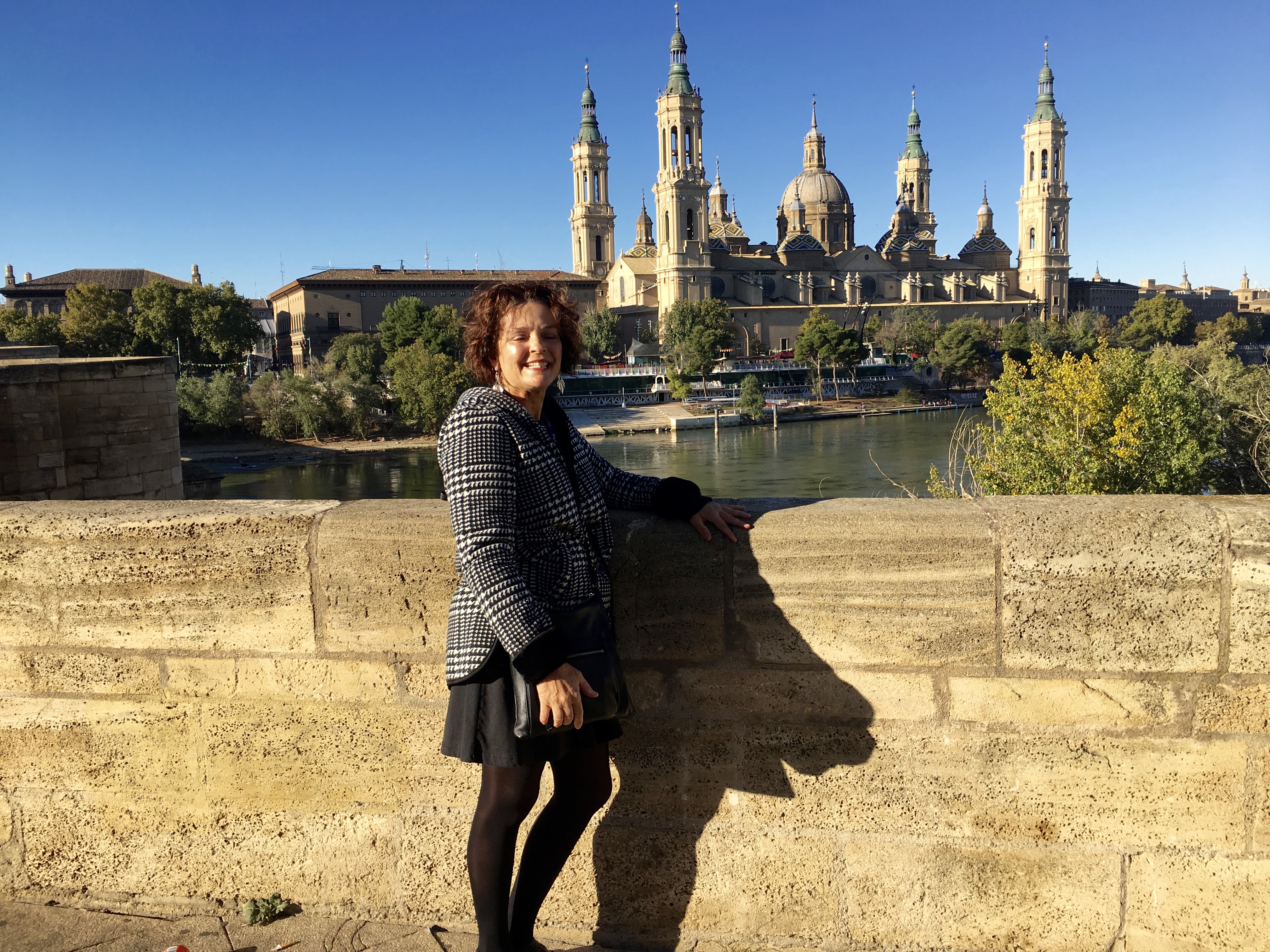
Dorothy Small, a retired registered nurse, has been a vocal survivor advocate with SNAP. Having endured both childhood and adult clergy abuse, she began speaking out long before the #MeToo movement brought wider attention to such experiences. A cancer survivor and grandmother, she now writes about recovery, resilience, and personal freedom, amplifying survivor voices and pressing for institutional reform.
I am reading in the Bible. What I read caused me to research how a priest who is also human and a sinner can serve in persona Christi meaning in the person of Christ since Christ is without sin. Christ is the high priest of the New Testament thus replacing the role the temple and priests served in the Old Testament.
Priests, although imperfect humans, are acting on Christ’s behalf during the administration of the sacraments. Meaning they are instruments which Christ uses much like the apostles. The power isn’t from the priests but from Christ who works through them. Therefore, although their spiritual condition is best if it’s clean it’s not integral when performing the sacraments. Christ’s power works through the instrument that is the priest ordained. He isn’t a mediator but an instrument. During confession the priest serves in persona Christi. We can also go directly through Christ on our own who is the mediator between us and God.
This makes abuse by clergy even more destructive. Although it’s not their power we receive but Christ’s working through them, when they abuse and we see them in that role it can seem like Christ is being used to gain the trust of the prey. It’s the abuse and exploitation of God. We see priest as instruments of Christ’s light serving to connect us with God. Clergy abuse is perpetrated by the dark priest not sourced by God’s light but the other. In my case I was seeking healing through the church which is seen as a hospital and the priests as human instruments that serve as a vessel through which Christ touches us.
There is something “special” about them only in their roles. We can all be as Christ to one another. We all are priests. However, an unordained man cannot administer sacraments including consecrating the Eucharistic host. Only ordained priests can do that through the power of the Holy Spirit.
It’s easy to see how this can override the rational mind and cause us to dismiss red flags that tell us something is off. Add on top of that the indoctrination most of us receive as cradle worshippers. It makes it harder to resist their unique position with God. Especially if the priest brings God into the abuse which many survivors of clergy abuse have reported. The church is referred to as a field hospital. Christ came for the broken, lost, suffering and sinners. The church is also considered the temple which points us to God. It is also referred to the body of Christ. The Vatican is struggling with what constitutes adult vulnerability. There is no question of the vulnerability of children. However, in the hospital of sinners, the broken, lost, and suffering which pretty much describes most of the human condition who are the parishioners coming to Mass to meet Christ and receive His body through the Eucharist then anyone who comes to the
church for worship and healing are vulnerable to abuse of spiritual power and authority. The priest serves as the shepherd of the flock. The shepherd’s role is to guard and protect those entrusted in his care much like physicians and therapists are expected to protect those in their care. Priests serve as physicians of the soul and even as therapist. It is a dual role.
In my situation during the grooming phase the priest, whose dark penetrating eyes not matching his grin asked, “Do you think God is in this?” What a crazy thing for a priest to ask the prey! Of course, God isn’t in abuse of power. The church teaches sex is only in right order in marriage. Priests can’t marry as they are considered married to the church. To God. Therefore, any sexual expression by them is equivalent to cheating on God with the prey. It is the grave sin of fornication they preach about at the pulpit. The chosen victim of his lower ordered drive feels the shame of being in position to be an instrument of something violating God through His ordained instrument. Instead of helping us reach heaven they drag us to hell.
At least I know God was not the source of my abuse or any abuse perpetrated by clergy. This is not the case for many especially for those abused as children. The condition of the priest acting outside of his relationship with God is responsible. It is stemming from the lower primitive instincts. It is from the lower reptilian brain and not the higher rational brain. In the Bible the devil is referred to as a reptile that tempted Eve. The actions of a human predator go against what God is. God is the essence and spirit of light, love, truth, compassion, justice and proper order. Deception, lies, distortion, manipulation, lust, greed, control, evil and exploitation of the abuser oppose God.
Even though an adult I had a child’s mind with father and mother issues related to childhood serious traumatic events. The church is referred to as mother. The priest is called father. In reporting the priest, I suffered the same abuse as I did when I was five and a half and reported my grandfather, who sexually molested me shortly after my mother’s death and abandonment by my alcoholic father, to my grandmother. She slapped me forcefully across the face and swore at me. Not having anywhere else to stay I continued to live with my abuser for about a year until my grandmother decided to hand me over to an orphanage rather than leave my grandfather. My grandfather was protected from his victim. It was the same with the church. The priest is seen as needing protection from the one reporting. The church hates scandal. The one reporting is seen as the cause of the scandal instead of the one in power who caused the violation.
My church abuse deeply pierced my mother wound and father wound deeply repressed. I was in therapy with a psychologist specializing in treating trauma in childhood at the time I was heavily groomed by the priest. He knew that. I shared it with him. Instead of protecting me he used my vulnerability against me. He turned up the volume of grooming by expert manipulation including gaslighting and creating further self-doubt. Along with a professional therapist I turned to the church to help me heal my
relationship with myself through God in what should have been a safe place. Safety is crucial in healing trauma. The church was my only safe place left. Until it wasn’t.
After reporting the priest, I was banned from all ministry in my church by the pastor and hated by many parishioners who once provided love and community. It’s identical with what happened after the abuse by my grandfather. I continued to stay under their roof until it was too hard for my grandmother to live with seeing her husband and his victim
together. Although brought to an orphanage at the last minute an aunt and uncle opted to adopt me. It was another abusive environment. I lost an entire family before I even attended school. I remained in my church community for a couple of years after reporting the abuse until remaining there was exacerbating the trauma. Once again, I lost another family. Unresolved early trauma keeps being reenacted until it is successfully processed.
Although my priest abuser was sent back to his country the pastor who was also his friend continued to serve. He could not handle what happened. He had the problem. He could not tell me to leave that church. It’s public. I wasn’t disruptive. But he certainly could ban me from all ministry punishing me for creating the scandal by reporting it. It’s the only power he had over me and in the situation.
Silence is how the church prevents scandals. Exposure is like holy water to the devil. But the abuse itself was the scandal. God is in the transparency. Reporting it does not go against God who brings light into darkness. Exposing the sickness of abuse brings justice and healing not only for the abused but the church and the priests who maintains their vows which includes honoring boundaries.
Thus, when the priest asked me if I thought God was in this? Yes. He was. Not in what the priest did but in what I did. I reported it. That exposed not only the priest but me. Litigation opens you up to intensive scrutiny. You are exposed. After attempting self advocacy through the church for almost a year did not successfully resolve the situation I sought legal counsel. I learned it took power to address power. Money was the language the church understood when my words were not heard.
But guess what? I used it all as an instrument of healing. Abuse in the church was the domino effect. That domino sent all the others crashing down to the root of my early life which years of therapy could not penetrate. My defensive wall served as a fortress making therapy almost impossible and locking in the pain in an interior prison cell from which there was no escape. There was no way out but through all that rendered me vulnerable in the first place. The abuse in the church served as a winepress and I was the grapes in its clutches.
Carl Jung spoke of personal growth being achieved through confronting and integrating our own darkness of shadow. “Just as a tree needs roots in the earth to grow, a person must delve into their pain, fear and unconscious to achieve wholeness and reach their own potential. A tree can’t grow to heaven until its roots first reach into hell.
Shadow work is long and arduous work reaching into the hell of what is locked into the subconscious. It is a long and slow process.
Sometimes the poison becomes the cure. Today I am actually thankful for the abuse in the church. Because nothing else could break through the firewall constructed from my childhood keeping the truth from reaching me in a way that all I knew would have to die to accept that truth.
Then the new could grow on a healthier foundation restored on real love and truth instead of all I knew love to be which was love associated with abuse, lies and manipulation through grooming which felt like love. Narcissistic abuse has detrimental effects on the brain, mental health, quality of life and relationships. I had to come to the absolute end of my life as a new it. It felt like death. Over time through much work, persistence as well as learning and by providing safety for myself I developed a healthier loving relationship integrating what lie stuck in my subconscious wreaking havoc in my life rendering me a perfect target for predators. Individuation is crucial and possible even at an older age.
It has been an epic spiritual battle between light and darkness. God won.
After a five-year hiatus from church I returned almost two years ago to another parish where I am not banned from ministry. Once again, I am singing in the choir. I didn’t lose my faith. It just went inside deeper. It is stronger. I am stronger. I learned nothing and no one has the power to take the gift of faith from me. Nor will I again surrender my personal power to anyone regardless of their position.
Truly the poisonous experience of clergy abuse became the medicine. Chemotherapy is the poison that played a part in saving my life from double ovarian and fallopian tube cancers thirty years ago which most likely was also related to so much trauma lowering my immune system. It is through God’s power within me that gave me the strength to override the neglected and abused inner child in me who was the target to predators and narcissists fearful of further loss clinging to the illusion of love through grooming.
I finally was able to mature. It is never too late. It is well worth the effort. The amount of work I had to do is how I realized my value and learned what love is outside of abuse. I won’t need love and validation beyond myself which makes one vulnerable to predators.
Discussion
Small’s narrative underscores a crucial point that is often missed in public debate: clergy abuse is not merely a scandal; it is a human rights issue bound up with power, coercion, and psychological injury. The damage is intensified by the symbolism of spiritual authority, which can convert an assault into a crisis of meaning. In this sense, the harm is both personal and structural—an interpersonal violation reinforced by institutional dynamics that may discourage accountability.
The essay’s most challenging contribution is its insistence on complexity. “Poison” and “medicine” are not presented as equivalents, and the metaphor does not romanticize suffering. Rather, it describes a paradox survivors frequently report: that the very arena where harm occurred can become the site where truth is confronted, autonomy is rebuilt, and new forms of strength are forged—sometimes through reclaiming spiritual language, sometimes through leaving it behind, and often through redefining it on the survivor’s own terms.
Small’s account also clarifies what healing does and does not require. It does not require silence. It does not require forgiveness as a condition of social acceptance. It does not require reconciliation with an abuser or an enabling institution. The piece implicitly supports a trauma-informed framework in which credibility, consent, and boundaries are non-negotiable. It also points toward institutional obligations: transparent reporting mechanisms, independent investigations, survivor-centered policies, and a culture that treats disclosure as a call to action rather than a threat to reputation.
Ultimately, Small’s testimony functions as an ethical mirror. It asks readers to distinguish between performative remorse and genuine accountability, between spiritual rhetoric and moral repair. The clearest lesson is not abstract: survivors heal when they are believed, supported, and empowered to define their own recovery—while institutions are required to confront the conditions that allowed abuse to occur in the first place.
Methods
This article is a first-person narrative authored by the contributor and underwent light editorial review for clarity, grammar, and house style.
Data Availability
No datasets were generated or analyzed during the current article. The article text is the intellectual property of the author.
References
(No external academic sources were cited for this interview.)
Journal & Article Details
- Publisher: In-Sight Publishing
- Publisher Founding: March 1, 2014
- Web Domain: http://www.in-sightpublishing.com
- Location: Fort Langley, Township of Langley, British Columbia, Canada
- Journal: In-Sight: Interviews
- Journal Founding: August 2, 2012
- Frequency: Four Times Per Year
- Review Status: Non-Peer-Reviewed
- Access: Electronic/Digital & Open Access
- Fees: None (Free)
- Volume Numbering: 13
- Issue Numbering: 4
- Section: B
- Theme Type: Discipline
- Theme Premise: Theology
- Theme Part: None
- Formal Sub-Theme: None.
- Individual Publication Date: December 15, 2025
- Issue Publication Date: January 1, 2026
- Author(s): Dorothy Small
- Word Count: 2,107
- Image Credits: Dorothy Small
- ISSN (International Standard Serial Number): 2369-6885
Acknowledgements
The author acknowledges her spiritual director, Joan Stockbridge, Father Curtis, and Dr. Hermina Nedelescu.
Author Contributions
Dorothy Small produced and wrote this article as sole contributor with minor editorial notes by Scott Douglas Jacobsen and a reading by Father Curtis.
Competing Interests
The author declares no competing interests.
License & Copyright
In-Sight Publishing by Scott Douglas Jacobsen is licensed under a Creative Commons Attribution-NonCommercial-NoDerivatives 4.0 International License.
© Scott Douglas Jacobsen and In-Sight Publishing 2012–Present.
Unauthorized use or duplication of material without express permission from Scott Douglas Jacobsen is strictly prohibited. Excerpts and links must use full credit to Scott Douglas Jacobsen and In-Sight Publishing with direction to the original content.
Supplementary Information
Below are various citation formats for When the Poison is Also the Medicine: How My Experience with Clergy Abuse Penetrated My Deepest Wound and Became the Catalyst for Healing (Dorothy Small, December 15, 2025).
American Medical Association (AMA 11th Edition)
Small D. When the Poison is Also the Medicine: How My Experience with Clergy Abuse Penetrated My Deepest Wound and Became the Catalyst for Healing. December 15, 2025;13(4). http://www.in-sightpublishing.com/when-the-poison-is-also-the-medicine
American Psychological Association (APA 7th Edition)
Small, D. (2025, December 15). When the poison is also the medicine: How my experience with clergy abuse penetrated my deepest wound and became the catalyst for healing. In-Sight: Interviews, 13(4). In-Sight Publishing. http://www.in-sightpublishing.com/when-the-poison-is-also-the-medicine
Brazilian National Standards (ABNT)
SMALL, D. When the Poison is Also the Medicine: How My Experience with Clergy Abuse Penetrated My Deepest Wound and Became the Catalyst for Healing. In-Sight: Interviews, Fort Langley, v. 13, n. 4, 15 dez. 2025. Disponível em: http://www.in-sightpublishing.com/when-the-poison-is-also-the-medicine
Chicago/Turabian, Author-Date (17th Edition)
Small, Dorothy. 2025. “When the Poison is Also the Medicine: How My Experience with Clergy Abuse Penetrated My Deepest Wound and Became the Catalyst for Healing.” In-Sight: Interviews 13 (4). http://www.in-sightpublishing.com/when-the-poison-is-also-the-medicine.
Chicago/Turabian, Notes & Bibliography (17th Edition)
Small, Dorothy. “When the Poison is Also the Medicine: How My Experience with Clergy Abuse Penetrated My Deepest Wound and Became the Catalyst for Healing.” In-Sight: Interviews 13, no. 4 (December 15, 2025). http://www.in-sightpublishing.com/when-the-poison-is-also-the-medicine.
Harvard
Small, D. (2025) ‘When the Poison is Also the Medicine: How My Experience with Clergy Abuse Penetrated My Deepest Wound and Became the Catalyst for Healing’, In-Sight: Interviews, 13(4), 15 December. Available at: http://www.in-sightpublishing.com/when-the-poison-is-also-the-medicine.
Harvard (Australian)
Small, D 2025, ‘When the Poison is Also the Medicine: How My Experience with Clergy Abuse Penetrated My Deepest Wound and Became the Catalyst for Healing’, In-Sight: Interviews, vol. 13, no. 4, 15 December, viewed 15 December 2025, http://www.in-sightpublishing.com/when-the-poison-is-also-the-medicine.
Modern Language Association (MLA, 9th Edition)
Small, Dorothy. “When the Poison is Also the Medicine: How My Experience with Clergy Abuse Penetrated My Deepest Wound and Became the Catalyst for Healing.” In-Sight: Interviews, vol. 13, no. 4, 2025, http://www.in-sightpublishing.com/when-the-poison-is-also-the-medicine.
Vancouver/ICMJE
Small D. When the Poison is Also the Medicine: How My Experience with Clergy Abuse Penetrated My Deepest Wound and Became the Catalyst for Healing [Internet]. 2025 Dec 15;13(4). Available from: http://www.in-sightpublishing.com/when-the-poison-is-also-the-medicine
Note on Formatting
This document follows an adapted Nature research-article format tailored for an interview. Traditional sections such as Methods, Results, and Discussion are replaced with clearly defined parts: Abstract, Keywords, Introduction, Main Text (Article), and a concluding Discussion, along with supplementary sections detailing Data Availability, References, and Author Contributions. This structure maintains scholarly rigor while effectively accommodating narrative content.

 In-Sight Publishing
Nice post thanks for sharing 🙏🎸
LikeLike