Green Dome Islamic School: Faith-Based Education and Public Partnership in Calgary
Author(s): Scott Douglas Jacobsen
Publication (Outlet/Website): Vocal.Media
Publication Date (yyyy/mm/dd): 2025/12/13
Malik Ashraf is Vice Chairman of the Al-Madinah Calgary Islamic Assembly (Green Dome Mosque) in Calgary and a founding volunteer who has served the community for over 20 years. He helps lead the organization’s education work, including Green Dome Islamic School, a Prairie Land School Division partner school that combines Alberta’s curriculum with Islamic studies and community-based supports. In conversation, Ashraf describes education as guidance—moral, intellectual, and spiritual—anchored in the Qur’an’s call to read and learn. He advocates for equitable public policy, sustainable funding, and community-built institutions that protect children and strengthen families. He documents progress publicly and invites dialogue.
Vice Chairman Malik Ashraf explains how Green Dome Islamic School in Calgary blends Alberta curriculum delivery with Islamic guidance through a public–community partnership with Prairie Land School Division. He grounds the school’s mission in Qur’anic imperatives toward learning, framing education as lifelong instruction and moral direction. Ashraf recounts years of municipal red tape and the challenge of fundraising for a faith-based project while Catholic options remain embedded in tax policy. Students Rahim and Irfan describe wanting safer, higher-performing schools in Northeast Calgary and emphasize service, faith, and possibility. The interview closes with aspirations for expansion and sustainable support for families.
Scott Douglas Jacobsen: What is your name and title?
Malik Ashraf: Malik Ashraf. I am the Vice Chairman of Al Madinah Calgary Islamic Center.
Jacobsen: How long have you worked there?
Ashraf: I am a volunteer and a founding member for over 20 years.
Jacobsen: What was the official founding day of the school?
Ashraf: Construction started in August 2022.
Jacobsen: What got you involved in this work as a volunteer, and what has kept you in it for over 20 years?
Ashraf: My passion to give back: love of God, love of the Prophet Muhammad, peace be upon him, and care for children and families. Keeping them educated, informed, safe, and healthy—mentally, physically, and spiritually.
Jacobsen: Are there particular verses in the Quran that inform your emphasis on education?
Ashraf: Yes. The Quran strongly emphasizes knowledge and learning. The first revelation begins with “Iqra”—Read (Quran 96:1). It establishes the foundation for Islamic emphasis on education. The verse I referred to earlier is the beginning of Surah Al-Baqarah (2:1–5), which states, “Alif, Lam, Meem. This is the Book about which there is no doubt, a guidance for the God-conscious.” It describes belief in God, life after death, the prophets, the angels, and revelation. These verses frame the Quran as a book of guidance, and guidance itself is a form of education.
Jacobsen: So in this sense, do you see education more as guidance rather than instruction?
Ashraf: Education is the path; it is guidance. Somebody must instruct and guide you. A child—I have a son, he is five years old—is innocent and knows nothing. As his father, I take responsibility for guiding him and teaching him how to speak, eat, dress, walk, and interact with others. That is guidance; that is the path. Islam is the path we believe is the right path. You need guidance, and the Quran is the book that provides that guidance.
Jacobsen: Regarding the style of education, how would you describe it, and how would you compare it to other systems?
Ashraf: The educational style at Green Dome Islamic School is beautiful. Our approach is something we are seeing for the first time in Calgary. It is a public–private partnership: the public school division, the government, and the community, as a faith-based organization, working together. We have begun this excellent partnership model. The government teaches the Alberta curriculum. As an organization, you built this school with donated money, and you provided the $25-million construction. If you add the land, it is about a $35-million project. You gave it to the government for free to educate children, and your task is to teach faith.
We teach religion, and the government teaches the Alberta curriculum. The model is beautiful. There are highly trained, experienced teachers who teach the Alberta curriculum—principal, vice-principal, about twelve teachers, and administrative staff. We, as an organization—AMCIC—handle the faith-based component. We manage discipline, uniforms, and the religious part of the program. We have three teachers whom we hire and pay for. It is a beautiful partnership, and it is going successfully.
Jacobsen: What would you consider the core provisions of the system, and what secondary layers support students in the mission of education and guidance?
Ashraf: The core provisions are the Alberta curriculum and the faith component. That is the foundation. The primary layer is that each organization has taken its task: the government—through the school division—teaches the Alberta curriculum, and we teach faith. The division is the Calgary-based Prairie Land School Division, which delivers the Alberta curriculum. Our provisions, primary and secondary, are aligned because we follow the book, the Quran, and our curriculum, which already exists. Another school has been using the same curriculum, and it has been very successful.
Jacobsen: What about red tape with the Calgary Council and government? I am told this is an issue. One way of framing it is that it takes a long time, but once something is finally approved and built, you know it is solid. Another way of framing it is that there is a lot of red tape, and it takes too long. Why can businesses get things fast-tracked, while this cannot?
Ashraf: You are right, absolutely. That is my painful nerve—you pinched the nerve that has been there for ten years. It was more than ten years for the land-use part alone. The delays were due to the City of Calgary’s bureaucracy and the departments involved. Our file was there, and the file managers were on holiday. File managers did not know what they would do. It went from one manager to another. By the time some progress had been made, the manager was transferred to another department. A new file manager came in, and he asked for everything again, from the beginning. It takes two or three years that way. One councillor supports you; then the councillor changes. Government bureaucracy—when you keep calling them—it was a painful process to complete the land-use development.
Jacobsen: If you look at the earliest graduates—those who would have been the oldest—how old would they be now? If they had graduated when the first school was operating, what is the age range from the earliest graduates to the current students? For example, the young man beside you, Irfan—how old are you?
Irfan: Twenty.
Ashraf: He was probably five—actually three—years old when we started in 2008. Now he leads the prayer, he does fundraisers, but he did not have the opportunity to attend that school. But he had the chance to learn everything within our community, with the leadership of Professor Imam Syed and the MOSS project, and at home, his mother taught him. So we had avenues, but he did not have this chance.
Jacobsen: Rahim—how old are you now?
Rahim: Twenty.
Ashraf: So these two—seventeen years. If they had been able to get admission and we had been able to build the school back then, they would be in university today, having come through our school system.
Jacobsen: So they would be at that age. What are you both studying at university?
Rahim and Irfan: We are both studying finance.
Jacobsen: Both finance? Does the school emphasize finance?
Ashraf: Yes. Definitely. We love our Alberta education. We plan to expand. Right now, it is Kindergarten to Grade 9. We plan to grow from a high school to a college, and eventually to a university. We plan to teach everything. A child comes to us in ECS—before kindergarten—and leaves us when he is a professional going out to work: a journalist, a doctor, a scientist, a mathematician, an engineer, an IT expert—anything. That is the mission. This has been done by other faith communities, especially those that have been in Canada longer.
Jacobsen: Where I lived in Langley, the evangelical churches do something similar. The church community had its own private Christian school. I do not think they had public–private partnerships, but at least some of them were fully private. They teach K through 12, and many families send their children to Trinity Western University—or to one of roughly ten private Christian universities in Canada. Trinity Western is the largest. So that model is well established. If you apply a principle of universalism, you would have to argue that if one faith community can do it, others should be able to do it also—or, if not, explain why not. The only point of pushback sometimes comes at the post-secondary level—between private and public. You can have public–private partnerships at the K–12 level, but it may be tougher to make that case at the university level.
Ashraf: What I learned is that it comes down to processes and procedures. When we started this project, I did not know many things. I learned and grew with Green Dome School. I learned systems, built systems, made contacts, and met many people—including yourself today. That is how I met so many people. What I learned is that you cannot create any new government-funded universities or colleges in Alberta, but you can create private ones. So we can always proceed as a private university or private college. As long as you follow the policies and procedures, have strong courses, qualified teachers, and meet all the requirements for offering university-level education, you can obtain the license.
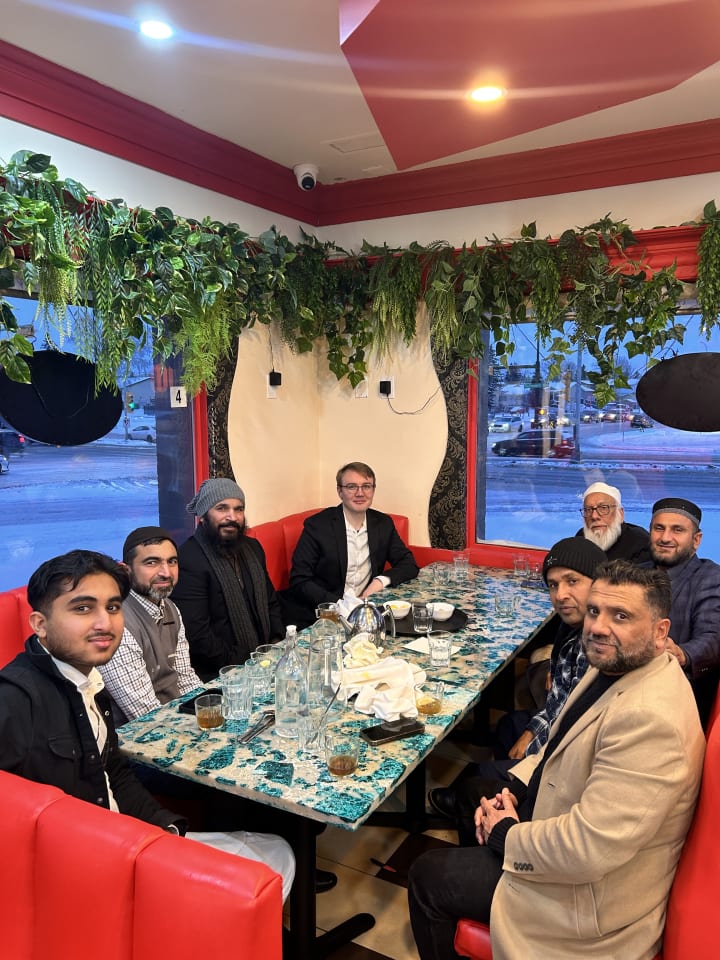
Jacobsen: Yes, and some of those private universities have had their share of controversies—Trinity Western, Redeemer, Canadian Mennonite University, and others—but those are the typical institutional hiccups that happen. One thing I would advise is to study where other institutions have run into roadblocks and avoid repeating those mistakes. Looking forward, you currently run K through 9. You are looking forward to building a third storey on the building or to finishing its interior. Is that expected next year?
Ashraf: 2026.
Jacobsen: And then, you will grow from 360 students to 550?
Ashraf: Yes, that is the plan.
Jacobsen: Once you get that additional facility built, what does that mean in terms of staffing? What does that mean in terms of interactions across multiple generations of students? We often find elementary, middle, and high schools separated—different buildings, different properties, different systems. Sometimes one or two are merged, but not usually all of them. Your plan appears to be a complete merger of the same property, mainly in the same building. How do you see that integration happening culturally across such wide age groups of non-adults?
Ashraf: You’re right. We have thought about that carefully, and I have talked to these students—these young men—and to other boys and girls at different ages, especially those who have gone to school here and have seen the challenges in this society. What we learned, and what is included in our business plan, is that we will not merge the high school with this building. When we start high school, it will be on a separate campus, because the age difference is so significant. You may have a kindergarten child and a Grade 12 student in the same space—that is too wide a difference.
That is why we designed the building with separate class sections. On the main floor, it is exclusively early childhood and kindergarten—no older children. On the first floor, all grades from Grade 1 to Grade 7. On the third floor, it will be Grade 8, and possibly Grades 7, 8, and 9 if needed. We may increase the number of sections—A, B, C—but we will not have all students on the same floor. This maintains segregation of age groups, discipline, and each child’s comfort level.
Jacobsen: You mentioned school performance. It was at 95 percent.
Ashraf: Yes—95 percent in the first year. Another thing I want to share is that the first year of Green Dome School was not in this building. It was in portables and in the mosque. This is our second year of school, but our first year in the main building. Teaching in portables or in a mosque doesn’t matter if you have passion. We had love, discipline, teachers, land, community, and parents. We sincerely appreciate them—they stood with us, beside us, behind us.
We told the community we were going to build a school on this land, and they believed in us. We told them the school would start in August 2024. They believed us and registered their children, even though the building was not ready. Because of red tape, we were unable to secure occupancy on time, but we did not delay the start of the school year. We opened in portables and taught the kids—even in brutal weather. They would leave the portables and go to the mosque to use the washroom.
But the discipline, care, education, and supervision policies were so well placed and organized that, even under those conditions, our school achieved 95 percent academically in the province.
Jacobsen: Historically, the longest-standing religious educational institution in Canada has been the Roman Catholic school system. The Catholic demographic was extremely large. In 1971, Christian affiliation in Canada was over 90 percent. By the 2021 census, based on my projections from the data, it is now just under 50 percent—less than half of the population. Catholics are only a subset of that. Religious institutions with long histories have enjoyed many privileges in education and have well-established paths within the systems they operate.
Are there parts of the Roman Catholic education system—or any other religiously integrated systems—that you looked at when developing your own? Any regular education system with a religious overlay? Or did you start from scratch in designing curricula, systems, infrastructure, and so on?
Ashraf: What I believe in life is that you do not need to reinvent the wheel. You rotate it—as long as you find the size that fits. We have our own curriculum in the Quran and Hadith, as you know. But we met with Prairie Land School Division. They were already operating another Islamic school in Calgary: Al-Amal Academy. We went there, visited, and observed their operations. We studied their system and adapted it. So we adopted the same formula that was already in place, but the management here is ours.
At Al-Amal, they have their own management, but here at Green Dome, we manage the school. The formula was established, and the curriculum—the Alberta curriculum—is the same one Prairie Land teaches there. Al-Amal is a remodelled building; it was initially an office building converted into a school. Our building, by contrast, is state-of-the-art and purpose-built for school use. That is the main difference. The curriculum itself is consistent.
Jacobsen: Have you had any other media coverage?
Ashraf: Many—across all the media. I am also active on social media myself. When we started construction of Green Dome School, God put it into my mind to begin documenting the process. I started making weekly update videos every Thursday. We had our weekly meetings with the construction company to review progress—what had been done the previous week, where we were that day, and what was planned for the next week. I made weekly virtual video updates for over 2.5 years.
Jacobsen: Wow. On TikTok, YouTube, Instagram?
Ashraf: On Facebook. I am on TikTok, YouTube, and all platforms, but this series was on my Facebook page. People around the globe watched it. Every Thursday, I did a live update, and we had a variety of personalities—leaders from the City of Calgary, faith leaders, politicians, school teams, parents, lawyers, teachers, community members, realtors, sponsors, imams, and members of interfaith councils. Every week, I invited a different guest. They were living with me as I showed them the construction.
Everything is on my Facebook: ground construction, first level, second level, framing, staircases, concrete being poured, and construction crews working. At the end, I asked each guest: “What do you think? What did you see? What do you feel? Share honestly with the public.” That was my style. Many community members and media representatives attended.
Jacobsen: What is your biggest takeaway from school?
Irfan: I think you have to do more. There is more to life than yourself. Your own personal matters will continue regardless. You have to take time for others to make life better.
Rahim: We always talked about how much we wished we had a facility like this to go to school in, and now that we’re in it, it feels surreal. When we were little, we always wanted a nice school to go to—somewhere with other people our age. My school used to smell like old wood.
Jacobsen: Old wood was my school, too.
Rahim: Exactly—you know how it is. We wanted a nice school where we could be with friends who shared our religious and cultural values, and somewhere we could learn. After school, we would have to drive to the mosque for classes. Now, when you go to one place and all your needs are met, it is a lot easier for your family and your parents.
Jacobsen: It saves gas money.
Irfan: Yes, that too. Calgary in the winter means the heating bill is another story, but yes. I would also add that one major takeaway from this entire project is that anything is possible—literally anything. If you were part of this project and saw the hurdles we had to overcome, you would know that with enough passion and effort, anything is possible.
Jacobsen: Because it is crowdfunded—an entirely crowdfunded project.
Ashraf: Yes.
Jacobsen: To the tune of what—twenty-five million?
Rahim: Twenty-five million. All crowdfunded—from white-collar workers, blue-collar workers, and new immigrants. Where there is a dream and a will, there is a way. And most importantly, the blessing of God.
Jacobsen: What is your favourite excerpt or verse? Quran or Hadiths.
Irfan: “The friends of Allah have no fear, no doubt, and no regret.” What we mean by “friends of Allah” is people who are close to God. If you are devoted to God and trust God, you develop a concept of reliance. This school would not have been possible without that. It seemed impossible at first. It was a decade-long act of faith. We proposed the plan, and people said, “Nice idea, but how are you going to do it?”
If you have faith in God and trust in God, and you have a good personal relationship with God, He opens paths for you—paths where you will not fear taking them, paths where you will not doubt continuing.
Rahim: Another one of my favourite sayings—one I use when fundraising—is from the Prophet Muhammad, peace be upon him: “The best among you are those who are most beneficial to others.” Time and time again, we see greed, a lack of care for others, and a lack of kindness. But God loves most those who do the most for others. We need to take time out of our personal lives to do something for others and leave an impact greater than ourselves. Selfishness is not the way. We believe in a life after death, and the way you achieve that afterlife is by doing more than for yourself—by doing for God and by being beneficial to the world, not only to yourself.
Jacobsen: You have seen obstacles both personally and institutionally. What would you say is the most significant challenge?
Ashraf: Money. The same problem every charitable project faces. I have raised this question directly with the Premier. I have raised it with the Minister of Education. I have asked councillors, MLAs, MPs, and ministers. I ask them: Canada identifies as a non-faith country—at least now it does. So when we want to build Islamic schools, we do not receive any funding.
Any grant, anything—at any level of government. If you approach them and ask for funding, they will say, “What is your purpose?” If you are doing entertainment, culture, or social programs, they have money for you. But if you say you are running a faith-based school, the answer is no. All the doors shut. In the name of secularism, every door is closed.
Yet when you look at your property tax form, there is a column asking: Where do you want your school taxes to go—public school or Catholic school?
So I say: Why is there not a third column—”Other”? Under “Other,” you could list Sikh schools, Muslim schools, Hindu schools, or non-faith independent schools. Let people direct the money they are already giving. Right now, we are forced to pay property tax, and the government decides how it is used. But if we want to build a school for our children, we do not receive any of the money that was taken from us. We pay provincial tax, then property tax, then obligatory insurance, levies—everything.
Jacobsen: Sounds like a libertarian talk show.
Ashraf: When I come back to the government asking for just a portion of the taxes I have paid, because I want to do something for my children, my family, and my community, they put roadblocks everywhere. That is the challenge.
I tell them: You go to a community where 90 percent of the residents are Muslims or Hindus, and in the middle of that community, you open a Catholic school. I ask them, “Did you ever ask the community what their needs are?” And the Catholic school receives all the funding.
Jacobsen: That is historical inertia. In 1971, the country was over 90 percent Christian. These systems were built then. But now the demographics have changed. But the systems have not caught up.
Ashraf: Now things are changing. They are learning. But someone needs to tell them—and I am doing that advocacy. They are good people; do not get me wrong. They need to be informed.
Jacobsen: We are living in systems created by people who are no longer alive. The Catholic school system was established a long time ago; its architects are no longer here.
Ashraf: True. And now this partnership—public, government, and nonprofit charity—is a new model. It is happening. Now I am advocating for them to give us rent for the building. It is an 80,000-square-foot brand-new building. We gave it to the government. Yes, they are teaching children there, but they are not paying rent, brother. I still have to raise $200,000 every week.
The government is using the building and educating the children, but we—as the public—have to make the $150,000 monthly mortgage payment. This is my fight with them. I am trying to convince them, and they are working on it. I had a meeting with the Minister of Education. He agrees. He is a lovely gentleman. He said, “It makes sense, Malik, what you’re saying.” And I said, “Yes. I am not asking for special favours. I am saying: we built this school with donations from blue-collar workers. They are Canadian. They are taxpayers. They are residents. Their kids attend this school. All they are asking is: don’t keep coming back to us for donations now that the school is built. Help us manage it.”
So I am asking for either an ATB no-interest loan (it is the government’s bank) or monthly rent. Please do not take money from us. Go into the market and see the going rental rate per square foot. We are being given 95 cents per square foot. The market rate is about $30. Why 95 cents? Because that number was decided 50 years ago.
There was no updated exercise. We are trying to set a precedent for the future. We are trying to open doors for other faith organizations or private schools. We want the public and the government to work together. The advantage of this formula is that the government pays high wages to teachers, thereby attracting the best teachers to the school.
We have excellent teachers because the government pays them. We, as a faith-based organization, specialize in faith. So we hire the best teachers on our side. The students benefit from the best teachers in the Alberta curriculum and the best teachers for faith.
But right now, as a management team, we are under strain. We need to raise money every month. That is a big task, and we are working on it. Hopefully, we will resolve it soon.
During construction, every door was closed. Any door we knocked on—once they found out we were doing a faith-based school—they said, “Bye.” No grants for faith-based schools.
Jacobsen: Which is critical, because Catholics have doors already open in policy. It is in the government documents—they explicitly list “public,” “Catholic,” and “other.”
Ashraf: Yes. I know. There are movements in Canada—probably at least seven—working to establish a single public secular school system. They are trying to abolish the Catholic privilege. But they encounter similar difficulties. It is hard to change historical inertia.
Jacobsen: It takes time. The government is slow.
Rahim: Same thing that Malik Uncle said. It is no longer a 90 percent Catholic country. There are many new faces, new cultures, and new religions. And the government has not adapted to people’s needs.
If we are genuinely doing a public service and doing the government a favour by educating children, then we deserve a little help. We are not asking for everything to be funded. But we expect some help. We have done so much as volunteers, and we are still following the government system and teaching the Alberta curriculum. We expect a little support. That is our challenge.
Jacobsen: Challenges for you as students—formally.
Irfan: One challenge, at least for me, is the quality of education in this region—specifically, Northeast Calgary. The school I went to—and the schools in our area—truthfully are not very good. They smell like old wood and urine. It is not about the building quality; it is the quality of education. A lot of people I know—friends and relatives—did not make it to university or post-secondary education. Not because they did not want to, but because the schools underperformed. They did not give career advice. You would go to advisors, and they did not provide proper information.
For me, this project addresses a personal problem many people face. I hope this school becomes an avenue to reform the quality of education and raise the standard of this region, so the public schools here can also see what is happening and what can be improved. Luckily, by the grace of God, I was able to pull through academically. I also looked at other schools across the city.
Those schools are relatively good. People are much more competitive academically. Performance is better, and resources are better. Northeast Calgary is underfunded. That is apparent through our advisors and teachers, who are not excelling to the same extent. So we struggle with education here, and I hope this school can become a standard for better education. Over the past year, our school has been performing well, and I hope it becomes a model for that.
The high schools we went to—the environment in the North is not geared toward making it to post-secondary. The environment is, you know, “high school, whatever.” A lot of kids from my high school did not even graduate. But when you go to another high school in the South, or in a different part of the city, everyone expects you to go to university. You get made fun of if you do not.
But in our area, it is the complete opposite. It is the culture—peer-to-peer culture. And on top of that, not only are many students not making it to university, but a significant number are going into unhealthy activities. There is more drug use, more violence, especially. At schools like Nelson Mandela High School and Lester B. Pearson, incidents occur almost every week.
We wanted to spare our people and our society from these things. Hopefully, this school can be the start of something great for the Northeast—for the underserved population here. We want to set a standard for the other schools and motivate them to improve.
Jacobsen: Thank you for the opportunity and your time, everyone.
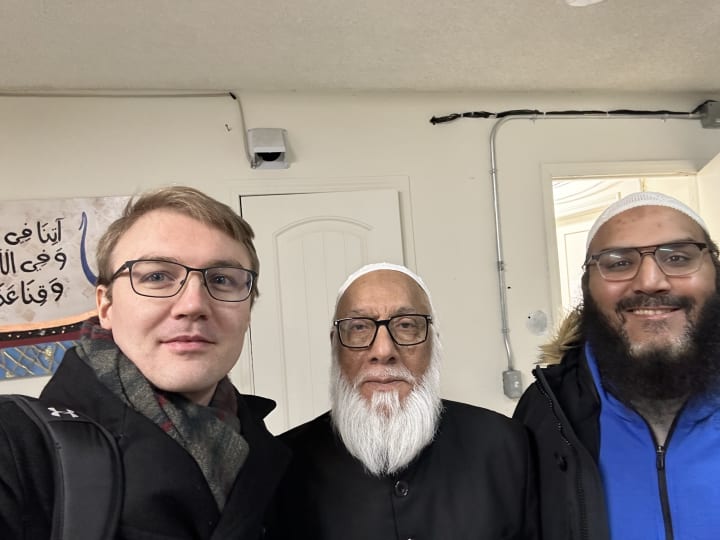
Scott Douglas Jacobsen is the publisher of In-Sight Publishing (ISBN: 978-1-0692343) and Editor-in-Chief of In-Sight: Interviews (ISSN: 2369-6885). He writes for The Good Men Project, International Policy Digest (ISSN: 2332–9416), The Humanist (Print: ISSN 0018-7399; Online: ISSN 2163-3576), Basic Income Earth Network (UK Registered Charity 1177066), A Further Inquiry, and other media. He is a member in good standing of numerous media organizations.
Last updated May 3, 2025. These terms govern all In Sight Publishing content—past, present, and future—and supersede any prior notices. In Sight Publishing by Scott Douglas Jacobsen is licensed under a Creative Commons BY‑NC‑ND 4.0; © In Sight Publishing by Scott Douglas Jacobsen 2012–Present. All trademarks, performances, databases & branding are owned by their rights holders; no use without permission. Unauthorized copying, modification, framing or public communication is prohibited. External links are not endorsed. Cookies & tracking require consent, and data processing complies with PIPEDA & GDPR; no data from children < 13 (COPPA). Content meets WCAG 2.1 AA under the Accessible Canada Act & is preserved in open archival formats with backups. Excerpts & links require full credit & hyperlink; limited quoting under fair-dealing & fair-use. All content is informational; no liability for errors or omissions: Feedback welcome, and verified errors corrected promptly. For permissions or DMCA notices, email: scott.jacobsen2025@gmail.com. Site use is governed by BC laws; content is “as‑is,” liability limited, users indemnify us; moral, performers’ & database sui generis rights reserved.

 In-Sight Publishing