Conversation with Enos Mafokate on Early Life and Development as an Equestrian (1)
Keywords: Enos Mafokate, equestrian, Alexandra Township, apartheid, South Africa
Scott Douglas Jacobsen
In-Sight Publishing, Fort Langley, British Columbia, Canada
Correspondence: Scott Douglas Jacobsen (Email: scott.jacobsen2025@gmail.com)
Received: July 10, 2025
Accepted: July 13, 2025
Published: November 8, 2025
Abstract
This interview traces the early life of South African equestrian pioneer Eno Mafokate, beginning with his birth on February 15, 1944, in Alexandra Township, Johannesburg. Through a childhood shaped by apartheid segregation and cultural separation within Black communities, Mafokate recalls family cohesion, parental devotion to education, and the contrasting geographies of Alexandra and nearby Rivonia after the family’s 1949 move. He describes the hardship and discipline of farm labor—punctuated by violence and rigid racial etiquette—as well as a formative affinity for animals that drew him away from peer socializing toward hours spent riding a donkey and imagining a horse. The conversation situates everyday experiences—housing, food, access to amenities, and exposure to animals—within the racialized hierarchies that structured life in Gauteng during the 1940s and 1950s. Together, these memories illuminate how love, values, and proximity to animals seeded an enduring vocation while revealing the social architecture that limited opportunity and dignity for Black families. Mafokate’s reflections offer a ground-level view of childhood under segregation and the early stirrings of an equestrian life built from scarcity, resilience, and imagination.
Keywords: Alexandra Township childhood experiences, Apartheid segregation and daily life, Donkey riding as equestrian genesis, Family cohesion love and support, Family move to Rivonia 1949, Farm life hardship and lessons, Gauteng Province 1940s social context, Parental occupations and values education, Racialized access to resources, Rivonia farm animals and environment, Violence and power dynamics farm, Youth identity shaped by animals
Introduction
Eno Mafokate’s childhood begins in Alexandra Township—Johannesburg’s dense, multiracial satellite formed in the early twentieth century—and unfolds under the everyday strictures of apartheid-era separation. Born on February 15, 1944, he grew up in a world mapped by race and, within Black communities, by culture, where family love and a premium on schooling counterbalanced scarcity and social constraint. His parents, Maria, a domestic worker, and Alfeos, a respected builder, modelled patience, moral instruction, and an unambiguous emphasis on education as the route to dignity.
A family move in 1949 from Alexandra to Rivonia marked a shift in material conditions without dissolving the larger racial hierarchy. Life on a farm in Rivonia brought access to amenities—better food, domestic animals, even a swimming pool—alongside the discipline and danger of farm labor, including punishment for breaching racial etiquette. Within this setting, Mafokate’s affinity for animals matured: rather than seek parties and crowds, he chose time with creatures, riding a donkey while imagining a horse, sketching the outline of a vocation decades before it would be recognized.
These formative scenes—domestic solidarity, farm hardship, and the solace of animals—offer a close view of Gauteng in the 1940s and early 1950s. They also prefigure the arc of a life in equestrian sport that began not with privilege but with persistence, joy, and the stubborn exercise of imagination against the limits of a segregated society.
Main Text (Interview)
Interviewer: Scott Douglas Jacobsen
Interviewee: Enos Mafokate
Scott Douglas Jacobsen: Starting with 1944, your birth and early childhood on February 15 in Alexandra Township, Johannesburg, South Africa. What was life like in Alexandra Township and the wider Gauteng Province for families in the 1940s?
Eno Mafokate: In 1940’s families were separated by race; Indians, Whites, Blacks and Colored. And within the black community we were also separated according to our different cultures, this naturally made life difficult and challenging.
Jacobsen: What were your parents’ names?
Mafokate: Mother was Maria and Father was Alfeos.
Jacobsen: What was their work and parenting style?
Mafokate: My Father was a well known builder and Mother was a domestic worker. They were loving and patient parents, they focused on teaching us good values and morals and prioritised education over everything.
Jacobsen: They must have been some of the first families in Alexandra, as the township was established in 1912 by H.B. Papenfus, proclaimed a year before the South African 1913 Land Act. Black people could own land there under a freehold title as a result. Notably Hastings Banda, Hugh Masekela, Kgalema Petrus Motlanthe, Nelson Mandela, Samora Machel, Alfred Nzo, and Joe Modise, came from there.
You work growing up on a farm comes with all the great lessons about life and death, and hardship, one finds on a farm. What early memories seem to reflect benign and noteworthy aspects of ordinary farm life?
Mafokate: My memories of farm work are ones of hardship. I remember the farm owner punching me for calling his daughter by her first name as he wanted me to call her Miss.
Jacobsen: What events mark more momentous points of early life?
Mafokate: Instead of going out with friends I always chose and preferred to spend time with animals. Specifically riding a donkey. Choosing this lifestyle over a party lifestyle with friends marked who I would become growing up.
Jacobsen: How close was the family?
Mafokate: Very close, there was lots of love and support.
Jacobsen: How important was family?
Mafokate: Family was a special thing to me. Family showed me that life is non existent without love and support from others.
Jacobsen: Moving from Alexandra to Rivonia in 1949, these are key and formative years. My parents divorced only a little later than this age. Any geographic or family change like that is stressful. How was the transition for you?
Mafokate: My parents never divorced they got separated by death.
Jacobsen: Why did the family move?
Mafokate: Family moved because my Father found a Job as a builder in Rivonia so we had to move closer to his work place.
Jacobsen: Rural has a general character to it, rustic in degrees. How was rural life in Alexandra compared to Rivonia?
Mafokate: Life in Rivonia was more established than Alexandra. In Rivonia we lived at a farm house so we had access to more facilities like swimming pools, we got to play and look after.
domestic pets and we had better food to eat. Life in Rivonia was so much better than the life we lived in Alexander township.
Jacobsen: A historic place with the Rivonia Trial moving the South African dial towards a more universally fair and just society with the removal of Apartheid (1963-64). I love the “I am prepared to die speech,” mostly for the crowd reaction.
Jacobsen: What animals were common in these environments–farms differ?
Mafokate: In Alexander it was common to see dogs and horses that were ridden by police men. In Rivona it was common to see cows, horses, sheep, pigs, chicken, birds, rabbits, snakes. Your typical farm animals. Animals in Rivonia were well kept and fed compared to Alexander.
Jacobsen: Your first introduction to horses was not necessarily a “horse,” but more a ‘horse,’ i.e., a donkey. That’s cute and makes me giggle. How did you feel getting on the donkey? I am reminded of the experiences of Canadian and American show jumping Olympic Silver Medallist Mac Cone describing early experiences. He used what was around him, what was available–much more controlled and regulated environment now. Same style of background, but different culture, different nationality, almost the same cohort, different material deficiencies necessary for a proper, full equestrian experience–a donkey experience, nonetheless. How was the memorable exchange with the white boy?
Mafokate: Being my optimistic self, It is a memory of pure excitement and joy. Nothing else mattered when I was riding that donkey and picturing it being a horse.
Jacobsen: How does this highlight the racial barriers of the time?
Mafokate: It highlighted the different and disadvantaged standards of living based on race. It showed that only white people deserved and could have the finer things in life.
Jacobsen: Thank you for the opportunity and your time, Mr. Mafokate.
Discussion
The conversation with Eno Mafokate illustrates how personal memory functions as social history. His early recollections—marked by separation, labor, and tenderness—compose a child’s‑eye record of apartheid’s structure before the term was institutionalized. Alexandra Township in the 1940s existed as both opportunity and limitation: one of the few areas where Black families could own land under freehold title, yet constrained by the invisible boundaries of race and class. Mafokate’s testimony confirms how these dualities shaped both identity and aspiration. The constant thread of parental guidance—love, moral instruction, and the insistence on education—emerges as a counterweight to social fragmentation.
Equally revealing is the move to Rivonia. It represents more than geography: it embodies a microcosm of South Africa’s social stratification. Access to better food and recreation coexisted with systemic inequality, as a young boy’s act of addressing a white girl by name invited physical punishment. Such experiences etched into Mafokate an awareness of dignity and hierarchy long before he entered public life. Yet rather than curdling into resentment, these lessons transformed into empathy and discipline. His companionship with animals, especially the donkey he imagined as a horse, highlights a psychological escape into imagination—a gesture that later matures into vocation.
This early pattern of substitution—using what was available to reach toward what was denied—anticipates the spirit that would define Mafokate’s equestrian career. It also reframes racial segregation not only as an apparatus of exclusion but as a crucible that forced improvisation and resilience. The donkey, in this sense, becomes a metaphor for the creative repurposing of circumstance: humility turned into mastery.
The discussion therefore extends beyond nostalgia. It underscores how moral formation, aesthetic sensibility, and civic awareness can emerge from constrained environments. Mafokate’s childhood story becomes an anatomy of human development under pressure—how affection within family networks can mitigate systemic violence, and how an affinity for animals can cultivate empathy that resists dehumanization. The interview closes with gratitude, but its quiet revelation is that endurance and imagination are inseparable from justice: the small, steadfast acts of seeing a donkey as a horse forecast the larger transformation of envisioning an equitable society.
Methods
The interview was conducted via typed questions—with explicit consent—for review, and curation. This process complied with applicable data protection laws, including the California Consumer Privacy Act (CCPA), Canada’s Personal Information Protection and Electronic Documents Act (PIPEDA), and Europe’s General Data Protection Regulation (GDPR), i.e., recordings if any were stored securely, retained only as needed, and deleted upon request, as well in accordance with Federal Trade Commission (FTC) and Advertising Standards Canada guidelines.
Data Availability
No datasets were generated or analyzed during the current article. All interview content remains the intellectual property of the interviewer and interviewee.
References
(No external academic sources were cited for this interview.)
Journal & Article Details
- Publisher: In-Sight Publishing
- Publisher Founding: March 1, 2014
- Web Domain: http://www.in-sightpublishing.com
- Location: Fort Langley, Township of Langley, British Columbia, Canada
- Journal: In-Sight: Interviews
- Journal Founding: August 2, 2012
- Frequency: Four Times Per Year
- Review Status: Non-Peer-Reviewed
- Access: Electronic/Digital & Open Access
- Fees: None (Free)
- Volume Numbering: 13
- Issue Numbering: 4
- Section: A
- Theme Type: Theme
- Theme Premise: Global Equestrianism
- Theme Part: 1
- Formal Sub-Theme: None.
- Individual Publication Date: November 8, 2025
- Issue Publication Date: January 1, 2026
- Author(s): Scott Douglas Jacobsen
- Word Count: 791
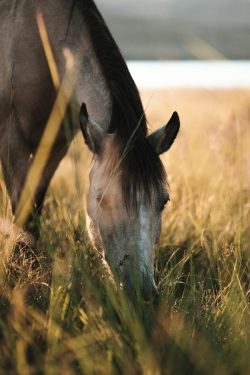
- Image Credits: Photo by Jean van Wyk on Unsplash
- ISSN (International Standard Serial Number): 2369-6885
Acknowledgements
The author acknowledges Enos Mafokate for his time, expertise, and valuable contributions. His thoughtful insights and detailed explanations have greatly enhanced the quality and depth of this work, providing a solid foundation for the discussion presented herein.
Author Contributions
S.D.J. conceived the subject matter, conducted the interview, transcribed and edited the conversation, and prepared the manuscript.
Competing Interests
The author declares no competing interests.
License & Copyright
In-Sight Publishing by Scott Douglas Jacobsen is licensed under a Creative Commons Attribution-NonCommercial-NoDerivatives 4.0 International License.
© Scott Douglas Jacobsen and In-Sight Publishing 2012–Present.
Unauthorized use or duplication of material without express permission from Scott Douglas Jacobsen is strictly prohibited. Excerpts and links must use full credit to Scott Douglas Jacobsen and In-Sight Publishing with direction to the original content.
Supplementary Information
Below are various citation formats for Conversation with Enos Mafokate on Early Life and Development as an Equestrian (1).
American Medical Association (AMA 11th Edition)
Jacobsen S. Conversation with Enos Mafokate on Early Life and Development as an Equestrian (1). November 2025;13(4). http://www.in-sightpublishing.com/mafokate-equestrian
American Psychological Association (APA 7th Edition)
Jacobsen, S. (2025, November 8). Conversation with Enos Mafokate on Early Life and Development as an Equestrian (1).In-Sight Publishing, 13(4).
Brazilian National Standards (ABNT)
JACOBSEN, S. Conversation with Enos Mafokate on Early Life and Development as an Equestrian (1). In-Sight: Interviews, Fort Langley, v. 13, n. 4, 2025.
Chicago/Turabian, Author-Date (17th Edition)
Jacobsen, Scott. 2025. “Conversation with Enos Mafokate on Early Life and Development as an Equestrian (1).” In-Sight: Interviews 13 (4). http://www.in-sightpublishing.com/mafokate-equestrian.
Chicago/Turabian, Notes & Bibliography (17th Edition)
Jacobsen, S. “Conversation with Enos Mafokate on Early Life and Development as an Equestrian (1).” In-Sight: Interviews 13, no. 4 (November 2025). http://www.in-sightpublishing.com/mafokate-equestrian.
Harvard
Jacobsen, S. (2025) ‘Conversation with Enos Mafokate on Early Life and Development as an Equestrian (1)’, In-Sight: Interviews, 13(4). http://www.in-sightpublishing.com/mafokate-equestrian.
Harvard (Australian)
Jacobsen, S 2025, ‘Conversation with Enos Mafokate on Early Life and Development as an Equestrian (1)’, In-Sight: Interviews, vol. 13, no. 4, http://www.in-sightpublishing.com/mafokate-equestrian.
Modern Language Association (MLA, 9th Edition)
Jacobsen, Scott. “Conversation with Enos Mafokate on Early Life and Development as an Equestrian (1).” In-Sight: Interviews, vol. 13, no. 4, 2025, http://www.in-sightpublishing.com/mafokate-equestrian.
Vancouver/ICMJE
Jacobsen S. Conversation with Enos Mafokate on Early Life and Development as an Equestrian (1) [Internet]. 2025 Nov;13(4). Available from: http://www.in-sightpublishing.com/mafokate-equestrian
Note on Formatting
This document follows an adapted Nature research-article format tailored for an interview. Traditional sections such as Methods, Results, and Discussion are replaced with clearly defined parts: Abstract, Keywords, Introduction, Main Text (Interview), and a concluding Discussion, along with supplementary sections detailing Data Availability, References, and Author Contributions. This structure maintains scholarly rigor while effectively accommodating narrative content.

 In-Sight Publishing