Zagreb Book Launch Exposes Pedophilia in Serbian Orthodox Church & Unveils New Union of Christians of Croatia

Father Bojan Jovanović
Serbian Orthodox Church (Priest) & Christian Alliance of Croatia (Secretary)
Correspondence: Father Bojan Jovanović
Received: October 16, 2024
Accepted: February 15, 2025
Published: February 15, 2025
Abstract
This article examines the promotion event held on October 10th at the HKD Napredak hall – Napredak Cultural Center, which marked the launch of the Alliance of Christians of Croatia and the presentation of Bojan Jovanović’s book, “CONFESSION: HOW WE KILLED GOD.” It explores how the new association aims to unite diverse Christian denominations and promote moral values while addressing controversial issues within the Serbian Orthodox Church, including allegations of pedophilia and political manipulation. By situating these discussions within the broader contexts of religious reform and social justice, the article calls for enhanced transparency, accountability, and constructive dialogue to foster meaningful change within both the religious and public spheres.
Keywords: Alliance of Christians of Croatia, Christian Values, Confession: How We Killed God, Croatian Politics, Cultural Identity, Pedophilia, Political Processes, Religious Reform, Serbian Orthodox Church, Social Justice
Introduction
The promotion event held on October 10th at the HKD Napredak hall – Napredak Cultural Center, which marked the launch of the newly established Alliance of Christians of Croatia and the presentation of Bojan Jovanović’s book, “CONFESSION: HOW WE KILLED GOD.” The event highlighted the association’s mission to unite diverse Christian denominations, promote moral values, and address pressing social issues, including the exposure of misconduct within the Serbian Orthodox Church. The narrative details speeches by key figures such as Mr. Damir Katulić and Mr. Ante Prkačin, who underscored the importance of confronting controversial issues—ranging from pedophilia in religious institutions to political misuse of church authority—to foster open dialogue and drive necessary reforms.
Main Text (Interview)
Author: Father Bojan Jovanović
On October 10th, in the HKD Napredak hall – Napredak Cultural Center, the promotion of the newly established association Alliance of Christians of Croatia took place, along with the book “CONFESSION: HOW WE KILLED GOD” by Bojan Jovanović.
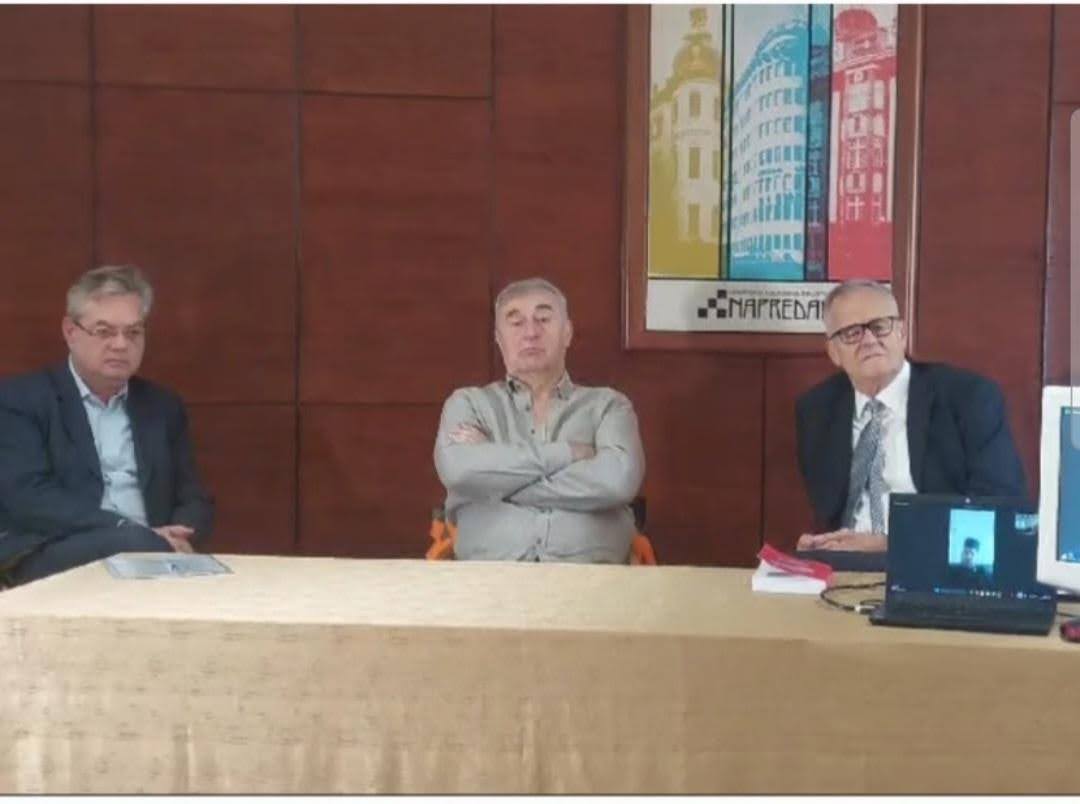
The formation of the new association Alliance of Christians of Croatia represents a significant step in uniting believers and promoting Christian values in society. This organization aims to bring together various Christian denominations and encourage collaboration among them, strengthening community and solidarity.
At its core, the Alliance of Christians of Croatia seeks to enhance moral values, promote dialogue and cooperation among different communities, and actively participate in social issues. The organization will organize educational programs, conferences, and volunteer actions to improve the quality of life in local communities.
Through the Alliance, Christians will have the opportunity to collaboratively work on projects addressing social justice, humanitarian activities, and environmental conservation, thereby promoting active citizenship and social responsibility. This initiative can also contribute to building a positive image of the Christian community in the public eye.
At the beginning of the promotion, it was emphasized that when discussing sensitive topics, it is important to approach them with care and understanding. Sometimes it is essential to address issues that may be difficult or emotional to foster open dialogue and exchange of views. Acknowledging and confronting these topics can bring valuable insights and help us better understand one another. In this regard, we must be ready to listen and engage in respectful conversations to build a healthy and supportive community.
The attendees were addressed by the president of the association, Mr. Damir Katulić:
“The theme of the book we are presenting today is inherently very difficult, and it is a topic that is seldom discussed publicly: cases of pedophilia and the sexual exploitation of young people. An additional dark dimension to this issue is that it occurs within an institution that, by its vocation and calling, should stand in stark contrast to the activities discussed in the book. Specifically, this involves individuals within the Serbian Orthodox Church who are perpetrators of these offenses. The very existence of such phenomena within a religious institution raises numerous controversies, which is why I would like to emphasize at the outset of this presentation that this book predominantly addresses the issue from a humanistic perspective and a focus on human rights. Of course, we should not ignore other connotations that these cases within the Serbian Orthodox Church may have, such as their political or legal aspects, but I reiterate that the main emphasis during this presentation will be on pedophilia as an entirely unacceptable form of abuse and sexual deviation in civilized societies, as well as the consequences it has for young people who are its victims.”
Allow me to conclude this introduction with the words of Jesus from the Gospel of Matthew 5:13: “You are the salt of the earth. But if the salt loses its flavor, how shall it be seasoned? It is then good for nothing but to be thrown out and trampled underfoot by men.” Unfortunately, these words have come true, and this book stands as a sorrowful witness to the fragility of human morality and faith.
Mr. Ivica Valek, the vice president of the Alliance of Christians of Croatia, also contributed to the discussion and promotion: “Last week, we were prevented from promoting the book at the book fair in Podgorica, Montenegro; even our friends and collaborators from the Saint Peter of Cetinje Foundation were indirectly banned from displaying the book at their booth.
Despite the ban, thanks to the Saint Peter of Cetinje Foundation, we managed to present the book at the fair, and after Zagreb, we are preparing promotions in Serbia, Slovenia, and Kosovo. Why did we print a second expanded edition of the book? The book serves as a permanent document about the history and the current state of the Serbian Orthodox Church. The content reveals pedophilia and homosexuality within the Serbian Orthodox Church, organized, executed, and protected by the church’s top leadership.”
The declaration of murderers as saints by the church indicates that the Serbian Orthodox Church (SPC) is also one of the tools of Greater Serbian imperialist politics and bears responsibility for the crimes committed during the disintegration of Yugoslavia. The book contains 464 pages and over 50 photographs and documents.
Bojan Jovanović has risked his life for the safety of his family in his desire to cleanse the SPC of evil and to act in accordance with the teachings of Jesus Christ, defending the truth, and the book encourages us all to support him. The printing of the second edition of the book is a show of support for Bojan Jovanović in his fight to protect the victims of pedophilia and to punish the perpetrators in this David and Goliath struggle.
The book also highlights the necessity for the restoration of an autocephalous Orthodox Church in Croatia.
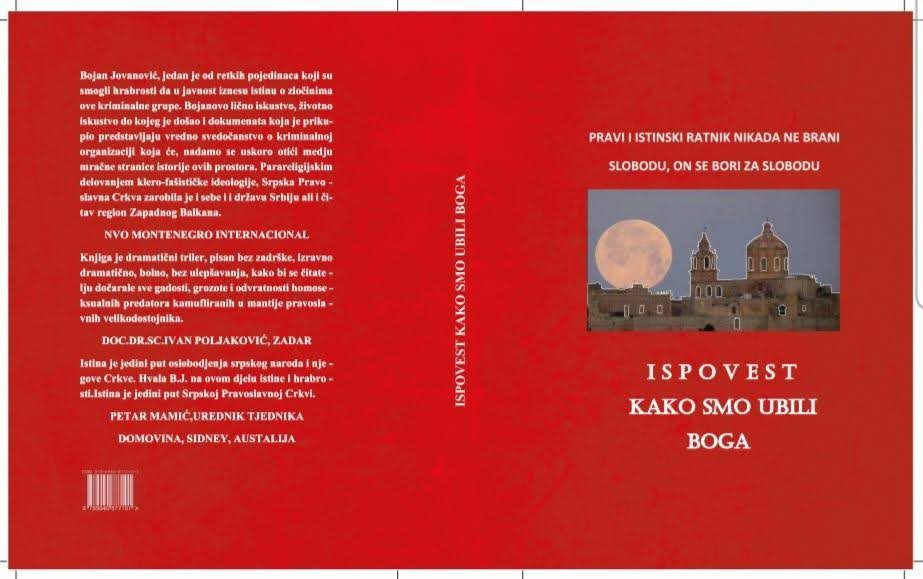
At the promotion, Mr. Ante Prkačin (president of the association’s council) addressed the attendees with a brilliant speech. He is also the main initiator of discussions, analyses, and scientific gatherings on the position and role of the Serbian Orthodox Church (SPC) in Croatian society and the state.
“The Serbian Orthodox Church today is an extended criminal arm of the failed and disintegrated state of Serbia. An organization that, according to its constitution and teachings, should be a pillar of spirituality has transformed into a reptile that survives by constantly pretending to be a victim and engaging in very dangerous and fabricated mythomania.”
The final document of the Round Table held in the Croatian Parliament in March of this year, initiated by Mr. Prkačin, with the theme: “The Influence of the Serbian Orthodox Church on Political Processes and Events in Croatia, Serbia, and Montenegro: Yesterday, Today, Tomorrow,” has entered the book as a historical document. Prior to this, the document was presented to all significant global institutions, including the UN, the World Council of Churches, and the World Health Organization.

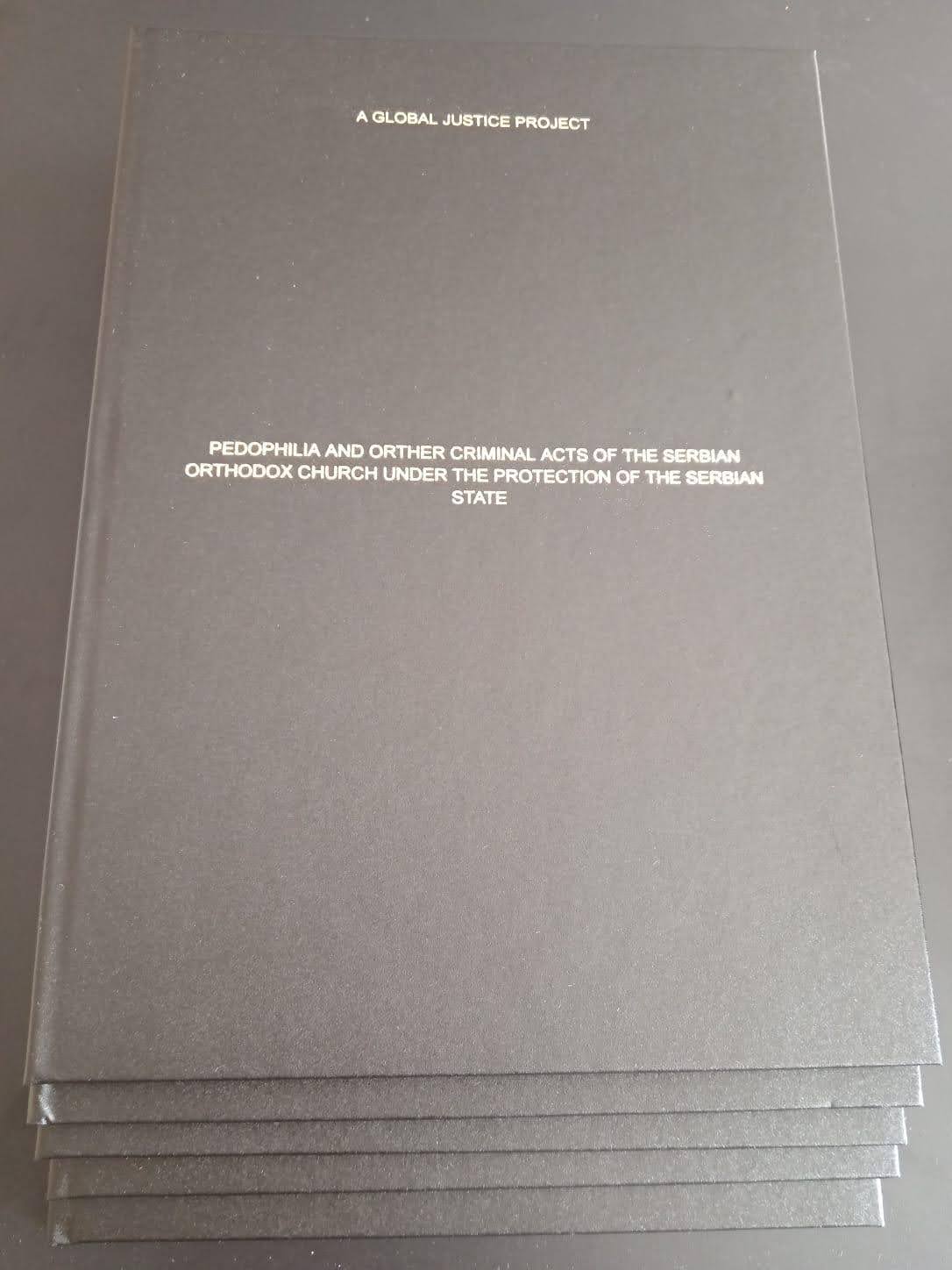
Mr. Prkačin also participated in the creation of a document that was submitted to the Vatican, the UN in Geneva, and the International Criminal Court in The Hague through an authorized attorney from the USA and the NGO ECAGLOBAL from Seattle. The topic addressed was: “Pedophilia and Other Crimes of the Serbian Orthodox Church under the Protection of the State of Serbia.”
At the end of the promotion, it was concluded that the association is not an opposition to any group, religious organization, or individual. Instead, our goal is to offer an alternative to existing solutions and approaches. We believe that diverse voices and perspectives can contribute to a better understanding of issues and the creation of constructive solutions that benefit everyone.
Author’s remarks:

For a long time, the Serbian Orthodox Church has suppressed, ignored, and covered up its connections to crimes, but this has ultimately backfired due to its lack of credibility, resulting in a loss of reputation and honor. What open enemies of the SPC and hostile ideologies could not achieve, the best sons of the SPC have managed to do.
Most Orthodox Serbs go through life without uttering a single critical word about any patriarch or member of the clergy. However, the recorded history of the clerical hierarchy bears little resemblance to the image they project, and the true stories about the SPC hierarchy are among the most distorted in the history of religion, with exceptions for individuals. Their hedonistic lives, sexual perversions, and tolerance of injustice will be subjects of future writings.
In attempting to portray them with a pure past, the SPC has developed a doctrinal facade that shamelessly and falsely presents them as pious.
At various times, the Serbian Orthodox Church has often been a subject of deep humiliation. The peak of this came in the 21st century when cases of clerical pedophilia were exposed to the public.
Those we now call interpreters of Christian virtue were, in fact, brutal killers. The clergy of the SPC have walked through rivers of blood to achieve their earthly goals, and unfortunately, this is still the case today.
The book “CONFESSION: HOW WE KILLED GOD” emerges at a moment when the citizens of Serbia are experiencing their greatest defeat and fall in history, closing the doors on democracy and any attempt at revitalizing processes, slowly sliding into a slave society, while church dignitaries try to convince us that this is a special sign of our uniqueness and righteousness.
Today, the SPC is, to our great sorrow, a “destabilizing factor in the regions of the former Yugoslavia.” It is, in essence, not a church but a militant nationalist organization that acts as an instrument of external power dynamics from Serbia and Russia. Consequently, the SPC is devoid of any individual or collective responsibility, and it conceals cases of pedophilia under the guise of misusing God’s mission.
When we add various political entanglements and the complicated legacy of the SPC, it has so far managed to evade effective punitive measures, and its abuse of God’s mission has remained unpunished. We face a dark, difficult, and scandalous topic that leaves no one indifferent. The book calls for alignment and taking a stance.
Without mincing words, I speak of the people I once trusted, addressing the moral quagmire into which the clergy of the SPC has fallen, rolling down a hill where they were meant to help others.
Severe conditions demand harsh truths, especially regarding an area of action they are clearly ill-equipped to handle.
Discussion
The event underscores a critical juncture for the Christian community in Croatia, as it seeks to reclaim its moral authority and address longstanding abuses within religious institutions. The discussions and presentations at the event not only highlighted controversial issues—such as the systemic failure to confront clerical pedophilia and the entanglement of the Serbian Orthodox Church in political machinations—but also emphasized the necessity for transparency and accountability in religious practice. This call for reform resonates with broader societal demands for social justice and ethical governance.
The diverse perspectives presented during the promotion, particularly those of key figures like Mr. Damir Katulić and Mr. Ante Prkačin, reveal a complex interplay between religious values, political realities, and cultural identity. While the Alliance of Christians of Croatia champions the unity of various Christian denominations, it also confronts uncomfortable truths about institutional failures and the consequences these have on community trust. By challenging both the internal practices of the church and the external political forces that shield such misconduct, the event serves as a catalyst for initiating a more honest and constructive public dialogue.
Ultimately, the article advocates for a comprehensive reevaluation of how religious institutions engage with societal issues. It calls for collaborative efforts among government, civil society, and religious organizations to ensure that ethical standards are upheld and that marginalized voices are heard. In doing so, the discussion frames the promotion event not only as a moment of cultural and religious significance but also as a potential turning point toward a more transparent and morally accountable future for Croatia’s Christian community.
Methods
None.
Data Availability
No datasets were generated or analyzed during the current article. All remains the intellectual property of the author and In-Sight Publishing.
References
(No external academic sources were cited for this interview.)
Journal & Article Details
- Publisher: In-Sight Publishing
- Publisher Founding: March 1, 2014
- Web Domain: http://www.in-sightpublishing.com
- Location: Fort Langley, Township of Langley, British Columbia, Canada
- Journal: In-Sight: Interviews
- Journal Founding: August 2, 2012
- Frequency: Four Times Per Year
- Review Status: Non-Peer-Reviewed
- Access: Electronic/Digital & Open Access
- Fees: None (Free)
- Volume Numbering: 13
- Issue Numbering: 2
- Section: B
- Theme Type: Idea
- Theme Premise: “Clergy Abuse”
- Theme Part: 1
- Formal Sub-Theme: None
- Individual Publication Date: February 15, 2025
- Issue Publication Date: April 1, 2025
- Author(s): Father Bojan Jovanović
- Word Count: 1581
- Image Credits: Photo by Ivan Aleksic on Unsplash
- ISSN (International Standard Serial Number): 2369-6885
Acknowledgements
None.
Author Contributions
None.
Competing Interests
The author declares no competing interests.
License & Copyright
In-Sight Publishing by Scott Douglas Jacobsen is licensed under a Creative Commons Attribution-NonCommercial-NoDerivatives 4.0 International License.
© Scott Douglas Jacobsen and In-Sight Publishing 2012–Present.
Unauthorized use or duplication of material without express permission from Scott Douglas Jacobsen is strictly prohibited. Excerpts and links must use full credit to Scott Douglas Jacobsen and In-Sight Publishing with direction to the original content.
Supplementary Information
Below are various citation formats for Zagreb Book Launch Exposes Pedophilia in Serbian Orthodox Church & Unveils New Union of Christians of Croatia.
- American Medical Association (AMA 11th Edition)
Jovanovic B. Zagreb Book Launch Exposes Pedophilia in Serbian Orthodox Church & Unveils New Union of Christians of Croatia. February 2025;13(2). http://www.in-sightpublishing.com/jovanovic-zagreb-pedophilia-serbia - American Psychological Association (APA 7th Edition)
Jovanovic, B. (2025, February 15). Zagreb Book Launch Exposes Pedophilia in Serbian Orthodox Church & Unveils New Union of Christians of Croatia. In-Sight Publishing. 13(2). http://www.in-sightpublishing.com/jovanovic-zagreb-pedophilia-serbia - Brazilian National Standards (ABNT)
JOVANOVIC, B. Zagreb Book Launch Exposes Pedophilia in Serbian Orthodox Church & Unveils New Union of Christians of Croatia. In-Sight: Interviews, Fort Langley, v. 13, n. 2, 2025. http://www.in-sightpublishing.com/jovanovic-zagreb-pedophilia-serbia - Chicago/Turabian, Author-Date (17th Edition)
Jovanovic, B. 2025. “Zagreb Book Launch Exposes Pedophilia in Serbian Orthodox Church & Unveils New Union of Christians of Croatia.” In-Sight: Interviews 13 (2). http://www.in-sightpublishing.com/jovanovic-zagreb-pedophilia-serbia - Chicago/Turabian, Notes & Bibliography (17th Edition)
Jovanovic, B. “Zagreb Book Launch Exposes Pedophilia in Serbian Orthodox Church & Unveils New Union of Christians of Croatia.” In-Sight: Interviews 13, no. 2 (February 2025). http://www.in-sightpublishing.com/jovanovic-zagreb-pedophilia-serbia - Harvard
Jovanovic, B. (2025) ‘Zagreb Book Launch Exposes Pedophilia in Serbian Orthodox Church & Unveils New Union of Christians of Croatia’, In-Sight: Interviews, 13(2). http://www.in-sightpublishing.com/jovanovic-zagreb-pedophilia-serbia - Harvard (Australian)
Jovanovic, B 2025, ‘Zagreb Book Launch Exposes Pedophilia in Serbian Orthodox Church & Unveils New Union of Christians of Croatia’, In-Sight: Interviews, vol. 13, no. 2, http://www.in-sightpublishing.com/jovanovic-zagreb-pedophilia-serbia - Modern Language Association (MLA, 9th Edition)
Jovanovic, Bojan. “Zagreb Book Launch Exposes Pedophilia in Serbian Orthodox Church & Unveils New Union of Christians of Croatia.” In-Sight: Interviews, vol. 13, no. 2, 2025, http://www.in-sightpublishing.com/jovanovic-zagreb-pedophilia-serbia - Vancouver/ICMJE
Jovanovic B. Zagreb Book Launch Exposes Pedophilia in Serbian Orthodox Church & Unveils New Union of Christians of Croatia [Internet]. 2025 Feb;13(2). Available from: http://www.in-sightpublishing.com/jovanovic-zagreb-pedophilia-serbia
Note on Formatting
This document follows an adapted Nature research-article format, tailored for a scholarly article. Traditional sections such as Abstract, Keywords, Introduction, Main Text, and Discussion are complemented by supplementary sections including Methods, Data Availability, and References. This structured approach ensures both academic rigor and clear presentation of the content.

 In-Sight Publishing