On High-Range Test Construction 18: Christopher Harding
Publisher: In-Sight Publishing
Publisher Founding: March 1, 2014
Web Domain: http://www.in-sightpublishing.com
Location: Fort Langley, Township of Langley, British Columbia, Canada
Journal: In-Sight: Independent Interview-Based Journal
Journal Founding: August 2, 2012
Frequency: Three (3) Times Per Year
Review Status: Non-Peer-Reviewed
Access: Electronic/Digital & Open Access
Fees: None (Free)
Volume Numbering: 12
Issue Numbering: 3
Section: E
Theme Type: Idea
Theme Premise: “Outliers and Outsiders”
Theme Part: 31
Formal Sub-Theme: High-Range Test Construction
Individual Publication Date: August 22, 2024
Issue Publication Date: September 1, 2024
Author(s): Scott Douglas Jacobsen
Word Count: 1,923
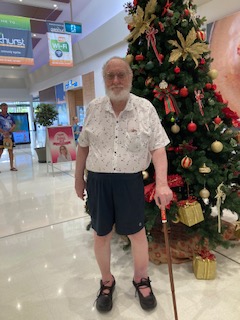
Image Credits: Christopher Harding.
International Standard Serial Number (ISSN): 2369-6885
*Original publication 1 and 2.*
*I have been informed Christopher “Chris.” Harding died this month.*
*Please see the footnotes, bibliography, and citations, after the publication.*
Abstract
Christopher Harding is the Founder of the International Society for Philosophical Enquiry (ISPE), and a Member of OlympIQ Society and the ESOTERIQ Society. He was born on August 4, 1944 in Clovelly Private Nursing Home at Keynsham, Somerset, English, United Kingdom. He has never married. He arrived in Rockhampton, Queensland, Australia, in the morning of October 11, 1952. He remains there to this day. He has held memberships with the Eugenics Society (1963-1964), the British Astronomical Association (1964-1969), the International Heuristic Association (1970-1974), the Triple Nine Society (1979-1990 & 1992-1995), the 606 Society (1981-1982), the Omega Society (1983-1991), the Prometheus Society (1984-1990), the International Biographical Association (1985-1990), Geniuses of Distinction Society (1986-1988), the American Biographical Institute Research Association (1986-1990), the Cincinnatus Society (1987-1990), the 4 Sigma Group of Societies [incorporating all groups having 4 Sigma plus cut off points ] (1988-1990), The Minerva Society [Formerly the Phoenix Society] (1988-1990), The Confederation of Chivalry (1988-1990), the Planetary Society (1989-1990), Maison Internationale des Intellectuels [M.I.D.I.] (1989-1990), TOPS HIQ Society (1989-1990), the Cleo Society (1990-1991), the Camelopard Society (1991-1992), the Hoeflin One-in-a-Thousand Society (1992-1993), the Pi Society (also like the Mega Society for persons with 1 in one million I.Q. level (5th April 2001 – 2002), INTERTEL [The International Legion of Intelligence] (June 1971-March 2010), The Hundred (1972-1977), the New Zealand National Mensa (1980-1982), and the Single Gourmet (1989-1991), among numerous other memberships, awards, and achievements (For the most recent or up-to-date information, please see the ESOTERIQ Society listing: https://esoteriqsociety.com/esotericists/esoteriq-id06/); growing up; a sense of the family legacy; the family background; experience with peers and schoolmates; qualifications; purpose of intelligence tests; high intelligence; the geniuses of the past; the greatest geniuses in history; a genius from a profoundly intelligent person; profound intelligence necessary for genius; some work experiences; job path; the idea of the gifted and geniuses; the God concept or gods idea; science; some of the tests taken; the range of the scores; ethical philosophy; social philosophy; economic philosophy; political philosophy; metaphysics; philosophical system; meaning in life; meaning; an afterlife; the mystery and transience of life; love; National Enquirer; the gap between cognitive abilities and record of employment; living situation without a record of work; alone; the professionals test someone just shy of 1-year-old; parents react to being called “liars to their faces”; genius; intelligence tests; publications or periodicals; artificial constructs; the factors making genius; God as human idealism; the Concept of God; science; the areas most affected by this despoilment; the areas least affected by this despoilment; 6-sigma; the ESOTERIQ Society; conclusions; and the information in Quantum Physics.
Keywords: Christopher Harding, ESOTERIQ Society, Feynman, genius, God, individualistic, Intelligence, International Society for Philosophical Enquiry, Leonardo da Vinci, Quantum, Quantum Physics, science.
On High-Range Test Construction 18: Christopher Harding
Scott Douglas Jacobsen: When you were growing up, what were some of the prominent family stories being told over time?
Chris Harding: Where we came from and who we were.
Jacobsen: Have these stories helped provide a sense of an extended self or a sense of the family legacy?
Harding: They were depressing as I could not live up to them.
Jacobsen: What was the family background, e.g., geography, culture, language, and religion or lack thereof?
Harding: Varied. Mostly titled aristocracy and connections to Royal Houses.
Jacobsen: How was the experience with peers and schoolmates as a child and an adolescent?
Harding: Non-existent.
Jacobsen: What have been some professional certifications, qualifications, and trainings earned by you?
Harding: None.
Jacobsen: What is the purpose of intelligence tests for you?
Harding: They are something on the side.
Jacobsen: When was high intelligence discovered for you?
Harding: 2 days before my first birthday. My parents had me tested. When speaking of me they were called liars to their faces.
Jacobsen: When you think of the ways in which the geniuses of the past have either been mocked, vilified, and condemned if not killed, or praised, flattered, platformed, and revered, what seems like the reason for the extreme reactions to and treatment of geniuses? Many alive today seem camera shy – many, not all.
Harding: I recall a quote from the Journal of the British Eugenics Society. “They want the Genius, but not its loathsome owner.”
Jacobsen: Who seem like the greatest geniuses in history to you?
Harding: “Leonardo, complex solitary, a Master Genius in an age of Genius.” In his life, it was said of him,“It is beyond the power of nature to create another man like Leonardo,” yet his final recorded words were “I have failed mankind and I have failed God.”
Jacobsen: What differentiates a genius from a profoundly intelligent person?
Harding: Genius is creative ability of the highest possible kind.
Jacobsen: Is profound intelligence necessary for genius?
Harding: No, Genius implies the narrowing of intelligence.
Jacobsen: What have been some work experiences and jobs held by you?
Harding: Absolutely nothing at all.
Jacobsen: Why pursue this particular job path?
Harding: I never did.
Jacobsen: What are some of the more important aspects of the idea of the gifted and geniuses? Those myths that pervade the cultures of the world. What are those myths? What truths dispel them?
Harding: They march to the beat of their own drum.
Jacobsen: Any thoughts on the God concept or gods idea and philosophy, theology, and religion?
Harding: God is purely human idealism; largely what you can’t attain. The Concept is set beyond what can be considered.
Jacobsen: How much does science play into the worldview for you?
Harding: Science has become despoiled with its obsession with consensus and ignorance of the paradigm shift. Some one point Einstein to a newspaper article “One hundred against Einstein” to which he replied “It would only take one”. Less and less.
Jacobsen: What have been some of the tests taken and scores earned (with standard deviations) for you?
Harding: Several times scoring over plus six sigma.
Jacobsen: What is the range of the scores for you? The scores earned on alternative intelligence tests tend to produce a wide smattering of data points rather than clusters, typically.
Harding: Ceiling limitations were the biggest problem; in which case I could finish them well and truly before the time limit was up. For these the test was useless.
Jacobsen: What ethical philosophy makes some sense, even the most workable sense to you?
Harding: None.
Jacobsen: What social philosophy makes some sense, even the most workable sense to you?
Harding: None.
Jacobsen: What economic philosophy makes some sense, even the most workable sense to you?
Harding: Also none.
Jacobsen: What political philosophy makes some sense, even the most workable sense to you?
Harding: Also none. If you join a political group, you wind up as an apologist for them!
Jacobsen: What metaphysics makes some sense to you, even the most workable sense to you?
Harding: None.
Jacobsen: What worldview-encompassing philosophical system makes some sense, even the most workable sense to you?
Harding: None, philosophy is word juggling!
Jacobsen: What provides meaning in life for you?
Harding: There is no meaning in Dictionaries only associations with other words: Meaning in life is the same; you make the meanings.
Jacobsen: Is meaning externally derived, internally generated, both, or something else?
Harding: Meaning is only a PATTERN.
Jacobsen: Do you believe in an afterlife? If so, why, and what form? If not, why not?
Harding: The only afterlife [an oxymoron] is the “truth” in QUANTUM PHYSICS: Just as in Classical Physics energy and matter can not be destroyed only converted one into the other; in Quantum physics information can not be gained or lost, it some how just IS.
Jacobsen: What do you make of the mystery and transience of life?
Harding: It like everything else is BOUNDED. This is a condition of being defined.
Jacobsen: What is love to you?
Harding: Love is simply TRANSFERENCE [See Freud].
Jacobsen: What Royal Houses were the main connections with family?
Harding: Most prominent – French side.
Jacobsen: In the National Enquirer published on June 25, 1991, there was an article about a certain man with the “world’s highest IQ” who is a “jobless janitor.” What did this particular media attention do for you?
Harding: Nothing.
Jacobsen: I state the caveat of “absolutely nothing at all” as the response to the work experiences question. It is reported that you have worked in menial jobs and had stretches of unemployment, e.g., in the National Enquirer. What explains the gap between the cognitive abilities and the cognitive demands of the jobs for you? Alternatively, what explains the gap between cognitive abilities and record of employment for you?
Harding: Unknown.
Jacobsen: How did you sustain yourself in terms of living situation without a record of work?
Harding: Family.
Jacobsen: Why the “non-existent” life with peers and schoolmates? Did you feel alone?
Harding: Violence and exclusion.
Jacobsen: How did the professionals test someone just shy of 1-year-old? It seems odd, even stranger than the 2-and-a-half-year-old, or thereabouts, cases entering Mensa International (or their national group).
Harding: Mental age in my case 3 years 4 months made that easy!
Jacobsen: How did your parents react to being called “liars to their faces” when ‘speaking of you’?
Harding: They were taken aback by this.
Jacobsen: Does this desire of cultures wanting genius while not wanting the genius create a toxic dichotomy in the general culture? Something to which only lip service is paid, while wanting to kill in former times, and ‘kill’ in modern times, the genius.
Harding: It comes from competitiveness [jack is equal to his master]. In many cultures submissiveness is considered politeness. That is considered standard in communication. It is why first world cultures see themselves as superior.
Jacobsen: As these intelligence tests have been a part of life before even 1-year-old, may I ask, what has been the life lesson from them for you?
Harding: Look, people see I.Q.’s as not valid above their own. Everybody does this. It is very noticeable that children asked who in their class is smartest will name themselves!
Jacobsen: As you recalled the quote from the Journal of the British Eugenics Society, I’m sure many will be interested now. What publications or periodicals do you continue to read now? What ones did you previously read and no longer do so?
Harding: No preference; I am a total generalist.
Jacobsen: With Leonardo da Vinci as “a Master Genius in an age of Genius,” do you think artificial constructs could fill the gap between genius seen before and unseen genius now, i.e., artificial constructs with the capabilities of the highest human genius?
Harding: They have provided little evidence they are going to solve this one: My Mother once said the process was ‘ant like’ rather than a G-function.
Jacobsen: What are the factors making genius “creative ability of the highest possible kind”? Other than the qualities inherent in ‘marching to the beat of their own drum.’
Harding: Genius by definition would be individualistic. As one person said to me, I was very `singular’.
Jacobsen: If “God is purely human idealism; largely what you can’t attain,” what are some exceptions to this thing one “largely… can’t attain” or the things attainable within this definition of God as human idealism?
Harding: What I meant was the problem lay beyond the nature of logical process. It is answerable in terms of the proof of the last theory of sets. But you still get back to the conclusion that if God exists he either is the Universe or does not exist.
You are still dealing with value judgments or in assigning names; which amounts to the same thing. My Brother agreed with me that the highest form of reasoning was EVALUATION. Since to invoke reason one must first evaluate a proposition.
Jacobsen: Is the setting of the “Concept… beyond what can be considered” a defense against formal knockdown critique of the Concept of God?
Harding: No.
Jacobsen: When did science begin this despoilment with the obsession with “consensus and ignorance”?
Harding: Always was there. In our own time many people use science to moralize, and science has become the new religion. This can’t be done of course. There is no bridge either between philosophy and religion.
Jacobsen: What are the areas most affected by this despoilment?
Harding: It is seen in notions of anthropomorphism with regard to climate change. Not so! The real cause is the Sun. Note, Astronomers had long ago pinned this down to Sun Spot Cycles. A new 11+ year Cycle began last year and rising temperatures have turned back. One Russian Woman Scientist predicts the onset of a period of dropping temperatures starting around 2030, though this figure is very uncertain!
Jacobsen: What are the areas least affected by this despoilment?
Harding: Human aging and Quantum Physics–much progress continues at the moment.
Jacobsen: What were the tests when scoring above 6-sigma several times?
Harding: Most of these I have forgotten. I’m 76 and most were over 30, 40 and up to over 75 years ago!
Jacobsen: For the ESOTERIQ Society, it states, “Christopher Harding (Australia): 197 on SBIS-Oxford-Analysis-New-Zealand in 1976.” What is the full name of the SBIS-Oxford-Analysis-New-Zealand, particularly the “SBIS” part?
Harding: Don’t know.
Jacobsen: While, fundamentally, dispensing with ethical philosophy, social philosophy, economic philosophy, political philosophy, and metaphysics, even philosophy as “word juggling” (!), I see some common points. One is science, though “less and less” with its despoilment, meaning as a “PATTERN” made by each person individually, an emphasis on some of Freud, “QUANTUM PHYSICS” in terms of “truth” with its preservation of information (neither gained nor lost), and the bounded nature of nature (including humans) as “a condition of being defined.” So, there is a there there. I have to ask, “What makes these conclusions more sound, at this time, to you than other possibilities?
Harding: Feynman once said no one understands the Quantum. And yet to further agree with his point “Quantum Superiority” has been proved for the D-Wave Orion Computer. I liken this to statements about the Aleph series in the mathematics of infinity theory.
Jacobsen: Any speculation as to why the information in Quantum Physics simply “IS”?
Harding: I once thought it through and concluded there was another stage beyond Quantum Physics. Simply IS would represent in turn a `single one’ off any general group of abstractions.
Footnotes
None
Citations
American Medical Association (AMA 11th Edition): Jacobsen S. On High-Range Test Construction 18: Christopher Harding. August 2024; 12(3). http://www.in-sightpublishing.com/high-range-18
American Psychological Association (APA 7th Edition): Jacobsen, S. (2024, August 22). On High-Range Test Construction 18: Christopher Harding. In-Sight Publishing. 12(3).
Brazilian National Standards (ABNT): JACOBSEN, S. On High-Range Test Construction 18: Christopher Harding.In-Sight: Independent Interview-Based Journal, Fort Langley, v. 12, n. 3, 2024.
Chicago/Turabian, Author-Date (17th Edition): Jacobsen, Scott. 2024. “On High-Range Test Construction 18: Christopher Harding.” In-Sight: Independent Interview-Based Journal 12, no. 3 (Summer). http://www.in-sightpublishing.com/high-range-18.
Chicago/Turabian, Notes & Bibliography (17th Edition): Jacobsen, S “On High-Range Test Construction 18: Christopher Harding.” In-Sight: Independent Interview-Based Journal 12, no. 3 (August 2024).http://www.in-sightpublishing.com/high-range-18.
Harvard: Jacobsen, S. (2024) ‘On High-Range Test Construction 18: Christopher Harding’, In-Sight: Independent Interview-Based Journal, 12(3). <http://www.in-sightpublishing.com/high-range-18>.
Harvard (Australian): Jacobsen, S 2024, ‘On High-Range Test Construction 18: Christopher Harding’, In-Sight: Independent Interview-Based Journal, vol. 12, no. 3, <http://www.in-sightpublishing.com/high-range-18>.
Modern Language Association (MLA, 9th Edition): Jacobsen, Scott. “On High-Range Test Construction 18: Christopher Harding.” In-Sight: Independent Interview-Based Journal, vo.12, no. 3, 2024, http://www.in-sightpublishing.com/high-range-18.
Vancouver/ICMJE: Scott J. On High-Range Test Construction 18: Christopher Harding [Internet]. 2024 Aug; 12(3). Available from: http://www.in-sightpublishing.com/high-range-18.
License & Copyright
In-Sight Publishing by Scott Douglas Jacobsen is licensed under a Creative Commons Attribution-NonCommercial-NoDerivatives 4.0 International License. ©Scott Douglas Jacobsen and In-Sight Publishing 2012-Present. Unauthorized use or duplication of material without express permission from Scott Douglas Jacobsen strictly prohibited, excerpts and links must use full credit to Scott Douglas Jacobsen and In-Sight Publishing with direction to the original content.

 In-Sight Publishing