Politics in Canada 1: Jacques Boudreau on the Libertarian Party of Canada
Publisher: In-Sight Publishing
Publisher Founding: March 1, 2014
Web Domain: http://www.in-sightpublishing.com
Location: Fort Langley, Township of Langley, British Columbia, Canada
Journal: In-Sight: Independent Interview-Based Journal
Journal Founding: August 2, 2012
Frequency: Three (3) Times Per Year
Review Status: Non-Peer-Reviewed
Access: Electronic/Digital & Open Access
Fees: None (Free)
Volume Numbering: 12
Issue Numbering: 3
Section: E
Theme Type: Idea
Theme Premise: “Outliers and Outsiders”
Theme Part: 31
Formal Sub-Theme: Politics in Canada
Individual Publication Date: July 22, 2024
Issue Publication Date: September 1, 2024
Author(s): Scott Douglas Jacobsen
Word Count: 5,481
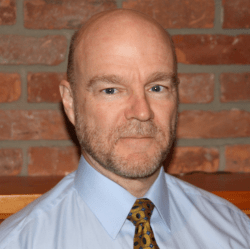
Image Credits: Jacques Boudreau.
International Standard Serial Number (ISSN): 2369-6885
*Please see the footnotes, bibliography, and citations, after the publication.*
Abstract
Jacques Boudreau is a Christian and the President of the Libertarian Party of Canada. Boudreau discusses: his story; Mises; non-aggression principle; one-way street; individual freedom; corporate nanny status; Libertarian socialism; earning respect and trust; public trust in political institutions and politicians in Canada ; COVID and SOGI education; foundational libertarian principles; controversial issues; and Rod Taylor.
Keywords: central planning failure, consistent libertarian philosophy, federal election campaigns, freedom and responsibility, government intervention issues, investment newsletter influence, Jacques Boudreau’s journey, Libertarian Party of Canada, non-aggression principle, trust and honesty in politics.
Politics in Canada 1: Jacques Boudreau on the Libertarian Party of Canada
Scott Douglas Jacobsen: So, today, we’re here with Jacques Boudreau. We are going to be discussing the Libertarian Party of Canada. My first question is: How did you get involved in politics? What’s the story there?
Jacques Boudreau: Perhaps I should briefly describe my journey to libertarianism. Until my early forties, I would have described myself as an average Canadian, probably a swing voter, trying desperately to find a party that would get things right. This was based on the mistaken premise that some form of central planning works. I was subscribing to an investment newsletter, and one day, they had a link to an article on Mises.org. I went to it, and although I don’t remember the topic; I vividly recall being awestruck by the argument presented. It was internally consistent and far better than anything I had ever heard before. For 15 years afterward, I would visit Mises.org daily, read the articles. Over time, I could no longer defend my previously held beliefs, so I became a libertarian.
Fast forward to around 2013, during a provincial election. I had seen the sign of a libertarian candidate and wanted to vote for him. When I went into the booth, I found his name was nowhere to be seen. I contacted the party and asked why. They told me they were a small party and didn’t have the resources to follow up with potential candidates. There were specific requirements to become registered, and the candidate missed the deadline. I thought maybe I should help out and run next time. In 2015, I decided to run. I was so impressed with the framework, research, writings, articles, and books of libertarianism. To me, libertarianism is a clear, superior alternative to anything I had read about or seen. I wanted to spread the word, so I put my name forward for the federal election and was accepted. Since then, I have run three times federally and twice provincially.
Jacobsen: When you were reading Mises or Mises.org, obviously after Ludwig von Mises, what were some of the core arguments that stood out to you and made you think that libertarianism is a much more internally consistent political and social philosophy?
Boudreau: The first significant argument is that central planning fails both empirically and theoretically. If central planning worked, the Soviet Union would have been the richest and best country in the world due to its extensive central planning. However, it was economically a basket case and eventually disintegrated. Combining this with the work of Mises and Hayek, there are several reasons why central planning cannot work. It’s not just that it doesn’t work, but it cannot work. This is very powerful. For example, Hayek wrote about the conceit of knowledge: the idea that a few politicians and bureaucrats can substitute their knowledge for that of millions of citizens who have individual needs and wants. It’s impossible for them to make these decisions because they lack access to the necessary knowledge. Additionally, there is the impossibility of economic calculation when operating outside of the market. Governments cannot run businesses since there are no profit and loss signals to guide their decisions.
Right? And people can debate whether there’s a deficit or not. But when you are essentially using coercion with people, you don’t get a true market signal in the form of someone voluntarily deciding to buy your product or service. To me, that is probably the most important lesson I took away, which was, yes, this belief that the government can somehow get involved in things and get it right. And then, on top of that, you can talk about the incentive.
To quote the great Thomas Sowell, “It is difficult to imagine a more stupid or dangerous way of making decisions than by putting those decisions into the hands of those who paid no price for being wrong.” That is an ongoing problem with politicians. They can come up with grandiose ideas, like these wonderful things that are going to make everything great. But invariably, if they make mistakes, which they often do, they pay absolutely no price. They don’t go to jail. They don’t pay a fine. They don’t do any of this. These amount to one-sided bets.
In the sense that they can win by winning an election by promising a bunch of wonderful things to people. But if it goes south, there’s no price at all, which is, for many people, a huge appeal of going into politics because you can come up with all kinds of stuff without ever paying a price. Unlike, say, an entrepreneur who could lose a lot if their idea doesn’t pan out.
Jacobsen: What about the non-aggression principle? It’s a very general principle, but it’s quite nuanced even though it is one of those general principles of ethics.
Boudreau: Yes. Maybe I should have mentioned that first because, of course, libertarianism is based on that very important principle. It leads you to things that are considered radical, but ethically, they are correct. If you can’t steal from people, if a person cannot steal from you, or if 10 people get together and want to steal your stuff, it’s still wrong.
And if it’s 100 people, as they say, it’s still wrong. But we operate in a society where, if millions of people decide to take your money because they voted and got a majority, then suddenly taking your money by force is considered morally correct, which is not true. You mentioned how, with politicians and business people, the idea is you should get some feedback mechanism in terms of penalty when you propose a hypothesis, and the empirical evidence doesn’t support it. The public pays a cost, and the politician or business person should pay a cost too.
Jacobsen: But it’s a one-way street in that regard. How do you think that reality violates that sort of non-aggression principle? Does it seem like a form of passive aggression to make a proposal without any foreseeable consequences for oneself as a leader, party, or business?
Boudreau: In general, I would say, yes. It’s just too easy to, let’s take the current government, which, in many ways, will advance a proposal primarily for virtue signaling. Then we find out that it was once again amateur hour because the hard work of determining how to do this or whether it’s even feasible comes afterward.
Right? So they make the announcement first, and then the work, often done by others outside the government, points out that things are not possible. I was reading recently about the announcement a few years ago to plant 2 billion trees in this country. It is physically not possible because there are not enough nurseries to access seeds to get the seedlings. Right? So you wonder, how was the 2 billion figure arrived at? Clearly, not because somebody spent a few hours determining what was possible.
But again, you make these pronouncements. They sound good. People go along with it. Then when you find out, “Oh, what? We made a promise that we cannot possibly keep.” There’s no penalty.
Jacobsen: Then H. L. Mencken has that one quote, “For every complex problem, there is a solution that is simple, neat, and wrong.”
Boudreau: Yes.
Jacosben: So, what we’re getting at here is individual freedom, with the benefit of personal responsibility, as the cost mechanism for this, but what we’re seeing collectively is individual freedom for those who may have some particular prominent status, but then collective cost. So it’s collective responsibility for a personal mistake because it is a leader of a party making these final decisions. Would you say that’s a fair characterization?
Boudreau: Oh, very much so. We see this in corporatism, right? Companies where the government has decided that we need to help them. And again, they benefit. As someone said, “It’s the free market when things go well, and it’s socialism when things go badly.” A company is allowed to make money when things go well. But if they don’t, then it’s the taxpayers who get roped in again by coercion. So yes, the way you described it is spot on.
Jacobsen: A practical example in both our lifetimes was the housing bubble crash or the “too big to fail” banks crisis. There were, as far as I recall, something like $600-800 billion in bailouts in the United States, for example, from the federal government to these banks. Is that what you’re getting at on a very large scale, obviously, with a much larger economy?
Boudreau: Very much so. It’s all the more perverse because there was some encouragement. I don’t want to absolve the CEOs and directors of these companies. They did engage in risky practices, but there was a certain encouragement for them to do that. When you have a sort of put option where the government says, “We want you to do this, and if things go badly, we’re going to come to the rescue,” it’s a recipe for disaster. They should have been allowed to go under. David Stockman has a great book dispelling the idea that the whole system would have collapsed if the government didn’t intervene. It’s called “The Great Deformation.” I highly recommend reading that book because it corrects many of the lies used to justify massive intervention. But we see this all the time. Yes, the taxpayers have got your back whether we like it or not.
Jacobsen: And on the opposite end, not the corporate nanny status, what about the form of government system and taxes? At what point do you, either from an Ontario perspective or from a national federal perspective, see taxes as reasonable and then as unreasonable? Where is the dividing line for you?
Boudreau: To answer this question, let me preface this by saying that I’m going to argue from a minarchist point of view. I am personally, in theory anyway, an anarcho-capitalist. So my answer there would be that any tax is too much. But before we get there, I would like to lead the country to a minarchist position. For those who don’t know, it’s basically the smallest government possible.
From a federal government perspective, there would only be maybe four things that the government would do: national defense, the entire judicial system, some form of federal police, and foreign affairs. Those would be the four things. This means that countless things the federal government is currently involved in would be terminated immediately, with a corresponding decrease in taxes necessary to pay for those four items. I’m not quite sure what that would amount to, but to me, that would be the threshold. Here are the four things the government should be responsible for. I don’t want to say “should” because there are alternatives, but let’s say, from a minarchist position, I’m willing to grant that the government would do these and do them well. Because that’s another thing that irritates me: those are clearly constitutionally the responsibility of the federal government, yet every single one of them is currently abysmal.
Our national defense is in disarray. The latest report says that only 61% of Canadian Armed Forces could be deployed. We’re running out of ammunition. The equipment is old. It’s a disgrace. If Putin decided to turn his sights on Canada, I don’t know if we could last two hours before being overrun. The judicial system is a complete joke. Catherine Marshall, a well-known lawyer, has said that the judicial system is broken and no politician cares. I would be technically a politician, and I do care, but the vast majority of politicians in the main parties don’t care at all about the fact that it can take years for a case to get to court.
Lawyers repeatedly share horror stories about showing up on the first day of a trial only to be told that there aren’t courtrooms or judges available. Yet we have a federal government that gets involved in all kinds of different things as if its clear responsibilities were being done properly, and they are not even close.
Jacobsen: These are the four points of contact you mentioned regarding having a minarchist government. Do you find yourself encountering a stereotype about libertarians, where people think you mean literally zero government—no judiciary, no military, no anything? Does that come up in your mailbox, conversations, or critical questions?
Jacobsen: Yes, it does come up, and these are very legitimate questions. I don’t want to push back, but my response to people is, why don’t we get to a minarchist position first? If I sit here and say I believe that income tax, for example, is theft, and then I say, but we still need some of it to pay for national defense, then I am being internally inconsistent. Maybe there are ways, like, it’s part of our platform to say that we would abolish the income tax but keep the GST, using GST receipts to pay for some of these things.
The argument being that you are not compelled to buy things. It’s not the greatest argument, but as I’ve said to people, if I could get the size of the federal government down to 5% of GDP, which is what it was in 1900, I’d quit my job. Our country would be so much better off than it currently is. Governments together are fast approaching 50% of GDP in this country. It’s growing like a cancer, and we have to cut it back. So let’s do that and get back to a minarchist position. At that point, if people are still upset, maybe we can, having demonstrated it works, continue to push further. But we can’t get to an anarchist or anarcho-capitalist position without first getting to minarchism. It’s a sliding scale.
So, I don’t dismiss these people. I understand where they’re coming from and their arguments, and I have sympathy for them. But we have to get somewhere first.
Jacobsen: There are similar positions that are more left-wing. For example, Nathan Robinson, founder of Current Affairs, and Noam Chomsky espouse something they call libertarian socialism or anarcho-syndicalism. How would you differentiate yourself from those who seem similar to those who aren’t necessarily making that distinction? They can be quite distinct.
Boudreau: You’d have to expand on that because, quite frankly, I’ve never understood these labels of left-wing libertarian and right-wing libertarian. Libertarianism is all about freedom. It’s about being allowed to conduct your life in the way you see fit without impeding somebody else’s freedom. It’s pretty simple in concept, and I fail to understand how there’s a left and right-wing element to this. So I’m not quite sure what these people are advocating, frankly.
Jacobsen: I’ll read from a Wikipedia entry. ‘Libertarian socialism is an anti-authoritarian, anti-capitalist political current that emphasizes self-governance and workers’ self-management.’
Boudreau: So, anti-capitalist?
Jacobsen: ‘Anti-capitalist political current emphasizing self-governance and workers’ self-management.’ This is the distinction that’s coming up.
Boudreau: To me, in a free world, employees or workers would be allowed to organize themselves in any way they wish. Where I draw the line is when coercion is involved in setting up whatever it is these people are trying to set up. When I hear “anti,” it seems to me that there’s an element of coercion saying that you shall not be able to do this. My point is that under freedom, as long as you do not interfere with somebody else’s freedom, you can organize yourself any way you want.
It’s very interesting that libertarianism, as opposed to any other major party, only seeks to impose freedom. I would say to my NDP friends, for example, that under a libertarian government, you could literally have, if people took a few minutes to study something popular a hundred or a hundred twenty years ago, what were called mutual aid societies. These were small neighborhood groups arranging themselves to help one another. There would be maybe a small monthly contribution that people would make, managed by a few people whose job would be to distribute these funds according to the needs within the neighborhood. It was very local, but I could see someone organizing an NDP Mutual Aid Society, maybe province-wide or even federally.
Personally, I don’t think it would run into the same problem if you do it locally, but it would be free to do that. If they said, “Look, you’re cutting all this, you’re cutting that,” first of all, you’d have a lot more money left in your pocket, and you could arrange yourself in the way that you see fit. When you introduce freedom, people can find solutions that suit them best, unlike other parties that always come in with a one-size-fits-all approach. These ideas, according to them, are so wonderful that they invariably need to be enforced by coercion and force. It’s kind of strange.
Jacobsen: Which political parties or political party leaders have you found the easiest to collaborate and coordinate with on common causes? Obviously, it’s going to be a Venn diagram of overlap, but where there is overlap of common cause, who have been respectable, trustworthy organizations that you’ve worked with locally?
Boudreau: The short answer is that we haven’t engaged with anyone. This would be a theoretical exercise because we haven’t earned respect and trust yet.
Jacobsen: As a principle, why is earning respect and trust important and foundational to a libertarian political platform and philosophy?
Boudreau: If we want to talk about trust, it is amazing when you live in a culture where people are honest. Because they are honest, you trust them. It facilitates voluntary transactions. It’s less costly because you don’t need to get lawyers involved, sue people, and deal with everything that comes with it. There are studies done annually where they measure the degree of honesty in countries. We always have to be careful about causation and correlation, but the correlation is very high between GDP per capita and the honesty index. This is because it facilitates transactions, making both parties benefit when it’s voluntary.
Jacobsen: Is it honesty or trust? Because I’ve heard high-trust societies are wealthy societies.
Boudreau: They go hand in hand. It’s easy to trust someone who is honest. In fact, I would say it is very difficult to trust someone who is not. If you can demonstrate that you are an honest person, people will trust you. If they trust you, they will transact with you a lot more than with someone who has a shoddy reputation.
Jacobsen: Do you think public trust in political institutions and politicians in Canada is lower than it has been in the last, say, ten years, or is it stable or higher?
Boudreau: This is one where you have to segment the population. For people like myself, and maybe a majority or a very large minority of people, trust has gone completely. There has been, and I speak as someone with a science degree, an appeal to science and “follow the science” by people who understand nothing about science. They’ve used science as a voice of authority, but that’s not how science works. Science, with the exception of mathematics, which I have a very strong background in, cannot prove anything. The way science works is that you come up with a hypothesis, then you develop an experiment to test it.
If your experiment supports your hypothesis, all it does is indicate that you can continue using this hypothesis until something better comes along. So, you never prove anything. At some point, the experiment has been repeated so many times that it becomes widely accepted and solid enough to rely on. But there are countless examples throughout history where something was eventually abandoned because it didn’t work anymore. Science is all about questioning.
People who use science as a voice of authority and say, “This is what science says,” don’t understand science. The only branch of science where you can prove something is mathematics. But science has been misused to coerce or at least strong-arm people into things. Now, we are finding all kinds of evidence that many things that were said were not true. As a result, many people have become very distrustful of scientists and, of course, politicians. They’ve mismanaged things so badly that a significant segment of the population no longer believes them, and rightly so.
We need to segment the population because some people love to be governed. To quote Gad Saad, “Justin, please govern me harder.” They want to be governed and don’t want to be free. Those people exist. I love that quote, which is why I repeat it often.
Jacobsen: It’s getting up there with Mencken.
Boudreau: As libertarians, we often say that with freedom comes responsibility. You are allowed to conduct your life the way you wish, but if you make wrong decisions, you have to own the consequences. We live in an age where we are moving more and more away from responsibility. People want to get involved in your life because they don’t want you to come to harm, but that’s none of their business. Trust has been lost in a big segment of the population, but there’s an element that still wants a large government that controls more and more of their lives.
Unfortunately, some people love a big government as long as the coercion is always on someone else. A good example is the difference in the treatment of blue-collar people and the laptop class during COVID. It’s easy to lack empathy when you can work from a cottage on a laptop and the disruptions to your life are minimal, but much larger for others. When you don’t have the empathy to recognize the harm you’ve done to other people, you might say you’re in favor of something until it affects you negatively. This idea that we measure the activity of government based on how it affects us seems very shortsighted.
Jacobsen: I had semi-thematic and semi-topical questions that the Christian Heritage Party of Canada leader, Rod Taylor, posed for me to ask others. These questions were primarily around COVID and SOGI education. What do you think the government did right? What do you think the government did wrong or could do better in those contexts, specifically in education and handling a pandemic?
Boudreau: Let me start with education. I’m a stickler for the Constitution. If we’re going to have a rule of law, a document that tells us who’s responsible for what, if we don’t like it, we can make constitutional amendments. But to continue to ignore what the Constitution says, or to treat it like toilet paper as the liberals do, is unacceptable. Education is a provincial responsibility, not a federal one. As the leader of a federal party, I could give you a short answer and say I have no opinion.
However, as someone who can run for provincial elections, I do have views on education. The short answer is the government has no business running an education system. It ought to be the free market. At the very least, although it is not a perfect solution, we should have something similar to what Alberta has, where a significant portion of the money follows the kids. It’s up to the parents to decide if they like the education system or not.
In Ontario, the latest study indicates that between grades 3, 6, and 9, only 50-60% of the kids can meet the minimum requirements for math. As someone with a math background, I find it appalling that a parent would accept this. Going through life without a minimum knowledge of mathematics is unacceptable. Parents should be able to choose a different education system if they are dissatisfied with the current one. However, in Ontario, unless you can afford a private school, you have no choice because the government has already taken your money for a service you don’t like. The government and the mafia are the only organizations I can think of that will take your money by force, provide a service you don’t like, and not reimburse you when you reject it.
It is shocking that progressives, who always claim the moral high ground, don’t see how immoral this position is. Parents are the ones with skin in the game. They don’t want their kids to go through life uneducated. So, we should have a competing market for education where different methodologies, whether it’s Montessori, Christian schools, or others, are available for parents to choose. It’s not the state’s job to decide.
Regarding COVID, it was handled very badly across the board. Studies now indicate that in terms of education, loneliness, substance abuse, and economic impact, the response has been terrible. Businesses have gone bankrupt due to the autocratic, Soviet Union-type response. Allowing people to exercise their freedom would have been a much better solution.
Jacobsen: What areas, as you previously mentioned at the outset of the interview, have you modified in your transition from one philosophical stance to libertarianism? What topics, though not necessarily foundational libertarian principles, have you adjusted when thought about more thoroughly?
Boudreau: I don’t know if I have made significant transitions, but there are things I think about. For example, our current platform regarding immigration is based on sponsorship. Whether it’s a company looking for workers they can’t find locally or the agricultural sector needing seasonal workers, bringing people from abroad to fill those roles is an example.
Sponsorship means that you are responsible on multiple fronts for the behavior of these people, and you certainly cannot ask the state to help you out. If you think there’s a good reason to bring these people over, you would be responsible. But in light of the issues we’re having right now with housing, for example, I wonder whether, at some point, someone would have to step in and determine if you almost need an overseer. I’m thinking these things through, but clearly, right now, the immigration policy is creating a number of issues, particularly with housing. That would be an example.
Jacobsen: What do you think have been the more controversial issues for Canadians with respect to libertarian politics or philosophy? These are issues where there’s either misunderstanding or, based on their particular values and preferences, it doesn’t work for them. This is more about critical inquiry and questioning.
Boudreau: Yes, there is no doubt that, in fact, I was just speaking to my mother the other day, who’s completely at odds with my political position. The number one pushback that I get is regarding social safety nets and help for needy people. My job is to try to, if not read something, at least let people know that charities, particularly local charities, have done a far better job than the government in helping the needy. If people haven’t read history or don’t understand the history of mutual aid societies or different charities, they might only know the government providing safety nets.
Suddenly, if I’m saying that a libertarian party would do away with all these, I can understand people being frightened and wondering what’s going to happen. The job is to describe how things would change for the better. There are many issues with the government providing charity. One is that it provides a one-size-fits-all solution without any attempt at moral suasion to change one’s behavior. Simply cutting a check to someone without any personal interaction makes it difficult to modify someone’s behavior.
Local charities used to do this. For example, charities had a code name for people who frequently used their services—they were called “rounders.” These were people going from place to place trying to get a free meal or other services. Around 120 to 140 years ago, charities recognized that providing a sense of dignity was important. They would often ask recipients to do something in return, like sweeping or doing the dishes. This way, people felt they earned the help they received, which greatly contributed to their sense of self-worth.
Governments don’t ask you to do anything. All you have to do is demonstrate that you’re in a bad way, and here’s a check. Over the long term, this encourages moral hazard and is highly detrimental to a sense of self-worth. The idea is to convince people that private charities once stepped up and helped the needy. Look at the names of many hospitals—Saint Luke’s or Saint Joseph’s—they were all started by religious orders providing care for free. Similarly, organizations like the Salvation Army were started by religious orders to help people in need, and they did a very good job.
Unfortunately, many of them, while they still exist, have been largely elbowed out by the government. To summarize, the biggest impediment is convincing people that libertarians are not uncaring. In fact, some of the most giving and caring people in terms of helping the needy are libertarians, at least in my circle. We would just do it differently and better.
Jacobsen: Rod Taylor made a point that, with regard to the Christian Heritage Party, something more or less irrefutable is that, either by the foundation of the country in terms of demographics or direct heritage of one’s own family, Christianity is there. So, he was making that argument about the Christian Heritage Party. With respect to libertarianism, what is something that, regardless of the social or political stripe of the Canadian, they more or less can’t necessarily refute because it’s pretty much a basic truism about it?
Boudreau: Unfortunately, there’s a lot of people who will be bothered or not by government action depending on whether it impacts them personally. But I believe the majority of people, although some do like to be governed, in many ways want to be left alone. I don’t know anybody who would welcome unlimited access to the government or government agents to come and check upon them in their house. A home is one’s castle, where you reign and are in charge, and most people like it. That goes a long way to saying that people value not just privacy but the freedom to do what they want.
People draw the line at different points, and everyone has a line in the sand where they say, “This is too much.” But everyone wants some freedom; we just differ on where we draw that line.
Jacobsen: If you had the opportunity to ask some questions to other political leaders—provincial, territorial, or federal—what would you ask them? I can be your surrogate.
Boudreau: Boy, I have so many questions. The most obvious would be: why do they continue to advocate for significant central planning given all the empirical evidence and theory that tells us it doesn’t work? If we did away with central planning, things would be so much better. That would be my main question. I’d also be curious to ask to what extent they’ve read history because it seems to me that we are repeating many mistakes made in the past, which I can only assume is due to a lack of education.
Jacobsen: How can people get involved? How can people donate time, expertise, or physical labor?
Boudreau: Our number one issue is that we need candidates. There is a great deal of education we need to do because many people don’t know any better, as they haven’t read up on these topics. Too many times, people treat our party like a think tank. While educating people is important, we are not a think tank; we are a political party. We run in elections and try to provide a voice for libertarians.
I became the leader of the party on the same day Trudeau dropped the writ for the last election, so I had very little to do with the last election. We only had 13 candidates out of 338 in the last election, and people reached out to me afterward saying they wanted to vote libertarian but there wasn’t a candidate. These stories saddened me greatly because I want to give a voice to libertarians.
To answer your question, we need people to step up and run. I would be delighted to have a bunch of paper candidates—people who meet the minimum requirements to be on the ballot but don’t necessarily go door to door or participate in debates. Simply having a libertarian option for voters in the booth is my number one wish.
There are all kinds of other things we can do, but if we don’t have candidates, it amounts to nothing.
Jacobsen: Thank you very much for your time today.
Boudreau: You’re very welcome. Thank you for the invitation.
Jacobsen: It was lovely to meet you, Jacques.
Boudreau: Likewise.
Jacobsen: You are my follow-up from Tim Moen’s interview, so there you go.
Boudreau: Excellent.
Jacobsen: Take care.
Boudreau: You too. Bye.
Bibliography
None
Footnotes
None
Citations
American Medical Association (AMA 11th Edition): Jacobsen S. Politics in Canada 1: Jacques Boudreau on the Libertarian Party of Canada. July 2024; 12(3). http://www.in-sightpublishing.com/canada-politics-1
American Psychological Association (APA 7th Edition): Jacobsen, S. (2024, July 22). Politics in Canada 1: Jacques Boudreau on the Libertarian Party of Canada. In-Sight Publishing. 12(3).
Brazilian National Standards (ABNT): JACOBSEN, S. Politics in Canada 1: Jacques Boudreau on the Libertarian Party of Canada. In-Sight: Independent Interview-Based Journal, Fort Langley, v. 12, n. 3, 2024.
Chicago/Turabian, Author-Date (17th Edition): Jacobsen, Scott. 2024. “Politics in Canada 1: Jacques Boudreau on the Libertarian Party of Canada.” In-Sight: Independent Interview-Based Journal 12, no. 3 (Summer). http://www.in-sightpublishing.com/canada-politics-1.
Chicago/Turabian, Notes & Bibliography (17th Edition): Jacobsen, S “Politics in Canada 1: Jacques Boudreau on the Libertarian Party of Canada.” In-Sight: Independent Interview-Based Journal 12, no. 3 (July 2024).http://www.in-sightpublishing.com/canada-politics-1.
Harvard: Jacobsen, S. (2024) ‘Politics in Canada 1: Jacques Boudreau on the Libertarian Party of Canada’, In-Sight: Independent Interview-Based Journal, 12(3). <http://www.in-sightpublishing.com/canada-politics-1>.
Harvard (Australian): Jacobsen, S 2024, ‘Politics in Canada 1: Jacques Boudreau on the Libertarian Party of Canada’, In-Sight: Independent Interview-Based Journal, vol. 12, no. 3, <http://www.in-sightpublishing.com/canada-politics-1>.
Modern Language Association (MLA, 9th Edition): Jacobsen, Scott. “Politics in Canada 1: Jacques Boudreau on the Libertarian Party of Canada.” In-Sight: Independent Interview-Based Journal, vo.12, no. 3, 2024, http://www.in-sightpublishing.com/canada-politics-1.
Vancouver/ICMJE: Scott J. Politics in Canada 1: Jacques Boudreau on the Libertarian Party of Canada [Internet]. 2024 Jul; 12(3). Available from: http://www.in-sightpublishing.com/canada-politics-1.
License & Copyright
In-Sight Publishing by Scott Douglas Jacobsen is licensed under a Creative Commons Attribution-NonCommercial-NoDerivatives 4.0 International License. ©Scott Douglas Jacobsen and In-Sight Publishing 2012-Present. Unauthorized use or duplication of material without express permission from Scott Douglas Jacobsen strictly prohibited, excerpts and links must use full credit to Scott Douglas Jacobsen and In-Sight Publishing with direction to the original content.

 In-Sight Publishing