On American Comedy Writing 1: The Briefing
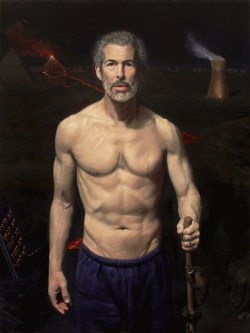
Publisher: In-Sight Publishing
Publisher Founding: March 1, 2014
Web Domain: http://www.in-sightpublishing.com
Location: Fort Langley, Township of Langley, British Columbia, Canada
Journal: In-Sight: Independent Interview-Based Journal
Journal Founding: August 2, 2012
Frequency: Three (3) Times Per Year
Review Status: Non-Peer-Reviewed
Access: Electronic/Digital & Open Access
Fees: None (Free)
Volume Numbering: 12
Issue Numbering: 3
Section: E
Theme Type: Idea
Theme Premise: “Outliers and Outsiders”
Theme Part: 31
Formal Sub-Theme: American Comedy Writing
Individual Publication Date: July 15, 2024
Issue Publication Date: September 1, 2024
Author(s): Scott Douglas Jacobsen
Word Count: 2,760
Image Credits: Lance Richlin.
International Standard Serial Number (ISSN): 2369-6885
*Please see the footnotes, bibliography, and citations, after the publication.*
Abstract
According to some semi-reputable sources gathered in a listing here, Rick G. Rosner may have among America’s, North America’s, and the world’s highest measured IQs at or above 190 (S.D. 15)/196 (S.D. 16) based on several high range test performances created by Christopher Harding, Jason Betts, Paul Cooijmans, and Ronald Hoeflin. He earned 12 years of college credit in less than a year and graduated with the equivalent of 8 majors. He has received 8 Writers Guild Awards and Emmy nominations, and was titled 2013 North American Genius of the Year by The World Genius Directory with the main “Genius” listing here. He has written for Remote Control, Crank Yankers, The Man Show, The Emmys, The Grammys, and Jimmy Kimmel Live!. He worked as a bouncer, a nude art model, a roller-skating waiter, and a stripper. In a television commercial, Domino’s Pizza named him the “World’s Smartest Man.” The commercial was taken off the air after Subway sandwiches issued a cease-and-desist. He was named “Best Bouncer” in the Denver Area, Colorado, by Westwood Magazine. Rosner spent much of the late Disco Era as an undercover high school student. In addition, he spent 25 years as a bar bouncer and American fake ID-catcher, and 25+ years as a stripper, and nearly 30 years as a writer for more than 2,500 hours of network television. Errol Morris featured Rosner in the interview series entitled First Person, where some of this history was covered by Morris. He came in second, or lost, on Jeopardy!, sued Who Wants to Be a Millionaire? over a flawed question and lost the lawsuit. He won one game and lost one game on Are You Smarter Than a Drunk Person? (He was drunk). Finally, he spent 37+ years working on a time-invariant variation of the Big Bang Theory. Currently, Rosner sits tweeting in a bathrobe (winter) or a towel (summer). He lives in Los Angeles, California with his wife, dog, and goldfish. He and his wife have a daughter. You can send him money or questions at LanceVersusRick@Gmail.Com, or a direct message via Twitter, or find him on LinkedIn, or see him on YouTube. Rosner discusses: the last 100 years of American comedy writing.
Keywords: classical realist art, evolution of comedy, expression of joy, history of realism, personal experience in comedy, root of humour, sitcom development, Tejano music series, unexpected information.
On American Comedy Writing 1: The Briefing
Scott Douglas Jacobsen: So I’ve been doing a series with J.D. on Tejano music. I’m doing another with Lance Richland on classical realist art through history. I wanted to do the same with you. What are some of your opening thoughts before we begin?
Rick Rosner: You asked if I could do something like Lance, a history of realism in art about comedy and comedy writing. I said I couldn’t because realism in art has a 10,000-year history, while comedy, as we know it, has only a 100-year history. Here is a rough outline of where our comedy comes from and its common roots. So let’s do that.
Jacobsen: Okay. I have one relevant foundational opening question. What is the root of humour? Or what is the root cause of humour? Do you see this?
Rosner: I agree with George Saunders. I’m not copying him; I have the same thought he did.
Jacobsen: Who is George Saunders?
Rosner: He’s an excellent author. He thinks that laughter is an expression of joy at information obtained cheaply. When you learn something, especially when it didn’t cost you anything in terms of a painful experience, you laugh. Monkeys laugh. If you set up a complicated situation in a joke and then resolve it, making the whole thing seem stupid with a punchline, you’ve opened up all this mental space for the dimensions of the joke.
A priest, a lawyer, a rabbi, a nun, and a horse walk into a bar. A complicated situation is temporarily set up in your brain, and then the punchline instantly resolves it. All done. You get the punchline. It didn’t cost you anything except a few seconds. People laugh at the little bit of knowledge that has been revealed. Many jokes are category errors where the joke maker sets you up to think it means one thing and turns out to be something unexpected. The unexpected is quick, cheaply obtained information. American comedy—there have been funny writers throughout history. However, if you look at what was considered funny in the 17th century, somebody wrote “The Imaginary Invalid,” Moliere or somebody, most of the plays, or “Our American Cousin,” the play that Lincoln was at when he got assassinated in 1865. At the time, this was an uproarious comedy, and I was listening to a historian who said that none of it would be funny to modern audiences. Comedy doesn’t age well. Shakespeare wrote comedies, and we revere Shakespeare, but I don’t think anybody is laughing uproariously at the jokes in Shakespeare. Not because he was a bad writer—he was a great writer—but our comedy needs have changed.
You can still find Mark Twain funny if you want to go into a more modern framework. He was born in 1835 and wrote from the 1870s until the beginning of the 20th century. You might find him uproarious, but he’s interesting to read. You can get through his books and be entertained, but you won’t laugh out loud.
Sketch comedy might have little skits. You can see stuff like that in burlesque. Burlesque was cheap entertainment at cheap playhouses where there were a bunch of acts, one right after the other—jugglers, comedians, sexy ladies, maybe taking some clothes off. It was vaudeville. It was just a whole bunch of different stuff. Variety, the entertainment magazine, was started as a newspaper for booking a variety of acts. Variety means a whole variety of things happening in two hours. You pay your nickel and watch a bunch of acts on stage for two hours. A couple of comedians could come out and do a five-minute sketch, which was about the patience people had.
At the same time, or a little later, you had radio comedians mostly doing jokes. Radio led to the development of the first sitcoms. They weren’t called sitcoms then, but you had half-hour dramas if they were dramatic. If they were funny, they were half-hours of jokes. Albert Brooks’ dad was a comedian with a radio show that turned into an early TV show that was just a bunch of puns made by and about a guy named Parkeakakis, a punny Greek name. He needed help with English, which led to various joke setups and situations.
By the 1950s, the sitcom had been developed. The sitcom is short for situation comedy. A comedian comes out and tells jokes, but characters get into situations in a sitcom. You have the same characters week after week whose personalities generate the humour. If you have a foreign guy who will need to understand the language, that’s the situation. I have yet to look up exactly the situation in situation comedy, but just from seeing a zillion of them, it’s the same people week after week, and they grind against each other in familiar ways based on their quirks and personalities. Lucy, in “I Love Lucy,” desperately wants to be in show business, so she puts herself or finds herself in various situations because of her desperation to break into showbiz. That was a familiar format by the 1950s.
Then there were the sketch comedy shows like Sid Caesar’s “Your Show of Shows,” Milton Berle, and later Carol Burnett. These were sketch shows and variety shows, the descendants of vaudeville on TV, where you’d have comedy sketches interspersed with singing. Sid Caesar’s writers grew up to become some of the greatest comedy writers and directors, like Woody Allen and Mel Brooks, and the guys who did MASH. There was some satire on the sketch shows of the 1950s, but it wasn’t brutal. There was some satire in comedy records.
One comedian, whose name escapes me, did good imitations of JFK and his family. While JFK was president, this comedian made comedy albums that weren’t vicious. After JFK was assassinated, the comedian’s career just disappeared. For most people my age, a little older or younger, their first satire experience of fairly hardcore making fun of stuff came from Mad Magazine. In the early 1950s, maybe late 1940s, there were many comic books.
Rosner: Comic books were a primary form of entertainment for kids. They were a dime each and the main source of entertainment. Television was limited to only three channels, so having only content specific little for kids, apart from their families, wasn’t possible during primetime. Local kids’ shows in the afternoon might feature clowns and other entertainment. I was on one as a guest in Albuquerque in probably 1966 or 1967. Every local TV station would have a bunch of kids over to the studio and have some local talent entertain kids for half an hour. I spilled a Coke on the host. They gave us a ton of Coca-Cola and other sweets, and I got a stomach ache. It could have been a more basic, exciting TV. So, comics were one of the primary forms of entertainment for kids, but they were fairly unregulated.
There were EC Comics, which were horror comics like Vault of Horror. You’ve seen the Crypt Keeper in horror movies. These were bloody stories of the supernatural, revenge, and axe murder in the early ’50s. An educator named Frederick Wertham wrote a book called Seduction of the Innocent, which was a hatchet job on comic books. He created a moral panic among parents and testified in Congress about the content of these comics. He claimed that Batman and Robin were homosexual lovers and took images from the comics out of context. It became an easy issue for Congress to get worked up about because kids couldn’t fight back, and the comic companies weren’t powerful. EC Comics, owned by William M. Gaines, saw its product line devastated. What was left were innocent comics like Richie Rich, Little Lulu, and Classics Illustrated. The Comics Code came in with rules similar to the Hays Code for movies, which dictated that crime couldn’t pay and you couldn’t show two characters in bed together, among other things.
EC Comics was left with not much. They had war comics because war was real, and they had Mad Magazine. It started as Mad Comics in 1952 and became a full-on magazine two years later. All these great artists, including Kelly Freas, were underemployed. These horror comic artists were now concentrated in Mad Magazine. They were funny guys and could make a living doing this in the ’50s. Mad Magazine had imitators like Cracked Magazine. Most people who became professionally funny and are my age were exposed to Mad Magazine and loved it up to a point. Many people, including myself, outgrew Mad Magazine. You never knew if it was you growing up or if the magazine was less funny, but it was probably a bit of both. People who were ten years old in 1952 and are now in their 80s were inspired by Mad Magazine as kids.
Then there were comedy records. Some of this information about Mad Magazine is taken from a Judd Apatow book. Apatow is a great movie director known for films like Anchorman, Knocked Up, and The 40-Year-Old Virgin. He started in comedy, working for his high school radio station. In the early ’80s, he would call big-time comedians, saying he worked for a radio station, and ask to interview them. He was on the East Coast but would fly out to interview comedians like Jerry Seinfeld in 1984 before Seinfeld became a TV show. The comedians thought they were talking to a real radio station and an adult interviewer, but it was just this kid. His determination impressed them, and they didn’t tell him to go away. This book, Sick in the Head, compiles decades of Apatow’s interviews, often asking comedians what first interested them in comedy. Besides Mad Magazine, parents often bought their kids comedy albums. Bill Cosby did a bunch of comedy records.
Rosner: It’s weird today to think that—is it weird? We’re used to stand-up specials, but nobody buys comedy on records anymore. However, people bought many comedy records in the ’60s and ’70s. Steve Martin’s records went gold if not platinum.
The thread is satire. We consider comedy now much more satirical than it was 80 years ago. I’ve talked about this before—Borscht Belt comedians. The Borscht Belt refers to a string of resorts in the Catskill Mountains in northern New York, where largely Jewish families would spend two weeks in the woods, relaxing around a swimming pool and sleeping in cabins in the summertime. Borscht Belt, because Jews eat borscht, a beet soup from Russia. There would be entertainment, including comedians, but the comedians would tell generic jokes based on everyone’s experience, not their own experiences. “Take my wife, please.”—Henny Youngman. “I don’t get no respect.”—Rodney Dangerfield. My age shows that these names aren’t immediately popping into my head.
In the ’60s, comedians began working more from their own experiences. Lenny Bruce was one of the first comedians to get personal, revealing his life and scathing points of view and getting arrested for it, probably losing a lot of the audience. Have you ever watched “The Marvelous Mrs. Maisel?”
Jacobsen: I haven’t seen that.
Rosner: It’s a good show about a woman trying to make it in comedy at a time when it was tough for women in comedy. She has some elements of Phyllis Diller and Joan Rivers. One of her mentors is Lenny Bruce. George Carlin started as a straight-laced, generic comedian who morphed into this hippie guy specializing in cultural criticism.
When comedy became more based on personal experience and a non-generic viewpoint, we were in the middle of the Vietnam War in the late ’60s, so there was more anger. Some comedians were a lot angrier. You’ve heard the term “the generation gap,” right?
Rosner: The gap was the gulf between what entertained older people and what inspired younger people, which older people found threatening. There are conservative discussions about how the Israel-Gaza protests are tearing up American campuses. They’re not tearing up American campuses; they’re fairly well-ordered and not destructive. But the protests in the ’60s were much angrier and more violent, and you can understand why. Eventually, 50,000 Americans died in Vietnam. It was personal. People were being drafted—Americans and college students. If you were a college student, you could put off going to war. You wouldn’t be sent to Vietnam if you were enrolled in college. You were immune from the draft until you graduated. The draft was conducted by putting 365 pieces of paper or numbers on balls into a hopper and drawing them. If the first date drawn was November 19th and you were born on November 19th, you were number one on the list to be drafted. You were much less likely to get drafted if your birth date was the 300th number drawn. They’d hit their number of required draftees before reaching the 300th birth date. This was all fantastically unfair and scary, and people were angry. So comedy got angrier, and a generation became familiar with satire. Then, several significant developments came along.
Rosner: The National Lampoon—I guess that stands alone at first. The National Lampoon was like Mad Magazine, except more vicious and dirtier. It would go anywhere; no subject was taboo. Mad was designed for kids and wouldn’t show naked boobs or dicks. They wouldn’t do masturbation humour because they didn’t want to weird out 12-year-olds or get busted by their parents. National Lampoon, which started in the early ’70s, was meant for adults, and I loved it because I was 13 in 1973, and the humour was vicious. It had nudity. You could jerk off to parts of it, which was odd for a humour magazine, but it was good.
Jacobsen: So I mentioned Judd Apatow’s book, Sick in the Head, which contains dozens of interviews over many decades with some of the biggest names in comedy. If you’re interested in developingdeveloping a comedy sensibility, learning habits that have been helpful for these people, and learning how they became successful, you should read that book. You might have more than one book. Jerry Seinfeld loves writing jokes. He gets up every morning and writes jokes for two hours every day, which puts him in the 99th percentile of comedians just sitting down and trying to work things out.
Rosner: And you learn about the insecurities that drive many comedians. Anyway, it’s a good book.
Jacobsen: The end.
Rick Rosner: One theme that runs through the book is that lonely comedy nerds who became famous and successful were dedicated enough and lucky enough to hook up with other comedy nerds. Sandler and Apatow became roommates. Apatow ended up having contact with many people like Ben Stiller, and they would bounce off each other, inspire each other, and create work. In my case, Sandler invited me out to Friendly’s ice cream. He was asking me if I could write material for him. But my social skills were so poor that I bounced off him and fell away. I had a partner, and we were successful together, but we were also wildly dysfunctional.
Jacobsen: How so?
Rosner: I can’t go into it, but I no longer have a partner. I was lucky for a while and to a limited extent. Could I have gotten luckier? Maybe. I’m on the spectrum, but nobody talks about whether the spectrum affects you in comedy. I’m not enough on the spectrum to use that as an excuse, except I just did. Becoming a stand-up comedian is the opposite of being on the spectrum. Sorry, we might have to stop after this because people are trying to sleep, but getting up on stage and doing stand-up a thousand or 2,000 times before you get good helps you develop a rapport with the audience. You learn how to understand and manipulate audiences in a way that’s very non-spectrum.
Hannah Gadsby is on the spectrum. Am I right in that?
Jacobsen: She does talk about it. She is a funny person.
Rosner: Yes. So, I didn’t know. I should have trained myself out of much awkwardness, or at least awkwardness in certaincontexts, by being a greeter, doorman, and ID checker in a bunch of bars where I met many people. That helped, but I probably should have gotten up on stage a gazillion times and honed my joke-telling craft. I can write a joke, but can I tell a joke? Not as well as I could if I’d gotten up on stage a million times in the ’80s and ’90s. The end.
Bibliography
None
Footnotes
None
Citations
American Medical Association (AMA 11th Edition): Jacobsen S. On American Comedy Writing 1: The Briefing. July 2024; 12(3). http://www.in-sightpublishing.com/american-comedy-1
American Psychological Association (APA 7th Edition): Jacobsen, S. (2024, July 15). On American Comedy Writing 1: The Briefing. In-Sight Publishing. 12(3).
Brazilian National Standards (ABNT): JACOBSEN, S. On American Comedy Writing 1: The Briefing. In-Sight: Independent Interview-Based Journal, Fort Langley, v. 12, n. 3, 2024.
Chicago/Turabian, Author-Date (17th Edition): Jacobsen, Scott. 2024. “On American Comedy Writing 1: The Briefing.” In-Sight: Independent Interview-Based Journal 12, no. 3 (Summer). http://www.in-sightpublishing.com/american-comedy-1.
Chicago/Turabian, Notes & Bibliography (17th Edition): Jacobsen, S “On American Comedy Writing 1: The Briefing.” In-Sight: Independent Interview-Based Journal 12, no. 3 (July 2024).http://www.in-sightpublishing.com/american-comedy-1.
Harvard: Jacobsen, S. (2024) ‘On American Comedy Writing 1: The Briefing’, In-Sight: Independent Interview-Based Journal, 12(3). <http://www.in-sightpublishing.com/american-comedy-1>.
Harvard (Australian): Jacobsen, S 2024, ‘On American Comedy Writing 1: The Briefing’, In-Sight: Independent Interview-Based Journal, vol. 12, no. 3, <http://www.in-sightpublishing.com/american-comedy-1>.
Modern Language Association (MLA, 9th Edition): Jacobsen, Scott. “On American Comedy Writing 1: The Briefing.” In-Sight: Independent Interview-Based Journal, vo.12, no. 3, 2024, http://www.in-sightpublishing.com/american-comedy-1.
Vancouver/ICMJE: Scott J. On American Comedy Writing 1: The Briefing [Internet]. 2024 Jul; 12(3). Available from: http://www.in-sightpublishing.com/american-comedy-1.
License & Copyright
In-Sight Publishing by Scott Douglas Jacobsen is licensed under a Creative Commons Attribution-NonCommercial-NoDerivatives 4.0 International License. ©Scott Douglas Jacobsen and In-Sight Publishing 2012-Present. Unauthorized use or duplication of material without express permission from Scott Douglas Jacobsen strictly prohibited, excerpts and links must use full credit to Scott Douglas Jacobsen and In-Sight Publishing with direction to the original content.

 In-Sight Publishing