The Greenhorn Chronicles 47: Annette Case on Background to 3-Day Eventing (1)
Author(s): Scott Douglas Jacobsen
Publication (Outlet/Website): In-Sight: Independent Interview-Based Journal
Publication Date (yyyy/mm/dd): 2023/10/01
*Interview conducted September 4, 2023.*
*Please see the footnotes, bibliography, and citations, after the publication.*
Abstract
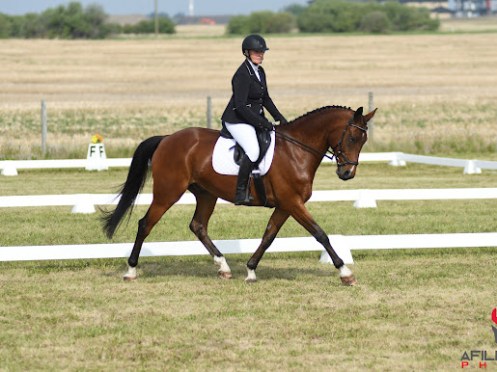
Annette Case is an Adult Amateur Eeventer/SJ who was born in Auckland, New Zealand. She started riding at the age of 4/5. She moved to Canada in 1987 and married David Case in 1991, with whom she has 3 girls. She is a small-time breeder of Canadian warmbloods abd competed in preliminary level eventing before having a family with David. Annette is one of the few people responsible for bringing eventing to Northern Alberta in the South Peace Horse Trials. Case discusses: early horse experiences; development of interaction with horses over time; getting in a saddle; the structure of the English riding world; expanding into 3-day eventing; being a kiwi rider; cost of horses and barrier to entry; and the horse-rider combination.
Keywords: 3-day eventing, Annette Case, dressage, English riding, equestrianism, horses, kiwi, New Zealand, show jumping.
The Greenhorn Chronicles 47: Annette Case Background to 3-Day Eventing (1)
Scott Douglas Jacobsen: So, we were talking off-tape. I wanted to get one thing as a preface to all this. I was focusing on show jumping at the start, but it started expanding quite a lot. So I’ve made this a project where I want to start with Canada, doing English riding and its disciplines and Western riding and its disciplines and then going North American, European and internationally in general. I might take detours from that structure, but I can’t determine how long this project will take. However, I would like to get people who are running equine therapeutic businesses, from small-time riders to big-time riders. So on, to get a rounded perspective on equestrianism because, as far as I know, that’s not been done outside of siloing: show jumping, three-day eventing, dressage, barrel racing, horse racing. The things of this nature. I’ll take a step forward now and ask how you get involved in horses.
Case: It may have been the first word issued from my mouth. I am one of four kids, from a mum who used to show jump in NZ in the days before FEI. Those days all the classes were judged. She grew up on a farm; we grew up on an acreage and there were always horses around. Anytime I could, I’d be out with them. I was infatuated with them initially; my sister and I were.
Jacobsen: How did you find interaction with them over time? I’m talking more before actual riding.
Case: I’ve always loved all my animals, but a horse was something special. We had cats and the neighbor’s golden retriever who were very special too but for me the horses were my friend, therapist, sounding board, wiper of tears. I told them everything but they just don’t talk back.
Jacobsen: [Laughs] They don’t speak English.
Case: Some horses do talk back.
Jacobsen: Yes, there was a child yesterday at the business here. It was a Sunday. She said something to the horse in Spanish, even though the girl’s native tongue is English. I looked at the mother and said, “The horse only speaks Japanese.” It’s amusing because they have this very malleable quality with how we, as human beings, engage creatures anyway.
Case: Yes. I’m in my mid-50s. Sometimes, the reason may be hazy, but I know if I was in trouble with Mum or dad, I’d go to the horse. We were lucky, we lived on an acreage so it was fairly cheap to keep a horse back then. I’d talk about my problems. If I were younger than that, I’d sit there and hug them or cry and say, “Life isn’t fair.” So, it’s always been that extra, that little bit of… I didn’t think of it as that back then, but maybe therapy if you want to add that extra… Something extra there… what I mean is they were there for you.
Jacobsen: People get their start if they want the basics of good riding in dressage. Everyone tells me. How did you start in a saddle?
Case: Mum was very busy. She couldn’t always be watching us and we were always on the horse every second we had. We weren’t allowed to ride with a saddle just in case we got caught up so we hopped on bareback and hared around the paddocks. Depending on who wanted to ride, we’d double or even triple and from time to time tumble. Sometimes, we shared a horse for a bit and took turns. Later on, there were two horses and we’d play tag with the neighbours. I probably got a normal start to riding and went to pony club as soon as I could talk my parents into it. It’s a little different from here but has the same values. I rode the horse to pony club every Saturday and spent basically the whole afternoon there.
You get taught how to look after your horse right from the little stuff you can do when you’re young to the big stuff as you get bigger and better. There are instructors and many volunteer parents present the whole time—a lot of work. You sit tests; you move up your levels. That’s how many kids in New Zealand get started. That’s how I got started.

Jacobsen: Is that structure now similar to other areas of the English riding world regarding how kids get into riding?
Case: I’m not too familiar with other country’s pony club systems but I would imagine, they’d be somewhat similar. I haven’t been there for over 30 years. Here, you can choose between going to a riding stable, a pony club, finding a coach and leasing horses or just ride at home if you’re lucky enough to live on an acreage, farm or ranch. Many kids I’ve known here in Canada have found a coach who will take you through the basics of riding and horse care. Flatwork or dressage before you start jumping, but it depends on that coach’s training, upbringing and everything. It’s a little bit different here. Does that answer your question?
Jacobsen: Yes. As you became more experienced as a rider, you had to expand into different riding disciplines to get to where you are now. How did you go about doing that? Was it a structured process or more of an organic, exploratory endeavour?
Case: In New Zealand, we didn’t have Western riding when I was growing up. I believe it is there now but it was all English riding. Through the pony club there was structure but we also watched our heroes like, Sir Mark Todd, Andrew Nicholsen, Blythe Tait etc. Mark was a show jumper and an eventer, winning Badminton Horse Trials in England before going on to win back to back Olympic titles on a horse called Charisma. There was also Show jumping and dressage as equestrian sports but not quite in the spotlight like Eventing was. I don’t know what it’s like in NZ now but back then Dressage was not quite as popular.
Coming through Pony Club, you get a chance to do the pony club games at the rallies, which are all focused on you enjoying your horse while learning at the same time. Every pony club had a one-day event. It’s like a three-day event, but the dressage, cross-country and show jumping are all in one day.
Here in Canada, we run a lot of what are called horse trials. They run the three disciplines, but because of distances, they run it over two days. Distances and the number of volunteers that we have available, make it easier to run the dressage and show jumping on one day because they’re the two smaller events and then run the cross country on the third day.
The thing with one day events is that the rider gets a taste of all three disciplines and if you decided that you like one discipline better than another then you could branch off .
I love the thrill, the adrenaline of it, but in my first year out of high school; I didn’t get into the program I wanted to attend at university. I worked for a show jumper named John Cottle, New Zealand’s 1984 individual show jumping representative at the Los Angeles Games. I got to be a working pupil, so essentially I groomed for him, worked the horses at home and he had lessons. I love show jumping, but I also love cross country, so I did both.
Jacobsen: You’re my first eventer interview formal and the first person, as far as I know, who has a New Zealand history with horses in general. [Ed. part of a slow process of going international and into different disciplines.] This is an interesting aspect of it because a lot of the time, when I’m talking to Canadians, there are a lot of assumptions under the surface. For instance, something as simple as you say we didn’t have Western. For instance, that would not be something to come up in British Columbia or Alberta.
Case: No.
Jacobsen: So, the context in which someone does grow up with horses can impact the paths that are open to them or what they see before them as they’re growing up in a particular sport.
Case: Yes. Geographically, that makes a huge difference, right? Growing up in Alberta, I would think that most young riders would think of Western riding unless born into an English riding family. They would think of horses and think of the westerns, right?
Alberta and BC and maybe even Saskatewan have working ranches where horses are a way of life so I imagine geographically there’d be higher numbers of western riders in the western provinces.
I was lucky enough to grow up with horses but I can only afford to do what I’m doing now because I’m very fortunate. My husband has a great job, we live in the country and we have the horses at home. I pay for coaching, but I keep my horses at home. And you make a lot of sacrifices. Families come along. You choose whether you run with a family or the horses; you can try and do both, but it wouldn’t have worked for me. It geographically and economically determines what you will do and how you will do it.
Jacobsen: Gail Greenough noted a similar difficulty regarding ever having a family. You have a family. However, regarding that decision one makes about whether to have one, I think she was quite frank about noting that as a regret. Even though, within her career, she was very successful.
Case: Yes. It’s one of those things I didn’t even think about growing up. I’ve been a person who’s always lived for the moment but not a risk taker either. I always wanted to have something to do with horses but decided early on that I wasn’t going to work for them because I didn’t want them not to become the love and passion that I have. I was very lucky enough to have another sport that I was very good at. I played field hockey not on the national team in New Zealand but at a national level. I possibly could have made it had I not left the country when I did. My mum played on the New Zealand field hockey team. I mean, it was a possibility if I wanted it.
I forgot where I was going with this, but the horses were….I didn’t want them to be my work, I wanted them to be my sport and passion. I definitely would have said that I wanted to make the Olympic team at one point. Every young kid wants to go to the Olympics. Yes, I did, but when I decided I wanted a family, I realized it wasn’t for me. I mean it’s fine when it’s the two of you; I can decide to do something, without making a choice for my husband. He can come with me, or he can go do his own thing. When you have kids, everything changes. If I choose to do the horses, he has to look after the kids, or we pay somebody to look after the kids. We didn’t want to do that. We wanted it to be one of us with them. If I chose to compete, follow the horses, go as high as possible, I was choosing Dave to look after the kids. I didn’t want him to do that all the time and I wanted to do it, too. So basically, I rode all through pregnancy. I rode while we had the kids. I still rode when they were young, but then, at a certain age, I stopped competing and just rode at home.
Once the kids were not too financially dependent on us, it was, “Okay, the time is mine now.” Luckily, horse riding is one of the sports that, as long as you’ve kept yourself fairly healthy and fit, you can still ride. You don’t have to be under 30 to be half-decent. It’s also the only sport that I know that you can compete alongside your stars: Laura Jane, say she was riding a young horse – you might have a young horse in the same division and be competing alongside them. Whereas you’d never get a chance to play with or against an NHL player or an NFL player. The factor is that of the horse; it’s the level of the horse, a young horse or a green horse. You’ve got your green horse. You’re all in the same pool together.
Jacobsen: I remember Tiffany Foster mentioned that the horse is the great equalizer in one article or interview that had been turned into an article. Yet, Mac Cone noted, a certain number of horses are born each year. There’s a higher demand for them internationally. The price is based on demand. Limited supply creates an artificial inflation of the prices of the horses. Those Olympic-level horses, say half a million dollars to five million dollars or something like this, become further and further out of the reach of people without sufficient means. Something that you were alluding to before: how much does finance, especially now, create a barrier to entry into higher ends of the sport for many people who have the talent but are more ordinary in terms of means?
Case: It is a huge barrier. That does not mean to say that it can’t be done. If you work hard, are in the right place at the right time, and want it badly enough, I’m sure it can be done. It’s just not as easy without the financial backing. I have three young prospects who are well-bred and depending on the people who end up with them, and lady luck, they may make it to the higher end of the sport. They don’t have that huge price tag on them, but somehow, they’ve got to find a market. “Who you know” helps but i dont have the finances to compete with them up the levels so I enjoy the babies and pass them along.
Jacobsen: When do you think most riders are serious about going to the Olympics or getting to the higher end of the FEI rankings peak? What is that time of life for them typically?
Case: For a rider?
Jacobsen: Yes.
Case: I don’t know if I am fully qualified to answer that. From my knowledge of other sports and stuff, I would say that it would depend on the relationship with a horse and where they’ve come from. I don’t know the youngest rider to be at the Olympics. I know some young people have been there as eventers, and Canada has had young show jumpers too. Usually, they’re mid-20s at the youngest. It depends on how much experience they’ve had or how quickly they’ve been able to move up the levels, if they’ve had to go to school, if they’ve had to have breaks anywhere along the line through injury or for family or anything like that.
Jacobsen: There was one young lady, Luiza Almeida. She was in dressage on the Brazilian team at the 2008 Olympics. At that time, she was 16.
Case: Yes. The minimum age at the Olympics is 14. But I would imagine that there has been no lack of money, she’s been able to decide to ride; she’s had top-quality instructors and quality horses. I don’t know how well she did, but she made the nation’s team and went to the Olympics – that’s amazing.
Jacobsen: 39th was the ranking.
Case: That’s awesome. Here, I think there’s a lot more people, there’s a much larger populace wanting those few spots on the team. I think you’ve got to do a bit more and be more out there. I’m not qualified to give you that answer, but I know it would be a lot harder to do it in a country where more people are riding who are fighting for those spots. They’ll have so many qualifiers that you have to do and whatnot and how your horse goes and if they get lame or if you have a straight run-through and stuff like that. Even though you’re talking about the rider, it all depends on whether you’ve had a horse that’s been able to do that all the way through, too.
Things can throw a huge wrench in some people’s plans. The 15 yr old horse that is at the top of his game one season but the Olympics are still 2 yrs away… anything can happen in that 2 years of waiting. And again, I haven’t been at that level.
Jacobsen: You got me thinking. In one of my first interviews, I was lucky enough to get one with Erynn Ballard, also within a couple of months of working in the industry. I didn’t know anything. I recall her saying something more akin to your own perspective on the financial thing or the horse rider combination, both of them at the same time, where she noted that with respect to being able to buy a great horse, she still thinks that or likes to think that the best horse and rider combination where you build that relationship, is the strongest predictor of a successful performance.
Case: I had a special young horse that I was working with many years ago and I was talking to a course designer who had ridden at the Pan Am’s, wondering if I should get a good trainer to start this horse or do it myself. And he said, “Annette, you’re a good enough rider and you’ve got enough knowledge to do this. If you want to have this horse to compete on, you start it and then find trainers to work with to learn how to put the buttons on. You’ll do better relationship-wise if this is the horse that you want to ride and compete on to start it yourself.” I honestly do believe that having a good horse and rider relationship makes a more successful partnership which should go hand in hand with performance.
I breed a few of my own horses. I start them. Then we see where they go; like, right now, I’ve got a nice three-year-old. I will probably start it and enjoy it as a three- to four-year-old. But then it might go somewhere else for somebody to take it further than I could afford or probably do myself. So yes, I take pride in putting a nice start on them. What I know, though, scratches the surface Scott but it’s a passion of mine and my sport as opposed to my livelihood. I’ve had horses most of my life, but I’ve not been in it as a work thing for most of my life.
License
In-Sight Publishing by Scott Douglas Jacobsen is licensed under a Creative Commons Attribution-NonCommercial-NoDerivatives 4.0 International License. Based on a work at www.in-sightpublishing.com.
Copyright
© Scott Douglas Jacobsen and In-Sight Publishing 2012-Present. Unauthorized use and/or duplication of this material without express and written permission from this site’s author and/or owner is strictly prohibited. Excerpts and links may be used, provided that full and clear credit is given to Scott Douglas Jacobsen and In-Sight Publishing with appropriate and specific direction to the original content. All interviewees and authors co-copyright their material and may disseminate for their independent purposes.

 In-Sight Publishing