Conversation with Tomáš Perna on AI and ANN: Member, World Genius Directory (4)
Publisher: In-Sight Publishing
Publisher Founding: March 1, 2014
Web Domain: http://www.in-sightpublishing.com
Location: Fort Langley, Township of Langley, British Columbia, Canada
Journal: In-Sight: Independent Interview-Based Journal
Journal Founding: August 2, 2012
Frequency: Three (3) Times Per Year
Review Status: Non-Peer-Reviewed
Access: Electronic/Digital & Open Access
Fees: None (Free)
Volume Numbering: 12
Issue Numbering: 1
Section: A
Theme Type: Idea
Theme Premise: “Outliers and Outsiders”
Theme Part: 29
Formal Sub-Theme: None
Individual Publication Date: November 1, 2023
Issue Publication Date: January 1, 2024
Author(s): Scott Douglas Jacobsen
Word Count: 629
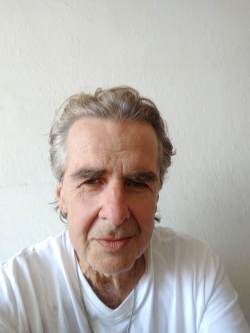
Image Credit: Tomáš Perna.
International Standard Serial Number (ISSN): 2369-6885
*Please see the footnotes, bibliography, and citations, after the publication.*
Abstract
Tomáš Perna is a Member of the World Genius Directory and a GIGA SOCIETY Fellow. Perna discusses:quantum algorithms enhancing computational efficiency in ANNS in machine learning; the principles of superposition and entanglement; some challenges or hurdles; some light on how quantum-inspired optimization algorithms can be beneficial for ML and the optimization of ANNs; and he density of ANNs.
Keywords: AI, ANN, cognitive states, computational efficiency, gnoseology, Gödel’s theorems, machine learning, mathematical model, quantum, superposition principle, synaptic slots, Tomáš Perna.
Conversation with Tomáš Perna on AI and ANN: Member, World Genius Directory (4)
Scott Douglas Jacobsen: Can you discuss the potential of quantum algorithms in enhancing the computational efficiency of ANNs in machine learning?
Tomáš Perna: Ad 1) Quantum algorithms and AI/aNN are two different things naturally. I accent it from that reason that, while, from its mathematical model point of view, unlike in the case of algorithms, the AI regards every problem as decidable one. The computational efficiency is irrelevant.
In order to understand the math. model of AI in the quantum connotations, I will describe shortly the ideas/thesis, on whose the mathematical model of the AI and aNN system is based:
- Every logically consistent system, in which it is possible to prove a certain statement must have a mathematical model (Gödel’s theorems).
- The consistent AI-system reaches such cognitive states of the aNN (CSG), which, with respect to its gnoseological background, ensure the stability of the trinity : el. charge-inhibitory and excitatory potentials only with respect to synaptic slots, the existence of whose is respected by the model.
- The CSG are represented by wave functions satisfying the fundamental equations of the quantum mechanics, when ML plays the role of the so called quantum barriere at the state of relevant control by gnoseology. The relevant gnoseology is consequently represented here by the solutions of certain quantum field equations.
- There are two basic CSG: CSG(5′) and CSG(3′) determining the directionality of C(AI) “synthesis’ of loops in a machine language coherently with respect to loops in natural language. So, there is a polynomially bounded code of AI, surprisingly creating its so called black box possessing automatically the fundaments of consistent AI/ML/DM configuration.
- Contrary to such implied complex nature of the whole optimization, its output is simple, being determined by the correct choice of the number of neurons, their layers and the number of iterations for all well posted problems, being solved by using AI.
- In other words, the mentioned three correctly chosen numbers ensure the relevance of the emerged patterns using data without a danger of originating of phantom effects within the evolution of the system, into which a corresponding problem is embedded. Only under such condition, the aNN really converge and AI is not getting mad due to overlearning, etc.
Jacobsen: How do the principles of superposition and entanglement in quantum mechanics play a role in the optimization of ANNs?
Perna: Ad 2) Modeling AI with the quantum background, the entanglement and superposition principle of the CSGs will lead you to the emerging of the group of automorphisms of the C(AI), via which you can study the properties of the AI in an action of solving a given problem.
Jacobsen: What are some challenges or hurdles that researchers face when attempting to implement quantum world equations in optimizing ANNs?
Perna: Ad 3) As it maybe follows from the above given, the main task is to connect the context of the problem being solved by AI with the quantum entanglement. How great can be their mutual logical intersection ?
Jacobsen: Could you shed some light on how quantum-inspired optimization algorithms can be beneficial for ML and the optimization of ANNs?
Perna: Ad 4) In respecting an existence of synaptic slots binding the optimal configuration of the trinity: el. charge-inhibitory and excitatory potentials (see the point 2 in the above given model description).
Jacobsen: In the context of quantum machine learning, how does the density of ANNs impact the accuracy and efficiency of predictions?
Perna: Ad 5) There is a relative narrow interval of aNN density, which works without phantom pattern learning. You must learn the structure of the math. model of the AI – aNN system to have a chance to chose the aNN density relevantly with respect to the ML-algorithms being used.
Bibliography
None
Footnotes
None
Citations
American Medical Association (AMA 11th Edition): Jacobsen S. Conversation with Tomáš Perna on AI and ANN: Member, World Genius Directory (4). November 2023; 12(1). http://www.in-sightpublishing.com/perna-4
American Psychological Association (APA 7th Edition): Jacobsen, S. (2023, November 1). Conversation with Tomáš Perna on AI and ANN: Member, World Genius Directory (4). In-Sight Publishing. 12(1).
Brazilian National Standards (ABNT): JACOBSEN, S. Conversation with Tomáš Perna on AI and ANN: Member, World Genius Directory (4). In-Sight: Independent Interview-Based Journal, Fort Langley, v. 12, n. 1, 2023.
Chicago/Turabian, Author-Date (17th Edition): Jacobsen, Scott. 2023. “Conversation with Tomáš Perna on AI and ANN: Member, World Genius Directory (4).” In-Sight: Independent Interview-Based Journal 12, no. 1 (Winter). http://www.in-sightpublishing.com/perna-4.
Chicago/Turabian, Notes & Bibliography (17th Edition): Jacobsen, S “Conversation with Tomáš Perna on AI and ANN: Member, World Genius Directory (4).” In-Sight: Independent Interview-Based Journal 12, no. 1 (November 2023).http://www.in-sightpublishing.com/perna-4.
Harvard: Jacobsen, S. (2023) ‘Conversation with Tomáš Perna on AI and ANN: Member, World Genius Directory (4)’, In-Sight: Independent Interview-Based Journal, 12(1). <http://www.in-sightpublishing.com/perna-4>.
Harvard (Australian): Jacobsen, S 2023, ‘Conversation with Tomáš Perna on AI and ANN: Member, World Genius Directory (4)’, In-Sight: Independent Interview-Based Journal, vol. 12, no. 1, <http://www.in-sightpublishing.com/perna-4>.
Modern Language Association (MLA, 9th Edition): Jacobsen, Scott. “Conversation with Tomáš Perna on AI and ANN: Member, World Genius Directory (4).” In-Sight: Independent Interview-Based Journal, vo.12, no. 1, 2023, http://www.in-sightpublishing.com/perna-4.
Vancouver/ICMJE: Scott J. Conversation with Tomáš Perna on AI and ANN: Member, World Genius Directory (4) [Internet]. 2023 Nov; 12(1). Available from: http://www.in-sightpublishing.com/perna-4.
License
In-Sight Publishing by Scott Douglas Jacobsen is licensed under a Creative Commons Attribution-NonCommercial-NoDerivatives 4.0 International License.
Based on work at www.in-sightpublishing.com.
Copyright
© Scott Douglas Jacobsen and In-Sight Publishing 2012-Present. Unauthorized use and/or duplication of this material without express and written permission from this site’s author and/or owner is strictly prohibited. Excerpts and links may be used, provided that full and clear credit is given to Scott Douglas Jacobsen, or the author(s), and In-Sight Publishing with appropriate and specific direction to the original content. All interviewees and authors copyright their material, as well, and may disseminate for their independent purposes.

 In-Sight Publishing