The Role of the parliamentarians and faith or belief leaders can play in addressing the inequalities on account of religion or belief in Tanzania
Publisher: In-Sight Publishing
Publisher Founding: September 1, 2014
Location: Fort Langley, Township of Langley, British Columbia, Canada
Journal: African Freethinker
Journal Founding: November 1, 2018
Frequency: TBD
Review Status: Non-Peer-Reviewed
Access: Electronic/Digital & Open Access
Fees: None (Free)
Volume Numbering: 1
Issue Numbering: 1
Web Domain: http://www.in-sightpublishing.com
Individual Publication Date: October 30, 2023
Issue Publication Date: TBD
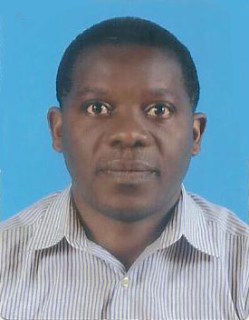
Author(s): Isakwisa Amanyisye Lucas Mwakalonge
Author(s) Bio: Lucas is Assistant Editor, African Freethinker/in-sightpublishing.com (Tanzania), a Lawyer, an Advocate of the High Court of Tanzania, a Notary Public Officer and Commissioner for Oaths. Writer on Freedom of Religion or Belief (FoRB). Researcher in Constitutional Law, and Human Rights Law. Also, a Humanist-Freethinker activist in Tanzania. (e-mail: isamwaka01@gmail.com).
Word Count: 3,385
Image Credit: Isakwisa Amanyisye Lucas Mwakalonge.
Keywords: belief, Christianity, faith, freethinker, human rights, humanist, inequalities, Intolerance, Isakwisa Amanyisye Lucas Mwakalonge, parliamentarians, Tanzania, United Nations, United Republic of Tanzania.
*Please see the footnotes and bibliography after the article.*
The Role of the parliamentarians and faith or belief leaders can play in addressing the inequalities on account of religion or belief in Tanzania
Dar es Salaam, Tanzania – East Africa.
(WhatsApp +255 766 151395/E-mail: isamwaka01@gmail.com.)
A parliamentarian is a member of a parliament, especially one who is respected for his or her experience and skill. A parliamentarian is also someone who is an expert on the rules and methods used by a group that makes laws or decisions. Parliament is one of the pillars of state in Tanzania; its functions are to enact laws, it is a legislative organ, it is a representative body of Tanzanians, whereby through it, the people’s interests, views, outlooks and demands are expressed while faith or belief leaders are religious leaders. Good examples of them are the imams in Islam, rabbis of Judaism, pastors and reverend fathers in Christianity, chief priests in African traditional religions, and leaders of other belief communities. Inequality or inequalities on account of religion or belief is when a person is treated differently because of his or her religion or belief, or lack of religion or belief, in one of the situations covered by the Equality Act Chapter 15. The treatment could be a one-off action or a result of a rule or policy. And it does not have to be deliberate to be unlawful. In other words, inequalities on account of religion or belief, it is a belief or religion discrimination is discriminating against fellow human beings only because he or she believes or does not even believe in a similar thing as you believe.
The Declaration on the Elimination of All Forms of Intolerance and of Discrimination Based on Religion or Belief, under Article 2(2), provides:
“For the purpose of the present Declaration, the expression “intolerance and discrimination based on religion or belief” means any distinction, exclusion, restriction, or preference based on religion or belief and having as its purpose or as its effect nullification or impairment of the recognition, enjoyment or exercise of human rights and fundamental freedom on an equal basis.”
In Tanzania, any kind of discrimination against a human being, including discrimination on the basis of religion or belief, is prohibited by the Constitution of the United Republic of Tanzania of 1977, under article 13(5), bearing in mind that Tanzania is a secular state, yet there are some elements of inequalities on account of religion or belief in Tanzanian societies, that is why there is a need for them to be addressed so as to expose them and if possible to eradicate them completely.
Therefore, in discussing the role the parliamentarians and faith or belief leaders play in addressing the issue of the inequalities on account of religion or belief, here below are some outlines of basic elements of human rights which are to be considered as the yardstick of both international and regional standards of observance of human rights in which they can be used to influence the domestic laws in improving the standards of human rights at a local level. For instance, at the international level, human rights, including the rights of freedom of religion or belief, are provided and guaranteed by various international human rights documents. A few of them are the Universal Declaration of Human Rights of 1948, the International Covenant on Civil and Political Rights (ICCPR), the Declaration on the Elimination of All Forms of Intolerance and of Discrimination Based on Religion or Belief, while the regional level, there is African [Banjul]Charter on Human and People’s Rights, whereby at the national level there is Constitution. All of these documents aim at providing, protecting, promoting and guaranteeing the enjoyment of freedom of religion or belief or even opting not to believe in any religion; indeed, this is both a human right and a legal right which every human being deserves to enjoy without any discrimination.
Tanzania is a member of the United Nations; thus, it is an undisputed fact that it accepts the Universal Declaration of Human Rights of 1948 as a norm which is used as a common standard for achieving fulfillment of human rights at the international level, then automatically the nation is bound to adhere to this human rights declaration in which the Tanzanian human rights laws must reflect these international standards. For instance, in the preamble, the declaration is dedicated to promoting the enjoyment of freedom of belief and speech at a global level; that is why Article 2 of the declaration, the first paragraph it is states that everyone is entitled to enjoy all the rights and freedom provided in this declaration including the rights of enjoying the freedom of belief and speech without any distinction of either religion, social origin, race, political or other opinions, colour, social origin or nationality, language or birth, sex or another status, while article 7 of the declaration illustrates this:
“All are equal before the law and are entitled without any discrimination to equal protection of the law. All are entitled to equal protection against any discrimination in violation of this Declaration and against any incitement to such discrimination.”
And Article 18 states as follows:
“Everyone has the right to freedom of thoughts, conscience and religion; this right includes freedom to change his religion or belief, and freedom, either alone or in community with others and in public or private to manifest his religion or belief in teaching, practice, worship and observance.”
Besides, article 29, in its generality, sets the limitations of enjoyments of human rights, including the rights of freedom of religion and belief, since human rights enjoyment is not an absolute right. Laws and orders of the areas concerned that set respect and freedom of others, as well as the general welfare of the public, must be obeyed.
The International Covenant on Civil and Political Rights (ICCPR) under article 2 of the covenant, among other things provides that human beings should be respected, provided that they are human beings, irrespective of his or her religion. A human being should not be denied or be disrespected only because of his or her religion, while Article 18 (1)emphasizes that everyone shall have the right to freedom of religion or belief, freedom to adopt a belief or religion of his preference, together with freedom of manifestation of his religion or belief in teaching, observance, worshiping or practice while article 18(2) explains this:
“No one shall be subject to coercion which would impair his freedom to have or to adopt a religion or belief of his choice.”
The United Republic of Tanzania has already signed and ratified this human rights instrument.
The Declaration on the Elimination of All Forms of Intolerance and of Discrimination Based on Religion or Belief. It is a declaration dedicated to promoting all matters of freedom of religion and belief. For example, article 1 provides a right to either believe or opt not to believe in any religion, together with freedom of worship and the manifestation of someone’s belief or religion, teaching, observance, as practice. While article 2(1) provides that:
(1). “No one shall be subject to discrimination by any state, institution, group of persons or person on the grounds of religion or other belief.”
Article 3, reads:
“Discrimination between human beings on the grounds of religion or belief constitutes an effort to human dignity and a disavowal of the principles of the Charter of the United Nations, and shall be condemned as a violation of the human rights and fundamental freedoms proclaimed in the Universal Declaration of Human Rights and enunciated in detail in the International Covenants on Human Rights, and as an obstacle to friendly and peaceful relations between nations.”
Article 4(1) and (2) states:
1.“All states shall take effective measures to prevent and eliminate discrimination on the grounds of religion or belief in the recognition, exercise
and enjoyment of human rights and fundamental freedom in all fields of civil, economic, political, social and cultural life.”
2. “All states shall make all efforts to enact or rescind legislation where necessary to prohibit any such discrimination, and to take all appropriate measures to combat intolerance on the grounds of religion or other beliefs in this matter.”
Till the publication of this essay, Tanzania is still hesitating to ratify this human rights document.
At the regional level in Africa in which Tanzania is within, the right of freedom of religion or belief is provided and guaranteed by the African [Banjul]Charter on Human and People’s Rights. A concrete example is from Article 2 of the charter, whereby, among other things, the article states that every individual has to enjoy human rights and freedom without being discriminated against despite the difference of religion. And Article 8 of the same charter provides this:
“Freedom of conscience, the professing, and free practice of religion shall be guaranteed. No one may subject to law and order, be submitted to measures restricting the exercise of these freedoms.”
This charter has been ratified by Tanzania.
At the domestic level in Tanzania, issues of freedom of religion or belief rights are promoted, provided, guaranteed and protected by the Constitution. Within Tanzania, numerous steps continue to be taken in the promotion and protection of equality amongst citizens. For example, Article 12(1) and (2) of the Constitution grant and protect the equality of human beings regardless of race, sex, colour, tribe or religious affiliations. It also insists that every person is entitled to recognition and respect for his dignity. Article 13(1) and (2) provides the right of equality before the law. The provisions read:
(1) “All persons are equal before the law and are entitled, without any discrimination, to protection and equality before the law.”
(2) “No law enacted by any authority in the United Republic shall make any proposition that is discriminatory either of itself or in its effect.”
The Status of Freedom of Religion and Belief in Tanzania:
Right from the preamble of the Constitution in article 3(1), it is clearly stated that the United Republic of Tanzania is a secular state, but the right of freedom of religion or belief and worship is provided, guaranteed and protected to all people by the supreme law of the land which is the Constitution precisely article 19(1), which provides that:
“Every person has the right to the freedom of conscience, faith and choice in matters of religion, including the freedom to change his religion or faith.”
This implies that every person in Tanzania is free to make a choice in what to believe and what not to believe, essentially in matters of religion and faith. A quotation below has a clear explanation of what the mentioned article 19(1) intends to portray.
“Freedom of religion and conscience this right means that no person should be required to profess any religion or other belief against his or her desire. Additionally, no one should be punished or penalized in any way because he or she chooses one religion over another or indeed opts for no religion at all.”
Therefore, in discussing the role which can be played by the parliamentarians as well as faith or belief leaders in addressing the inequalities on account of religion or belief, here below are some outlines of the basic elements of human rights, which is the yardstick. Henceforward, it is important to make sure that these parliamentarians and belief leaders, when addressing the state of inequalities in religions or belief in their areas and Tanzania, in particular, they must adhere to both international and regional human rights instruments as a benchmark in order to either advise the government to reform or legislate human rights laws which meet the international standards. Secondly, to continue to keep pressure on the government and the parliament to make sure that Tanzania ratifies all international treaties, conventions and declarations which guarantee freedom of religion and belief, such as the Declaration on the Elimination of All Forms of Intolerance and of Discrimination Based on Religion or Belief so soon because this declaration is a road map covering an international aspect on promotion, protection and guarantee freedom of religion and belief globally.
Generally, the roles of the parliamentarians and faith or belief leaders in addressing the inequalities on account of religion or belief are discussed below as follows:
As legislators in the legislative house, the parliamentarians have immense influence on both the government and the public at large because they are a link between the parliament and the public. So, the overall function of the parliament and the parliamentarians is to represent the people’s will in the governance of the state. Apart from being legislators, members of parliament perform a number of functions, and some of them represent their constituencies in the national assembly, speak to the government on behalf of the communities they represent, debating different government bills which are tabled in the House before those bills are passed to become laws, approving government budgets as well as endorse governments plans. They are also responsible for administering and advising government and government agencies in different aspects; sometimes, they ratify treaties. The parliamentarians are also members of different political parties of their choice; in that case, they are responsible for contributing to the development of their parties. For instance, before the parliamentary session starts, they have to sit in party caucuses in order to analyze projected legislation in the following parliamentary sessions. Thus, these members of parliament have roles in preparing to advise the legislature on the betterment of the upcoming bills, which later will be passed into legislation so that those upcoming laws are not discriminatory, especially in matters of belief or religion.
On that note, it is obvious that parliamentarians have a great role to contribute in addressing matters of inequalities on account of religion or belief because they are the lawmakers since they have the influence to encourage and advise the legislature and the executive to legislate laws which eliminates all kinds of inequalities in the nation since they have opportunities to advise the executive through the responsible ministries to bring in the house bills which will later result to the making of laws which eliminates inequalities on account of religion or belief in the republic. Also, they have a great chance of advising the government to ratify international treaties, which eliminate inequalities on account of religion or belief in the nation. They are in a better position to advise the government through the House to domesticate all international laws and treaties which address the elimination of all inequalities on account of religion or belief in the state. They are in a better position to advise the government to establish special government agencies which will be dealing specifically with the elimination of all stuff relating to religion or belief inequalities in Tanzania. They are in the right position to ask the executive through responsible ministries to make policies which address the eradication of inequalities based on religion or belief. They are also in a good position to use the wider platform they have to influence the legislature to legislate laws which discourage inequalities of religion or belief. Considering that the parliamentarians are leaders leading people in their respective constituencies, they are also in a better position to take the lead in providing civic education to their followers to embrace a habit of tolerance and love for all human beings despite the differences in faith. As political leaders, parliamentarians are expected to promote equality, peace, unity and tranquillity in the communities in which they live.
Faith or belief leaders with spiritual responsibilities entrusted to them by their followers and the public at large it is high time now for them to be regarded as a very important group to be involved in addressing issues of the inequalities on account of religion or belief in the societies, because no better changes can flourish without their involvement, for the reason that they have masses behind them, they are highly respected and trusted ones in the societies they live, sometimes they are regarded as divine ones. In that case, they are in a very vital position to the issues like shaping the behaviours and attitudes of the communities in which they live. In some circumstances, they can influence government policies because even political and government leaders have respect for them. They are in a better position to influence or even deny the implementation of some government policies to the public if they do not agree. They are in a good position to either promote or demote human rights awareness campaigns, depending on their wishes. Religious or belief leaders are expected to be the guardians and promoters of good religious values. For instance, they can encourage social units in societies. They can help strengthen social and political organizations in the communities in which they live. They can help promote economic, social and political agendas in their communities, perhaps in collaboration with the government. They can help promote international relations; for instance, there are some religions which have been geographically distributed in more than one country or even continent. Hence, religious leaders of such religions can help to unite their followers beyond their national boundaries with a motto of promoting peace and unity among human beings worldwide.
Religious or belief leaders have a role in providing civic and human rights education to their followers so that they become aware that each nation in the world which is a member of the United Nations must respect the Universal Declaration of Human Rights of 1948, particularly article 18 of the declaration, which is also reflected in article 19(1) of Tanzania constitution whereby freedom of belief and religion is provided. Faith and belief leaders have a role of educating their supporters about the importance of embracing human rights, such as the right to enjoy the freedom of religion and belief, because human rights are universal irrespective of colour, race, nationality or religion. However, not every culture agrees on the concept of universality of human rights principles. Religious people must also be cautioned that enjoyment of freedom of belief and worship is not an absolute right; there are some limitations to enjoying these rights. From such human rights education, belief leaders and followers will come to an understanding that a human being is free even not to believe in any religion if she or they want to do so. With such human rights education belief, followers will understand that all human beings are equal before the law and no one should be discriminated against only because of race, colour, nationality, belief or religious differences. Faith leaders are supposed to educate their followers that each human being deserves dignity irrespective of belief differences. All activities of injustice to people of different faiths are to be discouraged, while love and tolerance must be encouraged to all human beings irrespective of faith or belief differences. Religious leaders are to be on the frontline in helping solve disputes in order to preserve good relationships among believers and avoid violence within the societies in which they live. Faith leaders are supposed to encourage peace among the people; religious or belief leaders have a responsibility to make sure that believers and other people in general enjoy a peaceful life. Belief and Religious leaders are expected to promote equality, unity and tranquillity in the communities in which they live. Believers must be taught about the existence of the rights of freedom of belief as part of human rights. Religious together with faith leaders, are duty-bound to educate their followers about the importance of embracing tolerance, especially to people of a different faith, because each human being has a right to freedom of expression of his or her ideas and a right to a manifestation of what she or he believes.
All in all, both the parliamentarians and faith leaders are the cornerstones of whatever changes are needed to succeed in any human society, including Tanzania, and no changes succeed in their absence. That is why the rule of engagement must be applied in the case of any government or any global agenda if aimed to be successful, such as this agenda of addressing issues of inequalities, especially in matters of religion or belief. Both faith leaders and parliamentarians must be involved so that they also incorporate the communities they lead. Also, it is prudent to engage both parliamentarians and faith or belief leaders in a war to help educate the society in fighting against the inequalities on account of religion or belief.
Bibliography
Books:
Jesse James, Basic Principles of Human Rights and Selected Cases Vol 1. Dar es salaam: Theophlus Enterprises, Dar es salaam, 2015.
Mugaywa Mutamwega, General Studies for Advanced Level 4th Edition. Dar es salaam: Tanzania School Equipment Center, 2015.
Tanzania Institute of Education, Civics Manual for Secondary School and College Tutors. Dar es salaam: TIE, 2002.
Zombwe M. Gervas, Civics for Secondary Schools Book Two.Dar Es Salaam: Nyambari Nyangwine Publishers, 2008.
Magazines:
The Uganda Christian Lawyers, Fraternity (UCLF), Rights Training Manual for Pastors and Community Leaders, A Practical Guide to Assist Pastors and LC’s to Understand and Apply the Law. September 2014.
Web Sources:
Kashilila Didimu Thomas, “The Roles of Member of Parliament.’’ Tanzania Parliament Factsheet. https: http://www.parliament.go.tz (accessed August.8,2023)
The Role of a Member of Parliament. Queensland Parliament Factsheet. https://www.parliament.qld.au (accessed February. 2, 2023)
http://www.equalityhumanrights.com (accessed July. 13, 2023)
Footnotes
None
License
In-Sight Publishing by Scott Douglas Jacobsen is licensed under a Creative Commons Attribution-NonCommercial-NoDerivatives 4.0 International License.
Based on work at www.in-sightpublishing.com.
Copyright
© Scott Douglas Jacobsen and In-Sight Publishing 2012-Present. Unauthorized use and/or duplication of this material without express and written permission from this site’s author and/or owner is strictly prohibited. Excerpts and links may be used, provided that full and clear credit is given to Scott Douglas Jacobsen, or the author(s), and In-Sight Publishing with appropriate and specific direction to the original content. All interviewees and authors copyright their material, as well, and may disseminate for their independent purposes.

 In-Sight Publishing